

The best watch winder for TAG Heuer watches is a programmable unit that matches the movement's winding direction, provides adjustable turns per day (TPD), and securely supports the watch through controlled rotation and rest cycles.
For many established TAG Heuer automatic movements, including Calibre 5, approximately 650 TPD with bidirectional rotation is a commonly published starting recommendation. However, Calibre 16 chronographs are generally listed at approximately 800 TPD with clockwise rotation. Newer movements such as TH20-00 and TH31-00 should be evaluated according to their individual specifications rather than assigned an older calibre's program.
TAG Heuer also produces watches that do not require automatic winding. Formula 1 Solargraph models use light-powered quartz movements, while conventional quartz references operate without an automatic rotor.
For a single frequently worn Carrera or Aquaracer, a winder may be unnecessary. For collectors who rotate several automatic watches, independent winding programs and secure storage can provide greater convenience.
The right choice begins with the calibre, followed by the watch's physical design and the owner's wearing habits.
Why TAG Heuer Watches Require Calibre-Specific Winding
TAG Heuer's connection with motorsport has shaped the design of some of its most recognizable watches.
The Carrera emphasizes legibility and chronograph functionality. The Monaco is distinguished by its square case and unconventional design. The Aquaracer focuses on versatile sports-watch construction, while Formula 1 offers a variety of mechanical and quartz-powered watches.
Despite these distinct identities, all four collections have one important characteristic in common: the collection name alone does not establish the winding requirements.
Consider a Carrera Chronograph equipped with the modern TH20-00 movement and an older Carrera using Calibre 16.
Both are automatic chronographs.
Both can benefit from a compatible watch winder.
However, their automatic winding architectures differ.
The TH20-00 is equipped with bidirectional winding, while Calibre 16 movements based on the Valjoux 7750 architecture are commonly associated with clockwise external winding recommendations.
This difference matters because a watch winder relies on controlled rotational movement to maintain energy in the mainspring.
Inside an automatic watch, an oscillating weight responds to wrist motion. The winding mechanism transfers that motion into stored energy.
When the watch is removed and left stationary, the movement continues operating until its remaining power reserve is depleted.
A compatible winder helps maintain that reserve.
It does not improve the movement's inherent accuracy, eliminate servicing requirements, or guarantee improved mechanical longevity.
For TAG Heuer collectors, understanding the movement provides a more reliable foundation than selecting a winder based on the collection name or external appearance.
TAG Heuer Watch Winder Settings: TPD and Rotation Direction
Two specifications determine the operating program of a conventional automatic watch winder: turns per day and winding direction.
Turns per day (TPD) measures the number of programmed rotations completed by the device over a 24-hour period.
Winding direction identifies whether the device rotates clockwise, counterclockwise, or alternates between both directions.
The objective is to provide sufficient effective motion to maintain the mainspring's power reserve without unnecessary continuous rotation.
Independent watch winder databases, particularly Orbita's reference tables, provide settings for numerous established TAG Heuer calibres.
These sources commonly list 650 TPD with bidirectional rotation for Calibres 5, 6, 7, and 8.
Older Calibre 16 chronographs are generally listed at 800 TPD with clockwise rotation.
Other movements, including Calibre 12 and Calibre 1887, have different published ranges.
However, these recommendations are not a universal factory-issued TAG Heuer specification.
Modern movements introduced after the older reference databases were compiled should be evaluated independently.
TAG Heuer Watch Winder Settings by Calibre
| TAG Heuer movement | Representative watches | Power reserve | Winder guidance |
|---|---|---|---|
| TH20-00 | Carrera Chronograph, selected Monaco Chronographs | 80 hours | Bidirectional automatic winding confirmed; verify external TPD |
| TH20-11 | New-generation Monaco Chronograph | 80 hours | Bidirectional automatic winding confirmed; verify external TPD |
| TH31-00 | Aquaracer Professional 300 Date | 80 hours | Automatic; verify calibre-specific direction and TPD |
| TH31-03 | Aquaracer Professional 300 GMT | 80 hours | Automatic; verify calibre-specific direction and TPD |
| TH31-02 | Carrera Day-Date | 80 hours | Automatic; verify calibre-specific direction and TPD |
| Calibre 5 | Earlier Aquaracer, Carrera, Formula 1 | Approximately 38 hours in representative references | Orbita: 650 TPD, bidirectional |
| Calibre 7 | Selected Carrera GMT / Twin-Time models | Reference-dependent | Orbita: 650 TPD, bidirectional |
| Calibre 11 | Heritage Monaco Chronographs | Reference-dependent | Orbita: 650 TPD, bidirectional |
| Calibre 12 | Older Monaco Chronographs | Reference-dependent | Orbita: 650–800 TPD, bidirectional |
| Calibre 16 | Older Carrera, Aquaracer, Link chronographs | Reference-dependent | Orbita: 800 TPD, clockwise |
| Calibre 1887 | Carrera automatic chronographs | Reference-dependent | Orbita: 650–1,100 TPD, bidirectional |
| TH50-00 | Formula 1 Solargraph and selected Aquaracer Solargraph | Light-powered quartz | No conventional automatic winder required |
Power-reserve figures for contemporary movements are taken from representative TAG Heuer specifications. The numerical TPD settings for older calibres are independent Orbita recommendations rather than universal manufacturer-issued instructions. Always confirm the complete watch reference before programming.
This comparison reveals an important difference between established movement families and newer manufacture calibres.
A watch equipped with Calibre 5 has a widely published winding reference.
A TH20-00-powered Carrera has a manufacturer-confirmed bidirectional winding mechanism, but that information does not independently specify the number of external rotations required every day.
The distinction should guide the choice of winder.
A programmable model provides flexibility without requiring the owner to assume that one setting applies to every TAG Heuer.
Is 650 TPD Enough for a TAG Heuer?
For many watches equipped with Calibre 5, 650 TPD with bidirectional rotation is a sensible reference point.
It also appears in independent databases for several other established TAG Heuer automatic movements.
However, the same setting should not automatically be transferred to Calibre 16 or every contemporary manufacture movement.
A Calibre 16 chronograph may require a clockwise-only program, while newer movement families should be checked individually.
The device itself also affects performance.
Some winders count total daily rotations across both directions. Others use different programming conventions.
Therefore, a displayed setting of 650 TPD does not guarantee that every machine delivers exactly the same pattern of effective winding.
Owners should check how their winder calculates rotations and distributes its operating cycles.
The correct objective is to maintain sufficient energy consistently rather than selecting the highest available number.
For collectors comparing these programming terms, the watch TPD guide is the relevant resource destination within Auren Vault's watch-care content.
Why TAG Heuer Calibre 16 Needs Particular Attention
Calibre 16 is one of the most important exceptions in TAG Heuer's established automatic movement families.
Used in numerous older Carrera, Aquaracer, and Link chronographs, it is associated with the Valjoux 7750 automatic chronograph architecture.
This movement family uses a unidirectional automatic winding system.
As a result, specialist databases commonly recommend approximately 800 TPD with clockwise external rotation.
A bidirectional-only winder may still generate some effective winding, depending on its operating pattern, but it will not necessarily deliver the same result as the recommended directional program.
This is why the ability to select clockwise-only rotation matters.
It is also why the presence of a chronograph should not be used as the sole criterion.
Not all TAG Heuer chronographs contain Calibre 16.
The modern TH20-00 uses a different winding architecture, while other earlier movements, such as Calibre 1887, have their own published guidance.
The exact calibre remains the deciding factor.
Best Watch Winder for TAG Heuer Carrera
The Carrera is one of TAG Heuer's defining collections.
Its design has evolved considerably since the original motorsport-inspired chronographs, yet the emphasis on clear timekeeping information and legibility remains recognizable.
Modern Carrera models include automatic chronographs, three-hand watches, and calendar references.
This diversity makes movement identification important.
A Carrera Chronograph powered by TH20-00 has a different movement from a previous-generation Calibre 16 Carrera.
A Carrera Day-Date using TH31-02 introduces another automatic architecture.
All can benefit from compatible winding, but they should not automatically be assigned an identical program.
Carrera Chronograph TH20-00: An 80-Hour Automatic
The modern Carrera Chronograph Glassbox is equipped with the manufacture TH20-00 movement in several references.
The calibre provides approximately 80 hours of power reserve and incorporates a column-wheel chronograph architecture with a vertical clutch.
TAG Heuer specifically describes its updated automatic winding mechanism as bidirectional.
This is relevant because it establishes that the rotor can transfer energy through motion in both directions.
A watch winder offering alternating rotation is therefore consistent with the movement's winding architecture.
However, TAG Heuer's confirmation of bidirectional winding should not be interpreted as an official recommendation of 650 or 800 external turns per day.
The correct TPD must still be confirmed for the movement and winding device.
Why 80 Hours of Power Reserve Changes the Decision
An 80-hour power reserve offers considerable flexibility for owners who alternate between watches.
Imagine someone who wears a Carrera Chronograph throughout the working week and changes to an Aquaracer on Friday evening.
If the Carrera is sufficiently wound when removed, it may continue operating through the weekend and into the following week.
For this owner, a watch winder may provide relatively little additional convenience.
Now consider someone who owns several automatic chronographs and wears the Carrera only once every week or two.
In that situation, the movement will eventually stop between uses.
A compatible winder can help maintain the reserve and reduce the need for repeated time and date adjustments.
The value of a winder therefore depends on the wearing routine, not simply on the movement's sophistication.
Carrera Calibre 1887: A Different Winding Reference
The Carrera Calibre 1887 represents an earlier generation of TAG Heuer automatic chronograph development.
Orbita's winding database lists Calibre 1887 with bidirectional operation and a relatively broad range of approximately 650–1,100 TPD.
This range is noticeably wider than the simple 650 TPD recommendation associated with Calibre 5.
Orbita also notes that TAG Heuer described Calibre 1887 as a bidirectionally winding movement requiring a medium-to-high external winding setting.
This should not be interpreted as evidence that every Calibre 1887 watch must run at 1,100 TPD.
Instead, it indicates that a flexible programmable device is useful and that the appropriate setting should be established for the specific movement and winder.
For a collector who owns a Carrera 1887 and a contemporary Carrera TH20-00, independently controlled winding positions provide greater flexibility than a device with one shared program.
Carrera Day-Date TH31-02: Calendar Convenience
The Carrera Day-Date uses the TH31-02 manufacture automatic movement in selected contemporary references.
TAG Heuer specifies approximately 80 hours of power reserve.
The movement displays both the day of the week and the date.
These indications can make keeping the movement running more convenient when the watch is rotated with other timepieces.
A stopped Day-Date requires the owner to restore the correct calendar indications according to TAG Heuer's instructions.
A compatible winder can reduce how frequently that process is necessary.
However, the presence of two calendar displays does not automatically establish a higher TPD requirement.
External winding depends on the automatic movement's architecture rather than the number of indications shown on the dial.
For TH31-02, an adjustable winder and movement-specific program are the appropriate approach.
TAG Heuer Aquaracer: Old and New Movements Matter
The Aquaracer collection offers some of TAG Heuer's most versatile automatic sports watches.
Its range includes diving-oriented watches with different case sizes, bracelet systems, movement generations, and power reserves.
Several contemporary Aquaracer Professional 300 references use manufacture TH31 movements.
Older Aquaracer models often use Calibre 5 or Calibre 16.
The same collection also includes Solargraph references that do not require automatic winding.
A buyer who selects a winder based only on the Aquaracer name may therefore choose a configuration unsuitable for the actual watch.
Aquaracer Professional 300 TH31-00
The Aquaracer Professional 300 Date uses Calibre TH31-00 in selected contemporary models.
TAG Heuer specifies approximately 80 hours of power reserve for this automatic movement.
Its extended autonomy makes the watch convenient for owners who alternate between several timepieces.
A sufficiently wound Aquaracer may remain running through a weekend without additional winding.
For someone who wears the watch almost every day, a winder may be unnecessary.
For someone who uses it only during travel, diving holidays, or occasional outdoor activities, a compatible winder may be more useful.
The appropriate TPD and rotation direction should be verified for the TH31-00 calibre rather than copied automatically from older Aquaracer movements.
Aquaracer Professional 300 GMT TH31-03
Selected Aquaracer Professional 300 GMT references use the TH31-03 automatic movement.
The manufacturer specifies approximately 80 hours of power reserve.
The additional GMT indication allows the owner to track another time zone.
This makes the watch particularly useful for travellers who switch between different watches depending on their schedule.
If the Aquaracer GMT remains unworn beyond its stored reserve, the movement will eventually stop.
A compatible winder can help maintain the time and calendar indications between uses.
However, the GMT function does not independently determine the required external TPD.
The correct program should reflect the winding mechanism of TH31-03.
For collectors who travel frequently, a winder provides convenience, but the 80-hour reserve may already make it unnecessary for shorter periods of non-wear.
Earlier Aquaracer Calibre 5: A More Established TPD Reference
An Aquaracer Professional 200 Date equipped with Calibre 5 offers a useful comparison.
Representative Calibre 5 references provide approximately 38 hours of power reserve.
This is considerably shorter than the 80 hours available from the newer TH31-00 movement.
Orbita commonly recommends approximately 650 TPD with bidirectional rotation for established Calibre 5 references.
A collector who owns both an older Calibre 5 Aquaracer and a newer TH31-powered Aquaracer should not assume that they require identical external winding programs.
The power-reserve difference also affects convenience.
An older Aquaracer left unworn over a weekend is more likely to stop than a sufficiently wound TH31-powered watch.
For the older Calibre 5 model, a winder may therefore provide a more noticeable practical benefit.
Why Aquaracer Bracelets and Rubber Straps Need Different Support
Aquaracer watches are available with metal bracelets and rubber straps.
These configurations create different requirements for a watch-winder cushion.
A bracelet adjusted for a smaller wrist may be too tight for a large rigid holder.
A flexible rubber strap may not receive adequate support from a cushion intended for a substantial metal bracelet.
A suitable holder should secure the watch without forcing its strap or clasp into an unnatural shape.
It should also provide sufficient clearance around the case and crown during rotation.
For larger Aquaracer watches, physical fit can be as important as correct movement programming.
TAG Heuer Monaco: A Special Case for Watch Winder Selection
The Monaco has one of the most recognizable case designs in modern watchmaking.
Its square shape, prominent chronograph displays, and historical association with automatic chronograph development distinguish it from conventional round watches.
However, the Monaco name covers several different movement generations.
Older Monaco watches include Calibre 11 and Calibre 12 configurations.
Selected modern Monaco Chronographs use TH20-00.
In 2026, TAG Heuer introduced the newer TH20-11 movement for a contemporary left-crown Monaco Chronograph.
These movement differences are especially important for owners who collect multiple Monaco references.
Monaco Calibre 11: Heritage Automatic Winding
Calibre 11 is closely associated with the Monaco's historical identity.
The original automatic chronograph introduced in 1969 became known for its unconventional architecture and crown position.
Later Monaco Calibre 11 references continued aspects of that design language.
Independent Orbita references commonly list approximately 650 TPD with bidirectional rotation for established Calibre 11 configurations.
However, Calibre 11 has existed in different historical forms, and a modern heritage reference should not automatically be treated as mechanically identical to an original vintage movement.
For pre-owned or collectible Monaco watches, confirming the exact movement is essential.
A programmable winder provides flexibility, but the movement's verified requirements should determine the selected program.
Monaco TH20-00: Modern Automatic Chronograph
Selected Monaco Chronograph references use TH20-00, the same modern movement family found in Carrera Chronographs.
TAG Heuer specifies approximately 80 hours of power reserve.
Its bidirectional automatic winding architecture provides a different mechanical foundation from some earlier chronograph movements.
A suitable winder should support alternating rotation and offer adjustable TPD.
However, the manufacturer's power-reserve specification does not establish the correct number of external turns per day.
For a Monaco worn frequently, the 80-hour reserve may already cover much of the owner's normal rotation schedule.
For a collector who wears it only occasionally, a winder may provide more meaningful convenience.
The New Monaco TH20-11: An Important 2026 Development
TAG Heuer introduced the TH20-11 movement in 2026 for a new generation of Monaco Chronographs with the crown positioned on the left.
The new calibre was developed from the TH20-00 family but adapted to the Monaco's distinctive layout.
TAG Heuer confirms that TH20-11 provides approximately 80 hours of power reserve and uses bidirectional automatic winding.
This is an important distinction from simply assuming that every left-crown Monaco contains a historical Calibre 11.
The external appearance can be similar while the internal movement is fundamentally different.
For a contemporary TH20-11 Monaco, movement-specific winding guidance should take precedence over settings intended for earlier Calibre 11 references.
Its bidirectional rotor supports the use of an appropriately programmed alternating winder, but a universal factory-issued TPD figure should not be assumed.
Square-Case Clearance and Strap Fit
The Monaco's square case introduces physical considerations that are easy to overlook.
A watch-winder compartment designed for smaller round cases may not provide enough clearance for the Monaco's corners and chronograph pushers.
The holder should keep the watch stable without allowing its case to contact the surrounding enclosure.
Many Monaco references use leather or other flexible straps.
An oversized rigid cushion may place unnecessary tension on the strap, while an undersized holder may allow the watch to shift.
A suitable winder should accommodate the complete watch naturally, with enough clearance during the entire rotation cycle.
For Monaco owners, a good holder matters just as much as flexible movement programming.
TAG Heuer Formula 1: Automatic, Quartz, and Solargraph Are Not the Same
The Formula 1 collection is another example of why movement identification is essential.
The collection has included automatic mechanical watches, conventional quartz references, and newer Solargraph models.
Although these watches share a motorsport-oriented design identity, their power systems are different.
A Formula 1 Automatic with Calibre 5 can benefit from a compatible mechanical watch winder.
A Formula 1 Quartz cannot.
A Formula 1 Solargraph also does not require conventional automatic winding because its energy comes from light rather than rotor movement.
Formula 1 Calibre 5 Automatic
The Formula 1 Date reference WAZ2011, for example, uses the Calibre 5 automatic movement.
TAG Heuer specifies approximately 38 hours of power reserve.
Independent winding databases commonly recommend approximately 650 TPD with bidirectional rotation for established Calibre 5 watches.
A compatible winder can be useful when the Formula 1 is rotated with other automatic watches.
However, an owner who wears the same watch daily may receive sufficient winding through normal wrist motion.
A compact single-watch winder is generally sufficient when the owner needs only movement maintenance.
Formula 1 Solargraph TH50-00: Why Rotation Does Nothing
The newer Formula 1 Solargraph uses TH50-00, a solar-powered quartz movement.
TAG Heuer describes this movement as converting natural and artificial light into electrical energy.
The watch stores that energy to continue operating when light is unavailable.
A fully charged Solargraph can provide up to ten months of autonomy in darkness under the manufacturer's stated conditions.
However, it does not use an automatic mechanical rotor.
Rotating the complete watch in a conventional automatic winder will not recharge its energy storage system.
For a Solargraph, the appropriate approach is to follow TAG Heuer's light-charging and storage instructions.
It should not be assigned an automatic winding position simply because it belongs to a collection that also includes mechanical watches.
A Mixed Formula 1 Collection
Consider an owner who has two Formula 1 Calibre 5 automatics and three Formula 1 Quartz or Solargraph watches.
This is a five-watch collection.
However, only the two automatic watches require active winding positions.
The remaining three should occupy passive storage compartments appropriate for their movements.
A five-rotor system would therefore provide more winding capacity than the owner actually needs.
This distinction becomes increasingly useful when a collection contains several different TAG Heuer families.
Why a Longer Power Reserve Does Not Mean Higher TPD
Modern TAG Heuer movements demonstrate how power reserve has evolved.
A representative Formula 1 Calibre 5 offers approximately 38 hours of autonomy.
A current Carrera TH20-00 or Aquaracer TH31-00 provides approximately 80 hours.
This is a substantial difference in the length of time a sufficiently wound watch can remain running without additional energy.
However, the difference does not directly establish daily external winding requirements.
Power reserve describes stored operating time.
TPD describes programmed watch rotation.
The energy required to maintain a particular movement depends on its mainspring system, internal efficiency, and automatic winding architecture.
It would therefore be incorrect to assume that an 80-hour movement needs more than twice the TPD of a 38-hour movement.
The reverse assumption is also unreliable.
A longer reserve does not automatically mean that fewer external rotations are needed.
The correct winding program must be confirmed for the movement rather than calculated from the power-reserve figure alone.
This distinction is particularly relevant when comparing older Calibre 5 watches with contemporary TH20 and TH31 models.
What Makes a Watch Winder Suitable for TAG Heuer?
A suitable watch winder should provide practical movement compatibility rather than relying on elaborate presentation alone.
TAG Heuer's range of automatic calibres makes programming flexibility particularly valuable.
Adjustable TPD and All Three Rotation Modes
A useful winder should offer clockwise, counterclockwise, and bidirectional operation.
It should also provide a range of daily rotation settings.
This is especially important for collectors who own both Calibre 5 and Calibre 16 watches.
Calibre 5 is commonly listed at 650 TPD bidirectional.
Calibre 16 is commonly listed at 800 TPD clockwise.
A fixed-program device may be appropriate for one watch but unsuitable for another.
For a collection containing several movement families, independently controlled winding positions allow each watch to receive its own verified program.
Controlled Rotation and Rest Intervals
A watch winder does not need to rotate continuously.
A well-designed device distributes its programmed rotations across a 24-hour period, allowing the watch to rest between operating cycles.
This provides controlled energy maintenance without unnecessary external movement.
Rest cycles also make the device more suitable for installation in a bedroom, office, or dressing room.
The goal is reliable winding rather than the highest possible daily rotation count.
Proper Support for Different Case Shapes
TAG Heuer watches vary considerably in case design.
The square Monaco, round Carrera, and robust Aquaracer have different physical profiles.
A suitable winder must provide enough clearance around the complete watch, including its crown, pushers, and strap.
An adjustable cushion is particularly useful when switching between a leather-strap Carrera, a metal-bracelet Aquaracer, and a Monaco.
The watch should remain stable without excessive pressure on its bracelet or strap.
A technically correct winding program cannot compensate for a holder that allows the case to move or contact the enclosure.
Quiet Motors and Long-Term Reliability
For daily use, motor quality matters more than decorative features.
A suitable winder should deliver predictable rotation, maintain its programmed settings, and operate without excessive vibration.
For multi-watch systems, access to servicing and replacement components also deserves consideration.
A premium exterior finish is valuable only when the mechanical operation and watch support are equally dependable.
How to Set Up a Watch Winder for TAG Heuer
A reliable setup begins by identifying the watch's reference and movement.
For a Carrera Chronograph, that could mean confirming TH20-00, Calibre 16, or Calibre 1887.
For an Aquaracer, the movement might be Calibre 5, TH31-00, or a different automatic calibre.
For a Monaco, the distinction could involve Calibre 11, TH20-00, or TH20-11.
The correct program depends on that identification.
Start With the Manufacturer's Instructions
If an automatic TAG Heuer has stopped, follow the manufacturer's operating instructions for restarting it through the crown.
TAG Heuer's official care guidance advises that a watch which has remained unworn should be wound sufficiently before use.
The recommended number of manual crown turns depends on the movement and should be checked in the watch's user manual.
This initial crown winding is separate from the number of rotations programmed into an external watch winder.
A stopped watch should not be expected to regain a full power reserve immediately merely because it has been placed in a winder.
Starting with sufficient energy makes it easier to evaluate whether the selected program maintains the movement effectively.
Select the Correct Direction and TPD
Once the movement is identified, choose the appropriate setting.
For an established Calibre 5, 650 TPD with bidirectional rotation is commonly published by Orbita.
For Calibre 16, the corresponding reference is approximately 800 TPD clockwise.
For newer movements such as TH20-00, TH20-11, and TH31-00, verify the appropriate external TPD rather than transferring older calibre settings automatically.
A device with fine programming adjustments provides greater flexibility when the verified requirement does not match a preset.
Check the Holder and Monitor Performance
Secure the watch on a cushion that fits its bracelet or strap naturally.
Check that the case, crown, and chronograph pushers have sufficient clearance during rotation.
The watch should not move independently of its holder.
After programming the device, observe its performance over several days.
If the watch repeatedly stops, investigate the initial winding state, selected direction, effective TPD, and winder operation.
A mechanical condition requiring service can also contribute to inconsistent winding performance.
Increasing TPD without checking these factors is not a reliable troubleshooting method.
Does a TAG Heuer Need to Stay Running Continuously?
No.
An automatic TAG Heuer is designed to receive energy through normal wrist movement.
When the watch is removed, it continues running until the remaining reserve is depleted.
Allowing it to stop during periods of non-use is a normal part of mechanical watch ownership.
A watch winder becomes useful when the owner prefers the movement to remain running between wears.
For a simple Formula 1 Calibre 5, restarting and setting the watch may be relatively straightforward.
For a Carrera Day-Date or Aquaracer GMT, maintaining operation can reduce repeated adjustment of calendar or travel indications.
For an 80-hour movement, the extended reserve may already provide enough autonomy for the owner's typical wearing routine.
The decision should reflect convenience rather than an assumption that continuous rotation is necessary for mechanical health.
A winder also cannot replace regular servicing or correct mechanical faults.
TAG Heuer's official care guidance advises owners who leave mechanical watches unworn for extended periods to wind them periodically and store them in a dry, shaded location away from moisture and direct sunlight.
These considerations remain important whether a watch is kept in passive storage or an integrated winding system.
Standalone Watch Winder or Watch Winder Safe?
A conventional watch winder and a watch winder safe solve different ownership requirements.
The standalone winder primarily maintains an automatic movement's energy.
A watch winder safe combines that function with an enclosed, lockable storage environment.
For someone who owns one automatic TAG Heuer and already has suitable secure storage, a tabletop winder may provide everything required.
The situation changes when a collector owns multiple automatic watches with different settings or wants to reduce repeated transfers between display and secure storage.
Standalone Winder vs. Integrated Watch Winder Safe
| Consideration | Standalone watch winder | Integrated watch winder safe |
|---|---|---|
| Primary purpose | Maintain automatic winding | Combine winding with enclosed storage |
| Individual TPD settings | Device-dependent | Rotor-system-dependent |
| Direction control | Device-dependent | Rotor-system-dependent |
| Physical security | Generally limited | Depends on safe construction |
| Suitable capacity | Often one to several watches | Compact to substantial collections |
| Passive storage | Limited or model-dependent | Can be incorporated into interior layout |
| Best application | Convenient access between wears | Collection organization and protection |
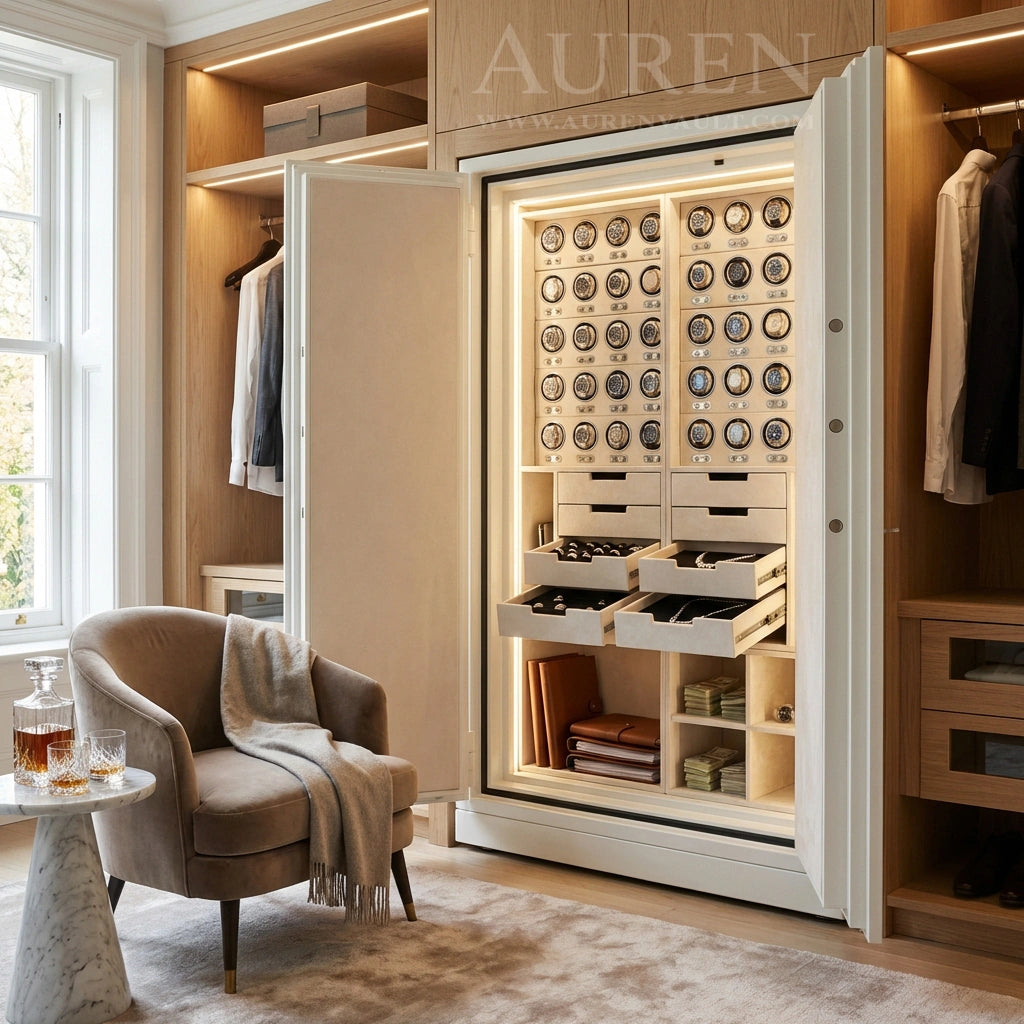
An integrated system may be particularly useful for an owner who rotates between several automatic Carreras, Monaco Chronographs, and Aquaracers.
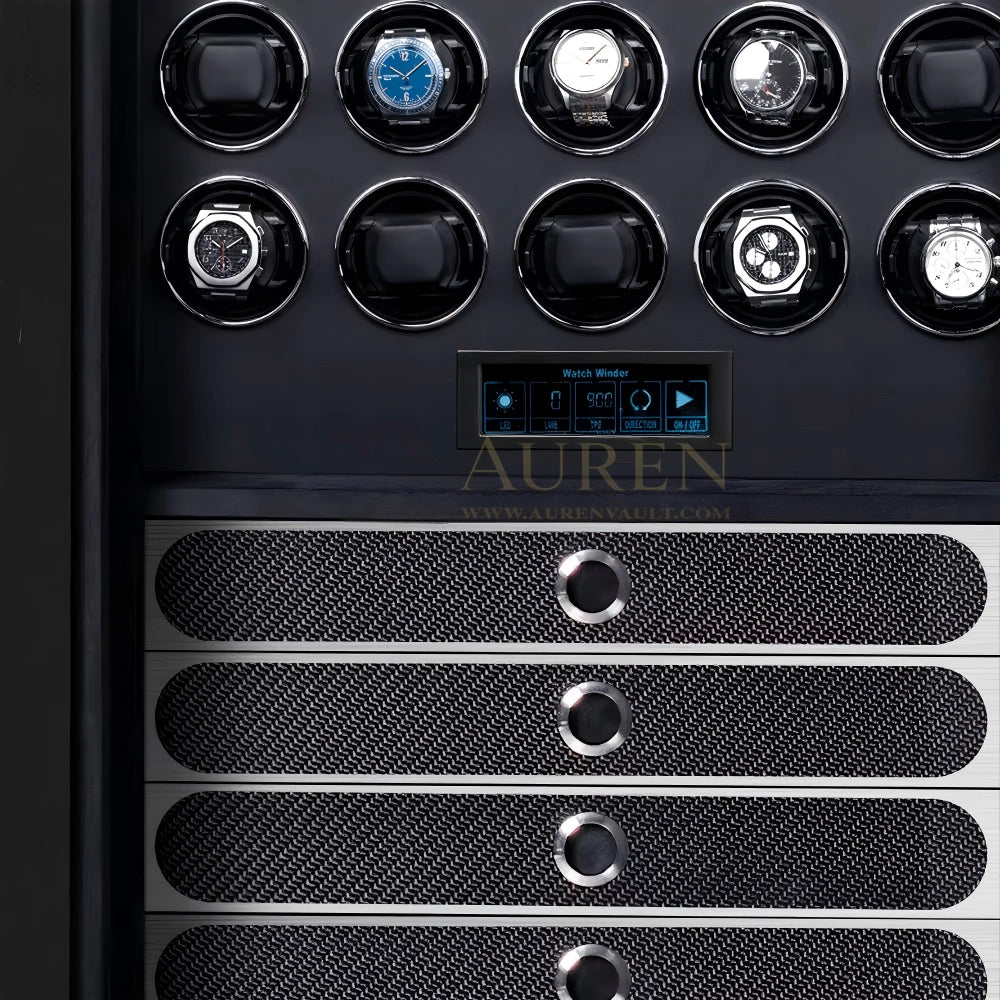
Each compatible movement can remain on its assigned winding position, provided the system offers independently programmable modules.
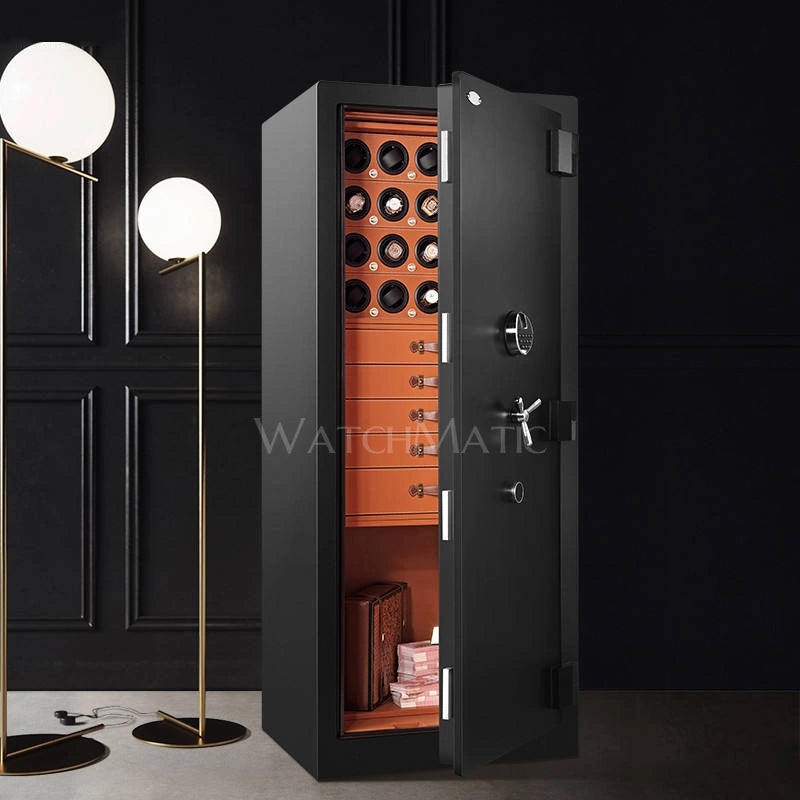
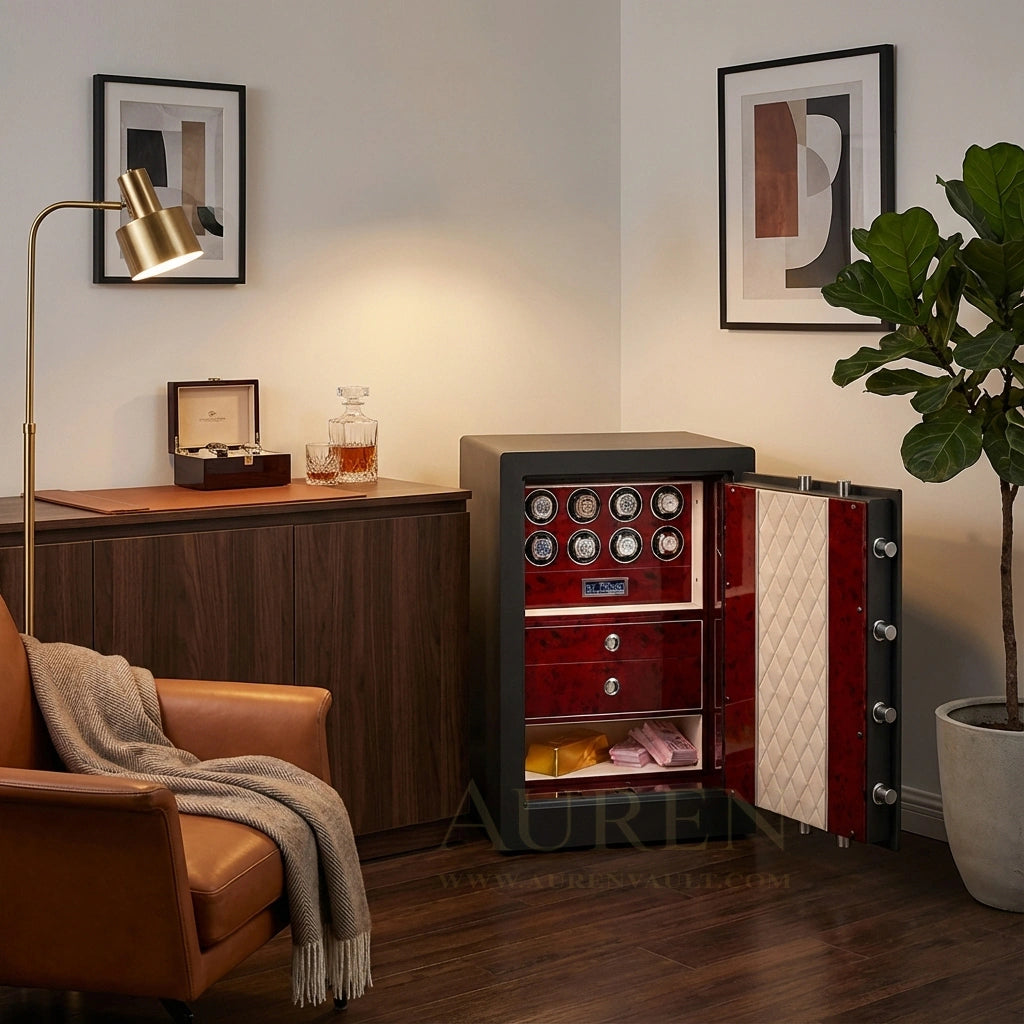
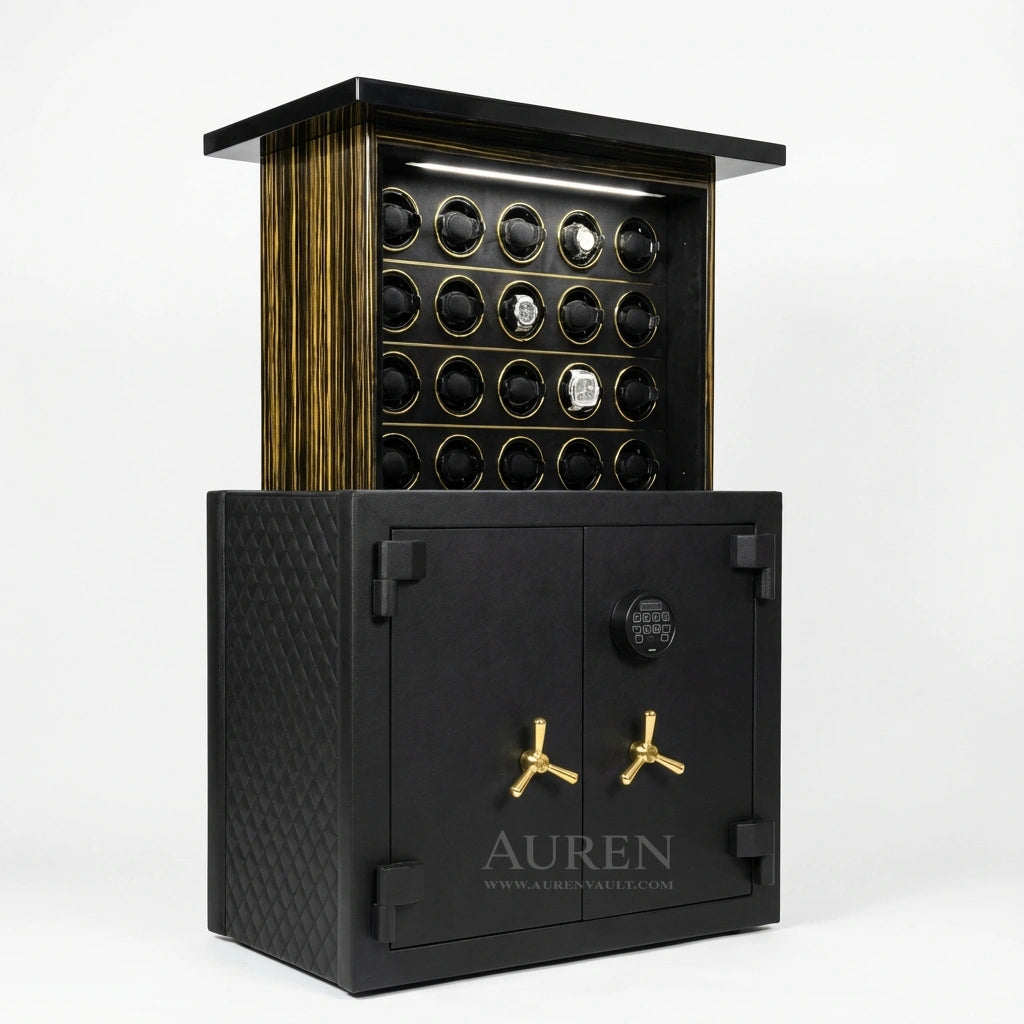
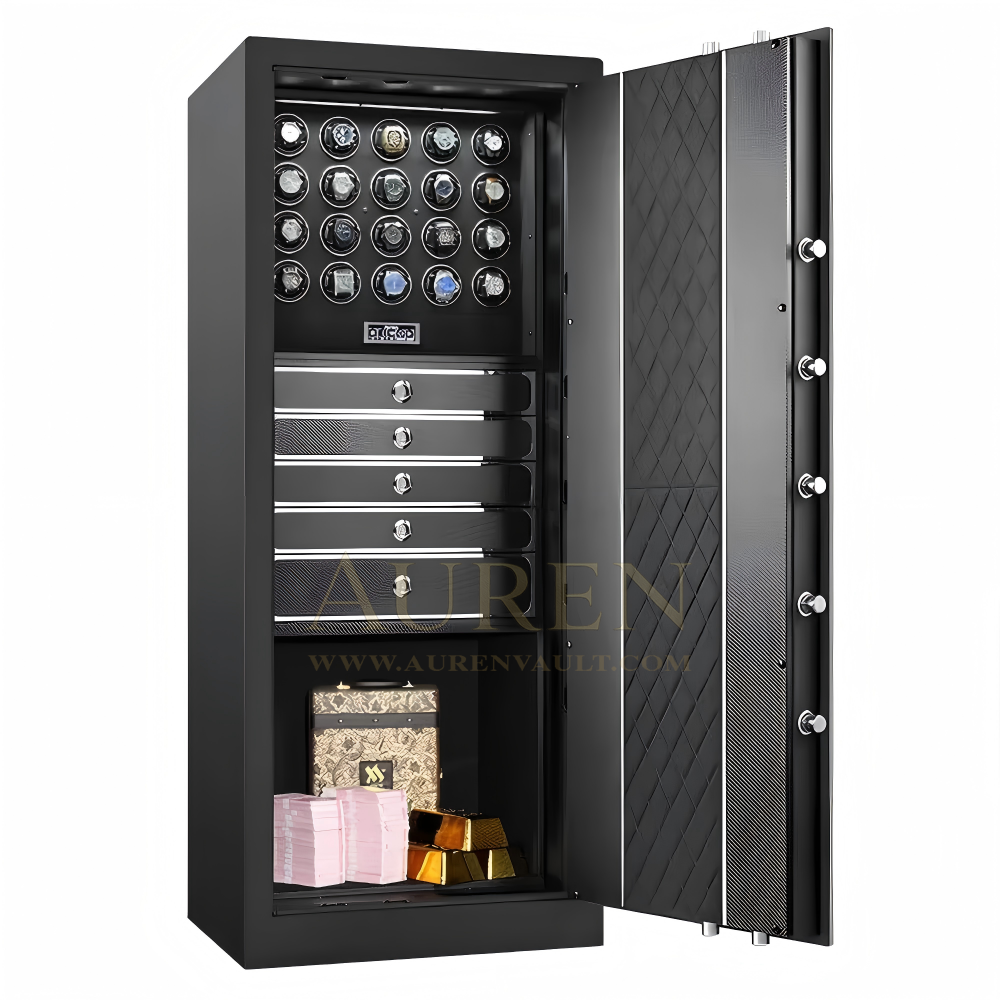
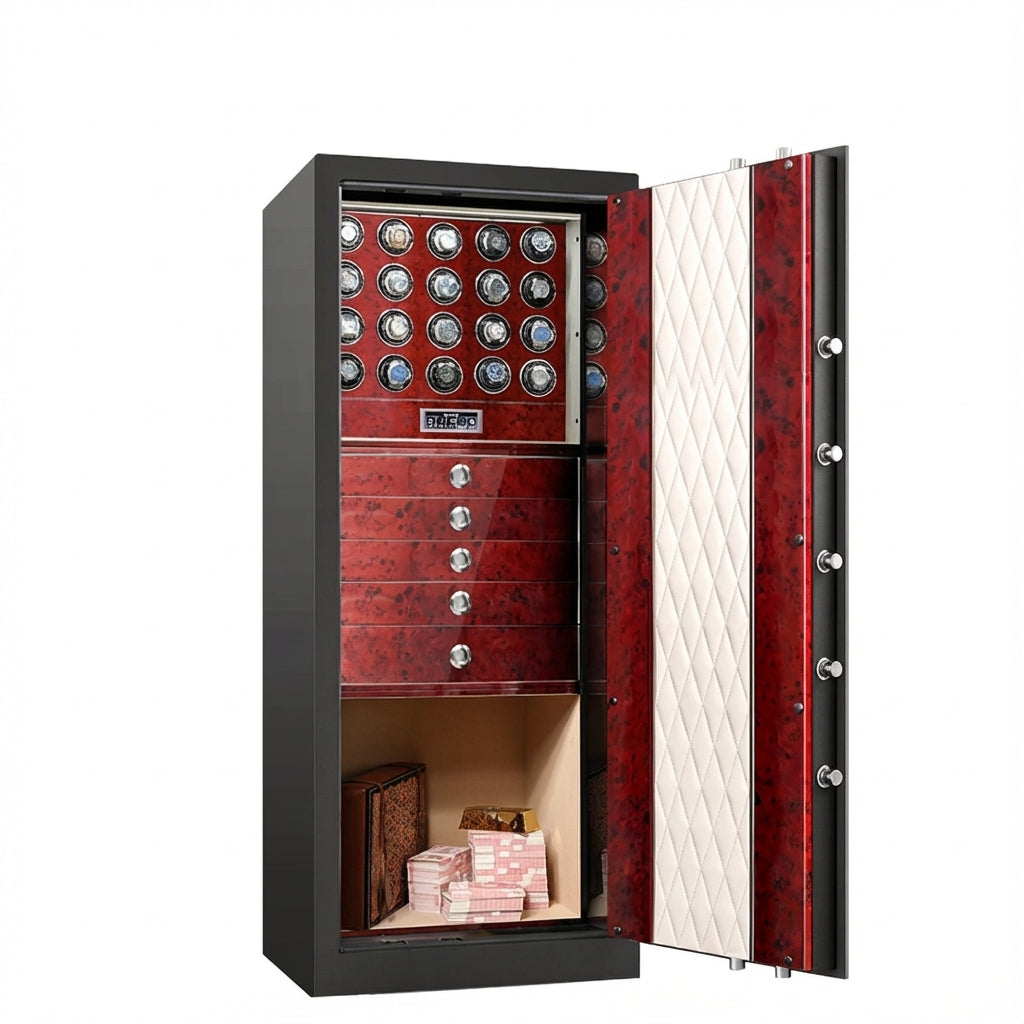
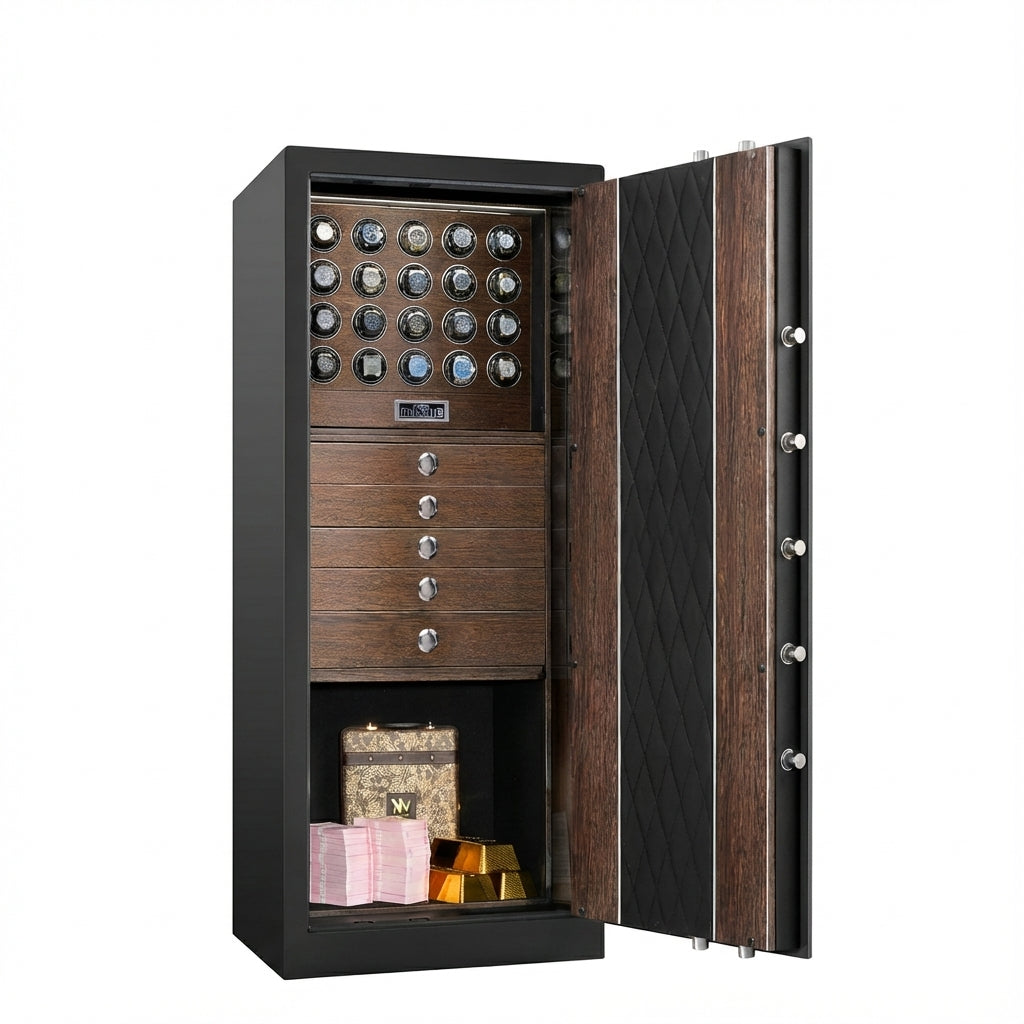
For collectors evaluating this arrangement, the watch winder safe collection illustrates compact and larger integrated configurations.
The watch winder safe guide is another related resource destination for considering capacity, installation, and winding requirements.
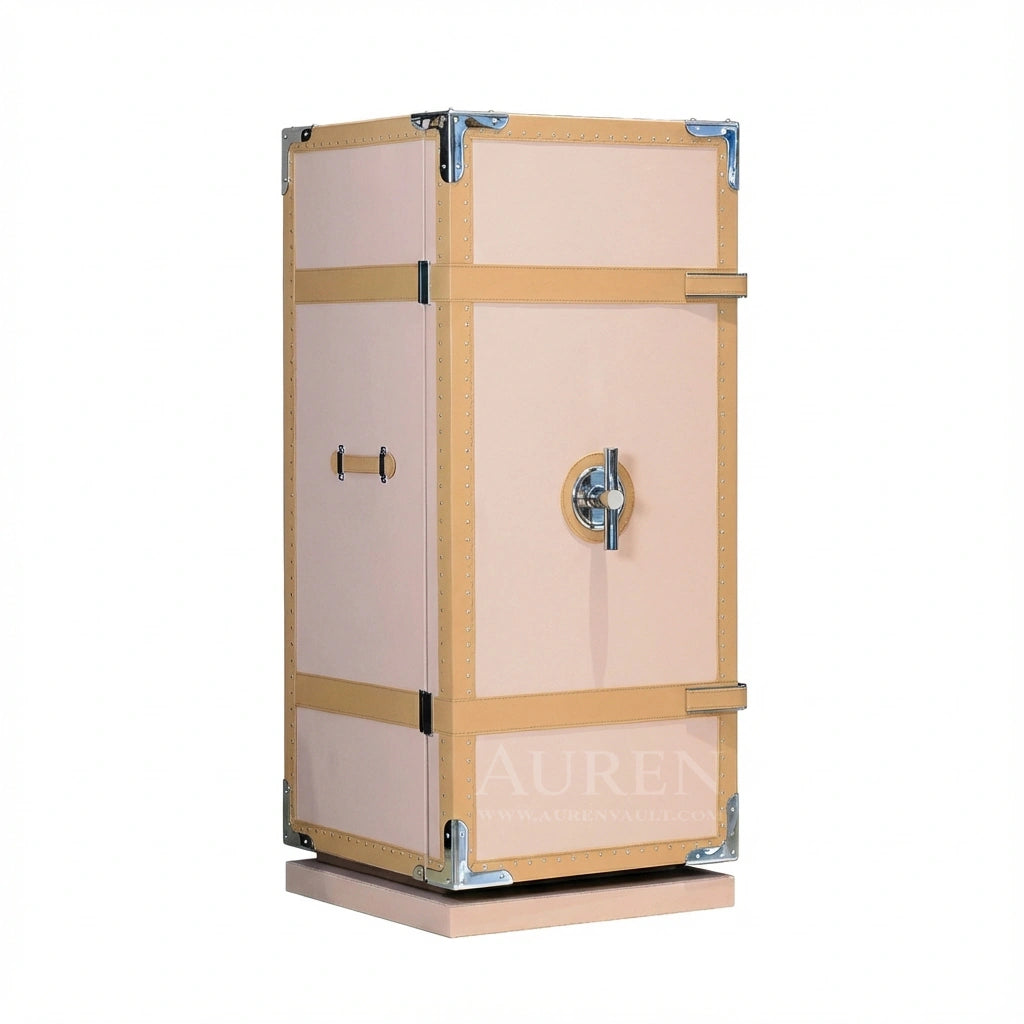
However, a lockable watch cabinet should not automatically be treated as a certified burglary-resistant or fire-resistant safe.
Protective performance depends on the enclosure's construction, locking system, installation, and any independently documented testing.
Winding functionality and physical security should be assessed separately.
Planning Storage for a Mixed TAG Heuer Collection
As a collection expands, the number of watches requiring active winding may be smaller than the total number owned.
Consider a collector with seven watches:
A Carrera TH20-00 Chronograph, a Carrera Calibre 1887 Chronograph, an Aquaracer TH31-00, an older Aquaracer Calibre 5, a Monaco Calibre 11, a Formula 1 Calibre 5 Automatic, and a Formula 1 Solargraph.
Six of these watches contain automatic movements.
The Solargraph is powered by light and does not require automatic winding.
Moreover, the owner may wear the Carrera and Aquaracer frequently enough that keeping both continuously on a winder offers little extra benefit.
A well-planned cabinet should therefore distinguish between total capacity and active winding capacity.
Total Storage Capacity Is Not Rotor Capacity
A watch safe's total capacity describes how many watches it can accommodate.
Its winding capacity describes how many watches can be positioned on active automatic winding modules.
These numbers do not necessarily need to match.
For a mixed collection, passive storage remains necessary for quartz, solar-powered, and manually wound timepieces.
It may also be appropriate for automatic watches that the owner does not wish to keep running continuously.
The wider watch safe collection provides a starting point for comparing different enclosure formats and capacities.
For substantial collections, larger luxury watch safe configurations may offer additional space for watches, straps, accessories, and passive compartments.
A suitable configuration should reflect the actual collection rather than simply maximize the number of motors.
Bespoke Storage for Carrera, Monaco, and Aquaracer Watches
TAG Heuer's different case designs can make a customized storage layout especially useful.
A collector might require adjustable cushions for square Monaco cases, separate supports for larger Aquaracers, and compact positions for leather-strap Carreras.
The collection may also include additional bracelets, rubber straps, and travel accessories.
For a dedicated dressing room or private watch room, cabinet dimensions, electrical access, interior finishes, and installation conditions influence the design.
These requirements can be considered through custom watch safe configurations, allowing rotor quantity and interior organization to be planned around the collection.
The objective is not to make the storage arrangement unnecessarily elaborate.
It is to ensure that every watch has appropriate support and that automatic movements receive the correct functionality.
Long-Term TAG Heuer Storage: More Than Winding
A watch winder maintains the operating reserve of a compatible automatic movement.
Long-term storage involves a broader set of responsibilities.
These include physical protection, suitable environmental conditions, appropriate support for different strap materials, and adherence to the manufacturer's care instructions.
A leather strap may require different support from a metal bracelet.
A square Monaco may need more internal clearance than a compact round watch.
A Solargraph requires attention to light-charging guidance rather than automatic rotation.
For extended storage, excessive humidity, unnecessary contact between watches, and unsuitable storage materials should be avoided.
The watch storage guide is the corresponding Auren Vault resource destination for these broader watch-preservation considerations.
A suitable storage arrangement should address the movement type and the physical condition of each watch independently.
Keeping every automatic movement running continuously is not, by itself, a complete storage strategy.
Frequently Asked Questions About TAG Heuer Watch Winders
What is the best TPD setting for TAG Heuer watches?
It depends on the calibre. Independent Orbita references commonly recommend approximately 650 TPD bidirectional for Calibre 5, while Calibre 16 is listed around 800 TPD clockwise. Newer TH20 and TH31 movements require separate confirmation of their external TPD settings.
Does a TAG Heuer Carrera need a watch winder?
Not necessarily. An automatic Carrera worn regularly may receive sufficient energy through normal wrist movement. A winder is useful when the watch remains unworn beyond its power reserve or when its owner prefers to avoid repeated adjustments.
What setting should I use for TAG Heuer Calibre 5?
Orbita commonly lists approximately 650 TPD with bidirectional rotation for established TAG Heuer Calibre 5 automatic references. Confirm the exact watch and device before relying on the setting.
Which direction should TAG Heuer Calibre 16 wind?
Independent Orbita data lists approximately 800 TPD with clockwise external rotation for Calibre 16, which is associated with the Valjoux 7750 movement architecture.
Does the TAG Heuer TH20-00 need 650 TPD?
Not necessarily. TAG Heuer confirms that TH20-00 has bidirectional automatic winding and approximately 80 hours of power reserve, but that does not establish a universal external 650 TPD specification. Verify the appropriate TPD for the movement and winder.
Can a TAG Heuer Aquaracer use a watch winder?
Yes, if it contains an automatic movement. Aquaracer models equipped with Calibre 5, TH31-00, or TH31-03 can benefit from compatible winding. Quartz and Solargraph references do not.
Is a watch winder suitable for the TAG Heuer Monaco?
Yes, for automatic Monaco references. However, Calibre 11, TH20-00, and TH20-11 are different movements. Their external winding programs should be selected individually, and the square case requires adequate compartment clearance.
What is different about the Monaco TH20-11?
Introduced in 2026, TH20-11 is a modern manufacture automatic chronograph movement developed for the Monaco's left-crown layout. TAG Heuer specifies approximately 80 hours of power reserve and bidirectional winding.
Does a Formula 1 Solargraph need a watch winder?
No. The TH50-00 Solargraph is a light-powered quartz movement, not a mechanical automatic. It gains no winding benefit from conventional external watch rotation.
Does an 80-hour power reserve require more TPD?
Not automatically. Power reserve measures how long a watch can operate using stored energy, while TPD measures external winding rotations. The correct program depends on the movement's automatic winding system.
Can a watch winder damage a TAG Heuer?
A compatible, properly programmed winder should be suitable for an automatic TAG Heuer. Problems may arise from poor holder fit, inappropriate settings, defective equipment, or improper handling. A winder should not replace professional servicing.
Is a watch winder safe worth buying for a TAG Heuer collection?
It may be appropriate for collectors who want automatic winding and enclosed, lockable storage in one system. The decision should consider the number of automatic watches, independent programming requirements, passive storage needs, and the safe's protective specifications.
Related Reading: Automatic Winding and Collection Storage
TAG Heuer's combination of established automatic movements, contemporary manufacture chronographs, and solar-powered quartz technology provides useful context for comparing winding requirements across other watchmakers.
Best Watch Winder for Cartier: TPD Settings & Buying Guide
Explore movement-specific winding requirements and physical watch-holder considerations across Cartier's automatic, manually wound, and quartz collections.
Best Watch Winder for Vacheron Constantin Watches
Understand how different automatic calibres, power reserves, and complications influence winding programs and ownership convenience.
Watch Safes with Built-In Watch Winders: Are They Worth It?
Examine when integrated winding modules and enclosed storage offer practical advantages for collectors managing multiple automatic watches.
Final Perspective: The Best TAG Heuer Winder Follows the Movement
TAG Heuer's movement diversity makes calibre identification the most important step in choosing a watch winder.
A Carrera with TH20-00, an older Calibre 16 chronograph, and an Aquaracer with Calibre 5 should not automatically be assigned the same program.
The Monaco introduces additional considerations through its different movement generations and distinctive square case.
Formula 1 Solargraph models demonstrate an equally important exception: not every advanced watch requires mechanical winding.
For a single automatic TAG Heuer, a quiet programmable winder with a suitable holder may provide everything necessary.
For collections containing different calibres, independently controlled rotors offer greater flexibility.
For larger collections, secure storage and appropriate passive compartments become equally important.
As a specialist in premium watch storage and integrated winding systems, Auren Vault approaches these requirements through configurations intended to combine winding compatibility, organized storage, and enclosed watch protection.
The best watch winder for TAG Heuer is ultimately the one that respects the movement's architecture, accommodates the watch's physical design, and makes ownership more convenient without introducing unnecessary complexity.