
The best watch winder for Mido watches is a programmable model that supports the correct winding direction, allows adjustable turns per day (TPD), and holds the watch securely without placing excessive pressure on its bracelet or strap.
For many Mido automatic watches, approximately 650 TPD with bidirectional rotation is a commonly published starting recommendation. However, the appropriate program depends on the movement. Certain older automatic chronographs require different settings, so a universal Mido winding program should not be assumed.
Many contemporary Mido watches use the Caliber 80 automatic movement, which provides up to 80 hours of power reserve. This extended autonomy allows a fully wound watch to remain running for more than three days without additional winding under normal conditions.
A watch winder becomes useful when the watch is left unworn for longer periods or when an owner regularly alternates between several automatic watches.
For a single Mido, a compact programmable winder is usually sufficient. For a growing collection, individually controlled winding positions and secure storage may provide greater long-term convenience.
Does a Mido Automatic Watch Actually Need a Winder?
Mido watches are designed to be worn, and for many owners, regular wrist movement already provides sufficient energy to keep an automatic watch running.
Inside an automatic mechanical movement, a weighted rotor moves in response to changes in wrist position. This motion winds the mainspring, storing the energy required to operate the watch.
When the watch is removed and remains stationary, the movement continues using its stored energy until the power reserve is depleted.
A watch winder periodically rotates the watch to help maintain that reserve.
The practical benefit is straightforward: the watch can remain running and ready to wear without repeatedly resetting its time, date, or other indications.
However, the usefulness of a winder depends on the owner's routine.
Someone who wears a Mido Ocean Star almost every day may have little reason to purchase one. A collector who alternates between an Ocean Star, a Multifort TV Big Date, and several other automatic watches may appreciate having those watches ready when needed.
The distinction becomes especially relevant with Mido's extended-power-reserve movements.
Why Mido Caliber 80 Changes the Winder Decision
Mido's Caliber 80 is one of the brand's defining modern movement technologies.
The movement provides up to 80 hours of power reserve, substantially extending the time an automatic watch can continue operating after it is removed from the wrist.
That extended autonomy changes how frequently a watch may need external winding.
Imagine wearing a Mido Multifort TV Big Date on Friday evening and leaving it on a dresser until Monday morning.
If the watch was sufficiently wound before being removed, its 80-hour power reserve may allow it to remain running throughout the weekend.
In this situation, a watch winder offers relatively little additional convenience.
Now consider an owner who wears the same Mido only once every week or two.
Without additional winding, the watch will eventually stop. Before wearing it again, the owner must restart the movement and adjust the indications.
A compatible winder can reduce that inconvenience.
An 80-Hour Power Reserve Does Not Mean 80 TPD
Power reserve and turns per day measure entirely different things.
Power reserve describes how long a movement can operate using stored mainspring energy.
TPD describes how many rotations a watch winder performs during a 24-hour period.
A movement with an 80-hour power reserve does not necessarily require fewer daily rotations than one with a 60-hour reserve.
Its winding efficiency, rotor architecture, initial energy level, and the external winder's actual motion all influence how effectively energy is maintained.
This is why the correct approach is to identify the movement before choosing a winding program.
For Mido, that distinction becomes important when comparing Caliber 80 watches with automatic chronographs using Caliber 60 or older movement families.
Best Mido Watch Winder Settings: TPD and Rotation Direction
Two operating parameters determine whether a watch winder can maintain an automatic movement effectively: the daily number of rotations and the direction in which those rotations occur.
Most modern programmable winders offer clockwise, counterclockwise, and alternating rotation modes.
They also allow the user to choose different TPD programs, often beginning around 650 rotations per day.
A widely published starting recommendation for many Mido automatic watches is 650 TPD with bidirectional rotation. This is particularly common in independent databases covering established three-hand automatic movements.
However, some older Mido chronographs based on different movement architectures are listed with clockwise winding and approximately 800 TPD.
Those differences are important enough that it would be misleading to recommend one setting for every Mido watch.
Mido Watch Winder Settings by Movement Type
| Mido movement or watch type | Published reference setting | Important consideration |
|---|---|---|
| Many older ETA 2824-2-based Mido automatics | 650 TPD, bidirectional | Commonly documented for several legacy models |
| Older ETA 2836-2-based Mido automatics | 650 TPD, bidirectional | Verify the actual reference and calibre |
| Older Valjoux 7750-based chronographs | 800 TPD, clockwise | Different requirements from many three-hand automatics |
| Mido Caliber 80, contemporary references | No universal manufacturer TPD specification established | Confirm the specific movement and suitable program |
| Mido Caliber 60 chronographs | Movement-specific confirmation required | Do not automatically apply older chronograph settings |
| Manual-winding or quartz Mido watches | Not applicable | Conventional automatic winders are unnecessary |
The numerical settings above are drawn from independent winding references rather than universal instructions issued by Mido. They should be treated as starting guidance for the identified movements, not guaranteed settings for every watch within a collection.
Is 650 TPD Enough for a Mido Caliber 80?
For a contemporary Caliber 80 watch, 650 TPD with alternating rotation is a reasonable initial program to investigate when the exact winding specification is unavailable.
However, it should not be presented as an officially prescribed Caliber 80 setting.
Before relying on any particular program, identify the exact watch reference and confirm its winding requirements through reliable technical documentation or an authorized watchmaker.
A suitable program should maintain sufficient energy throughout normal winding cycles without unnecessary rotation.
If the watch repeatedly stops while on the winder, the cause may not simply be insufficient TPD.
The watch could have started with very little stored energy, the rotation direction might be unsuitable, or the winder might not be delivering its programmed rotations effectively.
A mechanical issue could also contribute.
Increasing the number of rotations without checking these factors can obscure the actual problem.
The objective is controlled energy maintenance, not continuous movement.
Choosing the Right Winder for Popular Mido Collections
Although several modern Mido collections share Caliber 80 technology, their case designs, straps, complications, and typical wearing patterns can influence the best winder configuration.
A suitable device must accommodate both the movement and the physical watch.
Mido Ocean Star: Practical Winding for a Sports Watch
The Ocean Star collection is closely associated with diving-inspired design, robust construction, and automatic mechanical movements.
The Ocean Star 200C, for example, uses Caliber 80 with up to 80 hours of power reserve.
The Ocean Star GMT also offers an automatic movement with extended autonomy and an additional time-zone indication.
For someone who wears an Ocean Star during the working week and changes watches on weekends, the extended reserve may already provide sufficient convenience.
An automatic winder becomes more useful when the watch remains unused for several days beyond that reserve.
Physical compatibility deserves particular attention.
Ocean Star models are available with different bracelet and strap configurations, including metal bracelets and flexible straps.
A winder cushion should support the watch without excessively stretching its strap or placing unnecessary pressure on the clasp.
For owners of a single Ocean Star, a quiet, programmable single-watch winder is generally the most practical configuration.
Mido Multifort TV Big Date: Keeping the Calendar Ready
The Multifort TV Big Date presents a slightly different ownership scenario.
Its distinctive television-shaped case and prominent date display make it recognizable, while the Caliber 80 automatic movement provides up to 80 hours of power reserve.
The large date indication uses a mechanical calendar arrangement designed around two date discs.
When the watch stops, its date display must be adjusted according to the manufacturer's operating instructions.
For someone who frequently switches between watches, a suitable winder can help reduce the need for repeated resetting.
The physical holder also matters because of the Multifort TV's case proportions.
A standard circular cushion may hold the bracelet adequately, but the watch should remain stable and clear of surrounding surfaces throughout the rotation cycle.
A well-fitting cushion and correctly programmed winding module are more useful than decorative lighting or elaborate exterior materials.
Mido Commander: A Strong Candidate for Everyday Rotation
The Commander collection is associated with classic styling and versatile everyday wear.
Current models such as the Commander Datoday use Caliber 80 variants with up to 80 hours of autonomy.
For a Commander worn regularly, a watch winder is largely optional.
Its automatic movement is designed to receive energy through the owner's normal wrist activity.
However, owners who alternate between a Commander, an Ocean Star, and other watches may benefit from separate winding positions.
The advantage becomes greater when each watch is kept on its own program rather than being moved repeatedly between a single winder.
This is particularly relevant if the collection includes watches with different movement generations.
Mido Baroncelli: Dress Watches Require Movement Identification
The Baroncelli collection emphasizes classical watch design and includes different mechanical configurations.
Some automatic Baroncelli references use Caliber 80 movements, while other versions incorporate different calibres.
The Baroncelli Chronometer Silicon, for example, offers an automatic chronometer movement with up to 80 hours of power reserve.
Other Baroncelli models are manually wound.
This distinction matters because a conventional watch winder cannot wind a manually wound movement through external rotation.
A Baroncelli Mechanical must be wound using its crown according to Mido's instructions.
The case shape and strap are also relevant.
Dress watches often have slimmer proportions and leather straps that should not be forced around oversized or rigid winding cushions.
A secure fit should be achieved without unnecessarily stretching the strap or loading the case against its support.
Mido Multifort TV Chronograph: Do Not Assume Caliber 80 Settings
One reason movement identification is essential is that Mido's mechanical chronographs can differ significantly from its standard automatic watches.
The Multifort TV Chronograph uses Caliber 60, a self-winding chronograph movement with a power reserve of up to 60 hours.
This is a different movement family from Caliber 80.
Owners should therefore avoid copying a generic Caliber 80 winding recommendation to a Caliber 60 chronograph without checking its compatibility.
Older Mido chronographs using Valjoux 7750-derived architecture are commonly listed with approximately 800 TPD and clockwise rotation in independent databases.
That does not establish the correct external winder settings for every current Caliber 60 variant.
The appropriate program must be confirmed for the actual calibre.
The Features That Matter Most in a Mido Watch Winder
A watch winder is a relatively simple device in principle, but its usefulness depends on several design decisions.
For Mido owners, the priority should be operating flexibility rather than the largest number of advertised functions.
Adjustable TPD and Direction Control
A programmable winder provides greater compatibility across different automatic movements.
The ability to select clockwise, counterclockwise, or alternating rotation is especially important for owners of older Mido chronographs.
An adjustable TPD program also allows the owner to configure a suitable daily winding schedule rather than relying on continuous rotation.
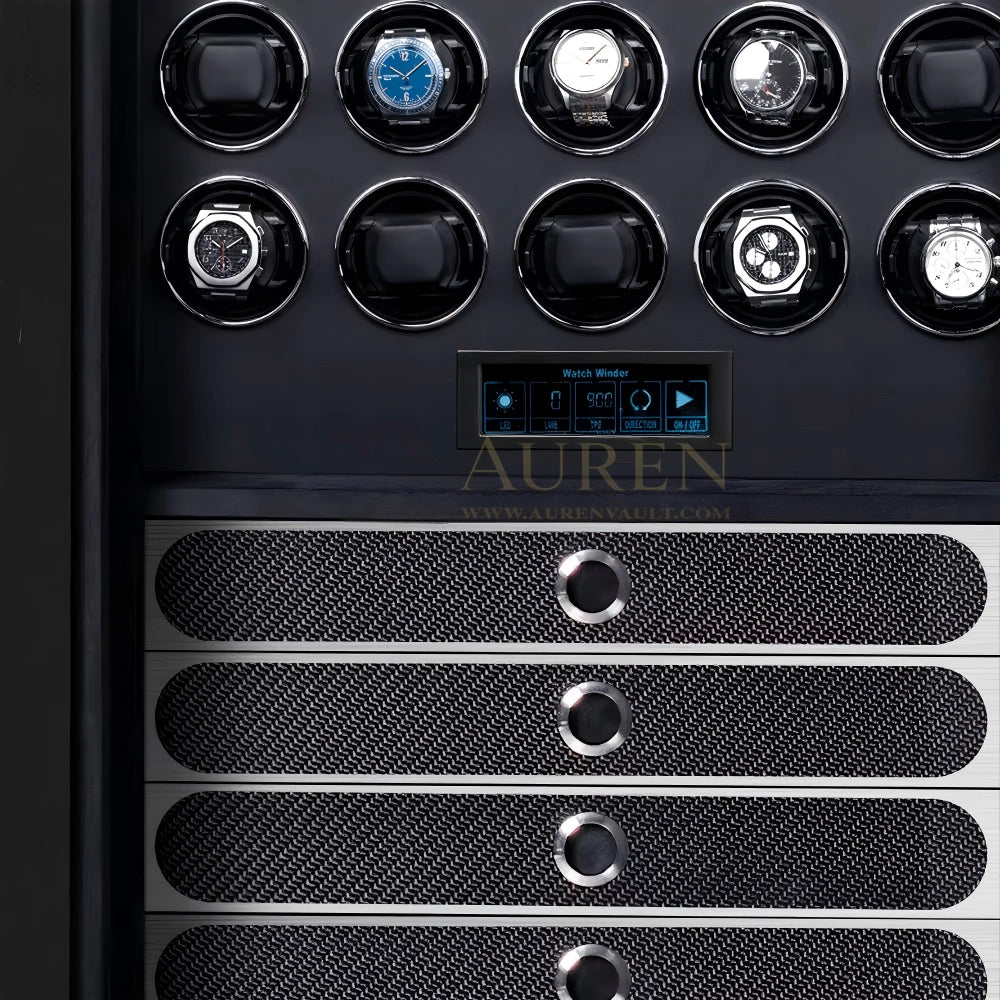
When several watches share the same enclosure, individually programmable positions offer the greatest flexibility.
A Cushion That Fits Different Straps
Mido produces watches with different case dimensions and strap constructions.
A metal bracelet, rubber strap, and leather strap do not necessarily require identical holder dimensions.
A cushion that is too large can place excessive tension on the strap. A holder that is too small may allow the watch to move during rotation.
The ideal support secures the watch without forcing the bracelet or strap beyond its normal shape.
Interchangeable cushions or adjustable holders are particularly useful when a collection includes both sports and dress watches.
Quiet Motors and Rest Cycles
A good watch winder should distribute its programmed rotations throughout the day rather than operating without interruption.
Rest intervals allow the watch to remain stationary between winding cycles.
Quiet operation is also valuable for owners who keep their watches in a bedroom, office, or dressing room.
A properly functioning motor should deliver consistent, controlled rotation without excessive vibration or distracting noise.
Reliable Operation Over Time
A winder should maintain its selected program consistently.
Useful features include dependable motor operation, straightforward programming, accessible servicing, and clear instructions for changing winding modes.
For an owner who plans to add more automatic watches, the ability to manage different movements independently may be more valuable than purchasing a larger fixed-program unit.
The Right Winder Depends on How You Wear Your Mido
Choosing a winder by watch count alone can lead to unnecessary expense or an unsuitable configuration.
A more useful approach is to consider how frequently the watches are worn.
| Wearing pattern | Practical configuration | Main benefit |
|---|---|---|
| One Mido worn daily | No winder required in most cases | Avoid unnecessary equipment |
| One automatic Mido worn occasionally | Single programmable winder | Maintain readiness between wears |
| Two to four automatic watches in rotation | Independently controlled multi-watch winder | Convenient access and individual settings |
| Several automatic watches needing protected storage | Compact watch winder safe | Combine winding with enclosed storage |
| Mixed automatic, manual, and quartz collection | Winding modules plus passive storage | Appropriate space for each movement type |
A Single Mido for Everyday Wear
If a Mido Ocean Star or Commander is worn most days, normal wrist activity may be sufficient to maintain its power reserve.
With Caliber 80, the watch may also continue running through a weekend without additional winding, assuming it began with sufficient stored energy.
A watch winder is therefore a convenience rather than a necessity.
A Rotating Collection of Automatic Watches
Consider an owner with a Mido Ocean Star GMT, a Multifort TV Big Date, a Commander, and an older Mido chronograph.
These watches may have different winding requirements.
A four-position winder that allows each movement to receive an independently verified program would be more flexible than a device with one shared setting.
It also reduces the need to reprogram the unit every time a different watch is placed inside.
A Larger Collection With Different Movement Types
As collections expand, the proportion of automatic watches becomes more important than the total watch count.
A collector may own ten timepieces but require active winding for only six.
The remaining four might be manually wound, quartz-powered, or watches intended for occasional storage rather than continuous operation.
In such a case, a combination of winding positions and ordinary watch compartments is more practical than an enclosure filled entirely with rotors.
The objective is to accommodate the actual composition of the collection.
Standalone Watch Winder or Watch Winder Safe?
A conventional watch winder and a watch winder safe solve different problems.
The conventional winder helps maintain an automatic movement's power reserve while the watch is not being worn.
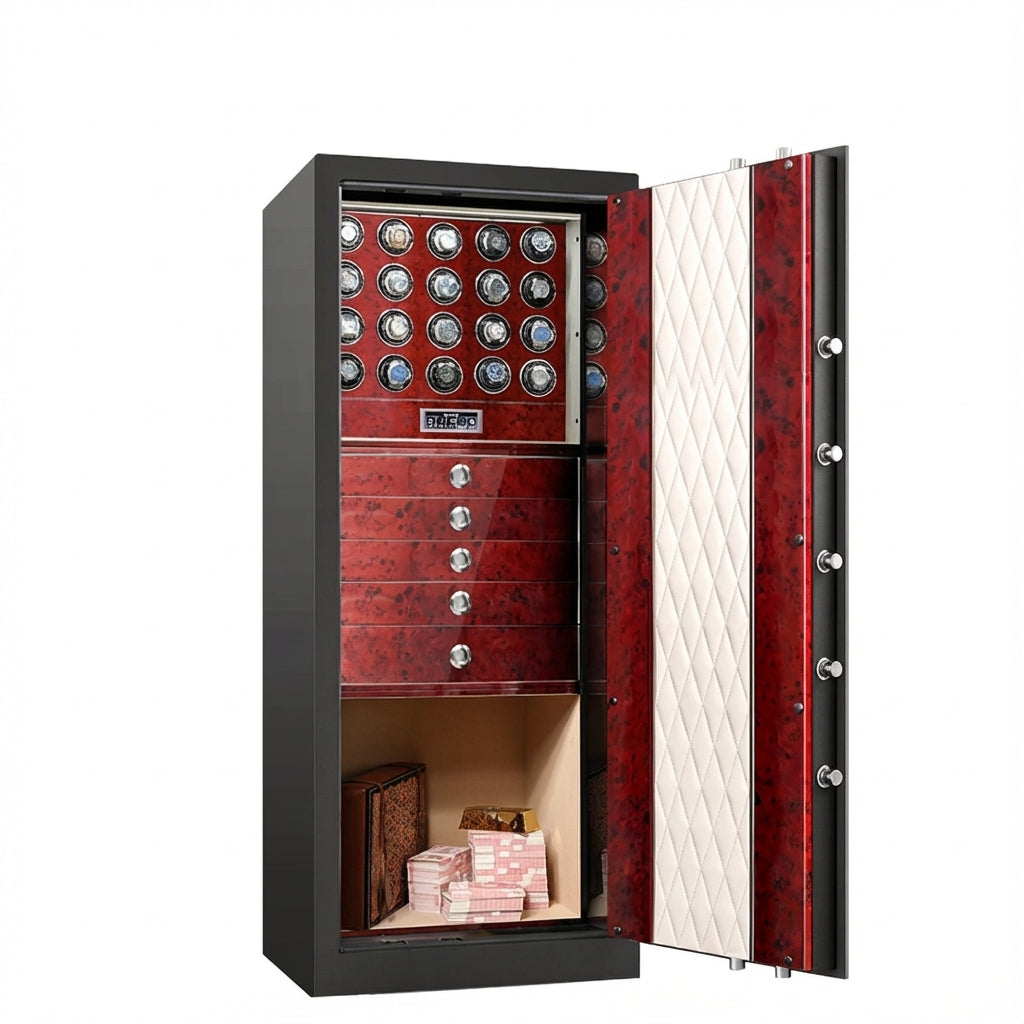
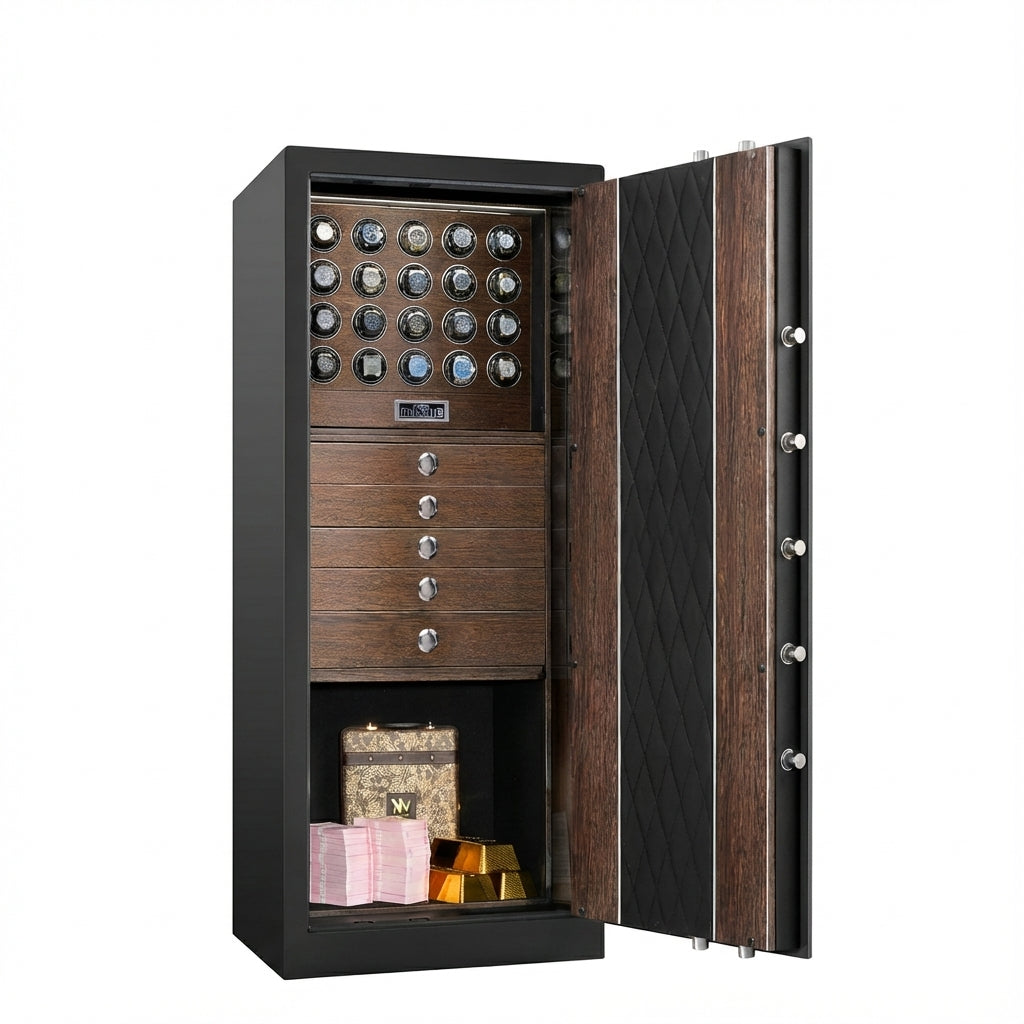
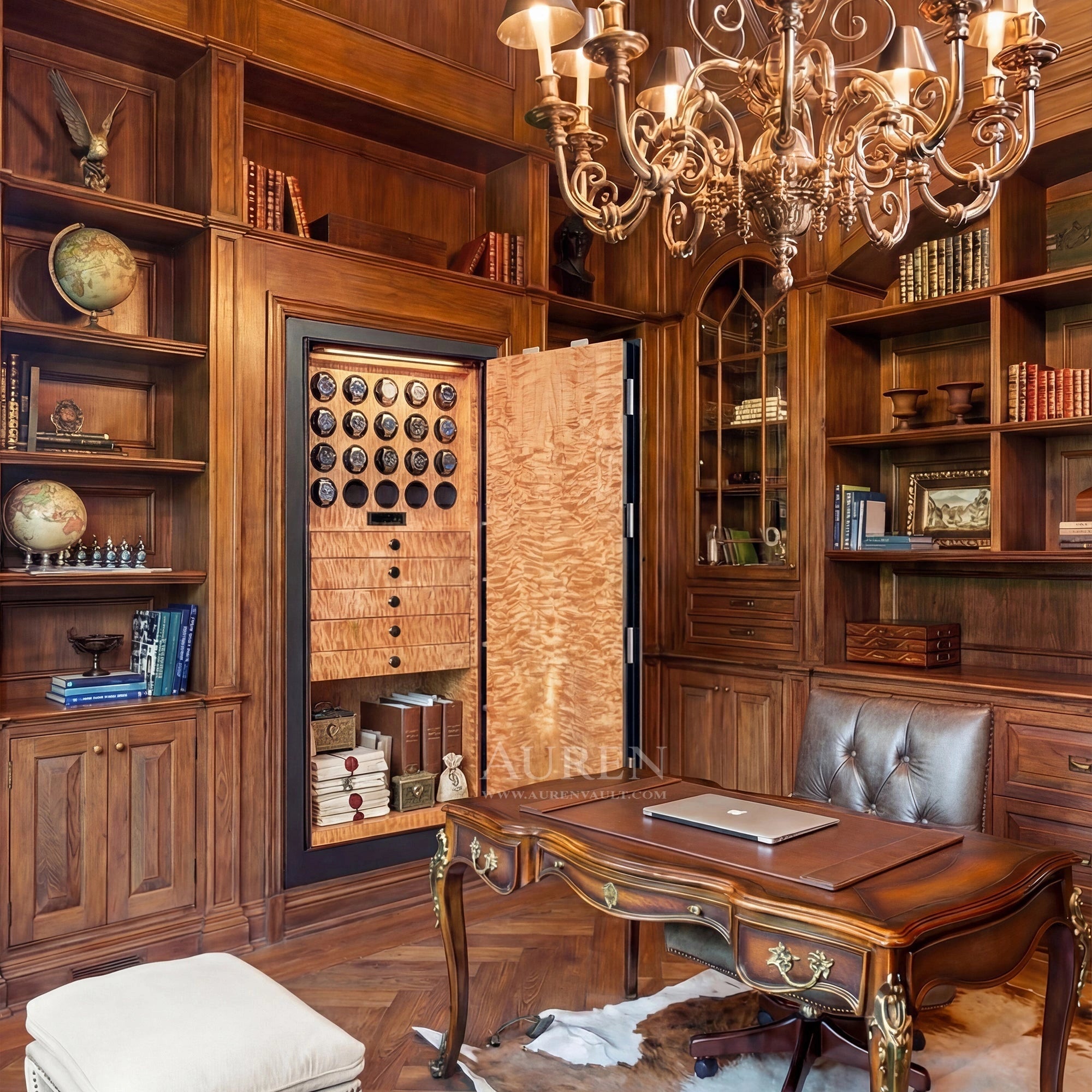
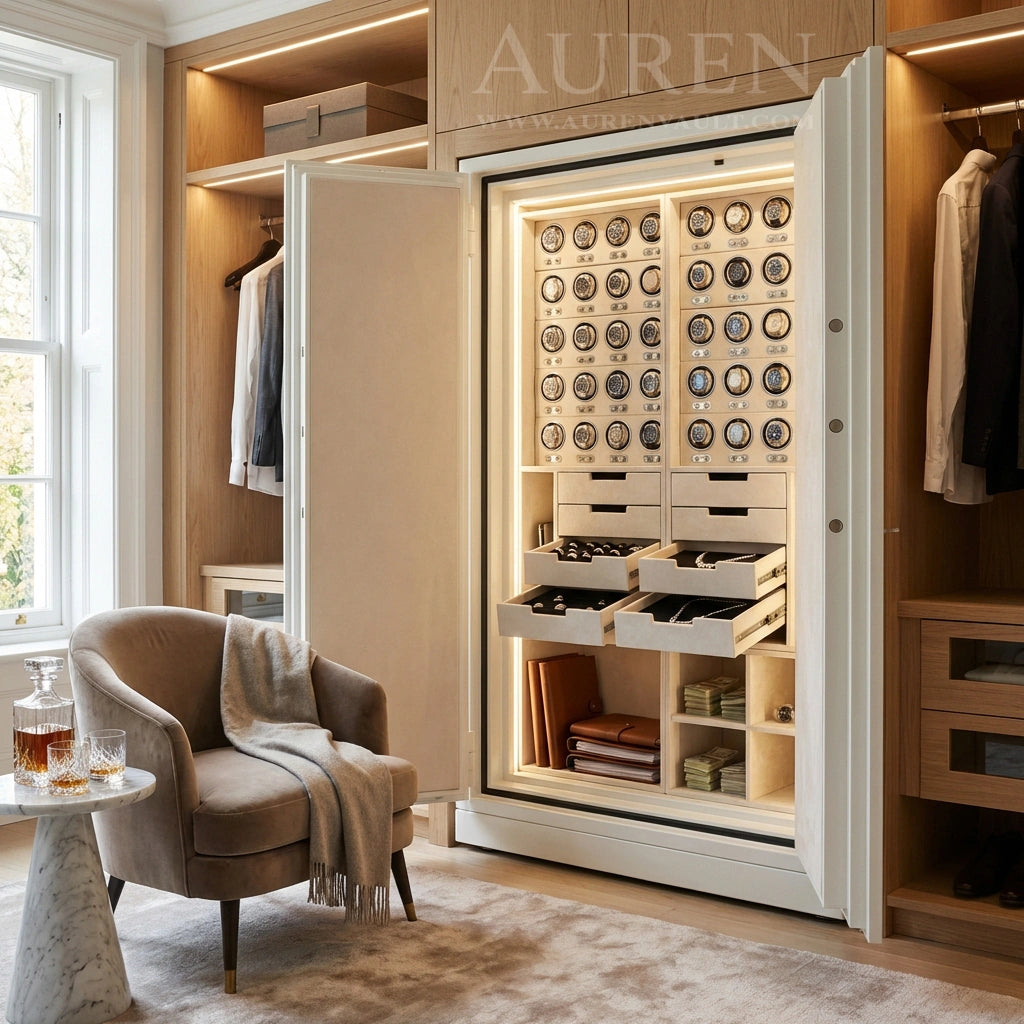
A watch winder safe combines that function with an enclosed, lockable storage environment.
For someone who owns one Mido and already has suitable secure storage, a tabletop winder may be entirely sufficient.
For a collector who owns multiple automatic watches from different manufacturers, integrated winding and secure storage can become more useful.
A conventional winder may leave watches openly accessible on a shelf or desk. A watch winder safe can provide a dedicated enclosure with locking features and organized storage compartments.
However, the actual security performance depends on the individual safe's construction, installation, and documented resistance characteristics.
A lockable cabinet should not automatically be treated as a certified burglary-resistant or fire-resistant safe.
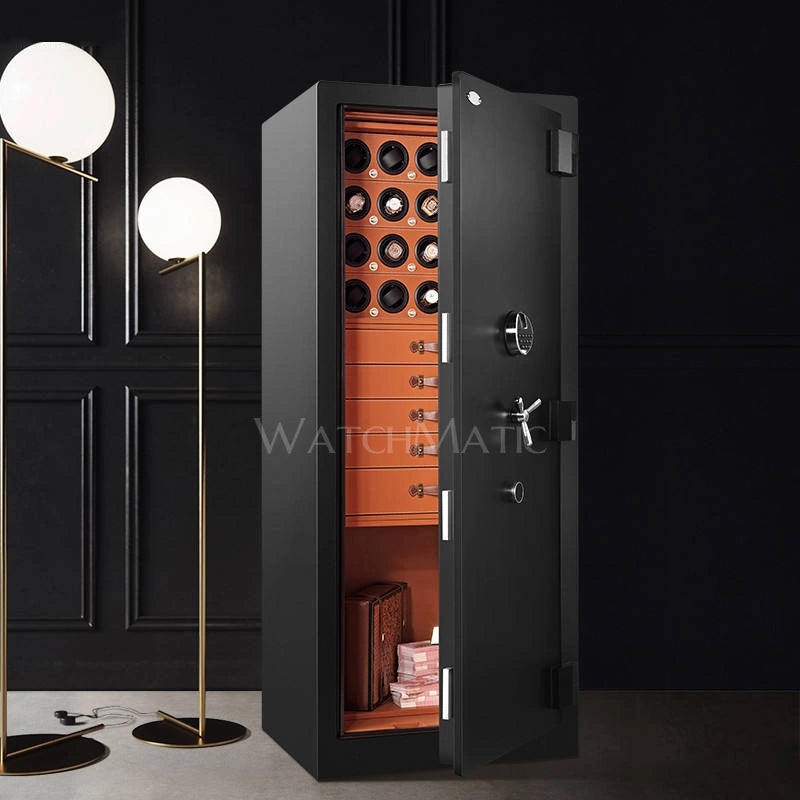
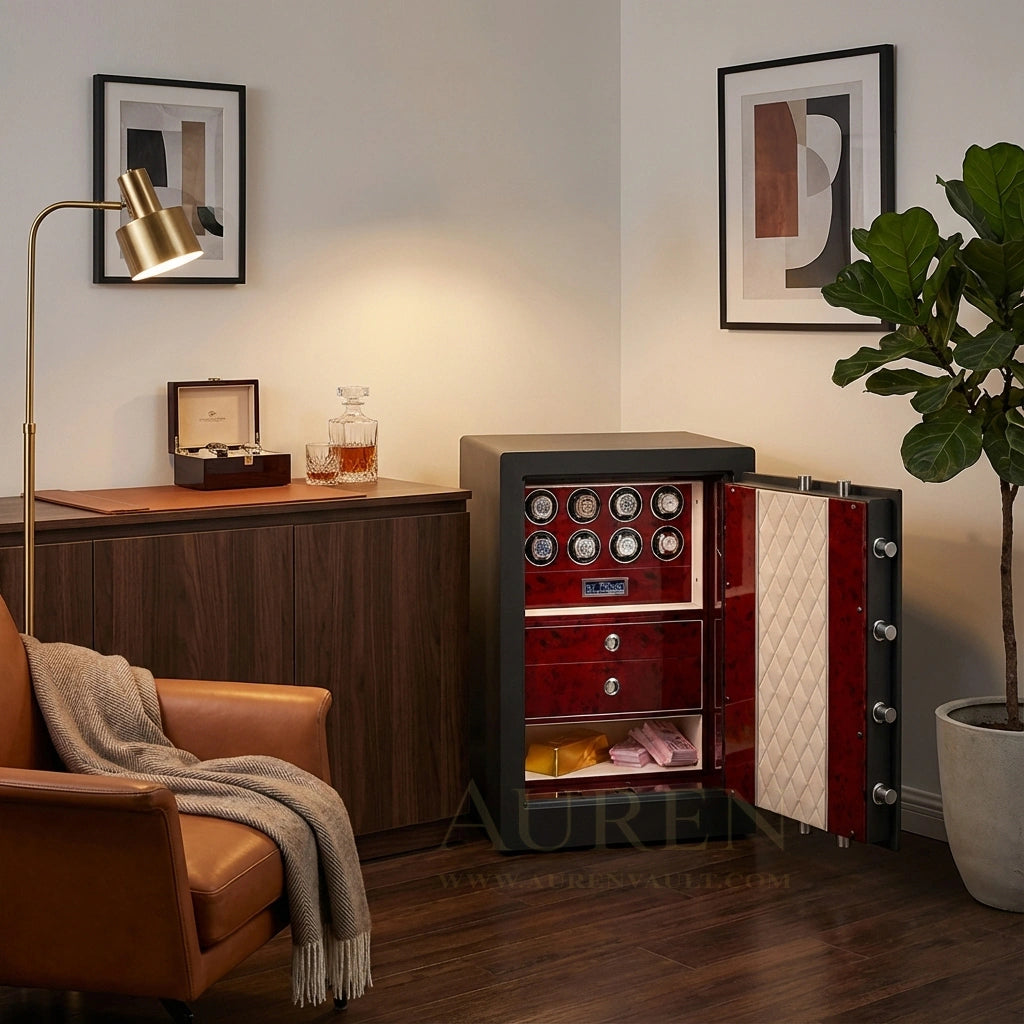
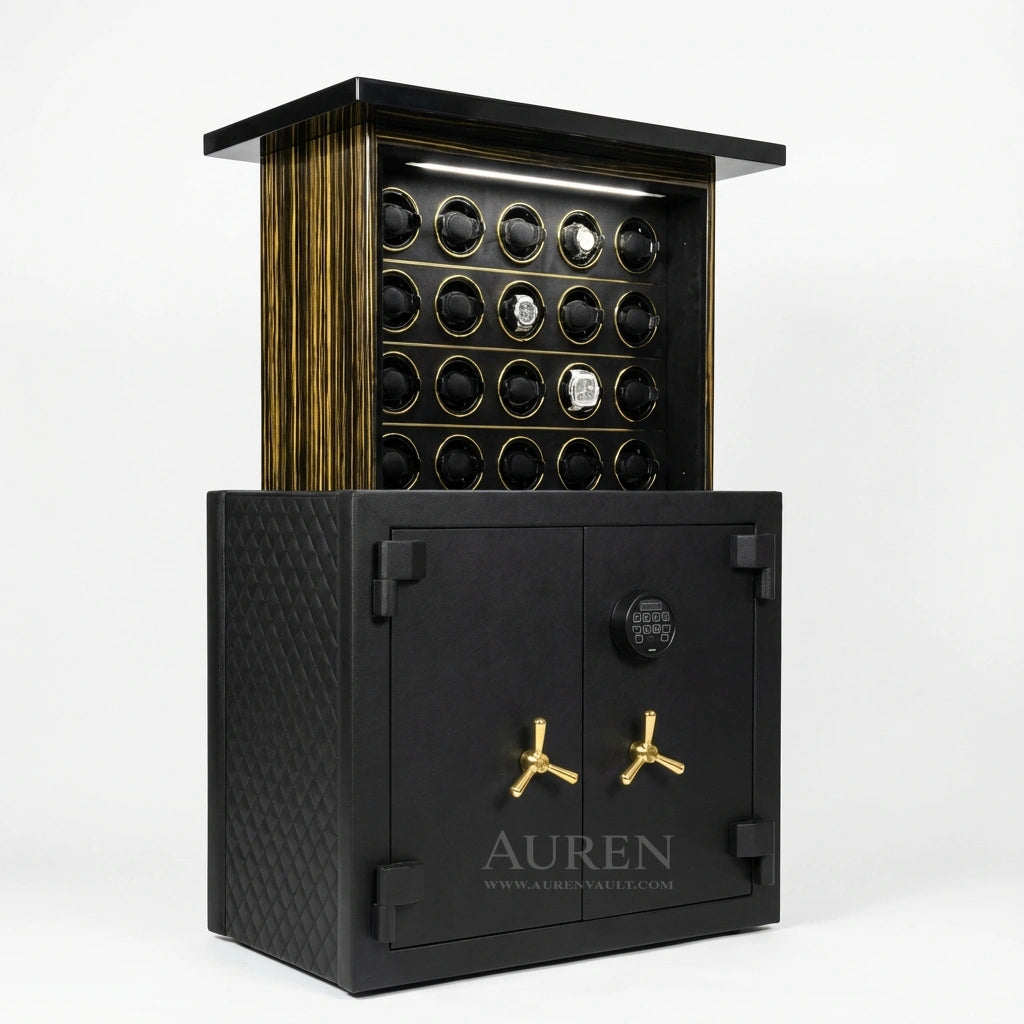
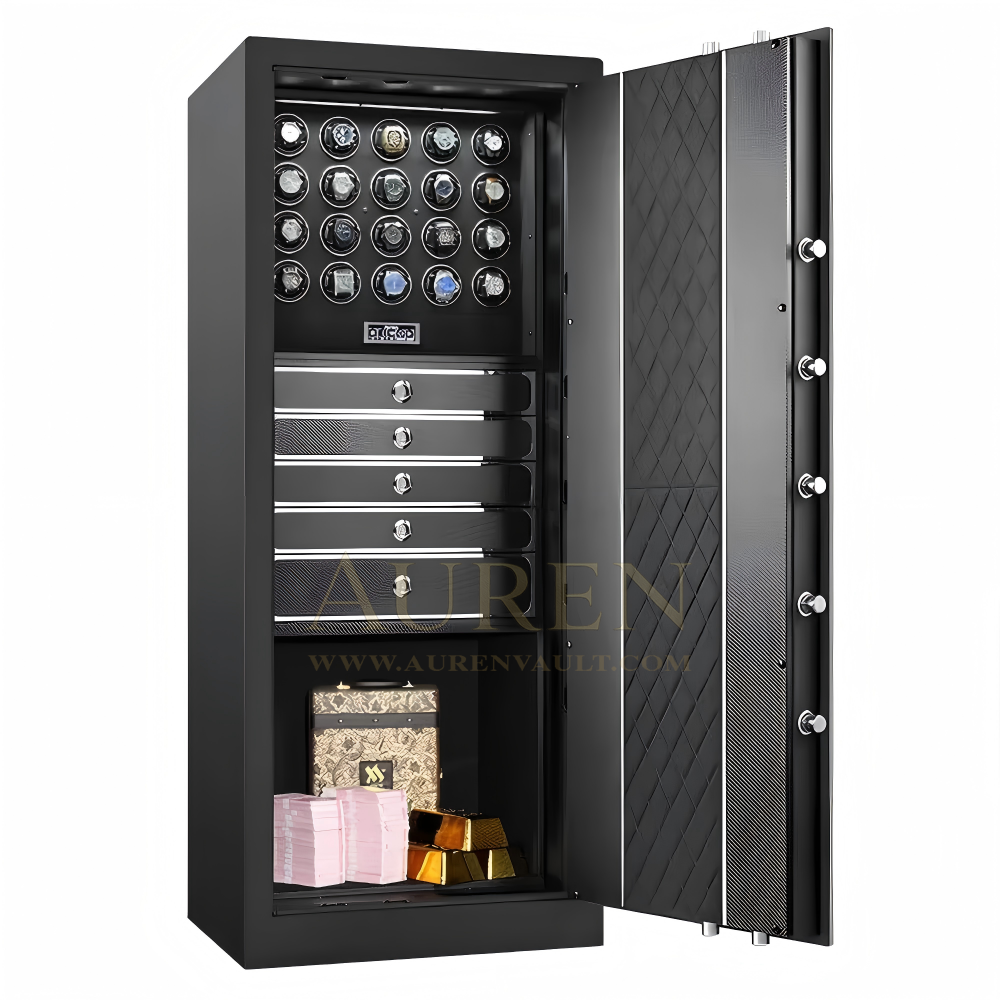
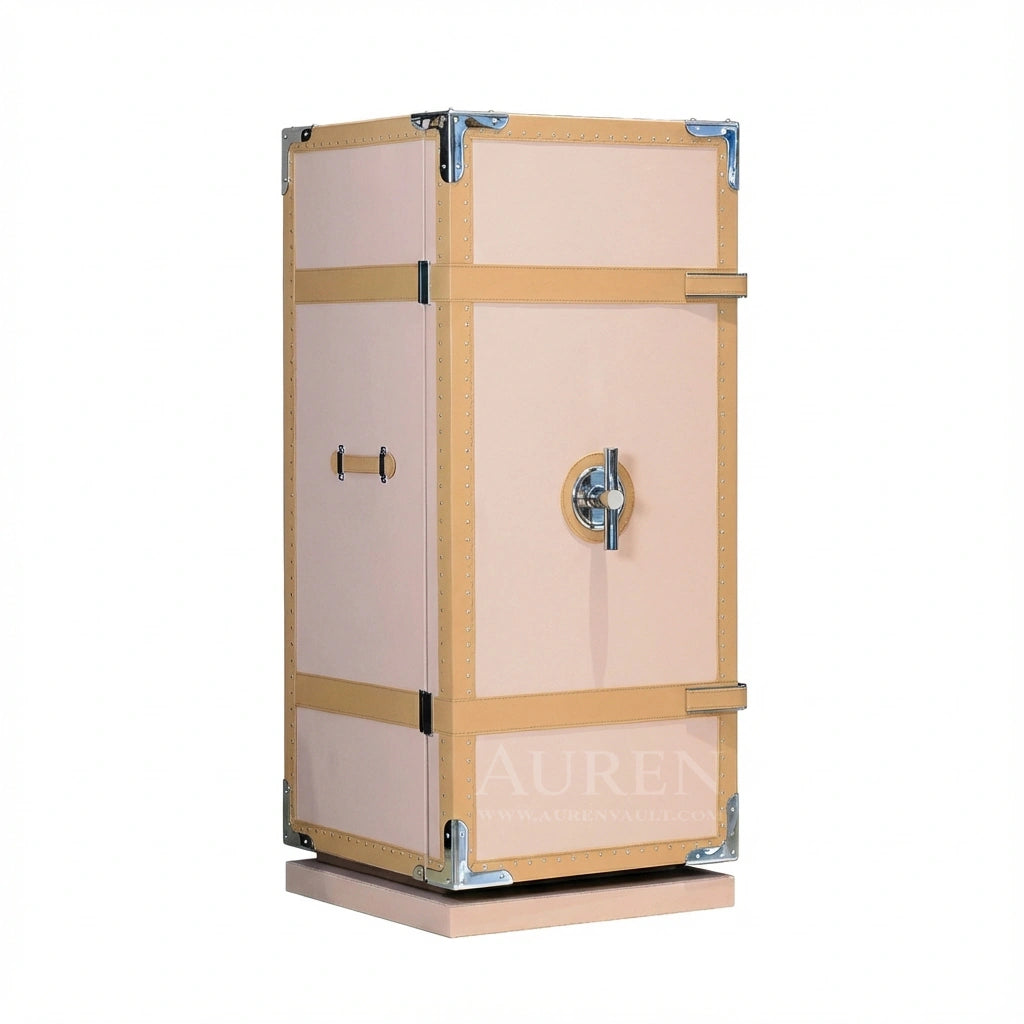
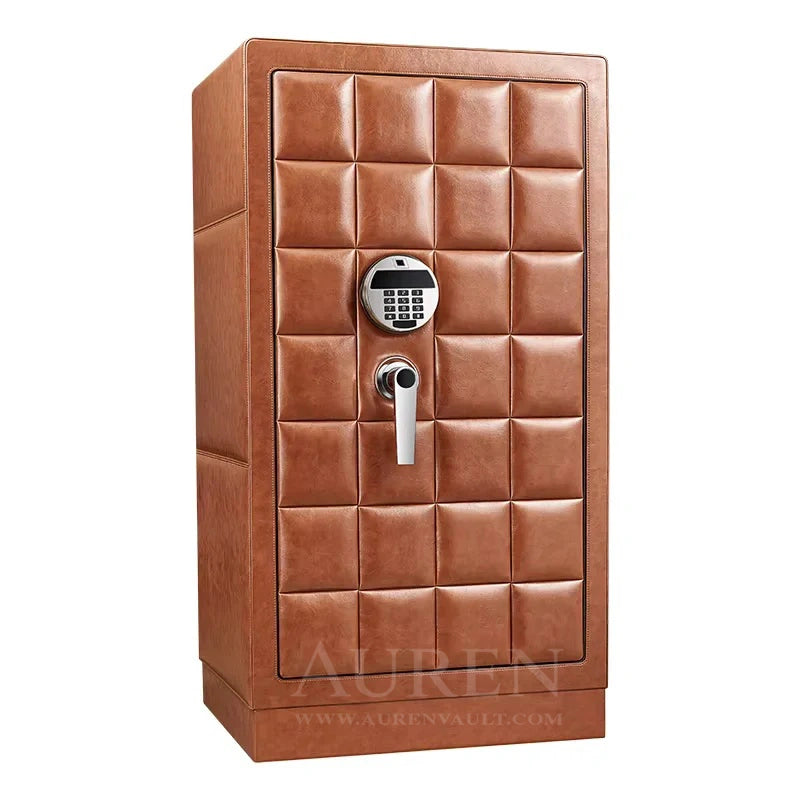
Auren Vault offers watch winder safes with integrated winding systems in compact and larger configurations, designed for collectors who want winding convenience and enclosed watch storage in one arrangement.
For an owner whose collection includes a Mido alongside more valuable or frequently rotated automatic watches, this type of storage may offer a more practical long-term solution.
The decision should reflect the collection's security requirements, available space, and expected growth rather than the brand name on any individual watch.
How to Set Up a Watch Winder for a Mido Automatic
Before placing a Mido on a winder, confirm its reference number and movement type.
This information is typically available in the product documentation, technical specifications, or through authorized service support.
If the watch uses an automatic movement, establish the appropriate winding direction and TPD program.
For many established Mido automatic movements, independent references suggest starting around 650 TPD with bidirectional rotation. However, this setting should not be applied without verifying compatibility with the actual calibre.
If the watch has already stopped, restart it using the manufacturer's instructions before expecting the winder to maintain its stored energy.
Place the watch securely on the cushion and ensure that the case, crown, bracelet, and strap have adequate clearance.
Then allow the programmed winding cycle to operate normally.
A properly configured winder should provide sufficient energy to maintain the watch during its scheduled periods of storage.
If the watch stops after several days, investigate the configuration rather than immediately selecting the highest available TPD.
Confirm that the winder is operating as programmed, that the watch began with sufficient power, and that the movement's winding requirements are correctly understood.
If problems persist despite an appropriate program, professional assessment may be necessary.
Does a Watch Winder Cause Unnecessary Wear?
Modern automatic movements generally incorporate a slipping mainspring system that prevents the mainspring from being continually tensioned after reaching its intended winding state.
Nevertheless, this does not mean that constant external rotation is desirable.
A watch winder's purpose is to maintain sufficient stored energy, not to operate as frequently as mechanically possible.
Additional rotor movement may provide no practical advantage once that purpose has been achieved.
A winder also cannot replace regular watch maintenance.
It does not restore degraded lubrication, correct mechanical faults, or improve a movement's inherent accuracy.
For watches that will remain unused over longer periods, allowing them to stop can be a reasonable approach when consistent with the manufacturer's storage and care recommendations.
Owners should also protect their watches from physical impacts, unsuitable storage conditions, and unnecessary handling.
A watch winder is one element of a broader watch ownership routine.
Common Questions About Mido Watch Winders
What is the best TPD for Mido automatic watches?
Approximately 650 TPD with bidirectional rotation is commonly suggested for many Mido automatic movements in independent winding databases. However, older automatic chronographs may have different requirements. The correct setting should be verified for the exact calibre.
Can I put a Mido Caliber 80 on a watch winder?
Yes. Caliber 80 is an automatic movement, so a compatible watch winder can help maintain its power reserve between wears. The appropriate TPD and rotation direction should be confirmed for the specific reference.
Is 650 TPD enough for Mido Ocean Star watches?
It may be a suitable initial program for many automatic Ocean Star movements, but it should not be treated as universally correct. Ocean Star models have used different calibres, so movement-specific compatibility remains important.
Does the Mido Multifort TV Big Date need a winder?
Not necessarily. Its Caliber 80 movement offers up to 80 hours of power reserve. A winder becomes more useful when the watch remains unworn beyond that period or when the owner wants to avoid resetting its date indication.
Does a Mido Caliber 60 chronograph use the same settings as Caliber 80?
Not automatically. Caliber 60 and Caliber 80 have different movement architectures. The correct rotation direction and TPD should be confirmed for the individual movement rather than copied from another model.
Can a Mido automatic watch be overwound in a winder?
Modern automatic movements generally incorporate mechanisms that prevent excessive mainspring tension once fully wound. However, a correctly configured winder should still avoid unnecessary continuous rotation.
Do Mido quartz or manual-winding watches need a winder?
No. Quartz watches do not rely on automatic mechanical winding, while manually wound watches must be wound through their crowns according to the manufacturer's instructions.
Is a watch winder safe worth buying for a Mido collection?
It depends on the size and composition of the collection. A standalone winder is often sufficient for one or two watches. A watch winder safe becomes more relevant when secure enclosed storage and independent winding positions are both priorities.
Final Considerations: Choose for Your Routine, Not Just the Movement
Mido's extended-power-reserve movements make watch ownership convenient even without a winder.
For a Caliber 80 watch worn regularly, up to 80 hours of autonomy may already cover the periods when it is not on the wrist.
For watches worn less frequently, a compatible winder can reduce repeated adjustments and keep automatic movements ready for use.
The most important factors remain the correct winding program, a suitable holder, reliable operation, and a configuration that reflects the owner's actual wearing habits.
As a collection expands, the decision may gradually shift from choosing a standalone winder to planning a more organized storage system.
The best solution is ultimately the one that provides enough winding when needed, protects the watches appropriately, and adds convenience without unnecessary complexity.
Related Reading
Collectors comparing automatic movements across Swiss watchmakers may find our analysis of Cartier watch winder settings and movement compatibility useful, particularly when managing watches with different winding directions.
For a broader comparison involving another established manufacture, explore how to select a watch winder for Vacheron Constantin.
Owners considering a larger storage arrangement can also read Watch Safes with Built-In Watch Winders: Are They Worth It?, which examines the relationship between winding convenience, collection organization, and enclosed watch storage.
The ideal winding arrangement should evolve with the collection—not dictate how the watches are worn.