


The best watch winder for Jacob & Co. watches is a programmable unit with adjustable turns per day (TPD), selectable rotation direction, controlled rest cycles, and a holder suited to the watch's exact case and strap.
Movement compatibility is particularly important with Jacob & Co. The Epic X Sport, Epic X Chrono, and The World Is Yours Dual Time Zone use automatic movements and can benefit from a compatible winder. However, many of the brand's most elaborate creations—including the Astronomia Sky, Bugatti Chiron Tourbillon, Opera Godfather, and Epic X Skeleton—are manually wound.
Independent watch winder databases list approximately 650–800 TPD for various older Jacob & Co. automatic references, but those settings should not be treated as universal instructions for the company's contemporary manufacture calibres.
For owners of Grand Complications, protective passive storage may be more useful than an additional winding module. For collectors with several automatic models, individually programmable winding positions offer greater flexibility.
The correct choice begins with the movement's winding architecture—not its price, complications, or visual complexity.
Why Jacob & Co. Watch Winder Selection Is Unusual
Jacob & Co. occupies a distinctive position in contemporary watchmaking.
The company's timepieces range from relatively conventional automatic sports watches to extraordinary mechanical constructions featuring rotating celestial displays, miniature engine automata, multi-axis tourbillons, and intricate musical mechanisms.
These features make the watches visually compelling.
They also create considerable confusion about automatic winding.
A rotating movement is not necessarily a self-winding movement.
A tourbillon that rotates on multiple axes does not automatically replenish the mainspring.
A miniature engine automaton moving inside a watch is not the same mechanism as an automatic winding rotor.
These distinctions are particularly important for Jacob & Co. because some of its most visually dynamic watches are manually wound.
Meanwhile, the comparatively understated Epic X Sport is genuinely automatic.
A conventional watch winder functions by rotating the complete watch so that its internal automatic winding mechanism can move relative to the case and transfer energy to the mainspring.
If the watch lacks that mechanism, external rotation cannot wind it.
For Jacob & Co. owners, identifying the calibre is therefore more important than identifying how many moving components are visible through the crystal.
Which Jacob & Co. Watches Can Use a Watch Winder?
The following comparison covers representative models whose winding types are identified in Jacob & Co.'s published specifications.
Jacob & Co. Watch Winder Compatibility Guide
| Jacob & Co. model | Calibre | Winding type | Power reserve | Winder suitable? |
|---|---|---|---|---|
| Epic X Sport | JCHA01 | Automatic | 70 hours | Yes |
| Epic X Chrono 47 mm | JCAA05 | Automatic | 48 hours | Yes |
| Epic X Chrono 44 mm Tri-Compax | JCAA12 | Automatic | 48 hours | Yes |
| The World Is Yours Dual Time Zone | JCAA11 | Automatic | 42 hours | Yes |
| Epic X Skeleton | JCAM02 | Manual-winding | 48 hours | No |
| Epic X Ceramic Skeleton | JCAM02 | Manual-winding | 48 hours | No |
| Astronomia Sky | JCAM11 | Manual-winding | 60 hours | No |
| Astronomia Casino | JCAM36 | Manual-winding | 60 hours | No |
| Astronomia Revolution | JCAM48B | Manual-winding | 30 hours | No |
| Bugatti Chiron Tourbillon | JCAM37 | Manual-winding | 60 hours | No |
| Bugatti Tourbillon | JCAM55 | Manual-winding | Check reference specifications | No |
| Opera Godfather | JCFM04 | Manual-winding | 50 hours | No |
| Casino Tourbillon | JCAM51 | Manual-winding | 72 hours | No |
| Billionaire II | JCAM39 | Manual-winding | 72 hours | No |
| Heritage Five Time Zone, selected references | Multiple quartz movements | Quartz | Not applicable | No |
Specifications apply to the identified movements and representative references. Jacob & Co. produces numerous limited editions and variations; confirm the exact calibre before purchasing or programming winding equipment.
An important conclusion emerges immediately.
Most of the advanced complications in this comparison do not require a watch winder.
Their owners may instead benefit from carefully designed passive storage that accommodates unusual case dimensions, elaborate crystals, delicate straps, and valuable materials.
For the automatic models, movement-specific programming remains essential.
Epic X Sport: The Automatic Jacob & Co. That May Need a Winder
The Epic X Sport is among Jacob & Co.'s more practical everyday mechanical watches.
Representative references use calibre JCHA01, a self-winding movement with approximately 70 hours of power reserve.
It operates at 28,800 vibrations per hour, equivalent to 4 Hz.
The movement incorporates a rotor designed with Jacob & Co.'s visual identity and is housed in a 41 mm case.
Unlike the brand's more elaborate hand-wound tourbillons, the Epic X Sport receives winding energy through ordinary wrist movement.
A compatible watch winder can therefore maintain its stored energy between wears.
Does a 70-Hour Epic X Sport Need a Winder?
Not necessarily.
Approximately 70 hours of reserve provides considerable flexibility when the watch is not being worn.
An owner who wears the Epic X Sport most days may find that its movement remains running during short periods off the wrist.
A winder becomes more useful when the watch is part of a larger collection and may remain unworn for several days.
The benefit is convenience.
Keeping the movement running reduces repeated time and date adjustments.
It does not improve the watch's inherent accuracy or eliminate the need for servicing.
Why the JCHA01 Needs Its Own Winding Program
The JCHA01 is a contemporary Jacob & Co. automatic calibre.
Historical watch winder databases frequently contain entries for older Jacob & Co. models based on ETA movement families.
Those entries should not automatically be applied to the JCHA01.
A generic 650 TPD bidirectional program may be worth investigating as a preliminary reference, but it is not an established manufacturer prescription for this calibre.
The appropriate setting should be confirmed with Jacob & Co. or an authorized service representative.
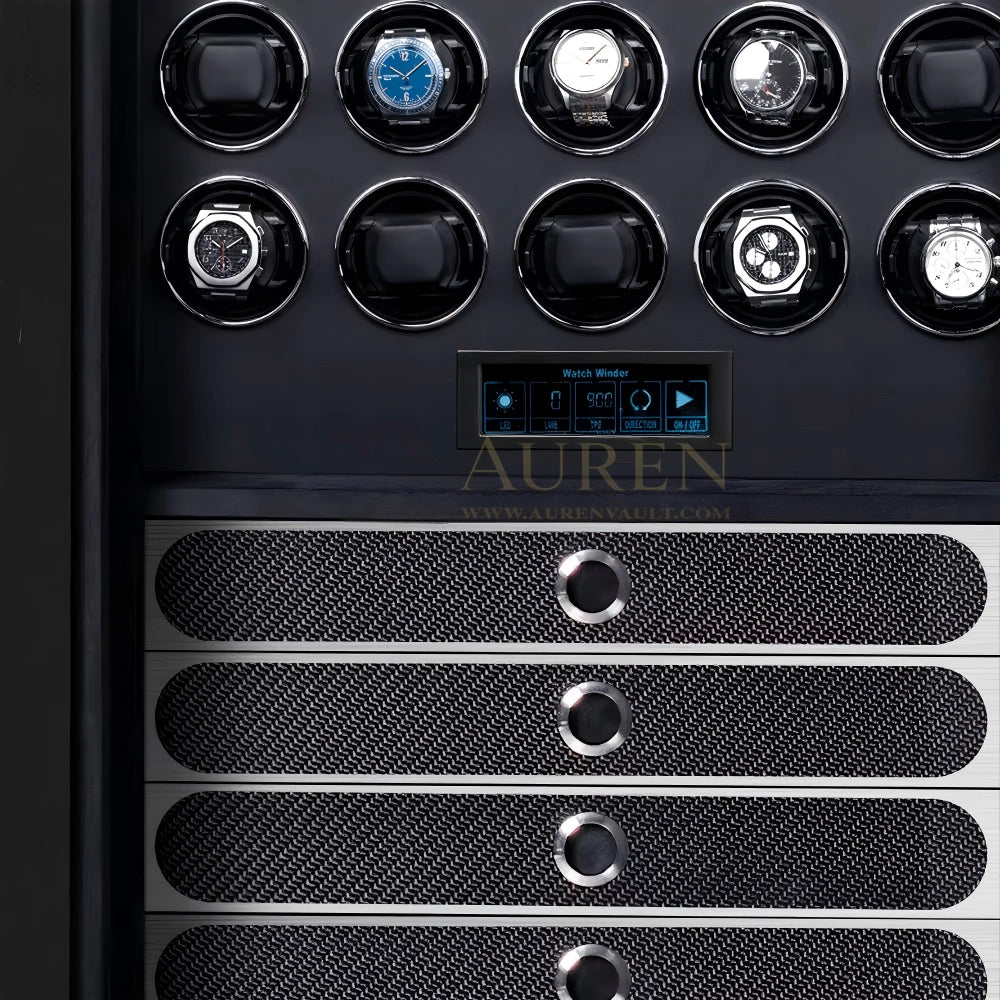
A suitable device should offer adjustable daily rotations and selectable direction.
Fixed-speed units provide less flexibility when precise settings are required.
Epic X Chrono: Automatic Chronographs With Different Calibres
The Epic X Chrono collection introduces a separate set of winding considerations.
Jacob & Co. produces several chronograph configurations, including the 47 mm Bi-Compax and 44 mm Tri-Compax.
Both are automatic in the representative references discussed here.
However, they use different movements.
Epic X Chrono 47 mm: Calibre JCAA05
The Epic X Chrono 47 mm uses calibre JCAA05.
Jacob & Co. identifies this as a self-winding chronograph movement with a rotor visible through the caseback.
Representative references provide approximately 48 hours of power reserve and operate at 4 Hz.
The movement powers conventional timekeeping indications as well as chronograph functions.
A compatible winder can help maintain its reserve when the watch is not worn.
That may be convenient for someone who rotates several large sports watches throughout the week.
Does the Chronograph Need More TPD?
Not automatically.
A chronograph uses additional mechanical components to measure elapsed time.
However, the external winding program depends on the automatic winding mechanism, not merely on the presence of chronograph pushers.
A watch winder does not start the chronograph, reset elapsed-time counters, or operate its control system.
It supplies motion to the automatic winding rotor.
For the JCAA05, the correct TPD and rotation direction should be verified specifically.
The fact that older ETA 7750-based Jacob & Co. chronographs are listed at 800 TPD clockwise does not establish the same program for JCAA05.
Epic X Chrono 44 mm Tri-Compax: Calibre JCAA12
The Epic X Chrono 44 mm Tri-Compax uses the self-winding JCAA12 movement.
Jacob & Co. specifies approximately 48 hours of reserve and a 4 Hz frequency.
The movement incorporates a column-wheel chronograph with three-register styling.
Although its power reserve is similar to that of JCAA05, the movements are different.
The two should not automatically be assigned identical winding programs without confirmation.
This is a useful example of why a model family alone cannot determine winding requirements.
Ceramic and Metal Cases Need Different Physical Considerations
Selected Epic X Chrono 44 mm references use ceramic cases or bracelets, while other configurations emphasize titanium or precious metals.
These differences affect physical handling.
A ceramic bracelet should not be forced around an oversized winding cushion.
A large chronograph case should have sufficient clearance around the crown and pushers.
For either model, the holder should keep the watch stable throughout rotation.
A correct TPD program is not enough if the device cannot safely accommodate the watch.
The World Is Yours Dual Time Zone: A Practical Automatic Complication
The World Is Yours Dual Time Zone provides a different approach to Jacob & Co. watchmaking.
Instead of emphasizing an elaborate multi-axis tourbillon, it offers an unusual but practical travel complication.
The watch uses calibre JCAA11, a self-winding manufacture movement with approximately 42 hours of power reserve.
Its two time-zone displays can show different hours and minutes.
This makes it possible to represent locations with half-hour offsets, rather than limiting the second indication to full-hour differences.
The movement operates at 4 Hz and is housed in a 43 mm case in representative references.
Why a Dual Time Zone Can Benefit From a Winder
A 42-hour reserve means that the watch may stop after less than two days without additional winding.
For an owner who wears it only occasionally, repeated adjustment may become inconvenient.
A compatible winder can maintain the movement between wears.
This can reduce the frequency of resetting both time-zone indications.
However, the winder does not automatically update the watch when the owner travels.
It does not detect a change in time zone or adjust for daylight saving time.
Its role is to maintain the power reserve, not operate the travel complication.
Does JCAA11 Need 650 or 800 TPD?
The exact external maintenance program for JCAA11 is not established by the historical winding databases reviewed here.
Older Jacob & Co. travel watches may use different movements, including quartz configurations or ETA-based automatic calibres.
Their settings should not automatically be transferred to JCAA11.
The correct TPD and direction should be confirmed for this specific movement.
For a collector using several automatic watches, individually programmable winding modules make it easier to maintain separate programs.
Epic X Skeleton: Why a Mechanical Sports Watch May Not Need a Winder
The Epic X Skeleton illustrates an important exception within the Epic X family.
Representative references use calibre JCAM02, a manually wound skeleton movement with approximately 48 hours of power reserve.
The movement's architecture emphasizes two prominent vertical bridges and an openworked construction.
Unlike the Epic X Sport and Epic X Chrono, the JCAM02 does not use an automatic winding rotor.
It must be wound manually.
Skeletonization Does Not Mean Automatic Winding
A skeleton watch reveals the mechanical components that would normally remain hidden beneath bridges and a dial.
This gives the owner a clearer view of the movement's architecture.
However, skeletonization does not establish whether the movement is automatic or manual-winding.
The decisive factor is the presence of an automatic winding mechanism.
The Epic X Skeleton JCAM02 is hand-wound.
Therefore, rotating the complete watch inside a conventional automatic winder will not replenish its energy.
A protected non-winding compartment is more useful.
Epic X Ceramic Skeleton Requires the Same Distinction
The Epic X Ceramic collection also includes JCAM02 hand-wound references.
The ceramic case and distinctive construction do not alter the movement's winding type.
A conventional watch winder offers no mechanical benefit.
For an owner with an Epic X Sport and an Epic X Ceramic Skeleton, the appropriate setup is one active winding module and one passive storage position—not two identical rotors.
Astronomia: Why a Rotating Universe Is Not an Automatic Rotor
Astronomia is one of Jacob & Co.'s most recognizable Grand Complication families.
Its movements can incorporate rotating platforms, celestial objects, tourbillons, and elaborate mechanical displays.
These components may rotate continuously while the movement runs.
But their motion does not mean the watch is self-winding.
Many Astronomia references use manually wound movements.
Astronomia Sky: Calibre JCAM11
The Astronomia Sky uses calibre JCAM11.
Jacob & Co. specifies manual winding and approximately 60 hours of power reserve for representative references.
Its movement includes a rotating central platform and a triple-axis tourbillon.
The watch's mechanical display can create the appearance of a miniature moving universe.
However, the rotating platform is part of the timekeeping and complication architecture.
It does not serve as an automatic winding rotor.
External rotation of the complete watch cannot replenish the mainspring.
Astronomia Casino: Calibre JCAM36
The Astronomia Casino uses the manually wound JCAM36 calibre.
Representative references provide approximately 60 hours of reserve.
The watch incorporates a rotating platform, tourbillon, and an on-demand roulette complication.
The roulette mechanism is an automaton-like display activated separately from ordinary winding.
It should not be confused with automatic winding functionality.
A watch winder cannot operate this complication or replenish the manually wound movement.
Astronomia Revolution: Calibre JCAM48B
The Astronomia Revolution uses a different manually wound movement, JCAM48B.
Its central rotating platform and high-speed tourbillon architecture create an especially dynamic visual display.
Representative references offer approximately 30 hours of power reserve.
Despite the movement's fast-moving components, conventional external winding is not applicable.
This demonstrates a fundamental principle:
The number or speed of rotating components inside a mechanical watch does not determine its suitability for an automatic watch winder.
For Astronomia owners, the more important storage question is how to protect the substantial sapphire construction and complex case without unnecessary handling or contact.
Bugatti Chiron Tourbillon: A Mechanical Engine Does Not Mean Automatic Winding
The Bugatti Chiron Tourbillon combines elaborate automotive design with high watchmaking.
Its calibre JCAM37 includes a miniature W16 engine-block automaton and a flying tourbillon.
Jacob & Co. specifies approximately 60 hours of power reserve.
The movement is manually wound.
This means it cannot receive winding energy through a conventional watch winder.
Understanding the W16 Automaton
The miniature engine animation is designed to resemble the motion of Bugatti's W16 engine.
It uses a dedicated mechanism that can be activated through the watch's controls.
That motion is separate from the movement's ordinary timekeeping and winding functions.
The watch's crowns also perform distinct tasks, including setting, winding, and operating the animation.
A conventional rotating watch winder cannot replicate those controls.
Trying to compensate by increasing external rotations provides no mechanical benefit.
Why Passive Storage Is Particularly Important
Representative Bugatti Chiron Tourbillon references measure approximately 55 × 44 mm and 22 mm thick.
That is much larger and thicker than a conventional mechanical dress watch.
Its case construction includes extensive sapphire components and unusual external controls.
For such a watch, the storage compartment must be assessed carefully.
A conventional cushion may not support the case and strap appropriately.
An enclosure designed around ordinary round watches may also provide insufficient depth.
Protective passive storage should provide adequate clearance without pressure against the crystal, crown assemblies, or case edges.
Bugatti Tourbillon: A Different Movement, Still Hand-Wound
The newer Bugatti Tourbillon uses calibre JCAM55 in representative references.
Its construction is inspired by Bugatti's Tourbillon hypercar and incorporates a miniature V16 engine automaton, flying tourbillon, and retrograde displays.
The movement is manually wound.
Jacob & Co.'s published page contains differing power-reserve figures: the narrative refers to 48 hours, while the technical specification for the polished titanium reference states 80 hours.
Owners should verify the reserve for their exact reference rather than assume those figures are interchangeable.
For winder compatibility, however, the conclusion is clear.
The JCAM55 is hand-wound and does not benefit from a conventional automatic watch winder.
The large case, sophisticated automaton, and sapphire components make protected passive storage the more relevant consideration.
Opera Godfather, Twin Turbo and Casino Tourbillon: More Manual-Winding Exceptions
Jacob & Co.'s Grand Complications demonstrate extraordinary mechanical complexity.
But that complexity does not establish automatic winding.
Opera Godfather: Calibre JCFM04
Representative Opera Godfather models use the manually wound JCFM04 movement.
Jacob & Co. specifies approximately 50 hours of power reserve.
The calibre combines a triple-axis flying tourbillon with a mechanical music-box mechanism.
The music-box function is powered and operated through its own mechanical system.
It is not an automatic winding rotor.
A conventional winder cannot replenish the movement by rotating the complete case.
Twin Turbo Furious: Calibre JCFM05
The Twin Turbo Furious uses the hand-wound JCFM05 calibre.
Representative references provide approximately 50 hours of reserve.
The movement incorporates twin triple-axis tourbillons, a monopusher chronograph, and a decimal minute repeater.
These complications operate through the movement's complex mechanical architecture.
They do not turn the watch into an automatic.
For such a watch, movement-specific manual winding and appropriate storage are essential.
Casino Tourbillon: Calibre JCAM51
The Casino Tourbillon uses the hand-wound JCAM51 movement.
It offers approximately 72 hours of reserve and includes a functional mechanical roulette complication.
The roulette wheel is operated on demand.
Its rotation is not related to automatic mainspring winding.
A conventional external watch winder provides no energy to the manually wound calibre.
These examples illustrate why mechanical Grand Complications should not be assigned generic TPD settings.
For many of Jacob & Co.'s most elaborate watches, TPD is simply not applicable.
Billionaire: High Jewelry Does Not Change the Winding Mechanism
Jacob & Co.'s Billionaire collection is known for extraordinary gem-setting and elaborate skeletonized tourbillon movements.
Representative Billionaire II watches use the manually wound JCAM39 calibre.
Jacob & Co. specifies approximately 72 hours of power reserve.
The movement is a sophisticated mechanical construction, but it does not contain the automatic winding mechanism required for a conventional winder.
The same principle applies to other confirmed manually wound Billionaire variants.
For a high-jewelry watch, physical storage may deserve greater attention than automatic winding.
A diamond-set bracelet can have a very different contact profile from an ordinary rubber or leather strap.
A rigid cushion should not exert unnecessary pressure on its clasp, links, or gem-set surfaces.
The watch should be supported in a manner compatible with its particular construction.
For such pieces, custom passive compartments may be more appropriate than standardized winding holders.
Five Time Zone Watches: Some Heritage Models Are Quartz
The original Five Time Zone collection is an important part of Jacob & Co.'s history.
However, not every Five Time Zone watch is an automatic mechanical watch.
Selected heritage Five Time Zone references use multiple Swiss quartz movements to display time across several locations.
For these watches, conventional automatic winding is not applicable.
Rotating the watch in a winder does not recharge its batteries.
Five Time Zones Do Not Mean Five Automatic Movements
A watch can display several time zones through different technical arrangements.
Those arrangements may include quartz movements, mechanical GMT systems, or specialized automatic calibres.
The number of time-zone displays does not determine the winding mechanism.
This distinction is especially important when comparing an older Five Time Zone reference with the modern The World Is Yours Dual Time Zone.
The latter uses the automatic JCAA11 movement.
Some historical Five Time Zone watches use quartz.
Although both are associated with travel and multiple time zones, their energy sources are different.
For older or discontinued Jacob & Co. references, the reference number and movement specification should be checked rather than relying on the collection name.
Jacob & Co. Watch Winder Settings: 650 or 800 TPD?
Turns per day, or TPD, describes the number of rotations an external watch winder performs over 24 hours.
Winding direction describes whether those rotations occur clockwise, counterclockwise, or in alternating directions.
These settings matter because automatic movements do not necessarily convert all external motion into stored energy in the same way.
Independent watch winder databases include a number of historical Jacob & Co. references.
The figures vary according to the model and movement.
Jacob & Co. TPD Reference Table
| Watch or movement family | Third-party TPD reference | Direction | Important limitation |
|---|---|---|---|
| Historical automatic chronographs using ETA 7750 | Approximately 800 | Clockwise | Movement-specific historical guidance |
| Historical Epic II models | Approximately 800 | Clockwise | Not applicable to every modern Epic X |
| Certain older Five Time Zone automatic references | Approximately 800 | Clockwise | Verify the exact automatic variant |
| Historical watches using ETA 2892-A2 | Approximately 650 in some listings | Bidirectional | Other model-based entries differ |
| Historical JC-S references | Approximately 650 | Bidirectional | Reference-specific guidance |
| Epic X Sport JCHA01 | No verified official preset established here | Confirm | Modern proprietary automatic |
| Epic X Chrono JCAA05 | No verified official preset established here | Confirm | Do not copy ETA 7750 automatically |
| Epic X Chrono JCAA12 | No verified official preset established here | Confirm | Separate movement |
| The World Is Yours JCAA11 | No verified official preset established here | Confirm | Modern manufacture calibre |
| Epic X Skeleton JCAM02 | Not applicable | Not applicable | Manual-winding |
| Astronomia and Bugatti hand-wound calibres | Not applicable | Not applicable | No automatic winding rotor |
The numerical settings are drawn from independent winding databases, not a universal Jacob & Co. manufacturer-approved TPD chart.
Why Historical Settings Are Not Enough for Modern Jacob & Co.
A watch using an established ETA movement may have winding recommendations available in multiple technical databases.
Those settings can be useful when the exact movement and reference are identified.
However, modern Jacob & Co. manufacture calibres require separate evaluation.
The JCHA01, JCAA05, JCAA12, and JCAA11 should not automatically be treated as if they contain the same winding systems as older ETA-based references.
Even within historical databases, recommendations can differ between models using related movement architectures.
This makes a calibre-specific recommendation preferable to a broad brand-wide estimate.
Should You Start With 650 TPD Bidirectional?
A moderate bidirectional program is often discussed as a general starting point for automatic watches.
However, there is no verified basis in this guide for presenting 650 TPD as an official setting for Jacob & Co.'s current automatic manufacture calibres.
For a valuable contemporary Jacob & Co., the appropriate approach is to obtain guidance for the exact movement.
A programmable device can then reproduce the specified daily rotations and direction.
If no reliable program is available, passive storage is preferable to assuming that any generic preset is correct.
For an explanation of how winding programs work, see the watch TPD guide.
Why More Rotations Are Not Automatically Better
A high TPD number does not necessarily translate into better winding.
Effectiveness depends on the movement's winding architecture and the direction of external rotation.
A movement that winds predominantly in one direction may respond differently to an alternating program than one designed for effective winding in both directions.
The winder's operating schedule also matters.
A device distributing 800 rotations across several short sessions may behave differently from one operating for a prolonged uninterrupted period.
The objective is to maintain adequate stored energy.
Continuous or unnecessarily high external rotation provides no established benefit.
What Makes a Good Watch Winder for an Automatic Jacob & Co.?
For the brand's automatic watches, the ideal device combines movement compatibility with secure physical support.
The watch's price and visual sophistication do not reduce the importance of these basic requirements.
Independent TPD and Direction Controls
The winder should support adjustable daily rotations and clockwise, counterclockwise, and alternating operation.
Independent controls are particularly useful when a collection contains an Epic X Sport, Epic X Chrono, and The World Is Yours Dual Time Zone.
Each uses a different automatic calibre.
Even if their eventual recommended programs are similar, they should be verified separately.
A fixed-speed winder offers limited flexibility.
A Properly Sized Watch Holder
Jacob & Co. automatic watches have different case dimensions and strap constructions.
The Epic X Sport has a relatively compact 41 mm case.
The Epic X Chrono 47 mm is considerably larger.
The World Is Yours Dual Time Zone has a 43 mm case and is commonly fitted with an alligator leather strap.
A single rigid cushion may not accommodate all three equally well.
The holder should support the watch without overstretching the strap or bracelet.
It should also prevent the case from shifting during rotation.
Adequate Crown and Pusher Clearance
Chronographs often have crowns and pushers that project from the case.
These controls must remain clear of the holder and surrounding compartment.
The case should not contact nearby surfaces during rotation.
For a multi-watch system, enough space must be provided between adjacent winding positions.
A winding module that fits the nominal case diameter may still be unsuitable if the watch's overall length, thickness, or external controls exceed the available clearance.
Reliable Motors and Rest Cycles
A suitable winder should use controlled operating periods separated by rest intervals.
It should execute the selected program consistently.
Quiet motors and straightforward controls are valuable when the device is placed in a dressing room, office, or bedroom.
For a high-value watch, reliable operation and appropriate physical support matter more than elaborate lighting or decorative features.
Grand Complication Storage: Why Standard Winding Cabinets May Not Fit
Jacob & Co.'s larger mechanical creations present a different storage challenge.
An Astronomia Sky, for example, can measure approximately 47 mm across and 25 mm thick.
The Bugatti Chiron Tourbillon measures approximately 55 × 44 mm and 22 mm thick in representative references.
The Twin Turbo Furious can be larger still.
These dimensions exceed those of many conventional watches.
However, the problem is not simply finding a larger winding cushion.
Most of these movements are manually wound and do not require an active rotor.
The primary issue is providing adequate passive storage with appropriate clearance.
Sapphire Domes and Unusual Case Shapes
Several Astronomia and Bugatti watches use substantial sapphire crystals and unusual case constructions.
A storage compartment should accommodate the complete case without contact between the crystal and nearby surfaces.
The watch should not be forced into a standardized holder designed for a conventional round case.
Careful handling is especially important during insertion and removal.
The appropriate storage arrangement should reduce unnecessary contact, pressure, and repeated manipulation.
Winding Controls May Be in Unusual Positions
Some Jacob & Co. Grand Complications use caseback winding bows or unconventional crown arrangements.
These mechanisms must remain accessible when the watch is removed for manual winding.
They should not be subjected to unintended pressure from a storage holder.
A caseback-mounted winding system also does not make the watch compatible with a conventional rotating watch winder.
The external device cannot substitute for the specific manual winding procedure.
For such watches, the manufacturer's operating instructions take priority.
Diamonds, Precious Metals, and Decorative Components
High-jewelry Jacob & Co. watches may include diamond-set bracelets, precious-metal cases, and elaborate decorative structures.
Standardized winding cushions can introduce unnecessary contact with these surfaces.
Protective compartments should reflect the specific watch's geometry and materials.
A suitably designed passive holder may be preferable to a conventional active winding module, even in a cabinet that also contains automatic watches.
Standalone Watch Winder or Watch Winder Safe?
A standalone winder primarily maintains automatic movement operation.
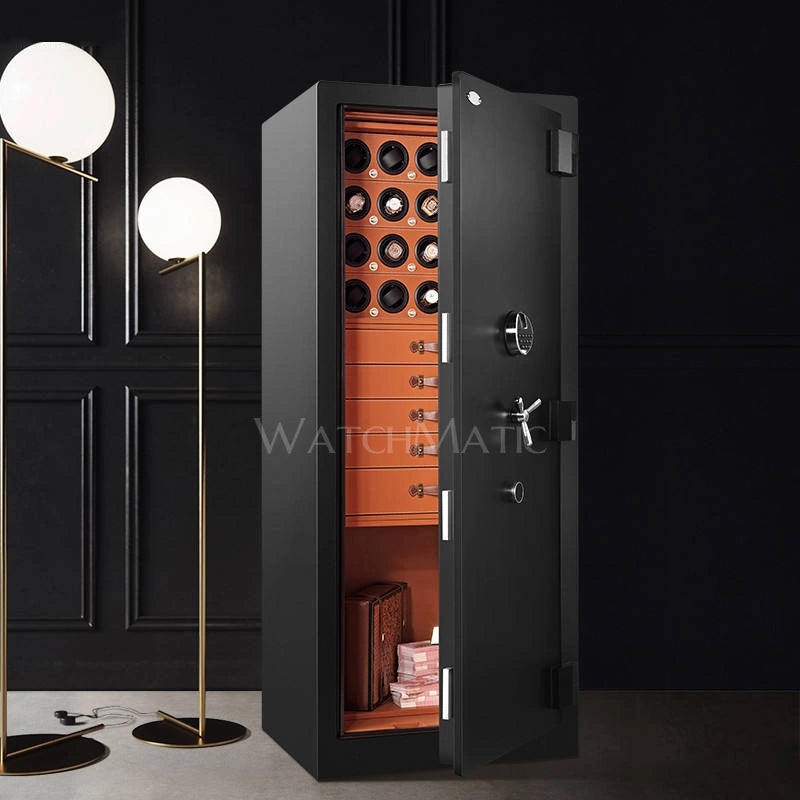
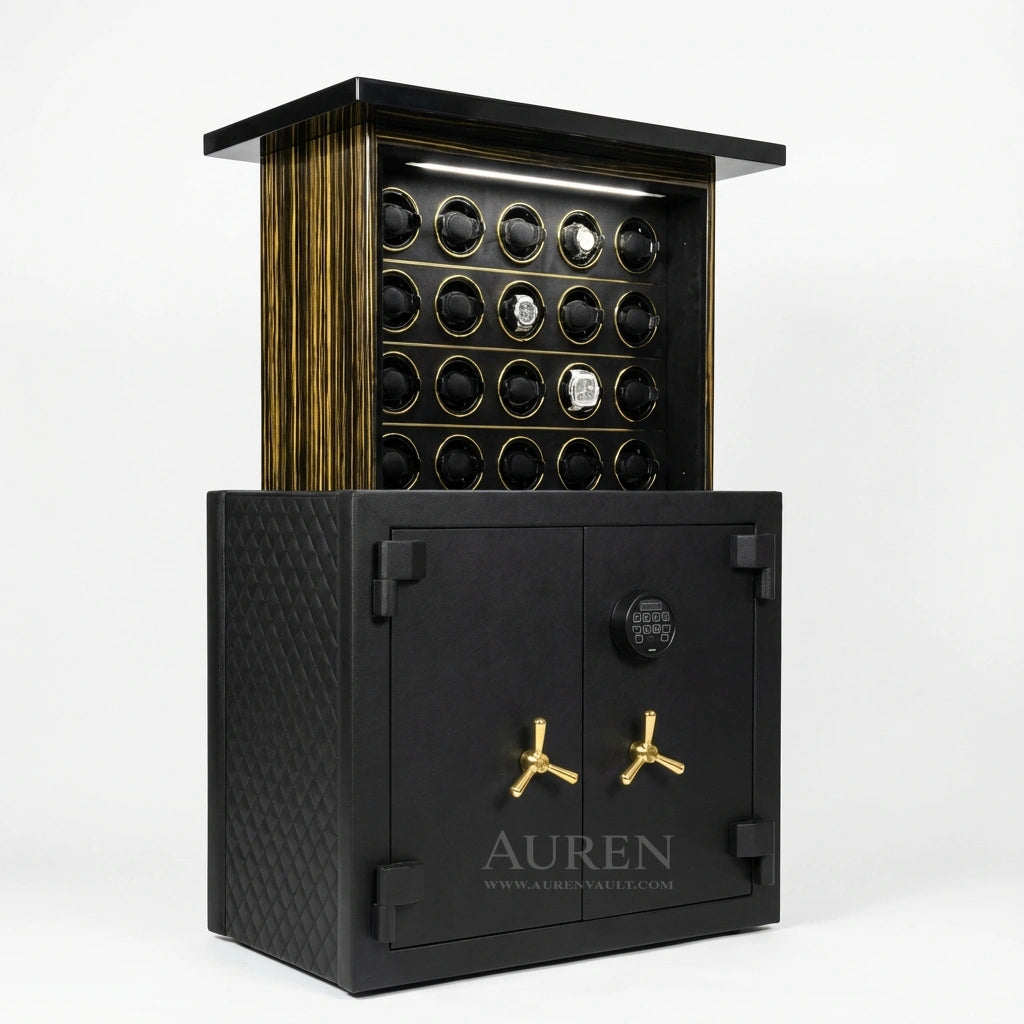
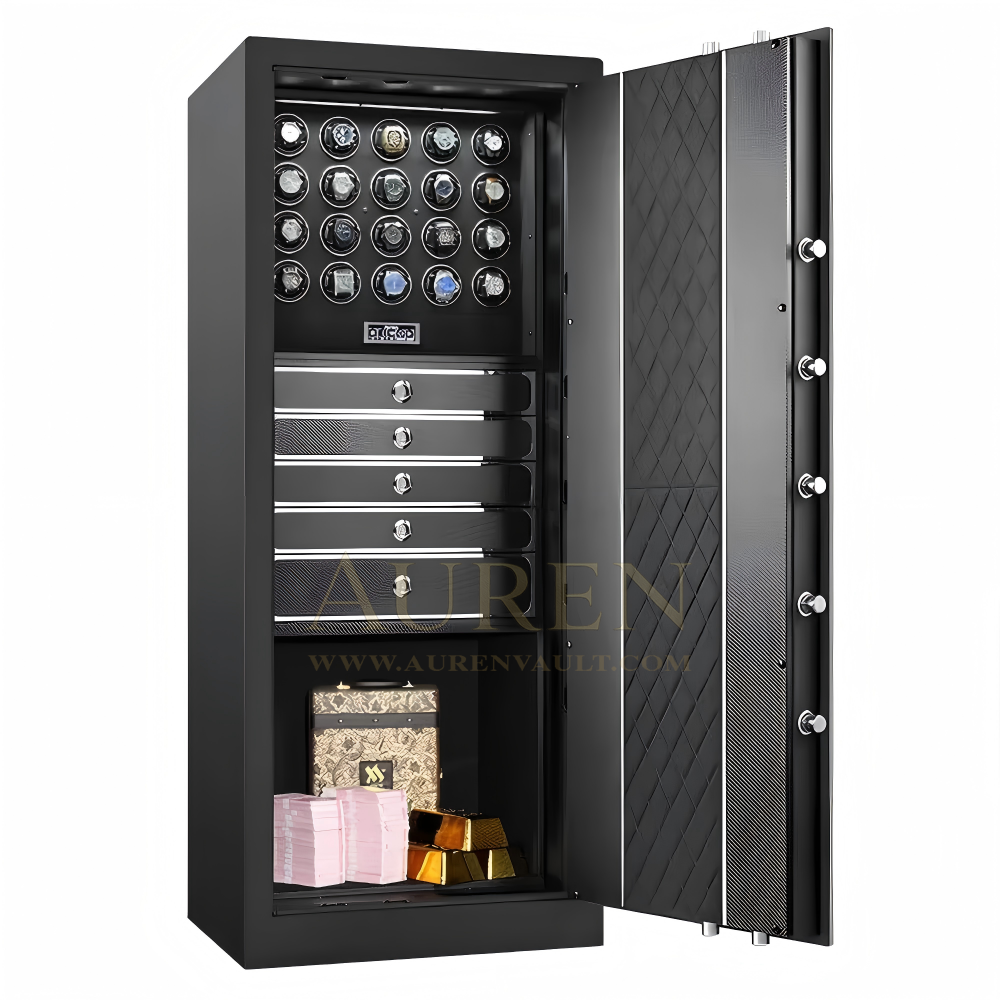
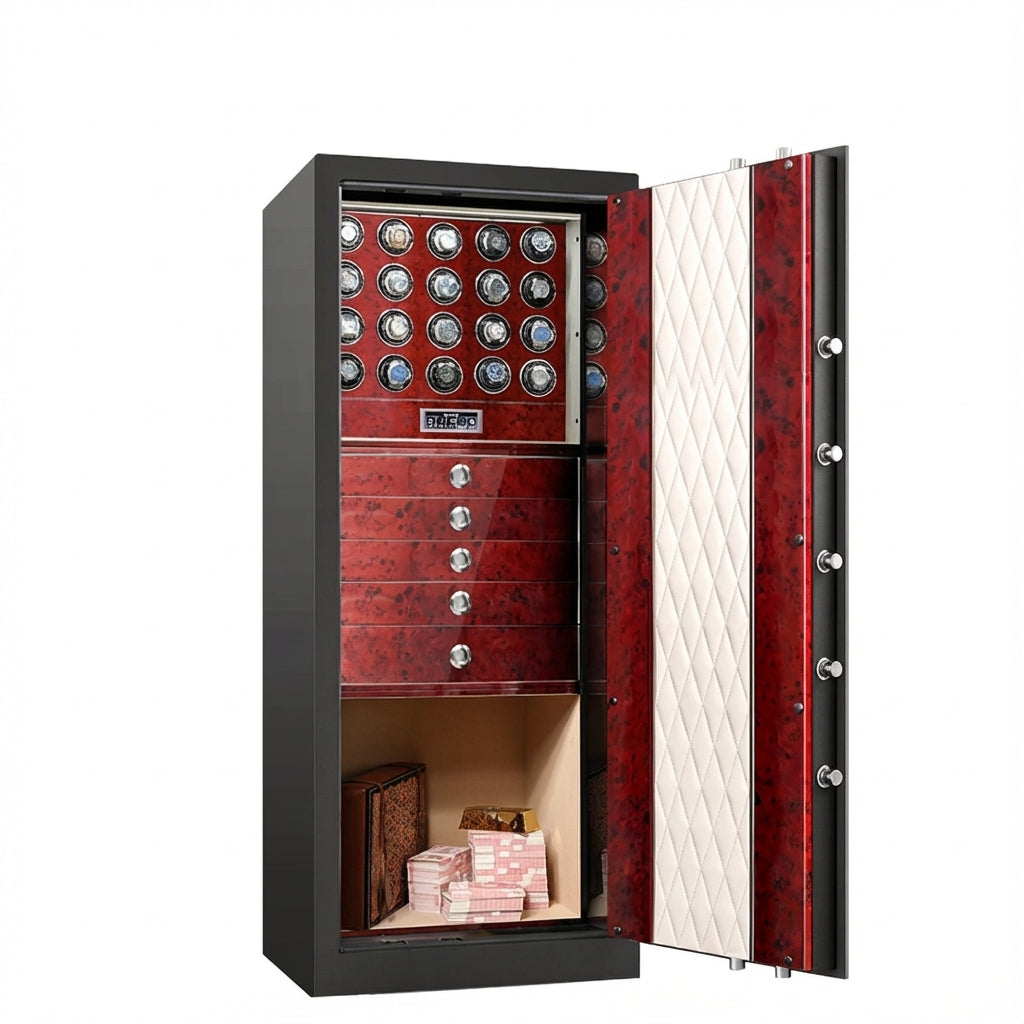
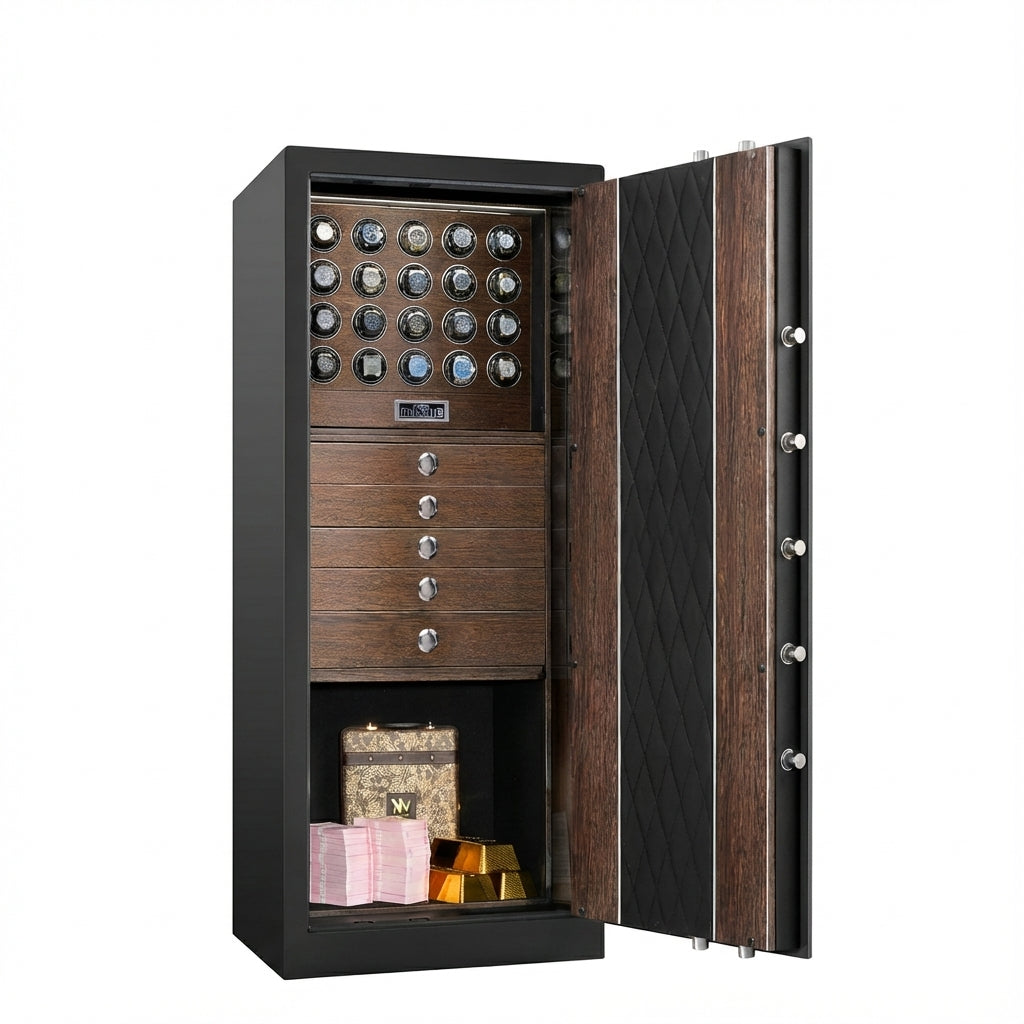
A watch winder safe combines compatible winding modules with enclosed, lockable storage.
For one regularly worn Epic X Sport, a compact programmable winder may be sufficient.
For a collection containing several automatic watches and multiple Grand Complications, a more comprehensive storage arrangement can be appropriate.
The key is to distinguish between watches that require active winding and those that require passive protection.
| Collection profile | Suitable arrangement | Main consideration |
|---|---|---|
| One regularly worn Epic X Sport | No winder or compact programmable unit | Convenience |
| Epic X Sport and Epic X Chrono | Independent programmable winding positions | Different automatic calibres |
| Epic X and The World Is Yours | Multi-watch winder with separate programs | Movement compatibility |
| Astronomia and Bugatti hand-wound watches | Protective passive compartments | Case clearance and handling |
| Mixed automatic and Grand Complication collection | Winding modules plus dedicated passive storage | Appropriate allocation |
| Larger valuable collection | Appropriately specified watch winder safe | Organization and security |
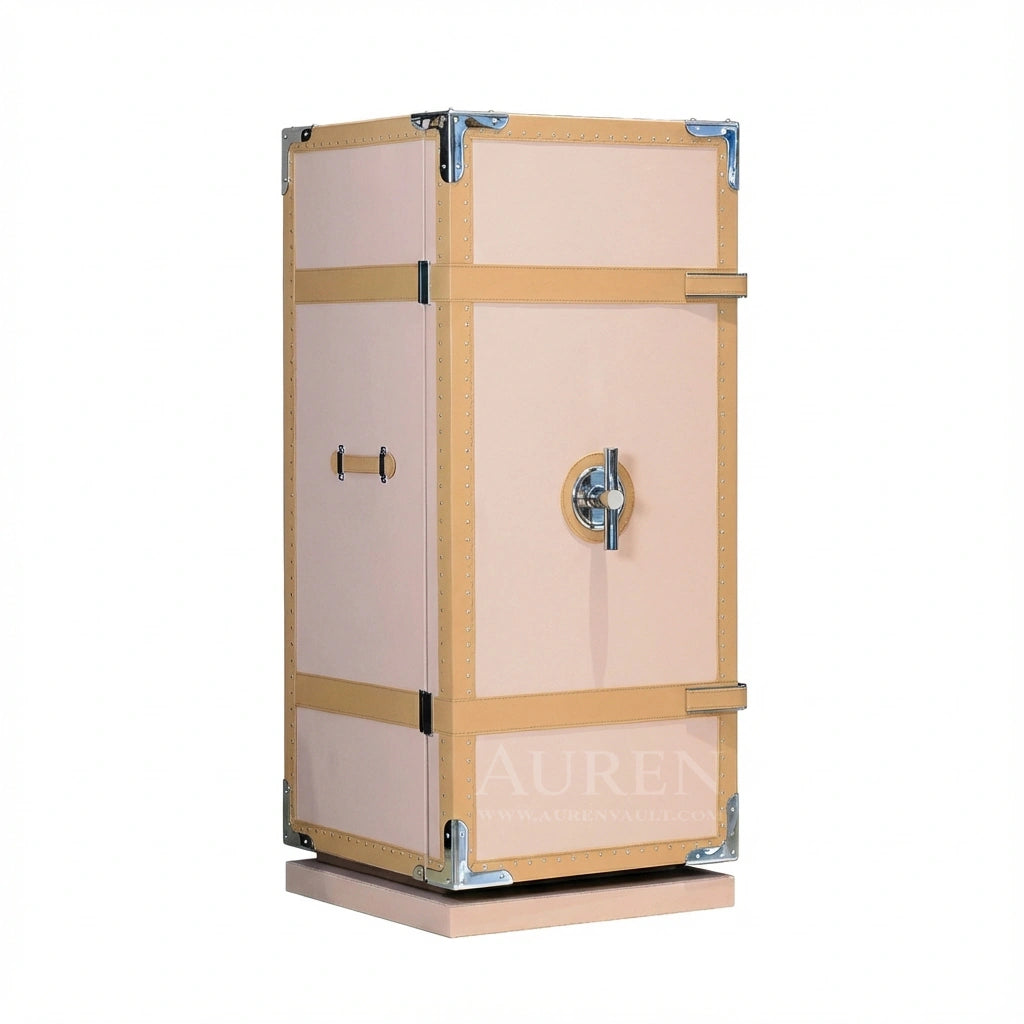
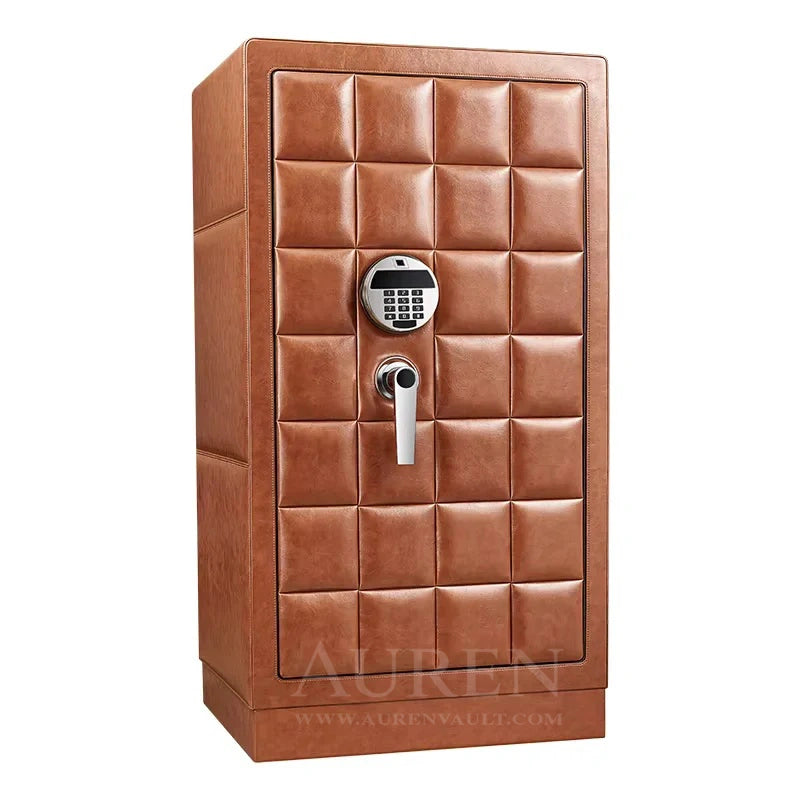
For collectors seeking integrated storage, watch winder safes provide a starting point for considering active winding and enclosed storage together.
The watch winder safe guide addresses broader considerations associated with capacity, control systems, and physical protection.
Security and Winding Are Separate Requirements
A watch winder may operate correctly without providing meaningful physical security.
Likewise, a lockable cabinet does not automatically establish certified burglary resistance or fire protection.
The enclosure's security should be evaluated through its construction, locking mechanism, installation requirements, and any independently documented ratings.
Winding specifications must also be verified independently.
A cabinet with multiple rotors is not necessarily appropriate if those modules cannot reproduce the required programs for the watches it contains.
Planning Storage for a Mixed Jacob & Co. Collection
Consider a collector with an Epic X Sport, Epic X Chrono 47 mm, Epic X Chrono 44 mm, The World Is Yours Dual Time Zone, Epic X Skeleton, Astronomia Sky, Bugatti Chiron Tourbillon, and Opera Godfather.
That is an eight-watch collection.
Only four watches use automatic movements.
The other four are manually wound.
A cabinet with four individually programmable winding positions and four appropriately sized passive compartments could therefore be more useful than a system with eight identical rotors.
The watch safes collection offers a starting point for considering the total storage arrangement.
For substantial collections, large luxury watch safes may provide more space for watches, straps, and accessories.
However, capacity should not be judged only by the number of listed watch positions.
The actual case dimensions of Jacob & Co. Grand Complications may require substantially more clearance than ordinary watches.
When Bespoke Storage Becomes Necessary
A mixed Jacob & Co. collection can include 41 mm sports watches, 47 mm chronographs, tall sapphire-domed Astronomia watches, and unusual tonneau or automotive-inspired cases.
These pieces do not all fit the same holders.
A bespoke layout can account for differing cushion dimensions, passive compartment depth, independently programmable winding positions, and separate accessory storage.
Such requirements can be considered through custom watch safe design options, subject to the capabilities of the selected configuration.
For private residences, installation planning should also consider cabinet dimensions, electrical access, delivery routes, structural support, and everyday usability.
For unusually shaped Grand Complications, physical fit should be checked using the exact watch dimensions rather than relying on nominal watch capacity alone.
The best solution is the one that accommodates the real collection without unnecessary handling.
Does a Jacob & Co. Need to Remain on a Winder Continuously?
No.
Automatic Jacob & Co. watches do not need to remain running continuously.
During regular wear, wrist movement replenishes energy through the automatic winding mechanism.
When the watch remains unworn, the stored reserve gradually decreases until the movement stops.
This is a normal part of mechanical watch ownership.
A compatible winder can reduce the inconvenience of restarting and resetting an automatic watch.
For the Epic X Sport, that benefit may be modest if the watch is worn frequently.
For The World Is Yours Dual Time Zone, maintaining the movement can reduce repeated adjustment of its indications.
For manually wound Astronomia, Bugatti, Opera, or Billionaire watches, conventional external winding offers no mechanical benefit.
Long-term storage should instead focus on appropriate environmental conditions, careful physical support, and the manufacturer's maintenance instructions.
The watch storage guide provides broader context for organizing and protecting valuable timepieces.
A watch winder is one possible part of a storage strategy—not a requirement for every mechanical watch.
Frequently Asked Questions About Jacob & Co. Watch Winders
What is the best TPD for Jacob & Co. watches?
There is no universal TPD setting for every Jacob & Co. Independent databases list approximately 650–800 TPD for various historical automatic references, but these figures are not verified manufacturer presets for contemporary movements such as JCHA01, JCAA05, JCAA12, or JCAA11. Confirm the exact calibre before programming a winder.
Does the Jacob & Co. Epic X need a watch winder?
It depends on the model. The Epic X Sport and Epic X Chrono are automatic in representative current references and can benefit from compatible winders. The Epic X Skeleton with JCAM02 is manually wound and cannot be wound through conventional external rotation.
Can the Epic X Sport JCHA01 use a watch winder?
Yes. JCHA01 is a self-winding movement with approximately 70 hours of power reserve. A suitable winder can maintain its operation between wears, provided the correct program is verified.
Is the Epic X Chrono automatic?
Yes. Representative Epic X Chrono 47 mm and 44 mm Tri-Compax models use self-winding calibres JCAA05 and JCAA12, respectively. Their external winding programs should be confirmed separately.
Can an Astronomia use a conventional watch winder?
The Astronomia Sky, Astronomia Casino, and Astronomia Revolution references examined here are manually wound. A conventional rotating winder cannot replenish their mainsprings, despite their elaborate moving displays.
Does the Bugatti Chiron Tourbillon require a winder?
No. The Bugatti Chiron Tourbillon uses a manually wound JCAM37 movement. Its miniature engine automaton is a separate complication, not an automatic winding rotor.
Is the Bugatti Tourbillon automatic?
The JCAM55 Bugatti Tourbillon reference examined here is manually wound. It cannot be wound through a conventional rotating watch winder.
Can The World Is Yours Dual Time Zone use a winder?
Yes. It uses the self-winding JCAA11 movement with approximately 42 hours of reserve. A compatible winder can help maintain its time-zone indications between wears.
Are all Jacob & Co. Five Time Zone watches automatic?
No. Selected heritage Five Time Zone references use multiple quartz movements. These do not benefit from conventional automatic winding. The specific reference and movement must be checked.
Can a tourbillon watch use a winder?
Only if the watch also contains a suitable automatic winding system. The tourbillon itself does not determine winding compatibility. Many Jacob & Co. tourbillon watches are manually wound.
Is a watch winder safe worthwhile for a Jacob & Co. collection?
It may be appropriate for collectors who need both automatic winding and enclosed storage. However, the number of rotors should reflect the automatic watches in the collection, while hand-wound Grand Complications may require custom passive compartments with additional clearance.
Related Reading: Specialized Movements and Secure Watch Storage
Jacob & Co.'s combination of automatic sports watches and hand-wound Grand Complications offers an important lesson in movement compatibility. These related articles explore similar questions in high-end watchmaking.
Best Watch Winder for Richard Mille Watches
Explore specialized automatic winding mechanisms, unconventional cases, and the importance of movement-specific settings.
Best Watch Winder for Vacheron Constantin Watches
Understand how automatic movements, complicated watches, and storage requirements influence watch winder selection.
Watch Safes With Built-In Watch Winders: Are They Worth It?
Compare standalone winders with integrated systems combining programmable winding modules and enclosed storage.
Final Perspective: Jacob & Co. Requires Compatibility Before Convenience
Jacob & Co. demonstrates why spectacular movement architecture should never be confused with automatic winding.
The Epic X Sport, Epic X Chrono, and The World Is Yours Dual Time Zone contain automatic movements that can benefit from properly configured winding equipment.
By contrast, the Astronomia, Bugatti Chiron Tourbillon, Opera Godfather, Casino Tourbillon, and many other Grand Complications examined here are manually wound.
For these watches, the priority is appropriate passive storage rather than a rotating module.
Collectors should also avoid applying historical 650–800 TPD reference settings to newer manufacture movements without confirmation.
For automatic Jacob & Co. watches, the right winder provides reliable programming, appropriate direction, and secure physical support.
For larger mixed collections, independent winding modules, carefully designed passive compartments, and suitable security become equally important.
As a specialist in premium watch safes and integrated winding solutions, Auren Vault approaches these requirements through configurations intended to balance movement compatibility, collection organization, and enclosed protection.
The best watch winder for Jacob & Co. is not defined by the complexity of the watch or the number of rotating components it contains.
It is defined by whether the movement actually supports automatic winding—and whether the equipment serves that movement correctly.