
The best watch winder for NOMOS Glashütte watches is a programmable model set to 650 turns per day (TPD) with alternating rotation direction, according to NOMOS Glashütte's official watch care guidance.
This recommendation applies to the brand's automatic watches, including models powered by the neomatik DUW 3001, DUW 6101, and DUW 3202 movements. Manually wound NOMOS watches, such as many traditional Tangente, Orion, and Club Campus references, do not benefit from an automatic watch winder.
A suitable winder should provide the recommended rotation program, include rest intervals, operate quietly, and hold the watch without excessive pressure on its strap or bracelet.
For someone who wears one automatic NOMOS regularly, a watch winder is optional. For collectors who rotate several watches, particularly those with date or worldtime complications, maintaining the movement's power reserve can offer meaningful convenience.
The ideal configuration depends on the movement, wearing frequency, and whether the collection also requires secure storage.
NOMOS Glashütte Watch Winder Settings: The Official Recommendation
Unlike many luxury watchmakers that do not publish a universal external winder program, NOMOS Glashütte provides a direct answer in its official frequently asked questions.
When asked about the best setting for a watch winder, the manufacturer recommends 650 turns per day with alternating rotation direction.
This gives owners a clearly defined starting point rather than requiring them to rely entirely on third-party winding databases.
The recommendation is consistent with the bidirectional winding architecture used in NOMOS automatic calibres such as DUW 3001, DUW 6101, and DUW 3202.
A bidirectional automatic rotor can transfer winding energy through movement in either direction. An external watch winder operating on an alternating program provides rotation in both directions throughout its operating cycle.
However, the external winder's programming must still be understood correctly.
Some devices describe their settings as total turns per day, while others use proprietary programming cycles. Owners should follow the winder manufacturer's instructions to ensure that the selected program delivers the intended operation.
NOMOS Glashütte Watch Winder Settings by Calibre
| NOMOS calibre | Movement type | Power reserve | Recommended external winder setting |
|---|---|---|---|
| DUW 3001 | Automatic neomatik | Up to 43 hours | 650 TPD, alternating |
| DUW 6101 | Automatic neomatik with date | Up to 42 hours | 650 TPD, alternating |
| DUW 3202 | Automatic neomatik with worldtime | Up to 42 hours | 650 TPD, alternating |
| DUW 5001 | Automatic | Up to 43 hours | 650 TPD, alternating |
| Alpha | Manual winding | Up to 43 hours | No automatic winder required |
The 650 TPD recommendation comes from the manufacturer's general watch-winder guidance. The power-reserve figures are the published specifications of the respective movements.
For an unusual or older reference, the documentation for the specific watch should still take precedence.
The most important distinction in this table is not the small difference between power reserves. It is whether the watch contains an automatic or manually wound movement.
A manual-winding NOMOS needs its crown to be turned to replenish the mainspring. Rotating the entire watch in a conventional automatic winder does not achieve this.
Why NOMOS neomatik Movements Work Well With Programmable Winders
NOMOS Glashütte is known for developing remarkably thin automatic movements without abandoning the principles of traditional mechanical watchmaking.
The brand's neomatik architecture combines compact construction with an efficient automatic winding system and its proprietary NOMOS swing system.
The DUW 3001 is only 3.2 millimetres thick, while the DUW 6101 integrates a date mechanism into a movement measuring 3.6 millimetres in height.
The newer DUW 3202 incorporates a worldtime mechanism while maintaining a movement height of approximately 4.8 millimetres.
These dimensions are relevant to the watches' slim profiles, but they do not mean that a winder needs a special motor or unusually delicate rotation program.
What matters is the movement's winding mechanism.
NOMOS designs its neomatik automatic movements with bidirectional rotors. The manufacturer also emphasizes their efficient winding performance.
This efficiency helps explain why the brand can recommend a moderate external rotation program rather than a high-TPD setting.
A compatible winder should deliver the required movements consistently, without running continuously throughout the day.
Why 650 TPD Is Preferable to Simply Selecting 900 or 1,200
A higher TPD setting does not automatically provide better care for an automatic watch.
The purpose of a watch winder is to maintain sufficient mainspring energy to keep the movement operating during periods of non-wear.
Once the correct program achieves that objective, additional rotation may offer no practical advantage.
Selecting 900 or 1,200 TPD simply because the device allows it introduces more external movement without demonstrating a corresponding benefit.
For a NOMOS automatic, the sensible approach is to begin with the manufacturer's 650 TPD recommendation.
If the watch consistently stops while correctly positioned on a functioning winder, the first step should be to examine its initial winding state, operating program, and mechanical condition rather than immediately increasing TPD.
A watch winder should complement the movement's engineering, not compensate for poor configuration through excessive rotation.
Best Watch Winder for NOMOS Tangente
Tangente is one of the most recognizable collections from NOMOS Glashütte.
Its restrained dial design, slender case, and Bauhaus-influenced proportions have become central to the manufacturer's identity.
However, the Tangente name does not identify a single winding mechanism.
A traditional Tangente with the hand-wound Alpha calibre has different requirements from a Tangente neomatik.
Tangente neomatik: Automatic Winding Compatibility
The Tangente neomatik uses the automatic DUW 3001 movement, which provides up to 43 hours of power reserve.
With its slim profile and refined case proportions, this watch does not require an unusually large winder.
A compact programmable unit with the NOMOS-recommended 650 TPD alternating program is generally appropriate.
The physical holder deserves attention, particularly when the watch is fitted with a Horween Shell Cordovan leather strap.
A cushion should support the strap comfortably without forcing it into an excessively tight curve.
An adjustable holder is preferable to a rigid cushion that requires unnecessary stretching.
For someone who alternates between a Tangente neomatik and another watch during the week, a winder can keep the automatic Tangente running between wears.
For an owner who wears the same watch almost every day, the additional convenience may be limited.
Tangente neomatik 41 Update: A Stronger Case for a Winder
The Tangente neomatik 41 Update uses DUW 6101, an automatic movement with a distinctive peripheral date display.
Its date indication is integrated into the design of the dial rather than presented through a conventional date window.
The movement also allows the date to be adjusted in either direction using the crown, according to the manufacturer's instructions.
This makes resetting relatively convenient, but some owners may still prefer to avoid adjusting the calendar after the watch has stopped.
A compatible winder allows the watch to remain running during periods of non-wear.
This benefit becomes more noticeable for collectors who rotate among several automatic watches and want the date displays to remain current.
The appropriate winder setting remains 650 TPD with alternating rotation.
The addition of a date complication does not automatically require increasing the number of external winding rotations.
Traditional Tangente: When No Winder Is Necessary
Many traditional Tangente references use the manually wound Alpha movement.
These watches are designed to be wound through the crown.
They cannot be maintained by the rotational motion of a conventional automatic watch winder.
For a hand-wound Tangente, the appropriate solution is protective passive storage, combined with manual winding according to the manufacturer's instructions.
This is a particularly important distinction for anyone purchasing a winder as a gift.
A Tangente and a Tangente neomatik may look closely related, but they do not have the same winding requirements.
NOMOS Club and Club Sport: Different Watches, Different Storage Needs
The Club family offers a more casual and sporty expression of NOMOS design.
Within this collection, automatic and manually wound watches coexist.
The difference can be easy to overlook, especially when comparing models with similar dial layouts.
Club Sport neomatik: Winding and Bracelet Fit
The Club Sport neomatik 39, for example, uses the DUW 3001 automatic movement with up to 43 hours of power reserve.
A compatible winder can maintain its power reserve between wears using NOMOS's recommended 650 TPD alternating program.
For this watch, however, the bracelet can be just as important as the winding specification.
Club Sport models are commonly offered with metal bracelets that can be adjusted to fit the owner's wrist.
When the bracelet has been shortened, a large fixed watch-winder cushion may place unnecessary pressure on the clasp and links.
A smaller or compressible holder can provide a better fit.
The watch should remain stable during rotation without the bracelet being stretched beyond its normal wearing circumference.
This consideration becomes particularly relevant for collectors with smaller wrist sizes.
Club Sport neomatik Worldtimer: Keeping Multiple Time Zones Ready
The Club Sport neomatik Worldtimer introduces the DUW 3202 calibre, which combines automatic winding with a mechanical worldtime function.
The movement provides up to 42 hours of power reserve and includes a second time display together with its worldtime mechanism.
For frequent travellers, the convenience of a watch winder can be more substantial than it is for a simple three-hand watch.
Consider an owner who wears the Club Sport Worldtimer when travelling but uses another watch during ordinary working days.
If the Worldtimer remains stationary long enough, it will stop. The owner must then restart and adjust its indications before wearing it again.
A correctly programmed winder can reduce the frequency of that process.
This does not mean the watch requires a higher TPD setting because it displays additional time zones.
The movement's automatic winding architecture remains the deciding factor.
NOMOS's 650 TPD alternating recommendation provides the appropriate general starting program.
For this model, adequate bracelet support, smooth motor operation, and easy access to the watch are especially useful features.
Club Campus: A Manual-Winding Exception
The Club Campus is a clear example of why a collection name cannot determine automatic-winder compatibility.
Many Club Campus references use the manually wound Alpha calibre.
For these watches, a traditional automatic winder is unnecessary.
Owners should instead choose a protective watch box or suitable passive storage compartment.
A collector who owns both a Club Sport neomatik and a Club Campus may therefore need only one active winding position, even though both watches belong to the same wider family.
NOMOS Orion and Metro: Prioritizing the Right Kind of Convenience
The understated character of NOMOS watches makes it easy to focus on visual design when shopping for a winder.
Yet two watches that look similarly refined can have different practical requirements.
Orion neomatik: Protecting a Slim Dress Watch
Orion is known for its curved case profile and minimal dial.
The Orion neomatik uses the automatic DUW 3001 movement, while traditional Orion references are available with manual-winding calibres.
For an automatic Orion, 650 TPD with alternating rotation is the manufacturer's recommended general setting.
The main selection challenge is often physical rather than technical.
Slim dress watches commonly use relatively fine leather straps. A poorly sized winder cushion can stretch these straps or create an awkward bend near the lugs.
A suitable holder should support the case and strap without forcing either component into an unnatural position.
The winding compartment should also provide sufficient clearance for the watch to rotate without contacting its enclosure.
These details are especially relevant when the winder will be used daily.
Metro neomatik: When a Date Function Adds Value
Metro neomatik references offer another example of automatic winding in a restrained design.
Certain Metro models use DUW 3001, while date-equipped variants such as the Metro neomatik 41 Update use DUW 6101.
The choice of winder remains straightforward: a programmable unit offering the correct alternating rotation cycle.
For an owner who wears a Metro with a date display only once or twice each week, maintaining its running state can reduce the need for calendar adjustments.
For a simpler automatic Metro worn almost every day, the benefit may be less significant.
The important question is not whether a watch is sufficiently expensive to deserve a winder.
It is whether continuous operation genuinely improves the owner's routine.
Do NOMOS Automatic Watches Need to Run Continuously?
No. An automatic NOMOS Glashütte watch does not need to remain running continuously simply to preserve its mechanical condition.
A watch that is worn regularly will typically receive energy through normal wrist movement.
When it is removed, the mainspring gradually releases its stored energy until the movement stops.
For the DUW 3001, the maximum published power reserve is approximately 43 hours. For DUW 6101 and DUW 3202, it is approximately 42 hours.
These figures help explain why a NOMOS automatic may stop over a weekend when it has not been sufficiently wound beforehand.
However, a stopped automatic watch is not necessarily experiencing a mechanical problem.
Allowing the movement to stop during periods of non-use can be entirely reasonable.
The value of a watch winder lies mainly in convenience, particularly when the owner regularly rotates watches or wants calendar and time-zone indications to remain current.
NOMOS also designs its automatic movements with mechanisms intended to manage the fully wound state.
Nevertheless, a compatible winder should still use controlled rotation rather than unnecessary continuous operation.
A watch winder cannot replace professional servicing, correct degraded lubrication, or eliminate the effects of magnetism.
It should be treated as a useful accessory rather than a requirement for mechanical watch ownership.
What Makes a Good Watch Winder for NOMOS Glashütte?
Because NOMOS provides a specific winding recommendation, the technical selection process is relatively straightforward.
The remaining differences between winders are largely practical.
Reliable 650 TPD Programming
A good winder should allow the owner to select 650 turns per day with alternating rotation direction.
The controls should be clear enough that the user can verify the selected program without guessing.
Some devices provide digital controls, while others use switches or predetermined modes.
Either approach can work if it delivers the intended program consistently.
For a collection containing different automatic watch brands, adjustable TPD is preferable to a fixed-program device because future watches may require other settings.
Appropriate Rest Cycles
A 650 TPD program does not require the watch to rotate continuously throughout the day.
A suitable winder distributes its operating cycles over a 24-hour period, allowing the watch to rest between movements.
This makes the device more practical for long-term use.
A programmed stop-and-start cycle also makes it easier to keep the winder in a bedroom or private office without constant motion.
Cushion Design for Slim Cases and Leather Straps
Many NOMOS watches are relatively slim and feature carefully selected leather straps.
Their proportions often differ from large sports watches.
A holder designed around a heavy metal bracelet may not be ideal for a slim Tangente or Orion.
The cushion should secure the watch without excessive strap tension, unnecessary case pressure, or movement during rotation.
Adjustable or interchangeable holders can be particularly valuable for collectors who alternate between leather straps and steel bracelets.
Quiet Motor Performance
Motor noise is more important than it may initially appear.
A winder that sounds acceptable in a retail environment may become distracting when installed near a bed or work desk.
Smooth and quiet operation should therefore be considered alongside programming flexibility.
The goal is to maintain the watch with minimal interruption to its surroundings.
Long-Term Serviceability
For a single-watch unit, straightforward programming and dependable performance may be sufficient.
For a multi-watch system, motor accessibility, replacement parts, warranty support, and individual rotor control become more important.
These factors can influence how useful the system remains as the collection grows.
How to Set Up a NOMOS Glashütte Watch Winder
Setting up a NOMOS automatic is relatively simple once the movement has been identified.
First, confirm that the watch is automatic.
A Tangente neomatik, Orion neomatik, or Club Sport neomatik can use a conventional watch winder. A Tangente or Club Campus with a hand-wound Alpha movement cannot.
If the automatic watch has stopped, restart it according to NOMOS's operating instructions. An external winder is primarily intended to maintain power rather than substitute for all initial crown winding.
Next, select 650 TPD and alternating rotation.
Place the watch on a suitable cushion, ensuring that its case and strap are supported without unnecessary pressure.
Before leaving the watch on the winder, check that there is adequate clearance around the watch during a full rotation.
Then allow the device to complete its normal operating cycles.
Over the following days, confirm that the watch continues running.
If it repeatedly stops despite using the manufacturer's recommended program, investigate whether the winder is delivering the correct number of rotations and whether the watch began with sufficient power.
If the problem persists, an authorized watchmaker can assess the movement.
Increasing rotation beyond the recommended program should not be the automatic response to inconsistent performance.
Standalone Winder or Watch Winder Safe for a NOMOS Collection?
For a single NOMOS automatic, a compact tabletop winder may provide all the required functionality.
Its main purpose is to keep the movement running between wears.
But many NOMOS owners also collect mechanical watches from other manufacturers, and this can change the storage decision.
An owner might have a Tangente neomatik, a Club Sport Worldtimer, a manually wound Orion, and several additional automatic watches.
Not every watch in this collection needs an active winding position.
The manually wound Orion requires passive storage, while the automatic watches may benefit from individually configured rotors.
For a collection of this kind, the most useful arrangement may combine active winding with separate storage compartments.
| Collection profile | Recommended configuration | Main consideration |
|---|---|---|
| One daily-worn NOMOS automatic | No winder or single programmable winder | Convenience rather than necessity |
| One occasionally worn neomatik | Single 650 TPD alternating winder | Maintaining power between wears |
| Several automatic NOMOS watches | Multi-watch winder | Appropriate capacity and strap support |
| Mixed automatic and manual NOMOS collection | Winding positions plus passive compartments | Avoid unnecessary rotor capacity |
| Larger mixed-brand luxury collection | Watch winder safe | Winding, storage organization, and physical security |
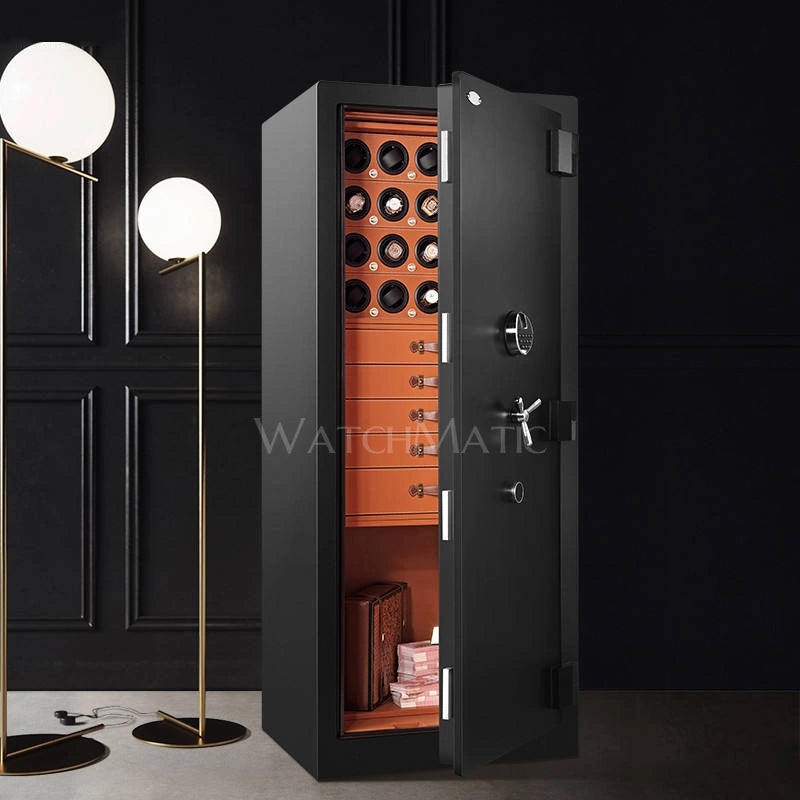
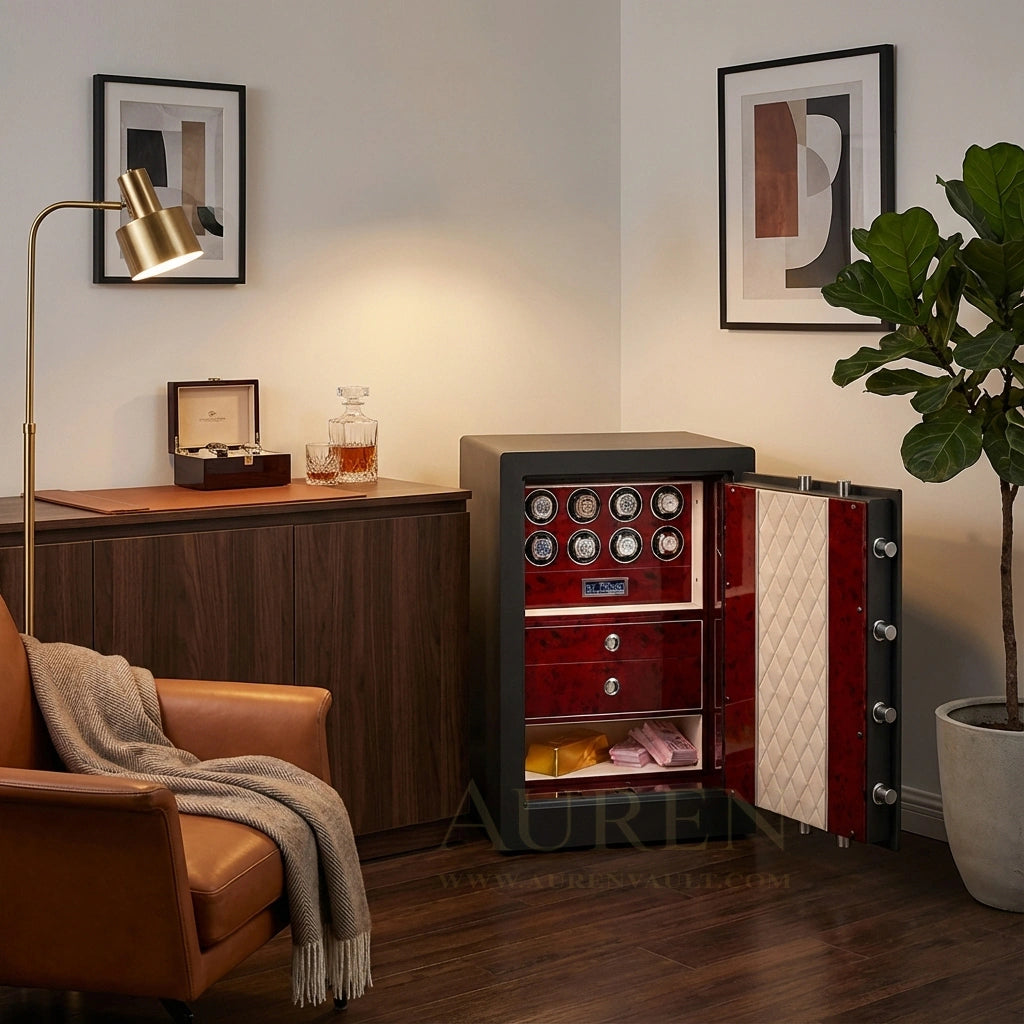
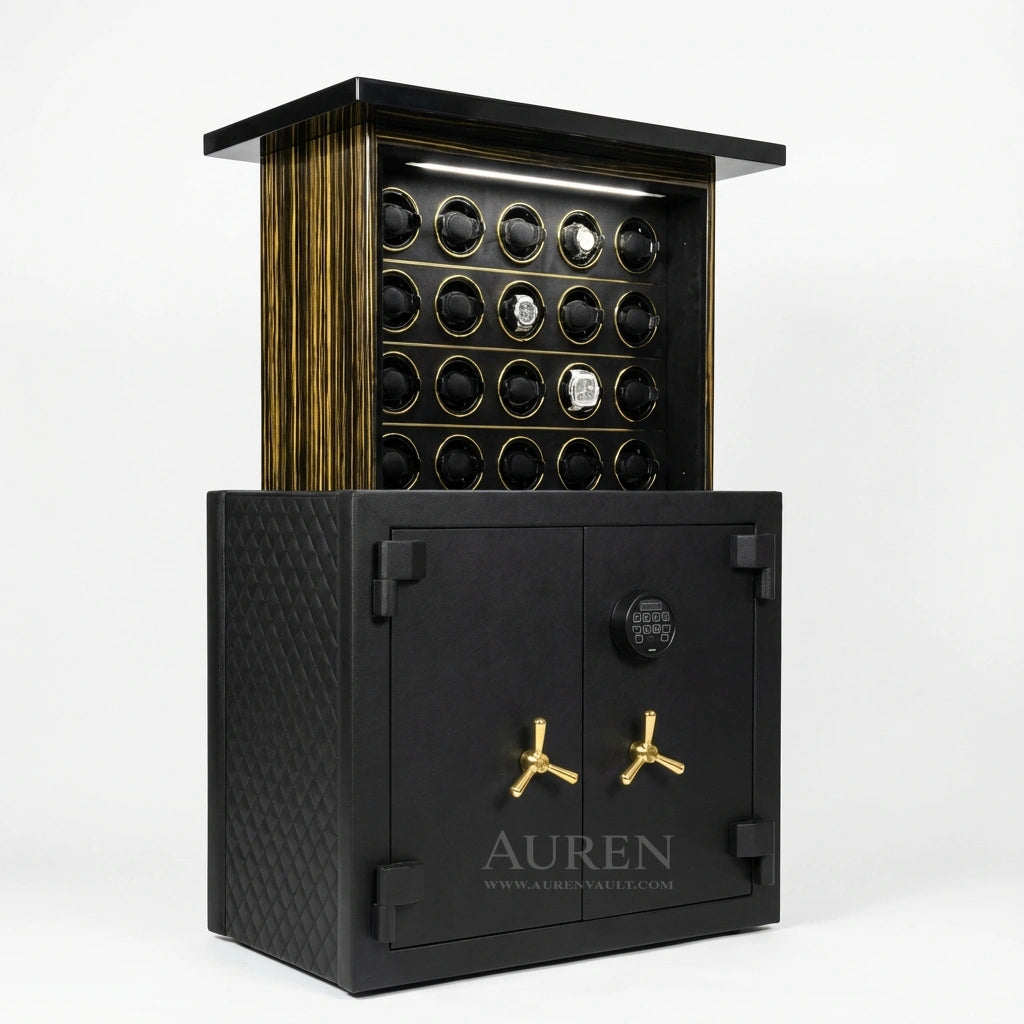
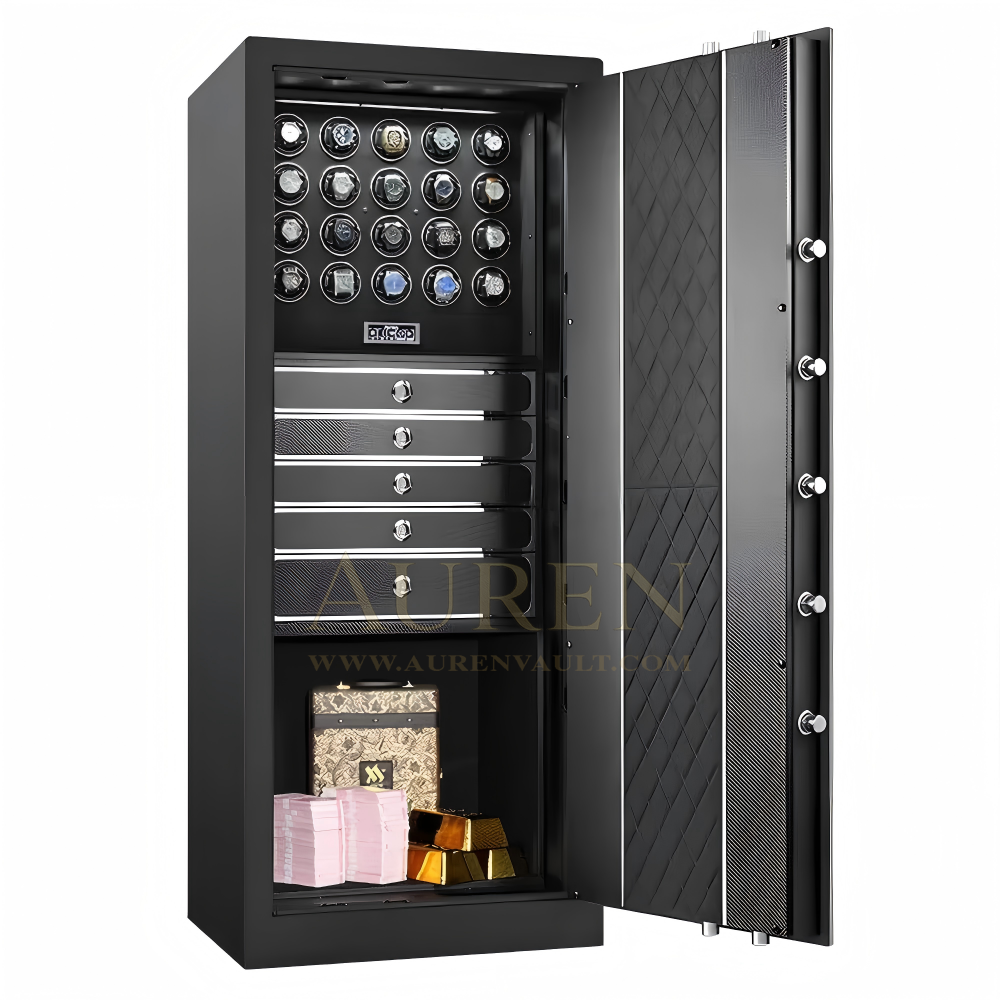
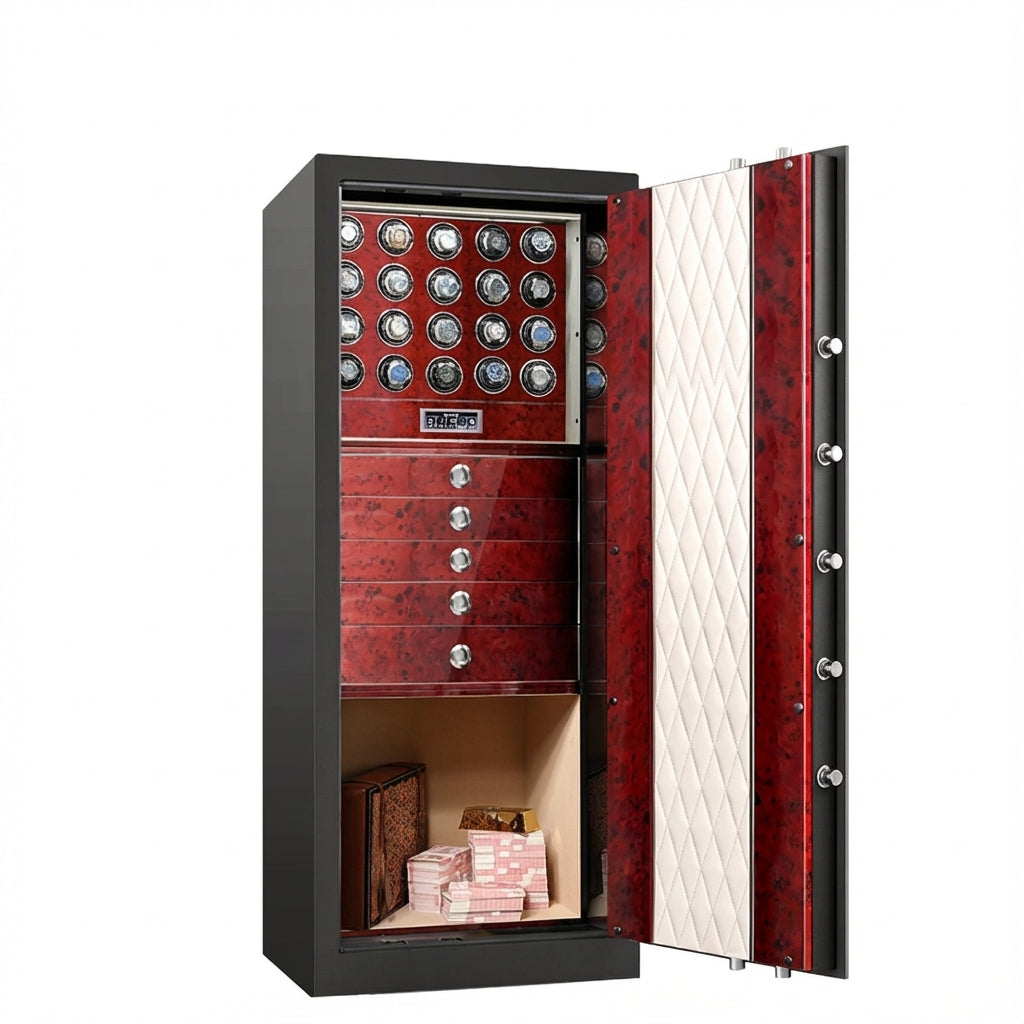
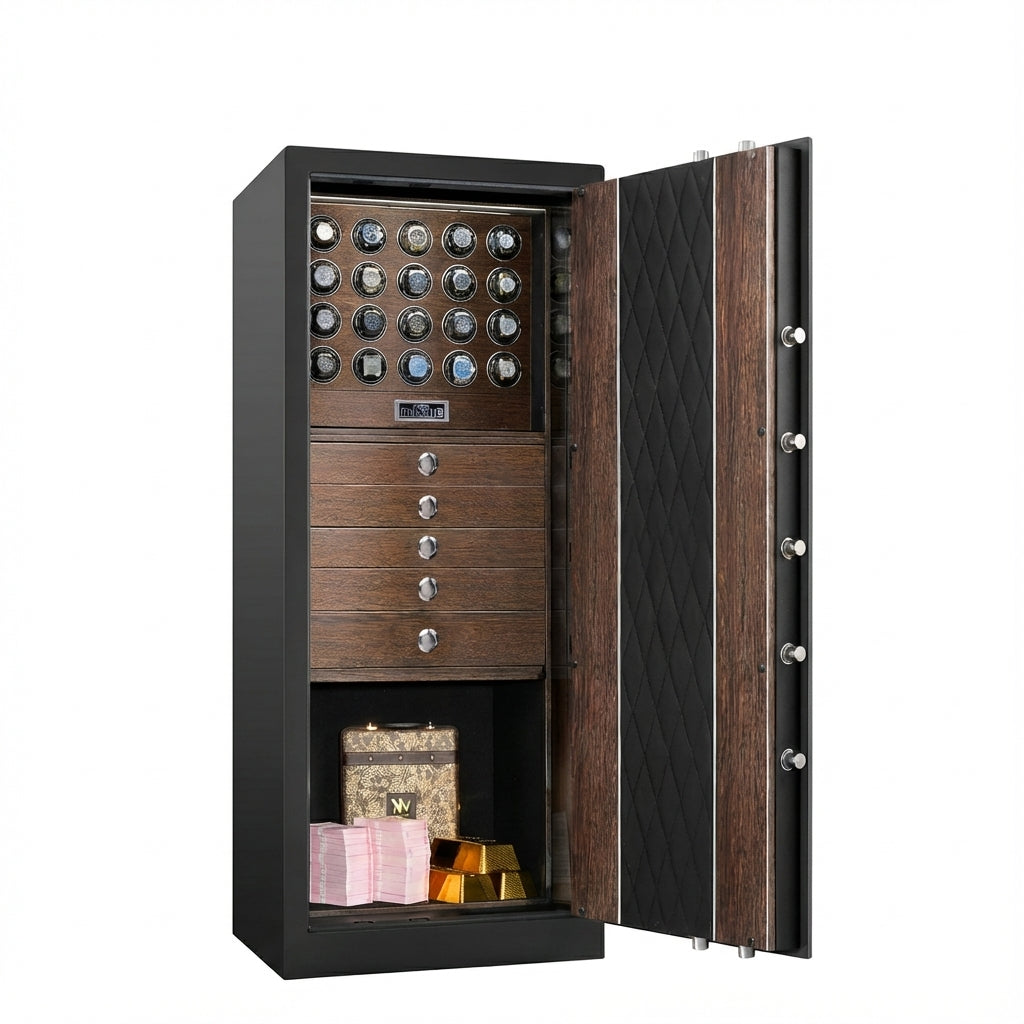
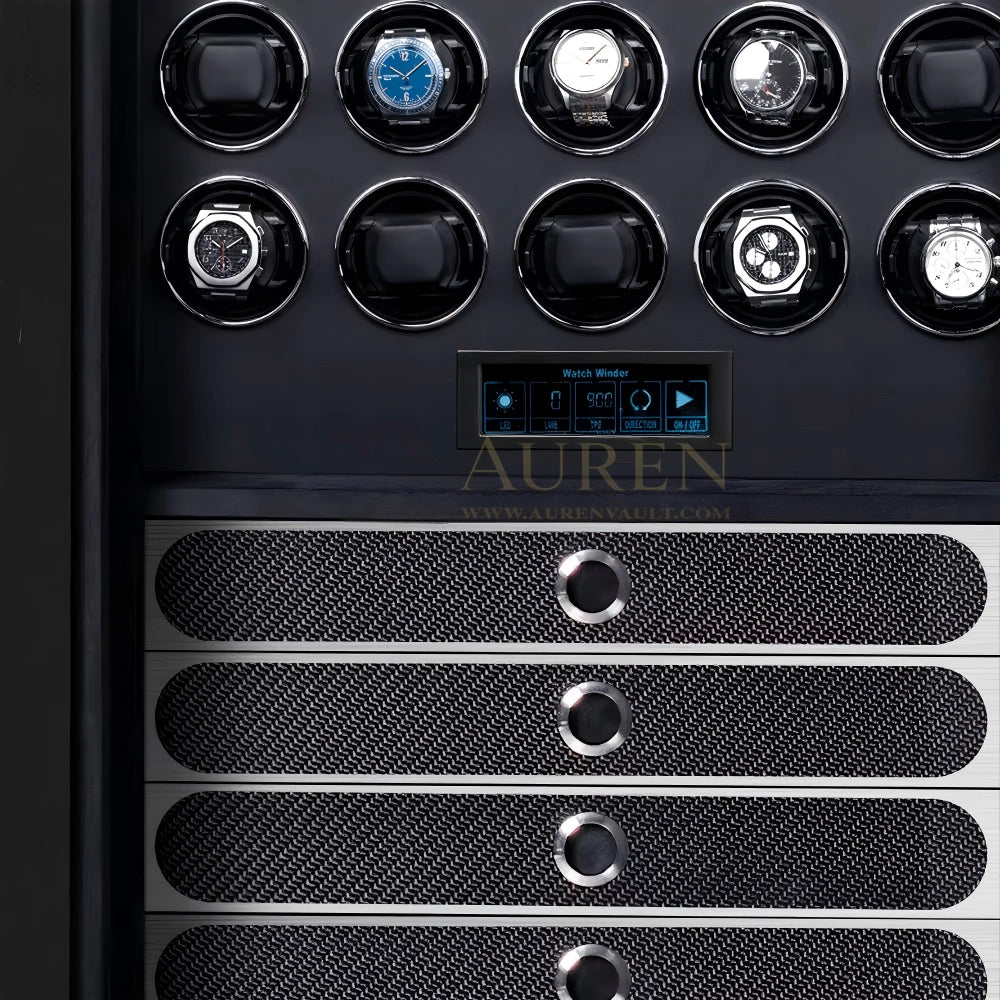
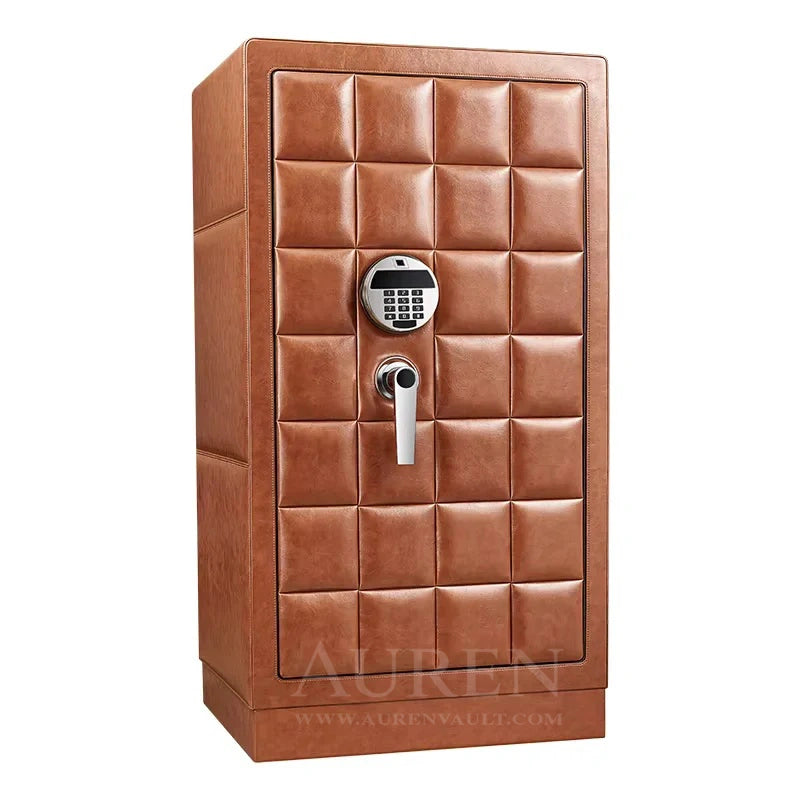
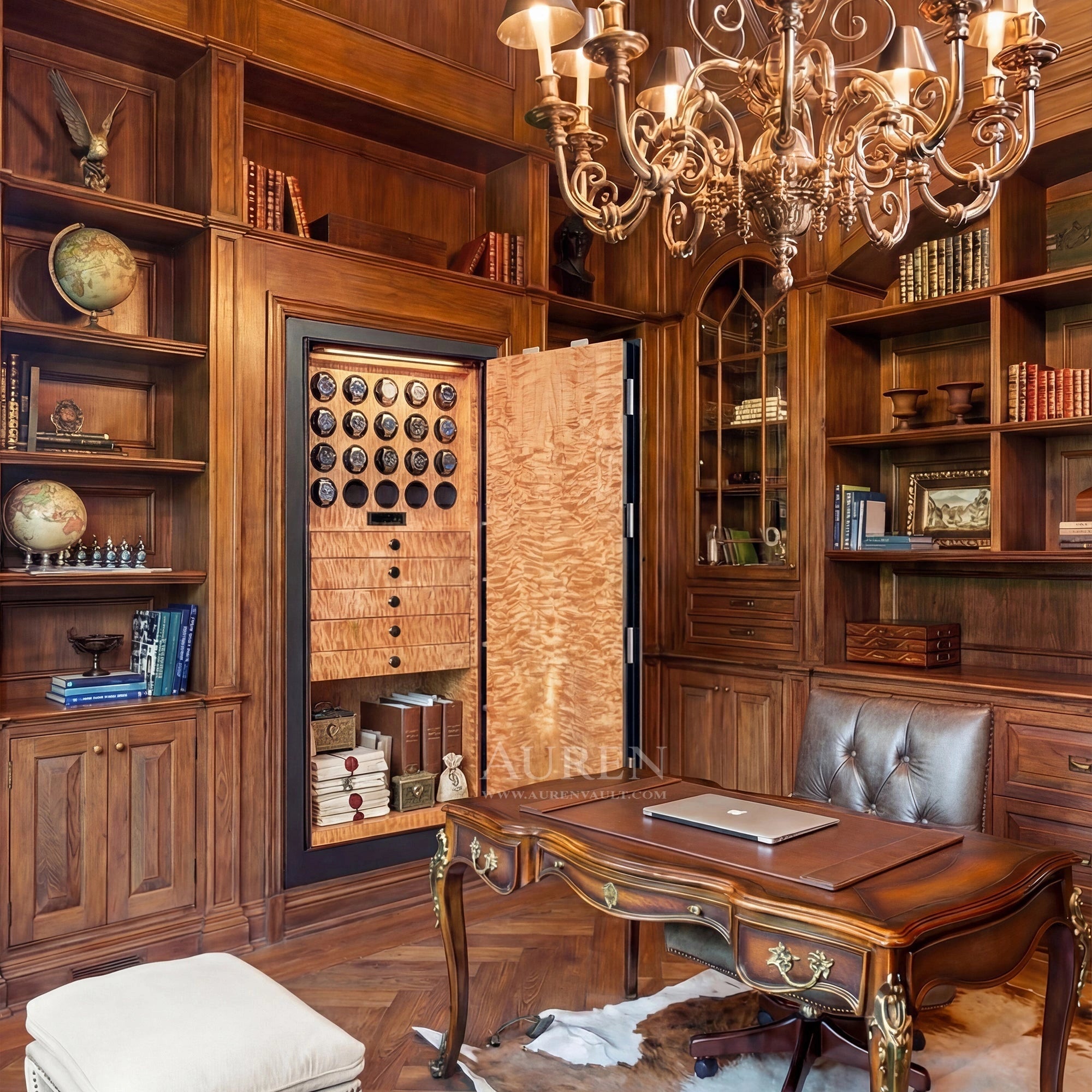
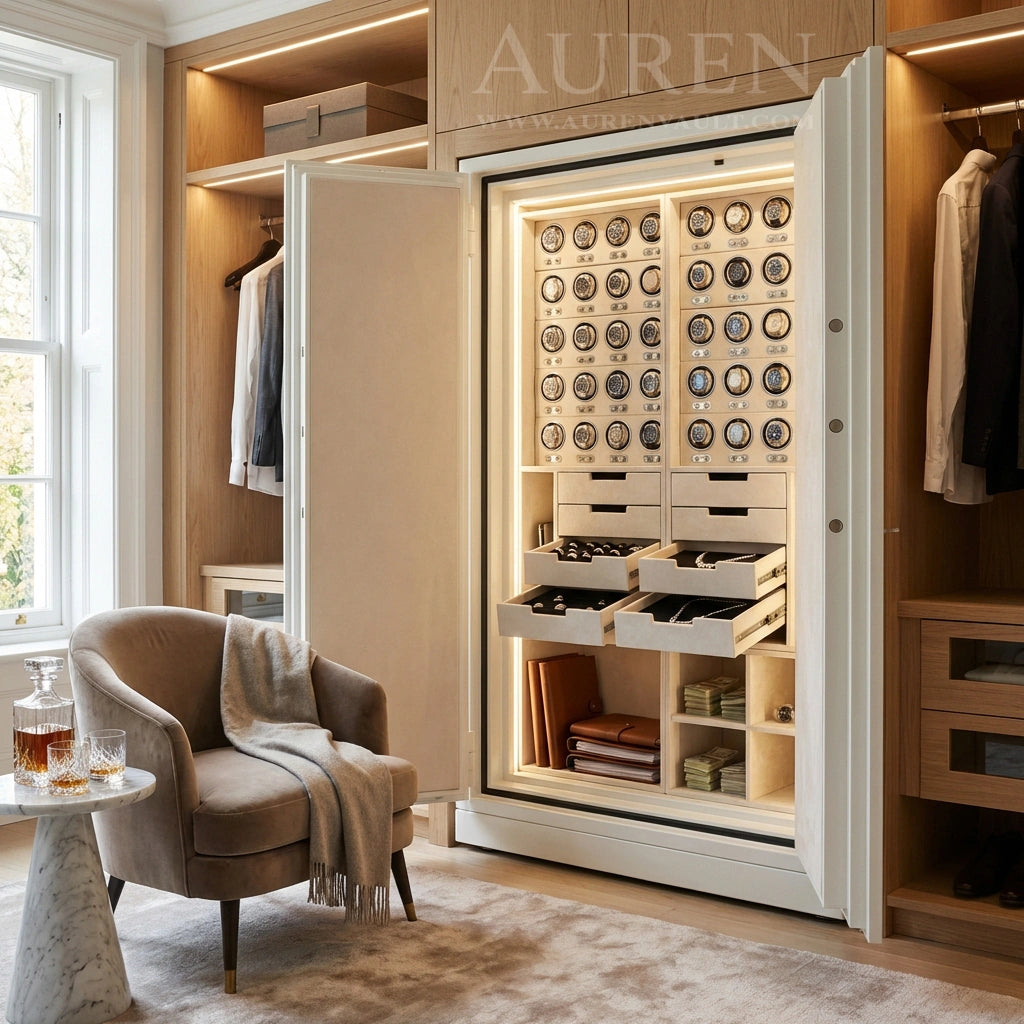
A watch winder safe integrates automatic winding modules within a lockable storage enclosure.
Unlike a standalone display winder, it can also address the need for more controlled physical access to a watch collection.
However, the security performance of any individual safe depends on its construction, locking system, installation, and independently documented protective capabilities.
The term safe alone should not be interpreted as proof of a particular burglary-resistance or fire-resistance certification.
For collectors planning a combined storage arrangement, Auren Vault provides watch winder safes with integrated winding modules in compact and larger configurations.
The appropriate solution should reflect the number of automatic watches that actually require winding, rather than assigning a rotor to every piece in the collection.
A Practical Collection Example: Four NOMOS Watches, Three Different Needs
Consider a collector who owns four NOMOS watches.
The first is a Tangente neomatik powered by DUW 3001. It is worn several days per week and rarely runs down completely.
The second is a Tangente neomatik 41 Update with DUW 6101. Its date display makes it convenient to keep the movement running between wears.
The third is a Club Sport neomatik Worldtimer with DUW 3202. It is mainly worn during travel and may remain unworn for longer periods.
The fourth is a manually wound Club Campus powered by Alpha.
Although the collection contains four watches, it does not necessarily require four winding positions.
The Club Campus should be kept in ordinary protective storage.
The Tangente neomatik may not require a dedicated winder if worn frequently enough.
The Tangente Update and Club Sport Worldtimer are stronger candidates because maintaining their indications can reduce repeated adjustments.
In this scenario, a two-position programmable winder combined with suitable passive storage may be more practical than a four-rotor system.
If the collection eventually expands to include additional automatic watches from other brands, independently programmable winding positions become increasingly useful.
The objective is to select equipment around actual ownership habits rather than assuming that more rotors always provide a better solution.
Frequently Asked Questions
What is the best watch winder setting for NOMOS Glashütte?
NOMOS Glashütte recommends 650 turns per day with alternating rotation direction in its official FAQ. This is the appropriate general setting for the brand's automatic watches.
Does a NOMOS neomatik need a watch winder?
No. A neomatik automatic can operate normally without a winder. The accessory is useful when the watch is left unworn for periods long enough to deplete its power reserve or when the owner wants to avoid repeated resetting.
Is 650 TPD suitable for NOMOS DUW 3001?
Yes. NOMOS's official general recommendation is 650 TPD with alternating rotation, and DUW 3001 is a bidirectionally winding automatic movement.
Can I use the same winder settings for DUW 6101?
Yes. The manufacturer's general 650 TPD alternating program is appropriate for this automatic movement. DUW 6101 also incorporates a date mechanism, making continuous operation convenient for some owners.
What setting should I use for the NOMOS Club Sport Worldtimer?
The Club Sport neomatik Worldtimer uses the automatic DUW 3202 movement. NOMOS's general 650 TPD alternating recommendation is the appropriate starting program.
Does a traditional NOMOS Tangente need a watch winder?
Not if it has a manually wound Alpha movement. The traditional hand-wound Tangente must be wound through its crown. Automatic Tangente neomatik references can use a compatible winder.
Can a watch winder overwind a NOMOS automatic?
NOMOS automatic movements incorporate mechanisms intended to manage the fully wound state. Nevertheless, a winder should follow the manufacturer's recommended program rather than relying on unnecessary continuous rotation.
Are NOMOS watches suitable for multi-watch winders?
Yes, provided the individual positions can deliver the appropriate winding program and securely support the watches. This is particularly useful when a collector also owns automatic movements from other manufacturers.
Is a watch winder safe necessary for NOMOS Glashütte watches?
Not necessarily. A standalone winder is generally sufficient when winding convenience is the only requirement. A watch winder safe becomes more relevant when the owner also wants enclosed, lockable storage for a larger collection.
Final Perspective: Precise Winding, Without Unnecessary Complexity
NOMOS Glashütte makes selecting a compatible watch winder more straightforward than many other luxury watchmakers.
Its official recommendation of 650 TPD with alternating rotation provides a clear foundation for automatic watch ownership.
The more important decisions concern the watch's actual movement type, its physical fit within the winder, and how frequently the owner wears it.
A traditional hand-wound Tangente or Club Campus needs no automatic winder. A neomatik automatic can benefit from one, particularly when it features a date or worldtime complication that the owner prefers to keep running.
For a single watch, a compact programmable unit is often enough.
For a growing collection, independently controlled winding positions and suitable passive storage offer greater flexibility.
The best winder is ultimately one that follows the movement's requirements while making the collection easier to manage.
Related Reading
For a comparison of winding requirements across different watchmaking traditions, explore our Cartier watch winder compatibility guide, including considerations for automatic and manually wound references.
Collectors expanding into more complicated Swiss mechanical watches may also find the discussion of Vacheron Constantin movement-specific winding programs useful.
For those considering integrated winding and protective storage, Watch Safes with Built-In Watch Winders: Are They Worth It? examines when a combined system makes sense for a larger collection.