
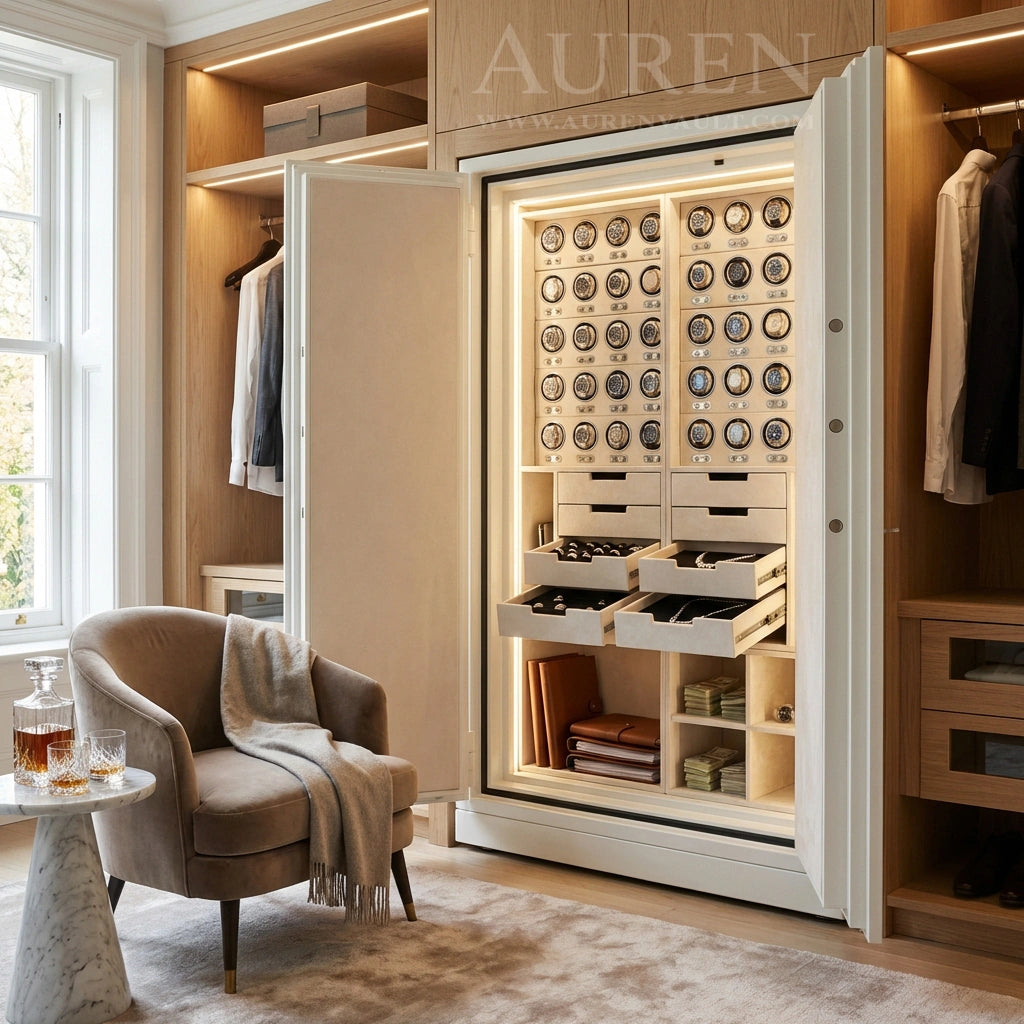

The best watch winder for Hublot watches is a programmable unit that matches the automatic movement's winding direction, provides adjustable turns per day (TPD), and supports the watch securely through controlled rotation and rest cycles.
For many contemporary Hublot automatic movements, approximately 650–800 TPD with bidirectional rotation is a commonly published starting range. However, this is independent guidance rather than a universal manufacturer specification. Certain older Big Bang chronographs, particularly those equipped with the HUB44 movement, are commonly listed at approximately 800 TPD with clockwise rotation.
Hublot's movement diversity also makes automatic-winding compatibility important. The Big Bang Unico HUB1280 offers approximately 72 hours of power reserve, while the Spirit of Big Bang HUB4700 provides around 50 hours. The manually wound Meca-10, despite offering up to ten days of autonomy, cannot benefit from a conventional automatic watch winder.
For a single frequently worn Hublot, a winder may be unnecessary. For collectors managing several automatic watches, individually controlled winding positions and suitable protective storage can offer greater convenience.
The right choice begins with the exact movement, not the collection name or case design.
Why Hublot Watches Require Different Winding Approaches
Hublot's approach to watchmaking is closely associated with its Art of Fusion philosophy.
The manufacturer combines traditional mechanical watchmaking with unconventional materials, distinctive case construction, and contemporary movement engineering.
Its watches frequently incorporate ceramic, titanium, carbon composites, sapphire crystal, rubber, and precious-metal alloys.
Yet the differences between Hublot watches extend beyond their external construction.
The Big Bang Unico uses an in-house automatic flyback chronograph movement. The Spirit of Big Bang features a skeletonized automatic chronograph associated with the historic El Primero movement architecture.
Classic Fusion models include conventional automatic movements, automatic chronographs, and quartz references.
The Meca-10 family introduces a manually wound mechanical movement with an unusually long power reserve.
These differences have direct implications for watch winder compatibility.
An automatic watch contains an oscillating rotor that responds to wrist movement. Through the winding mechanism, this motion transfers energy to the mainspring.
When the watch is removed and left stationary, the movement continues operating until the stored energy is depleted.
A watch winder recreates controlled external motion to help maintain that reserve.
However, not every Hublot contains an automatic rotor, and not every automatic Hublot uses the same winding architecture.
A compatible winder must therefore accommodate both the movement and the physical watch.
That distinction is more useful than selecting equipment based on price, appearance, or the Hublot name alone.
Hublot Watch Winder Settings: TPD and Rotation Direction
Two settings determine the operating program of an automatic watch winder: turns per day and rotation direction.
Turns per day (TPD) refers to the number of programmed external rotations delivered during a 24-hour period.
Rotation direction determines whether the device operates clockwise, counterclockwise, or alternates between both directions.
The objective is to provide sufficient effective movement to maintain the mainspring's power reserve without unnecessary continuous rotation.
For many modern Hublot automatic references, independent watch winder guides suggest approximately 650–800 TPD with bidirectional rotation.
However, older Hublot chronographs can have different directional requirements.
Some earlier Big Bang models using the HUB44 movement are listed by Orbita and other winding references at approximately 800 TPD with clockwise operation.
This is a meaningful distinction.
A bidirectional program intended for a modern Unico movement should not automatically be applied to a discontinued Big Bang chronograph equipped with a different calibre.
Hublot Watch Winder Compatibility by Calibre
| Hublot movement | Representative models | Power reserve | Watch winder guidance |
|---|---|---|---|
| HUB1280 Unico | Contemporary Big Bang Unico chronographs | Approximately 72 hours | Common independent range: 650–800 TPD, bidirectional; verify |
| HUB1242 Unico | Earlier Big Bang Unico references | Approximately 72 hours | Bidirectional commonly suggested; confirm exact program |
| HUB4700 | Spirit of Big Bang chronographs | Approximately 50 hours | Automatic; verify calibre-specific direction and TPD |
| HUB1110 | Classic Fusion Original and selected Classic Fusion models | Approximately 48 hours | Common starting range: 650–800 TPD, bidirectional |
| HUB1143 | Classic Fusion Chronograph | Approximately 48 hours | Automatic; confirm exact winding program |
| HUB44 | Selected older Big Bang 44 mm / Aero Bang references | Reference-dependent | Orbita: approximately 800 TPD, clockwise |
| HUB41 | Selected older Big Bang 41 mm references | Reference-dependent | Orbita: approximately 650 TPD, bidirectional |
| HUB1201 | Big Bang Meca-10 | Approximately 240 hours | Manual winding; no conventional winder required |
| HUB2912 | Selected Classic Fusion 33 mm models | Quartz | No automatic winder required |
Movement types and representative power reserves are based on Hublot's published specifications. Numerical TPD recommendations come from independent winding databases, including Orbita and other specialist references. They are not universal Hublot-issued settings.
The table illustrates why apparently similar Hublot watches can require different winding arrangements.
A 44 mm Big Bang using the older HUB44 automatic chronograph movement is not mechanically identical to a contemporary 44 mm Big Bang Unico with HUB1280.
Case size alone therefore cannot determine the correct TPD program.
Equally, a 33 mm Classic Fusion Quartz and a 42 mm Classic Fusion Automatic share a recognizable design language but require entirely different approaches to storage.
The most reliable starting point is the actual calibre.
Is 650 TPD Enough for a Hublot?
For many contemporary Hublot automatic movements, approximately 650 TPD with bidirectional rotation is a reasonable starting program to investigate.
Independent references commonly place modern Hublot automatic movements within a broader range of 650–800 TPD.
However, a published number should not be treated as a guarantee of compatibility.
Different watch winders may count bidirectional rotations differently or distribute their operating cycles across the day using different patterns.
One device may divide its daily rotations evenly between both directions.
Another may use a sequence of clockwise cycles followed by counterclockwise cycles.
Consequently, two devices displaying the same nominal TPD setting may not produce exactly the same winding behavior.
A correctly selected program should maintain sufficient energy without relying on unnecessarily high rotation counts.
For the exact movement, the manufacturer's operating instructions and qualified technical support should take precedence over a generic online database.
The watch TPD guide is Auren Vault's designated technical resource page for the terminology used when evaluating daily winding cycles.
Why 800 TPD Clockwise Matters for Older Big Bang Models
One of the most important exceptions within the Hublot collection involves the older HUB44 movement family.
Independent databases, including Orbita, list numerous older Big Bang and Aero Bang references with approximately 800 TPD and clockwise rotation.
The recommended direction is not simply an aesthetic preference or an alternative operating mode.
It is intended to align with the effective winding characteristics of the movement.
A winder running in an unsuitable direction may provide less useful winding motion than expected.
However, this recommendation should not be generalized to every Hublot with a 44 mm case.
Contemporary Big Bang Unico models also exist in 44 mm configurations and use a different automatic movement.
The correct distinction is the calibre, not the external case dimensions.
For owners of discontinued or pre-owned Hublot watches, identifying the movement is particularly important before selecting a winding program.
Best Watch Winder for Hublot Big Bang Unico
The Big Bang Unico represents one of Hublot's most technically recognizable collections.
Its skeletonized dial architecture reveals significant elements of the movement, including components of the chronograph mechanism.
Contemporary Big Bang Unico references commonly use the HUB1280 manufacture calibre.
This automatic flyback chronograph provides approximately 72 hours of power reserve.
The movement incorporates a column wheel and a redesigned automatic winding system developed as part of the second-generation Unico architecture.
For owners, these technical details provide useful context, but they do not automatically establish the correct external TPD.
A compatible winder should be selected according to the movement's actual winding requirements.
HUB1280: A Three-Day Automatic Chronograph
The HUB1280 offers approximately three days of autonomy when sufficiently wound.
This is a practical advantage for someone who alternates between watches over a weekend.
Consider an owner who wears a Big Bang Unico throughout the working week and switches to a Classic Fusion on Saturday and Sunday.
If the Unico has sufficient stored energy when removed, it may remain running until the beginning of the following week.
A watch winder may therefore add relatively little convenience to that particular routine.
Now consider a collector who wears the Unico only once every week or two.
The movement will eventually stop between wears.
Before using the watch again, the owner must restart it and set the time and other indications as necessary.
A properly configured winder can reduce that inconvenience.
The benefit is readiness, not an inherent improvement in mechanical performance.
HUB1280 vs. HUB1242: Why the Movement Generation Matters
The HUB1280 is a successor to the earlier HUB1242 Unico architecture.
Both are automatic chronograph movements associated with approximately 72 hours of power reserve.
However, Hublot redesigned aspects of the winding system and movement architecture when developing the newer calibre.
The manufacturer describes improvements including a thinner automatic winding assembly and an updated reverser system.
These differences matter because the two calibres should not automatically be treated as mechanically interchangeable.
A TPD program that works for one movement may also work for another, but that should be established through appropriate technical guidance rather than assumed.
For collectors who own both Unico generations, a programmable winder provides greater flexibility than a device with one fixed rotation setting.
Does a Flyback Chronograph Need More TPD?
Not necessarily.
A flyback chronograph allows the timing mechanism to be reset and restarted without requiring the conventional sequence of stopping, resetting, and restarting.
This is a feature of the chronograph complication.
The number of external watch-winder rotations needed to maintain the mainspring depends on the automatic winding system.
These two functions are related to the same movement but perform different tasks.
It would therefore be incorrect to conclude that a flyback chronograph automatically requires a higher TPD setting than a simpler automatic watch.
A suitable winder maintains the automatic winding mechanism. It does not operate the chronograph pushers or replace the manufacturer's instructions for using the chronograph.
Hublot Spirit of Big Bang: A Different Chronograph Architecture
The Spirit of Big Bang collection introduces a different mechanical and physical character from the conventional Big Bang.
Its tonneau-shaped case gives the watch a distinctive silhouette, while its skeletonized chronograph movement offers another expression of Hublot's mechanical design.
Selected Spirit of Big Bang references use the HUB4700 self-winding chronograph movement.
Hublot describes this calibre as a successor to the famous El Primero architecture.
The movement operates at 36,000 vibrations per hour, equivalent to 5 Hz, and provides approximately 50 hours of power reserve.
HUB4700: High Frequency Does Not Mean Higher TPD
The HUB4700's 5 Hz operating frequency is an important characteristic of the movement.
However, the frequency of the balance and the external rotation of a watch winder measure different things.
The balance frequency describes how often the regulating oscillator completes its cycles.
TPD describes the number of times the external winding device rotates the complete watch.
A movement operating at 5 Hz does not necessarily require more external rotations than a movement operating at 4 Hz.
The amount of effective winding depends on the automatic rotor system and its ability to transfer energy to the mainspring.
For HUB4700, the most appropriate approach is to confirm a movement-specific program rather than selecting a higher TPD solely because the chronograph operates at a higher frequency.
A 50-Hour Power Reserve Changes the Wearing Routine
The Spirit of Big Bang HUB4700 offers approximately 50 hours of autonomy.
This is shorter than the 72-hour reserve of the Big Bang Unico HUB1280.
The difference affects how long each watch may remain running after being removed from the wrist.
A sufficiently wound Spirit of Big Bang left stationary throughout a long weekend will generally exhaust its reserve sooner than a similarly charged Unico.
For a collector who regularly alternates between the two watches, maintaining the Spirit's reserve may therefore provide more noticeable convenience.
However, the shorter reserve does not establish a higher daily winding requirement.
Power reserve and TPD remain separate mechanical specifications.
Why the Tonneau Case Needs a Suitable Winder
The Spirit of Big Bang's tonneau-shaped case deserves particular attention when selecting a watch holder.
Its elongated profile may require more clearance inside a compact winding compartment than a smaller round watch.
The crown and chronograph pushers should remain clear of the surrounding enclosure throughout the rotation cycle.
The strap must also fit the cushion securely.
A conventional rigid holder designed for a metal bracelet may not provide suitable support for a flexible rubber strap.
For this reason, a winder with adjustable cushions and adequate internal clearance is preferable to one chosen solely by its advertised watch capacity.
The physical fit should be confirmed before the watch is left operating for extended periods.
Hublot Classic Fusion: A More Understated Winding Requirement
The Classic Fusion collection takes a more restrained approach to Hublot's design identity.
Its comparatively simple dials and versatile case proportions make many references suitable for everyday use.
However, the collection contains different movement types.
The Classic Fusion Original Titanium 42 mm, for example, uses the HUB1110 self-winding movement with approximately 48 hours of power reserve.
Other Classic Fusion watches contain automatic chronograph movements or quartz calibres.
This diversity makes reference-specific identification important.
Classic Fusion HUB1110: A Practical Everyday Automatic
For the Classic Fusion equipped with HUB1110, a programmable winder offering approximately 650–800 TPD with bidirectional operation represents a commonly published independent starting range.
The precise program should still be verified for the watch and winding device.
With approximately 48 hours of power reserve, the movement may stop if the watch remains stationary for more than two days.
For someone who wears a Classic Fusion regularly during the working week, this may not be a significant inconvenience.
However, an owner who alternates between multiple watches may appreciate having the Classic Fusion ready when selected.
A single programmable winder is generally sufficient if winding convenience is the only requirement.
Classic Fusion Chronograph: HUB1143
The Classic Fusion Chronograph Black Magic 45 mm uses the HUB1143 automatic chronograph movement.
Hublot publishes an approximate power reserve of 48 hours for this calibre.
Although both HUB1110 and HUB1143 are automatic movements, they should not automatically receive identical external winding programs.
The chronograph movement has a different architecture and should be evaluated independently.
A suitable winder should support adjustable TPD and rotation direction so that the owner can apply a verified program.
For collectors owning a Classic Fusion Automatic and a Classic Fusion Chronograph, independent programming is particularly useful.
Classic Fusion 33 mm Quartz: No Automatic Winder Required
One important exception is the Classic Fusion 33 mm quartz family.
Selected references use the HUB2912 quartz movement.
These watches do not contain an automatic rotor that can replenish a mainspring through external rotation.
Consequently, placing them in a conventional watch winder provides no winding benefit.
They should instead be stored in an appropriate protective compartment.
This matters when planning a mixed Classic Fusion collection.
A collector who owns three automatic models and two quartz references may need only three active winding positions rather than five.
The remaining watches can occupy passive storage compartments.
Hublot Big Bang Meca-10: The Ten-Day Watch That Does Not Need a Winder
The Meca-10 provides one of the clearest examples of why power reserve should never be confused with automatic winding.
Selected Big Bang Meca-10 watches use the HUB1201 manual-winding movement.
This calibre provides approximately 240 hours, or ten days, of power reserve.
That is considerably longer than the reserve of many conventional automatic watches.
However, HUB1201 is manually wound.
It does not contain an automatic winding system that can be maintained through the rotational motion of a conventional watch winder.
Why 240 Hours of Reserve Does Not Change the Answer
A long power reserve describes how much operating autonomy the movement can provide after being sufficiently wound.
It does not establish whether the movement has an automatic rotor.
The Meca-10 replenishes its mainspring through manual winding using the crown.
When the watch is placed on a conventional automatic winder, rotating the complete case will not perform the same function.
The watch must be wound according to Hublot's operating instructions.
Therefore, an owner with a Big Bang Meca-10 should prioritize protective passive storage rather than purchase a winder specifically for that watch.
The Meca-10 Power Reserve Display
The Meca-10's movement architecture includes a distinctive power reserve indication.
This gives owners useful information about the energy remaining in the movement.
It also makes the watch convenient to manage manually.
For a collector who wears the Meca-10 occasionally, the ten-day reserve may already provide substantial flexibility without requiring frequent crown winding.
A conventional watch winder would not extend that reserve.
This distinction is particularly important when assembling a collection containing both Big Bang Unico and Meca-10 models.
They may share a recognizable design identity, but their storage requirements differ significantly.
Hublot Case Materials: Choosing a Winder That Protects the Watch
Hublot's extensive use of distinctive materials introduces an additional consideration beyond mechanical winding.
Its watches may feature ceramic cases, sapphire crystal components, titanium, carbon composites, or proprietary precious-metal alloys.
These materials influence weight, surface finish, and how the watch should be supported.
A suitable winder must accommodate those characteristics without introducing unnecessary physical contact.
Ceramic and Sapphire Cases
Hublot uses ceramic extensively in its Big Bang and Spirit of Big Bang collections.
Ceramic offers strong resistance to many everyday scratches, but that does not make it immune to damage from impacts.
Sapphire cases also require careful handling, particularly around edges and contact points.
A watch should never be allowed to shift within its holder and repeatedly contact the surrounding winding compartment.
Adequate clearance is essential.
The cushion should support the watch through appropriate contact surfaces rather than placing concentrated pressure on the bezel or case edges.
A poorly fitted winding enclosure can be unsuitable even when its motor delivers the correct TPD.
Titanium and Precious-Metal Watches
Titanium is valued for its relatively low weight and useful mechanical properties.
However, a lightweight watch still requires secure support.
A loose holder may allow the case or strap to move during rotation.
Precious-metal Hublot watches introduce additional considerations related to surface finishing.
Highly polished surfaces can show marks from unnecessary handling or repeated contact.
A stable cushion and soft interior materials are therefore more important than decorative lighting or elaborate display features.
The winder should protect the watch's physical condition while performing its mechanical function.
Rubber Straps and Hublot's Interchangeable Strap Systems
Rubber straps are an important part of Hublot's design identity.
Many watches also feature interchangeable strap systems that allow the owner to change materials and colors without conventional spring-bar removal.
This flexibility can affect how the watch fits a winding cushion.
A holder that works with one strap may not provide the same support after the strap has been changed.
A rubber strap should not be forced around an oversized cushion or stretched beyond its intended fit.
A holder that is too small may allow the watch to shift.
For Hublot collectors, adjustable or interchangeable cushions are therefore particularly useful.
The best holder is the one that supports the complete watch without requiring the strap or clasp to accommodate an unsuitable shape.
What Makes a Good Watch Winder for Hublot?
A premium watch winder should provide more than an attractive enclosure.
For Hublot, the most important characteristics are movement compatibility, adaptable physical support, and dependable operation.
Flexible TPD Programming
A suitable winder should allow the owner to select different daily rotation programs.
This matters because the Hublot collection includes automatic movements with different winding requirements.
A modern Unico may be compatible with a bidirectional program, while an older HUB44-based chronograph may require approximately 800 TPD with clockwise rotation.
A device offering only one fixed setting may become restrictive as the collection changes.
For a multi-watch system, independent rotor programming is preferable to requiring every watch to follow the same program.
Clockwise, Counterclockwise, and Bidirectional Rotation
Rotation-direction flexibility is especially important when managing older Hublot movements.
A winder should support clockwise, counterclockwise, and alternating operation.
However, selecting a direction should be based on verified movement information rather than guesswork.
It is also important to understand how the winder manufacturer counts rotations during bidirectional operation.
A correct numerical setting is useful only if the device delivers the intended winding pattern.
Controlled Rest Cycles
A watch winder does not need to rotate continuously.
Its programmed turns can be distributed throughout a 24-hour period, with rest intervals between operating cycles.
This provides controlled winding while avoiding unnecessary continuous motion.
For watches stored in a bedroom, office, or dressing room, intermittent operation can also reduce disturbance.
The objective is to maintain adequate stored energy rather than maximize daily rotation.
Quiet Motors and Reliable Performance
Motor quality matters because a winder is intended to operate repeatedly over long periods.
A suitable device should deliver smooth rotation with minimal vibration and consistent programming.
For larger systems, accessible servicing and replacement components are also relevant.
An expensive exterior finish cannot compensate for an unreliable winding mechanism.
For a collection of automatic Hublot watches, dependable operation and straightforward controls should take priority over purely decorative features.
Does a Hublot Need to Remain Running Continuously?
No.
An automatic Hublot is designed to receive energy through normal wrist movement.
When it is removed and left stationary, the mainspring continues releasing stored energy until the movement stops.
This is a normal aspect of mechanical watch ownership.
A watch winder becomes useful when an owner wants the timepiece to remain running and ready to wear.
For a frequently worn Classic Fusion, the benefit may be limited.
For a Big Bang Unico worn only occasionally, a winder can reduce the need to restart the movement.
For collectors managing multiple automatic watches, the convenience may become more noticeable.
However, allowing an automatic watch to stop during periods of non-use is not inherently harmful.
Does Continuous Winding Improve Mechanical Longevity?
Not necessarily.
A watch winder maintains the power reserve of an automatic movement.
It does not eliminate friction, restore degraded lubricants, or prevent the need for professional servicing.
Modern automatic movements generally include mechanisms designed to limit additional mainspring tension once fully wound.
Nevertheless, that protection does not justify unnecessary continuous rotation.
A suitable winding program should provide enough movement to maintain the desired reserve while allowing regular rest intervals.
The purpose is mechanical convenience, not maximizing the number of rotations.
For long periods of storage, physical protection and appropriate environmental conditions may be more important than maintaining uninterrupted movement operation.
How to Set Up a Watch Winder for Hublot
The most reliable setup begins with the exact watch reference.
Before selecting a program, confirm whether the Hublot contains an automatic, manually wound, or quartz movement.
A Big Bang Unico with HUB1280 can use a compatible automatic watch winder.
A Big Bang Meca-10 with HUB1201 cannot.
A Classic Fusion fitted with HUB2912 quartz also requires no automatic winding.
Once the movement type is established, determine the appropriate TPD and rotation direction.
Step 1: Identify the Calibre
Check the technical specifications, operating documentation, and exact reference number.
For newer watches, the manufacturer's online specifications often identify the movement.
For discontinued watches, service records or a qualified watchmaker may be necessary to confirm the calibre.
This step is particularly important for older Big Bang chronographs.
Step 2: Restart the Watch Correctly
If the automatic watch has stopped, follow Hublot's operating instructions for restarting it through the crown.
Do not assume that placing a completely stopped watch in a winder will restore its energy immediately.
An external winder is primarily intended to maintain the reserve of an automatic movement.
Starting with adequate mainspring energy makes it easier to evaluate whether the selected program is effective.
The manual crown-winding procedure and the winder's TPD setting are different operations.
Step 3: Select the Appropriate Program
For many contemporary Hublot automatic calibres, independent references suggest a program in the region of 650–800 TPD with bidirectional operation.
For older HUB44 movements, published winding tables commonly recommend approximately 800 TPD clockwise.
These figures should be confirmed for the actual watch before extended use.
If the winder does not provide the precise program required, consult the device manufacturer or a qualified watchmaker rather than assuming the nearest setting is automatically equivalent.
Step 4: Check Physical Fit
Secure the watch on the holder without excessive pressure on its strap or clasp.
Verify that the case, crown, and chronograph pushers have sufficient clearance during rotation.
For larger Big Bang and tonneau-shaped Spirit of Big Bang models, compartment dimensions deserve particular attention.
The watch should remain stable throughout a complete cycle.
Step 5: Monitor Performance
After configuring the device, observe the watch over several days.
A suitable program should maintain enough energy for the watch to continue running during normal storage cycles.
If the watch stops, investigate the initial power reserve, actual rotation direction, programmed TPD, and winder performance.
A mechanical condition requiring service can also contribute to repeated stoppages.
Increasing TPD without checking these factors is not a reliable troubleshooting method.
Standalone Watch Winder or Integrated Watch Winder Safe?
Choosing between a conventional watch winder and a watch winder safe involves two different requirements.
The first is mechanical convenience.
The second is physical storage security.
A standalone winder is designed primarily to maintain the power reserve of an automatic watch.
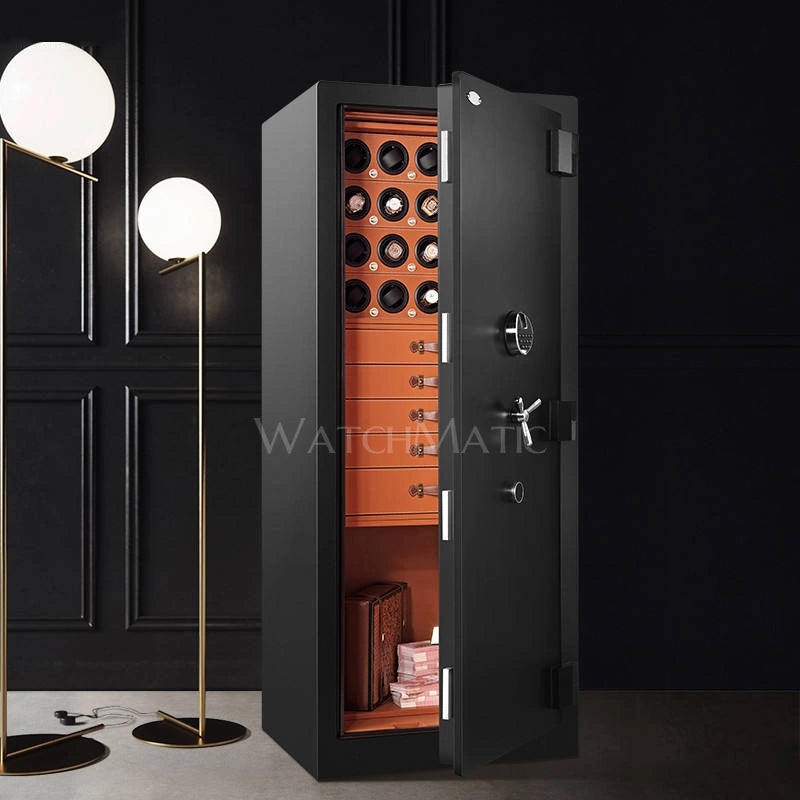
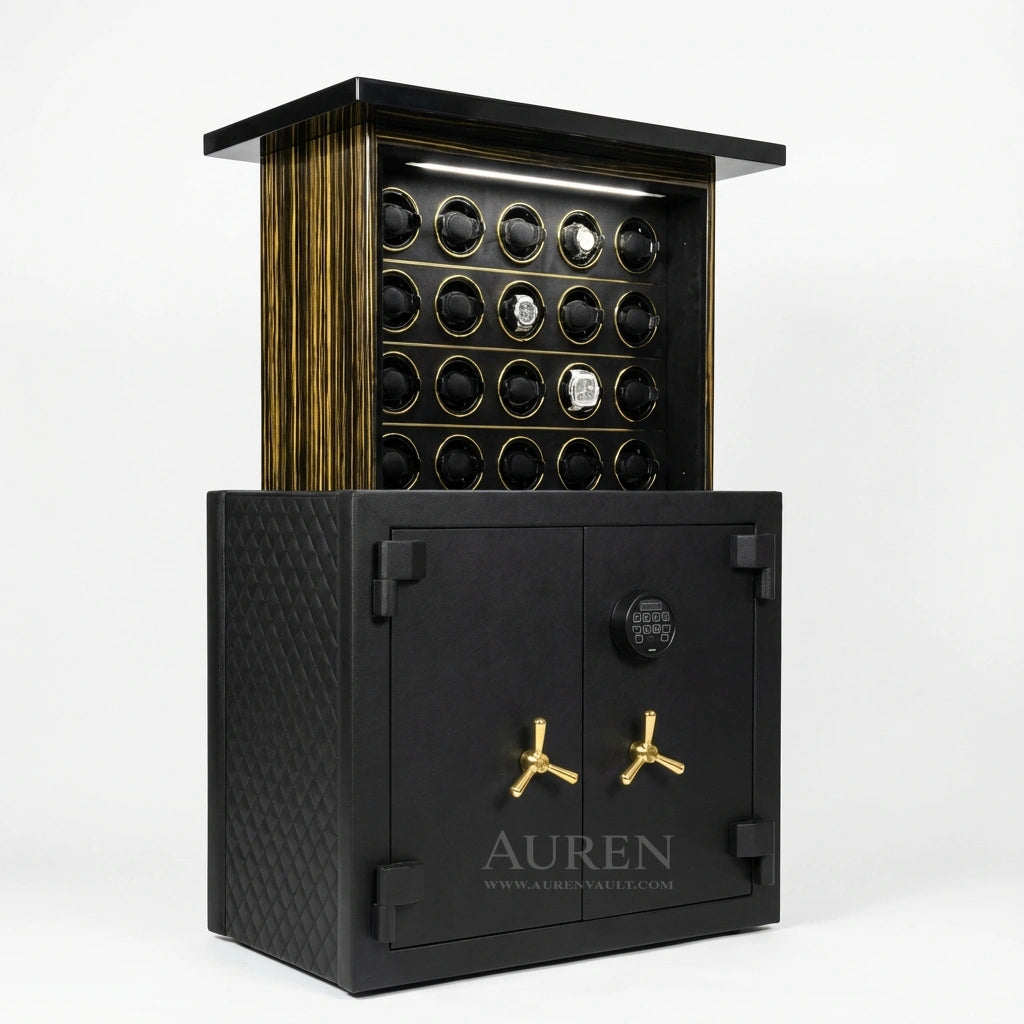
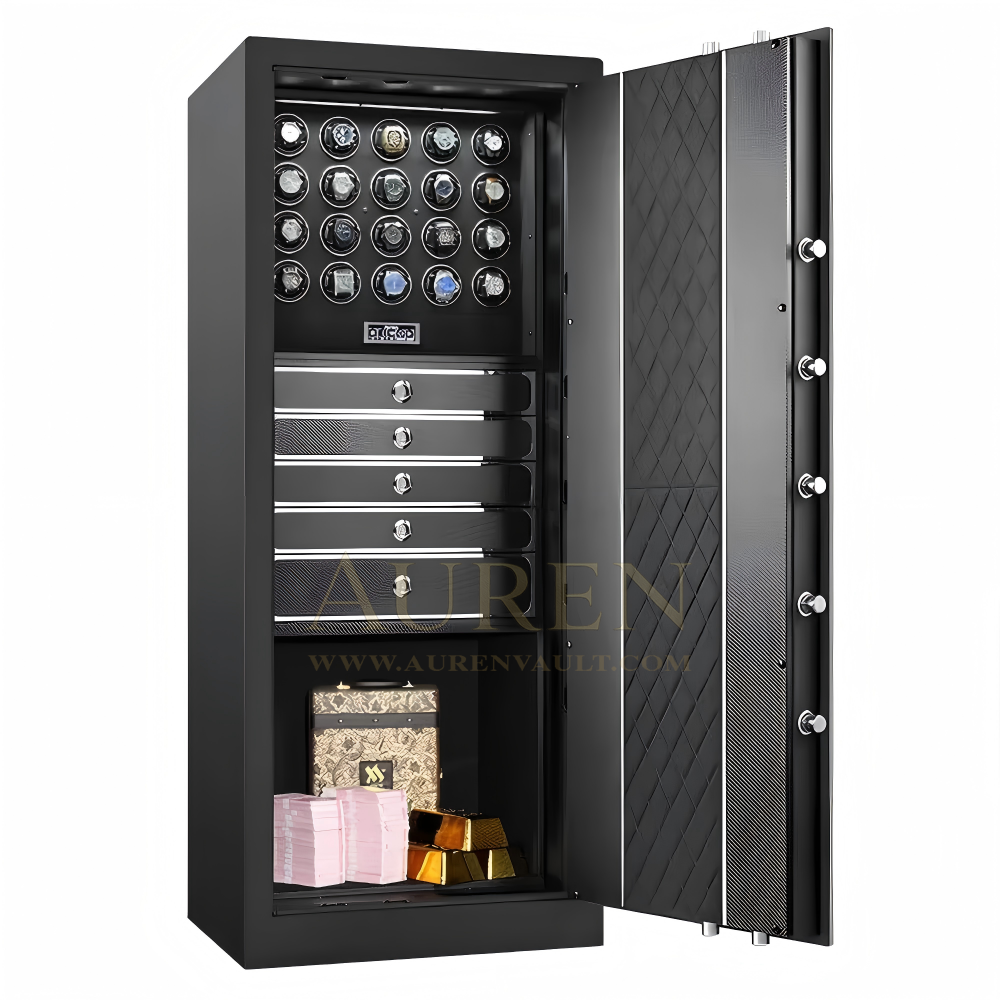
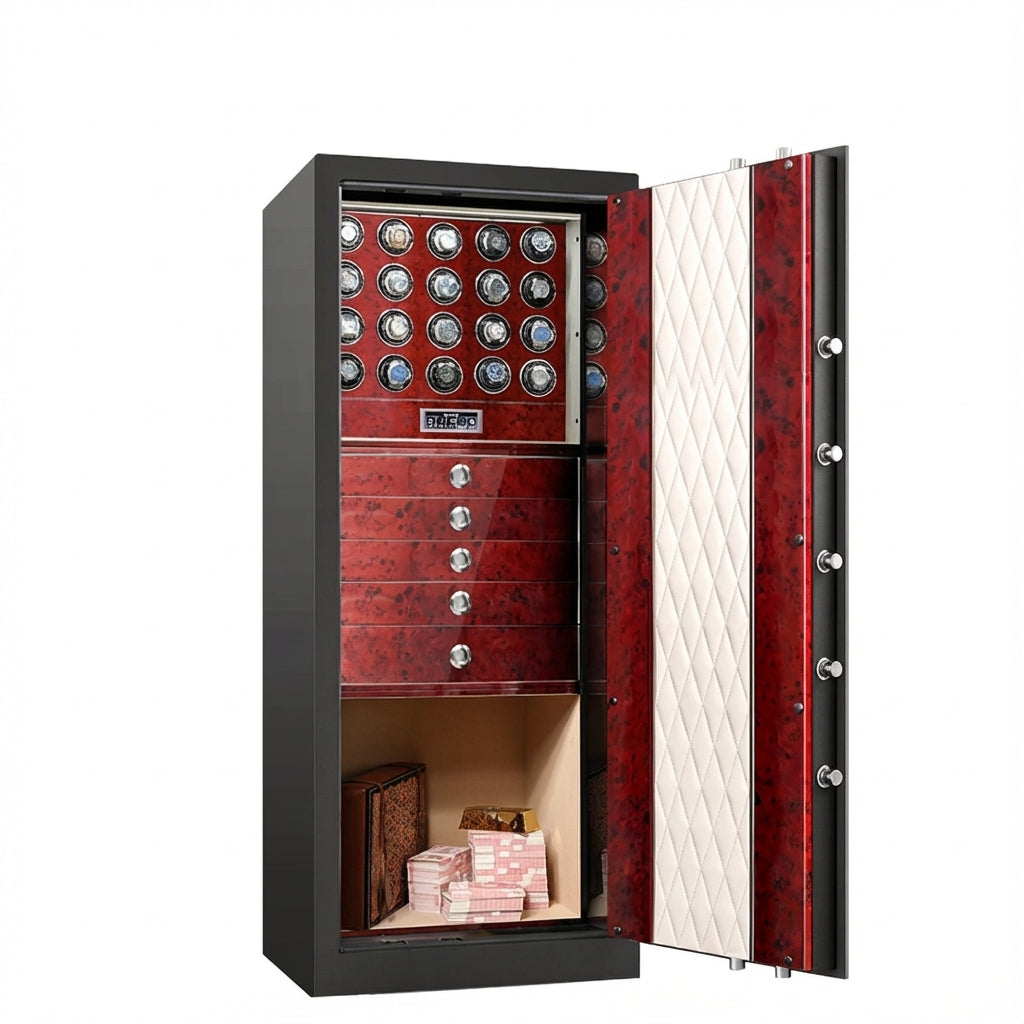
A watch winder safe integrates winding modules into an enclosed, lockable storage system.
For a single Hublot already kept in a secure environment, a conventional programmable winder may provide everything required.
For a collector who owns several valuable watches, combining winding and enclosed storage can become more practical.
Comparing Hublot Watch Storage Options
| Consideration | Standalone watch winder | Watch winder safe |
|---|---|---|
| Primary function | Maintain automatic winding | Combine winding with enclosed storage |
| Adjustable TPD | Model-dependent | Depends on installed winding modules |
| Independent rotor control | Available on selected systems | Available on selected configurations |
| Physical security | Generally limited | Depends on safe construction |
| Capacity | Usually one to several watches | Compact to substantial collections |
| Passive compartments | Limited or model-dependent | Can be included |
| Best application | Everyday winding convenience | Collection organization and protected storage |
The principal advantage of an integrated arrangement is that automatic watches can remain on their winding modules while stored within the same enclosure.
This may reduce repeated transfers between a display winder and separate secure storage.
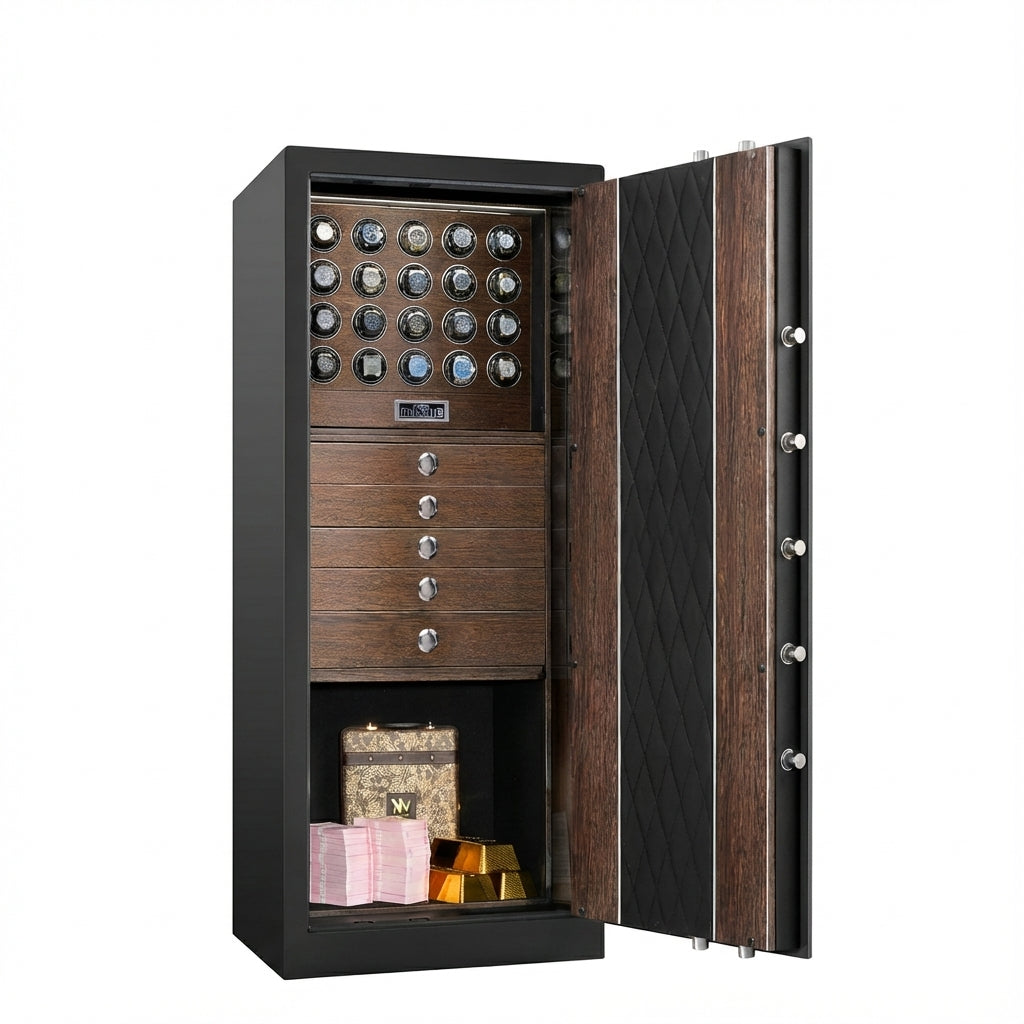
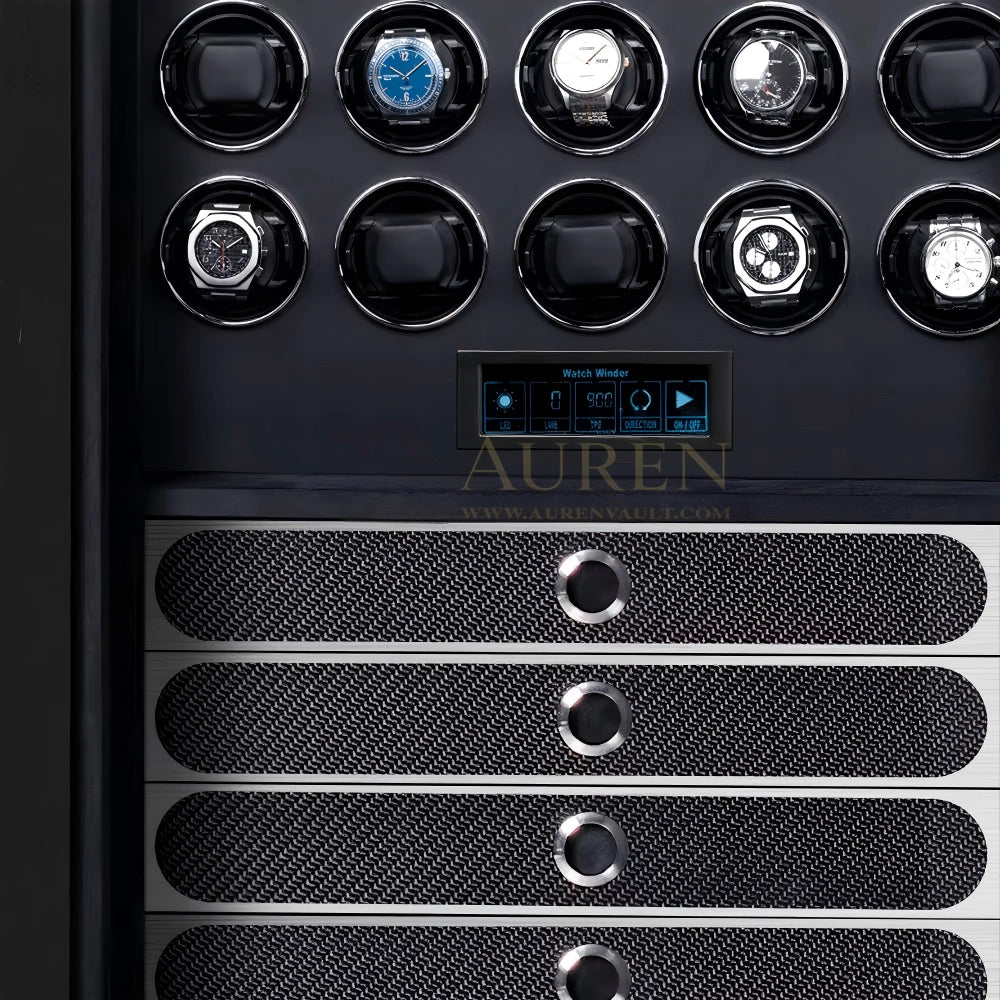
The integrated watch winder safe collection includes compact and larger configurations that combine automatic winding with enclosed watch organization.
Collectors evaluating this category can also refer to the watch winder safe guide as a designated destination for understanding integrated winding and storage systems.
However, a locking mechanism alone does not establish a particular burglary-resistance or fire-resistance certification.
The actual protection depends on the safe's construction, locking system, installation, and independently documented performance.
Winding functionality and protective capability should therefore be evaluated separately.
Planning Storage for a Mixed Hublot Collection
As a Hublot collection grows, the number of watches requiring active winding may be smaller than the total number of timepieces owned.
Consider a collector with seven watches:
A Big Bang Unico HUB1280, a Spirit of Big Bang HUB4700, a Classic Fusion HUB1110, a Classic Fusion Chronograph HUB1143, an older Big Bang HUB44, a Big Bang Meca-10 HUB1201, and a Classic Fusion Quartz HUB2912.
Five of these watches contain automatic movements.
The Meca-10 is manually wound.
The Classic Fusion Quartz does not require mechanical winding.
A seven-position automatic winder would therefore provide two positions that do not serve a winding purpose for the current collection.
A more practical configuration could combine five independently programmable winding positions with two passive compartments.
This would also allow the older HUB44 movement to operate under a different directional program from the contemporary automatic movements.
Why Independent Rotor Programming Becomes Important
A mixed Hublot collection may include both bidirectional and clockwise-only winding requirements.
If several automatic watches share one fixed program, some movements may not receive their intended winding pattern.
Independently controlled modules allow the owner to select the appropriate program for each watch.
This flexibility becomes more useful as additional movement generations are added.
For a collection of watches with different calibres, programming flexibility is generally more valuable than simply maximizing rotor count.
When Larger Watch Safes Become Appropriate
A collector may eventually need additional space for watches, straps, accessories, and passive storage.
The wider watch safe collection provides a starting point for evaluating different enclosure capacities.
For substantial collections, larger luxury watch safes may offer more appropriate space for the combination of winding modules and protective compartments.
The chosen configuration should account for the watches' physical dimensions, strap materials, frequency of use, and available installation space.
A storage system should accommodate the actual collection rather than require the owner to adapt every watch to an inflexible interior arrangement.
Bespoke Storage for Hublot's Different Case Designs
Hublot's material diversity and unconventional case shapes can make customized storage particularly relevant.
An owner may want adjustable cushions for larger Big Bang watches, separate supports for tonneau-shaped Spirit of Big Bang models, and passive storage for manually wound pieces.
Additional drawers may be useful for interchangeable straps and accessories.
In a private residence or dedicated watch room, cabinet dimensions, electrical access, interior finishes, and installation requirements also influence the design.
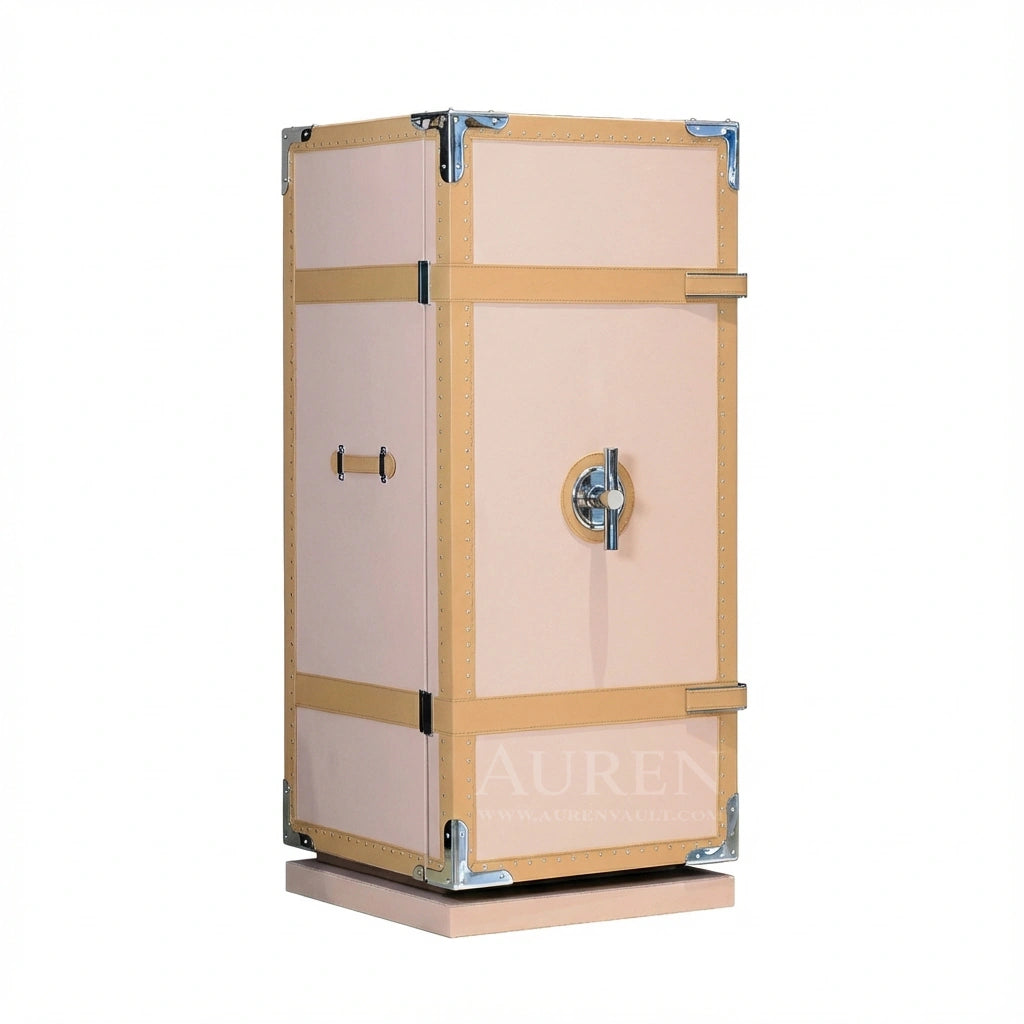
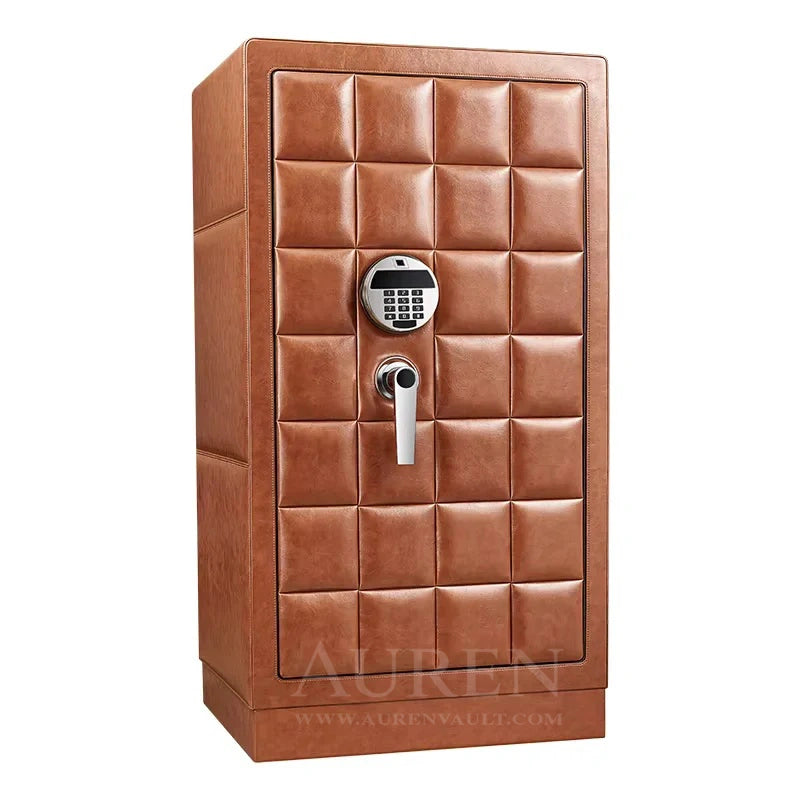
These considerations can be addressed through bespoke watch safe configurations, where winding capacity and interior layout can be planned around the collection.
The goal is to create practical organization without assigning unnecessary winding hardware to watches that cannot use it.
Long-Term Hublot Storage: Beyond Automatic Winding
Automatic winding is only one aspect of protecting a valuable mechanical watch.
Long-term storage also involves environmental stability, appropriate physical support, and protection from unnecessary handling.
Hublot's use of rubber, ceramic, sapphire, titanium, and precious-metal components makes proper storage particularly relevant.
Different strap materials may respond differently to prolonged compression.
Highly finished cases should be protected from unnecessary contact.
Watches with unconventional shapes need enough clearance to avoid accidental impacts inside their compartments.
A suitable storage environment should also avoid excessive humidity, unsuitable temperatures, and conditions inconsistent with the manufacturer's care recommendations.
The watch storage guide is Auren Vault's designated resource page for broader watch preservation considerations.
For watches that will remain unused for extended periods, maintaining uninterrupted automatic winding is not always necessary.
Owners should follow the relevant Hublot instructions for periodic winding, setting, and servicing.
A winder can make ownership more convenient, but it cannot replace mechanical maintenance or careful storage.
Frequently Asked Questions About Hublot Watch Winders
What is the best TPD setting for Hublot watches?
Approximately 650–800 TPD with bidirectional rotation is a commonly published independent starting range for many modern Hublot automatic movements. However, certain older Big Bang calibres, including HUB44, are listed at approximately 800 TPD clockwise. Confirm the exact movement before programming.
Does a Hublot Big Bang need a watch winder?
Not necessarily. Automatic Big Bang models can benefit from a compatible winder when left unworn between uses. A frequently worn automatic Hublot may receive sufficient energy through normal wrist movement. Manually wound Big Bang models do not benefit from conventional automatic rotation.
What watch winder setting should I use for Hublot HUB1280?
The HUB1280 Unico is an automatic flyback chronograph with approximately 72 hours of power reserve. Independent references commonly suggest bidirectional winding in the 650–800 TPD range for modern Hublot automatics. Verify the precise program for the calibre and external winder.
Is 650 TPD enough for Hublot Classic Fusion?
It may be suitable for many automatic Classic Fusion movements, including references within the HUB1110 family. Independent databases commonly list approximately 650–800 TPD bidirectional. The exact movement should be confirmed before applying this program.
Does the Hublot Spirit of Big Bang need more TPD because it operates at 5 Hz?
Not automatically. The 5 Hz frequency of the HUB4700 describes the movement's regulating oscillator. It does not directly determine the number of external winding rotations required each day.
Why do some Hublot Big Bang watches require 800 TPD clockwise?
Certain older Big Bang chronograph references use movements such as HUB44, which independent winding databases list with approximately 800 TPD and clockwise rotation. This setting should not be generalized to newer Unico movements.
Can I use a watch winder for Hublot Meca-10?
No. The Big Bang Meca-10 HUB1201 is manually wound. It provides approximately 240 hours of power reserve but does not contain the automatic rotor required for conventional external winding.
Does a Hublot Classic Fusion Quartz need a winder?
No. Quartz movements such as HUB2912 operate using electrical power rather than an automatic rotor. A conventional watch winder cannot recharge the battery or provide mechanical winding.
Can a watch winder damage a Hublot ceramic or sapphire case?
A properly fitted winder should support the watch without unnecessary impact or rubbing. Risks can arise from loose holders, insufficient compartment clearance, or improper handling. Ceramic and sapphire components should not be allowed to strike hard interior surfaces during rotation.
Can a Hublot be overwound on a watch winder?
Modern automatic movements generally include mechanisms that limit further mainspring tension once fully wound. However, this does not justify excessive external rotation. The winder should operate through an appropriate programmed cycle with rest intervals.
Is a watch winder safe worth considering for a Hublot collection?
It may be appropriate when a collector wants both automatic winding and enclosed, lockable storage. The decision should account for the number of automatic watches, passive storage needs, case dimensions, and the protective specifications of the individual safe.
Related Reading: Automatic Winding and Luxury Watch Storage
Hublot's combination of contemporary chronograph architecture, unconventional case materials, and manually wound complications offers useful context for understanding watch winding across other high-end manufacturers.
Best Watch Winder for Richard Mille: TPD & Storage Guide
Explore the importance of movement-specific winding programs, unconventional case construction, and appropriate holders for technically advanced watches with distinctive straps and materials.
Best Watch Winder for Cartier: TPD Settings & Buying Guide
Compare automatic, manual-winding, and quartz movement compatibility, including practical considerations when selecting a watch holder for different case shapes.
Watch Safes with Built-In Watch Winders: Are They Worth It?
Understand when integrated winding modules and enclosed storage provide a practical alternative to standalone devices for larger collections.
Final Perspective: Hublot Requires Compatibility, Not Maximum Rotation
Hublot's watchmaking philosophy emphasizes the combination of innovative materials, mechanical construction, and unconventional design.
Those characteristics should influence how its watches are maintained and stored.
A Big Bang Unico with HUB1280, a Spirit of Big Bang using HUB4700, and an older Big Bang chronograph with HUB44 may require different winding programs.
A Classic Fusion automatic can benefit from a suitable winder, while a quartz reference cannot.
The manually wound Meca-10 provides an even clearer example: an impressive ten-day power reserve does not mean the watch needs automatic winding.
For a single automatic Hublot, a reliable programmable winder with a properly fitted holder may provide everything necessary.
For a mixed collection, independent rotor control and passive storage become more valuable.
For collectors who also prioritize physical security, integrated winding and enclosed storage can provide a more coherent long-term arrangement.
As a specialist in premium watch storage and integrated winding solutions, Auren Vault approaches these requirements through configurations intended to combine movement compatibility, collection organization, and appropriate physical protection.
The best watch winder for Hublot is ultimately the one that respects the movement's design, accommodates the watch's distinctive construction, and makes ownership more convenient without introducing unnecessary complexity.