


The best watch winder for Bell & Ross watches is a programmable unit that supports the automatic movement's winding requirements, offers adjustable turns per day (TPD), and holds the watch securely without excessive pressure on its case or strap.
For many older Bell & Ross automatic models, approximately 650 TPD with bidirectional rotation is a commonly published starting recommendation. However, this setting should not be applied universally. Certain older chronographs require clockwise winding, while newer calibres such as BR-CAL.302-1 and BR-CAL.323 should be evaluated according to their individual movement specifications.
Popular collections including the BR 03, BR 05, and BR-X5 contain automatic watches that can benefit from controlled winding between wears. The BR-S collection also includes quartz models that do not require mechanical winding.
For a single watch, the most important considerations are movement compatibility, suitable case support, and quiet operation. For collectors managing several automatic watches, independently programmable winding positions and secure storage become increasingly valuable.
The right choice depends on the calibre, the watch's physical design, and how frequently it is worn.
Why Bell & Ross Watches Deserve a Movement-Specific Winder
Bell & Ross has established a distinctive design identity inspired by aviation instruments.
Its square cases, prominent numerals, functional dials, and industrial design language are immediately recognizable. Yet beneath that consistent aesthetic, the brand uses several different movement architectures.
This distinction matters when choosing a watch winder.
A BR 03 automatic, a BR 05 chronograph, and a BR-X5 manufacture movement may share the same brand identity without requiring identical winding programs.
An automatic watch contains a rotor that moves in response to wrist motion. As the rotor operates, it transfers energy through the winding mechanism to the mainspring.
When the watch is left stationary, the stored energy gradually decreases until the movement stops.
A watch winder periodically rotates the watch to help maintain that energy.
Its purpose is convenience: keeping the timepiece running between wears and reducing the need to reset its indications.
It does not improve the movement's inherent accuracy, prevent the need for servicing, or guarantee better long-term mechanical condition.
For someone who wears the same Bell & Ross every day, regular wrist movement may already provide sufficient winding.
For a collector who alternates between several watches, an appropriately configured winder can make that rotation considerably more convenient.
Bell & Ross Watch Winder Settings: TPD and Rotation Direction
Two parameters determine the operating program of an automatic watch winder.
Turns per day (TPD) measures the number of rotations a winder performs over a 24-hour period.
Rotation direction determines whether the device turns clockwise, counterclockwise, or alternates between both directions.
These settings must match the winding characteristics of the movement.
Many independent watch winder databases list approximately 650 TPD with bidirectional rotation for established Bell & Ross automatic models, particularly older references based on ETA automatic movements.
However, some older chronographs using Valjoux 7750 architecture are listed with approximately 800 TPD and clockwise rotation.
This difference is significant.
A chronograph can look similar to a three-hand watch externally while relying on an entirely different automatic winding mechanism.
Bell & Ross Watch Winder Settings by Calibre
| Bell & Ross model or movement | Power reserve | Winder guidance |
|---|---|---|
| BR 03, BR-CAL.302-1 | Approximately 54 hours | Programmable winder; confirm TPD and direction for the calibre |
| BR 03 GMT, BR-CAL.303 | Approximately 54 hours in specified contemporary references | Movement-specific program required |
| BR 03 Chronograph, BR-CAL.301 | Around 40–42 hours in documented references | Confirm direction and TPD; do not assume all chronographs wind alike |
| BR 05, earlier BR-CAL.321/322 | Approximately 40 hours | Verify settings for the exact reference |
| BR 05, newer BR-CAL.321-1 | Approximately 54 hours | Adjustable TPD and direction; confirm compatibility |
| BR-X5, BR-CAL.323 | Approximately 70 hours | Calibre-specific program; no universal official TPD established |
| Older ETA 2892-based BR 01/BR 03 references | Movement-dependent | Common independent reference: 650 TPD, bidirectional |
| Older Valjoux 7750-based Bell & Ross chronographs | Movement-dependent | Common independent reference: 800 TPD, clockwise |
| BR-S Quartz, BR-CAL.102 | Not applicable | No watch winder required |
Important: The numerical TPD recommendations for older movements come from independent winding databases, not a universal Bell & Ross factory chart. A listed power reserve is a manufacturer specification, not a recommended daily rotation count.
Is 650 TPD Suitable for Bell & Ross?
For many established automatic Bell & Ross references, 650 TPD with alternating rotation is a reasonable initial program to investigate.
Older BR 01-92 and BR 03-92 watches using ETA 2892-family movements frequently appear with this recommendation in independent winding tables.
The important limitation is that the same figure cannot automatically be transferred to every modern Bell & Ross calibre.
A contemporary BR 03 with BR-CAL.302-1 is not identical to an older BR 03-92.
Similarly, BR-CAL.323 in the BR-X5 has a different architecture from the movements used in several earlier models.
The manufacturer's movement information and guidance from a qualified watchmaker should take priority over generic online tables.
A good winder should also allow enough programming flexibility to adjust its operating cycle when the correct settings have been established.
Why 800 TPD and Clockwise Rotation Appear in Some Bell & Ross Guides
Some older Bell & Ross chronographs were equipped with movements based on the Valjoux 7750.
The Valjoux 7750 is associated with a unidirectional automatic winding system.
Independent watch winder databases commonly specify approximately 800 TPD with clockwise external rotation for watches using this movement.
That does not mean every Bell & Ross chronograph requires 800 TPD.
The BR-CAL.301 movement used in various BR 03 and BR 05 chronographs should be identified and evaluated independently.
A movement's internal rotor winding direction should also not be confused with the direction displayed on an external winder's control panel without confirming how that device defines its rotation.
For practical purposes, movement identification is more reliable than choosing settings based only on whether a watch has chronograph pushers.
Best Watch Winder for Bell & Ross BR 03
The BR 03 is arguably the clearest expression of Bell & Ross's instrument-watch design philosophy.
Its recognizable square case is inspired by cockpit instruments, with functional legibility and geometric proportions central to its appearance.
Modern BR 03 models commonly use a 41 mm case with the BR-CAL.302-1 automatic movement, which provides approximately 54 hours of power reserve.
Earlier versions, however, used different movements and case dimensions.
This is an important consideration for collectors who own multiple generations of the BR 03.
BR 03 Automatic: Focus on Programming and Case Stability
For a contemporary automatic BR 03, the ideal winder should offer adjustable TPD, selectable rotation direction, and a cushion suited to its case and strap.
Unlike a conventional round watch, the BR 03 has a square case with relatively prominent corners.
The case shape does not inherently create a winding problem. However, it can affect clearance inside compact winding compartments.
A suitable enclosure should provide enough space for the watch to rotate without its case, crown, or strap contacting the surrounding structure.
The watch holder should also prevent movement during the rotation cycle.
Many BR 03 references use rubber or fabric straps, which behave differently from rigid metal bracelets when placed around a cushion.
A flexible or adjustable holder is therefore preferable to one that requires the strap to be stretched tightly.
BR 03 GMT: Why Maintaining the Movement Can Be Useful
The BR 03 GMT adds an additional time-zone indication to the brand's aviation-inspired design.
Contemporary references such as the BR 03 GMT Compass use the automatic BR-CAL.303 calibre with approximately 54 hours of power reserve.
For someone who regularly travels or coordinates across time zones, keeping the watch running between wears can reduce repeated adjustments.
Imagine an owner who alternates between a BR 03 GMT during international travel and a BR 05 during the working week.
If the GMT remains unused for several days, its power reserve will eventually be depleted.
A correctly programmed winder can help preserve the running time and calendar indication.
However, the GMT complication does not automatically determine the winder's TPD requirement. The movement's winding architecture remains the relevant specification.
BR 03 Chronograph: Verify the Movement Before Copying Settings
The BR 03 Chronograph introduces additional complexity.
References such as the BR 03-94 Blacktrack use the automatic BR-CAL.301 movement with a manufacturer-stated power reserve of approximately 42 hours.
Other BR-CAL.301 references have published reserves of approximately 40 hours.
Owners should not assume that a BR 03 Chronograph requires the same settings as a standard BR 03 automatic.
Nor should they automatically apply settings intended for older Valjoux 7750-based Bell & Ross watches.
The chronograph mechanism, movement generation, and winding specifications should all be considered before selecting a program.
For owners rotating between several chronographs, a multi-watch winder with independent controls provides a practical advantage because different movements can be configured separately.
Choosing a Winder for Bell & Ross BR 05
The BR 05 collection takes Bell & Ross's geometric design language into a more urban sports-watch format.
Its integrated bracelet, sculpted case, and versatile proportions make it suitable for frequent everyday wear.
This affects the value of a watch winder.
An automatic BR 05 worn almost daily may receive adequate energy through normal activity.
However, collectors who alternate between several sports and dress watches may appreciate keeping their BR 05 running while another watch is being worn.
BR 05 Self-Winding: Not Every Generation Has the Same Power Reserve
The BR 05 demonstrates why model generations matter.
Earlier BR 05 references using BR-CAL.321 or BR-CAL.322 movements were documented with approximately 40 hours of power reserve.
More recent references using BR-CAL.321-1, such as the BR 05 Black Ceramic, provide approximately 54 hours.
Both are automatic movements, but the difference in power reserve changes the length of time a sufficiently wound watch can remain running while stationary.
A 54-hour movement offers more flexibility across short periods of non-wear than a 40-hour movement.
It does not, however, establish the correct TPD setting.
Power reserve measures stored running time, while TPD measures programmed external rotation.
A movement with a longer reserve may still require a similar daily winding program to another movement, depending on its winding efficiency and construction.
For the BR 05, the correct starting point remains the actual movement reference rather than the collection name alone.
Why the BR 05 Bracelet Matters
The integrated bracelet is an important practical consideration.
A properly fitted winder cushion should accommodate the bracelet's closed circumference without forcing the clasp or links into an unnatural position.
This becomes especially relevant when a watch has been sized for a smaller wrist.
An oversized cushion can create unnecessary pressure, while an undersized cushion may allow the watch to shift during rotation.
For BR 05 versions fitted with rubber straps, the holder must also provide appropriate support without overstretching the material.
A winder with interchangeable or adjustable cushions is particularly useful for owners who alternate between bracelet and strap configurations.
Bell & Ross BR-X5: A Different Level of Movement Engineering
The BR-X5 represents a more technically advanced direction within the Bell & Ross collection.
It uses the manufacture BR-CAL.323 automatic calibre, a COSC-certified movement with approximately 70 hours of power reserve.
The watch also incorporates a power reserve indicator, allowing the owner to observe the movement's remaining stored energy.
This feature is useful when evaluating how a watch behaves during periods of non-wear.
For example, an owner can compare the power reserve indication before and after a period on a correctly configured winder.
A stable or increasing indication may suggest that the device is delivering sufficient effective winding for that operating routine.
However, this observation alone does not establish a precise universal TPD recommendation.
The external winder's program, the initial mainspring state, and the movement's characteristics all influence the result.
Does the BR-X5 Need More TPD Because It Has a 70-Hour Reserve?
Not necessarily.
The BR-X5's extended power reserve allows the watch to continue operating for approximately 70 hours when sufficiently wound.
It does not follow that the movement needs 700, 800, or any other particular number of external rotations per day.
A higher power reserve and a higher TPD requirement are not directly interchangeable concepts.
For this calibre, the appropriate approach is to confirm the winding program through reliable technical guidance rather than extrapolating from older Bell & Ross models.
A programmable winder provides the flexibility necessary to accommodate the verified settings.
For an owner who regularly wears a BR-X5, the extended reserve may also reduce the practical need for a winder.
The benefit becomes greater when the watch is part of a collection and frequently remains unworn beyond its available reserve.
What Features Matter Most in a Bell & Ross Watch Winder?
Once the movement has been identified, the choice becomes a matter of mechanical compatibility and physical design.
Bell & Ross watches present a useful example because their case architecture differs from conventional round dress watches.
The most appropriate winder should provide precise movement control while securely accommodating the case.
Adjustable TPD and Independent Rotation Direction
A high-quality programmable winder should offer multiple daily rotation settings and selectable clockwise, counterclockwise, and bidirectional operation.
For a collector with both modern and older Bell & Ross watches, this flexibility is particularly valuable.
An older automatic chronograph may have different winding requirements from a contemporary three-hand BR 03.
A winder that forces every watch to follow the same program can become restrictive as the collection grows.
Individually controlled winding modules allow each automatic movement to use its own verified configuration.
Support for Square Cases and Different Strap Materials
The distinctive geometry of Bell & Ross watches deserves attention.
The BR 03's square case and the BR 05's integrated bracelet create different physical requirements.
A good watch holder should provide stable support without excessive pressure.
Three characteristics are particularly useful:
-
Adjustable cushions that accommodate different wrist sizes and strap materials.
-
Adequate internal clearance around square cases, crowns, and chronograph pushers.
-
Secure positioning throughout the winding cycle without unnecessary strap compression.
These practical features are more important than decorative lighting or elaborate exterior finishes.
A premium winder should accommodate the watch naturally rather than forcing it into a fixed configuration.
Quiet Operation and Controlled Rest Intervals
A watch winder does not need to rotate continuously.
A suitable program distributes the required rotations over a 24-hour period, with rest intervals between operating cycles.
This helps provide controlled winding without unnecessary motion.
Motor noise also matters when the winder is placed in a bedroom, home office, or dressing room.
A quiet, stable motor and reliable programming can make the difference between a device that is convenient to own and one that becomes distracting.
Long-Term Reliability
A winder should operate consistently over time, maintain its selected settings, and provide convenient access to the watch.
Motor quality and serviceability deserve consideration, particularly for multi-watch systems.
For a valuable collection, dependable operation is more useful than adding features that do not improve compatibility or day-to-day convenience.
Standalone Watch Winder or Watch Winder Safe?
The appropriate storage solution depends on more than the movement.
A standalone winder primarily addresses the convenience of keeping an automatic watch running between wears.
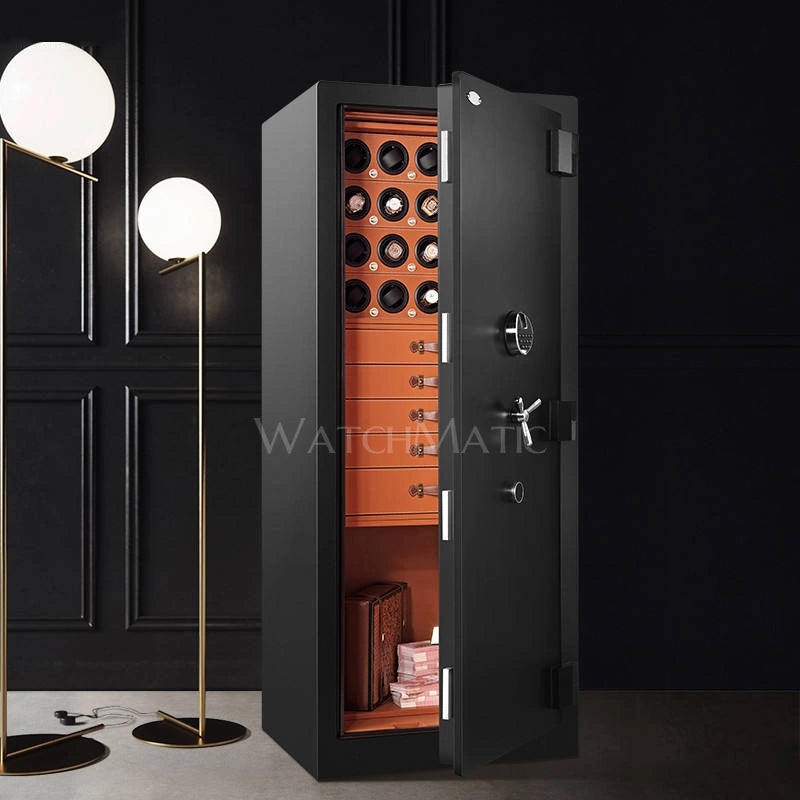
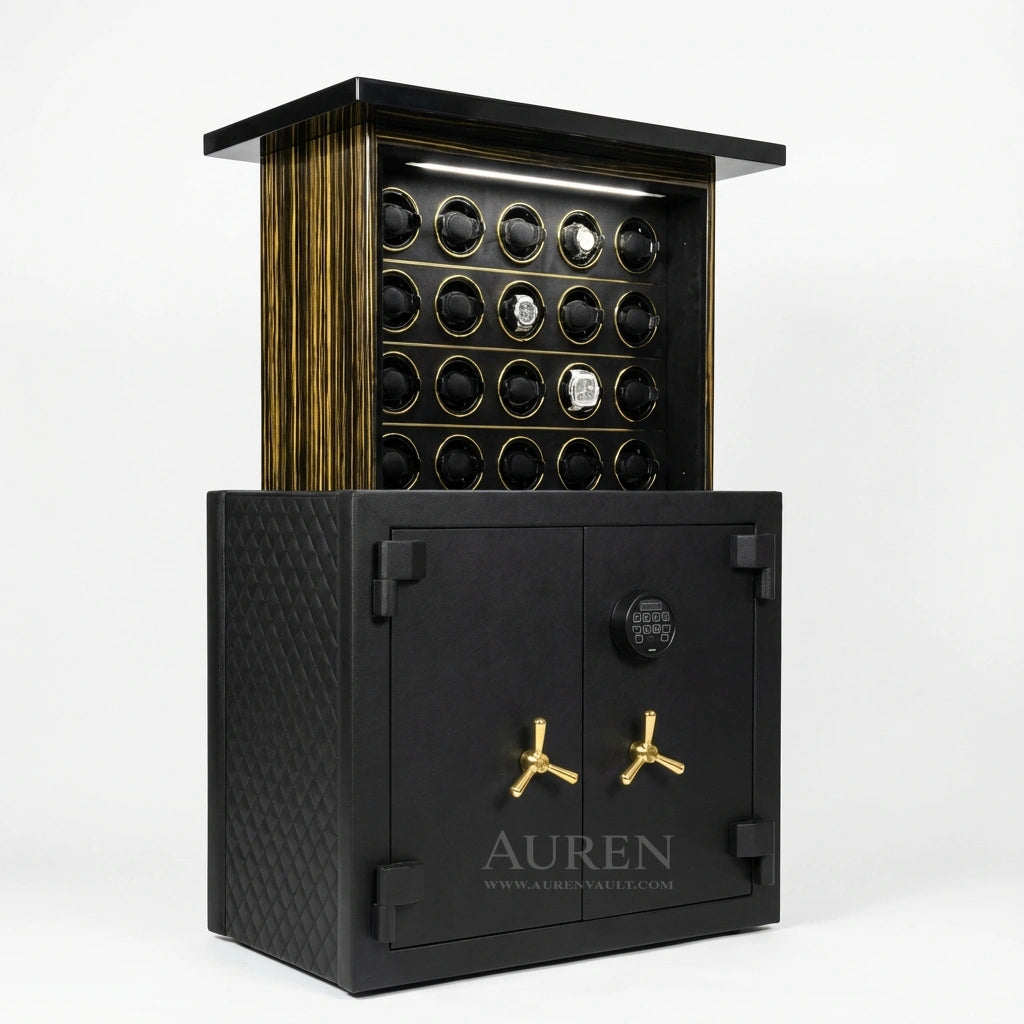
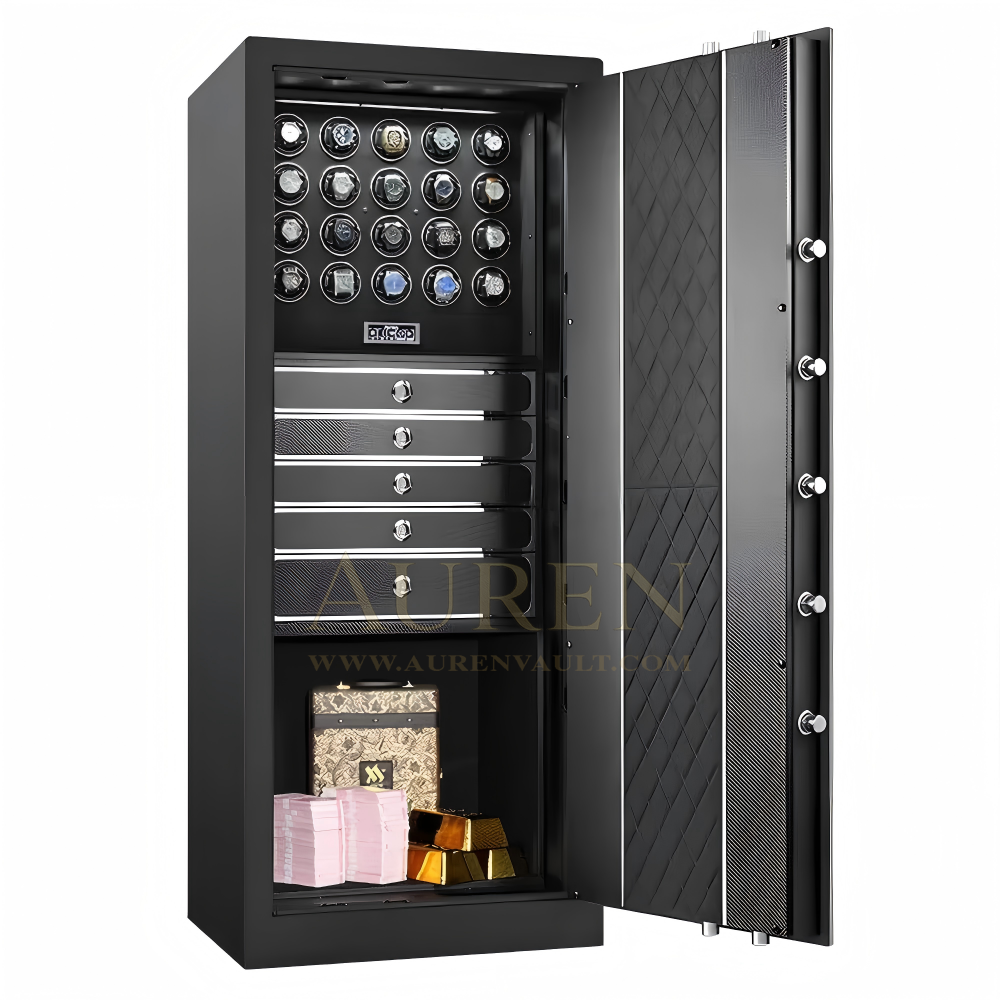
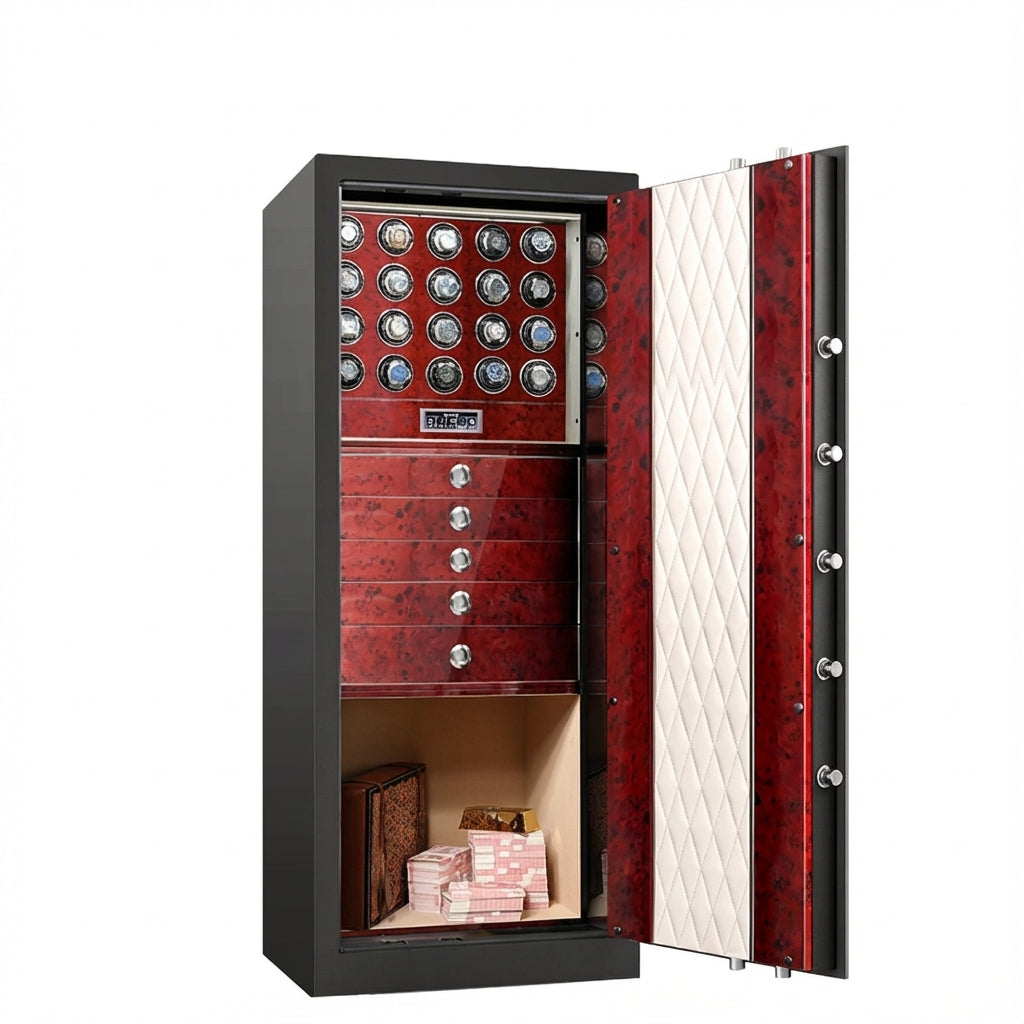
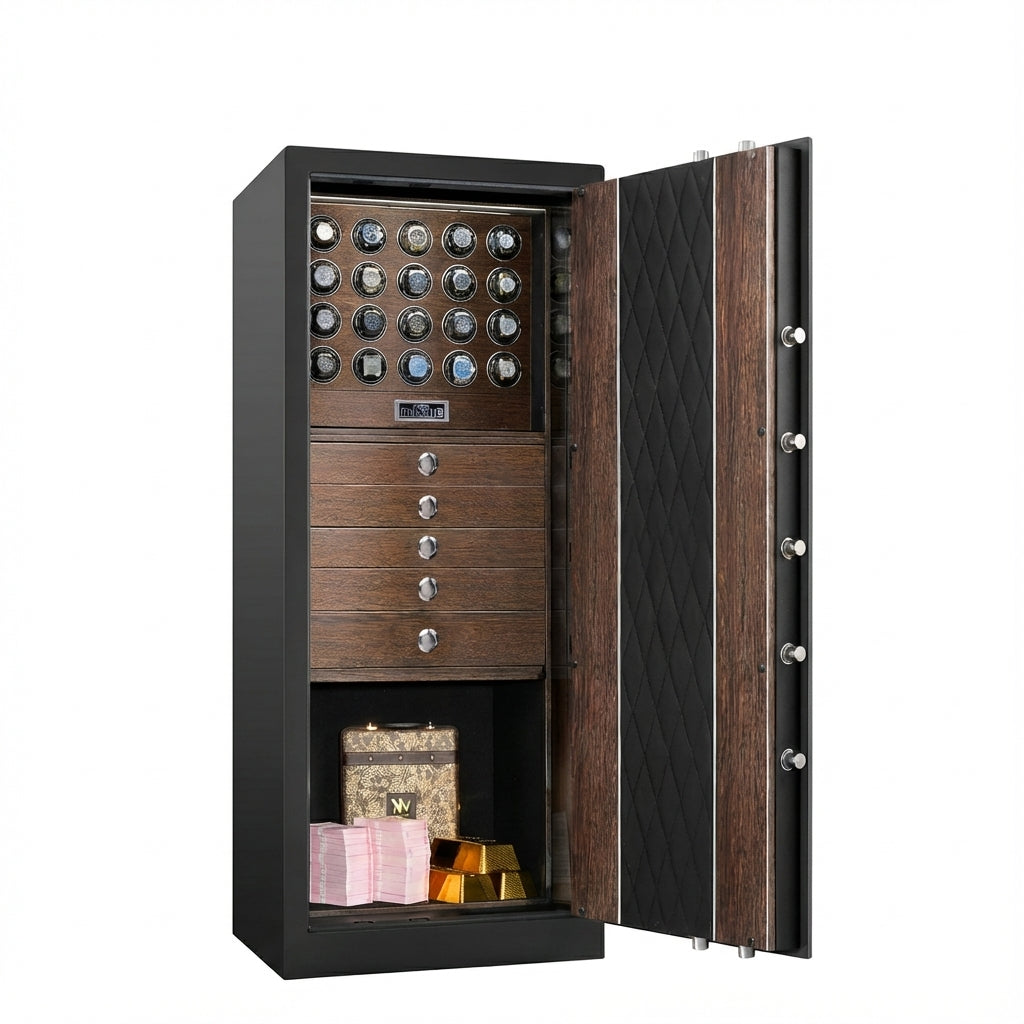
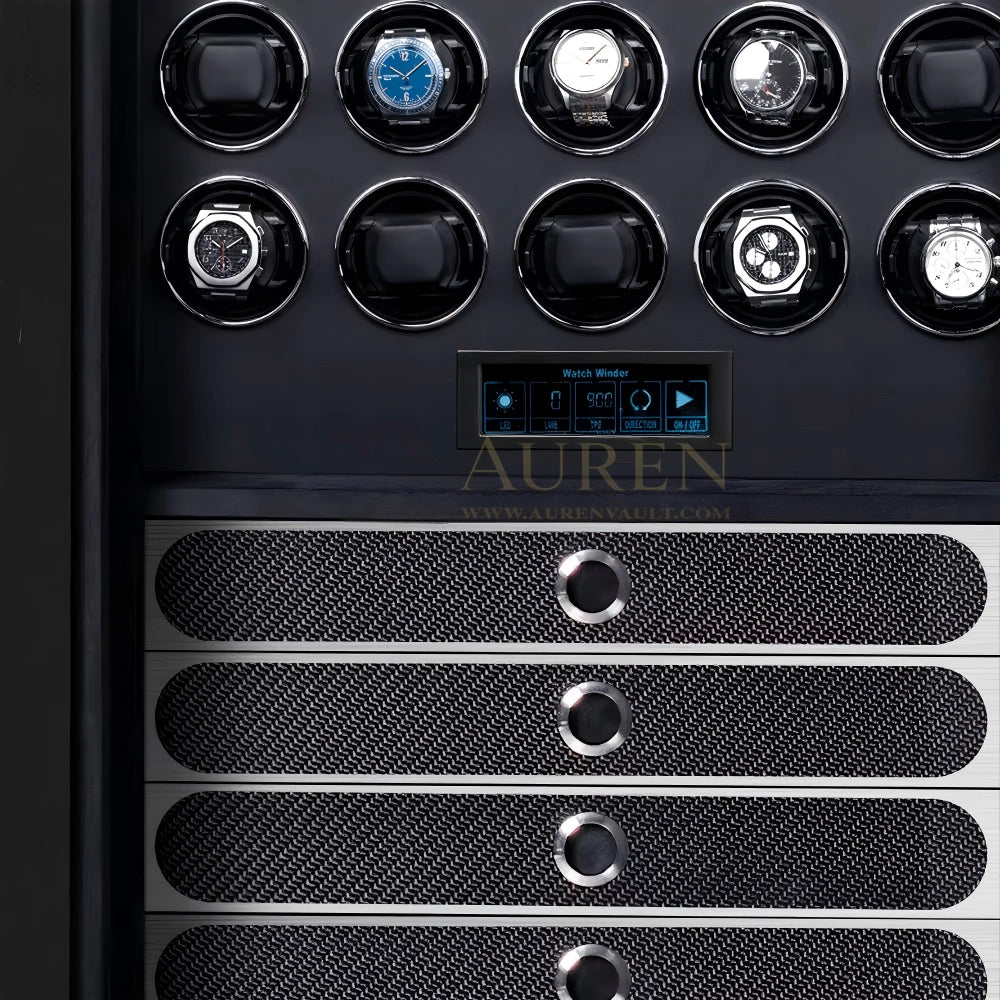
A watch winder safe combines this function with a lockable enclosure intended for more protected storage.
The distinction becomes relevant for Bell & Ross collectors who own several automatic watches or maintain a broader collection of luxury timepieces.
| Ownership scenario | Suitable configuration | Primary consideration |
|---|---|---|
| One BR 03 worn daily | No winder or single programmable winder | Convenience |
| One BR 05 worn occasionally | Compact adjustable winder | Correct movement program |
| Several automatic Bell & Ross watches | Multi-watch winder with individual settings | Movement compatibility |
| Mixed collection with valuable automatic watches | Watch winder safe | Integrated winding and enclosed storage |
| Watches stored for long periods without operation | Protective passive storage | Physical condition and storage environment |
For a single Bell & Ross watch already kept in a suitable secure location, a tabletop winder may provide everything required.
For several watches, however, repeated transfers between a display winder and separate protected storage can become inconvenient.
An integrated safe can reduce that handling while keeping compatible automatic movements on their individual winding programs.
The actual security level must still be evaluated independently.
A locking mechanism, premium finish, or heavy cabinet does not automatically establish a recognized burglary-resistance or fire-resistance certification.
Construction, installation, locking features, and independently documented performance remain important.
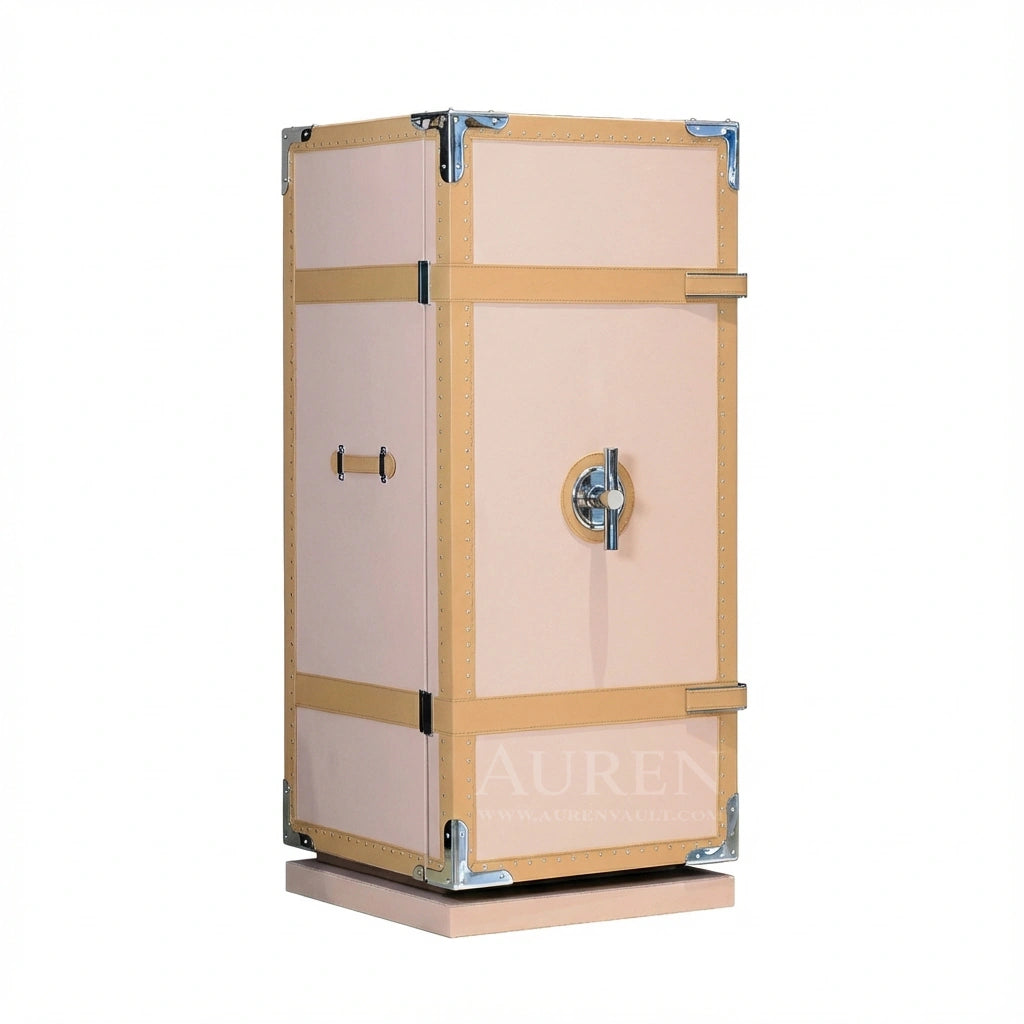
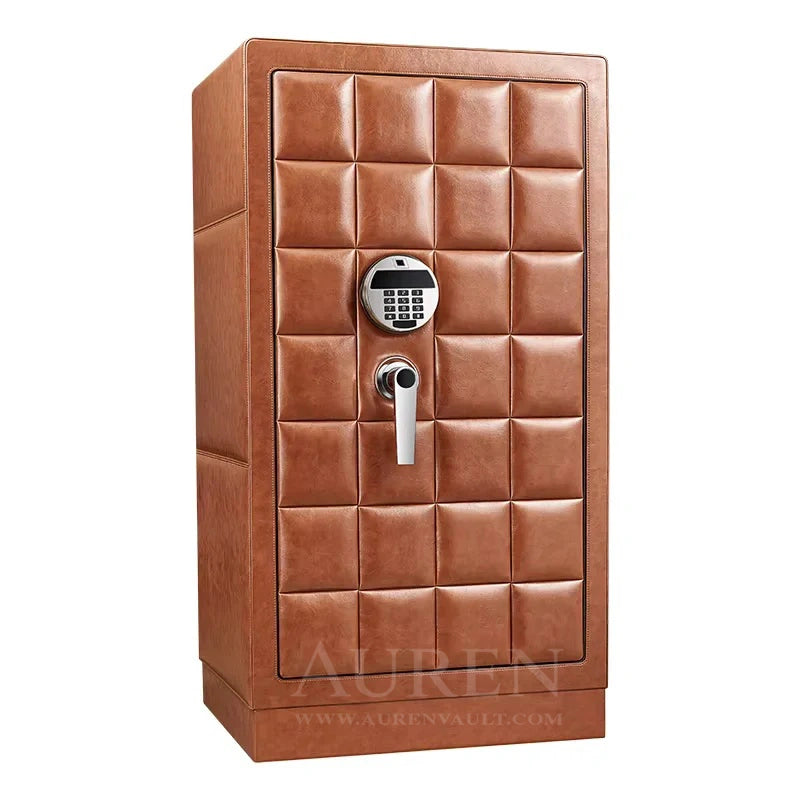
For collectors looking for this combined approach, the integrated watch winder safe collection at Auren Vault includes compact and larger storage configurations designed around automatic winding and enclosed watch organization.
When a Collection Needs Both Winding and Passive Storage
One of the most common mistakes in planning a watch collection is assuming every watch requires a winding position.
Consider an owner with a modern BR 03 automatic, a BR 05, a BR-X5, an older Bell & Ross chronograph, and a quartz BR-S.
This is a five-watch collection, but only four watches benefit from conventional automatic winding.
The quartz BR-S does not contain an automatic mechanical winding system.
It requires ordinary protected storage rather than a rotor.
Now imagine that the same collector also owns two manually wound watches from another manufacturer.
The collection has expanded to seven pieces, but only four require automatic winding positions.
A cabinet with four individually controlled modules and three passive compartments may be more useful than a seven-position winder.
It provides the required functionality without allocating unnecessary motors to watches that cannot use them.
For larger collections, interior layout should also account for the different physical characteristics of the watches.
A BR 03 on a rubber strap may need different support from a BR 05 on a metal bracelet.
Additional space for spare straps, bracelets, and accessories can improve organization.
The best storage arrangement is determined by the composition of the collection rather than its total watch count alone.
How to Set Up a Watch Winder for Bell & Ross
Before using a winder, identify the exact watch reference and confirm that it contains an automatic movement.
Bell & Ross provides technical specifications and operating notices for many of its watches. These documents establish movement type, power reserve, and instructions for starting the watch.
If the watch has stopped, follow the manufacturer's crown-winding instructions before placing it on the winder.
The goal is to begin with a running movement and use the winder to maintain its energy, rather than expecting an external rotation program to restore an empty reserve immediately.
Next, select the winding direction and TPD appropriate for the calibre.
For older ETA 2892-based Bell & Ross references, independent databases often recommend approximately 650 TPD with bidirectional rotation.
For older Valjoux 7750-based chronographs, approximately 800 TPD with clockwise rotation is commonly listed.
For newer Bell & Ross movements, verify the program independently rather than automatically applying either of these figures.
Position the watch securely in the holder.
Check that the case, crown, strap, and bracelet have enough clearance throughout a complete winding cycle.
Once the winder is operating, observe the watch over several days.
If it continues running consistently, the program may be providing adequate energy for the intended usage pattern.
If it stops, reassess the initial winding state, selected rotation direction, programmed TPD, and actual winder performance.
A repeatedly stopping watch may also require professional evaluation.
Increasing TPD without identifying the cause is not a reliable troubleshooting method.
Can a Watch Winder Damage a Bell & Ross?
A compatible, properly configured winder is designed to maintain an automatic watch's power reserve through controlled motion.
Modern automatic movements generally incorporate a slipping mainspring mechanism that helps prevent excessive mainspring tension once fully wound.
However, this does not mean that continuous rotation is necessary or beneficial.
A winder should provide enough effective motion to maintain the movement, with appropriate pauses between cycles.
Unnecessary rotation offers no clear practical advantage once that purpose has been achieved.
Physical compatibility is equally important.
A poorly fitted cushion may stretch a rubber strap, place excessive pressure on a bracelet, or allow a heavy watch to shift during rotation.
These are avoidable risks that have little to do with the movement's internal winding mechanism.
A winder also cannot replace regular servicing, correct degraded lubrication, or diagnose mechanical faults.
For watches stored over longer periods, allowing an automatic movement to stop can be reasonable when consistent with the manufacturer's care instructions.
The choice to use a winder should follow the owner's wearing habits rather than an assumption that mechanical watches must operate continuously.
Frequently Asked Questions
What is the best TPD setting for Bell & Ross watches?
Approximately 650 TPD with bidirectional rotation is commonly published for many older Bell & Ross automatic models. Certain older Valjoux 7750-based chronographs are listed at around 800 TPD with clockwise rotation. Confirm the correct settings for the exact calibre before use.
Does a Bell & Ross BR 03 need a watch winder?
Not necessarily. Automatic BR 03 models can benefit from a compatible winder when left unworn between uses. However, regular wrist movement may be sufficient for owners who wear the same watch frequently.
What watch winder setting should I use for a BR 05?
The correct setting depends on the movement. Earlier BR 05 references use BR-CAL.321 or BR-CAL.322, while newer models can use BR-CAL.321-1. Their power reserves differ, and a movement-specific winding program should be verified rather than assumed.
Can I use a watch winder for the Bell & Ross BR-X5?
Yes. The BR-X5 contains the automatic BR-CAL.323 manufacture movement. A compatible programmable winder can maintain its power reserve, but the precise TPD and rotation direction should be confirmed for the calibre.
Is 650 TPD enough for a Bell & Ross BR 03?
It is a commonly published starting recommendation for several older automatic BR 03 references. It should not be treated as a universal specification for every modern BR 03 movement.
Do Bell & Ross quartz watches need a winder?
No. Quartz watches, including BR-S references fitted with the BR-CAL.102 quartz movement, do not benefit from conventional automatic winding.
Can a square Bell & Ross watch fit in a conventional winder?
Yes, provided the winding compartment has sufficient clearance and the holder supports the watch securely. Square case geometry, strap length, and crown position should be considered before selecting a model.
Is a watch winder safe necessary for a Bell & Ross collection?
It is not mandatory. A standalone winder may be sufficient for one or two automatic watches. A watch winder safe becomes more relevant when a collector wants automatic winding and enclosed, lockable storage in one system.
Final Perspective: The Best Winder Should Complement the Watch
Bell & Ross watches are designed around functional clarity.
That principle offers a useful way to approach winding and storage.
A modern BR 03 needs a winder compatible with its automatic movement and square case. A BR 05 introduces additional considerations around bracelet support and movement generation. A BR-X5 requires the same care in programming, despite its more advanced manufacture calibre and extended power reserve.
These differences do not necessarily demand more elaborate equipment.
They demand better compatibility.
A quiet programmable winder may be entirely appropriate for a single automatic Bell & Ross. A collector with multiple calibres may benefit from independent winding modules, while a broader collection can justify combining those modules with secure storage.
The right arrangement should protect the watch's physical condition, maintain its movement when useful, and make the collection easier to enjoy.
Related Reading
For collectors comparing square-case watches from different manufacturers, our guide to Cartier watch winder settings and compatibility explores the importance of movement identification and bracelet fit.
Owners managing automatic watches from multiple Swiss manufacturers can also read how to choose a watch winder for Vacheron Constantin, including winding-program considerations for different calibres.
For a deeper look at integrated storage, Watch Safes with Built-In Watch Winders: Are They Worth It? examines how winding convenience and physical protection can work together in a larger watch collection.