
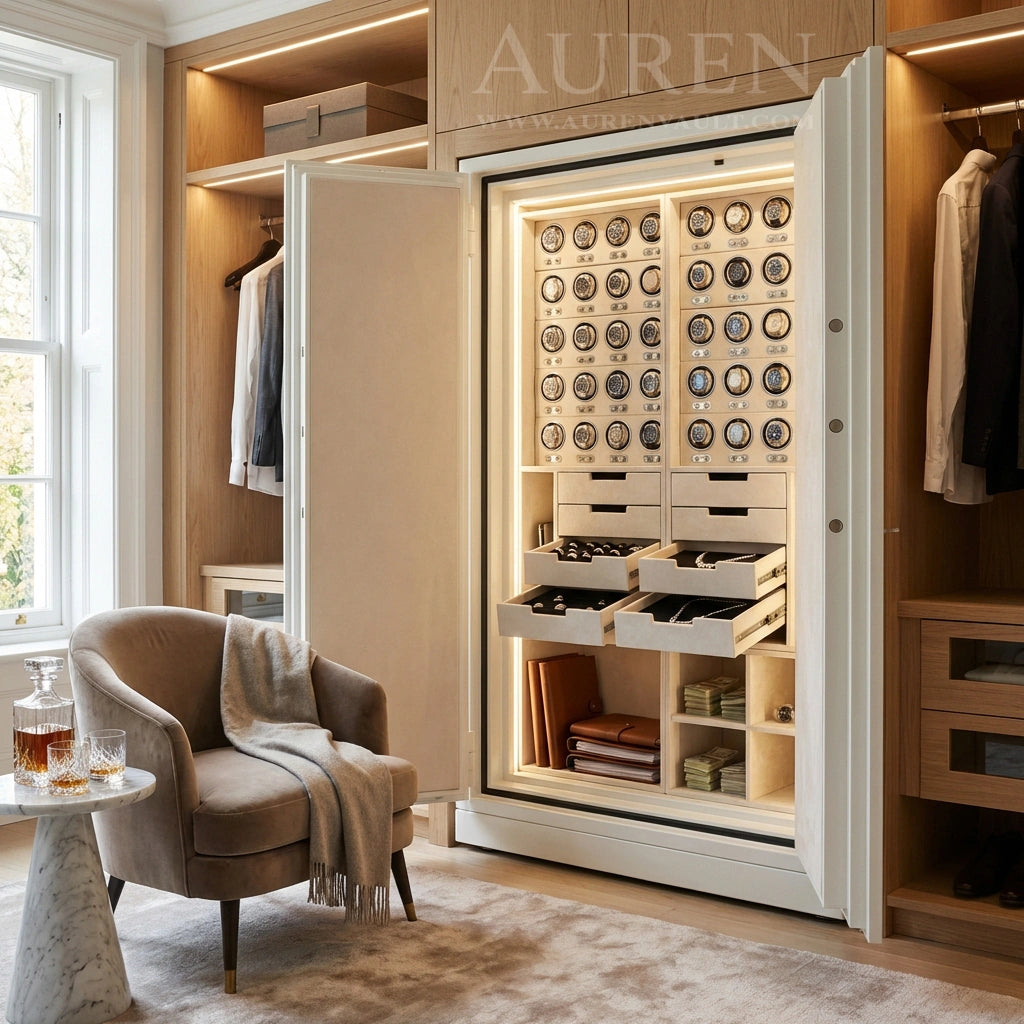

The best watch winder for Jaeger-LeCoultre watches is a programmable unit that matches the movement's winding direction, provides adjustable turns per day (TPD), and securely supports the watch without placing unnecessary pressure on its case or strap.
Many Jaeger-LeCoultre automatic movements appear in independent winding databases with settings around 650–800 TPD, although certain calibres have different requirements. These figures are general references rather than universal manufacturer-approved settings.
Movement identification is especially important with Jaeger-LeCoultre. The Master Control Date, Master Ultra Thin Moon, and Polaris Automatic use self-winding movements, while many Reverso models require manual winding and cannot benefit from a conventional watch winder.
For complicated automatic watches, keeping the movement running between wears can reduce the inconvenience of resetting calendar and moon-phase indications.
A compact programmable winder may be sufficient for one watch. Owners of larger collections may prefer individually controlled winding modules combined with secure storage.
The right choice depends on the specific calibre, wearing habits, and collection size.
The Jaeger-LeCoultre Difference: Movement Architecture Before Winder Settings
Imagine a collection containing a Master Control Date, a Master Ultra Thin Moon, and a Reverso Tribute Duoface.
All three are mechanical watches from the same manufacture. Yet only two can benefit from an automatic watch winder.
The Master Control Date uses a self-winding movement. The Master Ultra Thin Moon also relies on automatic winding, with the additional complexity of calendar and moon-phase indications.
The Reverso Tribute Duoface, by contrast, is powered by a manually wound calibre. Its mainspring must be wound through the crown according to the manufacturer's instructions.
This distinction illustrates why selecting a winder by brand name alone is insufficient.
Jaeger-LeCoultre has developed hundreds of mechanical calibres, encompassing automatic movements, manual-winding mechanisms, complications, and unconventional case constructions.
An automatic watch winder works by rotating the complete watch, allowing its internal rotor to move and transfer energy to the mainspring.
It cannot wind a movement that lacks an automatic winding rotor.
Even among automatic movements, the number of rotations needed to maintain a power reserve may differ.
For Jaeger-LeCoultre, understanding the movement should always precede choosing the winding program.
Which Jaeger-LeCoultre Watches Need a Watch Winder?
Jaeger-LeCoultre's principal collections illustrate several approaches to mechanical winding.
The following table compares representative models using movement specifications published by the manufacturer.
| Watch model | Representative calibre | Movement type | Power reserve | Winder suitability |
|---|---|---|---|---|
| Master Control Date | 899 | Automatic | 70 hours | Yes, optional |
| Master Ultra Thin Moon | 925 | Automatic | 70 hours | Yes, optional |
| Master Control Calendar | 866 | Automatic | 70 hours | Yes, optional |
| Polaris Automatic, Q9008170 | 898 | Automatic | 40 hours | Yes, optional |
| Reverso Classic Medium Duetto | 968 / 968A | Automatic | 38 hours | Yes, optional |
| Reverso Tribute Monoface | 822 | Manual-winding | 42 hours | No |
| Reverso Tribute Duoface Small Seconds | 854 | Manual-winding | 42 hours | No |
Power reserves refer to the representative calibres and references shown. Jaeger-LeCoultre has introduced different movement generations, so specifications may vary by watch reference.
The most important conclusion is not that one collection is automatically more suitable for a winder than another.
It is that the exact reference and movement determine compatibility.
Master Control: A Practical Choice for Regular Winding
The Master Control collection includes automatic movements designed for consistent daily operation.
Modern versions of the Master Control Date are equipped with calibre 899, which Jaeger-LeCoultre has refined to provide approximately 70 hours of power reserve.
That reserve allows the watch to continue operating for almost three days when sufficiently wound, even without additional wrist movement.
For someone who wears the same Master Control throughout the working week, a winder may provide relatively little additional convenience.
The situation changes when the watch is worn only occasionally.
A compatible winder can maintain the movement between wears, reducing the need to reset its indications whenever the watch is selected.
The advantage becomes more noticeable with complicated Master Control references, where the owner may need to adjust several displays after the power reserve is exhausted.
Master Ultra Thin Moon: Convenience for Moon-Phase Owners
The Master Ultra Thin Moon combines a self-winding movement with date and moon-phase indications.
Contemporary examples use calibre 925, which offers approximately 70 hours of power reserve.
When the watch stops, restoring its indications may involve more than simply adjusting the hour and minute hands.
The date and moon-phase display must also be set correctly, following the manufacturer's recommended procedure.
For someone rotating several dress watches, this can make a watch winder genuinely useful.
The benefit is not that a winder improves the accuracy of the moon-phase mechanism. Rather, maintaining the movement's operation can reduce how often the owner needs to reset the displays.
This is one of the situations where winding convenience can be more valuable than the device's appearance.
Polaris: Sports Watches With Different Movement Generations
Jaeger-LeCoultre's Polaris collection includes automatic sports watches, chronographs, and other configurations.
The Polaris Automatic reference Q9008170, for example, uses calibre 898 with a stated power reserve of approximately 40 hours.
Other Polaris references use different movements, and their power reserves should not be assumed to be identical.
An owner who alternates between a Polaris and a dress watch may appreciate a winder that keeps both automatic movements running.
However, an older Polaris Automatic should not automatically receive the same program as a modern Master Control Date.
The correct starting point remains the movement specification.
Jaeger-LeCoultre Watch Winder Settings: TPD and Direction
Two parameters determine how a programmable watch winder operates: turns per day and winding direction.
TPD measures how many rotations the winder performs during a 24-hour period.
Winding direction describes whether the watch is rotated clockwise, counterclockwise, or in alternating directions.
An automatic movement uses the resulting rotor motion to replenish energy stored in its mainspring.
The correct program must provide enough effective winding to maintain the watch's reserve without unnecessary rotation.
Recommended Starting Ranges for Jaeger-LeCoultre
Independent watch winder databases frequently suggest approximately 650–800 TPD for numerous Jaeger-LeCoultre automatic references.
However, individual entries vary significantly.
For example, certain databases list bidirectional rotation at approximately 650–800 TPD for calibre 898 variants and calibre 968.
The same databases may suggest substantially different configurations for calibres 899 and 925. Some listings even provide conflicting recommendations for the same movement depending on whether it is identified by calibre or model name.
This is why a generic Jaeger-LeCoultre TPD chart should be treated as a reference rather than a definitive setup instruction.
A more reliable decision framework is:
| Movement or situation | Programming approach |
|---|---|
| Calibre 898 automatic variants | Verify the exact reference; independent guides commonly list bidirectional operation around 650–800 TPD |
| Calibre 968 automatic Reverso | Verify winding compatibility and select a programmable mode |
| Calibre 899 Master Control | Confirm direction and TPD for the specific movement version; published third-party settings conflict |
| Calibre 925 Master Ultra Thin Moon | Verify calibre-specific settings rather than copying those used for calibre 899 |
| Calibre 822 or 854 Reverso | No automatic winding program; manual-winding movements |
These are programming considerations, not official Jaeger-LeCoultre winding prescriptions. Confirm the settings for the exact reference with the manufacturer or a qualified watchmaker.
The watch TPD guide provides additional context for understanding daily rotation cycles and winding programs.
Why a 70-Hour Power Reserve Does Not Determine TPD
A common misunderstanding is that a longer power reserve requires more daily rotations.
Power reserve and winding efficiency describe different characteristics.
Power reserve measures how long a sufficiently wound movement can operate without receiving additional energy.
TPD is a parameter of the external winding device.
Two watches with similar power reserves may use different rotor constructions, winding mechanisms, and gear arrangements.
Consequently, their external winding requirements may differ.
The Master Control Date and Master Ultra Thin Moon both offer approximately 70 hours of power reserve in the references discussed here, but that does not establish identical winding programs.
The same logic applies when comparing Jaeger-LeCoultre with other manufacturers.
A watch's reserve is useful information, but it cannot replace movement-specific winding requirements.
Should You Use Bidirectional Rotation?
Bidirectional winding is convenient because it allows a programmable winder to alternate clockwise and counterclockwise movement.
However, a winder's rotation direction and the internal winding behavior of the calibre are not interchangeable specifications.
A movement may wind effectively in one direction even when the external device can rotate in both.
Conversely, a bidirectional program may be appropriate for certain movements but inefficient for others.
Clockwise and counterclockwise labels can also depend on the winder manufacturer's viewing convention.
For these reasons, directional settings should be verified before relying on a published TPD figure.
A premium winder should provide all three rotation options, but the owner must still select the correct one.
The Reverso Question: Can a Jaeger-LeCoultre Reverso Use a Watch Winder?
The Reverso deserves particular attention because its distinctive rectangular case does not identify the winding mechanism inside.
Many Reverso models are manually wound.
The Reverso Tribute Monoface, equipped with calibre 822, is one example. The Reverso Tribute Duoface Small Seconds uses calibre 854, another manual-winding movement.
Neither watch can be wound through the rotation of a conventional automatic winder.
Yet the Reverso family also includes automatic references.
The Reverso Classic Medium Duetto, for example, uses the automatic calibre 968 or 968A, depending on the movement designation used in the documentation.
For that model, an appropriately programmed watch winder can provide the same basic convenience as it does for other automatic watches.
Why the Reverso Requires More Attention to the Holder
The Reverso's reversible case construction introduces a practical consideration beyond its movement.
Its rectangular case sits within a carrier that allows it to slide and reverse.
A watch winder holder should accommodate this structure without pressing against the case edges, crown, or reversible mechanism.
The case should be correctly seated and secured in its normal closed position before mounting the watch.
A cushion that is too large may stretch a leather strap or create excessive pressure around the case.
A cushion that is too small may allow the watch to move during rotation.
Neither arrangement is ideal for a carefully finished mechanical watch.
The best holder provides stable support without forcing the case or strap into an unnatural position.
Importantly, a premium winder does not need a dedicated “Reverso mode.” It needs a compatible automatic winding program and a suitable physical holder.
For manually wound Reverso references, protective passive storage remains the appropriate choice.
Why Complications Change the Value of a Watch Winder
A watch winder is often described as a device that saves the owner from resetting the time.
That explanation is correct but incomplete.
With a simple automatic three-hand watch, resetting the time after the movement stops is usually straightforward.
With a complicated mechanical watch, the process can involve several indications that must be adjusted in a particular sequence.
Jaeger-LeCoultre's Master Control Calendar and Master Ultra Thin Moon demonstrate this difference.
Moon-Phase and Calendar Watches
The principal advantage of keeping a complicated automatic watch running is continuity.
As long as the movement maintains sufficient energy, its date and moon-phase indications continue advancing according to their mechanisms.
When the movement stops, those indications may require correction.
The complication should not be adjusted casually.
Jaeger-LeCoultre advises against making date adjustments during the date-change period, generally between approximately 8:30 p.m. and 3:30 a.m. for applicable calendar watches.
The correct procedure always depends on the specific watch and its operating manual.
A watch winder can reduce the frequency of resetting, but it cannot replace those instructions.
Nor does it eliminate the need to verify calendar indications following periods of non-use.
For collectors with multiple automatic calendar watches, the convenience may be substantial.
For someone who wears a single watch daily, the additional equipment may be unnecessary.
What Makes a Good Watch Winder for Jaeger-LeCoultre?
A premium watch winder should be evaluated according to how reliably it supports the watch's movement and physical design.
A visually impressive enclosure is not enough if the device offers limited programming or an unsuitable watch cushion.
Four characteristics deserve particular attention.
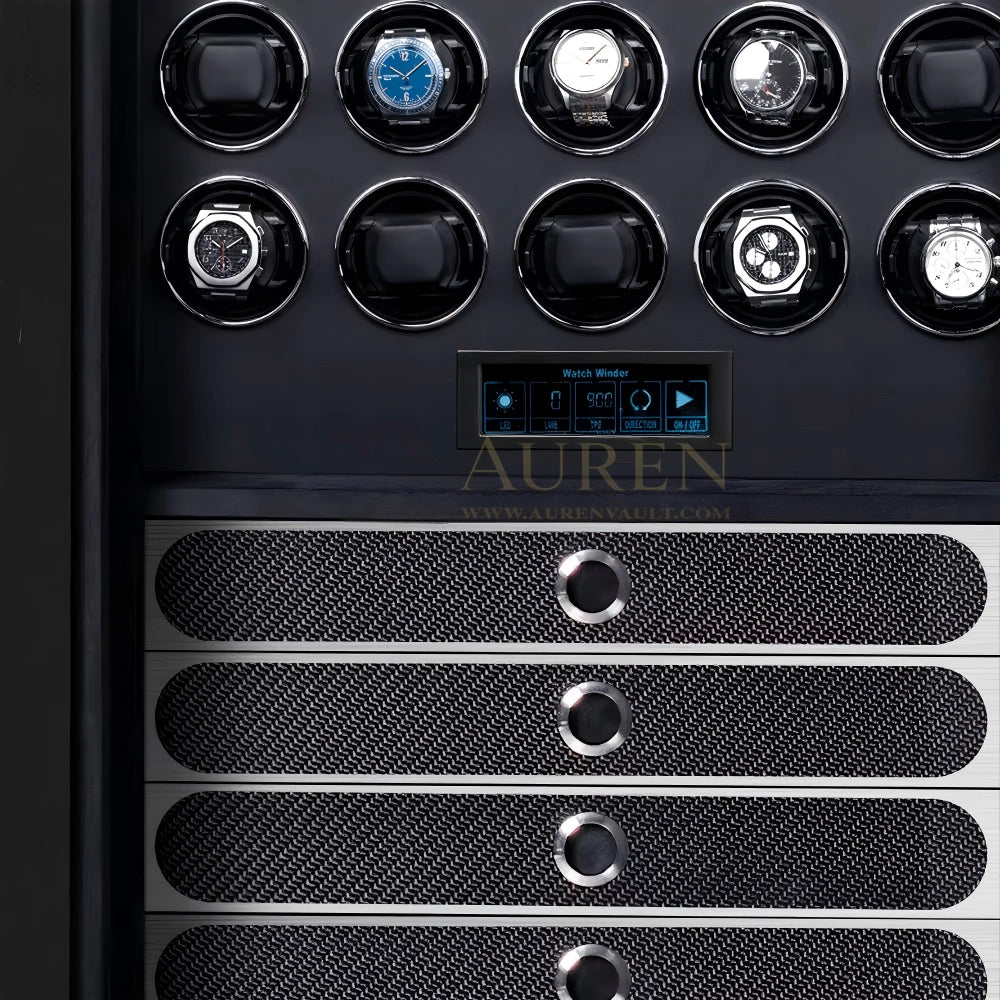
Independent TPD and Direction Control
The winder should support adjustable daily rotation programs and selectable winding direction.
This provides flexibility when moving between different Jaeger-LeCoultre calibres.
For multiple watches, individual module control is preferable to forcing the entire collection to operate under one setting.
An owner with a Polaris Automatic and a Master Ultra Thin Moon should be able to establish a separate program for each movement.
Appropriate Cushions for Different Case Shapes
A collection containing both round Master Control watches and rectangular Reverso models requires adaptable physical support.
The holder should secure the watch without excessive pressure and allow easy removal.
Leather straps, folding clasps, and metal bracelets can require different cushion dimensions.
The watch should remain stable throughout the winding cycle rather than shifting against the enclosure.
Quiet Operation With Rest Periods
A watch winder placed in a bedroom, private office, or dressing room should operate quietly and predictably.
A properly designed program distributes its rotations across operating and resting intervals.
The objective is not continuous movement.
It is to provide an appropriate winding routine that maintains the automatic watch's stored energy.
Clear Specifications and Service Support
For a valuable mechanical watch, reliability and serviceability matter more than decorative complexity.
A suitable device should provide understandable programming instructions, documented operating capabilities, and accessible support if a motor or control module requires attention.
The most expensive winder is not automatically the most appropriate.
Compatibility and reliability should lead the decision.
Standalone Watch Winder or Watch Winder Safe?
The choice between a standalone winder and an integrated watch winder safe is primarily a question of ownership priorities.
A standalone winder focuses on keeping automatic watches operating between wears.
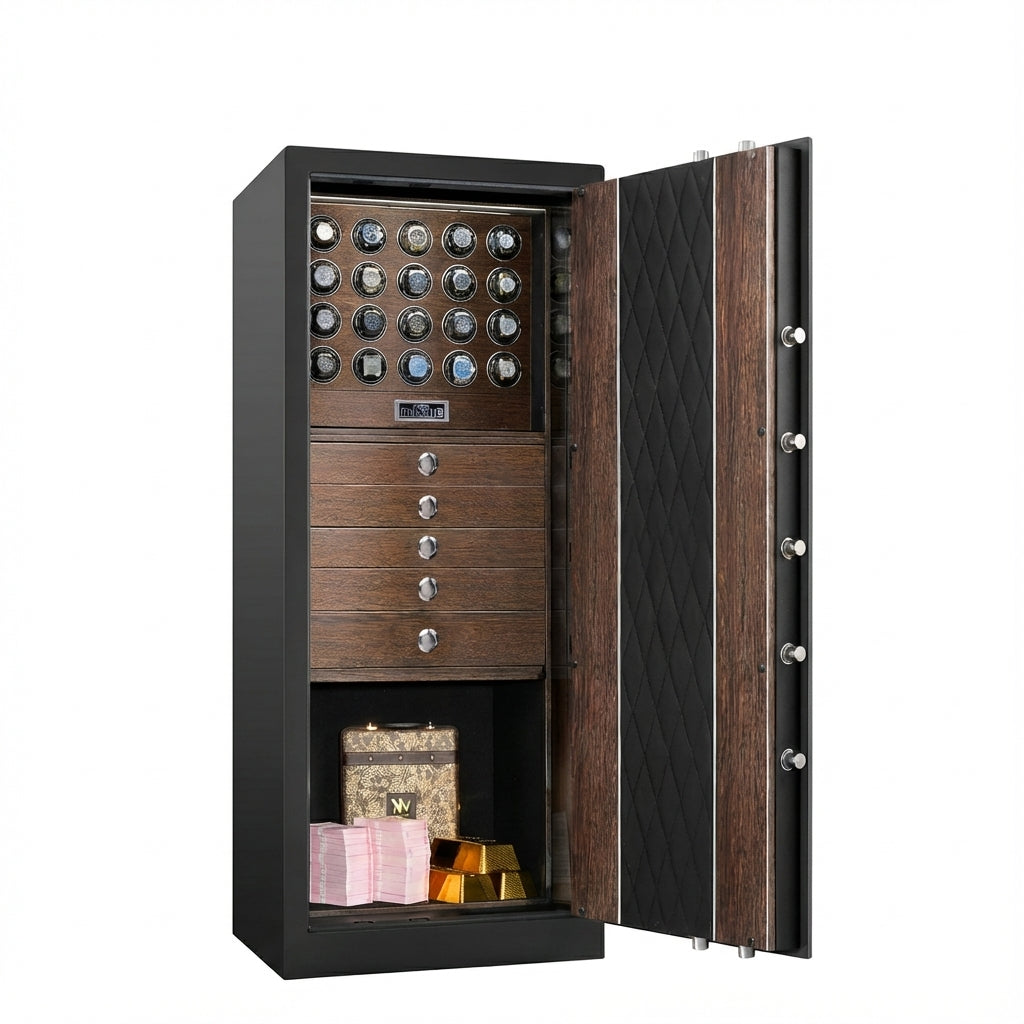
A watch winder safe combines that function with enclosed, lockable storage.
The distinction becomes more meaningful when several valuable watches are stored in the same location.
| Consideration | Standalone winder | Integrated watch winder safe |
|---|---|---|
| Winding convenience | Primary purpose | Integrated function |
| Individually controlled rotors | Model-dependent | Model-dependent |
| Security against unauthorized access | Usually limited | Depends on safe construction |
| Storage for manual-winding watches | May require separate compartments | Can be included in suitable layouts |
| Space requirements | Often suitable for a desk or cabinet | Requires additional planning for size and installation |
| Ideal ownership scenario | One or a few automatic watches | Mixed or higher-value collections |
For an owner with one regularly worn Master Control Date, a compact standalone winder may be entirely sufficient.
A larger collection introduces a different set of considerations.
Some watches may require winding, while others should remain in passive storage. Security, organization, and accessibility become important alongside the rotation program.
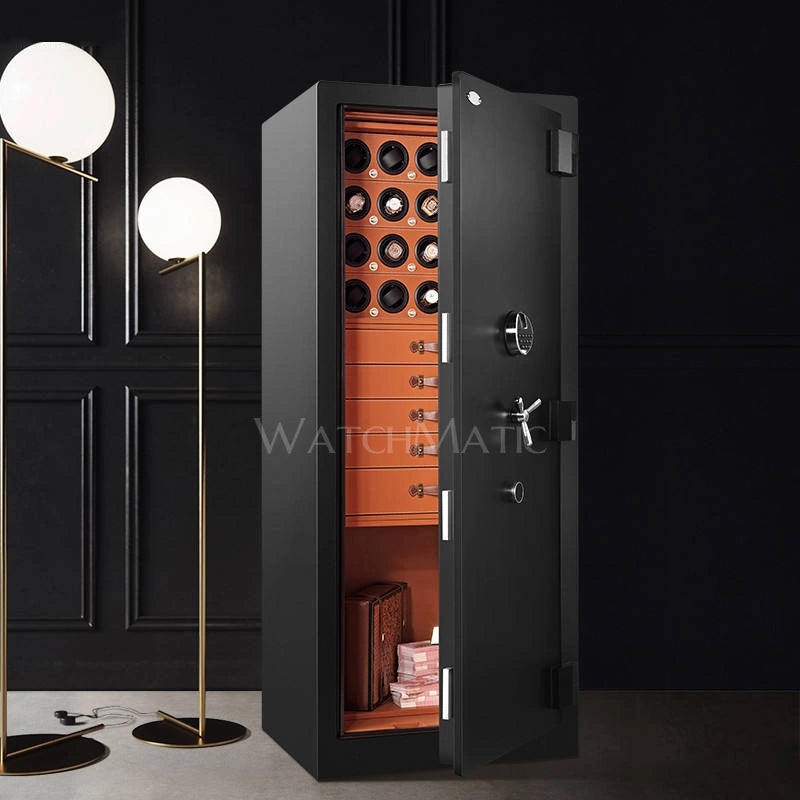
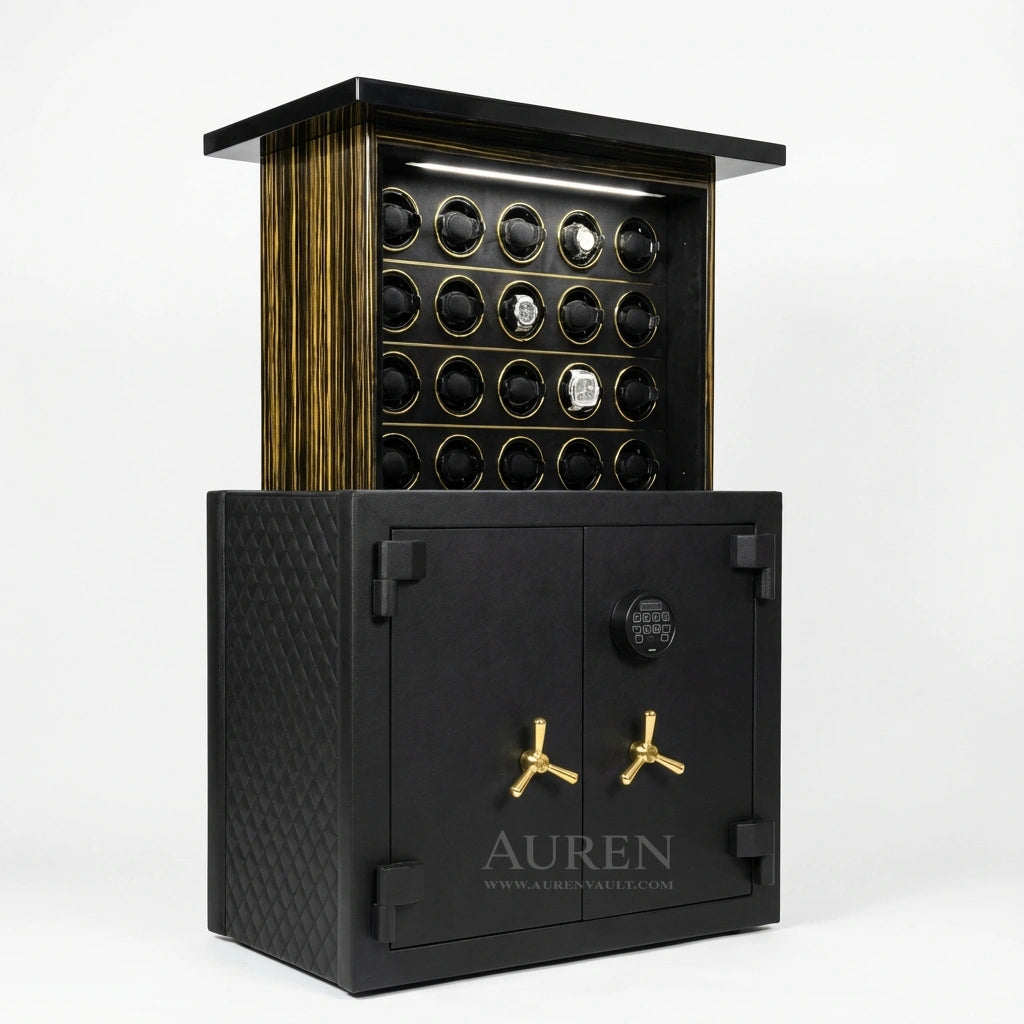
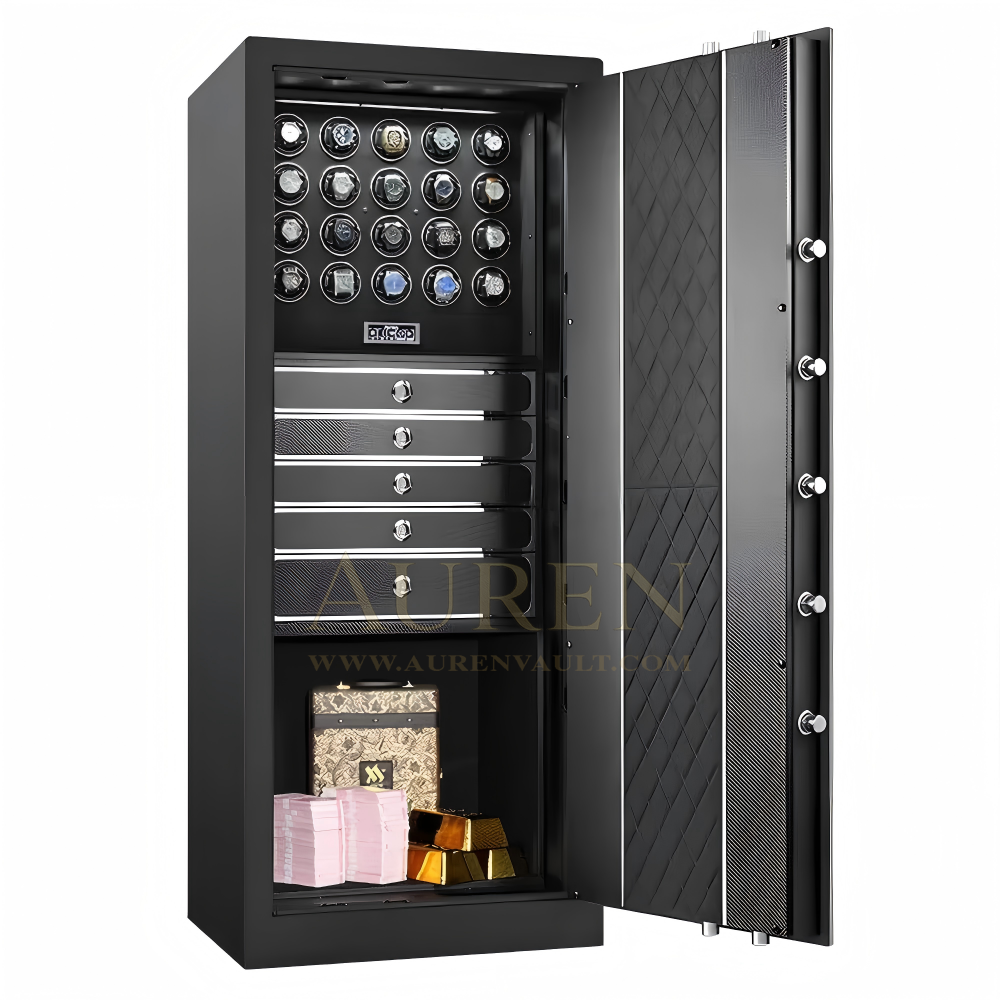
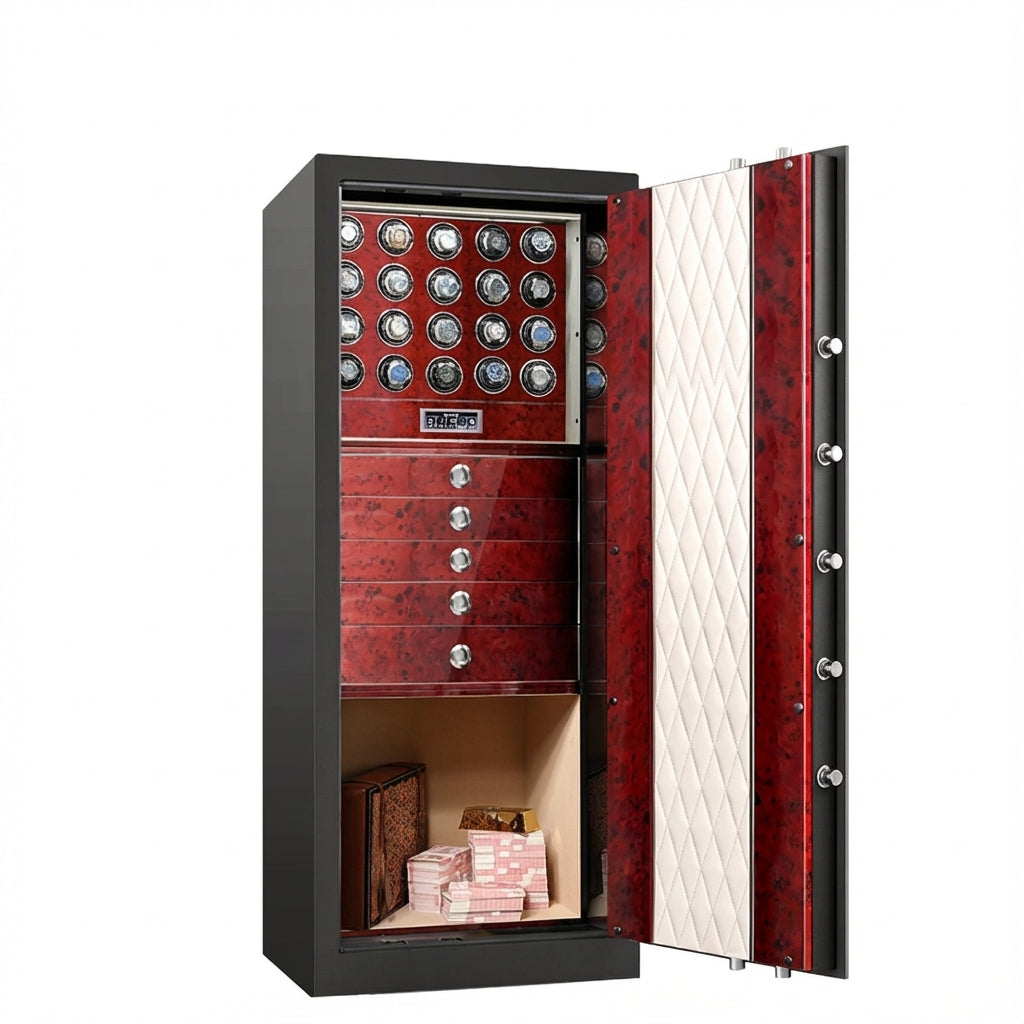
The available watch winder safe configurations illustrate how automatic winding can be integrated into protective storage.
The watch winder safe guide also introduces the broader relationship between winding capacity, safe construction, and collection management.
A critical distinction remains: a lockable enclosure does not automatically establish a certified burglary-resistance or fire-protection rating.
Those capabilities must be assessed through documented specifications and relevant test evidence for the individual safe.
Planning Storage for a Mixed Jaeger-LeCoultre Collection
Consider a collection consisting of two Master Control watches, a Master Ultra Thin Moon, a Polaris Automatic, and three manually wound Reverso models.
There are seven watches, but only four require automatic winding positions.
A cabinet designed with seven active rotors might provide more winding capacity than the collection needs.
A more considered arrangement could provide four individually controlled winding modules and three passive storage positions.
This allows each watch to be accommodated according to its mechanical requirements.
Storage Capacity Should Follow the Collection
A complete watch collection rarely consists entirely of automatic watches.
Collectors may own manual-winding timepieces, complicated dress watches, vintage references, or occasionally worn pieces that are better kept in static storage.
The capacity decision should distinguish between active winding positions and total protective storage.
The wider range of watch safes for valuable collections provides a starting point for evaluating these requirements.
For larger collections, high-capacity luxury watch safes may offer a more integrated solution than several separate tabletop winding devices.
A well-designed cabinet should make each watch easy to access while preserving suitable spacing and physical support.
When Bespoke Storage Becomes Relevant
Standard storage layouts work well when the number of winding modules and passive compartments already matches the collection.
Customization becomes more valuable when those requirements are unusual.
For example, a collection containing multiple Reverso models may benefit from holders designed around rectangular cases and different strap sizes.
An interior designer planning a private dressing room may also need to consider the safe's dimensions, finish, electrical access, installation route, and relationship with the surrounding furniture.
These requirements can be evaluated through bespoke watch safe design options, including the balance between winding positions, passive storage, and interior organization.
The objective is not maximum complexity.
It is a configuration that fits the collection and the space in which it will be used.
Does a Jaeger-LeCoultre Need to Remain on a Winder Continuously?
No. Automatic Jaeger-LeCoultre watches do not need to remain running at all times.
A watch winder can be useful when the owner wants the movement to continue operating between wears.
However, allowing an automatic watch to stop during storage is generally a normal part of mechanical watch ownership.
For a simple watch, the inconvenience of resetting may be minimal.
For a complicated calendar or moon-phase watch, maintaining operation may save more time.
The decision should reflect how frequently the watch is worn rather than the assumption that every valuable watch requires continuous movement.
When a watch will remain unused for an extended period, appropriate storage conditions become particularly important.
Stable environmental conditions, suitable watch supports, protection from unnecessary handling, and manufacturer-recommended servicing remain relevant whether or not a winder is used.
The watch storage guide addresses these broader considerations.
A winder should be treated as a convenience within a complete storage strategy—not as a substitute for proper maintenance.
Frequently Asked Questions
What is the best TPD setting for Jaeger-LeCoultre watches?
Many independent references suggest approximately 650–800 TPD for numerous Jaeger-LeCoultre automatic movements, but some calibres require different programs. Published third-party recommendations also conflict for certain models. Confirm the specific calibre and its winding requirements rather than applying a brand-wide setting.
Does a Jaeger-LeCoultre Master Control need a watch winder?
No. The Master Control Date and other automatic references can operate through normal wrist movement. A compatible winder is useful when the watch remains unworn for several days and the owner wants it ready to wear.
Can I put a Jaeger-LeCoultre Reverso in a watch winder?
Only if the Reverso contains an automatic movement. Certain Reverso Classic Duetto references are automatic, while many Reverso Tribute models use manually wound calibres. Verify the movement before placing the watch in a winder.
Is a winder useful for the Master Ultra Thin Moon?
Yes, it can be convenient. Keeping the automatic movement running reduces how frequently the date and moon-phase indications need to be reset. The winder must still use the appropriate movement-specific program.
Can a watch winder overwind a Jaeger-LeCoultre?
Modern automatic movements generally include mechanisms that limit additional mainspring tension once fully wound. Nevertheless, unnecessarily high TPD settings provide no clear benefit. Use a compatible program with appropriate rest cycles.
Is bidirectional winding suitable for every Jaeger-LeCoultre?
No. Winding direction varies between calibres, and third-party specifications are not always consistent. The correct program should be confirmed for the specific movement.
Is a watch winder safe better than a regular watch winder?
It depends on storage needs. A standalone winder may be sufficient for one or two watches, while an integrated watch winder safe may be more appropriate for owners who also need secure enclosed storage for valuable collections.
Related Reading: Watch Winder Guides for Other Swiss Watches
Winding compatibility can differ substantially between manufacturers and even between calibres from the same brand. These related guides provide additional context for owners of mixed collections.
Best Watch Winder for Vacheron Constantin Watches
Explore automatic movement compatibility, daily rotation requirements, and winding considerations for Vacheron Constantin timepieces.
Best Watch Winder for Richard Mille Watches
Understand how specialized rotor systems influence winder selection and storage requirements.
Best Watch Winder Settings for Patek Philippe Watches
Review the relationship between automatic winding programs, mechanical complications, and collection care.
Final Perspective: Choose for the Calibre, Not the Collection Name
Jaeger-LeCoultre's range demonstrates why a carefully selected watch winder begins with mechanical compatibility.
A Master Control Date and a Master Ultra Thin Moon may both be automatic, but their winding programs should not be assumed identical.
A Reverso Classic Duetto may benefit from a compatible winder, while a manually wound Reverso Tribute requires a different approach entirely.
For individual automatic watches, the priorities are straightforward: verified winding settings, secure physical support, and reliable operation.
For larger collections, those requirements extend to storage capacity, security, and organization.
As a specialist in premium watch storage and integrated winding solutions, Auren Vault approaches these considerations through configurations intended to accommodate both automatic watches and timepieces that require passive storage.
The most suitable watch winder is not necessarily the most elaborate one.
It is the one that works with the movement, respects the watch's construction, and supports a more convenient ownership experience.