


The best watch winder for Richard Mille watches is a programmable unit that supports the specific movement's winding direction, provides adjustable turns per day (TPD), and holds the watch securely without placing excessive pressure on its case or strap.
For many Richard Mille automatic watches, winding programs in the region of 650–750 TPD appear in independent watch winder reference databases. However, these figures are not universal manufacturer specifications, and the correct settings vary by calibre.
Richard Mille's mechanical architecture makes this distinction particularly important. Certain models use adjustable variable-geometry rotors, while others feature specialized declutching systems that regulate how energy reaches the mainspring.
A suitable winder should therefore offer individual rotation settings, controlled rest periods, smooth operation, and properly fitted watch supports.
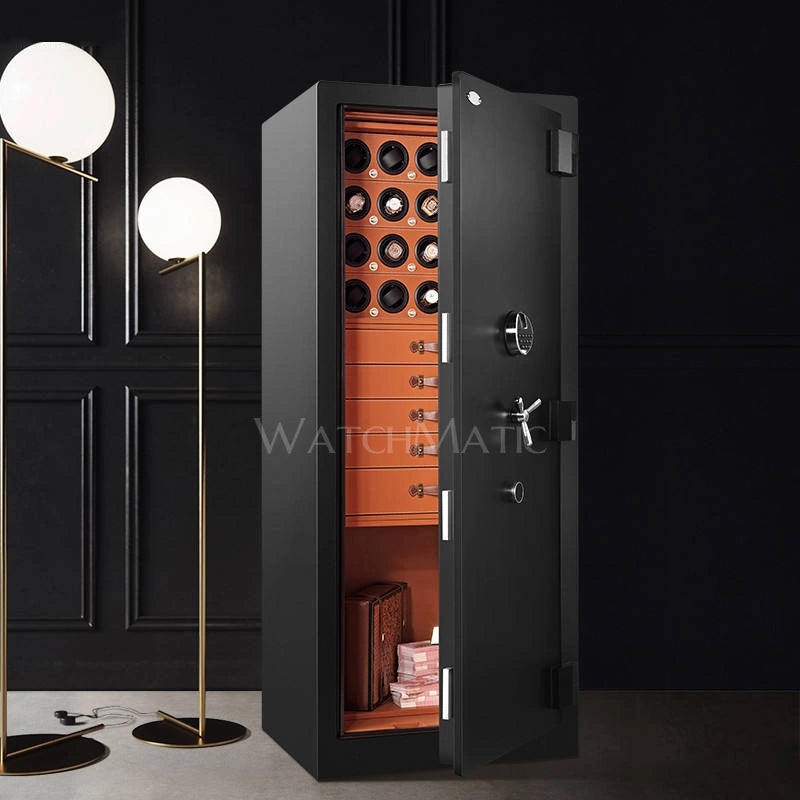
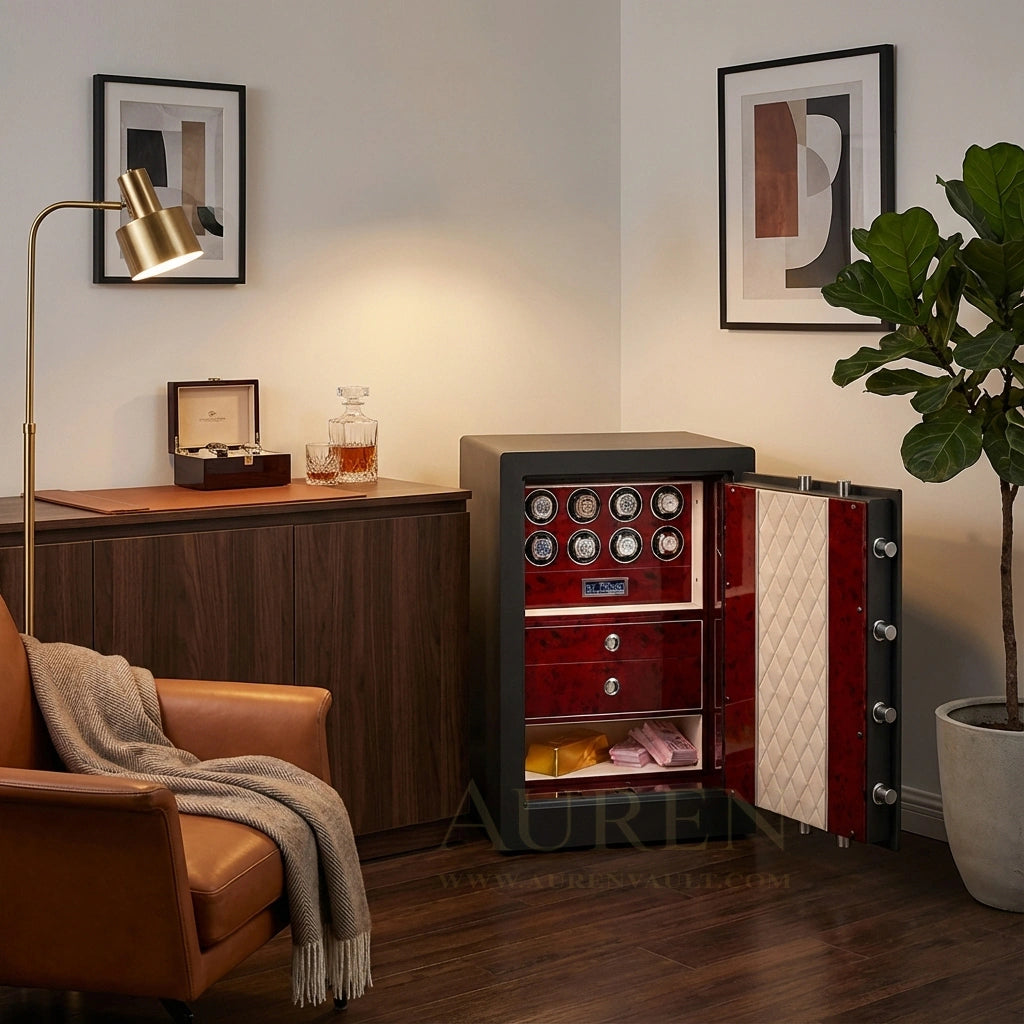
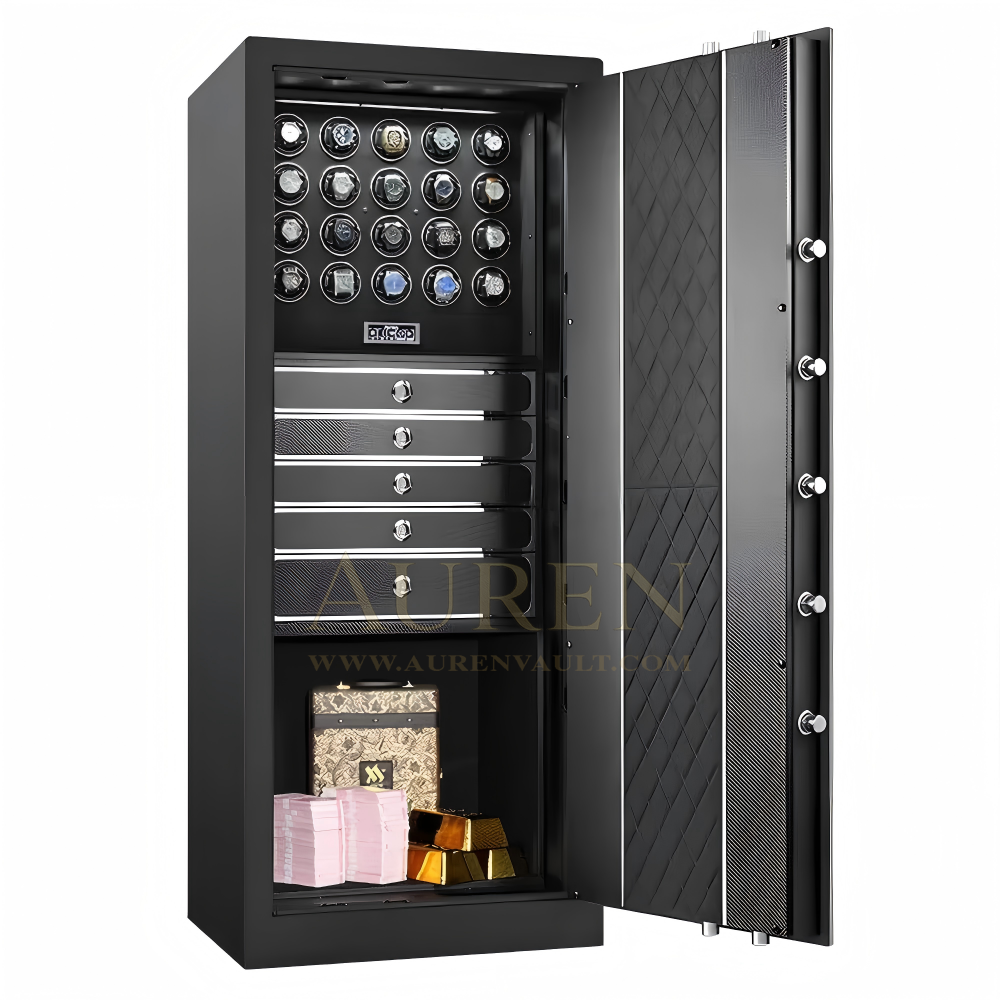
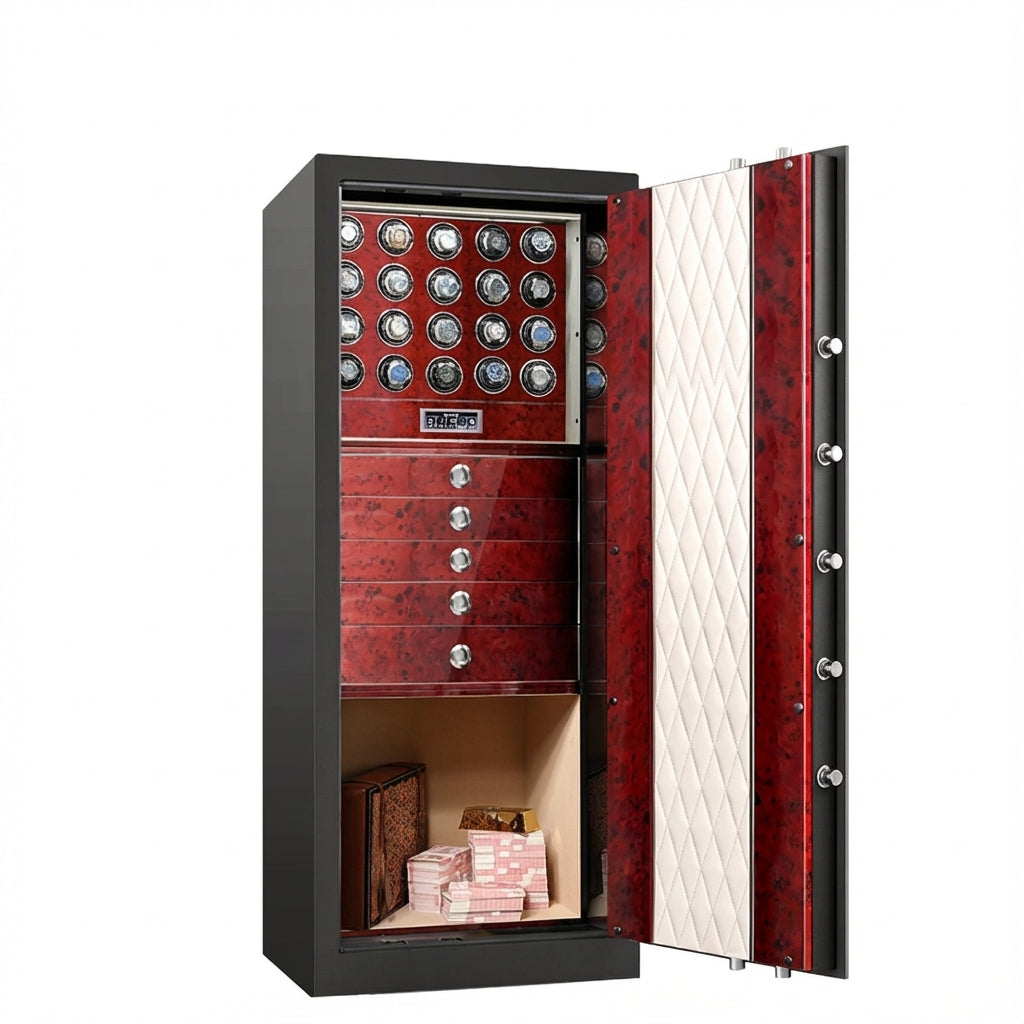
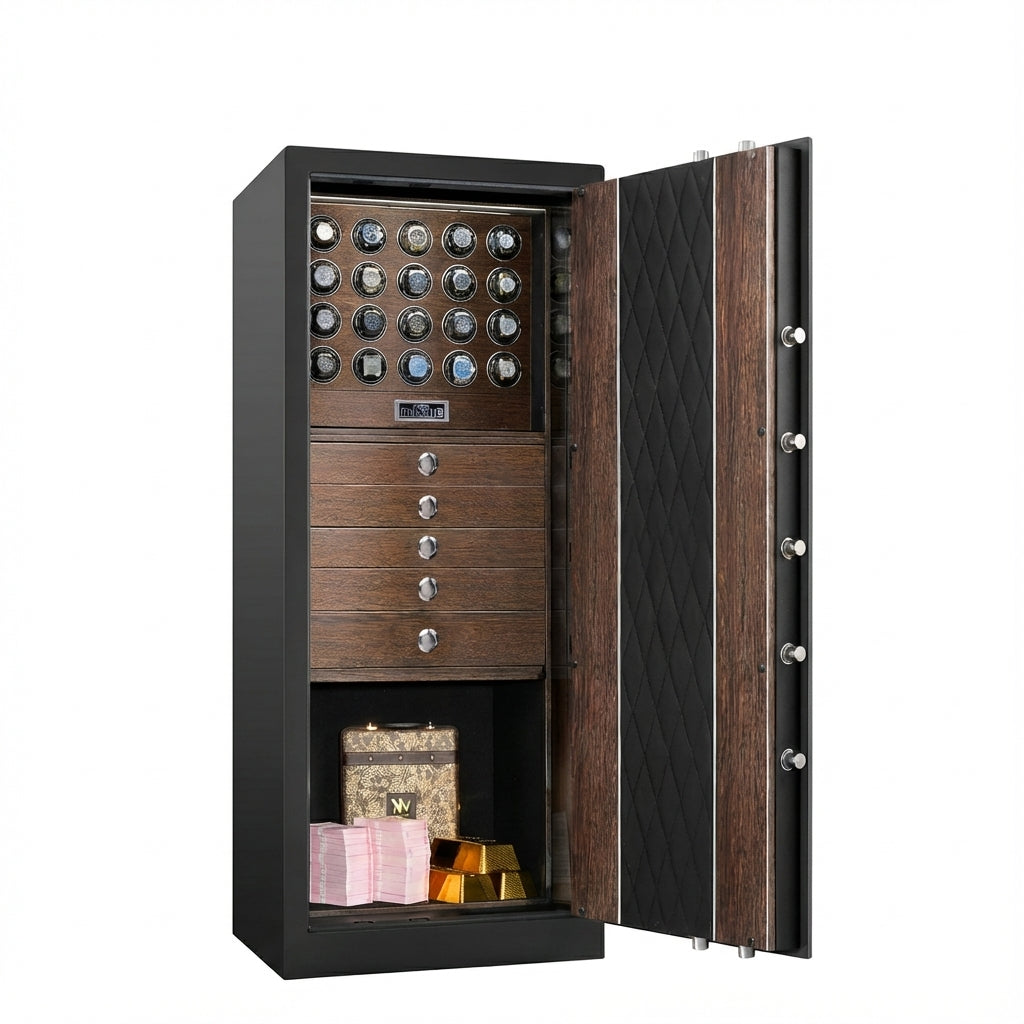
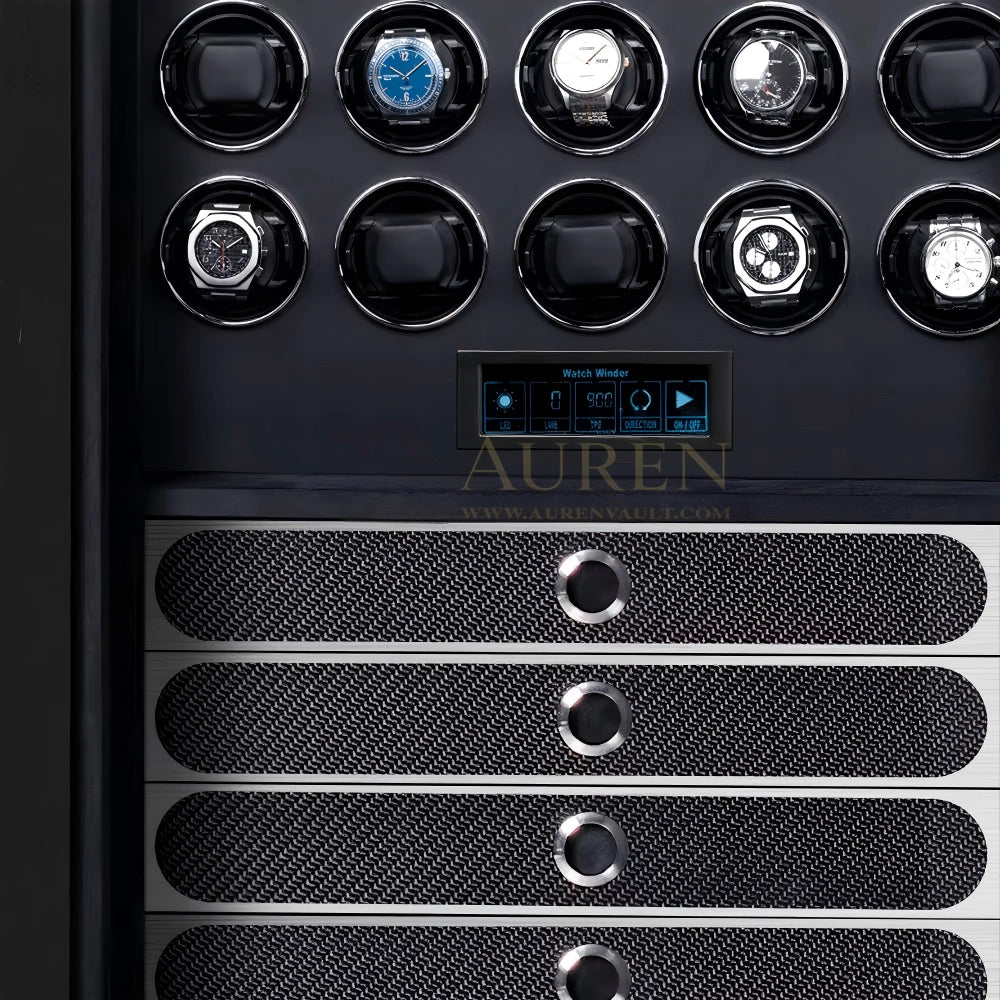
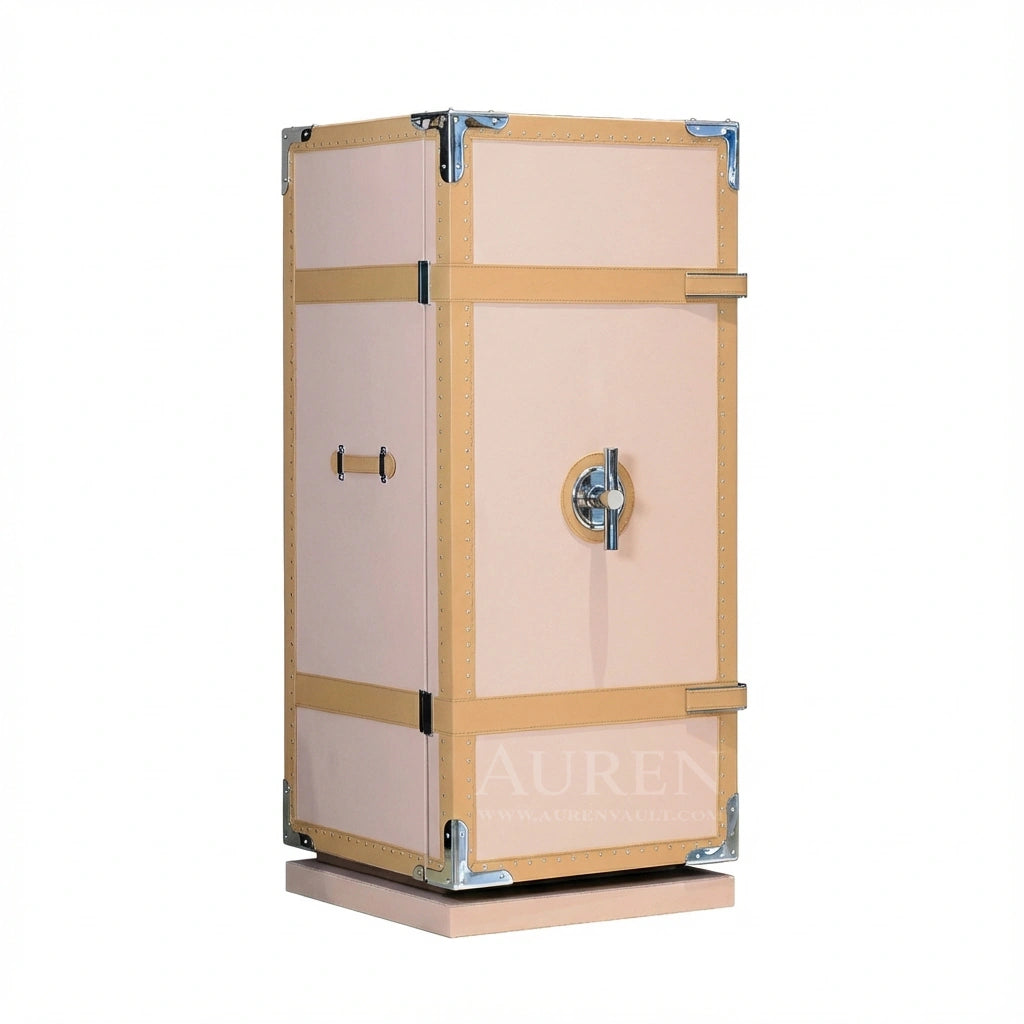
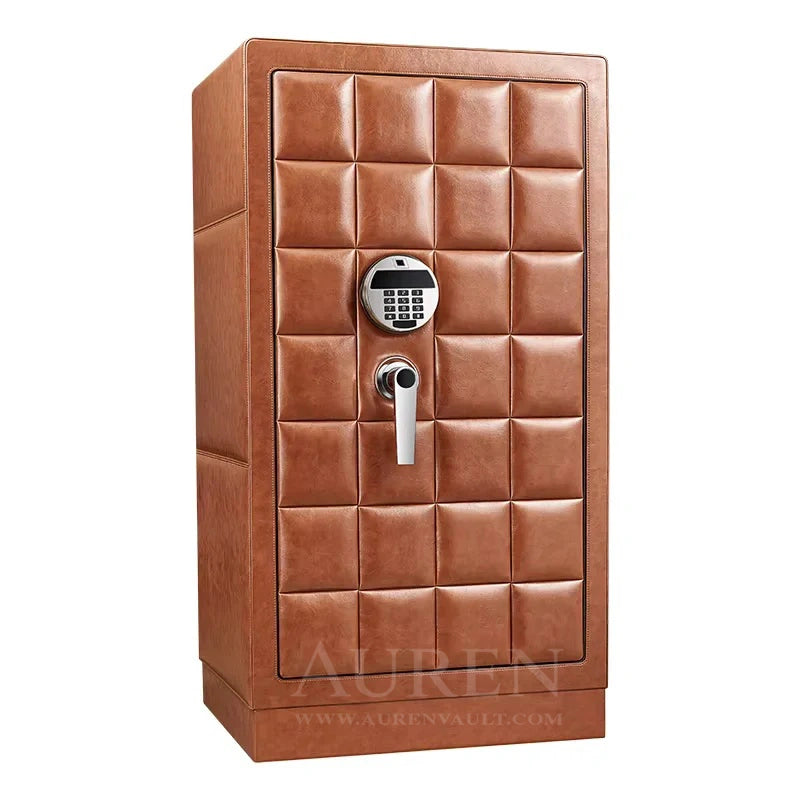
For owners of several valuable timepieces, an integrated watch winder safe may also provide a practical combination of winding convenience and enclosed storage.
Ultimately, movement compatibility matters more than the price, appearance, or capacity of the winder.
Why Richard Mille Watches Need a Different Approach to Winding
Richard Mille is known for unconventional movement architecture, lightweight materials, and mechanical systems developed around specific performance objectives.
These characteristics influence how individual automatic watches generate and manage energy.
Most traditional automatic movements rely on a weighted rotor that moves as the wearer changes position. That motion transfers energy through the winding system to the mainspring.
Richard Mille applies the same fundamental principle but frequently incorporates more specialized mechanisms.
The RM 07-01, for example, features a variable-geometry rotor that allows the winding response to be adjusted according to the wearer's activity level. The RM 30-01 uses an automatic declutching system designed to disconnect the rotor from the winding barrel when the appropriate power reserve is reached.
These features are not simply decorative engineering.
They demonstrate why two watches from the same manufacturer can require different considerations when placed in an automatic winder.
A watch winder should maintain the movement's existing power reserve through controlled rotation. It should not attempt to compensate for incorrect settings by running continuously.
The correct starting point is always the movement calibre.
Richard Mille Watch Winder Settings by Model
Richard Mille produces both automatic and manually wound mechanical watches. Only automatic models can benefit from a conventional watch winder.
The table below identifies representative models and the relevant winding considerations.
| Richard Mille model | Movement | Winding architecture | Winder considerations |
|---|---|---|---|
| RM 07-01 | CRMA2 | Automatic, variable-geometry rotor, bidirectional winding | Programmable bidirectional winder; verify TPD |
| RM 30-01 | RMAR2 | Automatic, declutchable variable-geometry rotor | Verify the effective winding direction and TPD |
| RM 65-01 | RMAC4 | Automatic, variable-geometry rotor | Adjustable winding program; confirm model-specific requirements |
| RM 67-02 | CRMA7 | Automatic, extra-flat movement | Correct direction, low-pressure holder and suitable TPD |
| RM 11-03 | RMAC3 | Automatic flyback chronograph, variable-geometry rotor | Confirm settings for the exact calibre and reference |
| RM 27-05 | RM27-05 | Manual-winding tourbillon | Watch winder not required |
These descriptions reflect manufacturer-published movement architecture. The table does not constitute an official Richard Mille TPD chart; winding programs should be confirmed for the specific reference.
Understanding Richard Mille TPD Requirements
Turns per day refers to the total number of programmed rotations performed by a watch winder during a 24-hour period.
The purpose is to provide enough motion to maintain the automatic movement's energy reserve while allowing periods of rest.
Independent winding databases list approximately 650–750 TPD for several established Richard Mille automatic references, including certain RM 005 and RM 011 variants. Some references fall outside that range, and published tables occasionally disagree about rotation direction.
Moreover, settings for older movements should not automatically be applied to newer calibres such as the CRMA2 or RMAR2.
A manufacturer's published power reserve is not a TPD recommendation. A movement with a 60-hour power reserve does not necessarily need more rotations than one with a 50-hour reserve.
This difference is especially important for Richard Mille, where winding efficiency may also depend on rotor construction and adjustment.
The guide to watch winder TPD settings explains the relationship between daily rotation cycles, winding efficiency, and movement requirements.
Variable-Geometry Rotors: The Richard Mille Difference
One of the most distinctive features of certain Richard Mille automatic movements is the variable-geometry rotor.
In a conventional automatic movement, rotor construction is generally fixed. Richard Mille's variable-geometry systems allow aspects of the rotor's effective inertia to be adjusted to suit the wearer's activity level.
For an owner with an active lifestyle, the winding system can be configured differently from that of someone whose daily routine involves relatively little wrist movement.
The significance for watch winder selection is that rotor behavior can differ even between movements from the same manufacturer.
RM 07-01: Bidirectional Winding and Adjustable Rotor Geometry
The RM 07-01 uses the CRMA2 automatic calibre with a power reserve of approximately 50 hours, subject to the manufacturer's stated tolerance.
Richard Mille specifies a bidirectional winding system and an adjustable rotor with movable weights.
By changing the position of those weights, the effective inertia of the rotor can be modified, influencing how efficiently the movement winds under different activity conditions.
For a watch winder, this means selecting a device capable of controlled bidirectional operation and adjustable TPD.
However, the rotor's internal mechanical adjustment and the external winder's rotation program are different things.
A watch winder cannot automatically change the rotor's weight configuration. That mechanical adjustment should be handled according to Richard Mille's instructions by appropriately qualified personnel.
The winder's role is to provide suitable external motion, not to modify how the calibre itself is engineered.
RM 30-01: Why Declutchable Rotor Technology Matters
The RM 30-01 introduces another important distinction.
Its RMAR2 calibre incorporates a patented declutchable variable-geometry rotor designed to manage the energy supplied to the winding barrel.
According to Richard Mille, the rotor disconnects from the winding barrel when the power reserve reaches approximately 55 hours. It reconnects when the reserve falls to approximately 40 hours.
This creates a controlled winding cycle in which the mechanism does not continue supplying energy to the barrel after reaching its intended upper reserve.
The manufacturer also describes the rotor's winding action as unidirectional and anti-clockwise.
That detail warrants care when configuring an external watch winder. Rotor winding direction should not be translated into a winder's clockwise or counterclockwise setting without confirming the relevant orientation and programming convention.
For this model, a winder that supports selectable rotation directions is preferable to a fixed-direction unit.
The broader lesson is that advanced automatic winding systems do not eliminate the need for correct external settings. They make movement-specific compatibility more important.
How to Choose a Watch Winder for a Richard Mille
Selecting a suitable watch winder requires evaluating both the winding system and the watch's physical characteristics.
Richard Mille watches often feature distinctive tonneau-shaped cases, technical composite materials, and highly integrated straps.
An appropriate winder must accommodate the complete watch, not simply its movement.
1. Individual Rotation Programming
The most important functional requirement is independent control over winding direction and TPD.
A useful winder should allow the owner to select clockwise, counterclockwise, or alternating rotation, together with suitable daily winding cycles.
This flexibility becomes particularly important when a collection contains automatic watches with different movement architectures.
A single fixed program may be appropriate for one calibre but unsuitable for another.
For multi-watch winders, individually configurable modules are preferable to a system that requires every watch to follow the same rotation program.
2. Proper Support for Tonneau Cases and Rubber Straps
Richard Mille watches differ physically from many conventional round-case watches.
The curved tonneau case and integrated strap design can affect how securely a watch sits on a standard winder cushion.
A cushion that is too large may overstretch an elastic or rubber strap. One that is too small may allow the watch to shift during rotation.
Neither arrangement is desirable.
The appropriate holder should support the watch without concentrating pressure on its case edges, crown, or chronograph pushers.
Owners should pay particular attention to three characteristics:
-
Adjustable or interchangeable cushions.
-
Secure positioning without excessive strap tension.
-
Sufficient clearance around the case, crown, and pushers.
A winder designed to accommodate different case shapes and strap sizes offers greater flexibility than one relying on a single rigid holder.
3. Smooth Rotation and Rest Cycles
A watch winder should not run continuously to be effective.
Well-designed winding programs distribute rotations throughout the day, typically alternating operating periods with intervals of rest.
This controlled movement is intended to maintain the automatic watch's stored energy rather than maximize rotation.
Quiet operation is also relevant when a winder is positioned in a bedroom, dressing room, or private office.
A stable motor, appropriate rotation speed, and secure watch holder help create an operating environment suited to daily use.
4. Reliable Operation and Serviceability
For a high-value automatic watch, operational reliability matters more than decorative complexity.
A winder should maintain its programmed settings, operate consistently, and offer accessible service support.
Features such as independent programming and convenient access to the winding modules can improve long-term usability.
However, no winder should be treated as a substitute for the watch manufacturer's service recommendations.
Best Watch Winder Configuration for Different Richard Mille Collections
Rather than selecting a winder solely by the number of available slots, it is useful to consider how the collection is actually worn.
A collector with several automatic watches has different requirements from someone who owns a combination of automatic sports models and manually wound tourbillons.
| Collection profile | Recommended configuration | Main priority |
|---|---|---|
| One automatic Richard Mille | Single programmable winder | Calibre compatibility and secure fit |
| Two to four automatic watches | Individually controlled multi-watch winder | Independent winding programs |
| Several valuable automatic watches | Compact watch winder safe | Integrated winding and secure storage |
| Large mixed collection | Cabinet with winding and passive storage | Organization, protection and flexibility |
| Mostly manual-winding watches | Protective non-winding storage | Safe handling and environmental stability |
A Single Automatic Richard Mille
For an owner who wears the same watch most days, a winder is largely a convenience.
The automatic movement receives energy through ordinary wrist movement and can be allowed to stop when it is not being worn.
A compact programmable winder becomes useful when the owner prefers the watch to remain running between occasional wears.
The physical fit of the cushion and the correctness of the winding program should take priority over additional display functions.
A Collection of Several Automatic Models
Consider an owner who alternates between an RM 07-01, an RM 30-01, and an RM 65-01.
All three are automatic watches, but their winding systems are not identical.
The RM 07-01 uses a bidirectional variable-geometry rotor. The RM 30-01 includes a specialized declutching mechanism, while the RM 65-01 combines automatic winding with a variable-geometry rotor and a rapid-winding function.
A multi-watch unit should allow each calibre to receive its own verified program.
This is more practical than repeatedly adjusting a shared setting whenever the watches are exchanged.
A Mixed Collection of Automatic and Manual-Winding Watches
The need changes when a collection includes models such as the manually wound RM 27-05.
Such watches do not benefit from automated rotational winding. They require manual winding according to the manufacturer's instructions and appropriate storage when not in use.
A large cabinet containing only active winding positions may therefore be unnecessary.
The better arrangement combines correctly programmed winding modules for automatic watches with passive storage for manually wound pieces.
The broader range of protective watch storage safes offers a useful starting point for considering these different storage requirements.
Should You Keep a Richard Mille in a Watch Winder Safe?
A watch winder maintains an automatic movement's power reserve. A watch winder safe addresses a separate concern: the physical security of the timepiece while it is stored.
For valuable watches, these functions often need to be considered together.
A conventional tabletop winder may provide excellent winding performance but little meaningful resistance to unauthorized access.
A properly specified watch winder safe combines programmable winding modules with a lockable enclosure.
This can be especially relevant for collectors who keep several high-value watches in a private residence or office and want to avoid transferring them repeatedly between a conventional winder and separate secure storage.
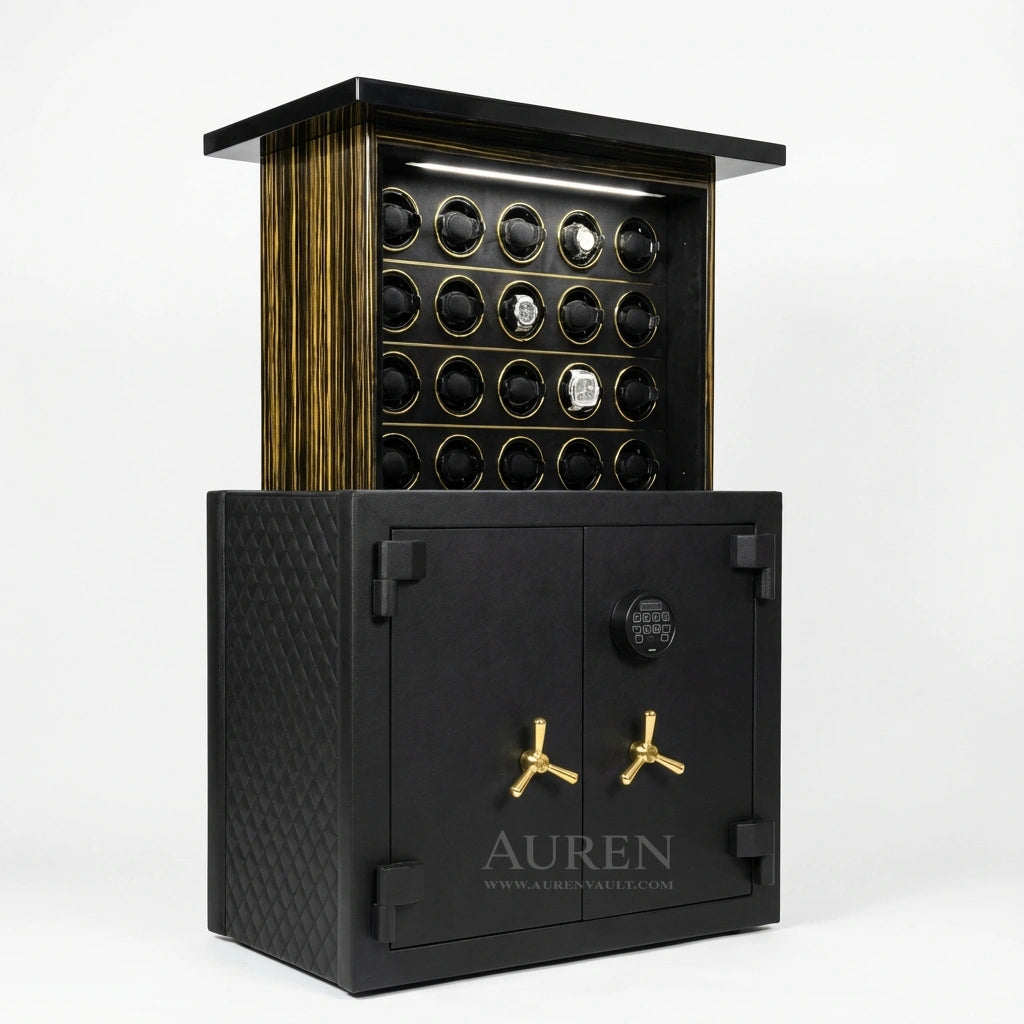
The integrated watch winder safe configurations provide examples of compact and larger storage arrangements designed around both functions.
The watch winder safe guide addresses the broader considerations involved in combining automatic winding with secure watch storage.
What Security Features Actually Matter?
Not every lockable cabinet offers the same level of protection.
Security should be evaluated through the construction and documented specifications of the individual safe, including its locking system, resistance to forced entry, installation requirements, and any applicable independently verified protection ratings.
The distinction between a secure storage enclosure and a certified burglary-resistant safe is important.
A sophisticated locking interface alone does not establish a particular resistance rating.
For larger watch collections, the surrounding installation also matters. Cabinet weight, floor loading, placement, anchoring options, power access, and access for delivery should all be considered before selecting the final configuration.
Some collectors may benefit from larger luxury watch safe designs that provide additional room for valuable timepieces and accessories.
The best storage arrangement is one that addresses realistic security needs without compromising the accessibility or condition of the watches.
When Bespoke Storage Becomes the Better Choice
Richard Mille collections may contain watches with substantially different case dimensions, strap materials, and movement types.
This can make fixed interior layouts less efficient.
A collection with six automatic watches and four manually wound pieces, for example, does not necessarily need ten winding modules.
It may benefit more from six independent winding positions, dedicated passive watch holders, and additional compartments for accessories.
Interior designers also face practical requirements that conventional tabletop winders rarely address.
A watch cabinet intended for a private dressing room or executive office must fit the surrounding architecture while remaining accessible for maintenance and everyday use.
A customized arrangement can account for capacity, exterior finish, winding positions, and passive storage through bespoke watch safe design options.
The objective is not necessarily to build the largest possible enclosure.
It is to create a storage configuration appropriate to the watches and the space in which they are kept.
Can a Watch Winder Damage a Richard Mille?
A compatible watch winder operating within appropriate settings is designed to maintain an automatic watch's power reserve. Nevertheless, compatibility and handling should never be assumed.
Excessive or unnecessary rotation provides no clear benefit once the intended winding objective is met.
Improperly fitted cushions can also place avoidable pressure on straps or allow a watch to move against its support.
For watches with specialized winding systems, including declutchable rotors, owners should follow the manufacturer's operating instructions rather than relying on generic assumptions about automatic movements.
If a watch repeatedly stops in a winder despite a verified program, possible explanations include insufficient effective winding, an unsuitable rotation direction, improper initialization, or an issue requiring professional assessment.
Simply increasing TPD indefinitely is not an appropriate diagnostic strategy.
The same principle applies to changing the settings of a variable-geometry rotor. These mechanical adjustments are distinct from programming the winder and should be handled under the manufacturer's guidance.
A watch winder is a convenience device, not a repair tool.
Do All Richard Mille Watches Need a Watch Winder?
No. The answer depends entirely on whether the watch contains an automatic movement.
The RM 07-01, RM 30-01, RM 65-01, and RM 67-02 are examples of automatic watches that can potentially benefit from a correctly configured winder.
By contrast, the RM 27-05 Rafael Nadal uses a manually wound tourbillon movement.
Placing a manual-winding watch on a conventional winder will not wind its mainspring.
Even among automatic models, continuous operation is not mandatory.
An owner who wears a watch frequently may have little need for a winder. Someone who rotates several complicated automatic watches may find one more convenient.
For watches stored over longer periods, environmental stability, protection from unnecessary handling, and proper servicing become increasingly important.
These considerations are explored more broadly in the luxury watch storage guide.
The decision to use a winder should therefore follow the owner's wearing habits and the needs of the specific movement.
Frequently Asked Questions
What is the best TPD for Richard Mille watches?
Some independent databases suggest approximately 650–750 TPD for various Richard Mille automatic references. However, settings vary by calibre and published recommendations are not always consistent. Confirm the appropriate TPD and winding direction for the exact model before use.
Is bidirectional winding suitable for every Richard Mille?
No. Richard Mille produces automatic movements with different winding architectures. The RM 07-01 has a manufacturer-described bidirectional winding system, while the RM 30-01 uses a unidirectional rotor mechanism. A compatible external winding program must be verified individually.
Does the RM 30-01 need a watch winder?
A winder is optional. The RM 30-01 is an automatic watch and can benefit from an appropriate winding program when it is not worn. Its declutchable rotor regulates internal winding engagement, but the correct external winder settings still matter.
Can I put a Richard Mille with a rubber strap in a watch winder?
Yes, provided the watch is automatic and the holder is compatible with its strap and case. The cushion should support the watch securely without stretching the strap excessively or applying pressure to sensitive components.
Can a Richard Mille tourbillon use a watch winder?
The presence of a tourbillon does not determine winding compatibility. Some tourbillon watches are manually wound, while others are automatic. Check the movement type. A manual-winding tourbillon cannot be wound by a conventional automatic watch winder.
Is a watch winder safe worth considering for Richard Mille?
It may be worthwhile for an owner who needs both automatic winding and secure enclosed storage. The decision should depend on the number of watches, the actual security specifications of the enclosure, installation conditions, and the owner's routine.
Final Considerations: Precision Should Guide the Choice
A Richard Mille watch is often defined by the engineering decisions within its movement, not simply by its external appearance.
That philosophy should extend to the way it is stored and maintained.
For a single automatic watch, a programmable winder with the correct direction, an appropriate TPD setting, and a carefully fitted cushion may provide everything required.
For a larger collection, independent winding control, passive storage capacity, and physical security become more important.
Auren Vault develops its watch storage approach around the relationship between automatic winding, collection organization, and secure presentation, rather than treating every mechanical watch as if it has the same requirements.
The ideal winder should respect the movement's design, accommodate the watch's physical construction, and fit naturally into the owner's daily routine.
The right solution is not determined by how often a watch rotates, but by how precisely that rotation serves its intended purpose.