
The best watch winder for Frederique Constant watches is a programmable unit that supports the exact calibre's recommended turns per day (TPD), rotation direction, and appropriate rest cycles.
Unlike many watchmakers, Frederique Constant publishes an official winding guide. It recommends 650 TPD bidirectional for calibres such as FC-303, FC-310, and FC-718; 800 TPD clockwise for the FC-391 chronograph; and 1,230 TPD bidirectional for the newer FC-706 and FC-716 Manufacture movements.
These differences make calibre identification essential. The latest FC-719 Worldtimer and FC-776 Perpetual Calendar are automatic, but their settings should not automatically be copied from the earlier FC-718 and FC-775 movements.
Not every Frederique Constant needs a winder. The Classics Moneta Handwinding is manually wound, while Classics Quartz models are battery-powered.
For an individual automatic watch, correct programming and a secure holder are the priorities. For collections containing multiple calibres and complications, independently programmable winding positions offer greater convenience.
Why Frederique Constant Watches Need Calibre-Specific Settings
Frederique Constant combines classical Swiss watchmaking with modern mechanical development.
Its catalogue includes relatively straightforward automatic watches, elaborate Manufacture movements, high-frequency innovations, and complicated calendar watches.
That diversity creates different winding requirements.
Consider three movements.
The Highlife Automatic COSC uses calibre FC-303, based on the Sellita SW200 architecture. Frederique Constant lists 650 TPD with bidirectional rotation.
The Classic Moonphase Date Manufacture uses FC-716, an in-house automatic movement with a 72-hour reserve. The official guide lists 1,230 TPD bidirectional.
The Highlife Chronograph uses FC-391, a La Joux-Perret-based automatic chronograph with a 60-hour reserve. Its official program is 800 TPD clockwise.
All three movements are automatic.
Yet their published winding programs are not interchangeable.
This is why a recommendation such as "650 TPD works for every Frederique Constant" is incomplete.
The correct program is determined by the movement, not by the brand name or appearance of the watch.
A watch winder rotates the complete watch, allowing its automatic winding system to transfer energy to the mainspring.
It does not operate complications, turn the crown, or improve the movement's inherent accuracy.
Its purpose is to maintain sufficient stored energy between wears.
Which Frederique Constant Watches Can Use a Watch Winder?
Before selecting a device, identify whether the movement is automatic, manual-winding, or quartz.
Most contemporary Highlife mechanical watches and many Manufacture references use automatic winding.
However, certain Classics models require manual winding, and other references use quartz movements.
Frederique Constant Movement Compatibility Guide
| Watch or collection | Calibre | Movement type | Power reserve | Winder suitable? |
|---|---|---|---|---|
| Highlife Automatic COSC | FC-303 | Automatic | 38 hours | Yes |
| Classics Heart Beat Automatic | FC-310 | Automatic | 38 hours | Yes |
| Classics Première | FC-301 | Automatic | 68 hours | Yes |
| Highlife Chronograph Automatic | FC-391 | Automatic | 60 hours | Yes |
| Classic Date Manufacture | FC-706 | Automatic | 72 hours | Yes |
| Classic Moonphase Date Manufacture | FC-716 | Automatic | 72 hours | Yes |
| Classic Worldtimer Manufacture, earlier generation | FC-718 | Automatic | 38 hours | Yes |
| Classic Worldtimer Manufacture, 2026 generation | FC-719 | Automatic | 72 hours | Yes |
| Classic Power Reserve Big Date Manufacture | FC-735 | Automatic | 50 hours | Yes |
| Classic Perpetual Calendar Manufacture, earlier generation | FC-775 | Automatic | 38 hours | Yes |
| Classic Perpetual Calendar Manufacture, newer generation | FC-776 | Automatic | 72 hours | Yes |
| Slimline Monolithic Manufacture | FC-810 | Automatic | 80 hours | Yes |
| Classics Moneta Handwinding | FC-435, current LJP-based reference | Manual-winding | 63 hours | No |
| Classics Quartz Date | FC-220 | Quartz | Battery-powered | No |
Power reserves apply to the representative movements and generations identified. Frederique Constant's movement families have evolved, and some historical references with similar names have different specifications.
This table reveals an important pattern.
Frederique Constant has introduced newer Manufacture calibres with substantially longer reserves than their predecessors.
However, longer reserve does not automatically establish the correct winding program.
In fact, the official TPD recommendations for certain newer movements differ considerably from those of the calibres they replaced.
Official Frederique Constant Watch Winder Settings
Frederique Constant publishes a calibre-by-calibre winding guide on its official website.
This is the most useful starting point for an owner seeking a defensible TPD recommendation.
The guide includes movement descriptions, external winding direction, and daily rotation counts.
Manufacturer-Published Winding Programs
| Calibre | Rotation direction | TPD |
|---|---|---|
| FC-303 | Bidirectional | 650 |
| FC-305 | Bidirectional | 650 |
| FC-310 | Bidirectional | 650 |
| FC-315 | Bidirectional | 650 |
| FC-320 | Bidirectional | 650 |
| FC-335 | Bidirectional | 650 |
| FC-391 | Clockwise | 800 |
| FC-392 | Clockwise | 800 |
| FC-705 | Bidirectional | 650 |
| FC-706 | Bidirectional | 1,230 |
| FC-715 | Bidirectional | 650 |
| FC-716 | Bidirectional | 1,230 |
| FC-718 | Bidirectional | 650 |
| FC-723 | Bidirectional | 850 |
| FC-735 | Bidirectional | 850 |
| FC-760 | Bidirectional | 650 |
| FC-775 | Bidirectional | 650 |
| FC-810 | Bidirectional | 650 |
| FC-980 | Bidirectional | 650 |
These settings come from Frederique Constant's published technical winding guide. The table does not establish settings for unlisted new calibres such as FC-719 or FC-776.
Official source: Frederique Constant Technical Information and Winding Guide
The most significant finding is that the correct TPD can vary substantially even among the brand's automatic movements.
An FC-303 and FC-716 do not have the same published program.
A modern FC-391 chronograph also uses a different rotation direction from many other Frederique Constant automatics.
The ideal watch winder must accommodate those differences.
Why Bidirectional Does Not Always Mean 650 TPD
The official guide lists bidirectional rotation for many Frederique Constant automatic movements.
That can make the watches appear mechanically similar from a winder-programming perspective.
However, the number of daily rotations still varies.
For example, FC-716 is listed at 1,230 TPD bidirectional, while FC-735 is listed at 850 TPD bidirectional.
Both programs alternate or use rotation in both directions, but their daily counts are different.
This demonstrates why winding direction and TPD should be evaluated as separate parameters.
A device offering bidirectional rotation alone is not sufficiently versatile if its daily rotation count cannot be adjusted.
What Does Clockwise Mean on a Watch Winder?
Clockwise and counterclockwise describe the direction in which the external device rotates the watch.
These terms should not be confused with the visible direction of the rotor inside the movement.
The rotor moves relative to the watch as its orientation changes.
Different winding systems respond differently to that relative motion.
Watch winder manufacturers can also use different viewing conventions when describing rotation direction.
For a calibre with an explicitly directional program, such as FC-391, the owner should confirm how the device manufacturer defines clockwise operation.
That is preferable to choosing a direction based only on an icon or a rotor's appearance.
Highlife Automatic COSC: FC-303 at 650 TPD
The Highlife collection is one of Frederique Constant's strongest contemporary designs.
Its integrated-style bracelet, rounded case, and globe-inspired dial decoration distinguish it from the more traditional Classics collection.
The Highlife Automatic COSC uses calibre FC-303 in representative references.
Frederique Constant identifies the movement as based on the Sellita SW200 architecture.
It operates at 28,800 vibrations per hour, equivalent to 4 Hz, and provides approximately 38 hours of power reserve.
The manufacturer's winding guide specifies:
650 TPD, bidirectional rotation.
Is a Winder Worthwhile for a 38-Hour Automatic?
The FC-303's reserve is shorter than that of many newer automatic movements.
For an owner who changes watches frequently, the Highlife may stop between wears.
A compatible winder can maintain its reserve, reducing the need to reset the time and date.
For someone who wears the Highlife almost every day, a winder may add little convenience.
The movement receives energy through normal wrist activity.
The device is therefore optional rather than mechanically essential.
Why COSC Certification Does Not Change TPD
The Highlife Automatic COSC is certified according to chronometer-testing standards.
That certification concerns timekeeping performance.
It does not establish the number of external rotations needed to wind the movement.
The watch's winding program should follow the FC-303 calibre guidance, not a number derived from its chronometer status.
This distinction is important when evaluating product descriptions that emphasize accuracy, certification, or magnetic resistance.
Those features do not independently determine winding efficiency.
Highlife Chronograph: Why FC-391 Uses Clockwise Winding
The Highlife Chronograph Automatic uses calibre FC-391 in representative contemporary references.
The movement is based on a La Joux-Perret automatic chronograph architecture and offers approximately 60 hours of power reserve.
It is mechanically different from the FC-303.
Frederique Constant's winding guide lists the FC-391 at:
800 TPD, clockwise rotation.
That difference is important for collectors who own both the Highlife Automatic and Highlife Chronograph.
They should not automatically share one fixed winding program.
Why the Chronograph Is a Separate Case
The chronograph complication allows the watch to measure elapsed time.
However, the presence of a stopwatch mechanism does not, by itself, dictate clockwise winding.
The direction requirement follows the movement's actual automatic winding system.
An external watch winder does not operate the chronograph pushers.
It simply supplies motion to the watch's winding mechanism.
For the FC-391, the manufacturer's published direction should take precedence over generic recommendations for standard three-hand automatic movements.
Don't Assume Every Automatic Chronograph Uses 800 TPD
Frederique Constant's own guide provides an important counterexample.
The Manufacture FC-760 Flyback Chronograph is listed at 650 TPD bidirectional.
The Highlife FC-391 is listed at 800 TPD clockwise.
Both are automatic chronographs, but their published programs differ.
That means the number of chronograph registers, the presence of a flyback function, or the movement's general complexity cannot reliably predict TPD.
The precise calibre matters more than the complication category.
Classics Heart Beat: An Open Dial Does Not Mean Manual Winding
Frederique Constant's Heart Beat design is closely associated with the brand's identity.
The concept places an opening in the dial that reveals the oscillating balance wheel.
Its purpose is to make the mechanical nature of the watch visible.
The Classics Heart Beat Automatic uses calibre FC-310 in representative contemporary references.
Frederique Constant lists approximately 38 hours of reserve and identifies the movement as automatic.
The official winding guide specifies:
650 TPD, bidirectional rotation.
The Visible Balance Is Not the Winding Rotor
A common misunderstanding arises when a watch exposes part of its movement.
The visible balance wheel regulates timekeeping.
It is not the same component as the automatic winding rotor.
An automatic Heart Beat watch may have a rotor on the movement side, while its balance is visible from the dial.
The presence of an exposed balance does not mean the watch needs manual winding.
A compatible external winder can maintain the FC-310's stored energy.
Why Dress-Watch Holders Matter
A Classics Heart Beat is often fitted with a leather strap rather than an integrated steel bracelet.
The holder should support that strap comfortably without forcing it around an oversized cushion.
A compact or adjustable holder is preferable when the watch has a relatively small closed strap circumference.
The watch should remain stable without excessive compression against the case or buckle.
For these watches, the quality of the holder can matter as much as the winding program.
Classic Date Manufacture: FC-706 at 1,230 TPD
The Classic Date Manufacture introduces one of the most important exceptions to Frederique Constant's conventional winding recommendations.
The FC-706 is an automatic Manufacture movement developed from the technical architecture of earlier in-house calibres.
Frederique Constant increased its power reserve to approximately 72 hours.
The current Classic Date Manufacture is presented in a 40 mm case and features a pointer-style date indication.
Despite its restrained exterior, the official winding guide specifies a considerably different program from that of an FC-303 Highlife.
FC-706: 1,230 TPD, bidirectional.
Why You Should Not Copy the FC-710 Program
The FC-706 was developed from the earlier FC-710 movement architecture.
The manufacturer describes significant component continuity between the two generations.
However, its official winding guide does not assign the same TPD to both calibres.
FC-710 is listed at 650 TPD bidirectional.
FC-706 is listed at 1,230 TPD bidirectional.
This is a particularly useful example of why mechanical lineage does not justify copying a winding preset from an older movement.
Even closely related automatic calibres may have different manufacturer-published programs.
For collectors, this is a stronger reason to choose adjustable winding equipment than simply wanting access to several generic speed settings.
Classic Moonphase Date: FC-716 and the Value of Keeping Complications Running
The Classic Moonphase Date Manufacture is one of Frederique Constant's most recognizable complicated watches.
The updated FC-716 movement provides approximately 72 hours of power reserve.
Its dial combines a moon-phase display with a pointer-date indication.
Frederique Constant lists the FC-716 at:
1,230 TPD, bidirectional rotation.
This makes it particularly important to distinguish the newer movement from earlier Moonphase Manufacture generations.
FC-715 vs. FC-716: Similar Purpose, Different Presets
The preceding FC-715 movement belongs to the brand's earlier Moonphase Manufacture family.
The manufacturer lists FC-715 at 650 TPD bidirectional.
The newer FC-716 is listed at 1,230 TPD bidirectional.
Both movements are automatic and support moon-phase displays.
However, they do not share the same published winding program.
An owner who upgrades from an older Moonphase Date to a newer model should therefore review the winder settings rather than assume the previous preset remains appropriate.
Why Moonphase Watches Benefit From Consistent Operation
When an automatic moon-phase watch stops, its calendar and moon-phase indications also stop advancing.
After restarting the watch, those displays may require adjustment.
The owner must follow the manufacturer's correction procedure, including any restrictions associated with the calendar mechanism.
A compatible watch winder can reduce how frequently that resetting is necessary.
The benefit is convenience.
The winder does not improve the inherent astronomical accuracy of the moon-phase mechanism or eliminate periodic corrections when required.
For collectors who wear an FC-716 only occasionally, a reliably programmed winder may provide a more noticeable benefit than it would for a simple three-hand watch.
Classic Worldtimer Manufacture: FC-718 vs. FC-719
The Worldtimer collection introduces another important generation change.
The earlier Classic Worldtimer Manufacture uses calibre FC-718.
This automatic movement provides approximately 38 hours of power reserve and offers a display of time across 24 reference time zones.
Frederique Constant's winding guide lists:
FC-718: 650 TPD, bidirectional.
In 2026, Frederique Constant introduced the new FC-719 Worldtimer Manufacture movement.
The updated calibre extends the power reserve to approximately 72 hours and is housed in a redesigned 40 mm Classic Worldtimer.
Both movements are automatic, but the newer FC-719 is not included in the published winding table reviewed for this guide.
Can You Use FC-718 Settings for FC-719?
They should not be assumed to be interchangeable.
The FC-719 represents a newer movement generation with a significantly extended power reserve.
Although it builds on the brand's Worldtimer expertise, the published FC-718 winding recommendation does not establish the appropriate external program for FC-719.
For an FC-719, obtain calibre-specific confirmation from Frederique Constant or an authorized service representative.
A programmable winder gives the owner flexibility once those settings are established.
Why a Worldtimer Can Be Convenient to Keep Running
A Worldtimer provides more information than a conventional time-and-date watch.
It can display multiple time zones through its city ring and associated indications.
When the movement stops, the owner may need to restore its displays using the appropriate operating procedure.
Keeping the watch running between wears reduces that inconvenience.
However, an external winder does not automatically update the watch when the owner travels or when local daylight saving rules change.
Those adjustments remain separate from automatic winding.
For a frequent traveler, maintaining the movement's operation can be useful, but it does not eliminate the need to manage the displayed time zones.
Classic Perpetual Calendar: FC-775 vs. FC-776
Perpetual calendars provide one of the strongest practical reasons to use a watch winder.
Frederique Constant's Classic Perpetual Calendar Manufacture displays the day, date, month, leap-year cycle, and moon phase.
Its movement is designed to account mechanically for the differing lengths of months and leap years.
When a perpetual calendar stops, restoring its indications can require more care than resetting a conventional automatic watch.
Earlier FC-775: 650 TPD Bidirectional
The earlier FC-775 automatic Manufacture movement provides approximately 38 hours of power reserve.
Frederique Constant's winding guide specifies:
650 TPD, bidirectional rotation.
For an FC-775 owner, a compatible winder can help keep the calendar running during periods when the watch is not worn.
That may reduce the need for repeated multi-step adjustments.
Newer FC-776: 72 Hours, but a Separate Winding Question
Frederique Constant introduced the FC-776 as an updated automatic perpetual calendar movement.
It extends the power reserve to approximately 72 hours.
The movement appears in newer Classic Perpetual Calendar Manufacture references.
However, FC-776 is not listed in the official winding table reviewed for this article.
The correct response is not to assume the FC-775's 650 TPD program is automatically valid.
Instead, the owner should confirm the appropriate TPD and direction for FC-776 specifically.
Why a Perpetual Calendar Winder Can Be Worthwhile
A perpetual calendar is designed to maintain a complex set of indications over an extended period.
Its practical appeal comes partly from avoiding frequent calendar corrections.
A compatible watch winder can help preserve continuity between wears.
This becomes especially useful for a collector who wears a perpetual calendar only on certain occasions.
However, the device does not replace the correct setting procedure.
It cannot adjust individual indications, correct errors in the displayed calendar, or compensate for changes the wearer must make manually.
The winder's purpose is simply to maintain the automatic movement's energy.
Classic Power Reserve Big Date: FC-735 at 850 TPD
The Classic Power Reserve Big Date Manufacture uses calibre FC-735.
Frederique Constant developed this movement to combine three complications: a large date display, a moon phase, and a power reserve indicator.
The movement provides approximately 50 hours of reserve.
Its power reserve display allows the wearer to see the amount of stored energy remaining.
Frederique Constant lists the FC-735 at:
850 TPD, bidirectional rotation.
Why the Power Reserve Indicator Is Useful With a Winder
A power reserve indication provides information that a simple automatic watch does not display directly.
If the watch is placed in a winder, the owner can observe whether the reserve remains adequate over time.
However, that observation should be interpreted carefully.
The indicator does not directly measure the winder's number of rotations.
It reflects energy stored in the movement's mainspring.
Changes in the displayed reserve may depend on initial winding, the device's program, and the movement's energy consumption.
A consistently declining reserve could indicate that the selected program is not providing sufficient effective winding.
It should prompt the owner to verify the setup rather than immediately increase TPD without checking the cause.
FC-723 and FC-735 Share an 850 TPD Listing
The official guide also lists the FC-723 Power Reserve Manufacture movement at 850 TPD bidirectional.
That creates a useful contrast with other FC-700-series movements listed at 650 TPD.
Once again, movement-family names alone are insufficient for determining external winding settings.
The manufacturer's published calibre-specific entries are more informative.
Slimline Monolithic Manufacture: A 40 Hz Movement at 650 TPD
Frederique Constant's Monolithic Manufacture represents one of its most unusual technical developments.
The FC-810 uses a silicon monolithic oscillator operating at 40 Hz.
That corresponds to 288,000 vibrations per hour, considerably faster than the conventional 4 Hz frequency found in many mechanical watches.
The movement is automatic and offers approximately 80 hours of power reserve.
Frederique Constant lists the FC-810 at:
650 TPD, bidirectional rotation.
Why 40 Hz Does Not Mean 10 Times the TPD
Movement frequency and external winding rotation are different measurements.
The oscillator regulates the movement's timekeeping rate.
The winder supplies motion to the automatic winding system.
A watch operating at 40 Hz does not automatically need ten times the TPD of a watch operating at 4 Hz.
The FC-810 demonstrates this directly.
Despite its exceptionally high-frequency regulator, the manufacturer's external winding guide lists the movement at 650 TPD.
This is an important distinction for anyone comparing sophisticated mechanical movements.
Technical complexity in the regulating system should not be converted into an arbitrary external winding requirement.
Classics Moneta Handwinding and Quartz Watches: When No Winder Is Needed
Not every Frederique Constant mechanical watch contains an automatic winding rotor.
The Classics Moneta Handwinding, reference FC-435BBL3S6, uses a manually wound La Joux-Perret-based movement.
Frederique Constant specifies approximately 63 hours of power reserve for this contemporary reference.
The watch must be wound through its crown according to the manufacturer’s operating instructions.
A conventional rotating winder cannot replenish its mainspring.
This point matters because earlier FC-435-related technical references may refer to different historical movement configurations. The current watch's published 63-hour specification should not be confused with generic reserve figures for older manually wound movements.
Quartz Classics Models
Frederique Constant also produces quartz watches.
The Classics Quartz Date, for example, uses calibre FC-220, based on a Ronda quartz movement.
It is battery-powered rather than automatically wound.
A conventional watch winder cannot recharge its battery.
For both the manually wound Moneta and the quartz Classics, the appropriate solution is protective passive storage.
This allows owners to reserve active winding positions for watches that can actually benefit from them.
How to Configure a Watch Winder for Frederique Constant
Once the watch's calibre is identified, configuring a compatible device is relatively straightforward.
The process should begin with the manufacturer's published winding guide wherever the movement is listed.
An FC-303 should not be assigned the FC-716 program.
An FC-391 chronograph should not automatically use the bidirectional setting selected for an FC-810.
A reliable setup involves four steps:
-
Identify the calibre. Check the reference number and determine whether the movement is automatic.
-
Use the appropriate program. Set the published TPD and rotation direction, or obtain specific confirmation for an unlisted movement.
-
Mount the watch securely. Ensure the case, crown, bracelet, and strap fit without excessive pressure.
-
Check operating continuity. Confirm that the watch maintains adequate energy during its normal storage routine.
If an automatic watch has stopped, follow the appropriate Frederique Constant instructions for initial winding and setting before relying on the external device.
A winder is primarily designed to maintain energy rather than rapidly restore a fully depleted reserve.
What If the Winder Cannot Reach 1,230 TPD?
This is an important purchasing consideration.
Some watch winders offer only a limited number of fixed programs, such as 650, 900, or 1,200 TPD.
A device without an appropriate setting may not reproduce the manufacturer's listed FC-706 or FC-716 program.
Before purchasing, confirm whether the winder supports the required daily rotation count and direction.
Some devices provide fine adjustments; others offer only fixed steps.
If the required value cannot be selected, consult Frederique Constant or the winder supplier about compatibility rather than treating a different number as automatically equivalent.
The watch TPD guide provides broader context for understanding how daily rotations and winding programs are configured.
Why Rest Cycles Matter
A properly designed watch winder normally alternates rotation with periods of rest.
The objective is to deliver sufficient effective winding over the day without unnecessary continuous motion.
Different devices may distribute the same nominal number of turns across different schedules.
Consequently, TPD is important, but so are accurate motor operation, direction control, and consistent program execution.
A device with a clearly documented operating schedule is preferable to one that offers an impressive maximum rotation count but little control.
Highlife Bracelets and Classics Leather Straps: Getting the Fit Right
A watch winder must accommodate both the movement and the complete watch.
Frederique Constant's Highlife and Classics collections often require different holder arrangements.
Highlife: Integrated-Style Bracelet and Interchangeable Straps
Many Highlife models use an integrated-style bracelet or a system of interchangeable straps.
The bracelet follows the watch's case geometry and may have a relatively small closed circumference when sized for a narrower wrist.
An oversized rigid cushion can place unnecessary tension on the bracelet or clasp.
An undersized cushion may allow the watch to shift during rotation.
A suitable holder should support the watch securely without forcing the bracelet into an unnatural position.
If the owner changes between steel, rubber, and leather straps, an adjustable cushion provides additional flexibility.
Classics: Smaller Cases and Leather Straps
Classics and Manufacture watches frequently use conventional leather or alligator straps.
A holder designed for a heavy sports bracelet may be too large for a thinner strap.
The ideal cushion should allow the watch to be mounted without excessive bending or stretching.
For complicated watches with calendar correctors or protruding controls, the holder should also provide adequate case clearance.
A reliable winding program cannot compensate for poor physical fit.
Both requirements should be checked before operating the device.
Standalone Winder or Watch Winder Safe?
For one regularly worn Highlife Automatic, a compact programmable winder may be sufficient.
For a collection containing several Manufacture movements, the situation becomes more complex.
An owner might have an FC-303 Highlife, FC-391 Chronograph, FC-716 Moonphase, and FC-735 Power Reserve Big Date.
These watches require different daily rotation counts and, in the case of the chronograph, a different direction.
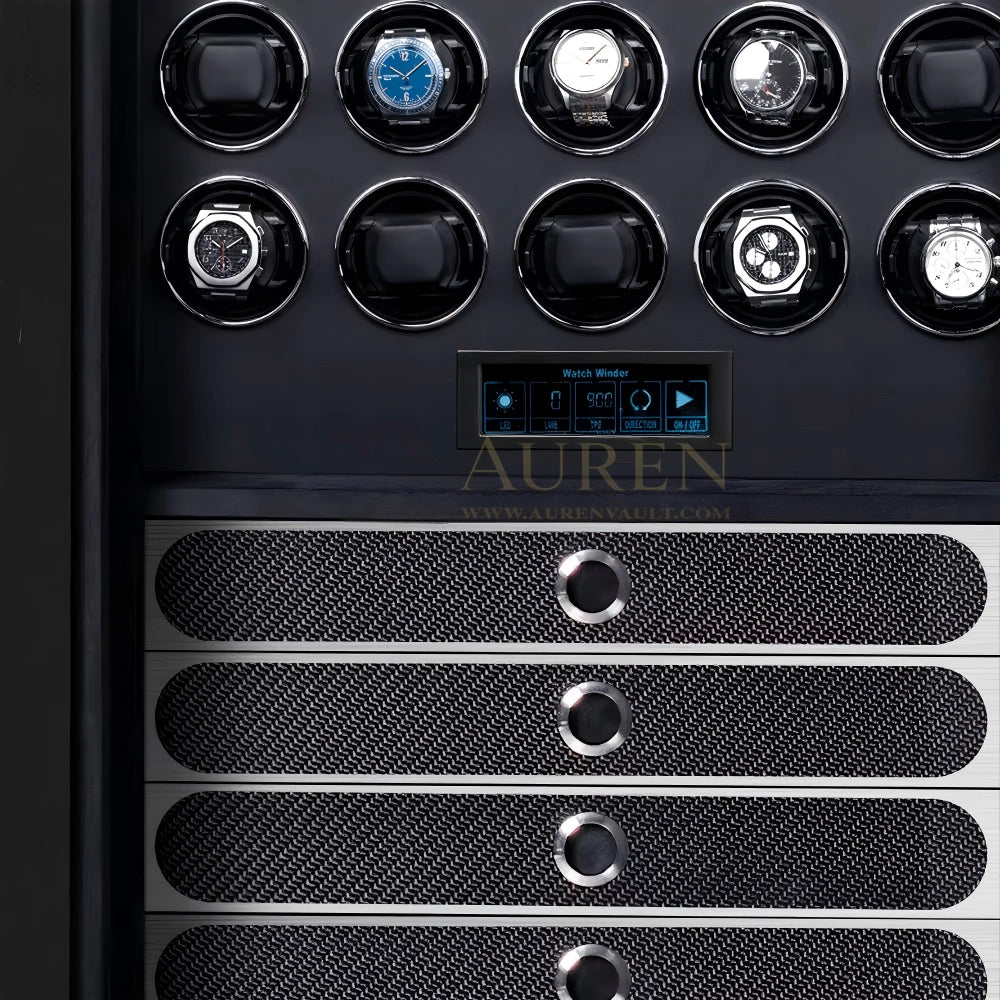
A multi-watch device should therefore allow each position to be programmed independently.
| Collection profile | Suitable approach | Main priority |
|---|---|---|
| One daily-worn Highlife FC-303 | No winder or compact programmable unit | Convenience |
| FC-303 and FC-391 collection | Two independent winding positions | Different rotation direction |
| Classic Date FC-706 and Moonphase FC-716 | Adjustable modules supporting 1,230 TPD | Manufacturer-specific program |
| Mixed Manufacture complications | Individually controlled multi-watch winder | Movement compatibility |
| Automatic, manual, and quartz collection | Winding positions plus passive storage | Efficient space allocation |
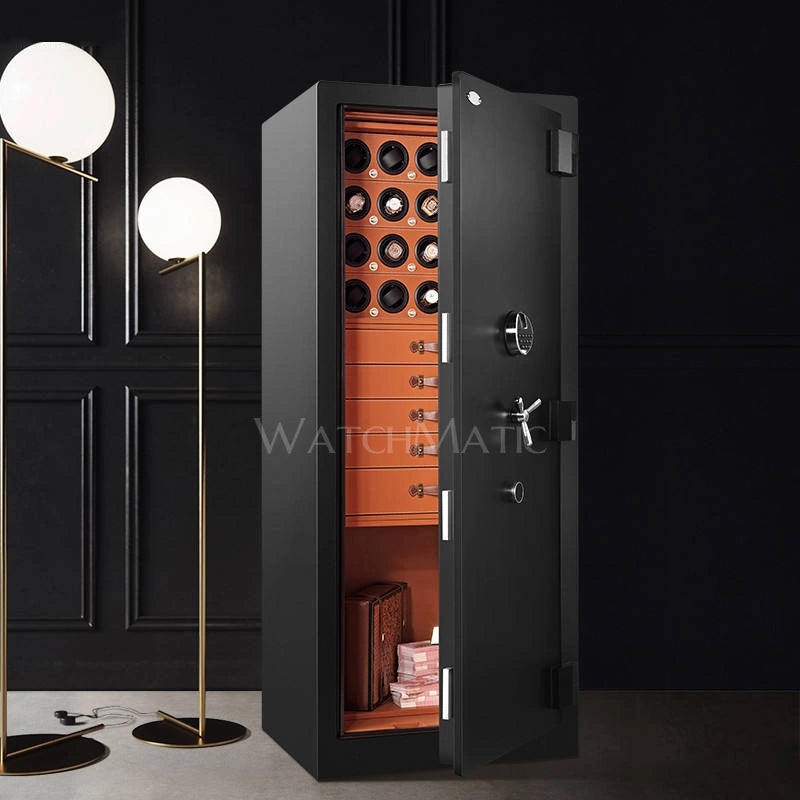
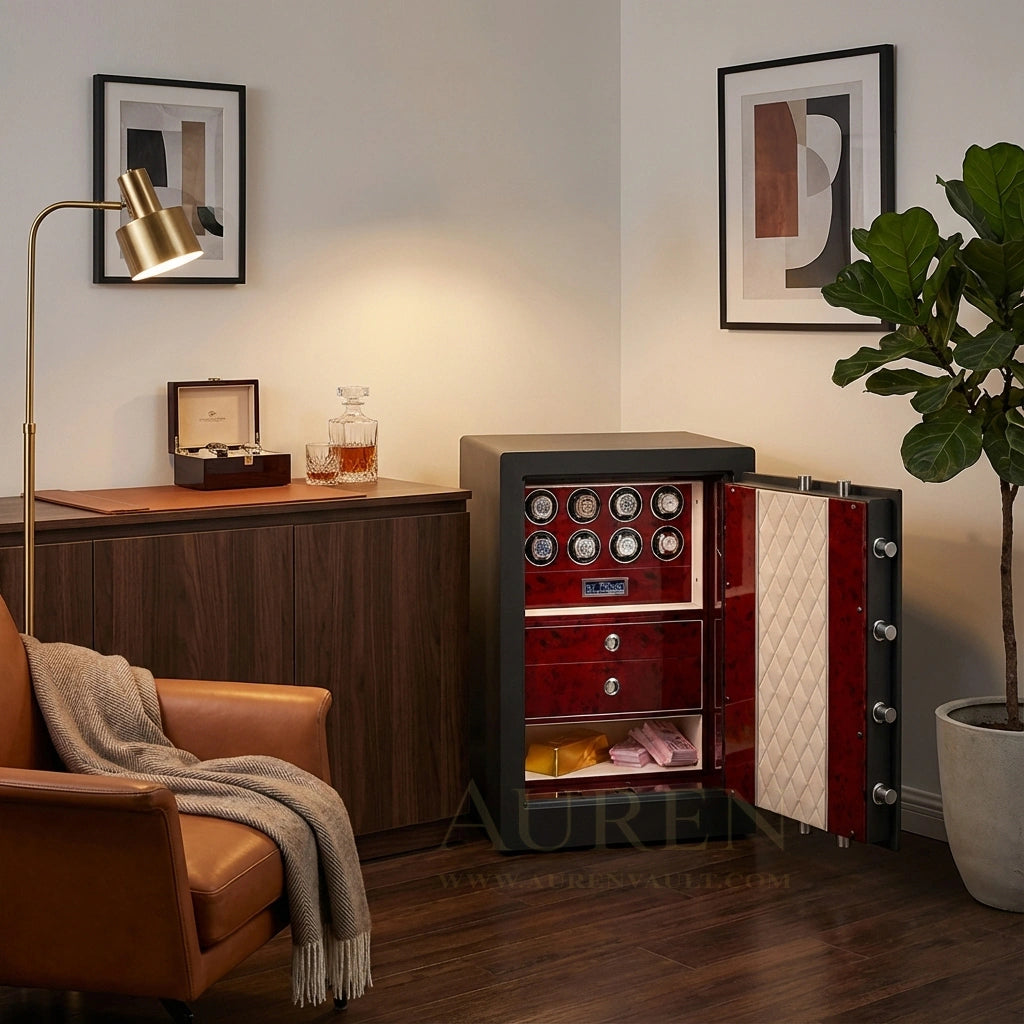
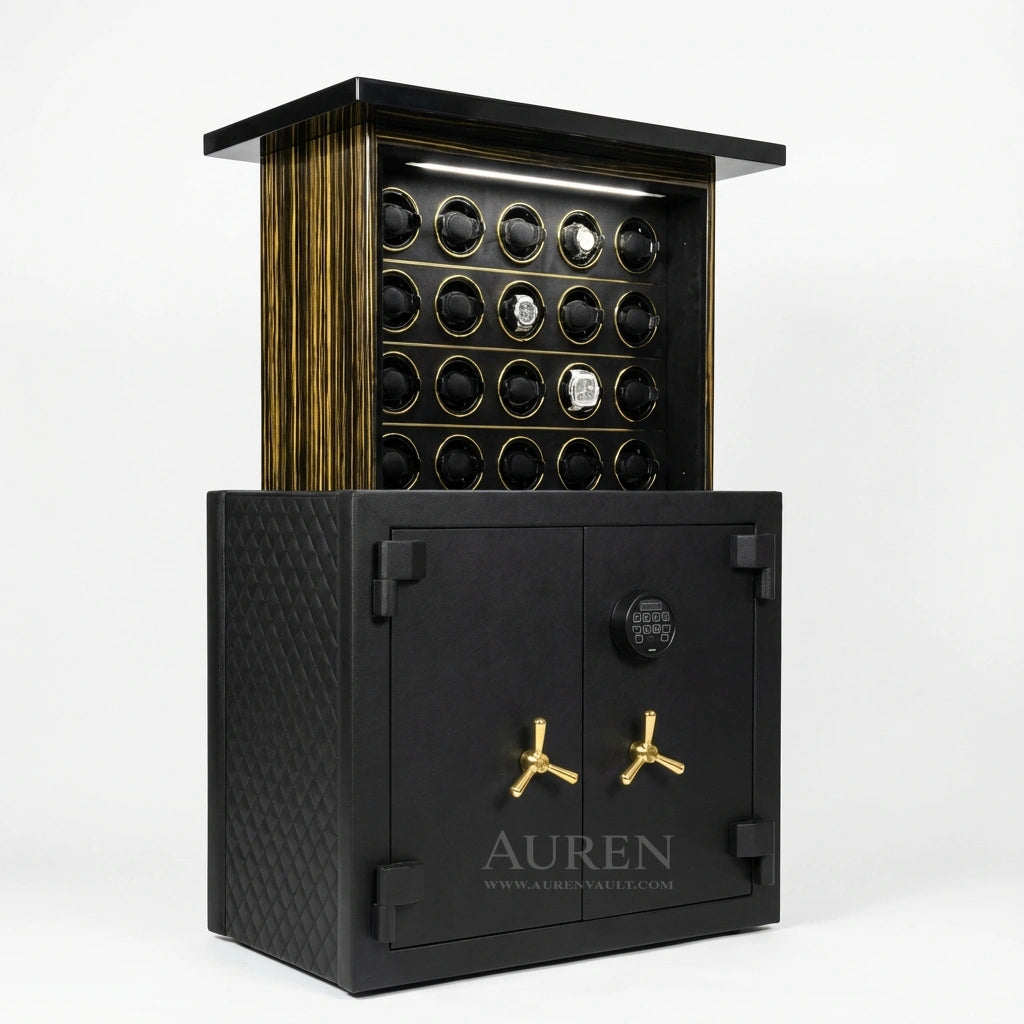
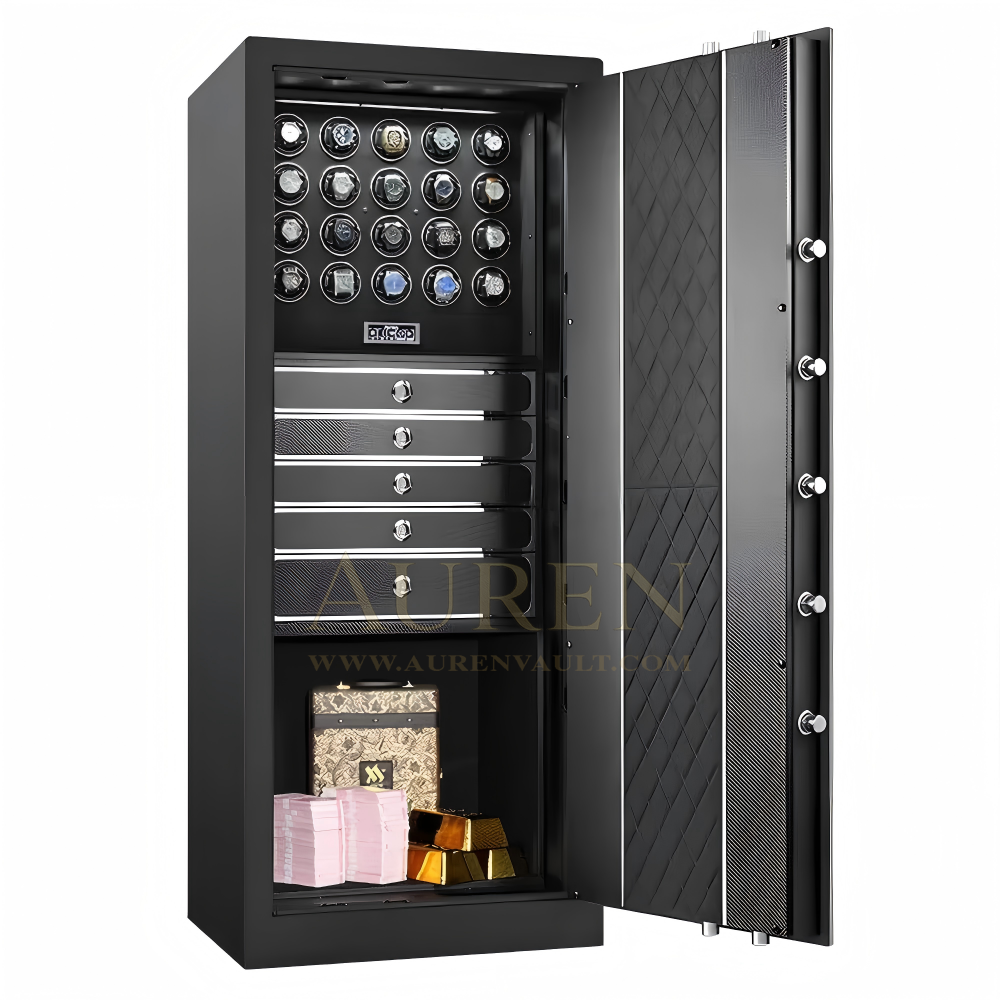
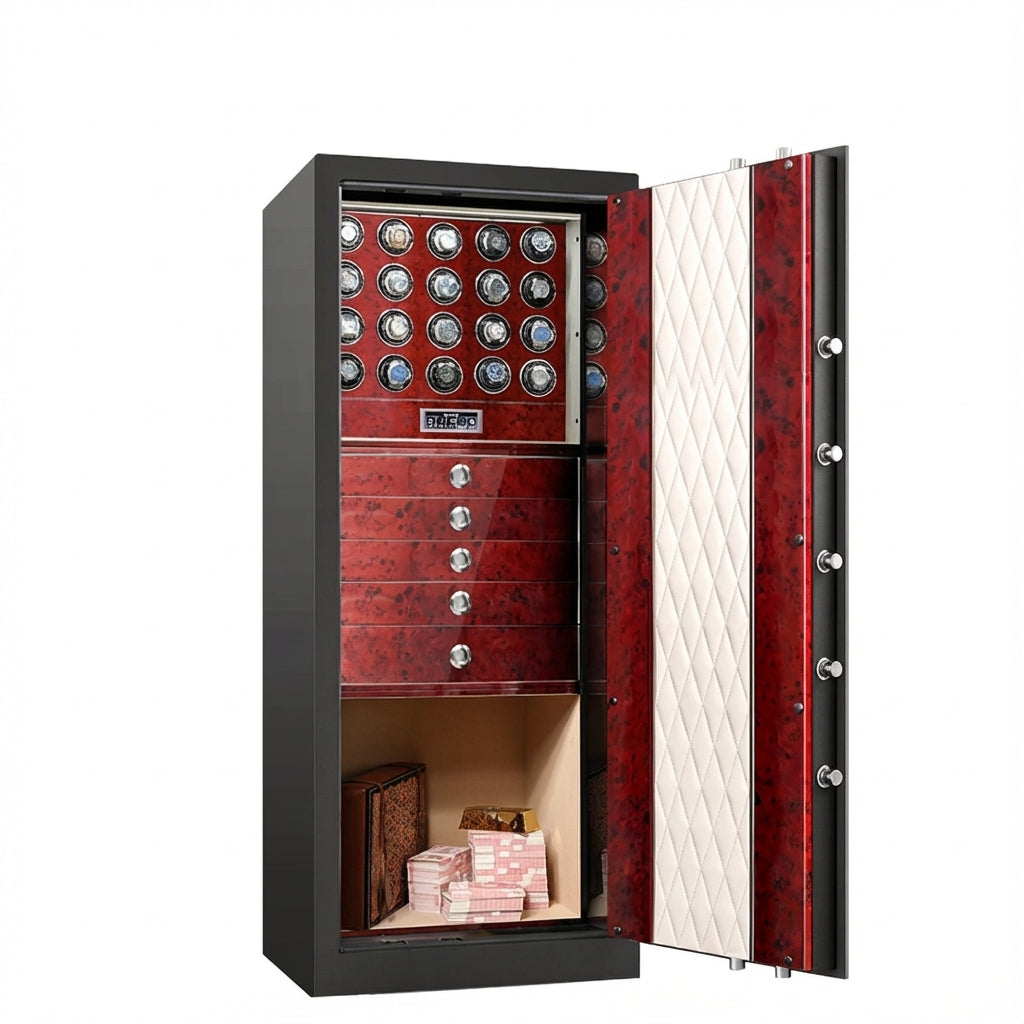
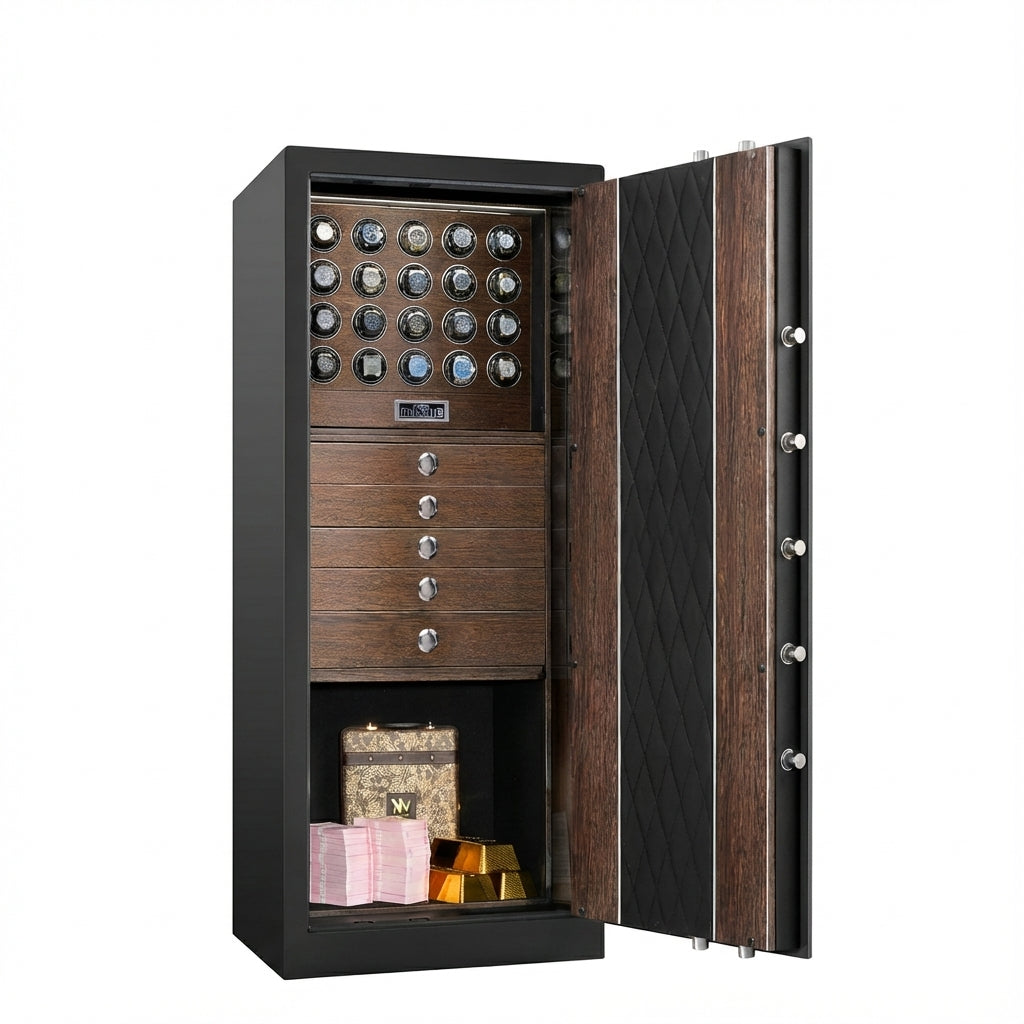
| Larger valuable collection | Appropriately specified watch winder safe | Winding, organization, and protection |
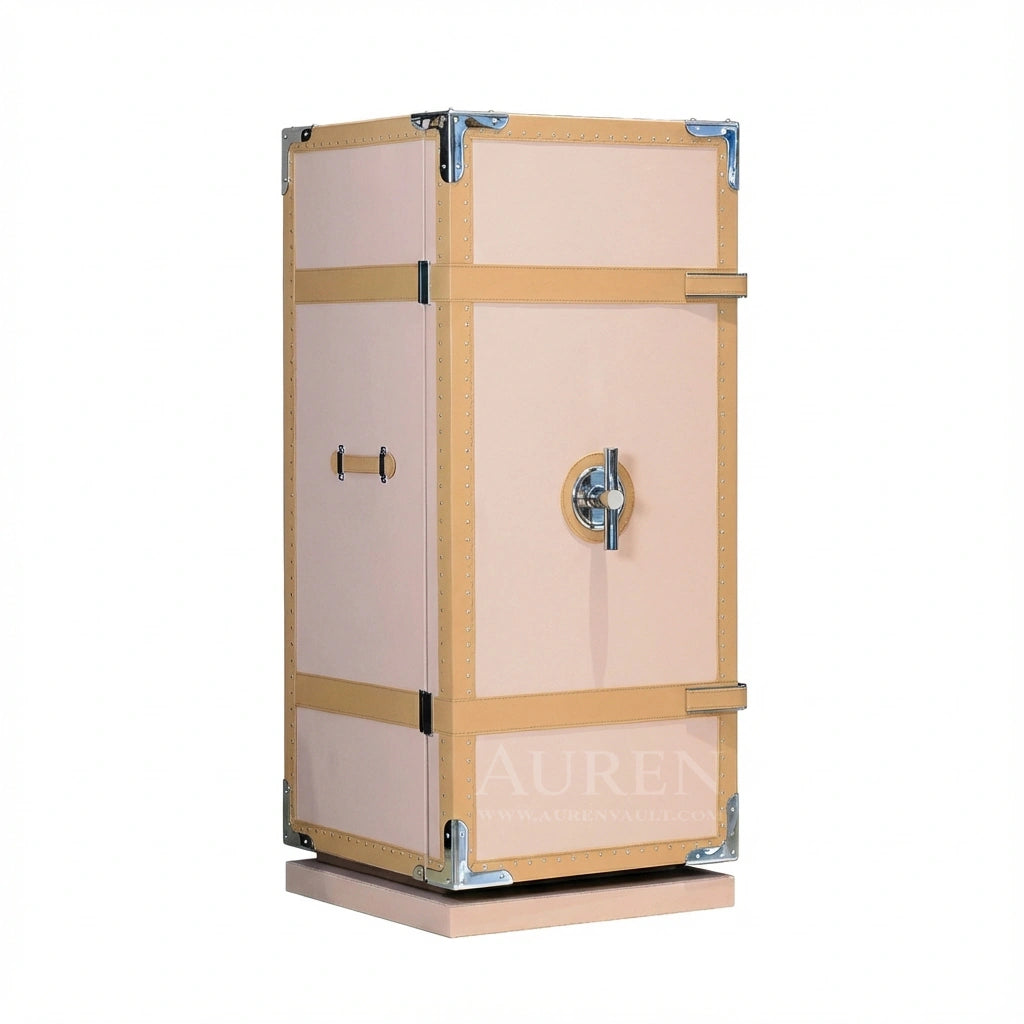
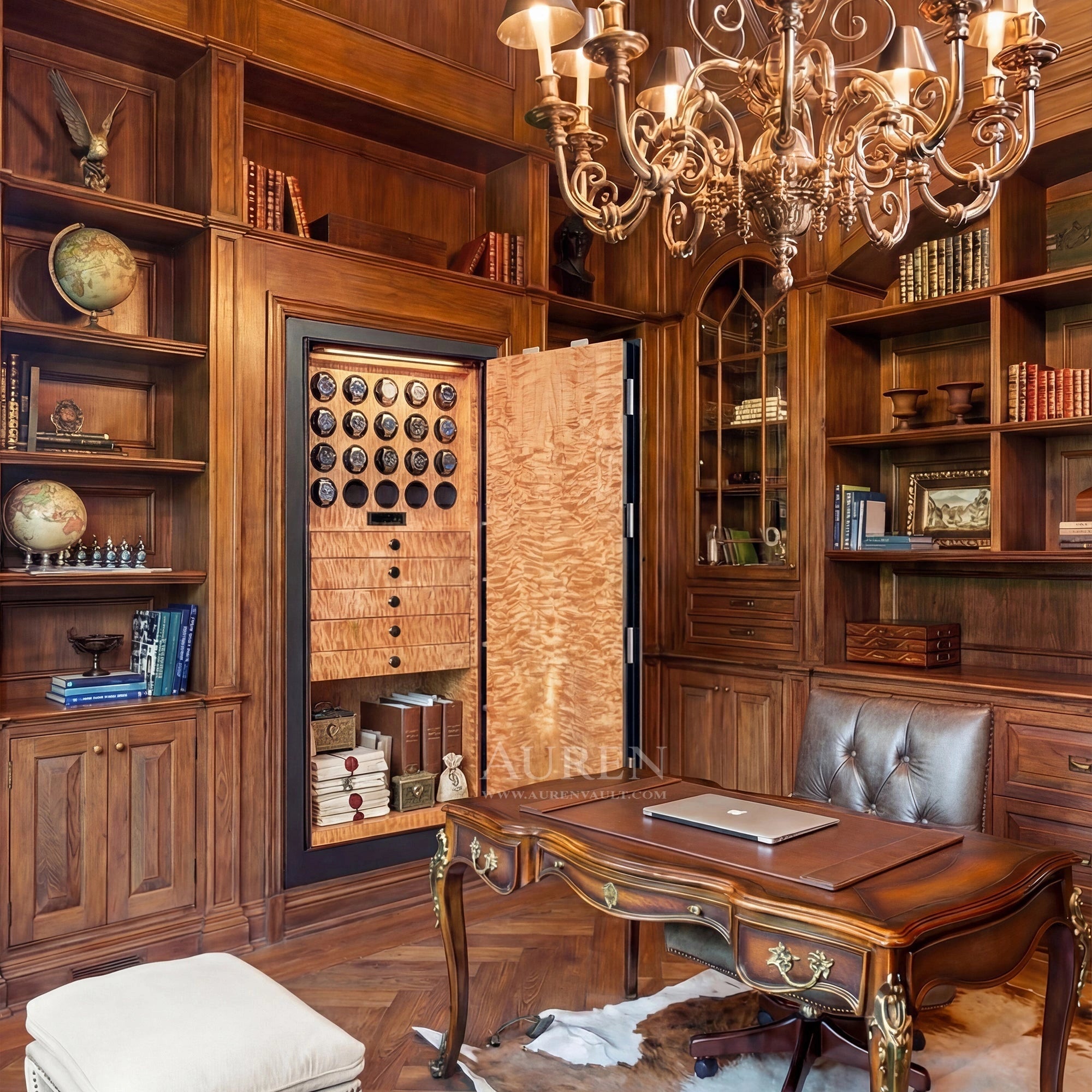
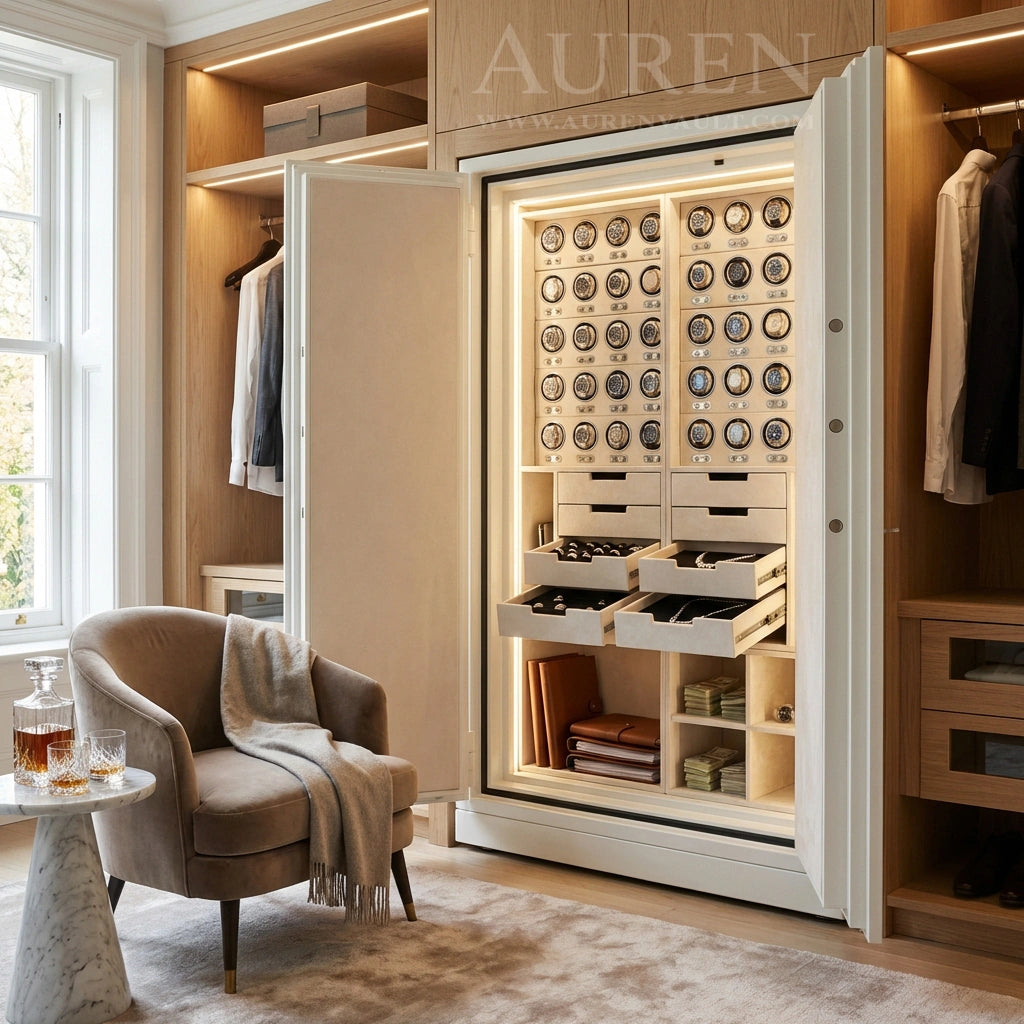
Collectors considering an integrated solution can compare watch winder safes that combine automatic winding modules with enclosed storage.
The watch winder safe guide is relevant when evaluating the relationship between winding capacity, interior organization, and security.
Evaluate Security Separately From Winding
A lockable cabinet does not automatically provide a particular level of burglary resistance or fire protection.
Those characteristics depend on the enclosure's construction, documented testing, locking mechanisms, and installation.
Likewise, a safe's protective features do not establish whether its internal rotors can reproduce the correct TPD for an FC-716 or FC-391.
Both aspects must be verified.
For a collection of valuable Manufacture watches, it is important to obtain appropriate winding-module specifications before selecting the storage enclosure.
Planning Storage for a Mixed Frederique Constant Collection
Consider an owner with a Highlife Automatic FC-303, Highlife Chronograph FC-391, Classics Heart Beat FC-310, Classic Moonphase Date FC-716, Classic Worldtimer FC-719, Classic Perpetual Calendar FC-776, Classics Moneta Handwinding, and Classics Quartz Date.
That is an eight-watch collection.
Six watches use automatic movements.
The Moneta is manually wound, and the Quartz Date is battery-powered.
A configuration with six individually programmable winding modules and two passive storage compartments may therefore be more efficient than one offering eight identical rotors.
The watch safes collection provides broader options for considering total storage capacity.
For substantial collections, larger luxury watch safes may offer additional space for watches, spare straps, and accessories.
The key is to distinguish between total watch capacity and active winding capacity.
When Custom Storage Becomes More Practical
Frederique Constant collections can include conventional dress watches, integrated-bracelet sports watches, large chronographs, and complicated Manufacture references.
Their different case shapes and strap configurations may require more than one cushion size.
Custom storage can help allocate appropriate winding positions, passive compartments, and space for accessories.
These requirements can be explored through custom watch safe design options, depending on the capabilities of the selected configuration.
For residential installation, physical dimensions, electrical access, delivery conditions, and everyday usability should also be assessed.
The objective is to make the collection easier to manage without introducing unnecessary handling or inappropriate winding programs.
Does a Frederique Constant Need to Remain Wound Continuously?
No. An automatic Frederique Constant does not need to run continuously.
During regular wear, wrist movement can replenish its mainspring.
When unworn, the stored reserve gradually declines until the watch stops.
Allowing an automatic movement to stop during periods of non-use is generally a normal part of mechanical watch ownership.
The value of a winder depends on the owner's routine.
For a frequently worn Highlife Automatic, the convenience may be modest.
For a Worldtimer, Moonphase Date, or Perpetual Calendar worn only occasionally, maintaining operation can reduce the frequency of complicated resetting.
However, a winder does not replace servicing or correct a mechanical problem.
For longer-term storage, appropriate environmental conditions, physical support, and careful handling remain important.
The watch storage guide provides broader context for organizing and protecting watches when they are not being worn.
A winder should support the owner's routine rather than become a requirement for every automatic timepiece.
Frequently Asked Questions About Frederique Constant Watch Winders
What is the official TPD setting for Frederique Constant watches?
It depends on the calibre. Frederique Constant's winding guide lists 650 TPD bidirectional for FC-303 and FC-310, 800 TPD clockwise for FC-391, 1,230 TPD bidirectional for FC-706 and FC-716, and 850 TPD bidirectional for FC-735.
Does a Frederique Constant Highlife need a watch winder?
No. A Highlife automatic receives winding energy through normal wrist movement. A compatible winder is optional and mainly useful when the watch remains unworn beyond its available power reserve.
What is the winding direction for Highlife Automatic FC-303?
Frederique Constant lists 650 turns per day with bidirectional rotation for FC-303 in its official winding guide.
What settings should I use for Highlife Chronograph FC-391?
The manufacturer's published guide specifies 800 TPD clockwise for FC-391. Confirm that the external winder's clockwise setting follows the appropriate orientation convention.
Can FC-706 and FC-716 use 650 TPD?
The manufacturer's winding guide specifies 1,230 TPD bidirectional for both movements. A generic 650 TPD setting should not be assumed equivalent.
Does FC-718 use the same settings as FC-719?
Not necessarily. The published guide lists FC-718 at 650 TPD bidirectional, but it does not establish a corresponding program for the newer FC-719. Obtain calibre-specific confirmation before configuring FC-719.
What is the correct TPD for FC-776 Perpetual Calendar?
The official winding table reviewed here includes the older FC-775 at 650 TPD bidirectional but does not list FC-776. Do not automatically transfer the earlier setting to the new calibre.
Does the 40 Hz Monolithic FC-810 need more winding?
No higher TPD should be inferred from its frequency. Frederique Constant lists FC-810 at 650 TPD bidirectional, despite its unusually high-frequency oscillator.
Can a Classics Moneta Handwinding use a watch winder?
No. The current Classics Moneta Handwinding with FC-435 is manually wound. A conventional rotating watch winder cannot replenish its mainspring.
Can a watch winder damage a Frederique Constant?
A compatible, correctly programmed winder with appropriate physical support should be suitable for an automatic movement. Incorrect settings, poor holder fit, defective equipment, or improper handling can create problems. The device does not replace regular servicing.
Is a watch winder safe worthwhile for Frederique Constant?
It can be useful for a collection containing several automatic movements and valuable complications. Independent winding controls, suitable passive storage, and documented security specifications should guide the choice.
Related Reading: Watch Winder Settings and Collection Protection
Frederique Constant's official winding guide demonstrates how much settings can vary even within one watchmaker's portfolio. These related articles provide additional context for automatic winding and collection storage.
Best Watch Winder for Vacheron Constantin Watches
Explore calibre-specific winding considerations and the practical requirements of maintaining sophisticated Swiss automatic watches.
Best Watch Winder Settings for Patek Philippe Watches
Understand the relationship between winding programs, mechanical complications, and ready-to-wear convenience.
Watch Safes With Built-In Watch Winders: Are They Worth It?
Compare standalone winding devices with integrated systems designed for automatic watch collections.
Final Perspective: Frederique Constant Makes the Case for Precise Programming
Frederique Constant provides unusually useful manufacturer guidance for choosing a watch winder.
Its published settings demonstrate that a simple automatic FC-303, an FC-391 chronograph, and an FC-716 Moonphase Manufacture should not automatically receive the same program.
Newer movements also require careful identification. The FC-719 Worldtimer and FC-776 Perpetual Calendar represent updated generations whose winding settings should be confirmed rather than copied from their predecessors.
For one automatic watch, reliable programming and a well-fitted holder are the essentials.
For larger collections, independent winding modules and protective storage become increasingly valuable.
As a specialist in premium watch safes and integrated winding solutions, Auren Vault approaches these needs through configurations intended to combine movement compatibility, collection organization, and enclosed protection.
The best watch winder for Frederique Constant is not the one with the greatest number of generic presets. It is the one that can reproduce the correct program for the actual movement, support the watch securely, and make everyday ownership more convenient.