

The best watch winder for Girard-Perregaux watches is a programmable unit with adjustable turns per day (TPD), selectable winding direction, reliable rest cycles, and a holder that securely accommodates the watch's case and bracelet.
For numerous older Girard-Perregaux automatic movements, particularly the GP3300 family, independent winding databases recommend approximately 500 TPD with counterclockwise rotation. However, that recommendation should not automatically be applied to newer calibres such as the GP01800 or specialized Bridges movements.
Modern Laureato watches and certain Bridges tourbillons use automatic winding systems and may benefit from a compatible winder. In contrast, the Neo Constant Escapement with calibre GP09200 is manually wound and cannot be powered by a conventional watch winder.
For one regularly worn Laureato, a winder is optional. Owners of multiple automatic watches may benefit from independently programmable modules, appropriate watch supports, and secure storage.
The correct choice depends on the specific movement—not simply the collection name.
Why Girard-Perregaux Needs a Movement-Specific Winder
Girard-Perregaux brings together two distinct approaches to watchmaking.
The Laureato collection is recognized for its octagonal bezel, integrated bracelet, and contemporary sports-watch design.
The Bridges collection emphasizes mechanical architecture, often displaying structural components that would remain concealed inside a conventional watch.
Both approaches can incorporate automatic movements, but their winding systems are not necessarily similar.
A Laureato 42 mm contains the GP01800, a conventional self-winding calibre with a centrally mounted oscillating weight.
The Neo Bridges uses the GP08400, with a compact micro-rotor visible from the dial side.
The Tourbillon with Three Flying Bridges uses an automatic movement with an unusual three-bridge construction.
The Neo Constant Escapement, despite its advanced mechanical design, is manually wound.
This variety makes calibre identification essential.
A watch winder rotates the complete watch, allowing an automatic winding mechanism to respond to movement and transfer energy to the mainspring.
It cannot turn a manual-winding crown, operate a complication, or replenish a movement that lacks an automatic winding system.
For Girard-Perregaux, the best winding setup begins by separating mechanical compatibility from the convenience of keeping a watch running between wears.
Which Girard-Perregaux Watches Can Use a Watch Winder?
The Laureato and Bridges families include different generations of movements, with different automatic winding constructions and power reserves.
The following comparison uses representative specifications from Girard-Perregaux and established watchmaking references.
Girard-Perregaux Movement Compatibility Guide
| Watch or collection | Representative calibre | Movement type | Power reserve | Winder suitability |
|---|---|---|---|---|
| Laureato 42 mm | GP01800 | Automatic | At least 54 hours | Yes |
| Laureato 38 mm | GP03300 | Automatic | Approximately 46 hours | Yes |
| Laureato Chronograph 42 mm | GP03300 chronograph variant | Automatic | Approximately 46 hours | Yes |
| Laureato Absolute Chronograph 8Tech | GP03300-1058 | Automatic | Approximately 46 hours | Yes |
| Neo Bridges | GP08400-0001 | Automatic micro-rotor | At least 48 hours | Yes |
| Tourbillon with Three Flying Bridges | GP09400 | Automatic micro-rotor | At least 60 hours | Yes |
| Neo Constant Escapement | GP09200 | Manual-winding | At least 168 hours | No |
| Original Laureato from 1975 | Quartz movement | Quartz | Not applicable | No |
Specifications are reference-specific. Production generations and movement variants may differ, and historical models should not automatically receive the settings used for contemporary calibres.
The table highlights a fundamental principle: a complicated movement is not necessarily automatic.
The GP09400 Tourbillon with Three Flying Bridges is self-winding, while the GP09200 Neo Constant Escapement is hand-wound.
Their mechanical sophistication does not determine whether a conventional winder will work.
Laureato 42 mm: Understanding the GP01800 Movement
The Laureato 42 mm is a practical starting point for collectors considering their first Girard-Perregaux watch winder.
Representative models, including reference 81010-11-431-11A, use the self-winding GP01800 movement.
Girard-Perregaux specifies an operating frequency of 28,800 vibrations per hour, equivalent to 4 Hz, and a power reserve of at least 54 hours.
The movement uses a conventional oscillating weight that responds to changes in wrist position.
When the watch is worn regularly, ordinary activity can help maintain the mainspring's stored energy.
When it remains unworn, that reserve gradually decreases until the movement stops.
A compatible watch winder can help maintain operation during these periods.
Does a 54-Hour Laureato Need a Winder?
Not necessarily.
An owner who wears the Laureato almost every day may have little need for additional winding equipment.
Its power reserve can cover relatively short periods away from the wrist, provided the movement was sufficiently wound when removed.
However, a collector who switches among several watches over a week may find that the Laureato stops between wears.
A correctly configured winder can reduce the need to reset its time and date each time it is selected.
The benefit is convenience rather than improved accuracy or mechanical longevity.
Can You Use 500 TPD for the GP01800?
This is where calibre identification matters.
Independent winding databases frequently list approximately 500 TPD with counterclockwise rotation for numerous older Girard-Perregaux movements, including the GP3300 family.
However, those entries do not establish a verified external winding prescription for the newer GP01800.
The GP01800 should therefore not be assigned a 500 TPD counterclockwise program solely because another Girard-Perregaux movement appears with that recommendation.
The appropriate TPD and direction should be confirmed for the exact calibre and winder.
A programmable device provides the flexibility required once those settings are established.
Laureato 38 mm: The GP03300 Is Not the Same as the GP01800
The 38 mm Laureato uses the GP03300 movement in representative references such as the Laureato Copper.
Girard-Perregaux identifies this as a self-winding mechanical calibre operating at 4 Hz.
These references offer approximately 46 hours of power reserve.
The smaller Laureato therefore contains a different movement family from the larger 42 mm GP01800 models.
This difference is more significant than the change in case diameter.
A winding program should be selected according to the calibre's winding characteristics, not the physical size of the case.
Why the GP03300 Family Deserves Attention
Girard-Perregaux has used the GP3300 architecture extensively, including in time-and-date watches and movements incorporating additional complications.
Independent winding databases commonly recommend approximately 500 TPD with counterclockwise rotation for many historical GP3300 variants.
This is a more specific reference than the generic 650 TPD bidirectional recommendation often applied to automatic watches as a whole.
However, the distinction between a movement family and a specific modern variant remains important.
A historical GP3300 recommendation should be treated as a starting reference, not as a factory-issued instruction for every current GP03300 movement.
This is especially important when comparing a simple Laureato 38 mm with a GP03300-based chronograph.
The exact movement designation should be confirmed before programming the winder.
Laureato Chronograph: Why Complications Do Not Automatically Require More TPD
The Laureato Chronograph uses an automatic GP03300-based calibre with chronograph and date functions.
Representative 42 mm references offer approximately 46 hours of power reserve.
The movement operates at 4 Hz and includes the mechanical components required to measure elapsed time.
A watch winder can maintain its automatic timekeeping movement between wears.
However, the presence of a chronograph does not automatically establish a higher external TPD requirement.
The winder does not operate the chronograph pushers or control elapsed-time measurement.
It simply creates the external movement necessary for the winding system to replenish the mainspring.
Chronograph Pushers and Case Clearance
The Laureato Chronograph also has physical requirements that differ from those of a simple Laureato Date.
Its crown and chronograph pushers project from the case and require sufficient clearance inside the winding compartment.
A poorly fitted holder may allow the watch to shift during rotation or place unwanted pressure on the case.
The holder should keep the watch securely positioned without contact between its pushers and nearby surfaces.
These considerations become more important when several watches are mounted close together.
Laureato Absolute: Larger Cases, Similar Programming Questions
The Laureato Absolute family introduces more substantial case designs and integrated rubber straps.
For example, the Laureato Absolute Chronograph 8Tech uses a 44 mm carbon-and-titanium composite case with a GP03300-based automatic chronograph movement.
Its movement has approximately 46 hours of reserve.
Although the watch is physically different from a classical steel Laureato Chronograph, its appearance does not establish a different TPD requirement.
The relevant movement variant should determine the program.
Its larger case, strap geometry, and compartment depth must be assessed separately.
A good winder therefore needs both appropriate electronic controls and suitable physical accommodation.
Girard-Perregaux Watch Winder Settings: TPD and Direction
TPD stands for turns per day.
It describes the number of programmed rotations an external winder performs during a 24-hour period.
Winding direction describes whether the device rotates clockwise, counterclockwise, or alternates between both directions.
These settings matter because automatic movements differ in how effectively their winding systems convert rotor movement into stored energy.
For Girard-Perregaux, independent databases frequently identify counterclockwise programs for older GP3000 and GP3300 movement families.
Other historical calibres use different settings.
Girard-Perregaux TPD Reference Table
| Movement or family | Independent TPD reference | External rotation reference | Important limitation |
|---|---|---|---|
| Historical GP3000 / GP3100 | Approximately 500 | Counterclockwise | Historical movement guidance |
| GP3300 / GP03300 family | Approximately 500 | Counterclockwise | Confirm modern variant and winder convention |
| GP03300-based Laureato Chronograph | Approximately 500 in related movement listings | Counterclockwise | Historical entries are not definitive for every current reference |
| GP01800 Laureato 42 mm | Not reliably established here | Verify | Do not automatically copy GP03300 settings |
| GP08400 Neo Bridges | Not reliably established here | Verify | Specialized micro-rotor |
| GP09400 Three Flying Bridges | Not reliably established here | Verify | Different automatic winding architecture |
| Historical GP2200 | Approximately 650 | Bidirectional | Demonstrates movement-family differences |
| Historical GP8000 | Approximately 600 | Clockwise | Demonstrates movement-family differences |
| GP09200 Neo Constant Escapement | Not applicable | Not applicable | Manual-winding |
These are independent watch winder database references, not official Girard-Perregaux TPD specifications. Clockwise and counterclockwise conventions must be checked against the actual winder.
The most useful conclusion is that Girard-Perregaux does not have one universal winding program.
The differences are substantial enough that applying 650 TPD bidirectional to every reference would be inappropriate.
Why 500 TPD Can Be Appropriate for Some Movements
A lower external TPD number does not mean the movement is less sophisticated or receives less effective winding.
Automatic winding efficiency depends on the construction of the rotor, winding transmission, and movement's energy requirements.
For certain mechanisms, a relatively modest rotation count in the effective winding direction may be sufficient to maintain power.
A higher number in an ineffective direction may provide less useful winding.
This explains why winding direction can matter as much as TPD.
It also demonstrates why selecting the highest available rotation setting is not necessarily a better approach.
Should You Use Bidirectional Rotation Instead?
A bidirectional winder is useful because it can alternate the watch's rotation in both directions.
However, the availability of that mode does not mean it is the ideal program for every movement.
If a calibre receives effective winding predominantly through one direction, an alternating program may devote some of its rotations to motion that contributes little winding energy.
That could reduce effective winding compared with the appropriate unidirectional setting.
Conversely, other movements can benefit from rotation in both directions.
The choice should follow movement-specific guidance.
The watch TPD guide provides a broader introduction to rotation cycles and direction terminology, although the exact Girard-Perregaux preset still requires confirmation.
Bridges: Why Visible Mechanical Architecture Can Be Misleading
Girard-Perregaux's Bridges collection is closely associated with exposed movement construction.
Its bridges, gear train, balance, and other components can become central elements of the watch's appearance.
This creates a particularly interesting challenge when choosing a watch winder.
An elaborate visible movement may be automatic, manually wound, or equipped with a specialized winding system.
The appearance alone does not answer the compatibility question.
Three movements illustrate this distinction especially clearly.
Neo Bridges GP08400: Automatic Winding With a Micro-Rotor
The Neo Bridges uses calibre GP08400-0001 in its original configuration.
This is an automatic mechanical movement featuring a micro-rotor visible from the dial side.
The movement operates at 3 Hz and provides a minimum power reserve of approximately 48 hours.
Its rotor and mainspring barrel are positioned to create a visually balanced construction within the 45 mm titanium case.
The result is a watch that combines an exposed mechanical display with automatic winding.
A compatible winder can therefore maintain its reserve between wears.
Does a Micro-Rotor Need More Daily Rotations?
Not necessarily.
A micro-rotor is smaller than a conventional centrally mounted oscillating weight, but its effectiveness cannot be determined from size alone.
Rotor mass, geometry, winding transmission, and the overall movement architecture influence how energy is transferred to the mainspring.
The GP08400 was designed specifically to function with its integrated winding arrangement.
There is no sound basis for assuming it requires a higher TPD program merely because its rotor is compact.
Likewise, the movement's 3 Hz regulating frequency does not independently determine its external winding requirements.
A programmable winder should be configured according to the GP08400's verified needs, not by copying a standard Laureato setting.
Why Neo Bridges Needs an Appropriate Holder
The Neo Bridges measures 45 mm across and has a substantial case design.
Its leather strap and folding clasp require a holder that supports the watch without excessive tension.
A large rigid cushion may place pressure on the strap or clasp.
A small holder may fail to secure the case during rotation.
For this type of watch, a removable or adjustable cushion can be more useful than decorative display features.
The movement's exposed architecture is intended to be appreciated visually, but the external winder's priority remains stable, controlled operation.
Three Flying Bridges: An Automatic Tourbillon Can Use a Winder
Girard-Perregaux's Tourbillon with Three Flying Bridges demonstrates how an automatic winding system can coexist with an advanced tourbillon movement.
Representative references use the GP09400 self-winding calibre.
The movement incorporates three bridges supporting major components, including the tourbillon, gear train, and mainspring barrel.
It provides a minimum power reserve of approximately 60 hours.
Certain versions use a micro-rotor integrated into the movement architecture.
A compatible external winder can therefore maintain the movement's automatic reserve between wears.
Does a Tourbillon Need a Different Winder?
A tourbillon is a regulating complication, not an automatic winding system.
It is designed to rotate the escapement assembly according to its own mechanical construction.
The external winder does not operate or control that rotation directly.
Instead, it replenishes energy through the watch's automatic winding mechanism.
The correct TPD should therefore be established for the GP09400 rather than inferred from the presence of a tourbillon.
Likewise, the movement's 3 Hz operating frequency does not establish a higher or lower external TPD requirement.
The sophisticated construction makes reliable programming and careful physical support especially important, but not necessarily a more complicated external rotation pattern.
Neo Constant Escapement: Why Seven Days of Reserve Does Not Mean Automatic Winding
The Neo Constant Escapement is one of Girard-Perregaux's most technically unusual mechanical watches.
Its GP09200 movement uses a constant-force escapement incorporating a specially shaped silicon blade.
The mechanism is designed to deliver controlled energy impulses to the regulating system.
The movement also offers a power reserve of at least seven days, supported by two barrels.
Despite this elaborate architecture, the GP09200 is manually wound.
It does not contain the automatic winding system required for a conventional watch winder.
Constant Force and Automatic Winding Are Different Concepts
The phrase constant-force escapement describes how energy is regulated and delivered to the balance.
It does not describe how energy is supplied to the mainspring in the first place.
In the Neo Constant Escapement, the owner winds the movement manually.
The silicon constant-force system then regulates the delivery of energy during operation.
Rotating the complete watch in an external winder does not wind the movement.
For this reference, the correct storage solution is a secure passive holder rather than an active winding module.
This distinction is particularly important for collectors of complicated Girard-Perregaux timepieces.
Mechanical innovation and automatic winding compatibility are separate questions.
How to Set Up a Girard-Perregaux Watch Winder
A reliable setup begins with confirming the exact reference and calibre.
This is especially important because the same collection can include multiple movement families.
A Laureato 42 mm with GP01800 should not automatically use the program suggested for a Laureato 38 mm with GP03300.
Likewise, the Neo Bridges and Tourbillon with Three Flying Bridges require their own movement-specific evaluation.
Before placing an automatic watch in the winder, follow Girard-Perregaux's instructions for starting the movement if it has stopped.
A watch winder is principally intended to maintain stored energy rather than rapidly restore a completely depleted reserve.
After the movement is running, secure the watch in an appropriately sized holder and program the verified TPD and direction.
A practical setup involves:
-
Confirm the watch's reference, calibre, and automatic winding compatibility.
-
Establish the correct rotation direction and daily program.
-
Mount the watch securely without excessive pressure on the case, bracelet, or strap.
-
Observe whether it maintains adequate power over several days.
If the watch repeatedly stops, investigate the initial winding state, direction, actual winder operation, and mechanical condition before increasing rotations.
Why Rest Cycles Matter
A suitable watch winder typically alternates rotation with periods of rest.
This provides controlled winding energy without requiring continuous motion.
Different devices may distribute their programmed rotations differently, even when displaying the same TPD number.
Consequently, a reliable motor and transparent programming specifications are important.
A device that consistently executes the correct program is preferable to one that simply offers a very high maximum TPD.
Can a Winder Overwind a Girard-Perregaux?
Modern automatic movements generally incorporate mechanisms that limit further mainspring tension after reaching a sufficiently wound state.
Nevertheless, excessive daily rotation offers no established benefit.
A correctly configured winder should maintain the watch's reserve through appropriate winding cycles.
It should not run continuously at maximum speed simply because the movement has an overwinding protection mechanism.
A watch winder also cannot replace servicing or correct mechanical faults.
Choosing a Watch Winder for the Laureato's Integrated Bracelet
The Laureato's integrated bracelet is one of the design features that makes the collection immediately recognizable.
Its links connect closely to the case, creating a continuous profile around the wrist.
This construction has practical implications when mounting the watch on a winder.
An oversized cushion may place unnecessary tension on the bracelet or clasp.
An undersized cushion may allow the watch to move during rotation.
A well-fitted holder should support the watch without forcing the bracelet into an unnatural shape.
Protecting Polished and Brushed Surfaces
Girard-Perregaux combines polished and satin-finished surfaces throughout the Laureato case and bracelet.
These finishes can be exposed to unnecessary contact if a watch shifts inside a poorly designed holder.
The ideal cushion should provide stable support, while the winding compartment should offer enough clearance around the case.
The watch should be easy to install and remove without contact with hard interior surfaces.
Rubber Straps and Laureato Absolute Models
The Laureato Absolute family frequently uses integrated rubber straps.
Rubber does not behave exactly like a metal bracelet when wrapped around a winding cushion.
A large rigid holder may stretch the strap unnecessarily, while a loose holder may not keep the watch secure.
An adjustable cushion provides greater flexibility.
This is particularly relevant for 44 mm models with substantial cases and integrated strap geometry.
For a mixed Laureato collection, the best holder may be as important as the programming controls.
When Is a Watch Winder Worth Using?
The value of a watch winder depends on the owner's wearing habits.
For a Laureato 42 mm worn most days, its 54-hour reserve may be sufficient for relatively short periods of non-use.
In this situation, a winder is optional.
For a collector who rotates among five or six automatic watches, however, individual pieces may remain unworn beyond their available reserves.
A compatible winder can reduce repeated time and date adjustments.
The practical benefit can be greater with automatic watches containing more complicated calendar indications.
But not every mechanical watch needs to remain running.
The manually wound Neo Constant Escapement is better suited to protected storage and winding according to its operating instructions.
The aim is not to keep every watch moving.
It is to maintain the watches for which automatic winding provides a useful ownership benefit.
Standalone Winder vs. Watch Winder Safe
As a collection grows, winding convenience becomes only one part of the storage decision.
A standalone winder primarily maintains automatic movements between wears.
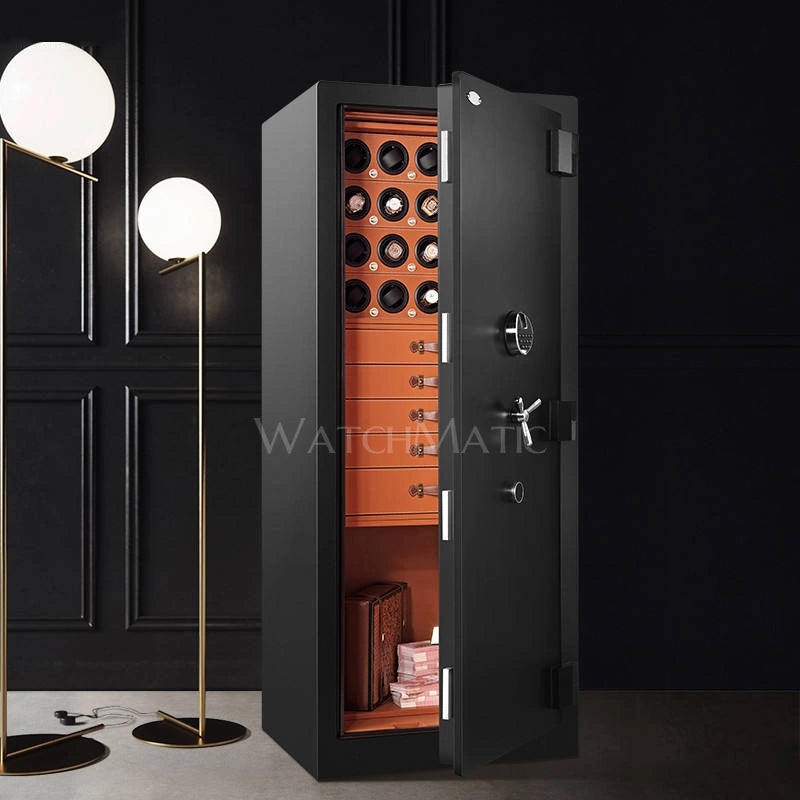
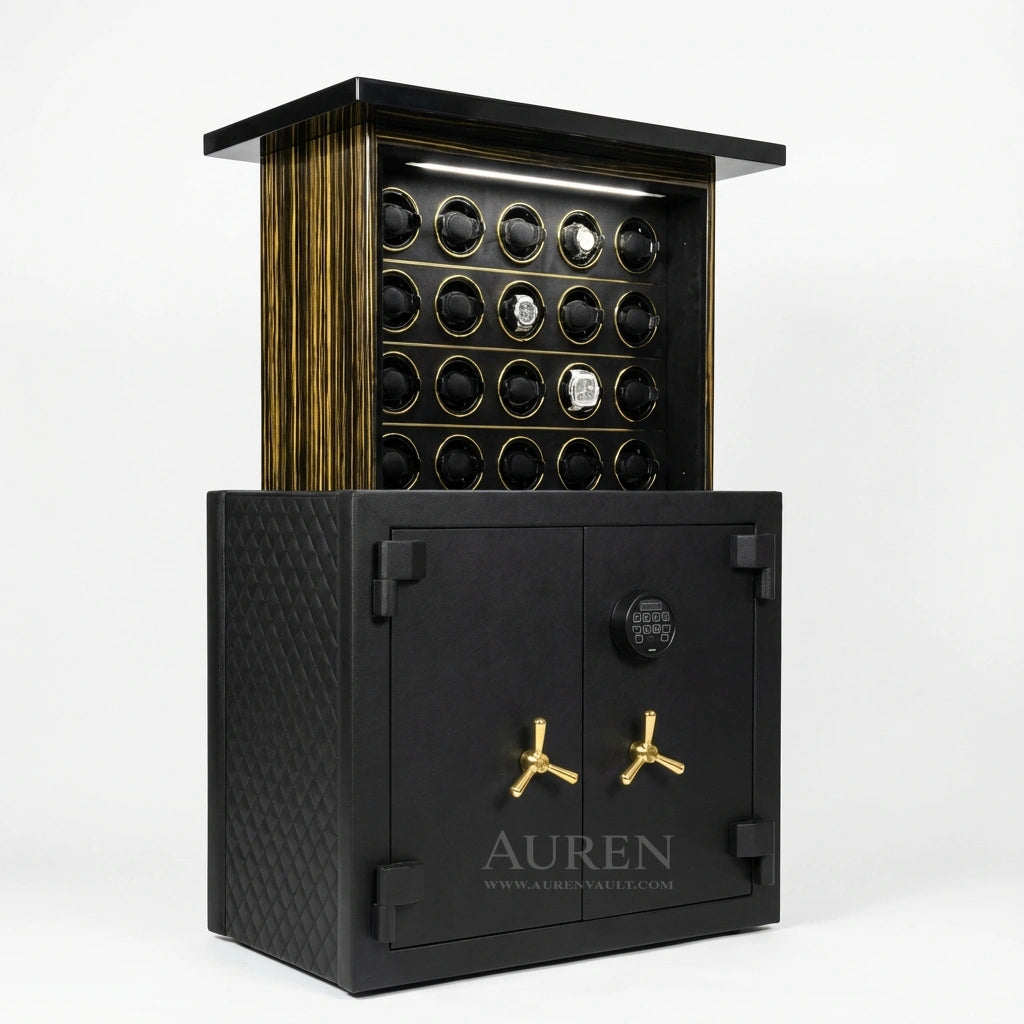
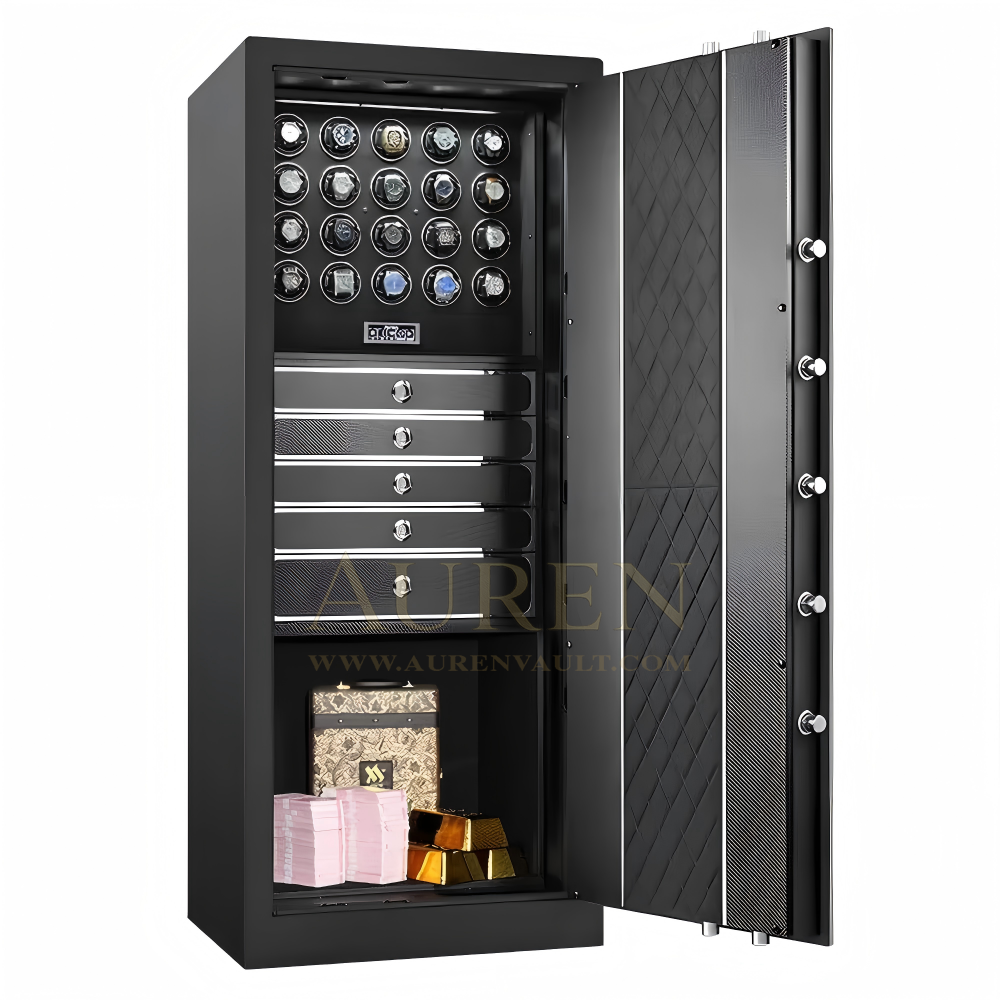
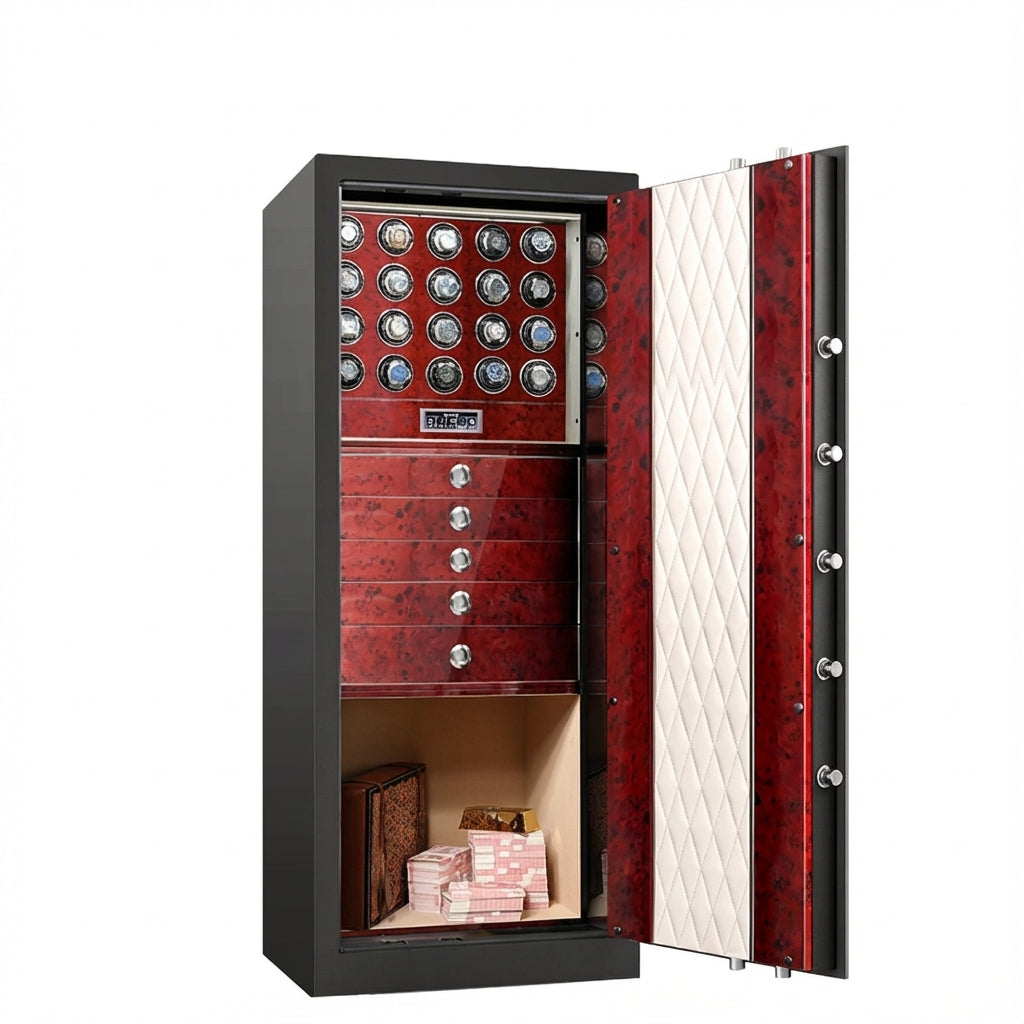
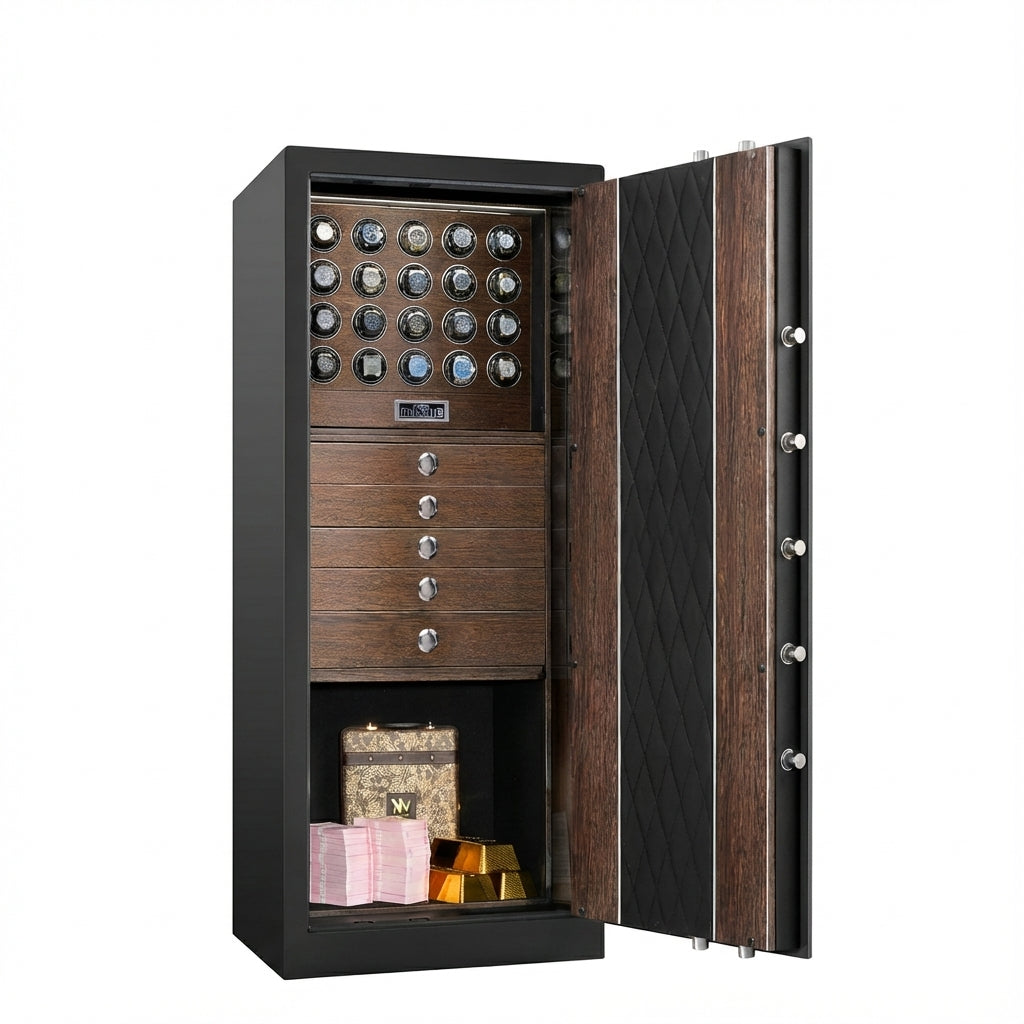
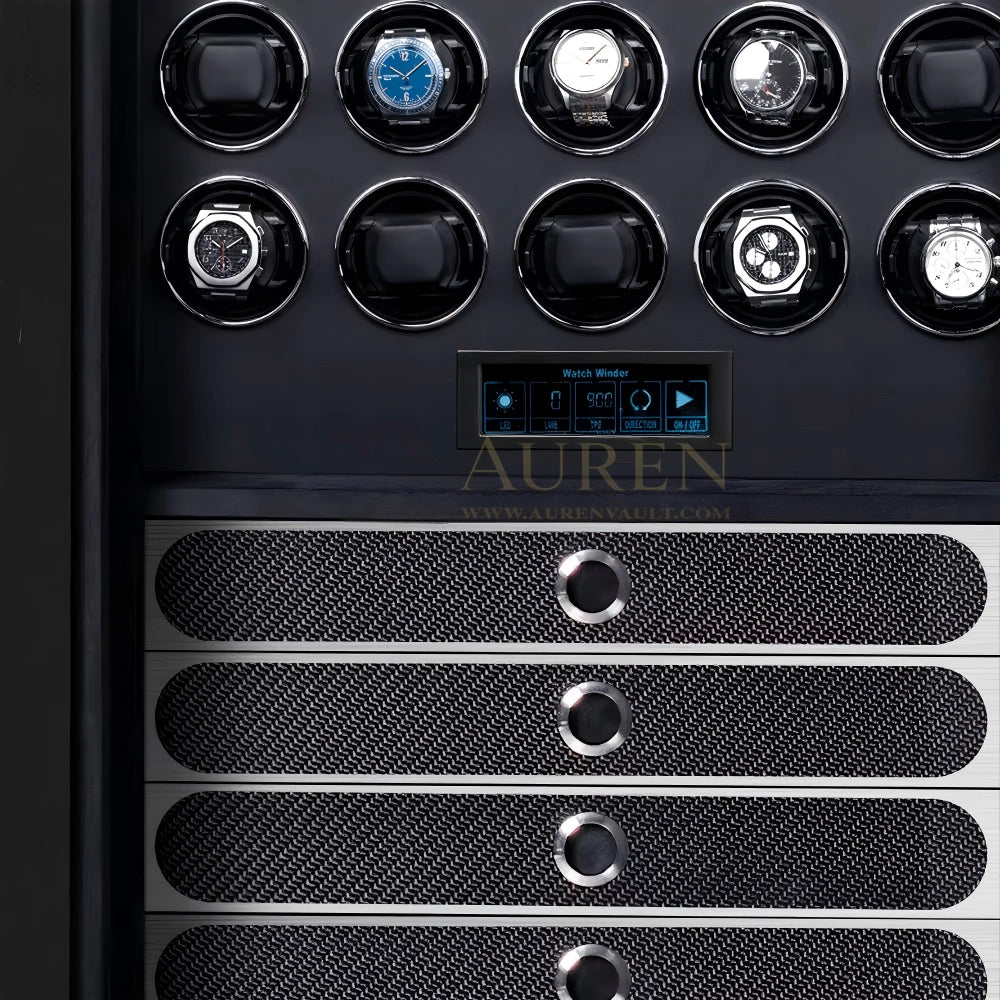
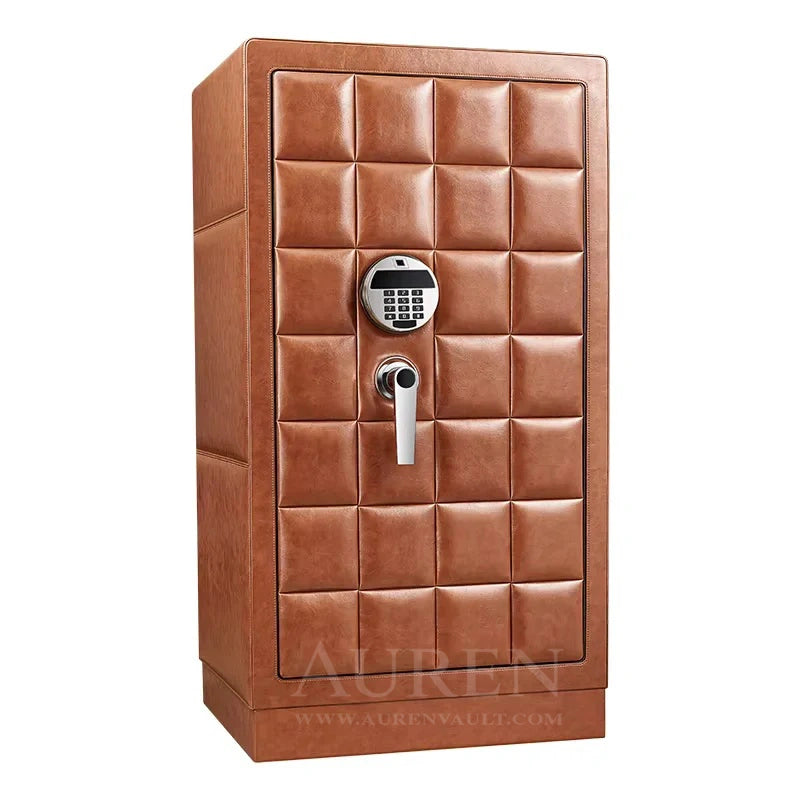
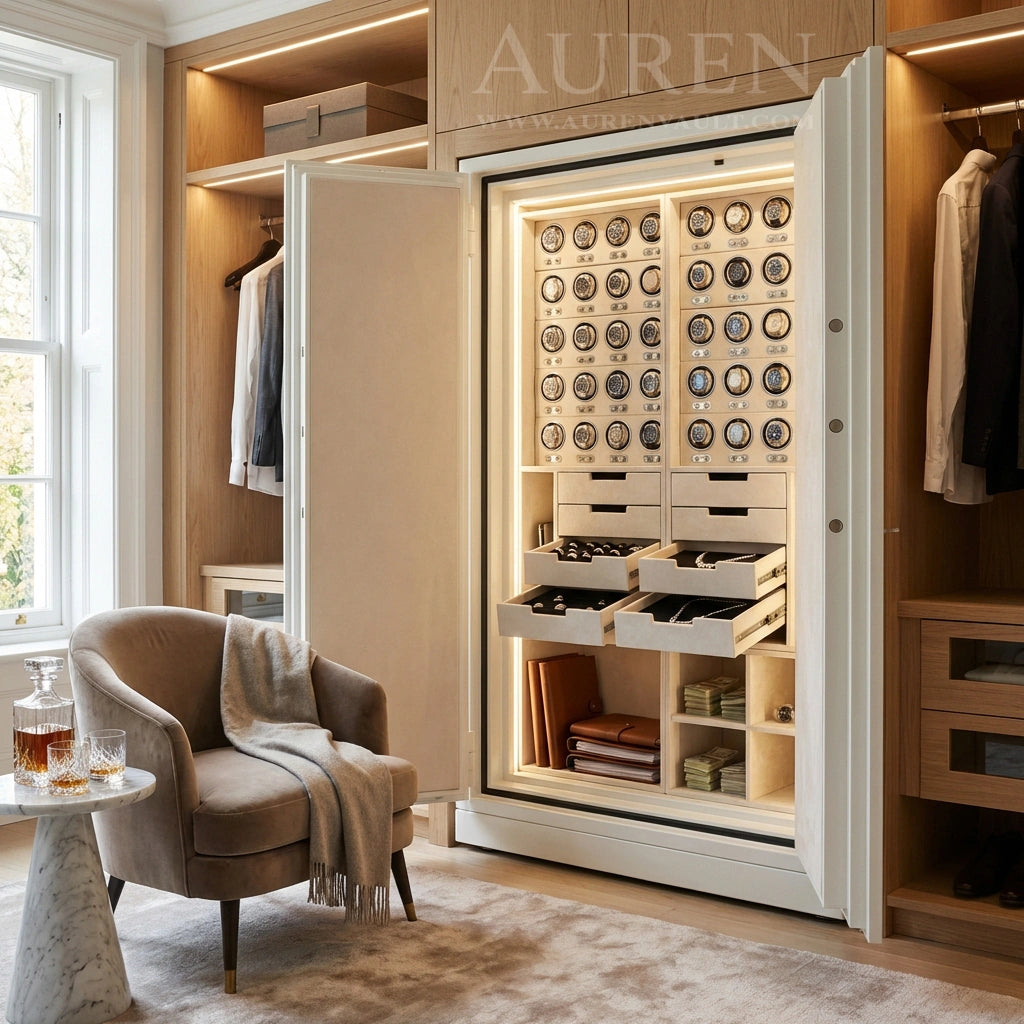
An integrated watch winder safe combines winding positions with an enclosed, lockable cabinet.
The latter may be relevant when valuable watches spend substantial time away from the wrist.
| Collection profile | Suitable arrangement | Main priority |
|---|---|---|
| One frequently worn Laureato | No winder or compact programmable unit | Convenience |
| Two or three automatic Laureato models | Individually adjustable multi-watch winder | Calibre-specific programs |
| Laureato and Neo Bridges collection | Separate programmable modules | Different winding architectures |
| Automatic and manually wound Bridges collection | Active winding plus passive storage | Correct movement allocation |
| Larger high-value collection | Appropriately specified watch winder safe | Organization and enclosed protection |
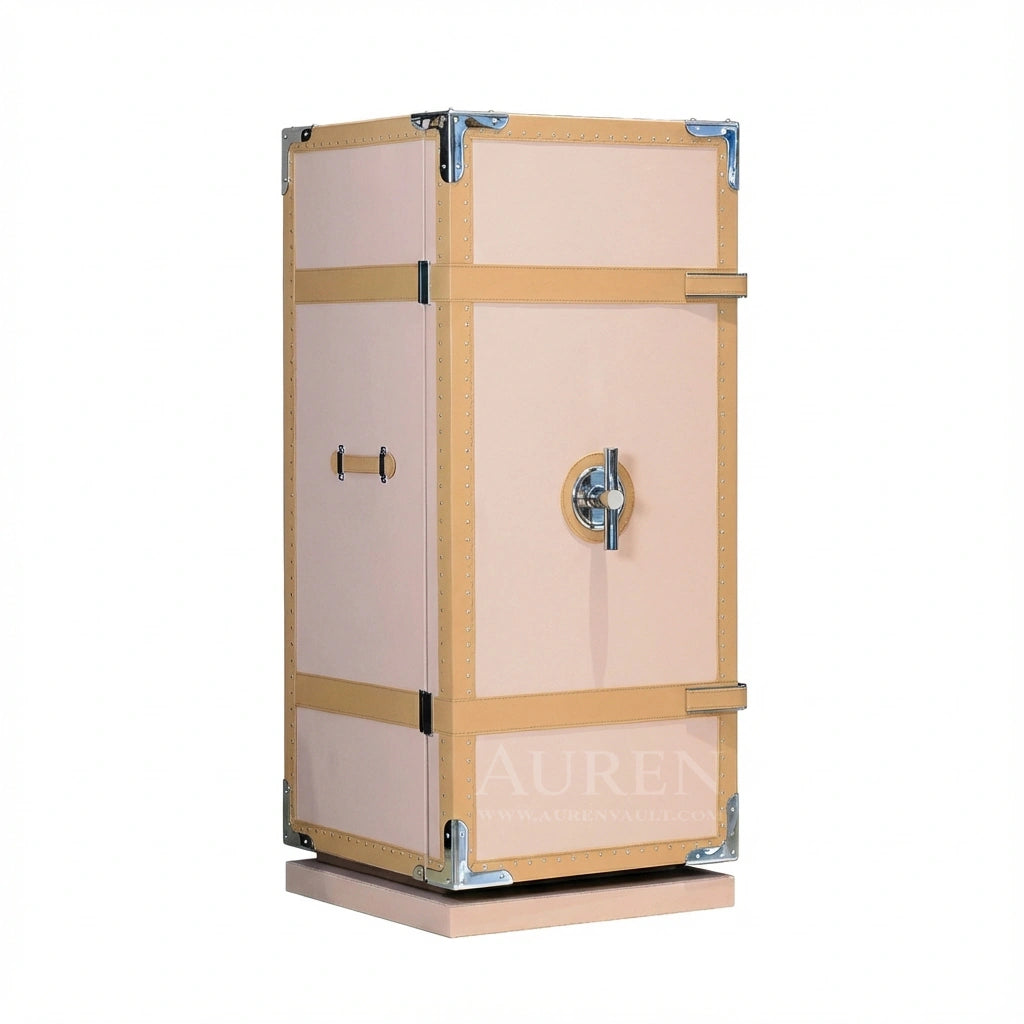
Collectors exploring an integrated solution can compare watch winder safes designed to combine automatic winding with enclosed storage.
For a broader understanding of the relationship between safe construction and automatic winding, the watch winder safe guide provides a relevant starting point.
A critical distinction remains: a lockable cabinet does not automatically establish a certified level of burglary or fire resistance.
Such claims must be supported by the actual safe's documented construction, testing, and specifications.
A reliable winding system and a suitably rated protective enclosure should be evaluated independently.
Planning Storage for a Mixed Girard-Perregaux Collection
Imagine a collection containing two Laureato 42 mm watches, a Laureato Chronograph, a Neo Bridges, a Tourbillon with Three Flying Bridges, and a Neo Constant Escapement.
That is a six-watch collection.
Only five of those watches use automatic movements.
The Neo Constant Escapement is manually wound and needs passive storage rather than an active rotor.
An arrangement with five individually programmed winding positions and one protective compartment may therefore be more appropriate than a six-rotor cabinet.
The broader selection of watch safes for collectors provides options for considering total capacity and interior organization.
For substantial holdings, larger luxury watch safe configurations may offer additional capacity for watches, straps, and accessories.
The relevant measurement is not simply the number of watches owned.
It is the number of automatic watches that benefit from winding, together with the total protective storage required.
When Bespoke Storage Becomes Relevant
Girard-Perregaux collections can contain compact Laureato models, integrated sports chronographs, and substantial 44–45 mm Bridges watches.
These pieces have different physical dimensions and support requirements.
A cabinet with identical holders may not accommodate the entire collection equally well.
A more considered arrangement can distinguish between large and small watch cushions, automatic winding modules, and passive storage compartments.
Such requirements can be considered through custom watch safe design options, subject to the technical capabilities of the selected configuration.
For a private residence or dedicated watch room, planning should also include cabinet dimensions, electrical access, delivery requirements, and convenient day-to-day use.
A successful layout should provide appropriate support and easy access without unnecessary handling.
Does a Girard-Perregaux Need to Remain Wound Continuously?
No. Automatic Girard-Perregaux watches do not have to run continuously.
An automatic movement can receive energy through normal wrist motion and gradually stop when it remains unworn.
That is a normal aspect of mechanical watch ownership.
A watch winder is useful when the owner prefers the watch to remain operational between wears.
It does not renew lubricants, correct worn components, or replace manufacturer-recommended servicing.
For watches kept unused over longer periods, suitable storage conditions and careful physical support may be more important than maintaining rotation.
The watch storage guide addresses broader considerations for organizing and protecting mechanical timepieces.
The decision should reflect the movement and the owner's routine—not the assumption that every expensive watch needs constant motion.
Frequently Asked Questions About Girard-Perregaux Watch Winders
What is the best TPD for Girard-Perregaux watches?
There is no universal TPD setting for every Girard-Perregaux. Independent databases commonly recommend approximately 500 TPD counterclockwise for many older GP3000 and GP3300 movements. Other calibres use different programs. Confirm the setting for the exact movement and external winder.
Does a Girard-Perregaux Laureato need a watch winder?
No. Automatic Laureato watches receive winding energy through ordinary wrist movement. A compatible winder is optional and primarily useful when the watch is worn intermittently.
What winding direction is recommended for the GP03300?
Independent movement databases frequently list counterclockwise rotation at approximately 500 TPD for the GP3300 family. This should be treated as third-party guidance, not a universal official specification for every contemporary GP03300 variant.
Can the GP01800 use the same settings as the GP03300?
Not automatically. They are different movement families. A program suggested for GP03300 should not be transferred to GP01800 without confirming its winding requirements.
Can Girard-Perregaux Neo Bridges use a watch winder?
Yes. The Neo Bridges with calibre GP08400 is an automatic micro-rotor watch. A compatible winder can maintain its reserve, but its TPD and direction should be verified for the specific calibre.
Does the Tourbillon with Three Flying Bridges need a special winder?
The GP09400 is automatic and may be used with an appropriately configured winder. The presence of a tourbillon does not itself establish a unique external TPD requirement. Movement compatibility and secure physical support remain the priorities.
Can the Neo Constant Escapement use a watch winder?
No. The GP09200 Neo Constant Escapement is manually wound, despite its sophisticated silicon constant-force mechanism and seven-day reserve. It requires manual winding according to the manufacturer's instructions.
Is 650 TPD bidirectional suitable for every Girard-Perregaux?
No. Independent movement references list counterclockwise programs around 500 TPD for numerous historical Girard-Perregaux calibres. Other movement families have different settings. A generic 650 TPD bidirectional preset is not an appropriate universal recommendation.
Can a watch winder damage a Girard-Perregaux?
A compatible, correctly programmed winder with suitable physical support should be appropriate for an automatic movement. Incorrect settings, poor holder fit, defective equipment, or improper handling may cause problems. A winder does not replace servicing or professional inspection.
Is a watch winder safe worthwhile for a Girard-Perregaux collection?
It may be useful for owners who want automatic winding and enclosed protective storage together. The decision should account for automatic versus manually wound movements, collection capacity, physical fit, and the safe's documented security specifications.
Related Reading: Winding Technology and Collection Protection
Girard-Perregaux's conventional automatic movements, micro-rotor systems, and manually wound complications illustrate why winding requirements vary across luxury watchmaking.
Best Watch Winder for Vacheron Constantin Watches
Explore movement compatibility, TPD considerations, and storage requirements for Vacheron Constantin automatic watches.
Best Watch Winder for Richard Mille Watches
Compare specialized rotor systems and movement-specific winding considerations in contemporary mechanical watchmaking.
Watch Safes With Built-In Watch Winders: Are They Worth It?
Learn when combining automatic winding modules with protective watch storage makes sense for larger collections.
Final Perspective: The Right Winder Respects the Calibre
Girard-Perregaux's movement diversity makes it particularly important to distinguish between appearance, mechanical complexity, and automatic winding compatibility.
The Laureato 42 mm with GP01800, the Laureato 38 mm with GP03300, and the Neo Bridges with GP08400 are all automatic, yet they use different movement architectures.
The Tourbillon with Three Flying Bridges can also benefit from automatic winding, while the Neo Constant Escapement cannot.
For an individual automatic watch, correct winding direction, appropriate TPD, reliable operation, and secure physical support should guide the decision.
For larger collections, independently programmable modules and well-organized protective storage become increasingly valuable.
As a specialist in premium watch safes and integrated winding solutions, Auren Vault approaches these needs through configurations intended to support movement compatibility, collection organization, and enclosed protection.
The best watch winder for Girard-Perregaux is the one that maintains the specific movement's operating reserve reliably and fits the watch and owner's routine—without unnecessary complexity.