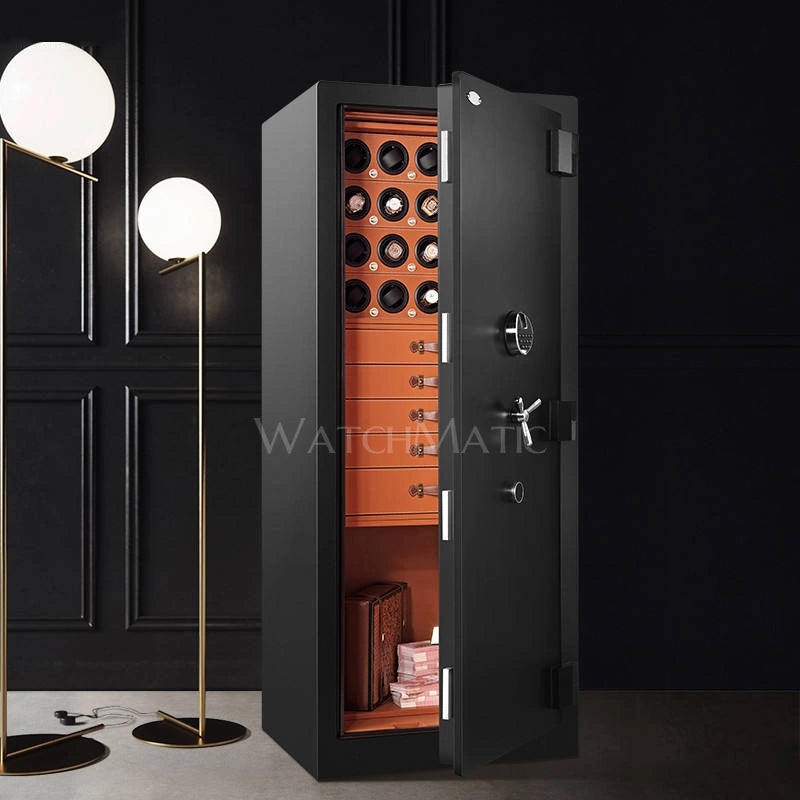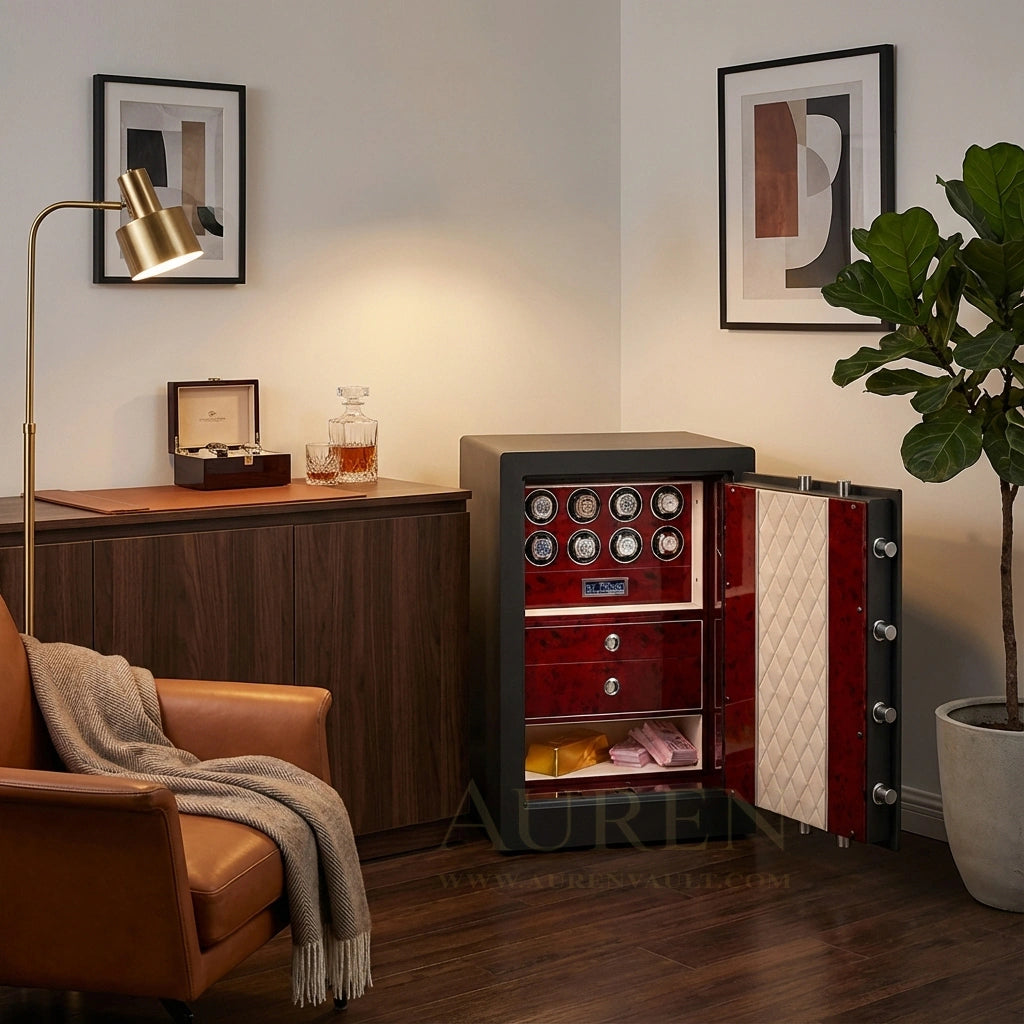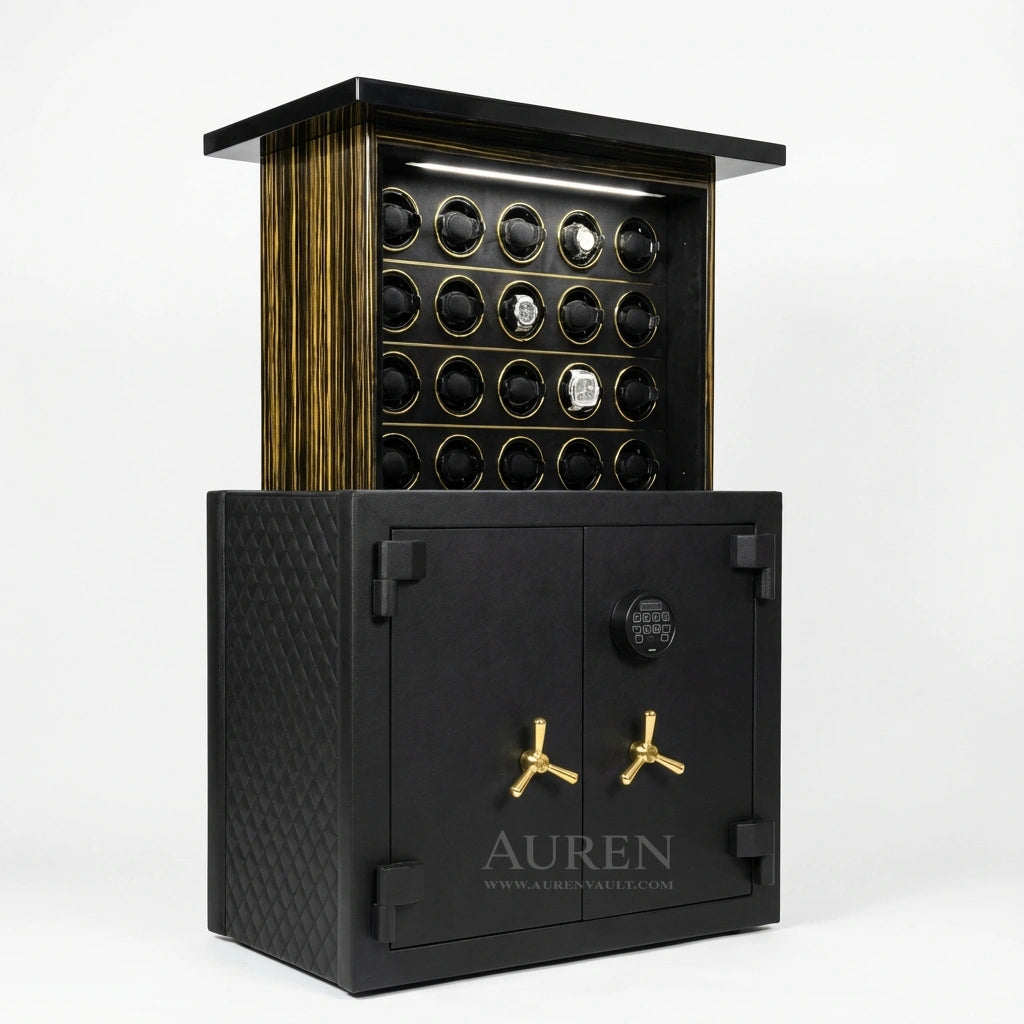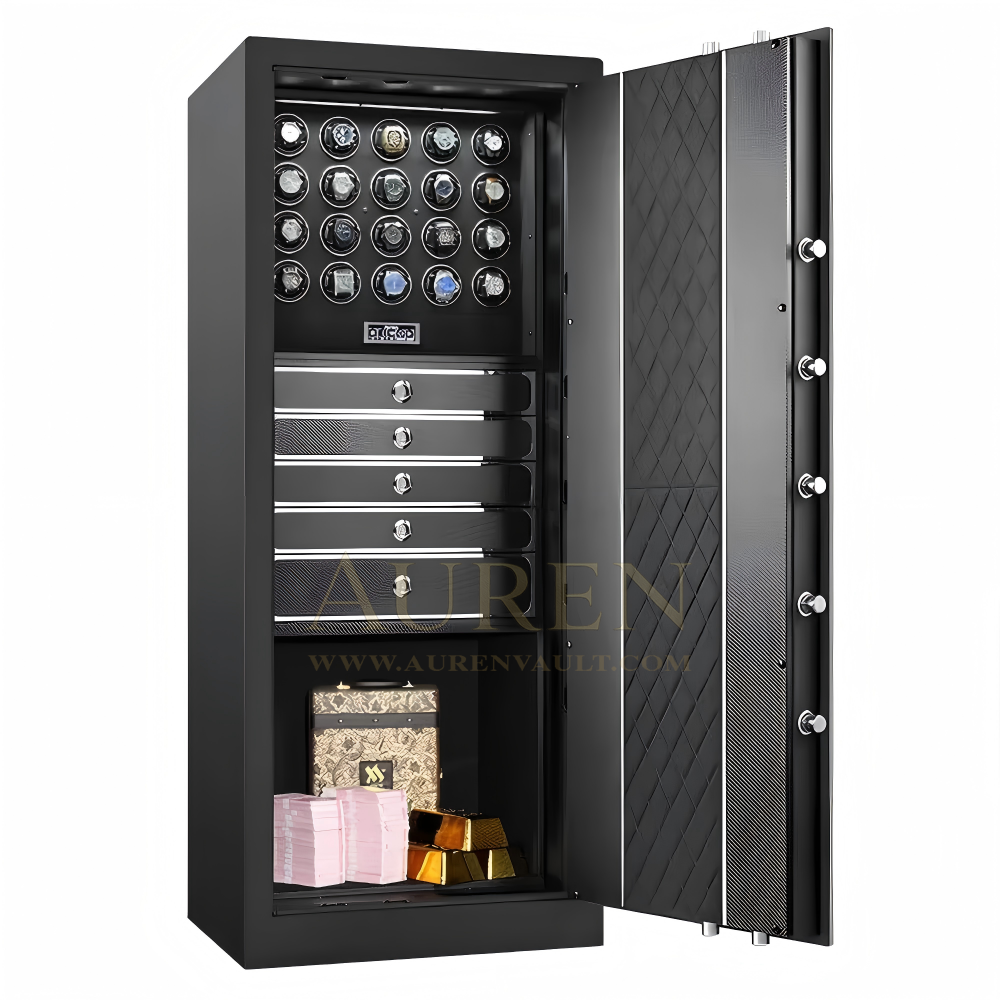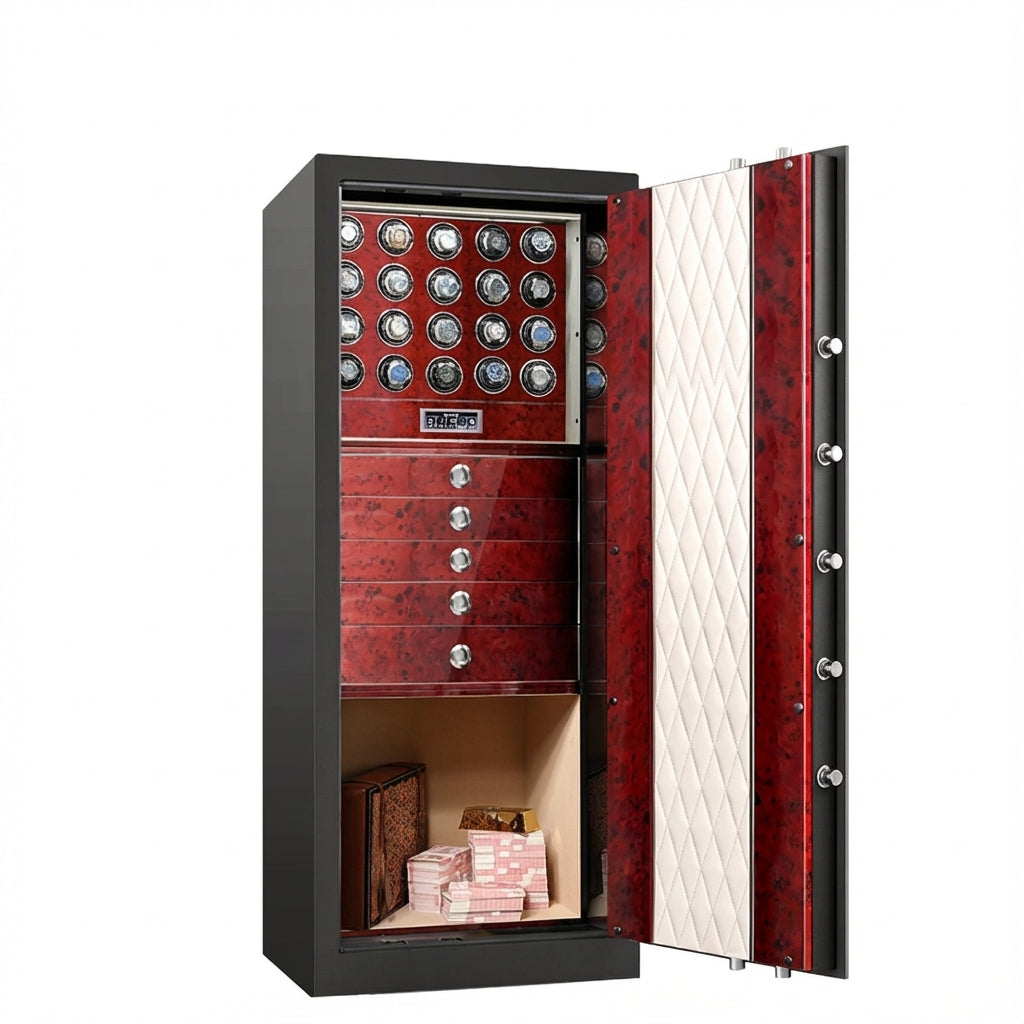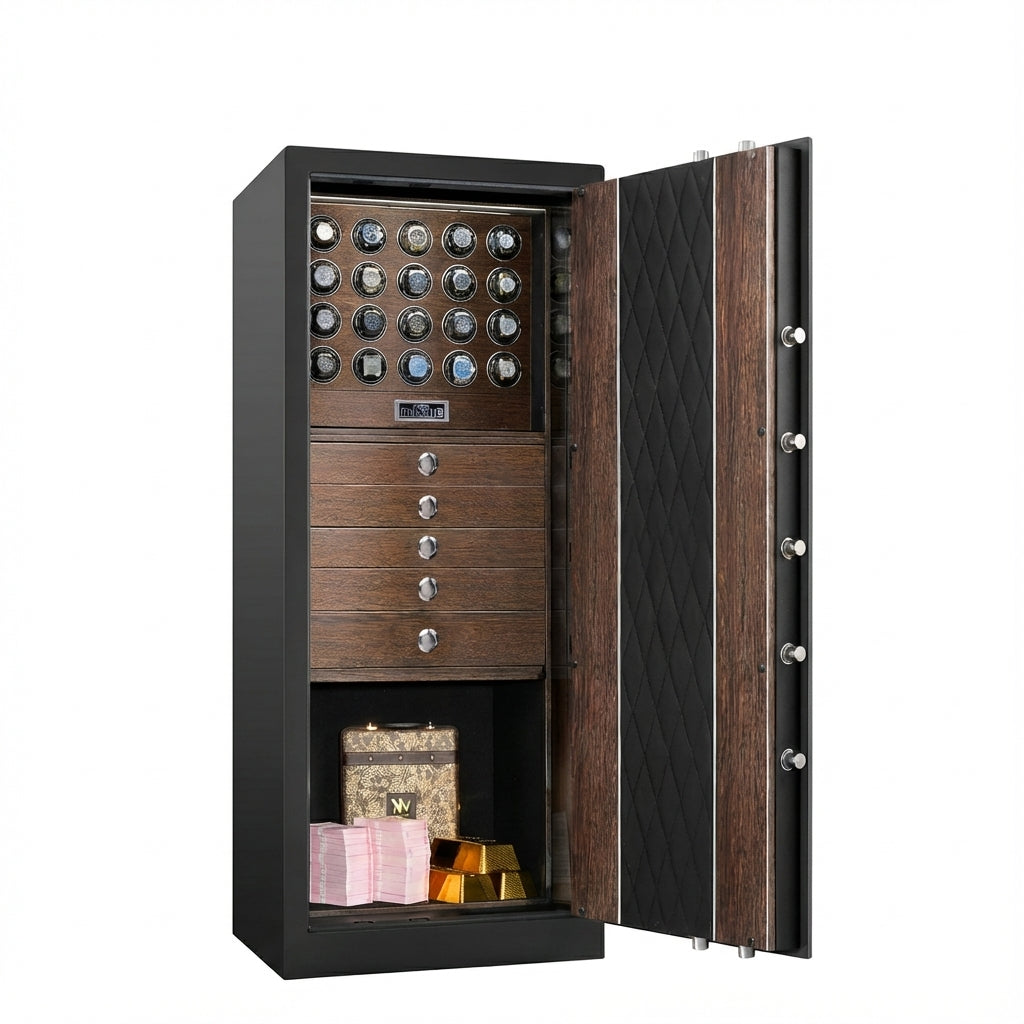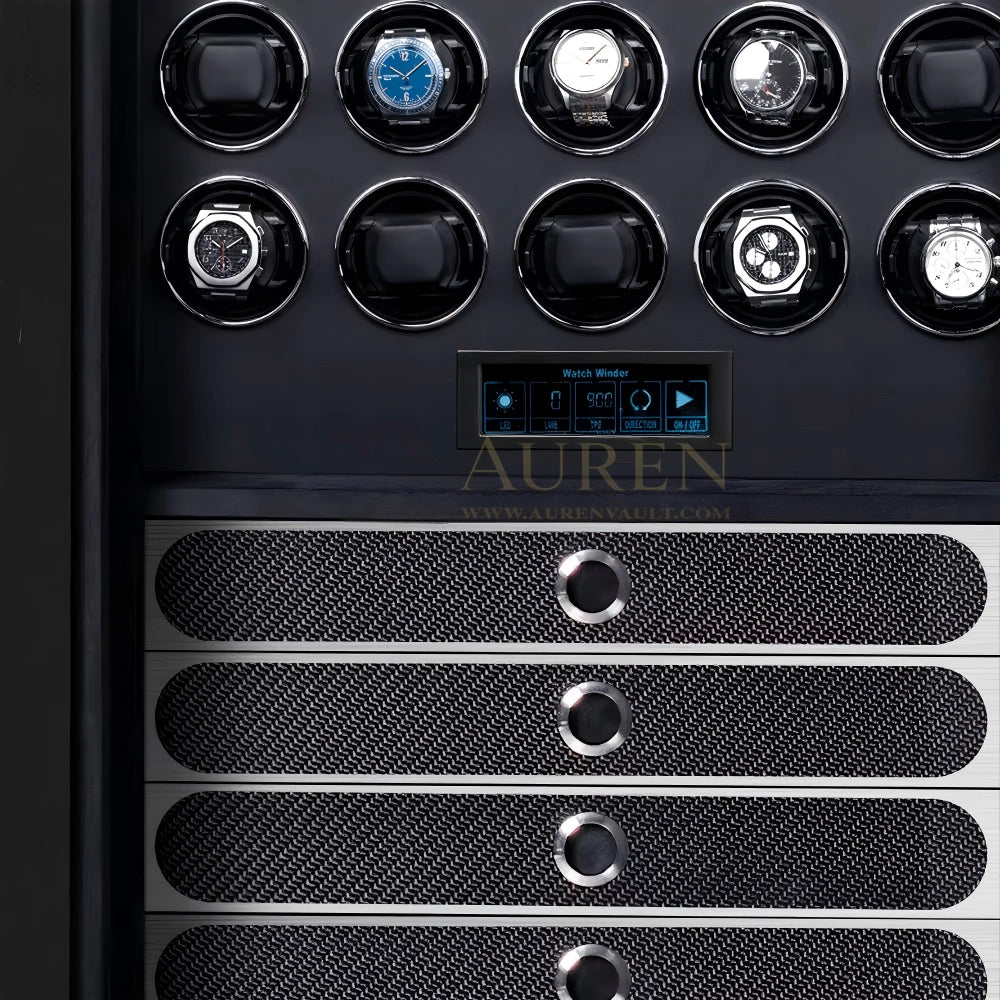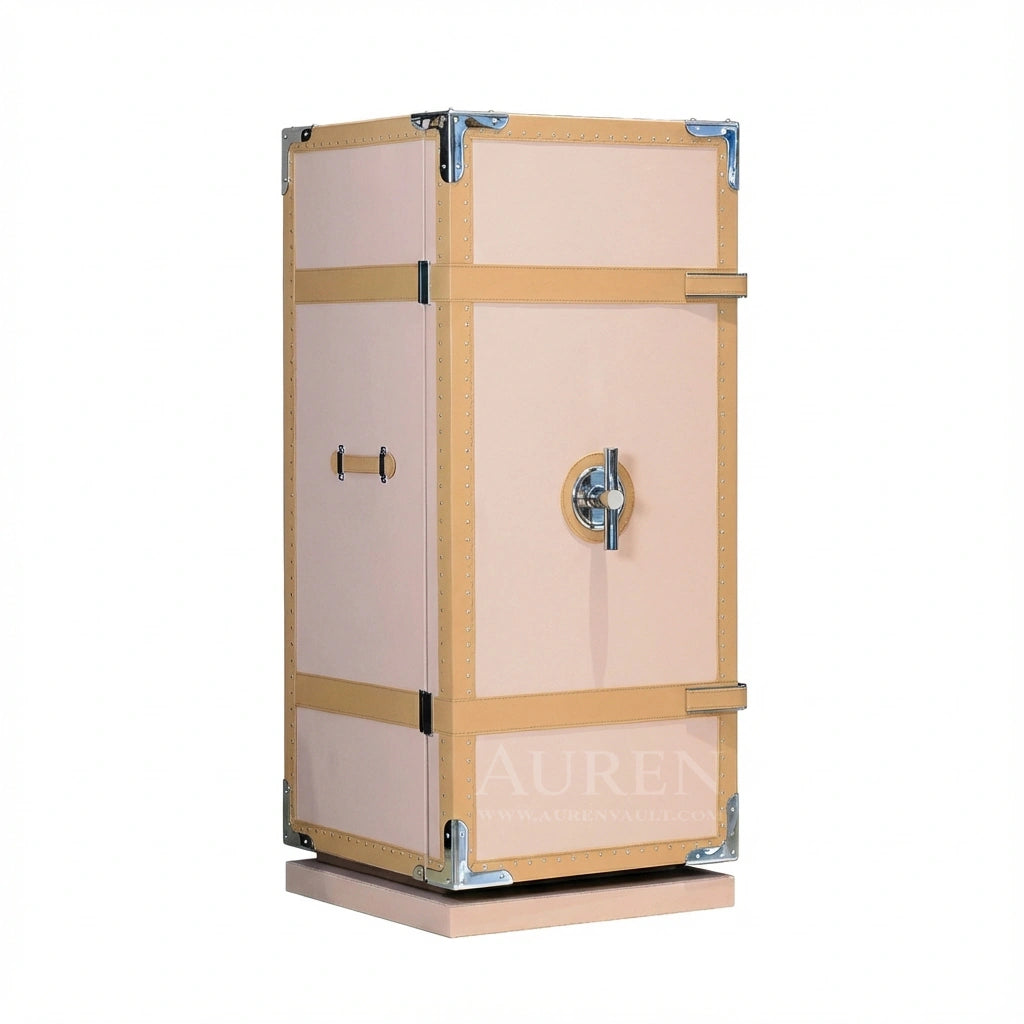

The best watch winder for Franck Muller watches is a programmable unit that supports adjustable turns per day (TPD), selectable winding direction, and secure mounting for the brand's distinctive curved cases and integrated straps.
Many automatic Franck Muller watches can benefit from a winder, including selected Vanguard, Cintrée Curvex, Crazy Hours, and Master Banker references. Independent winding databases commonly suggest approximately 650–820 TPD, but the appropriate direction and rotation count vary by model and movement. These figures are not universal manufacturer-approved settings.
Movement identification is essential. The Vanguard Classic can use an automatic calibre such as FM 800-DT, while the Vanguard 7 Day Skeleton is manually wound. Some smaller Vanguard references are quartz-powered and do not require winding.
Franck Muller's tonneau-shaped cases also deserve particular attention. A suitable winder must support the watch securely without excessive pressure on its curved case or strap.
For larger collections, individually programmable winding modules and protective storage provide additional flexibility.
Why Franck Muller Watch Winder Selection Is Different
Franck Muller is recognized for distinctive watch design, unconventional complications, and a strong emphasis on mechanical creativity.
The brand's signature Cintrée Curvex case curves around the wrist, while the contemporary Vanguard collection offers a more architectural interpretation of the tonneau shape.
These designs create a physical consideration that conventional round-case watch winder guides often overlook.
A Franck Muller may be more challenging to mount securely on a rigid watch cushion, particularly when its curved case is paired with an integrated strap.
However, case shape is only part of the decision.
The manufacturer also produces movements with different winding architectures.
A Vanguard Classic may contain a conventional automatic calibre with a bidirectional rotor. A Crazy Hours model uses an automatic movement with a jumping-hour complication. The Grand Central Tourbillon combines automatic winding with an eccentric micro-rotor.
Other watches, including the Vanguard 7 Day Skeleton and certain tourbillon references, require manual winding.
These differences cannot be addressed through a single brand-wide TPD recommendation.
The first priority is identifying the exact calibre. The second is selecting a winder that physically accommodates the watch.
Both requirements must be satisfied.
Which Franck Muller Watches Can Use a Watch Winder?
Franck Muller manufactures automatic, manual-winding, and quartz watches.
Even models within the same collection may use different movements or power reserves.
The following table compares representative references using manufacturer-published specifications.
Franck Muller Movement Compatibility Guide
| Watch or reference | Calibre | Movement type | Power reserve | Winder suitability |
|---|---|---|---|---|
| Vanguard Classic V 41 SC DT | FM 800-DT | Automatic, bidirectional rotor | 42 hours | Yes |
| Vanguard Classic V 45 SC DT | FM 2536-SCDT | Automatic, bidirectional rotor | 42 hours | Yes |
| Vanguard Crazy Hours V 45 CH | FM 2800-CHRS | Automatic, bidirectional rotor | 42 hours | Yes |
| Cintrée Curvex Classic 5850 SC | FM 800 | Automatic, bidirectional rotor | 42 hours | Yes |
| Vanguard Slim, selected references | FM 708 | Automatic | 38 hours | Yes |
| Vanguard Master Banker | FM 2800-MBSCDTSQT | Automatic, bidirectional rotor | 42 hours | Yes |
| Curvex CX Grand Central Tourbillon | FM CX 40T-CTR | Automatic micro-rotor | 4 days | Yes, with verified settings |
| Vanguard 7 Day Skeleton | FM 1740-VS | Manual-winding | 7 days | No |
| Vanguard Gravity | FM CS-03 | Manual-winding | 5 days | No |
| Vanguard Classic V 35 QZ | FM 1321-QZ | Quartz | Battery-powered | No |
Specifications refer to representative models and references. Franck Muller has produced numerous variations, so the exact movement must be verified before selecting a winding program.
Two important conclusions emerge.
First, the same collection can contain watches with different winding mechanisms.
Second, a longer power reserve does not necessarily make a watch suitable for automatic winding.
The manually wound Vanguard 7 Day Skeleton runs for considerably longer than many automatic Vanguard watches, but it cannot receive energy through a conventional watch winder.
The movement's winding architecture—not its power reserve—determines compatibility.
Vanguard Classic: Choosing Settings for Everyday Automatic Models
The Vanguard Classic is one of the most practical starting points for a Franck Muller watch winder.
Many contemporary references contain conventional automatic movements with bidirectional rotor systems.
For example, the Vanguard Classic V 41 SC DT uses calibre FM 800-DT, which offers approximately 42 hours of power reserve.
Other larger Vanguard Classic references contain FM 2536-SCDT, another self-winding calibre with a 42-hour reserve.
Both can benefit from a compatible watch winder.
However, their movement designations are different, and neither should automatically receive a preset intended for an older Vanguard reference.
Does a 42-Hour Vanguard Need a Winder?
A 42-hour power reserve provides less flexibility between wears than the three-day or five-day reserves found in some contemporary automatic watches.
If a Vanguard is removed on Friday evening, it may stop before Monday morning unless it receives additional winding energy.
For an owner who rotates several watches throughout the week, this can make a winder convenient.
The benefit is straightforward: the watch remains operational, reducing the need to reset its time and date.
However, a winder is not essential for someone who wears the same Vanguard every day.
The automatic movement receives energy through ordinary wrist motion, provided the watch is worn sufficiently to maintain its reserve.
The device is a convenience accessory rather than a mechanical requirement.
Vanguard Slim: Not Every Reference Has the Same Movement
The Vanguard Slim deserves separate consideration.
Selected references use calibre FM 708, a self-winding movement with approximately 38 hours of reserve.
Other Vanguard Slim references use FM 2250-V, an automatic movement offering approximately 60 hours.
This demonstrates why collection names alone are insufficient for determining a winding program.
Both watches are automatic, but their movement architectures and operating reserves differ.
The correct settings should be established using the precise reference rather than assuming every Vanguard Slim is mechanically identical.
Cintrée Curvex: Automatic Winding in an Unusual Case
The Cintrée Curvex is among Franck Muller's most distinctive designs.
Its elongated tonneau case curves in multiple directions, creating a recognizable silhouette that follows the wrist.
That ergonomic design also affects how the watch rests in a winding holder.
Representative Cintrée Curvex Classic models use automatic calibres including FM 800, FM 800-DT, and FM 2800-SC.
Several of these movements provide approximately 42 hours of reserve.
The manufacturer describes them as using bidirectional rotor systems.
A compatible winder can therefore maintain their power reserves between wears.
However, identifying the calibre remains important.
An older Cintrée Curvex Casablanca and a contemporary Cintrée Curvex Classic may look broadly similar while containing different movements.
A winding recommendation for one should not automatically be transferred to the other.
Why the Curved Case Needs a Better Cushion
A rigid watch cushion is often designed around the shape of an ordinary round watch with a conventional bracelet.
The Cintrée Curvex presents a different geometry.
Its elongated case and curved back affect how the watch sits against the holder.
A cushion that is too large may force the strap into an excessively tight position.
A cushion that is too small may allow the watch to move during rotation.
An adjustable or removable holder is preferable.
The watch should rest securely, with support provided through the strap or bracelet rather than concentrated pressure against the case edges.
The crown must also have sufficient clearance inside the winding compartment.
This consideration becomes particularly important for larger Cintrée Curvex references.
A good watch winder must accommodate both the calibre and the physical shape of the watch.
Franck Muller Crazy Hours: Does the Jumping-Hour Mechanism Change TPD?
Crazy Hours is one of the most recognizable complications associated with Franck Muller.
Instead of displaying the hour numerals in their conventional sequence around the dial, Crazy Hours places them in an unconventional order.
The hour hand jumps to the appropriate next numeral when the hour changes, while the minute hand completes a normal 60-minute cycle.
The result is an unusual display that requires a moment of familiarity but still indicates conventional time.
The mechanism is distinctive.
Its automatic winding requirements, however, should not be inferred from how the dial works.
Vanguard Crazy Hours: Calibre FM 2800-CHRS
A representative Vanguard Crazy Hours reference uses calibre FM 2800-CHRS.
Franck Muller specifies a bidirectional automatic rotor system and approximately 42 hours of power reserve.
That means a correctly configured external winder can maintain its stored energy between wears.
The jumping-hour mechanism does not need to be activated by the winder.
It operates through the movement's internal gear train as the watch keeps time.
A conventional winder only supplies the motion necessary for automatic winding.
It does not advance the hour hand directly, control the jumping mechanism, or adjust the display.
Why Continuous Operation Can Be Convenient
When a Crazy Hours watch stops, its indications must be reset according to the manufacturer's instructions.
Because the hour numerals appear in an unconventional sequence, setting the watch may require greater familiarity than adjusting a simple three-hand model.
Keeping an automatic Crazy Hours running between occasional wears can therefore be convenient.
The benefit is reduced resetting rather than improved operation of the jumping-hour mechanism.
A winder does not make the hour jumps more accurate or alter the complication's designed behavior.
It simply helps maintain the movement's power reserve.
Is 650 TPD Bidirectional Suitable for Crazy Hours?
Independent winding databases commonly list approximately 650 TPD with bidirectional rotation for certain Cintrée Curvex and Long Island Crazy Hours models.
This is a useful reference, but it should not automatically be applied to every Crazy Hours reference.
The Vanguard Crazy Hours uses an identified automatic calibre, while older Crazy Hours models may contain different movement versions.
Consequently, the external winding settings should be confirmed using the exact watch reference.
The important distinction is between a published model-based recommendation and a verified instruction for the individual movement.
Franck Muller Watch Winder Settings: TPD and Direction
Two specifications determine the basic operation of a programmable watch winder.
Turns per day (TPD) measures how many rotations the device performs over a 24-hour period.
Winding direction determines whether those rotations occur clockwise, counterclockwise, or alternate between both directions.
The ideal program supplies sufficient effective winding to maintain the watch's reserve without unnecessary motion.
For Franck Muller, published third-party winding databases often suggest approximately 650–820 TPD.
However, the recommendations differ considerably by model.
Franck Muller TPD Reference Table
| Model or movement family | Third-party TPD reference | External winding direction | Important limitation |
|---|---|---|---|
| Cintrée Curvex Casablanca | 820 | Clockwise | Historical model-based listing |
| Cintrée Curvex Casablanca Chronograph | 800 | Clockwise | Verify the specific movement |
| Cintrée Curvex Crazy Hours | 650 | Bidirectional | Do not assume every Crazy Hours uses the same calibre |
| Cintrée Curvex Grand Guichet | 820 | Clockwise | Historical reference |
| Long Island Crazy Hours | 650 | Bidirectional | Reference-specific confirmation needed |
| Long Island Master Calendar | 820 | Clockwise | Historical model-based listing |
| Master Banker, selected older variants | 650 | Bidirectional | Not universal for newer Master Banker calibres |
| Transamerica Sportsgeist, Valjoux 7750 variant | 800 | Clockwise | Specific movement-family recommendation |
| Vanguard Classic FM 800-DT | Not independently verified here | Rotor is bidirectional; external program requires confirmation | Do not infer TPD from another model |
| Vanguard Crazy Hours FM 2800-CHRS | Not independently verified here | Rotor is bidirectional; external program requires confirmation | Do not automatically copy older Crazy Hours presets |
| Grand Central Tourbillon FM CX 40T-CTR | Not independently verified here | Verify | Specialized micro-rotor construction |
These values come from independent winding databases, not official Franck Muller TPD documentation. Historical settings should not automatically be transferred to current references.
Why Some References Say Clockwise While the Manufacturer Says Bidirectional
This is an important technical distinction.
Franck Muller describes several modern calibres, including FM 800-DT and FM 2800-CHRS, as having bidirectional rotor systems.
Meanwhile, some independent winding databases recommend clockwise external rotation for particular older Franck Muller models.
These statements do not necessarily contradict each other.
The direction of the internal rotor's winding action and the direction in which an external device rotates the complete watch are different specifications.
The internal rotor moves relative to the watch.
The external winder changes the orientation of the entire case.
The effectiveness of that motion also depends on the movement's winding transmission and the device's rotation schedule.
For this reason, the manufacturer's description of a bidirectional rotor should not automatically be converted into a specific external TPD program.
A compatible device should offer clockwise, counterclockwise, and alternating rotation modes.
The correct setting should then be selected using movement-specific guidance.
Should You Choose 650, 800, or 820 TPD?
The answer depends on the exact calibre.
A 650 TPD bidirectional setting appears in independent references for several Crazy Hours and Master Banker models.
Other older Cintrée Curvex references are listed around 800–820 TPD clockwise.
These differences make a single brand-wide recommendation inappropriate.
A practical approach is to verify the movement, identify reliable guidance for that movement and winder combination, and select the corresponding program.
If the watch does not maintain its reserve, first check its initial winding state, direction setting, holder stability, and actual motor operation.
Do not assume that selecting the highest available TPD will solve the issue.
The watch TPD guide provides additional context for understanding the relationship between daily rotations, direction, and rest cycles.
Master Banker: Why Multiple Time Zones Make a Winder More Useful
The Master Banker introduces another practical reason for keeping an automatic watch running.
Rather than displaying only one time zone, Master Banker models incorporate additional indications for monitoring time in different locations.
A representative Vanguard Master Banker uses calibre FM 2800-MBSCDTSQT.
Franck Muller specifies a self-winding movement with a bidirectional rotor and approximately 42 hours of reserve.
Other Master Banker references incorporate moon-phase, date, and additional calendar-related displays.
These complications make the movement more convenient to keep running between wears.
The Value of Maintaining Multiple Indications
When a simple automatic watch stops, resetting the time is generally straightforward.
A Master Banker may require additional adjustments to restore its different time-zone indications.
For models with a moon phase or date display, the procedure can be more involved.
A compatible winder helps reduce the frequency of those adjustments.
This is particularly useful for someone who travels regularly or alternates between several watches.
However, a winder does not automatically correct the displayed time zones.
It does not detect local time changes, adjust for daylight saving time, or operate the setting functions.
The watch must still be adjusted according to Franck Muller's operating instructions whenever necessary.
The benefit is maintaining movement operation, not automating the complication.
Moon-Phase Models Require Careful Setting
Certain Master Banker Lune references include a moon-phase indication alongside the additional time zones.
A winder may help preserve the display's continuity by keeping the movement running.
However, the owner should follow the model-specific setting procedure when adjustment becomes necessary.
Calendar and moon-phase mechanisms can have restricted correction periods depending on their construction.
A watch winder cannot eliminate those mechanical precautions.
For complicated watches, selecting a reliable winding program may be valuable, but correct handling remains essential.
Grand Central Tourbillon: An Automatic Tourbillon With a Micro-Rotor
Not every Franck Muller tourbillon is manually wound.
The Grand Central Tourbillon provides a significant example.
Representative Curvex CX models use calibre FM CX 40T-CTR, an automatic movement that incorporates an eccentric micro-rotor.
Franck Muller specifies approximately four days of power reserve.
The central tourbillon is a defining visual feature of the watch, while the micro-rotor supplies its automatic winding functionality.
These are different mechanical systems.
The tourbillon belongs to the regulating architecture.
The micro-rotor provides the motion needed to replenish the mainspring.
A compatible external watch winder can therefore help maintain the Grand Central Tourbillon's reserve between wears.
Does an Automatic Tourbillon Need a Special Winder?
The presence of a tourbillon does not independently establish a particular external winding program.
A tourbillon's rotation is controlled by the watch movement.
The external winder does not directly operate that mechanism.
Instead, it rotates the complete watch so that the automatic micro-rotor can perform its intended function.
The correct TPD and direction should be established specifically for the FM CX 40T-CTR.
The fact that a movement has a four-day reserve does not determine those settings.
Nor does the micro-rotor's compact design automatically mean that more daily rotations are required.
Winding efficiency depends on the complete mechanism.
For a high-complication watch, a stable, programmable winder with a well-fitting holder is more appropriate than a device selected solely for its appearance.
Vanguard Tourbillons and Skeleton Watches: Check for Manual Winding
Franck Muller also produces advanced mechanical watches that cannot benefit from conventional automatic winding.
The Vanguard 7 Day Skeleton is one example.
It uses calibre FM 1740-VS, a manually wound movement with two barrels and approximately seven days of reserve.
The Vanguard Gravity, powered by calibre FM CS-03 in representative references, is also manually wound and offers approximately five days of reserve.
Certain Vanguard Skeleton Tourbillon references similarly use manual-winding movements.
These watches should be stored in protective holders and wound according to the manufacturer's instructions.
Rotating them inside an automatic watch winder will not replenish their mainsprings.
This is why the term tourbillon cannot be used to determine automatic winding compatibility.
The Grand Central Tourbillon is automatic.
The Vanguard Gravity is manually wound.
Both are sophisticated mechanical watches, but only the automatic movement can benefit from a conventional winder.
What About Quartz Franck Muller Watches?
Some Franck Muller references use quartz movements.
For example, the Vanguard Classic V 35 QZ is available with calibre FM 1321-QZ.
Franck Muller identifies this as a battery-powered quartz movement with an estimated battery life of approximately four years.
It does not use an automatic winding rotor.
A conventional watch winder cannot recharge its battery or maintain its power source.
For quartz Franck Muller watches, an appropriate protective storage compartment is more useful than an active winding position.
This distinction is important when planning storage for a mixed collection that includes smaller quartz references and larger automatic models.
There is no reason to dedicate a rotating module to a watch that does not require mechanical winding.
The Tonneau Case Problem: How to Mount a Franck Muller Securely
The physical design of a watch winder matters particularly for Franck Muller.
Many Vanguard and Cintrée Curvex references have elongated, curved tonneau cases.
Some also use integrated straps that follow the shape of the case.
These features can make conventional rigid cushions less convenient.
Understand the Complete Case Dimensions
Watch dimensions should be considered in both width and length.
For example, certain Vanguard Classic references measure approximately 41 mm wide and almost 50 mm long.
Larger Vanguard models can measure around 44 mm wide and more than 53 mm long.
A winding compartment that accommodates a 44 mm round watch may not necessarily provide suitable clearance for a similarly wide tonneau watch with greater length.
The case should not contact the surrounding enclosure during rotation.
Adequate depth is also important, particularly for models with prominent crystals or crowns.
Choose a Cushion That Supports the Strap, Not the Case Edges
An oversized cushion can stretch a leather strap or place excessive tension on an integrated bracelet.
An undersized holder can allow the watch to move as the winding module rotates.
The ideal cushion should maintain stable support through appropriate contact points.
For Franck Muller, a removable or adjustable holder is particularly useful because it allows different case and strap configurations to be accommodated.
The watch should remain secure without the need to force the strap closed.
Check the Crown and Complication Controls
Certain Franck Muller references have additional correctors or controls for calendar and time-zone functions.
These should not be pressed accidentally when mounting the watch.
A winding compartment should provide sufficient clearance around the crown, correctors, and case edges.
This is particularly relevant for more complicated Master Banker and calendar references.
The best physical setup allows the watch to be mounted and removed with minimal handling.
How to Configure a Watch Winder for Franck Muller
Once the movement and holder are confirmed, the winding program can be established.
If an automatic Franck Muller has stopped, follow the manufacturer's instructions for initial winding and setting before mounting it.
An external watch winder is primarily intended to maintain stored energy.
It should not automatically be relied on to restart a completely depleted movement quickly.
For an automatic Vanguard or Cintrée Curvex, the basic process is:
-
Identify the reference and calibre. Confirm that the movement is automatic.
-
Verify TPD and direction. Use the exact movement's recommended external winding program.
-
Fit the watch securely. Ensure the curved case, crown, and strap have sufficient support and clearance.
-
Evaluate the result. Check whether the movement continues operating reliably over several days.
A watch that repeatedly stops may indicate insufficient initial winding, ineffective rotation direction, a defective winder, or an issue with the movement.
The next step should be diagnosis rather than an arbitrary increase in TPD.
Are Rest Cycles Necessary?
A properly designed winder usually distributes its rotations across periods of movement and rest.
The device does not need to rotate continuously to maintain an automatic movement.
Rest intervals allow the system to provide the programmed daily winding count without constant motion.
The precise schedule depends on the winder's design.
Motor reliability and accurate program execution are more important than an excessively high maximum rotation setting.
Can a Watch Winder Overwind a Franck Muller?
Modern automatic movements generally use mechanisms that limit additional mainspring tension once sufficiently wound.
However, that does not mean maximum external rotation is desirable.
The correct objective is to maintain an adequate reserve with an appropriate winding program.
Unnecessary rotation provides no clear advantage.
A compatible winder should be selected for reliable operation, secure watch support, and suitable settings—not for the highest available TPD.
Which Winder Configuration Makes Sense for Your Collection?
A single automatic Vanguard and a collection containing multiple complications have different storage needs.
For one frequently worn watch, a compact programmable winder may be sufficient.
For several automatic watches, independent settings become more important.
For a collection containing automatic, manual-winding, and quartz Franck Muller references, passive storage must also be considered.
| Collection profile | Suitable configuration | Main priority |
|---|---|---|
| One regularly worn Vanguard Classic | No winder or compact programmable unit | Convenience between wears |
| Cintrée Curvex and Crazy Hours collection | Multi-watch winder with independent settings | Movement compatibility and case support |
| Master Banker and other automatic complications | Reliable programmable winding modules | Reducing repeated setting |
| Automatic Grand Central Tourbillon | Calibre-verified programmable winder | Correct winding and careful handling |
| Manual Vanguard Skeleton and quartz models | Passive watch storage | Protection without unnecessary rotation |
| Larger mixed collection | Integrated winding and protective storage | Organization, capacity, and security |
The number of watches in a collection should not automatically determine the number of winding positions required.
Only compatible automatic watches benefit from active winding.
Standalone Watch Winder vs. Watch Winder Safe
A standalone watch winder focuses on maintaining automatic movement operation.
A watch winder safe combines that function with enclosed, lockable storage.
The distinction becomes more relevant when a collector owns several valuable watches that remain off the wrist for extended periods.
A conventional display winder may provide convenient access but typically offers limited resistance to unauthorized access.
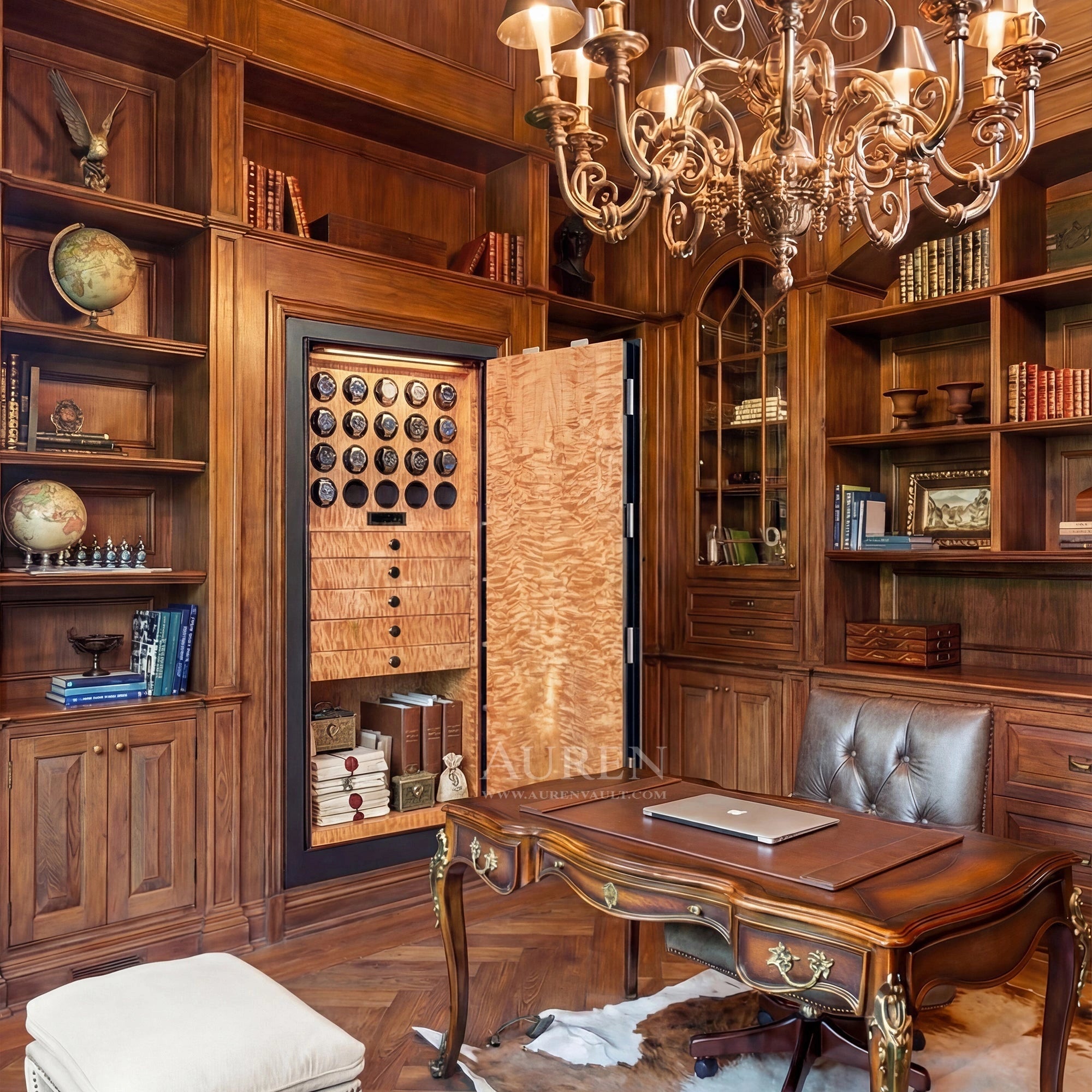
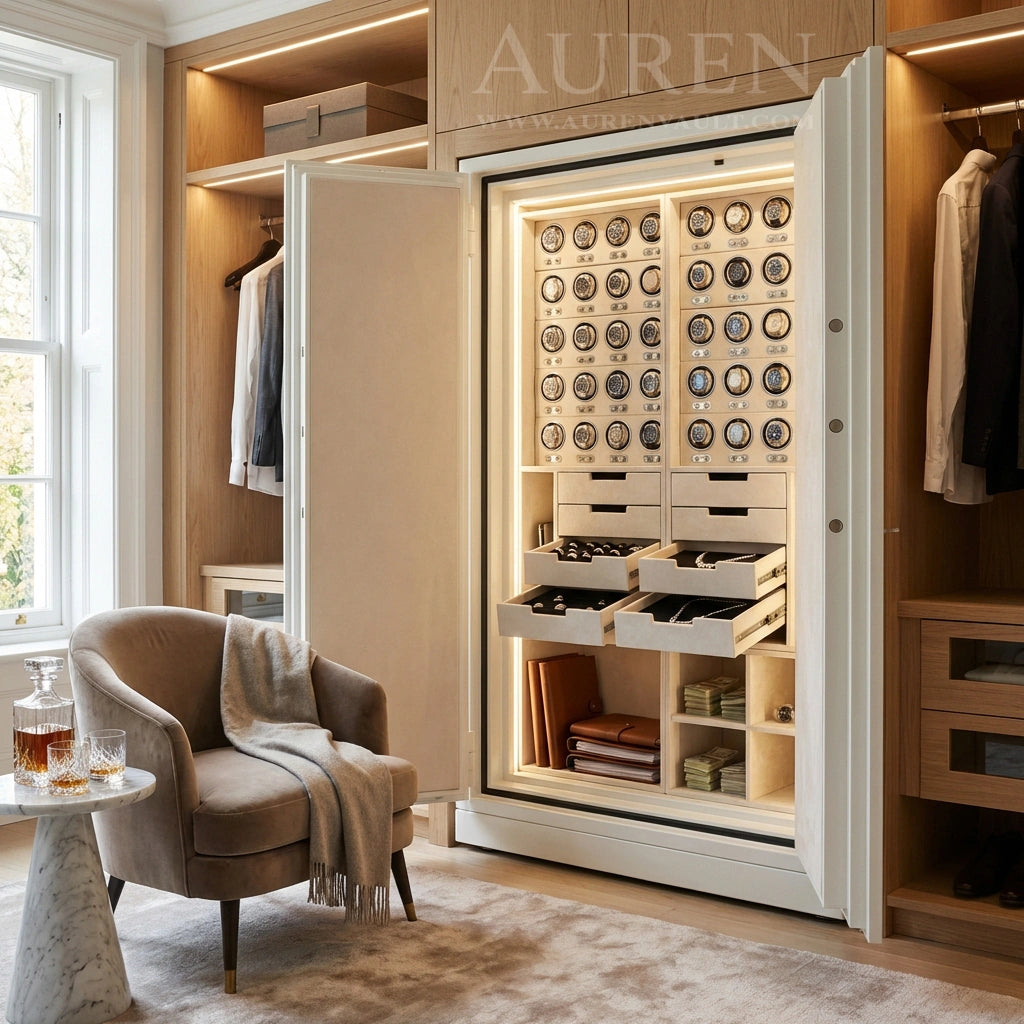
A properly specified watch winder safe can combine programmable winding modules with protective storage in one enclosure.
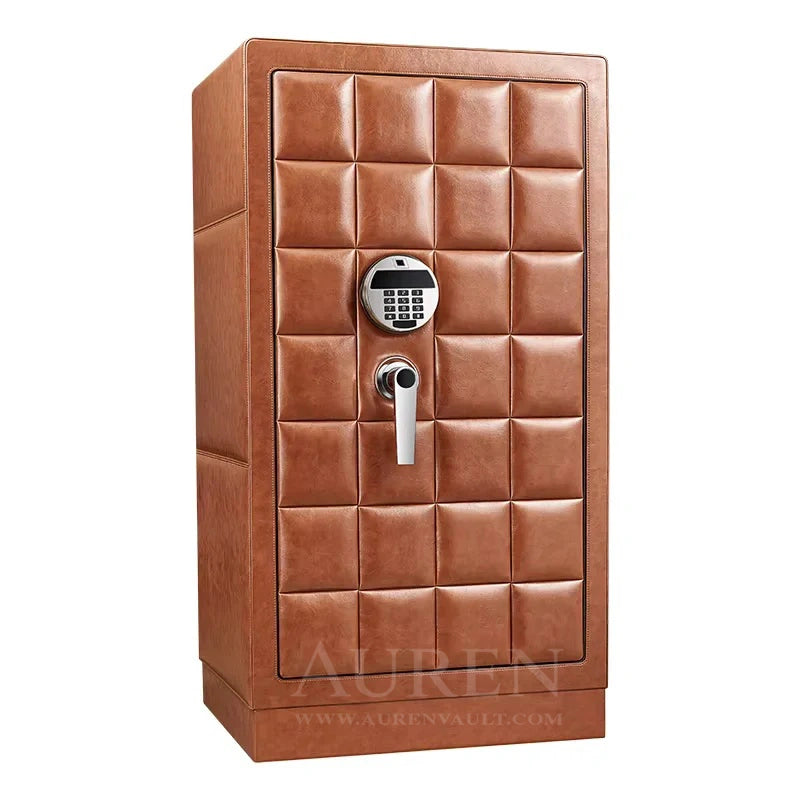
The range of integrated watch winder safes illustrates how automatic winding and enclosed storage can be combined.
The watch winder safe guide provides additional context for evaluating capacity, winding programs, and protection requirements.
Security Must Be Verified Separately
A lockable cabinet does not automatically qualify as a certified burglary-resistant or fire-resistant safe.
Its actual protection depends on construction, locking mechanisms, installation, and any independently documented ratings.
Similarly, a sophisticated winding system does not establish the enclosure's security performance.
For valuable collections, both aspects should be evaluated independently.
The owner should also consider access for installation, electrical supply, cabinet dimensions, and everyday usability.
Planning Storage for a Mixed Franck Muller Collection
Consider an owner with two automatic Vanguard Classics, a Cintrée Curvex Crazy Hours, a Master Banker, a Grand Central Tourbillon, a Vanguard 7 Day Skeleton, and a quartz Vanguard.
That is a seven-watch collection.
Five watches use automatic movements.
The manual-winding Skeleton and quartz Vanguard do not need active rotation.
A cabinet with five individually controlled winding modules and two passive storage positions may therefore be more practical than a system with seven identical rotors.
The broader range of watch safes for collectors provides a starting point for evaluating total capacity and interior layout.
For substantial collections, larger luxury watch safe configurations may offer additional space for watches, spare straps, and accessories.
The appropriate design should distinguish between total collection capacity and automatic winding capacity.
When Bespoke Storage Becomes Useful
Franck Muller collections may contain different case widths, case lengths, strap materials, and movement types.
A standardized holder designed for conventional round watches may not provide ideal support for every tonneau-shaped reference.
Bespoke configurations can take these differences into account through adjustable winding positions, suitable cushions, passive compartments, and overall interior organization.
These requirements can be considered through custom watch safe design options, depending on the technical capabilities of the selected configuration.
A successful layout should make each watch easy to access while reducing unnecessary handling.
The objective is not simply to maximize the number of available rotors.
It is to create a storage arrangement appropriate to the watches.
Does a Franck Muller Need to Stay on a Winder Continuously?
No. Automatic Franck Muller watches do not need to remain running at all times.
When worn regularly, they can receive winding energy through normal wrist movement.
When left unworn, the movement gradually uses its stored energy until it stops.
This is generally a normal aspect of mechanical watch ownership.
A winder becomes useful when continuous operation offers practical convenience.
For a simple Vanguard Classic, the benefit may be modest.
For an automatic Crazy Hours, Master Banker, or another complicated watch, keeping the movement running can reduce the frequency of repeated setting.
For long-term storage, appropriate environmental conditions, physical support, and manufacturer-recommended servicing remain important.
The watch storage guide addresses the broader considerations involved in organizing and protecting valuable timepieces.
A watch winder should complement proper care rather than replace it.
Frequently Asked Questions About Franck Muller Watch Winders
What is the best TPD setting for Franck Muller watches?
There is no universal setting for every Franck Muller. Independent databases commonly list approximately 650 TPD bidirectional for certain Crazy Hours and Master Banker models, while older Cintrée Curvex references are often listed around 800–820 TPD clockwise. Confirm the exact movement before programming a winder.
Does a Franck Muller Vanguard need a watch winder?
Not necessarily. Many Vanguard references use automatic movements and can benefit from a compatible winder. However, other Vanguard models are manually wound or quartz-powered. The exact reference determines whether winding is possible.
What is the winding direction for Franck Muller FM 800-DT?
Franck Muller describes the FM 800-DT as having a bidirectional rotor system. This does not establish a complete external winder program. Confirm the recommended direction and TPD for the exact reference and device.
Can a Franck Muller Crazy Hours use a watch winder?
Yes, if it contains an automatic movement. Representative Vanguard Crazy Hours watches use FM 2800-CHRS, an automatic calibre with approximately 42 hours of reserve. The winder maintains the movement's energy; it does not operate the jumping-hour display directly.
Does Crazy Hours need a higher TPD because of its complication?
Not automatically. The jumping-hour mechanism does not independently establish the external winding requirement. The appropriate program depends on the automatic calibre and winding system.
Can the Grand Central Tourbillon use a watch winder?
Yes. Representative Grand Central Tourbillon watches use an automatic movement with an eccentric micro-rotor. The correct TPD and direction must be verified for the specific calibre.
Do all Franck Muller tourbillons need watch winders?
No. Some, including the Grand Central Tourbillon, are automatic. Others, such as the Vanguard Gravity and certain Skeleton Tourbillon references, are manually wound and cannot benefit from a conventional watch winder.
Can a tonneau-shaped Franck Muller fit in a regular winder?
It depends on the holder and compartment dimensions. The curved case and integrated strap should be supported securely without excessive pressure or unwanted contact. Adjustable or removable cushions are often preferable.
Can a watch winder damage a Franck Muller?
A compatible device with appropriate programming and secure physical support should be suitable for an automatic movement. Incorrect settings, poor cushion fit, defective equipment, or improper handling can create problems. A winder does not replace regular servicing.
Is a watch winder safe worthwhile for a Franck Muller collection?
It may be useful for collectors who want automatic winding and enclosed protective storage in one arrangement. The decision should consider movement compatibility, total storage capacity, case dimensions, and the enclosure's documented security specifications.
Related Reading: Advanced Winding Systems and Secure Storage
Franck Muller's curved cases and complicated automatic movements offer a useful comparison with other luxury watches that require particular attention to winding programs and physical support.
Best Watch Winder for Richard Mille Watches
Explore specialized automatic winding mechanisms, tonneau-case compatibility, and storage considerations for Richard Mille watches.
Best Watch Winder for Vacheron Constantin Watches
Understand how movement-specific settings, automatic complications, and collection organization influence winder selection.
Watch Safes With Built-In Watch Winders: Are They Worth It?
Compare standalone watch winders with integrated storage systems that combine automatic winding and enclosed protection.
Final Perspective: The Movement and Case Must Work Together
Franck Muller's distinctive design makes watch winder selection a question of both mechanical compatibility and physical support.
A Vanguard Classic, Cintrée Curvex, Crazy Hours, and Grand Central Tourbillon may all use automatic movements, but their winding architectures and case constructions should not be treated as identical.
A manually wound Vanguard Skeleton or quartz-powered reference requires passive storage instead.
For an individual automatic watch, the priorities are verified TPD, correct rotation direction, reliable operation, and a properly fitted holder.
For larger collections, independent winding modules and organized protective storage become equally important.
As a specialist in premium watch safes and integrated winding solutions, Auren Vault approaches these requirements through configurations designed to balance movement compatibility, collection organization, and enclosed protection.
The best watch winder for Franck Muller is not the one that rotates the most.
It is the one that supports the correct movement, accommodates the curved case securely, and makes ownership more convenient without unnecessary complexity.