


Richard Mille automatic watches do not share one universal turns-per-day (TPD) setting. Independent watch-winder databases commonly recommend approximately 650–750 TPD for selected earlier models, but the correct program depends on the specific movement, its winding direction, and the design of its automatic rotor.
For example, older RM 010 references are frequently listed at around 650 TPD counterclockwise, while RM 005 and RM 011 variants often appear with bidirectional recommendations around 700–750 TPD. These figures are third-party references rather than official Richard Mille instructions, and some published databases disagree.
Modern models require additional consideration. The RM 07-01 uses a variable-geometry rotor, the RM 30-01 incorporates a declutchable winding system, and the RM 35-03 features a butterfly rotor with a selectable Sport Mode.
Not every Richard Mille needs automatic winding. The RM 27-05 Rafael Nadal is manually wound and cannot benefit from a conventional rotating winder.
The correct approach is to identify the calibre, understand its rotor architecture, and verify the external winding program before use.
Why Richard Mille Winding Requirements Are Different
Richard Mille approaches automatic winding as part of a movement's broader engineering architecture.
Traditional automatic watches rely on an oscillating weight that rotates as the wearer moves. The rotor transfers energy through a winding mechanism to the mainspring, allowing the movement to continue running.
Richard Mille uses this same fundamental principle but has developed several specialized systems that manage how winding energy is generated, transferred, or interrupted.
Some calibres use adjustable rotor geometry to accommodate different levels of physical activity.
Others can disengage the winding mechanism when an intended power reserve is reached.
The RM 35-03 introduces another variation: a rotor that the wearer can effectively switch between winding and non-winding configurations.
These systems make it especially important to distinguish between the watch's internal winding mechanism and the external rotation supplied by a watch winder.
A conventional winder does not directly operate the mainspring.
It rotates the complete watch, encouraging the internal rotor to move.
If the movement's winding mechanism is inactive, disengaged, or receiving motion in an ineffective direction, additional external rotations may provide little or no winding energy.
This is why Richard Mille TPD should not be determined simply by the watch's value, case size, or complication count.
Richard Mille TPD Settings by Model and Calibre
Independent winding-reference databases contain recommendations for several established Richard Mille movements.
However, these databases are not always consistent.
Some assign different directions or numerical settings to closely related references.
The following table separates historical third-party recommendations from modern movements whose external programs require specific confirmation.
Richard Mille Watch Winder Settings Chart
| Model or calibre | Independent TPD reference | External rotation direction | Confidence |
|---|---|---|---|
| RM 005 | Approximately 750 | Bidirectional | Published historical reference |
| RM 007 | Approximately 500–650 | Bidirectional | Varies by reference and source |
| RM 010 | Approximately 650–741 | Counterclockwise or bidirectional | Conflicting databases |
| RM 011 | Approximately 700–750 | Usually listed as bidirectional; some model entries differ | Verify exact variant |
| RM 016 | Approximately 650–750 | Conflicting recommendations | Verify exact movement |
| RM 023 | Approximately 650–750 | Conflicting recommendations | Verify exact movement |
| RM 028 | Approximately 650–750 | Conflicting recommendations | Verify exact movement |
| RM 030 | Approximately 650 | Bidirectional in historical tables | Verify exact reference |
| RM 037 | Approximately 650 | Bidirectional in historical tables | Verify exact reference |
| RM 07-01 / CRMA2 | Not reliably established | Verify external program | Modern specialized rotor |
| RM 11-03 / RMAC3 | Not reliably established for the exact variant | Verify external program | Do not assume RM 011 equivalence |
| RM 30-01 / RMAR2 | Not reliably established | Verify external program | Declutchable rotor |
| RM 35-03 / RMAL2 | Not reliably established | Verify external program | Butterfly rotor |
| RM 65-01 / RMAC4 | Not reliably established | Verify external program | Variable-geometry rotor |
| RM 27-05 | Not applicable | Not applicable | Manual winding |
Numerical recommendations are compiled from independent winding databases. They are not Richard Mille-issued specifications. Where sources disagree, the table deliberately avoids presenting one program as definitive.
One example illustrates the problem particularly well.
Certain databases list the RM 010 at approximately 650 TPD counterclockwise.
Another established winding reference lists the RM 010 at approximately 741 TPD with bidirectional rotation.
These recommendations cannot both be treated as identical operating instructions.
The discrepancy may reflect different movement identifications, reference variants, or database methodologies.
Without confirming the precise calibre and the device's rotation convention, an owner should not select a setting solely because it appears in an online chart.
For additional guidance on interpreting daily rotations, the watch TPD guide explains how external winding programs relate to automatic movement requirements.
RM 07-01: Variable-Geometry Rotor and Bidirectional Winding
The RM 07-01 is an important example of Richard Mille's approach to automatic energy management.
It uses the CRMA2 skeletonized automatic calibre.
Richard Mille specifies approximately 50 hours of power reserve, with a stated tolerance of ±10%.
The movement includes a variable-geometry rotor designed to optimize winding according to the wearer's activity level.
Its construction allows the effective inertia of the oscillating weight to be adjusted by repositioning dedicated weight segments.
The manufacturer also identifies a bidirectional internal winding system.
What Does Variable Rotor Geometry Mean for TPD?
In a conventional automatic movement, the rotor's physical configuration is generally fixed.
In the CRMA2, the rotor can be mechanically adjusted to influence its winding response.
This means that two otherwise similar movements may not behave identically if their rotor adjustments differ.
However, this does not establish a direct mathematical relationship between the rotor setting and external TPD.
A watch configured for a more active wearer does not automatically require a predetermined higher number of external rotations.
The actual winding response depends on the movement's configuration and the motion delivered.
A programmable watch winder offers the necessary flexibility, but the external program should still be confirmed.
Can a Watch Winder Adjust the RM 07-01 Rotor?
No.
A conventional watch winder cannot reposition the CRMA2's mechanical rotor weights.
That adjustment is separate from external winding and should follow Richard Mille's servicing and operating guidance.
A winder can only provide controlled movement to the complete watch.
Its purpose is to help maintain energy under the movement's existing mechanical configuration.
For a regularly worn RM 07-01, external winding may be unnecessary.
For a watch that remains unworn beyond its approximately 50-hour reserve, a suitable winder can provide convenience when correctly configured.
RM 11-03: The RMAC3 Automatic Flyback Chronograph
The RM 11-03 uses Calibre RMAC3, a skeletonized automatic flyback chronograph movement.
Representative references provide approximately 55 hours of power reserve.
The movement combines a flyback chronograph, countdown timer, large date, month indication, and a variable-geometry rotor.
Its winding system also incorporates an adjustable rotor intended to accommodate different levels of physical activity.
The RM 11-03 belongs to a lineage associated with the earlier RM 011, but the two should not automatically receive identical winding programs.
Can the RM 011 TPD Setting Be Used for RM 11-03?
Not without verification.
Independent winding databases commonly list historical RM 011 references around 700–750 TPD.
However, those entries may refer to earlier calibres or individual model configurations.
The RM 11-03 uses RMAC3.
A similar model name does not prove identical rotor construction or external winding requirements.
The correct approach is to identify the actual calibre and seek a program supported by the exact movement.
Does the Flyback Chronograph Require Higher TPD?
Not automatically.
A chronograph complication can influence the movement's energy consumption, particularly depending on how the mechanism operates.
However, this does not create a universal rule requiring more external rotations.
The winder maintains energy through the automatic system.
It does not operate the chronograph pushers, activate the flyback function, or replace the movement's own energy-management mechanisms.
For an owner who wears the RM 11-03 only on selected occasions, a compatible winder may reduce repeated date and time setting.
The benefit is one of practical convenience rather than a requirement for continuous operation.
RM 30-01: Understanding the Declutchable Rotor
The RM 30-01 is particularly important for a technical discussion of watch winding.
It uses Calibre RMAR2, an automatic movement with a patented declutchable variable-geometry rotor.
Richard Mille specifies approximately 55 hours of power reserve, subject to its stated tolerance.
The movement is designed to manage winding energy through a mechanical clutch arrangement.
When the power reserve reaches approximately 55 hours, the winding rotor is automatically disengaged from the barrel.
When the reserve decreases to approximately 40 hours, the mechanism reconnects and begins supplying winding energy again.
This creates a controlled operating cycle.
Why Declutching Changes the Meaning of External Rotation
In a conventional automatic movement, the winding mechanism generally incorporates a system that prevents continued automatic winding from excessively increasing mainspring tension.
The RM 30-01 uses a different approach.
Its rotor can become mechanically disconnected from the winding barrel.
During that phase, additional rotor movement does not produce the same winding effect as it would when the mechanism is engaged.
This makes it inappropriate to judge the watch winder's performance solely by the number of rotations completed.
A winder may be operating correctly while the RMAR2's internal mechanism is temporarily disengaged.
The important question is whether the watch maintains its intended operating reserve over time.
What Winding Direction Does RMAR2 Use?
Richard Mille describes the RM 30-01 rotor as using unidirectional anti-clockwise winding.
However, this refers to the manufacturer's internal mechanism description.
It should not automatically be translated into a counterclockwise setting on every external watch winder.
The apparent direction depends on the viewing perspective and the device's operating convention.
A movement-specific external winding recommendation should be confirmed before use.
Does Declutching Make a Winder Unnecessary?
Not entirely.
The declutching mechanism manages energy transfer inside the movement.
It does not generate energy when the watch is completely stationary.
If the RM 30-01 remains unworn long enough, its reserve will eventually decline.
A correctly configured external winder can still be useful for maintaining operation between wears.
However, the watch's internal energy-management system means that continuous external rotation is especially difficult to justify without a verified requirement.
RM 35-03: Butterfly Rotor and Sport Mode
The RM 35-03 Rafael Nadal introduces another specialized automatic winding system.
Its RMAL2 calibre provides approximately 55 hours of power reserve.
The defining feature is Richard Mille's patented butterfly rotor.
This mechanism allows the wearer to change the rotor's configuration through a dedicated Sport Mode control.
In its normal winding configuration, the rotor's mass distribution allows movement to generate winding energy.
Activating Sport Mode changes the geometry of the rotor.
The weights move into a balanced configuration that substantially reduces the rotor's winding action.
An ON/OFF indicator shows the operating state of the system.
Why Sport Mode Matters When Using a Winder
This is one of the clearest situations where an automatic watch can receive external rotation without effectively winding.
If the butterfly rotor is configured to suspend automatic winding, simply increasing TPD will not solve the problem.
The rotor's operating mode must first be considered.
A collector who places the RM 35-03 on a winder while its winding function is disengaged may mistakenly conclude that the external device is defective.
The more likely explanation could be the watch's selected rotor configuration.
Before using a conventional winder, owners should consult the manufacturer's instructions for the appropriate operating mode.
Is the RM 35-03 Winding Direction Counterclockwise?
Richard Mille describes the butterfly rotor's internal winding mechanism as unidirectional and anti-clockwise.
As with the RM 30-01, this does not independently establish which external winder setting should be selected.
A verified external program must account for the device's direction convention and the calibre's actual operating configuration.
The important lesson is that TPD cannot be considered independently of the watch's own winding controls.
RM 65-01: A Chronograph With a Rapid-Winding Mechanism
The RM 65-01 uses Calibre RMAC4.
This automatic split-seconds chronograph provides approximately 60 hours of power reserve, with actual running time depending partly on chronograph use.
Its construction includes a variable-geometry rotor, function selector, and rapid-winding system.
The movement operates at 36,000 vibrations per hour, or 5 Hz.
These features make it mechanically distinct from a conventional automatic chronograph.
Rapid Winding Is Not the Same as Watch Winder TPD
The RM 65-01 incorporates a dedicated rapid-winding mechanism.
This allows the owner to replenish stored energy through a specialized control rather than relying only on ordinary crown winding or rotor movement.
However, the presence of this function does not establish the correct external TPD setting.
Rapid winding and conventional automatic winding are separate methods of supplying energy to the movement.
A rotating watch winder does not activate the rapid-winding pusher.
It simply provides external movement that can operate the automatic rotor.
Consequently, the appropriate TPD and external rotation direction still require calibre-specific confirmation.
Why the Power Reserve Varies
Richard Mille explicitly notes that the RM 65-01's actual power reserve depends on chronograph usage.
A split-seconds chronograph has additional mechanical demands compared with a simple time-only movement.
Nevertheless, the relationship between complication use and external TPD should not be reduced to a fixed numerical adjustment.
A collector should avoid compensating for frequent chronograph use by automatically selecting the highest available winding program.
Movement-specific guidance remains preferable.
RM 67-02 and RM 72-01: Modern Automatic Movements
Not every Richard Mille automatic contains a declutchable or user-selectable butterfly rotor.
The RM 67-02 uses the extra-flat automatic Calibre CRMA7.
It provides approximately 50 hours of power reserve.
Its light construction and compact profile are central to the model's design.
The RM 72-01, meanwhile, uses Calibre CRMC1.
This automatic flyback chronograph also provides approximately 50 hours of power reserve.
Richard Mille explicitly describes its automatic winding as bidirectional.
These watches illustrate the diversity within the brand's contemporary movement architecture.
Does Bidirectional Internal Winding Mean 650 TPD?
No.
Internal winding direction and the number of external rotations required to maintain the reserve are separate specifications.
Knowing that a movement has a bidirectional internal winding system helps establish its mechanical architecture.
It does not automatically establish 650, 750, or any other exact TPD requirement.
For both the RM 67-02 and RM 72-01, the external winding program should be verified independently.
The approximate 50-hour reserves also mean that owners who wear the watches frequently may have little practical need for a winder.
Richard Mille Watches That Cannot Use Conventional Winders
Richard Mille produces manually wound mechanical watches alongside its automatic models.
The RM 27-05 Rafael Nadal is one example.
It uses the manually wound Calibre RM27-05 tourbillon and provides approximately 55 hours of power reserve.
The movement does not contain an automatic winding rotor.
Consequently, rotating the complete watch inside a conventional winder cannot replenish its mainspring.
The owner must follow Richard Mille's manual winding procedure.
This distinction matters when planning storage for a mixed collection.
A mechanically complicated watch is not necessarily automatic.
Neither a tourbillon nor a skeletonized movement automatically establishes winding compatibility.
The decisive factor is whether the watch contains an automatic winding mechanism.
How to Set Up a Richard Mille Watch Winder
A proper setup begins with the model's technical documentation.
Identify the watch reference and calibre, then confirm whether its movement uses conventional automatic winding, adjustable rotor geometry, declutching, or a selectable winding mode.
Do not begin with the assumption that all automatic Richard Mille watches can use the same program.
If the watch has stopped, follow the manufacturer's recommended restarting procedure.
That may involve crown winding or a model-specific function.
Once the movement has sufficient initial energy, verify the external rotation direction and TPD.
For an older reference, an independent database can provide a preliminary setting.
For newer specialized calibres, confirmation through Richard Mille or an authorized specialist is especially important.
The watch should then be mounted securely.
Richard Mille's tonneau-shaped cases and integrated straps may require a holder different from those used for conventional round watches.
Check clearance throughout a complete rotation.
Avoid forcing a strap around an oversized rigid cushion.
Finally, observe the watch over several days.
If the reserve declines, review the movement's winding mode, the external program, and the device's actual operation before increasing TPD.
A watch winder should maintain energy, not act as a substitute for diagnosing movement or configuration problems.
Storage Considerations for a Richard Mille Collection
Richard Mille watches create particular storage considerations because of their specialized cases, straps, materials, and winding systems.
For one automatic model, a programmable standalone winder may be sufficient.
For a mixed collection containing several automatic models and manually wound tourbillons, a combination of active and passive storage is more appropriate.
Consider a collection containing an RM 07-01, RM 30-01, RM 35-03, RM 65-01, and RM 27-05.
Four contain automatic winding mechanisms.
The RM 27-05 is manually wound.
Therefore, the owner does not require five active winding positions.
Four individually programmable rotors and one passive compartment may provide a more suitable arrangement.
Even then, all four automatic watches do not necessarily need to remain on active rotors continuously.
The owner's wearing schedule should determine which movements benefit from maintained operation.
Standalone Winder Versus Integrated Watch Winder Safe
A standalone winder primarily maintains automatic movement energy.
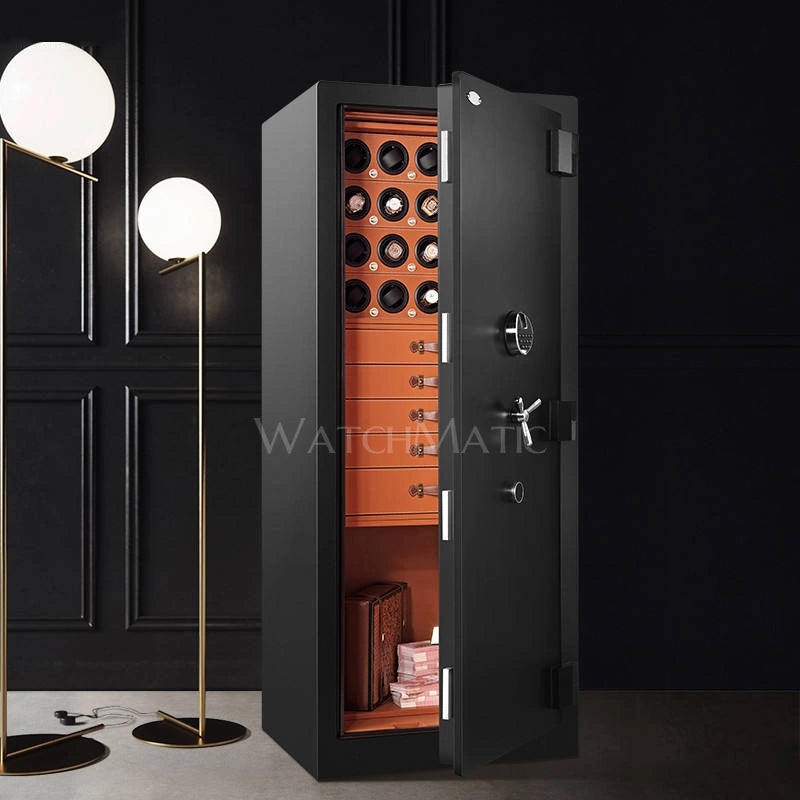
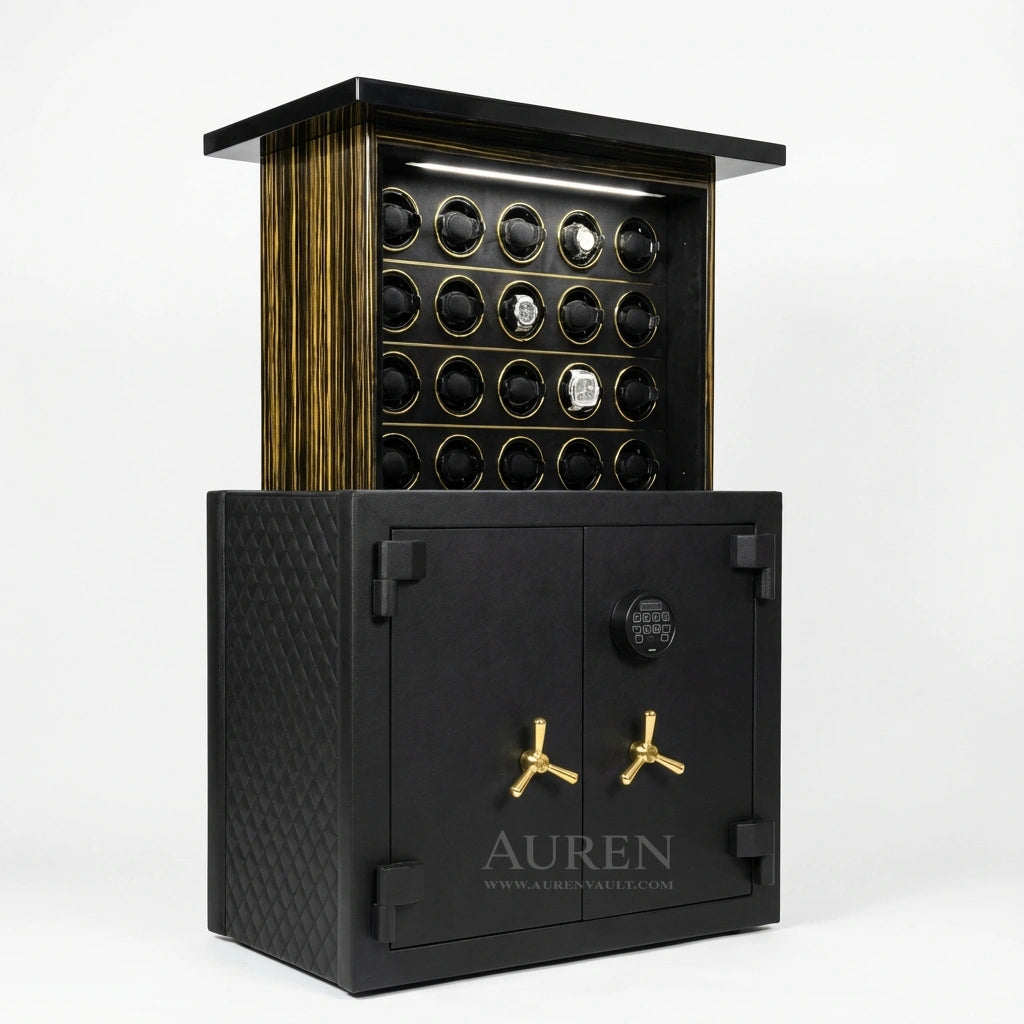
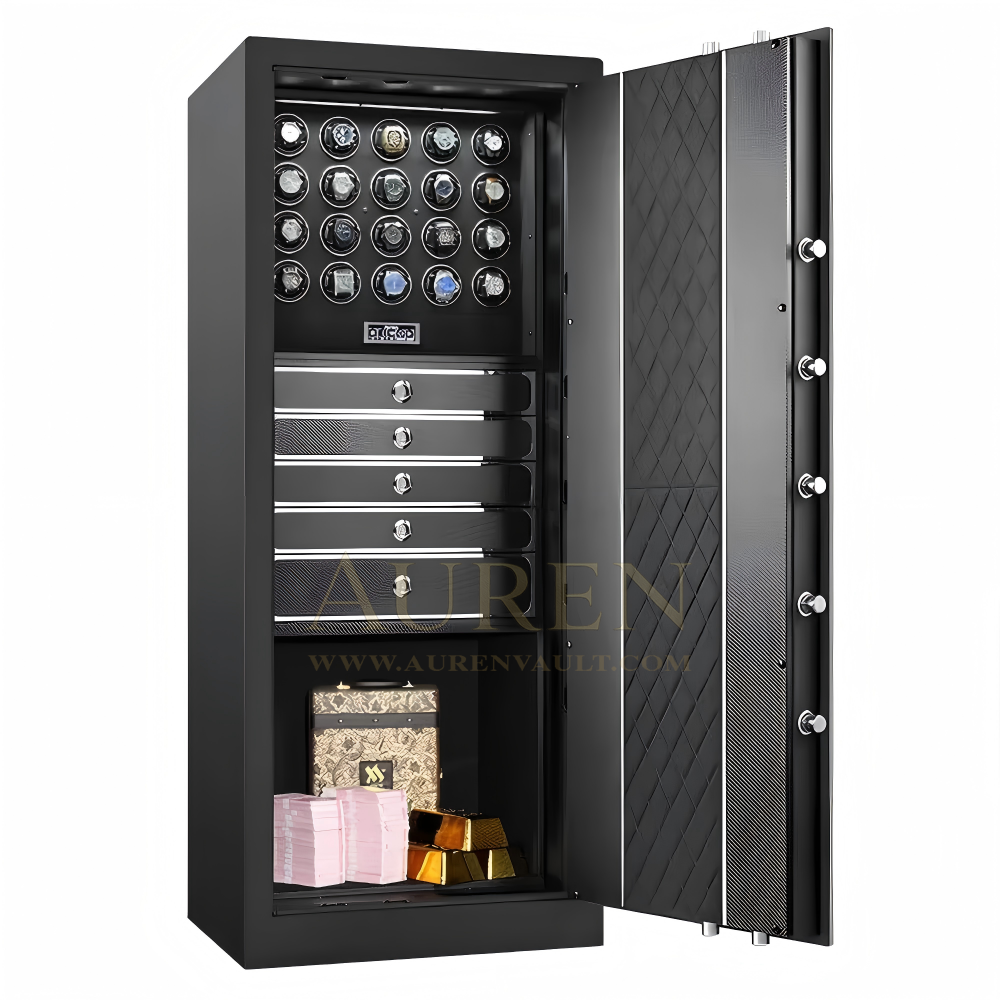
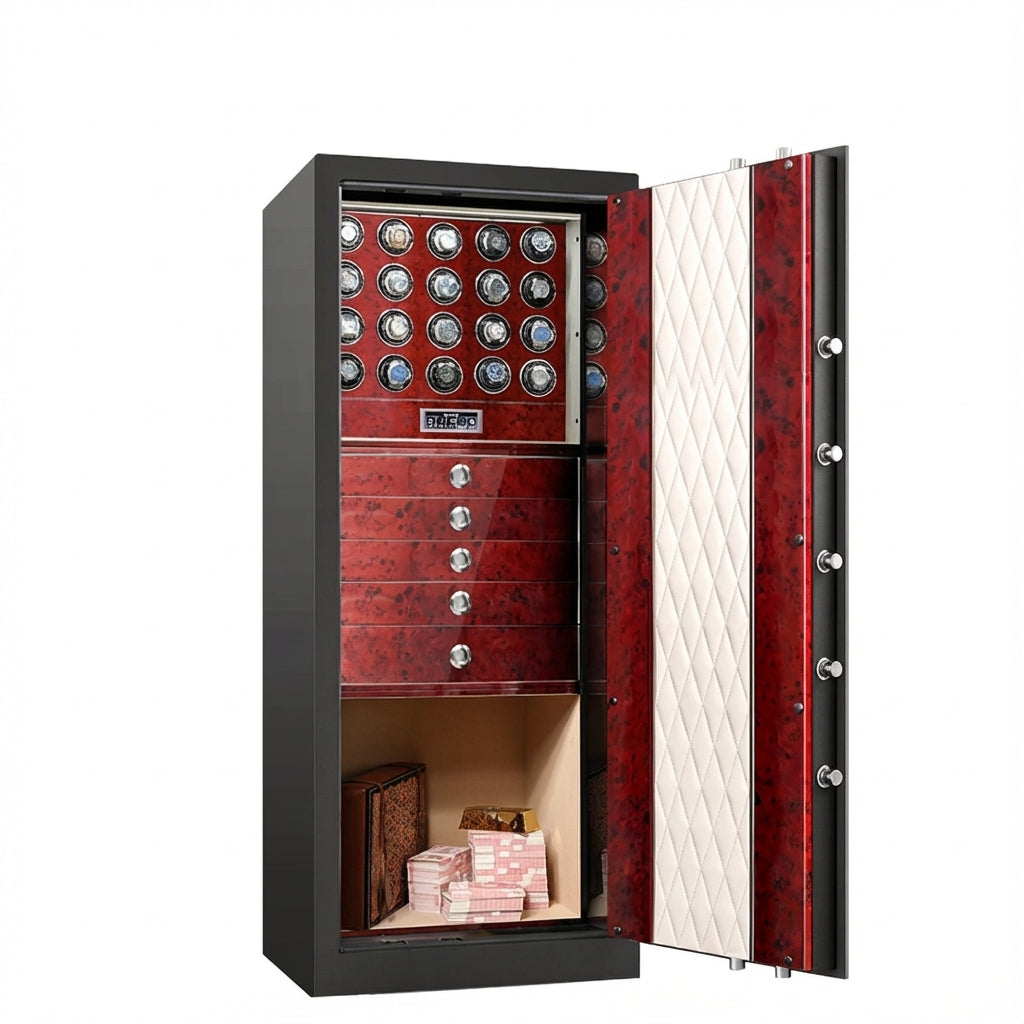
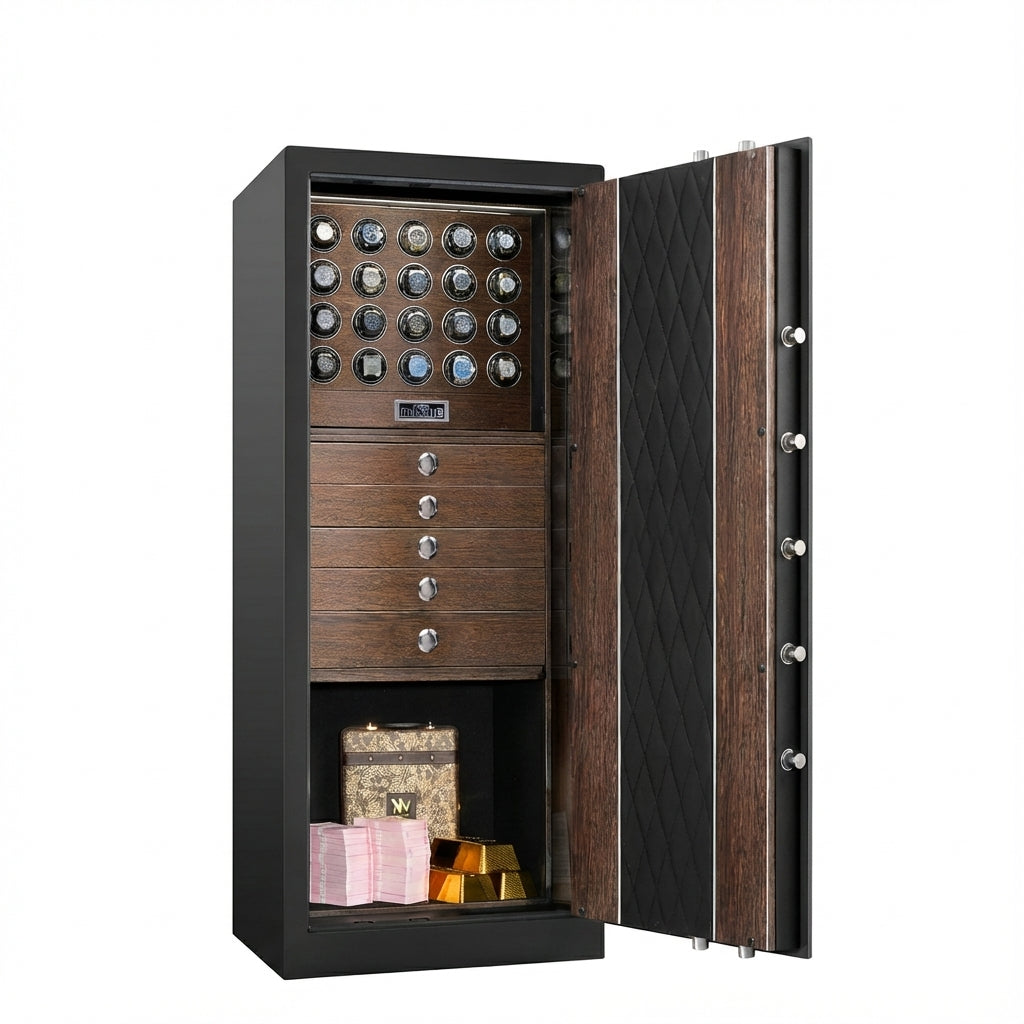
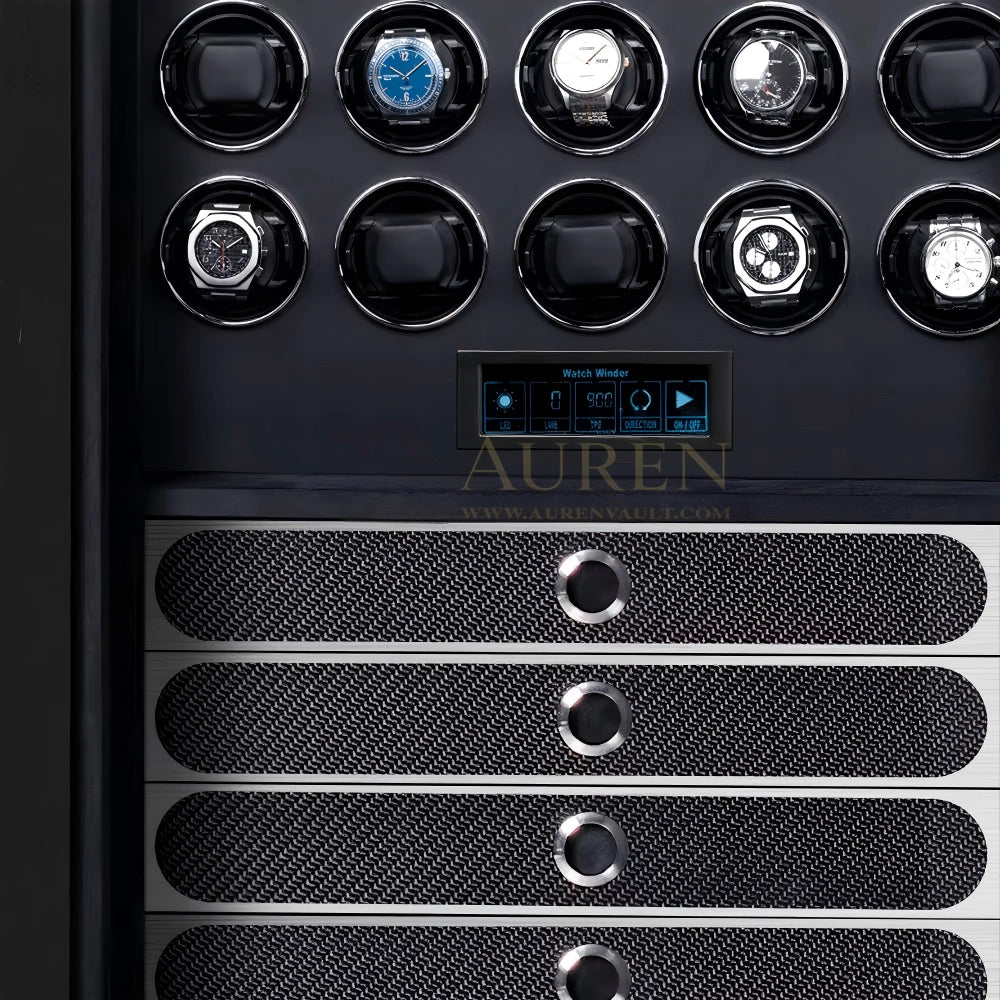
An integrated watch winder safe combines winding modules with enclosed storage.
For collectors managing several valuable watches, this can simplify organization and reduce repeated handling.
However, security and winding performance must be assessed separately.
A locking enclosure does not establish a particular level of burglary or fire resistance without appropriate product-specific evidence.
Similarly, a large number of rotors does not guarantee compatibility with advanced Richard Mille calibres.
The quality of individual programming and physical support is more important than capacity alone.
The watch winder safe guide explains the practical relationship between automatic winding and secure storage.
Collectors requiring different proportions of active winding positions and passive compartments can also explore custom watch safe configurations.
Long-Term Storage and Mechanical Care
Automatic winding is only one element of Richard Mille ownership.
These watches may incorporate Carbon TPT, Quartz TPT, titanium, sapphire components, precious metals, and specialized straps.
Their storage environment should minimize unnecessary pressure, contact, and movement.
A watch winder should not place stress on the case, crown, strap attachments, or external controls.
Environmental conditions also matter.
High humidity, condensation, and substantial temperature fluctuations may create unfavorable conditions for long-term storage.
An enclosed safe does not automatically provide active humidity control.
The appropriate environment depends on the actual room conditions and the storage system's specifications.
For watches that will remain unused for extended periods, passive storage may be reasonable when consistent with the manufacturer's guidance.
The watch storage guide provides broader context for preserving valuable timepieces.
Frequently Asked Questions About Richard Mille TPD
What is the best TPD setting for Richard Mille?
There is no universal setting. Independent databases commonly list approximately 650–750 TPD for selected older automatic models, but recommendations vary by calibre and sometimes conflict. The exact reference and winding direction should be confirmed before use.
What direction should a Richard Mille watch winder rotate?
It depends on the movement. Some earlier models have published bidirectional recommendations, while others appear with clockwise or counterclockwise settings. The manufacturer's internal rotor direction should not be confused with the external winder's rotation convention.
What is the recommended TPD for RM 011?
Independent winding tables commonly place historical RM 011 variants around 700–750 TPD. Published directions can vary by model entry, so owners should confirm the exact movement rather than treating this as a universal RM 011 setting.
Can an RM 07-01 use a watch winder?
Yes. The RM 07-01 uses an automatic CRMA2 calibre with a variable-geometry rotor. Its external TPD should be verified, and its rotor's mechanical configuration is separate from the winder's settings.
Does RM 30-01 need continuous winding?
No. The RM 30-01 has a declutchable rotor that manages energy transfer internally. A compatible winder may maintain operation between wears, but continuous external rotation is not required as a general principle.
Why is my RM 35-03 not winding on a watch winder?
One possible explanation is the butterfly rotor's operating mode. Sport Mode changes the rotor configuration to suspend normal automatic winding. Confirm the watch's settings and the manufacturer's instructions before changing external TPD.
What is the RM 65-01 TPD setting?
A reliable universal external TPD recommendation for Calibre RMAC4 has not been established here. Its specialized variable-geometry rotor requires movement-specific confirmation.
Can a watch winder operate the RM 65-01 rapid-winding mechanism?
No. A conventional rotating winder does not press the rapid-winding control. It supplies motion to the automatic rotor.
Does RM 27-05 need a winder?
No. The RM 27-05 uses a manually wound tourbillon movement. Conventional automatic winding through external rotation is ineffective.
Can Richard Mille watches be overwound on a winder?
Automatic winding mechanisms incorporate different methods of managing mainspring energy. Some use conventional slipping arrangements, while certain Richard Mille calibres incorporate specialized declutching systems. These protections do not justify unnecessary external rotation.
Is an integrated watch winder safe worthwhile for Richard Mille?
It can be useful for collectors who own several automatic models and require enclosed storage. The appropriate choice depends on independent TPD control, physical fit, passive storage needs, and documented security specifications.
Further Reading: Watch Winding and Collection Protection
The distinction between movement architecture and external winding programs extends beyond the technical settings themselves.
Readers comparing the practical characteristics of different devices can explore Best Watch Winder for Richard Mille Watches.
For collectors considering integrated storage, Watch Safes with Built-In Watch Winders: Are They Worth It? examines the differences between standalone winders and secure winding systems.
Environmental conditions also deserve attention. Why Humidity Can Damage Luxury Watches explains why stable storage conditions matter for mechanical timepieces.
Final Perspective: Richard Mille TPD Requires More Than a Number
Richard Mille's automatic movement architecture demonstrates the limitations of generic watch-winder recommendations.
Some historical references have published TPD values around 650–750, but even these may differ between independent databases.
Modern calibres introduce further complexity.
The RM 07-01 uses adjustable rotor geometry, the RM 30-01 manages energy through automatic declutching, and the RM 35-03 allows the winding mechanism to be effectively suspended through its butterfly rotor configuration.
These features cannot be reduced to one brand-wide rotation program.
A suitable winder must accommodate the movement's verified external requirements, the watch's physical construction, and the owner's wearing habits.
For collectors managing mixed automatic and manually wound watches, Auren Vault provides watch storage and integrated winding configurations designed around different collection requirements.
The most appropriate Richard Mille TPD setting is ultimately the one supported by the exact calibre and operating conditions—not simply the highest or most frequently quoted number in a generic winding chart.