
Most Vacheron Constantin automatic watches require a movement-specific watch winder program rather than one universal turns-per-day (TPD) setting.
Independent winding databases commonly recommend approximately 650–950 TPD with bidirectional rotation for established automatic calibres such as 2450, 2460, and 1120. The Overseas Chronograph Calibre 5200 is often listed at around 750 TPD in both directions, while Calibre 5100 commonly appears within a narrower suggested range of approximately 650–800 TPD.
However, historical movements can have different requirements. Calibre 1137 is listed at approximately 800 TPD clockwise, while Calibre 1206 is associated with 800 TPD counterclockwise.
These figures are third-party winding references, not universal instructions issued by Vacheron Constantin.
Power reserve must also be considered separately. Depending on the movement, modern Vacheron Constantin automatic watches can offer approximately 40, 48, 52, 60, or 80 hours of autonomy.
The correct setting begins with identifying the exact calibre and confirming its effective winding direction.
Why Vacheron Constantin TPD Settings Differ Between Movements
Vacheron Constantin has produced mechanical watches since 1755, developing an extensive range of movements across multiple generations.
Its contemporary collections include Overseas, Patrimony, Traditionnelle, Fiftysix, Historiques, and Égérie.
These collections encompass relatively simple automatic watches, dual-time models, chronographs, complete calendars, perpetual calendars, and tourbillons.
Although many are self-winding, they do not necessarily use identical winding mechanisms.
An Overseas Self-Winding with Calibre 5100 is fundamentally different from an Overseas Perpetual Calendar using Calibre 1120 QP.
The former offers approximately 60 hours of power reserve through a modern automatic movement.
The latter uses an ultra-thin automatic calibre with approximately 40 hours of reserve and a considerably different mechanical construction.
A conventional watch winder rotates the complete watch, causing its internal oscillating weight to move.
That movement transfers energy to the mainspring through the automatic winding system.
However, the effectiveness of this process depends on the movement's winding architecture, rotor efficiency, gearing, and the direction in which energy can be transferred.
The complication itself does not directly establish TPD.
A chronograph does not automatically require more external rotations than a three-hand watch. Similarly, a perpetual calendar does not necessarily require a higher daily rotation setting simply because it has more functions.
The automatic winding mechanism determines how the movement receives energy; the complications influence how convenient continuous operation may be.
This distinction is essential when selecting appropriate winding programs for Vacheron Constantin.
Vacheron Constantin TPD Settings by Calibre
Many independent watch-winder databases provide settings by movement number rather than by collection.
This is generally the more useful approach.
A single collection may contain several calibre families, while an established movement architecture may appear across different watch references.
The following table combines representative manufacturer movement specifications with independently published external winding guidance.
Vacheron Constantin Watch Winder Settings Chart
| Calibre | Representative watch | Power reserve | Independent TPD reference | Rotation direction |
|---|---|---|---|---|
| 5100 | Overseas Self-Winding | 60 hours | Approx. 650–800 | Both |
| 5110 DT/2 | Overseas Dual Time | 60 hours | Verify specific calibre | Verify |
| 5200 | Overseas Chronograph | 52 hours | Approx. 750 | Both |
| 2450 Q6/3 | Patrimony Self-Winding | 40 hours | 650–950 for 2450 family | Both, family reference |
| 2455/2 | Historiques 222 | 40 hours | 650–800 for 2455 family | Both, family reference |
| 1326 | Fiftysix Self-Winding | 48 hours | Verify specific calibre | Verify |
| 2460 QCL/1 | Fiftysix Complete Calendar | 40 hours | 650–950 for 2460 family | Both, family reference |
| 1120 QP | Overseas Perpetual Calendar | 40 hours | 650–950 for 1120 family | Both, family reference |
| 2160 | Overseas Tourbillon | 80 hours | Verify specific calibre | Verify |
| 4400 AS | Historiques American 1921 | 65 hours | Not applicable | Manual winding |
| 1142 QP | Traditionnelle Perpetual Calendar Chronograph | 48 hours | Not applicable | Manual winding |
Manufacturer specifications establish movement type and power reserve. Numeric TPD figures are independent third-party recommendations. Settings shown for a calibre family must be checked before being applied to a particular movement variant. “Verify” means that a sufficiently reliable calibre-specific external winding recommendation has not been established here.
The table demonstrates why a universal Vacheron Constantin setting is insufficient.
Several established movement families have published bidirectional recommendations, but other calibres require independent confirmation.
A collector should also distinguish between a numerical range and an exact setting.
For example, a reference suggesting 650–950 TPD does not mean that 950 TPD is automatically preferable.
A lower program may be adequate when it delivers sufficient effective winding.
For a detailed explanation of daily rotations and program selection, consult the watch TPD guide.
Understanding TPD and Winding Direction
Two parameters control the operation of a conventional watch winder.
Turns per day (TPD) refers to the number of complete external rotations performed over a 24-hour period.
Winding direction determines whether the watch rotates clockwise, counterclockwise, or alternates between the two.
The aim is to compensate for the energy consumed by the movement while the watch is not being worn.
A well-configured winder should maintain an adequate running reserve without relying on unnecessarily high rotation settings.
Clockwise, Counterclockwise, and Bidirectional Rotation
Automatic movements can differ in how effectively their internal rotors wind the mainspring.
Some movements transfer winding energy during rotor motion in both directions.
Others use a unidirectional automatic winding mechanism.
A bidirectional watch-winder setting generally alternates clockwise and counterclockwise external rotation.
This flexibility is useful, but it does not automatically make bidirectional mode suitable for every automatic watch.
If a movement only receives effective winding from one external direction, rotations in the opposite direction may contribute little or no winding energy.
The orientation used to describe external rotation also matters.
A movement manufacturer's description of internal rotor rotation should not be assumed to correspond directly to the clockwise or counterclockwise labels displayed by every watch-winder manufacturer.
For this reason, owners should use an external winding reference compatible with their particular device.
Why 650 TPD Is Not a Universal Setting
The figure of 650 TPD appears frequently in watch-winder guides.
It can be a useful starting point for certain automatic movements.
However, Vacheron Constantin's historical movements demonstrate that it should not be applied indiscriminately.
Independent winding tables list Calibre 1137 at approximately 800 TPD clockwise.
Calibre 1206 is listed at approximately 800 TPD counterclockwise.
These are materially different operating requirements from a generic bidirectional program.
A collector who owns watches from several movement generations should therefore verify each calibre independently.
Even when two watches are both automatic, their most effective external programs may differ.
Overseas Self-Winding: Calibre 5100 TPD Settings
The modern Overseas Self-Winding is one of Vacheron Constantin's best-known automatic watches.
Representative reference 4520V uses Calibre 5100, a self-winding manufacture movement with approximately 60 hours of power reserve.
It operates at 28,800 vibrations per hour and incorporates central hours, minutes, seconds, and date indications.
Calibre 5100 is widely associated with the contemporary Overseas three-hand collection.
Independent winding references commonly suggest approximately 650–800 TPD with bidirectional rotation as an initial program.
This is a practical reference point, but it should not be mistaken for a universal factory-issued setting.
Is 650 TPD Enough for the Overseas 5100?
It may be, depending on the watch, winder, and operating conditions.
A properly functioning automatic movement does not necessarily need to remain at maximum power reserve throughout storage.
The purpose of a maintenance program is to replace enough energy to prevent the reserve from declining continuously.
An Overseas that receives sufficient initial winding may continue operating under a moderate external program.
However, if its reserve progressively declines, the owner should investigate whether the program is supplying enough effective winding.
This does not automatically justify switching to the highest available TPD setting.
The device's rotation schedule, direction, operating reliability, and the movement's condition should also be considered.
Why the 60-Hour Reserve Matters
Calibre 5100 provides approximately two and a half days of autonomy when sufficiently wound.
Consider an owner who wears an Overseas on Friday and changes to another watch for the weekend.
If the Overseas has a substantial reserve when removed, it may remain running through much of the weekend without any external winding.
The practical need for a winder becomes greater when the watch is worn less frequently.
Someone rotating between several automatic watches over a week may appreciate having the Overseas ready without repeated time and date adjustments.
Nevertheless, the longer power reserve does not independently establish a lower TPD requirement.
Power reserve and external winding efficiency are different characteristics.
Overseas Dual Time: Calibre 5110 DT/2
The Overseas Dual Time introduces a more complex display while retaining automatic winding.
Contemporary references such as 7920V use Calibre 5110 DT/2.
The movement provides approximately 60 hours of power reserve and includes a second time-zone display, day/night indication, and date.
The additional functionality makes the watch particularly convenient for international travel.
However, it also makes resetting the indications more involved than setting a conventional three-hand watch.
A compatible watch winder can help maintain the movement between periods of wear.
Can the Overseas Dual Time Use the Same TPD as Calibre 5100?
Not automatically.
Both calibres provide approximately 60 hours of power reserve, but that similarity does not establish identical external winding requirements.
Their movement architectures and complications are not the same.
Even if both operate with bidirectional external winding under a particular device, the appropriate number of daily rotations should still be checked.
Without reliable calibre-specific confirmation, it would be misleading to prescribe a fixed 650 or 800 TPD program for every Calibre 5110 DT/2 reference.
Owners should confirm the exact movement and seek suitable guidance before prolonged operation.
Does the GMT Function Increase TPD?
A second time-zone indication does not automatically require additional external rotations.
The automatic winding mechanism supplies stored energy to the movement as a whole.
The GMT complication consumes energy through the normal operation of the watch, but the correct external winding program remains dependent on the calibre's energy balance and winding system.
The practical reason to use a winder is convenience.
An owner who regularly alternates between the Overseas Dual Time and other watches may prefer to maintain its time-zone and calendar indications rather than reset them after extended inactivity.
Overseas Chronograph: Calibre 5200 and the 750 TPD Reference
The Overseas Chronograph uses a different automatic movement.
Contemporary reference 5520V incorporates Calibre 5200, which provides approximately 52 hours of power reserve.
The movement includes a column-wheel chronograph with a vertical clutch and a date display.
Its mechanical architecture differs from the Calibre 5100 used in the standard Overseas Self-Winding.
Independent winding references commonly list Calibre 5200 at approximately 750 TPD with bidirectional rotation.
This provides a more specific starting reference than the broad 650–950 TPD range associated with various older calibres.
However, it remains third-party guidance rather than a confirmed universal Vacheron Constantin setting.
Why 750 TPD Should Not Be Treated as a Maximum
The number describes an external rotation program, not a mechanical operating limit.
A modern automatic movement normally incorporates a slipping mainspring arrangement that prevents continued automatic winding from increasing mainspring tension indefinitely.
Nevertheless, this does not justify operating a watch winder at unnecessarily high speeds or TPD values.
The most appropriate program is one that maintains adequate energy while avoiding unnecessary rotation.
Does Operating the Chronograph Change Its Winding Requirements?
Using a chronograph can affect the movement's overall energy consumption.
However, the presence of a chronograph does not establish a universal TPD increase.
The relationship depends on movement construction, chronograph engagement, and the automatic winding system.
A conventional watch winder does not activate chronograph pushers or control the timing function.
Therefore, owners should select a program based on Calibre 5200 rather than assume that a chronograph always requires maximum winding.
Case and Bracelet Clearance
The Overseas Chronograph has a larger case than the standard three-hand Overseas.
Representative 5520V references measure approximately 42.5 mm in diameter.
Its crown and chronograph pushers require sufficient compartment clearance during rotation.
The holder should support the watch securely without placing unnecessary pressure on the crown, pushers, or bracelet.
For substantial integrated-bracelet watches, physical stability is an important part of winder compatibility.
Patrimony Self-Winding: Calibre 2450
Vacheron Constantin's Patrimony collection emphasizes restrained design and relatively slim proportions.
Representative Patrimony Self-Winding references use Calibre 2450 Q6/3.
This automatic movement provides approximately 40 hours of power reserve.
Independent winding databases commonly list the broader Calibre 2450 family at approximately 650–950 TPD with bidirectional rotation.
This is a useful historical reference, but owners should confirm its applicability to the exact movement variant.
What Does the Shorter Reserve Mean?
A 40-hour movement has less autonomy than the 60-hour Overseas Calibre 5100.
If a Patrimony is removed on Friday evening and remains unworn throughout the weekend, it may stop before Monday.
A compatible winder can prevent that interruption when properly configured.
However, the shorter reserve does not automatically mean that Calibre 2450 requires more TPD than Calibre 5100.
The number of external rotations needed to replenish consumed energy also depends on winding efficiency.
The practical value of a winder is therefore different from its technical requirements.
A collector may benefit from continuous operation because of wearing habits, not because the shorter reserve dictates a particular rotation number.
Why Dress-Watch Holders Matter
Patrimony watches are frequently fitted with refined leather straps.
A rigid oversized cushion can place unnecessary tension on these straps, especially when the watch is adjusted for a smaller wrist.
A compressible holder is generally preferable.
The watch should remain stable without forcing the leather into an unnatural shape.
Polished precious-metal cases also benefit from soft contact surfaces and adequate compartment clearance.
A suitable program is only one part of responsible winding.
Fiftysix: Comparing Calibre 1326 and Calibre 2460 QCL/1
The Fiftysix collection provides a useful example of how two watches within the same family can require separate technical consideration.
The Fiftysix Self-Winding uses Calibre 1326 in representative references.
The Fiftysix Complete Calendar uses Calibre 2460 QCL/1.
Both are automatic, but their functions and power reserves differ.
Fiftysix Self-Winding: Calibre 1326
Calibre 1326 provides approximately 48 hours of power reserve.
It is a conventional automatic movement displaying hours, minutes, central seconds, and date.
A programmable watch winder can maintain its running state between periods of wear.
However, broad recommendations for the Fiftysix collection should not automatically be treated as verified technical specifications for Calibre 1326.
When a reliable movement-specific external winding program is unavailable, the correct approach is to confirm the requirements before selecting a permanent setting.
Fiftysix Complete Calendar: Calibre 2460 QCL/1
The Fiftysix Complete Calendar contains Calibre 2460 QCL/1.
This movement provides approximately 40 hours of power reserve.
Its functions include day, date, month, and precision moonphase indications.
Independent winding tables generally identify the broader Calibre 2460 family with approximately 650–950 TPD and bidirectional rotation.
However, the specific QCL/1 variant should be checked before those settings are applied.
The complete calendar offers a stronger practical reason for maintaining continuous operation than a simple automatic date watch.
If the movement stops, the owner must restore several calendar indications.
That procedure should always follow the manufacturer's instructions, particularly where calendar adjustment restrictions apply.
A compatible winder can reduce how frequently these adjustments become necessary.
Why Calendar Complexity Does Not Establish TPD
The temptation is to assign more turns to a watch with more complications.
This is not a reliable approach.
The calendar and moonphase displays are driven by the movement's stored energy.
They do not directly dictate which direction the rotor must turn or how many external rotations are needed.
Calibre architecture remains the appropriate starting point.
The difference between the Fiftysix Self-Winding and Complete Calendar is therefore both technical and practical.
The two movements need their own verified winding programs, while the calendar model may benefit more from remaining continuously synchronized.
Historiques 222: Calibre 2455/2
The modern Historiques 222 is another automatic Vacheron Constantin with a relatively short power reserve.
Representative 4200H references use Calibre 2455/2.
The movement provides approximately 40 hours of autonomy.
Independent watch-winder databases commonly list the Calibre 2455 family at approximately 650–800 TPD with bidirectional rotation.
That reference can help identify an appropriate program, although the 2455/2 variant should be verified independently.
The Historiques 222 combines a relatively compact case with an integrated bracelet.
Its bracelet construction requires particular attention when selecting a cushion.
A holder that fits a large sports watch may not provide the same stability for a smaller vintage-inspired integrated-bracelet design.
For owners wearing the Historiques 222 occasionally, a winder can be convenient because its reserve may expire during several days of non-use.
For collectors who wear it regularly, a winder may offer little practical advantage.
Ultra-Thin Perpetual Calendars: Calibre 1120 QP
Vacheron Constantin's Calibre 1120 is closely associated with ultra-thin automatic watchmaking.
The 1120 QP variant is used in representative Overseas Perpetual Calendar Ultra-Thin references.
It provides approximately 40 hours of power reserve and incorporates a perpetual calendar with moonphase indications.
Its movement thickness is approximately 4.05 mm.
This combination makes the watch mechanically distinct from the more conventional Overseas automatic calibres.
What TPD Does Calibre 1120 Require?
Independent winding references commonly list the original Calibre 1120 family at approximately 650–950 TPD with bidirectional rotation.
This is a useful reference for the movement family.
However, the owner should not automatically assume that every ultra-thin perpetual calendar variant shares an identical external winding program.
The precise calibre suffix and reference matter.
For a valuable or complicated perpetual calendar, confirmation from Vacheron Constantin or an authorized specialist is preferable to relying solely on a generic database entry.
Why a Winder Can Be Especially Useful
A perpetual calendar tracks changes in the calendar over an extended cycle, including differences between month lengths and leap years.
When operating correctly, it reduces the need for routine manual calendar corrections.
However, if the watch stops after exhausting its reserve, the indications must be restored using the appropriate setting procedure.
This can require more care than restarting a simple automatic watch.
A compatible winder helps reduce the frequency of that process.
The advantage is not that a perpetual calendar mechanically requires continuous winding at all times.
Rather, keeping it running can simplify ownership when the watch is worn intermittently.
For a collector who wears the perpetual calendar only occasionally, the convenience may be substantial.
For extended storage, allowing the watch to stop may still be appropriate when consistent with the manufacturer's recommendations.
Overseas Tourbillon: Calibre 2160 and Its 80-Hour Reserve
Calibre 2160 introduces another automatic winding architecture.
Representative Overseas Tourbillon references use this ultra-thin self-winding movement with approximately 80 hours of power reserve.
Unlike a conventional centrally mounted rotor, Calibre 2160 incorporates a peripheral automatic winding system.
The winding mass operates around the movement's perimeter, helping preserve visibility of the mechanical construction.
This architecture differs considerably from the standard Calibre 5100.
Can Calibre 2160 Use a Conventional Winder?
In principle, a compatible external watch winder can maintain an automatic movement powered by a peripheral rotor.
However, that does not establish an appropriate TPD or rotation direction.
The unusual rotor arrangement should not lead to an unsupported assumption that the watch requires more or fewer turns.
A peripheral rotor's actual winding efficiency depends on its mechanical design.
For Calibre 2160, movement-specific confirmation is especially important before configuring a permanent program.
Does an 80-Hour Reserve Reduce the Need for Winding?
It can reduce the practical need for a winder during short periods of non-use.
A sufficiently wound 80-hour movement can operate for more than three days without receiving additional energy.
For someone wearing the Overseas Tourbillon several times a week, that autonomy may be sufficient.
However, a longer reserve does not establish a lower daily TPD requirement.
An owner should consider both the actual winding system and the frequency with which the watch is worn.
Historical Vacheron Constantin Movements: Important Directional Exceptions
Modern Vacheron Constantin collections are only part of the picture.
Collectors of older references may encounter movement families with single-direction external winding recommendations.
These exceptions are particularly important because they demonstrate why a generic bidirectional setting cannot always be trusted.
Independent winding-reference tables commonly identify the following historical calibres:
| Historical calibre | Published TPD reference | External winding direction |
|---|---|---|
| 1056 | 650–950 | Counterclockwise |
| 1130 | 650–950 | Counterclockwise |
| 1137 | 800 | Clockwise |
| 1190 | 650–950 | Counterclockwise |
| 1204 | 650 | Clockwise |
| 1206 | 800 | Counterclockwise |
| 1311 | 800 | Counterclockwise |
| 1312 | 650–950 | Clockwise |
These are independent historical winding-table entries, not manufacturer-issued specifications. Confirm the exact calibre, watch reference, and external rotation convention before use.
Several observations are important.
Calibre 1137 is associated with approximately 800 TPD clockwise.
Calibre 1206 is associated with approximately 800 TPD counterclockwise.
Calibre 1190 is commonly listed with counterclockwise rotation, while Calibre 1204 is listed with clockwise rotation.
These examples indicate that Vacheron Constantin's historical automatic movements cannot be treated as a mechanically uniform group.
Why Bidirectional Rotation Can Be Inefficient for Certain Older Movements
A watch winder operating in both directions divides its programmed motion between clockwise and counterclockwise cycles.
If only one direction effectively winds a particular movement, the opposite direction may not contribute useful winding energy.
Consequently, the displayed daily rotation number may not represent the number of effective winding rotations.
This becomes particularly relevant when owners compare devices from different manufacturers.
One unit may calculate TPD as the total number of rotations across both directions.
Another may use a different method of describing or distributing its program.
Owners should confirm the device's counting convention before translating a historical winding-table entry into a specific operating mode.
Vacheron Constantin Watches That Do Not Need a Winder
Not every Vacheron Constantin mechanical watch is self-winding.
The Historiques American 1921 is an important example.
Representative references use the manually wound Calibre 4400 AS, offering approximately 65 hours of power reserve.
Its movement receives energy through manual crown winding rather than an oscillating rotor.
A conventional rotating watch winder cannot replenish its mainspring.
The same distinction applies to the Traditionnelle Perpetual Calendar Chronograph using the manually wound Calibre 1142 QP.
That movement provides approximately 48 hours of reserve but does not use an automatic winding rotor.
Its complicated calendar and chronograph functions do not change this fundamental requirement.
Manual Winding Versus Automatic Winding
Mechanical watches store energy in a mainspring, regardless of whether the movement is manually or automatically wound.
The difference is how that energy is replenished.
An automatic movement contains a mechanism that uses motion to wind the mainspring.
A manually wound movement depends on the crown-winding procedure.
For this reason, a conventional watch winder is suitable only for compatible automatic watches.
Quartz watches likewise do not benefit from automatic winding.
A mixed collection should distinguish between active winding positions and passive storage compartments.
How to Set a Vacheron Constantin Watch Winder Correctly
A reliable setup begins with the watch, not the winder.
The most important information is the exact reference number and movement calibre.
This can usually be established through the watch's technical documentation or an authorized service representative.
Once the movement is identified, determine whether it is automatic and whether reliable external winding guidance exists.
Step 1: Confirm the Exact Calibre
Do not use the collection name alone.
An Overseas Self-Winding Calibre 5100, Overseas Chronograph Calibre 5200, and Overseas Perpetual Calendar Calibre 1120 QP are different movements.
Similarly, a Fiftysix Self-Winding and Fiftysix Complete Calendar should not automatically share one program.
The reference number provides a more reliable starting point.
Step 2: Establish Sufficient Initial Power
If an automatic watch has stopped, restart it according to the manufacturer's manual winding instructions.
A watch winder is generally intended to maintain energy rather than serve as the primary method of restarting a fully depleted movement.
The amount of manual winding required depends on the calibre.
Do not substitute an arbitrary number of crown turns for the manufacturer's instructions.
Step 3: Select the Verified Rotation Direction
Determine whether the appropriate external winding program is clockwise, counterclockwise, or bidirectional.
For historical movements, this is especially important.
A device that offers both directions is more flexible, but it must still be configured correctly.
Step 4: Program the Appropriate Daily Rotations
Enter the confirmed TPD recommendation.
Where an independent source provides a range rather than one number, the owner should not assume that the highest value is necessary.
Select an appropriate program supported by the available guidance and the capabilities of the device.
Step 5: Check Physical Fit
Secure the watch on its cushion.
Make sure that the case, crown, pushers, and bracelet have adequate clearance throughout rotation.
The watch should not slide or shift inside the compartment.
Step 6: Observe the Result
Monitor whether the movement maintains an adequate running reserve over several days.
If it stops, investigate the initial winding condition, rotation direction, actual programmed turns, and mechanical condition.
A watch can continue running even while its power reserve gradually declines.
Therefore, observing that the watch remains operational for one day does not necessarily prove that the selected program is optimal.
Where the movement has a power reserve indication, that display may help assess whether the program is maintaining energy.
For other movements, more careful observation or professional assessment may be needed.
Why a Watch Can Stop Even With the Correct TPD
A watch that stops while stored on a winder does not necessarily require a higher TPD setting.
Several different problems can produce the same result.
The initial reserve may have been too low.
The selected direction may not produce effective winding.
The device may calculate bidirectional rotations differently from the reference table.
The motor may not be completing its programmed cycles.
Alternatively, the watch may need mechanical inspection.
Consider an automatic movement that receives too little effective winding to replace the energy consumed during each day.
It may continue running for some time while its stored reserve gradually decreases.
Eventually, the movement stops.
Increasing the daily rotation number might address insufficient winding, but only after the program and device have been checked.
If the watch loses reserve despite receiving an appropriate winding program, professional inspection may be necessary.
A winder cannot correct deteriorated lubricants, mechanical wear, or servicing problems.
Do Vacheron Constantin Watches Need Continuous Winding?
No.
An automatic mechanical watch does not need to operate continuously simply because it is valuable.
The need for a watch winder depends on the owner's wearing habits and the complexity of the watch.
An Overseas Calibre 5100 worn frequently may receive sufficient winding through normal wrist activity.
With approximately 60 hours of power reserve, it may also remain running through short periods of non-use.
A Patrimony Calibre 2450 with approximately 40 hours of reserve may stop sooner.
That makes external winding more convenient when the watch is worn only occasionally.
A perpetual calendar presents another consideration.
Maintaining its movement can reduce repeated adjustments of complicated indications.
However, for extended periods of storage, passive storage may remain a reasonable choice when consistent with Vacheron Constantin's instructions.
The purpose of a watch winder is therefore to simplify ownership when continuous operation is useful.
It is not a requirement for preserving every mechanical movement.
Choosing a Winder for Several Vacheron Constantin Calibres
A collector may own a combination of modern and historical Vacheron Constantin movements.
For example, a collection could include:
-
Overseas Self-Winding with Calibre 5100.
-
Overseas Chronograph with Calibre 5200.
-
Patrimony Self-Winding with Calibre 2450.
-
Overseas Perpetual Calendar with Calibre 1120 QP.
-
Historiques American 1921 with manual Calibre 4400 AS.
Four of these watches are automatic.
One is manually wound.
The collection therefore does not require five active winding positions.
Four independently programmable rotors and at least one passive compartment would provide a more appropriate starting configuration.
The number of active modules could be reduced further if some automatic watches are worn regularly and do not need continuous maintenance.
This illustrates the difference between storage capacity and winding capacity.
The value of independent control becomes greater as the movement types become more diverse.
An integrated system with adjustable TPD, selectable direction, and controlled rest intervals provides more flexibility than one in which all rotors operate identically.
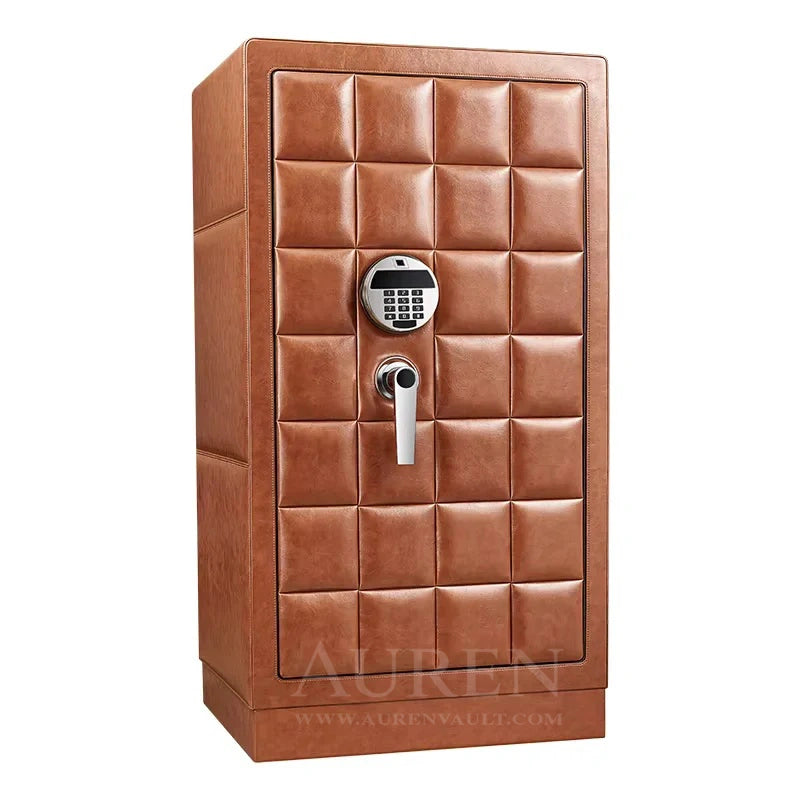
TPD Programming in a Watch Winder Safe
A standalone watch winder and an integrated watch winder safe perform the same fundamental automatic winding function.
The difference lies primarily in the storage environment and physical protection.
A standalone device is intended mainly to maintain automatic movements.
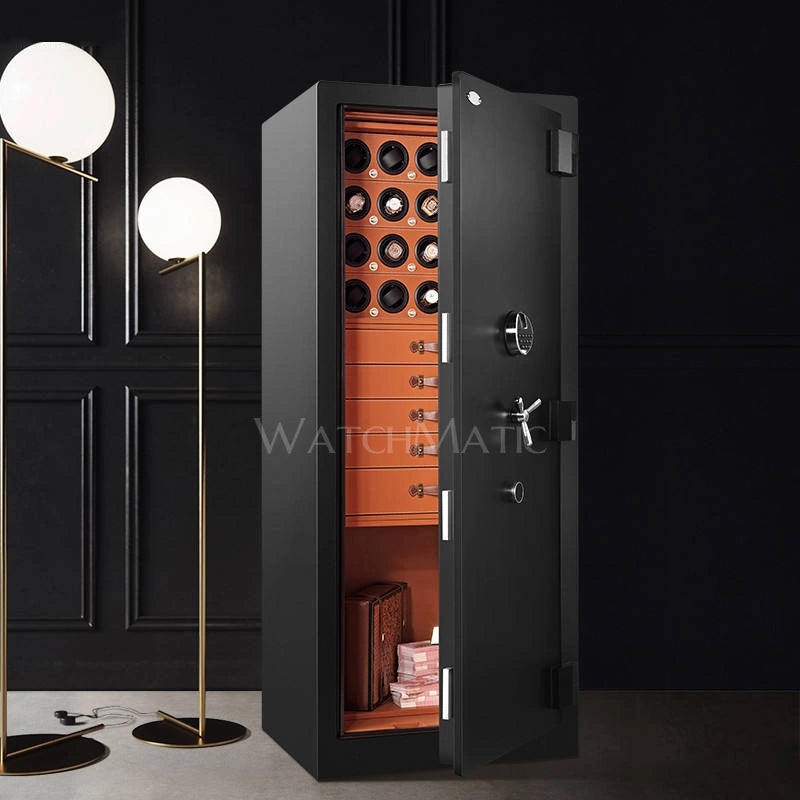
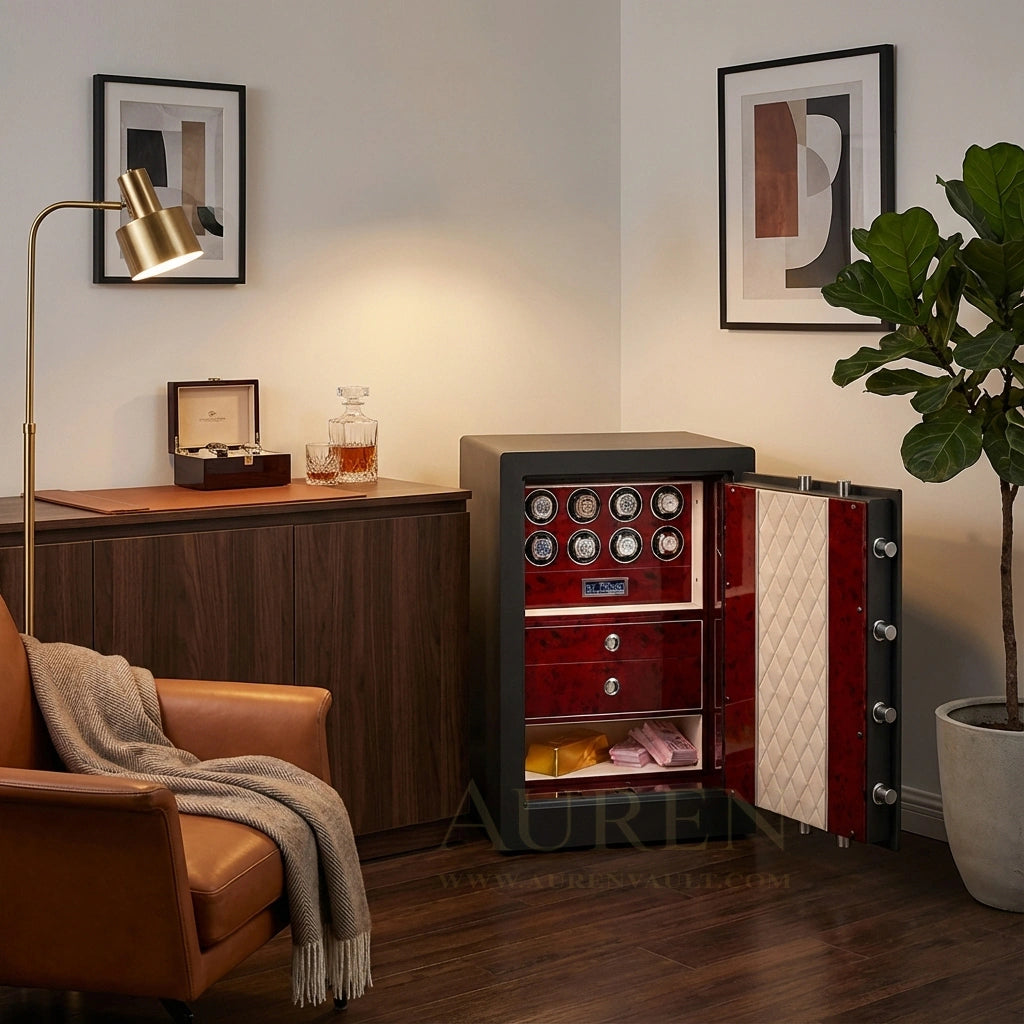
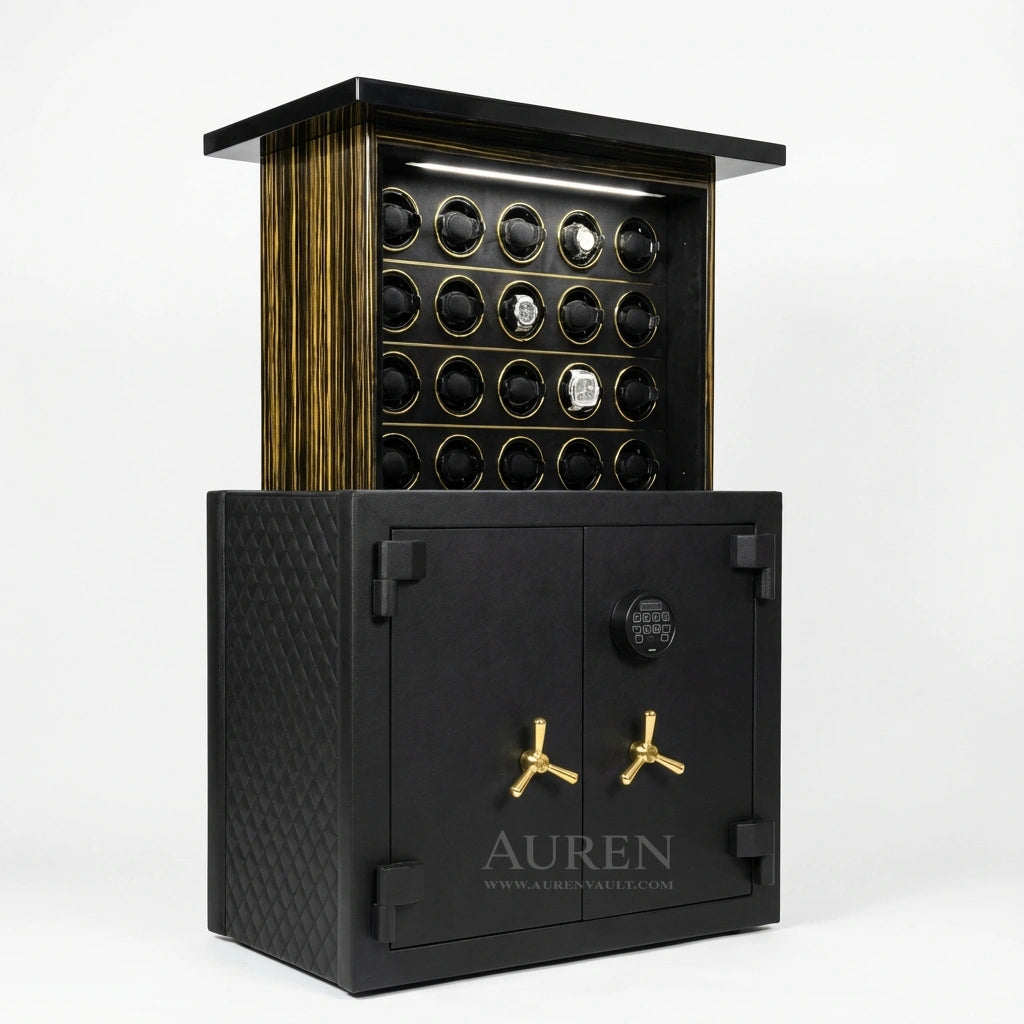
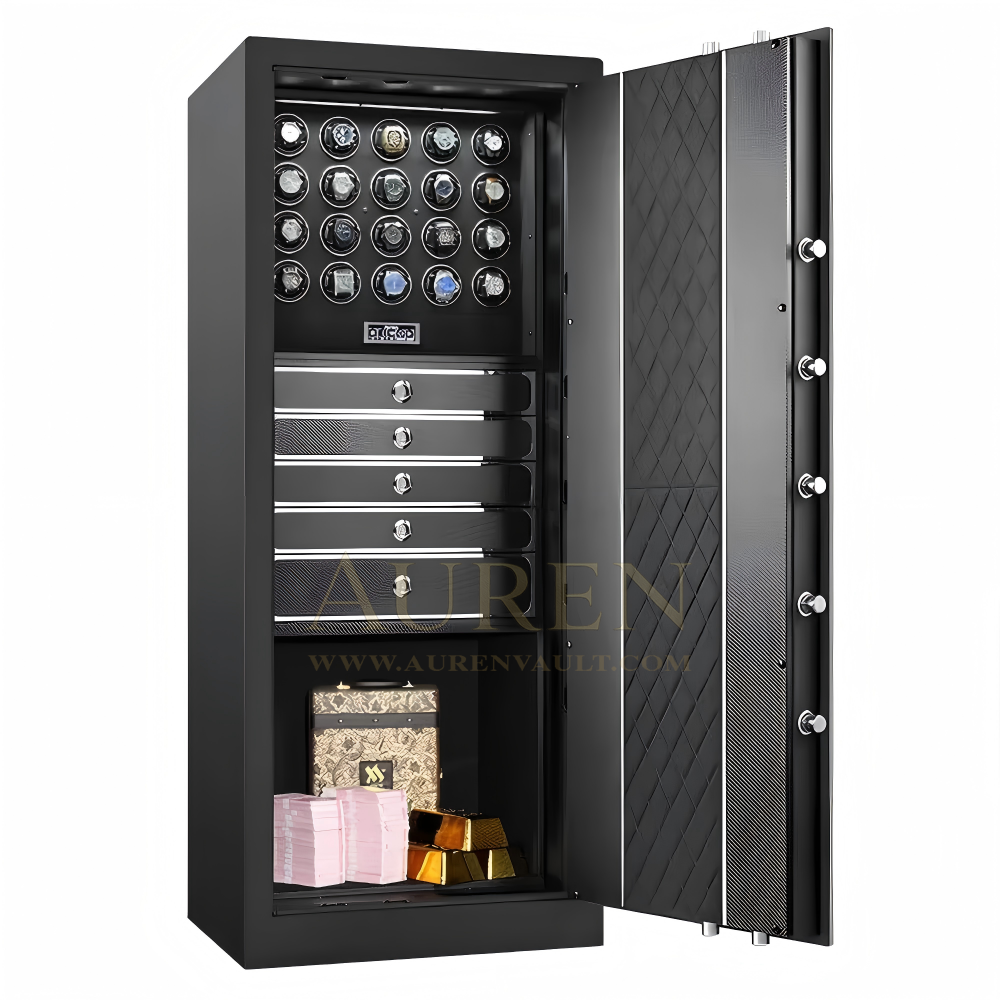
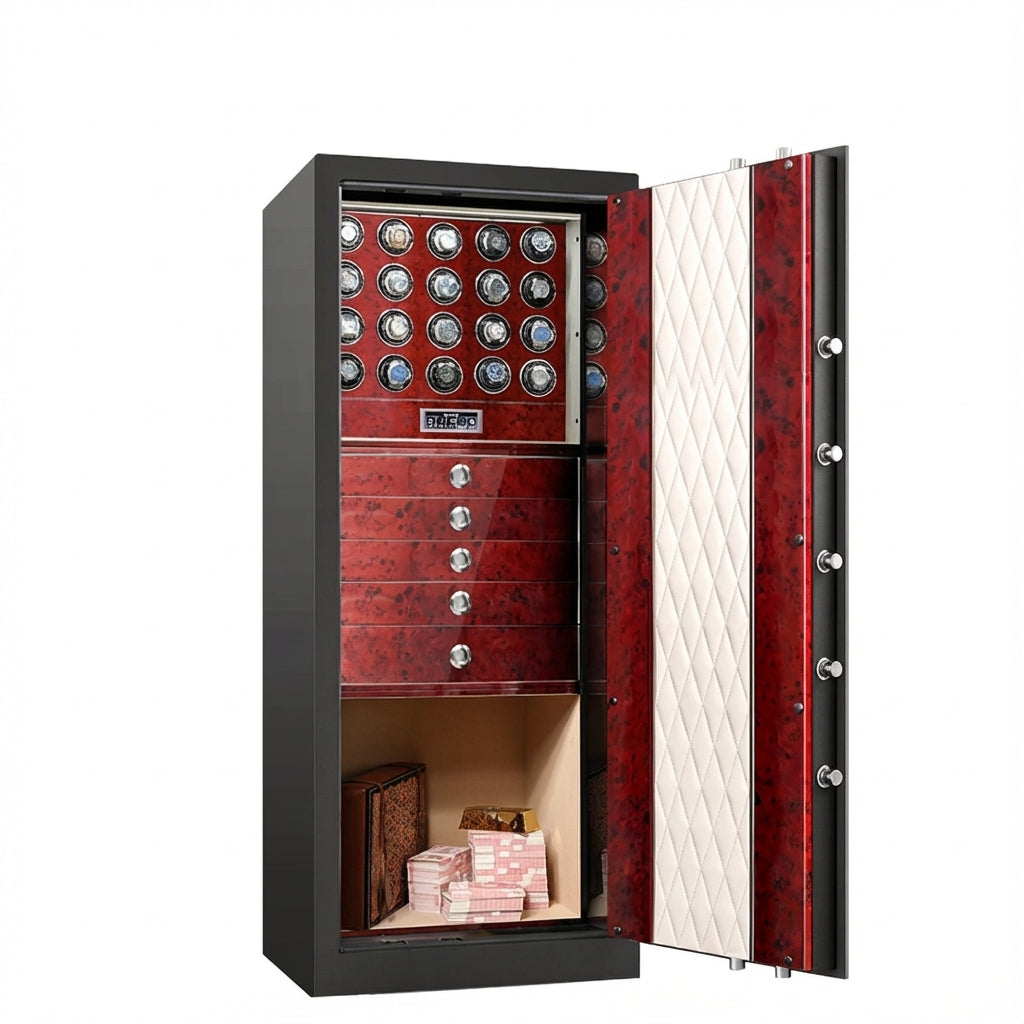
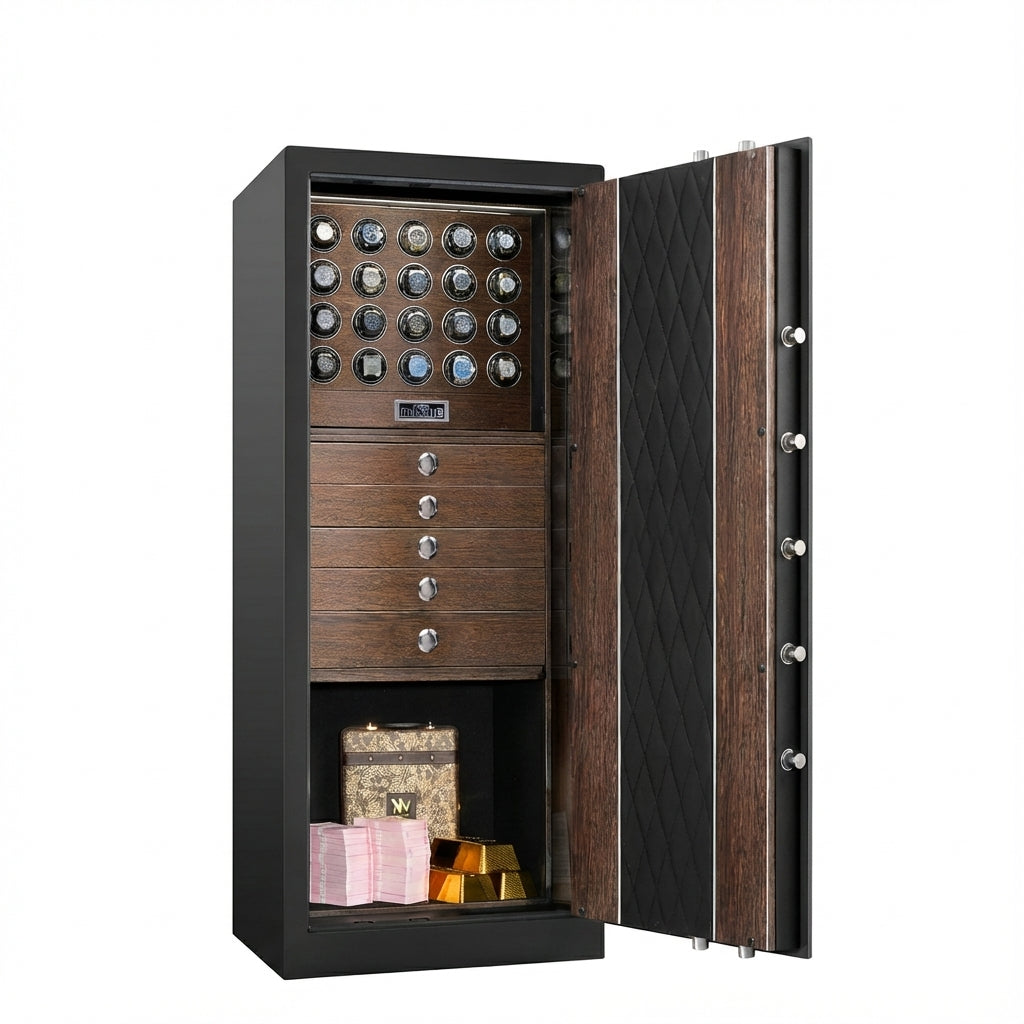
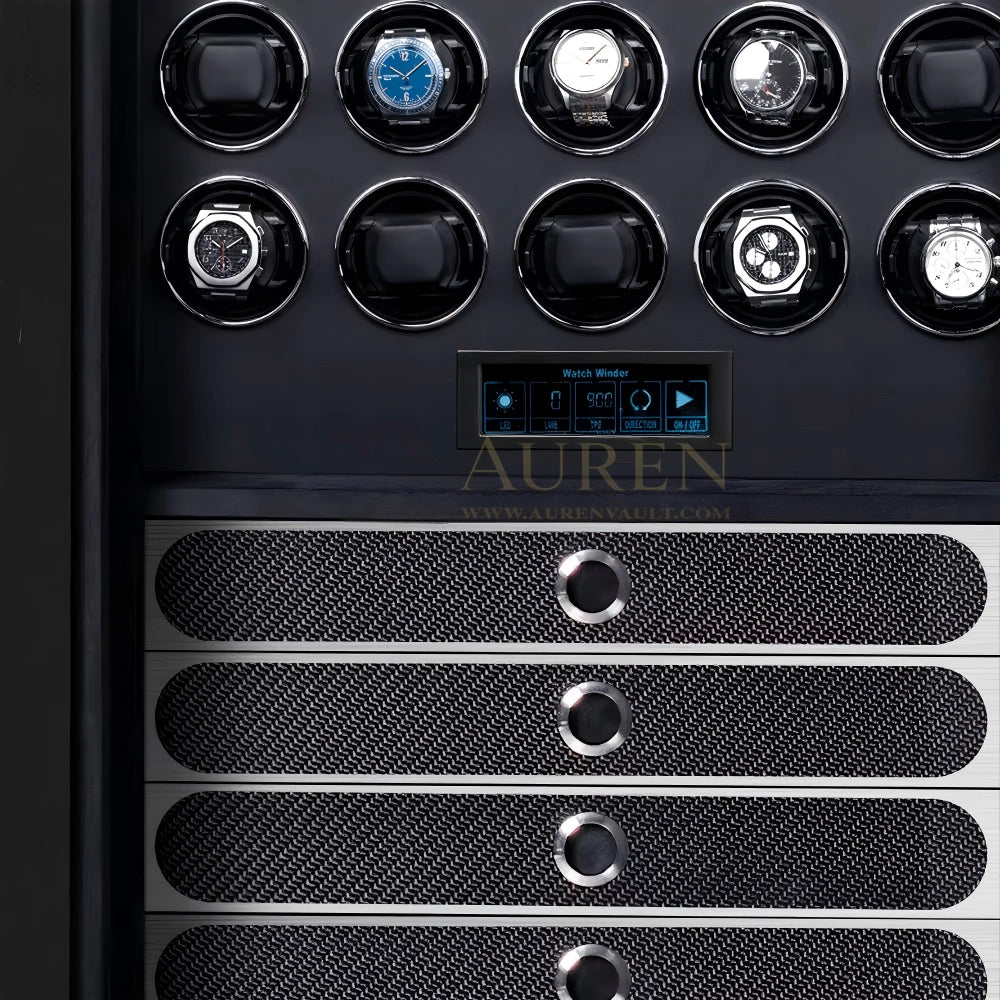
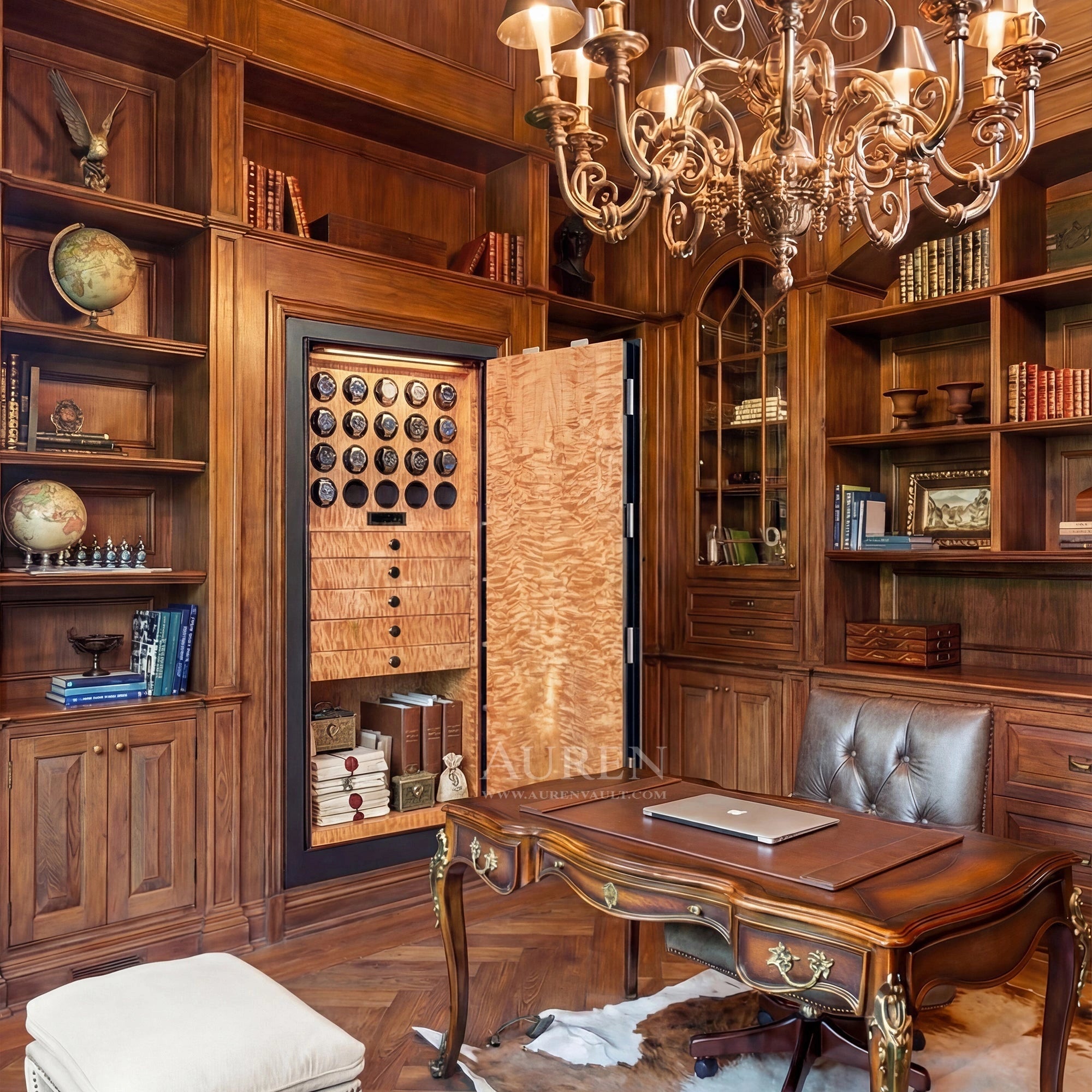
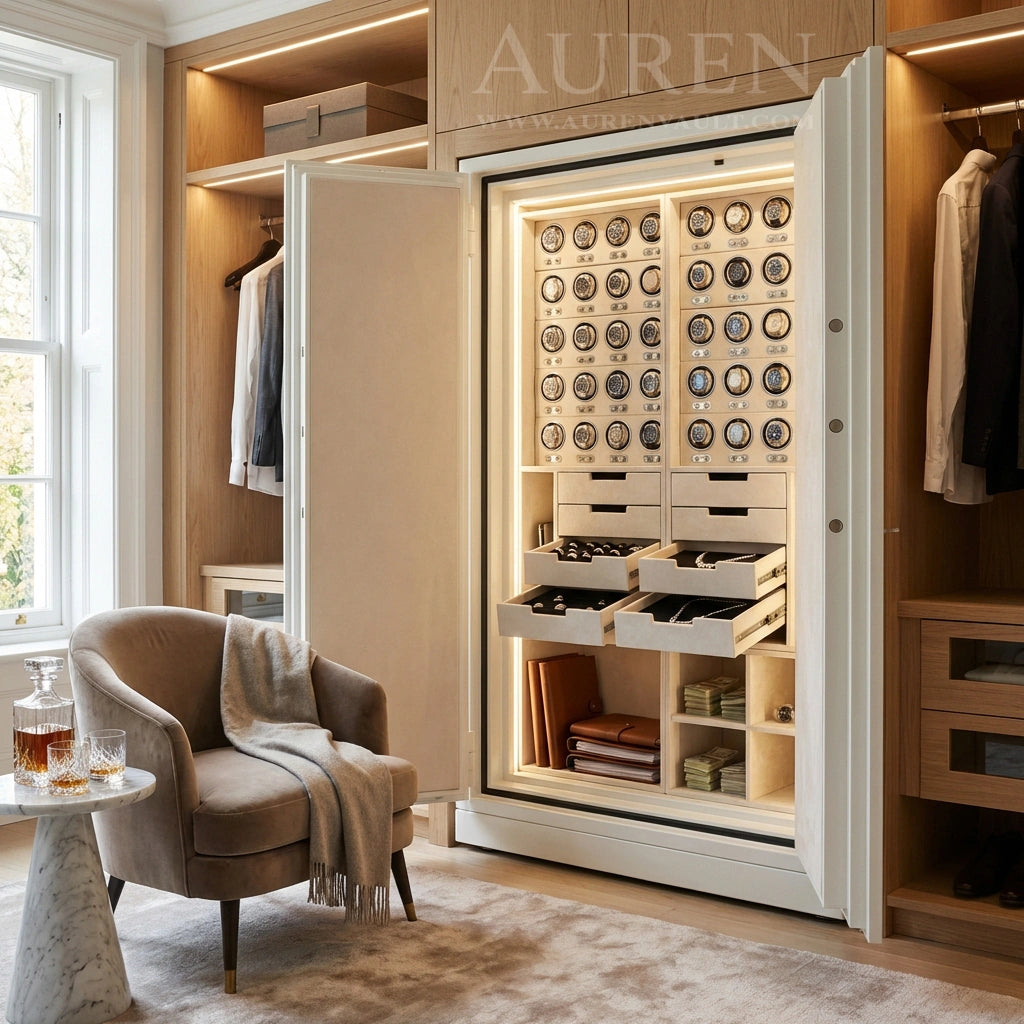
A watch winder safe combines winding modules with a lockable storage enclosure.
For collections containing several Vacheron Constantin watches, the integration can reduce the need to move watches between separate winding and storage locations.
However, the electronic winding specifications must still be evaluated independently.
A secure enclosure does not automatically guarantee that its winding modules support every calibre.
The owner should confirm the available rotation directions, TPD range, individual rotor programming, and suitable operating cycles.
Physical security should also be evaluated through the safe's construction, locking system, anchoring arrangements, and any documented independent testing.
The presence of a lock alone does not establish a certified burglary or fire-resistance rating.
Collectors comparing these features can consult the watch winder safe guide.
For larger mixed collections, the broader watch safe collection provides context for comparing formats with active and passive storage.
More substantial collections may also benefit from larger luxury watch safes.
Where the collection contains unusually large cases, delicate straps, or an uncommon balance of winding and passive positions, custom watch safe configurations may provide additional flexibility.
The central requirement remains mechanical compatibility before presentation or capacity.
Long-Term Storage Beyond TPD
Correct winding is only one aspect of mechanical watch care.
Vacheron Constantin watches may incorporate polished precious-metal cases, complex bracelets, leather straps, and sensitive calendar mechanisms.
A properly programmed winder will not compensate for unsuitable physical storage.
Watches should remain securely supported without unnecessary pressure on cases, crowns, pushers, or straps.
Environmental conditions also deserve attention.
Excessive humidity, condensation, and substantial temperature fluctuations can create unfavorable storage conditions.
A lockable enclosure does not automatically maintain a controlled internal environment.
Any humidity-control capability should be evaluated according to the actual design and specifications of the storage system.
For longer periods of non-use, the watch may not need to remain on an active rotor.
Proper passive storage, suitable environmental conditions, and manufacturer-recommended servicing remain essential.
The watch storage guide addresses these broader considerations.
A well-managed collection should distinguish between the convenience of maintaining a movement and the conditions required to protect the complete watch.
Frequently Asked Questions About Vacheron Constantin TPD Settings
What is the recommended TPD for Vacheron Constantin watches?
There is no universal setting. Independent references commonly suggest approximately 650–950 TPD with bidirectional rotation for established automatic families such as 2450, 2460, and 1120. Other calibres have different recommendations or require individual verification.
What TPD should I use for the Vacheron Constantin Overseas 5100?
Independent references commonly suggest approximately 650–800 TPD with bidirectional rotation as a starting range for Calibre 5100. Confirm the specific watch and winding device before prolonged use.
What is the correct TPD for the Overseas Chronograph 5200?
Independent winding tables commonly list approximately 750 TPD with bidirectional rotation for Calibre 5200. This is third-party guidance, not a universal factory instruction.
Does Calibre 5110 DT use the same settings as Calibre 5100?
That should not be assumed. Both offer approximately 60 hours of power reserve, but they are different movements. The external winding requirements of Calibre 5110 DT/2 should be verified separately.
What is the recommended direction for Calibre 2450?
Independent winding tables commonly list bidirectional rotation for the Calibre 2450 family, with approximately 650–950 TPD. Confirm that the recommendation applies to the specific movement variant.
Can Calibre 1120 QP use a watch winder?
Yes. Calibre 1120 QP is an automatic movement. Independent references for the broader Calibre 1120 family commonly list bidirectional rotation, but the exact perpetual calendar variant should be verified before programming.
Does the Overseas Tourbillon 2160 need a special TPD setting?
Calibre 2160 uses a peripheral automatic rotor and should receive movement-specific guidance. Its approximately 80-hour power reserve does not independently establish an appropriate TPD value or rotation direction.
Do all Vacheron Constantin movements wind bidirectionally?
No. Independent historical references list certain calibres, including 1137 and 1204, with clockwise external winding recommendations, while others, including 1190 and 1206, are listed as counterclockwise.
What happens if I use the wrong winding direction?
If the selected external direction does not produce effective winding, the movement may fail to maintain its power reserve. This can occur even while the winder appears to be operating normally.
Does a higher TPD improve watch accuracy?
No. TPD determines the external winding program, not the movement's inherent timekeeping accuracy. An appropriate power reserve supports normal operation, but excessive rotation is not a substitute for regulation or servicing.
Can a Vacheron Constantin watch be overwound on a winder?
Modern automatic movements generally incorporate a slipping mainspring mechanism that prevents conventional overwinding through continued automatic winding. Nevertheless, unnecessarily high TPD settings should be avoided because they provide no corresponding ownership benefit.
Does a perpetual calendar need more TPD?
Not automatically. Calendar complexity does not directly determine the automatic rotor's winding requirements. A perpetual calendar may benefit from continuous operation because resetting its indications can be more involved.
Can I put a Historiques American 1921 on a watch winder?
A conventional automatic winder will not wind the manually operated Calibre 4400 AS. The watch should be wound through its crown according to the manufacturer's instructions.
What is the best winder for a mixed Vacheron Constantin collection?
A unit with independently programmable rotors, adjustable daily turns, multiple rotation directions, controlled rest intervals, and appropriate watch holders offers the greatest flexibility. Manual-winding watches should have suitable passive storage.
Should a Vacheron Constantin remain on a winder when not being worn?
Not necessarily. A winder is useful when the owner wants the automatic movement to remain running. For longer-term non-use, passive storage may be appropriate when consistent with manufacturer recommendations.
Related Reading: Watch Winding and Collection Management
Understanding TPD is part of a broader approach to automatic watch ownership.
For readers comparing different types of winding devices rather than individual movement settings, Best Watch Winder for Vacheron Constantin Watches examines the relationship between movement compatibility, physical fit, and storage configurations.
Collectors considering integrated winding and protection can also explore Watch Safes with Built-In Watch Winders: Are They Worth It?, which discusses the practical differences between conventional winders and enclosed storage systems.
For long-term preservation, Why Humidity Can Damage Luxury Watches provides further context on the environmental conditions that matter when storing mechanical timepieces.
Together, these considerations help distinguish correct winding from broader collection care.
Final Perspective: Vacheron Constantin TPD Is a Calibre-Specific Decision
Vacheron Constantin's movement history demonstrates why watch-winder programs should not be selected using a single brand-wide recommendation.
Calibres 5100, 5200, 2450, 2460, and 1120 have different movement constructions, power reserves, and independently published winding references.
Historical calibres introduce additional directional differences that make movement identification particularly important.
The distinction between automatic and manual winding is equally essential.
A mechanically complicated watch does not automatically require a watch winder, and a longer power reserve does not establish a particular TPD requirement.
For collectors managing several movements, individually programmable winding positions can provide greater flexibility.
For watches not in regular use, appropriate passive storage may be equally valuable.
Auren Vault approaches collection storage through configurations that combine watch protection, organized compartments, and integrated winding systems where they are appropriate.
Ultimately, the correct Vacheron Constantin TPD setting is not the highest available number or the most frequently repeated recommendation.
It is a program supported by the exact movement's winding requirements, implemented through a compatible device, and aligned with how the watch is actually worn and stored.