
Most modern Cartier automatic watches using Calibre 1847 MC can begin with approximately 650 turns per day (TPD) and bidirectional rotation, according to independent watch-winder references. However, Cartier does not have one universal TPD setting across every collection or movement generation.
Older calibres demonstrate important exceptions. Calibre 076 MC is commonly listed at 650–800 TPD clockwise, Calibre 120 MC at approximately 800 TPD clockwise, and Calibre 191 MC at approximately 500 TPD counterclockwise.
Movement identification matters because collections such as Santos, Tank, Ballon Bleu, and Pasha contain different calibres depending on the reference and production period.
Some Cartier watches do not need automatic winding at all. Manually wound Santos-Dumont references, quartz Panthère models, and SolarBeat Tank watches cannot benefit from a conventional rotating winder.
The appropriate Cartier TPD setting therefore depends on three factors: the exact calibre, its effective winding direction, and the external rotations needed to maintain adequate power reserve.
The figures in independent databases should be treated as starting references rather than official manufacturer-issued instructions.
Why Cartier Watch Winder Settings Depend on the Calibre
Cartier's watchmaking history includes a wide range of movement architectures.
The brand is particularly associated with distinctive case designs, including the square Santos, rectangular Tank, rounded Ballon Bleu, and contemporary Pasha.
However, case design alone provides little information about the winding mechanism.
Two Cartier watches may have nearly identical visual proportions while using different movements.
One may contain a modern manufacture automatic calibre.
Another may use a historically sourced automatic movement.
A third may be manually wound or battery-powered.
This distinction is particularly important when searching for a Cartier watch winder setting.
An automatic watch contains an oscillating rotor that transfers energy to the mainspring as the watch moves.
A conventional watch winder reproduces controlled external movement to help operate that rotor.
The effective winding program depends on the movement rather than the shape of the case.
For example, a Santos de Cartier equipped with Calibre 1847 MC can have different winding characteristics from an older Santos Galbée using Calibre 120 MC.
The first is commonly associated with bidirectional external winding.
The second appears in independent winding tables with clockwise recommendations.
Both are Cartier automatic watches, but they should not automatically share the same program.
Cartier Watch Winder Settings by Calibre
The following table summarizes commonly published winding recommendations for representative Cartier automatic movements.
It is important to separate independently published recommendations from the manufacturer's technical specifications.
Cartier identifies the movement used in its watches, but an exact external TPD recommendation is not necessarily published with each product.
Cartier TPD and Rotation Direction Chart
| Cartier calibre | Independent TPD reference | External rotation direction | Important consideration |
|---|---|---|---|
| 1847 MC | Approximately 650 | Bidirectional | Common modern starting reference |
| 049 MC | Approximately 650 | Bidirectional | Used in selected older Cartier automatics |
| 076 MC | Approximately 650–800 | Clockwise | Verify older Ballon Bleu and Santos references |
| 077 MC | Approximately 650 | Bidirectional | Historical movement reference |
| 120 MC | Approximately 650–800; often listed at 800 | Clockwise | Used in selected Tank and Santos references |
| 1904-PS MC | Approximately 650–950, depending on source | Usually bidirectional in independent tables | Confirm specific variant |
| 191 MC | Approximately 500 | Counterclockwise | Historical exception |
| 200 MC | Approximately 650–800 | Clockwise | Older Tank references |
| 220 MC | Approximately 650–800 | Clockwise | Selected Tank Française and Santos Galbée |
| 1899 MC | Not reliably established | Verify | Modern automatic Tank Louis Cartier references |
| 430 MC | Not applicable | Not applicable | Manual winding |
These values are derived from independent watch-winder databases. They are not Cartier-issued universal instructions. Settings for historical movements should be confirmed against the exact watch reference and the winder's counting convention.
Several patterns deserve attention.
Calibre 1847 MC has a relatively consistent published starting recommendation.
A number of older Cartier movements have different directional requirements.
Calibre 191 MC is particularly notable because its approximately 500 TPD counterclockwise reference differs substantially from the familiar 650 TPD bidirectional program.
The presence of different recommendations does not mean that older Cartier watches are mechanically inferior.
It reflects variation in their winding systems.
For a broader explanation of these parameters, the watch TPD guide describes how daily rotations and direction interact.
Santos de Cartier: Calibre 1847 MC and 650 TPD
The modern Santos de Cartier is one of the clearest examples of a Cartier automatic that may benefit from a programmable watch winder.
Representative medium and large models use Calibre 1847 MC.
Cartier developed this automatic movement for reliable everyday mechanical operation.
The movement incorporates modern technical solutions intended to support performance and resistance to common environmental influences.
Independent watch-winder references commonly list approximately 650 TPD with bidirectional external rotation for Calibre 1847 MC.
This is a reasonable starting reference when the watch's calibre has been confirmed.
However, the figure should not be interpreted as a guaranteed setting for every device or every watch condition.
Why Bidirectional Rotation Is Commonly Recommended
A bidirectional watch-winder program alternates external rotation in clockwise and counterclockwise directions.
This allows compatible automatic movements to receive winding energy through a distributed operating schedule.
For Calibre 1847 MC, independent references frequently recommend this approach.
However, the device's actual TPD calculation should be checked.
Some winders distribute the selected number of rotations between the two directions.
Others describe their operating programs differently.
The displayed setting alone may not explain how effective rotations are delivered.
Does a Santos Need More Than 650 TPD?
Not necessarily.
The purpose of a winder is to maintain adequate energy, not to keep the movement under maximum external rotation.
A Santos that starts with sufficient reserve may maintain operation using a moderate program.
If the reserve decreases consistently, the owner should review the actual winding program before increasing TPD.
The initial state of wind, device performance, and mechanical condition all matter.
A watch that stops repeatedly may also require servicing rather than a more aggressive rotation schedule.
Bracelet Fit and Square-Case Clearance
The Santos introduces a physical consideration often overlooked in winding guides.
Its square case and integrated bracelet create a different mounting profile from that of a conventional round dress watch.
A well-fitting cushion must support the bracelet without stretching it unnecessarily.
Cartier's interchangeable bracelet and strap arrangements can also change the fit.
A holder suitable for the steel bracelet may not provide ideal support when the watch is fitted with leather.
The case should remain stable throughout rotation, with sufficient clearance around the crown and bezel.
A correct TPD program is of limited value if the watch moves or contacts the compartment walls.
Older Santos Models: Why 1847 MC Settings Cannot Be Generalized
The Santos collection has evolved through multiple generations.
Earlier Santos Galbée and Santos 100 references may contain movements that differ from the modern 1847 MC.
Examples include Calibres 049 MC, 076 MC, 120 MC, and 220 MC in selected historical references.
Independent winding tables associate these movements with different directional programs.
Calibre 049 MC is commonly listed at approximately 650 TPD bidirectional.
Calibre 076 MC is associated with approximately 650–800 TPD clockwise.
Calibre 120 MC is commonly listed with clockwise rotation, often around 800 TPD.
The distinction is significant.
An owner of an older Santos should not choose the modern 1847 MC program simply because the watch belongs to the same collection.
Santos 100: A Particularly Important Example
The Santos 100 family contains references with different automatic movements.
Some larger watches use Calibre 049 MC.
Certain medium references use Calibre 076 MC.
The corresponding independently published winding recommendations are not identical.
This demonstrates why the words “Santos 100” are insufficient when selecting a TPD program.
The exact reference number and movement identification provide more useful information.
For a collector comparing an older Santos with a contemporary Santos de Cartier, the safest approach is to treat them as separate mechanical configurations.
Ballon Bleu: Different Sizes Can Contain Different Movements
The Ballon Bleu collection presents another important challenge.
Its rounded case and distinctive crown arrangement create a consistent visual identity across many sizes.
However, the collection includes both automatic and non-automatic watches.
Even within automatic references, different movement generations can be encountered.
Certain older Ballon Bleu models use Calibre 049 MC or 076 MC.
Modern automatic references may use Calibre 1847 MC, depending on their specific configuration.
Therefore, the watch's case diameter does not establish its winding requirements.
Ballon Bleu With Calibre 049 MC
Calibre 049 MC is commonly listed by independent winding databases at approximately 650 TPD bidirectional.
This provides a preliminary reference for watches positively identified as containing that movement.
The owner should still confirm the exact model and device orientation.
A recommendation attached to an older Ballon Bleu reference should not automatically be applied to a newer watch with a different calibre.
Ballon Bleu With Calibre 076 MC
Calibre 076 MC is commonly associated with approximately 650–800 TPD clockwise.
This differs from the bidirectional program frequently recommended for Calibre 049 MC.
The distinction is important because an automatic winding system that receives effective energy primarily from one external direction may not be maintained efficiently under an unsuitable program.
A collector who applies a general 650 TPD bidirectional setting could find that the watch receives insufficient effective winding.
The appropriate response is to verify the calibre and direction rather than immediately increase daily rotations.
Does the Ballon Bleu's Crown Design Affect TPD?
No.
The Ballon Bleu's distinctive crown construction is part of its external design.
It does not independently determine the automatic rotor's winding efficiency.
However, the crown and surrounding case require sufficient clearance when the watch is mounted inside a compact winder.
The holder should support the bracelet or strap without forcing the case against the compartment.
Tank Louis Cartier: The Modern Calibre 1899 MC
The Tank collection illustrates why historic design does not necessarily indicate historic movement technology.
Certain contemporary Tank Louis Cartier models use Calibre 1899 MC.
For example, reference WGTA0357 is an automatic Tank Louis Cartier with this movement.
Its rectangular case retains the recognizable proportions of the collection, while the internal architecture provides automatic winding.
What Is the TPD Setting for 1899 MC?
A sufficiently reliable manufacturer-confirmed external TPD recommendation for Calibre 1899 MC has not been established here.
It would therefore be inappropriate to assign 650 TPD simply because the movement is contemporary or because other Cartier automatic movements use that setting.
The 1899 MC should be evaluated on its own specifications.
A collector should confirm the external program with Cartier or a qualified movement-specific source before prolonged winding.
Why Rectangular Watches Need Appropriate Holders
An automatic Tank Louis Cartier may be smaller and more delicate in its physical presentation than a sports-oriented Santos.
The slim rectangular case, precious-metal surfaces, and leather strap influence mounting requirements.
A hard, oversized cushion can place unnecessary tension on the strap.
The watch should be held securely without forcing the leather into an unnatural curvature.
Adequate compartment clearance is also essential, especially around the case corners and crown.
For a refined rectangular dress watch, physical support matters as much as electronic compatibility.
Tank Française and Tank Américaine: Historical Winding Exceptions
Several older Tank references contain automatic movements with winding programs different from those of the modern 1847 MC.
Selected Tank Française watches use Calibres 120 MC or 220 MC.
Independent references commonly associate these movements with clockwise external rotation around 650–800 TPD.
Certain historical Tank Américaine references may use other automatic calibres, including 191 MC.
Calibre 191 MC is particularly noteworthy because third-party tables associate it with approximately 500 TPD counterclockwise.
Why Reference Numbers Matter
The Tank name spans multiple collections, production periods, and movement types.
A Tank Française automatic, Tank Américaine automatic, Tank Louis Cartier automatic, and Tank Must quartz do not share one mechanical requirement.
Even within one Tank subcollection, different watch references can have different movements.
An owner should use the reference number to identify the calibre before selecting a winder program.
This is more reliable than using a generic online recommendation for “Cartier Tank.”
What if the Movement Cannot Be Identified?
A collector should avoid experimenting aggressively with high TPD values.
The appropriate starting point is the watch's technical documentation, reference information, or a Cartier service representative.
Once the movement has been identified, a reliable movement-specific database can provide further guidance.
For older watches, especially those with uncertain service histories, professional inspection may also be appropriate.
Calibre de Cartier and Drive de Cartier: The 1904 Movement Family
The Calibre de Cartier and Drive de Cartier collections introduced another chapter in Cartier's manufacture movement development.
Representative references use movements from the 1904 MC family.
Calibre 1904-PS MC is an automatic movement associated with several watches from this period.
It uses a different movement architecture from the modern 1847 MC.
Independent winding databases generally list bidirectional external rotation for the 1904-PS MC.
However, numerical recommendations are not entirely consistent.
Some sources list approximately 650–800 TPD.
Others provide a broader range extending toward 950 TPD.
Why Published TPD Ranges Differ
Different winding databases may rely on different measurement conventions, historical source material, or device-specific programming assumptions.
A published range does not necessarily mean that every movement requires its highest value.
The objective is to provide sufficient effective energy to maintain the watch.
For a Calibre de Cartier or Drive de Cartier with the 1904-PS MC, owners should verify the calibre suffix and the exact winding program before use.
This is particularly important because related movement families can have different complications or configurations.
Do Calibre de Cartier Chronographs Need More Turns?
Not automatically.
A chronograph complication does not establish a universal external TPD requirement.
The appropriate program depends on the movement's automatic winding mechanism and overall energy balance.
An owner should not assume that the presence of chronograph counters requires the highest available winder setting.
The mechanical calibre remains the appropriate basis for programming.
Pasha de Cartier: Why the Movement Generation Matters
Pasha de Cartier models combine a distinctive round case with a recognizable crown-protection design.
Selected contemporary automatic references use Calibre 1847 MC.
Other Pasha references, particularly from different generations or more complicated configurations, may use different movements.
This makes movement identification essential.
A modern Pasha containing the 1847 MC can use its verified movement-specific starting program.
An older Pasha should not automatically receive the same setting.
Is a Winder Useful for a Pasha?
The answer depends on wearing habits.
An automatic Pasha worn regularly normally receives energy from daily wrist movement.
If it is reserved for occasional use, a compatible winder can help maintain its running state between wears.
The owner should also consider the case's crown-protection mechanism.
The watch needs enough clearance to rotate without contacting the surrounding compartment.
The holder should support the watch rather than place pressure on its external controls.
Cartier Watches That Do Not Need Automatic Winding
The distinction between automatic, manually wound, quartz, and photovoltaic movements is especially important for Cartier.
Several familiar Cartier collections contain watches that cannot benefit from a conventional rotating winder.
Santos-Dumont With Calibre 430 MC
Selected extra-large Santos-Dumont references use the manually wound Calibre 430 MC.
The movement receives winding energy through the crown.
Rotating the complete watch inside a conventional automatic winder will not replenish its mainspring.
The watch should instead be stored in a suitable passive compartment.
It can be wound manually when the owner intends to wear it.
Santos Skeleton With Manual Winding
Some Santos skeleton references also use manually wound movements.
For example, selected Calibre 9611 MC skeleton watches are manual-winding models.
The visible movement and sophisticated construction do not make the watch automatic.
The presence or absence of an oscillating winding rotor is the relevant distinction.
Tank Must SolarBeat and Quartz Models
The Tank Must family includes quartz and SolarBeat photovoltaic configurations.
These do not use mechanical automatic winding.
A conventional watch winder provides no energy benefit.
Similarly, contemporary Panthère de Cartier quartz references do not need rotational winding.
For owners of mixed Cartier collections, these distinctions prevent unnecessary use of active winding positions.
How to Set a Cartier Watch Winder Correctly
The correct setup procedure depends on the specific movement.
Begin by identifying the watch's reference number and calibre.
Do not assume that all Santos, Tank, Ballon Bleu, or Pasha models use the same mechanism.
Next, establish whether the watch is automatic.
If it is manually wound, quartz, or SolarBeat, a conventional automatic winder is unnecessary.
For automatic watches, confirm the external direction and TPD using reliable movement-specific information.
When a watch has stopped, restart it according to Cartier's manual winding instructions.
A winder is generally better suited to maintaining an established reserve than rapidly restoring a completely depleted movement.
Selecting the Initial Program
For a confirmed 1847 MC, independent references frequently suggest approximately 650 TPD bidirectional.
For historical movements such as the 076 MC or 120 MC, clockwise programs may be appropriate.
For the 191 MC, independent references indicate a different counterclockwise setting.
These values should not be interchanged.
Where reliable external information is unavailable, the owner should confirm the setting before prolonged operation.
Monitoring the Power Reserve
After mounting the watch securely, allow the winder to complete its normal operating and rest cycles.
Observe whether the watch continues running over several days.
If it stops, evaluate the initial reserve, effective winding direction, actual rotation count, and mechanical condition.
A watch that continues ticking may still be losing reserve gradually.
Therefore, simply checking that it remains running for one day is not sufficient to establish optimal winding.
If the selected program appears inadequate, make measured adjustments only after confirming that the movement and device are functioning correctly.
Why Higher TPD Is Not Always Better
A common assumption is that a higher daily rotation count provides better watch care.
That is not necessarily correct.
Modern automatic watches generally contain mechanisms that limit further mainspring tension after reaching the intended winding state.
However, these protections do not make unnecessary external rotation beneficial.
A suitable program should maintain adequate power rather than maximize rotor movement.
Excessive winding cycles may provide no additional convenience once the movement's reserve is being maintained.
For Cartier owners, the appropriate question is not whether 900 TPD is more effective than 650 TPD in every circumstance.
It is whether the particular movement requires additional effective winding under the chosen device.
An accurate answer requires movement-specific information and observation.
Planning Storage for a Mixed Cartier Collection
Consider an owner with a Santos de Cartier automatic, Ballon Bleu automatic, Tank Louis Cartier automatic, Santos-Dumont manual, Tank Must SolarBeat, and Panthère quartz.
Only three of these six watches have automatic winding mechanisms.
Therefore, the collection does not require six active rotors.
A configuration with three independently programmable winding positions and additional passive compartments may be more practical.
Even those three automatic watches do not necessarily need continuous external winding.
A frequently worn Santos may remain off the winder during ordinary rotation between watches.
The Ballon Bleu and automatic Tank may benefit from maintained running time when worn less frequently.
Integrating Winding With Enclosed Storage
For one automatic Cartier, a standalone programmable winder may be sufficient.
A larger collection introduces additional storage and organization requirements.
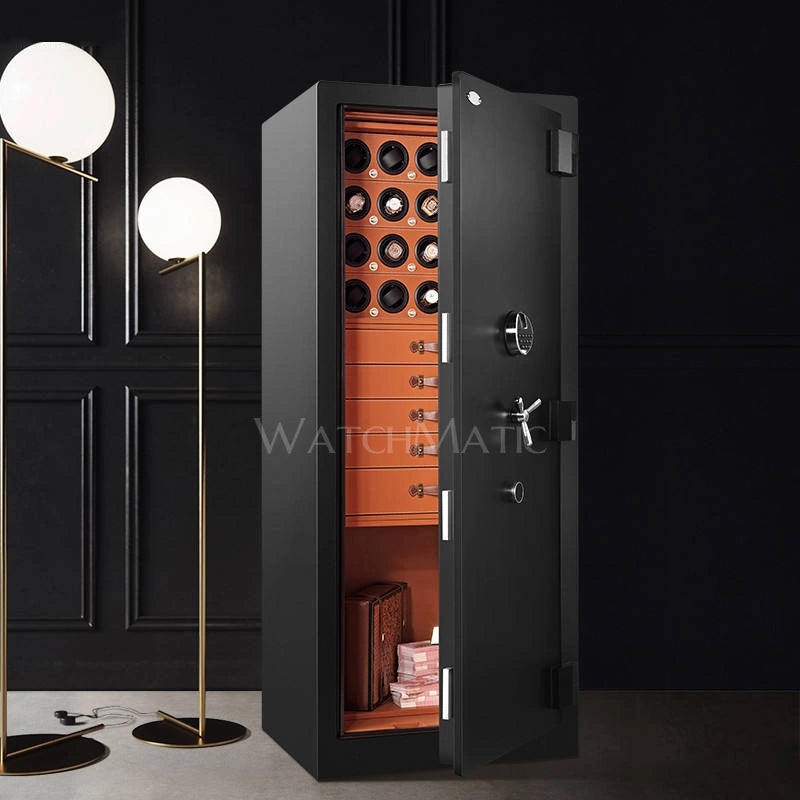
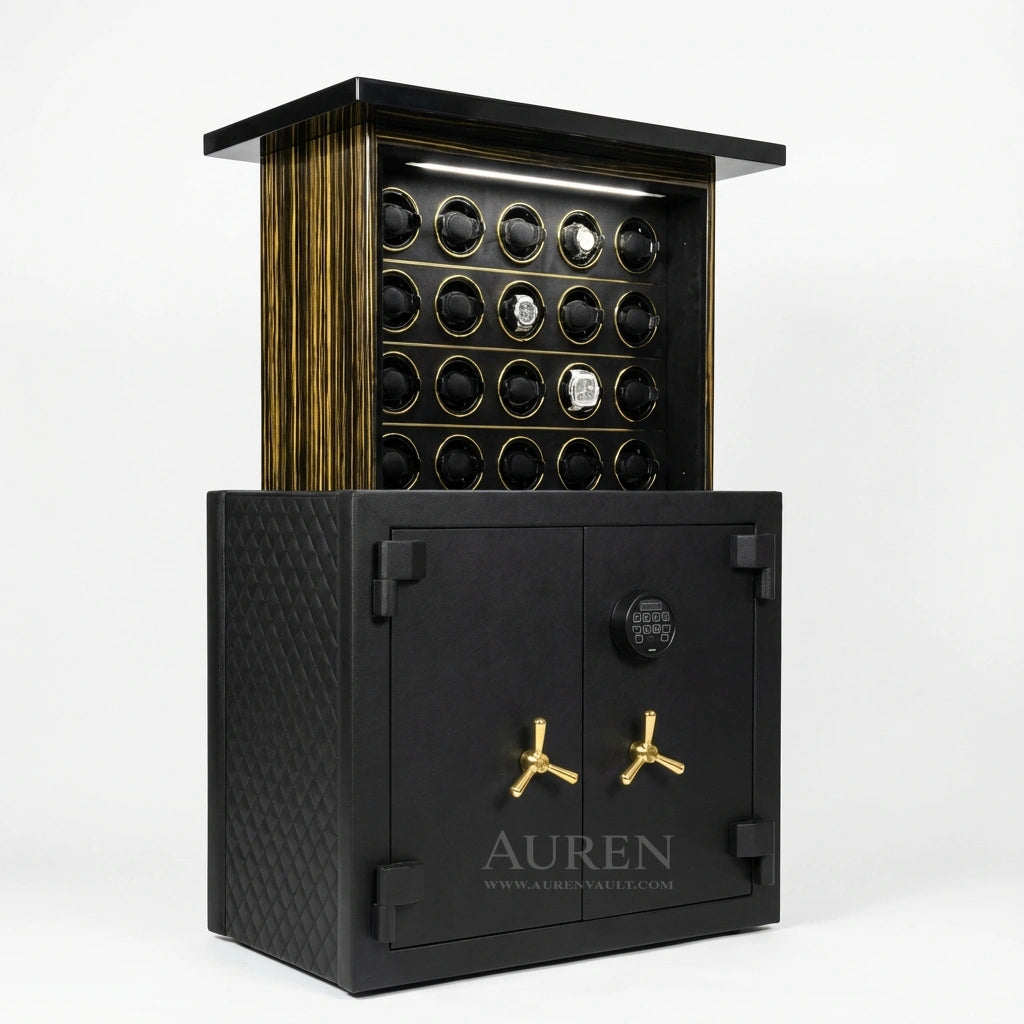
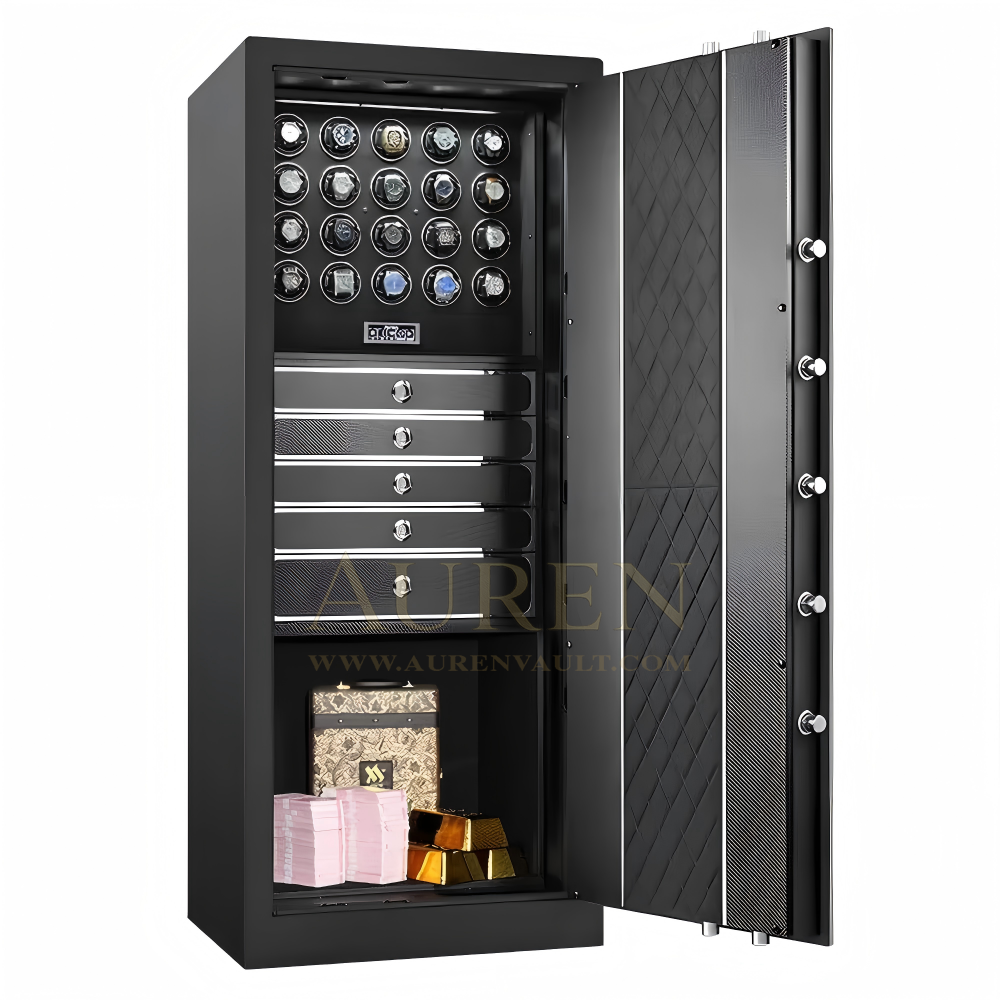
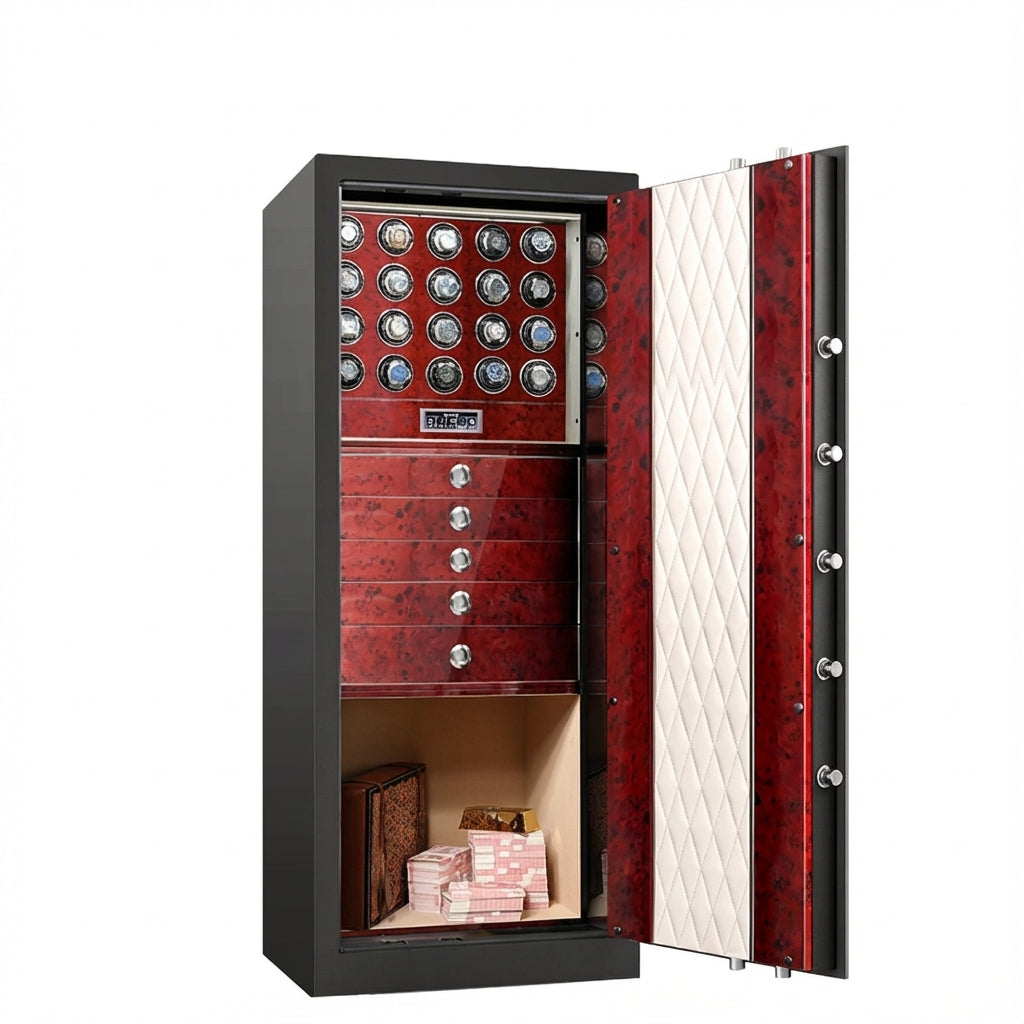
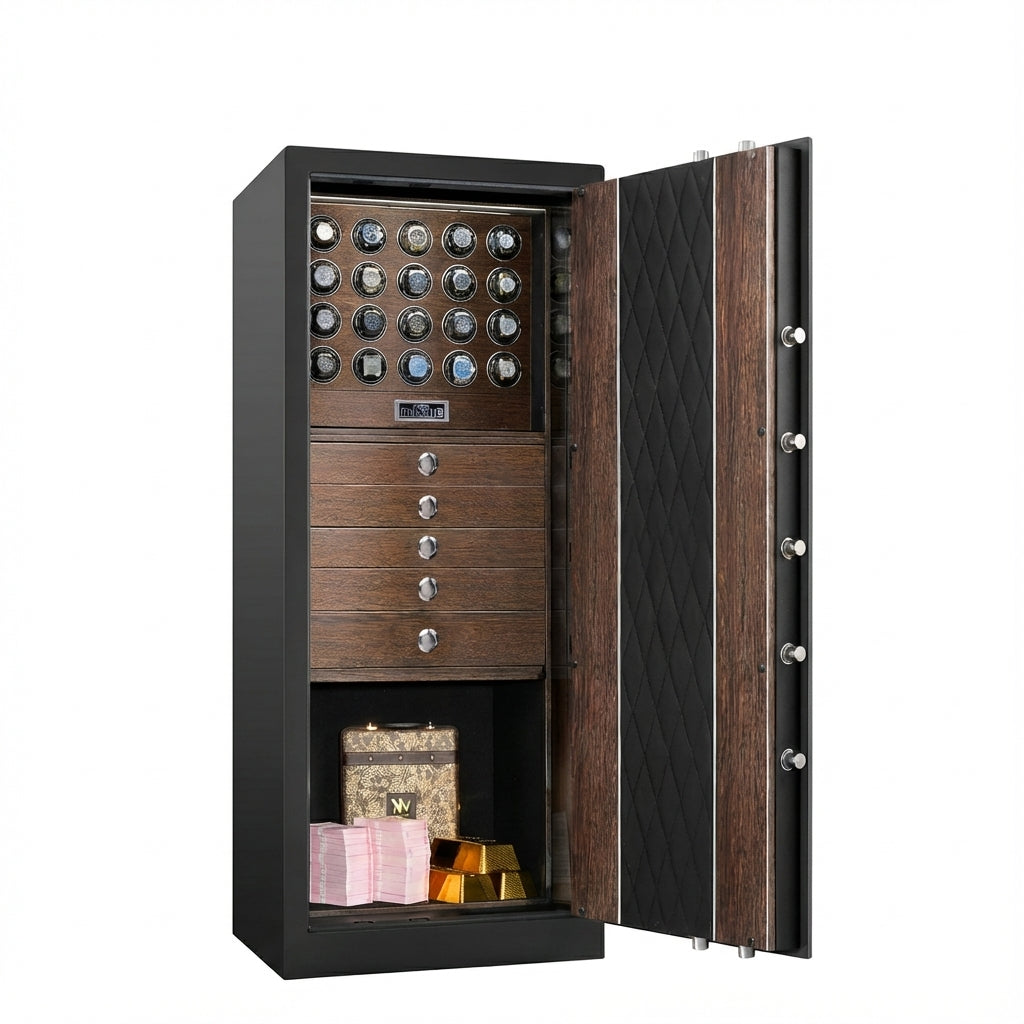
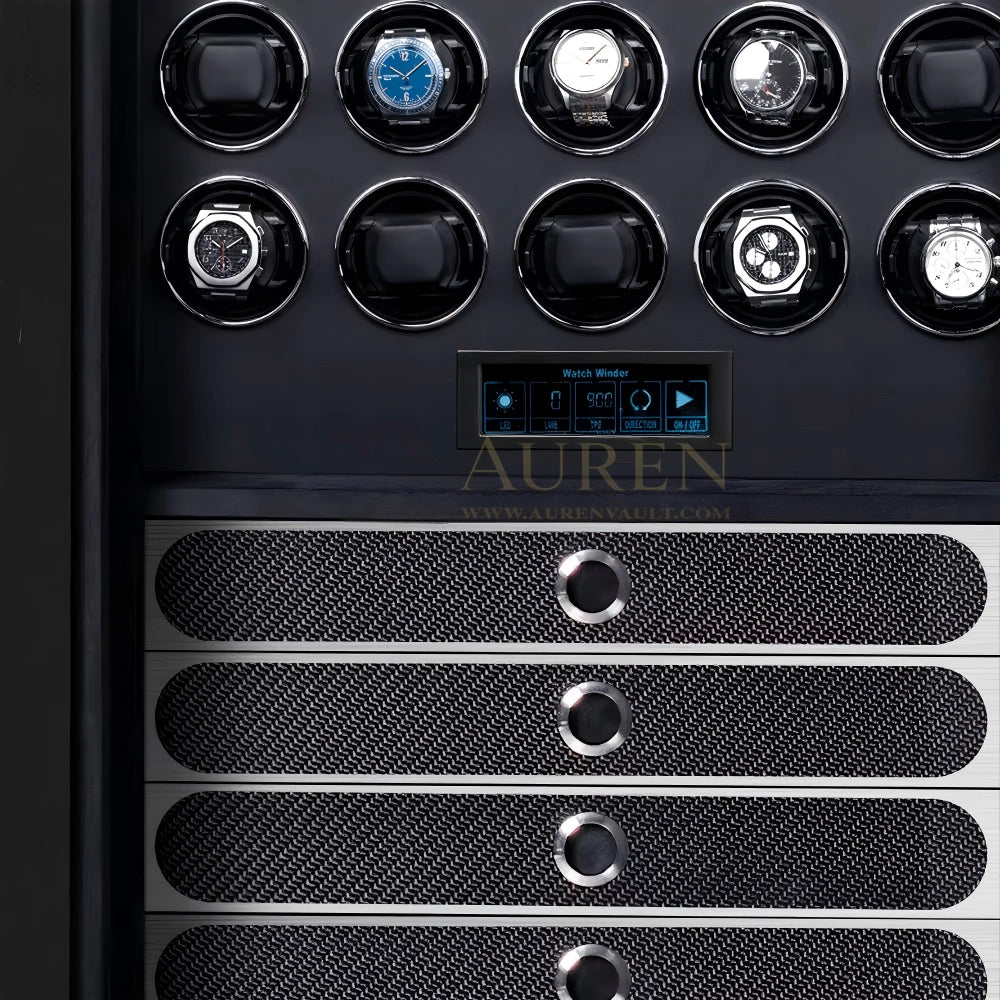
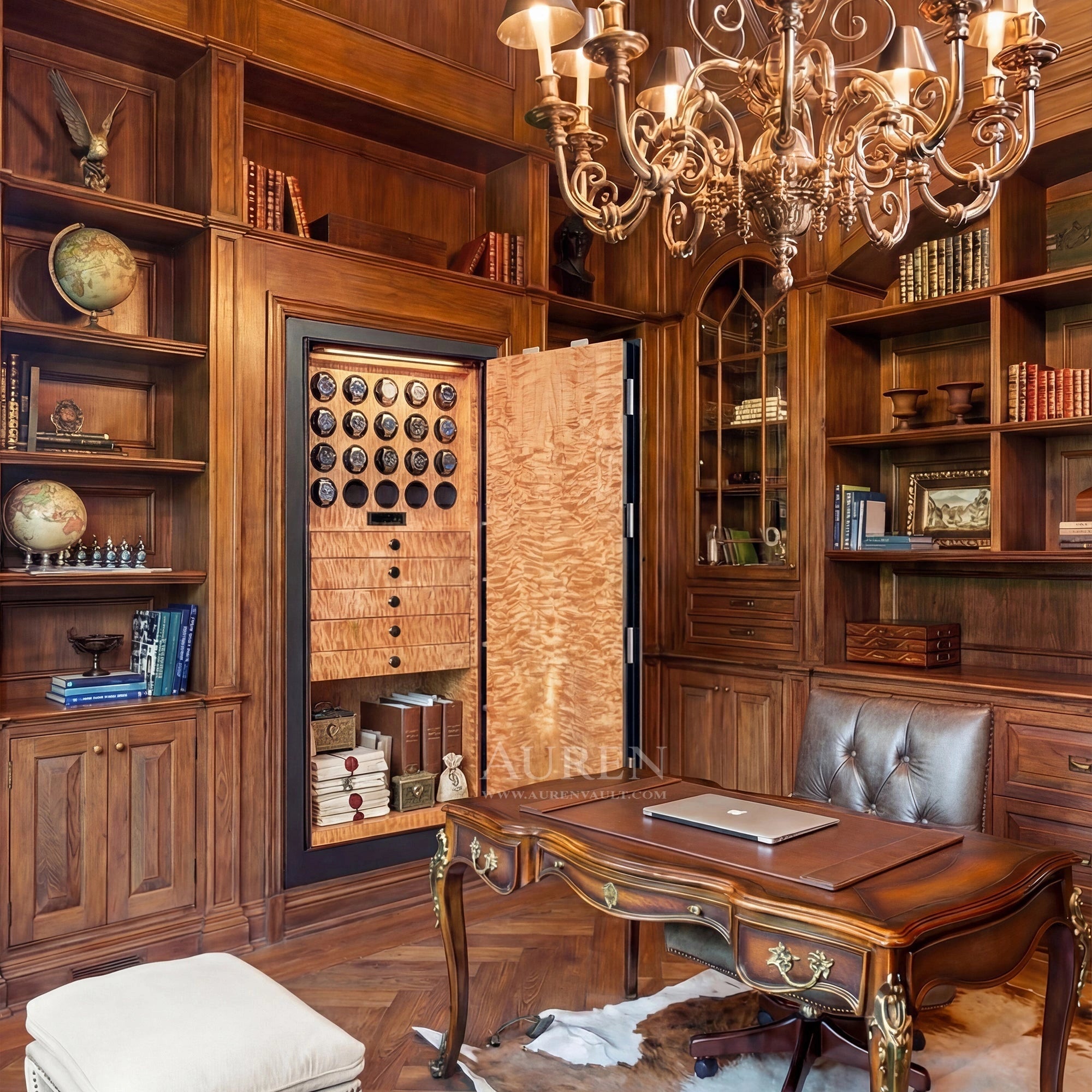
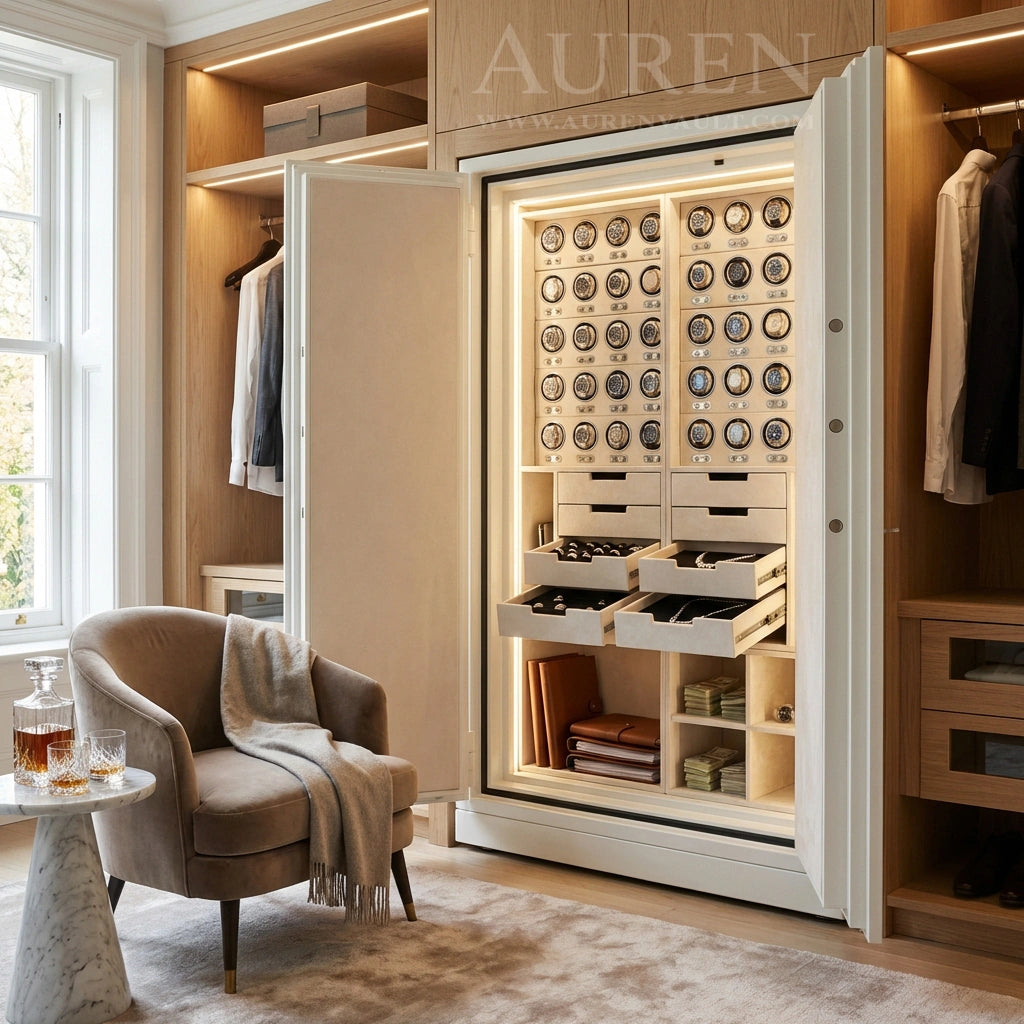
A watch winder safe combines compatible winding modules with enclosed storage.
Its suitability depends on the ability to program individual rotors, accommodate different case shapes, and support both active and passive storage.
The protective performance of a safe should be evaluated separately from its winding functionality.
A locking enclosure alone does not establish certified burglary or fire resistance.
Collectors planning larger configurations can compare options through the luxury watch safes collection.
For mixed Cartier collections containing different bracelet sizes, delicate leather straps, and non-automatic watches, custom watch safe configurations may provide greater flexibility.
The goal is to match the storage arrangement to the actual collection rather than maximize the number of rotating compartments.
Long-Term Care for Cartier Watches
Cartier watches often combine distinctive case geometries with highly polished surfaces, precious metals, leather straps, and articulated bracelets.
These materials require appropriate physical support during storage.
A square Santos, rectangular Tank, and rounded Ballon Bleu should not automatically be treated as interchangeable from a mounting perspective.
Soft cushions and adequate compartment clearance can reduce unnecessary pressure and contact.
Environmental stability also matters.
High humidity, condensation, and large temperature fluctuations can create unfavorable conditions for watches and their associated materials.
A closed watch box or safe does not automatically provide controlled humidity.
The owner should assess the storage environment rather than assume that an enclosure independently regulates moisture.
For watches stored for extended periods, passive storage may be suitable when consistent with Cartier's operating and servicing guidance.
The watch storage guide provides additional context for mechanical watch preservation.
Frequently Asked Questions About Cartier TPD
What is the recommended TPD for Cartier watches?
There is no universal setting. Approximately 650 TPD bidirectional is commonly recommended for Calibre 1847 MC, but older movements such as 076 MC, 120 MC, and 191 MC have different published requirements.
What is the best TPD setting for Santos de Cartier?
For a Santos equipped with Calibre 1847 MC, approximately 650 TPD with bidirectional rotation is a widely published starting recommendation. Verify the exact calibre before applying it.
Can I use 650 TPD for every Cartier Santos?
No. Historical Santos references may use different movements, including 049 MC, 076 MC, 120 MC, or 220 MC. Some have clockwise winding recommendations.
What is the correct Cartier Ballon Bleu winding direction?
It depends on the calibre. Independent references list 049 MC as bidirectional and 076 MC as clockwise. Modern automatic variants may use other movements. Confirm the specific reference.
What is the recommended TPD for Calibre 076 MC?
Independent watch-winder databases commonly list approximately 650–800 TPD clockwise. This should be verified for the exact movement and device.
What is the TPD for Cartier 1904-PS MC?
Published independent recommendations vary, commonly showing bidirectional rotation and numerical ranges extending from approximately 650 toward 950 TPD. Confirm the exact variant rather than treating the full range as a required setting.
What TPD should I use for Cartier 1899 MC?
A sufficiently reliable universal external setting has not been established here. Confirm the requirements for the exact automatic Tank Louis Cartier reference before programming.
Can a Tank Louis Cartier use a watch winder?
Yes, if it contains an automatic movement such as the 1899 MC. Other Tank references may be manually wound, quartz, or photovoltaic and do not benefit from conventional winding.
Does a Santos-Dumont need a watch winder?
Not when it is fitted with a manually wound movement such as the 430 MC. It must be wound through its crown according to the manufacturer's instructions.
Do Cartier quartz watches need winding?
No. Conventional quartz watches do not use automatic mechanical winding. SolarBeat watches also operate through a different energy system and do not benefit from a rotating winder.
Can a Cartier automatic be overwound on a watch winder?
Modern automatic movements generally incorporate mechanisms that prevent conventional overwinding from continued rotor activity. Nevertheless, unnecessarily high TPD provides no corresponding benefit when sufficient reserve is already maintained.
Why does my Cartier stop while on a winder?
Possible causes include insufficient initial reserve, incorrect rotation direction, inadequate effective TPD, device malfunction, or mechanical problems. Review these factors before increasing the program.
Does a Cartier chronograph need more TPD?
Not automatically. Chronograph complexity does not independently determine external winding requirements. The specific movement architecture remains decisive.
Is a watch winder safe suitable for Cartier watches?
It can be useful for collectors with several automatic watches who also want organized enclosed storage. The configuration should account for square and rectangular cases, different strap types, and passive compartments for non-automatic watches.
Further Reading: Cartier Winding and Watch Storage
Correct external winding begins with movement identification, but the physical design of the watch and the storage environment also matter.
For a broader comparison of winding devices, Best Watch Winder for Cartier Watches examines equipment selection, physical fit, and the practical value of maintaining automatic movements.
Collectors comparing separate watch winders with integrated storage can consult Watch Safes with Built-In Watch Winders: Are They Worth It?.
For longer-term preservation, Why Humidity Can Damage Luxury Watches addresses environmental conditions relevant to mechanical watches, bracelets, and straps.
Final Perspective: Cartier TPD Depends on Movement Generation
Cartier's visual identity is remarkably consistent, but its movement architecture varies significantly.
A modern Santos equipped with Calibre 1847 MC is different from an older Santos Galbée using Calibre 120 MC.
Ballon Bleu models can contain different automatic movements, while the Tank family includes automatic, manual, quartz, and photovoltaic configurations.
These distinctions make a single brand-wide TPD recommendation unreliable.
For Calibre 1847 MC, approximately 650 TPD bidirectional is a useful independently published starting reference.
For historical calibres, the correct external direction may be clockwise or counterclockwise, with different daily rotation requirements.
For movements such as the 1899 MC, verified calibre-specific information should take precedence over assumptions based on other Cartier models.
A suitable winder should provide appropriate programming, controlled rest periods, and secure physical support.
For collectors managing several different watches, Auren Vault offers watch storage and integrated winding configurations that can accommodate a combination of active and passive storage requirements.
The correct Cartier TPD setting is ultimately determined by the movement—not the name, shape, or prestige of the watch.