


Jaeger-LeCoultre automatic watches require calibre-specific turns-per-day (TPD) and winding-direction settings. Independent winding databases commonly list approximately 800–950 TPD counterclockwise for Calibre 899, while other movements, including the 866 and 868 families, are often associated with approximately 650–800 TPD in both directions.
The Master Ultra Thin Moon Calibre 925 presents a different case. One published winding table recommends approximately 600 TPD counterclockwise, but that figure should be independently confirmed before being applied to newer movement versions.
Jaeger-LeCoultre's power reserves also differ between generations. Modern Master Control Date and Master Ultra Thin Moon watches offer approximately 70 hours, while some older automatic movements have shorter running times.
Not every Jaeger-LeCoultre belongs on a winder. Many Reverso models use manually wound movements, including Calibre 854, and cannot receive energy from conventional external rotation.
The correct approach is to identify the exact calibre, verify its winding direction, and select a program that maintains adequate energy without unnecessary rotation.
Why Jaeger-LeCoultre Requires Calibre-Specific Winding
Jaeger-LeCoultre is associated with an extensive history of movement development and technical watchmaking.
Its collections include Master Control, Master Ultra Thin, Polaris, Reverso, and several highly complicated mechanical watches.
Across these families, the manufacturer uses different automatic winding systems and movement constructions.
Some calibres are designed around relatively simple three-hand timekeeping.
Others incorporate moonphase indications, complete calendars, geographic time-zone displays, chronographs, alarms, or perpetual calendars.
This diversity creates an important distinction between the complexity of a watch and the requirements of its automatic winding mechanism.
A watch winder rotates the complete watch to produce motion inside its automatic movement.
The internal oscillating weight responds to that motion, transferring energy to the mainspring through the winding system.
However, different calibres do not necessarily convert the same external rotation into equal amounts of stored energy.
This is particularly relevant to Jaeger-LeCoultre because independent winding-reference databases identify both bidirectional and single-direction programs across its movement history.
An older Master Control and a contemporary Master Ultra Thin may have similar appearances yet use different automatic movement generations.
Their power reserves and external winding recommendations should not automatically be treated as interchangeable.
Jaeger-LeCoultre Watch Winder Settings by Calibre
A reliable Jaeger-LeCoultre TPD guide should begin with the movement rather than the collection name.
Independent winding databases provide useful historical recommendations, but these are not universal manufacturer instructions.
Some references list a movement family without distinguishing later revisions.
Others provide a numerical setting for a particular variant.
The following comparison separates established third-party settings from movements requiring further verification.
Jaeger-LeCoultre TPD and Rotation Direction Chart
| Calibre | Representative watch or family | Independent TPD reference | Rotation direction |
|---|---|---|---|
| 899 | Master Control Date | 800–950 | Counterclockwise |
| 925 | Master Ultra Thin Moon | Approximately 600 in one database | Counterclockwise in that reference; verify |
| 866 | Master Control Calendar | 650–800 | Bidirectional |
| 868 | Master Ultra Thin Perpetual Calendar | 650–800 | Bidirectional |
| 898A/B/C | Selected Polaris references | 650–800 | Bidirectional |
| 939A | Selected Geographic variants | 650–800 | Bidirectional |
| 937 | Earlier Master Geographic | 800–950 | Counterclockwise |
| 956 | Master Memovox family | 800–950 | Counterclockwise |
| 975 | Historical automatic movements | 800–950 | Counterclockwise |
| 978 | Historical tourbillon movements | 800–950 | Counterclockwise |
| 761 | Polaris Chronograph | Verify exact calibre | Verify |
| 759 | Master Control Chronograph Calendar | Verify exact calibre | Verify |
| 854 | Reverso Tribute Duoface | Not applicable | Manual winding |
Numeric settings are independent external winding recommendations. They are not universal Jaeger-LeCoultre-issued specifications. Calibre suffixes and movement revisions matter, especially when a historical database entry is being considered for a modern watch.
The comparison reveals several distinct winding patterns.
Calibre 899 is consistently associated with counterclockwise external winding in multiple historical reference tables.
Calibre 866 and Calibre 868 commonly appear with bidirectional recommendations.
The Calibre 925 entry is more limited. A published recommendation of approximately 600 TPD counterclockwise exists, but owners should confirm that it applies to the exact modern version of the movement.
Other calibres, including 761 and 759, should not receive arbitrary numerical settings simply because they belong to the same manufacturer.
This is why movement-specific verification remains essential.
The watch TPD guide provides additional explanations of rotation counting, directional programs, and the relationship between winding motion and stored energy.
Master Control Date: Calibre 899 and Counterclockwise Winding
The Master Control Date provides an important starting point for Jaeger-LeCoultre winding requirements.
Contemporary references use Calibre 899, an automatic manufacture movement.
The modern generation offers approximately 70 hours of power reserve.
This extended running time reflects revisions to the movement's energy management and mechanical construction.
Jaeger-LeCoultre has redesigned elements of Calibre 899, including the barrel and escapement-related components, to improve efficiency while preserving the movement's relatively slim proportions.
What Is the Recommended TPD for Calibre 899?
Independent watch-winder databases commonly list approximately 800–950 TPD counterclockwise for Calibre 899.
This differs significantly from the generic 650 TPD bidirectional program often suggested for modern automatic watches.
The distinction matters because an incorrectly selected direction may provide insufficient effective winding.
However, an important qualification applies.
Calibre 899 has undergone revisions over time.
A winding-table entry that refers simply to “899” does not necessarily establish that every later movement revision has identical external winding requirements.
Owners of contemporary 70-hour references should confirm the exact calibre version before relying on historical guidance.
Does the 70-Hour Reserve Reduce the Need for a Winder?
It can reduce the practical need for external winding during short periods of non-use.
A sufficiently wound Calibre 899 can operate for nearly three days without additional energy.
For someone who wears a Master Control Date during the working week and changes watches briefly over the weekend, this may be sufficient.
An owner who wears the watch only once every week or two may find a compatible winder more convenient.
The longer reserve does not, however, establish a lower TPD requirement.
Power reserve measures available running time.
TPD measures external winding rotations.
The relationship depends on the movement's automatic winding efficiency.
Why Calibre Revisions Matter
A longer reserve may result from changes to the mainspring, barrel, energy consumption, or other movement components.
It does not automatically indicate that the external rotor requires fewer rotations.
Consequently, the correct program for a modern Master Control Date should be based on its actual movement generation.
This principle also applies to other updated Jaeger-LeCoultre calibres.
Master Ultra Thin Moon: Calibre 925 and the 600 TPD Reference
The Master Ultra Thin Moon is among Jaeger-LeCoultre's most recognizable contemporary dress watches.
Representative current references use the automatic Calibre 925.
The movement combines hours, minutes, seconds, date, and moonphase indications.
Modern versions provide approximately 70 hours of power reserve.
The watch is available in different case sizes and configurations, including 36 mm and 39 mm references.
Its refined proportions create a different ownership experience from that of larger sports watches.
However, the most important issue for external winding is the calibre itself.
What TPD Does Jaeger-LeCoultre Calibre 925 Require?
One independent winding database lists Calibre 925 at approximately 600 TPD counterclockwise.
That recommendation is notably different from the 800–950 TPD counterclockwise range commonly associated with Calibre 899.
This demonstrates why settings should not automatically be transferred between visually related Jaeger-LeCoultre watches.
However, the Calibre 925 recommendation should be treated cautiously.
A single third-party database entry is not equivalent to a manufacturer-issued setting.
The movement has also undergone revisions, including changes associated with longer power reserve.
An owner should therefore confirm the precise movement version and external winding requirements before establishing a permanent program.
Why the Moonphase Can Make Winding Convenient
The Master Ultra Thin Moon includes a moonphase display that progresses with the movement.
If the watch stops, the indications must be restored according to the manufacturer's instructions.
For someone who wears the watch frequently, its 70-hour reserve may prevent interruptions during short periods of non-use.
For a collector who wears the watch only occasionally, a compatible winder can reduce the frequency of resetting the date and moonphase.
The benefit becomes more noticeable when several complicated watches are rotated within a collection.
However, the presence of a moonphase display does not independently determine TPD.
The automatic winding mechanism remains responsible for replenishing the mainspring.
Why Case Thickness and Strap Support Matter
The Master Ultra Thin Moon has a relatively slim profile and is commonly fitted with a refined leather strap.
A large rigid winder cushion may place unnecessary tension on the strap.
A compressible holder provides greater flexibility for smaller wrist sizes and delicate leather.
The watch should remain stable during rotation without applying pressure to the crown or case.
Adequate compartment clearance is also important.
For ultra-thin dress watches, physical compatibility should receive the same attention as electronic programming.
Master Control Calendar: Calibre 866
The Master Control Calendar uses Calibre 866 in its contemporary form.
Jaeger-LeCoultre describes this automatic movement as inspired by traditional triple-calendar watches.
It incorporates day, date, month, and moonphase indications.
The modern movement offers approximately 70 hours of power reserve.
Its calendar construction includes a distinctive date-hand mechanism designed to avoid obscuring the moonphase display during part of the month.
This is a practical example of how a complicated calendar movement can combine traditional functionality with modern engineering.
What Is the Calibre 866 Winder Setting?
Independent winding tables commonly list Calibre 866 at approximately 650–800 TPD with bidirectional rotation.
This differs from the counterclockwise recommendation associated with Calibre 899.
Although the movements belong to the same broad Master Control collection, they should not automatically share a program.
Their winding systems require separate consideration.
Owners should also confirm that the published recommendation applies to the exact contemporary movement version.
Why a Calendar Watch Can Benefit From Continuous Operation
When a conventional three-hand watch stops, restoring the correct time is relatively straightforward.
A complete calendar introduces additional indications.
If the watch remains stopped for an extended period, the owner may need to adjust the date, day, month, and moonphase.
These operations should follow the manufacturer's instructions, particularly where calendar mechanisms have restricted adjustment periods.
A compatible winder can reduce the frequency of these procedures.
However, calendar complexity does not automatically require more TPD.
The correct external program remains dependent on the movement's automatic winding system.
The practical reason for using a winder is to maintain synchronization, not to compensate for the number of calendar displays.
Master Control Geographic: Calibre 939 and Earlier Movements
The Master Control Geographic provides another example of movement development across generations.
The contemporary Geographic uses Calibre 939, which offers approximately 70 hours of power reserve.
Its travel-time mechanism allows the wearer to select a location through a dedicated geographic display.
This creates a different experience from a conventional GMT watch, where a second hour hand may be adjusted more directly.
Earlier Geographic references used other automatic calibres, including Calibre 937.
The distinction matters because published winding recommendations vary between movement families.
Calibre 937: A Historical Counterclockwise Reference
Independent winding tables commonly list Calibre 937 at approximately 800–950 TPD counterclockwise.
This provides a useful reference for watches positively identified as containing that movement.
However, the recommendation should not automatically be applied to the contemporary Calibre 939.
The movement numbers and generations differ.
Does Calibre 939 Use Bidirectional Winding?
Some independent tables list the 939A variant with approximately 650–800 TPD bidirectional.
However, a recommendation for 939A should not be applied indiscriminately to every watch labeled Calibre 939.
The exact suffix and movement generation need to be checked.
This is particularly important because technical revisions can affect a movement's winding characteristics.
Is a Geographic Watch More Dependent on a Winder?
Not mechanically.
Its time-zone functions do not create a universal additional TPD requirement.
However, maintaining continuous operation may be convenient for an owner who travels frequently or rotates among several watches.
If the movement stops, its time-zone and related indications may require resetting.
The decision to use a winder therefore depends more on wearing habits than on complication count alone.
Master Control Chronograph Calendar: Calibre 759
The Master Control Chronograph Calendar combines chronograph functions with a triple-calendar display and moonphase.
Its contemporary automatic Calibre 759 provides approximately 65 hours of power reserve.
The movement incorporates a column-wheel chronograph with vertical clutch.
This construction allows the watch to combine mechanical timekeeping, elapsed-time measurement, and calendar functions.
From an ownership perspective, a compatible winder may be particularly convenient.
A collector who uses the watch only occasionally may prefer to keep its calendar indications synchronized between wears.
However, the movement's complexity does not establish a numerical TPD requirement.
Why a Generic Chronograph Setting Is Inadequate
Some traditional automatic chronographs use movements with unidirectional winding mechanisms.
Others use bidirectional systems.
The presence of chronograph pushers or counters does not reveal which arrangement is present.
Therefore, a TPD recommendation intended for another automatic chronograph should not automatically be applied to Calibre 759.
A reliable movement-specific program should be confirmed before prolonged use.
Where no dependable external winding recommendation is available, it is preferable to leave the setting unverified rather than assign a speculative number.
Master Ultra Thin Perpetual Calendar: Calibre 868
The Master Ultra Thin Perpetual Calendar represents one of the strongest practical cases for considering compatible automatic winding.
Contemporary references use Calibre 868.
Jaeger-LeCoultre specifies approximately 70 hours of power reserve.
The movement incorporates a perpetual calendar with day, date, month, year, and moonphase indications.
Its compact construction supports the collection's relatively thin case profile.
Calibre 868 TPD Settings
Independent winding databases commonly list Calibre 868 at approximately 650–800 TPD with bidirectional rotation.
This is a preliminary reference rather than a universal factory-issued instruction.
The owner should confirm the exact movement version before use.
The setting should also be checked against the external winder's operating convention.
Why Maintaining a Perpetual Calendar Can Be Valuable
A perpetual calendar automatically accounts for the varying lengths of months and leap-year cycles while the movement remains correctly set and running.
When it stops, the owner may need to restore several indications.
This can be more involved than restarting a simple automatic watch.
A compatible winder can reduce the frequency of resetting.
However, a perpetual calendar is not mechanically required to operate continuously under all circumstances.
For long-term non-use, passive storage may still be appropriate when consistent with the manufacturer's guidance.
The main benefit of winding is convenience and preservation of the established calendar indications.
Respecting the Calendar Adjustment Mechanism
Perpetual calendars often contain delicate setting arrangements.
The owner should never assume that an incorrect display can be corrected by simply rotating the watch continuously.
A winder supplies energy to the movement.
It does not independently select the correct date or repair a misadjusted calendar.
When the watch has stopped, resetting should follow Jaeger-LeCoultre's specific operating instructions.
For a complicated perpetual calendar, professional assistance may be appropriate if the procedure is uncertain.
Polaris: Different Automatic Calibres Across the Collection
The Polaris family combines sport-oriented design with Jaeger-LeCoultre's manufacture movements.
However, the collection includes several different automatic calibres.
This makes a single Polaris TPD setting unreliable.
Selected earlier Polaris Automatic references use Calibre 898.
Contemporary Polaris Chronograph references use Calibre 761.
Other Polaris models may contain different movements.
Calibre 898: Historical Bidirectional Recommendations
Independent winding databases commonly list Calibre 898 variants, including 898A, 898B, and 898C, at approximately 650–800 TPD bidirectional.
These figures provide useful historical starting references.
However, the exact movement suffix should be identified.
A program listed for 898A should not automatically be treated as verified for every later Polaris movement.
Polaris Chronograph: Calibre 761
The contemporary Polaris Chronograph uses the automatic Calibre 761.
Jaeger-LeCoultre specifies approximately 65 hours of power reserve.
Representative models feature a substantial 42 mm case.
The movement combines automatic winding with an integrated chronograph mechanism.
However, a sufficiently reliable external TPD recommendation for the exact modern Calibre 761 has not been established here.
It would therefore be inappropriate to assign the historical 898 setting simply because both movements appear within the Polaris collection.
Physical Fit for Sports Watches
Polaris watches introduce different mounting considerations from those of the Master Ultra Thin collection.
Larger cases, crowns, and chronograph pushers may require more compartment clearance.
A secure holder should support the watch without allowing its weight to shift.
Rubber straps, leather straps, and steel bracelets also fit differently around a winder cushion.
A collector combining a slim Master Ultra Thin Moon with a larger Polaris Chronograph should evaluate both electronic programming and physical compartment dimensions.
Memovox: Calibre 956 and the Alarm Complication
Jaeger-LeCoultre's Memovox watches have a distinctive mechanical identity.
Their alarm function introduces an additional energy-consuming complication.
Selected automatic Memovox references use Calibre 956.
Independent winding tables commonly associate Calibre 956 with approximately 800–950 TPD counterclockwise.
This is a relevant historical reference, although the exact watch and movement version should be verified.
Does the Alarm Require Additional TPD?
Not automatically.
A mechanical alarm requires energy to operate, but its presence does not establish a universal external winding program.
The watch's automatic winding mechanism and alarm-energy architecture must be understood separately.
A conventional watch winder does not activate the alarm controls or perform the owner's manual setting operations.
For a Memovox, the correct approach is to identify the specific calibre and follow the manufacturer's guidance for maintaining its timekeeping and alarm mechanisms.
This is particularly important for collectors of historical references, where movement generations and servicing conditions may vary.
Reverso: Why Many Models Do Not Need a Watch Winder
The Reverso is one of Jaeger-LeCoultre's most recognizable watches.
Its rectangular reversible case creates a distinctive mechanical design.
However, the shape of the case does not determine whether the movement is automatic.
Many Reverso references contain manually wound movements.
This makes the collection an important exception when discussing Jaeger-LeCoultre watch winders.
Reverso Tribute Duoface: Calibre 854
Representative Reverso Tribute Duoface Small Seconds references use Calibre 854.
Jaeger-LeCoultre identifies this movement as manually wound.
It provides approximately 42 hours of power reserve.
The watch displays two time zones through its reversible two-dial construction.
Despite this complexity, it does not contain a conventional automatic winding rotor.
Rotating the complete watch inside an automatic winder will not replenish its mainspring.
Reverso Tribute Small Seconds and Other Manual Models
Other Reverso Tribute references also use manually wound movements.
These watches should be wound through their crowns according to the manufacturer's instructions.
A conventional watch winder is not useful for maintaining their power reserves.
This distinction matters when organizing a collection that contains both Reverso and Master Control watches.
An owner may possess several mechanical Jaeger-LeCoultre watches but need active winding positions for only some of them.
Are All Reverso Watches Manually Wound?
No.
Jaeger-LeCoultre has produced automatic Reverso references, including certain historical models.
Therefore, it would be inaccurate to claim that every Reverso is manually wound.
The correct decision depends on the exact reference and movement.
A Reverso with a confirmed automatic calibre may benefit from a compatible winder.
A manually wound Reverso cannot.
For contemporary collectors, movement identification remains more reliable than assumptions based on the collection name.
Why Jaeger-LeCoultre Power Reserve Does Not Determine TPD
One of the most common misunderstandings in watch-winder setup is the assumption that a longer power reserve requires fewer daily rotations.
This is not necessarily correct.
Power reserve measures how long a watch can operate without receiving additional winding energy.
TPD describes the number of external rotations supplied by a watch winder.
A movement's energy storage capacity and its automatic winding efficiency are related but distinct mechanical characteristics.
Consider the modern Calibre 899 and Calibre 925.
Both can provide approximately 70 hours of power reserve.
However, published independent winding references associate them with different numerical programs.
This illustrates why power reserve alone cannot establish TPD.
The correct external program depends on rotor design, gearing, winding direction, and overall movement efficiency.
A watch with 70 hours of reserve does not automatically require fewer rotations than a watch with 40 hours.
Similarly, a complicated movement does not automatically require more.
How to Configure a Jaeger-LeCoultre Watch Winder
A correct setup begins with the manufacturer's movement information.
The first task is to identify the exact reference and calibre.
Do not use only the collection name.
A Master Control Date, Master Control Calendar, and Master Control Geographic can contain different automatic movements.
The same applies to the Polaris family.
Once the movement has been identified, establish whether it is automatic or manually wound.
A manually wound watch should not be assigned an active winding position.
Establishing the Initial Reserve
If an automatic watch has stopped, follow Jaeger-LeCoultre's manual restarting instructions.
The amount of crown winding required depends on the movement.
A conventional winder should generally be used to maintain energy rather than rapidly restore a completely depleted mainspring.
Starting with sufficient reserve makes it easier to evaluate whether the external program is effective.
Selecting Rotation Direction
Confirm whether the movement requires clockwise, counterclockwise, or bidirectional external rotation.
This is particularly important for Calibre 899 and certain historical movements with published counterclockwise recommendations.
A winder that offers both directions provides flexibility but must still be programmed correctly.
Selecting the TPD Program
Use movement-specific guidance.
Where an independent source provides a range, do not assume that the highest value is automatically necessary.
A setting should provide enough effective winding to maintain the reserve.
If the available source refers to an earlier movement generation, verify its applicability before using it on a modern reference.
Checking the Watch Holder
Mount the watch securely.
Confirm that the case, crown, strap, and bracelet have adequate clearance.
A Master Ultra Thin Moon may require a smaller, softer holder than a Polaris Chronograph.
The watch should remain stable without unnecessary tension or movement.
Monitoring the Result
Observe the watch over several days.
If it continues running, the program may be sufficient for the intended storage routine.
However, a running watch does not necessarily indicate that the reserve is being maintained at a consistent level.
The movement may be consuming slightly more energy than it receives.
If the watch eventually stops, investigate the initial reserve, direction, effective daily rotations, and mechanical condition.
Increasing TPD should follow diagnosis rather than replace it.
When Should Jaeger-LeCoultre Watches Be Kept Running?
A watch winder is optional for many regularly worn automatic Jaeger-LeCoultre watches.
The owner who wears a Master Control Date almost every day may have little reason to maintain it through external winding.
The movement receives energy from ordinary wrist activity.
Its approximately 70-hour reserve also provides substantial autonomy during shorter periods of non-use.
The situation changes when several watches are rotated.
A collector may leave the Master Control Date unworn for a week while wearing other watches.
In that case, a compatible winder can reduce repeated restarting and date setting.
The practical benefit becomes more pronounced for complicated calendars.
A Master Ultra Thin Perpetual Calendar or Master Control Calendar may require more attention to reset once the movement has stopped.
Maintaining operation can reduce that inconvenience.
Nevertheless, a watch does not need to run continuously merely because it is expensive or mechanically sophisticated.
For extended storage, proper passive protection and manufacturer-recommended servicing remain important.
Choosing Winding Capacity for a Mixed Jaeger-LeCoultre Collection
Consider a collection containing a Master Control Date, Master Ultra Thin Moon, Master Control Calendar, Polaris Chronograph, Reverso Tribute Duoface, and a manually wound Reverso Tribute Small Seconds.
Four of these watches use automatic movements.
Two are manually wound.
The collection therefore does not require six active winding positions.
A cabinet with four independently programmable rotors and at least two passive compartments would provide an appropriate starting arrangement.
The owner may need fewer active positions if the Master Control Date or Polaris is worn regularly.
This distinction between winding capacity and storage capacity becomes important as a collection expands.
Standalone Winder Versus Watch Winder Safe
A standalone winder maintains a compatible automatic movement.
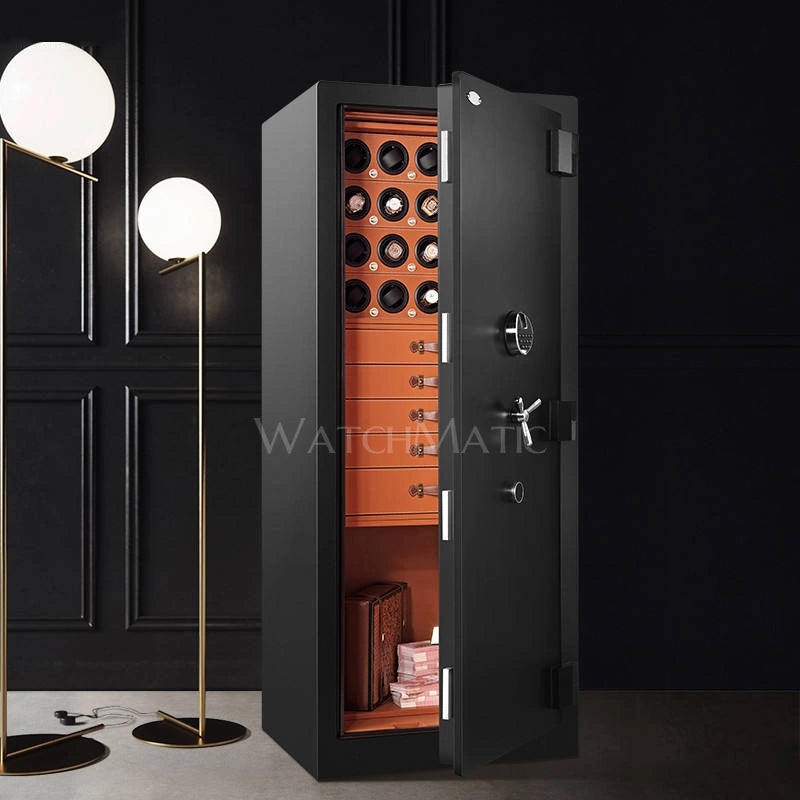
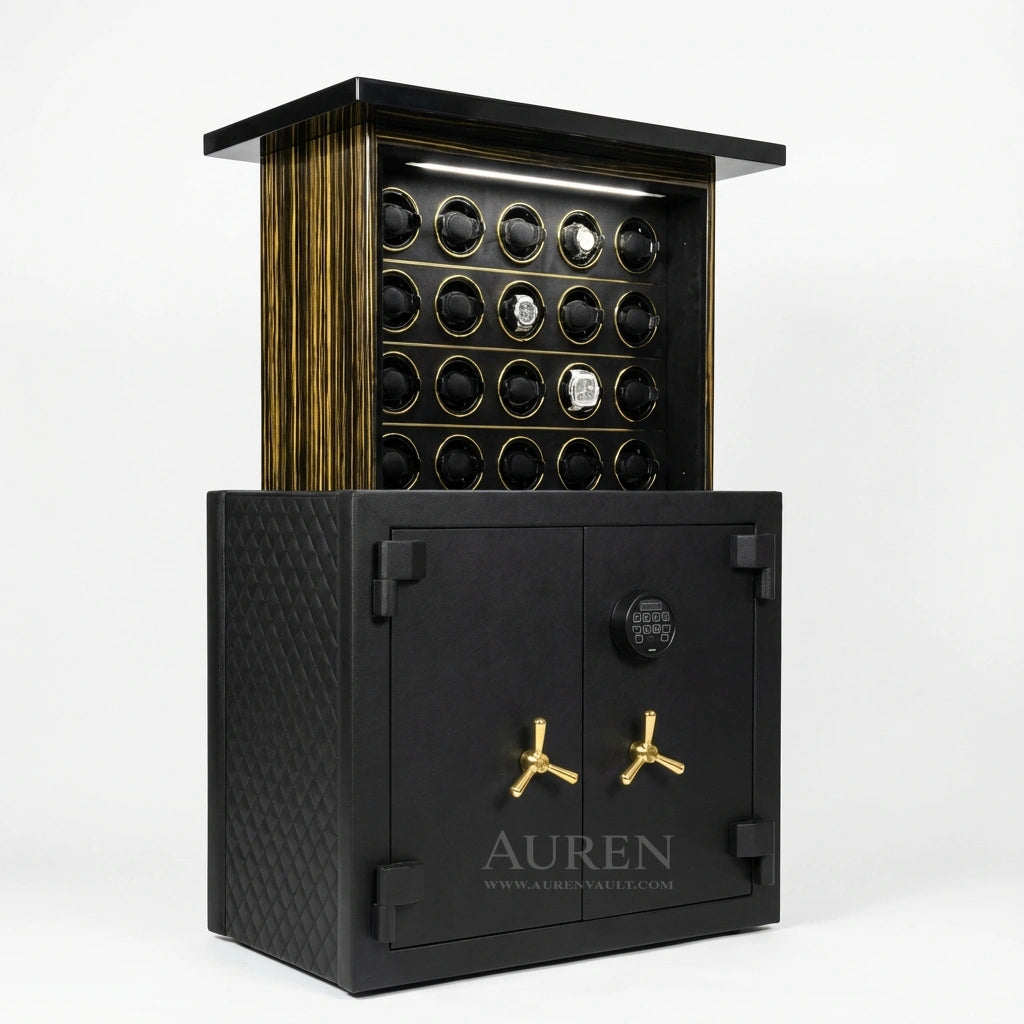
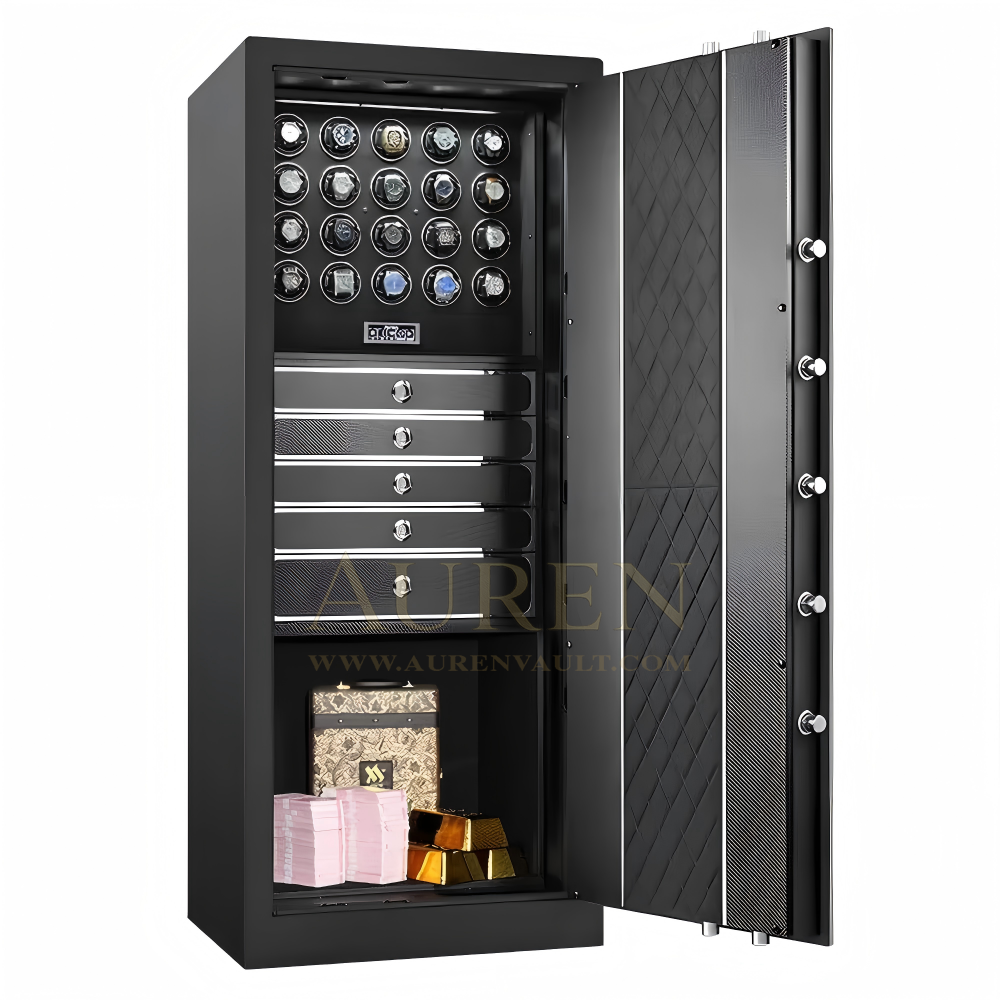
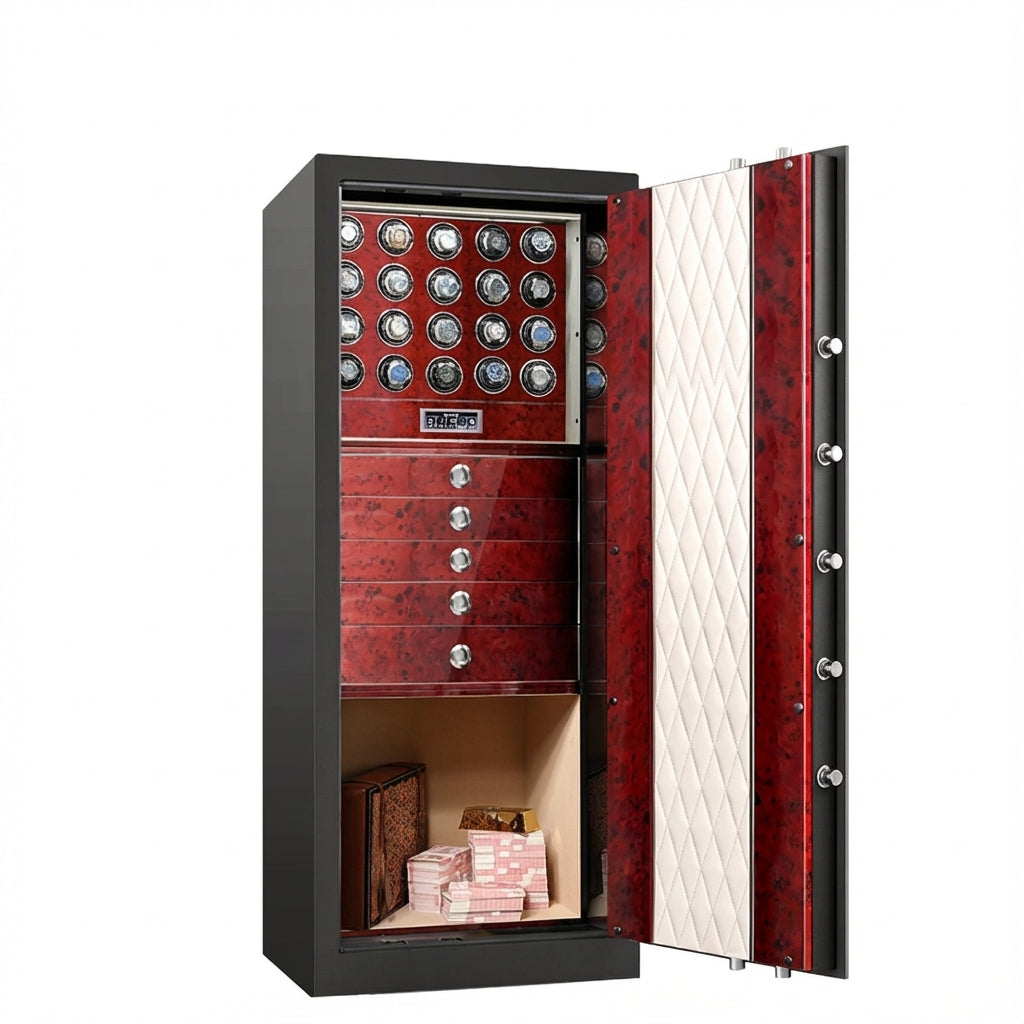
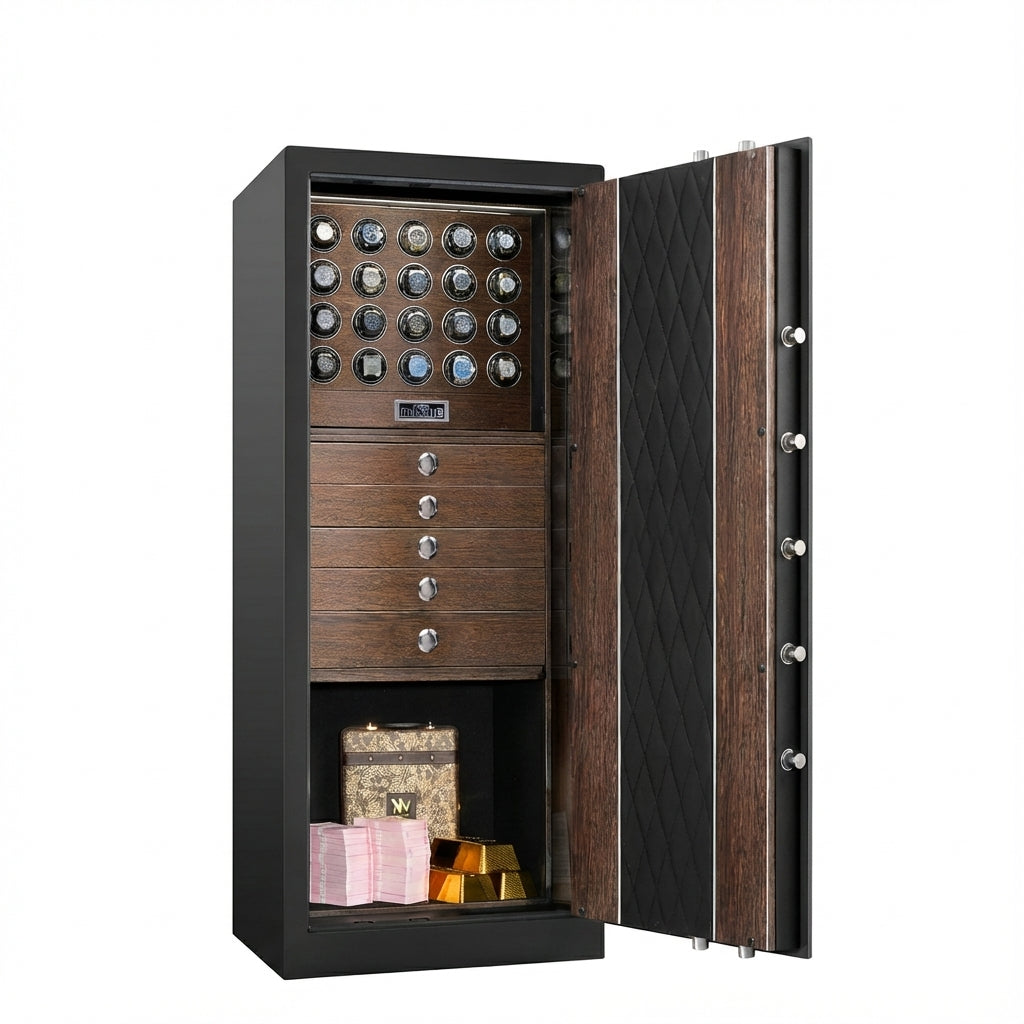
An integrated watch winder safe combines winding modules with enclosed storage.
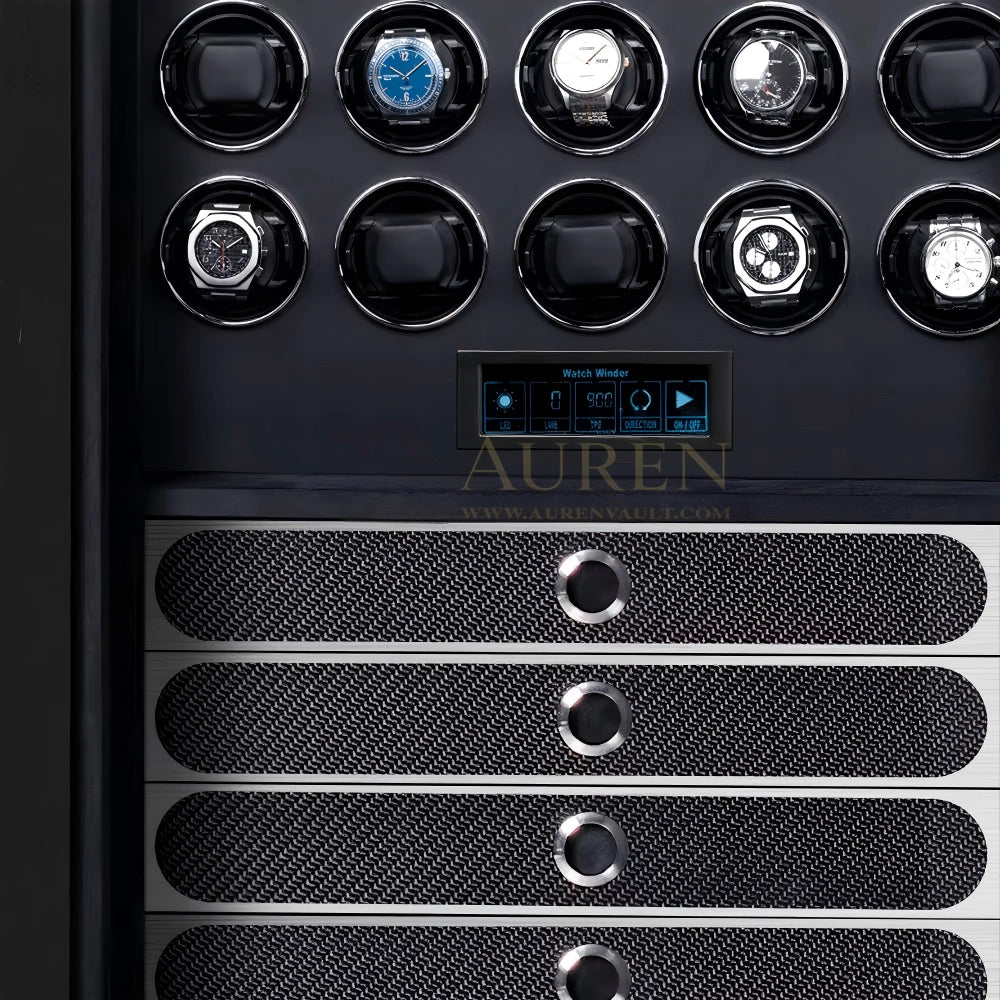
For a collector managing several Jaeger-LeCoultre calibres, independent rotor programming is especially useful.
A system with one fixed program for every rotor may be unsuitable when the collection contains movements with different directional requirements.
The holder design also matters.
Slim dress watches, substantial sports watches, and rectangular Reverso models require different storage considerations.
The watch winder safe guide provides an overview of integrated winding and protective storage.
Collectors who need more room for passive watches and larger collections can also compare luxury watch safes.
The appropriate configuration should reflect the actual movement types rather than simply the total number of watches.
Long-Term Storage and Mechanical Preservation
Correct TPD programming is only one part of maintaining a Jaeger-LeCoultre collection.
These watches may contain delicate calendar mechanisms, polished cases, leather straps, steel bracelets, and sophisticated movement constructions.
A suitable storage environment should protect the complete watch rather than focus only on its movement.
Excessive humidity and substantial temperature fluctuations can create unfavorable conditions over time.
Leather straps may also suffer when forced into unsuitable shapes or stored in persistently damp conditions.
A properly fitted cushion helps support the watch without applying unnecessary tension.
For a Reverso, the reversible case mechanism should be protected from pressure or unintended movement during storage.
For a Master Ultra Thin, adequate clearance and gentle support are particularly important.
A watch winder does not replace professional servicing or appropriate environmental care.
For broader guidance on these factors, consult the watch storage guide.
Frequently Asked Questions About Jaeger-LeCoultre TPD
What is the recommended TPD for Jaeger-LeCoultre watches?
There is no universal setting. Independent databases suggest approximately 650–800 TPD bidirectional for some movements, while others, including Calibre 899, are commonly listed around 800–950 TPD counterclockwise. The exact calibre must be identified.
What is the TPD setting for Jaeger-LeCoultre Calibre 899?
Independent winding references commonly list approximately 800–950 TPD counterclockwise. Owners of newer movement revisions should confirm that historical recommendations remain applicable.
What is the best TPD for Master Ultra Thin Moon Calibre 925?
One independent database lists approximately 600 TPD counterclockwise. Because published information is limited and the movement has undergone revisions, the exact setting should be verified before prolonged use.
Does the Master Control Date need a watch winder?
No. The automatic Calibre 899 receives winding energy during normal wear. A compatible winder can be convenient when the watch is left unworn for extended periods.
What is the winding direction for Calibre 866?
Independent winding tables commonly associate Calibre 866 with bidirectional rotation and approximately 650–800 TPD. Confirm the exact movement version before applying the program.
What TPD should I use for Master Ultra Thin Perpetual Calendar?
For Calibre 868, independent references commonly list approximately 650–800 TPD bidirectional. Verify the exact movement and device settings. Calendar complexity does not automatically require maximum TPD.
Does a moonphase complication require more TPD?
Not automatically. The complication does not directly establish the external winding program. TPD depends on the calibre's automatic winding mechanism and energy requirements.
Can the Master Control Geographic use a watch winder?
Yes, if fitted with an automatic movement. However, different Geographic generations use different calibres, including 937 and 939. Their external winding requirements should be checked separately.
What is the TPD setting for Polaris Chronograph Calibre 761?
A sufficiently reliable universal external program has not been established here. Confirm the requirements for Calibre 761 rather than applying settings intended for older Polaris movements.
What direction does Calibre 956 use?
Independent winding databases commonly list Calibre 956 at approximately 800–950 TPD counterclockwise. Confirm the exact watch reference and movement generation.
Can I put my Reverso on a watch winder?
Only if the specific Reverso contains an automatic movement. Many contemporary Reverso Tribute watches use manually wound calibres and do not benefit from conventional rotating winders.
Does the Reverso Tribute Duoface need a winder?
No, not when fitted with the manually wound Calibre 854. The watch must be wound through its crown according to the manufacturer's instructions.
Does a 70-hour power reserve mean fewer TPD?
Not necessarily. Power reserve measures available running time, while TPD measures external rotations. The correct program depends on winding efficiency and direction rather than reserve duration alone.
Can a Jaeger-LeCoultre be overwound on a winder?
Modern automatic movements generally include mechanisms that limit excessive mainspring tension from continued automatic winding. However, unnecessarily high external rotation settings provide no benefit when adequate reserve is already maintained.
Why does a Jaeger-LeCoultre stop on a watch winder?
Possible causes include an incorrect rotation direction, insufficient effective TPD, low initial reserve, device problems, or mechanical servicing needs. These factors should be checked before increasing the program.
Is a watch winder safe appropriate for a Jaeger-LeCoultre collection?
It may be suitable for collectors combining several automatic watches with manually wound Reverso models. Independent rotor controls and passive compartments are especially useful for mixed movements.
Related Reading: Automatic Movements and Watch Storage
Understanding Jaeger-LeCoultre TPD is part of a broader approach to maintaining mechanical watches.
Readers comparing winding devices can explore Best Watch Winder for Jaeger-LeCoultre Watches, which addresses practical equipment selection and model compatibility.
Collectors evaluating integrated winding and protective storage may also find Watch Safes with Built-In Watch Winders: Are They Worth It? useful.
For long-term environmental care, Why Humidity Can Damage Luxury Watches explains the risks of unstable storage conditions.
These considerations become increasingly relevant when a collection contains different movement generations and complicated watches.
Final Perspective: Jaeger-LeCoultre Winding Begins With the Movement
Jaeger-LeCoultre provides a clear example of why automatic watch winding cannot be reduced to a universal TPD number.
Calibre 899 has a different published winding reference from Calibre 866, while Calibre 925 requires particular care because its available external recommendations are limited and movement generations have evolved.
The Master Control, Master Ultra Thin, and Polaris collections contain different automatic movements that should be evaluated individually.
The Reverso collection introduces another distinction: many references are manually wound and require no conventional automatic winder.
For complicated calendars, a properly configured winder may simplify ownership by reducing repeated adjustments.
For watches worn frequently, normal wrist movement and longer power reserves may make external winding unnecessary.
A suitable storage system should therefore combine accurate movement-specific programming with appropriate physical support.
For collectors managing a mixture of automatic and manually wound timepieces, Auren Vault offers integrated winding and protective watch storage configurations designed to accommodate different collection requirements.
The correct Jaeger-LeCoultre TPD setting is ultimately the one verified for the specific calibre and movement generation—not a generic recommendation applied to the entire brand.