


Most modern Tudor automatic watches can begin with approximately 650 turns per day (TPD) and bidirectional rotation, according to independent watch-winder databases. This recommendation commonly applies to manufacture calibres such as MT5402, MT5602, MT5612, MT5652, and MT5813, although the exact program should always be verified.
Movement generations matter. Earlier Black Bay 58 watches use Calibre MT5402 with approximately 70 hours of power reserve, while newer Master Chronometer versions use MT5400-U with a certified 65-hour reserve. The Black Bay 58 GMT uses another movement, MT5450-U, also offering approximately 65 hours.
Older Tudor references and models equipped with third-party movement families may require separate settings. A generic manufacture-calibre program should not automatically be applied to every Tudor.
A watch winder is optional for regularly worn automatic watches. It becomes more convenient when owners rotate several watches or want GMT, date, and chronograph-equipped models ready between wears.
The correct Tudor TPD setting depends on the exact calibre, its effective winding direction, and the external program required to maintain adequate power reserve.
Why Tudor Winding Settings Should Be Selected by Calibre
Tudor's contemporary watchmaking identity is closely associated with robust mechanical sports watches.
Collections such as Black Bay, Pelagos, Ranger, and Black Bay Pro use automatic movements designed for everyday reliability.
However, a consistent design language does not mean that every watch contains the same calibre.
Tudor has developed several manufacture movement families, while some watches continue to use calibres based on established external movement architectures.
The differences are particularly relevant when choosing a watch winder.
An automatic movement uses an oscillating weight to replenish energy stored in the mainspring.
A conventional watch winder rotates the complete watch, creating motion that can operate this winding system.
The number of rotations delivered externally is measured in turns per day.
However, the correct TPD depends on how effectively the movement converts rotor motion into stored energy.
Two Tudor watches may have similar power reserves but require separate external verification.
The distinction is especially important with newer movements carrying the “-U” designation.
For these watches, an older recommendation associated with a related calibre should not automatically be treated as an official setting for the updated version.
The correct approach is to identify the movement first, then establish an appropriate winding program.
Tudor Watch Winder Settings by Calibre
Many modern Tudor manufacture movements use bidirectional automatic winding.
This makes adjustable winders with alternating-direction programs particularly relevant.
Independent databases commonly suggest starting around 650 TPD for several established manufacture calibres.
Other sources provide a broader range extending toward approximately 800 TPD.
These figures should be understood as third-party operating references.
Tudor publishes movement type, technical architecture, and power reserve, but those specifications do not independently establish a universal external TPD number.
Tudor TPD and Rotation Direction Chart
| Tudor calibre | Representative watch | Power reserve | Independent TPD reference | Direction |
|---|---|---|---|---|
| MT5402 | Earlier Black Bay 58, Ranger | Approx. 70 hours | Approx. 650 | Bidirectional |
| MT5400 | Pelagos 39 | Approx. 70 hours | Approx. 650 | Bidirectional |
| MT5602 | Selected Black Bay, Pelagos FXD | Approx. 70 hours | Approx. 650 | Bidirectional |
| MT5612 | Selected Pelagos date references | Approx. 70 hours | Approx. 650–800 | Bidirectional |
| MT5652 | Black Bay Pro, selected GMT references | Approx. 70 hours | Approx. 650 | Bidirectional |
| MT5813 | Black Bay Chrono | Approx. 70 hours | Approx. 650–800 | Bidirectional |
| MT5400-U | Newer Black Bay 58 Master Chronometer | 65 hours | Verify exact program | Bidirectional rotor |
| MT5450-U | Black Bay 58 GMT | Approx. 65 hours | Verify exact program | Bidirectional rotor |
| T601 | Selected Tudor 1926 references | Approx. 38 hours | Verify exact program | Verify external program |
Power reserves apply to representative movement specifications. TPD values are independently published starting recommendations, not official Tudor instructions. The newer Master Chronometer calibres should be checked individually before using programs derived from earlier movements.
The table reveals two important patterns.
Several established manufacture movements are associated with similar external winding recommendations.
However, newer movement variants and externally sourced calibres should not automatically inherit the same settings.
The difference between MT5402 and MT5400-U illustrates why model names and movement generations need to be considered together.
For a broader explanation of external rotation programs, the watch TPD guide provides additional technical context.
Black Bay 58: MT5402 Versus MT5400-U
The Black Bay 58 is among Tudor's most recognizable contemporary diving watches.
Its relatively compact proportions and vintage-inspired design make it suitable for everyday wear.
However, the collection has evolved through different movement generations.
Earlier references such as the Black Bay 58 79030N use Calibre MT5402.
Newer Master Chronometer models use MT5400-U.
These calibres are both automatic, but they have different published performance specifications.
MT5402: The 70-Hour Automatic
Calibre MT5402 is a manufacture automatic movement incorporating a bidirectional rotor system.
Tudor specifies approximately 70 hours of power reserve.
The movement operates at 28,800 vibrations per hour and is associated with the brand's established weekend-friendly autonomy.
Independent watch-winder references commonly suggest approximately 650 TPD with bidirectional external rotation.
This provides a reasonable starting point for a confirmed MT5402.
However, the result should be evaluated using the actual watch and device.
A winder that calculates rotations differently from the source database may require another program.
MT5400-U: The Newer Master Chronometer
The MT5400-U belongs to Tudor's newer generation of Master Chronometer movements.
Tudor specifies a 65-hour power reserve, certified under the relevant METAS testing framework.
The movement also incorporates a bidirectional rotor system.
Its certification addresses aspects of performance, including chronometric precision and magnetic resistance.
It does not establish an exact external watch-winder TPD requirement.
Consequently, the fact that MT5400-U is related to the broader MT5400 architecture does not prove that every historical 650 TPD recommendation applies unchanged.
Owners should verify the external program for the exact movement version.
Does 65 Hours Require More TPD Than 70 Hours?
Not necessarily.
The difference between 65 and 70 hours describes the movements' available running time under their specified conditions.
It does not directly measure their winding efficiency.
A movement with a slightly shorter reserve does not automatically require more daily rotations.
The necessary external motion depends on the automatic winding mechanism and the energy consumed by the movement.
This distinction prevents a common error: selecting TPD solely from power reserve.
Black Bay Pro: MT5652 and GMT Winding
The Black Bay Pro uses Calibre MT5652.
This automatic manufacture movement provides approximately 70 hours of power reserve.
It also includes an integrated GMT function.
The movement allows the wearer to track an additional time zone through its 24-hour indication.
For someone who travels frequently, the additional function can be convenient.
However, it does not independently determine TPD.
What TPD Should Be Used for MT5652?
Independent watch-winder databases commonly recommend approximately 650 TPD with bidirectional rotation for MT5652.
This is a useful initial reference when the calibre has been positively identified.
The movement's bidirectional rotor architecture is confirmed by Tudor's technical documentation.
However, the external device's direction convention and counting method should still be considered.
The owner should not assume that a displayed 650 TPD on every device produces exactly the same effective winding activity.
Does a GMT Watch Need Continuous Winding?
No.
The Black Bay Pro can operate without a winder as long as its mainspring contains sufficient energy.
For regular wear, wrist movement may provide adequate winding.
If the watch remains unworn beyond its reserve, it eventually stops.
A compatible winder can reduce how frequently the time and GMT indications need to be reset.
This is particularly useful for someone rotating several watches throughout the week.
The benefit is convenience rather than mechanical necessity.
Black Bay 58 GMT: Why MT5450-U Needs Separate Verification
The Black Bay 58 GMT is powered by Calibre MT5450-U.
This automatic movement incorporates an integrated GMT function and provides approximately 65 hours of power reserve.
It carries Master Chronometer certification, distinguishing it from older manufacture GMT movements.
Although both MT5450-U and MT5652 are Tudor automatic GMT calibres, their specifications are not identical.
They should therefore not automatically receive one universal program.
The correct external setting should be confirmed specifically for MT5450-U.
Why the Calibre Suffix Matters
The suffix is part of the movement's technical identity.
It can indicate a particular version or generation.
Removing the suffix when consulting a winding database may lead to using information intended for another movement.
This is particularly important when older database entries have not been updated to include newer Master Chronometer variants.
A collector should identify the exact reference rather than relying on the words “Black Bay GMT.”
The same approach applies across other Tudor movement generations.
Pelagos: Winding Requirements Across Different References
The Pelagos collection demonstrates how similar functional watches can use different automatic movements.
The Pelagos 39 uses Calibre MT5400.
Selected Pelagos FXD references use MT5602.
Other Pelagos models may use different calibre configurations, including date-equipped movements.
Although these watches share a diving-oriented purpose, their exact specifications should be confirmed independently.
Pelagos 39: Calibre MT5400
The Pelagos 39 contains the automatic MT5400 movement.
Tudor specifies approximately 70 hours of power reserve.
The movement uses a bidirectional rotor system.
Independent winding references commonly suggest approximately 650 TPD bidirectional for the MT5400 family.
For a confirmed reference, this can be a reasonable starting program.
The owner should still verify the external counting method and monitor whether the movement maintains adequate energy.
Pelagos FXD: Calibre MT5602
Selected Pelagos FXD references use Calibre MT5602.
This movement also provides approximately 70 hours of reserve.
Independent references frequently list approximately 650 TPD bidirectional.
However, the more distinctive challenge for FXD watches is often physical mounting.
The FXD case incorporates fixed strap bars.
Many references use a fabric strap that passes beneath the watch.
A conventional winder cushion may not accommodate this arrangement as easily as a standard steel bracelet.
The strap should not be twisted or compressed unnaturally to make the watch fit.
Why Strap Construction Matters
A winder can have an appropriate electronic program and still be unsuitable for the physical watch.
The holder must support the case securely throughout rotation.
For the Pelagos FXD, a flexible mounting system is preferable.
The strap should remain properly positioned without placing unnecessary stress on the fixed bars.
An oversized cushion may create excess tension.
An undersized cushion may allow the case to shift.
This is one reason a multi-watch collection benefits from individually adaptable holders rather than identical rigid supports.
Black Bay Chrono: Calibre MT5813
The Black Bay Chrono uses Calibre MT5813.
This automatic chronograph movement offers approximately 70 hours of power reserve.
Its architecture incorporates a column-wheel chronograph with vertical clutch.
The movement is technically different from the simpler three-hand automatic calibres found in other Black Bay models.
Nevertheless, independent winding references commonly list approximately 650–800 TPD with bidirectional rotation for MT5813.
These recommendations should be confirmed for the exact watch.
Does a Tudor Chronograph Require More TPD?
Not automatically.
A chronograph contains additional mechanisms for measuring elapsed time.
However, the presence of a chronograph does not establish a universal number of external winding rotations.
TPD depends on the automatic winding mechanism and the movement's energy balance.
The chronograph's operating state can affect energy consumption, but it would be inaccurate to translate that directly into a fixed higher TPD recommendation.
A watch winder does not activate the chronograph pushers.
It only provides external movement that can replenish the mainspring.
Why Case Clearance Is Important
The Black Bay Chrono has a substantial case with crown and chronograph pushers.
These components must have sufficient clearance throughout rotation.
The watch should remain securely mounted without contact between the case and compartment.
A holder suited to a small three-hand watch may not provide enough room for a chronograph.
For owners combining Black Bay 58 and Black Bay Chrono references, adjustable holders and adequately sized compartments are valuable.
Tudor 1926: A Shorter Power Reserve Changes the Experience
The Tudor 1926 provides a useful contrast to the Black Bay and Pelagos collections.
Selected references use Calibre T601, an automatic movement with approximately 38 hours of power reserve.
This is substantially shorter than the 65–70-hour reserves found in many Tudor manufacture movements.
The difference can affect how often the watch stops between periods of wear.
Does the T601 Need a Winder More Often?
A compatible winder may offer greater practical convenience.
Consider an owner who wears a Tudor 1926 during the working week and leaves it unworn throughout the weekend.
The movement may exhaust its reserve before Monday.
An automatic Tudor with 70 hours of reserve may continue running longer under similar conditions.
However, the shorter reserve does not establish the T601's external TPD.
It would be inappropriate to apply a manufacture movement's 650 TPD recommendation without confirming the T601's own winding requirements.
Why a Dress Watch Needs Different Physical Support
Tudor 1926 watches may be fitted with refined bracelets or leather straps.
These should be supported without unnecessary stretching or tension.
A compressible cushion can accommodate different strap sizes more naturally than a rigid holder.
Case clearance also matters, especially for smaller references.
The goal is to provide controlled winding while preserving the watch's physical condition.
Historical Tudor Movements: Do Not Assume Modern Settings Apply
Tudor has used a variety of movements throughout its history.
Earlier watches may contain ETA-based automatic calibres or other movement families that differ from contemporary manufacture designs.
Some historical watches are also manually wound.
This creates a different technical situation from that of a modern Black Bay equipped with MT5402.
An ETA-derived automatic movement should be evaluated according to its underlying calibre.
A manually wound historical watch cannot benefit from a conventional rotating winder.
For collectors of vintage Tudor watches, movement identification is particularly important because production variations and servicing histories may complicate assumptions.
A modern Tudor TPD chart should not be treated as a universal reference for every watch carrying the brand's name.
How to Set Up a Tudor Watch Winder
An effective setup begins with identifying the reference and calibre.
Do not choose a program solely from the collection name.
Once the movement is confirmed as automatic, consult reliable information about its external winding direction and daily rotation requirement.
For several established manufacture calibres, approximately 650 TPD bidirectional is a common independent starting reference.
However, newer movement versions and older externally sourced calibres should be verified separately.
Establishing Initial Power
If the watch has stopped, follow Tudor's instructions for restarting it through the crown.
A winder is generally intended to maintain the running state rather than rapidly replenish a fully depleted mainspring.
Starting with adequate energy makes it easier to assess whether the external program is effective.
After setting the time and date, ensure that the crown is secured according to the watch's instructions.
This is particularly important for Tudor diving watches with screw-down crowns.
Selecting a Program
Choose the verified direction and TPD.
Where the device provides several programs, select one consistent with the movement-specific reference.
A higher setting is not automatically better.
The objective is to supply enough winding to maintain adequate reserve.
Monitoring Performance
Allow the watch to remain on the winder over several days.
Check whether it continues operating.
If the watch stops, investigate the initial reserve, actual rotation count, direction, device performance, and movement condition.
A watch can remain running for a period while its power reserve gradually declines.
Consequently, simply checking that the seconds hand is moving does not prove that the selected program fully maintains energy.
Where necessary, a longer observation period or professional assessment may be appropriate.
Can a Tudor Be Overwound on a Watch Winder?
Modern automatic Tudor movements incorporate mechanisms that prevent ordinary automatic winding from increasing mainspring tension indefinitely.
This is a normal feature of contemporary automatic movement design.
However, it does not mean that the watch should be rotated continuously at the highest available setting.
Once adequate reserve is maintained, additional external rotation offers little practical benefit.
A well-designed winder divides motion into operating and rest periods.
The objective is controlled energy maintenance.
A properly selected program should support the movement without requiring unnecessary continuous activity.
Does a 70-Hour Power Reserve Make a Watch Winder Unnecessary?
A long reserve can make a winder less necessary for watches worn frequently.
Consider an owner who wears a Black Bay Pro during the working week.
If the watch has sufficient reserve on Friday evening, it may remain running through the weekend without external winding.
This can make a standalone winder unnecessary for that ownership routine.
The situation changes for someone who rotates among five or six watches.
Even a 70-hour movement may stop before the owner returns to it.
A compatible winder can reduce repeated time, date, and GMT adjustments.
The benefit is therefore connected to wearing frequency.
Power reserve influences how often a watch may stop, but it does not independently determine the correct TPD.
Planning Storage for a Mixed Tudor Collection
Consider a collection containing an earlier Black Bay 58, a newer Master Chronometer Black Bay 58, a Black Bay Pro, a Pelagos FXD, a Black Bay Chrono, and a Tudor 1926.
All six representative watches use automatic movements.
However, that does not mean six continuously operating rotors are necessary.
The owner might wear one Tudor daily and rotate two others during the week.
The remaining watches could remain in passive storage until needed.
A configuration with independently programmable rotors provides flexibility.
It also allows different movement generations to receive separate programs when necessary.
Standalone Winder or Integrated Watch Winder Safe?
A standalone programmable winder can be sufficient for one or two automatic Tudor watches.
For a larger collection, enclosed storage may become more important.
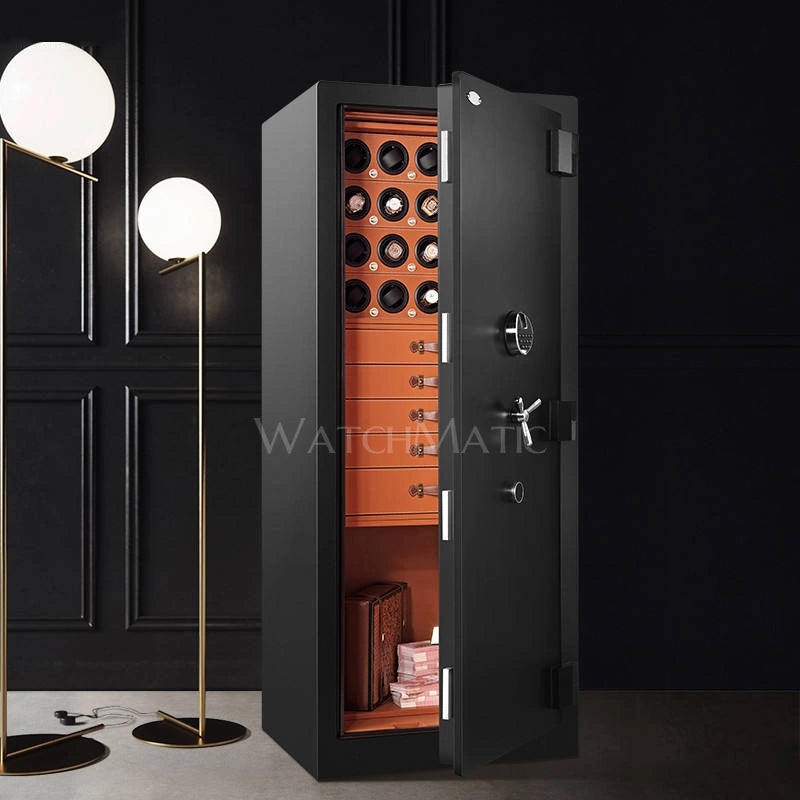
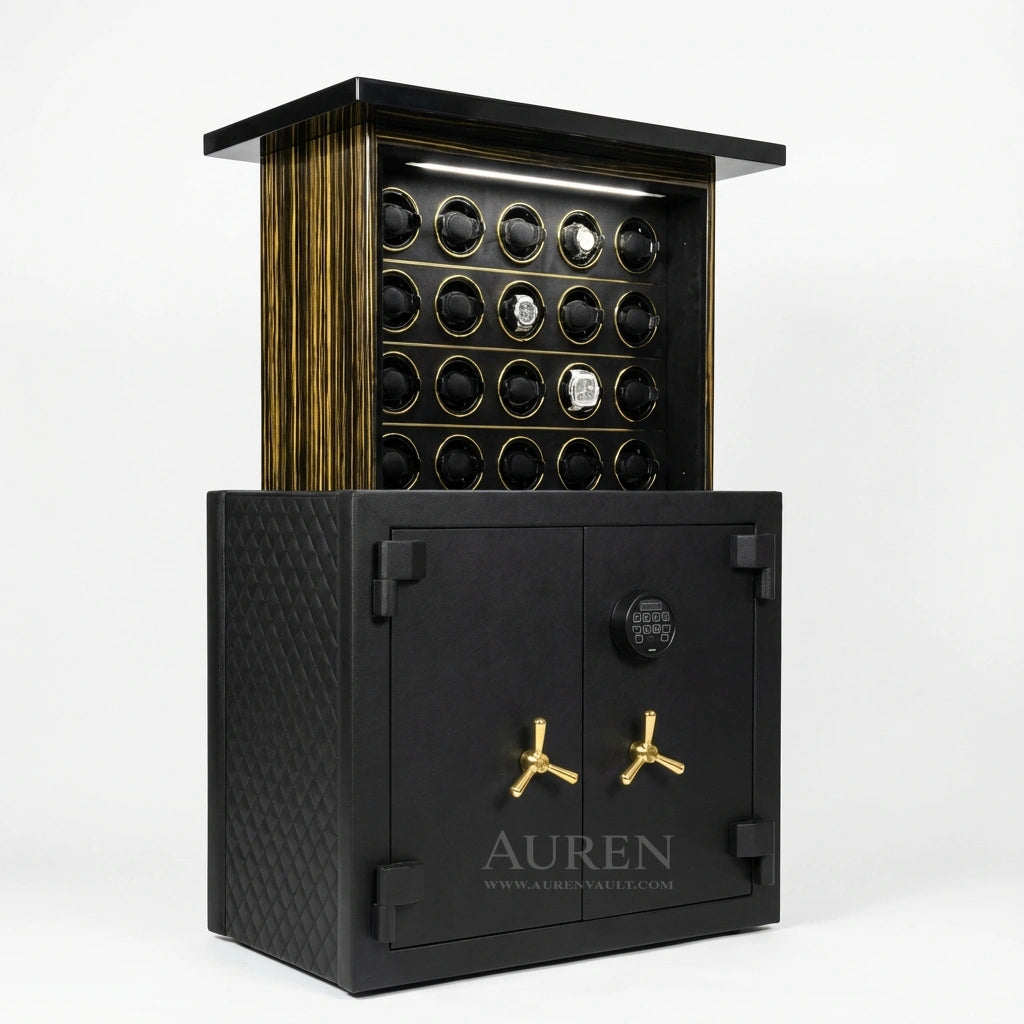
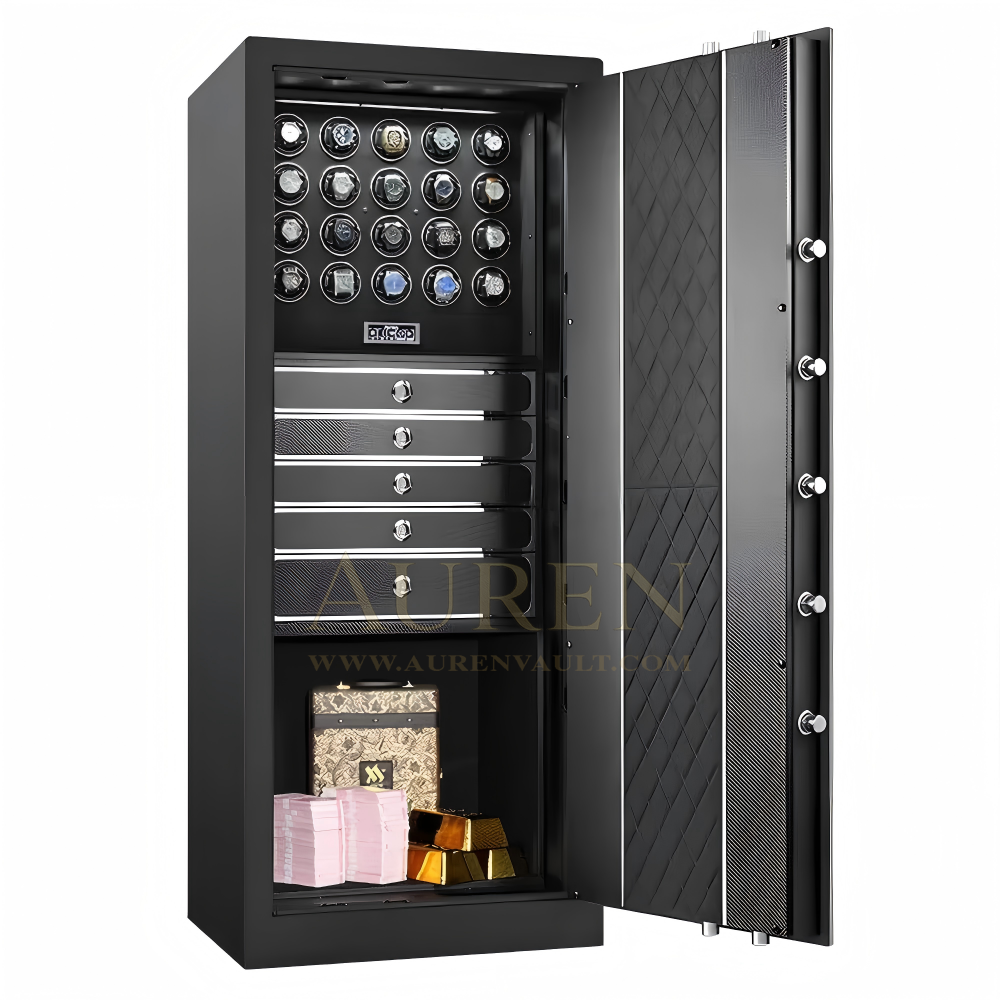
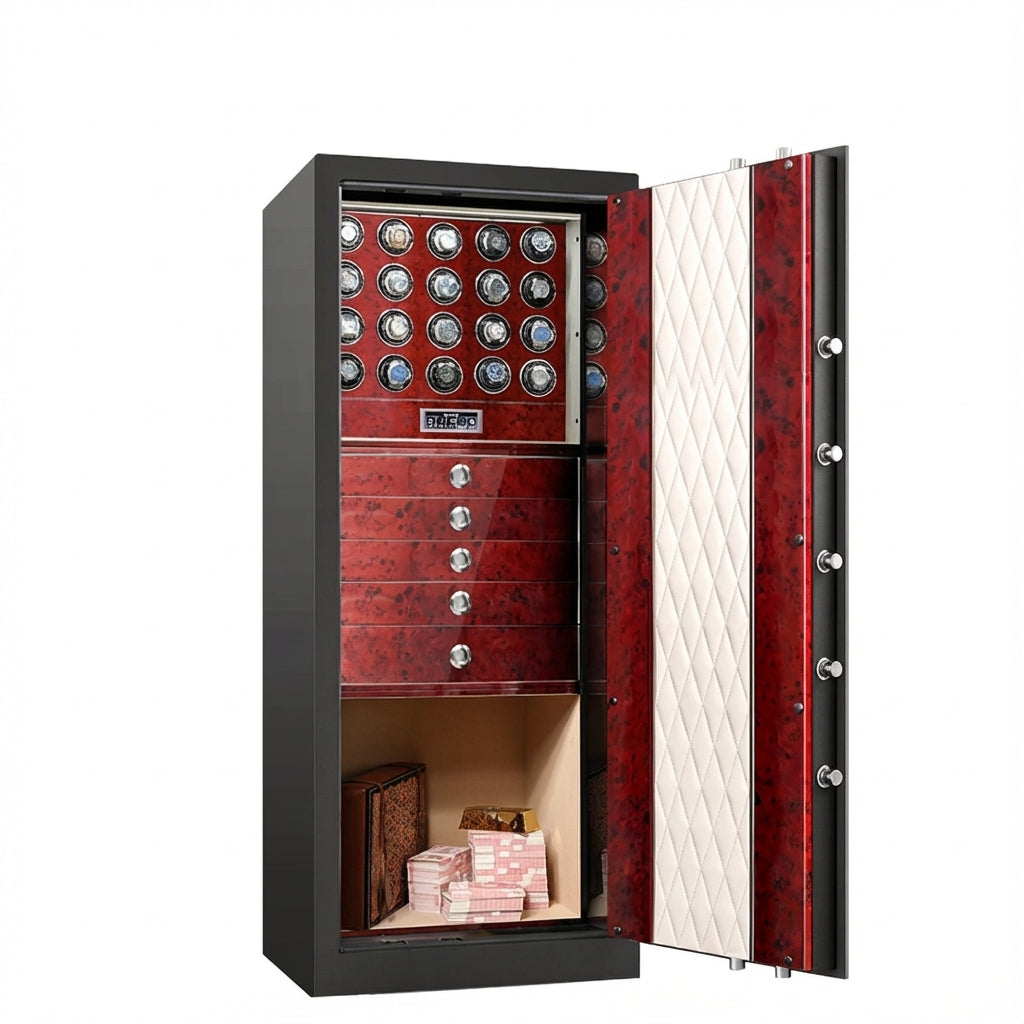
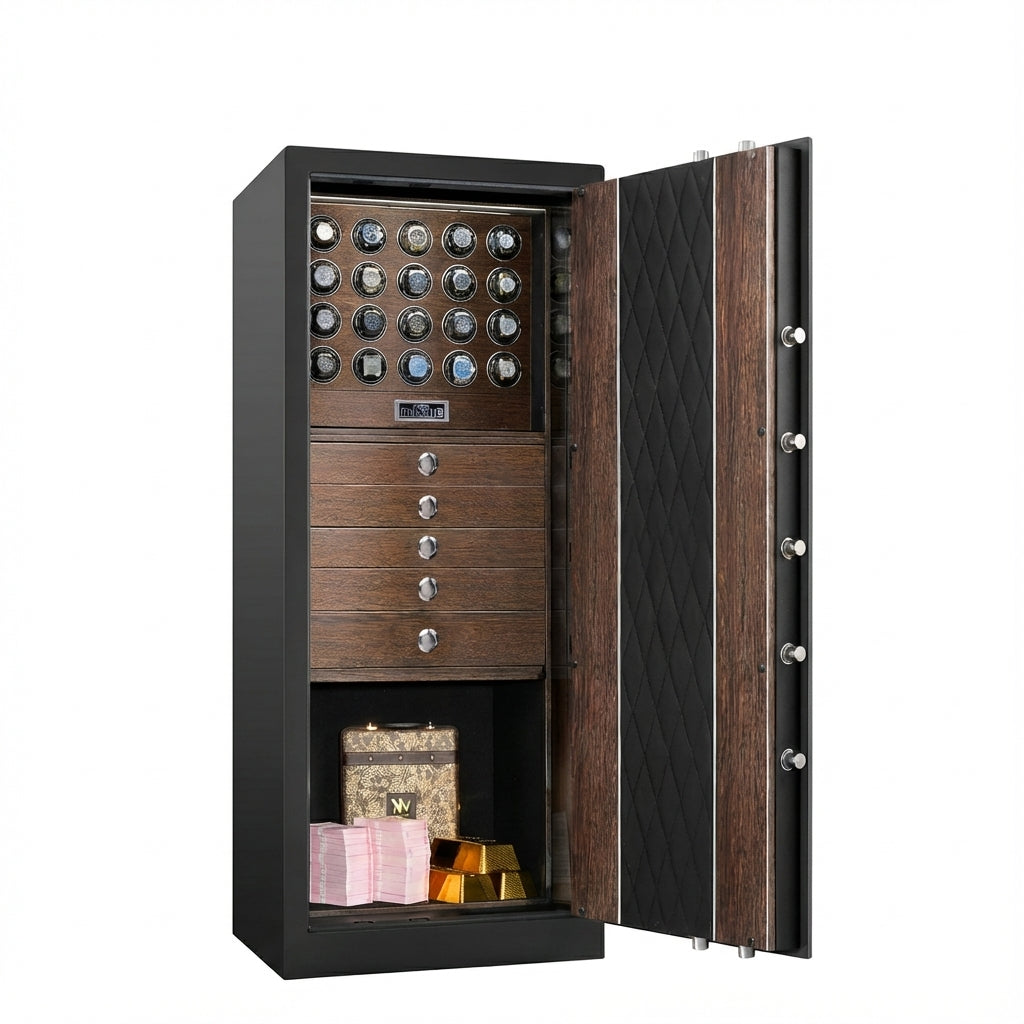
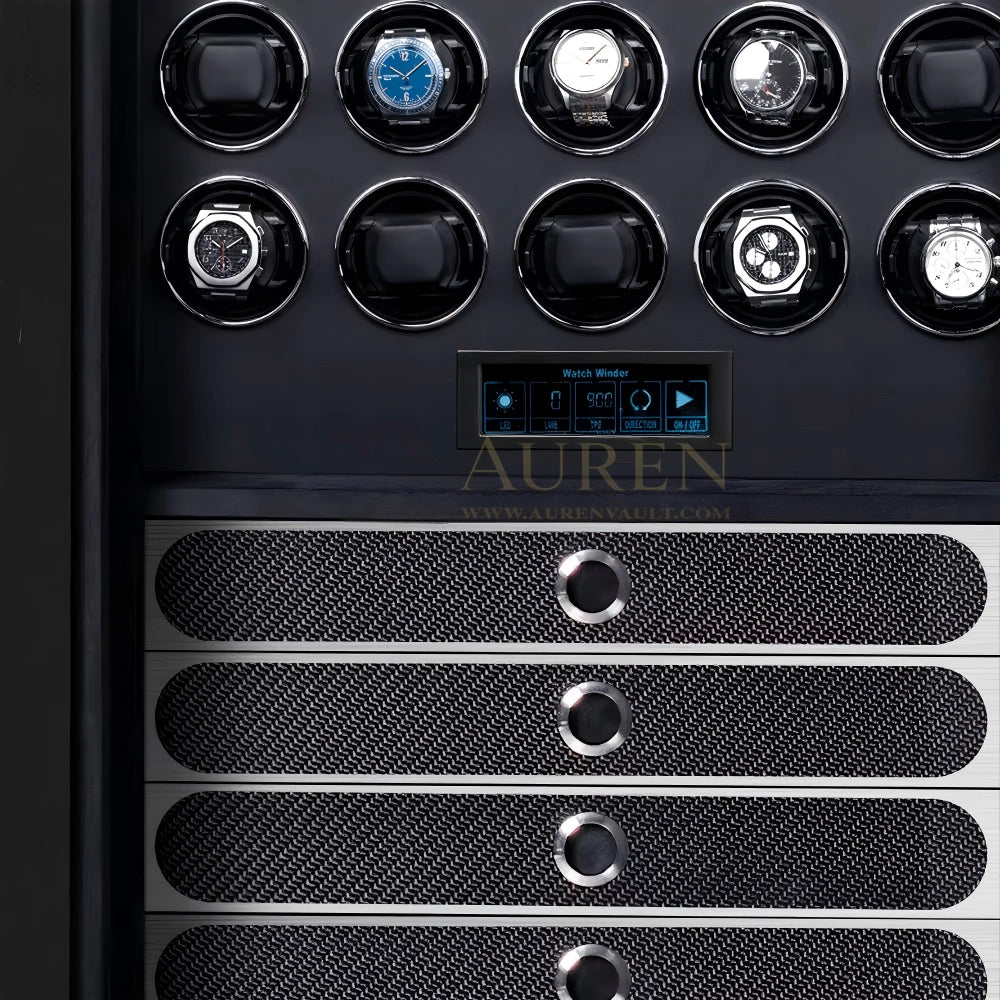
An integrated watch winder safe combines automatic winding modules with lockable storage.
Its suitability depends on rotor programming, physical dimensions, holder design, and the actual protective specifications of the enclosure.
A secure-looking cabinet should not automatically be assumed to have certified burglary or fire resistance.
Such claims require appropriate documentation for the particular model.
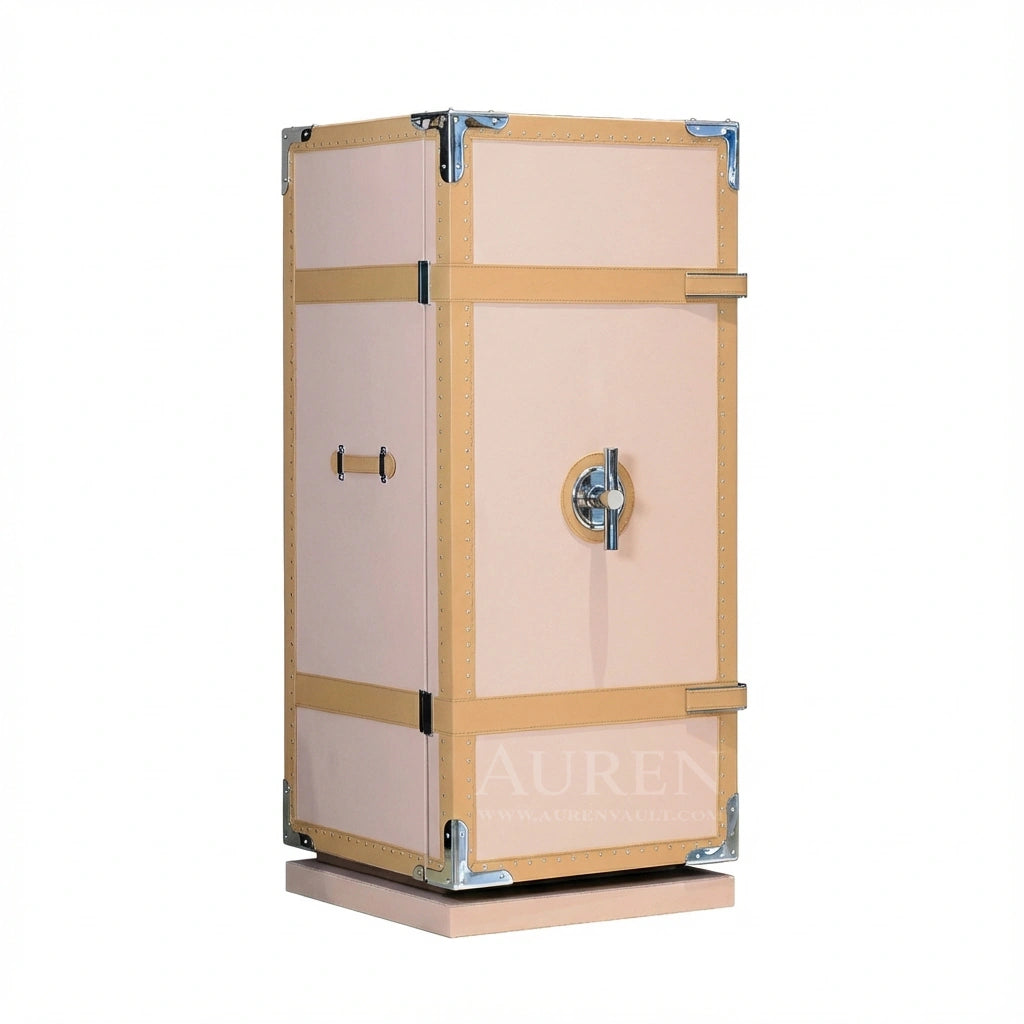
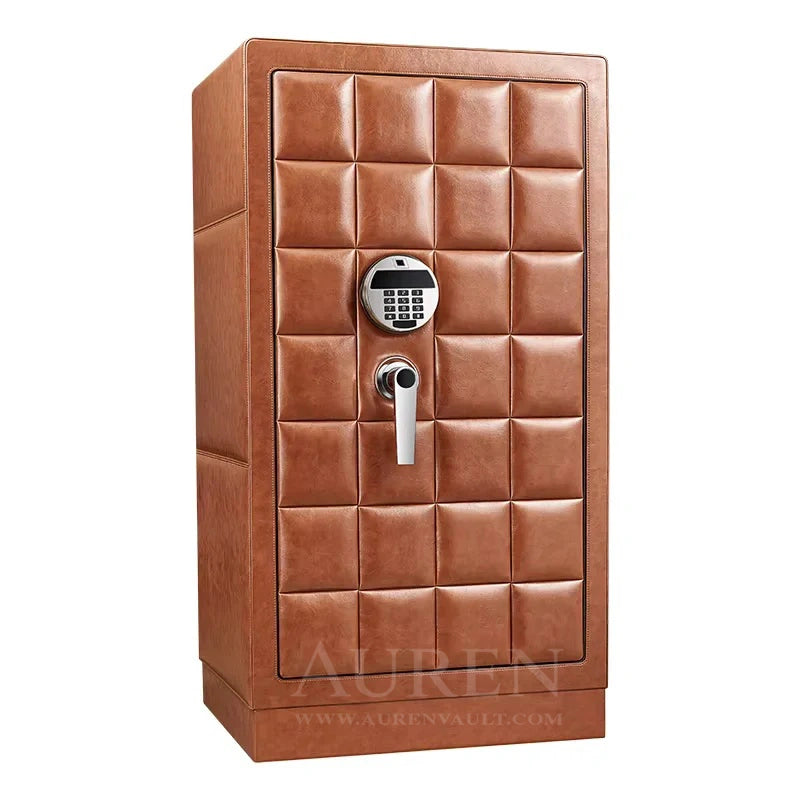
Collectors who need a larger arrangement can review the broader watch safe collection.
Where different strap types or movement configurations require special arrangements, custom watch safe configurations may provide additional flexibility.
The most useful system is one that reflects the watches being stored and how frequently they are worn.
Long-Term Care Beyond Winding
Correct TPD is only one aspect of Tudor ownership.
Diving watches may be exposed to saltwater, perspiration, and outdoor environments.
They should be cleaned and dried according to Tudor's instructions before storage.
Steel bracelets, titanium components, rubber straps, and fabric straps have different care requirements.
A suitable holder should support the watch without excessive pressure on the bracelet, clasp, strap, or case.
Environmental conditions also deserve attention.
High humidity, condensation, and large temperature fluctuations can create unfavorable storage conditions.
An enclosed cabinet or safe does not automatically provide active humidity control.
For watches that will remain unused for an extended period, passive storage may be appropriate when consistent with the manufacturer's guidance.
The watch storage guide provides broader context for protecting mechanical watches beyond their power reserves.
Frequently Asked Questions About Tudor TPD
What is the recommended TPD for Tudor watches?
Approximately 650 TPD bidirectional is a common independent starting recommendation for several manufacture calibres, including MT5400, MT5402, MT5602, and MT5652. Other sources provide ranges toward 800 TPD. Exact movement verification remains necessary.
What is the best TPD for Tudor Black Bay 58?
Earlier MT5402 references are commonly associated with approximately 650 TPD bidirectional. Newer MT5400-U Master Chronometer watches should receive a separately verified program.
What winding direction does Tudor MT5402 use?
Tudor confirms a bidirectional internal rotor system. Independent external winding references commonly recommend bidirectional operation for MT5402.
Can the MT5400-U use the same program as MT5402?
That should not be assumed automatically. The MT5400-U is a newer movement version with a certified 65-hour reserve. Its exact external program should be verified.
What is the recommended TPD for Black Bay Pro?
Independent databases commonly recommend approximately 650 TPD bidirectional for Calibre MT5652. The exact watch and winding device should be confirmed.
Does the Black Bay 58 GMT need a different setting?
The Black Bay 58 GMT uses MT5450-U, which differs from MT5652. It should receive a movement-specific external winding program rather than automatically inheriting settings from another GMT calibre.
What is the Tudor Pelagos 39 TPD?
For MT5400, approximately 650 TPD bidirectional is a commonly published independent starting reference. Confirm the exact movement and device.
Does Pelagos FXD need a special winder?
Its automatic movement can use a compatible programmable winder. However, the fixed strap-bar construction and fabric strap may require a different holder from a conventional bracelet watch.
Does Black Bay Chrono require more TPD?
Not automatically. The chronograph complication does not independently establish its external winding requirements. The movement-specific program remains decisive.
What is the recommended TPD for Tudor MT5813?
Independent references commonly list approximately 650–800 TPD with bidirectional rotation. This is preliminary guidance rather than an official Tudor instruction.
Can I use a watch winder for Tudor 1926?
Yes, if the exact reference contains an automatic movement. However, its calibre should be checked because it does not necessarily share the same settings as Tudor's manufacture movements.
Does 70 hours of reserve mean fewer TPD?
Not necessarily. Power reserve describes running autonomy, while TPD measures external winding rotations. The correct program depends on winding architecture and efficiency.
Can a Tudor automatic be overwound?
Modern automatic movements generally include mechanisms that limit further mainspring tension during winding. Nevertheless, unnecessarily high external rotation settings provide no clear benefit.
Should a Tudor remain on a winder continuously?
No. A winder is optional and primarily useful when the owner wants to maintain operation between periods of wear.
Is a watch winder safe appropriate for Tudor watches?
It can be useful for collectors with several automatic watches who also want organized enclosed storage. Individual programming, strap compatibility, and documented security specifications are key considerations.
Related Reading: Tudor Winding and Collection Storage
Choosing the correct TPD program is one part of selecting suitable winding equipment.
For a broader examination of device features, Best Watch Winder for Tudor Watches explains how programmable winders can accommodate different Black Bay, Pelagos, and GMT references.
Collectors comparing separate winders with integrated storage may also find Watch Safes with Built-In Watch Winders: Are They Worth It? useful.
For longer-term preservation, Why Humidity Can Damage Luxury Watches addresses environmental considerations relevant to mechanical watch storage.
Final Perspective: Tudor Winder Settings Depend on Movement Generation
Tudor's modern manufacture movements provide a relatively consistent foundation for automatic winding.
Several established calibres, including MT5402, MT5602, MT5612, and MT5652, are commonly associated with approximately 650 TPD bidirectional in independent references.
However, newer MT5400-U and MT5450-U movements should not automatically receive historical recommendations without verification.
Older Tudor watches and models using different movement families introduce further variation.
Power reserve also affects the ownership decision.
A 70-hour movement may remain running throughout a weekend without external winding, while a shorter-reserve automatic may stop sooner.
For collectors rotating several watches, independently programmable rotors can simplify ownership.
For others, appropriate passive storage is sufficient.
Auren Vault offers watch storage and integrated winding configurations intended to accommodate automatic movements, different case designs, and varied collection arrangements.
The correct Tudor TPD setting is ultimately the one supported by the exact calibre, suitable device programming, and the owner's actual wearing habits.