
The best watch winder for Glashütte Original watches is a programmable unit that matches the calibre's winding direction, provides adjustable turns per day (TPD), and securely supports the watch through controlled operating and rest cycles.
For older Glashütte Original automatic movements, independent winding databases commonly list approximately 850 TPD counterclockwise for Calibre 39 and 900 TPD counterclockwise for Calibre 90. However, these are third-party recommendations rather than universal manufacturer instructions. Newer calibres, including the 36 and 92 families, require separate verification.
Glashütte Original's power reserves also vary considerably. The earlier PanoMaticLunar Calibre 90-02 provides approximately 42 hours, while the newer 92-14 offers 100 hours. Senator Excellence and SeaQ Panorama Date movements can also operate for approximately 100 hours without additional winding.
A winder is optional for a frequently worn automatic watch. It becomes particularly useful for collectors who rotate several watches or want complicated calendar and moonphase displays to remain synchronized.
The correct choice starts with the movement generation, not merely the collection name.
Why Glashütte Original Winder Settings Deserve Particular Attention
Glashütte Original represents a distinctive tradition of German watchmaking.
Its watches combine technical manufacture movements with features associated with the Saxon school, including three-quarter plates, refined finishing, distinctive regulators, and carefully constructed displays.
The manufacturer's collections include Senator, Pano, Spezialist, and Vintage watches.
Within these families are automatic three-hand watches, sophisticated chronographs, perpetual calendars, moonphase models, and manually wound references.
Two watches may share a similar design yet use very different calibres.
The PanoMaticLunar is a particularly useful example.
An established reference powered by Calibre 90-02 provides approximately 42 hours of reserve.
A newer PanoMaticLunar equipped with Calibre 92-14 provides 100 hours.
Both are automatic watches, but they should not automatically receive the same external winding program.
A conventional watch winder rotates the watch, creating motion within its automatic winding system.
The internal rotor transfers this movement into energy stored in the mainspring.
When the watch is left stationary, the movement gradually consumes its available energy until it stops.
A compatible winder can help maintain that reserve.
However, not every automatic mechanism responds to external rotation in precisely the same way.
For Glashütte Original, understanding the exact calibre is therefore more useful than beginning with a generic TPD number.
Best Glashütte Original TPD Settings and Rotation Direction
Two parameters determine the program of a conventional watch winder.
Turns per day (TPD) describes the number of complete external rotations delivered over a 24-hour period.
Rotation direction specifies clockwise, counterclockwise, or alternating motion.
The aim is to provide sufficient effective winding without unnecessary continuous rotation.
Independent winding-reference databases identify several distinctive requirements for older Glashütte Original movements.
Calibre 39 is commonly listed at approximately 850 TPD counterclockwise.
Calibre 90 is commonly listed at approximately 900 TPD counterclockwise.
Calibre 100 is generally listed around 850 TPD with bidirectional rotation.
These recommendations are notably different from the generic 650 TPD bidirectional program sometimes suggested for automatic watches in general.
This demonstrates why brand-wide assumptions can be unreliable.
Glashütte Original Watch Winder Compatibility by Calibre
| Calibre or watch | Winding type | Power reserve | External winder guidance |
|---|---|---|---|
| Senator Excellence Panorama Date 36-03 | Automatic | 100 hours | Verify calibre-specific TPD and direction |
| Senator Excellence Perpetual Calendar 36-12 | Automatic | 100 hours | Verify program; calendar continuity may be useful |
| SeaQ Panorama Date 36-13 | Automatic | 100 hours | Verify Calibre 36-specific program |
| PanoMaticLunar 90-02 | Automatic | 42 hours ±5% | Independent reference for Calibre 90 family: 900 TPD counterclockwise |
| PanoMaticLunar 92-14 | Automatic | 100 hours | Newer movement; do not automatically reuse Calibre 90 setting |
| SeaQ 39-11 | Automatic | 40 hours ±5% | Calibre 39 family commonly listed at 850 TPD counterclockwise |
| Sixties 39-52 | Automatic | 40 hours ±5% | Confirm reference; older Calibre 39 guidance around 850 TPD counterclockwise |
| SeaQ Chronograph 37-23 | Automatic flyback chronograph | 70 hours ±5% | Verify Calibre 37-specific program |
| Seventies Chronograph 37-02 | Automatic chronograph | 70 hours ±5% | Verify exact external settings |
| Historical Calibre 100 | Automatic | Reference-dependent | Independent reference: around 850 TPD bidirectional |
| PanoReserve 65-01 | Manual winding | 42 hours ±5% | No conventional automatic winder required |
Movement classifications and power reserves are based on Glashütte Original's representative technical specifications. Numeric TPD settings come from independent winding-reference databases, not a universal factory-issued chart.
The table highlights two different issues.
First, Glashütte Original uses multiple automatic winding architectures.
Second, power reserve has evolved significantly between movement generations.
An older 42-hour PanoMaticLunar and a newer 100-hour version may look related, but their settings should not be treated as interchangeable.
Why 650 TPD Is Not a Reliable Universal Recommendation
Many generic watch-winder guides suggest starting at approximately 650 TPD with bidirectional rotation.
That may be a useful default for certain automatic movements, but it is not an appropriate substitute for specific Glashütte Original data.
Independent tables for the older Calibre 39 and 90 families recommend higher numerical settings and counterclockwise rotation.
Applying an unrelated program may provide insufficient effective winding.
However, it would also be wrong to assume that every modern Glashütte Original automatically requires 900 TPD.
Calibres 36, 37, and 92 are different movement families.
Their appropriate external programs should be verified individually.
Owners should also check how their winding device calculates bidirectional turns.
A displayed number does not always reveal how the device distributes rotations and rest intervals.
For further explanation of this terminology, the watch TPD guide is the relevant technical resource within Auren Vault's website.
PanoMaticLunar: The Most Important Calibre Comparison
The PanoMaticLunar is one of Glashütte Original's most recognizable watches.
Its off-centre time display, Panorama Date, and moonphase indication create a distinctive composition.
The movement finishing visible through the case back is equally characteristic of the manufacture.
However, the PanoMaticLunar name now covers more than one important automatic movement generation.
This has direct consequences for watch-winder selection.
PanoMaticLunar 90-02: Approximately 42 Hours
Established PanoMaticLunar references use Calibre 90-02.
Glashütte Original specifies approximately 42 hours of reserve, with a published tolerance of ±5%.
The movement features an automatic winding system and characteristic off-centre rotor construction.
Independent winding databases commonly list the Calibre 90 family at approximately 900 TPD with counterclockwise external rotation.
This is a useful reference for owners of older PanoMaticLunar watches.
However, the exact reference and winding device should still be confirmed.
An owner who wears a PanoMaticLunar for one evening and then leaves it unworn for several days may find that its reserve expires before the next occasion.
A compatible winder can maintain the movement and reduce repeated time, date, and moonphase adjustments.
The practical benefit is especially noticeable because a moonphase display may require more attention to reset than a simple three-hand watch.
PanoMaticLunar 92-14: A 100-Hour Movement
The newer PanoMaticLunar Calibre 92-14 offers a substantially longer power reserve of 100 hours.
This provides more than four days of autonomy when the movement is sufficiently wound.
The increase changes the ownership experience.
Consider an owner who wears the watch on Thursday and puts it away until Monday.
A sufficiently wound 100-hour movement may continue running throughout that interval without additional energy.
The earlier 42-hour movement would generally stop sooner.
This can reduce the practical need for a winder.
However, it does not establish a lower or higher TPD requirement.
The newer calibre has its own winding architecture, and its external program should be verified independently.
It would be inaccurate to assume that the older 900 TPD counterclockwise recommendation automatically applies to 92-14.
Does a Longer Reserve Make the Moonphase Winder Unnecessary?
Not always.
A 100-hour reserve provides considerable convenience for short periods of non-use.
However, a collector may still leave the watch unworn for a week or longer.
When the reserve expires, the calendar and moonphase displays must be restored according to the manufacturer's instructions.
A compatible winder can reduce the frequency of that procedure.
The decision therefore depends on wearing habits.
A PanoMaticLunar worn several times a week may not need external winding.
One worn only occasionally may benefit substantially from it.
Senator Excellence: Why 100 Hours Changes the Calculation
The Senator Excellence family is associated with Glashütte Original's Calibre 36 movement platform.
The manufacture developed this family with emphasis on running time, precision, stability, and refined construction.
Its optimized mainspring barrel provides approximately 100 hours of reserve.
Selected versions include Panorama Date, moonphase, and perpetual calendar functions.
This combination makes the Senator Excellence particularly relevant for collectors considering whether to keep their watches running between wears.
Senator Excellence Panorama Date 36-03
The Senator Excellence Panorama Date uses Calibre 36-03.
It is an automatic movement with approximately 100 hours of power reserve.
A watch with this autonomy can remain running for more than four days when sufficiently wound.
For someone who wears the Senator during the working week and changes watches briefly over the weekend, a winder may add little practical benefit.
The situation changes when the watch is worn once every week or two.
In that case, maintaining continuous operation can reduce repeated time and date setting.
The Panorama Date is one of the manufacture's defining visual and mechanical characteristics.
Keeping it synchronized may be convenient, but it does not create a universal TPD requirement.
The correct winding program depends on Calibre 36-03.
Senator Excellence Perpetual Calendar 36-12
The Senator Excellence Perpetual Calendar uses Calibre 36-12.
This automatic movement also provides approximately 100 hours of reserve.
Its indications include a perpetual calendar, weekday, month, annual cycle, moonphase, and Panorama Date.
The combination creates one of the stronger practical reasons for using a compatible watch winder.
If the watch stops after an extended period of non-use, restoring its complicated indications can require more care than resetting a simple automatic.
Maintaining the movement can reduce that inconvenience.
However, a perpetual calendar does not automatically require higher TPD.
The external winder maintains the automatic mainspring.
The calendar complication uses the energy supplied by the movement but does not determine the rotor's external winding program.
A collector should therefore select settings verified for Calibre 36-12 rather than assume that its complexity requires maximum rotation.
SeaQ: Two Divers With Different Power Reserves
The SeaQ collection draws from Glashütte Original's historical diving-watch designs.
It combines traditional mechanical construction with sports-watch functionality.
However, the SeaQ family contains more than one automatic movement.
The distinction between the standard SeaQ and SeaQ Panorama Date is particularly useful.
SeaQ 39-11: A 40-Hour Automatic
The standard SeaQ uses Calibre 39-11 in selected references.
This automatic movement provides approximately 40 hours of reserve.
Independent winding databases commonly list the broader Calibre 39 family around 850 TPD counterclockwise.
That provides a relevant starting reference, although the specific watch and device should be checked before use.
The shorter reserve makes a winder potentially useful for owners who alternate between watches over several days.
For someone who wears a SeaQ on weekends only, the watch may stop during the working week.
A compatible winder can keep it running between uses.
SeaQ Panorama Date 36-13: Four Days of Autonomy
The SeaQ Panorama Date uses Calibre 36-13.
Glashütte Original specifies approximately 100 hours of reserve.
The movement also includes technical features intended to support performance in a diving-oriented case.
Its much longer autonomy changes how often an owner may need to restart it.
A sufficiently wound SeaQ Panorama Date may remain running through several days of non-use without a winder.
However, the movement is different from the standard SeaQ Calibre 39.
A collector should not simply apply the 850 TPD counterclockwise program published for Calibre 39 to the newer Calibre 36-13.
Movement-specific verification remains essential.
Bracelet and Strap Fit for SeaQ Watches
SeaQ watches are available with metal bracelets and different strap configurations.
A well-fitting winder holder should accommodate these materials without unnecessary pressure.
A steel bracelet shortened for a smaller wrist may not fit comfortably around a rigid oversized cushion.
A rubber or fabric strap may require a different support.
The watch should remain stable during rotation and have adequate clearance around its bezel and crown.
For substantial diving watches, physical stability matters as much as the correct TPD program.
SeaQ Chronograph: The 37-23 Automatic Flyback
The SeaQ Chronograph introduces another movement family.
Calibre 37-23 is an automatic flyback chronograph with approximately 70 hours of reserve.
It combines timing functions with a Panorama Date display.
The movement has a different construction from both Calibre 39 and Calibre 36.
A programmable winder is appropriate because it allows the owner to apply a movement-specific program.
However, the chronograph's flyback function does not automatically establish its TPD.
A winder maintains the automatic movement's power reserve.
It does not activate the chronograph pushers or operate the timing mechanism.
Why Case Clearance Matters for the SeaQ Chronograph
The SeaQ Chronograph has a substantial case, and selected references are approximately 43.2 mm in diameter and nearly 17 mm thick.
That profile can create difficulties for a compact winding compartment.
The case, crown, chronograph pushers, and bezel require sufficient clearance throughout rotation.
A suitable holder must support the watch without allowing its weight to shift.
For owners with both a slim Senator and a large SeaQ Chronograph, adjustable cushions and independently sized compartments are useful.
Seventies Chronograph: Automatic Winding in a Square Case
The Seventies Chronograph Panorama Date combines a retro-inspired square case with an automatic manufacture chronograph.
Selected references use Calibre 37-02, providing approximately 70 hours of reserve.
The watch includes chronograph functions, Panorama Date, and a power reserve indication.
The visible reserve indication can help owners evaluate whether a winder is maintaining adequate energy.
If the reserve declines consistently during several days of storage, the selected program may not be delivering sufficient effective winding.
However, this observation should prompt a check of the program, device, and watch condition rather than an immediate jump to the highest TPD setting.
The square case also requires suitable compartment clearance.
A winder designed for small round watches may not provide the necessary space around its corners and chronograph controls.
Sixties: A Traditional Automatic With a Shorter Reserve
The Sixties collection provides a more restrained alternative to the larger sports watches.
Selected Sixties references use Calibre 39-52.
This automatic movement offers approximately 40 hours of reserve.
Independent winding references commonly associate the Calibre 39 family with around 850 TPD counterclockwise.
For an owner who wears a Sixties watch during the working week, the movement may remain adequately charged through normal use.
For someone who keeps it as an occasional dress watch, a compatible winder can reduce repeated setting.
Dress-Watch Cushion Considerations
Sixties watches are frequently fitted with refined leather straps.
These should not be stretched around an oversized rigid cushion.
A holder should support the watch securely while allowing the strap to retain its natural curve.
Soft contact materials are particularly useful for watches with polished cases.
The aim is controlled winding without unnecessary physical stress.
PanoReserve: Why Some Pano Watches Cannot Use a Winder
The Pano collection includes both automatic and manually wound watches.
The PanoReserve is an important example of the latter.
Selected references use Calibre 65-01, a manually wound movement providing approximately 42 hours of reserve.
Its power reserve display is one of the watch's recognizable features.
However, the indication does not make the movement automatic.
Calibre 65-01 must receive winding energy through its crown.
Rotating the complete watch inside a conventional automatic winder does not replenish its mainspring.
This distinction matters for collectors who own both a PanoMaticLunar and a PanoReserve.
The first can benefit from compatible automatic winding.
The second belongs in passive storage.
A mixed Glashütte Original collection should therefore not assign one active rotor to every watch.
What Makes a Good Watch Winder for Glashütte Original?
For this manufacturer, programming flexibility is particularly important.
The historical Calibre 39 and 90 recommendations show that direction and TPD can differ from generic automatic-watch settings.
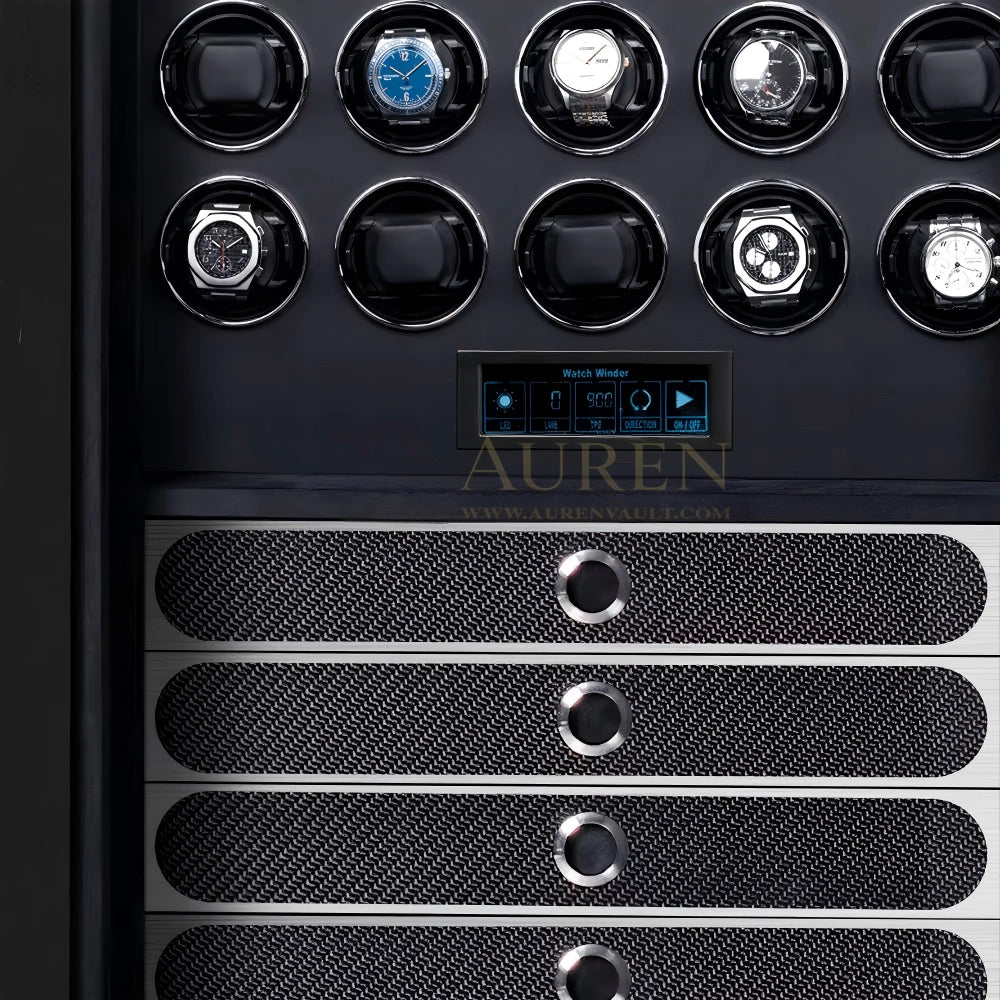
A suitable device should offer clockwise, counterclockwise, and bidirectional rotation.
It should also provide a sufficiently adjustable range of daily turns to accommodate verified movement requirements.
Independent Controls for Different Movement Families
A collector might own a PanoMaticLunar 90-02, a Senator Excellence 36-03, and a SeaQ Chronograph 37-23.
These watches should not automatically share a single program.
Independently controlled winding positions allow the owner to configure each movement separately.
This flexibility is more valuable than simply increasing the number of rotors.
Controlled Rest Intervals and Quiet Motors
A suitable winder distributes rotations throughout the day.
It should not need to operate continuously.
Rest intervals provide controlled motion and can reduce unnecessary operating noise.
Motor reliability and available servicing should be considered, particularly for systems intended to remain in regular use.
Physical Compatibility With Different Cases
A PanoMaticLunar on leather, a steel-bracelet SeaQ, and a square Seventies Chronograph require different holder considerations.
A compressible cushion can improve compatibility across bracelet and strap sizes.
Adequate clearance around the case is equally important.
The watch should remain stable without unnecessary pressure on its strap, bracelet, crown, or pushers.
How to Set Up a Glashütte Original Watch Winder
Begin by identifying the exact reference and calibre.
Do not select a program using only the words PanoMaticLunar, SeaQ, or Senator.
Confirm the watch's winding type and locate the corresponding manufacturer documentation.
If the movement is automatic and has stopped, follow Glashütte Original's instructions for restarting it through the crown.
The manual crown-winding procedure is separate from external TPD.
Once the watch is operating with sufficient initial energy, select its verified external winding program.
For historical movements, independent references can provide useful starting information.
For newer calibres, current movement-specific confirmation should take precedence over old tables.
Position the watch securely on its cushion and check clearance during a complete rotation.
Then observe whether it maintains an adequate reserve over several days.
If the watch stops, investigate initial energy, effective direction, programmed rotations, winder performance, and potential servicing needs before increasing TPD.
A watch winder should provide controlled energy maintenance, not act as a substitute for diagnosing mechanical problems.
Standalone Winder or Watch Winder Safe?
A standalone watch winder is designed primarily to maintain automatic movements.
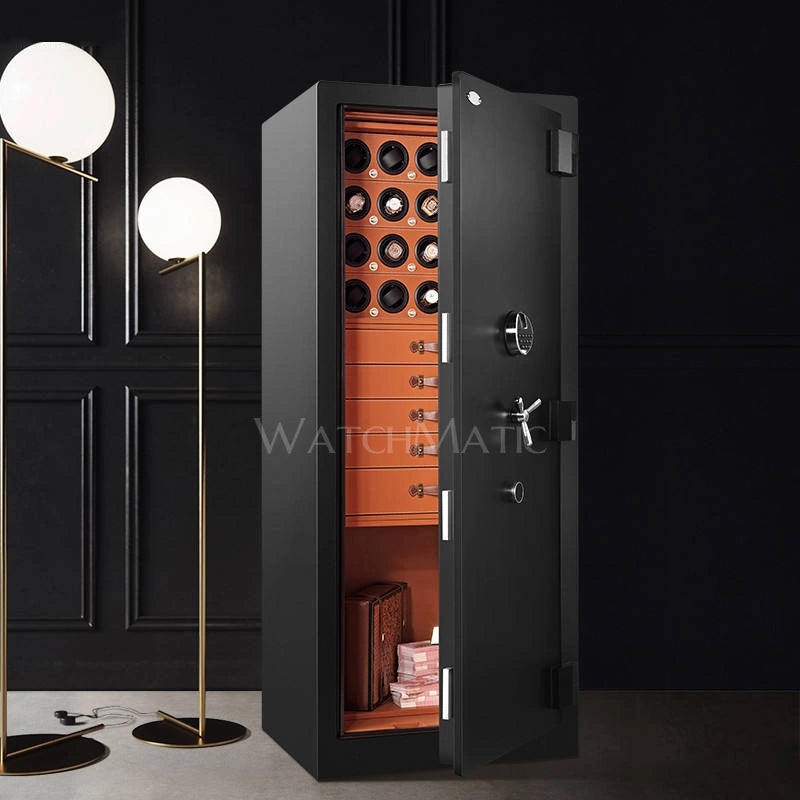
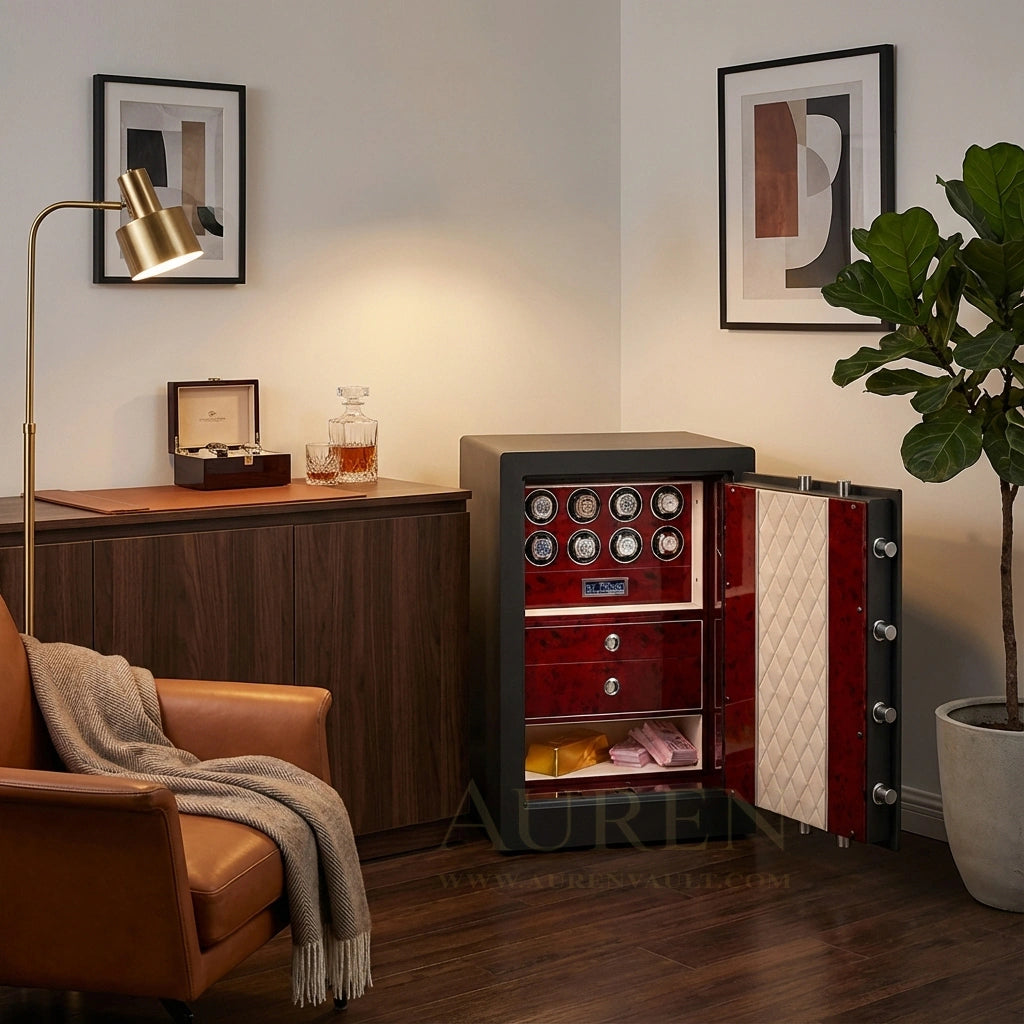
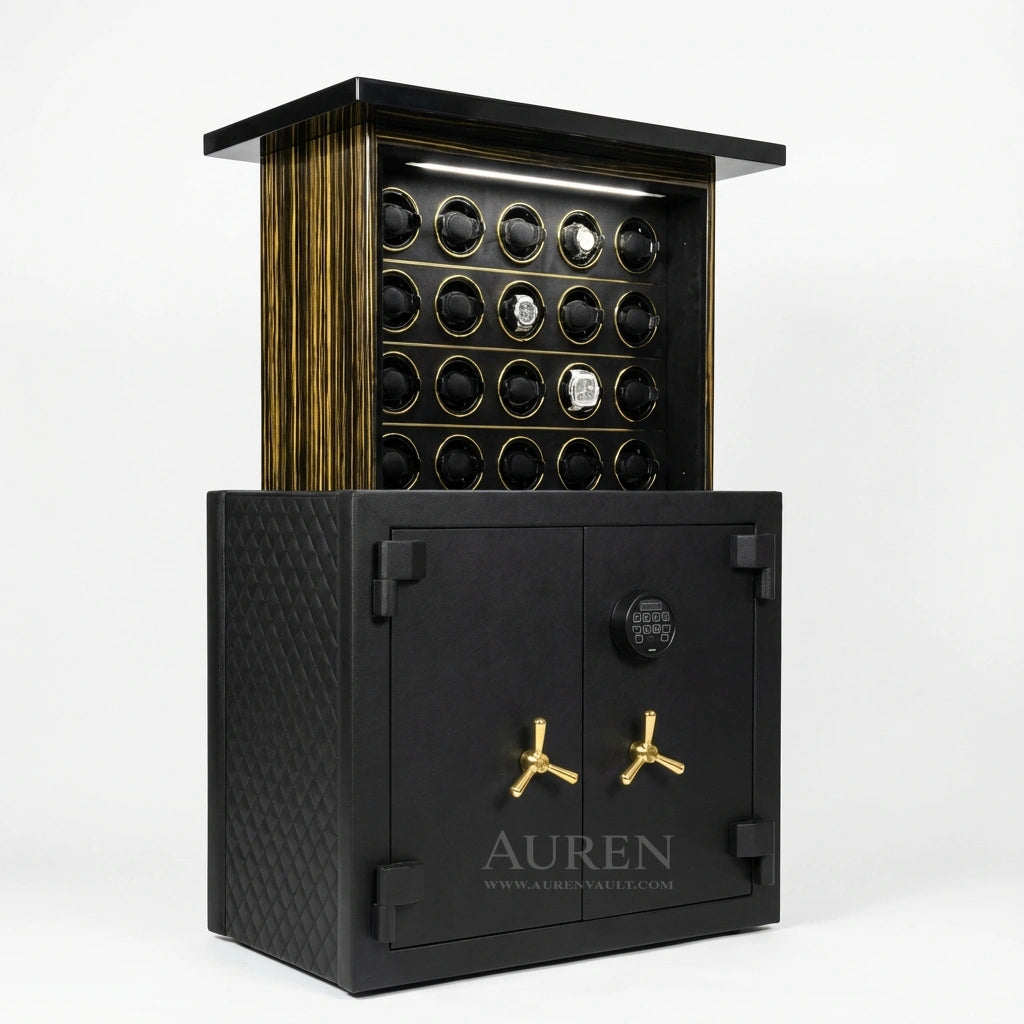
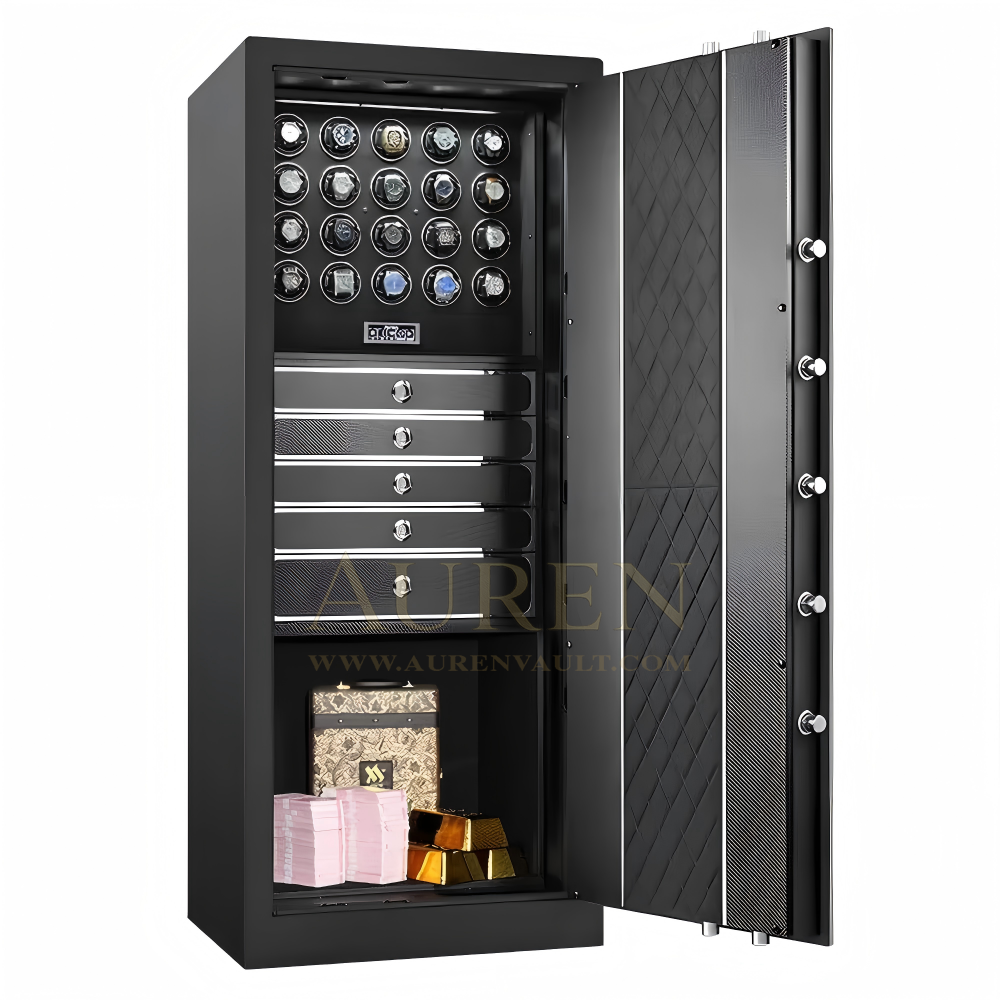
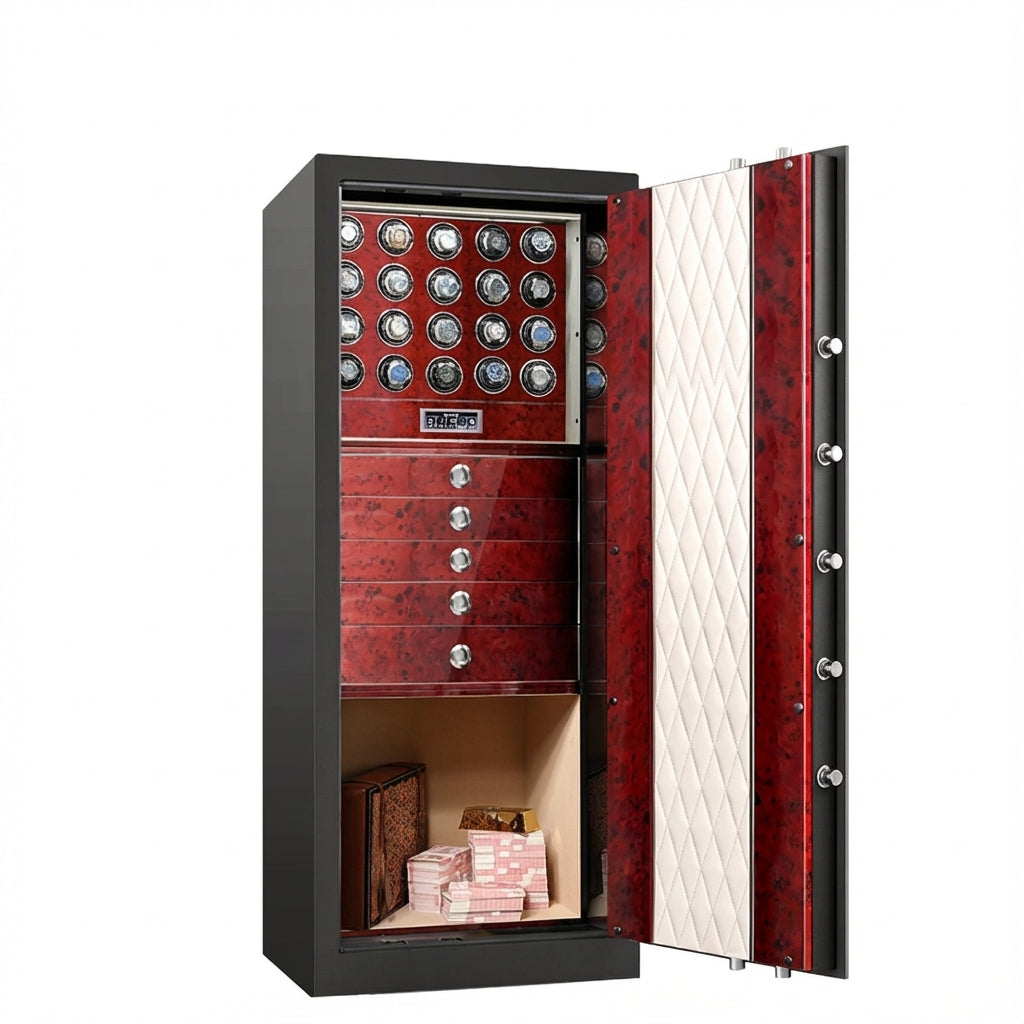
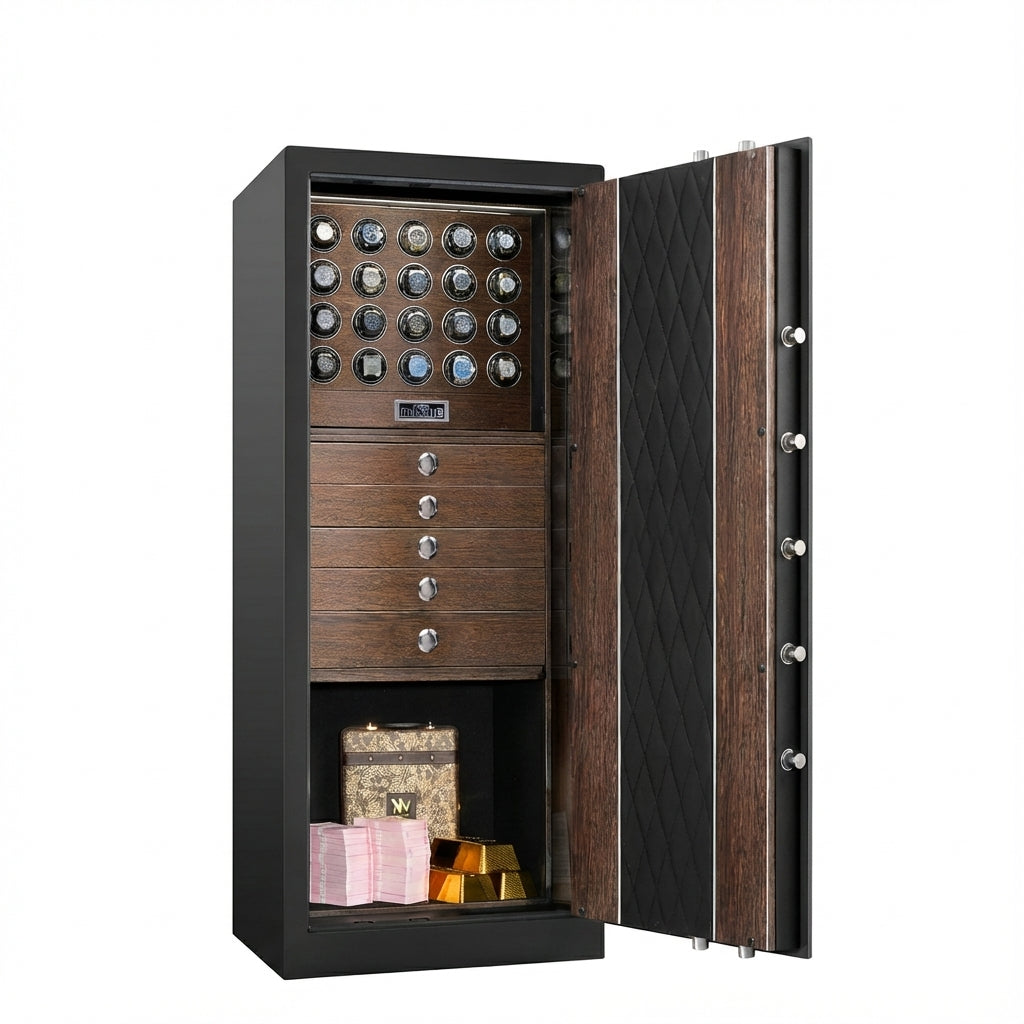
A watch winder safe combines winding modules with enclosed, lockable storage.
For one regularly worn Glashütte Original, a compact programmable winder may be sufficient.
For collectors who own several Pano, Senator, and SeaQ watches, integrated storage can reduce the need to move watches repeatedly between winding and storage locations.
| Consideration | Standalone winder | Integrated watch winder safe |
|---|---|---|
| Primary function | Automatic winding | Winding combined with enclosed storage |
| Individual calibre settings | Device-dependent | Depends on winding modules |
| Physical security | Usually limited | Construction-dependent |
| Active winding capacity | Often one to several watches | May accommodate larger collections |
| Passive compartments | Limited or model-dependent | Can be incorporated |
| Ideal use | Convenient winding between wears | Mixed collection organization and protection |
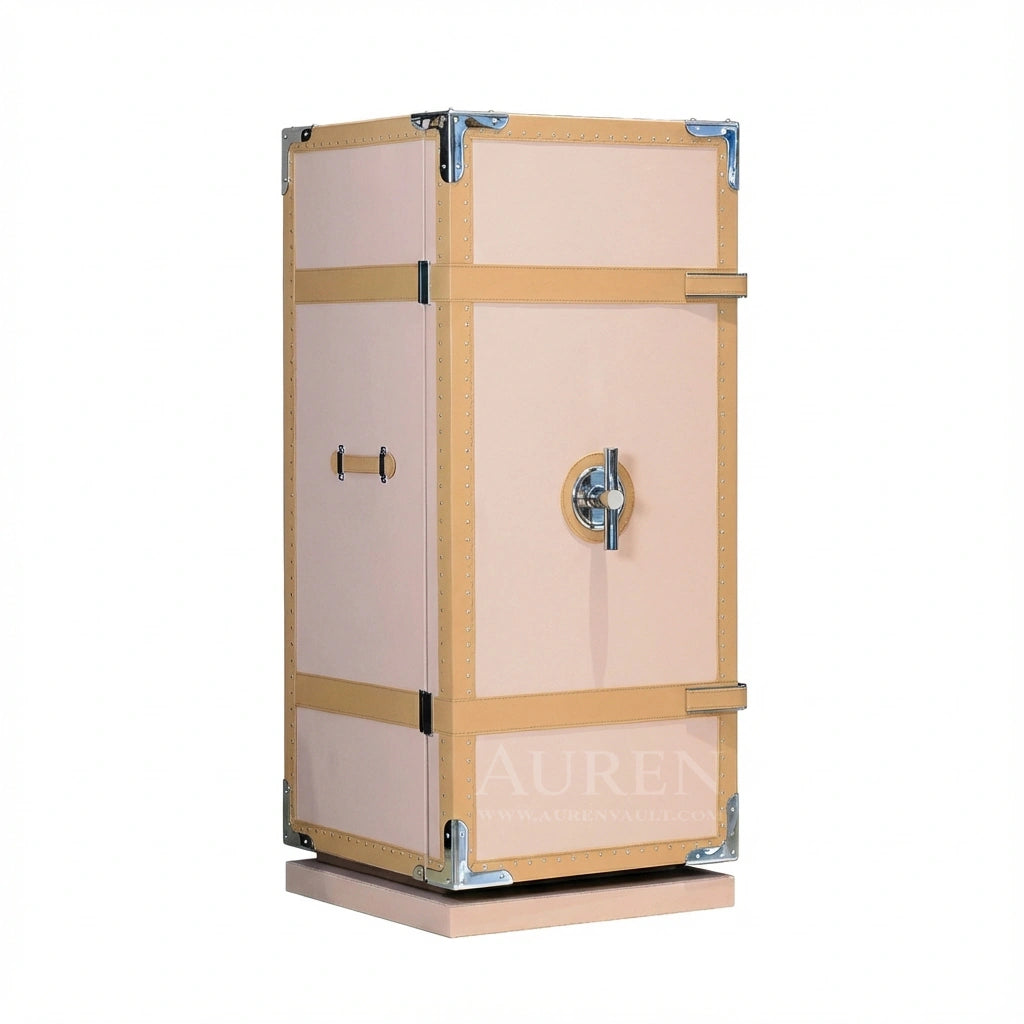
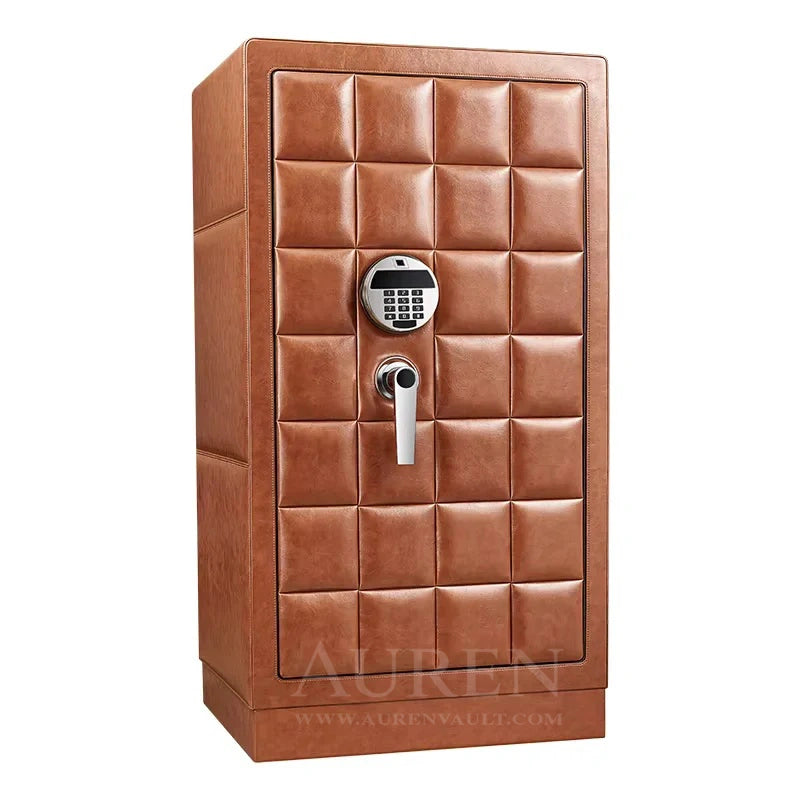
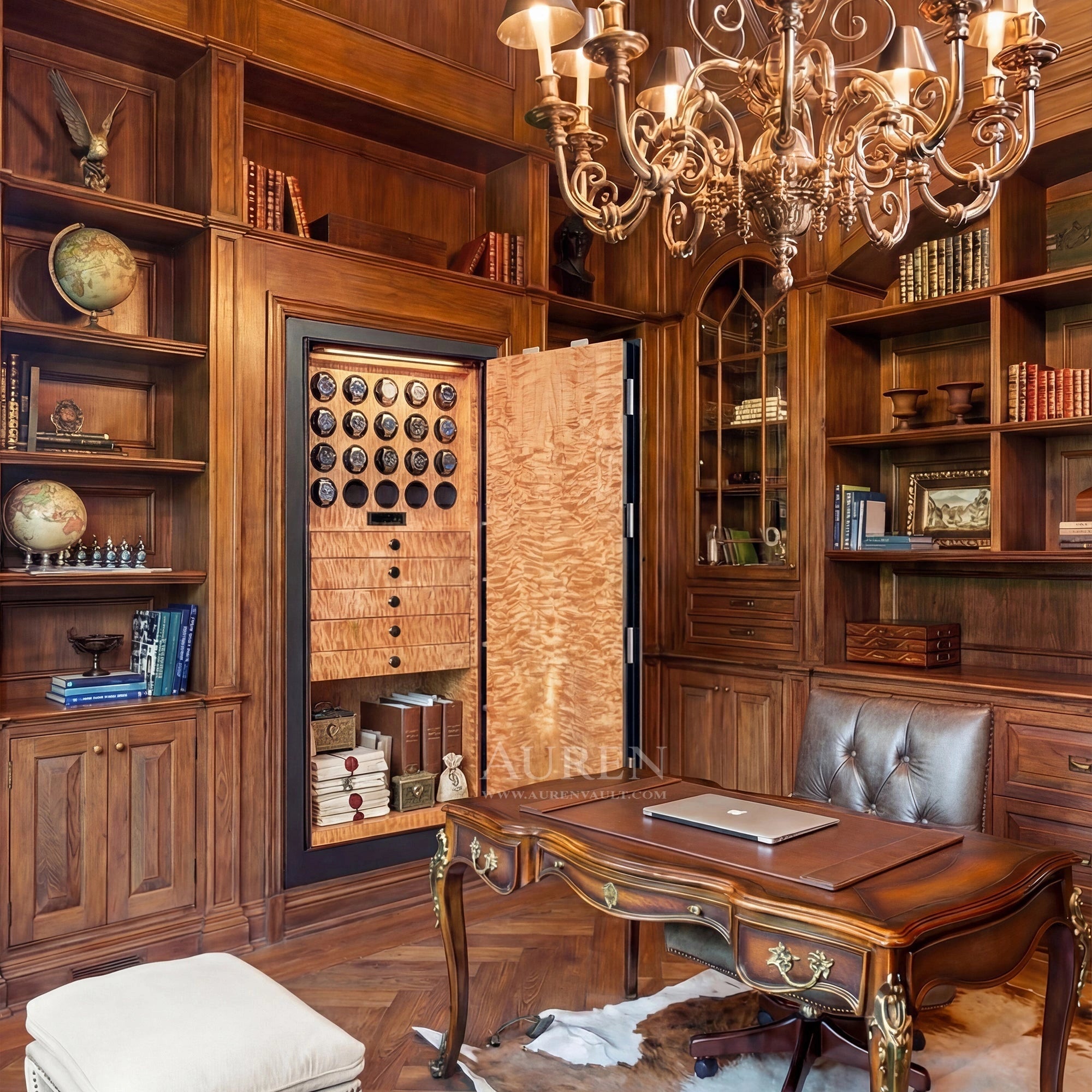
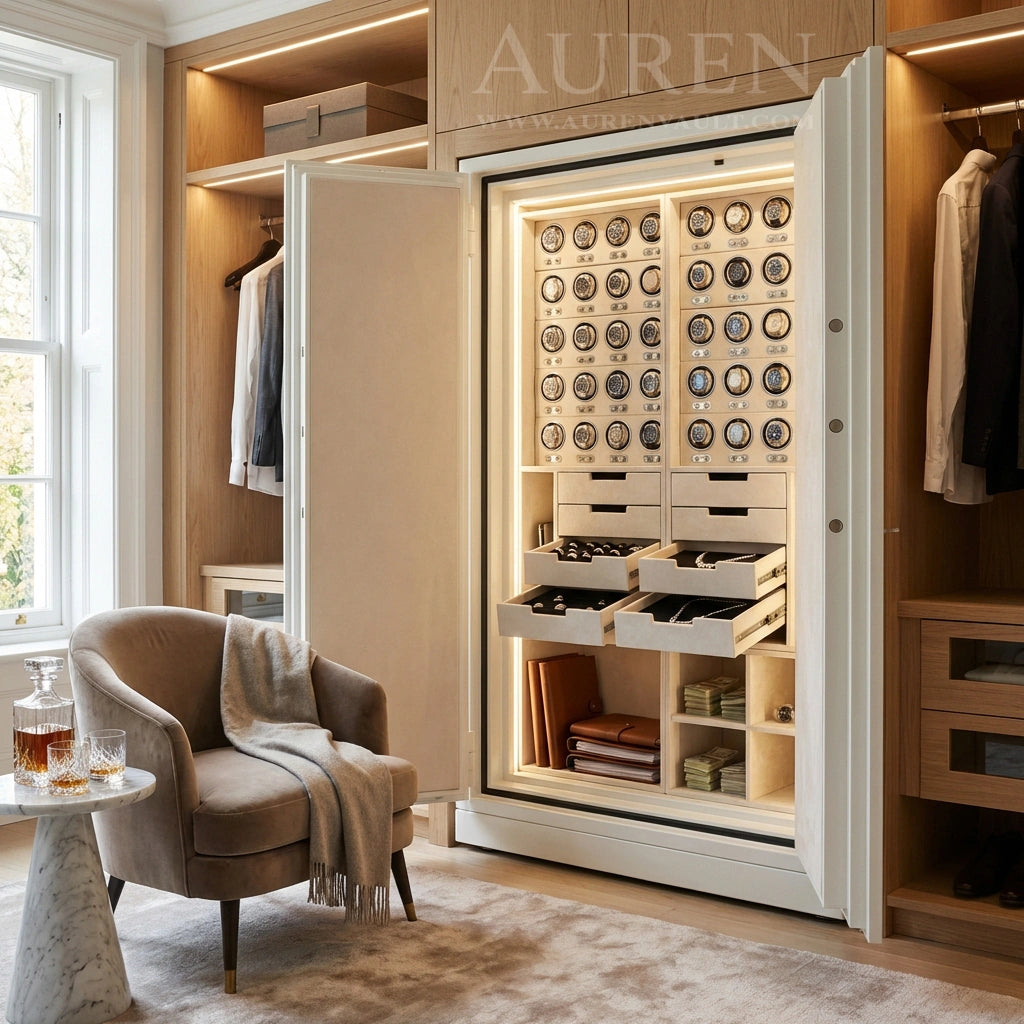
Collectors evaluating integrated storage can explore Auren Vault's watch winder safes and the watch winder safe guide.
However, a locking door alone does not establish a certified level of burglary or fire resistance.
Protective performance depends on construction, installation, locking systems, and any documented independent testing.
Planning Storage for a Mixed Glashütte Original Collection
Consider a collection containing a PanoMaticLunar 90-02, PanoMaticLunar 92-14, Senator Excellence Panorama Date 36-03, SeaQ 39-11, SeaQ Chronograph 37-23, Sixties 39-52, and PanoReserve 65-01.
Six of these watches are automatic.
The PanoReserve is manually wound.
Therefore, the collection does not require seven active winding positions.
A cabinet with individually programmable rotors and at least one passive compartment may be more appropriate.
The owner may also choose to leave the longer-reserve Senator or newer PanoMaticLunar off the winder when it is worn frequently.
This illustrates why storage capacity should not be confused with winding capacity.
The broader watch safe collection provides options for comparing formats, while larger luxury watch safes may be more suitable for substantial collections.
A collector who needs special holders for different cases and straps can consider custom watch safe configurations.
The most useful arrangement is one that accommodates automatic and manually wound watches without assigning unnecessary rotors.
Long-Term Storage and Mechanical Care
A watch winder maintains the running state of a compatible automatic movement.
It does not eliminate mechanical wear, improve the movement's underlying accuracy, or replace professional servicing.
For Glashütte Original collectors, long-term care should also consider polished cases, leather straps, steel bracelets, and complicated calendar mechanisms.
Watches should be supported without unnecessary physical contact or tension.
Environmental conditions, particularly high humidity and large temperature fluctuations, also deserve attention.
An automatic watch does not need to run continuously simply because it is valuable.
For extended periods of non-use, passive storage may be reasonable when consistent with the manufacturer's maintenance instructions.
The watch storage guide is Auren Vault's related destination for these broader preservation considerations.
Frequently Asked Questions About Glashütte Original Watch Winders
What is the best TPD setting for Glashütte Original?
It depends on the calibre. Independent winding databases commonly list approximately 850 TPD counterclockwise for older Calibre 39 movements and 900 TPD counterclockwise for Calibre 90. Newer Calibres 36, 37, and 92 should be verified individually.
Does a PanoMaticLunar need a watch winder?
Not necessarily. It can benefit from compatible automatic winding, but the need depends on wearing frequency. Owners should distinguish the 42-hour Calibre 90-02 from the newer 100-hour Calibre 92-14.
Can I use 900 TPD counterclockwise for every PanoMaticLunar?
No. That recommendation applies to historical Calibre 90-family winding references. It should not automatically be applied to the newer Calibre 92-14.
Does a Senator Excellence need a winder?
No, not as a requirement. Its 100-hour reserve provides substantial autonomy. A compatible winder can still be convenient when the watch remains unworn for longer periods.
What is the watch winder direction for SeaQ?
The direction depends on the movement. Older Calibre 39-family SeaQ watches are associated with independent counterclockwise recommendations. SeaQ Panorama Date models using Calibre 36-13 require separate verification.
Is a winder useful for a Glashütte Original perpetual calendar?
It can be particularly convenient because it reduces repeated setting of complicated calendar displays after the watch stops. The correct program should still match the specific automatic calibre.
Do chronographs require more TPD?
Not automatically. Chronograph complexity does not directly establish external winding requirements. Select the program according to the actual automatic movement.
Can a PanoReserve use a conventional watch winder?
No. The PanoReserve Calibre 65-01 is manually wound and does not benefit from automatic external rotation.
Does a 100-hour power reserve mean fewer TPD?
Not necessarily. Power reserve measures stored running time. TPD measures external winding rotations. The appropriate program depends on the automatic winding architecture.
Is a watch winder safe worthwhile for Glashütte Original?
It may be appropriate for owners combining several automatic watches with manually wound pieces and wanting enclosed storage. The decision should reflect winding capacity, passive storage requirements, physical fit, and security specifications.
Related Reading: German Watchmaking and Secure Collection Storage
Glashütte Original's mix of older and newer automatic movements highlights the importance of choosing winding programs by calibre rather than relying on a general brand setting.
Best Watch Winder for Vacheron Constantin Watches
Compare movement-specific winding requirements, different complications, and power-reserve considerations within another established luxury watchmaking manufacture.
Watch Safes with Built-In Watch Winders: Are They Worth It?
Explore the practical benefits and limitations of integrating programmable winding modules into enclosed watch storage.
Why Humidity Can Damage Luxury Watches
Understand the environmental risks that matter when storing valuable mechanical watches for extended periods.
Final Perspective: Glashütte Original Requires Calibre-Specific Winding
Glashütte Original offers a compelling example of why watch-winder recommendations should evolve with movement technology.
A PanoMaticLunar Calibre 90-02, a newer 92-14, and a Senator Excellence Calibre 36 do not automatically have identical winding requirements.
Historical Calibre 39 and 90 settings provide useful independent references, but these should not be generalized to newer movements.
The brand's longer 100-hour power reserves may also make a winder less necessary for owners who wear their watches frequently.
For occasional wear and complicated calendars, maintaining the reserve can still provide convenience.
For collectors with several different automatic movements, independent programming is particularly valuable.
Auren Vault approaches these requirements through watch storage and integrated winding configurations designed to support collections with varying movement and physical-storage needs.
The best watch winder for Glashütte Original is ultimately one that respects the specific calibre, supports the watch securely, and helps simplify ownership without unnecessary rotation.