
The best watch winder for A. Lange & Söhne watches is a precisely programmable unit that matches the movement's winding mechanism, delivers an appropriate number of turns per day (TPD), and supports the watch securely through controlled operating and rest cycles.
Movement identification is particularly important with A. Lange & Söhne because many of the manufacture's most recognizable watches are manually wound. A conventional Lange 1, many 1815 references, and the Datograph cannot benefit from an automatic watch winder.
Self-winding exceptions include the Odysseus, Saxonia Automatic, Lange 1 Daymatic, and selected perpetual calendars. Independent winding databases commonly suggest approximately 500 TPD with bidirectional rotation for older Sax-O-Mat movements. However, newer Lange automatic calibres use different winding architectures and require individual verification.
For a single regularly worn automatic Lange, a winder is optional. For collectors managing automatic perpetual calendars or several different calibres, individually controlled winding positions can provide greater convenience.
The right choice begins by confirming whether the movement is automatic at all.
Why A. Lange & Söhne Is Different From Most Watch Winder Brands
A. Lange & Söhne occupies a distinctive position within German haute horlogerie.
Its modern identity is closely associated with meticulously finished manufacture movements, untreated German-silver plates and bridges, hand-engraved balance cocks, and elaborate mechanical complications.
Many of its best-known timepieces also celebrate the traditional experience of manually winding a watch.
This presents an unusual challenge for someone searching for the best watch winder for the brand.
The classic Lange 1 is manually wound.
The Saxonia Thin is manually wound.
Many 1815 watches and Datograph chronographs are manually wound.
Yet the Odysseus is automatic, and the Lange 1 Perpetual Calendar uses a self-winding movement.
The distinction is more important than the number of complications or the value of the watch.
A conventional watch winder rotates the complete watch to generate motion inside its automatic winding mechanism. A rotor transfers that motion into energy stored in the mainspring.
A manually wound movement has no equivalent automatic rotor.
Rotating its case cannot replenish the mainspring in the way that turning the crown does.
Consequently, buying a sophisticated watch winder for a manually wound Lange would not provide a mechanical winding benefit.
For this manufacturer, the first step is not choosing TPD.
It is identifying which watches should occupy active winding positions and which are better kept in protective passive storage.
A. Lange & Söhne Watch Winder Compatibility by Calibre
Lange's self-winding movements include different rotor designs and power reserves.
Some earlier automatic calibres use the Sax-O-Mat architecture, while newer movements in the Odysseus and Lange 1 families employ their own automatic winding systems.
The following table provides a practical distinction between these movement families.
| Watch or calibre | Winding mechanism | Power reserve | Watch winder guidance |
|---|---|---|---|
| Odysseus L155.1 DATOMATIC | Automatic, unidirectional rotor | 50 hours | Compatible; verify external TPD and effective direction |
| Odysseus Chronograph L156.1 | Automatic chronograph | 50 hours | Compatible; confirm movement-specific program |
| Saxonia Automatic L086.1 | Automatic | 72 hours | Compatible; confirm calibre-specific settings |
| Lange 1 Daymatic L021.1 | Automatic | 50 hours | Independent references list around 500 TPD bidirectional; verify |
| Lange 1 Perpetual Calendar L021.3 | Automatic, unidirectional rotor | 50 hours | Compatible; movement-specific verification essential |
| Langematik Perpetual L922.1 | Automatic Sax-O-Mat | Approximately 46 hours | Common independent reference: 500 TPD bidirectional |
| Historical 1815 Automatik L921.2 | Automatic Sax-O-Mat | Reference-dependent | Common independent reference: 500 TPD bidirectional |
| Lange 1 L121.1 | Manual winding | 72 hours | No conventional watch winder |
| Saxonia Thin | Manual winding | Reference-dependent | No conventional watch winder |
| Datograph, selected references | Manual winding | Reference-dependent | No conventional watch winder |
| Zeitwerk, selected references | Manual winding | Reference-dependent | No conventional watch winder |
Power reserves and movement types are based on representative manufacturer specifications. The numerical settings cited for historical automatic calibres come from independent watch winder databases, not a universal A. Lange & Söhne prescription.
This comparison illustrates a central principle.
A complicated automatic perpetual calendar can benefit from a watch winder, while an equally complicated manually wound chronograph cannot.
The choice depends on how energy enters the movement.
What Are the Best TPD Settings for A. Lange & Söhne?
TPD stands for turns per day, the number of complete rotations an external winding device performs during a programmed 24-hour period.
Rotation direction identifies whether the watch is turned clockwise, counterclockwise, or alternately in both directions.
The correct program provides sufficient effective motion to maintain the mainspring's reserve without unnecessary continuous rotation.
For historical Lange automatic movements using the Sax-O-Mat architecture, several independent databases recommend approximately 500 TPD with bidirectional rotation.
These references include the Langematik and historical 1815 Automatik models.
Some third-party tables also list approximately 500 TPD bidirectional for the Lange 1 Daymatic.
However, it would be inaccurate to apply that setting to every modern Lange movement.
Why 500 TPD Is Not a Universal Lange Setting
An automatic watch's winding requirements depend on the rotor, transmission, mainspring system, and overall winding efficiency.
Two movements may have similar power reserves but require different amounts of external rotation to maintain their energy.
The Odysseus L155.1, for example, uses a unidirectionally winding central rotor.
The Lange 1 Perpetual Calendar L021.3 also employs a unidirectional winding rotor, according to the manufacture.
These are different movement architectures from the historical Sax-O-Mat calibres.
Importantly, identifying a rotor as unidirectional does not, by itself, establish whether the external watch winder should operate clockwise or counterclockwise.
That relationship must be confirmed for the particular calibre and device.
A fixed 500 TPD bidirectional program should therefore not be presented as the manufacturer's official recommendation for these watches.
The appropriate approach is to confirm the calibre-specific external settings before extended use.
For broader explanations of rotation counts and programming conventions, see the watch TPD guide.
Does a Longer Power Reserve Require More TPD?
Not necessarily.
A Saxonia Automatic with approximately 72 hours of reserve can continue operating longer without additional energy than an Odysseus with approximately 50 hours.
However, that does not prove that the Saxonia requires fewer or more external rotations.
Power reserve measures how long the movement can operate when sufficiently wound.
TPD measures external winding motion.
The two are related but different mechanical properties.
Selecting the highest available winding setting simply because a watch is valuable or complicated is not a sound approach.
The objective is to identify a suitable program that maintains its reserve consistently.
Odysseus: The Most Relevant Modern Lange for Automatic Winding
The Odysseus marked an important development for A. Lange & Söhne.
Introduced in 2019, it brought a new sports-oriented design and a movement created specifically for the collection.
The original Odysseus uses Calibre L155.1 DATOMATIC.
This self-winding movement provides approximately 50 hours of power reserve and operates at 28,800 vibrations per hour.
Its rotor incorporates a platinum centrifugal mass and winds the movement in one direction.
These characteristics distinguish it from many conventional automatic watches.
Why the Odysseus Rotor Requires Careful Programming
A unidirectional winding system receives effective winding energy through one direction of rotor movement.
That is different from a mechanism capable of winding efficiently in both directions.
However, the external rotation of a watch in a winder should not be equated directly with the rotor's internal direction.
The movement responds to changing orientation and rotor motion inside the case.
The precise external program should therefore be established from reliable movement-specific guidance.
For an Odysseus owner, a programmable watch winder is preferable to a simple fixed-speed model.
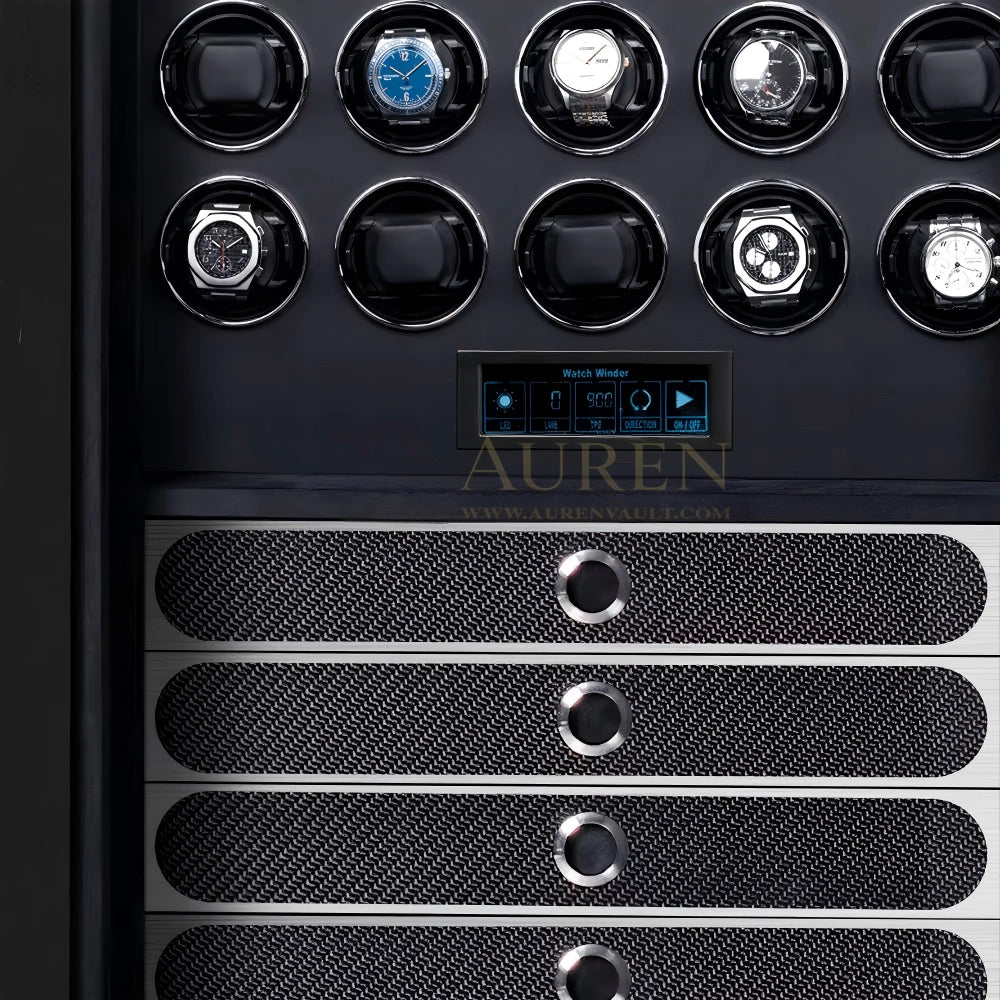
It should offer adjustable TPD, selectable rotation direction, and controlled resting periods.
If the correct program has not been confirmed, the owner should consult Lange service or a qualified specialist rather than assume a generic setting.
Does a 50-Hour Odysseus Need a Watch Winder?
For an Odysseus worn regularly, usually not.
The watch receives energy through wrist movement and continues operating using its stored reserve after being removed.
Its approximately 50-hour autonomy may be sufficient for a relatively short interval of non-use.
However, a collector who wears several watches throughout the week may leave the Odysseus unworn long enough for it to stop.
A compatible winder can reduce repeated adjustments of its outsize date and day-of-week indication.
The practical benefit is having the watch ready when selected.
The winder does not improve the movement's chronometric performance or remove the need for servicing.
Bracelet Support for the Odysseus
The Odysseus also differs physically from many classic Lange watches.
Stainless-steel models feature an integrated bracelet with a dedicated adjustment mechanism.
Other references use different strap materials.
A suitable winding cushion should support the bracelet without creating excessive pressure on the clasp or links.
The watch should remain stable during rotation, with sufficient clearance around the case and pushers.
A poorly fitted holder can be unsuitable even when the motor provides the correct winding program.
For the Odysseus, mechanical compatibility and secure physical support deserve equal attention.
Odysseus Chronograph: A Different Automatic Movement
The Odysseus Chronograph uses Calibre L156.1 DATOMATIC.
Introduced in 2023, it is the manufacture's first self-winding chronograph movement.
It provides approximately 50 hours of power reserve.
Although related to the Odysseus design family, its internal construction is distinct from the three-hand L155.1.
The chronograph's central hands and reset mechanism introduce additional mechanical functionality.
However, these complications do not independently establish external TPD requirements.
The watch winder maintains the automatic winding system; it does not operate the chronograph pushers.
For an owner who rotates a three-hand Odysseus and an Odysseus Chronograph, independently programmable winding positions are preferable.
This allows each movement to receive its appropriate program without assuming identical settings.
The Chronograph's larger case also requires sufficient clearance within the winding compartment.
Saxonia Automatic: Why Discontinued Watches Still Matter
The Saxonia Automatic is important to include in any comprehensive Lange watch-winder guide, even though historical references are no longer part of the current collection.
Reference 380.027, for example, uses Calibre L086.1.
This self-winding movement provides approximately 72 hours of power reserve.
Its refined design and comparatively thin case make it quite different from the sports-oriented Odysseus.
For an owner who wears a Saxonia Automatic only on formal occasions, a compatible winder may offer meaningful convenience.
The movement can remain running between wears, reducing the need for repeated setting.
However, 72 hours of autonomy already provides flexibility for relatively short periods of non-use.
Choosing a Holder for a Thin Saxonia
A Saxonia Automatic with a leather strap requires a holder suited to its relatively refined proportions.
An oversized rigid cushion may place unnecessary tension on the strap.
A small cushion may fail to support the watch securely.
A compressible or interchangeable holder is therefore preferable, particularly when a collector owns both a slim Saxonia and a larger Odysseus.
The watch should fit naturally, without case contact against the surrounding enclosure.
Correct support is a practical requirement, not merely an aesthetic detail.
Lange 1 Daymatic: The Exception Within the Lange 1 Family
The conventional Lange 1 is manually wound.
The Lange 1 Daymatic is different.
Introduced as the first self-winding model within the Lange 1 family, the Daymatic uses Calibre L021.1.
It provides approximately 50 hours of power reserve.
Its dial layout is also distinct from the manual Lange 1, incorporating a retrograde day-of-week indication.
For an owner who wears a Daymatic occasionally, a compatible watch winder can maintain its running state and reduce repeated calendar adjustments.
Independent winding tables commonly list approximately 500 TPD bidirectional for the Daymatic.
However, this remains third-party guidance and should be verified for the exact movement and device.
The important lesson is that the words Lange 1 do not establish winding compatibility.
A standard Lange 1 does not require an automatic winder.
A Daymatic can benefit from one.
Lange 1 Perpetual Calendar: Where Winding Convenience Matters
The Lange 1 Perpetual Calendar is a stronger candidate for a compatible watch winder because of its complicated indications.
Calibre L021.3 is an automatic movement with approximately 50 hours of reserve.
It drives a perpetual calendar with a peripheral month ring, day display, date, leap-year indication, and moon phase.
The movement employs a unidirectionally winding gold rotor with an additional platinum centrifugal mass.
A perpetual calendar differs from a conventional date watch in the complexity of its indications.
If the movement stops, restoring its correct calendar state can require a careful setting process.
Keeping it running between wears may therefore offer considerable convenience.
Why a Perpetual Calendar Needs the Right Program
A complicated calendar does not automatically need higher TPD.
The winder's purpose is to maintain the automatic mainspring, not directly power individual calendar indications.
The correct program depends on Calibre L021.3's winding system.
Because its rotor winds unidirectionally, the external rotation program should be verified rather than copied from a bidirectional Sax-O-Mat reference.
An owner should also follow Lange's operating instructions if the watch stops.
A winder does not replace the correct calendar-setting procedure.
For a collector who wears several perpetual calendars, independent rotor control may be particularly valuable.
Langematik Perpetual and Historical Sax-O-Mat Calibres
The Langematik Perpetual is one of the historical automatic Lange watches for which independent winding guidance is relatively established.
Selected references use Calibre L922.1, incorporating the Sax-O-Mat automatic winding system.
Independent databases commonly list approximately 500 TPD with bidirectional rotation for this movement family.
The watch combines automatic winding with sophisticated calendar indications.
For an owner who wears the Langematik Perpetual only occasionally, keeping it running can reduce repeated adjustments.
However, its age and service history should also be considered.
An older automatic watch that repeatedly stops despite a verified program may need mechanical assessment rather than more external rotation.
A watch winder cannot correct degraded lubrication or movement faults.
Which A. Lange & Söhne Watches Should Never Be Put on an Automatic Winder for Winding?
Some of the most recognizable Lange watches provide no benefit from conventional automatic winding.
The classic Lange 1 uses the manually wound L121.1.
Many 1815 models contain manual-winding movements.
The Datograph collection is strongly associated with hand-wound chronograph engineering.
The Zeitwerk's distinctive mechanical digital display is also found in manually wound references.
These watches must receive winding energy through their prescribed manual mechanism.
A conventional rotor-based watch winder cannot perform that function.
This does not mean a manually wound watch cannot be stored in a cabinet that also contains winding modules.
It means the watch should occupy a suitable passive compartment rather than an active rotor intended to replenish automatic movements.
For high-end Lange collections, distinguishing active and passive positions is central to good storage planning.
What Makes a Good Watch Winder for A. Lange & Söhne?
A suitable watch winder should offer precise programming, stable physical support, and dependable long-term operation.
For Lange owners, programming flexibility is especially important because automatic movement architectures vary.
A good system should offer selectable winding direction and an adjustable daily rotation count.
It should also distribute its operating cycles across the day, with appropriate rest intervals.
Continuous rotation at the highest available speed is not a substitute for a verified program.
Physical Protection for Precious Metals and Leather Straps
Many Lange watches feature precious-metal cases and refined leather straps.
The watch holder should support the case without unnecessary contact with hard interior materials.
A strap should not be forced around an oversized cushion.
A loose cushion can allow the watch to move during rotation, potentially bringing the case into contact with the enclosure.
For collectors with both an Odysseus bracelet and a Saxonia leather strap, adjustable supports are particularly useful.
Independent Rotors for Different Calibres
A multi-watch unit should ideally allow each winding position to be programmed independently.
A historical Langematik, Odysseus, and Lange 1 Perpetual Calendar should not automatically share the same settings.
Independent controls make it easier to accommodate different winding systems without repeatedly changing one shared program.
Reliability and serviceability are more valuable than decorative complexity.
Standalone Winder or Watch Winder Safe?
For one automatic Lange already stored securely, a compact programmable winder may be sufficient.
However, a collector with several Lange watches may need a more deliberate arrangement.
The collection might contain automatic Odysseus and Langematik references alongside manually wound Lange 1, 1815, and Datograph watches.
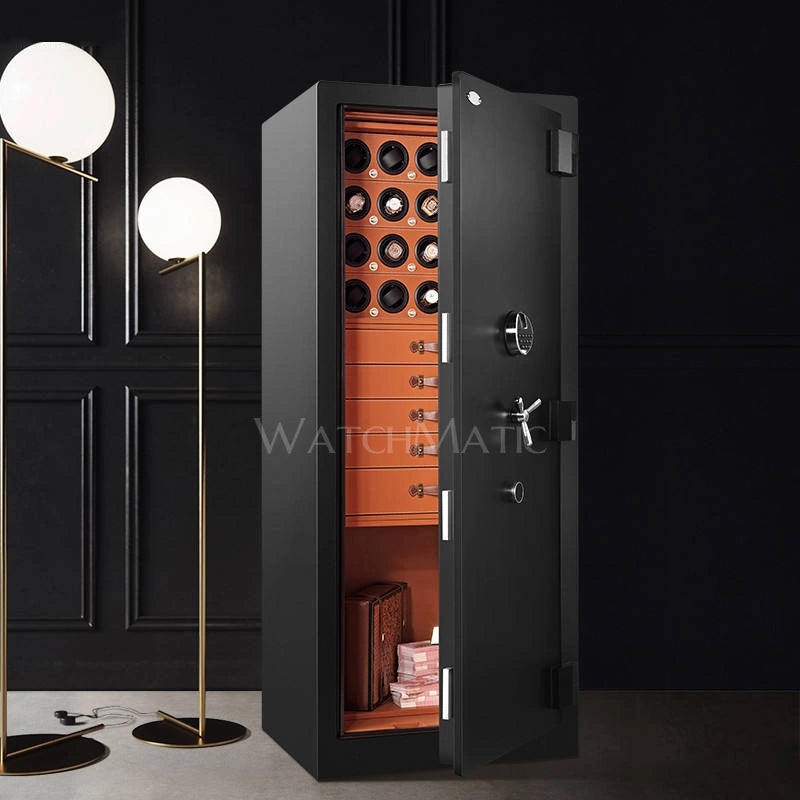
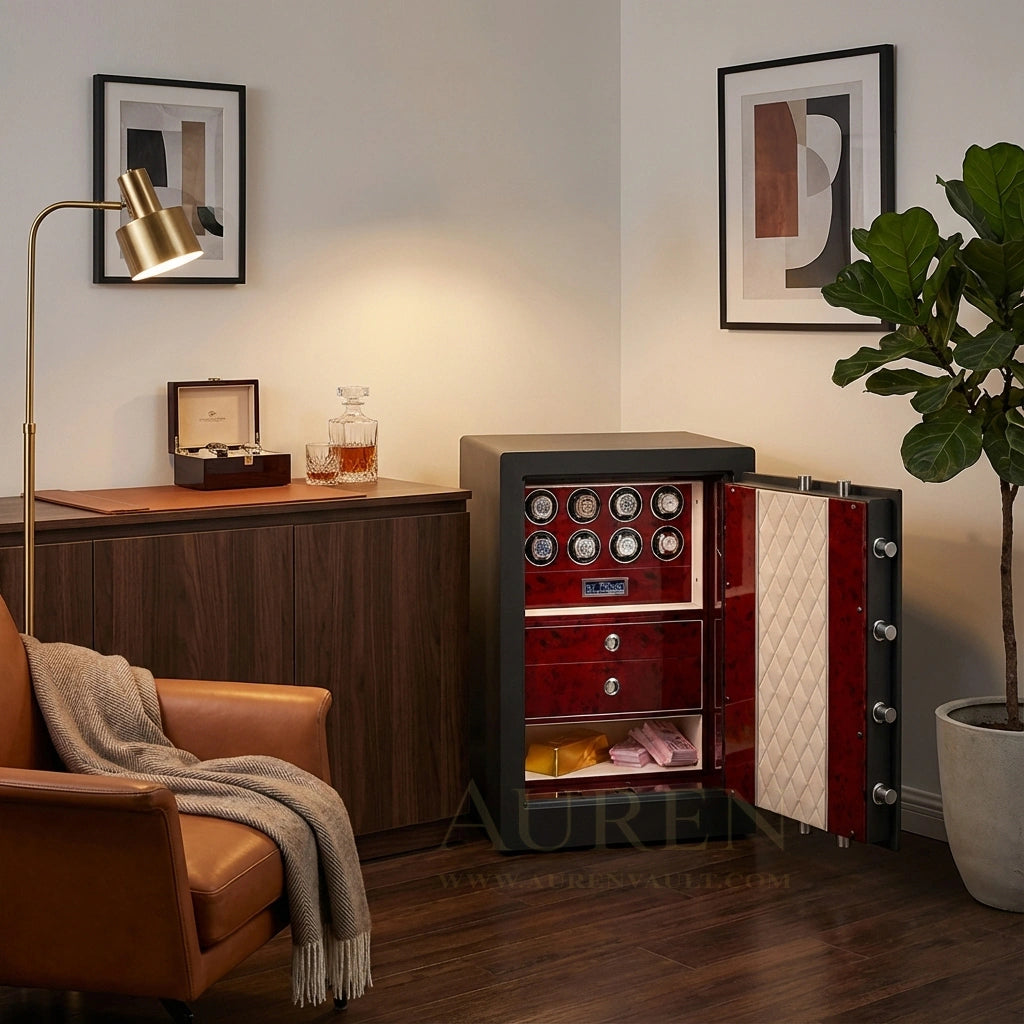
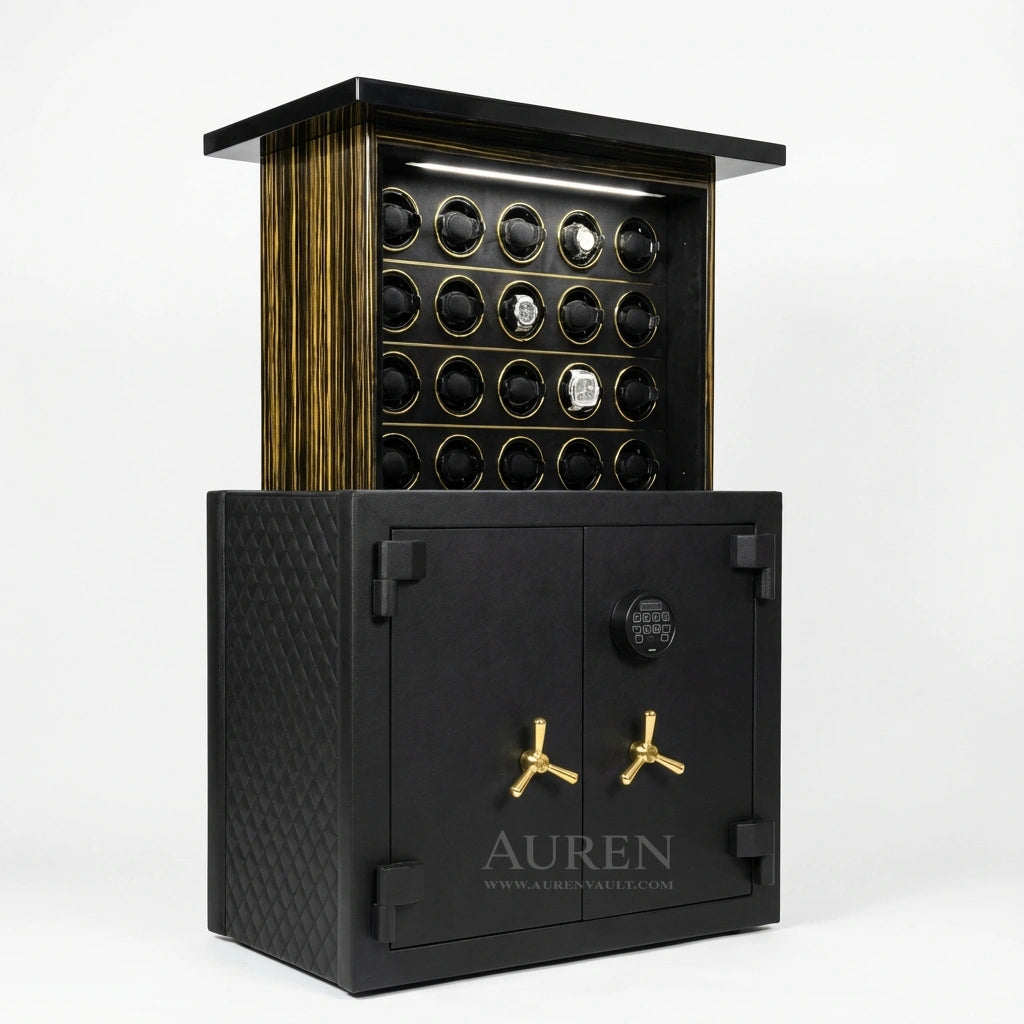
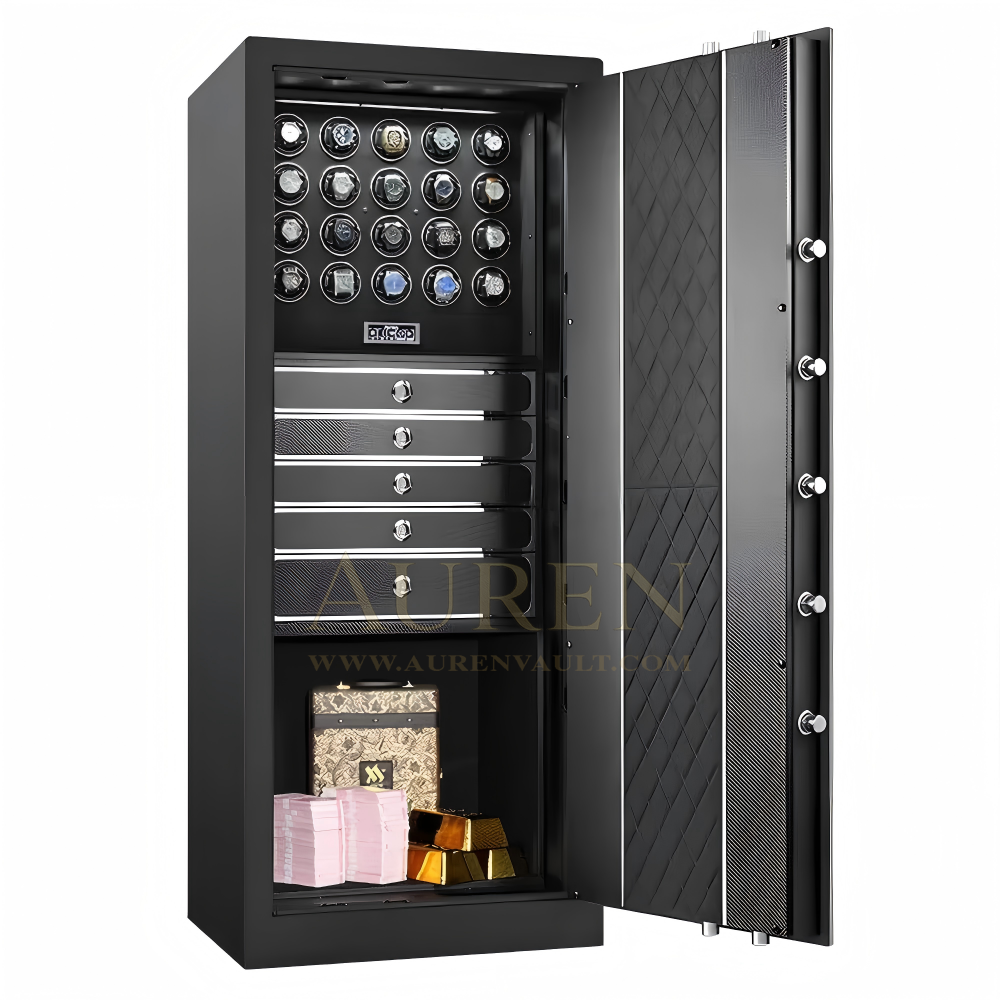
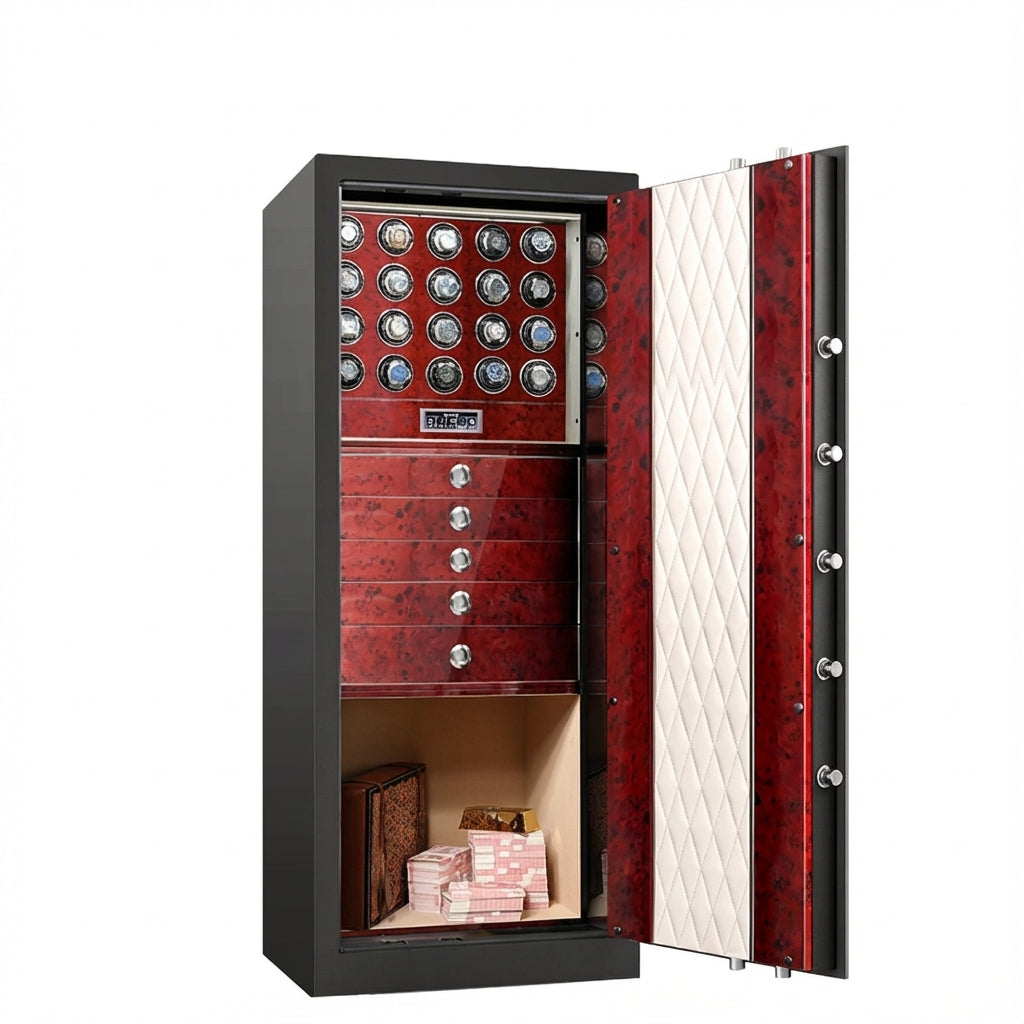
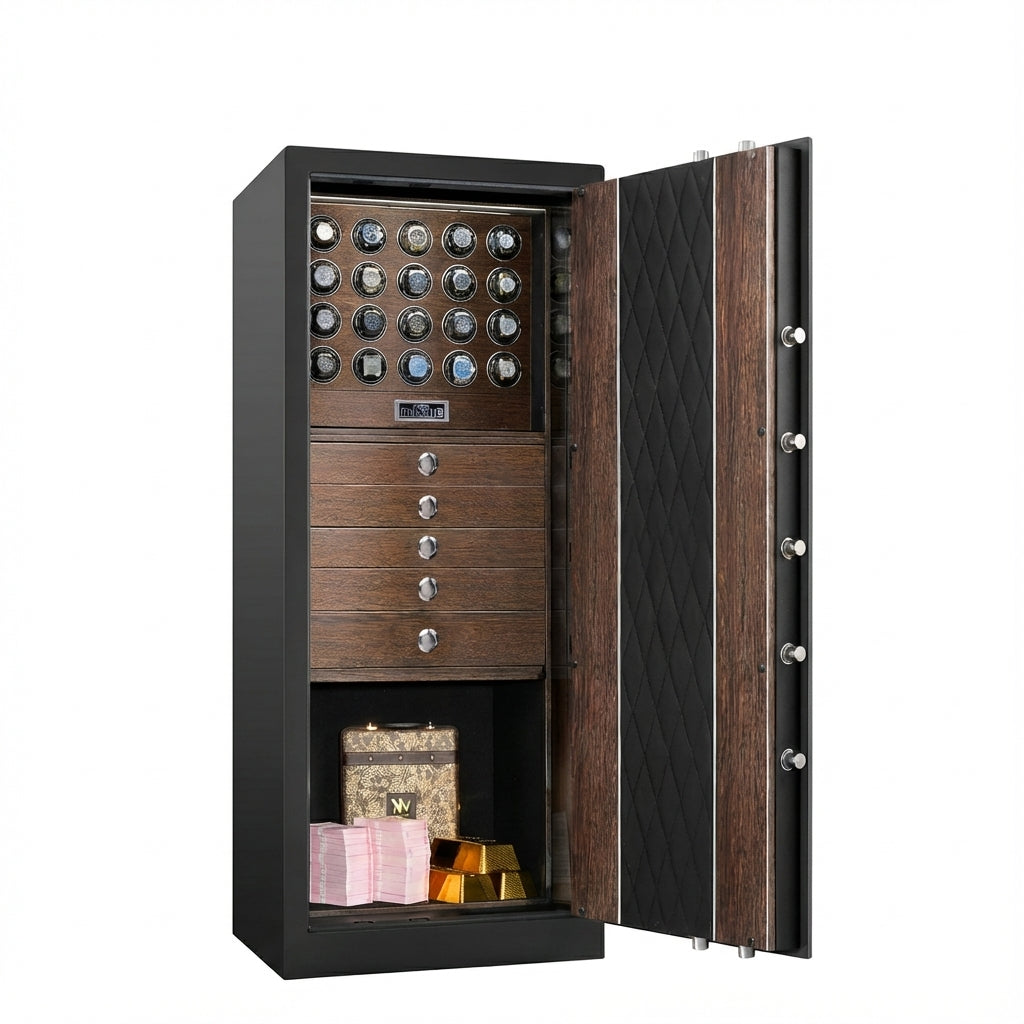
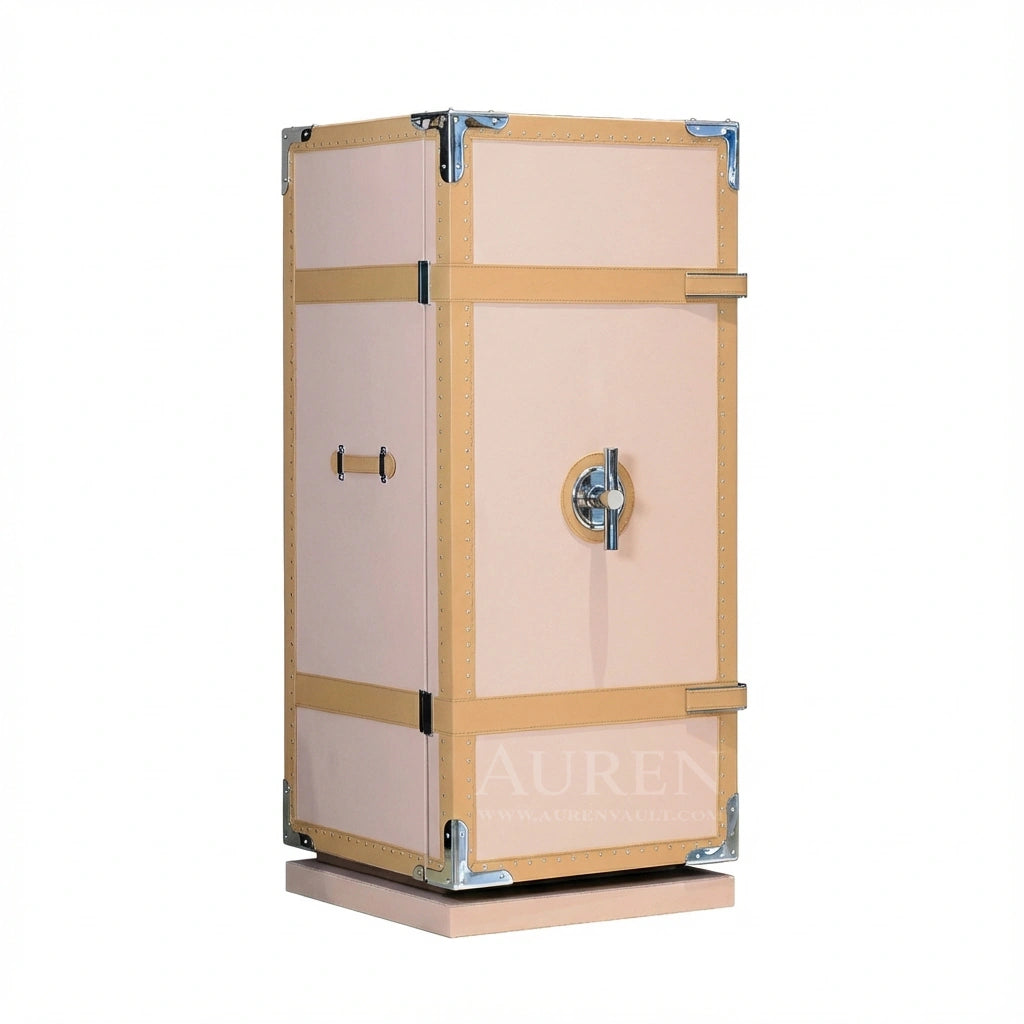
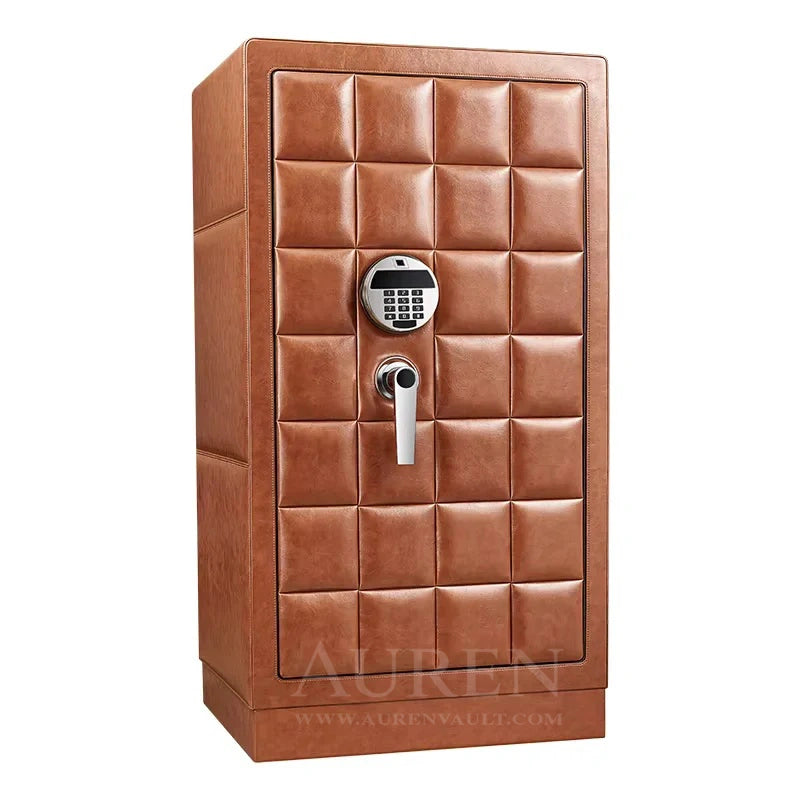
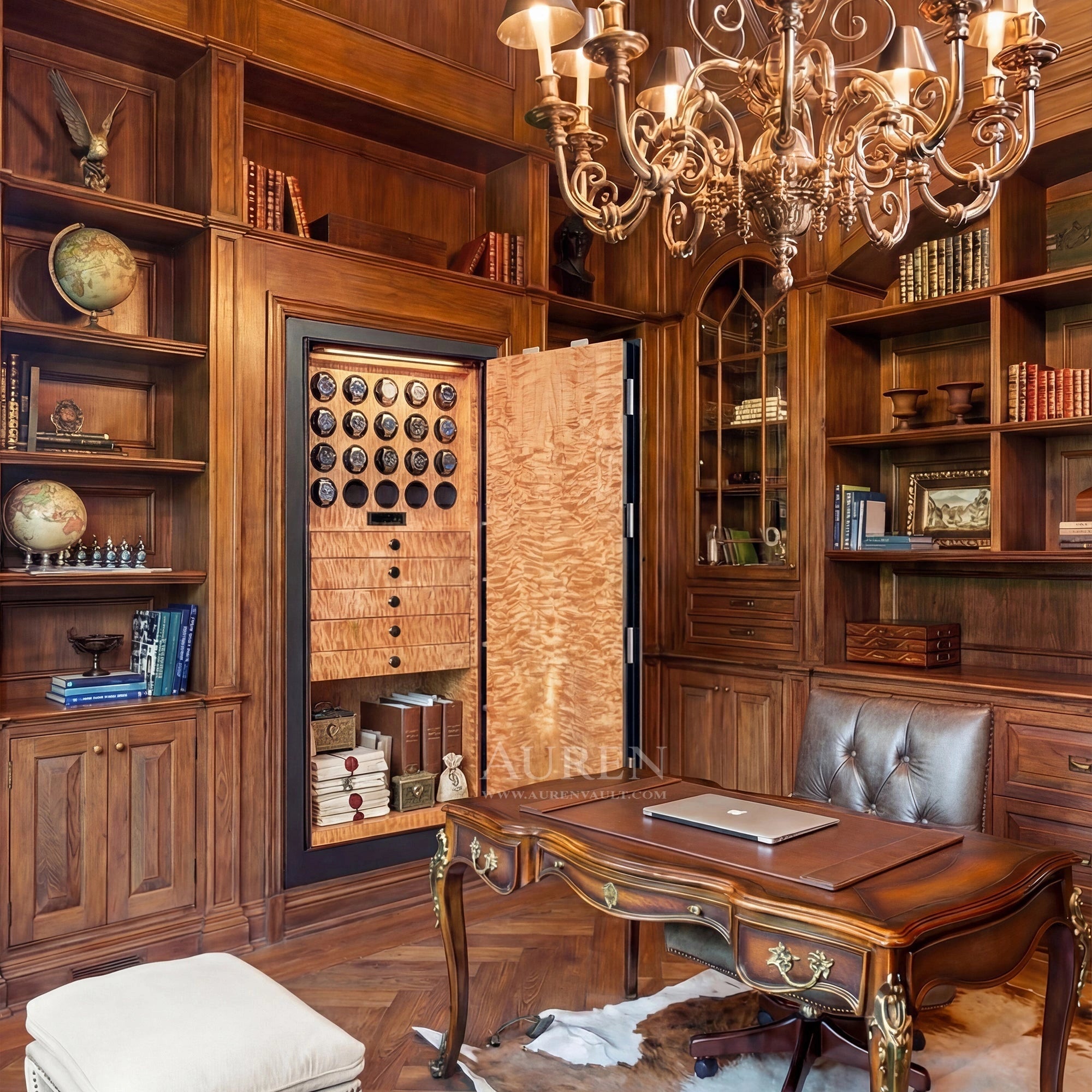
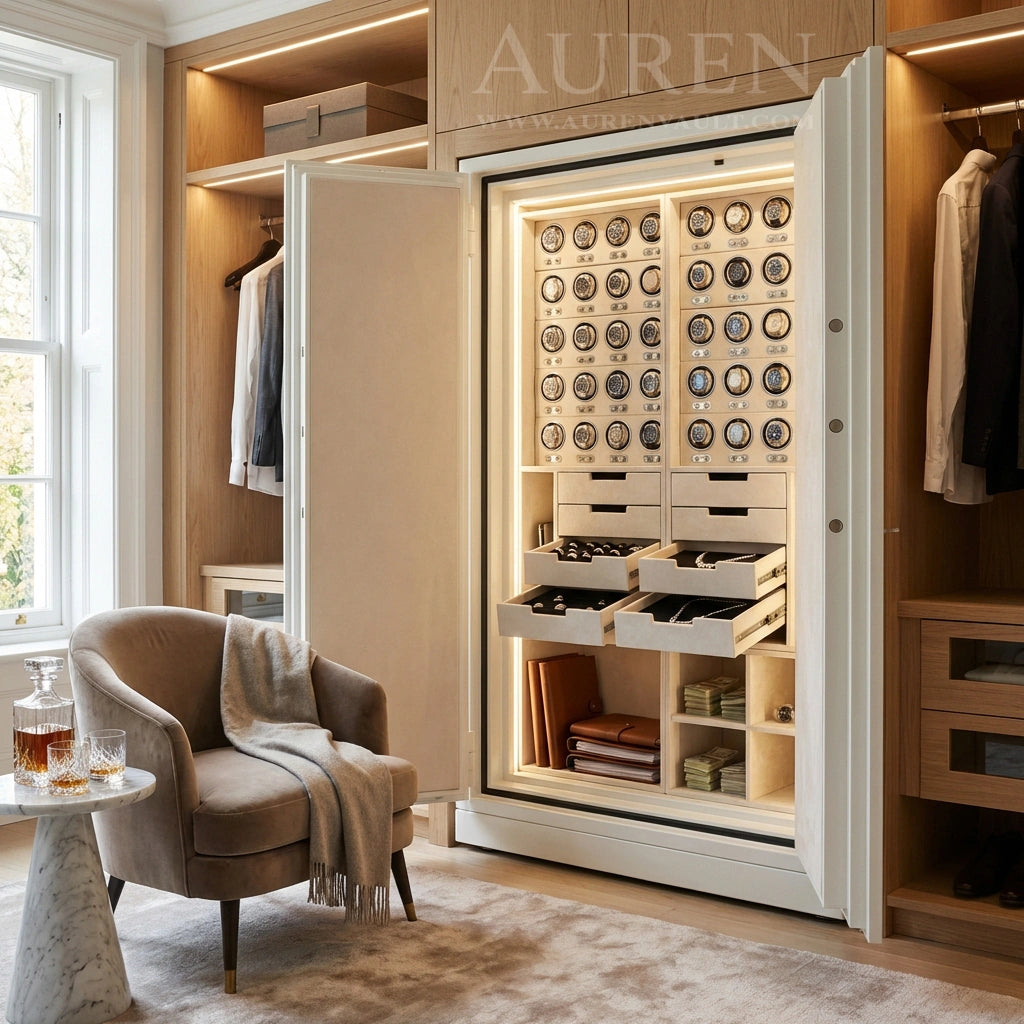
A watch winder safe can combine suitable automatic winding modules with passive storage within one enclosed system.
| Consideration | Standalone winder | Integrated watch winder safe |
|---|---|---|
| Primary function | Automatic winding convenience | Winding plus enclosed storage |
| Independent settings | Model-dependent | Depends on rotor configuration |
| Passive space for manual watches | Often limited | Can be planned into the interior |
| Physical security | Generally limited | Depends on construction and installation |
| Best application | One or several automatic watches | Mixed collections requiring organization and protection |
Collectors evaluating integrated options can review Auren Vault's watch winder safes and the watch winder safe guide.
A locking enclosure should not automatically be assumed to have a specific burglary-resistance or fire-resistance certification.
Construction, locking hardware, installation, and documented independent testing must be assessed separately.
Planning Storage for a Mixed Lange Collection
Consider an owner with seven watches:
An Odysseus L155.1, Odysseus Chronograph L156.1, Saxonia Automatic L086.1, Lange 1 Daymatic L021.1, Lange 1 Perpetual Calendar L021.3, classic Lange 1 L121.1, and a manually wound Datograph.
Five of these watches are automatic.
Two must be wound manually.
A seven-rotor cabinet would therefore allocate active winding positions to watches that cannot benefit from them.
A more useful layout could combine five individually programmable rotors with two passive compartments.
Even among the five automatics, the owner may decide that some are worn frequently enough to make continuous winding unnecessary.
This demonstrates why total watch capacity and active winding capacity are different requirements.
The broader watch safe collection provides options for comparing storage formats, while larger luxury watch safes may be more suitable for substantial collections.
For an interior tailored to specific case dimensions, leather straps, bracelet sizes, and passive storage requirements, custom watch safe configurations can be considered.
The objective is not to place every watch on a rotor.
It is to give each watch an appropriate location.
Long-Term Storage and Mechanical Care
A watch winder maintains the reserve of a compatible automatic movement.
It does not replace proper storage, careful handling, or professional servicing.
For an A. Lange & Söhne collection, physical protection is especially important because watches may incorporate highly finished precious-metal cases, delicate complications, and refined leather straps.
A suitable storage system should minimize unnecessary contact and avoid placing excessive pressure on straps or bracelets.
Environmental conditions, including humidity and temperature stability, also deserve attention.
An automatic Lange does not need to operate continuously simply because it is valuable.
For longer periods of non-use, passive storage can be reasonable when consistent with the manufacturer's instructions.
The watch storage guide is Auren Vault's related resource destination for these broader considerations.
A complete care strategy should distinguish winding convenience from preservation.
Frequently Asked Questions About A. Lange & Söhne Watch Winders
What is the best TPD setting for A. Lange & Söhne?
It depends on the calibre. Independent winding databases commonly list approximately 500 TPD bidirectional for historical Sax-O-Mat automatics. Modern Odysseus and Lange 1 Perpetual Calendar movements require individual confirmation rather than an assumed universal setting.
Does a Lange 1 need a watch winder?
The classic Lange 1 does not. It uses a manually wound movement, including Calibre L121.1 in current representative references. The Lange 1 Daymatic and Lange 1 Perpetual Calendar are automatic exceptions.
Can an Odysseus use a watch winder?
Yes. The Odysseus L155.1 is self-winding and can benefit from a compatible programmable device. Its rotor winds unidirectionally, so the external winding program should be verified.
Does the Odysseus Chronograph require a different setting?
It uses the distinct automatic L156.1 DATOMATIC movement. Its external TPD and direction should be confirmed independently rather than assumed to match the three-hand Odysseus.
Can a Saxonia Automatic use a winder?
Yes. Historical Saxonia Automatic references equipped with Calibre L086.1 are self-winding and provide approximately 72 hours of reserve. A compatible adjustable winder can maintain them between wears.
Is a watch winder worthwhile for a Lange perpetual calendar?
It can be convenient because maintaining the movement reduces repeated calendar adjustments after the watch stops. The precise winding program must still match the specific automatic calibre.
Does a Datograph need a watch winder?
Most familiar Datograph references are manually wound and cannot benefit from conventional automatic rotation. Confirm the exact reference and movement before choosing storage.
Does a longer power reserve mean higher TPD?
No. Power reserve measures stored operating time, while TPD measures external rotations. The winding mechanism determines how much external motion is appropriate.
Can a watch winder replace servicing?
No. It cannot restore lubricants, repair mechanical components, or correct a movement fault. Manufacturer-appropriate servicing remains necessary.
Is a watch winder safe suitable for a Lange collection?
It can be, particularly when the collection contains both automatic and manually wound references. Choose independently controlled winding positions, suitable passive compartments, and verified protective specifications.
Related Reading: Haute Horlogerie and Collection Storage
The contrast between manually wound Lange complications and the manufacture's distinctive automatic movements is useful when comparing other high-end watchmakers.
Best Watch Winder Settings for Patek Philippe Watches
Explore how automatic calibres, complicated calendars, and movement-specific winding requirements influence watch-winder selection.
Best Watch Winder for Vacheron Constantin Watches
Compare automatic and manually wound movements, power reserves, and storage considerations within another major haute-horlogerie manufacture.
Watch Safes with Built-In Watch Winders: Are They Worth It?
Understand when individually programmable winding modules and passive compartments offer advantages for a valuable mixed collection.
Final Perspective: Lange Ownership Begins With Understanding the Movement
A. Lange & Söhne demonstrates why a premium watch does not automatically need a watch winder.
Many of the manufacture's most celebrated watches are deliberately manually wound.
Others, including the Odysseus, Saxonia Automatic, Lange 1 Daymatic, and Lange 1 Perpetual Calendar, can benefit from appropriately configured automatic winding.
Their movement architectures should not be treated as interchangeable.
For one frequently worn automatic Lange, a programmable winder may provide modest convenience.
For complicated calendars or collections containing several self-winding calibres, independent programming can be more valuable.
For collections dominated by manually wound watches, secure passive storage may be the more important investment.
Auren Vault approaches these needs through premium watch safes and integrated winding configurations designed to accommodate different collection structures.
The best watch winder for A. Lange & Söhne is ultimately the one that respects the individual movement and offers a practical benefit without unnecessary operation.