


The best watch winder for Chanel watches is a programmable unit with adjustable turns per day (TPD), selectable winding direction, controlled rest cycles, and a secure cushion suited to the watch's ceramic bracelet or leather strap.
The Chanel J12 is the most relevant collection for automatic winding. Modern 38 mm J12 references equipped with Calibre 12.1 offer approximately 70 hours of power reserve, while selected 33 mm references using Calibre 12.2 provide around 50 hours. Both can benefit from compatible watch winders when they are not worn regularly.
Independent winding references commonly suggest approximately 650 TPD with bidirectional rotation for various Chanel J12 automatic watches. However, these recommendations should not be treated as official settings for every movement or production generation.
Quartz Chanel watches and manually wound models, including the Boy·Friend Skeleton with Calibre 3, do not need conventional automatic winding.
For collectors, the right choice balances mechanical compatibility, reliable operation, and careful support for the watch's distinctive materials.
Does a Chanel Watch Actually Need a Watch Winder?
A Chanel watch winder is useful only when the watch contains an automatic mechanical movement.
This distinction is particularly important because Chanel produces watches with different movement technologies, even within collections that share similar visual characteristics.
The contemporary J12 offers a clear example.
Its ceramic case and bracelet are immediately recognizable, but the movement inside can vary according to the watch's size, reference, and production period.
Modern automatic J12 watches use mechanical movements developed and manufactured through Chanel's involvement with Swiss movement specialist Kenissi.
Other Chanel watches operate through quartz movements, while selected haute horlogerie creations use manually wound calibres.
A conventional winder cannot supply energy to those non-automatic movements.
Why an Automatic Chanel Stops When It Is Not Worn
An automatic watch uses an oscillating rotor to transfer energy to a mainspring.
As the owner moves their wrist, the rotor turns and contributes to maintaining the movement's stored energy.
When the watch is removed and left stationary, it continues running until the power reserve is depleted.
The movement then stops.
That is a normal operating characteristic, not a mechanical defect.
A watch winder reproduces some of the rotor-generating motion by rotating the entire watch through controlled intervals.
When correctly programmed, it can help maintain enough energy for the watch to continue running.
For someone who wears the same J12 daily, a winder may provide little additional convenience.
For an owner who rotates several automatic watches throughout the week, keeping the J12 ready to wear can be more valuable.
Chanel Watch Winder Compatibility by Calibre
The most reliable approach is to identify the movement before selecting the winding program.
| Chanel watch | Representative movement | Movement type | Power reserve | Winder suitability |
|---|---|---|---|---|
| J12 38 mm, selected modern references | Calibre 12.1 | Automatic | Approximately 70 hours | Yes |
| J12 33 mm, selected modern references | Calibre 12.2 | Automatic | Approximately 50 hours | Yes |
| Older automatic J12 references | ETA-derived or other automatic calibres | Automatic | Varies | Yes; verify movement |
| J12 with Chanel–AP 3125 movement | CHANEL–AP 3125 | Automatic | Reference-dependent | Yes |
| Boy·Friend Skeleton | Calibre 3 | Manual winding | Approximately 55 hours | No |
| Monsieur de Chanel, Calibre 1 references | Calibre 1 | Manual winding | Reference-dependent | No |
| Première quartz references | Quartz | Battery-powered | Not applicable | No |
| Older J12 quartz references | Quartz | Battery-powered | Not applicable | No |
These examples do not cover every Chanel watch.
Certain limited editions and haute horlogerie models have their own movement arrangements.
For those watches, the precise reference and manufacturer's instructions should take priority over general collection-level recommendations.
Chanel J12 Calibre 12.1: The Most Important Modern Winding Reference
The Calibre 12.1 is central to Chanel's contemporary mechanical watchmaking.
Found in numerous 38 mm J12 references, it is a self-winding movement manufactured at Kenissi, the Swiss movement manufacturer co-owned by Chanel.
It is chronometer-certified by the Swiss Official Chronometer Testing Institute and provides approximately 70 hours of power reserve.
That extended reserve changes how an owner might approach watch winding.
A fully wound J12 38 mm can continue running through a relatively long period without being worn.
For someone who removes the watch on Friday evening and puts it on again Monday morning, a winder may be unnecessary if sufficient energy was stored at the beginning of the interval.
For a collector who wears the J12 only once or twice a week, continuous operation becomes more convenient.
Does Calibre 12.1 Require More TPD Because It Has a 70-Hour Reserve?
No automatic connection should be made between power reserve and TPD.
A 70-hour reserve describes the movement's potential running duration without further winding.
It does not specify how many external rotations the watch needs every day.
Winding efficiency depends on the movement's rotor mechanism and how effectively the selected program transfers energy to the mainspring.
A correctly configured winder should supply adequate energy without relying on continuous rotation.
More TPD is not inherently better.
The owner should use confirmed calibre-specific settings, not a number selected solely because the movement has a relatively long power reserve.
The Practical Advantage of Calibre 12.1
For a collection containing several automatic watches, Calibre 12.1 provides useful flexibility.
Its extended reserve allows the owner to leave the watch unworn for short periods without immediately requiring a restart.
This means the decision to purchase a winder can be based on convenience rather than urgency.
If the owner regularly alternates between several watches, a compatible winder helps maintain the J12's time and date.
If the watch is worn almost every day, regular wrist motion may be sufficient.
The movement does not require continuous winding merely because a dedicated winding device is available.
Chanel J12 Calibre 12.2: Why the 33 mm Version Needs Different Physical Support
The Calibre 12.2 is used in selected modern 33 mm Chanel J12 references.
It is also a self-winding mechanical movement manufactured at Kenissi and chronometer-certified.
Its approximate power reserve is 50 hours, compared with the 70 hours offered by Calibre 12.1.
Both movements can benefit from compatible watch winders, but their different specifications reinforce the importance of identifying the correct calibre.
The physical fit of the smaller J12 also deserves attention.
A 33 mm ceramic bracelet may have a substantially smaller fitted circumference than a 38 mm version.
If the watch has been sized for a narrow wrist, a rigid full-size winder cushion may be too large.
Forcing the bracelet around an oversized support creates avoidable tension at its links and clasp.
A compact, compressible cushion is often a more appropriate choice.
Does a 33 mm J12 Need Fewer Turns?
No. Case diameter does not establish automatic winding requirements.
A smaller watch may contain a movement with entirely different winding characteristics from a larger version.
The number of daily rotations must be selected according to the calibre.
Cushion size, on the other hand, should be selected according to the watch's physical dimensions.
A suitable Chanel watch winder therefore needs both appropriate programming and an appropriately sized holder.
These considerations are independent.
Recommended Chanel Watch Winder TPD and Rotation Direction
Independent watch winder references frequently list approximately 650 TPD with bidirectional rotation for numerous Chanel J12 automatic watches.
This is useful background information, particularly for collectors researching older J12 calibres.
However, the published recommendations are not always specific to the modern Calibre 12.1 and 12.2.
It would be misleading to present a generic J12 winding program as a verified manufacturer-issued setting for both movements.
Chanel Winding Settings: A Practical Comparison
| Movement | Commonly published guidance | What owners should verify |
|---|---|---|
| Calibre 12.1 | Investigate the 650 TPD bidirectional range used for various J12 automatics | Confirm compatibility specifically for Calibre 12.1 |
| Calibre 12.2 | Use an adjustable winder; do not assume the 38 mm program is identical | Confirm Calibre 12.2 winding direction and TPD |
| Older ETA-based J12 automatic | Often listed around 650 TPD, bidirectional | Identify the underlying movement |
| CHANEL–AP 3125 | Independent references commonly discuss roughly 600–800 TPD, bidirectional | Confirm exact reference and calibre |
| Manual or quartz movements | No automatic winding | Use passive storage |
The values are third-party reference points, not guaranteed Chanel specifications.
The owner should confirm the exact winding requirements before leaving a valuable watch on a particular program for extended periods.
Why Bidirectional Rotation Is Frequently Recommended
In a bidirectional winder program, the holder rotates in both clockwise and counterclockwise directions over its operating cycle.
This can be useful for movements that wind effectively in both directions.
It also provides flexibility when a collection contains multiple watches with different rotor characteristics.
However, bidirectional operation should not be treated as universally optimal.
Some automatic movements wind more efficiently in one direction.
Selecting an incorrect rotation program may result in insufficient energy even when the number of daily rotations appears adequate.
For additional guidance on these distinctions, the watch TPD guide explains how turns per day and rotation direction should be evaluated together.
The Chanel J12 Ceramic Bracelet: A Critical Winder Selection Factor
Mechanical compatibility is only half the decision.
The other half is physical support.
The Chanel J12 is closely associated with high-resistance ceramic, a material that provides excellent scratch resistance under ordinary conditions.
However, ceramic should not be confused with an indestructible material.
Sharp impacts and concentrated forces can damage ceramic components.
This is particularly relevant when a watch is handled repeatedly or placed on a poorly fitting support.
A winder should never require forceful positioning of the bracelet.
Why a Flexible Cushion Is Better Than a Rigid Holder
Consider a J12 bracelet that has been adjusted to fit its owner closely.
A conventional rigid watch cushion may have a circumference larger than the closed bracelet.
The owner may be tempted to stretch the bracelet around the support or fasten the clasp under excessive tension.
This is undesirable.
A compressible or interchangeable cushion allows the bracelet to be secured with less mechanical stress.
The watch should remain stable throughout rotation without requiring tight compression.
A secure holder also prevents unnecessary movement between the watch and the interior compartment.
Allow Enough Space Around the Watch
The watch case should not contact the sides of its compartment during rotation.
Adequate clearance matters when the J12 is mounted at an angle or when the winder changes rotational direction.
Soft interior materials can reduce the likelihood of incidental contact causing damage, but the watch should not be allowed to rub against the enclosure in normal operation.
The goal is stable support rather than friction-based retention.
What About Black and White Ceramic?
Both black and white J12 ceramic watches should be evaluated using the same basic physical principles.
The color does not determine winding direction or TPD.
Neither does it alter the need for correct cushion sizing.
The most important differences are the exact reference, calibre, bracelet circumference, and the dimensions of the selected winder compartment.
Older Chanel J12 Watches Need Movement Identification
The J12 has existed for multiple generations.
Earlier automatic references did not necessarily use the modern Calibre 12.1 or 12.2.
Some employed ETA-derived movements, while others incorporated different specialized calibres.
This makes generic internet instructions potentially misleading.
A recommendation published for an older J12 Automatic should not automatically be used for a contemporary 38 mm Calibre 12.1.
The reverse is equally important.
An owner of an older J12 should not assume that the specifications of the modern Kenissi-produced movement apply to their watch.
Movement identification should come first.
The original documentation, service records, and exact watch reference can help establish the correct requirements.
For discontinued or unusual models, an experienced watchmaker may be able to confirm the movement when the information is otherwise unavailable.
Chanel Boy·Friend, Première, and Monsieur: When a Winder Is Unnecessary
Not every mechanically sophisticated Chanel belongs on a rotating winder.
The Boy·Friend Skeleton equipped with Calibre 3 is an important example.
Its skeletonized mechanical movement is manually wound.
The owner supplies energy by turning the crown rather than relying on a self-winding rotor.
Placing it inside a conventional watch winder will not wind the movement.
The same distinction applies to Monsieur de Chanel references using the manually wound Calibre 1.
Certain Première watches, meanwhile, use quartz movements.
These do not require mechanical winding either.
Why This Matters for Chanel Collectors
A mixed Chanel collection may contain automatic J12 watches, manually wound haute horlogerie pieces, and quartz models.
Only the automatic watches require active winding positions.
The remaining watches are more appropriately stored in stationary compartments with proper support.
A collector who owns six Chanel watches may therefore need only two or three winding modules.
The number of watches should not automatically determine the number of winders purchased.
This is an important consideration when planning an integrated collection cabinet.
How to Choose the Right Chanel Watch Winder
For a single modern automatic J12, a compact programmable unit can be sufficient.
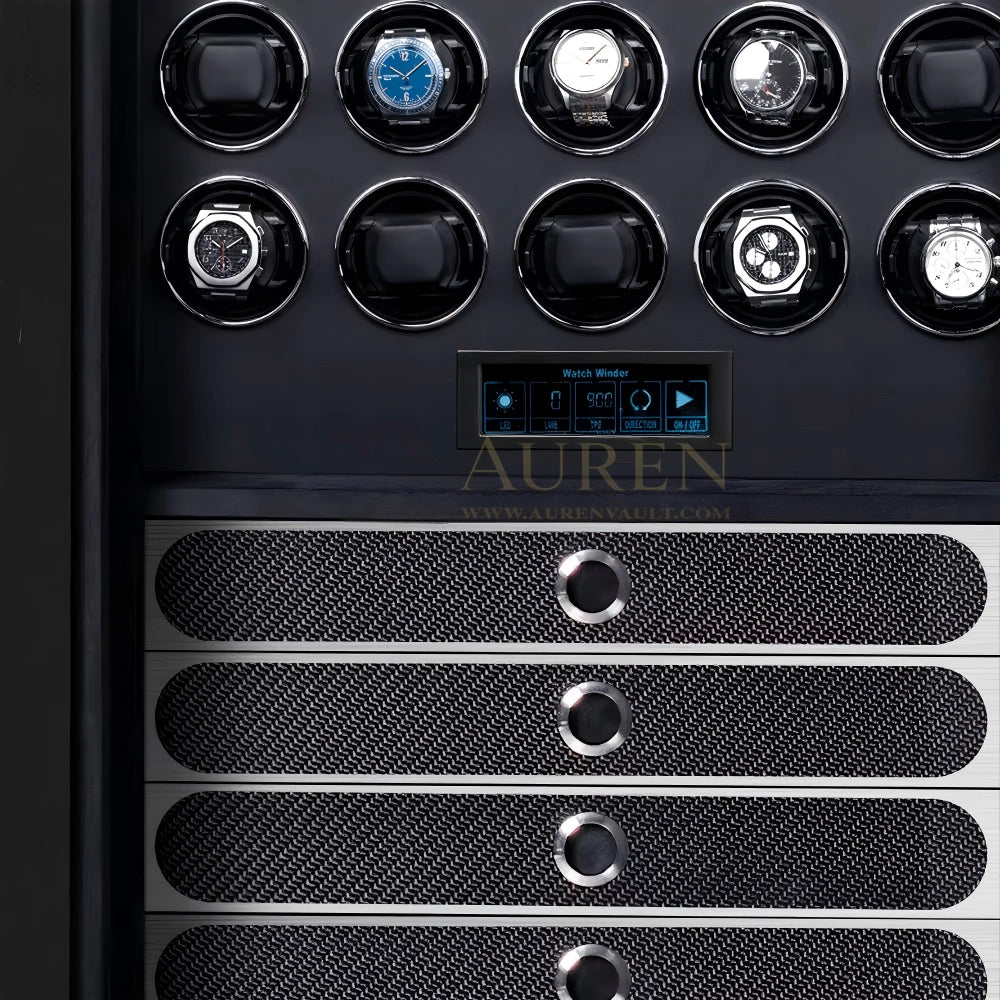
The device should provide selectable rotation direction, adjustable TPD, scheduled rest periods, and a cushion suitable for the bracelet.
For multiple automatic J12 watches, independent winding controls are more practical.
A 38 mm Calibre 12.1 and a 33 mm Calibre 12.2 should each be programmed according to their confirmed mechanical requirements.
A single shared program may be unnecessarily restrictive.
Noise is another consideration.
A watch winder used in a bedroom or dressing room should operate discreetly.
A quality winding mechanism should rotate smoothly, pause according to its programmed schedule, and maintain stable operation over time.
The quality of the motor and control system is more important than decorative lighting or the maximum advertised TPD.
Should You Choose a Display Winder or a Watch Winder Safe?
A display winder is primarily designed to keep automatic watches operating and accessible.
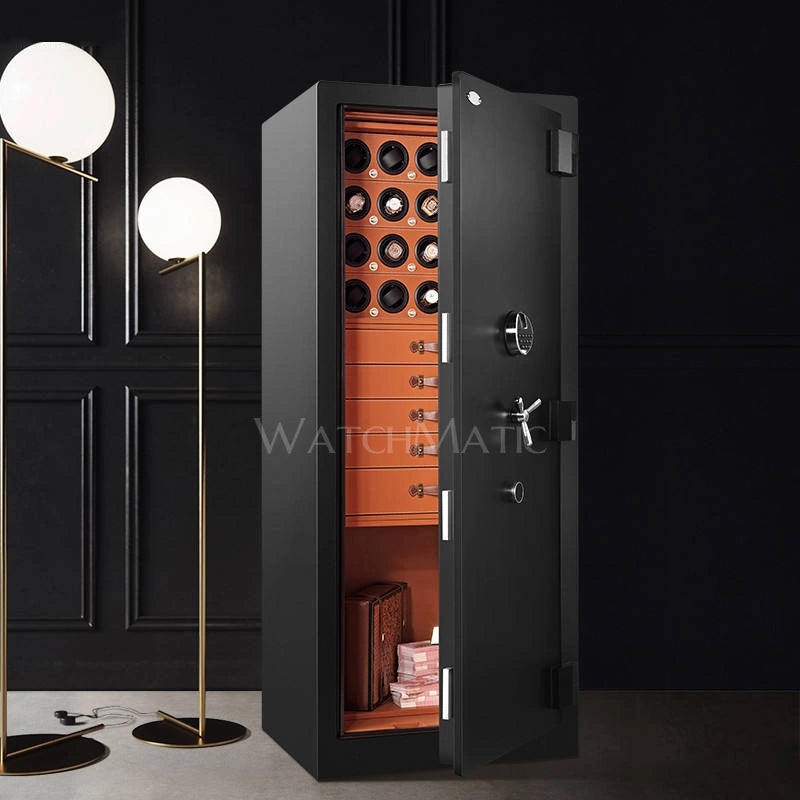
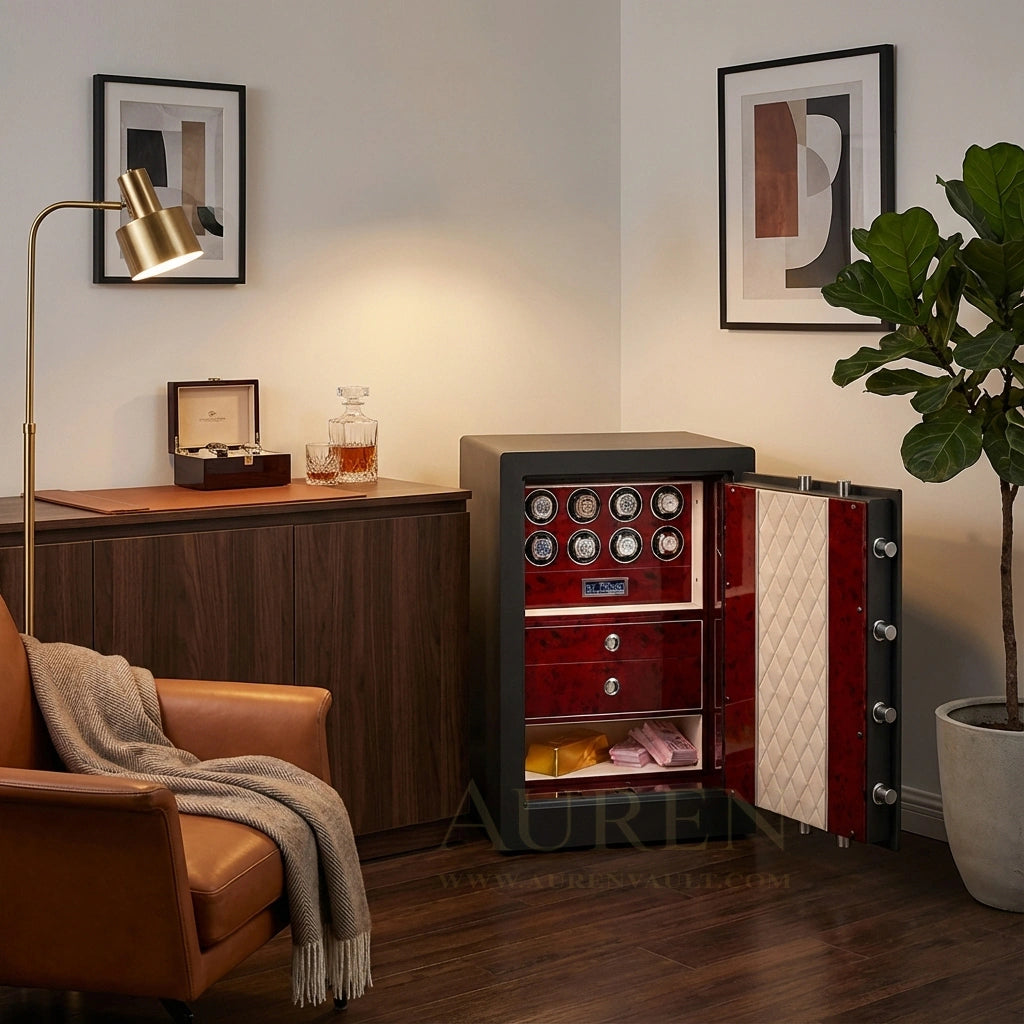
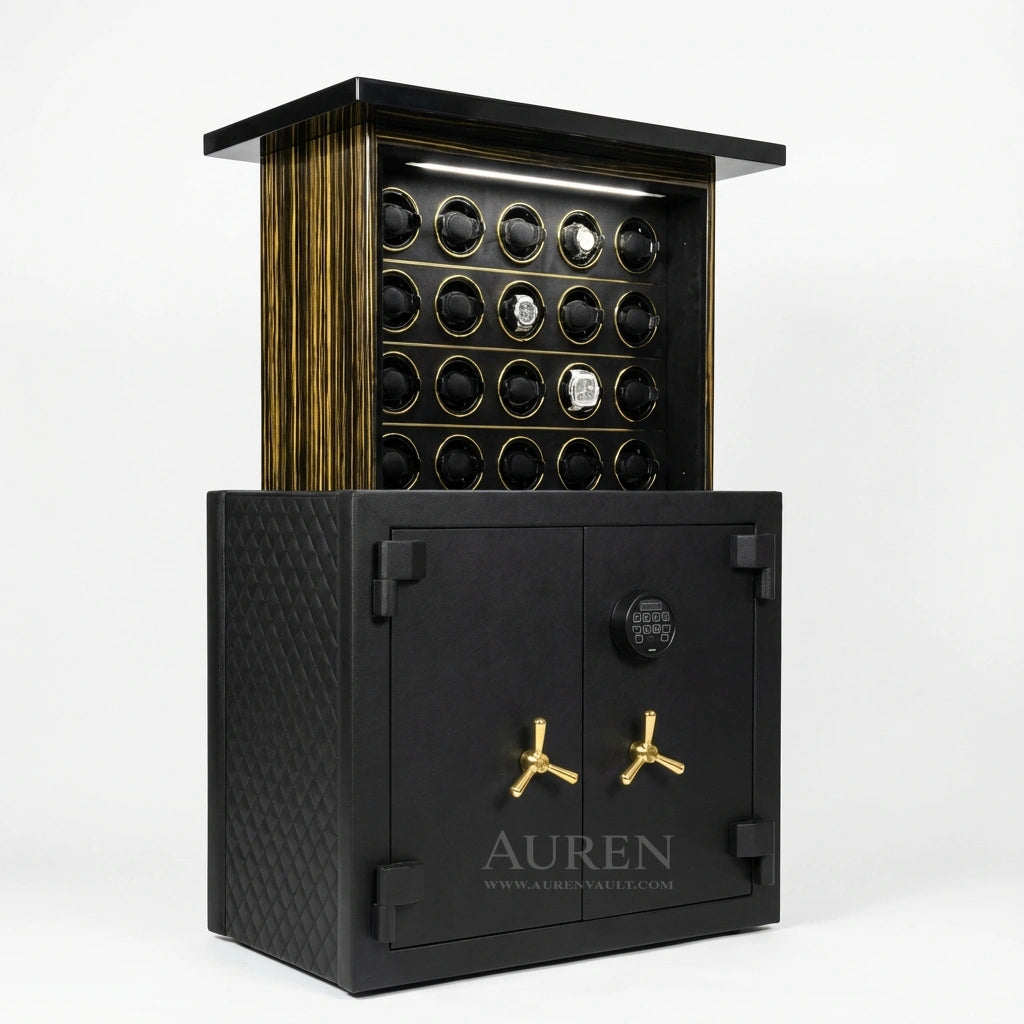
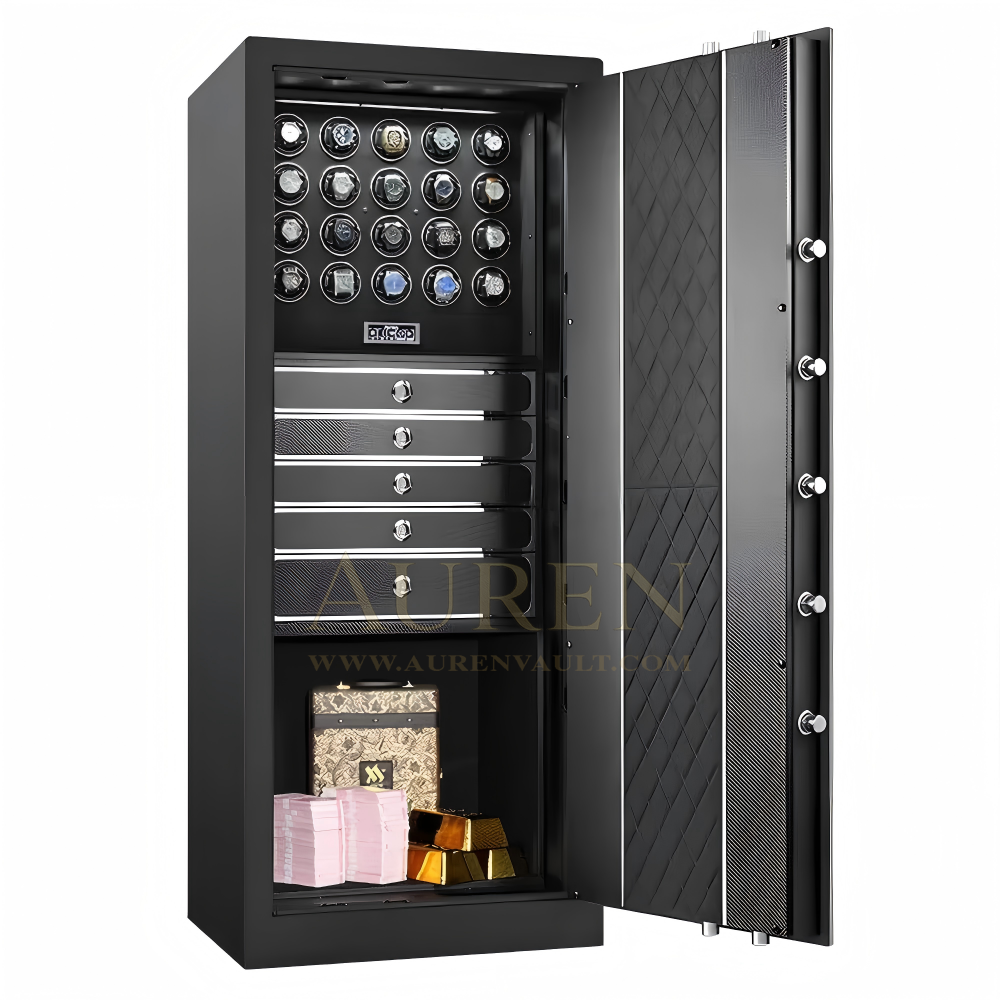
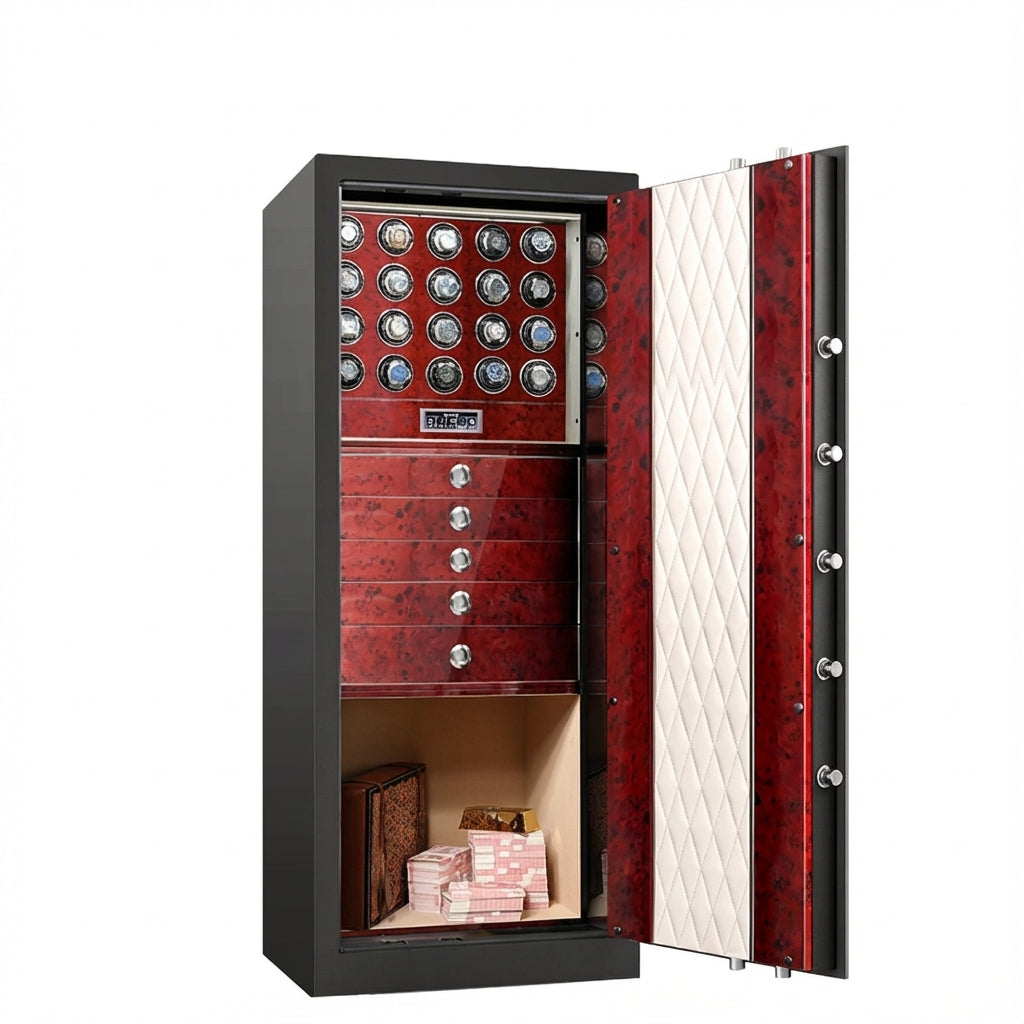
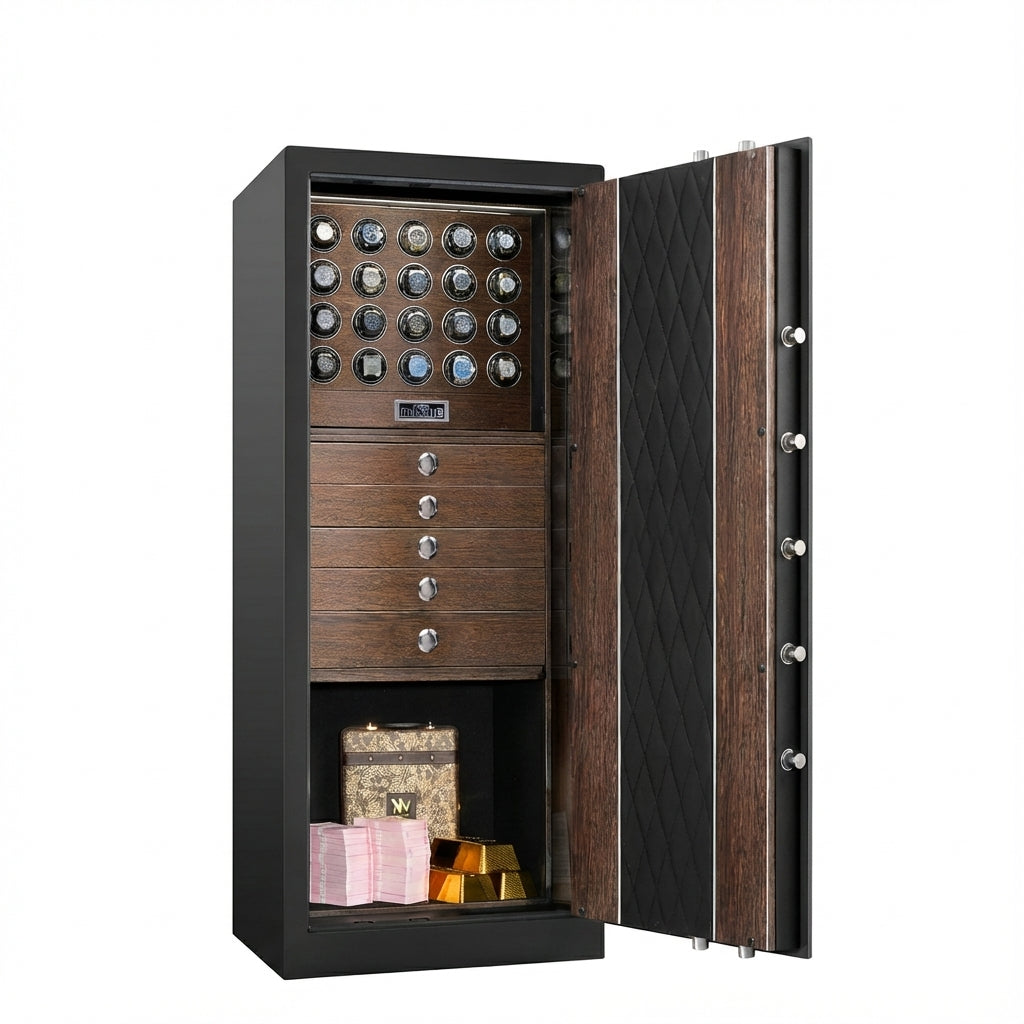
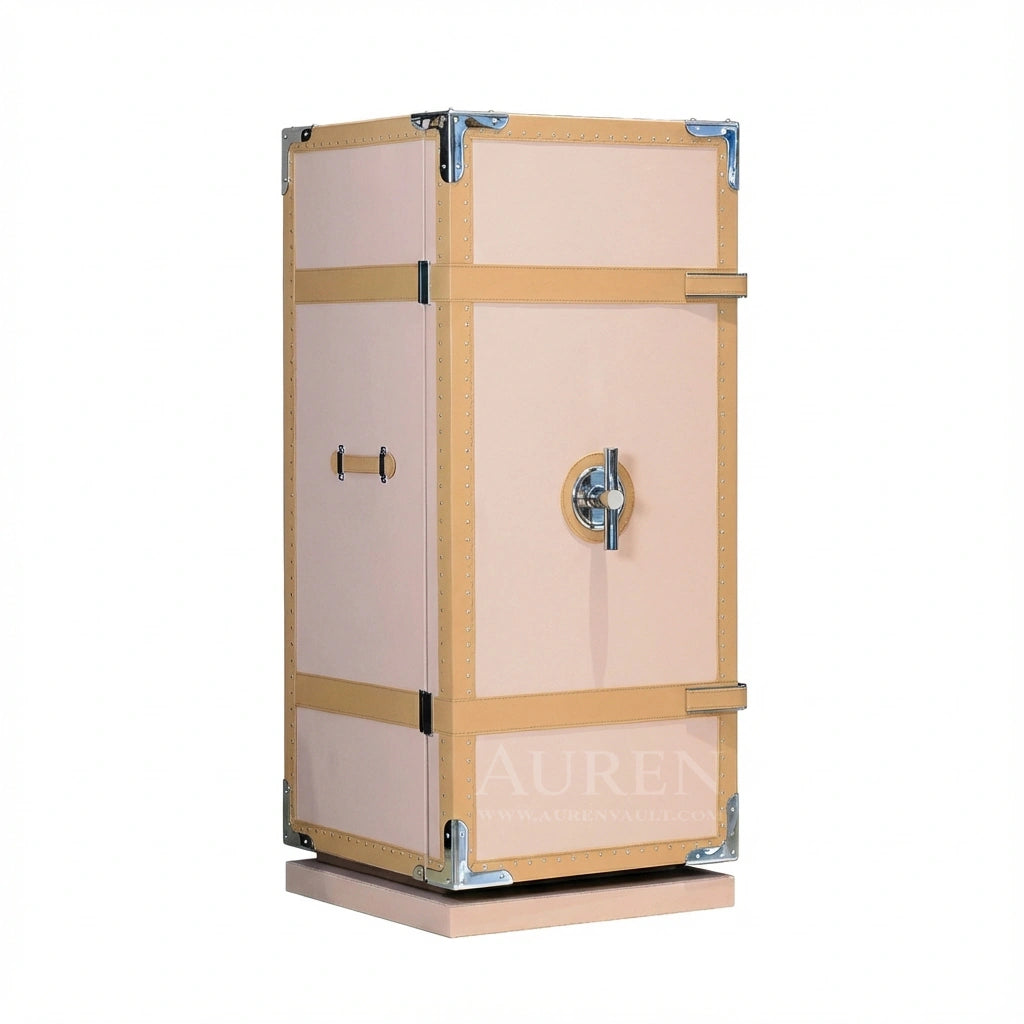
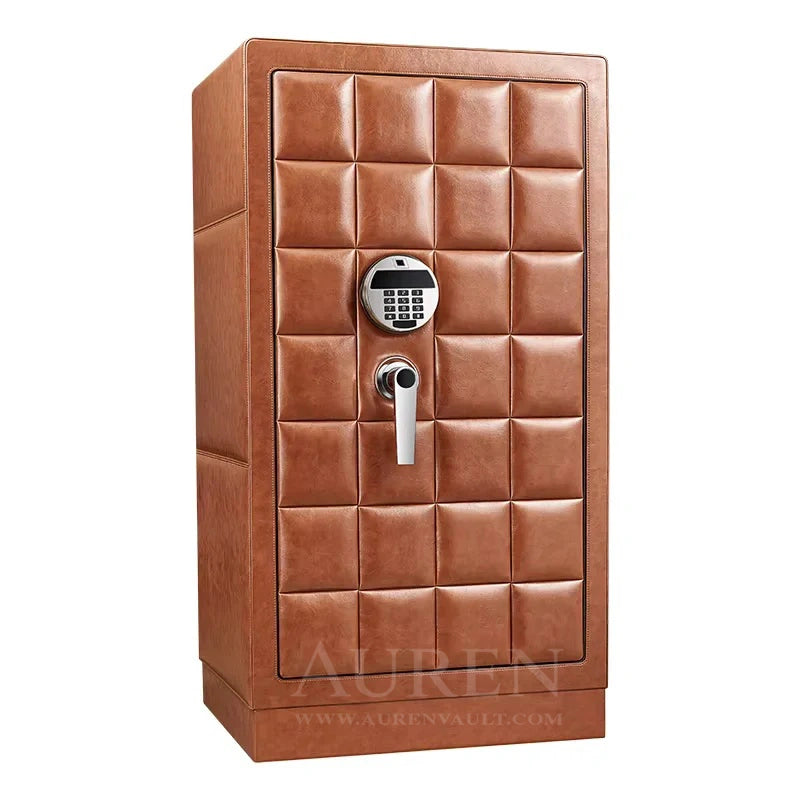
A watch winder safe combines that function with enclosed storage and a locking system.
For a single J12 that is frequently worn, the additional enclosure may not be necessary if the owner already has suitable secure storage.
For a collector with several valuable mechanical and jewelry watches, more integrated storage can be useful.
| Ownership requirement | Recommended approach |
|---|---|
| One frequently worn automatic J12 | Compact programmable winder, if desired |
| Two or three automatic J12 watches | Independently controlled multi-watch winder |
| Automatic J12 plus quartz Première | Winding positions combined with passive storage |
| Larger collection with valuable watches | Consider an appropriately specified watch winder safe |
| Unusual bracelet sizes or mixed watch types | Prioritize adjustable holders and flexible internal layout |
A safe's protective capabilities must be evaluated independently of its winding features.
A locking door alone does not establish certified burglary resistance or fire protection.
For collectors who want both active winding and enclosed storage, watch winder safes with integrated modules provide a relevant category to explore.
The watch winder safe guide offers additional context for comparing different configurations.
Building a Storage System Around a Mixed Chanel Collection
The ideal arrangement depends on how the watches are used.
Imagine a collector who owns a black J12 Calibre 12.1, a white J12 Calibre 12.2, a Boy·Friend Skeleton, and two quartz Première watches.
Only the two J12 automatics need active winding positions.
The manually wound Boy·Friend and quartz Première watches can remain in stationary storage.
That arrangement uses the available space more efficiently and avoids unnecessary rotation of watches that do not benefit from it.
For larger collections, luxury watch safes provide options for organizing valuable timepieces within a more substantial storage environment.
Collectors comparing different capacities can also explore the complete watch safe collection.
When the mix of automatic watches, jewelry watches, and accessories requires a distinctive internal arrangement, custom watch safe configurations may be more appropriate.
The best configuration is not always the one with the greatest number of rotating modules.
It is the one that gives each watch an appropriate storage position.
Should You Leave a Chanel J12 on a Winder Every Day?
An automatic J12 does not have to remain on a winder whenever it is unworn.
The movement can stop normally after its power reserve is depleted.
It can then be restarted and adjusted according to the watch's instructions.
A winder is useful primarily because it reduces the inconvenience of repeated setup.
For Calibre 12.1, the approximately 70-hour power reserve already provides considerable flexibility.
A collector who wears the watch several times a week may not need continuous external winding.
However, someone who regularly rotates among many watches may appreciate having the J12 ready whenever it is selected.
Keeping the movement running should not be confused with improving its timekeeping accuracy or extending its service interval.
A winder does not replace servicing or correct mechanical problems.
For watches stored over longer periods, protective conditions become more important than constant operation.
The watch storage guide explains broader considerations for storing mechanical and quartz watches appropriately.
Common Mistakes When Buying a Chanel Watch Winder
One frequent mistake is assuming that every Chanel J12 is automatic.
Older quartz J12 references exist, and movement types should be verified.
Another is assuming that all automatic J12 watches use the same calibre.
A Calibre 12.1, Calibre 12.2, and older ETA-derived movement should not automatically be assigned identical settings.
Owners should also avoid forcing ceramic bracelets around oversized cushions.
Proper fit is essential for stable winding without unnecessary mechanical stress.
Finally, the highest TPD program should not be used simply because a watch is expensive.
The correct winding program depends on the movement's requirements, not the value of the watch.
Frequently Asked Questions About Chanel Watch Winders
What is the best watch winder for a Chanel J12?
A programmable winder with adjustable TPD, selectable direction, controlled rest cycles, and a cushion properly sized for the ceramic bracelet is the best general choice. The exact settings depend on the J12 movement.
What TPD should I use for Chanel J12 watches?
Approximately 650 TPD with bidirectional rotation is frequently published for various J12 automatic references. It is not a universal official Chanel setting, and compatibility should be confirmed for the exact calibre, particularly modern Calibres 12.1 and 12.2.
Does the Chanel J12 Calibre 12.1 need a watch winder?
No. Calibre 12.1 is automatic and offers approximately 70 hours of power reserve. A winder is optional and primarily useful when the watch is rotated with other timepieces.
Can a 33 mm Chanel J12 use a watch winder?
Yes, if it contains the automatic Calibre 12.2 or another automatic movement. Use the correct movement program and a cushion that accommodates the smaller bracelet comfortably.
Is the Chanel J12 automatic or quartz?
The J12 collection includes automatic and historical quartz references. Modern models using Calibre 12.1 or 12.2 are automatic, but the movement type should always be verified for the specific reference.
Does Chanel Calibre 12.2 need less TPD than Calibre 12.1?
Not necessarily. Calibre 12.2 has a shorter stated power reserve, but that does not establish a lower TPD requirement. Rotation requirements should be determined from the movement's winding characteristics.
Can a watch winder damage a Chanel ceramic bracelet?
An incorrectly sized or poorly fitted holder can place unwanted stress on the bracelet or allow the watch to strike nearby surfaces. A properly fitted, soft cushion and adequate clearance are important.
Does the Chanel Boy·Friend Skeleton need winding?
The Calibre 3 Boy·Friend Skeleton is manually wound. It should be wound through the crown according to its instructions, not through a conventional automatic watch winder.
Can a Chanel J12 be overwound on a watch winder?
Modern automatic movements generally include mechanisms that limit excessive mainspring tension. However, a suitable winding program and controlled rest periods remain preferable to unnecessary continuous rotation.
Is a watch winder safe necessary for Chanel watches?
It is not mechanically necessary. A watch winder safe is most relevant when the owner wants to combine convenient automatic winding with enclosed, more secure storage for a valuable collection.
Related Reading
For additional guidance on winding different luxury watch movements and planning mixed collections:
-
Best Watch Winder for Cartier: TPD Settings & Buying Guide — Particularly relevant to collectors comparing automatic and quartz watches from design-focused maisons.
-
Best Watch Winder for Vacheron Constantin Watches — Explores movement-specific winding and the storage of valuable mechanical watches.
-
Best Watch Winder for Grand Seiko: Spring Drive & TPD Guide — Explains why different movement technologies require different winding decisions.
Final Thoughts: The Best Chanel Winder Protects Both Movement and Design
Choosing the best watch winder for Chanel starts with identifying whether the watch is automatic.
For modern J12 watches equipped with Calibre 12.1 or 12.2, a properly programmed winder can offer the convenience of continuous operation between wears.
For quartz and manually wound Chanel watches, active winding is unnecessary.
Beyond the movement, the J12's ceramic bracelet requires careful physical support. A suitable holder should secure the watch without forcing its links or clasp into an uncomfortable position.
Collectors managing several Chanel watches may benefit from a configuration that combines programmable winding modules with passive storage.
At Auren Vault, this distinction informs the approach to refined watch storage, integrated winding, and collection-focused security.
Ultimately, the best winding system should complement the engineering and design of the watch without introducing unnecessary mechanical activity or handling risk.