
The best watch winder for Arnold & Son watches is a programmable model that matches the specific automatic movement's winding requirements, provides adjustable turns per day (TPD), and securely accommodates the watch's case and strap.
Arnold & Son produces several automatic manufacture calibres, including A&S6302 in the Longitude, A&S6203 in the DSTB, and the A&S6022 and A&S6122 world-time movements used in different Globetrotter generations. These watches can benefit from compatible winding systems.
However, many of the manufacture's most distinctive watches are manually wound. The Perpetual Moon, Nebula, Time Pyramid, Luna Magna, and Ultrathin Tourbillon do not benefit from conventional automatic watch winders.
There is no single verified Arnold & Son TPD setting appropriate for every automatic calibre. The correct rotation count and direction must be confirmed for the movement.
For collectors, choosing the right system involves understanding winding architecture, power reserve, movement complications, physical support, and the balance between active winding and protected passive storage.
Why Arnold & Son Requires a Different Approach to Watch Winding
Arnold & Son draws inspiration from the achievements of John Arnold, the eighteenth-century English watchmaker closely associated with marine chronometers and precision timekeeping.
The contemporary Swiss manufacture develops movements inspired by astronomy, chronometry, and world-time complications.
Its collections include automatic movements, manually wound skeleton calibres, astronomical displays, and sophisticated tourbillons.
This diversity is important when choosing a watch winder.
A Longitude powered by A&S6302 is automatic.
A DSTB equipped with A&S6203 is also automatic.
A Nebula containing A&S5201, however, is manually wound.
All three are mechanical watches.
All are designed around distinctive manufacture calibres.
Only the automatic models can receive energy through a conventional rotating watch winder.
An automatic movement contains an oscillating weight that responds to the wearer's wrist movement.
As the rotor moves, energy is transferred to the mainspring through the automatic winding mechanism.
When the watch is removed, the movement continues running until its available reserve is exhausted.
A watch winder recreates some of that motion through programmed rotation.
Its purpose is to maintain sufficient stored energy for continued operation.
It does not improve the movement's inherent accuracy, eliminate the need for servicing, or replace the correct setting procedures for complications.
For collectors who regularly alternate between several automatic watches, a suitable winder can be convenient.
For owners of manually wound Arnold & Son watches, passive storage may be more appropriate.
The correct decision begins with the movement.
Which Arnold & Son Watches Can Use a Watch Winder?
The following table compares important automatic and manually wound Arnold & Son calibres.
| Arnold & Son watch | Calibre | Movement type | Power reserve | Winder compatibility |
|---|---|---|---|---|
| Longitude Titanium | A&S6302 | Automatic | 60 hours | Yes |
| DSTB 42 | A&S6203 | Automatic | 55 hours | Yes |
| Globetrotter 42 | A&S6122 | Automatic worldtimer | 55 hours | Yes |
| Globetrotter 45 | A&S6022 | Automatic worldtimer | 45 hours | Yes |
| Nebula 40 | A&S5201 | Manual winding | 90 hours | No |
| Time Pyramid | A&S1615 | Manual winding | 90 hours | No |
| Perpetual Moon 38 | A&S1612 | Manual winding | 90 hours | No |
| Luna Magna, selected references | A&S1021 | Manual winding | 90 hours | No |
| Ultrathin Tourbillon | A&S8300 | Manual winding | 100 hours | No |
| Double Tourbillon | A&S8513 | Manual winding | 90 hours | No |
Specifications refer to documented representative models and movement generations.
Arnold & Son has produced different versions within several collections, so the exact reference should be verified before selecting a winding program.
The Important Difference Between Automatic and Manual Movements
An automatic Arnold & Son uses an oscillating rotor to replenish the mainspring's energy.
A manually wound Arnold & Son requires the owner to wind the mainspring through the designated crown or winding mechanism.
The distinction is independent of price, complexity, or power reserve.
For example, the Ultrathin Tourbillon offers approximately 100 hours of reserve but is manually wound.
The Longitude offers a shorter 60-hour reserve and is automatic.
Only the Longitude can benefit from conventional external rotation.
A longer power reserve does not make a watch more suitable for a watch winder.
The movement's winding architecture determines compatibility.
Arnold & Son Watch Winder Settings: TPD and Rotation Direction
Two parameters determine how an automatic watch winder operates.
Turns per day (TPD) describes the number of programmed rotations delivered during a 24-hour period.
Rotation direction determines whether the watch rotates clockwise, counterclockwise, or alternates between both directions.
The correct program depends on the movement's automatic winding mechanism.
Some movements wind efficiently in both directions.
Others primarily transfer energy in one direction.
Consequently, a high TPD program may not maintain adequate energy if the device rotates in an ineffective direction.
Programming Guidance by Arnold & Son Calibre
| Arnold & Son calibre | TPD guidance | Rotation direction |
|---|---|---|
| A&S6302 | Confirm the Longitude's movement-specific requirements | Verify |
| A&S6203 | Confirm the DSTB's winding requirements | Verify |
| A&S6122 | Use calibre-specific guidance for the newer Globetrotter | Verify |
| A&S6022 | Confirm the earlier Globetrotter movement's program | Verify |
| A&S5201 | Not applicable | Manual winding only |
| A&S1615 | Not applicable | Manual winding only |
| A&S1612 | Not applicable | Manual winding only |
| A&S1021 | Not applicable | Manual winding only |
| A&S8300 / A&S8513 | Not applicable | Manual winding only |
A comprehensive manufacturer-approved TPD chart for all Arnold & Son automatic calibres is not established here.
For that reason, assigning a generic 650 or 800 TPD setting to every Arnold & Son automatic would be insufficiently precise.
The best approach is to identify the exact calibre and obtain movement-specific winding guidance.
Is 650 TPD Suitable for Arnold & Son?
Approximately 650 TPD is frequently discussed as a starting point for conventional Swiss automatic movements.
However, it should not be treated as an official Arnold & Son recommendation.
The A&S6302, A&S6203, and A&S6122 are manufacture movements with distinct architectures.
Their effective winding requirements should be confirmed individually.
A watch winder should provide sufficient energy through the correct rotation program, not simply perform as many rotations as possible.
For a broader explanation of how TPD and direction interact, see the watch TPD guide.
Why Power Reserve Cannot Determine TPD
Power reserve measures how long a movement can continue operating after sufficient winding.
TPD measures the number of external rotations performed by a winding device.
The two figures are related to energy management but are not interchangeable.
The Longitude A&S6302 provides approximately 60 hours of reserve.
The DSTB A&S6203 provides approximately 55 hours.
The Globetrotter A&S6022 provides approximately 45 hours.
These differences do not independently establish which movement needs the highest TPD.
Winding efficiency depends on the rotor, transmission mechanism, and overall movement architecture.
The correct program must be established from those characteristics.
Best Watch Winder for Arnold & Son Longitude: Calibre A&S6302
The Longitude is one of Arnold & Son's most contemporary automatic watches.
Its design draws inspiration from marine chronometers and the nautical instruments associated with John Arnold's historical work.
Selected Longitude Titanium references use the A&S6302 manufacture movement.
The movement is certified by the Contrôle Officiel Suisse des Chronomètres (COSC), operates at 28,800 vibrations per hour, and provides approximately 60 hours of power reserve.
The watch includes hours, minutes, small seconds, and a power-reserve indicator.
Its 42.5 mm titanium case and integrated bracelet give it a modern sports-watch character.
The A&S6302 Automatic Winding System
The A&S6302 uses a self-winding mechanism with a specially designed 22K gold oscillating weight.
The rotor's form draws inspiration from historic maritime design.
Its decorative execution complements the movement's traditional finishing.
However, the use of a gold rotor does not independently establish TPD.
The rotor's material and shape are only part of the automatic winding architecture.
The appropriate external winding program depends on how the complete mechanism transfers energy to the mainspring.
A programmable winder should therefore be selected according to confirmed A&S6302 requirements.
Why the Longitude Can Be a Good Winder Candidate
Consider someone who wears the Longitude during the working week but changes to another watch over the weekend.
With approximately 60 hours of reserve, the Longitude may remain running through much of that interval if sufficiently wound.
A winder may not be necessary for such a short period.
However, a collector who rotates among several watches and leaves the Longitude unworn for longer intervals may appreciate continuous operation.
A compatible winder can maintain its energy between wears.
The benefit is convenience rather than a mechanical requirement for permanent winding.
Using the Power-Reserve Indicator
The Longitude's power-reserve display provides useful information about the energy remaining in the movement.
This can help an owner observe whether a winding program is maintaining the watch adequately.
However, the indicator should not replace verification of the correct direction and TPD.
A watch that maintains some power under an unsuitable program may not be receiving the intended winding efficiency.
The correct settings should be established first.
The indicator can then provide additional feedback about operation.
Integrated Titanium Bracelets Need Appropriate Support
The Longitude's integrated bracelet is part of its case design.
A bracelet sized closely to the owner's wrist may not fit comfortably around a large rigid winder cushion.
Forcing the clasp closed around an oversized holder can place unnecessary tension on the links.
A compressible cushion is generally preferable.
The watch should remain stable during rotation without requiring excessive pressure.
The case should also have enough clearance within the winding chamber.
For a 42.5 mm watch, compartment dimensions deserve attention.
Arnold & Son DSTB: A&S6203 and the True-Beat Seconds Complication
The DSTB is one of Arnold & Son's most distinctive automatic watches.
DSTB stands for Dial-Side True Beat.
The watch reveals its true-beat seconds mechanism on the dial side, making the complication part of the visual architecture.
The display recalls historical precision timekeeping instruments in which seconds advance in discrete steps.
Selected modern DSTB 42 references use the automatic A&S6203 movement.
The movement operates at 28,800 vibrations per hour and provides approximately 55 hours of power reserve.
It incorporates a 22K gold oscillating weight.
Why a True-Beat Movement Does Not Automatically Need More TPD
The DSTB's true-beat seconds mechanism creates a distinctive display.
However, the visible stepping action is not the automatic winding system.
The two serve different functions.
A true-beat seconds complication does not independently establish how many external rotations the movement requires.
The appropriate program should follow the A&S6203 automatic winding mechanism.
A collector should not increase TPD simply because the watch contains an unusual complication.
When a DSTB Benefits From a Winder
For an owner who wears the DSTB occasionally, a compatible winder can keep the movement running between wears.
The benefit is avoiding repeated restarting.
However, the true-beat seconds display itself does not require special external handling.
The watch winder does not control the stepping mechanism.
It only maintains the movement's energy.
A 55-hour reserve also means the watch can remain operational through certain short periods of non-use without additional winding.
The practical need depends on the wearing schedule.
Case Size and Precious-Metal Support
The DSTB 42 is available in precious-metal cases, including platinum and red gold.
The documented 42 mm case measures approximately 12.95 mm thick.
A suitable winder should provide enough clearance for the case.
The holder should also support the leather strap without excessive tension.
For a valuable precious-metal watch, soft interior materials and stable mounting help minimize unnecessary contact.
A visually elaborate display winder is less important than a reliable holder that protects the watch during rotation.
Arnold & Son Globetrotter: Why the Movement Generation Matters
The Globetrotter is one of Arnold & Son's most recognizable contemporary world-time watches.
Its design features a sculpted representation of the Northern Hemisphere beneath a prominent openworked bridge.
The rotating dome and associated time-zone display create an unusual interpretation of world-time information.
The watch is available in different case sizes and movement generations.
This introduces an important distinction for watch winder selection.
Globetrotter 42: Calibre A&S6122
Selected Globetrotter 42 references use the automatic A&S6122.
Arnold & Son's documentation specifies approximately 55 hours of power reserve.
The movement operates at 28,800 vibrations per hour and displays local time together with world-time information.
For an owner who frequently travels or rotates among several watches, maintaining the movement can reduce repeated adjustments.
However, the external winding program must be appropriate for the A&S6122.
It should not automatically be copied from an older Globetrotter reference.
Globetrotter 45: Calibre A&S6022
Earlier and larger 45 mm Globetrotter references use the A&S6022.
This automatic world-time calibre provides approximately 45 hours of power reserve.
Its movement architecture differs from the newer A&S6122.
Although both watches belong to the Globetrotter family and incorporate world-time displays, their winding programs should be verified independently.
This is an important example of why the collection name alone is insufficient.
The exact reference and calibre determine the relevant technical guidance.
Why a Worldtimer Can Benefit From Continuous Operation
A conventional three-hand watch is relatively straightforward to restart after stopping.
A worldtimer may involve additional indications that need to be synchronized.
A compatible winder can help maintain the movement between wears, reducing how often the owner must restore these displays.
However, a watch winder does not automatically change the time zone when the owner travels.
It supplies energy to the automatic movement.
The intended world-time indications must still be set correctly.
Large Domed Cases Need Adequate Clearance
The Globetrotter's distinctive case and dial architecture create physical considerations.
A 45 mm Globetrotter requires more compartment space than a compact dress watch.
The domed sapphire, case proportions, and crown should remain clear of the enclosure throughout rotation.
The holder must also support the watch securely without placing unnecessary pressure on its leather strap.
A poorly fitting cushion can allow the watch to shift.
For a complicated worldtimer, stable mounting and adequate clearance are particularly important.
Arnold & Son Nebula: A Skeleton Watch That Does Not Need a Winder
The Nebula is among Arnold & Son's most recognizable skeletonized movements.
Its design uses a radial arrangement of bridges that creates the impression of a mechanical structure expanding outward from the center.
Selected Nebula 40 references use the A&S5201 movement.
The calibre is manually wound and offers approximately 90 hours of power reserve.
This distinction is important because the movement's openworked architecture might resemble the appearance of certain automatic skeleton watches.
However, the Nebula does not use a conventional automatic rotor.
Why the A&S5201 Cannot Be Wound Through Rotation
The Nebula's mainspring must be replenished through manual winding.
Rotating the complete watch does not provide the same function.
A conventional watch winder therefore offers no winding benefit.
The watch should instead be wound according to its original instructions.
When it is not being worn, a protected stationary holder is more appropriate.
Why Passive Storage Makes Sense
The Nebula's skeletonized design exposes much of its movement architecture visually.
Although the watch is protected by its case and sapphire crystals, unnecessary handling should still be minimized.
A stable stationary compartment can provide suitable support.
The strap or bracelet should not be stretched around an oversized holder.
For collectors who own both automatic and manually wound Arnold & Son references, the Nebula should occupy a passive storage position.
Time Pyramid: A Manual-Winding Movement With 90 Hours of Reserve
The Time Pyramid is another important example of Arnold & Son's manually wound watchmaking.
Selected references use the A&S1615.
The movement is designed around a distinctive skeletonized architecture with two mainspring barrels.
It offers approximately 90 hours of power reserve.
Its visual arrangement emphasizes the transfer of mechanical energy through the movement.
However, the existence of two barrels does not make it automatic.
Why Two Barrels Do Not Mean Automatic Winding
A mechanical movement can use one or several barrels to store energy.
The barrels do not determine whether the watch winds automatically.
That depends on the presence of a self-winding rotor and the mechanism connecting it to the mainspring.
The Time Pyramid's A&S1615 is manually wound.
A conventional rotating watch winder cannot replenish its energy.
The correct approach is manual winding and appropriate passive storage.
Special Storage Considerations
The Time Pyramid uses a carefully balanced, openworked movement design.
Its case and strap should be supported without unnecessary pressure.
A stationary compartment with suitable cushioning is preferable to assigning the watch an active winding position that provides no mechanical benefit.
For collectors with several manual-winding Arnold & Son watches, passive storage capacity can be more important than the number of rotating modules.
Perpetual Moon and Luna Magna: Astronomical Complications Without Automatic Winding
Arnold & Son is particularly recognized for its astronomical watchmaking.
The Perpetual Moon and Luna Magna are important examples.
Both incorporate sophisticated moon-phase displays.
However, their representative movements are manually wound.
Perpetual Moon 38: Calibre A&S1612
Selected Perpetual Moon 38 references use the A&S1612.
The calibre offers approximately 90 hours of power reserve.
Its moon-phase mechanism is designed to maintain exceptional astronomical accuracy when correctly operated.
The manufacturer describes a deviation of approximately one day after 122 years of continuous correct operation.
Despite this technical sophistication, the movement is manually wound.
A conventional watch winder does not replenish its mainspring.
Luna Magna: Calibre A&S1021
The Luna Magna incorporates a prominent three-dimensional moon-phase display.
Selected references use the manually wound A&S1021 with approximately 90 hours of power reserve.
The spherical moon rotates to represent the lunar cycle.
Its complexity may make the watch's setting procedure more involved than that of a conventional three-hand model.
However, a watch winder cannot maintain the movement because it lacks an automatic winding rotor.
The owner should follow the original winding and adjustment instructions.
Why a Moon-Phase Complication Does Not Establish Winder Compatibility
Moon-phase displays can appear in automatic and manually wound watches.
The complication describes how lunar information is represented.
It does not establish how the mainspring receives energy.
A manually wound moon-phase watch may require periodic manual winding to remain running.
A conventional automatic watch winder cannot replace that operation.
For long-term storage, secure support and careful handling may be more relevant than continuous movement.
Arnold & Son Tourbillons: Long Power Reserves, Manual Winding
Arnold & Son's high-complication watches reinforce the distinction between mechanical sophistication and automatic winding.
The Ultrathin Tourbillon uses manually wound calibres such as A&S8300 and A&S8320.
Documented versions offer approximately 100 hours of power reserve.
The Double Tourbillon with A&S8513 is also manually wound and provides approximately 90 hours of reserve.
These movements are mechanically elaborate, but conventional rotation does not wind them.
Why a Tourbillon Does Not Automatically Need a Winder
A tourbillon is a rotating escapement assembly.
It is not the same thing as an automatic winding rotor.
A manually wound tourbillon receives energy through the designated crown or winding system.
Placing it in a conventional watch winder does not replenish the mainspring.
For these watches, an appropriate stationary storage position is more useful.
Given the complexity and value of such timepieces, correct handling and security may deserve greater priority than winding convenience.
What to Look for in an Arnold & Son Watch Winder
For automatic Longitude, DSTB, and Globetrotter references, a suitable winder should provide appropriate technical control and secure physical support.
Adjustable TPD and Rotation Direction
The device should support clockwise, counterclockwise, and bidirectional programs with adjustable daily rotations.
For multiple automatic Arnold & Son movements, independent programming is preferable.
An A&S6302 and an A&S6122 should not automatically be forced to use the same program.
Controlled Rest Periods
Automatic movements do not require uninterrupted rotation.
A quality winder distributes its programmed activity through operating cycles and pauses.
The objective is sufficient winding rather than maximum movement.
Stable Support for Different Case Sizes
A 42.5 mm Longitude, 42 mm DSTB, and 45 mm Globetrotter may require different holders or compartment clearances.
The cushion should support the watch without stretching its strap or bracelet.
The case must remain clear of surrounding surfaces during rotation.
Quiet, Reliable Operation
A premium winder should operate smoothly and consistently.
Motor reliability, accessible programming, and serviceability matter more than decorative lighting or an exceptionally high maximum rotation count.
For valuable collections, the operating system should simplify ownership rather than create additional maintenance concerns.
Standalone Winder or Watch Winder Safe for Arnold & Son?
The appropriate storage solution depends on the composition of the collection.
For a single Longitude or DSTB, a compact programmable winder may be sufficient.
For a collection containing several manually wound astronomical complications and tourbillons, a different arrangement may be more appropriate.
| Watch type | Recommended storage approach |
|---|---|
| Longitude A&S6302 | Compatible programmable winder, if desired |
| DSTB A&S6203 | Calibre-specific winding |
| Globetrotter automatic | Compatible winding with adequate case clearance |
| Nebula | Passive storage |
| Time Pyramid | Passive storage |
| Perpetual Moon / Luna Magna | Passive storage |
| Ultrathin or Double Tourbillon | Passive storage with appropriate protection |
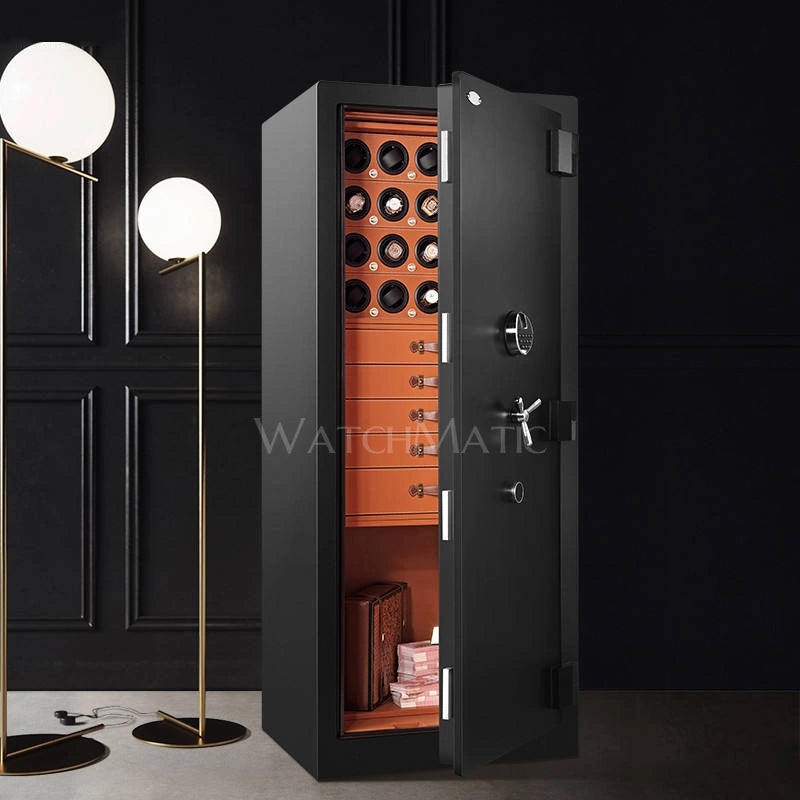
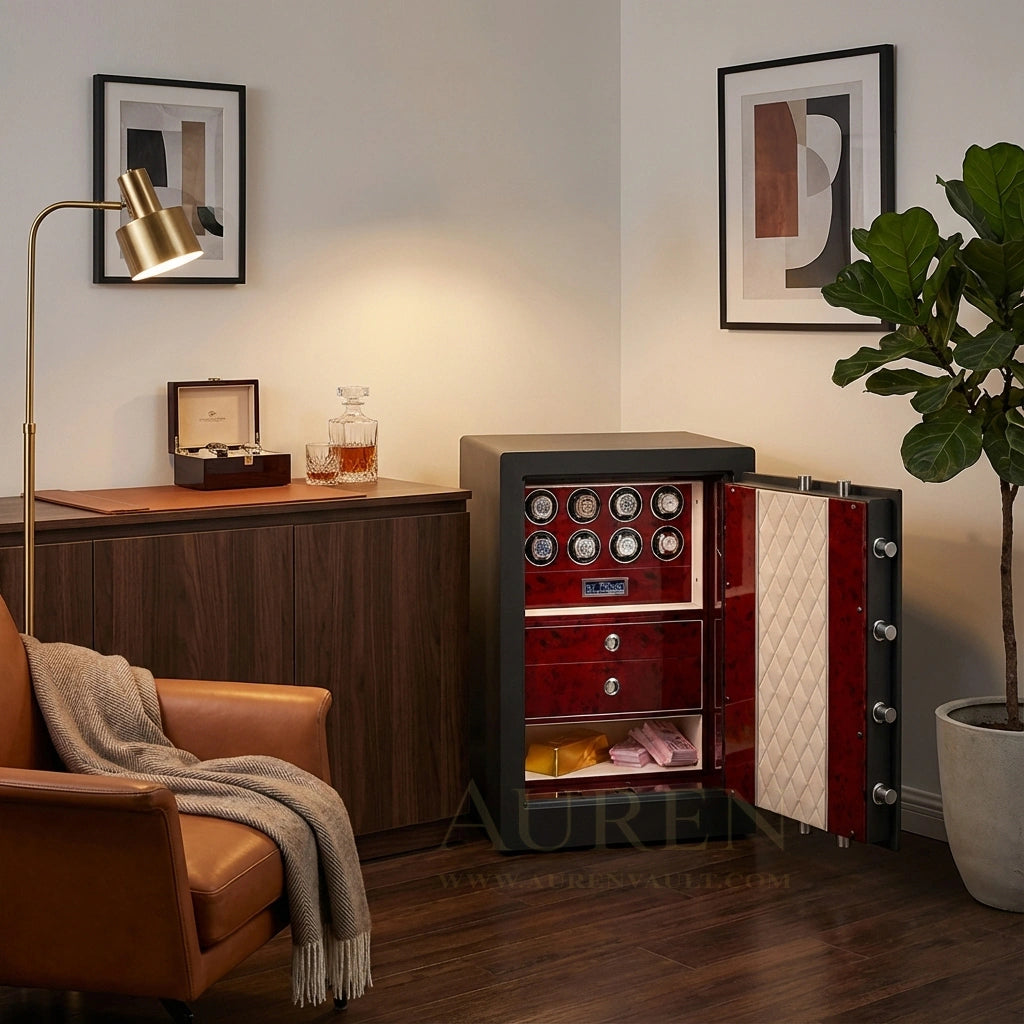
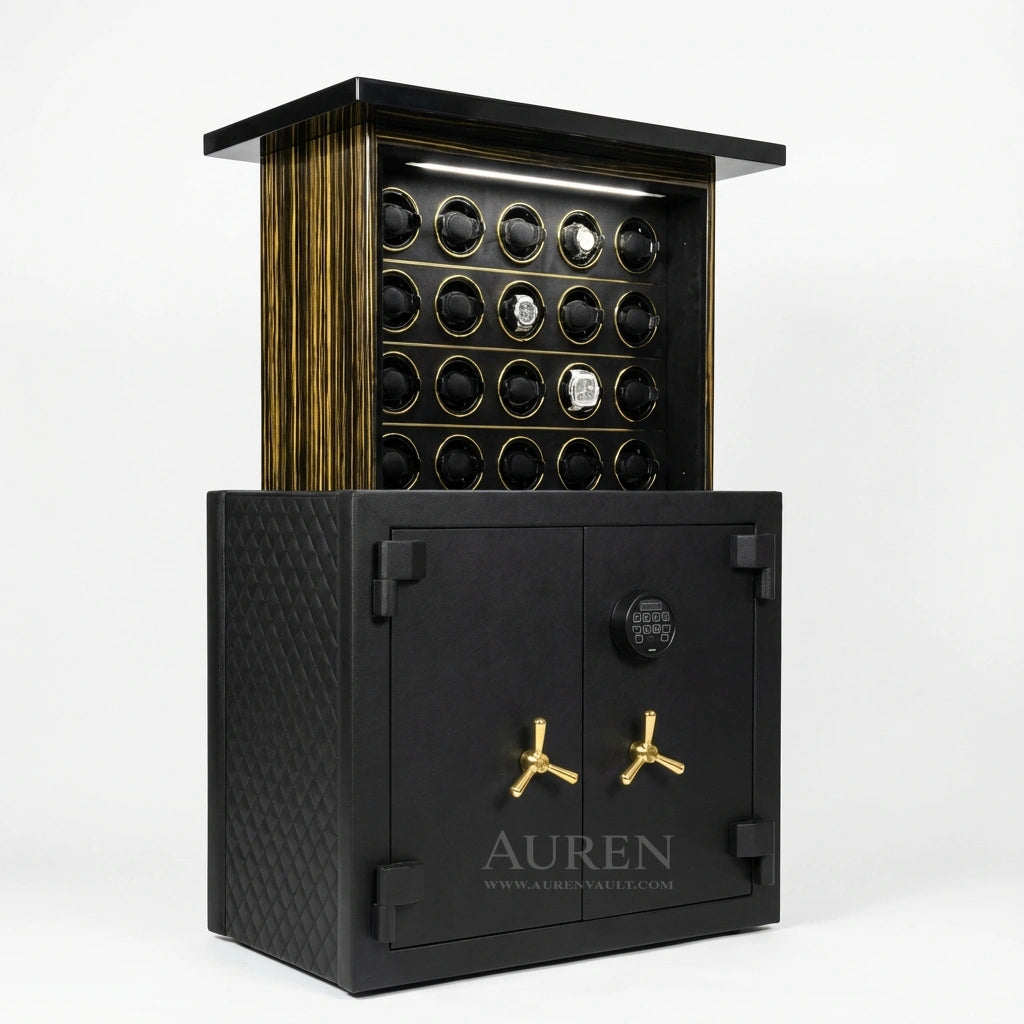
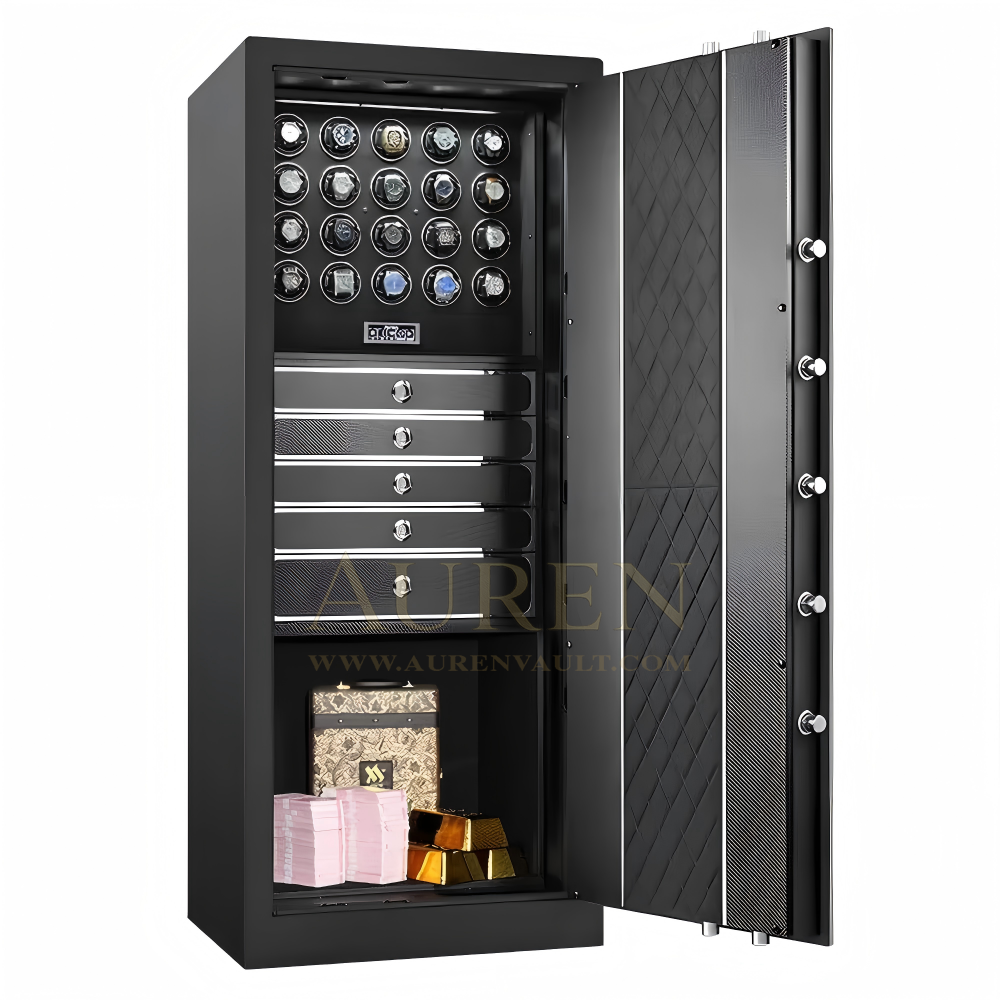
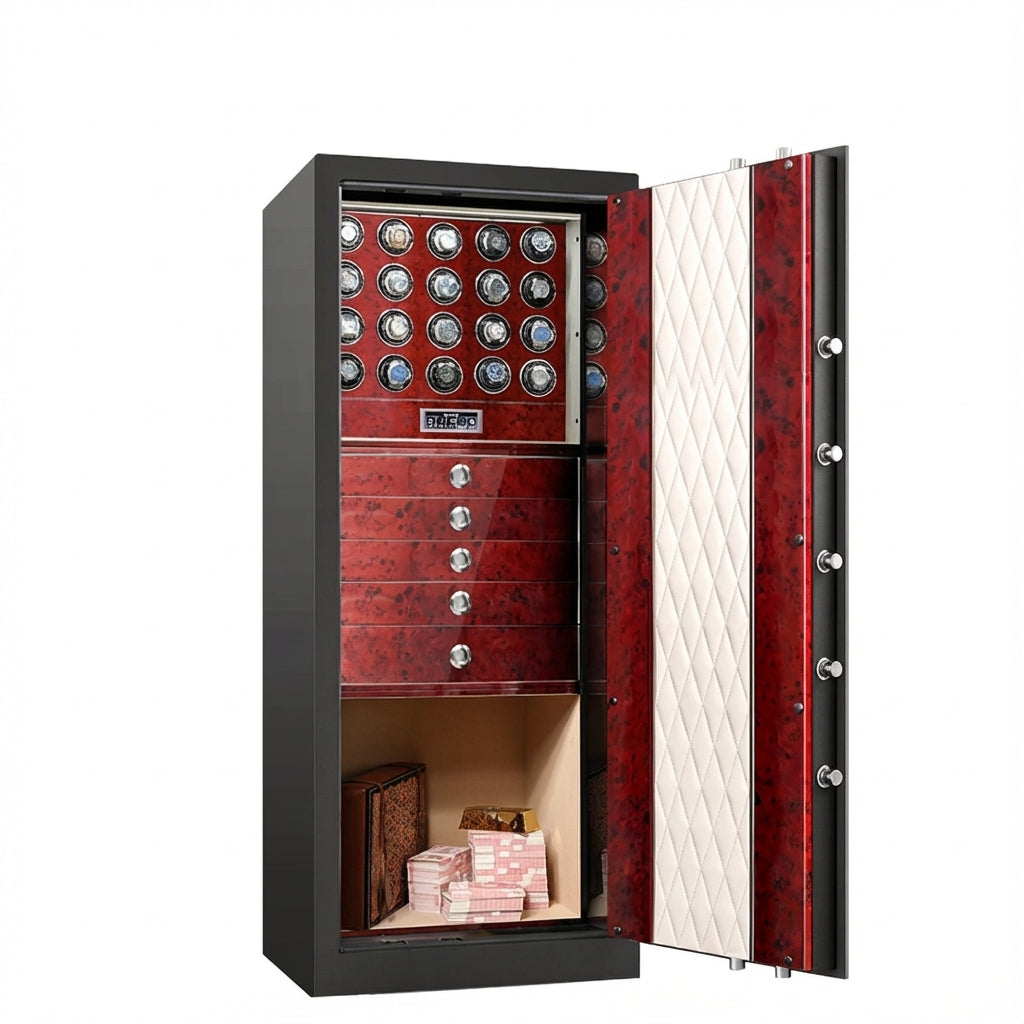
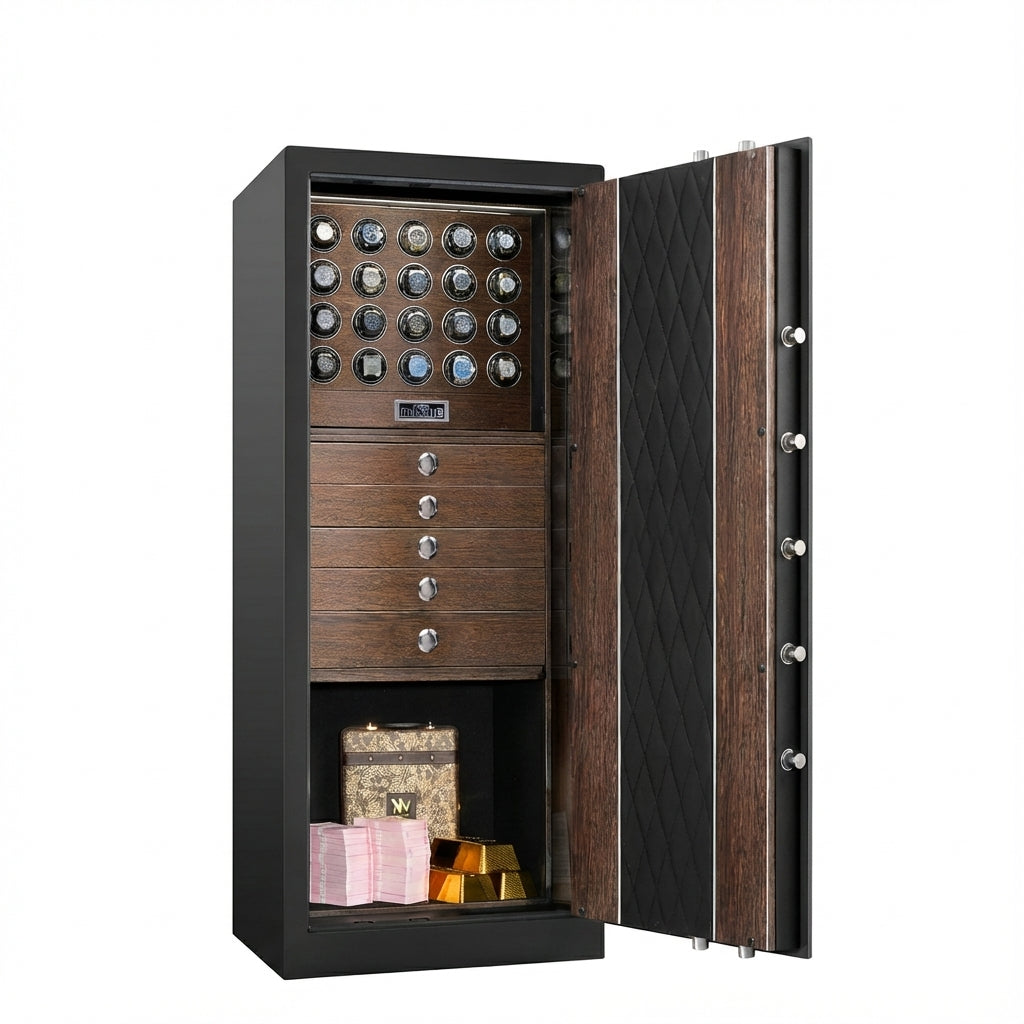
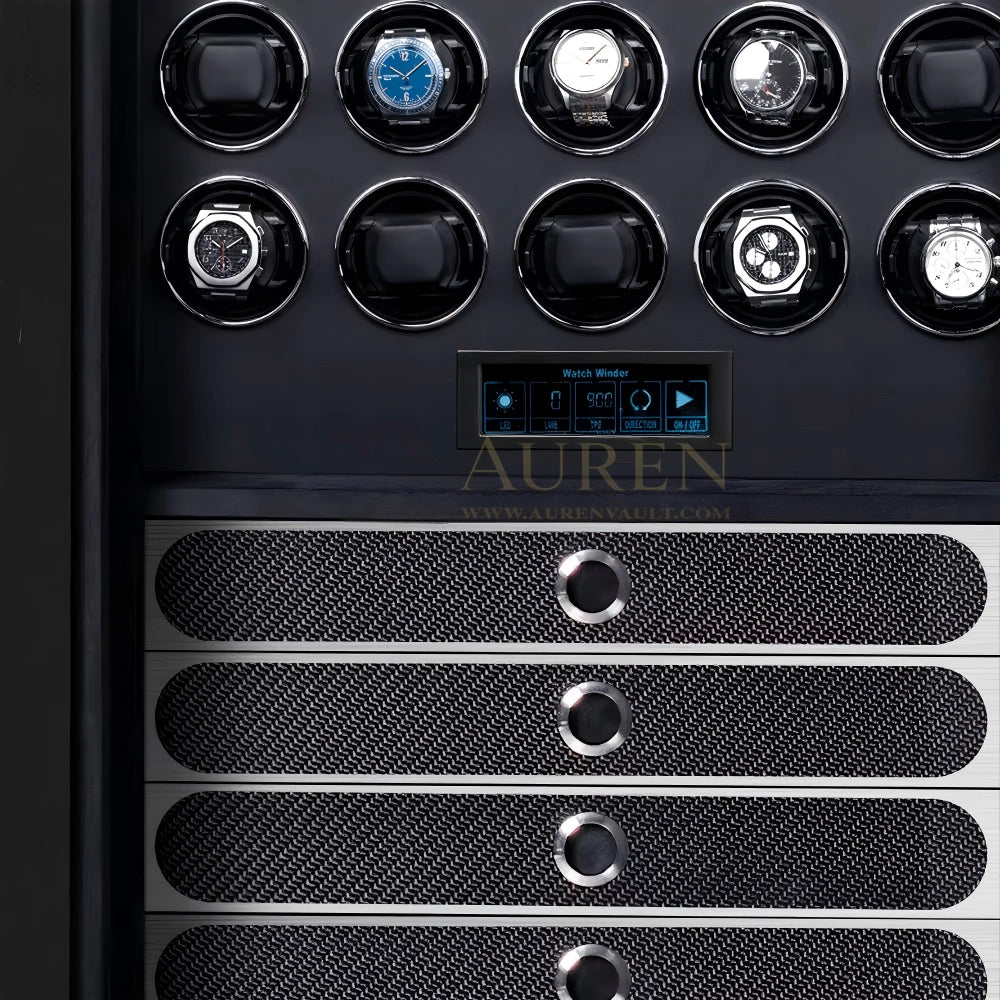
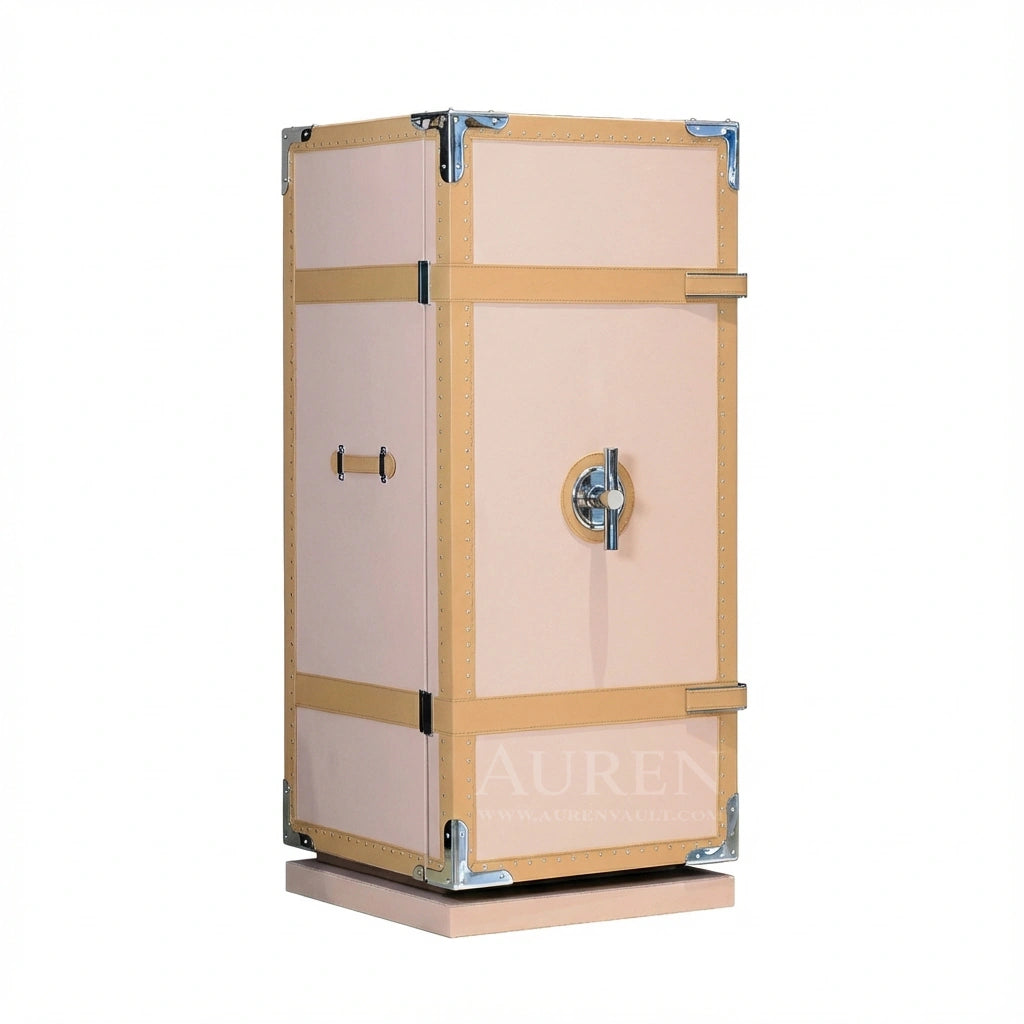
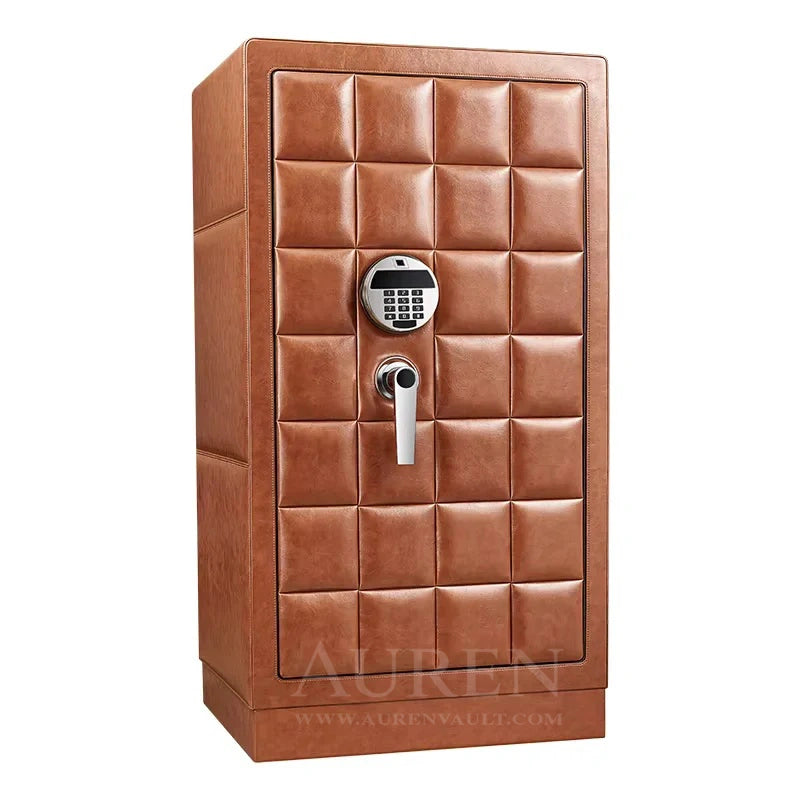
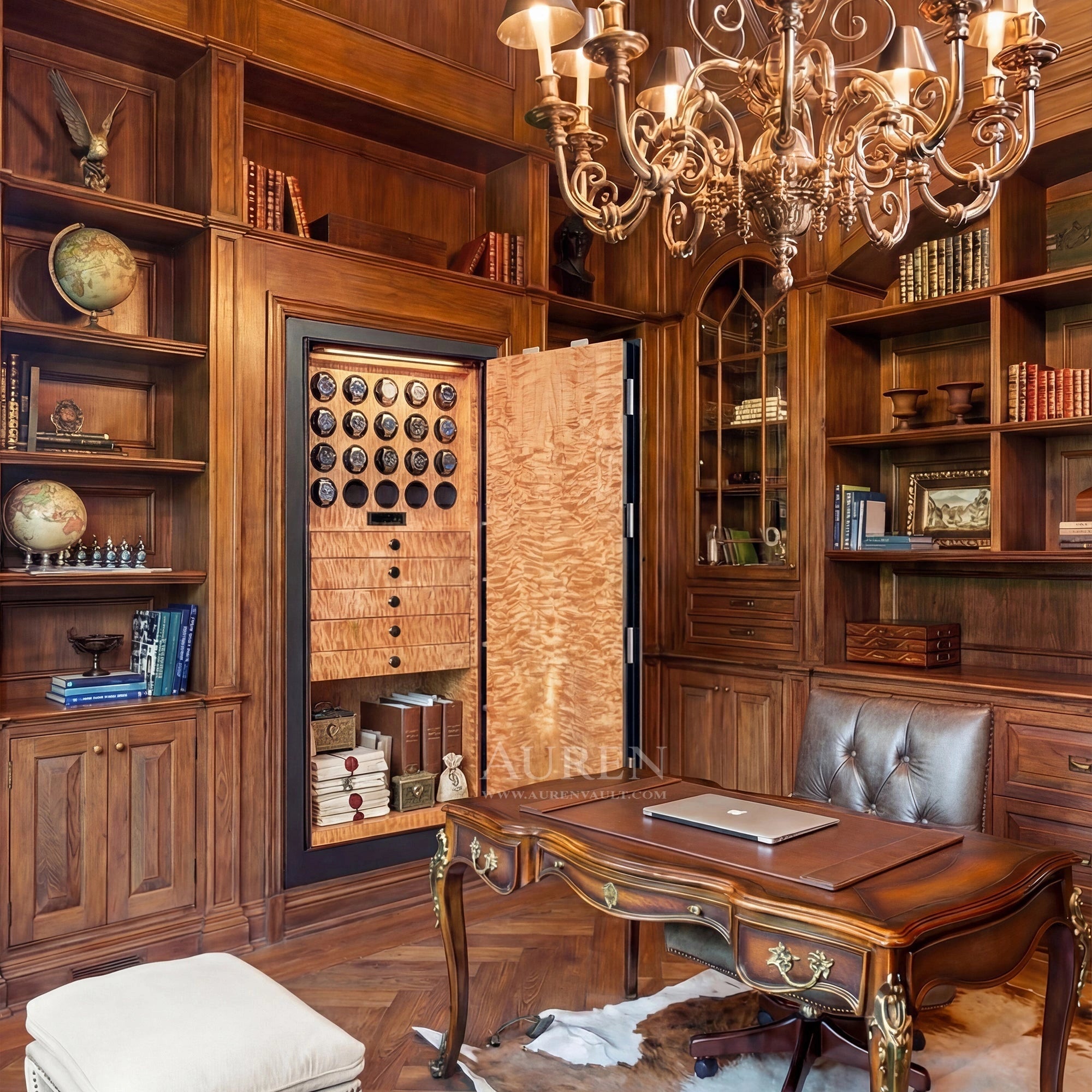
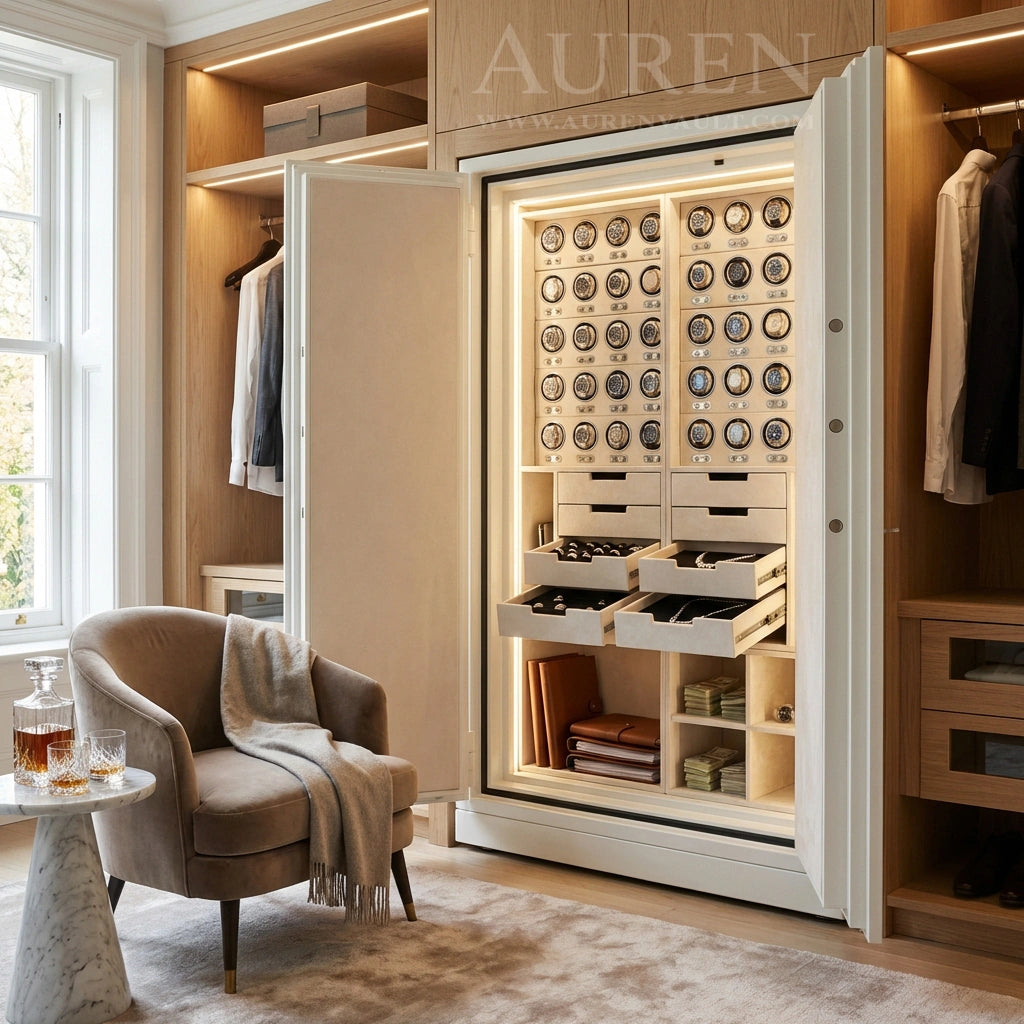
A watch winder safe can combine active modules with stationary compartments.
However, its actual security level depends on its construction, locking system, installation, and documented ratings.
A locking cabinet alone does not guarantee certified burglary or fire protection.
Collectors interested in integrated solutions can explore watch winder safes.
The watch winder safe guide provides further context for balancing winding capacity and secure storage.
A Mixed Arnold & Son Collection
Consider an owner who possesses a Longitude, DSTB, Globetrotter 42, Nebula, Perpetual Moon, and Ultrathin Tourbillon.
Six watches are owned.
Only three require automatic winding positions.
The remaining three are manually wound.
A cabinet with six rotating modules would therefore allocate more active winding capacity than the collection needs.
A more suitable arrangement might include three independently programmable winders and three protected stationary compartments.
This is especially useful when the collection contains watches with different case sizes and strap constructions.
For larger collections, luxury watch safes provide expanded capacity.
The complete watch safe collection offers additional options for organizing automatic and manually wound watches.
Where standard arrangements cannot accommodate the required balance of active and passive storage, custom watch safe configurations may offer a more appropriate solution.
The goal is not to maximize the number of winding positions.
It is to provide the right storage environment for each movement.
How to Set Up an Arnold & Son Automatic on a Winder
Begin by identifying the exact watch reference and calibre.
Confirm that it is automatic.
The A&S6302, A&S6203, A&S6122, and A&S6022 can potentially benefit from external winding.
The manually wound A&S5201, A&S1615, A&S1612, and A&S8300 cannot.
For an automatic movement, obtain the appropriate direction and TPD.
If the watch has stopped, restart it according to the manufacturer's instructions before using the winder to maintain its reserve.
Fit the watch securely on a properly sized cushion.
Check that the case, crown, and strap have sufficient clearance.
Program the confirmed winding settings.
Allow the device to complete its normal cycles and observe whether the movement continues running.
For a Longitude, the power-reserve indicator may provide additional feedback.
If the watch repeatedly stops, review the settings, initial winding, and mechanical condition before increasing the rotation count.
Persistent problems may require professional inspection.
Should Arnold & Son Automatic Watches Stay on a Winder Continuously?
No automatic Arnold & Son mechanically requires permanent external winding.
When the mainspring reserve is exhausted, the movement stops normally.
It can subsequently be restarted according to the manufacturer's instructions.
For a frequently worn Longitude, the 60-hour reserve may provide sufficient flexibility without a winder.
For a Globetrotter used intermittently, continuous operation may reduce repeated world-time adjustments.
For a DSTB, the main advantage is having the movement ready when selected.
However, a winder should not be confused with a preservation device.
It does not eliminate servicing or prevent every form of mechanical wear.
For manually wound Arnold & Son watches, conventional external winding is unnecessary.
Long-term storage should instead prioritize stable environmental conditions, secure physical support, and protection from unnecessary handling.
The watch storage guide provides broader guidance on these considerations.
Frequently Asked Questions About Arnold & Son Watch Winders
What is the best watch winder for Arnold & Son watches?
A programmable winder with adjustable TPD, selectable direction, controlled rest periods, and secure cushioning is the best general choice for automatic Arnold & Son calibres.
How many TPD does an Arnold & Son automatic need?
There is no single verified TPD program suitable for every Arnold & Son automatic movement. The correct setting should be confirmed for the specific calibre.
Does the Arnold & Son Longitude need a winder?
No. The automatic A&S6302 can receive sufficient winding through normal wear. A compatible winder is optional and useful when the watch remains unworn for extended periods.
Is the A&S6302 automatic?
Yes. The Longitude's A&S6302 is a self-winding manufacture movement with approximately 60 hours of power reserve.
Can the DSTB use a watch winder?
Yes. The DSTB 42 uses the automatic A&S6203 with approximately 55 hours of reserve. The correct external winding program should be confirmed.
Does the true-beat seconds complication require higher TPD?
Not automatically. The complication does not independently establish the external winding requirement. The correct program depends on the movement's automatic winding system.
Is the Globetrotter automatic?
Yes. Documented Globetrotter references use automatic movements, including A&S6022 and A&S6122.
Why do some Globetrotter watches have different power reserves?
Different generations use different movements. The A&S6022 provides approximately 45 hours, while the A&S6122 provides approximately 55 hours.
Can an Arnold & Son Nebula use a winder?
The Nebula A&S5201 is manually wound. A conventional rotating watch winder does not replenish its mainspring.
Does the Time Pyramid need a watch winder?
No. The A&S1615 is manually wound and provides approximately 90 hours of reserve.
Does the Perpetual Moon need automatic winding?
No. Selected Perpetual Moon references use manually wound movements, including the A&S1612.
Can a watch winder maintain the Luna Magna's moon phase?
Not through conventional automatic winding. Documented Luna Magna references use manually wound movements. The watch must be wound and set according to its instructions.
Is the Ultrathin Tourbillon automatic?
No. The A&S8300 and A&S8320 are manually wound movements.
Does a 100-hour reserve mean the watch needs more TPD?
No. A long power reserve does not establish automatic winding compatibility or the required number of external rotations.
Is a watch winder safe worthwhile for Arnold & Son collectors?
It can be appropriate when the owner needs both automatic winding and enclosed storage. For collections dominated by manually wound complications, protected passive storage may be more important.
Related Reading
For collectors interested in specialized Swiss movements and high-complication storage:
-
Best Watch Winder for Vacheron Constantin Watches — Explores automatic winding and the care of complicated manufacture movements.
-
Best Watch Winder for Jaeger-LeCoultre: TPD & Care Guide — Explains the differences between automatic and manually wound watches.
-
Watch Safes with Built-In Watch Winders: Are They Worth It? — Examines integrated winding and enclosed storage for valuable collections.
Final Thoughts: Arnold & Son Storage Should Reflect Each Movement
Arnold & Son demonstrates why movement identification should always precede watch winder selection.
The Longitude A&S6302, DSTB A&S6203, and Globetrotter automatic movements can benefit from compatible external winding.
The Nebula, Time Pyramid, Perpetual Moon, Luna Magna, and Ultrathin Tourbillon are manually wound and require a different approach.
For automatic watches, the correct TPD and direction should be established from the specific calibre rather than a general brand recommendation.
For manually wound complications, protected passive storage may be the more appropriate priority.
A well-planned collection system can combine independently programmable winding modules with stationary compartments designed for different case sizes and movements.
At Auren Vault, the focus is on integrating precision winding, refined organization, and considered protection into a complete watch-storage experience.
Ultimately, the best watch winder for Arnold & Son is the system that respects the manufacture's mechanical diversity while making the collection practical to own, maintain, and enjoy.