


The best watch winder for Armin Strom watches is a programmable unit that supports the specific automatic calibre, offers adjustable turns per day (TPD) and rotation direction, and holds the watch securely through controlled winding and rest cycles.
For the Gravity Equal Force and Orbit, the relevant movements are ASB19 and ASS20. Both are self-winding manufacture calibres featuring dial-side micro-rotors and approximately 72 hours of power reserve. These watches can benefit from compatible external winding when they are not worn regularly.
However, much of Armin Strom's collection is manually wound. The One Week, Tribute 1, Mirrored Force Resonance, Dual Time GMT Resonance, and Minute Repeater Resonance do not receive winding energy from a conventional rotating watch winder.
No single manufacturer-certified TPD setting can be applied to every Armin Strom movement. The correct program must be confirmed for the exact automatic calibre.
For collectors, choosing the right system is as much about recognizing which watches should remain stationary as selecting an appropriate winding program for those that are automatic.
Why Armin Strom Is Different From Conventional Automatic Watchmaking
Armin Strom occupies a distinctive position among independent Swiss watchmakers.
Its movements are developed with an unusually strong emphasis on exposing mechanical architecture. Bridges, wheels, winding components, and regulating systems frequently appear on the dial side, turning the movement's construction into an essential part of the watch's visual identity.
This approach has produced several important innovations, including the Gravity Equal Force's equal-force barrel and the brand's patented resonance technology.
However, those innovations belong to different mechanical systems.
The Gravity Equal Force uses automatic winding. Its dial-side micro-rotor transfers energy to the mainspring as the watch moves.
The Mirrored Force Resonance, despite having two regulating systems connected through a resonance clutch spring, is manually wound.
The One Week has two mainspring barrels and seven days of autonomy, yet it also requires manual winding.
These differences are important for anyone choosing a watch winder.
A conventional watch winder rotates the entire watch, causing an automatic rotor to move relative to the movement and replenish the mainspring.
A movement without an automatic rotor cannot be wound through this process.
Consequently, the complexity of the watch, number of barrels, and length of its power reserve do not establish whether a winder is appropriate.
The first step is always movement identification.
Which Armin Strom Watches Can Use a Watch Winder?
The following comparison covers representative manufacture movements.
| Armin Strom watch | Calibre | Winding type | Power reserve | Watch winder suitable? |
|---|---|---|---|---|
| Gravity Equal Force | ASB19 | Automatic micro-rotor | 72 hours | Yes |
| Orbit | ASS20 | Automatic micro-rotor | 72 hours | Yes |
| Tribute 1 / Tribute² | AMW21 | Manual winding | 100 hours | No |
| One Week | ARM21 | Manual winding | 7 days | No |
| One Week Skeleton | ARM21-S | Manual winding | 7 days | No |
| Mirrored Force Resonance | ARF21 | Manual winding | 80 hours | No |
| Dual Time GMT Resonance | ARF22 | Manual winding | 42 hours | No |
| Pure Resonance | ARF16 | Manual winding | 80 hours | No |
| Minute Repeater Resonance 12:59 | ARR25 | Manual winding | 40 hours | No |
These values apply to the listed calibres. Historical Armin Strom references may contain other movements, so the exact watch and movement generation should still be confirmed.
The contrast is revealing.
A Gravity Equal Force with 72 hours of reserve can benefit from a watch winder.
A One Week with a substantially longer seven-day reserve cannot.
The difference is not how long the watch runs. It is how its mainspring receives energy.
Armin Strom Watch Winder Settings: TPD and Rotation Direction
Two parameters determine how a watch winder maintains an automatic movement.
Turns per day (TPD) refers to the number of rotations programmed over a 24-hour period.
Rotation direction determines whether the winder turns clockwise, counterclockwise, or alternates between both directions.
These settings matter because automatic movements do not all convert rotor movement into stored energy in exactly the same way.
Some mechanisms wind efficiently in both directions, while others transfer energy predominantly through one effective direction.
A device operating at an unsuitable direction may fail to maintain the power reserve even if its daily rotation count appears high.
Armin Strom Winder Settings by Calibre
| Calibre | Recommended approach | Rotation direction |
|---|---|---|
| ASB19 | Confirm micro-rotor-specific TPD | Verify for the reference |
| ASS20 | Confirm micro-rotor-specific TPD | Verify for the reference |
| AMW21 | No external winding program | Manual winding only |
| ARM21 / ARM21-S | No external winding program | Manual winding only |
| ARF21 / ARF22 | No external winding program | Manual winding only |
| ARF16 / ARR25 | No external winding program | Manual winding only |
An official TPD chart establishing one rotation count and direction for every current Armin Strom automatic is not confirmed here.
Therefore, common recommendations such as 650 or 800 TPD should not be presented as manufacturer-approved settings for ASB19 or ASS20.
A suitable winder should be flexible enough to accommodate the confirmed program rather than force the owner to select an unsuitable fixed setting.
For background on movement efficiency and daily rotations, see the watch TPD guide.
Does a Micro-Rotor Need More TPD?
Not automatically.
A micro-rotor is a smaller winding mass integrated into the movement's architecture rather than mounted above it like a conventional central rotor.
This construction can improve movement visibility and support a distinctive design.
However, rotor size alone does not establish how many external rotations are needed.
Winding efficiency depends on the relationship between the rotor, transmission mechanism, mainspring, and energy consumption.
The ASB19 and ASS20 should therefore receive verified movement-specific programs rather than an assumed high TPD.
Why Power Reserve Cannot Be Converted Into TPD
Armin Strom offers particularly clear examples.
The Orbit provides approximately 72 hours of power reserve.
The Tribute 1 provides approximately 100 hours.
The One Week provides seven days.
These numbers describe stored operating autonomy, not the number of external rotations required.
Indeed, the two longer-running watches are manually wound and cannot use a conventional rotating winder.
There is no calculation that converts a 72-hour reserve into a universal 720 TPD setting.
The movement's winding architecture must be assessed separately.
Gravity Equal Force: The Best Winder Approach for Calibre ASB19
The Gravity Equal Force is one of Armin Strom's defining automatic watches.
Its manufacture ASB19 movement features a dial-side micro-rotor and an Equal Force Barrel.
The movement operates at 25,200 vibrations per hour and provides approximately 72 hours of power reserve.
The equal-force system is designed to deliver more consistent energy to the regulating mechanism over the designated operating interval.
This is a different objective from automatic winding.
The micro-rotor replenishes energy.
The barrel system manages how that energy is delivered.
Why the Gravity Equal Force Can Benefit From Winding
Consider an owner who wears the Gravity Equal Force during selected occasions but rotates among several other watches throughout the week.
Once removed, the watch continues operating on its stored energy.
If left unworn beyond its available reserve, it eventually stops.
A compatible winder can maintain the movement between wears and reduce repeated restarting.
However, the watch does not mechanically require continuous operation.
Someone who wears it frequently may receive enough winding from ordinary wrist movement.
The winder's primary value is convenience.
Does the Equal Force Barrel Require a Higher TPD?
No automatic relationship exists.
The Equal Force Barrel is concerned with energy delivery and rate stability.
TPD concerns how much external movement is supplied through the automatic winding system.
A more sophisticated barrel does not independently establish a higher winding count.
The correct program should follow the ASB19's actual winding requirements.
Choosing the maximum available TPD would not be a technically justified way to account for the equal-force mechanism.
Physical Support for the Gravity Equal Force
Selected Gravity Equal Force references use cases around 41 mm.
Their distinctive construction exposes substantial parts of the movement on the dial side.
The watch should be secured on a suitable cushion without excessive strap pressure.
The holder must prevent the case from shifting during rotation.
Adequate compartment clearance is important, particularly around the crown and case edges.
A watch winder should support the watch's exterior reliably while the internal rotor performs the winding function.
Armin Strom Orbit: Why the ASS20 Is a Strong Winder Candidate
The Orbit introduces a more unusual reason to consider continuous automatic winding.
Its manufacture ASS20 movement incorporates an on-demand date indication, controlled through a column-wheel mechanism.
The watch uses a dial-side micro-rotor and an Equal Force Barrel, providing approximately 72 hours of power reserve.
Selected Orbit references have a 43.4 mm stainless steel case, ceramic bezel, and integrated bracelet.
The date indication is particularly distinctive.
When the owner activates the pusher, a pointer moves from its resting position to indicate the date on the bezel.
The display can then advance at midnight while engaged.
Another press returns the pointer to its neutral position.
How a Winder Helps Maintain the Orbit's Date
The Orbit's date mechanism is mechanically more involved than a conventional date window.
When the movement stops, the owner may need to restart the watch and restore the appropriate indications.
A compatible watch winder can reduce how frequently this is necessary by maintaining operation between wears.
However, it does not operate the date-on-demand pusher.
It cannot select the display mode or automatically correct a date that has been set incorrectly.
The winder supplies energy to the automatic movement. The complication remains controlled through the watch's designated mechanism.
Why the ASS20 Needs Its Own Program
Although the ASS20 shares certain technologies with the ASB19, it is a distinct movement.
It incorporates additional components for the on-demand date mechanism.
Its approximately 72-hour reserve does not establish that its external winding settings are identical to those of the Gravity Equal Force.
A collector who owns both watches should verify their specific requirements.
A multi-watch winder with independent controls provides the necessary flexibility.
Integrated Bracelets and Larger Cases
The Orbit's substantial case and integrated steel bracelet create practical fitting considerations.
A bracelet adjusted closely to the owner's wrist may not fit around a large rigid cushion.
Forcing the clasp closed can place unnecessary tension on its links.
A compressible holder offers more suitable support.
The winding chamber should also provide clearance for the ceramic bezel, crown, and date-control pusher.
The watch should remain stable throughout every rotation.
Tribute 1 and Tribute²: Why a Winder Is Unnecessary
The Tribute collection demonstrates how misleading it can be to associate elaborate movement architecture with automatic winding.
The Tribute 1 and Tribute² use variants of Armin Strom's AMW21 movement.
This is a manually wound calibre with approximately 100 hours of reserve.
The movement incorporates a visible mainspring barrel and finely finished mechanical components.
Its architecture is intentionally exposed, making the transfer and storage of energy part of the watch's appeal.
However, it contains no automatic rotor that can receive energy from a conventional watch winder.
What Happens if a Tribute Is Placed on a Winder?
The watch may physically rotate, but that movement does not replenish its mainspring.
The owner must wind the watch manually through its designated crown.
A rotating module therefore provides no winding benefit.
A secure stationary holder is a more appropriate storage arrangement.
This is particularly important in a mixed Armin Strom collection, where a Tribute may be stored alongside automatic Gravity Equal Force and Orbit references.
The automatic watches can occupy active winding positions.
The Tribute should occupy passive storage.
One Week: Seven Days of Reserve Without Automatic Winding
The One Week is another important example of Armin Strom's mechanical philosophy.
Its ARM21 movement incorporates two mainspring barrels and provides approximately seven days of reserve.
The architecture is designed to deliver consistent energy while exposing its mechanical construction.
Selected One Week references use 41 mm cases and integrated bracelets.
Despite its long reserve, the movement is manually wound.
The One Week Skeleton also belongs to this manual-winding family.
Why Seven Days Does Not Mean a Watch Winder Is Needed
A seven-day movement already provides considerable autonomy between winding sessions.
However, that reserve is replenished through manual winding.
External rotation cannot replace the crown-operated mechanism.
The presence of two barrels does not alter this principle.
A collector should therefore avoid allocating an active winding position to the One Week unless the space is being used for non-winding storage and the rotating function remains disabled.
A stationary compartment with suitable bracelet support is more appropriate.
Mirrored Force Resonance: A Technical Complication That Is Manually Wound
The Mirrored Force Resonance is among Armin Strom's most important mechanical achievements.
Its ARF21 movement incorporates two independent regulating systems connected through a patented resonance clutch spring.
The interaction between the oscillators is intended to improve their stability.
The movement provides approximately 80 hours of power reserve.
Despite its sophisticated construction, it is manually wound.
This distinction is important because the watch contains several components that move visibly.
Not every moving component in a mechanical watch is an automatic winding rotor.
Resonance Is Not Automatic Winding
Resonance describes the interaction between oscillating regulating systems.
Automatic winding describes how energy is transferred to a mainspring through an oscillating weight.
They are separate functions.
A watch may have two oscillators, two barrels, and a complicated resonance mechanism while still relying entirely on manual winding.
The Mirrored Force Resonance illustrates this distinction.
A conventional watch winder does not provide the energy required by its movement.
Why Passive Storage Is Preferable
A high-value resonance watch deserves careful physical support.
The case should rest securely without unnecessary contact or pressure.
A suitable stationary compartment allows the owner to store it without adding mechanical rotation that provides no winding benefit.
The watch can subsequently be wound and set according to the manufacturer's instructions.
For collectors who own several resonance pieces, safe storage may be a more important investment than additional winder positions.
Dual Time GMT Resonance and Minute Repeater Resonance
Armin Strom's other resonance movements reinforce the same principle.
The Dual Time GMT Resonance uses the manually wound ARF22.
Its two independent displays and resonance system allow the wearer to track separate time zones.
The movement offers approximately 42 hours of reserve.
The Minute Repeater Resonance 12:59 uses the manually wound ARR25 with approximately 40 hours of reserve.
It combines a minute repeater with the manufacturer's resonance technology.
Neither movement benefits from a conventional rotating watch winder.
Their complications may make correct restarting and setting particularly important, but rotating the complete watch cannot replenish the manually wound mainsprings.
For these timepieces, follow the original operating instructions and prioritize suitable passive storage.
What Should an Armin Strom Collector Look for in a Premium Winder?
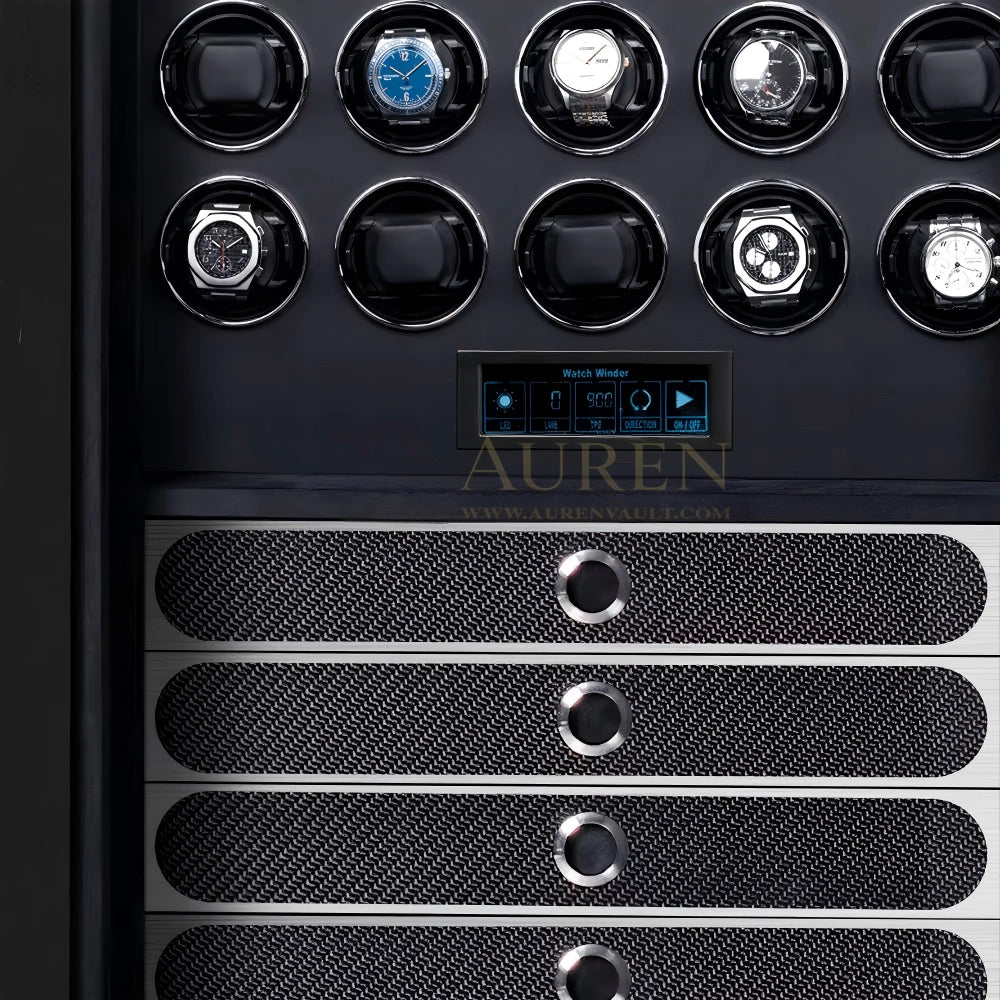
A suitable winding system should offer adjustable TPD, selectable clockwise and counterclockwise operation, and controlled rest periods.
Its programming should be fine enough to accommodate the verified automatic movement requirements.
For someone who owns both a Gravity Equal Force and an Orbit, independent winding positions are preferable.
Each can then receive its own program.
Smooth, quiet motors are valuable in a bedroom, dressing room, or private office.
The holder should support the watch securely without stretching its strap or bracelet.
These characteristics are more important than elaborate lighting or decorative motor effects.
Standalone Winder or Integrated Watch Winder Safe?
For one automatic Armin Strom worn regularly, a compact programmable winder may be sufficient.
A larger collection introduces different requirements.
Consider an owner with two automatic watches and four manually wound Armin Strom pieces.
Only two active winding positions are required.
The remaining watches need protected stationary compartments.
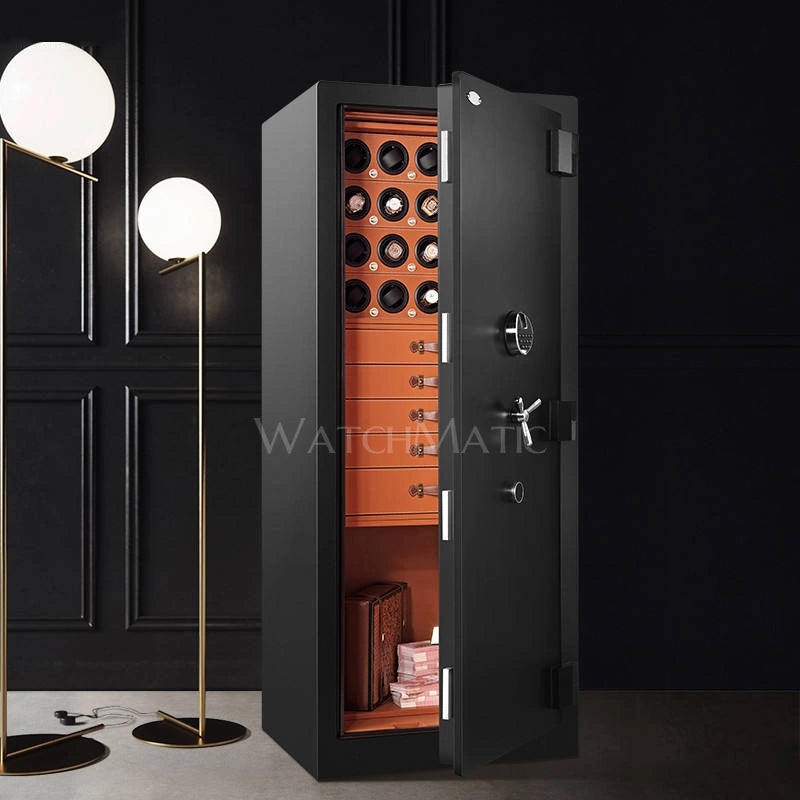
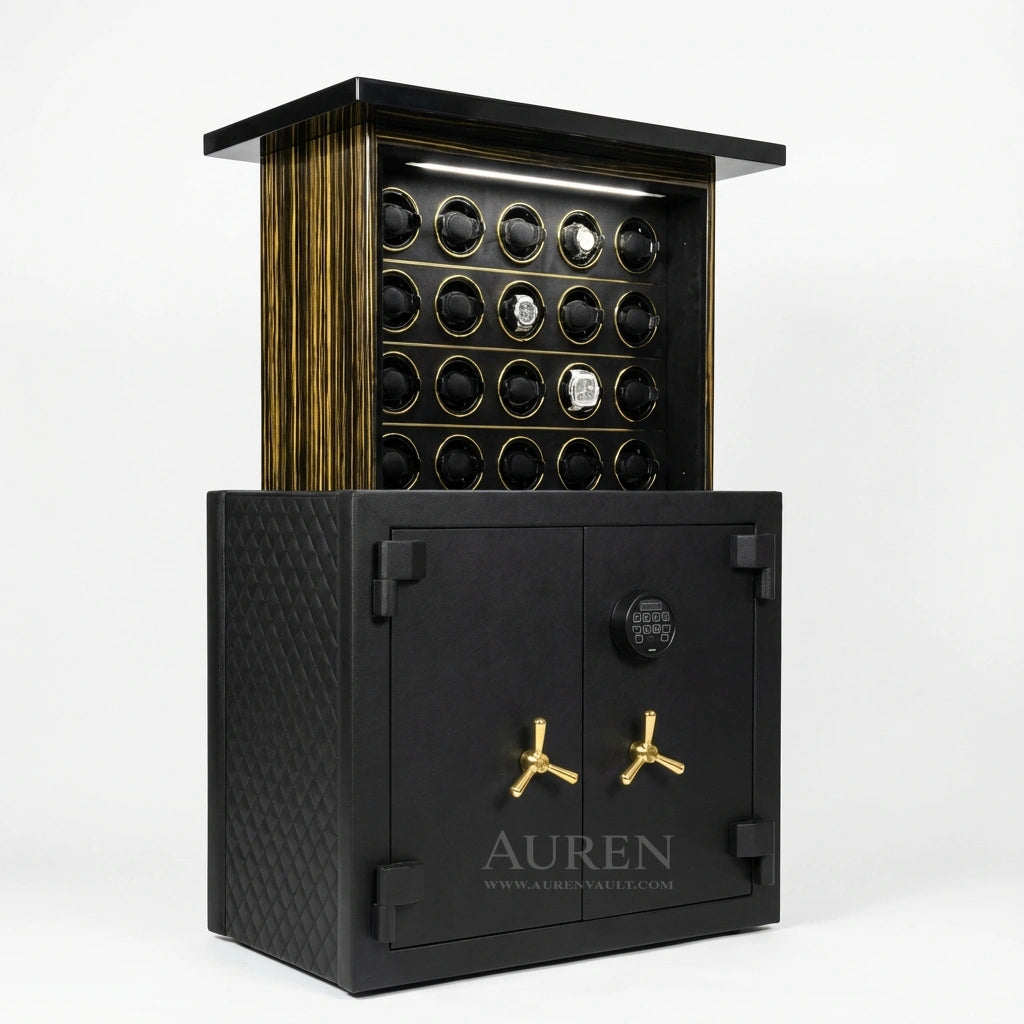
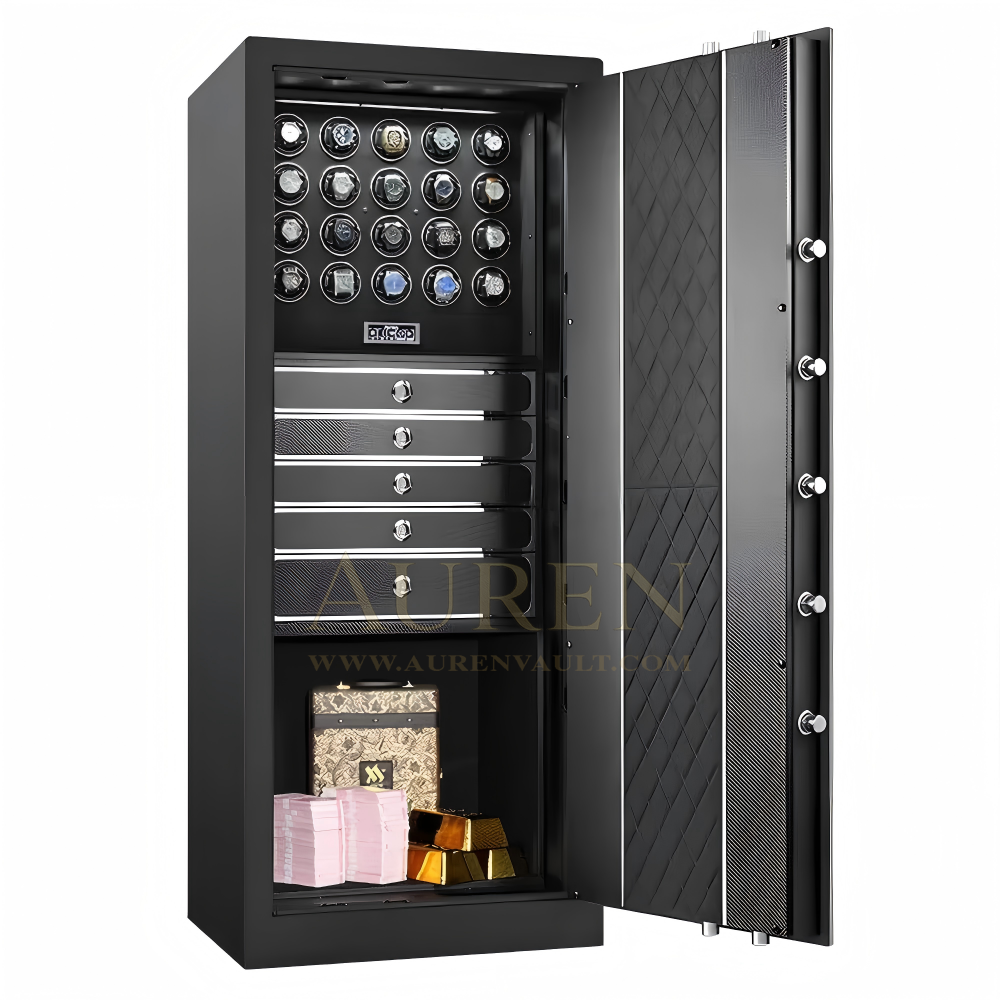
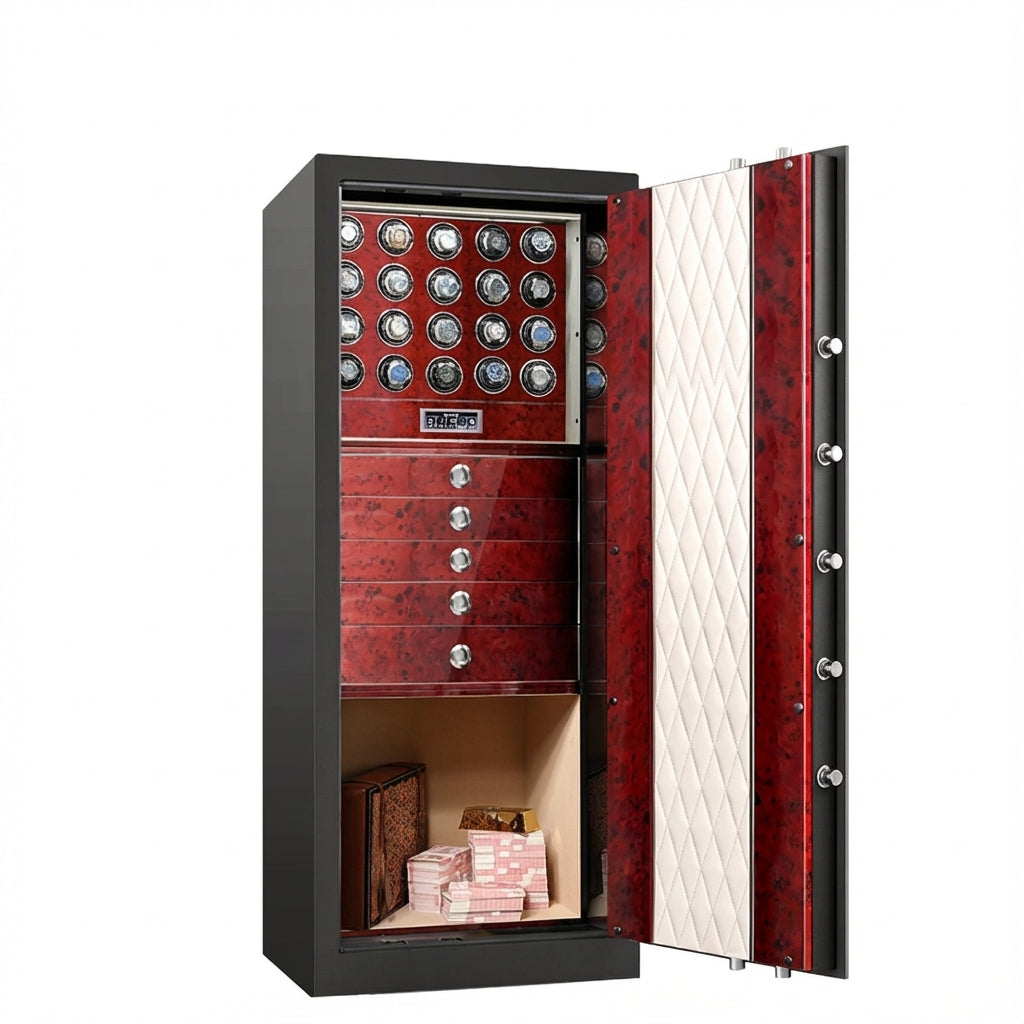
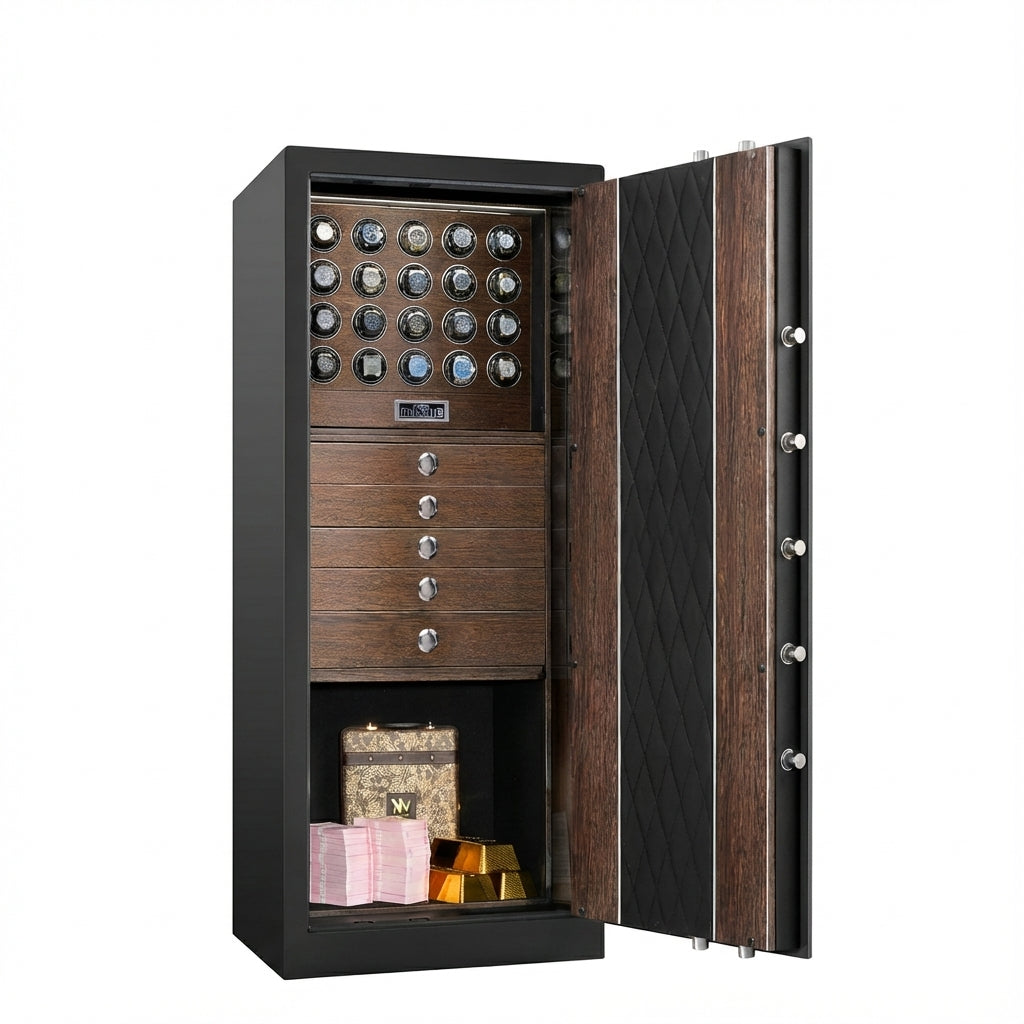
A watch winder safe can combine these functions within one enclosed storage system.
The safe's protective capabilities should be evaluated independently of its winding functionality. Construction, installation, locking systems, and documented ratings determine the actual level of security.
The watch winder safe guide provides additional guidance for considering these trade-offs.
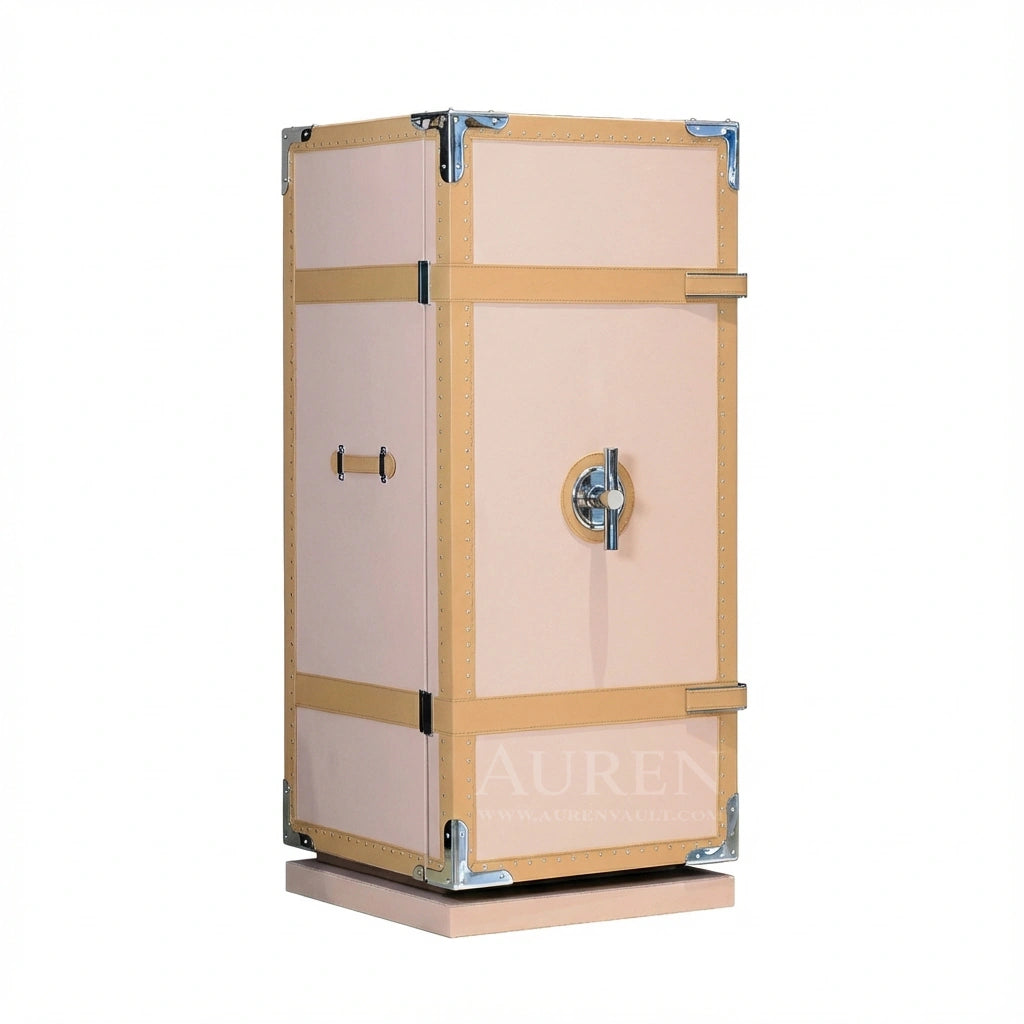
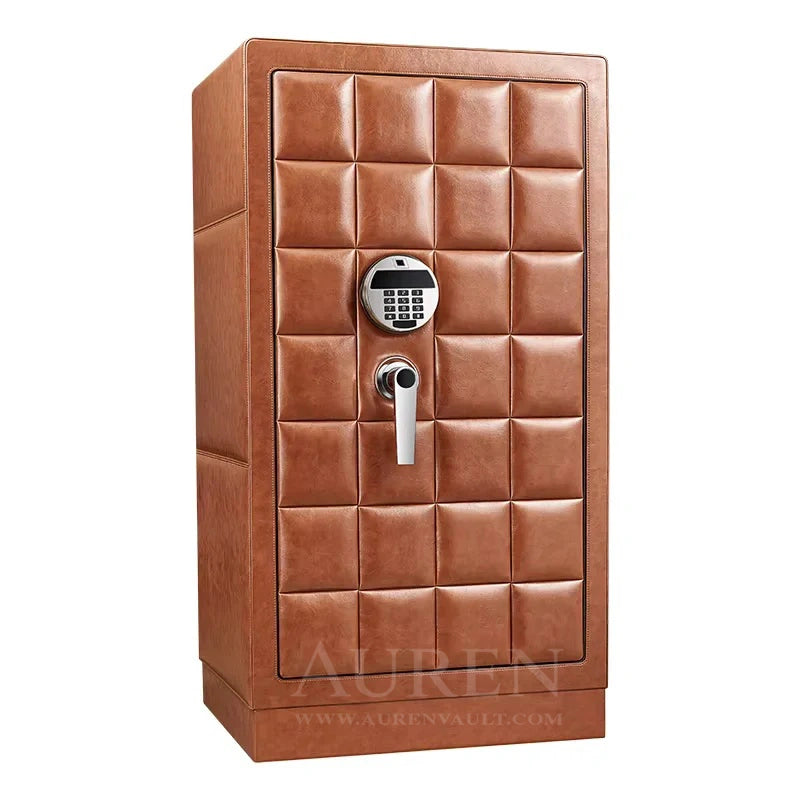
For larger portfolios, luxury watch safes offer expanded storage configurations.
The broader selection of watch safes can help collectors compare different capacities and layouts.
When Custom Storage Makes More Sense
Armin Strom collections can contain watches with very different physical dimensions and winding architectures.
An integrated-bracelet Orbit may require a different holder from a leather-strap Gravity Equal Force.
Manual-winding resonance watches may need additional passive compartments.
A system designed around a fixed number of identical winding modules may therefore be inefficient.
For specialized collections, custom watch safe configurations provide an option for balancing active winding positions with stationary storage and appropriate interior dimensions.
The ideal arrangement reflects the collection's actual mechanical requirements.
How to Set Up a Winder for an Automatic Armin Strom
Begin with the full watch reference.
Identify whether it contains the automatic ASB19 or ASS20, or another movement.
If the movement is manually wound, conventional external winding is not appropriate.
For a confirmed automatic calibre, obtain the specific winding direction and TPD guidance.
If the watch has stopped, restart it according to the manufacturer's instructions.
A winder is generally intended to maintain an established reserve rather than rapidly replenish a completely depleted movement.
Next, position the watch securely around an appropriately sized cushion.
Ensure that its case and external controls have sufficient clearance.
Select the verified winding program and allow the device to perform its normal operating and resting cycles.
Observe the watch over several days.
If it repeatedly stops, review its starting reserve, selected direction, TPD, and the device's operation before increasing the rotation count.
Persistent problems may require professional inspection.
Should an Armin Strom Automatic Stay on a Winder All the Time?
No.
An automatic Armin Strom can stop normally when its power reserve is exhausted.
For the Gravity Equal Force and Orbit, approximately 72 hours of reserve already provides considerable flexibility during short periods of non-use.
A collector who wears either watch several times a week may have little need for external winding.
The benefit increases when the watch is part of a larger rotation.
However, keeping the movement running is a matter of convenience, not a guarantee of improved preservation.
For watches stored over extended periods, stable environmental conditions, appropriate physical support, and protection from unnecessary handling remain important.
The watch storage guide explains these broader considerations.
Frequently Asked Questions About Armin Strom Watch Winders
What is the best watch winder for Armin Strom watches?
A fully programmable model with adjustable TPD, selectable direction, controlled rest periods, and secure cushioning is the best general choice for automatic Armin Strom calibres.
How many TPD does an Armin Strom need?
There is no single verified TPD setting for the brand. The appropriate program should be confirmed for the specific automatic movement, such as ASB19 or ASS20.
Can the Gravity Equal Force use a watch winder?
Yes. Its ASB19 movement contains an automatic micro-rotor and can benefit from compatible external winding.
Is the Armin Strom Orbit automatic?
Yes. The Orbit uses the ASS20 automatic micro-rotor movement with approximately 72 hours of reserve.
Does the Orbit's date-on-demand feature need higher TPD?
Not automatically. The date complication does not independently establish the external winding requirement.
Does a micro-rotor require more turns than a central rotor?
Not necessarily. The correct daily winding program depends on the complete mechanism rather than rotor size alone.
Can the Armin Strom Tribute 1 use a winder?
No. The AMW21 is manually wound. Conventional rotation does not replenish its mainspring.
Does the Armin Strom One Week need a watch winder?
No. Its ARM21 movement provides seven days of reserve through manual winding.
Is Mirrored Force Resonance automatic?
No. The ARF21 is manually wound despite its two regulating systems and sophisticated resonance mechanism.
Can Dual Time GMT Resonance use a winder?
No. The ARF22 is manually wound and requires crown-operated winding.
Does the Minute Repeater Resonance need a winder?
No. The ARR25 is manually wound.
Does a longer power reserve mean higher TPD?
No. Power reserve and daily rotations are different measurements. There is no universal numerical conversion between them.
Is a watch winder safe appropriate for Armin Strom collections?
It can be useful when the collection includes automatic watches requiring active winding alongside manually wound pieces requiring protected stationary storage.
Related Reading
For collectors researching movement architecture and high-complication storage:
-
Best Watch Winder for Jaeger-LeCoultre: TPD & Care Guide — Automatic versus manually wound movements and mechanical complications.
-
Best Watch Winder for Vacheron Constantin Watches — Movement-specific winding and high-end collection storage.
-
Watch Safes with Built-In Watch Winders: Are They Worth It? — How to combine active winding and enclosed watch storage.
Final Thoughts: The Right Armin Strom Storage System Begins With the Movement
Armin Strom demonstrates why technical sophistication and automatic winding should never be treated as interchangeable.
The Gravity Equal Force ASB19 and Orbit ASS20 use self-winding micro-rotors and can benefit from compatible watch winders.
The Tribute, One Week, Mirrored Force Resonance, Dual Time GMT Resonance, and Minute Repeater Resonance use manually wound calibres.
Those watches need appropriate manual winding and protected storage, not additional external rotation.
For a collector with one automatic Armin Strom, a compact programmable device may provide sufficient convenience.
For a larger collection containing several winding architectures, independent modules and stationary compartments are more practical.
At Auren Vault, the focus is on combining precise winding, refined organization, and considered protection for valuable watch collections.
Ultimately, the best watch winder for Armin Strom is the one that follows the movement's actual requirements—and recognizes when a watch should not be wound automatically at all.