
The best watch winder for Armand Nicolet watches is a programmable model that matches the specific calibre's winding direction and turns per day (TPD), supports controlled rest cycles, and holds the watch securely without unnecessary strap or bracelet pressure.
Many contemporary Armand Nicolet automatics use modified Sellita movements. The J09 collection includes the AN200, based on the SW200; AN330, based on the SW330; and AN500, based on the SW500. The M02 also includes an automatic moon-phase movement, AN280, based on the SW280.
For SW200-family automatics, approximately 650–800 TPD with bidirectional rotation is commonly recommended by independent references. SW500-based chronographs are generally associated with approximately 800 TPD clockwise. These are movement-family guidelines, not universal manufacturer-approved Armand Nicolet settings.
The brand's Original Historical Movement collection requires special care: some restored calibres are automatic, while others are manually wound.
The right choice begins with the exact movement and its mechanical condition, followed by appropriate physical support and storage.
Why Armand Nicolet Requires More Than a Generic Watch Winder Setting
Armand Nicolet has a long history in Swiss watchmaking.
Founded in Tramelan in 1875, the company combines traditional mechanical craftsmanship with contemporary watches built around established Swiss movement platforms.
A distinctive part of its identity is the preservation and restoration of historical mechanical movements.
This creates an unusually interesting situation for collectors choosing watch winders.
A contemporary Armand Nicolet J09 may contain a modified Sellita automatic movement.
An O.H.M. L15 may use a restored automatic calibre originally manufactured decades earlier.
An O.H.M. L06, by contrast, contains a manually wound historical movement.
All are mechanical watches. Only those with a self-winding mechanism can benefit from conventional automatic winders.
Even among the automatics, the correct settings can differ.
A conventional date movement and an automatic chronograph may have different winding-direction requirements.
The practical value of a winder also depends on the movement's condition and the owner's wearing habits.
A watch winder rotates the entire watch, creating movement within the automatic winding mechanism.
A rotor transfers energy to the mainspring through the winding train.
When the watch is left stationary, it continues running until the stored energy is exhausted.
A compatible winder helps maintain that reserve between wears.
It does not improve the watch's accuracy, restore worn components, or replace servicing.
For Armand Nicolet, movement identification is therefore the first step.
Which Armand Nicolet Watches Can Use a Winder?
The following examples illustrate the manufacturer's contemporary and historical movement diversity.
| Armand Nicolet watch | Calibre | Movement architecture | Power reserve | Winder suitable? |
|---|---|---|---|---|
| J09 Date | AN200 | Modified Sellita SW200 automatic | 38 hours | Yes |
| J09 GMT | AN330 | Modified Sellita SW330 automatic | 50 hours | Yes |
| J09 Chronograph | AN500 | Modified Sellita SW500 automatic chronograph | 46 hours | Yes |
| M02 Date | SW200-based, modified | Automatic | 38 hours | Yes |
| M02 Moon Phase | AN280 | Modified Sellita SW280 automatic | 38 hours | Yes |
| MM2 Date | AN200 | Modified Sellita SW200 automatic | 38 hours | Yes |
| O.H.M. L15 | AN0703A / AN703A | Restored historical automatic | 34 hours | Yes, subject to condition |
| O.H.M. L06 | AN501 | Restored historical manual-winding movement | 34 hours | No |
| Older Arc Royal and Hunter automatic models | Movement-dependent | Automatic | Varies | Yes, after identification |
The power-reserve figures are those published for representative references.
Older collections, special editions, and restored movements require individual identification.
Why the Movement Base Matters
Armand Nicolet identifies several modern calibres by proprietary designations while also explaining their underlying Swiss movement families.
For example, the AN200 is based on the Sellita SW200.
The AN330 is based on the SW330.
The AN500 is based on the SW500.
These movement families differ in complications and winding architecture.
A general recommendation for an AN200 should not automatically be transferred to an AN500 chronograph.
The correct approach is to use both the Armand Nicolet designation and the underlying movement platform.
Armand Nicolet Watch Winder Settings: TPD and Direction
Two specifications determine how an automatic watch winder operates.
Turns per day (TPD) describes the number of programmed rotations during a 24-hour period.
Rotation direction determines whether those rotations are clockwise, counterclockwise, or alternating.
A movement can receive hundreds of rotations without maintaining its reserve if the selected direction is ineffective.
Armand Nicolet's use of Sellita-based movements provides a useful starting point because those movement families are extensively documented.
However, modified calibres should still be verified for the exact reference.
Movement-Based Winding Recommendations
| Armand Nicolet calibre | Preliminary TPD guidance | Direction |
|---|---|---|
| AN200 / SW200-based | Approximately 650–800 TPD | Bidirectional |
| AN280 / SW280-based | Investigate approximately 650–800 TPD | Bidirectional movement family; verify |
| AN330 / SW330-based | Investigate approximately 650–800 TPD | Verify for the exact GMT movement |
| AN500 / SW500-based | Approximately 800 TPD in independent SW500 references | Clockwise commonly listed |
| AN703A historical automatic | Obtain movement-specific guidance | Confirm before prolonged use |
| Historical Valjoux 7750-based references | Approximately 800 TPD | Clockwise commonly listed |
| AN501 manual-winding | Not applicable | No automatic winding |
These values describe commonly published movement-family guidance, not a manufacturer-issued setting for every Armand Nicolet watch.
There is also a distinction between newer movement specifications and older brand-level winding databases.
Some third-party tables list many historical Armand Nicolet watches at approximately 650 TPD bidirectional, while others identify Valjoux 7750-based chronographs at 800 TPD clockwise.
That difference demonstrates why calibre identification is preferable to relying on a model name alone.
Why the AN200 Is Relatively Straightforward
The AN200 is based on the Sellita SW200, a conventional Swiss self-winding movement.
The SW200 family uses a bidirectional automatic winding mechanism.
Independent winding references commonly recommend approximately 650–800 TPD with alternating rotation.
For a matching Armand Nicolet reference, that is a useful preliminary range.
The owner should still verify the actual movement and how the winder counts rotations.
The correct program should maintain adequate power without unnecessary continuous movement.
Why the AN500 Chronograph Is Different
The AN500 is based on the Sellita SW500.
This movement belongs to a chronograph family with a winding architecture commonly associated with clockwise external rotation.
Independent references frequently recommend approximately 800 TPD clockwise for the SW500.
That differs from the bidirectional settings commonly used for SW200-family movements.
A collector who owns an AN200 Date and an AN500 Chronograph should therefore avoid forcing both watches to use the same fixed program.
A winder with independently adjustable modules is more practical.
The watch TPD guide is an internal resource for understanding how rotation count and direction interact.
Best Watch Winder for Armand Nicolet J09 Date: AN200
The J09 is one of Armand Nicolet's contemporary mechanical collections.
Its design combines modern case proportions with traditional Swiss movement construction.
Selected J09 Date references use the AN200, based on a modified SW200.
Armand Nicolet specifies approximately 38 hours of power reserve for these watches.
The J09 uses a 41 mm stainless steel case in representative versions.
When a J09 Date Benefits From a Winder
Consider an owner who wears the J09 during the working week but chooses another watch on weekends.
With approximately 38 hours of reserve, the watch may stop before it is worn again.
A compatible winder can maintain operation during that interval.
This reduces repeated time and date adjustments.
For an owner who wears the J09 almost every day, regular wrist movement may already provide sufficient energy.
A watch winder is therefore optional.
It becomes useful when the wearing schedule regularly exceeds the movement's available reserve.
Choosing a Cushion for the J09
The J09 has been offered with leather straps, rubber straps, and metal bracelets.
Each requires slightly different physical support.
A bracelet fitted closely to the wrist may not fit comfortably around a rigid oversized cushion.
A leather strap should not be stretched into an unnatural curve.
A compressible holder provides greater flexibility.
The case should remain clear of the compartment walls throughout rotation.
For a modern automatic dress-sports watch, secure support is as important as the electronic winding program.
J09 GMT: The AN330 and Additional Time-Zone Indications
The J09 GMT uses the AN330, a modified Sellita SW330 movement.
Armand Nicolet specifies approximately 50 hours of power reserve for representative models.
The watch introduces an additional time-zone indication while retaining the contemporary design of the J09 collection.
This makes it particularly relevant to owners who travel or regularly communicate across regions.
Why a GMT Watch Benefits From Continuous Operation
When a conventional automatic date watch stops, restarting it usually involves setting the time and date.
A GMT watch requires additional attention to its secondary time-zone indication.
A compatible winder can maintain the movement between wears and reduce repeated adjustments.
However, the device cannot automatically change the displayed time zone when the owner travels.
It supplies energy to the automatic winding system.
The time-zone display must still be set manually when required.
Does the GMT Function Require More TPD?
Not automatically.
An additional time-zone hand does not independently establish a higher external rotation requirement.
The correct program depends on the AN330's automatic winding architecture.
The owner should confirm the movement-specific settings rather than assume they match those of the AN200.
A programmable device offers the flexibility needed to accommodate both.
J09 Chronograph: AN500 and Clockwise Winding
The J09 Chronograph uses Armand Nicolet's AN500, based on the Sellita SW500.
Documented references provide approximately 46 hours of power reserve.
The watch combines conventional timekeeping with chronograph functionality.
Its case can be thicker than that of the J09 Date, reaching approximately 14.6 mm in representative configurations.
This creates both mechanical and physical considerations.
Why the AN500 Should Not Use a Generic AN200 Program
The SW500 is a different movement family from the SW200.
Independent winding references commonly associate SW500-based chronographs with approximately 800 TPD clockwise.
That is more specific than a general Armand Nicolet recommendation of 650 TPD bidirectional.
The appropriate program should still be confirmed for the AN500 and the winder's direction convention.
However, it would be inaccurate to treat every J09 movement as identical.
A device with independently selectable rotation direction is especially useful when both date and chronograph models are stored together.
Does a Chronograph Need a Stronger Winder?
Not simply because it is a chronograph.
The external winding program depends on the automatic winding mechanism.
The chronograph complication is operated through its pushers, not through the winder.
The device's purpose is to maintain the movement's reserve.
It does not start, stop, or reset the chronograph.
For occasional use, keeping the ordinary timekeeping movement running may be convenient.
Physical Fit for a Thicker Chronograph
A chronograph requires enough clearance around its crown and pushers.
The winding chamber should be deep enough for the complete case.
The holder must keep the watch stable during rotation.
A cushion that fits a thin J09 Date may not accommodate a thicker chronograph equally well.
The correct device should provide both suitable programming and appropriate physical clearance.
Armand Nicolet M02: Date and Moon-Phase Movements
The M02 collection offers a more classically styled interpretation of Armand Nicolet's watchmaking.
Representative M02 models use 41 mm cases and automatic movements.
The M02 Date uses a modified SW200-family movement.
The M02 Moon Phase uses the AN280, based on the Sellita SW280.
Both provide approximately 38 hours of power reserve in the manufacturer's specifications.
Their similar case design should not obscure the fact that they have different complications.
M02 Date: A Straightforward Automatic
A conventional M02 Date can benefit from a compatible winder if the owner rotates among several watches.
Without additional movement, the watch may stop after a relatively short period.
A suitable winding program can maintain the time and date between wears.
However, for daily use, normal wrist motion may provide sufficient energy.
The purchase is primarily about convenience.
M02 Moon Phase: A More Compelling Reason for Winding
The M02 Moon Phase includes a moon-phase indication.
When the automatic movement stops, the owner may need to restore that display in addition to the time and date.
A compatible winder can reduce the frequency of these adjustments.
However, it cannot automatically correct an incorrectly set moon phase.
The movement must first be set properly.
The appropriate winding program should then follow the AN280's actual winding requirements.
Why a Moon Phase Does Not Necessarily Require Higher TPD
The moon-phase complication does not independently determine how many external rotations are needed.
The correct TPD depends on the underlying automatic winding mechanism.
The AN280 is based on the Sellita SW280, which belongs to the broader SW200 family.
A bidirectional-capable programmable winder is a useful starting point, but the exact setting should still be verified.
The value of maintaining the movement lies in preserving its indications, not in supplying more rotation simply because the display is more complex.
Armand Nicolet MM2: An Automatic With Practical Storage Requirements
The MM2 collection combines a contemporary case design with traditional Swiss mechanical movements.
Selected MM2 Date references use the AN200, based on the modified SW200.
The movement provides approximately 38 hours of reserve.
The case is substantial enough to require attention to the holder, particularly when fitted with a steel bracelet or canvas strap.
The automatic movement can benefit from a compatible winder when not worn regularly.
However, the correct program is primarily determined by the AN200.
The case and strap determine physical support.
A collector who owns both a J09 Date and an MM2 Date with the same movement family may be able to use similar verified winding programs.
Their holders may still need to differ.
This is an important distinction when planning a multi-watch cabinet.
Original Historical Movements: The O.H.M. Difference
Armand Nicolet's O.H.M. collection is one of its most distinctive offerings.
O.H.M. stands for Original Historical Movements.
The brand restores movements produced decades earlier, modifies them where necessary, and incorporates them into limited-production modern watches.
This is materially different from using a contemporary mass-produced movement.
The age and construction of the underlying calibre matter.
Some O.H.M. watches use automatic movements.
Others are manually wound.
Their external winding requirements cannot be inferred from the collection name alone.
O.H.M. L15: A Restored Automatic Movement
The L15 uses the AN0703A, also described as AN703A.
This movement is derived from the A. Schild AS 1883, originally manufactured in 1967 and subsequently restored and modified by Armand Nicolet.
The documented calibre is automatic and provides approximately 34 hours of power reserve.
It operates at 21,600 vibrations per hour.
The movement can therefore potentially benefit from a compatible winder.
However, its winding requirements should not automatically be copied from those of a modern SW200.
A restored historical movement may have a different winding mechanism and operating characteristics.
For an L15, original documentation and qualified movement-specific guidance are particularly important.
Why an Older Automatic Deserves Additional Care
A restored movement can perform reliably, but its maintenance requirements should not be ignored.
A watch winder is not a substitute for servicing.
If the movement repeatedly stops despite being correctly started and placed on an appropriate program, increasing the TPD may not solve the problem.
The movement may require inspection.
For a historical automatic worn only occasionally, passive storage may be reasonable.
A winder is a convenience accessory, not a requirement for preserving the watch.
O.H.M. L06: AN501 Is Manually Wound
The L06 provides an important contrast.
It uses the manually wound AN501, derived from a historical UT 176 movement originally produced in 1951.
The documented movement provides approximately 34 hours of power reserve.
Because it is manually wound, conventional external rotation cannot replenish the mainspring.
The watch should be wound through its designated crown according to its instructions.
It belongs in appropriate passive storage rather than an active winding position.
This distinction is essential for collectors managing multiple O.H.M. pieces.
Why the O.H.M. Collection Needs Mixed Storage
Consider someone who owns an L15 automatic and an L06 manual-winding watch.
Both contain restored historical movements.
Both have similar stated reserves.
Only the L15 can potentially benefit from a conventional winder.
A storage system containing one programmable winding module and one stationary holder may be more appropriate than two active positions.
The correct arrangement reflects winding architecture rather than the fact that both watches belong to the same historical series.
Older Armand Nicolet Chronographs: ETA and Valjoux Movement Families
The brand's earlier collections include Arc Royal, Hunter, and other automatic models.
Some use ETA-derived automatic movements.
Certain historical chronographs are associated with Valjoux 7750 or 7751 movement families.
These calibres have different winding characteristics from conventional date automatics.
Independent winding references commonly associate the 7750 family with approximately 800 TPD clockwise.
By contrast, many ETA 2824 and related conventional automatics are associated with approximately 650 TPD bidirectional.
This demonstrates why the complete calibre is essential.
A vintage Armand Nicolet chronograph should not automatically be assigned the settings of a modern J09 Date.
Original documentation, service records, and qualified inspection can help establish the underlying movement.
What to Look for in a Premium Armand Nicolet Winder
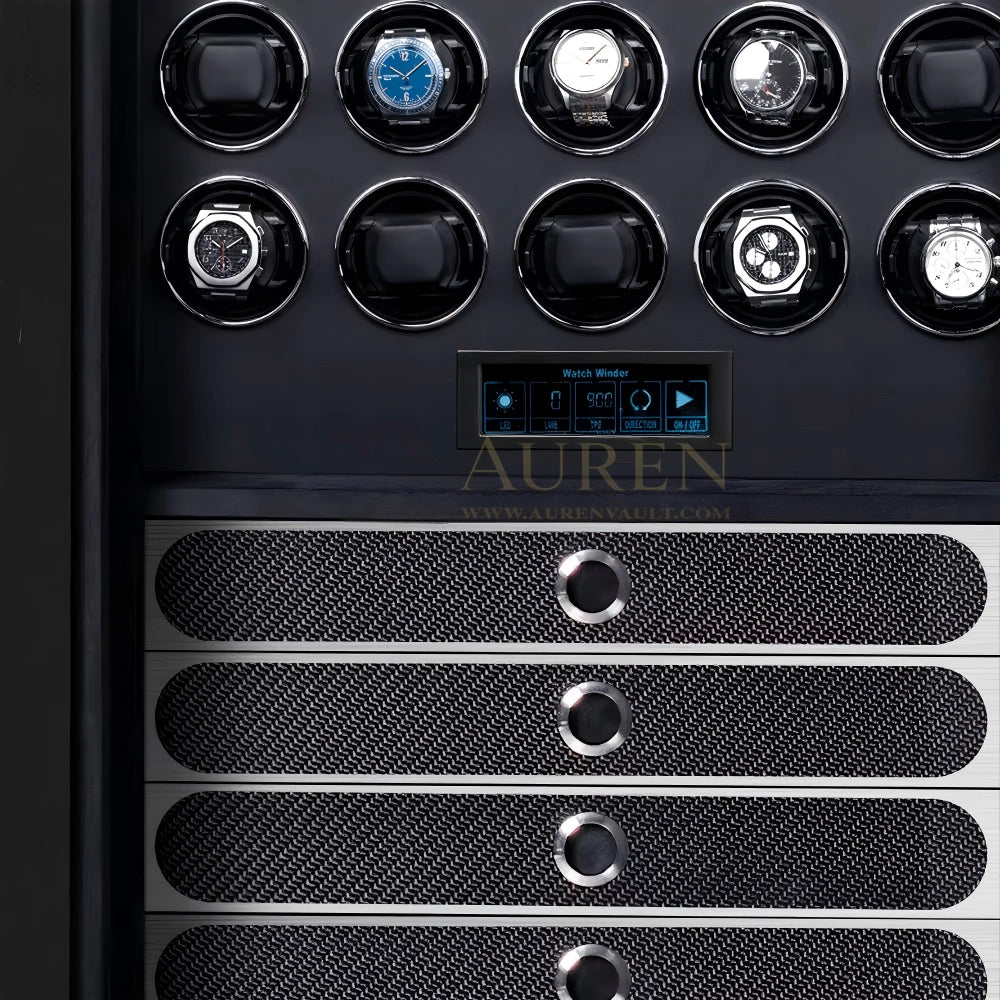
A suitable watch winder should offer a flexible TPD range, selectable rotation direction, and programmed rest periods.
This is particularly important for collections containing both SW200-based date watches and SW500-based chronographs.
Independent winding controls allow each watch to receive its own program.
The holder should be adjustable for different cases and straps.
Leather straps, steel bracelets, and canvas bands should not be stretched unnecessarily.
For restored historical movements, reliable motor operation and movement-specific programming deserve particular attention.
Standalone Winder or Watch Winder Safe?
A single J09 Automatic may need nothing more than a compact programmable winder, if the owner wants one.
A collection containing several contemporary models and O.H.M. watches may require a more flexible arrangement.
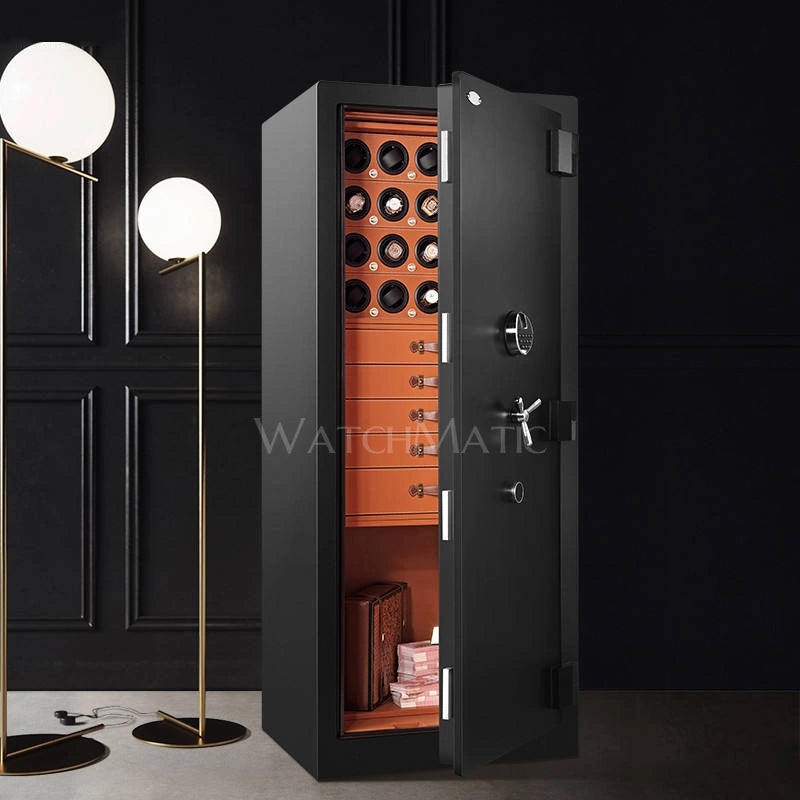
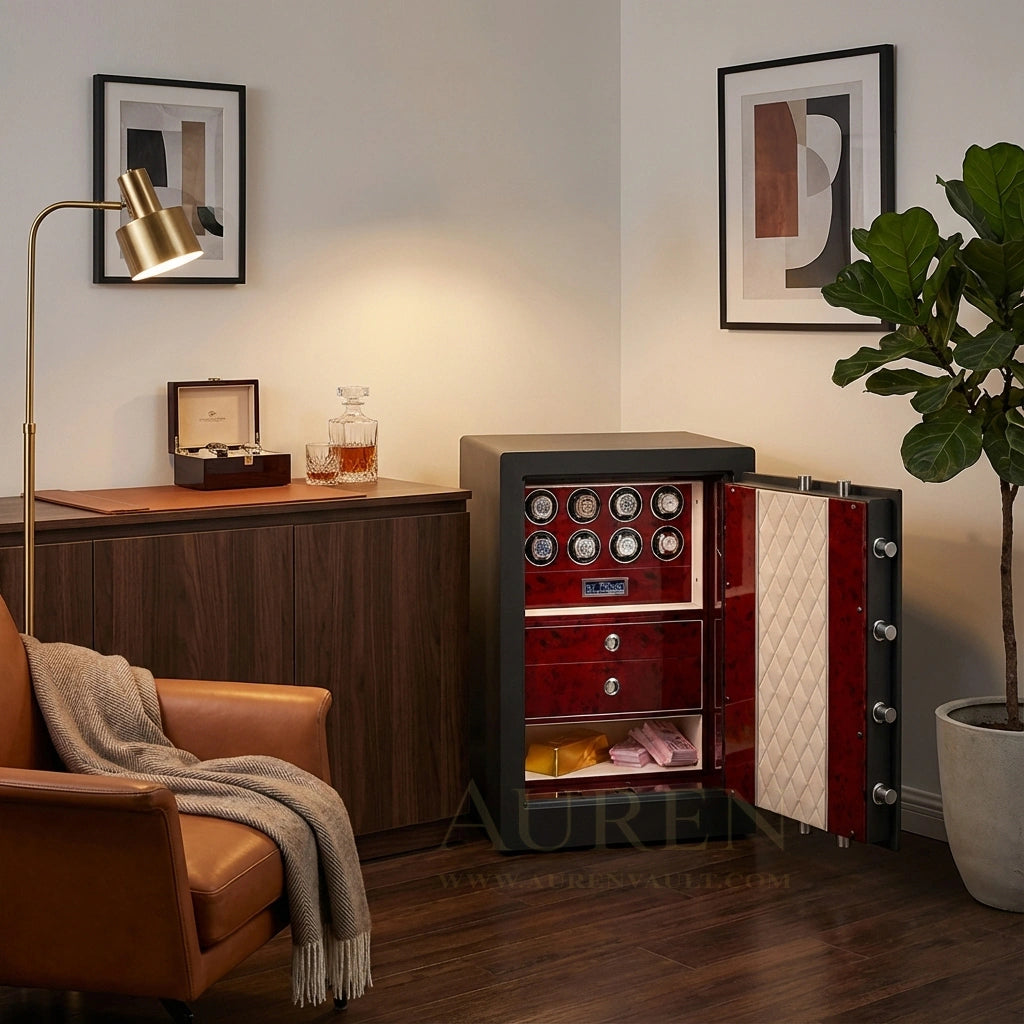
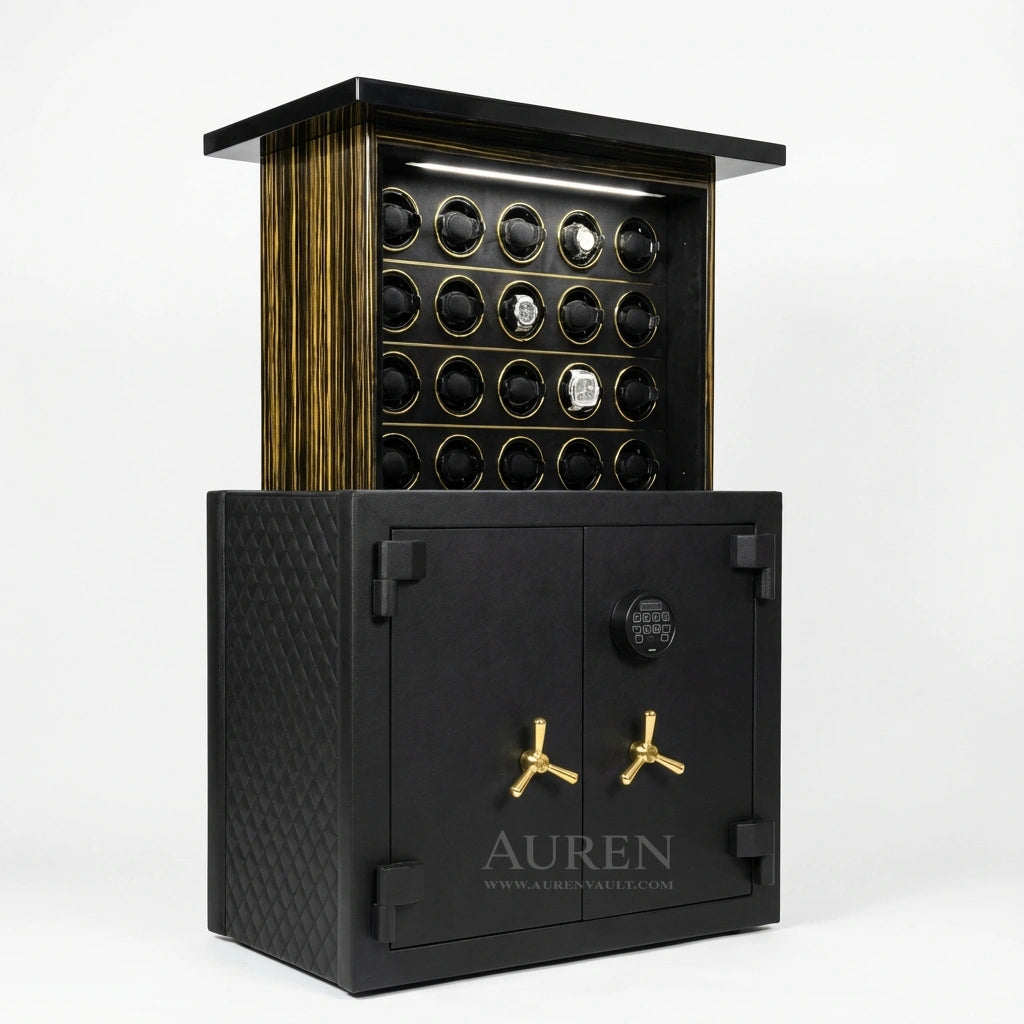
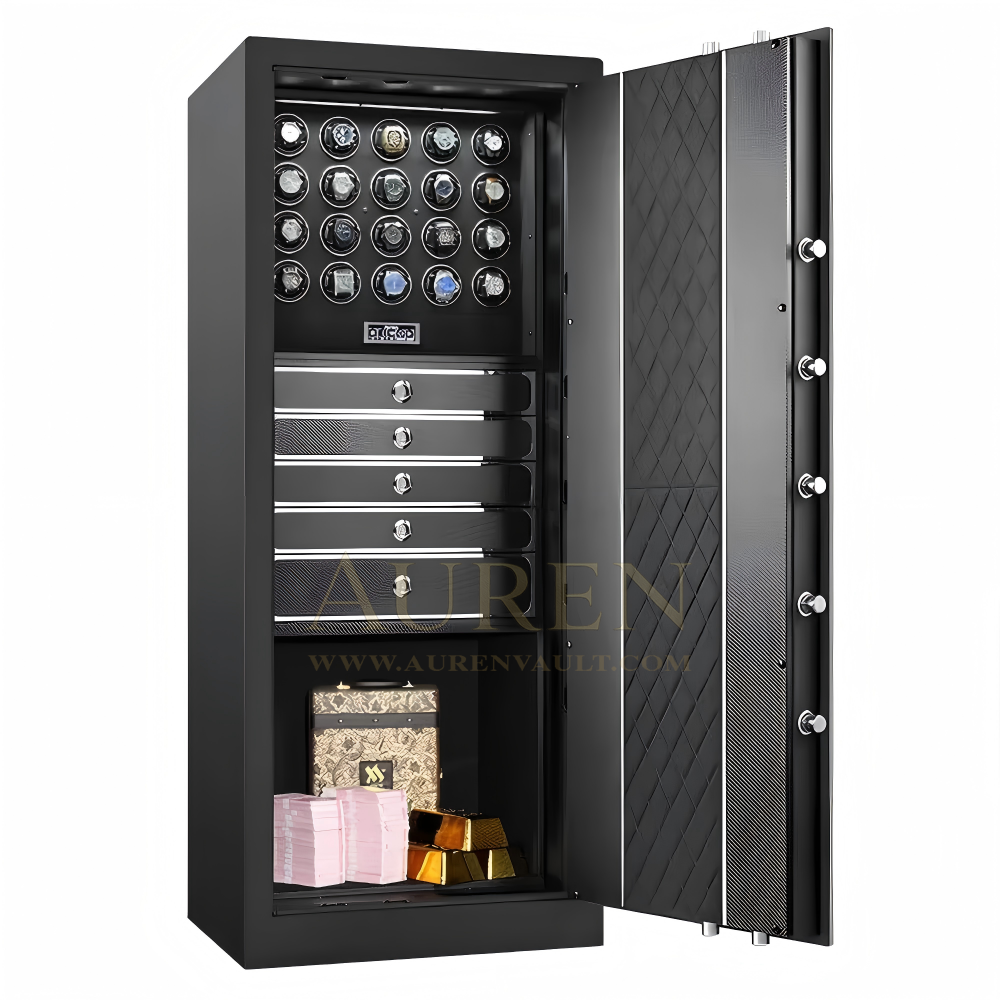
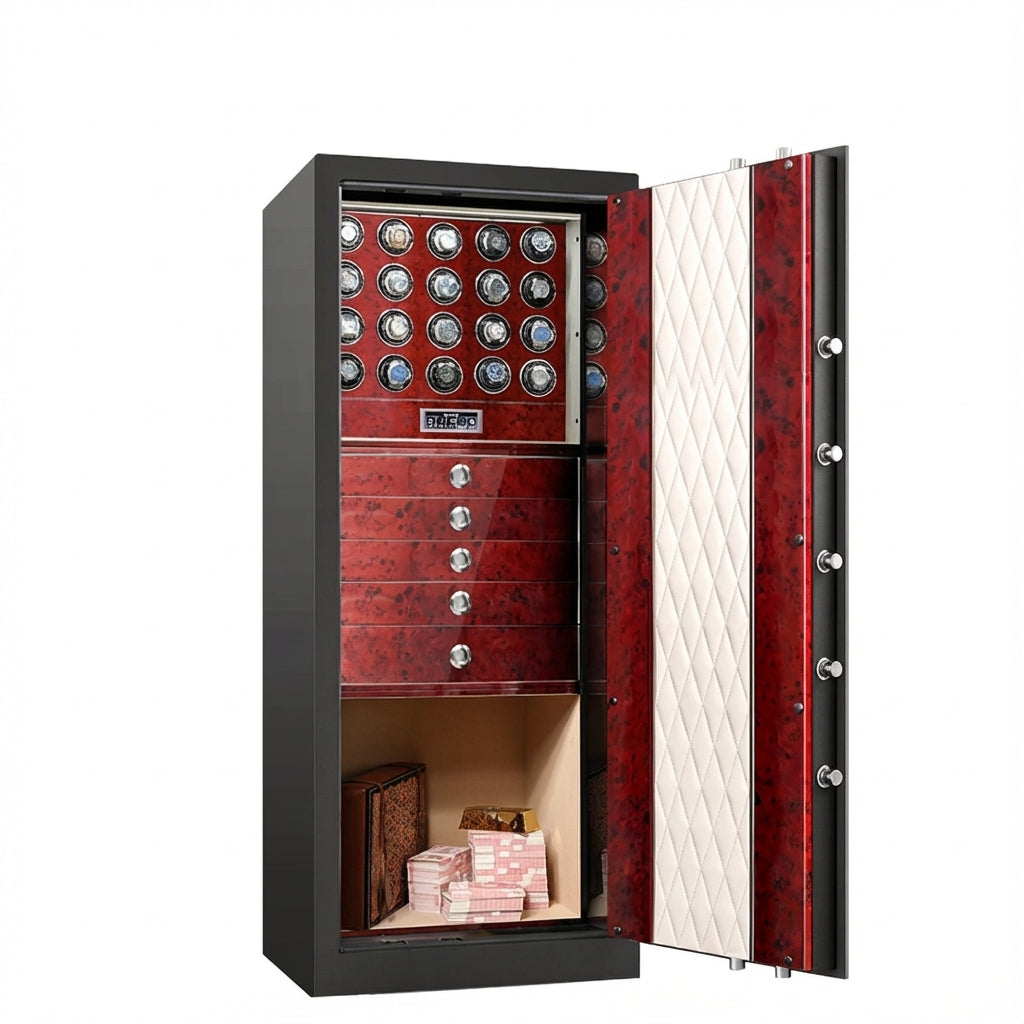
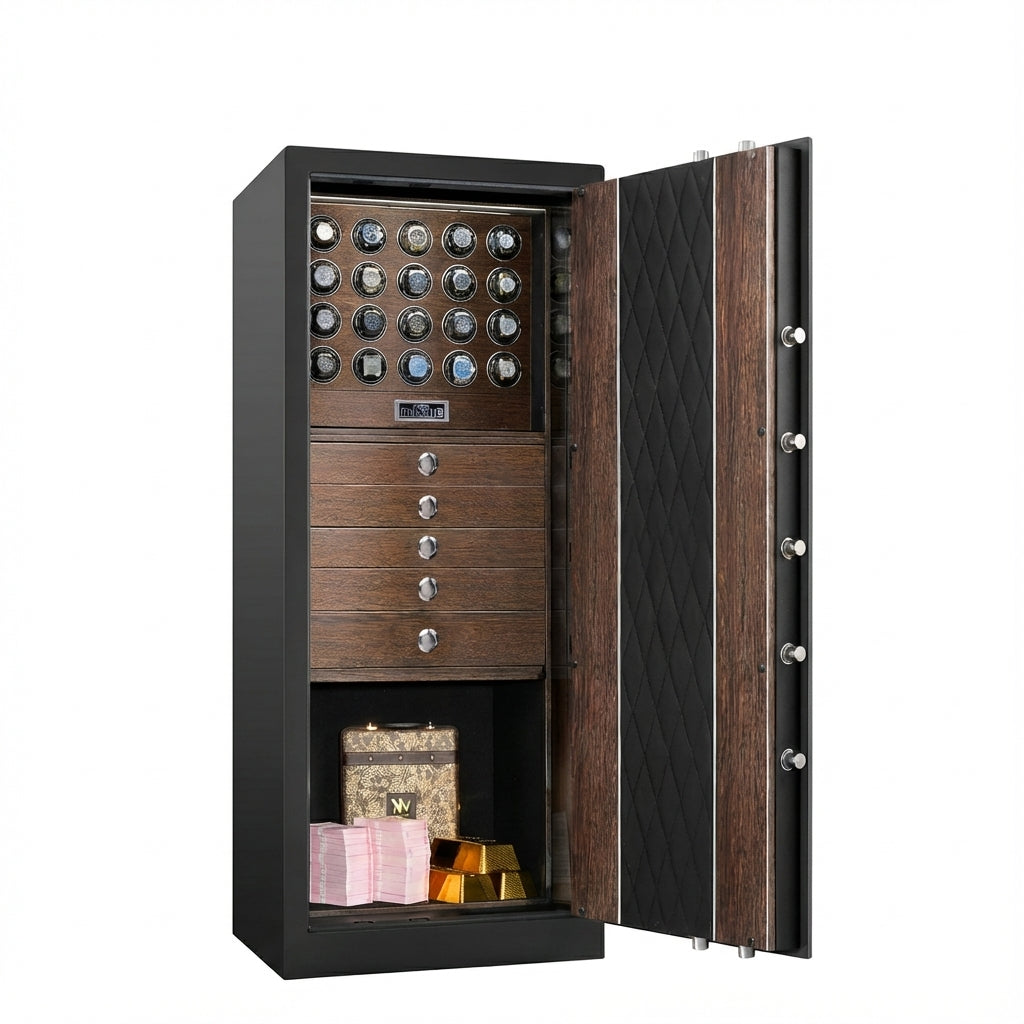
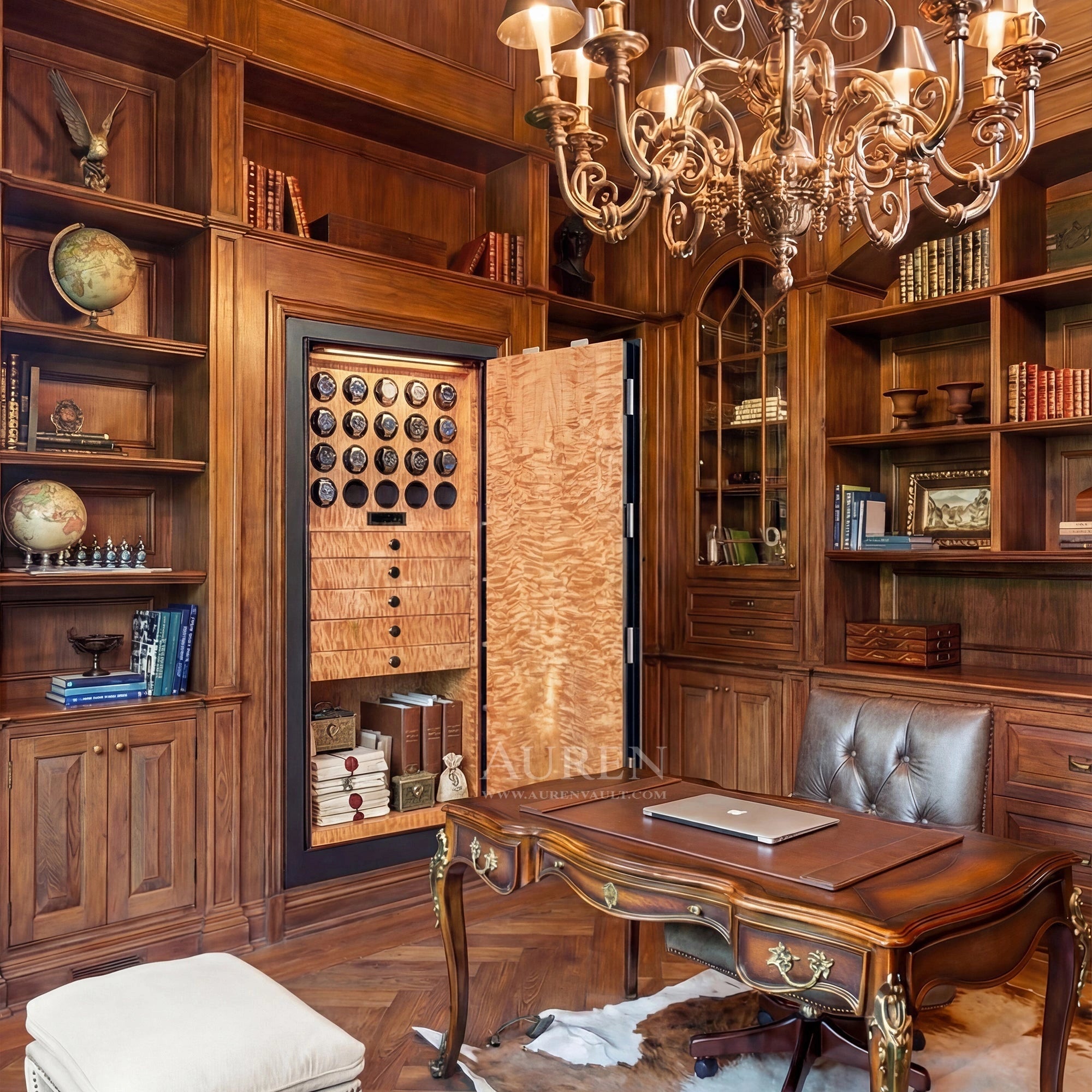
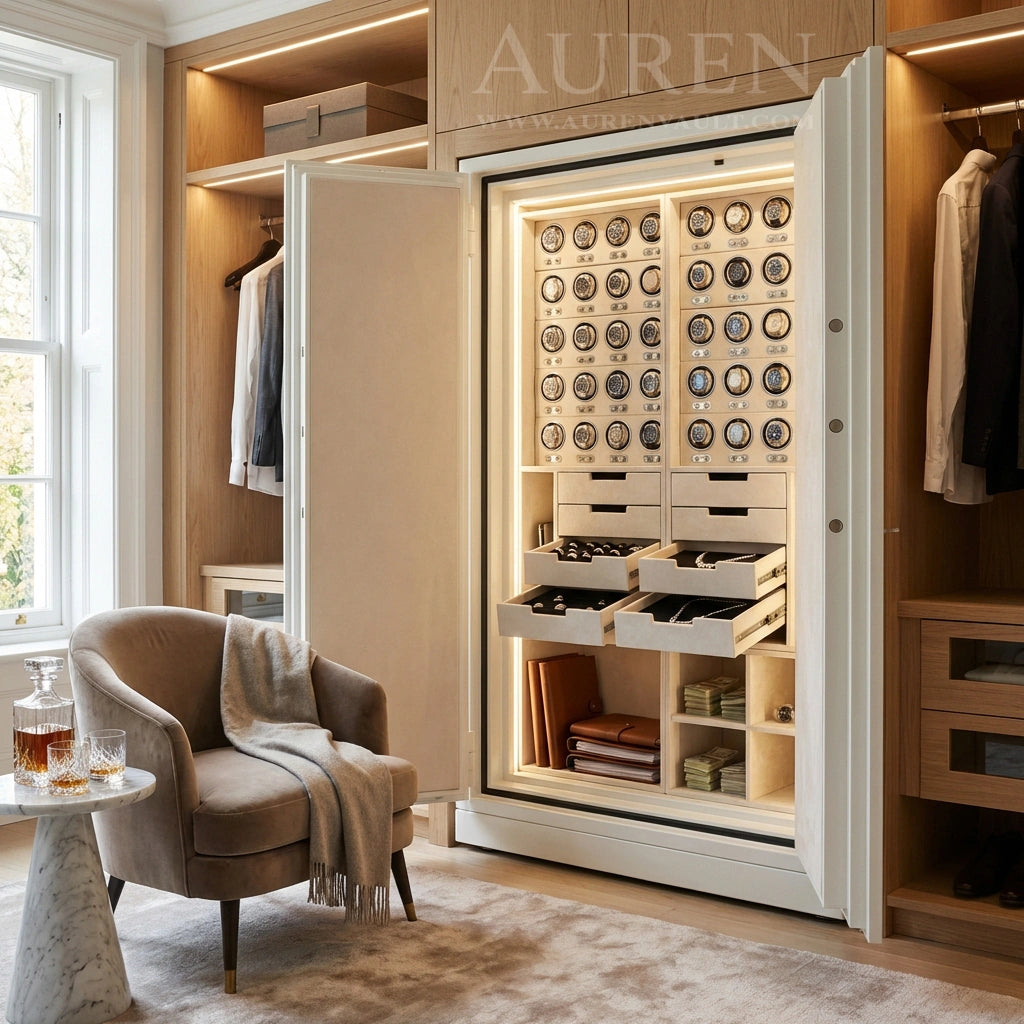
An integrated watch winder safe can combine active winding modules with protected passive storage.
A safe's actual protective capability depends on construction, locking systems, installation, and documented ratings.
The watch winder safe guide provides background on integrated storage configurations.
For a larger watch portfolio, luxury watch safes may offer additional space.
The broader watch safes collection provides other capacity options.
Planning an Armand Nicolet Collection
Imagine a collection containing a J09 Date, J09 GMT, J09 Chronograph, M02 Moon Phase, O.H.M. L15, and O.H.M. L06.
Six watches are owned.
Five contain automatic movements.
The L06 is manually wound.
Among the automatic watches, the AN500 chronograph may require a different rotation program from the AN200 Date.
The historical AN703A should also be evaluated independently.
A system with five independently programmable positions and one protected stationary compartment may be appropriate if the owner wants all automatic watches running.
However, the L15 may not need continuous winding if it is worn only occasionally.
The final configuration should reflect actual use.
Where standard compartments and programs are insufficient, custom watch safe configurations may offer more flexibility.
How to Set Up an Armand Nicolet on a Winder
Begin with the exact watch reference and calibre.
Confirm that the movement is automatic.
For modern watches, identify the underlying Sellita family where documented.
For O.H.M. watches, determine whether the restored movement is automatic or manual.
If the automatic movement has stopped, restart it according to its operating instructions.
Select the appropriate TPD and direction.
Mount the watch securely without forcing its bracelet or strap.
Allow the device to perform its programmed cycles.
Observe whether the watch maintains its reserve over several days.
If it stops repeatedly, review the initial winding, direction, TPD, and mechanical condition.
For historical movements, professional advice may be particularly useful.
Should Armand Nicolet Watches Stay on Winders Continuously?
There is no general requirement to keep an automatic Armand Nicolet running permanently.
A modern AN200 can stop normally when its reserve is exhausted.
It can subsequently be restarted.
A moon-phase model may offer greater convenience when kept running because resetting its additional indications takes more effort.
A historical automatic may be better suited to occasional operation and careful passive storage, depending on its condition and usage.
A winder should simplify ownership rather than be used as a preservation treatment.
Long-term care should also address humidity, temperature, impacts, and unnecessary handling.
The watch storage guide provides a broader storage reference.
Frequently Asked Questions About Armand Nicolet Watch Winders
What is the best watch winder for Armand Nicolet watches?
A programmable winder with adjustable TPD, selectable direction, rest cycles, and secure cushioning is the best general choice. Settings must follow the calibre.
How many TPD does an Armand Nicolet automatic need?
Many modern SW200-based references can be researched using approximately 650–800 TPD bidirectional guidance. SW500-based chronographs are commonly associated with approximately 800 TPD clockwise. The exact settings should be verified.
Is the Armand Nicolet AN200 automatic?
Yes. The AN200 is based on a modified Sellita SW200 automatic movement.
Does the J09 Date need a watch winder?
No. It can receive sufficient winding through regular wear. A compatible winder is optional and useful when the watch remains unworn for several days.
What winding program should an AN500 Chronograph use?
The AN500 is based on the Sellita SW500. Independent references commonly recommend approximately 800 TPD clockwise for the SW500 family, subject to verification for the exact watch.
Can an Armand Nicolet J09 GMT use a winder?
Yes. The AN330 is based on an automatic SW330 movement. The correct program should be confirmed for the calibre.
Does the M02 Moon Phase benefit from a winder?
Yes. A compatible winder can maintain the automatic AN280 and reduce repeated moon-phase adjustments.
Is the O.H.M. L15 automatic?
Yes. The AN703A is a restored historical automatic movement. Its external winding requirements should be confirmed independently from modern Sellita calibres.
Can the O.H.M. L06 use a conventional winder?
No. The AN501 is manually wound. It requires winding through its crown rather than external rotation.
Are historical Armand Nicolet movements compatible with standard winders?
Some restored historical calibres are automatic and may be compatible. Others are manually wound. Their condition and calibre-specific requirements should be evaluated individually.
Does a shorter power reserve mean more TPD?
Not automatically. Power reserve and external rotation count describe different characteristics.
Can a watch winder overwind an Armand Nicolet automatic?
Modern automatic movements generally incorporate mechanisms limiting excessive mainspring tension. A suitable program with rest periods is still recommended.
Should vintage Armand Nicolet watches remain on a winder?
That depends on the movement, its condition, and the owner's wearing habits. A winder is optional and should not substitute for servicing.
Is a watch winder safe suitable for Armand Nicolet collections?
It can be useful for collections requiring different automatic winding programs alongside protected storage for manually wound historical pieces.
Related Reading
Collectors interested in Swiss movement families and mechanical watch storage may find these articles useful:
-
Best Watch Winder for Jaeger-LeCoultre: TPD & Care Guide — Automatic and manually wound movement distinctions.
-
Best Watch Winder for Vacheron Constantin Watches — Movement-specific winding and complication management.
-
Watch Safes with Built-In Watch Winders: Are They Worth It? — Combining automatic winding with enclosed storage.
Final Thoughts: Armand Nicolet Winder Selection Depends on Movement Heritage
Armand Nicolet's collection is unusually varied because it combines contemporary Sellita-based calibres with restored historical movements.
A J09 Date equipped with AN200 and a J09 Chronograph using AN500 should not automatically receive identical winding programs.
The O.H.M. L15 adds another consideration through its restored automatic AN703A, while the manually wound L06 does not benefit from conventional winding.
For a single regularly worn modern automatic, a compact programmable winder may be sufficient.
For collections spanning different movement generations, independent programs and a balance of active and passive storage are more practical.
At Auren Vault, the focus is on bringing movement-compatible winding, refined organization, and considered protection together for valuable mechanical watches.
Ultimately, the correct Armand Nicolet winder respects the actual calibre, its mechanical condition, and the owner's wearing routine rather than relying on one generic brand setting.