
The best watch winder for Alpina watches is a programmable model that supports adjustable turns per day (TPD), selectable winding direction, controlled rest cycles, and secure mounting for the brand's sports-watch cases, bracelets, and straps.
Automatic Alpina watches, including the Alpiner Extreme, Startimer Pilot Automatic, and selected manufacture complications, can benefit from compatible watch winders. For many conventional Swiss automatic movements, approximately 650–800 TPD is a useful starting range to investigate. However, the correct settings must be confirmed for the exact movement.
This distinction is especially important for Alpina's AL-525 calibre. Selected Alpiner Extreme watches use an SW200-based AL-525 with approximately 38 hours of power reserve, while newer Startimer Pilot references use a La Joux-Perret-based AL-525 with approximately 68 hours.
Not every Alpina watch requires winding. Quartz, solar-powered, and manually wound models do not benefit from conventional automatic winders.
For collectors, movement identification and suitable physical support are more important than maximizing rotation speed.
Why Alpina Watch Winder Compatibility Is Not as Simple as It Looks
Alpina is closely associated with Swiss sports watchmaking.
Its collections include robust outdoor watches, aviation-inspired designs, diving watches, and mechanical complications.
This positioning creates an understandable impression that Alpina watches are relatively straightforward to maintain.
However, selecting an appropriate watch winder requires more care than simply finding a device with enough space for a sports watch.
Alpina uses several movement families.
Some are based on established Swiss mechanical architectures. Others incorporate manufacture-developed complications or more recent movement platforms.
The same collection can also contain automatic and quartz-powered references.
Even the same calibre designation can appear with different underlying movement bases.
That detail makes Alpina particularly interesting from a watch winder perspective.
A collector who identifies a watch only as an Alpiner Extreme or Startimer may not have enough information to choose the right winding program.
The exact reference, calibre, and movement generation provide a more reliable starting point.
What a Watch Winder Actually Does for an Alpina Automatic
An automatic movement uses an oscillating rotor to wind the mainspring as the wearer moves.
When the watch is removed, its available power reserve gradually declines.
Once that energy is exhausted, the movement stops.
A watch winder recreates some of this motion through controlled rotation.
Its purpose is to maintain enough energy for the movement to continue operating between wears.
A winder does not improve the watch's inherent accuracy, repair mechanical wear, or replace servicing.
It is primarily a convenience accessory.
For someone who wears the same Alpiner every day, regular wrist movement may already provide sufficient winding.
For a collector rotating between several mechanical watches, keeping the Alpina running can reduce repeated adjustments.
Alpina Watch Winder Compatibility by Calibre
The following comparison highlights important automatic and non-automatic Alpina movements.
| Alpina calibre | Representative watch | Movement type | Approximate power reserve | Winder suitable? |
|---|---|---|---|---|
| AL-525, SW200-based | Selected Alpiner Extreme Automatic references | Automatic | 38 hours | Yes |
| AL-525, La Joux-Perret-based | Selected newer Startimer Pilot Automatic references | Automatic | 68 hours | Yes |
| AL-710 | Alpiner Manufacture Date | Automatic | 42 hours in representative versions | Yes |
| AL-718 | Manufacture Worldtimer | Automatic | 42 hours in representative versions | Yes |
| AL-760 | Manufacture Flyback Chronograph | Automatic | 38 hours in representative versions | Yes |
| AL-240 | Selected Startimer Pilot Quartz models | Quartz | Not applicable | No |
| AL-490 | Selected hand-wound mechanical watches | Manual winding | Reference-dependent | No |
| AL-140 | Selected Solarmetre solar-quartz watches | Solar quartz | Not applicable | No |
The movement specifications refer to representative models and generations.
Always confirm the exact reference because Alpina has introduced changes to movement specifications across its catalogue.
The AL-525 Question: Why Two Alpina Watches Can Have Different Power Reserves
The AL-525 is one of the most important movements for contemporary Alpina owners to understand.
It appears in multiple automatic watch references, including models from the Alpiner and Startimer collections.
However, the calibre designation does not necessarily identify one unchanged underlying movement architecture across every generation.
Selected Alpiner Extreme Automatic references use an AL-525 based on the Sellita SW200 platform.
These watches typically provide approximately 38 hours of power reserve.
Newer Startimer Pilot Automatic references introduced in 2026 use an AL-525 based on a La Joux-Perret movement platform, offering approximately 68 hours.
This is a substantial difference.
Why the Movement Base Matters More Than the Calibre Name Alone
A mechanical watch's winding requirements depend partly on the design of its automatic winding system.
The rotor mechanism, gear train, and energy-transfer arrangement determine how external movement contributes to winding the mainspring.
Changing the underlying movement platform may change some of these characteristics.
That means a winding program recommended for an older SW200-based AL-525 should not automatically be assumed to apply to the newer La Joux-Perret-based version.
Even though both watches carry the AL-525 designation, the collector should verify the exact movement generation.
This distinction also demonstrates why power reserve cannot be used as a substitute for winding specifications.
A movement with 68 hours of reserve does not automatically require more daily rotations than one with 38 hours.
How to Identify the Correct AL-525 Version
The most useful information is the complete watch reference.
For example, selected Alpiner Extreme references list an SW200-based movement with a 38-hour reserve.
The newer Startimer Pilot Automatic references with the La Joux-Perret-based AL-525 specify approximately 68 hours.
The original product documentation, official model specifications, and service records can help identify the movement base.
When those details are unavailable, a qualified watchmaker can assist.
It is better to confirm the movement than to select settings based solely on the AL-525 designation.
Best Watch Winder for Alpiner Extreme Automatic
The Alpiner Extreme is one of Alpina's most distinctive contemporary sports-watch collections.
Its cushion-shaped case, integrated bracelet or rubber strap, textured dial, and emphasis on outdoor capability make it immediately recognizable.
Selected automatic references use the SW200-based AL-525 movement with approximately 38 hours of power reserve.
For owners who rotate between several watches, a suitable winder can help maintain the Alpiner Extreme's operating continuity.
The relatively modest reserve of these particular versions means the watch may stop after a comparatively short period without winding.
This can make a winder convenient when the Alpiner is used as part of a regular watch rotation.
Does a 38-Hour Alpiner Extreme Need Higher TPD?
Not necessarily.
A shorter power reserve does not establish a greater daily winding requirement.
The relevant issue is whether the winding program supplies enough energy to maintain normal operation.
For SW200-based automatic movements, independent watch winder references commonly discuss approximately 650–800 TPD with bidirectional rotation.
That provides a useful starting point for research.
However, the owner should verify the movement generation and the device's actual programming before relying on those figures.
The objective is sufficient winding rather than maximum rotation.
Alpiner Extreme Case Shape and Cushion Fit
The Alpiner Extreme's case design introduces another consideration.
Unlike a conventional round dress watch, its case incorporates distinctive proportions and integrated strap or bracelet connections.
Some versions have substantial bracelets, while others use relatively flexible rubber straps.
The holder must accommodate the watch without allowing the case to strike the surrounding compartment.
A rubber strap should not be forced into an unnecessarily tight curve.
Likewise, a metal bracelet should not be stretched around an oversized support.
A softly compressible cushion with adequate case clearance is generally preferable to a rigid holder that fits only one bracelet circumference.
The mechanical program and physical support should be evaluated separately.
Alpina Startimer Pilot Automatic: A Different Ownership Scenario
The Startimer Pilot collection draws on Alpina's aviation heritage.
Its design emphasizes legibility, practical proportions, and mechanical timekeeping.
The newer Startimer Pilot Automatic references using the La Joux-Perret-based AL-525 provide approximately 68 hours of power reserve.
That longer reserve changes the practical case for continuous winding.
Consider an owner who wears the Startimer during the working week but chooses another watch over the weekend.
If the Startimer is sufficiently wound when removed, its extended reserve may allow it to remain running until the next wearing occasion.
In that situation, the owner may not need a winder at all.
However, if the watch is regularly left unworn for longer periods, a compatible winding program can keep it ready for use.
Why You Should Not Copy Older AL-525 Settings Automatically
The newer Startimer movement differs from the SW200-based versions used in selected Alpiner Extreme watches.
A winding program published for an older AL-525 may therefore require additional verification.
The calibre number remains useful, but it is not sufficient on its own.
Owners should confirm the underlying movement platform and its effective winding direction before selecting the rotation program.
This is particularly important when a winder uses fixed settings that cannot be adjusted independently.
A programmable winder provides more flexibility as movement generations change.
Best Watch Winder for Alpina Manufacture Movements
Alpina's manufacture movement portfolio adds another layer of complexity.
These watches can incorporate complications that go beyond conventional hours, minutes, and seconds.
Relevant examples include manufacture date displays, world-time mechanisms, and flyback chronographs.
Automatic versions can benefit from compatible winding systems.
However, their requirements should be determined by the exact calibre rather than by the presence of a complication.
Alpina AL-710: Manufacture Date
The AL-710 is associated with Alpina's manufacture date movement.
Representative versions provide approximately 42 hours of power reserve.
Unlike a conventional date window, certain AL-710 watches use a separate date indication.
For a collector who rotates the watch with other timepieces, maintaining the movement can reduce repeated setting.
However, the complication does not independently determine TPD.
The correct rotation program should follow the automatic winding mechanism's requirements.
A suitable winder maintains the movement's energy supply, not the correctness of the date setting itself.
Alpina AL-718: Worldtimer Manufacture
The AL-718 powers Alpina's manufacture world-time watches.
Representative versions offer approximately 42 hours of power reserve and incorporate additional time-zone indications.
These displays can make restarting a stopped watch more involved than adjusting a conventional three-hand model.
A compatible winder may therefore provide greater convenience for an owner who frequently changes watches.
The objective is to preserve operating continuity between wears.
It is important to distinguish this from automatic time-zone correction.
The winder does not know where the owner is traveling or which local time should be displayed.
Manual adjustments remain necessary when the watch's indicated time zone must change.
Alpina AL-760: Manufacture Flyback Chronograph
The AL-760 is Alpina's automatic manufacture flyback chronograph movement.
Representative versions provide approximately 38 hours of power reserve.
The flyback function allows the chronograph to be reset and restarted rapidly through its designed controls.
However, that complication does not change the basic function of a watch winder.
The winder maintains energy through the automatic winding system.
It does not operate the chronograph pushers or replace the owner's handling of the timing mechanism.
For an owner who wears an AL-760 chronograph occasionally, a compatible winder can keep its timekeeping movement running between uses.
The correct winding direction and TPD should still be confirmed for the specific calibre.
Alpina Watch Winder TPD: What Settings Should You Use?
The most useful way to approach Alpina winding requirements is by movement architecture.
A generic instruction such as "all Alpina watches use 650 TPD" is insufficiently precise.
Different automatic calibres can have different winding efficiencies and rotor arrangements.
The movement base is particularly relevant when dealing with the AL-525 family.
Alpina Watch Winder Settings Comparison
| Alpina movement | Preliminary TPD guidance | Direction guidance |
|---|---|---|
| AL-525, SW200-based | Approximately 650–800 TPD is commonly discussed for SW200-family movements | Bidirectional is frequently listed; verify the reference |
| AL-525, La Joux-Perret-based | Confirm movement-specific requirements rather than copying SW200 settings | Verify the newer movement architecture |
| AL-710 | Use a programmable setting based on the identified calibre | Confirm winding direction |
| AL-718 | Verify movement-specific winding requirements | Confirm before programming |
| AL-760 | Use a calibre-specific program suitable for the automatic chronograph | Verify direction and TPD |
| Quartz, solar quartz, or manually wound | Not applicable | No conventional automatic winding |
These values are not Alpina-issued universal winding settings.
They are reference points for selecting a programmable device and identifying which specifications require confirmation.
Why Winding Direction Matters
Automatic movements do not necessarily wind the mainspring equally in both directions.
Some are designed to transfer useful rotor movement from clockwise and counterclockwise rotation.
Others wind more effectively in one direction.
If a winder rotates predominantly in the wrong direction, even a high TPD setting may provide insufficient energy.
This is why movement-specific rotation direction should be verified before increasing the daily rotation count.
For owners who want to understand this relationship in greater detail, the watch TPD guide explains the principles behind automatic winding programs.
Are 800 TPD Better Than 650 TPD?
Not automatically.
The ideal program supplies sufficient winding to maintain the watch's operating reserve.
Once that requirement is met, additional rotations may provide little practical benefit.
A higher TPD can also conceal an incorrect assumption about winding direction or movement compatibility.
The more effective approach is to confirm the movement, choose an appropriate program, and monitor the watch's performance over several days.
If the watch repeatedly stops, the owner should investigate the settings and mechanical condition rather than assuming that more rotation is always the answer.
How to Choose a Winder for Alpina Sports Watches
Alpina's sports-watch focus introduces several practical considerations.
A good watch winder should accommodate the dimensions, weight, and strap configuration of the specific watch.
Stable Support for Larger Cases
Some Alpina sports watches have substantial cases and prominent crowns.
The rotating holder should provide enough clearance to prevent contact with the compartment walls.
A watch should remain securely positioned even when the winder changes direction.
The case should not move independently of the cushion during normal operation.
The same principle applies to chronographs, where the pushers should not contact the interior of the winding chamber.
Compatibility With Rubber Straps and Metal Bracelets
Rubber straps are common in Alpina's sports collections.
They may be flexible, but that does not mean they should be stretched around oversized holders.
A correctly sized cushion should support the watch without distorting the strap.
Metal bracelets require a different consideration.
The cushion must hold the bracelet securely without applying unnecessary pressure to the clasp or links.
Adjustable holders are especially useful for collectors who change between bracelet and rubber-strap configurations.
Independent Winding Controls
A collector who owns an Alpiner Extreme and a newer Startimer Pilot may need to accommodate different movement bases.
For that reason, a multi-watch winder should ideally provide independent TPD and direction settings for each position.
One shared fixed program may be restrictive.
Independent programming also allows the collection to expand without requiring every new watch to use the same winding settings.
Quiet Operation and Rest Periods
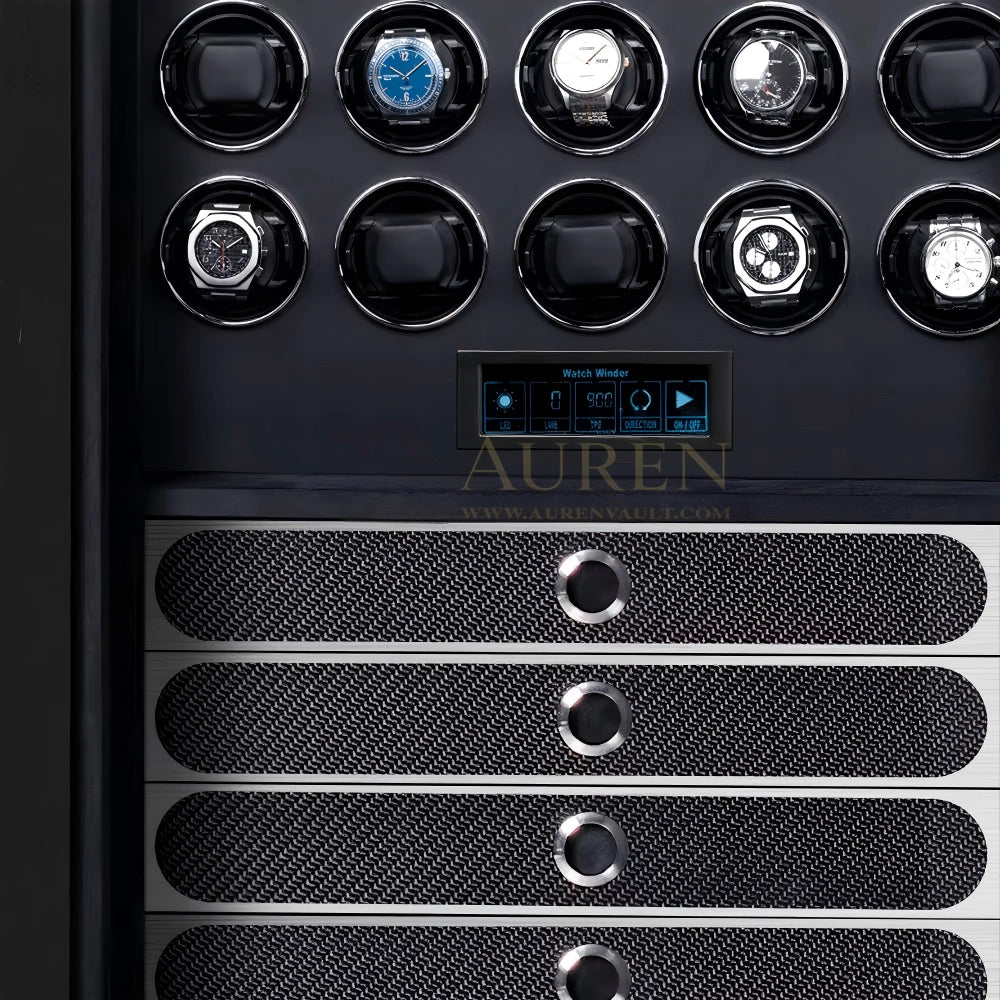
A winder should perform its daily program through controlled movement and pauses.
Continuous uninterrupted rotation is unnecessary.
Quiet motors become particularly important when several winding modules operate in a home office, dressing room, or bedroom.
The operating system should maintain its settings consistently without demanding frequent intervention from the owner.
Alpina Quartz, Manual, and Solar Watches: When Not to Use a Winder
Alpina also produces watches that do not benefit from conventional automatic winding.
Selected Startimer Pilot Quartz models, for example, use battery-powered quartz movements.
They do not contain an automatic rotor that can be wound through external rotation.
The same principle applies to solar-quartz watches, including selected Solarmetre references.
These watches use light to generate energy rather than depending on a conventional automatic winding mechanism.
Manually wound Alpina movements also fall outside normal watch winder use.
Their mainsprings must be wound through the crown according to the manufacturer's instructions.
Why This Matters for Mixed Alpina Collections
A collector may own an Alpiner Extreme Automatic, a Startimer Pilot Quartz, a manufacture chronograph, and a manually wound heritage watch.
Only the automatic references need active winding positions.
The quartz and manually wound pieces can be stored in protected stationary compartments.
Solar-quartz models require appropriate charging conditions rather than mechanical rotation.
This makes a combination of active and passive storage particularly useful.
Standalone Watch Winder vs. Watch Winder Safe for Alpina
A standalone watch winder is designed primarily to maintain automatic movements.
It is usually appropriate when the owner wants convenient access to one or a few regularly rotated watches.
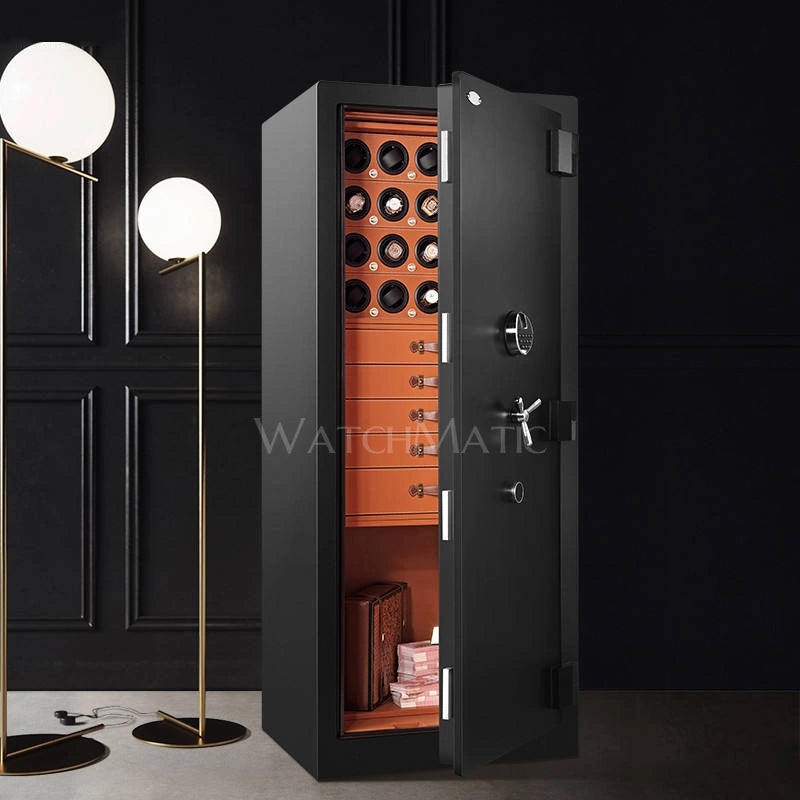
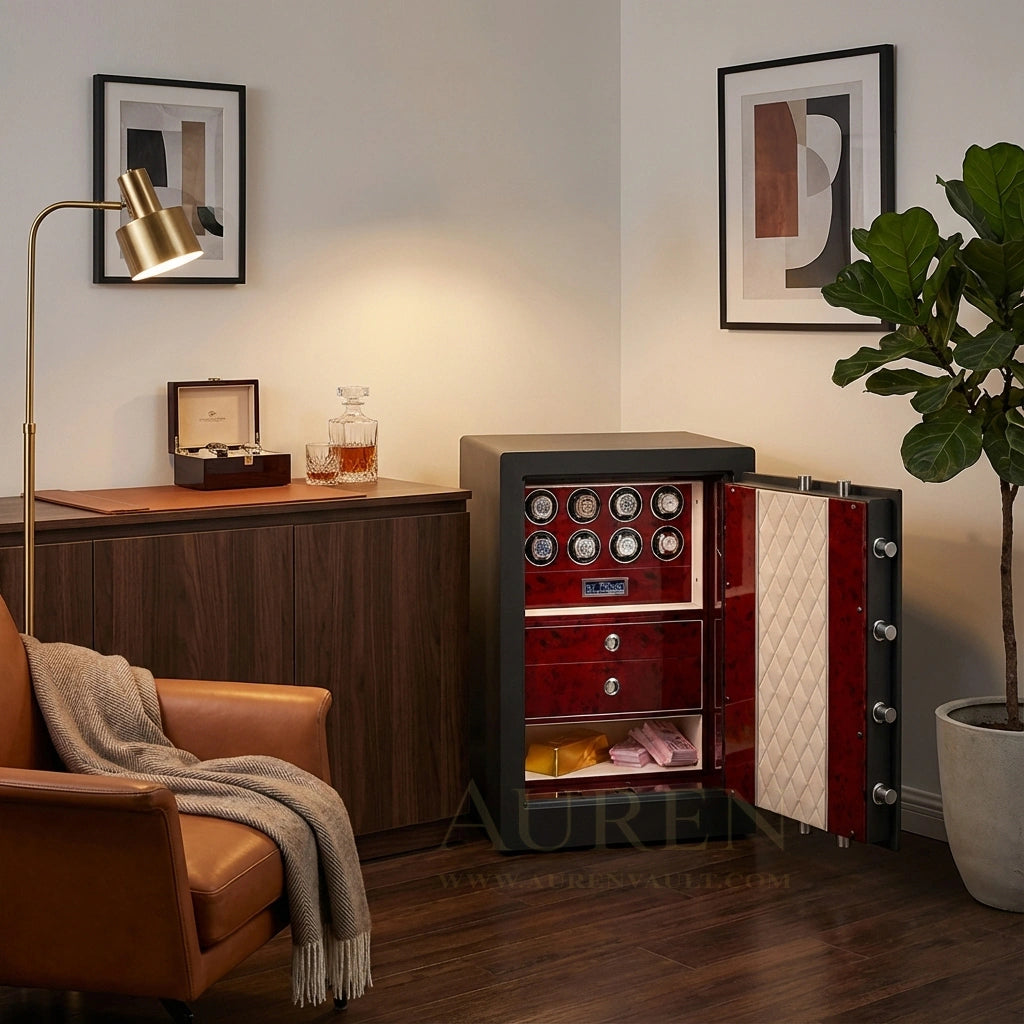
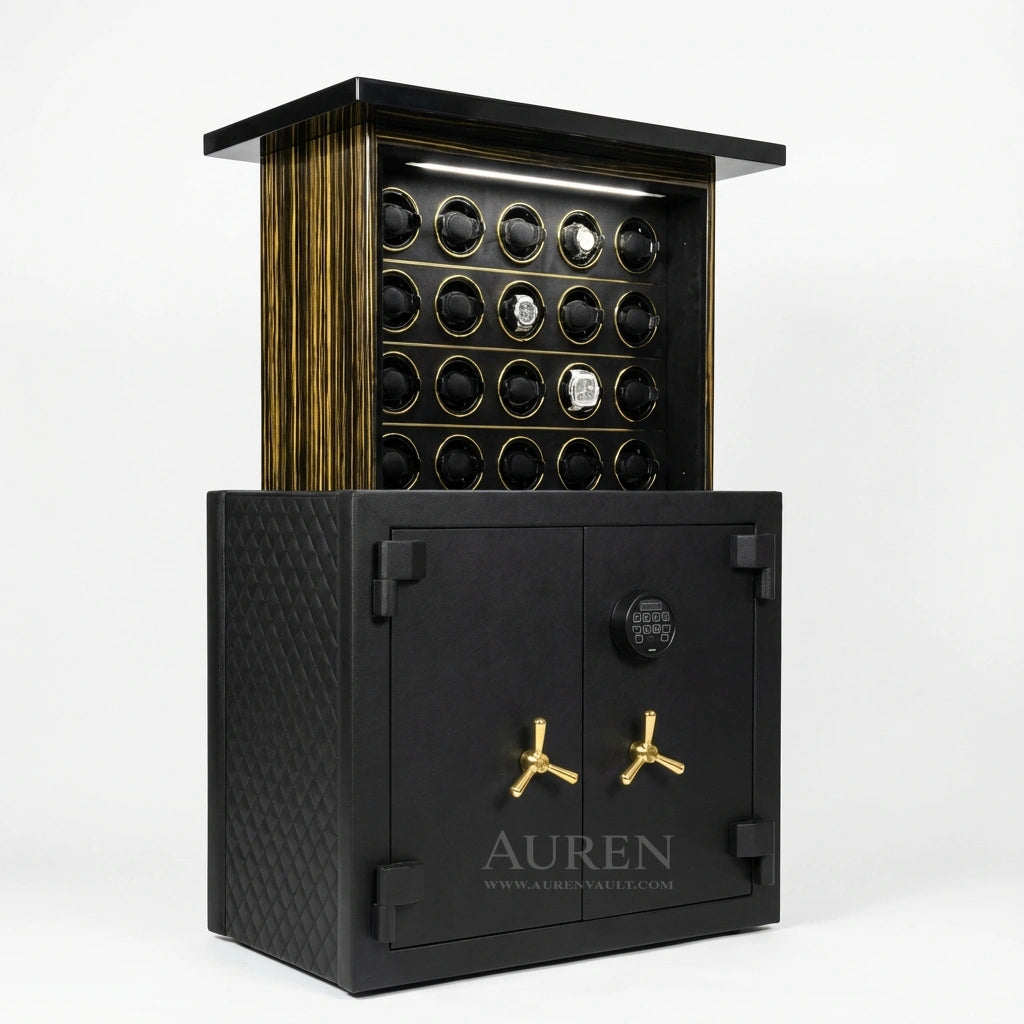
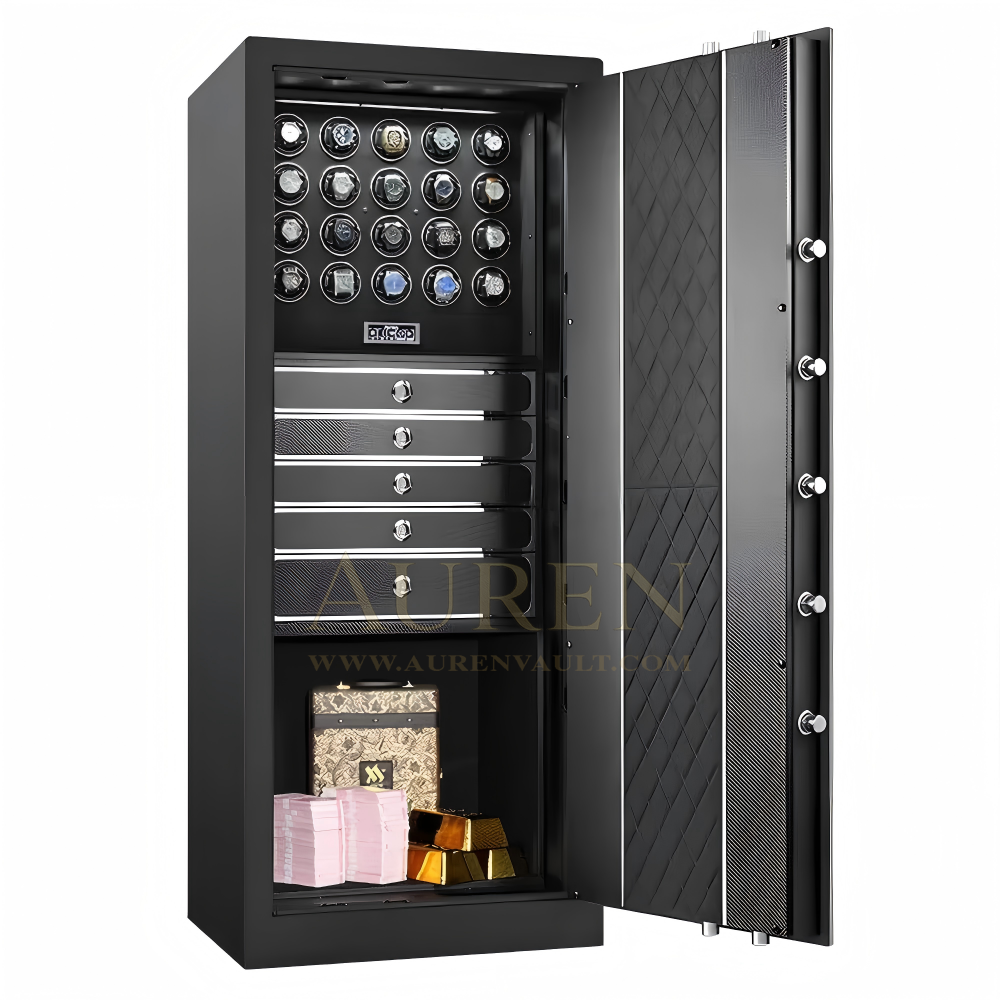
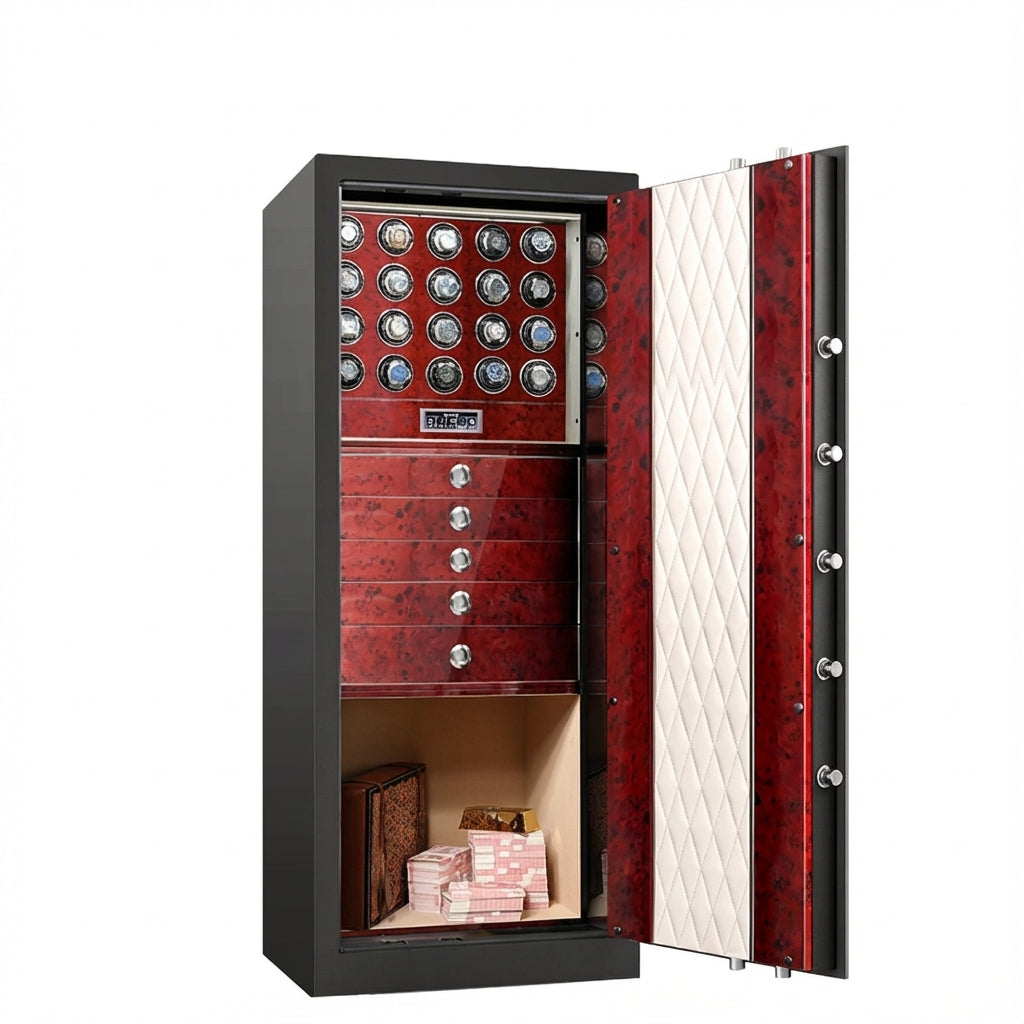
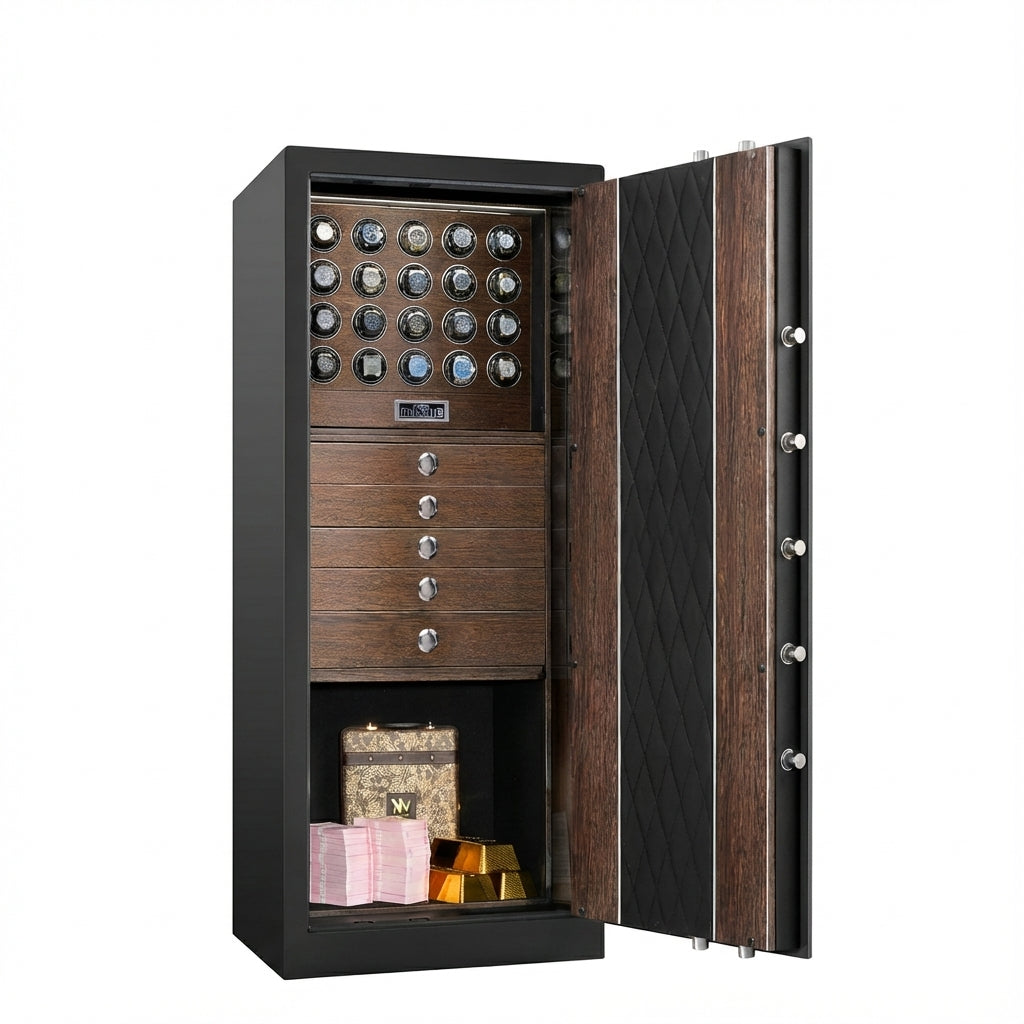
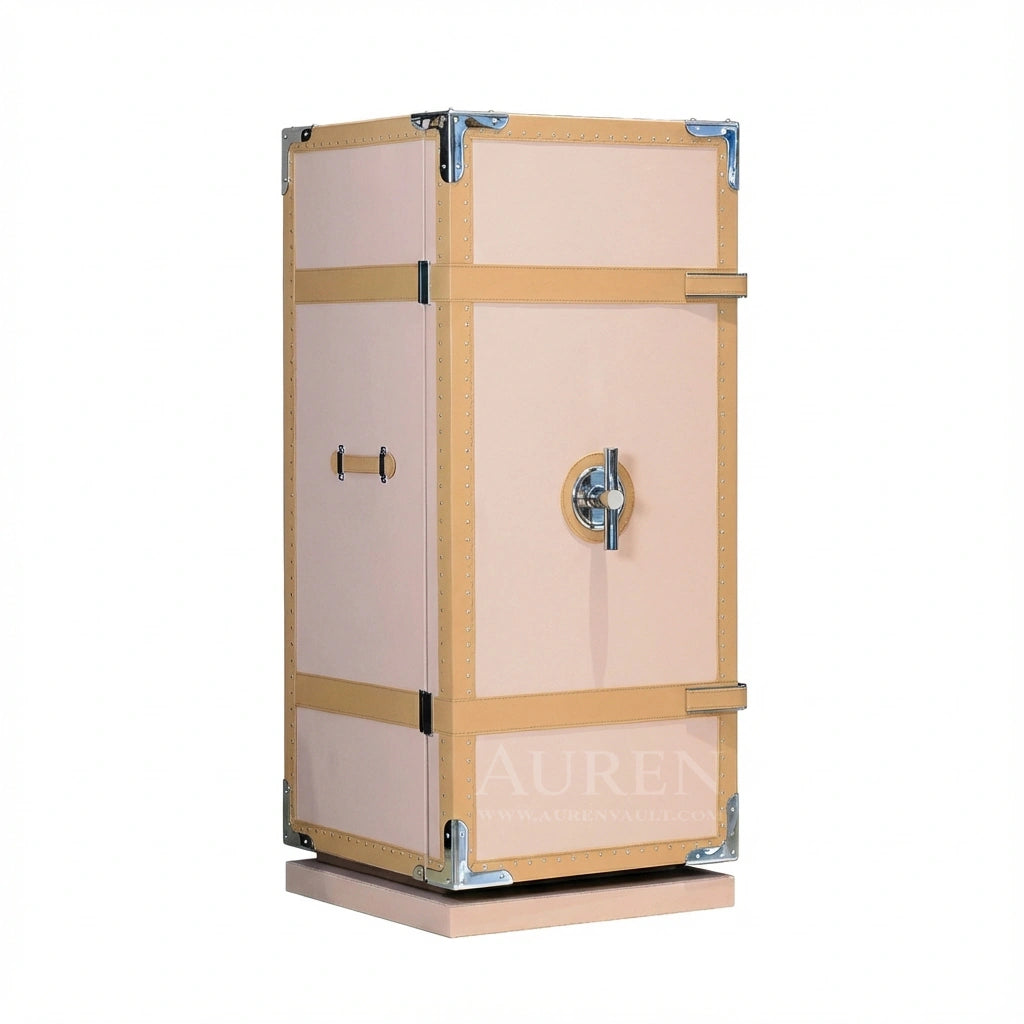
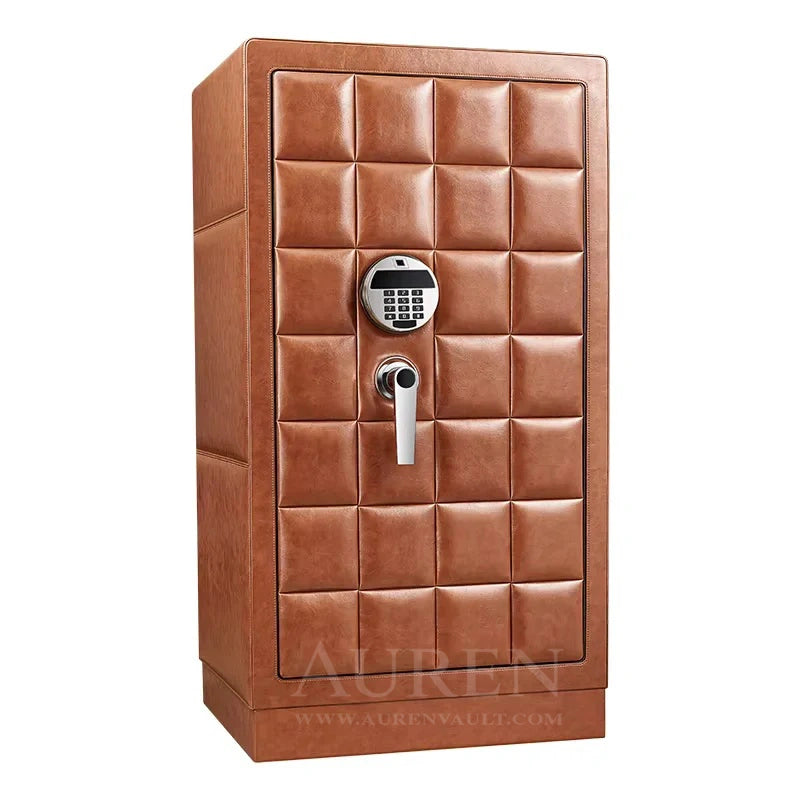
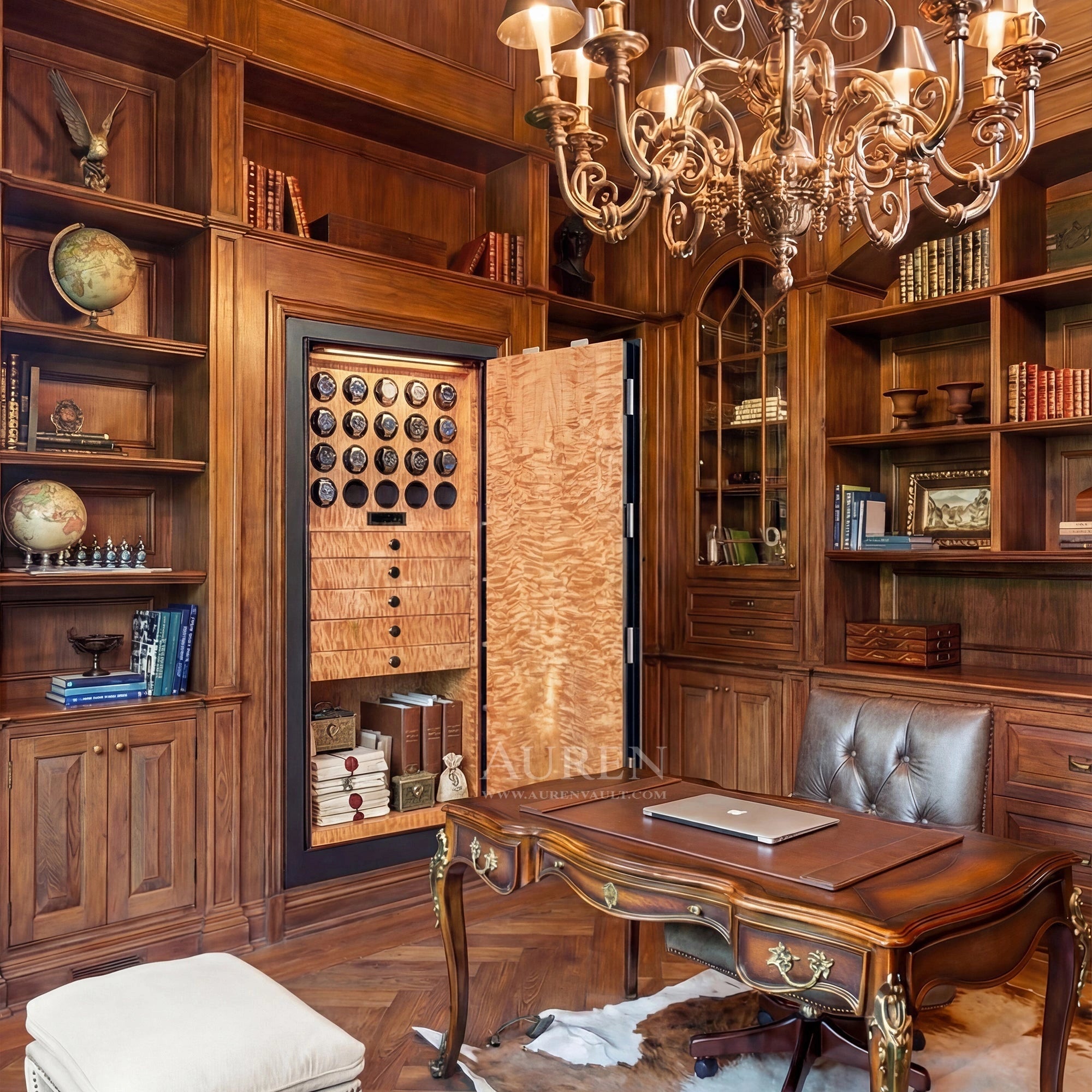
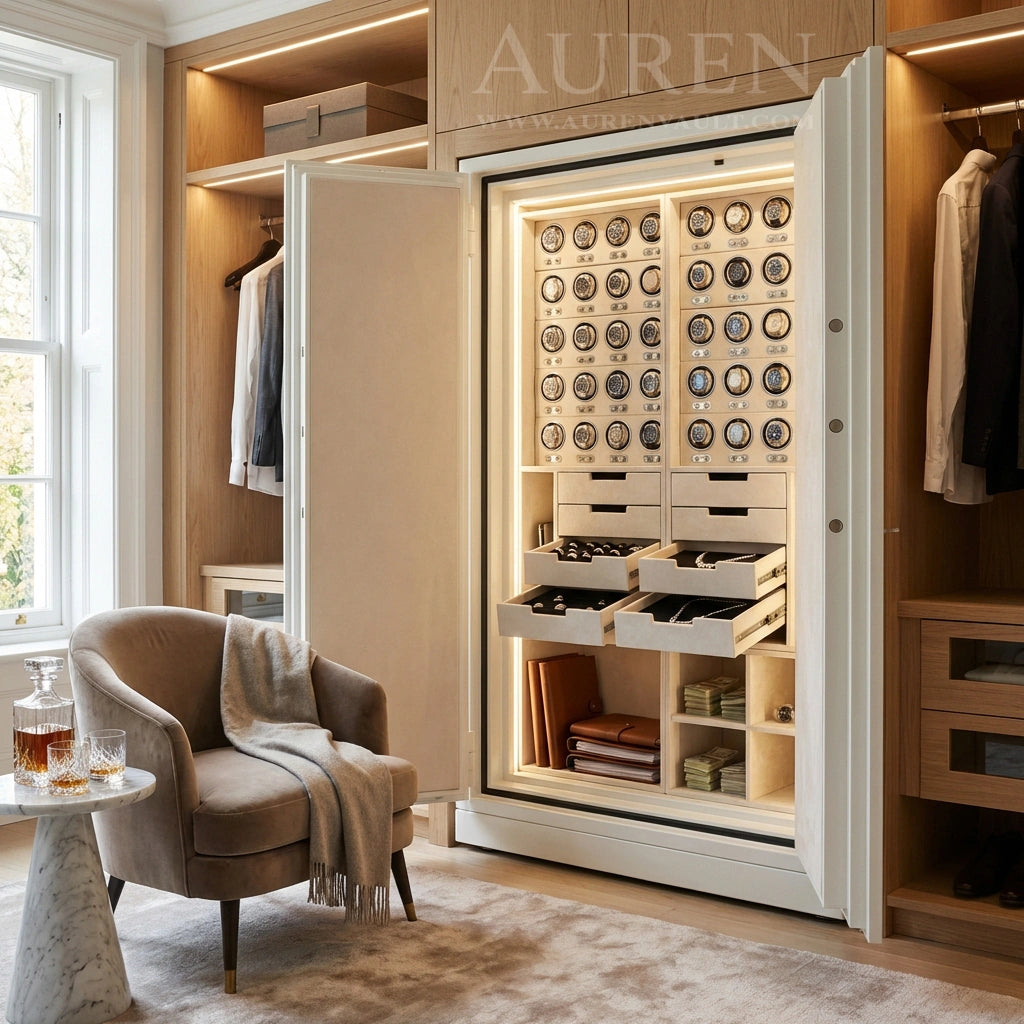
A watch winder safe combines winding functionality with enclosed storage.
For someone who owns several valuable Alpina watches alongside timepieces from other brands, this arrangement may provide a more comprehensive way to manage the collection.
| Requirement | Standalone watch winder | Watch winder safe |
|---|---|---|
| Maintain automatic movements | Yes | Yes, with suitable modules |
| Independent winding programs | Model-dependent | Module-dependent |
| Enclosed storage | Usually limited | Yes |
| Physical security | Usually limited | Depends on construction and certification |
| Passive compartments | Sometimes available | Can be incorporated |
| Best application | Everyday winding convenience | Collection organization and secure storage |
A safe's protective capability should be evaluated through its construction, installation requirements, locking system, and any documented security certifications.
The presence of winding modules does not independently establish the security level of the enclosure.
For owners who want to integrate winding with physical storage, watch winder safes provide a relevant starting point.
The watch winder safe guide also helps explain the tradeoffs between winding capacity and storage requirements.
Planning Storage for an Expanding Alpina Collection
The appropriate configuration depends on the number of automatic watches that the owner wants to keep running simultaneously.
Imagine a collection that includes:
An Alpiner Extreme with an SW200-based AL-525, a newer Startimer Pilot with a La Joux-Perret-based AL-525, an AL-718 Worldtimer, an AL-760 Flyback Chronograph, and two quartz Alpina watches.
The collection contains six watches, but only four require automatic winding positions.
Those four positions should ideally have independent controls because their movement requirements may differ.
The quartz models can occupy passive storage compartments.
A system designed around these actual requirements is more efficient than assuming every watch should be continuously rotated.
For larger mixed collections, the complete watch safe collection provides different approaches to storage capacity and organization.
Owners requiring more substantial capacity can explore luxury watch safes designed for expanded collections.
Where standard configurations do not provide the right balance between active winders, stationary compartments, and accessories, custom watch safe solutions may be appropriate.
The goal is a storage arrangement that reflects the collection's mechanical requirements and future growth.
Should an Alpina Automatic Stay on a Winder All the Time?
An Alpina automatic does not need to remain continuously wound.
If the watch is removed and its stored energy is eventually exhausted, the movement stops normally.
It can subsequently be restarted according to its operating instructions.
For a watch worn frequently, regular wrist motion may provide sufficient energy.
For a watch used only occasionally, passive storage may be entirely reasonable.
A compatible winder is useful when keeping the movement running saves the owner time and effort.
This may be especially convenient for watches with additional calendar or world-time indications.
However, continuous operation should not be confused with better preservation.
The watch still requires suitable storage conditions and maintenance.
For longer periods of non-use, protection from moisture, excessive temperature, unnecessary handling, and accidental impact becomes important.
The watch storage guide provides further information about protecting mechanical timepieces beyond the winding system.
Common Mistakes When Selecting an Alpina Watch Winder
One of the most significant mistakes is assuming that every AL-525 is mechanically identical.
Different versions can use different movement bases and have substantially different power reserves.
Another mistake is selecting a TPD program based solely on power reserve.
A movement offering 68 hours of running time does not automatically require more daily rotations than one offering 38 hours.
Owners should also avoid assuming that every Alpina sports watch is automatic.
Quartz and solar-quartz references exist within the brand's collections.
Finally, a winder should not be selected without checking the physical fit.
Large sports cases, integrated straps, rubber bands, and metal bracelets may require different cushion arrangements.
Movement compatibility and physical support are equally important.
Frequently Asked Questions About Alpina Watch Winders
What is the best watch winder for Alpina watches?
The best choice is a programmable winder offering adjustable TPD, selectable rotation direction, controlled rest cycles, and secure support for Alpina's cases, bracelets, and straps. Independent controls are particularly useful for mixed collections.
How many TPD does an Alpina automatic need?
There is no universal Alpina TPD setting. For some SW200-based movements, approximately 650–800 TPD with bidirectional rotation is commonly discussed. Other movements may have different requirements, so the exact calibre and movement base must be verified.
Does the Alpiner Extreme Automatic need a watch winder?
No. It can receive sufficient winding through regular wear. A compatible winder is optional and useful when the watch remains unworn long enough to exhaust its power reserve.
What is the correct winder setting for Alpina AL-525?
The answer depends on the movement generation. Selected AL-525 references use an SW200 base, while newer Startimer Pilot references use a La Joux-Perret base. Confirm the underlying movement before choosing TPD and rotation direction.
Why do some Alpina AL-525 watches have 38 hours of power reserve and others 68?
Alpina has used different underlying movement platforms with the AL-525 designation. Selected SW200-based Alpiner Extreme references provide approximately 38 hours, while newer La Joux-Perret-based Startimer Pilot references offer approximately 68 hours.
Can Alpina Startimer Pilot watches use a winder?
Automatic Startimer Pilot references can benefit from compatible winders. Quartz versions do not. The exact movement should be identified before selecting a program.
Can an Alpina Flyback Chronograph use a watch winder?
Yes, if it contains an automatic movement such as the AL-760. A compatible winder can maintain the watch's energy supply but does not operate its chronograph functions.
Do Alpina Worldtimer watches benefit from winding?
Automatic manufacture Worldtimer references such as those equipped with the AL-718 can benefit from compatible winding. Keeping the movement running may reduce repeated resetting of additional time-zone indications.
Does a shorter power reserve mean an Alpina needs more TPD?
Not necessarily. Power reserve and TPD measure different things. The correct winding requirement depends on the movement's automatic winding mechanism and the effectiveness of the selected program.
Can I put an Alpina with a rubber strap on a winder?
Yes, if the movement is automatic and the strap fits the holder properly. Use an appropriately sized cushion that secures the watch without unnecessarily stretching the rubber.
Is a watch winder safe necessary for Alpina watches?
No. A standalone winder may be sufficient for everyday convenience. A watch winder safe becomes more relevant when the owner also needs enclosed storage and additional physical security for a larger collection.
Should I keep my Alpina automatic running permanently?
That is not necessary. Allowing an automatic watch to stop when its power reserve is exhausted is normal. A winder is useful when maintaining continuous operation offers practical convenience.
Related Reading
For collectors interested in movement-specific winding requirements and automatic watch storage:
-
Best Watch Winder for Grand Seiko: Spring Drive & TPD Guide — Explains how different movement architectures and power reserves influence winding decisions.
-
Best Watch Winder for Vacheron Constantin Watches — Examines winding requirements for automatic mechanical watches and complications.
-
Best Watch Winder for Cartier: TPD Settings & Buying Guide — Provides additional insight into calibre identification, rotation programming, and collection storage.
Final Thoughts: The Right Alpina Winder Depends on the Movement Generation
Selecting the best watch winder for Alpina begins with one essential principle: the movement matters more than the collection name.
An Alpiner Extreme, a Startimer Pilot, and a manufacture Worldtimer may all be automatic, but their internal mechanisms are not necessarily identical.
The AL-525 family makes that distinction particularly clear.
An older SW200-based movement and a newer La Joux-Perret-based movement can share the AL-525 designation while offering different power reserves and potentially different winding characteristics.
For a single automatic Alpina, a compact programmable winder with appropriate physical support may be sufficient.
For larger collections, independently controlled winding positions combined with passive storage can offer a more organized solution.
At Auren Vault, the approach to watch storage centers on matching winding technology, refined presentation, and security requirements to the actual composition of the collection.
The ideal winder should provide sufficient movement, reliable operation, and secure support without introducing unnecessary complexity.
For Alpina owners, understanding the precise calibre is the most important step toward making that choice correctly.