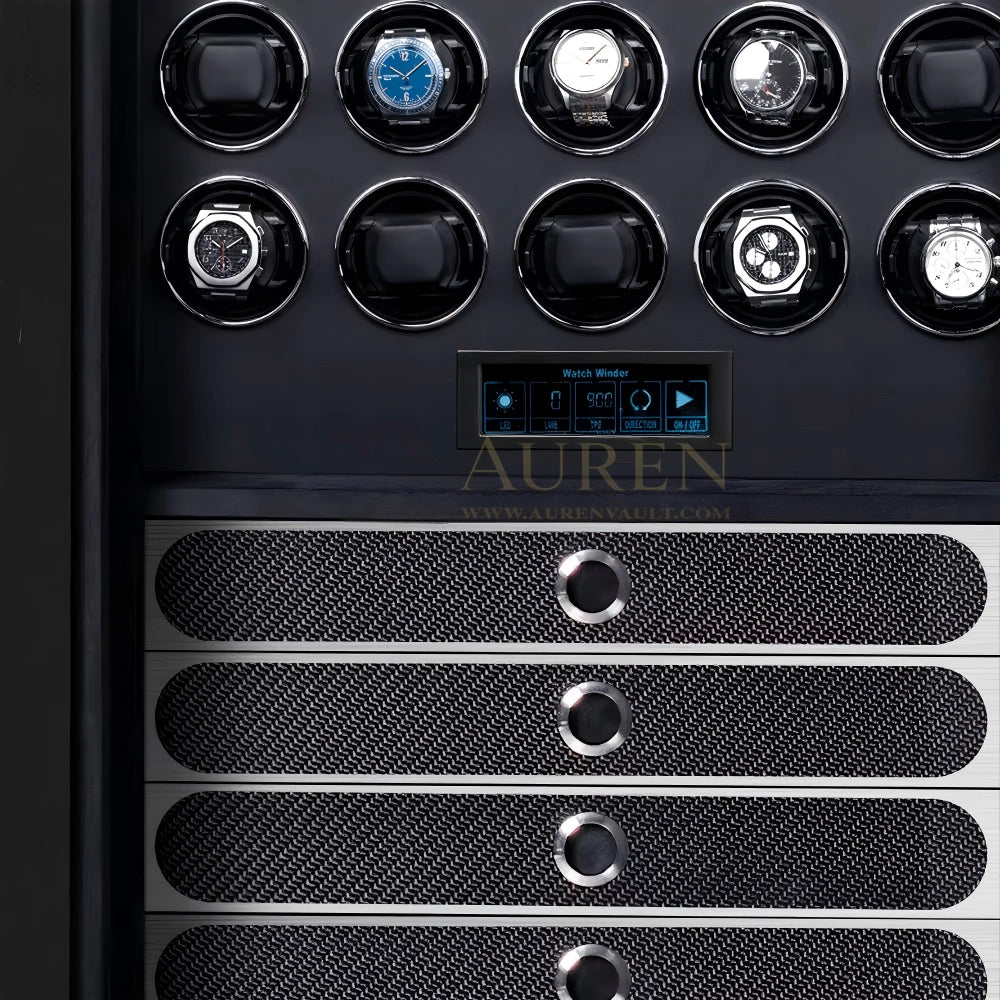

The best watch winder for Chopard watches is a programmable device with adjustable turns per day (TPD), selectable winding direction, controlled rest cycles, and a secure holder appropriate for the watch's case and bracelet.
Many Chopard automatic watches can benefit from a winder, including the Alpine Eagle, L.U.C XPS, Mille Miglia Classic Chronograph, and automatic Happy Sport references. However, not every Chopard uses automatic winding. Certain Happy Sport models are quartz-powered, while the L.U.C Quattro is manually wound.
Independent watch winder databases commonly list approximately 650–800 TPD for several Chopard automatic movements, often with bidirectional rotation. These settings are references rather than universal manufacturer-approved specifications.
For owners of multiple watches, independent winding programs become particularly valuable. A Chopard Alpine Eagle and an L.U.C micro-rotor watch should not automatically receive identical settings.
The best choice depends on movement compatibility, physical fit, wearing frequency, and whether the collection also requires secure storage.
Why Chopard Watches Need More Than a Generic Winder Recommendation
Chopard's watchmaking identity extends across several distinct categories.
The Alpine Eagle collection emphasizes contemporary sports-watch design and integrated bracelets. The L.U.C collection represents the manufacturer's more technically ambitious mechanical watchmaking. Mille Miglia draws on automotive chronograph design, while Happy Sport combines decorative watchmaking with both mechanical and quartz movements.
These collections have different winding requirements.
Consider three watches: an Alpine Eagle 41, an L.U.C XPS, and an L.U.C Quattro.
The Alpine Eagle 41 uses a conventional automatic movement with a centrally mounted rotor. The L.U.C XPS uses a micro-rotor integrated into a considerably thinner movement. The L.U.C Quattro relies on manual winding through the crown.
Despite sharing the same manufacturer, they cannot be treated as mechanically identical.
An automatic watch winder rotates the complete watch, causing its internal winding mechanism to respond to changes in orientation.
This motion helps replenish the mainspring and maintain the movement's operating reserve.
It does not turn the winding crown, replace movement servicing, or improve the watch's inherent accuracy.
For Chopard owners, choosing a winder therefore begins with a simple but essential question: which calibre powers the watch?
Which Chopard Watches Can Use a Watch Winder?
Chopard produces automatic, manually wound, and quartz movements. Even references from the same collection can have different power reserves and winding architectures.
The following comparison covers representative models.
Chopard Watch Winder Compatibility by Calibre
| Chopard watch | Calibre or reference | Movement type | Power reserve | Winder suitability |
|---|---|---|---|---|
| Alpine Eagle 41 | 01.01-C | Automatic | 60 hours | Yes |
| Alpine Eagle 36 | 09.01-C | Automatic | 42 hours | Yes |
| L.U.C XPS 1860 Officer | 96.01-L | Automatic micro-rotor | 65 hours | Yes |
| L.U.C Perpetual Twin | 96.22-L | Automatic | 65 hours | Yes |
| L.U.C Quattro Mark IV | 98.09-L | Manual-winding | 216 hours | No |
| Mille Miglia Classic Chronograph | Ref. 168619-3005 | Automatic chronograph | 54 hours | Yes |
| Happy Sport | Ref. 278602-3001 / 09.01-C | Automatic | 42 hours | Yes |
| Happy Sport | Ref. 278620-3005 | Quartz | Not applicable | No |
These specifications apply to the representative references listed. Chopard has used different movements across model generations, so the reference number should be checked before configuring a winder.
The key distinction is the winding mechanism, not simply the collection name.
An automatic Happy Sport can benefit from a compatible winder, while a quartz Happy Sport cannot. Similarly, the L.U.C collection contains both automatic and manually wound movements.
This matters especially for owners building a collection across several Chopard families.
Alpine Eagle: Why the 41 mm and 36 mm Models Deserve Separate Settings
The Alpine Eagle is one of Chopard's most recognizable contemporary watch collections.
Its integrated bracelet, sculptural case, and textured dial create a consistent visual identity across different sizes.
Mechanically, however, the models are not identical.
The Alpine Eagle 41 uses calibre 01.01-C, while many Alpine Eagle 36 references use calibre 09.01-C.
Both are automatic movements, but they have different dimensions, frequencies, and power reserves.
Alpine Eagle 41: Calibre 01.01-C
The 01.01-C is a self-winding mechanical movement developed by Chopard.
It operates at 28,800 vibrations per hour, equivalent to 4 Hz, and provides approximately 60 hours of power reserve.
Chopard also identifies it as a COSC-certified chronometer.
For an owner who wears the Alpine Eagle 41 throughout the working week, regular wrist movement may provide sufficient winding.
A watch winder becomes more convenient when the watch is rotated with several other timepieces and remains unworn for longer than its available reserve.
Independent winding databases commonly list approximately 800 TPD with bidirectional rotation for Alpine Eagle models.
That can serve as a preliminary reference, but the correct program should still be confirmed for the actual calibre and winder.
Alpine Eagle 36: Calibre 09.01-C
The Alpine Eagle 36 uses the smaller 09.01-C automatic movement in representative references.
Chopard specifies approximately 42 hours of power reserve and a frequency of 25,200 vibrations per hour, equivalent to 3.5 Hz.
The shorter reserve may make a winder more convenient for an owner who wears the watch only once or twice a week.
However, it does not automatically mean the calibre requires more daily rotations.
Power reserve describes how long a sufficiently wound watch can operate without additional energy.
TPD describes the external motion supplied by a winder.
These specifications measure different characteristics.
A shorter power reserve does not by itself determine winding efficiency.
Why Size and Frequency Do Not Determine TPD
It would be easy to assume that the larger Alpine Eagle requires more rotations than the smaller version.
The reverse assumption—that the smaller movement needs a gentler program—is equally unsupported.
Automatic winding efficiency depends on the calibre's rotor, transmission system, and the amount of energy transferred to the mainspring during motion.
A movement's physical size and regulating frequency do not establish the appropriate external rotation count.
The most useful watch winder is therefore one that allows the owner to select a verified program for each movement rather than relying on a single fixed preset.
L.U.C Micro-Rotor Watches: A Different Automatic Winding Architecture
The L.U.C collection introduces a more technically distinctive aspect of Chopard watchmaking.
Certain L.U.C movements use a micro-rotor rather than a full-size centrally mounted rotor.
A micro-rotor is a compact oscillating weight integrated within the movement's architecture instead of being positioned as a larger component above it.
This arrangement allows the automatic winding system to occupy less vertical space.
It is particularly valuable in thin, sophisticated dress watches.
L.U.C 96.01-L: The 22-Carat Gold Micro-Rotor
The L.U.C XPS 1860 Officer uses calibre 96.01-L, a self-winding mechanical movement originating from the technical architecture developed by Chopard Manufacture in 1996.
Its 22-carat gold micro-rotor winds a movement only approximately 3.3 mm thick.
Chopard specifies a power reserve of approximately 65 hours, supported by its Twin technology incorporating two stacked barrels.
This illustrates why the winding mechanism must be considered independently of the movement's thickness.
The watch is automatic, despite its remarkably compact architecture.
A compatible watch winder can therefore maintain its stored energy between wears.
However, the presence of a micro-rotor does not establish a universal TPD requirement.
Does a Micro-Rotor Need More TPD?
Not necessarily.
A micro-rotor has different physical dimensions from a conventional full-size rotor, but winding performance depends on more than diameter or weight alone.
The effective inertia, winding transmission, rotor geometry, and intended movement design all contribute to its efficiency.
Chopard's use of a dense gold rotor is one way of providing appropriate mass within a compact mechanical structure.
It would therefore be incorrect to assume that an L.U.C micro-rotor movement automatically needs more rotations than an Alpine Eagle.
Independent references commonly list approximately 800 TPD and bidirectional rotation for several historical L.U.C automatic calibres.
Those listings may offer useful context, but older calibre designations should not automatically be applied to every contemporary L.U.C reference.
For a 96.01-L, the appropriate program should be confirmed specifically.
L.U.C Perpetual Twin: Where a Winder Offers Greater Convenience
The L.U.C Perpetual Twin presents a different reason to maintain an automatic watch's power reserve.
Its calibre 96.22-L is a self-winding movement with approximately 65 hours of reserve and a perpetual calendar complication.
A perpetual calendar is designed to account for the changing lengths of months and leap-year cycles within its mechanical program.
When a complicated watch stops, restoring all its indications can require considerably more attention than setting a simple three-hand watch.
A compatible winder can help maintain operation between wears, reducing the frequency of resetting.
This is particularly useful for someone who owns several complicated watches and alternates between them.
However, the winder does not improve the calendar's inherent accuracy or remove the need to follow Chopard's setting instructions.
It simply helps keep the automatic movement running.
L.U.C Quattro: Why Nine Days of Power Reserve Does Not Mean Automatic Winding
The L.U.C Quattro demonstrates a common misunderstanding about power reserve.
The Quattro Mark IV uses calibre 98.09-L, a manually wound movement with approximately 216 hours of power reserve.
That is nine days.
Its extended autonomy is achieved through Chopard's four-barrel technology, which stores substantial energy within the movement.
Despite this sophisticated construction, the watch does not use a conventional automatic winding rotor.
It must be wound manually.
A watch winder cannot replenish its power reserve by rotating the case.
This is an important reminder that a nine-day mechanical watch may be less compatible with an automatic winder than a simpler automatic model with a 42-hour reserve.
The distinction is mechanical, not a reflection of sophistication or price.
For collectors who own L.U.C Quattro watches alongside automatic L.U.C models, the appropriate storage arrangement should combine active winding positions with passive compartments.
There is little benefit in dedicating an automatic rotor to a manually wound Quattro.
Chopard Watch Winder Settings: TPD and Rotation Direction
Two settings determine how a programmable watch winder operates.
Turns per day (TPD) describes the number of programmed rotations performed over 24 hours.
Winding direction determines whether the device rotates clockwise, counterclockwise, or alternates between both directions.
These settings must reflect the movement's automatic winding mechanism.
For Chopard, independent winding databases provide useful starting references, but they do not consistently identify every modern calibre.
Chopard TPD Reference Guide
| Watch or movement family | Third-party TPD guidance | Direction reference |
|---|---|---|
| Alpine Eagle automatic models | Approximately 800 TPD | Bidirectional in broad model listings |
| Historical L.U.C automatic micro-rotor families | Approximately 800 TPD | Frequently bidirectional |
| L.U.C 96.01-L | Exact modern preset not independently established here | Verify specifically for the calibre |
| L.U.C Perpetual Twin 96.22-L | Exact calibre-specific preset not established here | Verify before use |
| Mille Miglia automatic chronographs | Approximately 650–800 TPD across different references | Bidirectional or clockwise, depending on movement |
| Happy Sport 09.01-C automatic | Exact model-specific preset not established here | Confirm movement-specific requirements |
| L.U.C Quattro 98.09-L | Not applicable | Manual winding |
| Quartz Happy Sport | Not applicable | No automatic winding |
These are independent reference values, not official Chopard TPD specifications. A recommended program for one movement should not be applied automatically to another.
Is 650 or 800 TPD Better for Chopard?
There is no universal answer.
Independent databases frequently recommend approximately 800 TPD for Alpine Eagle and numerous L.U.C automatic models.
Other Chopard references, including certain Mille Miglia chronographs, appear with recommendations around 650 TPD.
Some older automatic chronographs are listed with clockwise winding, while others have bidirectional recommendations.
These differences can reflect genuine variation in movement architecture, but published databases can also contain incomplete or inconsistent entries.
The appropriate program should therefore be verified for the exact reference.
A device with adjustable TPD and selectable direction is preferable to a fixed-speed unit because it allows settings to be adapted to the movement.
The watch winding and TPD guide provides a broader framework for understanding how rotation counts and direction influence automatic winding.
Why More Rotations Are Not Automatically Better
A watch winder is intended to maintain adequate stored energy.
Once the movement is receiving enough effective winding to remain operational, increasing the number of rotations may provide no additional benefit.
Most modern automatic movements incorporate mechanisms that limit further mainspring tension when sufficiently wound.
Nevertheless, this does not justify continuous or unnecessarily high external rotation.
The goal is reliable maintenance of power reserve through controlled operating and rest cycles.
If a watch stops while mounted on a winder, it is important to investigate the cause rather than immediately choose the highest available TPD.
Happy Sport: Automatic and Quartz Watches in the Same Collection
Happy Sport introduces another distinctive feature of Chopard's watchmaking: the combination of decorative moving diamonds with different movement technologies.
The collection is recognized for diamonds that move freely between sapphire crystals.
Those moving elements are part of the watch's visual design.
They should not be confused with an automatic winding rotor.
Happy Sport Automatic: Calibre 09.01-C
Certain Happy Sport references, including 278602-3001, use Chopard's automatic 09.01-C movement.
The calibre provides approximately 42 hours of power reserve.
A compatible watch winder can help maintain the movement between wears.
However, because Happy Sport cases and straps may differ from those of Alpine Eagle models using the same movement, physical compatibility remains important.
A well-designed holder should secure the watch without excessive pressure or unwanted contact with decorative surfaces.
Happy Sport Quartz: No Winder Required
Other Happy Sport references are quartz-powered.
For example, reference 278620-3005 uses a quartz movement.
It does not contain the self-winding system needed for a conventional watch winder to replenish its energy source.
Placing it in a rotating holder will not charge the battery or improve its operation.
The correct solution is protective storage rather than active winding.
This distinction is particularly relevant for mixed collections containing both automatic and quartz Happy Sport watches.
The moving diamonds may look similar, but the mechanical requirements are entirely different.
Mille Miglia: Chronograph Design and Different Winding Programs
Chopard's Mille Miglia collection combines automotive design with mechanical chronograph movements.
Representative Mille Miglia Classic Chronograph reference 168619-3005 uses a self-winding mechanical movement with approximately 54 hours of power reserve.
Its chronograph operates at 4 Hz and includes elapsed-time counters alongside the regular time display.
A compatible watch winder can help maintain the automatic movement's reserve when the watch is not worn.
However, a chronograph complication does not automatically establish a higher external TPD requirement.
The winder does not operate the chronograph pushers or control the stopwatch function.
It simply provides motion to the automatic winding system.
Why Older Mille Miglia Settings May Not Apply
The Mille Miglia family has used various movement architectures across different generations.
Some historical chronograph references use movements related to ETA or Valjoux designs, while newer references have their own specifications.
Independent winding databases accordingly list different programs across the collection.
A recommendation associated with an older Mille Miglia GMT Chronograph should not automatically be applied to a contemporary Classic Chronograph.
The correct reference and movement must be identified first.
Physical fit also matters.
The Mille Miglia Classic Chronograph's approximately 40.5 mm case, prominent pushers, and perforated leather strap require a holder that offers appropriate clearance and support.
A suitable winder should secure the watch without creating tension in the strap or allowing the case to move during rotation.
How to Set Up a Watch Winder for Chopard
The setup process should begin with the watch's reference and calibre.
An Alpine Eagle 41 with 01.01-C should not automatically receive the same program as an L.U.C micro-rotor or a Mille Miglia chronograph.
Once the movement is identified, confirm that it is automatic and determine the appropriate external winding specifications.
If the watch has stopped, follow Chopard's instructions for initial manual winding before mounting it.
For certain Alpine Eagle models, Chopard's operating guidance describes manually winding a stopped watch before normal use.
The external winder is primarily intended to maintain the movement's stored energy rather than restart it rapidly from a fully depleted reserve.
After the watch is running, configure the appropriate TPD and direction.
A practical process involves four steps:
-
Identify the exact calibre and confirm automatic winding compatibility.
-
Select the verified winding direction and TPD program.
-
Secure the watch on a correctly fitted cushion with sufficient case clearance.
-
Monitor whether the watch maintains its operating reserve over several days.
If the watch repeatedly stops, inspect the winding setup, initial power reserve, and device operation before substantially increasing TPD.
For a persistent problem, professional assessment may be appropriate.
Why Rest Cycles Matter
A suitable winder typically distributes daily rotations across operating periods separated by rest intervals.
This provides controlled motion without the watch rotating continuously.
Different devices implement these cycles differently, even when they display the same nominal TPD.
Motor reliability, programming accuracy, and appropriate rest periods therefore matter as much as the number shown on the control panel.
A premium device should provide repeatable operation rather than simply advertise the highest available rotation count.
The Physical Fit Question: Integrated Bracelets, Micro-Rotor Dress Watches, and Jewelry Watches
Chopard's varied case and bracelet designs create practical challenges for watch-holder compatibility.
A cushion appropriate for a steel Alpine Eagle may not be suitable for a thin L.U.C dress watch or a smaller Happy Sport.
Alpine Eagle Integrated Bracelets
The Alpine Eagle's integrated metal bracelet is designed around the case's distinctive proportions.
A rigid oversized cushion may place unnecessary tension on the bracelet or clasp.
An undersized holder can allow the watch to shift during rotation.
The best arrangement provides stable support without forcing the bracelet into an unnatural shape.
Adjustable cushions become useful when a collection contains both 41 mm and 36 mm Alpine Eagle models.
L.U.C Dress Watches
Thin L.U.C watches often use leather straps and more delicate case proportions.
A holder that is too large can create unnecessary compression or stretch the strap.
For watches with highly finished cases, soft interior contact surfaces and adequate clearance are important.
The owner should be able to mount and remove the watch without pulling excessively on the strap or pressing against the crown.
Happy Sport and Decorative Case Designs
A Happy Sport may include decorative diamonds or other distinctive case elements.
The winder should support the watch securely without unnecessary contact between its finished surfaces and hard interior components.
Importantly, the floating diamonds are not part of the automatic winding system.
They do not require a special rotation program.
The correct program is determined by the movement beneath the dial.
When a Standalone Winder Is Enough—and When a Watch Winder Safe Makes Sense
For one regularly worn automatic Chopard, a compact programmable winder may be sufficient.
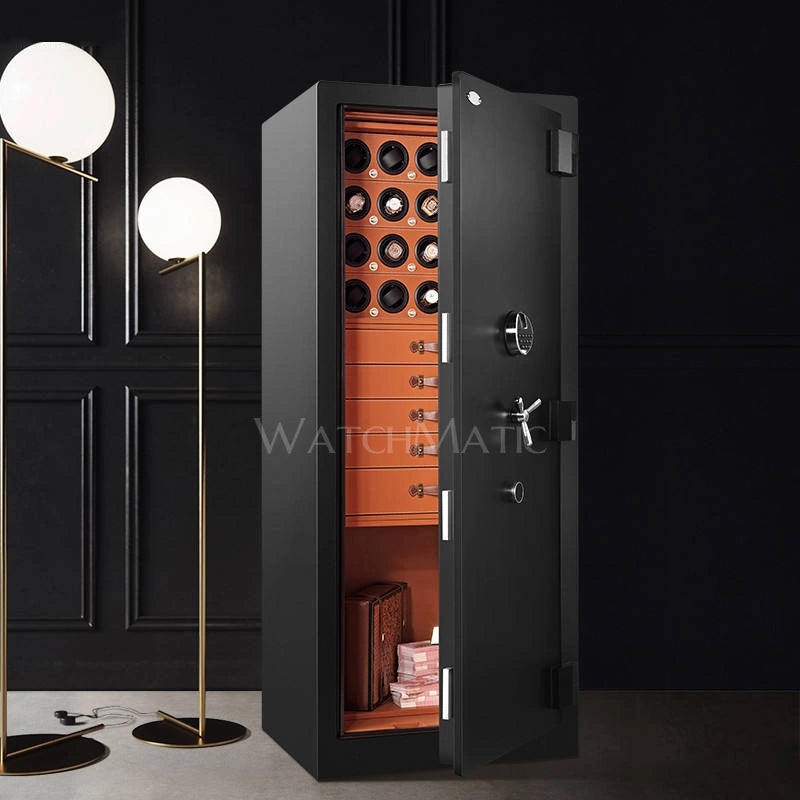
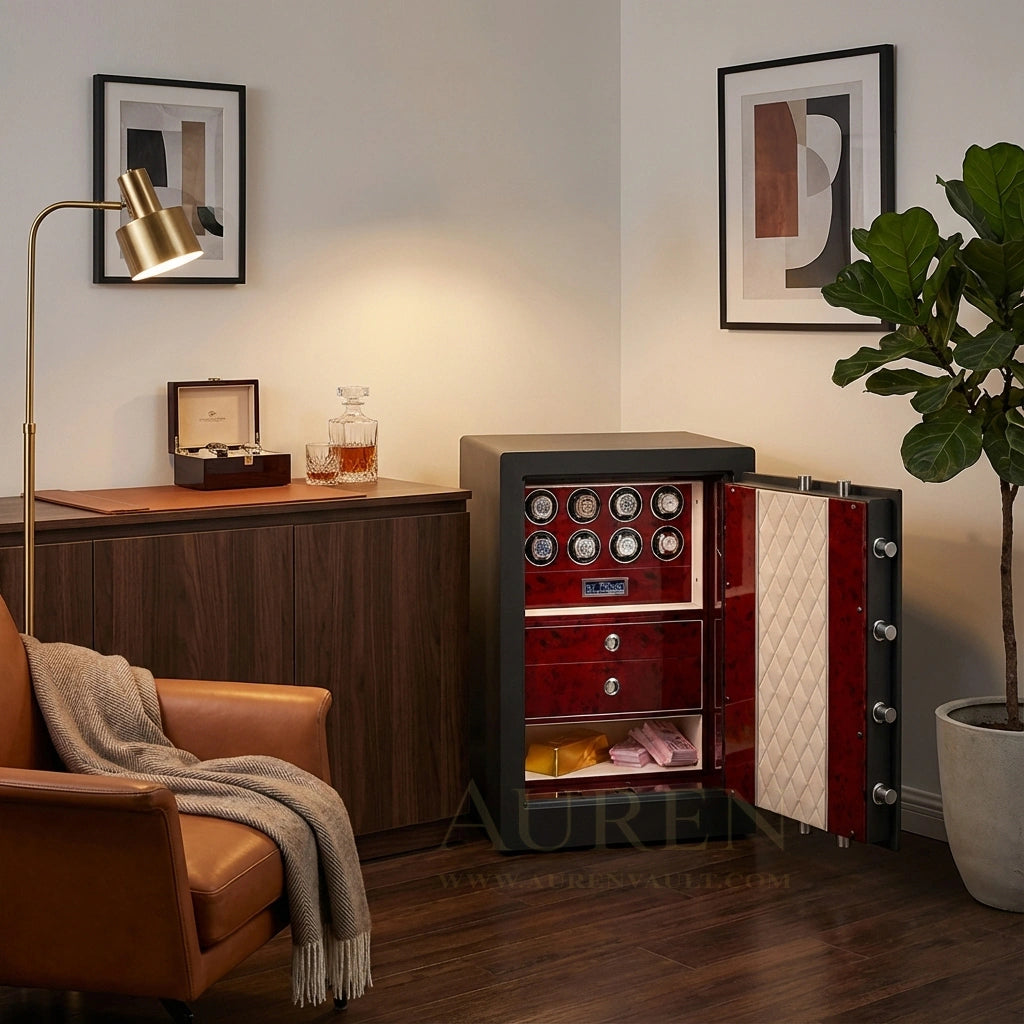
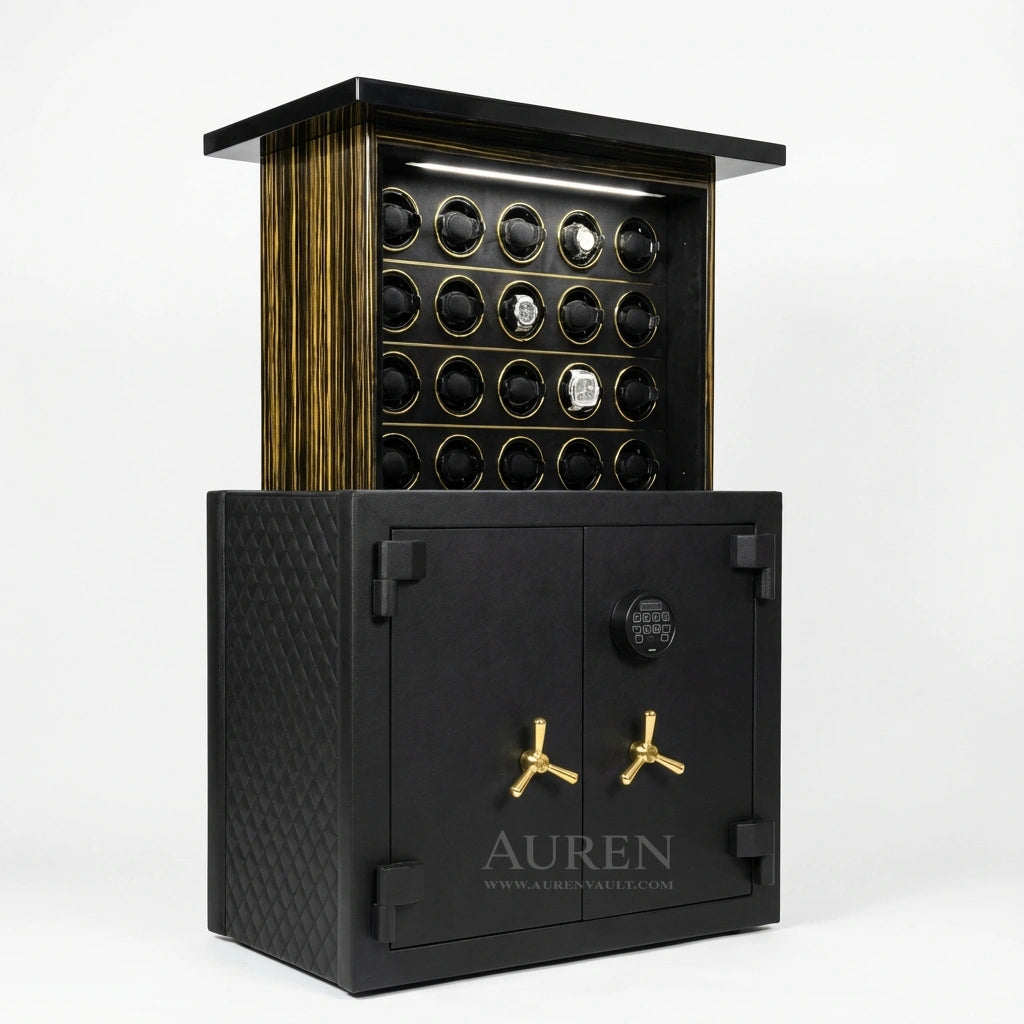
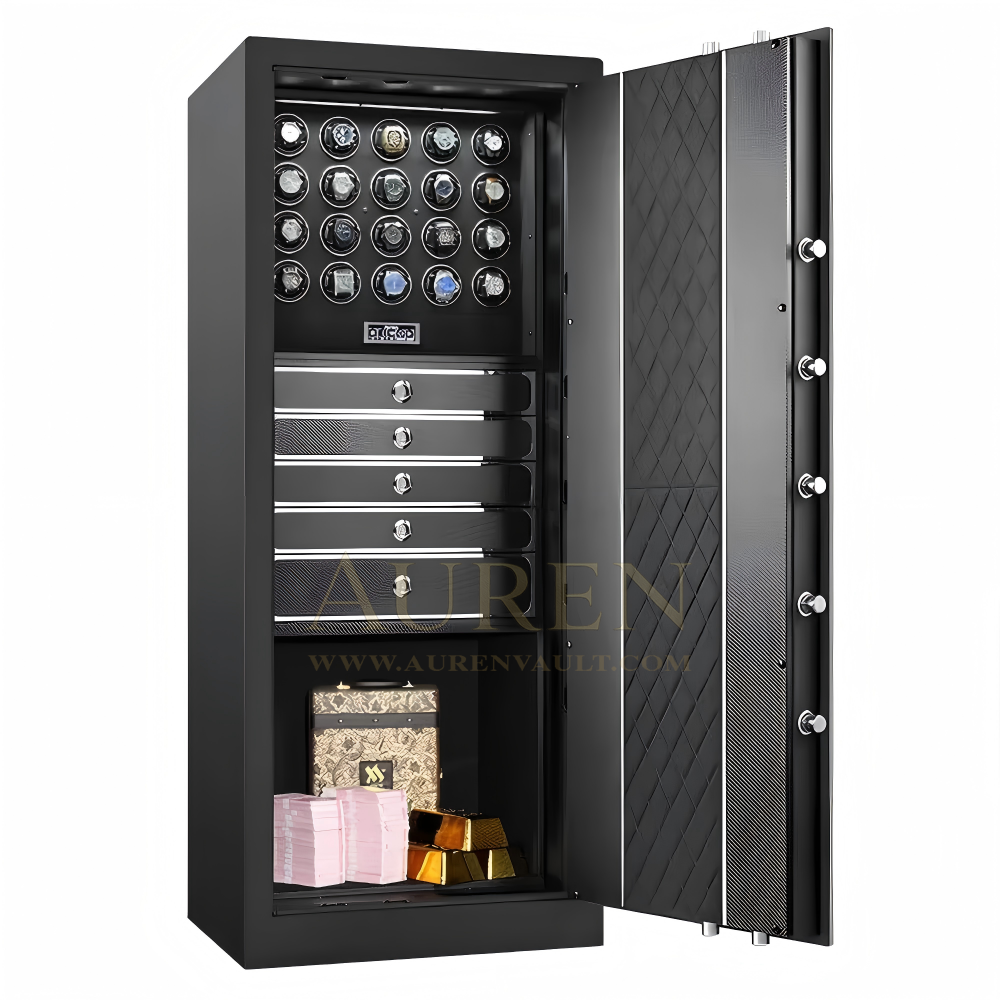
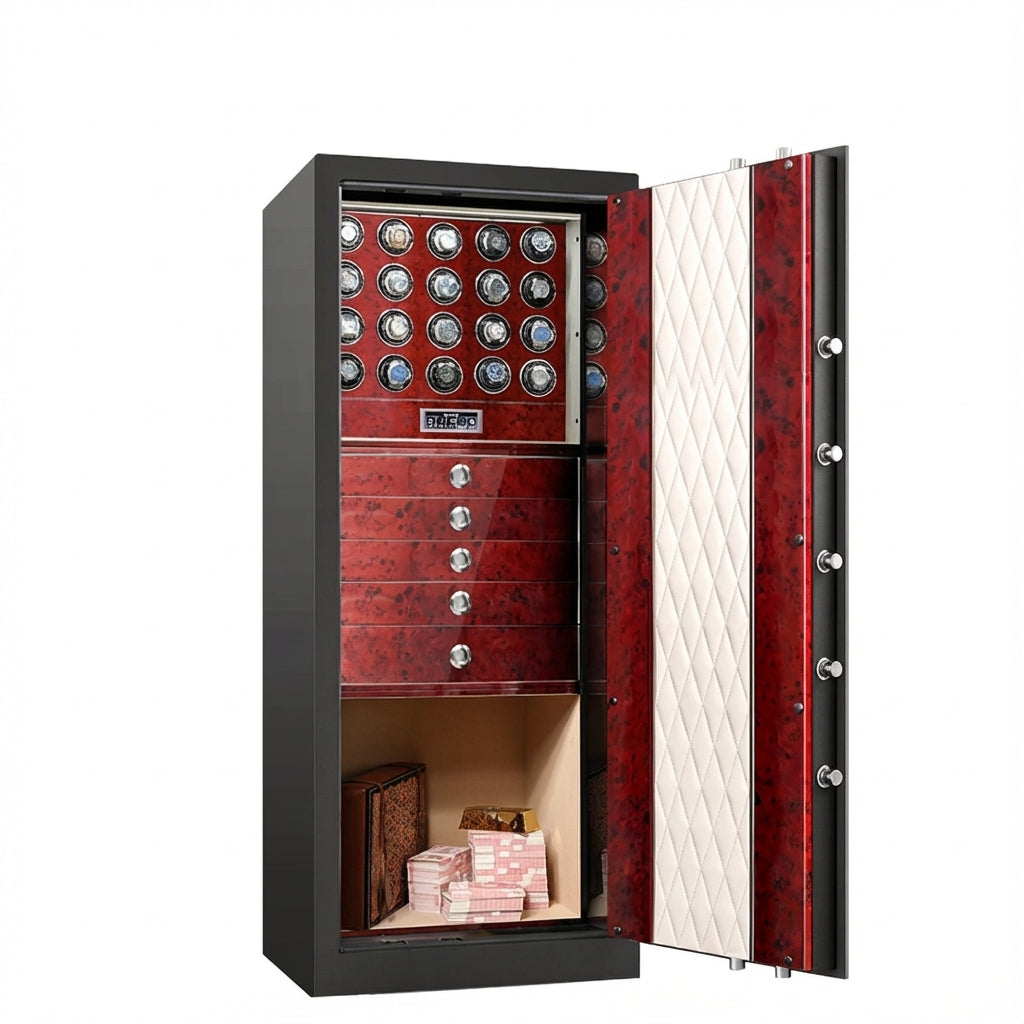
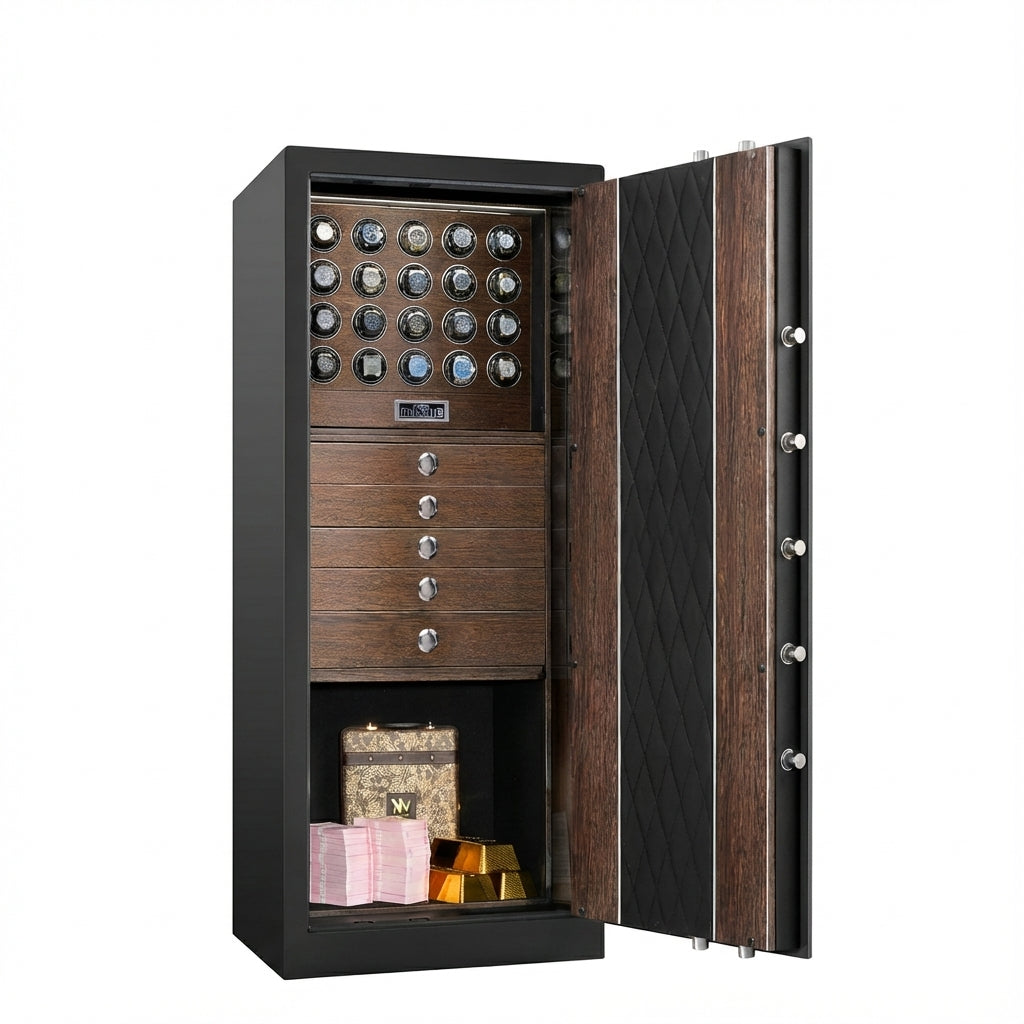
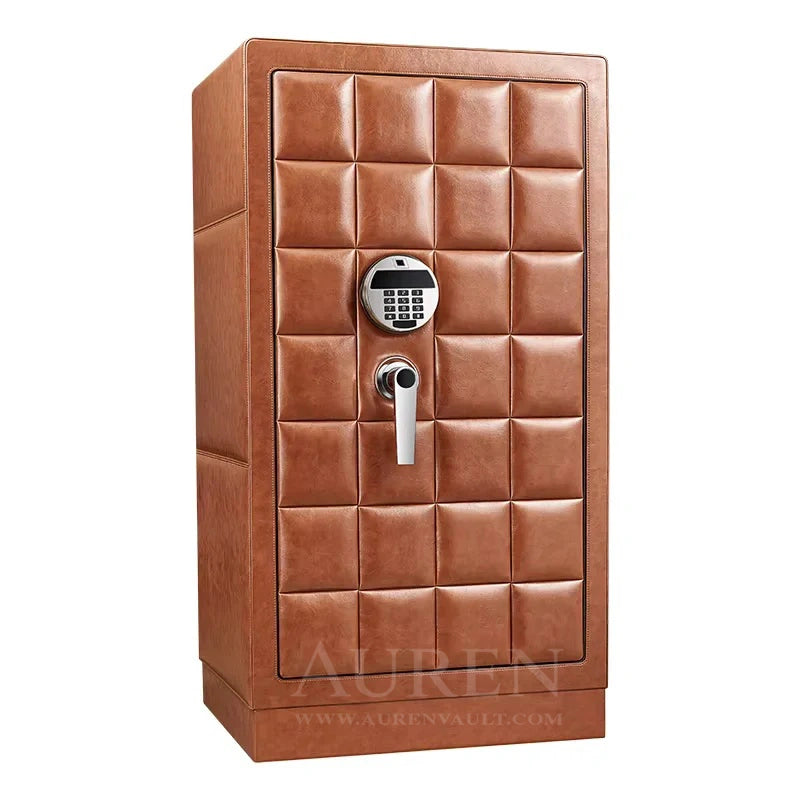
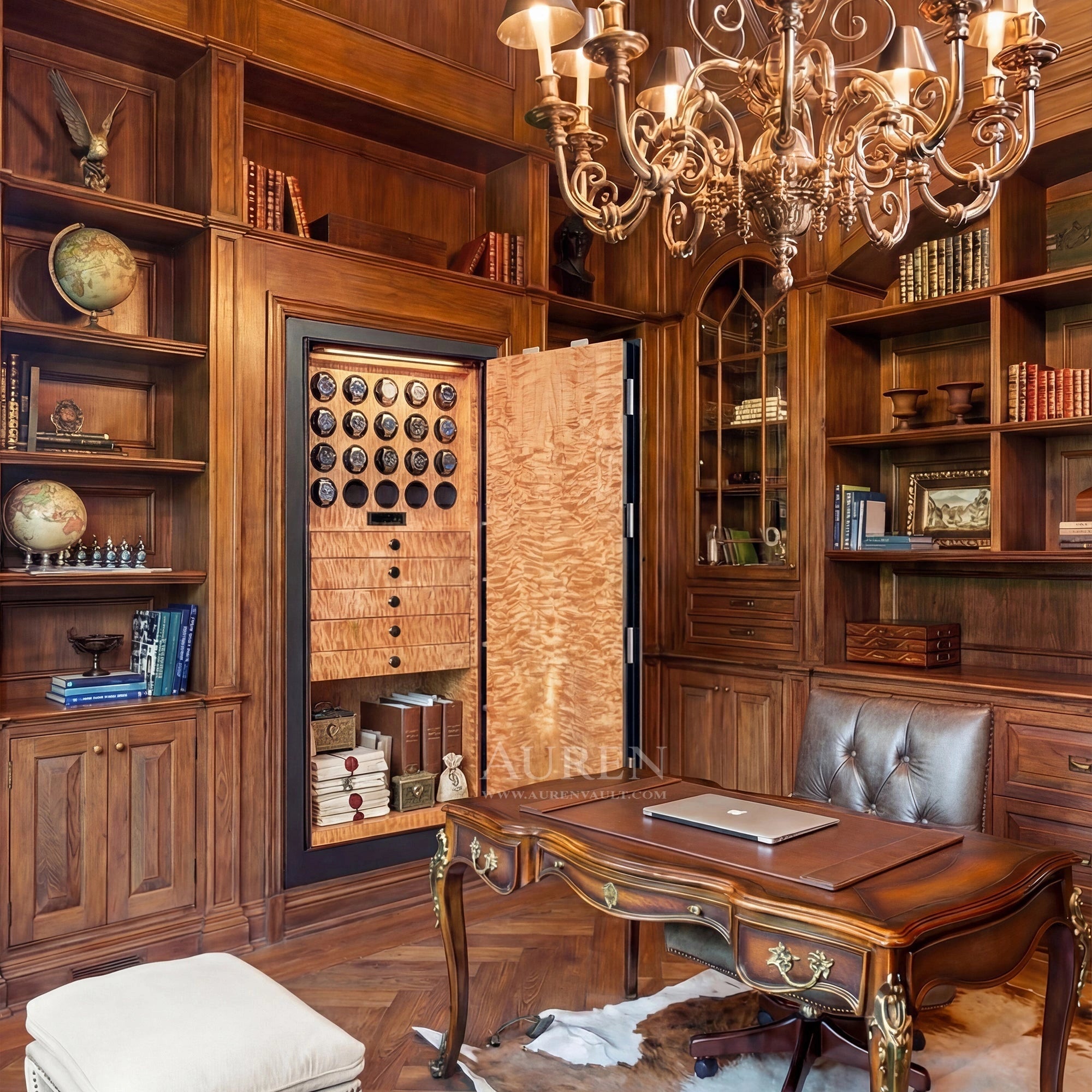
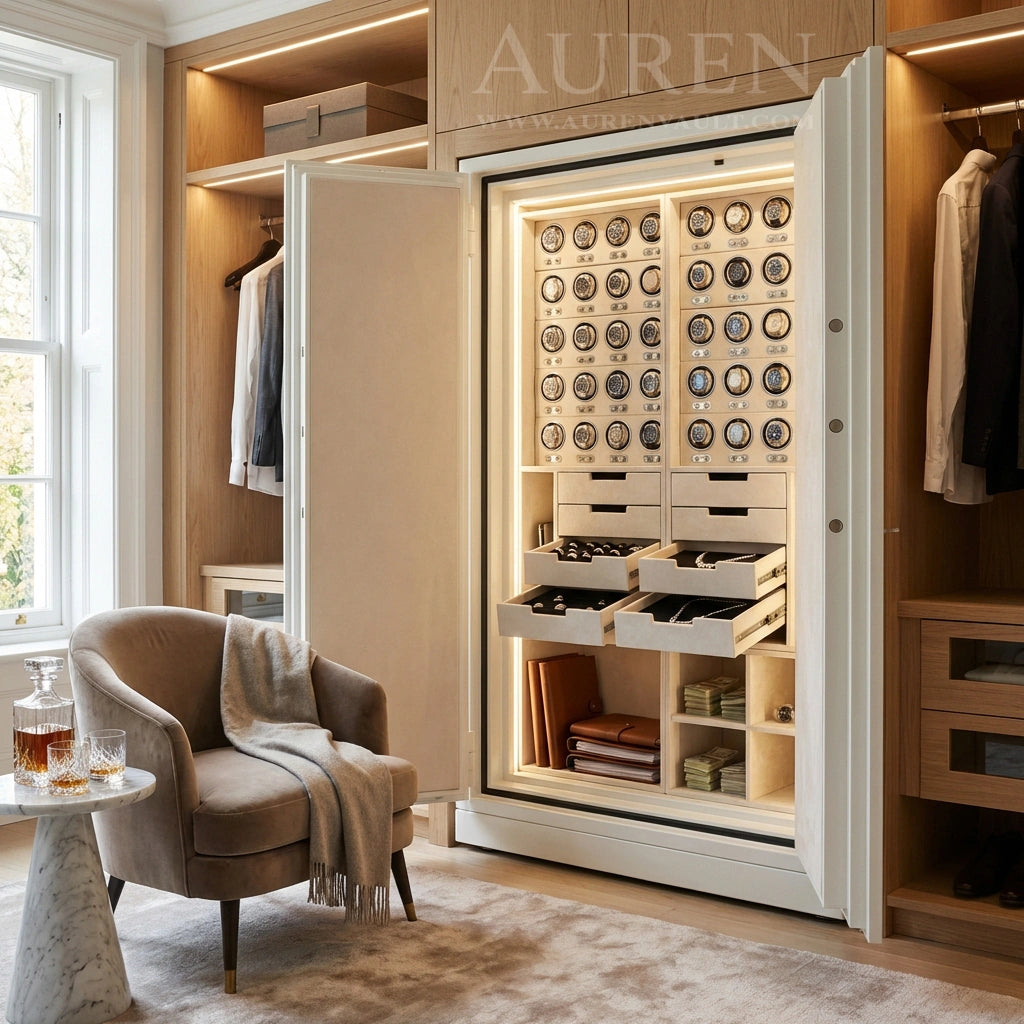
The value of an integrated watch winder safe becomes more apparent when several valuable watches require both winding and enclosed storage.
A standalone winder primarily addresses operating convenience.
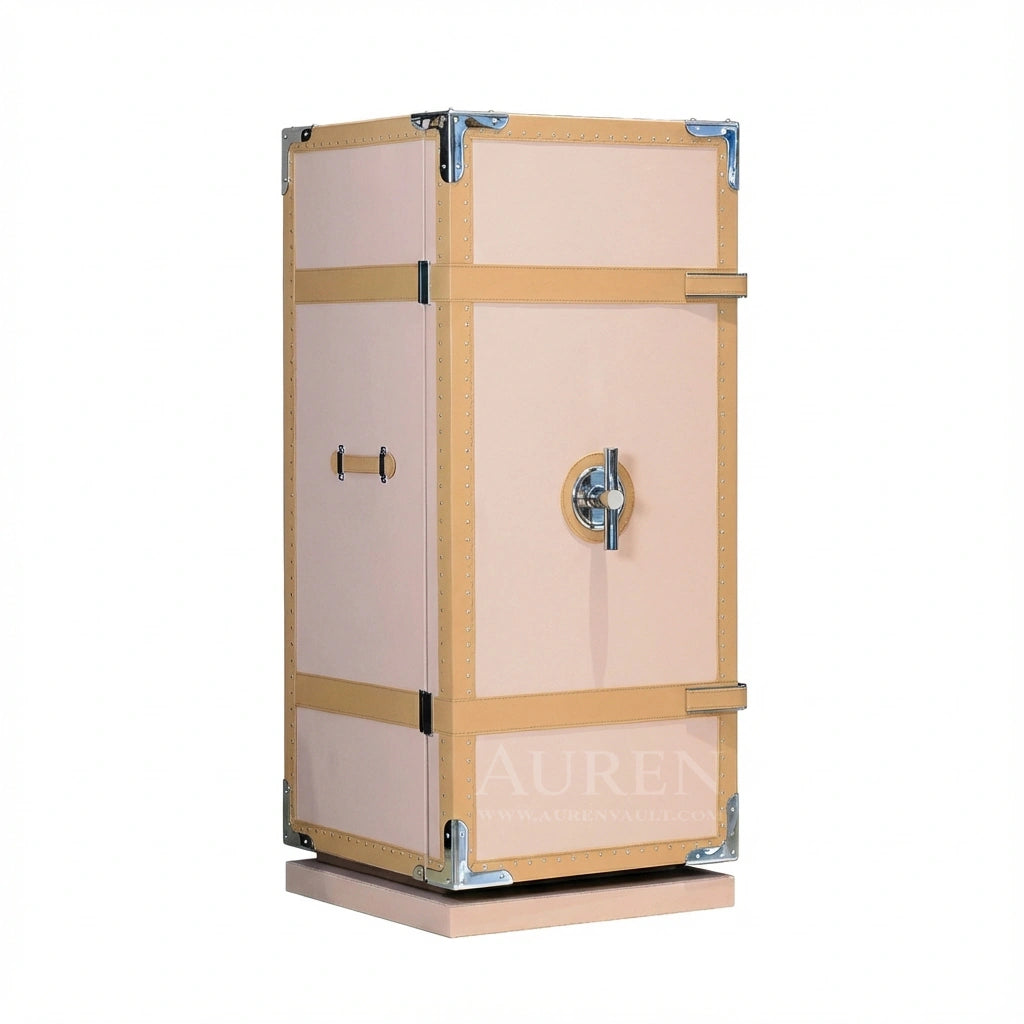
A watch winder safe combines automatic winding modules with a lockable enclosure.
| Ownership situation | Suitable approach | Main consideration |
|---|---|---|
| One regularly worn Alpine Eagle | No winder or compact programmable unit | Convenience |
| Two or three automatic L.U.C watches | Independently programmable multi-watch winder | Movement compatibility |
| Mixed Happy Sport automatic and quartz collection | Active winding plus passive storage | Correct movement allocation |
| Automatic perpetual calendar and sports watches | Separate programs for each calibre | Complication continuity |
| Larger valuable Chopard collection | Appropriately specified watch winder safe | Organization and physical security |
Collectors considering an integrated system can compare watch winder safes with programmable winding modules.
For more detail on combining winding functionality with enclosed storage, the watch winder safe guide provides a broader starting point.
The relevant security specifications must still be considered separately.
A lockable cabinet does not automatically establish a particular level of burglary or fire resistance.
Safe construction, locking mechanisms, installation requirements, and independently documented protective ratings should determine the level of security claimed.
Planning Storage for a Mixed Chopard Collection
Consider a collector with two Alpine Eagle watches, an L.U.C XPS, an L.U.C Perpetual Twin, a Mille Miglia Chronograph, an L.U.C Quattro, and two quartz Happy Sport watches.
That is an eight-watch collection.
However, only five watches require automatic winding positions.
The L.U.C Quattro is manually wound, and the two quartz Happy Sport watches do not benefit from active winding.
A cabinet with five programmable modules and three passive storage positions may therefore be more suitable than one with eight identical winding slots.
This is why total watch capacity and winding capacity should be evaluated separately.
The broader range of watch safes for valuable collections provides options for comparing these requirements.
For larger holdings, high-capacity luxury watch safe configurations may offer more space for watches, straps, and other accessories.
The objective is not to maximize the number of rotors.
It is to provide the correct storage environment for each watch.
When Bespoke Storage Becomes More Practical
Standardized interior layouts may not be ideal when a collection contains thin L.U.C watches, substantial sports chronographs, and jewelry watches with smaller cases.
Different cushion sizes and compartment clearances may be necessary.
A bespoke configuration can account for the number of automatic movements, passive storage needs, interior organization, and available installation space.
These requirements can be considered through custom watch safe design options, depending on the capabilities of the selected model.
For private residences and dressing rooms, practical planning should also address cabinet dimensions, electrical access, delivery requirements, and everyday usability.
A successful arrangement should make the collection easier to access and protect without unnecessary handling.
Does a Chopard Need to Remain on a Watch Winder Continuously?
No. An automatic Chopard does not need to remain running at all times simply because it is valuable or mechanically sophisticated.
When worn regularly, wrist movement can supply the necessary winding energy.
When unworn, the movement gradually releases its stored energy until it stops.
Allowing an automatic watch to stop during periods of non-use is generally a normal part of ownership.
The benefit of a winder is primarily convenience.
For an Alpine Eagle with a 60-hour reserve, the need may be modest if the watch is worn frequently.
For an L.U.C Perpetual Twin with a complex calendar, maintaining operation may reduce the inconvenience of repeated adjustment.
For watches stored over extended periods, physical protection, appropriate environmental conditions, and manufacturer-recommended servicing remain important.
The watch storage and care guide provides additional context for these broader requirements.
A winder should complement the owner's routine rather than replace proper maintenance.
Frequently Asked Questions About Chopard Watch Winders
What is the best TPD setting for Chopard watches?
There is no universal TPD setting for every Chopard. Independent databases frequently list approximately 800 TPD with bidirectional rotation for Alpine Eagle and several historical L.U.C automatic movements. Other Chopard chronographs may have different recommendations. Confirm the exact calibre and winder program before use.
Does a Chopard Alpine Eagle need a watch winder?
No. Automatic Alpine Eagle watches receive winding energy through normal wrist movement. A compatible winder is optional and primarily useful when the watch is not worn regularly.
What is the difference between Alpine Eagle 41 and 36 winding requirements?
Representative Alpine Eagle 41 models use calibre 01.01-C with a 60-hour reserve. Alpine Eagle 36 references commonly use calibre 09.01-C with a 42-hour reserve. Both are automatic, but their winding programs should be confirmed separately rather than inferred from size.
Can an L.U.C micro-rotor watch use a winder?
Yes. The L.U.C 96.01-L uses an automatic micro-rotor system. A compatible winder can maintain its power reserve, but the micro-rotor's compact size does not automatically establish a higher TPD requirement.
Does an L.U.C Quattro need a watch winder?
No. The L.U.C Quattro Mark IV uses a manually wound movement with approximately nine days of power reserve. Its mainspring must be wound manually according to Chopard's instructions.
Can a Chopard Happy Sport use a watch winder?
Only if it contains an automatic movement. Certain Happy Sport watches use calibre 09.01-C, while other references are quartz-powered. Always check the exact reference before using a winder.
Does a Mille Miglia Chronograph need more TPD?
Not necessarily. A chronograph complication does not independently establish a higher winding requirement. The correct setting depends on the movement's automatic winding mechanism and the specific reference.
Is a watch winder useful for an L.U.C perpetual calendar?
Yes. Maintaining an automatic perpetual calendar's operating reserve can reduce the need for complicated resetting after the watch stops. The winder must still be configured for the correct calibre.
Can a watch winder damage a Chopard?
A compatible winder with appropriate programming and secure watch support should be suitable for an automatic Chopard. Problems may arise from incorrect settings, poor cushion fit, defective equipment, or improper handling. A winder does not replace professional servicing.
Related Reading: Watch Winder Settings and Luxury Watch Storage
Chopard's combination of automatic micro-rotor movements, manually wound calibres, and complicated mechanical watches makes movement-specific winding especially relevant. These related guides explore similar considerations across other luxury watch collections.
Best Watch Winder for Vacheron Constantin Watches
Explore winding requirements, movement compatibility, and storage decisions for Vacheron Constantin automatic watches.
Best Watch Winder Settings for Patek Philippe Watches
Understand how automatic movements, winding direction, and mechanical complications influence watch winder selection.
Watch Safes With Built-In Watch Winders: Are They Worth It?
Compare standalone watch winders with integrated storage solutions designed for valuable automatic watch collections.
Final Perspective: The Right Chopard Winder Begins With the Movement
Chopard's movement diversity makes it important to select a watch winder according to the individual calibre rather than the collection name.
An Alpine Eagle 41, an L.U.C micro-rotor, and a Mille Miglia chronograph can all benefit from automatic winding, but their settings should not automatically be considered identical.
An L.U.C Quattro or quartz Happy Sport requires a different approach entirely.
For a single automatic watch, correct programming, reliable operation, and secure physical support remain the priorities.
For a growing collection, independent winding modules and appropriate passive storage become equally valuable.
As a specialist in premium watch safes and integrated winding solutions, Auren Vault approaches these requirements through configurations intended to balance mechanical compatibility, collection organization, and enclosed protection.
The best watch winder for Chopard is the one that maintains the movement's power reserve reliably, accommodates the watch without unnecessary stress, and makes everyday ownership more convenient.