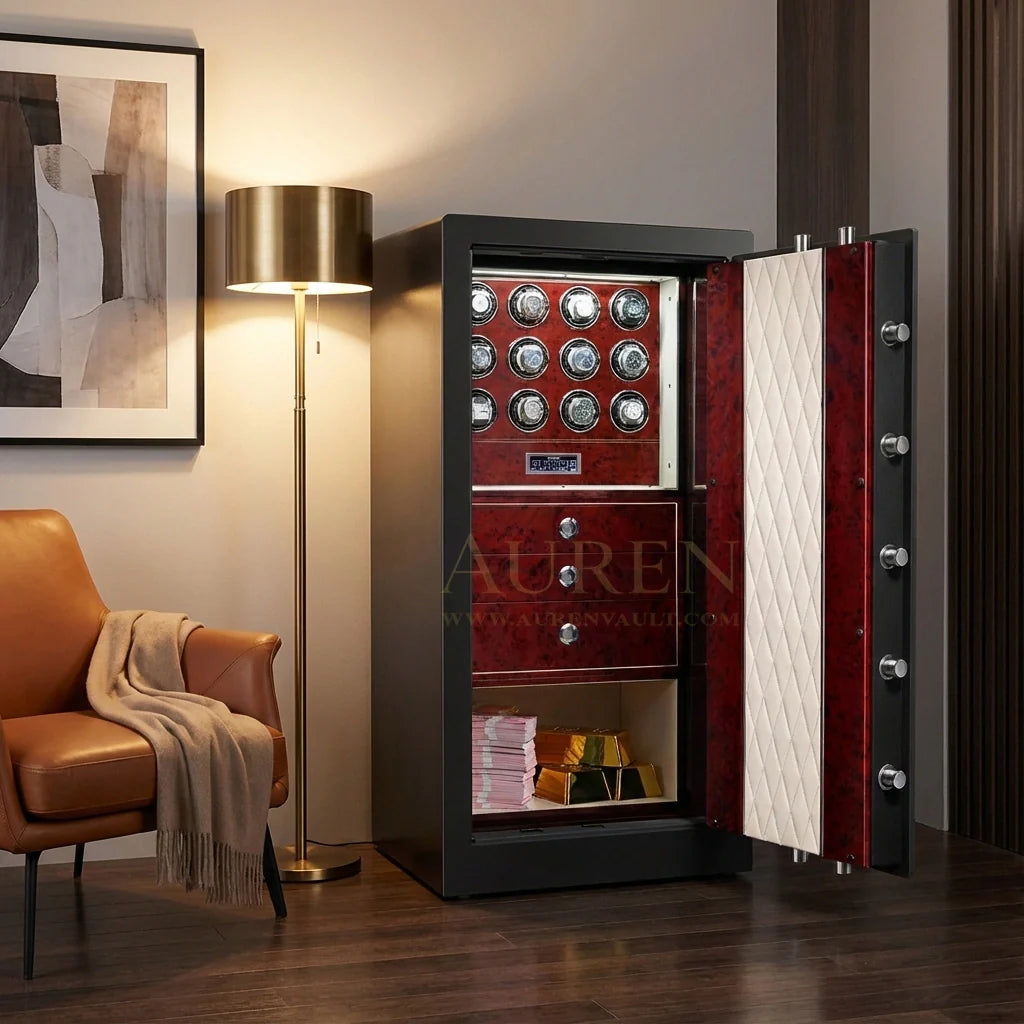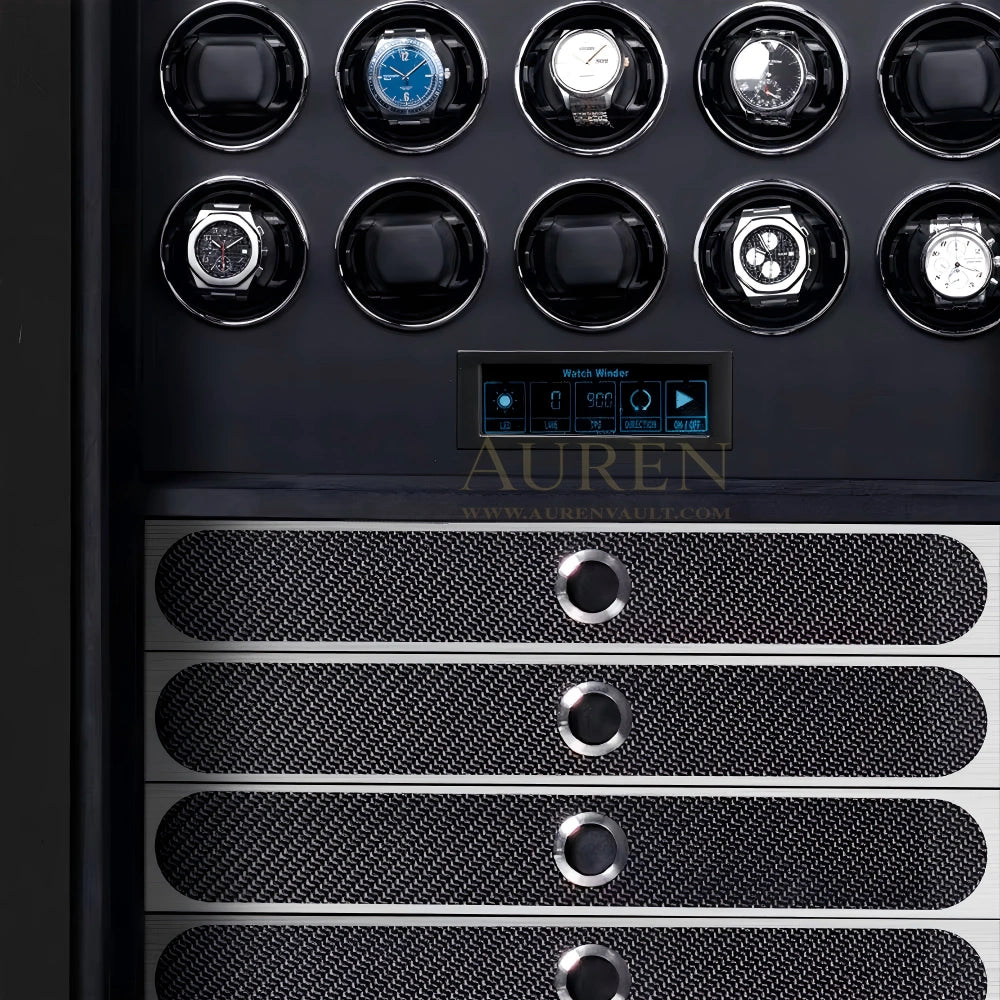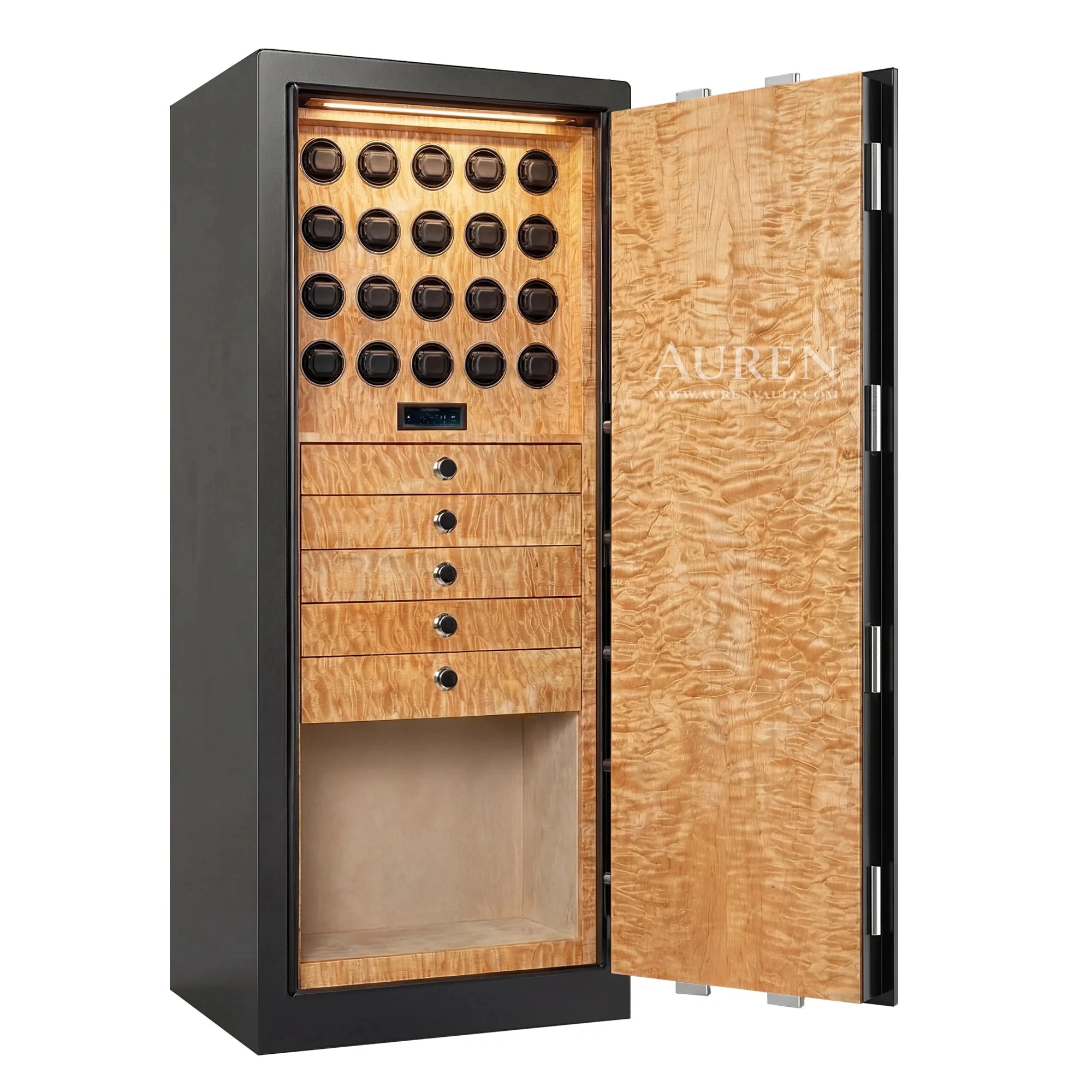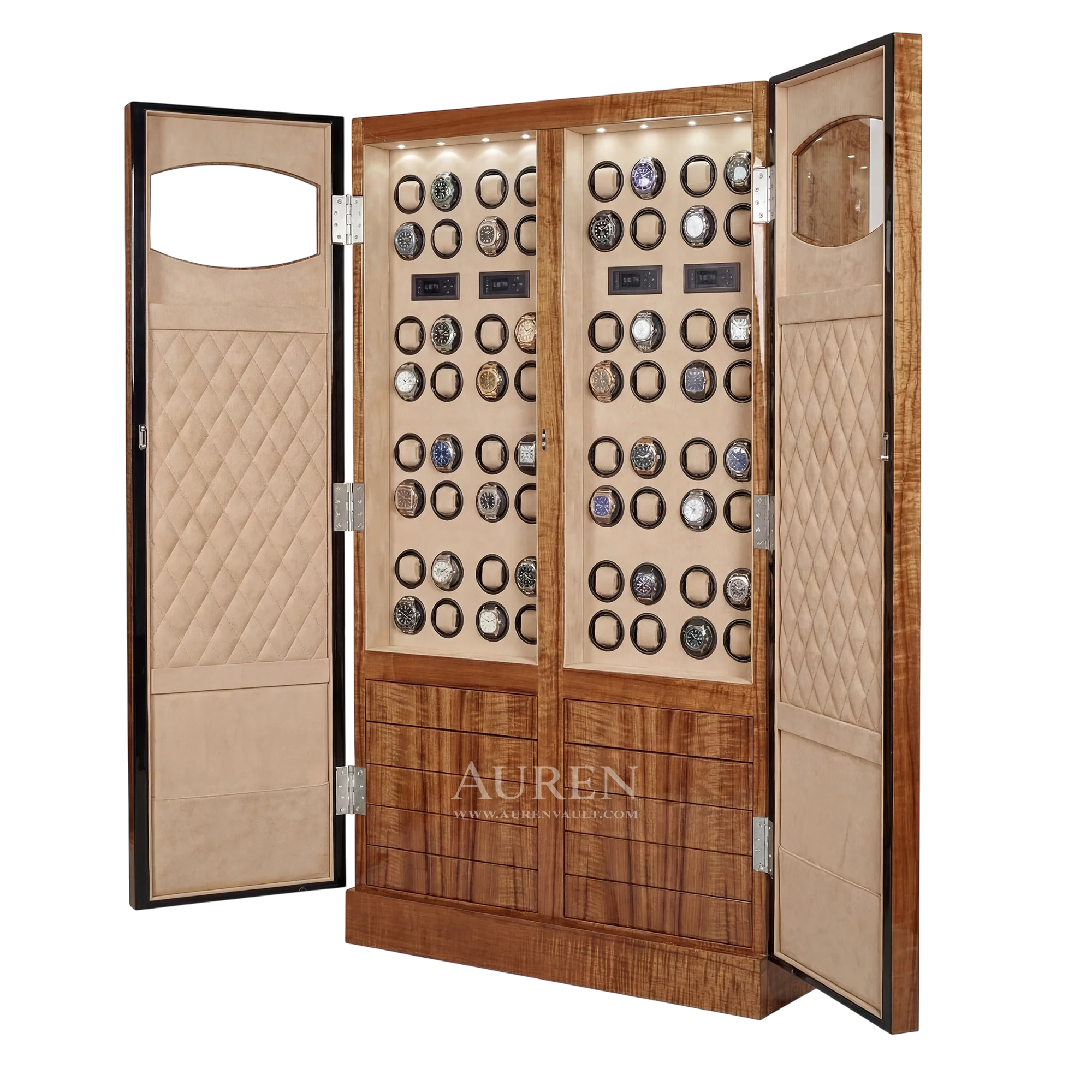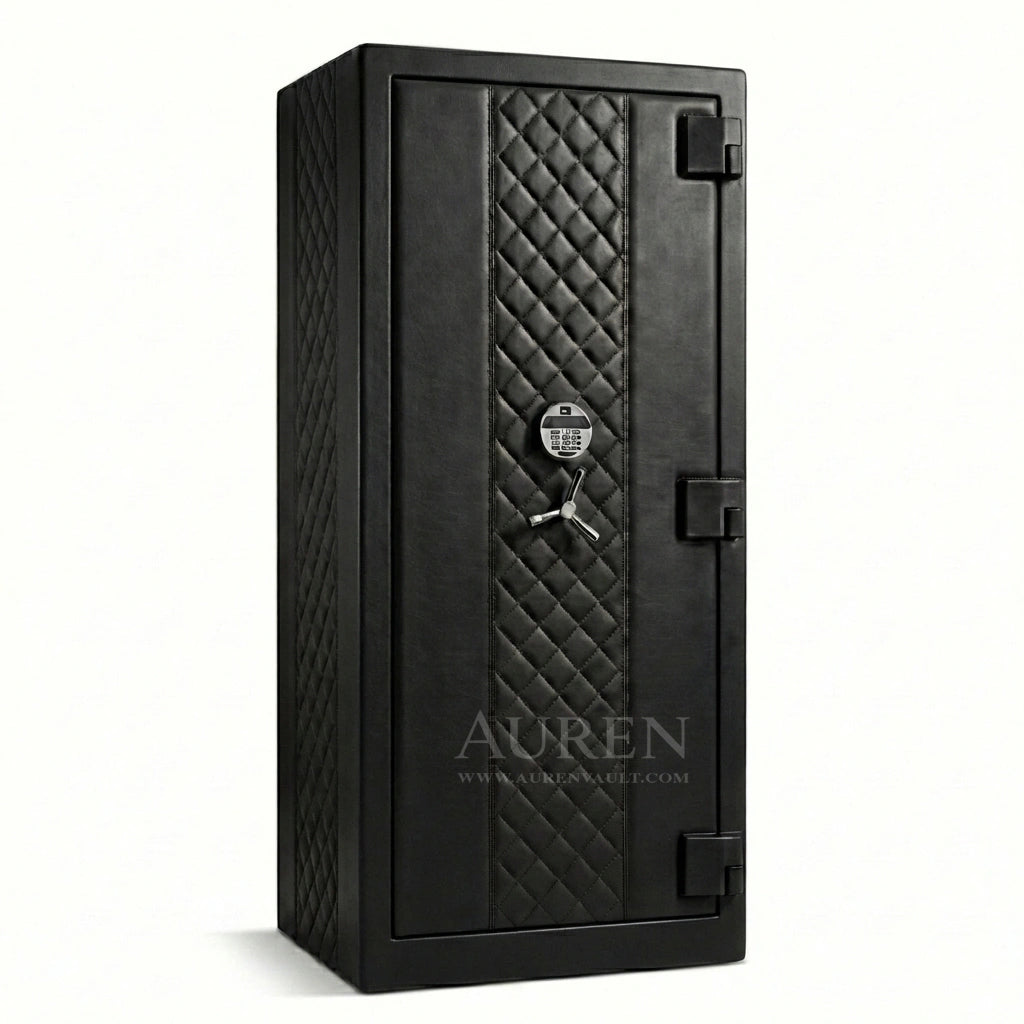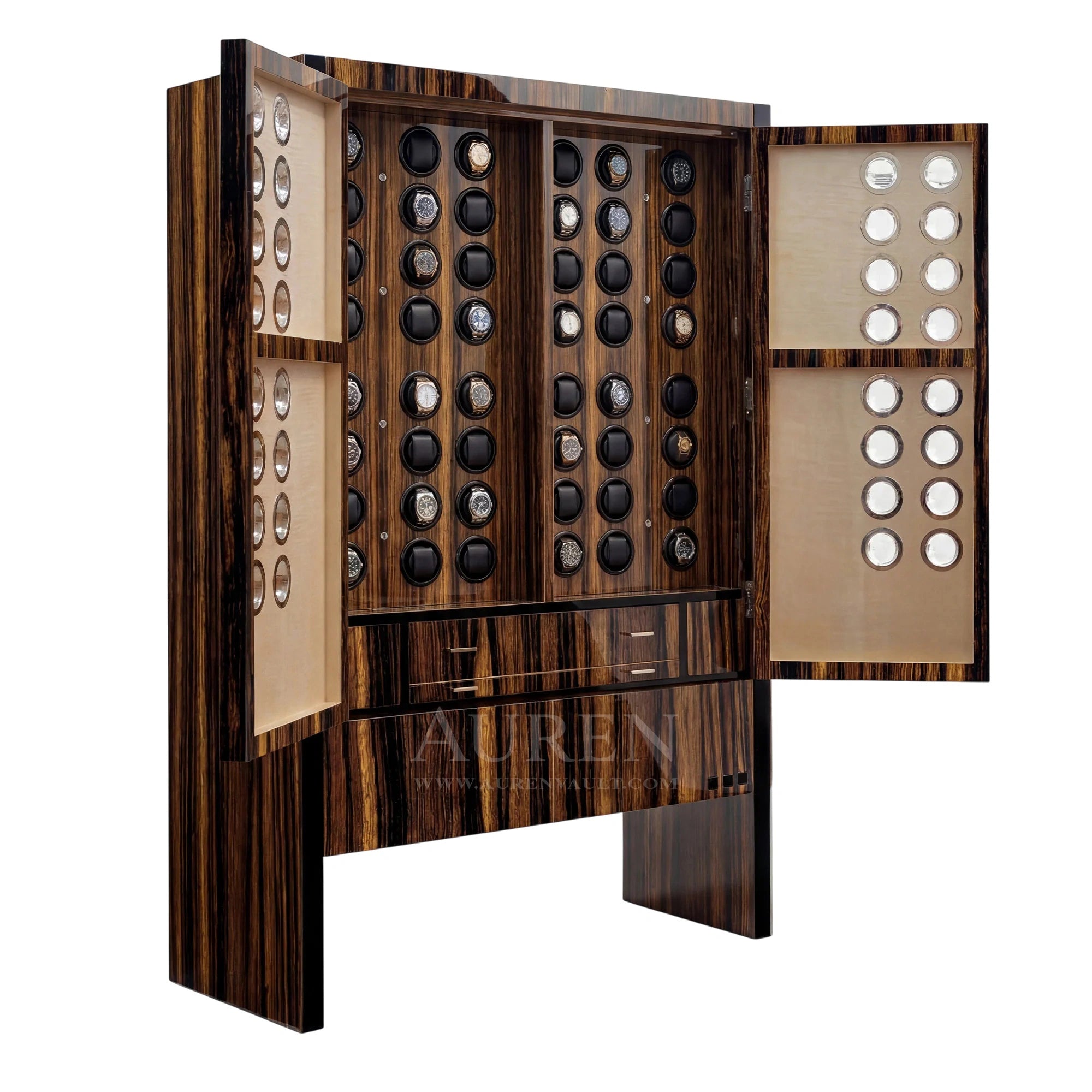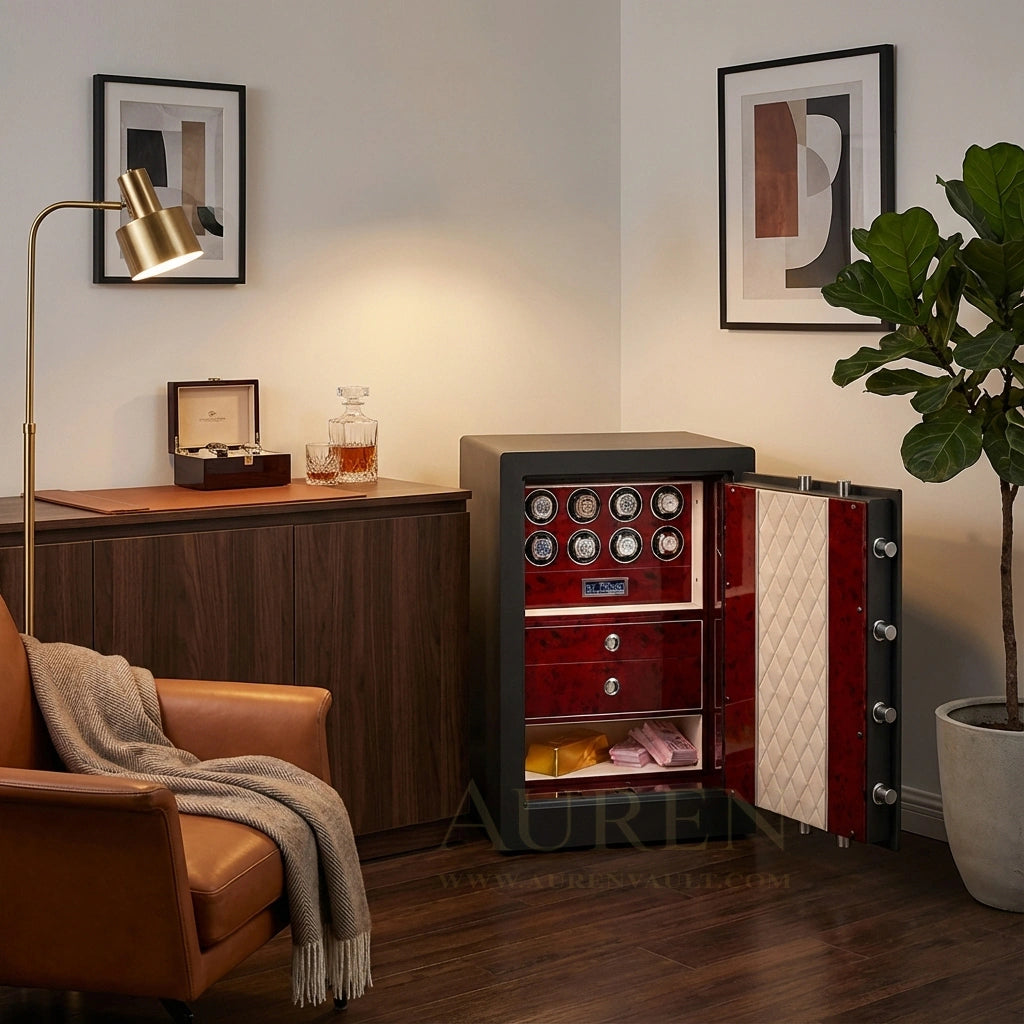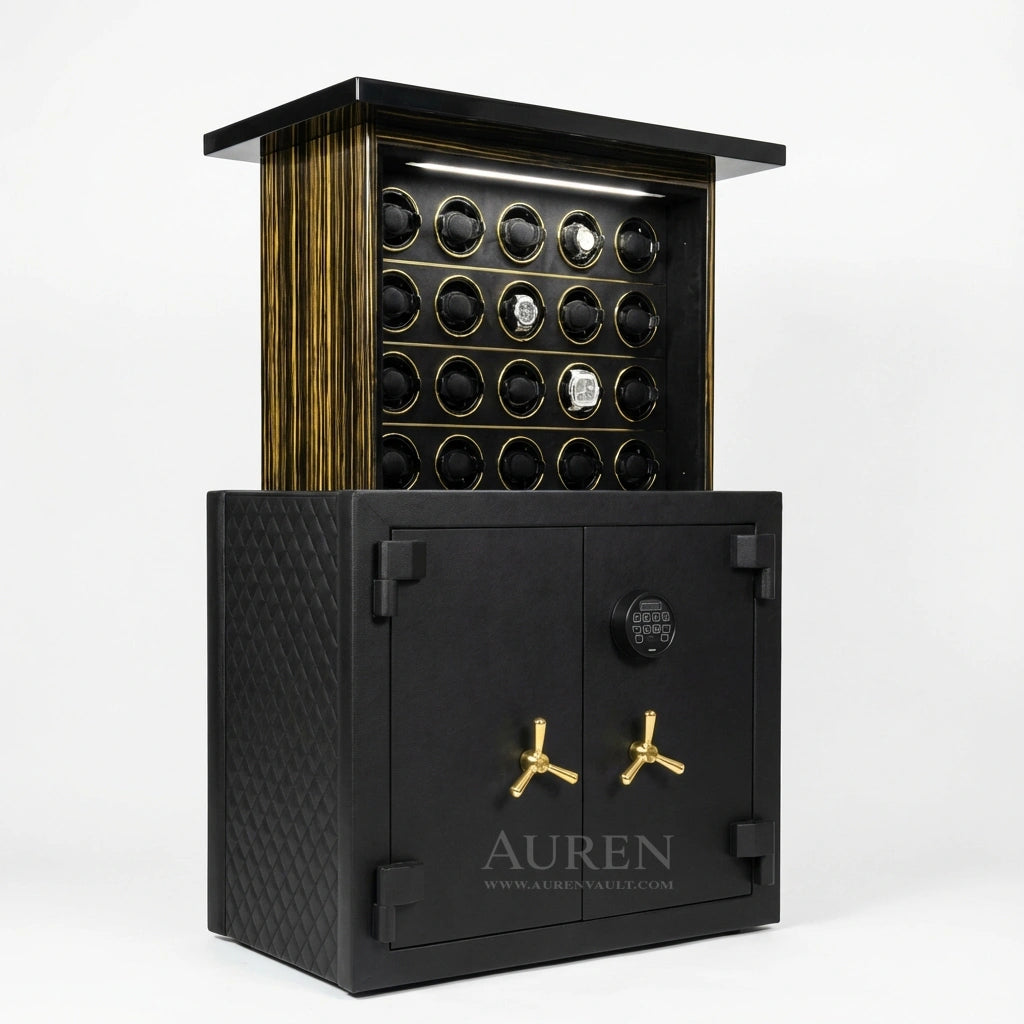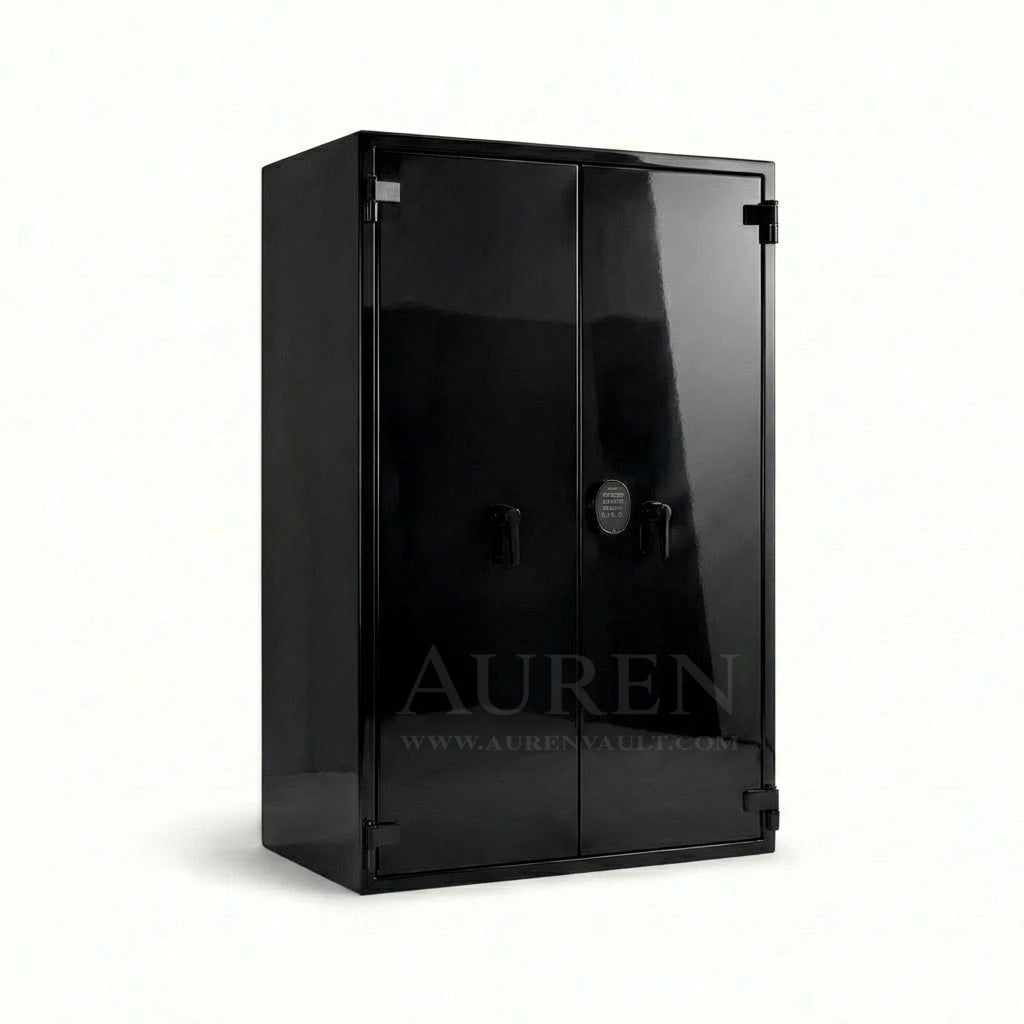
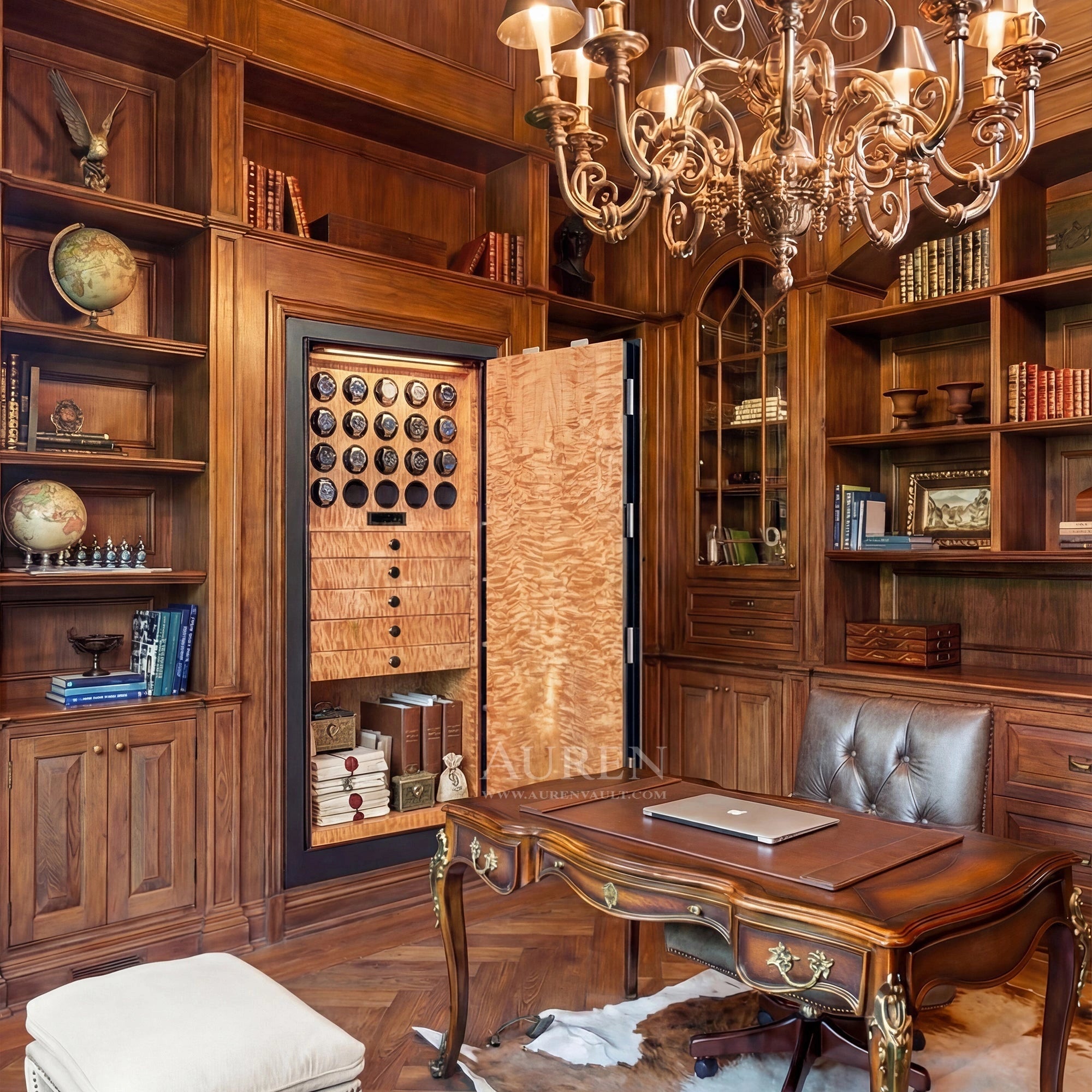
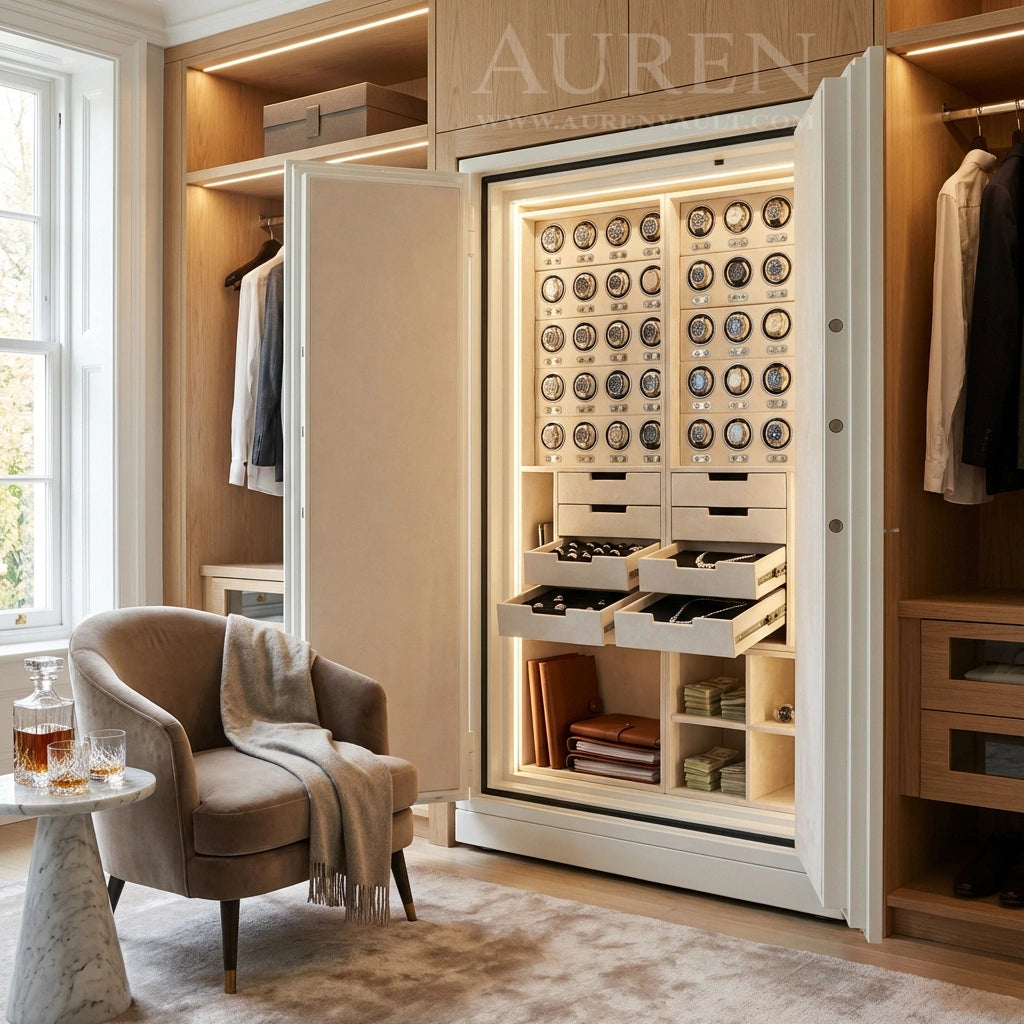

The lock system is one of the most critical components of a watch safe because it determines how collectors access and secure valuable timepieces. Modern luxury safes typically use three primary lock technologies: biometric fingerprint locks, electronic keypad locks, and mechanical combination locks.
A watch safe lock system is the access control mechanism that secures the safe while preventing unauthorized entry.
The most common lock types used in luxury safes include:
- Biometric locks – fingerprint-based access systems
- Electronic keypad locks – digital passcode entry
- Mechanical combination locks – traditional dial-based security systems
Each system offers different advantages. Biometric and keypad locks prioritize convenience and fast access, while mechanical combination locks are valued for their long-term reliability.
Some modern watch safes combine multiple lock technologies into a single integrated security system, allowing collectors to benefit from both convenience and redundancy when accessing their safes.
Why Lock Systems Matter in Watch Safes
The lock system is the primary interface between the collector and the safe’s security structure. Even the most robust safe construction relies on the lock to control daily access.
High-end watch safes are engineered with reinforced steel bodies, multi-point locking bolts, and complex door mechanisms designed to resist forced entry. Some safes are also tested under European burglary resistance standards such as Grade G1 or Grade G3, which evaluate how long a safe can resist attack tools during controlled testing.
While the structural design of the safe provides physical protection, the lock system ensures that only authorized users can access the contents.
Collectors researching secure storage often begin by learning what a watch safe is and how security safes differ from simple storage cabinets.
Biometric Safe Locks
Biometric locks use fingerprint recognition technology to control access to a safe.
Instead of entering a code or turning a dial, the user simply scans a registered fingerprint. The system compares the fingerprint against stored data and unlocks the safe if the match is confirmed.
Common features of biometric locks include:
- fingerprint recognition sensors
- memory for multiple authorized users
- fast unlocking speeds
For collectors who access their safes frequently, biometric locks provide one of the fastest entry methods.
However, biometric systems rely on electronic components and power sources. For this reason, many safes include backup access systems such as keypad entry or mechanical locks.
Electronic Keypad Locks
Electronic keypad locks are among the most widely used lock systems in modern luxury safes.
These locks operate using a digital keypad that allows the user to enter a passcode. When the correct code is entered, the safe’s locking mechanism releases.
Advantages of keypad locks include:
- customizable passcodes
- relatively fast access
- simple operation
Because keypad locks combine convenience with reliable electronic control systems, they are commonly used in safes designed for valuable items such as watch collections.
Collectors exploring secure storage options often consider high-end watch safes designed specifically for luxury watches.
Mechanical Combination Locks
Mechanical combination locks represent the traditional safe locking mechanism used for decades in high-security safes.
These locks require the user to rotate a dial through a precise sequence of numbers. When the correct combination is entered, internal components align and allow the safe to open.
Key characteristics of mechanical locks include:
- dial-based combination entry
- no electronic components
- long operational lifespan
Because mechanical locks do not rely on batteries or electronics, they are often valued for their reliability and durability.
However, they typically require more time to open compared with electronic lock systems.
Integrated Lock Systems in Modern Watch Safes
Many modern luxury safes combine multiple lock technologies into a single integrated access system. This approach allows collectors to enjoy the convenience of electronic access while maintaining the reliability of traditional mechanical locks.
Certain manufacturers, including Auren, integrate advanced lock systems from Securam, a well-known safe lock manufacturer used in high-end security safes.
In these configurations, the safe may incorporate:
- a biometric fingerprint lock for rapid access
- an electronic keypad lock for passcode entry
- a mechanical combination lock as an independent backup system
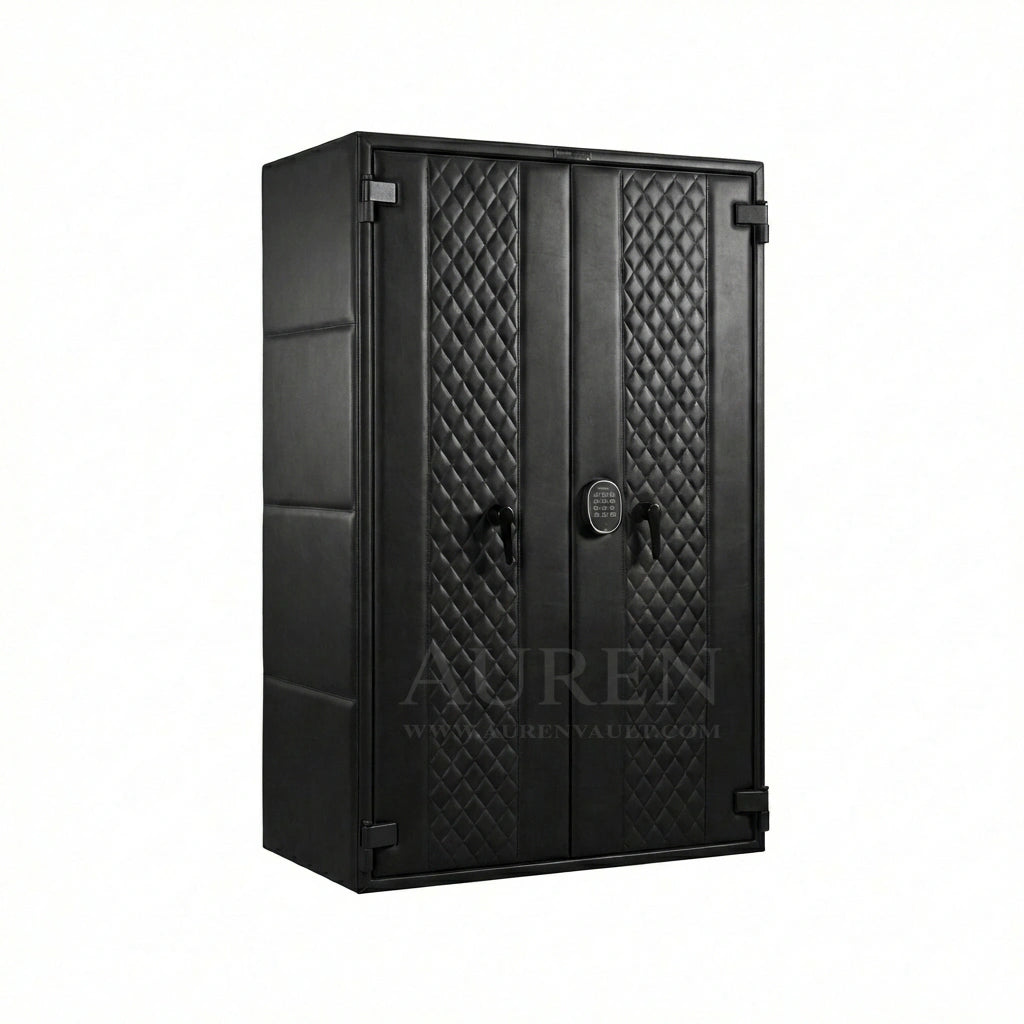
The biometric and keypad controls are often integrated into a single electronic lock interface, allowing collectors to choose either fingerprint or passcode access.
A mechanical combination dial is typically positioned separately beneath the electronic interface. This layout provides a redundant access method that remains functional even if electronic components lose power.
From a design perspective, combining the biometric and keypad systems into a unified interface also helps maintain a clean and balanced aesthetic on the safe door, which is particularly important for luxury watch safes installed in visible areas such as dressing rooms or private offices.
By integrating these three access methods into a cohesive system, modern watch safes provide collectors with both convenience and long-term reliability.
Comparing Safe Lock Types
Collectors choosing a watch safe often compare lock systems based on convenience, reliability, and access speed.
| Lock Type | Convenience | Reliability | Access Speed |
|---|---|---|---|
| Biometric Lock | Very High | Moderate | Very Fast |
| Electronic Keypad | High | High | Fast |
| Mechanical Combination | Moderate | Very High | Slower |
Because each lock type offers different advantages, many collectors prefer safes that combine multiple locking options within a single security system.
Lock Systems and Overall Safe Security
While lock systems play an important role, they represent only one component of a safe’s overall security design.
Other structural features also contribute to safe protection, including:
- reinforced steel construction
- multi-point locking bolts
- hardened door plates
- internal barrier materials
Safes tested under European burglary resistance standards such as Grade G1 or Grade G3 undergo controlled testing designed to simulate forced entry attempts.
Collectors interested in understanding the risks associated with unsecured storage often explore why luxury watches are targeted by thieves when evaluating security options.
Fire Protection in Modern Watch Safes
In addition to burglary resistance, many luxury watch safes incorporate fire-resistant insulation systems.
Certain safes are tested under European fire-resistance standards such as:
- EN 15659 – LFS 30 P
- EN 15659 – LFS 60 P
These certifications evaluate whether the safe maintains safe internal temperatures during controlled fire exposure.
For collectors storing valuable watches at home, combining fire resistance with secure locking systems provides additional protection.
Real-World Considerations for Watch Collectors
Collectors often select lock systems based on how frequently they access their safes.
Collectors who open their safes regularly may prefer biometric or keypad locks for convenience, while others value the long-term reliability of mechanical combination locks.
Integrated systems that combine multiple lock technologies allow collectors to choose the access method that best fits their daily usage.
Certain manufacturers, including Auren, design watch safes with integrated Securam lock systems that combine biometric and keypad access while retaining a mechanical combination backup. This configuration allows collectors to enjoy fast electronic access while maintaining traditional mechanical reliability.
Conclusion
Watch safe lock systems play a critical role in protecting valuable watch collections.
Biometric locks provide fast fingerprint access, keypad locks offer flexible passcode control, and mechanical combination locks are valued for their durability and independence from electronics.
Many modern luxury watch safes combine these technologies into a single integrated locking system, providing collectors with both convenience and redundancy.
By understanding how these lock systems work, collectors can choose storage solutions that balance security, reliability, and ease of use.