
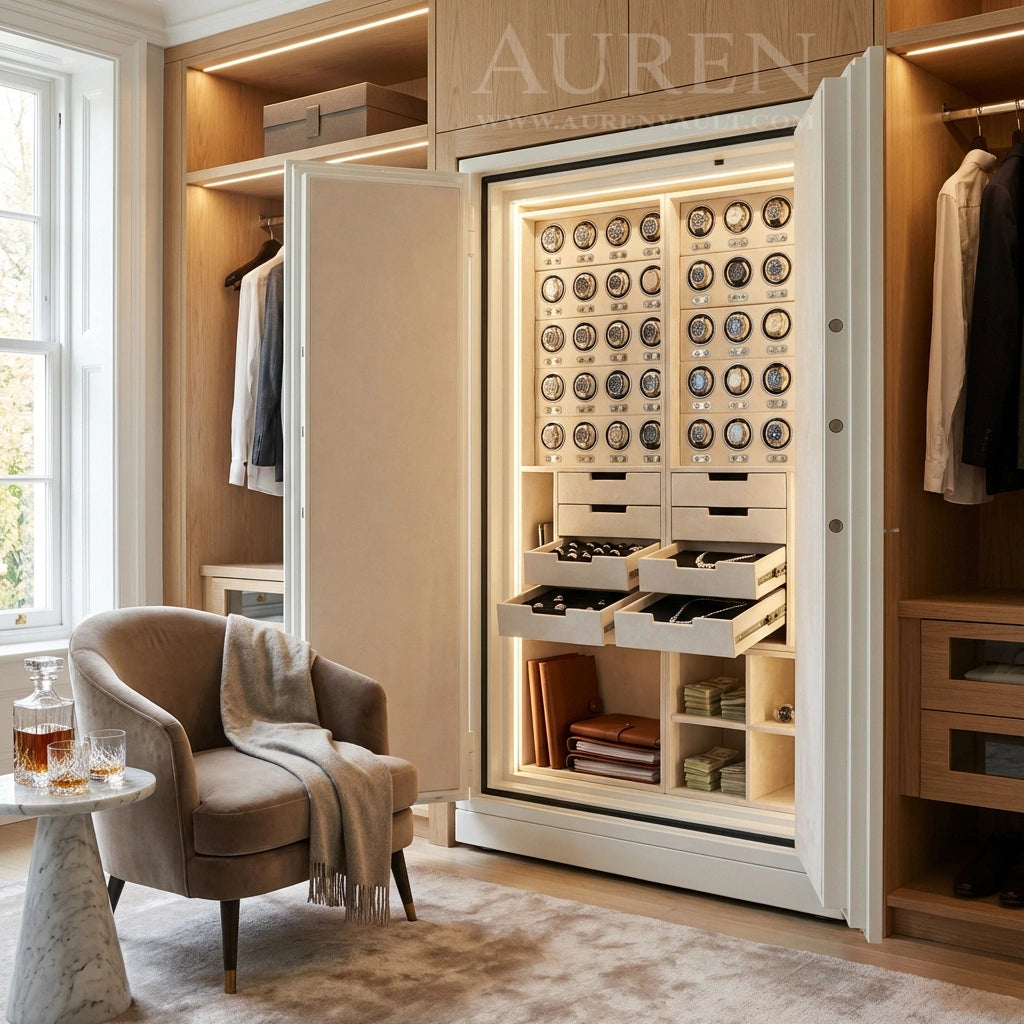

Many collectors assume that luxury safes are completely fireproof, but in reality most safes are designed to be fire-resistant rather than fully fireproof. The difference lies in how safes are engineered and tested to withstand extreme heat during a fire.
A fire-resistant safe is a security safe designed to protect its contents from high temperatures for a limited period of time during a fire. Instead of preventing heat entirely, these safes slow down heat transfer to keep internal temperatures below levels that could damage sensitive items.
Modern watch safes may include:
- multi-layer steel construction
- fire-resistant insulation materials
- fire certification under standards such as EN 15659 LFS 30 P or LFS 60 P
For collectors storing valuable watches at home, fire-resistant safes provide an additional layer of protection against fire exposure while also offering burglary-resistant storage.
Fireproof vs Fire-Resistant: Understanding the Difference
The term “fireproof safe” is commonly used in marketing, but in technical terms, most safes are actually fire-resistant.
A truly fireproof container would theoretically prevent heat from entering completely. In practice, no residential safe can guarantee complete protection from extreme temperatures indefinitely.
Instead, safe manufacturers design safes to resist fire for a specific period of time, allowing the contents to remain protected during the early stages of a building fire.
This approach is why safes are tested and rated according to fire resistance duration, rather than being described as permanently fireproof.
How Fire-Resistant Safes Are Tested
Fire-resistant safes undergo controlled laboratory testing designed to simulate fire conditions inside buildings.
During testing, the safe is placed in a furnace where temperatures gradually increase to levels similar to those experienced during structural fires. Sensors measure the internal temperature of the safe throughout the test.
If the internal temperature remains below specified limits for a defined period of time, the safe receives a fire resistance rating.
One commonly referenced European standard is EN 15659, which evaluates fire resistance for light fire-resistant safes.
Collectors who are researching secure storage often begin by understanding what LFS 30 P and LFS 60 P certifications mean and how these ratings are used to evaluate fire protection.
EN 15659 Fire Resistance Ratings
Under the EN 15659 standard, safes are tested to determine how long they can maintain safe internal temperatures during a fire.
Two commonly used ratings are:
| Certification | Fire Resistance Duration | Application |
|---|---|---|
| EN 15659 LFS 30 P | 30 minutes | Residential safes |
| EN 15659 LFS 60 P | 60 minutes | Higher fire protection |
The “P” designation refers to protection for paper materials, meaning the internal temperature remains below levels that could damage paper documents.
While these tests focus on document protection, the same insulation helps reduce heat exposure for other sensitive items stored inside the safe.
Collectors researching safe specifications often explore certified fire-resistant watch safes designed specifically for protecting valuable watch collections.
Why Fire Protection Matters for Luxury Watches
Although luxury watches are made from durable materials such as stainless steel or precious metals, they contain delicate internal components.
Mechanical watch movements rely on:
- specialized lubricant
- sprecision mechanical parts
- rubber gaskets and seals
Extreme heat exposure during a fire can affect these components.
Fire-resistant safes help slow down heat transfer, which may help protect watches stored inside during fire exposure.
For collectors storing watches at home rather than in bank vaults, fire resistance provides an additional layer of protection alongside burglary resistance.
Fire Protection vs Burglary Protection
Fire resistance and burglary resistance represent two different aspects of safe design.
Fire-resistant safes are engineered to slow heat transfer during fires, while burglary-resistant safes are designed to resist forced entry.
Burglary protection is typically evaluated through structural testing that measures how long a safe can resist attack tools.
Some safes are tested under European burglary resistance standards such as Grade G1 or Grade G3, which evaluate resistance against forced entry attempts.
Collectors looking for secure storage often prefer safes that combine burglary resistance with fire protection.
Those researching safe storage frequently begin by understanding what a watch safe is and how specialized safes differ from general-purpose storage.
Construction Features of Fire-Resistant Safes
Fire-resistant safes rely on specialized materials and construction methods designed to slow heat transfer.
Typical design elements include:
- multi-layer steel body construction
- fire-resistant insulation materials
- sealed door structures
These materials expand or absorb heat during fires, helping reduce the temperature rise inside the safe.
While the exact materials vary between manufacturers, the overall goal is to delay internal heat buildup long enough to protect stored valuables.
Fire Resistance in Modern Watch Safes
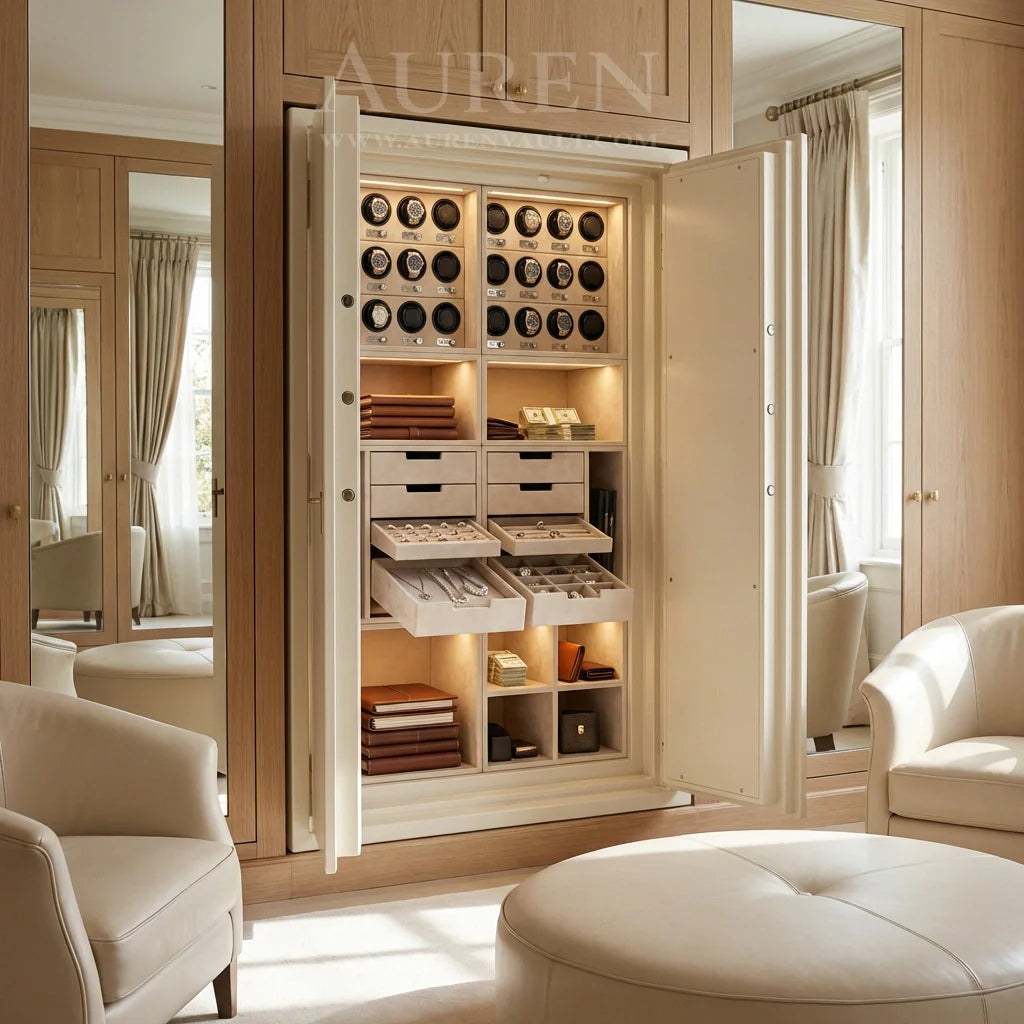
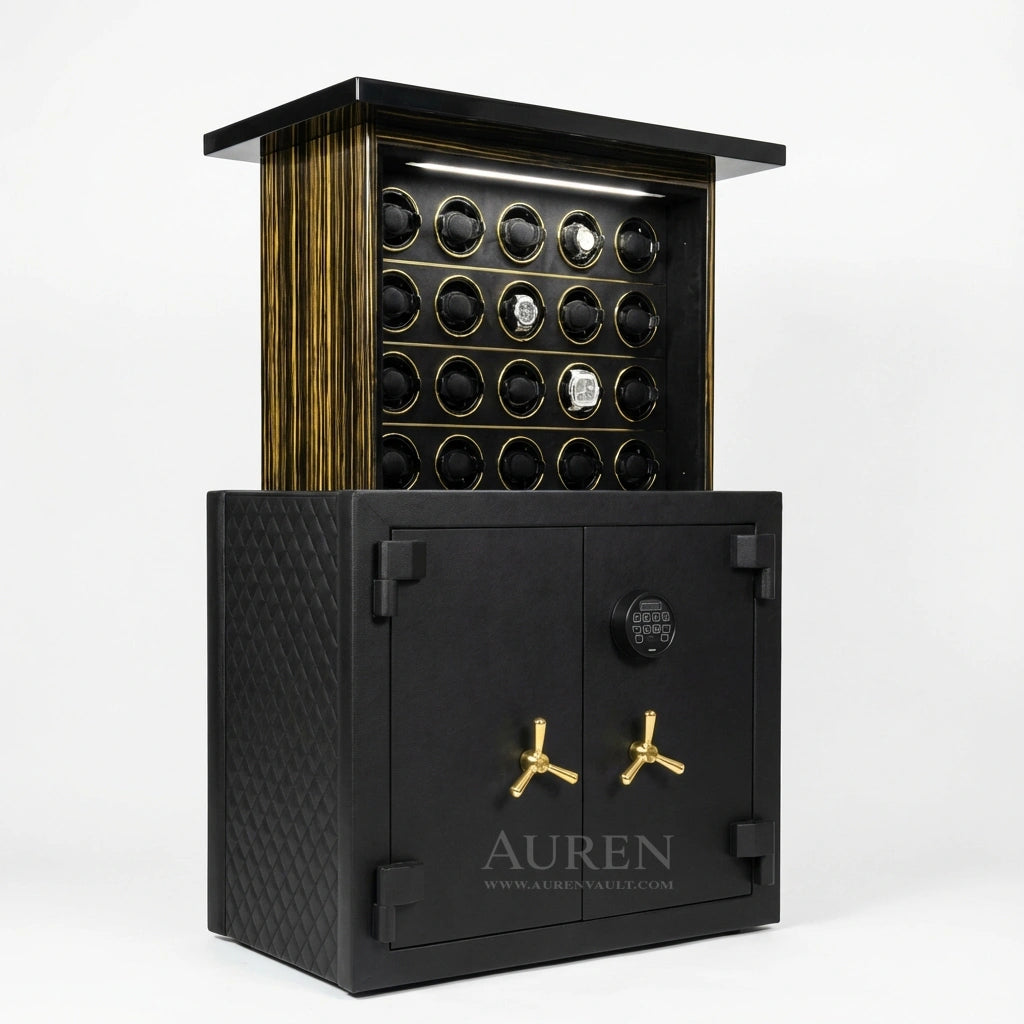
Luxury watch safes are often installed in dressing rooms, private offices, or walk-in closets where collectors store their watches at home.
Because of this, many watch safes incorporate both security and fire protection features.
In addition to fire-resistant insulation, watch safes often include:
- reinforced steel construction
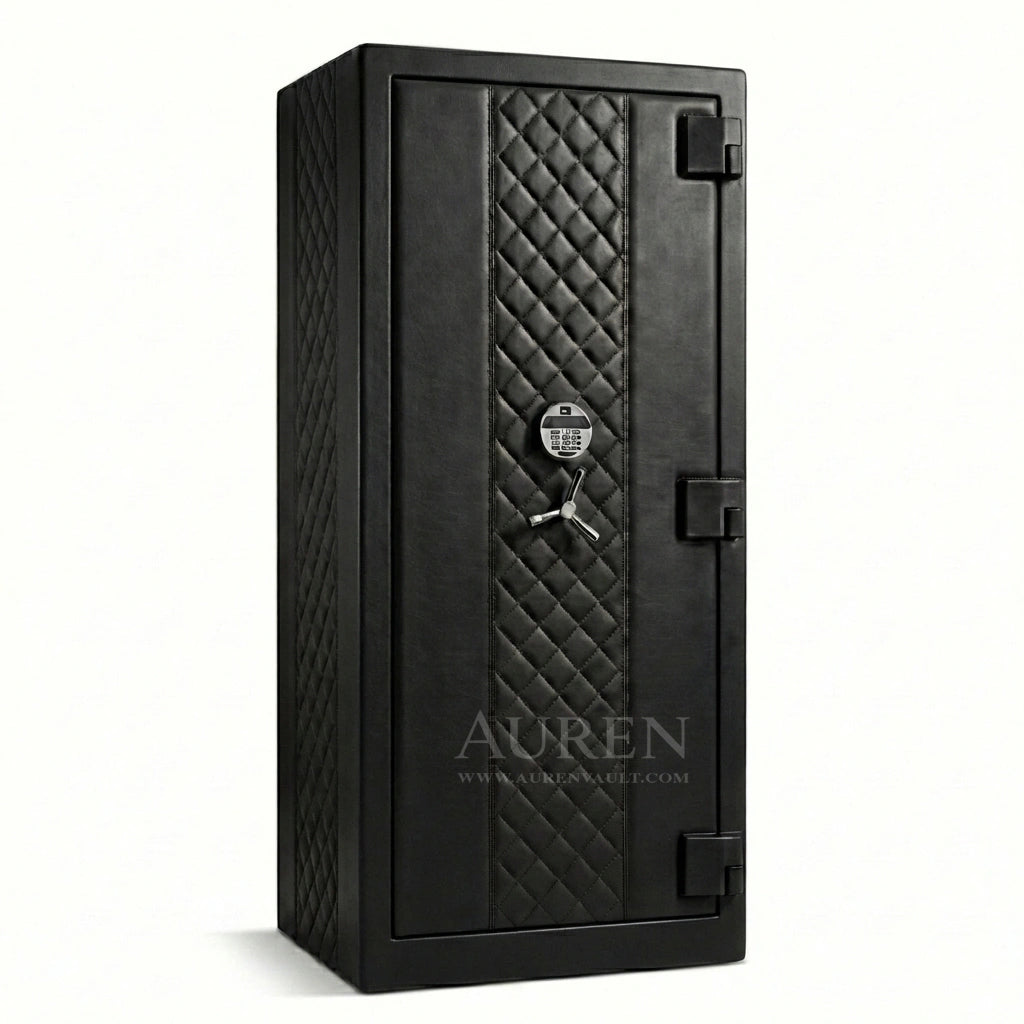
- secure lock systems
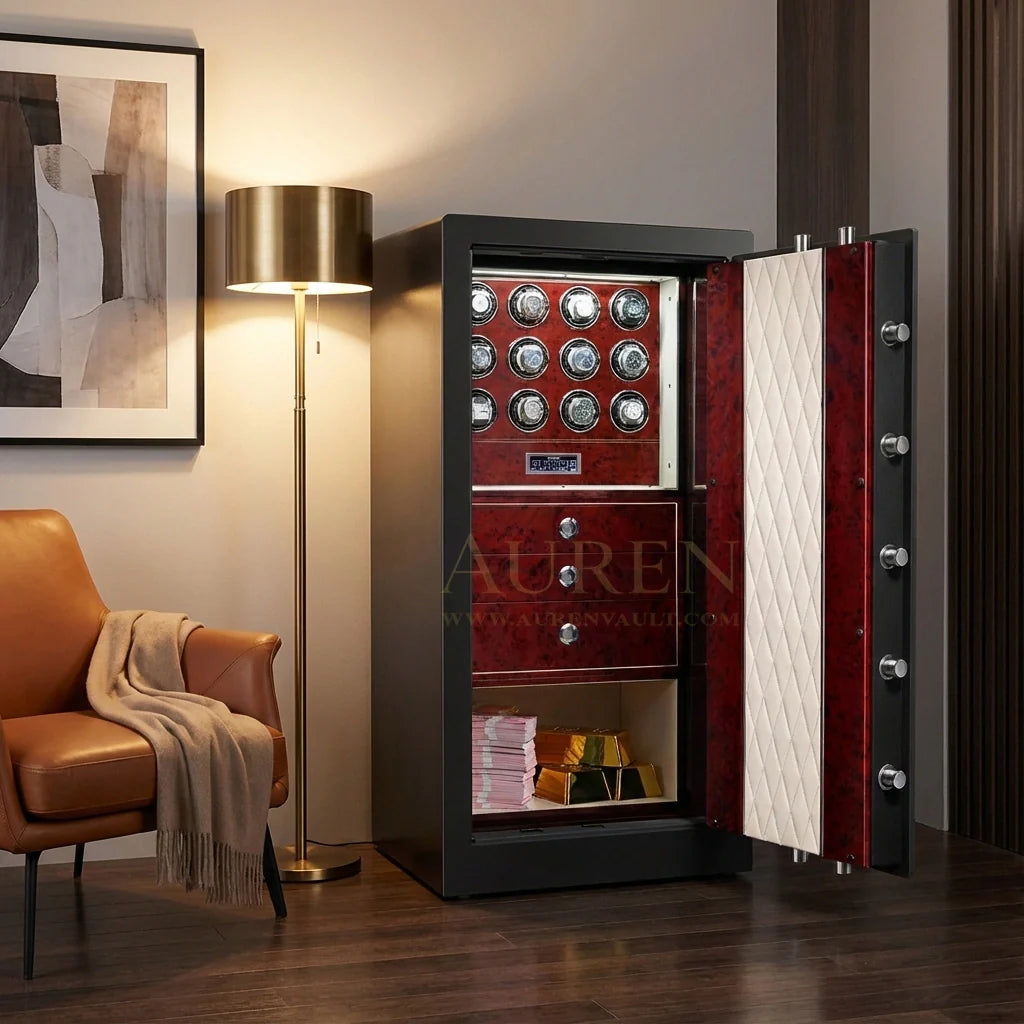
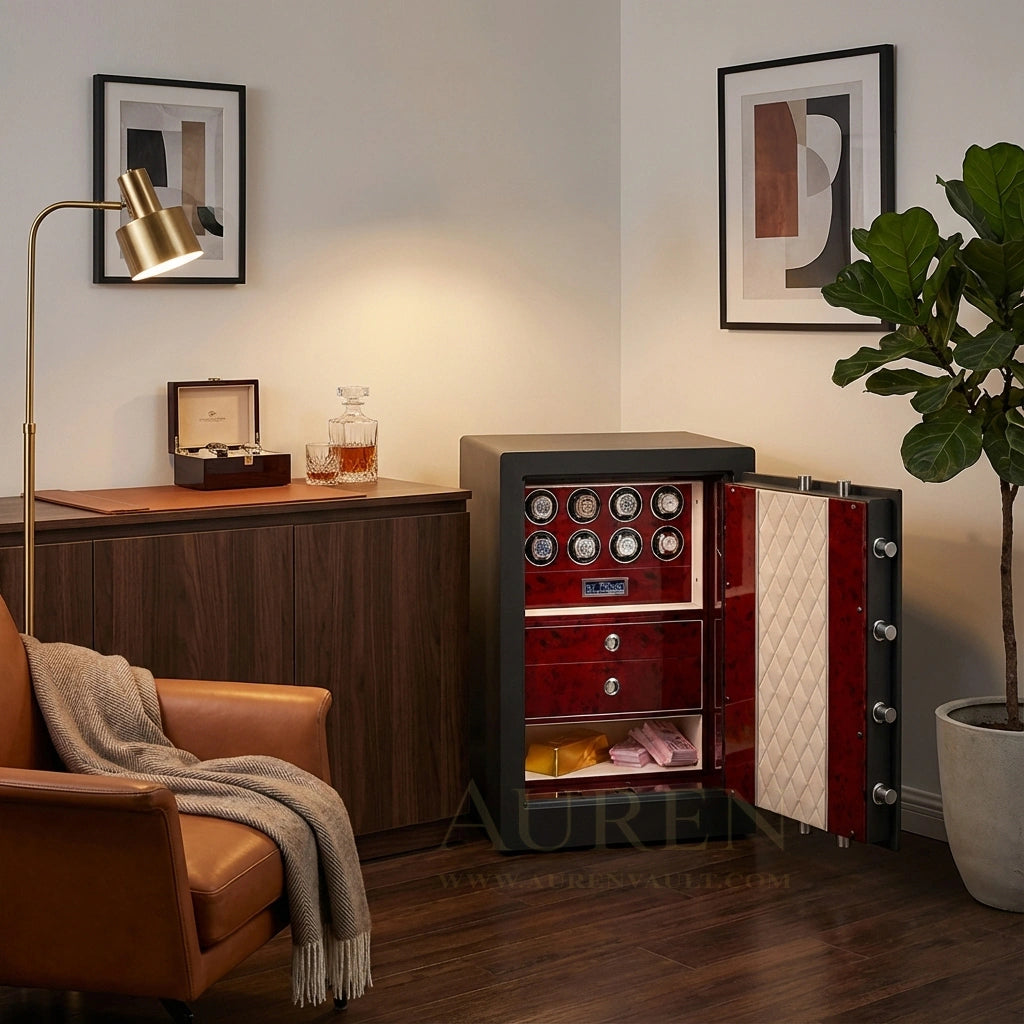
- organized interior compartments for watch storage
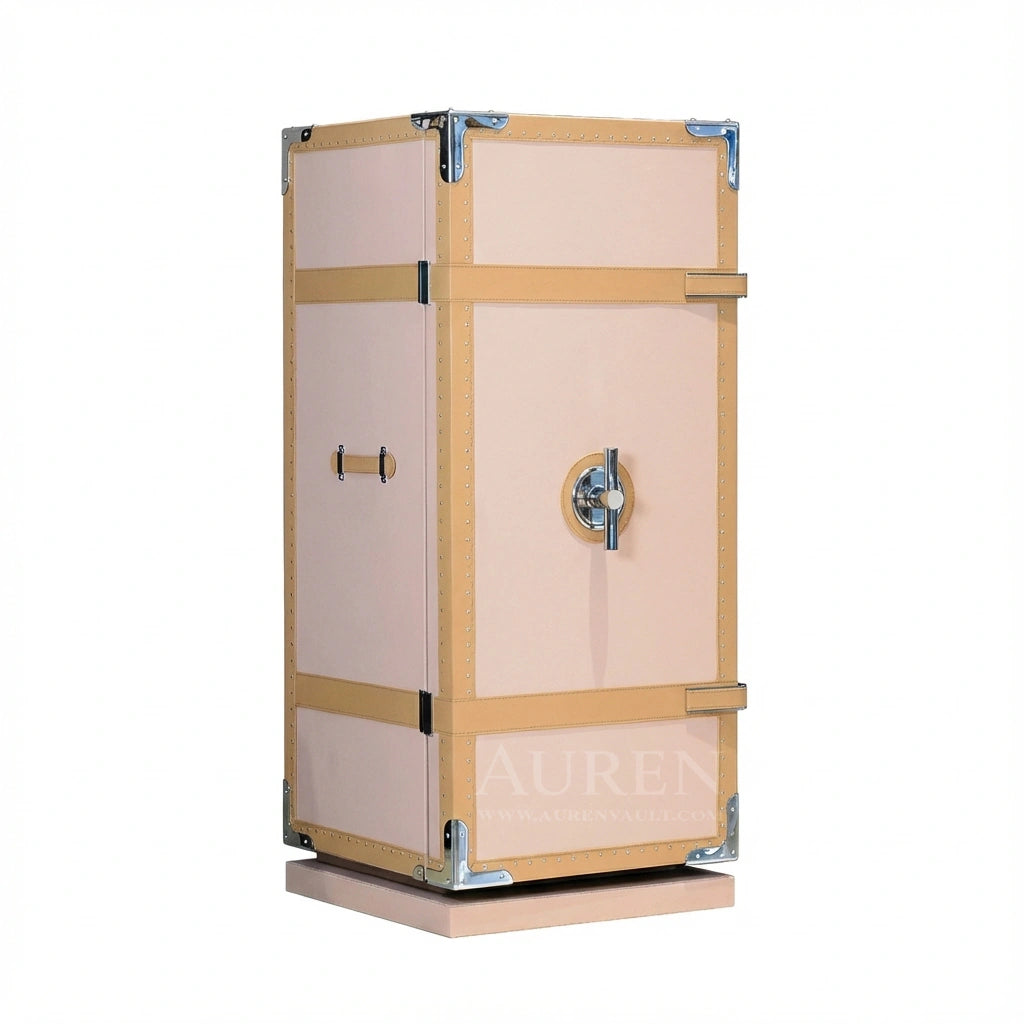
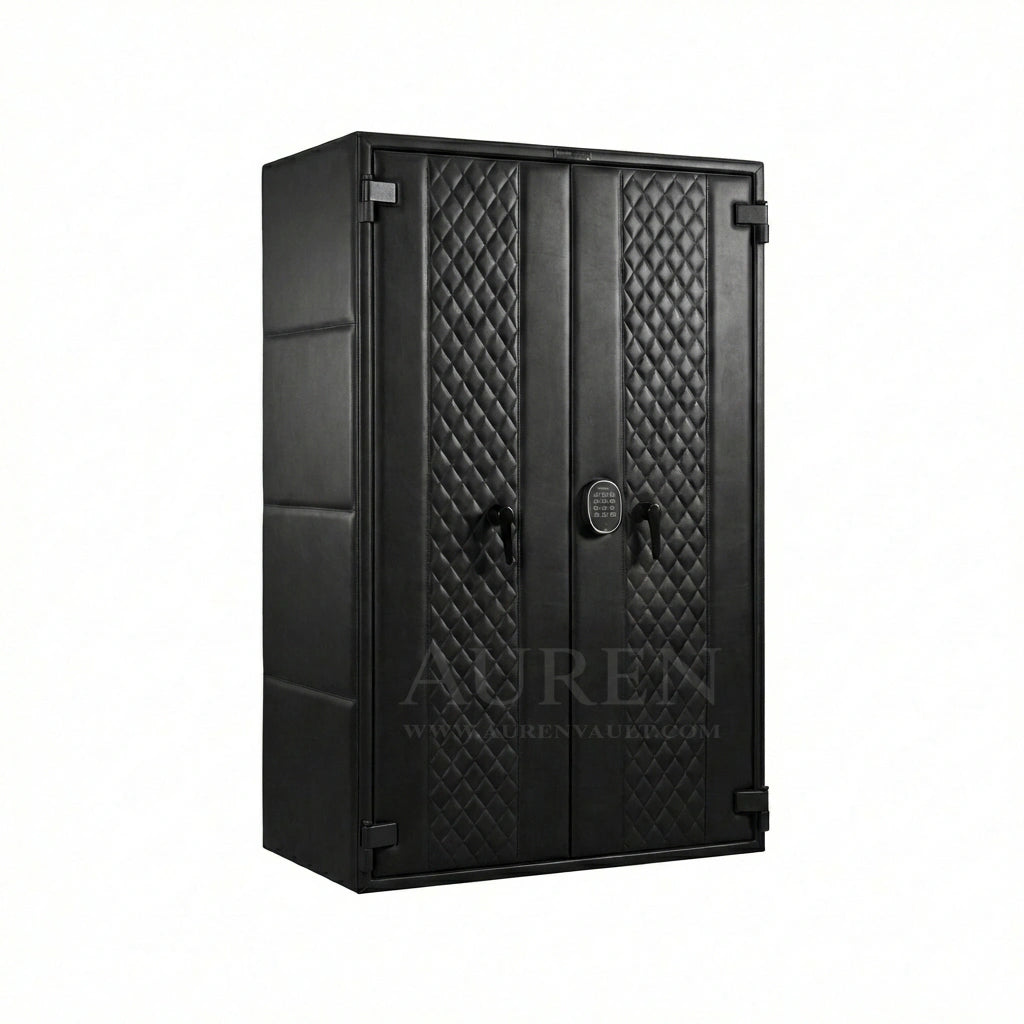
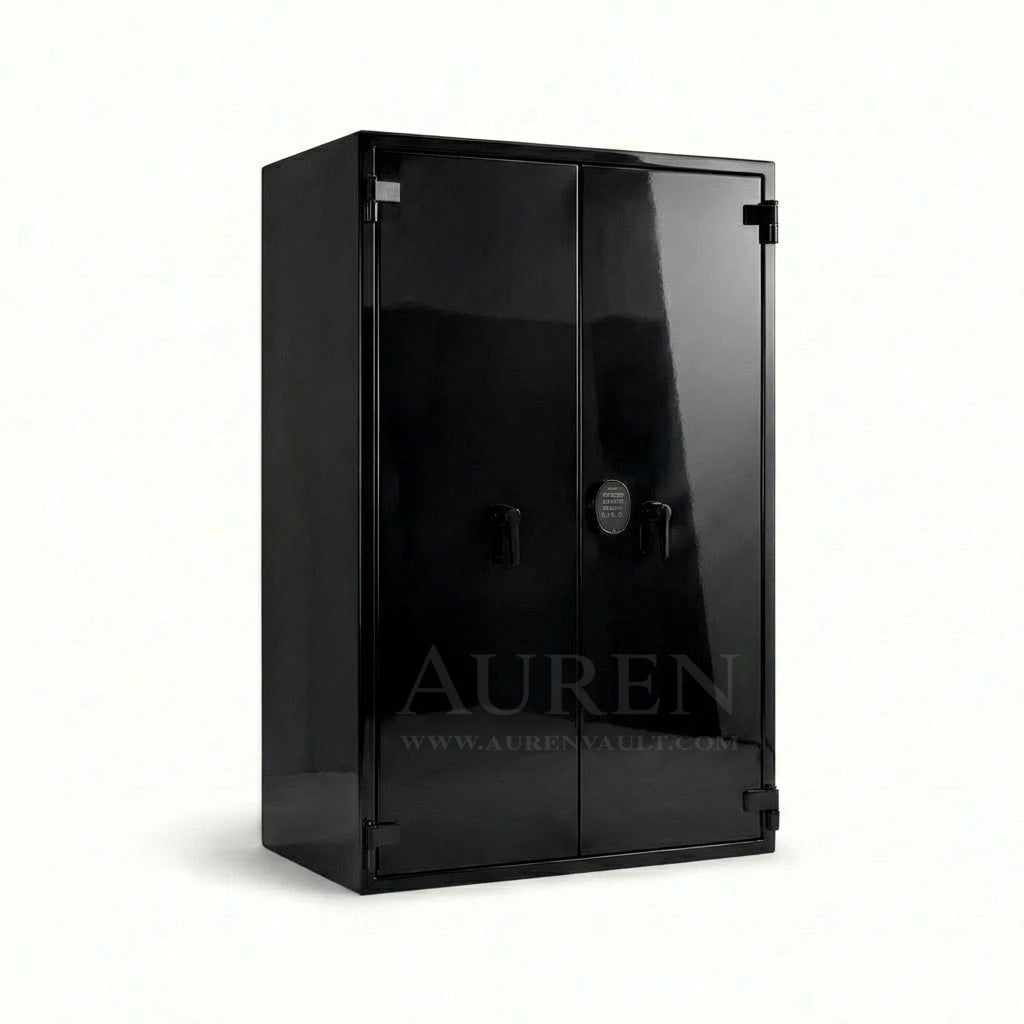
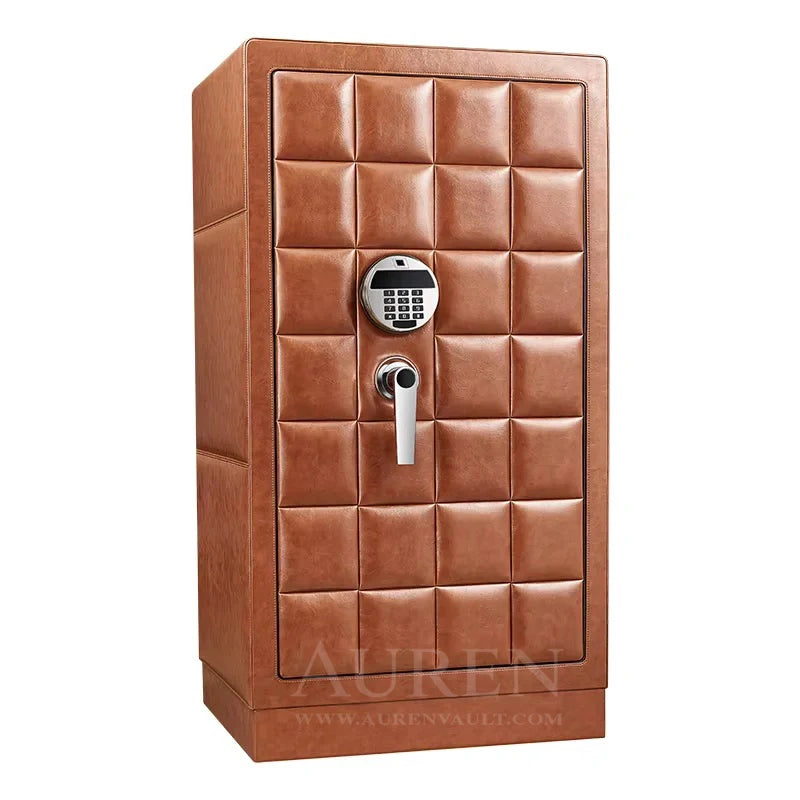
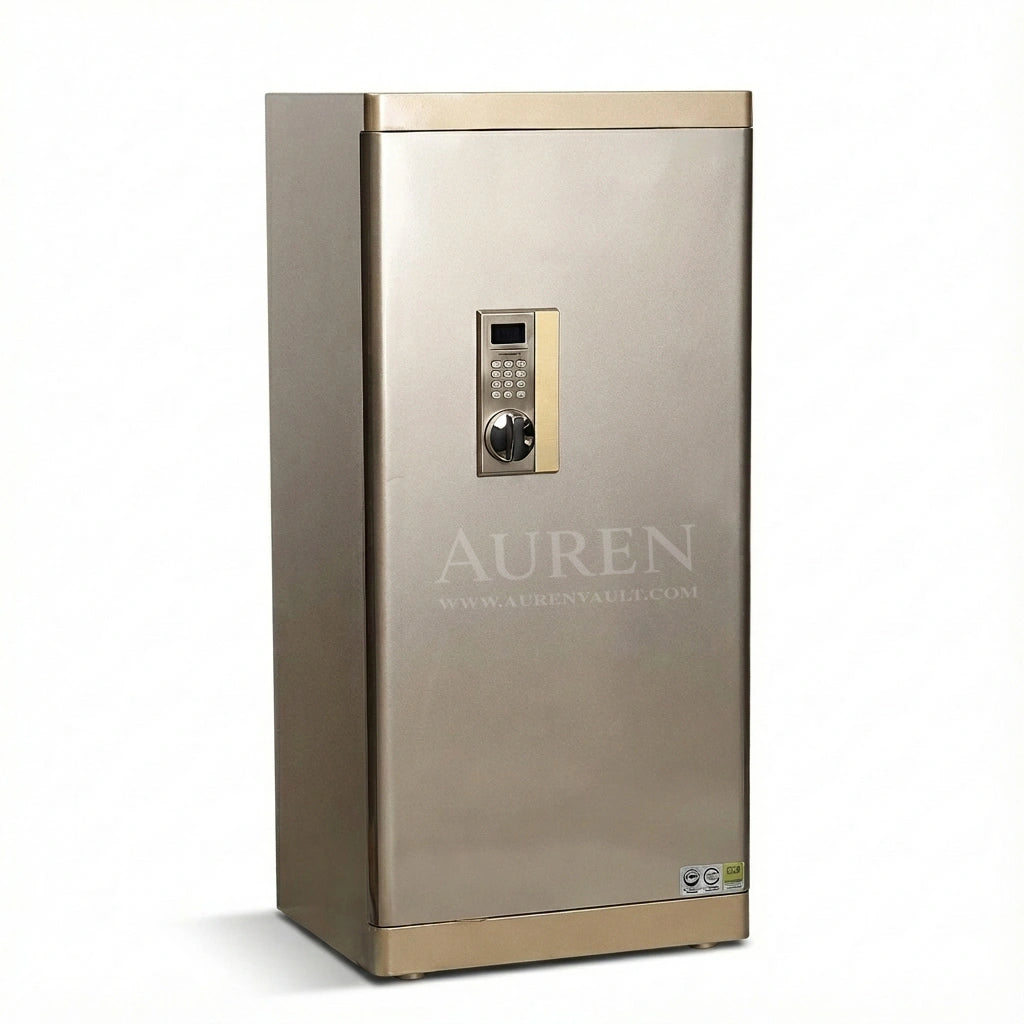
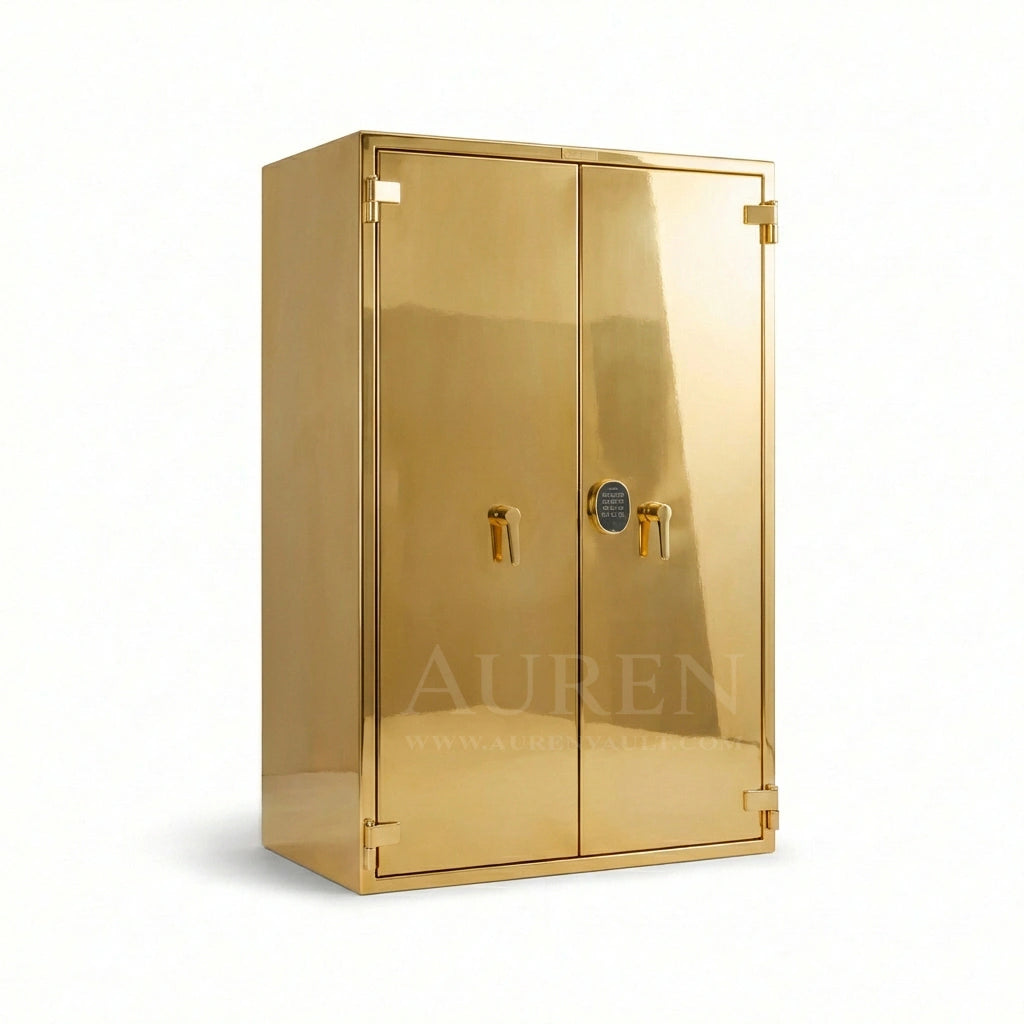
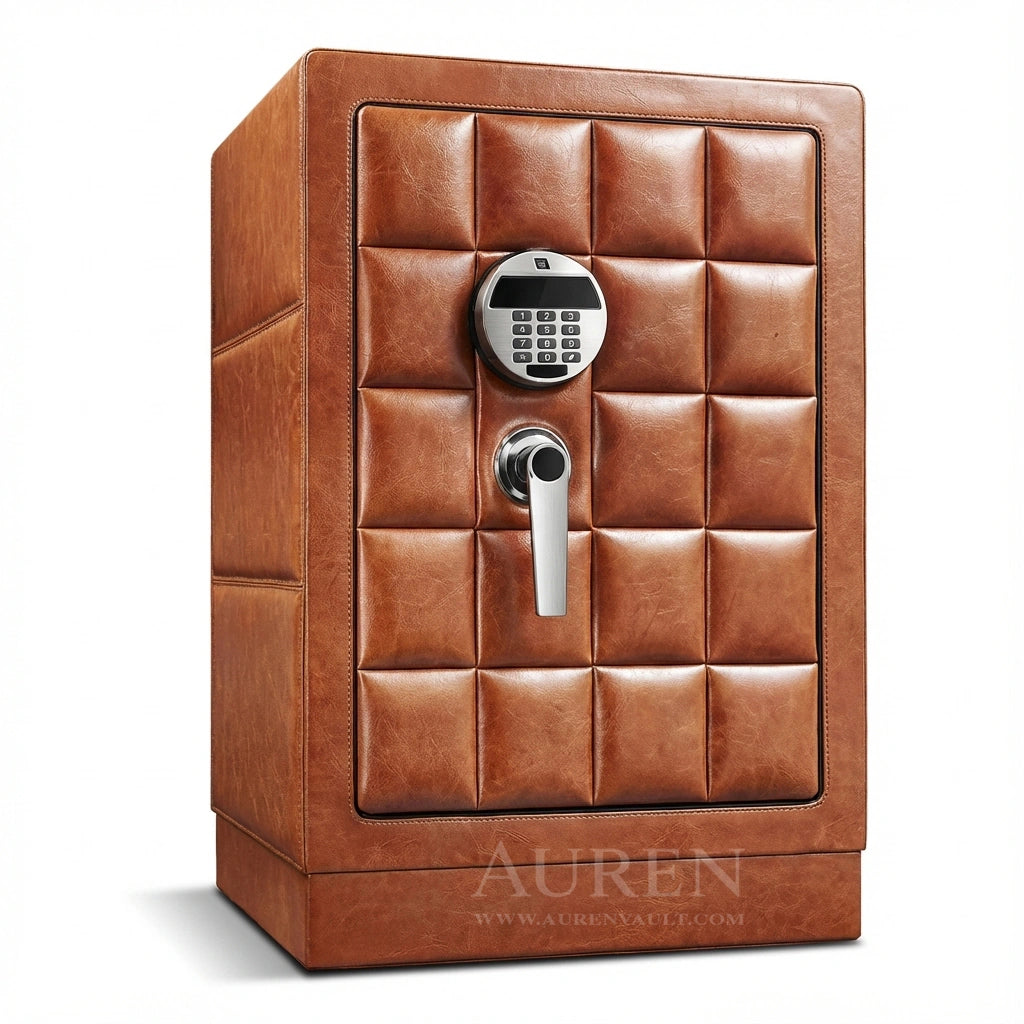
Certain manufacturers, including Auren, design watch safes that combine fire-resistant insulation with burglary-resistant construction and specialized interiors for storing luxury watch collections.
Real-World Storage Considerations
While fire-resistant safes can provide protection during fires, proper safe placement also plays a role in overall safety.
Collectors often install safes in interior locations within the home, such as closets or dressing rooms, where the safe may be less exposed to extreme temperatures compared with areas near exterior walls.
Additionally, many floor-standing watch safes weigh 150–650 kg, which provides significant physical resistance against removal attempts while also helping stabilize the safe during emergencies.
Conclusion
Although the term “fireproof safe” is commonly used, most safes are technically fire-resistant rather than completely fireproof.
Fire-resistant safes are engineered to protect their contents for a limited period of time during a fire by slowing heat transfer into the safe.
Safes tested under standards such as EN 15659 LFS 30 P or LFS 60 P provide measurable fire resistance that helps protect sensitive valuables stored inside.
For collectors storing luxury watches at home, combining fire-resistant protection with secure safe storage offers a practical way to reduce risks associated with both fire and theft.