

Most Zenith automatic watches require approximately 650–800 turns per day (TPD) as a starting reference, but the correct winding direction and daily rotation count depend on the specific calibre. Independent watch-winder databases commonly recommend 650 TPD with bidirectional rotation for many El Primero and Elite movements, although some sources recommend 800–1,000 TPD clockwise for older El Primero calibres.
These differences are particularly important for the El Primero 400, where published recommendations are not fully consistent.
Modern calibres also require individual consideration. The El Primero 3600 provides approximately 60 hours of power reserve, while the Elite 670 offers around 50 hours. The El Primero 9004 introduces a separate chronograph energy system that cannot be maintained through conventional automatic rotor winding alone.
Not every Zenith mechanical watch requires a winder. The modern G.F.J. Calibre 135 is manually wound and cannot receive energy from external rotation.
The correct Zenith TPD setting therefore begins with identifying the exact movement, verifying its external winding direction, and selecting a program that maintains adequate power reserve without unnecessary rotation.
Why Zenith TPD Settings Require Movement-Specific Attention
Zenith has a distinctive position in Swiss watchmaking because of its development of high-frequency mechanical movements.
The introduction of the El Primero in 1969 established one of the most recognizable automatic chronograph architectures in the industry.
Its frequency of 36,000 vibrations per hour, equivalent to 5 Hz, became a defining technical characteristic.
Modern Zenith watches continue to build on this architecture through movements such as El Primero 3600, 3610, 3620, and 3652.
However, Zenith also manufactures automatic movements from the Elite family, along with manually wound calibres and specialized chronographs with separate energy systems.
These movements do not necessarily share identical automatic winding requirements.
A conventional watch winder works by rotating the complete watch.
This movement causes the automatic rotor to move, transferring energy through the winding mechanism to the mainspring.
The effectiveness of that process depends on the rotor's construction, the winding transmission, and the direction in which energy can be transferred.
A watch's timekeeping frequency does not independently determine its external winding requirement.
For example, an El Primero operating at 5 Hz does not automatically require more TPD than an Elite movement operating at 4 Hz.
The automatic winding system must be evaluated separately from the escapement.
This distinction becomes increasingly important when comparing vintage El Primero chronographs with contemporary Zenith movements.
Zenith Watch Winder TPD Settings by Calibre
Independent winding databases contain recommendations for many Zenith calibres.
Some provide settings based on individual movement numbers.
Others publish broad recommendations for the El Primero or Elite families.
The distinction matters because a movement-family recommendation may not apply to every later variation.
The following table combines representative manufacturer movement specifications with independently published external winding guidance.
Zenith TPD and Rotation Direction Chart
| Zenith calibre | Representative watch | Power reserve | Independent TPD guidance | External direction |
|---|---|---|---|---|
| El Primero 400 | Chronomaster Revival A384 | 50 hours | 650 or 800–1,000, depending on source | Conflicting: both or clockwise |
| El Primero 4061 | Selected historical El Primero references | Reference-dependent | 650 or 800–1,000 | Conflicting: both or clockwise |
| El Primero 3600 | Chronomaster Sport / Original | 60 hours | Approx. 650–800 in independent guides | Often listed as both; verify |
| El Primero 3600 SK | Chronomaster Sport Skeleton | 60 hours | Verify specific variant | Verify |
| El Primero 3610 | Chronomaster Original Triple Calendar | 60 hours | Specific setting not reliably established | Verify |
| El Primero 3620 | DEFY Skyline / Pilot Automatic | 60 hours | Approx. 650 in broad reference charts | Verify exact external program |
| El Primero 3652 | Pilot Big Date Flyback | 60 hours | Specific setting not reliably established | Verify |
| El Primero 9004 | DEFY El Primero 21 / DEFY Extreme | 50 hours, timekeeping | Generic 650–800 recommendations exist | Automatic timekeeping winds internally in one direction; verify external program |
| Elite 670 | DEFY Skyline 36 | 50 hours | Approx. 650–800 | Bidirectional |
| Elite 6150 | Elite 6150 | 100 hours | Approx. 650 in broad independent tables | Verify exact external program |
| Calibre 135 | G.F.J. | 72 hours | Not applicable | Manual winding |
Power reserves refer to representative manufacturer specifications. Numeric TPD values are independent third-party recommendations, not universal Zenith-issued settings. Conflicting entries are intentionally shown rather than reconciled into an unsupported single recommendation.
The table demonstrates three different situations.
Some movements have relatively consistent independent recommendations.
Others, particularly the historical El Primero 400, have conflicting published settings.
More recent calibres may have detailed manufacturer specifications but no reliably established external TPD number.
For collectors, this means that identifying a movement is only the first step.
The second is confirming that the available winding recommendation actually applies to that movement and the intended winder.
The watch TPD guide explains how daily rotations, winding direction, and operating schedules affect automatic movements.
El Primero 400: Why Published TPD Recommendations Conflict
The El Primero 400 is one of Zenith's most recognizable automatic chronograph movements.
It is closely related to the original high-frequency El Primero architecture.
Representative Chronomaster Revival A384 and A385 watches use this calibre.
Zenith specifies a frequency of 36,000 vibrations per hour and approximately 50 hours of power reserve.
The movement incorporates an automatic winding system alongside its integrated column-wheel chronograph.
However, determining the appropriate external winding program is less straightforward than its familiar specifications might suggest.
The 650 TPD Bidirectional Recommendation
Several independent watch-winder databases list the El Primero family at approximately 650 TPD with bidirectional rotation.
Some databases extend that recommendation to individual watches using Calibre 400.
Under such a program, the winder alternates between clockwise and counterclockwise movement.
This can be effective when sufficient winding energy is generated during the appropriate rotation cycles.
However, it is important to understand how the device counts rotations.
If the movement winds effectively in only one external direction, alternating rotation may reduce the proportion of useful winding turns.
A displayed 650 TPD does not necessarily mean that all 650 rotations contribute equally to the mainspring.
The 800–1,000 TPD Clockwise Recommendation
Another independent winding database lists the El Primero 400 at approximately 800–1,000 TPD clockwise.
This differs significantly from the 650 TPD bidirectional recommendation.
The disagreement cannot be resolved simply by choosing the higher number.
Different databases may use different assumptions about effective winding direction, device programming, and the amount of rotation required to maintain reserve.
For an owner of a Chronomaster Revival using Calibre 400, the correct approach is to verify the external program through Zenith or a qualified movement-specific source.
Neither database entry should be presented as a definitive manufacturer instruction.
Why the Direction Matters More Than a Higher Number
Suppose a watch winder alternates between two directions, but only one contributes effective winding energy.
Increasing the total TPD may increase the number of useful turns, but it may also introduce unnecessary ineffective rotation.
A correctly selected directional program may be more efficient than simply increasing daily rotations.
This is especially important when comparing older automatic chronographs with movements that use different rotor architectures.
The goal is to maintain a sufficient power reserve through effective winding.
It is not to maximize the total number of turns performed by the device.
El Primero 3600: Chronomaster Sport and Chronomaster Original
The El Primero 3600 represents a modern generation of Zenith's high-frequency automatic chronograph.
It is used in the Chronomaster Sport and Chronomaster Original collections.
The movement operates at 5 Hz and provides approximately 60 hours of power reserve.
Its chronograph mechanism can display elapsed time in increments of one-tenth of a second.
The central chronograph hand completes one revolution every ten seconds.
This differs from the more conventional chronograph display used in earlier El Primero movements.
What TPD Should Be Used for El Primero 3600?
Independent guides commonly place modern El Primero movements within approximately 650–800 TPD, often recommending bidirectional external rotation.
However, these are third-party starting references.
A verified movement-specific program remains preferable.
The El Primero 3600 should not automatically inherit the external winding settings of the historical El Primero 400 simply because both operate at 5 Hz.
Their movement generations, energy management, and power-reserve specifications differ.
Does the 60-Hour Reserve Change the Winding Requirement?
The 3600 offers approximately ten more hours of reserve than the older El Primero 400.
This provides additional flexibility during periods of non-use.
Consider someone who wears a Chronomaster Sport on Friday and changes to another watch for the weekend.
If the movement has sufficient reserve when removed, it may remain running through much of that interval.
A watch winder may therefore be unnecessary for short periods between wears.
However, the longer reserve does not establish that Calibre 3600 needs fewer TPD than Calibre 400.
Power reserve describes stored running time.
TPD describes external rotation.
The correct relationship depends on the automatic winding system's efficiency.
Does a 5 Hz Chronograph Need More TPD?
Not automatically.
The operating frequency describes the number of balance oscillations per second.
It does not directly measure the energy transferred through the automatic winding rotor.
Although a high-frequency movement has particular energy requirements, those requirements cannot be converted into TPD using the frequency alone.
For example, doubling the frequency of a movement would not automatically mean doubling external daily rotations.
The mainspring, escapement, gear train, and winding mechanism work together as a complete system.
A suitable external program must be established for that system rather than inferred from one specification.
Chronomaster Sport Skeleton: Calibre 3600 SK
Zenith has also developed skeletonized versions of the modern Chronomaster Sport.
Representative models use the El Primero 3600 SK.
The movement provides approximately 60 hours of power reserve and maintains the 5 Hz operating frequency.
Its openworked architecture makes the mechanical construction visible through the dial.
However, skeletonization alone does not establish a different external winding requirement.
The owner should not assume that an openworked movement requires either more or fewer turns than its conventional counterpart.
The precise calibre version must still be considered.
For Calibre 3600 SK, a verified external winding program is preferable to automatically transferring settings from the standard 3600.
The main physical considerations are the watch's case dimensions, strap or bracelet fit, and clearance around the chronograph pushers.
El Primero 3610: Triple Calendar and Moonphase
The Chronomaster Original Triple Calendar introduces another variation of the El Primero architecture.
It uses the automatic El Primero 3610.
Zenith specifies approximately 60 hours of power reserve and a frequency of 36,000 vibrations per hour.
The movement combines a one-tenth-of-a-second chronograph with complete calendar indications and moonphase.
This makes it mechanically more complicated than a conventional three-hand watch.
However, its complications do not automatically dictate the external winding program.
Why the Triple Calendar Benefits From Maintaining Power
The watch displays day, date, month, and moonphase indications alongside its chronograph functions.
If the movement stops after the available reserve is depleted, these indications must be restored according to Zenith's operating instructions.
For someone who wears the watch frequently, this may not be a significant issue.
For a collector who rotates among several watches over extended periods, resetting the calendar can become inconvenient.
A compatible winder can reduce the frequency of those adjustments.
The value comes from maintaining synchronization.
It does not mean that the movement mechanically requires constant external winding.
Does the Calendar Require Higher TPD?
Not automatically.
The calendar mechanism uses energy supplied through the movement's mainspring.
Its complexity does not independently determine the most effective external rotor direction.
The appropriate program should follow the El Primero 3610's automatic winding requirements.
A specific manufacturer-confirmed external TPD number has not been established here.
Therefore, a generic 650 or 800 TPD setting should not be presented as the definitive program for every Chronomaster Original Triple Calendar.
Movement-specific confirmation remains appropriate.
El Primero 3620: DEFY Skyline, Pilot Automatic, and Chronomaster Solo Sport
The El Primero 3620 is a particularly useful example of why a movement's name or frequency should not be confused with its complications.
Unlike the 3600 chronograph, the 3620 is used in watches focused on timekeeping rather than conventional chronograph timing.
Zenith specifies a frequency of 5 Hz and approximately 60 hours of power reserve.
Representative applications include the DEFY Skyline, Pilot Automatic, and Chronomaster Solo Sport.
This means watches with different external designs can share the same underlying calibre.
DEFY Skyline: Calibre 3620
The DEFY Skyline uses Calibre 3620 in representative 41 mm references.
Its distinctive dial includes a one-tenth-of-a-second display.
However, this is not equivalent to the start-stop-reset chronograph mechanism of the El Primero 3600.
The display is driven continuously rather than operated as a conventional elapsed-time chronograph.
This distinction matters when interpreting technical descriptions.
The movement's winding requirements should be established from its automatic construction, not from the presence of a rapidly moving display.
Pilot Automatic: Same Calibre, Different Case
The Pilot Automatic also uses El Primero 3620 in representative references.
It provides approximately 60 hours of power reserve.
The watch differs substantially from the DEFY Skyline in case design, strap construction, and styling.
However, sharing the same calibre provides a common mechanical basis for examining external winding compatibility.
A collector may use the same verified movement program for both watches when the actual calibre configuration and external device permit it.
That does not mean the physical holders should be identical.
The Pilot Automatic may use a large leather or rubber strap, while the DEFY Skyline commonly features an integrated bracelet.
The watch holders should accommodate these differences.
Chronomaster Solo Sport: Another 3620 Application
The Chronomaster Solo Sport provides a further example.
Introduced in 2026, it uses El Primero 3620 with approximately 60 hours of power reserve.
Although the watch belongs to the Chronomaster collection, it does not use the same chronograph movement as the Chronomaster Sport.
This illustrates the danger of selecting winding settings from a collection name alone.
The words Chronomaster and El Primero do not identify one universal movement.
The exact calibre remains decisive.
Elite 670: Why DEFY Skyline 36 Has Different Requirements
The DEFY Skyline 36 differs mechanically from its larger El Primero-powered counterparts.
It uses the Elite 670 automatic movement.
Zenith specifies a frequency of 28,800 vibrations per hour, equivalent to 4 Hz.
The movement provides approximately 50 hours of power reserve.
Its conventional timekeeping construction differs from the high-frequency El Primero family.
What TPD Is Recommended for Elite 670?
Independent winding databases commonly recommend approximately 650–800 TPD with bidirectional rotation.
The figure of 650 TPD appears consistently in several sources.
This makes it a useful preliminary setting when the watch has been positively identified as using Calibre 670.
However, the final program should still be checked against the device and the precise reference.
The manufacturer does not establish one universal external TPD number merely by specifying the movement's internal automatic winding mechanism.
Does 4 Hz Mean the Elite Needs Less Winding?
Not necessarily.
The Elite 670 operates at a lower frequency than the El Primero 3620.
However, that difference does not independently establish a lower daily rotation requirement.
The two movements have different constructions, mainspring arrangements, and winding characteristics.
It is entirely possible for a 4 Hz movement and a 5 Hz movement to operate successfully under similar external programs.
The correct setting depends on effective energy transfer, not frequency alone.
Physical Fit: 36 mm Versus 41 mm DEFY Skyline
The 36 mm DEFY Skyline also creates a different physical challenge.
Its smaller case and integrated bracelet may require a more compact cushion.
A rigid holder designed for a large sports watch can place unnecessary tension on a smaller bracelet.
A compressible holder is often more versatile.
The watch should remain stable without forcing the bracelet or clasp beyond its natural fit.
For a collection containing several DEFY Skyline references, independently adjustable cushions and winding programs provide greater flexibility.
Elite 6150: Understanding the 100-Hour Power Reserve
The Elite 6150 introduces a different approach to automatic movement autonomy.
Zenith developed this movement as an evolution of the Elite architecture.
It incorporates two barrels and provides approximately 100 hours of power reserve.
This represents more than four days of running time when sufficiently wound.
The movement operates at 4 Hz.
Its extended reserve changes the practical need for a watch winder, although it does not automatically establish an exact TPD requirement.
Does 100 Hours Make a Winder Unnecessary?
For short periods of non-use, it may.
An owner who removes an Elite 6150 watch on Thursday evening could find it running on Monday, provided it began with sufficient stored energy.
This is substantially more convenient than a shorter-reserve automatic in the same situation.
However, a collector who leaves the watch unworn for one or two weeks will eventually exhaust its reserve.
A compatible winder can maintain operation between those longer intervals.
Why a Longer Reserve Does Not Mean Fewer TPD
A 100-hour reserve reflects the movement's ability to store and use energy over time.
It does not independently measure how much energy is produced by each external winding rotation.
The additional barrel capacity does not establish a universal lower TPD program.
Therefore, a recommendation for the Elite 670 should not automatically be applied to the Elite 6150.
The two movements belong to the broader Elite family but have different technical constructions.
Pilot Big Date Flyback: El Primero 3652
The Pilot Big Date Flyback uses Calibre El Primero 3652.
Zenith specifies approximately 60 hours of power reserve and a frequency of 5 Hz.
The movement combines an automatic high-frequency chronograph with a large date display and flyback function.
Its chronograph can be reset and restarted through a dedicated flyback operation.
The date mechanism also uses a specialized construction intended to change the large date display rapidly.
These complications make the watch mechanically distinctive.
Does Flyback Functionality Affect TPD?
Not directly.
The flyback mechanism determines how the chronograph can be reset and restarted.
It does not independently determine the external winding direction.
Similarly, the big date mechanism does not establish a universal daily rotation requirement.
The automatic rotor remains responsible for replenishing the movement's mainspring.
For Calibre 3652, the exact external program should be verified rather than inferred from the settings of Calibre 3600.
The movements share a high-frequency heritage but are not identical.
Why Physical Clearance Matters
The Pilot Big Date Flyback has a substantial 42.5 mm case.
Its crown and chronograph pushers require sufficient clearance throughout the winding cycle.
A compact winder designed for smaller dress watches may not provide adequate spacing.
The watch holder should support the case without allowing it to shift.
Rubber and leather straps may also require different cushion adjustments.
A suitable holder is particularly important when the watch has prominent external controls.
DEFY El Primero 21 and DEFY Extreme: Calibre 9004
Calibre 9004 requires a different explanation from most conventional automatic movements.
It is used in DEFY El Primero 21 and selected DEFY Extreme chronographs.
The movement incorporates two separate regulating systems.
The timekeeping system operates at 5 Hz.
The chronograph system operates at 50 Hz, equivalent to 360,000 vibrations per hour.
This enables measurement in increments of one-hundredth of a second.
More importantly, the watch has separate energy systems for regular timekeeping and its chronograph.
Two Energy Systems, Two Winding Considerations
The timekeeping movement provides approximately 50 hours of power reserve.
It benefits from automatic winding through an oscillating weight.
The chronograph has its own mainspring and provides approximately 50 minutes of operating reserve.
That chronograph reserve must be wound manually according to Zenith's operating instructions.
A conventional rotating watch winder cannot be assumed to replenish the separate chronograph barrel.
This means a DEFY El Primero 21 can remain running for normal timekeeping while its dedicated chronograph reserve is depleted.
The distinction is essential for owners who expect a watch winder to maintain every mechanical function.
Does Calibre 9004 Have a Special Winding Direction?
Zenith's technical instructions describe unidirectional automatic winding for the timekeeping mechanism.
However, this internal description should not automatically be translated into a clockwise or counterclockwise external setting without confirming the viewing convention.
Some independent databases recommend generic bidirectional programs for DEFY El Primero 21 references.
Those recommendations should be treated cautiously because they may not distinguish the movement's automatic winding system from its separate chronograph energy system.
The appropriate external program needs to maintain the timekeeping movement.
It cannot replace the manual winding procedure for the chronograph.
Why Increasing TPD Will Not Wind the Chronograph Barrel
Suppose an owner places a DEFY El Primero 21 inside a programmable winder and increases the daily rotations.
The movement's normal timekeeping system may receive additional effective winding.
However, the separate chronograph barrel is not automatically replenished through the same rotor system.
Increasing TPD cannot change this mechanical arrangement.
The owner must follow the appropriate manual procedure for winding the chronograph.
This demonstrates why a high-complication watch cannot always be evaluated using one external TPD number.
Zenith Watches That Do Not Need a Watch Winder
Not every Zenith mechanical watch is automatic.
The modern G.F.J. collection is a particularly relevant example.
It uses the re-engineered Calibre 135.
Zenith specifies approximately 72 hours of power reserve and a frequency of 18,000 vibrations per hour, equivalent to 2.5 Hz.
The movement is manually wound.
Therefore, a conventional automatic watch winder cannot replenish its mainspring.
G.F.J. Calibre 135: Why Manual Winding Matters
The Calibre 135 represents an important part of Zenith's chronometric heritage.
Its modern construction preserves key characteristics of the historic movement while incorporating contemporary refinements.
However, mechanical sophistication does not make it automatic.
Without an oscillating winding rotor, external rotation provides no useful winding energy.
The owner must wind the movement through the crown according to Zenith's instructions.
A passive watch compartment is more appropriate than an active rotor.
What About Vintage Zenith Watches?
Zenith's historical catalogue includes manually wound mechanical movements alongside automatic El Primero and Elite calibres.
A vintage Zenith should not be assigned a winding program solely because it belongs to a familiar collection.
The reference number and movement type should be established first.
For valuable historical watches, their servicing condition may also affect how they respond to normal winding and storage.
A watch winder cannot compensate for deteriorated lubricants or other mechanical problems.
How to Set a Zenith Watch Winder Correctly
A reliable setup begins with identifying the exact movement.
Do not start by choosing a generic TPD value for the Zenith brand.
A Chronomaster Revival using El Primero 400, a Chronomaster Sport using 3600, and a DEFY Skyline using Elite 670 are mechanically different watches.
They should be evaluated individually.
Confirm the Calibre and Winding Type
Identify the reference number and movement designation.
Determine whether the watch is automatic or manually wound.
For automatic watches, establish whether reliable external winding data exists.
A recommendation for the El Primero 400 should not automatically be applied to the 3600, 3610, or 9004.
Establish Sufficient Initial Power
If the watch has stopped, restart it according to Zenith's operating instructions.
The appropriate crown-winding procedure depends on the movement.
A conventional watch winder should generally be used to maintain energy rather than serve as a rapid method of charging a fully depleted mainspring.
For Calibre 9004, the timekeeping and chronograph winding procedures must also be distinguished.
Select a Verified Rotation Program
Use the best available movement-specific recommendation.
Where independent databases disagree, seek confirmation before committing to prolonged use.
The correct external direction may be particularly important for older El Primero movements.
A bidirectional program should not automatically be regarded as equivalent to a single-direction recommendation.
Check the Watch Holder
Secure the watch on its cushion.
Check clearance around the case, crown, chronograph pushers, and bracelet throughout a complete rotation.
An unstable watch can shift while the device operates.
A tight cushion can place unnecessary pressure on a strap or bracelet.
The holder should provide secure support without excessive tension.
Observe the Power Reserve
Allow the watch to complete several normal operating and rest cycles.
Monitor whether it continues running over multiple days.
A watch that remains operational may still be receiving less energy than it consumes, so a longer observation period can be useful.
If the reserve declines, investigate the effective direction, programmed rotations, starting reserve, and device condition.
Do not immediately increase TPD to the maximum available setting.
A mechanical issue may require professional inspection rather than additional external winding.
Why a Zenith Can Stop Even With the Recommended TPD
A published winding setting is not a guarantee that every watch will maintain its reserve under every condition.
Several variables affect the result.
The winder's operating schedule may distribute rotations differently from the assumptions used in the original reference.
The watch may begin with insufficient energy.
The selected rotation direction may be ineffective.
A worn or poorly maintained automatic mechanism may also fail to replenish energy efficiently.
Consider an El Primero chronograph that starts with a low reserve.
If the winder delivers just enough energy to replace the movement's daily consumption, it may maintain the existing reserve without fully restoring it.
If the selected program supplies slightly less than the movement consumes, the watch may continue running temporarily before eventually stopping.
This does not necessarily mean the correct program is the highest available setting.
The appropriate response is to identify the cause.
Correct winding should be judged through effective energy maintenance rather than the number displayed on the winder alone.
How Much Winding Is Actually Necessary?
A suitable watch-winder program should replenish enough energy to compensate for the movement's normal consumption during storage.
It does not necessarily need to maintain the mainspring at its maximum possible reserve.
Modern automatic movements generally incorporate mechanisms that prevent conventional overwinding through continued rotor activity.
However, this does not make unnecessary external rotation beneficial.
Once a movement is receiving sufficient energy to remain operational, increasing TPD may provide little additional convenience.
The relationship between reserve and winding also differs across movements.
An Elite 670 with 50 hours of reserve, an El Primero 3600 with 60 hours, and an Elite 6150 with 100 hours cannot be assigned TPD solely by comparing those reserve figures.
The automatic winding efficiency of each calibre must be considered.
For collectors, the most practical strategy is to use verified guidance and a device with adjustable programming.
Standalone Watch Winder or Watch Winder Safe?
A standalone programmable watch winder is suitable for many individual Zenith automatic watches.
It provides controlled motion to maintain the movement between wears.
The decision becomes different when the owner manages a collection containing multiple automatic watches and valuable manually wound pieces.
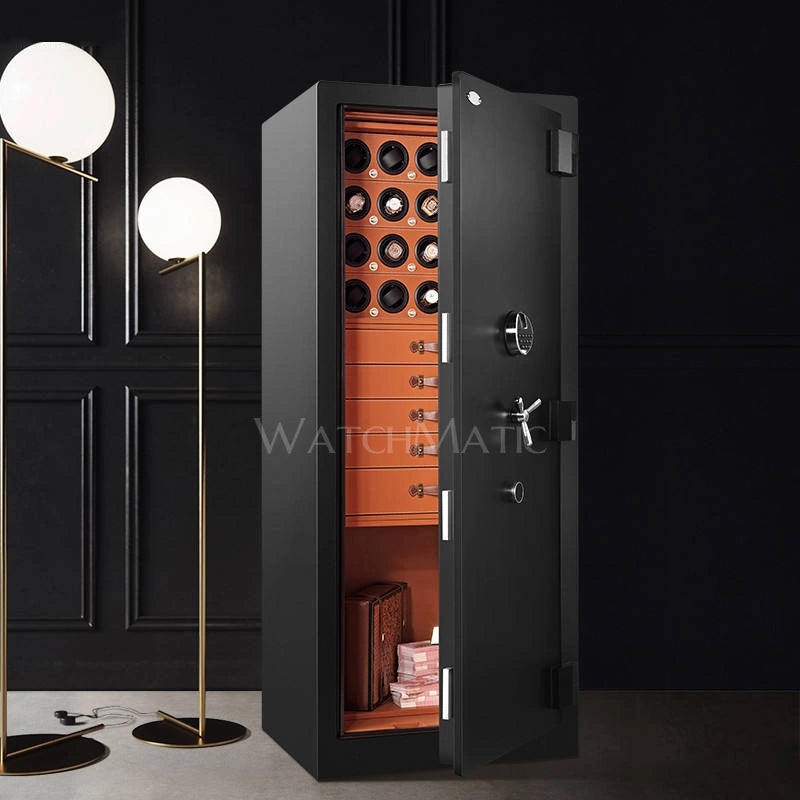
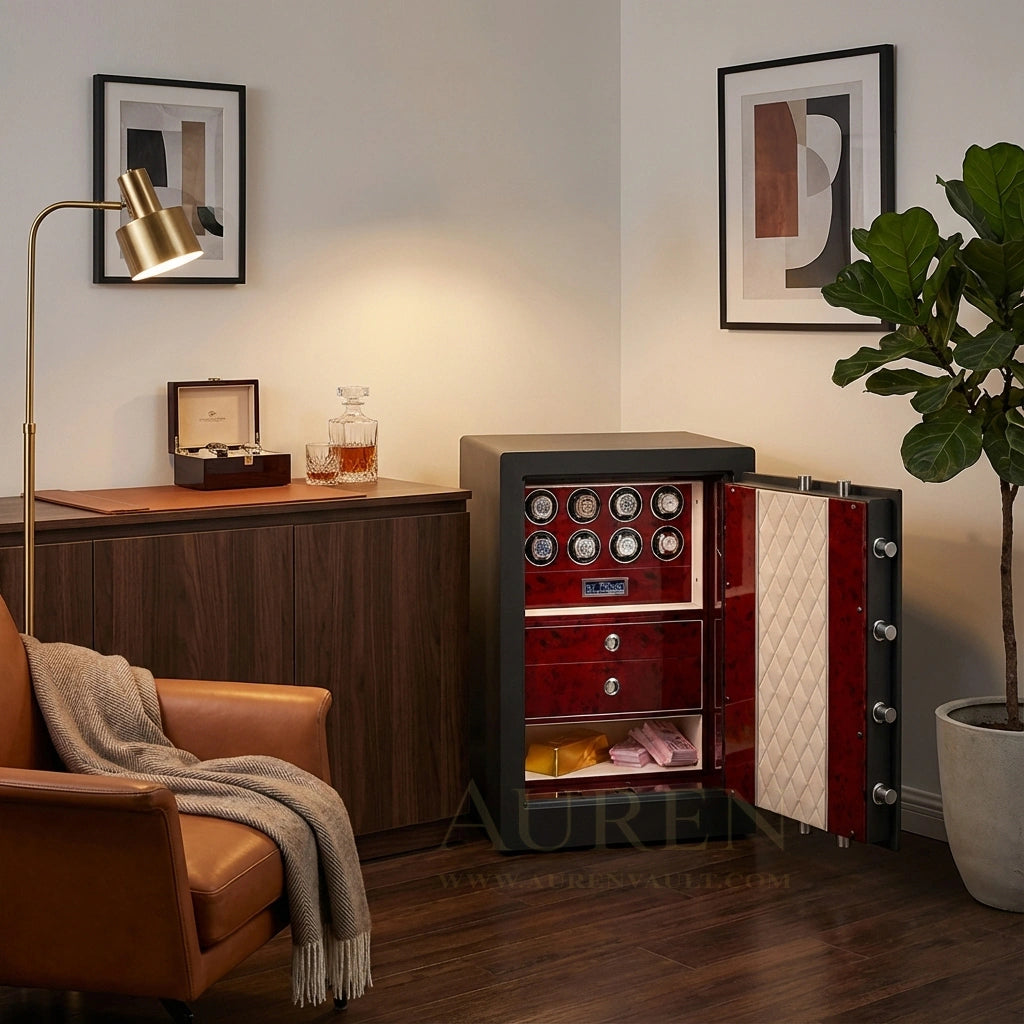
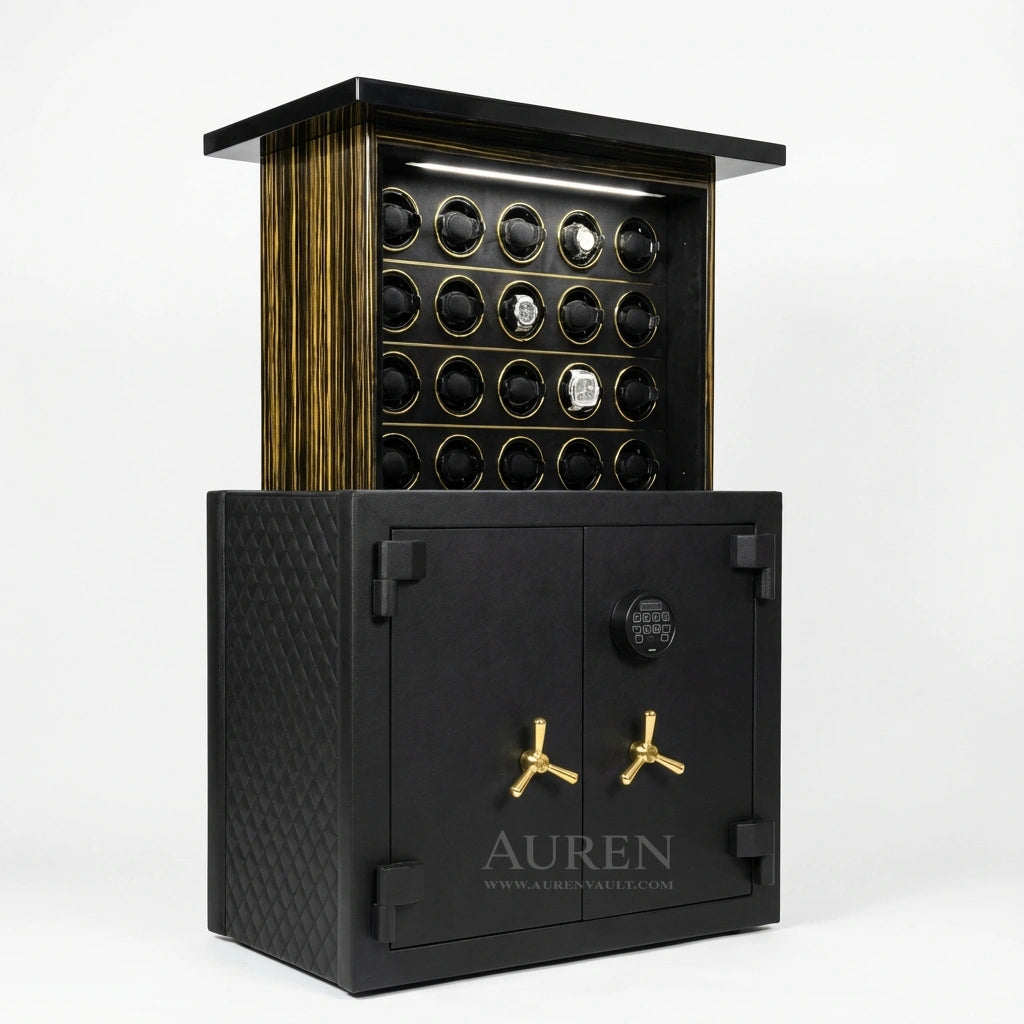
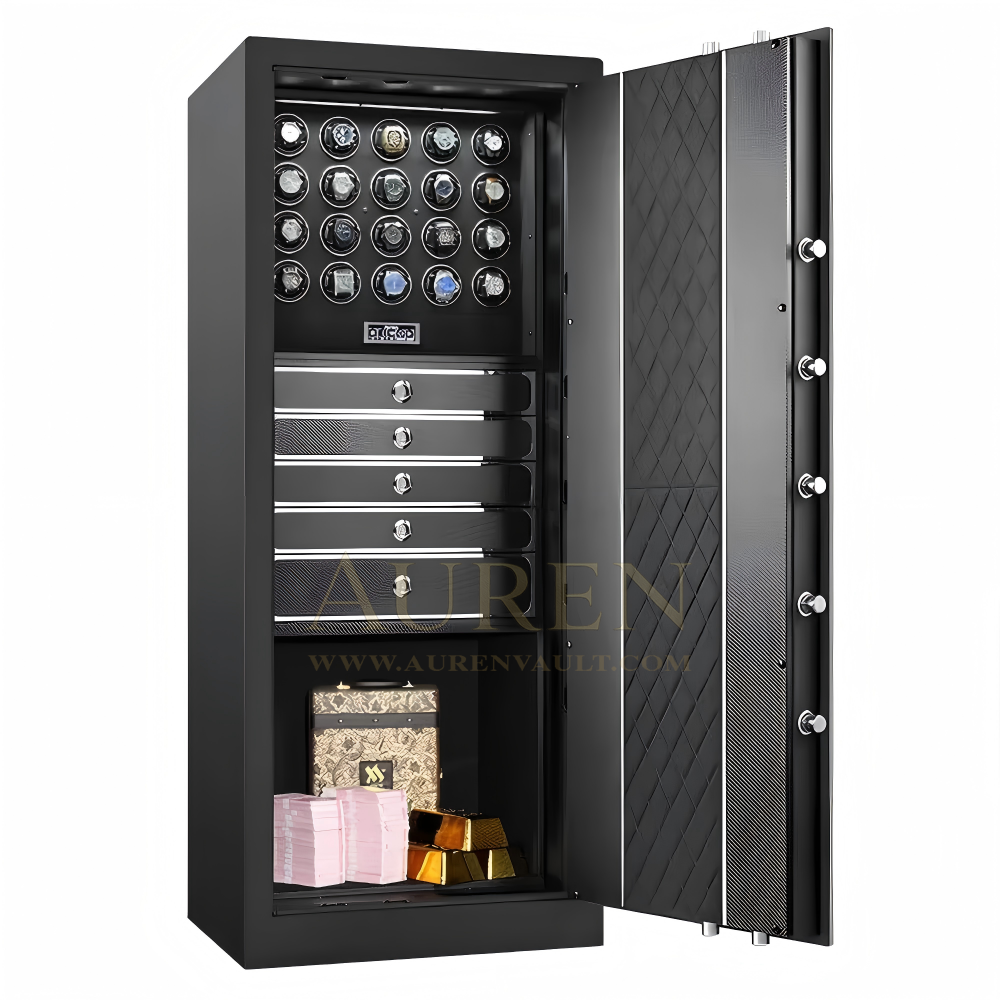
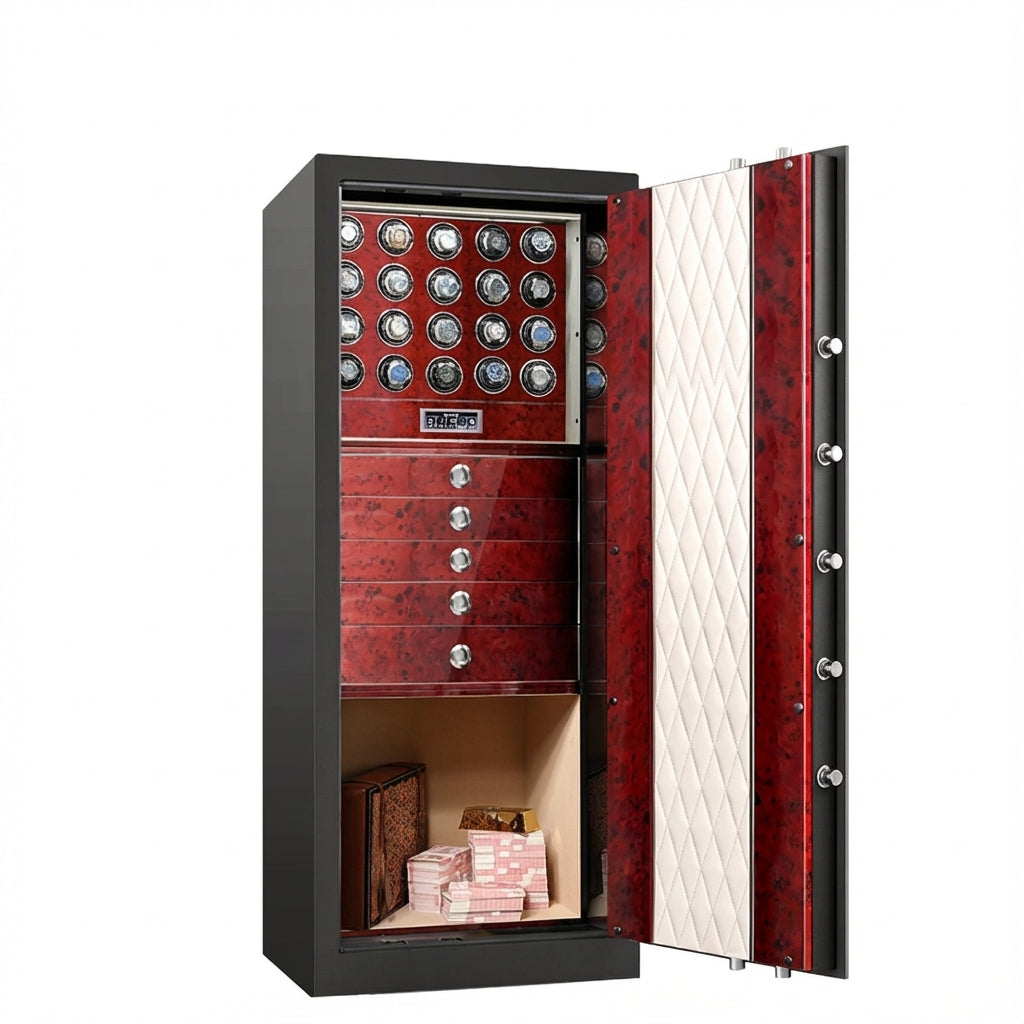
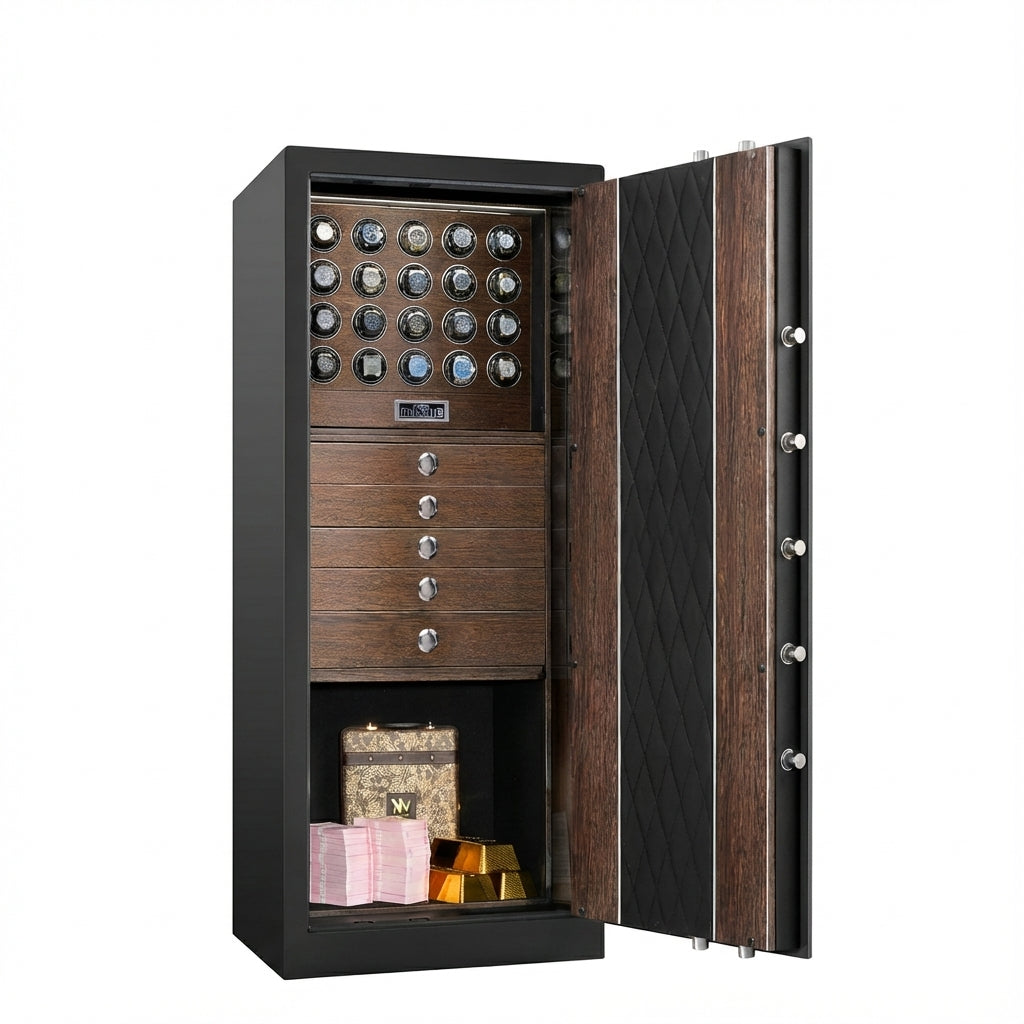
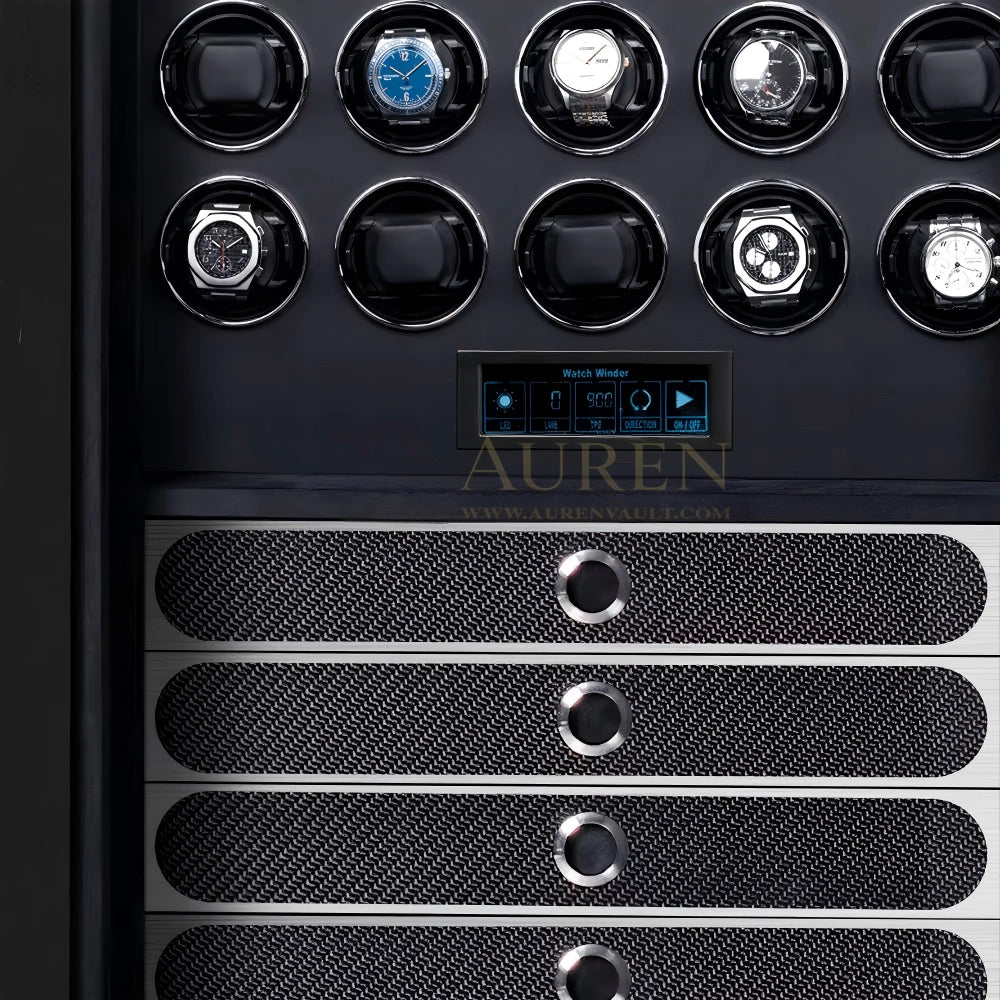
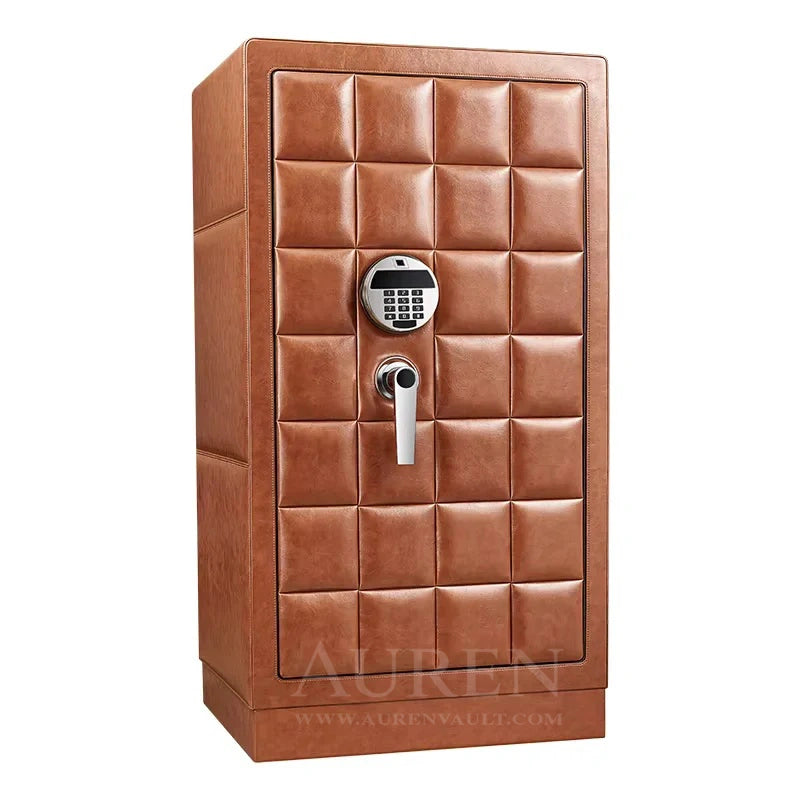
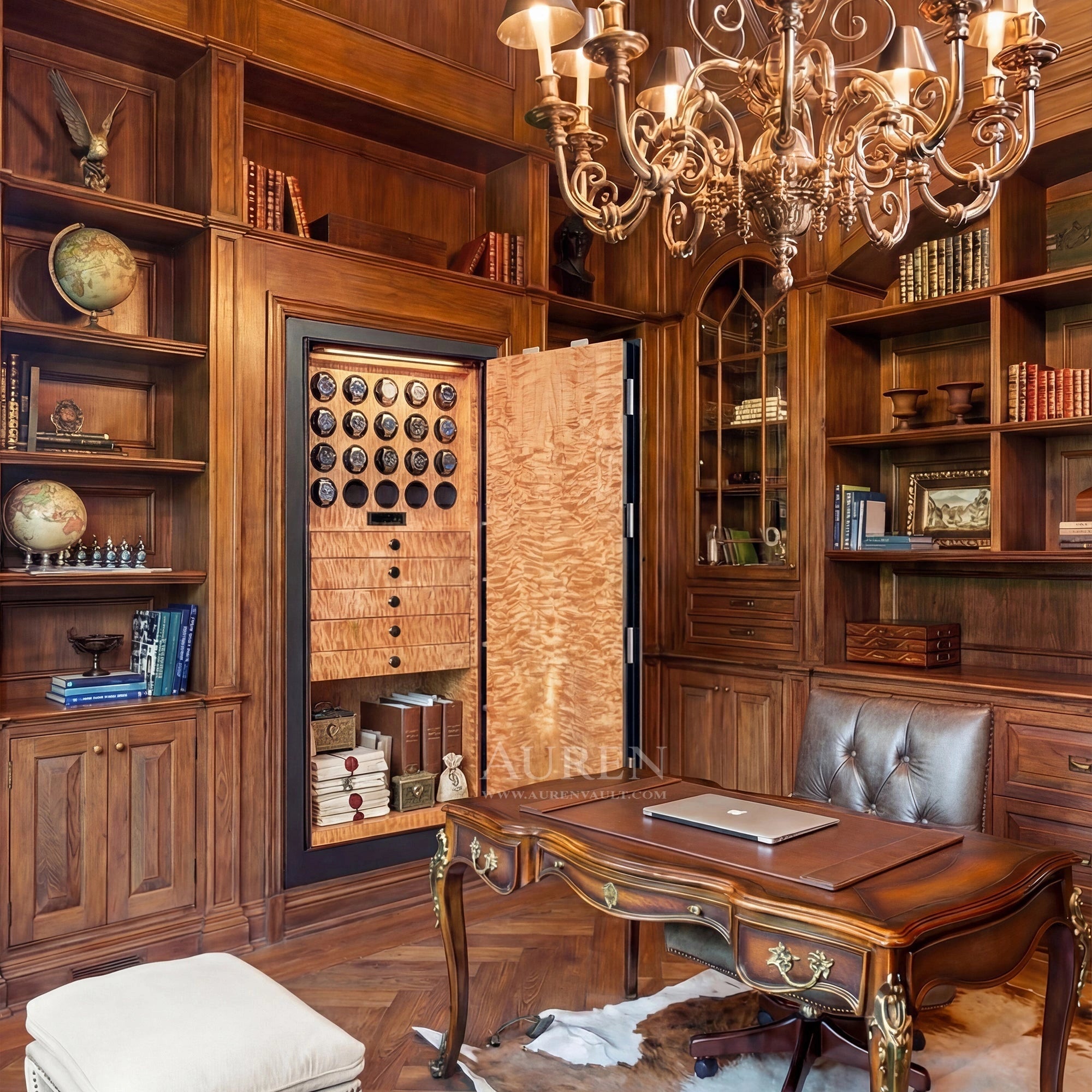
An integrated watch winder safe combines automatic winding modules with enclosed storage.
However, the two functions should be evaluated separately.
A secure enclosure does not automatically guarantee that its winding modules support every Zenith calibre.
Likewise, a programmable winder does not automatically establish the enclosure's physical security rating.
| Consideration | Standalone winder | Integrated watch winder safe |
|---|---|---|
| Primary function | Maintain automatic movement | Combine winding with enclosed storage |
| TPD programming | Depends on model | Depends on installed modules |
| Multiple calibres | Possible with independent controls | Possible with independent controls |
| Passive storage | Usually limited | Can be incorporated |
| Physical security | Generally limited | Depends on construction and testing |
| Appropriate use | Individual watches and smaller collections | Mixed collections requiring organized protection |
A collector should prioritize independent rotor programming when several movement types are involved.
The holder design also matters.
Zenith's vintage-inspired Chronomaster cases, integrated-bracelet DEFY models, and larger Pilot chronographs may require different physical supports.
For additional guidance, the watch winder safe guide examines the practical differences between integrated winding and conventional watch storage.
Planning Storage for a Mixed Zenith Collection
Consider a collection containing the following watches:
-
Chronomaster Revival A384 with El Primero 400.
-
Chronomaster Sport with El Primero 3600.
-
DEFY Skyline with El Primero 3620.
-
DEFY Skyline 36 with Elite 670.
-
DEFY Extreme with El Primero 9004.
-
G.F.J. with manually wound Calibre 135.
Five of these watches contain automatic winding mechanisms.
The G.F.J. does not.
Therefore, the owner does not need six active winding positions.
A cabinet with individually programmable rotors and at least one passive compartment provides a more appropriate starting arrangement.
The owner may also choose to leave certain automatic watches off the winder when they are worn frequently.
This further reduces the number of active positions required.
For a broader range of storage formats, the watch safe collection provides options for comparing capacity and organization.
Larger collections may benefit from luxury watch safes that accommodate a combination of automatic and manually wound timepieces.
Collectors who require specific compartment dimensions, rotor quantities, or different holder arrangements can consider custom watch safe configurations.
The appropriate layout depends on the actual collection rather than the assumption that every mechanical watch requires a dedicated rotor.
Long-Term Storage and Mechanical Care
A watch winder maintains the running state of a compatible automatic movement.
It does not improve the movement's inherent accuracy, eliminate mechanical wear, or replace professional servicing.
For Zenith collectors, proper storage should also account for the physical materials used across the collection.
Chronomaster watches may feature polished steel cases and bracelets.
DEFY references may incorporate titanium, ceramic, integrated bracelets, or rubber straps.
Pilot watches may use substantial cases and leather or rubber straps.
Each requires suitable physical support.
The watch should not be forced around an oversized cushion or placed where its crown and pushers can contact surrounding surfaces.
Environmental stability also matters.
Excessive humidity, condensation, and substantial temperature fluctuations can create unfavorable storage conditions.
A lockable watch safe does not automatically provide active humidity regulation.
Any environmental management features should be evaluated according to the actual product specifications.
For extended periods of non-use, passive storage may be appropriate when consistent with Zenith's maintenance guidance.
The watch storage guide explains broader considerations for protecting mechanical watches over time.
Ultimately, correct storage involves more than maintaining the movement's power reserve.
It also involves protecting the case, strap, bracelet, and operating condition of the complete watch.
Frequently Asked Questions About Zenith TPD Settings
What is the recommended TPD for Zenith watches?
There is no universal setting. Independent references commonly suggest approximately 650–800 TPD for many Zenith automatic movements. However, some sources recommend 800–1,000 TPD clockwise for older El Primero calibres. Verify the exact movement before programming.
What is the best TPD for Zenith El Primero 400?
Published recommendations differ. Several independent databases list approximately 650 TPD bidirectional, while another recommends 800–1,000 TPD clockwise. Owners should confirm the correct external program rather than treating either recommendation as an official Zenith setting.
What winding direction does El Primero 400 require?
Independent references disagree between clockwise and bidirectional external programs. The effective direction should be confirmed for the exact movement and winding device.
What is the recommended TPD for El Primero 3600?
Independent guides commonly suggest approximately 650–800 TPD, often with bidirectional rotation. However, the exact external setting should be verified for the specific Chronomaster reference.
Does an El Primero running at 36,000 vibrations per hour need more TPD?
Not automatically. A frequency of 36,000 vibrations per hour describes the movement's timekeeping operation, while TPD measures external watch-winder rotations. The correct program depends on automatic winding efficiency.
Can the Chronomaster Sport and Chronomaster Revival use the same TPD?
Not without verification. The Chronomaster Sport uses the modern El Primero 3600, while representative Revival models use El Primero 400. Their movement generations and published winding references differ.
What is the best TPD for Zenith DEFY Skyline?
The correct program depends on the calibre. Representative 41 mm models use El Primero 3620, while DEFY Skyline 36 models use Elite 670. Their external winding requirements should be checked independently.
What is the TPD setting for Zenith Elite 670?
Independent winding databases commonly list approximately 650 TPD bidirectional, with some suggesting a broader range toward 800 TPD. The exact watch and winder should be confirmed.
Does a 100-hour Elite 6150 need fewer TPD?
Not necessarily. Its longer power reserve does not independently establish lower external winding requirements. The correct program depends on the movement's automatic winding architecture.
What is the recommended TPD for Chronomaster Original Triple Calendar?
The watch uses El Primero 3610, but a sufficiently reliable universal external TPD setting has not been established here. Movement-specific verification is recommended.
Does Pilot Big Date Flyback need more TPD?
Not automatically. Its El Primero 3652 movement includes flyback chronograph and big date functions, but these complications do not independently establish a higher external rotation requirement.
Can a watch winder keep Zenith DEFY El Primero 21 fully wound?
A compatible winder can maintain the automatic timekeeping movement. However, Calibre 9004 has a separate chronograph barrel that requires manual winding. The winder does not replace that operation.
What is the chronograph power reserve of El Primero 9004?
The separate high-frequency chronograph provides approximately 50 minutes of operating reserve when fully wound. This is different from the approximately 50-hour reserve of the regular timekeeping movement.
Does the Zenith G.F.J. need a watch winder?
No. The G.F.J. uses the manually wound Calibre 135 with approximately 72 hours of power reserve. A conventional rotating winder cannot replenish its mainspring.
Can a Zenith automatic be overwound on a watch winder?
Modern automatic movements generally incorporate mechanisms that limit further mainspring tension once the intended winding state is reached. Nevertheless, unnecessarily high TPD settings offer no inherent benefit.
Why does my Zenith stop while on a winder?
Possible causes include insufficient initial energy, incorrect rotation direction, inadequate effective TPD, device malfunction, or mechanical servicing needs. These factors should be investigated before increasing the winding program.
Is bidirectional winding suitable for every Zenith?
Not automatically. Independent databases frequently list bidirectional programs, but certain El Primero references have conflicting recommendations and some movements use unidirectional internal winding systems. Confirm the exact calibre and device convention.
Is a watch winder safe worthwhile for Zenith watches?
It can be useful for collectors combining several automatic calibres with manually wound watches. The most important considerations are independent programming, suitable physical holders, passive storage capacity, and documented security specifications.
Related Reading: Zenith Winding and Collection Storage
Understanding movement-specific TPD is part of choosing a suitable winding and storage arrangement.
Readers comparing standalone winders and other equipment can explore Best Watch Winder for Zenith Watches, which examines winding compatibility and practical device selection for different Zenith collections.
For collectors considering integrated winding and protective storage, Watch Safes with Built-In Watch Winders: Are They Worth It? discusses the differences between standalone devices and enclosed winding systems.
Long-term environmental protection is equally relevant. Why Humidity Can Damage Luxury Watches explains why moisture and unstable storage conditions matter when protecting mechanical watches.
Final Perspective: Zenith Winding Depends on the Exact Calibre
Zenith's movement history demonstrates why one universal TPD recommendation cannot adequately cover an entire watchmaking manufacture.
The historical El Primero 400 has conflicting independently published winding recommendations.
The modern El Primero 3600, 3610, 3620, and 3652 represent different movement configurations that should be evaluated individually.
The Elite family introduces other automatic architectures, while the El Primero 9004 uses a separate chronograph energy system that conventional automatic winding cannot maintain.
Manually wound movements such as Calibre 135 require no conventional rotating winder.
The most appropriate approach is to identify the exact calibre, confirm its effective external winding direction, and choose a program that maintains sufficient reserve without unnecessary rotation.
For larger collections, independent winding controls and appropriate passive storage can be more valuable than maximizing rotor capacity.
Auren Vault approaches these requirements through integrated winding and watch storage configurations designed to accommodate different automatic movement families and collection arrangements.
The correct Zenith TPD setting is ultimately determined by the movement's actual winding characteristics—not its frequency, complication count, or the most frequently repeated number in a generic winding chart.