


Most Grand Seiko automatic watches can use approximately 650 turns per day (TPD) with bidirectional rotation as an initial reference, according to independent watch-winder databases. This commonly published recommendation covers several movements, including the mechanical 9S65 and 9S85 and automatic Spring Drive calibres such as 9R65 and 9RA2. However, it is not a universal setting issued by Grand Seiko.
Movement technology is particularly important. Grand Seiko produces conventional mechanical watches, Spring Drive watches, and high-precision quartz watches. Within the first two categories, automatic and manually wound movements require different approaches.
Power reserves also vary. The mechanical 9S85 provides approximately 55 hours, the 9S65 offers 72 hours, the Hi-Beat 9SA5 provides 80 hours, and the automatic Spring Drive 9RA2 delivers 120 hours.
A watch winder can maintain the mainspring energy of compatible automatic mechanical and Spring Drive movements. It cannot wind manually operated 9S or 9R calibres, and it provides no energy benefit to 9F quartz watches.
The correct setup starts with the exact calibre, not the collection name.
Understanding Grand Seiko's Three Movement Technologies
Grand Seiko presents an unusual challenge for watch-winder programming because its watches use three fundamentally different methods of timekeeping.
Its mechanical movements use a traditional escapement regulated by a mechanical balance.
Spring Drive movements are powered by a mainspring but use an electronically controlled regulating system instead of a conventional mechanical escapement.
Grand Seiko's 9F quartz movements use battery-powered quartz regulation.
These differences are essential when determining whether a watch can benefit from automatic winding.
Consider the Snowflake SBGA211 and the White Birch SLGH005.
The Snowflake contains an automatic Spring Drive 9R65, while the White Birch uses the mechanical Hi-Beat 9SA5.
Both movements receive winding energy from an oscillating weight and can therefore be maintained by a compatible external winder.
However, their internal regulating systems and power reserves are different.
Now consider the Elegance SBGY007, which uses the manually wound Spring Drive 9R31.
Although it shares the Spring Drive name with the Snowflake, its mainspring must be wound through the crown.
A rotating watch winder cannot replenish it.
This illustrates the central principle of Grand Seiko compatibility: the presence of an automatic winding system matters more than the movement's timekeeping technology.
Grand Seiko TPD Settings by Calibre
Turns per day describes the number of complete external rotations performed by a watch winder over a 24-hour period.
Winding direction describes whether those rotations occur clockwise, counterclockwise, or alternately in both directions.
The objective is to provide sufficient effective winding to maintain the movement's running reserve.
Independent reference databases frequently list approximately 650 TPD bidirectional for several Grand Seiko automatic calibres.
However, the manufacturer publishes movement specifications such as power reserve, frequency, and winding type without necessarily providing a universal external TPD program.
Grand Seiko TPD and Winding Direction Chart
| Calibre | Movement type | Power reserve | Independent TPD guidance | Direction |
|---|---|---|---|---|
| 9S65 | Automatic mechanical | 72 hours | Approx. 650 | Both |
| 9S66 | Automatic mechanical GMT | 72 hours | Verify variant; 650 is a common family reference | Verify |
| 9S85 | Automatic mechanical Hi-Beat | 55 hours | Approx. 650 | Both |
| 9S86 | Automatic Hi-Beat GMT | 55 hours | Verify variant | Verify |
| 9SA5 | Automatic Hi-Beat | 80 hours | Approx. 650 | Both |
| 9SC5 | Automatic Hi-Beat chronograph | 72 hours | Verify exact program | Verify |
| 9R65 | Automatic Spring Drive | 72 hours | Approx. 650 | Both |
| 9R86 | Automatic Spring Drive GMT | 72 hours | Verify exact program | Verify |
| 9RA2 | Automatic Spring Drive | 120 hours | Approx. 650 | Both |
| 9RA5 | Automatic Spring Drive | 120 hours | Verify exact program | Verify |
| 9R31 | Manual Spring Drive | 72 hours | Not applicable | No winder |
| 9S64 | Manual mechanical | 72 hours | Not applicable | No winder |
| 9SA4 | Manual Hi-Beat mechanical | 80 hours | Not applicable | No winder |
| 9F85 | Battery-powered quartz | Not applicable | Not applicable | No winder |
Power reserves and winding classifications are based on Grand Seiko's movement specifications. Numeric TPD values are third-party recommendations, not manufacturer-issued external winding instructions. “Verify” means that an exact recommendation has not been sufficiently established for the particular calibre.
The table reveals an important distinction between running autonomy and external winding requirements.
The 9S85 has a shorter reserve than the 9S65, but that does not automatically mean it requires more daily rotations.
Similarly, the 9RA2 offers five days of power reserve without establishing a higher TPD requirement than the three-day 9R65.
For more information on rotation counting and winding direction, consult the watch TPD guide.
Mechanical Grand Seiko: 9S65, 9S85, and 9SA5
Grand Seiko's mechanical family demonstrates how movements with different frequencies and power reserves can all use automatic winding.
However, their external settings should be established independently.
Calibre 9S65: The Three-Day Automatic
The 9S65 is one of Grand Seiko's established mechanical movements.
It operates at 28,800 vibrations per hour, equivalent to 4 Hz, and provides approximately 72 hours of power reserve.
Its automatic winding mechanism allows the mainspring to receive energy through normal wrist movement.
Independent references commonly list approximately 650 TPD bidirectional.
This provides a useful starting recommendation for a confirmed 9S65, subject to checking the external winder's programming convention.
For someone wearing a 9S65-powered watch during the working week, its three-day autonomy can often bridge a short period of non-use.
A winder becomes more convenient when the watch remains unworn for longer intervals.
The principal benefit is avoiding repeated starting and adjustment rather than improving the movement's inherent timekeeping performance.
Calibre 9S85: Why High Frequency Does Not Establish TPD
The 9S85 is a Hi-Beat movement operating at 36,000 vibrations per hour, equivalent to 5 Hz.
It provides approximately 55 hours of power reserve.
This shorter autonomy can make a winder more useful for someone who alternates between several watches.
However, its higher regulating frequency does not automatically dictate a higher TPD.
The balance's frequency measures the oscillations of the timekeeping system.
External TPD measures the rotations delivered to the watch.
These are not interchangeable specifications.
Independent winding references commonly suggest approximately 650 TPD bidirectional for the 9S85.
That recommendation should still be verified for the particular reference and device.
Calibre 9SA5: Eighty Hours and the Dual Impulse Escapement
The 9SA5 represents a newer generation of Grand Seiko mechanical movement architecture.
Used in watches such as the White Birch SLGH005, it operates at 5 Hz and provides approximately 80 hours of power reserve.
Its design incorporates twin barrels and the Dual Impulse Escapement.
These features are part of Grand Seiko's effort to combine high-frequency operation with improved energy efficiency.
However, improved energy efficiency does not translate directly into one specific external TPD value.
Independent references commonly associate the 9SA5 with approximately 650 TPD bidirectional.
The exact program should be confirmed before prolonged use.
For an owner who wears the watch several times per week, the approximately 80-hour reserve may make external winding unnecessary.
For a collector who rotates the watch only occasionally, a suitable winder can help maintain its running state.
Spring Drive: Why 9R65 and 9RA2 Need Different Consideration
Spring Drive is often misunderstood in discussions of watch winders.
It uses an electronic regulating system, but its source of operating energy is a mainspring.
In automatic Spring Drive movements, an oscillating weight replenishes that mainspring through normal wrist movement.
A conventional watch winder can therefore provide useful energy maintenance.
The distinction from quartz is important.
A battery-powered 9F quartz movement does not benefit from rotating the watch.
An automatic Spring Drive does.
Calibre 9R65: Three-Day Spring Drive
The 9R65 is associated with the Snowflake SBGA211 and numerous other Grand Seiko references.
It provides approximately 72 hours of power reserve.
The movement uses Grand Seiko's automatic winding technology to transfer rotor motion into stored mainspring energy.
Independent references commonly recommend approximately 650 TPD bidirectional as a starting program.
For a Snowflake worn regularly, normal wrist movement may supply sufficient winding.
A winder becomes useful when the watch remains unworn beyond its available reserve.
Calibre 9RA2: Five Days of Spring Drive Autonomy
The 9RA2 provides approximately 120 hours of power reserve.
It is used in watches such as the Evolution 9 White Birch SLGA009.
Its extended autonomy significantly changes the practical need for a winder.
An owner who removes the watch on Thursday and returns to it on Monday may find that it is still operating, provided sufficient energy was stored initially.
This can eliminate the need for external winding during many ordinary rotation schedules.
However, five days of reserve does not establish a lower or higher TPD requirement.
The appropriate program still depends on the automatic winding mechanism.
Independent references commonly suggest approximately 650 TPD bidirectional, but the exact program should be confirmed.
Calibre 9RA5: The Power Reserve Indicator Advantage
The 9RA5 also provides approximately 120 hours of power reserve.
Unlike the 9RA2, which displays its reserve on the movement side, the 9RA5 incorporates a dial-side power reserve indicator.
This can be especially useful when evaluating whether a winder is maintaining sufficient stored energy.
A watch may continue running for several days even while its power reserve gradually decreases.
A visible reserve indicator provides additional information beyond simply checking whether the seconds hand is moving.
If the indication remains relatively stable during a period of external winding, the selected program may be adequate.
If it consistently declines, the owner should review the winding direction, programmed rotations, device performance, and initial reserve.
A declining indication should prompt investigation rather than an automatic switch to maximum TPD.
Grand Seiko GMT Movements: Why the Exact Calibre Matters
Grand Seiko offers GMT functionality across both mechanical and Spring Drive movements.
Representative calibres include 9S66, 9S86, and 9R86.
These movements can all be automatic, but they have different internal architectures.
The 9S66 provides approximately 72 hours of reserve and operates at 4 Hz.
The 9S86 is a Hi-Beat mechanical GMT movement with approximately 55 hours of reserve.
The 9R86 is an automatic Spring Drive GMT chronograph movement offering approximately 72 hours of reserve.
The GMT function does not independently determine the number of external winding rotations.
The correct program should follow the automatic calibre.
For a collector who travels frequently, maintaining an automatic GMT watch between wears can reduce the need to reset its indications.
However, a longer power reserve may already provide adequate autonomy for short periods of non-use.
Tentagraph 9SC5: The Automatic Chronograph Exception
The Tentagraph uses Grand Seiko's automatic Calibre 9SC5.
It operates at 36,000 vibrations per hour and provides approximately 72 hours of power reserve under the manufacturer's specified conditions.
Its chronograph mechanism introduces additional mechanical functions.
However, the presence of a chronograph does not establish a universal requirement for more TPD.
A watch winder maintains the movement's automatic mainspring winding system.
It does not operate the chronograph pushers or directly control elapsed-time measurement.
The exact external program for Calibre 9SC5 should therefore be confirmed independently rather than inherited automatically from 9SA5 or 9S85.
For owners, physical compatibility also matters.
The Tentagraph's substantial case requires enough clearance around the crown and chronograph controls throughout a complete rotation.
Why Some Grand Seiko Watches Cannot Use a Winder
Not every mainspring-powered Grand Seiko is automatic.
The Spring Drive 9R31 is manually wound.
It provides approximately 72 hours of reserve but cannot receive energy from conventional external watch rotation.
The mechanical 9S64 is also manually wound, with approximately 72 hours of reserve.
The Hi-Beat 9SA4 offers approximately 80 hours but remains a manual-winding movement.
These watches require crown winding according to Grand Seiko's instructions.
The same distinction applies to high-precision quartz.
A 9F85 quartz movement is battery-powered and does not contain a conventional automatic winding system.
For these watches, appropriate passive storage is more useful than an active rotor.
How to Set Up a Grand Seiko Watch Winder
The correct setup begins with identifying the exact movement.
Do not select the program using only the words Snowflake, White Birch, Heritage, or Evolution 9.
Confirm whether the watch is automatically wound, manually wound, or quartz-powered.
For an automatic watch that has stopped, follow Grand Seiko's instructions for restarting it through the crown.
This establishes an initial reserve before the external program is evaluated.
Once the movement is running, choose the verified TPD and rotation direction.
Mount the watch securely and check clearance throughout a complete rotation.
Then observe whether the watch maintains adequate energy over several days.
For references with a power reserve indicator, that display can provide useful feedback.
If the watch stops or the reserve declines, investigate the program, actual direction, motor performance, and mechanical condition before increasing TPD.
A winder should maintain energy, not compensate for a movement requiring service.
Choosing a Winder for Grand Seiko Cases and Bracelets
Electronic compatibility is not the only consideration.
Grand Seiko watches feature carefully finished cases, polished surfaces, and different strap and bracelet arrangements.
The Snowflake's titanium construction creates different handling characteristics from a larger steel sports watch.
The Hi-Beat White Birch and Tentagraph also have different case profiles.
A compressible cushion can accommodate different wrist sizes and prevent unnecessary tension on bracelets.
Leather straps should not be stretched around oversized rigid holders.
The compartment should provide adequate clearance around the case, crown, and other controls.
A stable fit is especially important for watches with highly polished surfaces.
For several watches, independent rotor programming and adjustable holders provide greater flexibility than a fixed-program multi-watch unit.
Planning Storage for a Mixed Grand Seiko Collection
Consider a collection containing a Snowflake 9R65, White Birch 9SA5, Spring Drive 9RA2, Tentagraph 9SC5, manual Spring Drive 9R31, and quartz 9F85.
Four watches use automatic winding.
Two do not.
The collection therefore does not require six active winding positions.
Four programmable rotors and two passive compartments would provide a more appropriate starting arrangement.
Even then, all automatic watches do not necessarily need to remain running.
The owner may choose to leave the five-day Spring Drive off the winder when it is worn frequently.
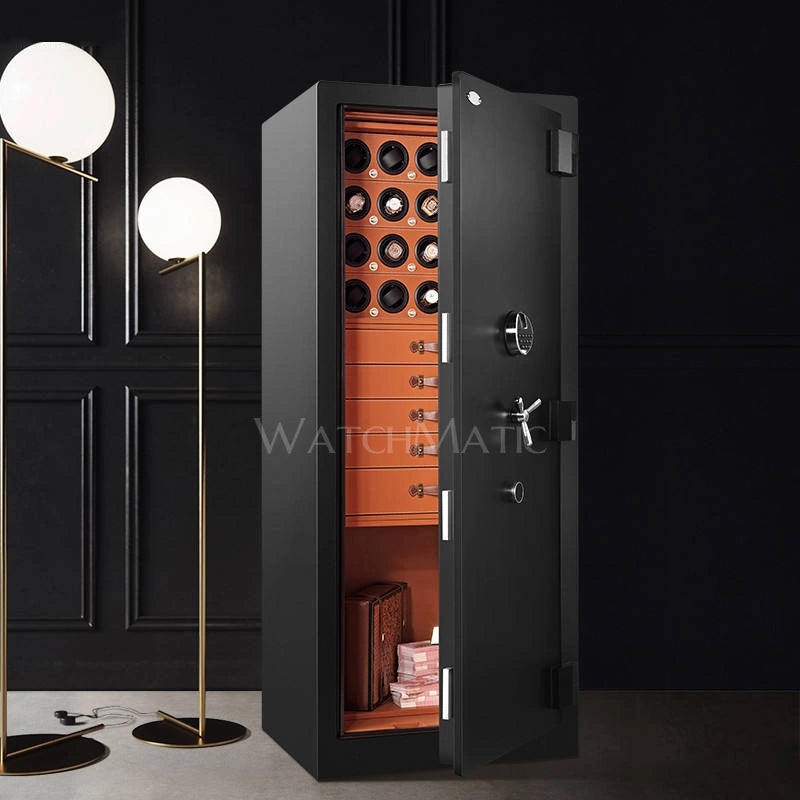
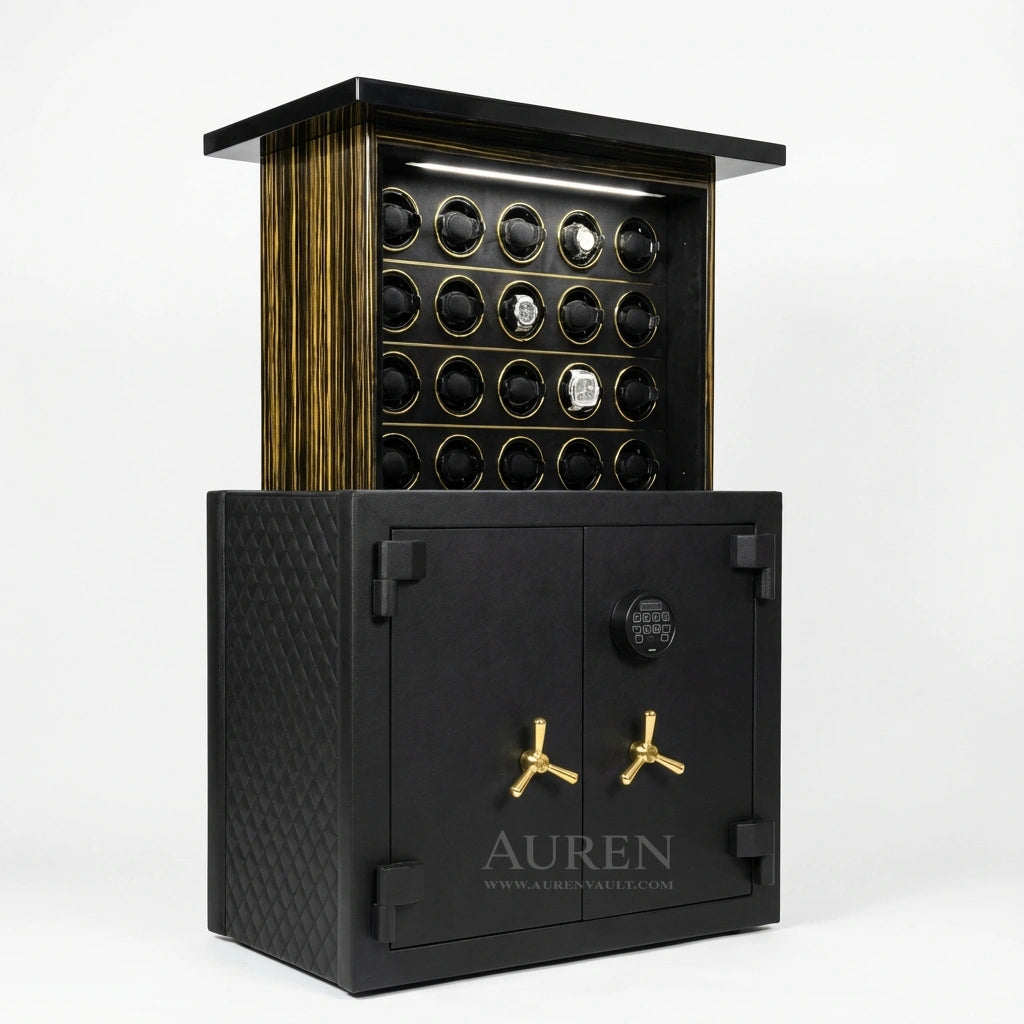
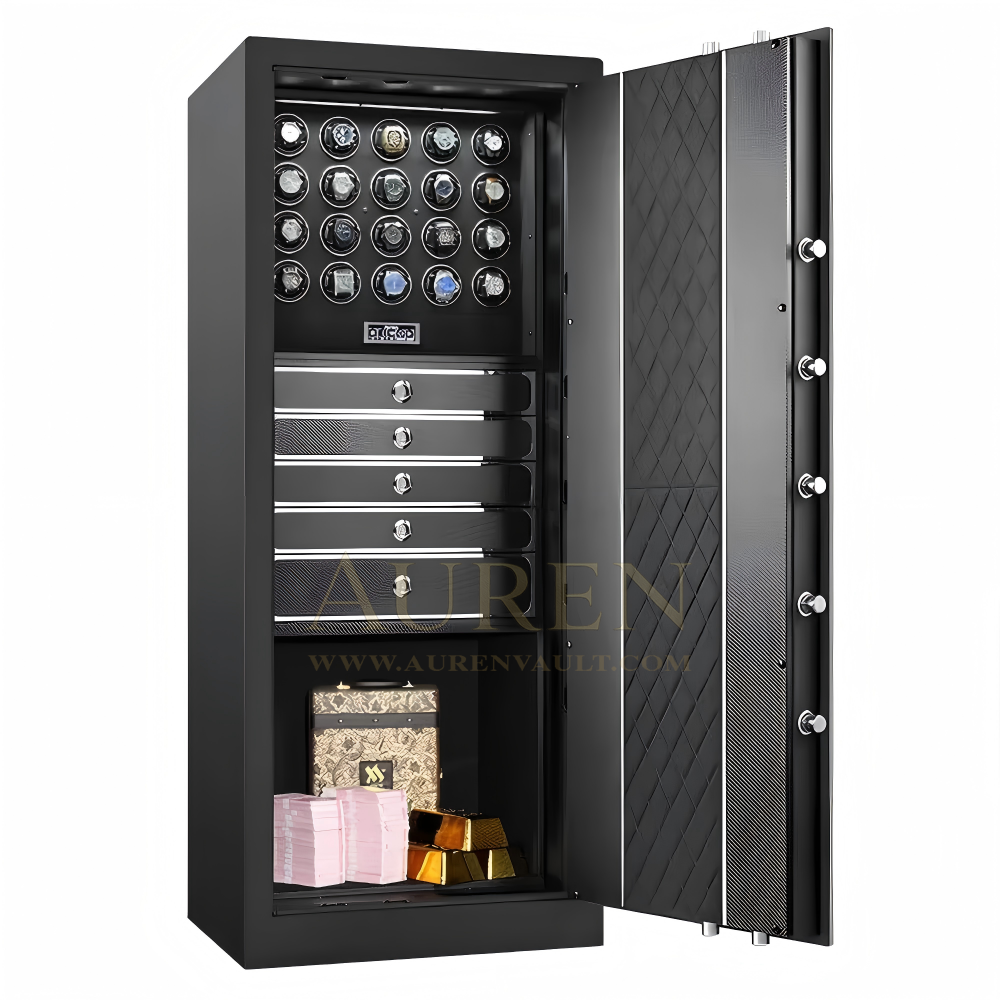
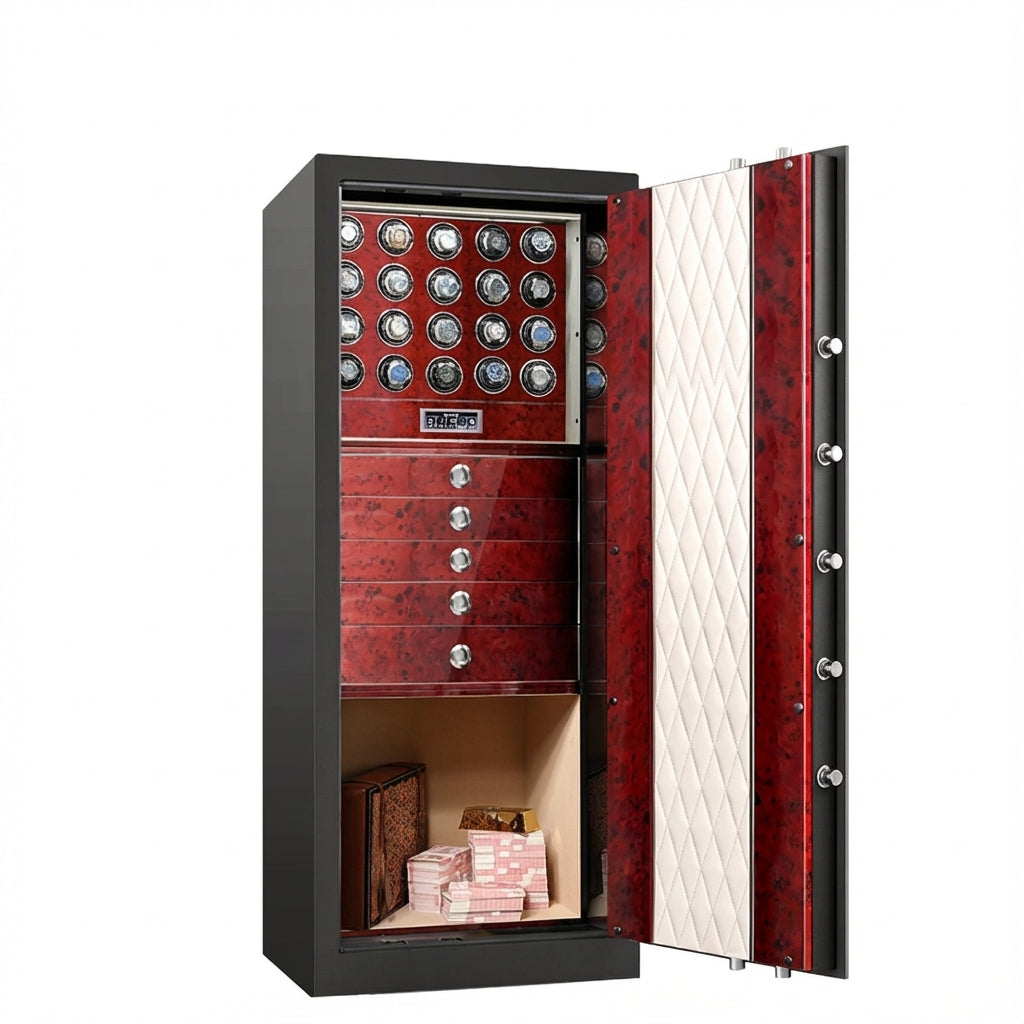
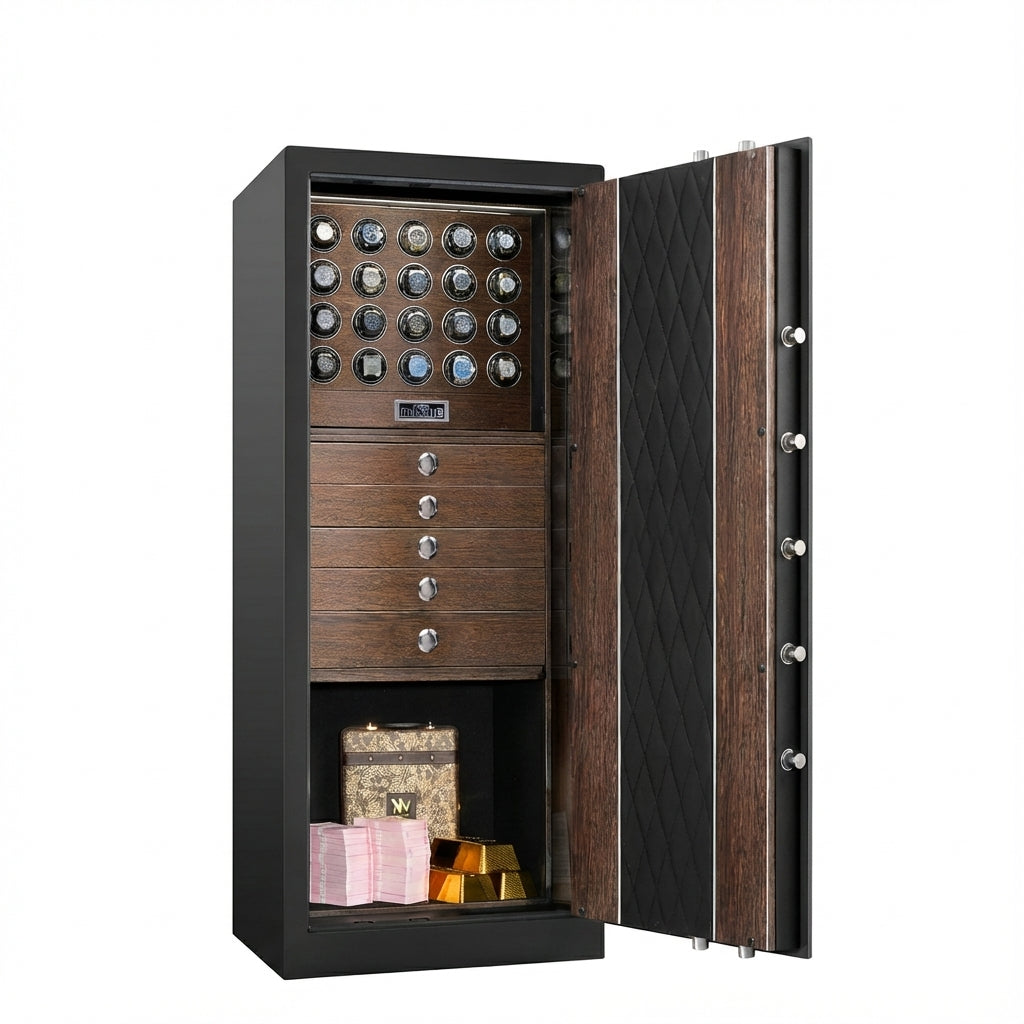
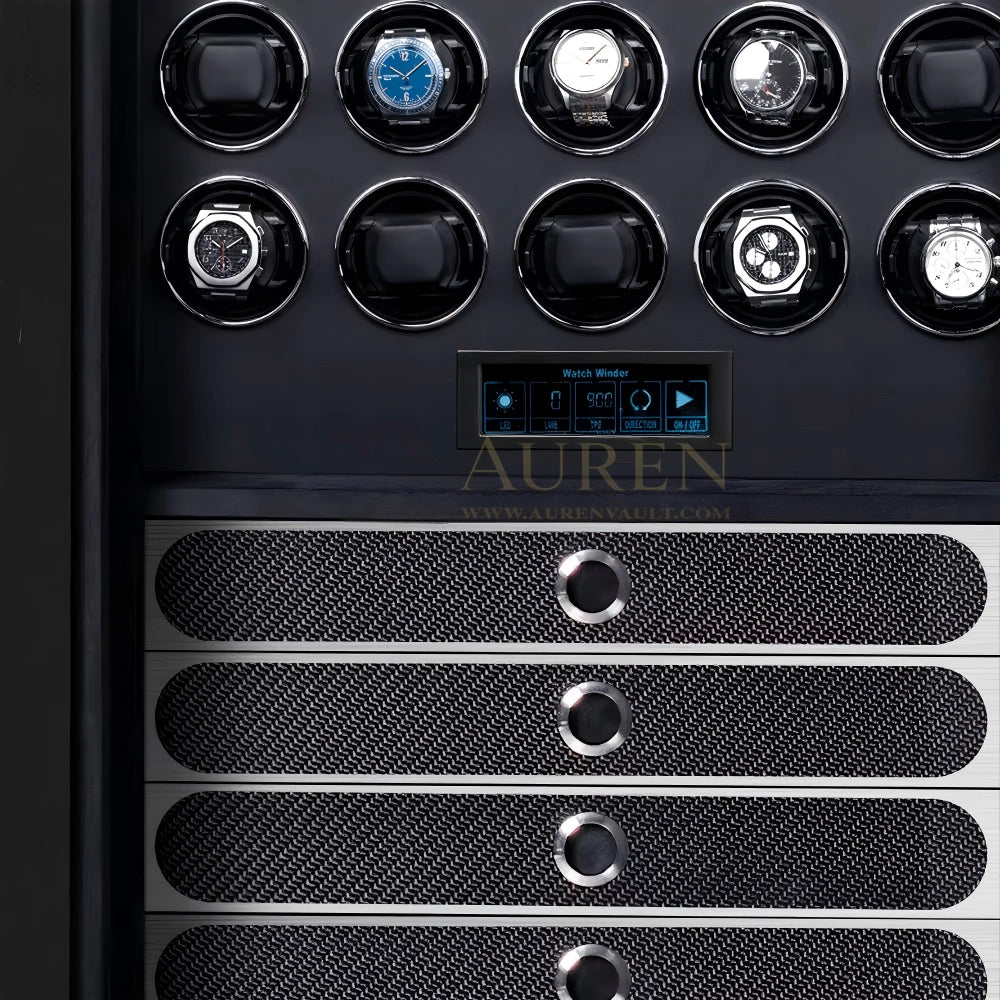
For collectors wanting combined winding and enclosed storage, watch winder safes can accommodate different automatic and passive storage requirements.
However, winding performance and physical security should be evaluated separately.
A lockable enclosure does not automatically establish certified burglary or fire resistance.
The watch winder safe guide explains the practical considerations involved in combining these functions.
Long-Term Storage and Maintenance
A winder maintains the operating state of a compatible automatic movement.
It does not improve the movement's inherent accuracy or replace professional servicing.
For extended non-use, allowing an automatic watch to stop may be reasonable when consistent with Grand Seiko's maintenance instructions.
Appropriate storage should also minimize excessive moisture, condensation, and large temperature fluctuations.
A lockable cabinet does not automatically provide active humidity regulation.
The watch storage guide provides further information about environmental and physical preservation.
The objective is to protect the entire watch rather than keep every movement running continuously.
Frequently Asked Questions About Grand Seiko TPD
What is the recommended TPD for Grand Seiko watches?
Approximately 650 TPD bidirectional is a commonly published independent starting recommendation for several automatic calibres, including 9S65, 9S85, 9SA5, 9R65, and 9RA2. It is not a universal manufacturer-issued instruction.
Can a Grand Seiko Spring Drive use a watch winder?
Yes, if it is an automatic Spring Drive movement. Calibres 9R65, 9RA2, and 9RA5 can benefit from compatible external winding. Manual Spring Drive movements such as 9R31 cannot.
What TPD should I use for the Grand Seiko Snowflake?
The Snowflake SBGA211 uses automatic Spring Drive Calibre 9R65. Independent references commonly suggest approximately 650 TPD bidirectional, subject to verification for the specific device.
Does the 9SA5 require more TPD because it runs at 5 Hz?
Not automatically. The movement's frequency does not directly determine the external winding requirement.
Does the 9RA2 need a winder with its five-day reserve?
No. Its 120-hour reserve can support several days of non-use. A winder becomes useful when the watch remains unworn for longer intervals.
Can a winder charge Grand Seiko quartz watches?
No. Battery-powered 9F quartz movements do not benefit from conventional rotating watch winders.
Can a Grand Seiko be overwound on a winder?
Modern automatic movements generally incorporate systems that limit further mainspring tension. Nevertheless, unnecessarily high external rotation settings offer no corresponding benefit once adequate reserve is maintained.
Does a manual Spring Drive need a winder?
No. A manually wound Spring Drive receives energy through its crown rather than a conventional automatic rotor.
Is a watch winder useful for Grand Seiko GMT watches?
It can be convenient when the automatic GMT movement remains unworn for extended periods. The exact external program should be verified for the particular calibre.
Is a watch winder safe necessary for Grand Seiko?
Not necessarily. A standalone winder may be sufficient for an individual automatic watch. Integrated storage becomes more relevant when a collection contains several movement types and requires enclosed protection.
Related Reading: Grand Seiko and Automatic Watch Storage
For a broader discussion of equipment selection, Best Watch Winder for Grand Seiko Watches examines movement compatibility, Spring Drive considerations, and practical storage configurations.
Collectors comparing winding with physical security can also explore Watch Safes with Built-In Watch Winders: Are They Worth It?.
For environmental preservation, Why Humidity Can Damage Luxury Watches discusses risks associated with moisture and long-term storage.
Final Perspective: Grand Seiko TPD Depends on Winding Architecture
Grand Seiko demonstrates why watch-winder compatibility cannot be determined by appearance, power reserve, or timekeeping technology alone.
The automatic 9R65 and 9RA2 Spring Drive movements can benefit from compatible external winding, while manually wound Spring Drive calibres cannot.
The 9S65, 9S85, and 9SA5 mechanical movements also differ in frequency and power reserve without automatically requiring different external settings solely because of those characteristics.
For mixed collections, individually programmable rotors and passive storage can provide greater flexibility.
Auren Vault approaches these needs through watch storage and integrated winding configurations designed to accommodate different movement families and ownership routines.
The correct Grand Seiko TPD program is ultimately the one verified for the exact calibre and external device, supplying sufficient effective winding without unnecessary rotation.