
The best watch winder for Raymond Weil watches is a programmable rotating unit that supports the movement's winding requirements, offers adjustable turns per day (TPD), and holds the watch securely during controlled rotation and rest cycles.
Raymond Weil provides its own guidance: a rotating watch winder operating at four turns per minute can replenish an automatic watch over approximately five to six hours. This describes rotation speed and winding-session duration, not a universal 24-hour TPD program.
Independent databases commonly recommend around 650 TPD with bidirectional rotation for many Raymond Weil automatics. Older Freelancer and Nabucco chronographs may have different recommendations, including approximately 800 TPD clockwise.
The exact calibre matters. Freelancer, millesime, and maestro automatic watches can benefit from compatible winders, while quartz toccata models and the manually wound 2026 millesime “The Fifty” cannot.
For everyday wear, a winder is optional. For collectors rotating several automatic watches, the right device can make ownership considerably more convenient.
Raymond Weil Has Its Own Watch Winder Guidance—Here's What It Means
Raymond Weil is unusual among Swiss watch manufacturers because it provides publicly accessible advice on using an external watch winder.
In its official FAQ, the manufacturer confirms that its automatic watches can be wound using a rotating watch winder.
The manufacturer describes a conventional device that rotates the watch, allowing its internal oscillating weight to move and replenish the movement's stored energy.
It also recommends a rotation speed of four turns per minute, with an operating period of approximately five to six hours.
This is valuable information, but it must be interpreted correctly.
A recommendation expressed in turns per minute is not necessarily the same as a daily winding program expressed in TPD.
The distinction matters because many commercial winders are configured using daily rotation counts rather than continuous operating speed.
Four Turns per Minute vs. Turns per Day
Raymond Weil's published guidance is:
-
Rotational speed: 4 turns per minute.
-
Winding-session duration: approximately 5–6 hours.
-
Equipment type: a conventional rotating watch winder.
At a constant four rotations per minute, a five-hour session would involve approximately 1,200 rotations. A six-hour session would involve approximately 1,440.
Those figures describe the total rotations during the specified session.
They should not automatically be entered as a daily maintenance setting.
A watch winder that performs 1,200 turns during a five-hour session operates differently from one that distributes 1,200 turns across 24 hours.
The manufacturer's guidance also concerns replenishing winding energy. That is not necessarily identical to determining the minimum program needed to maintain an already running movement.
For continuous use, the correct program should reflect the individual calibre and the winder's control system.
Why You Should Not Run a Winder Continuously at Four RPM
The manufacturer's four-turns-per-minute recommendation is not an instruction to rotate the watch continuously all day.
At that speed, uninterrupted operation for 24 hours would result in 5,760 rotations.
That is substantially different from the five-to-six-hour session described in Raymond Weil's FAQ.
A suitable watch winder should offer a controlled program with periods of rest.
Owners should also confirm how the device counts rotations and defines direction.
The relevant objective is to maintain sufficient power, not maximize the number of external turns.
For the manufacturer's explanation, see the Raymond Weil official watch winder FAQ.
Which Raymond Weil Watches Can Use a Watch Winder?
Raymond Weil produces automatic mechanical watches, manually wound mechanical watches, and quartz-powered models.
The movement must be identified before selecting a winder.
A watch's collection name, open-heart dial, or chronograph appearance is not enough to establish compatibility.
Raymond Weil Watch Winder Compatibility by Calibre
| Watch or collection | Representative calibre | Movement type | Power reserve | Winder suitable? |
|---|---|---|---|---|
| freelancer Calibre RW1212 | RW1212 | Automatic | 41 hours | Yes |
| freelancer Diver | RW4200 | Automatic | 41 hours | Yes |
| freelancer GMT Worldtimer | RW3230 | Automatic | 56 hours | Yes |
| freelancer Tri-Compax Chronograph | RW5030 | Automatic | 62 hours | Yes |
| millesime Small Seconds | RW4251 | Automatic | 41 hours | Yes |
| millesime Central Seconds | RW4200 | Automatic | 41 hours | Yes |
| millesime Moonphase | RW4280 | Automatic | 41 hours | Yes |
| millesime Chronograph | RW5030 | Automatic | 62 hours | Yes |
| maestro Tradition, selected historical models | RW4200 / RW4250 | Automatic | Approximately 38 hours | Yes |
| millesime “The Fifty” 2026 | RW1976 / Valjoux 23-6 | Manual-winding | 40 hours | No |
| toccata Classic | Quartz movement | Quartz | Not applicable | No |
These specifications apply to representative references or movement generations. Confirm the exact movement in your watch before choosing an external winding program.
One of the most important distinctions appears within the millesime collection.
An automatic millesime Chronograph with calibre RW5030 can use a compatible watch winder.
The limited-edition millesime “The Fifty” uses a manually wound chronograph movement and cannot be wound by conventional external rotation.
Both are mechanical chronographs, but only one contains an automatic winding mechanism.
Freelancer RW1212: A Visible Balance Is Not a Tourbillon
The freelancer Calibre RW1212 is among Raymond Weil's most distinctive contemporary movements.
It was developed through collaboration with Sellita and incorporates an unusual dial-side construction that exposes the balance wheel at six o'clock.
The visible regulating organ is supported by a prominent bridge, giving the watch a mechanically expressive appearance.
Representative RW1212 references offer approximately 41 hours of power reserve.
The movement uses automatic winding, with an oscillating weight visible through the exhibition caseback.
A correctly configured watch winder can therefore maintain its energy reserve between wears.
Why an Open-Heart Display Does Not Change Winding Compatibility
The RW1212's exposed balance wheel can resemble the visual architecture of more complicated mechanical watches.
However, the movement does not become manually wound simply because its regulating mechanism is visible.
Nor should the display be confused with a tourbillon.
The balance wheel oscillates in position rather than being carried by a rotating tourbillon cage.
The automatic winding mechanism performs a separate function.
Its oscillating weight responds to motion and transfers energy to the mainspring.
A watch winder supplies that external motion without directly controlling the visible balance.
For collectors, this distinction prevents unnecessary assumptions about the type of winding equipment required.
Round vs. Cushion-Shaped RW1212 Cases
Raymond Weil offers RW1212 watches in conventional round cases and newer cushion-shaped designs.
Selected square-shaped references measure approximately 40 × 40 mm, while other Skeleton models use round cases around 40–42 mm.
These differences affect physical compatibility.
A conventional winder holder may accommodate a round freelancer easily, but a cushion-shaped case requires adequate clearance around its corners.
The case should remain secure without pressing against the edges of the winding compartment.
For these watches, a stable cushion and adjustable programming are more important than an elaborate exterior display.
Freelancer Diver: Understanding Calibre RW4200
The freelancer Diver provides a more conventional automatic watchmaking experience.
Representative models, including reference 2775-ST1-20051, use calibre RW4200 with approximately 41 hours of power reserve.
The watch features a substantial stainless-steel case, a rotating dive bezel, and a screw-down crown.
For an owner who wears the Diver regularly, ordinary wrist movement may provide adequate winding.
A winder becomes convenient when the watch is worn only occasionally.
Because the reserve is approximately 41 hours, the movement can stop during a weekend away from the wrist.
A compatible winder can help maintain the operating reserve, reducing repeated time and date adjustments.
The Dive Bezel Does Not Determine Winder Direction
The freelancer Diver has a unidirectional rotating bezel.
That does not mean its automatic movement requires a unidirectional external watch winder.
The bezel is used to measure elapsed time.
The automatic winding system operates inside the movement and has its own directional characteristics.
These are independent mechanisms.
The correct clockwise, counterclockwise, or bidirectional program must be selected according to the calibre rather than the bezel's function.
Check Crown and Case Clearance
The Diver's screw-down crown and substantial case require appropriate physical clearance.
The crown should be secured correctly after setting or winding, following Raymond Weil's instructions.
The watch should then be mounted on a cushion that supports its bracelet or strap without excessive tension.
A device that offers the right TPD but insufficient clearance around the case is not an appropriate choice.
Freelancer GMT Worldtimer: A Complication Worth Keeping Running
The freelancer GMT Worldtimer illustrates another practical reason to use a watch winder.
Representative references use calibre RW3230, a self-winding mechanical movement offering approximately 56 hours of power reserve.
The watch combines a GMT indication with world-time information, allowing the wearer to monitor time across different locations.
The additional indications make it more involved than a simple three-hand automatic watch.
If the movement stops, the owner may need to restore the relevant displays according to the operating instructions.
A compatible winder can reduce how frequently this is necessary.
The Newer World-Traveller Still Requires Calibre-Specific Settings
Raymond Weil's 2026 Freelancer World-Traveller limited edition also uses the automatic RW3230 movement.
It offers approximately 56 hours of reserve and includes GMT, world-time, and day/night indications.
Although the watch incorporates additional travel-oriented functionality, it does not automatically require a higher external TPD simply because it displays more information.
A watch winder replenishes energy through the automatic winding mechanism.
It does not update world-time information, recognize travel between time zones, or adjust for daylight saving time.
Those functions still require the owner's attention.
The relevant winding program should be established for RW3230 rather than inferred from the number of complications.
Freelancer and Millesime Chronographs: Calibre RW5030
Raymond Weil's modern Tri-Compax Chronograph models use calibre RW5030.
This movement appears in representative freelancer and millesime chronographs.
The manufacturer specifies approximately 62 hours of power reserve.
That is notably longer than the 41-hour reserve of the RW1212 and several simpler automatic calibres.
However, longer reserve does not establish a higher or lower daily winding requirement.
The RW5030's automatic winding system must be evaluated on its own merits.
Why Older Freelancer Chronograph TPD Tables Need Caution
Independent winding databases frequently list approximately 800 TPD clockwise for older Freelancer Chronograph references.
Some of those watches use Valjoux 7750-based movements.
That recommendation can be useful when identifying the appropriate program for a historical reference using that movement family.
It should not automatically be applied to every current RW5030 chronograph.
The current calibre has its own movement designation and manufacturer-published specifications.
A reliable winder should support adjustable TPD and selectable direction so the correct program can be configured once verified.
Does a Chronograph Need More Rotations?
Not necessarily.
A chronograph includes additional mechanisms for measuring elapsed time.
However, its external winding requirement cannot be determined simply by counting subdials or identifying the chronograph function.
The winder does not operate chronograph pushers.
It rotates the complete watch to activate the automatic winding mechanism.
The correct program should therefore be based on the calibre, not the complication's appearance.
A Larger Freelancer Needs More Space
Representative freelancer Tri-Compax Chronograph models use substantial cases around 43 mm in diameter and approximately 13.7 mm thick.
A winder should provide adequate clearance for the case, crown, pushers, and bracelet or strap.
For a multi-watch cabinet, the spacing between adjacent modules is also relevant.
The watch should remain stable throughout the rotation cycle without contacting neighboring positions.
Millesime: Small Seconds, Central Seconds, and Moonphase
The millesime collection brings vintage-inspired aesthetics into Raymond Weil's contemporary mechanical catalogue.
Its sector dials, glassbox sapphire crystals, and restrained case proportions differ considerably from the sporty freelancer designs.
The movement range also includes several automatic calibres.
Millesime Small Seconds: RW4251
Representative millesime Small Seconds watches use the automatic RW4251 movement.
Raymond Weil specifies approximately 41 hours of power reserve.
The small seconds display is positioned at six o'clock, giving the watch a traditional dial layout.
For a collector who wears the watch only on certain occasions, a winder can help maintain its timekeeping function between wears.
However, the small seconds indication does not independently establish a special winding requirement.
The correct program should be verified for RW4251.
Millesime Central Seconds: RW4200
Selected millesime Central Seconds models use the automatic RW4200 movement.
Representative 35 mm references provide approximately 41 hours of reserve.
This is the same movement designation found in certain freelancer Diver models, but the watch's physical dimensions and strap or bracelet configuration differ.
A shared calibre may make movement compatibility easier to research.
It does not guarantee that the same watch-holder cushion is appropriate.
A smaller millesime on a leather strap may require a more compact holder than a freelancer Diver on a substantial steel bracelet.
Millesime Moonphase: RW4280
The millesime Moonphase uses calibre RW4280.
Raymond Weil specifies a self-winding movement with approximately 41 hours of power reserve.
Its moon-phase display adds an elegant complication to the vintage-inspired dial.
The practical value of a winder is greater here because maintaining the movement can reduce the frequency of moon-phase resetting.
When an automatic watch stops, the moon-phase indication stops advancing.
After restarting, the owner must restore it according to the manufacturer's instructions.
A compatible winder can help avoid repeated adjustments during a normal rotation of watches.
It does not improve the moon-phase complication's inherent astronomical accuracy or eliminate the need for correction when required.
Why the 41-Hour Reserve Matters
A watch offering 41 hours of power reserve can stop after less than two days away from the wrist.
That makes a millesime Moonphase potentially more dependent on a winder for ready-to-wear convenience than a watch with a longer reserve.
However, that does not mean it requires higher TPD.
Power reserve and winding efficiency describe different mechanical properties.
The winder should deliver the appropriate program for the movement rather than compensate for a shorter reserve through excessive rotation.
Millesime “The Fifty”: The Manual-Winding Exception
In 2026, Raymond Weil introduced the limited-edition millesime “The Fifty” to commemorate the company's 50th anniversary.
The watch uses calibre RW1976, based on a manually wound Valjoux 23-6 chronograph movement.
Raymond Weil specifies approximately 40 hours of power reserve.
This is an important exception within the broader millesime collection.
Despite its mechanical chronograph construction, “The Fifty” does not contain an automatic winding rotor.
A conventional watch winder cannot replenish its mainspring.
The owner must wind the watch manually according to the instructions for the reference.
This distinction demonstrates why a general recommendation such as “all millesime watches can use a winder” would be incorrect.
The collection contains automatic models and a manually wound chronograph.
For “The Fifty,” protective passive storage is more appropriate than dedicating an active winding position to it.
Maestro: Traditional Automatic Watches Need Reference-Specific Guidance
The maestro collection emphasizes traditional mechanical watchmaking and classical design.
Historically, Raymond Weil has used automatic movements such as RW4200 and RW4250 in maestro Tradition references.
The manufacturer's earlier documentation specifies approximately 38 hours of power reserve for those movements in the relevant models.
Certain maestro special editions, including historical musical collaborations, also use automatic movements.
These watches can benefit from compatible winding equipment.
However, their historical specifications should not automatically be transferred to contemporary RW4200 watches that may list a different reserve.
Movement designations, production generations, and reference-specific documentation should all be considered.
Moonphase and Calendar Maestro Models
Some maestro references incorporate moon-phase or calendar indications.
Independent winding databases commonly recommend approximately 650 TPD bidirectional for certain historical maestro watches.
That provides useful reference information for those models.
However, the setting should be associated with the exact movement and reference rather than applied to every watch bearing the maestro name.
A compatible winder can reduce repeated resetting of calendar indications between wears.
The benefit is convenience, not a change to the complication's accuracy.
Raymond Weil Watch Winder Settings: TPD and Direction
Raymond Weil's official guidance establishes that conventional rotating winders are suitable for its automatic watches.
Its published speed recommendation is four turns per minute over a five-to-six-hour winding period.
Independent winding databases provide a different category of information: model-based maintenance settings expressed as TPD and direction.
The two should not be confused.
Raymond Weil TPD Reference Table
| Movement or model family | Independent TPD guidance | Direction | Important limitation |
|---|---|---|---|
| Historical Freelancer Visible Balance / SW200-based | 650–800 TPD | Bidirectional | Historical movement reference |
| Historical Freelancer Date / Day-Date | Around 650 TPD | Bidirectional | Verify exact ETA-based calibre |
| Older Freelancer Chronograph / Valjoux 7750 | Around 800 TPD | Clockwise | Not automatically valid for RW5030 |
| Historical maestro Moonphase | Around 650 TPD | Bidirectional | Model-specific reference |
| Historical Parsifal Automatic | Around 650 TPD | Bidirectional | Older movement generations |
| Historical Nabucco Chronograph | Around 800 TPD | Clockwise | Movement-specific historical guidance |
| RW1212 | No verified official daily TPD preset | Confirm | Use calibre-specific guidance |
| RW4251 / RW4280 | No verified official daily TPD preset | Confirm | Do not assume historical maestro settings apply |
| RW5030 | No verified official daily TPD preset | Confirm | Do not simply copy Valjoux 7750 charts |
| RW3230 | No verified official daily TPD preset | Confirm | GMT movement requires verification |
| RW1976 manual chronograph | Not applicable | Not applicable | Manual-winding |
| toccata Quartz | Not applicable | Not applicable | Battery-powered |
The numeric TPD entries are from independent reference tables. They are not Raymond Weil's official 24-hour maintenance prescriptions. The manufacturer's separate guidance concerns winding speed and session duration.
Is 650 TPD Bidirectional Enough?
For numerous historical Raymond Weil automatic models, independent databases recommend approximately 650 TPD bidirectional.
This is a reasonable starting reference to investigate when the actual movement is included in the database.
However, it is not a universal setting for the current RW1212, RW4251, RW4280, RW5030, or RW3230.
Modern movement variations and different winder operating cycles can affect effective winding.
For an automatic watch, the objective is to maintain sufficient energy rather than achieve the largest possible number of rotations.
If a winder consistently maintains the watch's reserve using a verified compatible program, increasing TPD without a specific reason offers no established benefit.
For a broader explanation of these terms, the watch TPD guide provides an introduction to daily rotations and winding direction.
Why Chronographs May Have Different Direction Settings
Some historical Raymond Weil chronographs used movements from the Valjoux 7750 family.
Independent reference tables commonly list clockwise external rotation for those models.
Other Raymond Weil automatic watches are listed as bidirectional.
The difference reflects the movement's winding architecture and the recommendations associated with the specific reference.
It should not be inferred from the presence of chronograph pushers.
A modern RW5030 chronograph and an older Valjoux-based Freelancer should therefore be evaluated separately.
The correct approach is to verify the actual calibre rather than use the general term chronograph as the winding specification.
What Makes a Good Watch Winder for Raymond Weil?
The best device should match the watch's movement and accommodate its physical design without unnecessary pressure.
For Raymond Weil, four factors are particularly relevant.
Adjustable TPD and Direction
A winder should support clockwise, counterclockwise, and alternating rotation.
It should also offer adjustable daily programs rather than one fixed speed.
This allows a collector to accommodate different automatic calibres as the collection grows.
For a multi-watch device, independent controls are preferable.
A Freelancer chronograph and a millesime Moonphase should not automatically be forced to share one program.
Suitable Cushion Design
Raymond Weil watches vary significantly in case size and strap construction.
A freelancer Diver may use a substantial bracelet.
A millesime Small Seconds may be fitted with a narrower leather strap.
A cushion-shaped RW1212 has a different case profile from a conventional round model.
The holder should provide stable support without overstretching a strap, compressing a bracelet, or allowing the watch to shift during rotation.
Adjustable or interchangeable cushions make the device more versatile.
Controlled Rest Cycles and Quiet Operation
A suitable winder should not rely on uninterrupted rotation.
Its program should provide controlled winding periods followed by rest intervals appropriate to the movement.
Quiet operation is also relevant when the device is placed in a bedroom, office, or dressing room.
Reliable motors and consistent programming matter more than decorative lighting or an unusually high advertised maximum TPD.
Convenient Access and Clear Controls
The owner should be able to remove and replace a watch without disturbing nearby positions.
Programs should be easy to identify and adjust.
For larger collections, it is useful to record which calibre is assigned to each module.
This reduces the risk of applying an inappropriate setting when watches are exchanged.
How to Set Up a Raymond Weil Watch Winder
Start with the watch's full reference number and movement calibre.
Confirm that the movement is automatic.
If the watch is quartz-powered or manually wound, conventional rotational winding is not appropriate.
For a stopped automatic watch, follow the manufacturer's instructions for restarting and setting the movement.
Raymond Weil's general automatic-watch operating instructions describe manually winding a stopped movement through the crown before normal use.
Once the watch is running, select the appropriate external winding program.
A straightforward setup process is:
-
Confirm the exact automatic calibre.
-
Establish the compatible TPD, direction, and operating schedule.
-
Secure the watch on an appropriately fitted cushion.
-
Check whether the movement maintains adequate reserve over several days.
If the watch repeatedly stops, investigate the initial winding state, program, device performance, and movement condition.
Increasing rotations without identifying the cause is not an appropriate substitute for troubleshooting.
Avoid Crown-Turning Winding Devices
Raymond Weil's FAQ specifically advises against winding devices that replenish the movement by mechanically turning the crown.
The manufacturer warns that these devices may damage the mechanism.
This is an important distinction.
A conventional rotating watch winder uses the watch's automatic winding system.
A crown-turning device applies motion directly through the crown and winding stem.
These are different methods.
For automatic Raymond Weil watches, the manufacturer supports the conventional rotating approach.
The appropriate device should maintain the movement without mechanically manipulating the crown.
Do Raymond Weil Watches Need to Remain on a Winder?
No. Automatic Raymond Weil watches do not need to remain running continuously.
Normal wrist movement can replenish their power reserves during regular wear.
When left unworn, the movement gradually releases its stored energy until it stops.
For a simple freelancer or millesime Small Seconds worn regularly, a winder may provide little additional benefit.
For a collection containing several automatic watches, operating continuity can be more convenient.
The value may also be greater for moon-phase, GMT, and calendar references because these watches can require additional setting procedures after stopping.
However, continuous operation is not a substitute for proper servicing.
A watch winder does not repair worn components, renew lubricants, or improve the movement's inherent accuracy.
For longer-term storage, protection from unnecessary handling, suitable environmental conditions, and appropriate maintenance remain important.
The watch storage guide addresses these broader considerations.
When a Watch Winder Safe Becomes Useful
A conventional tabletop winder provides winding convenience.
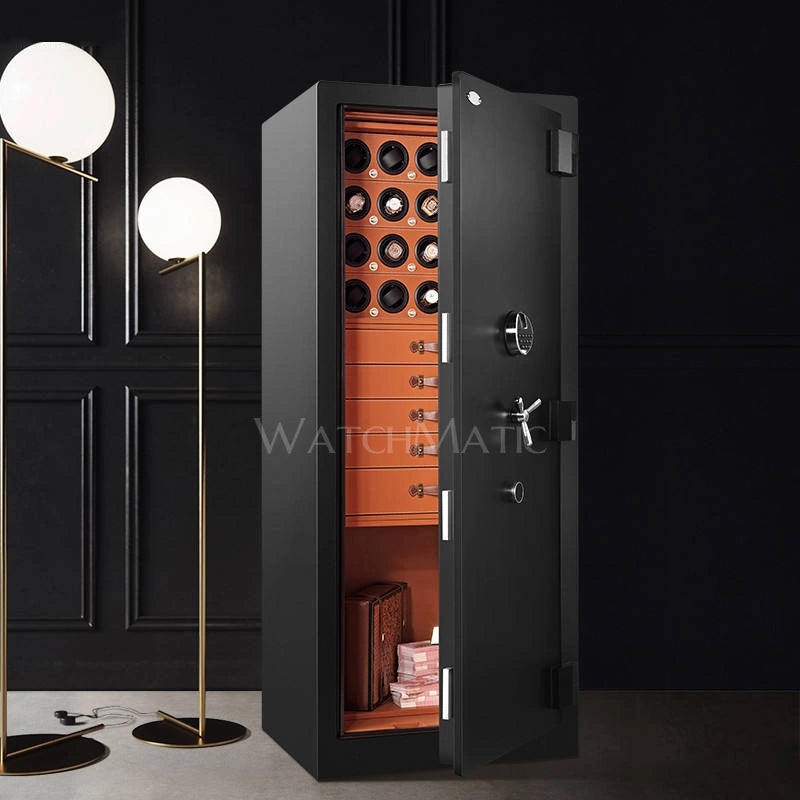
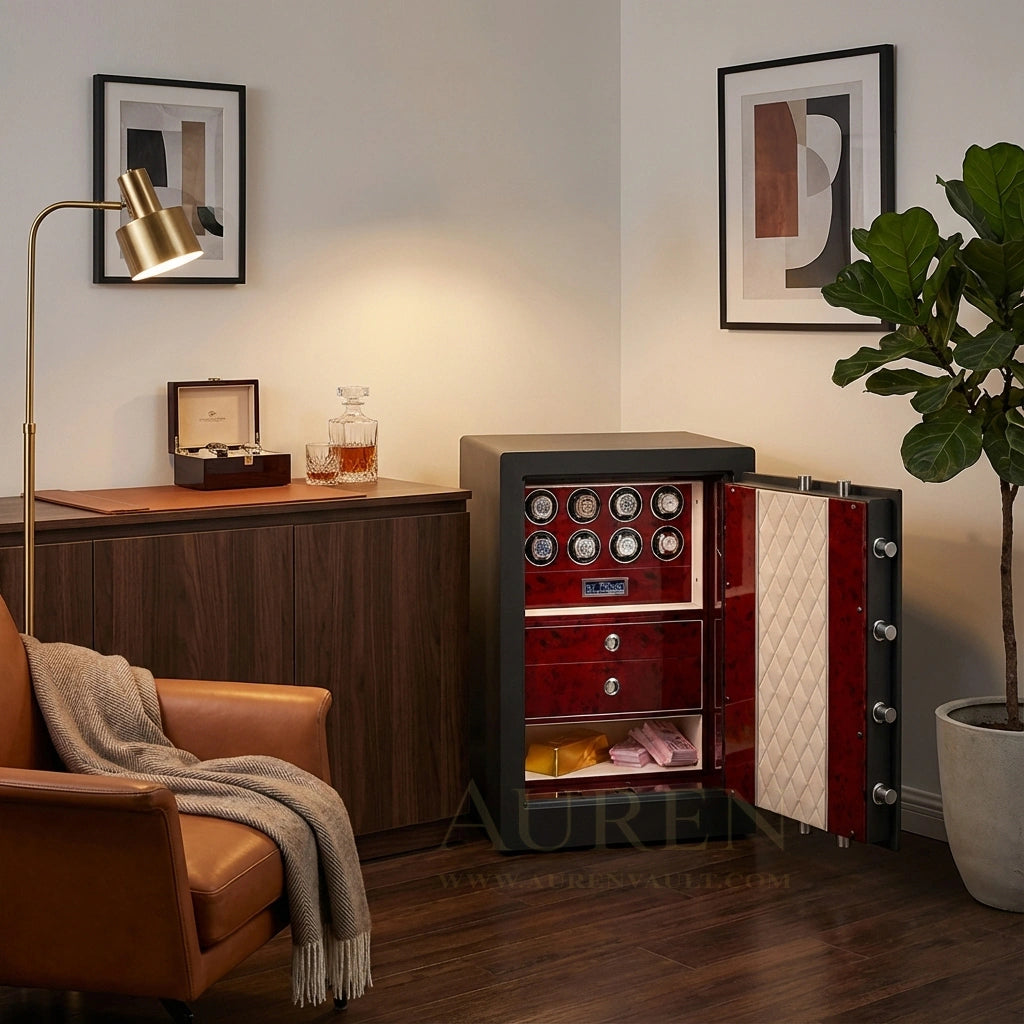
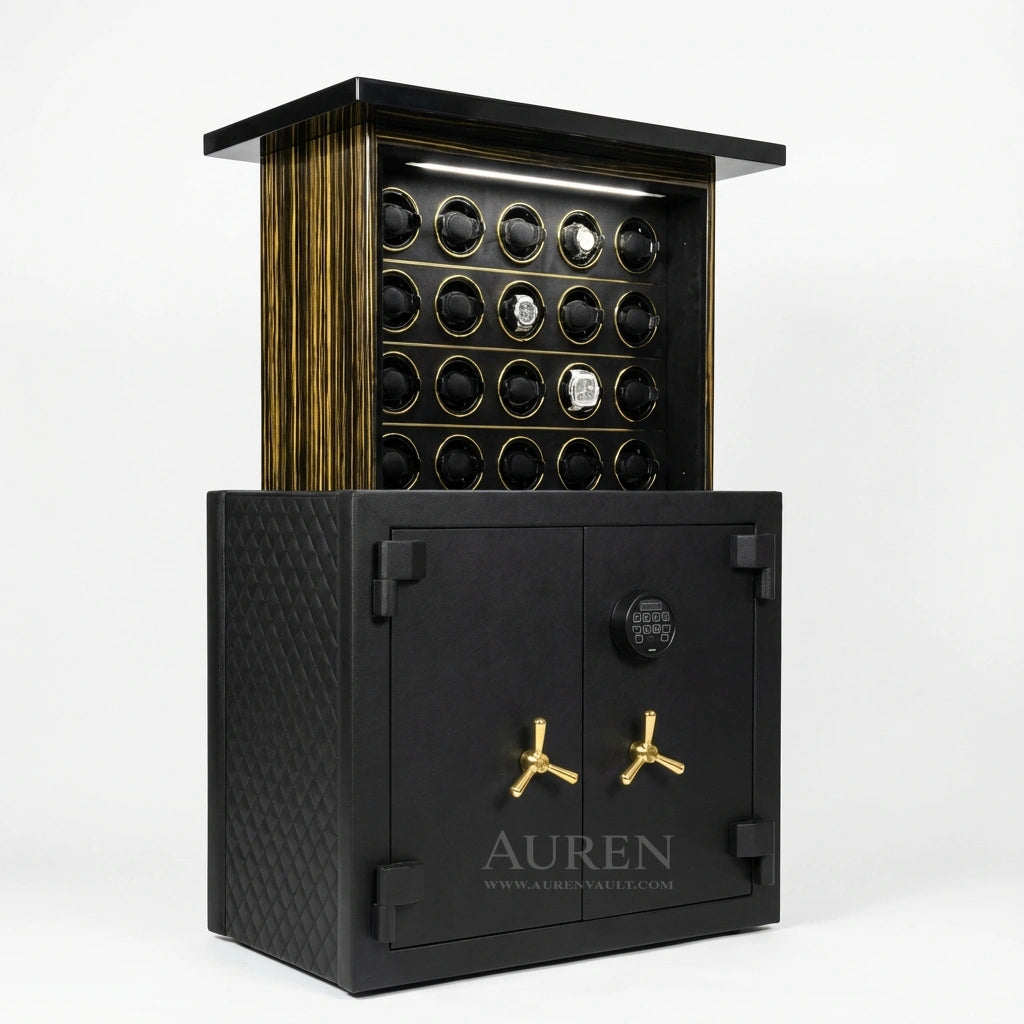
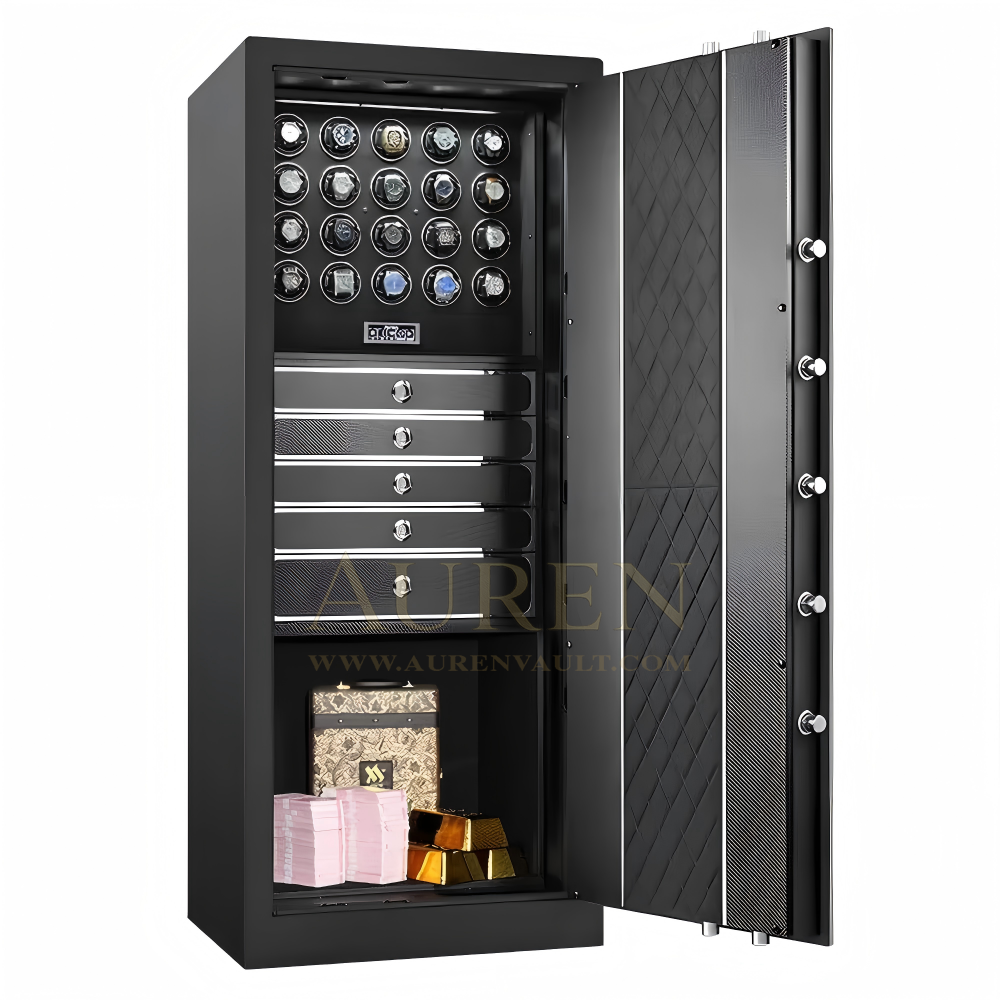
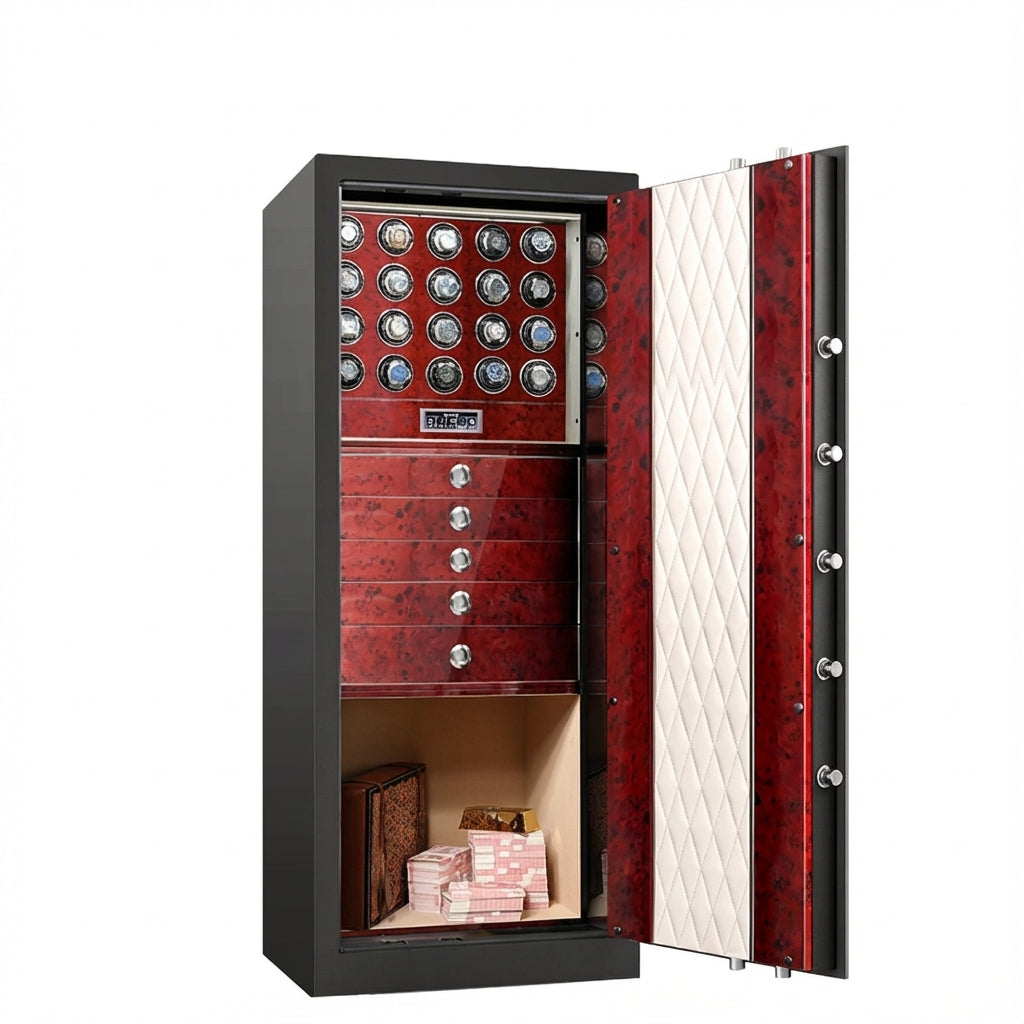
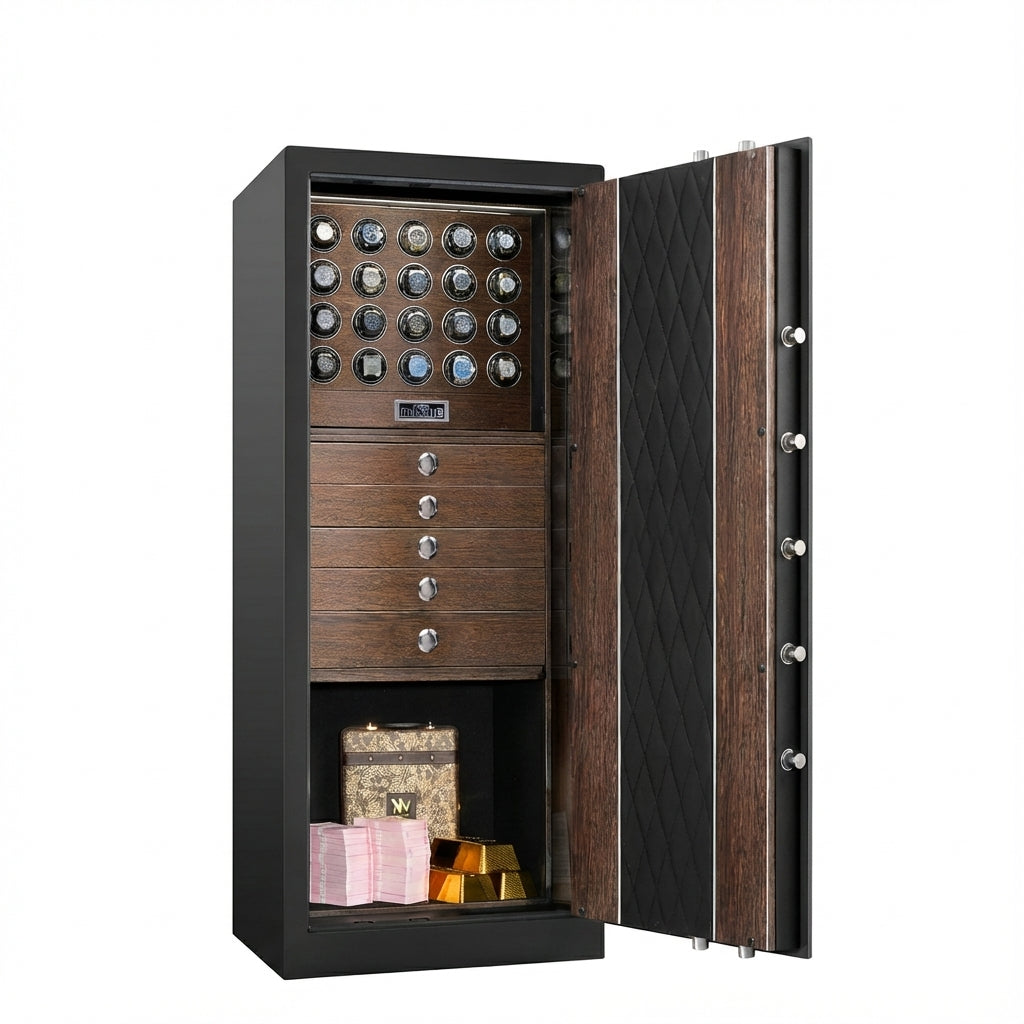
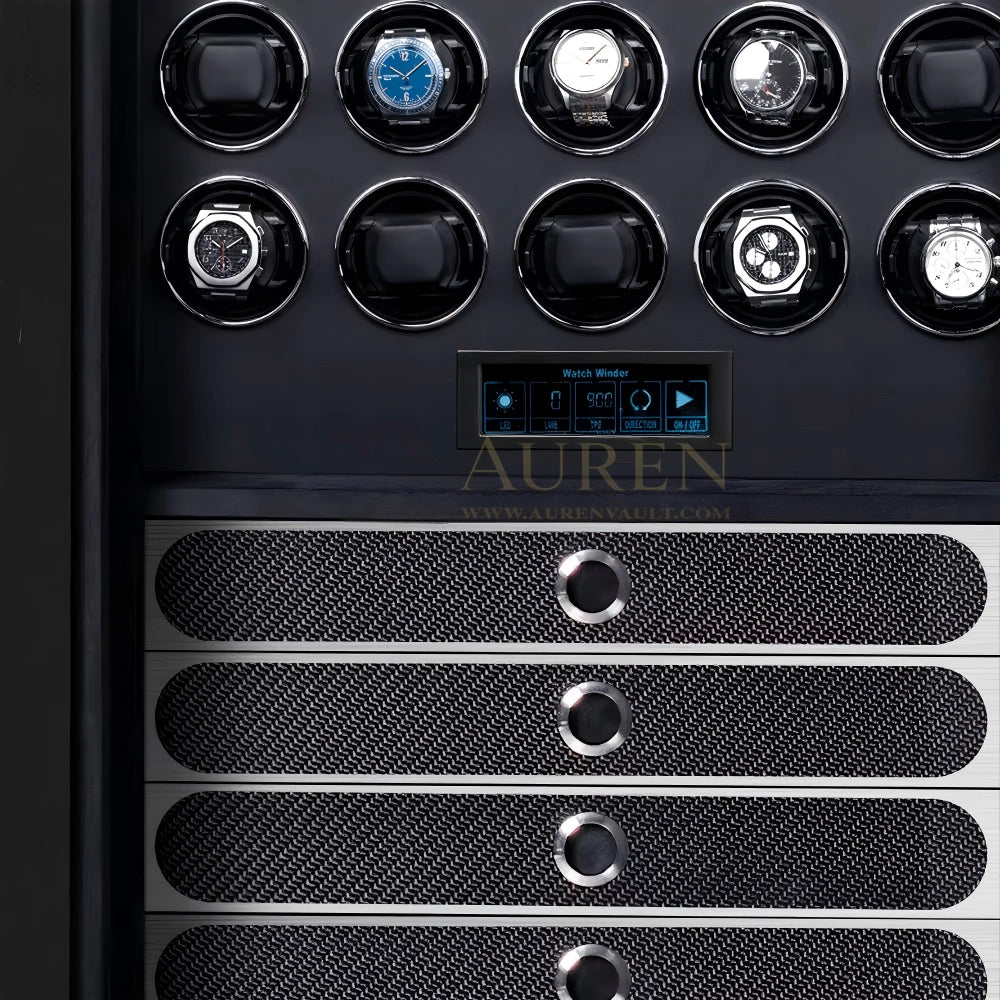
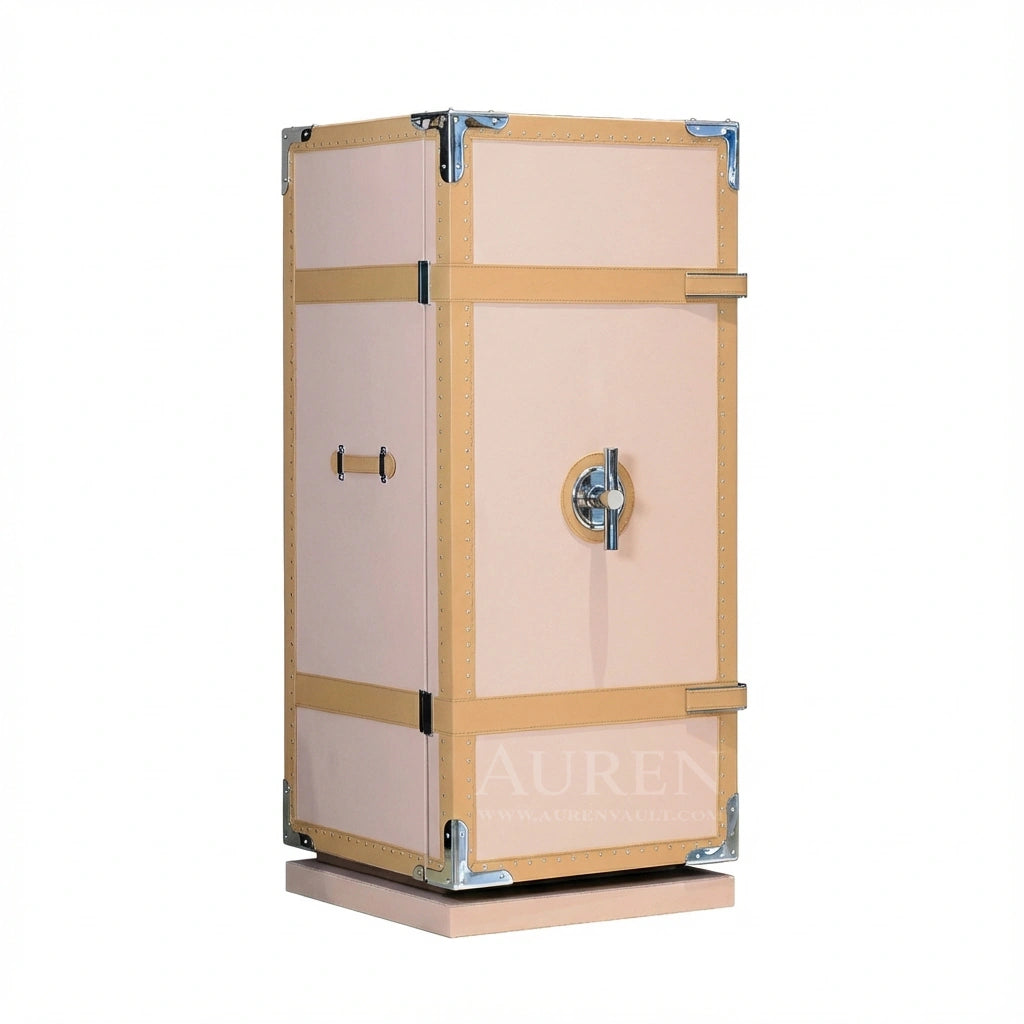
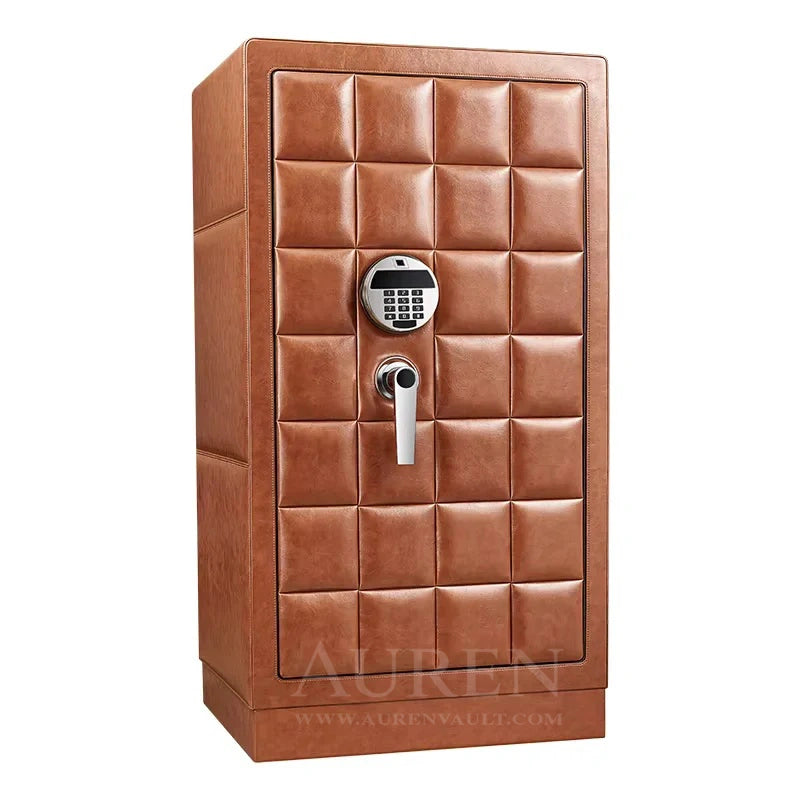
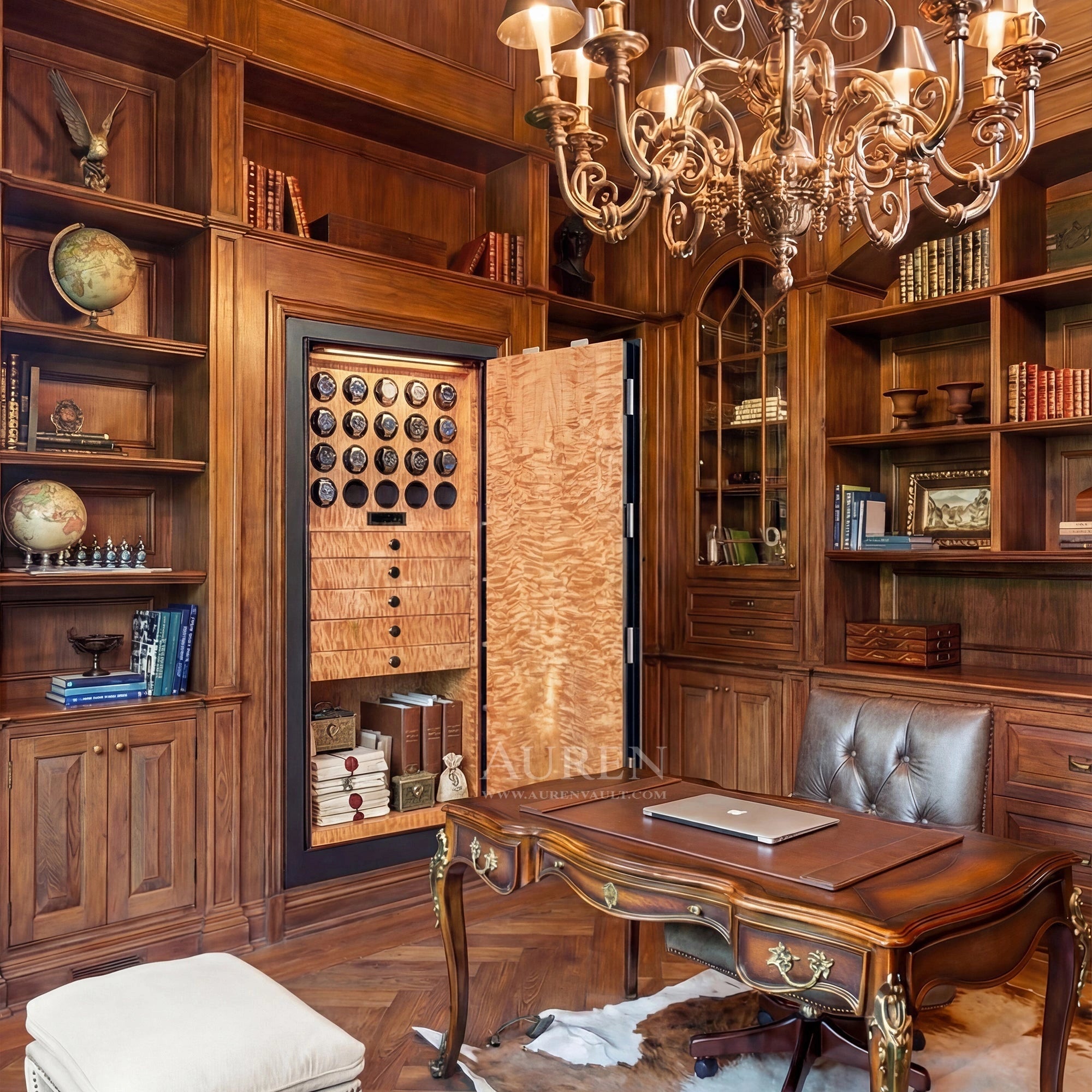
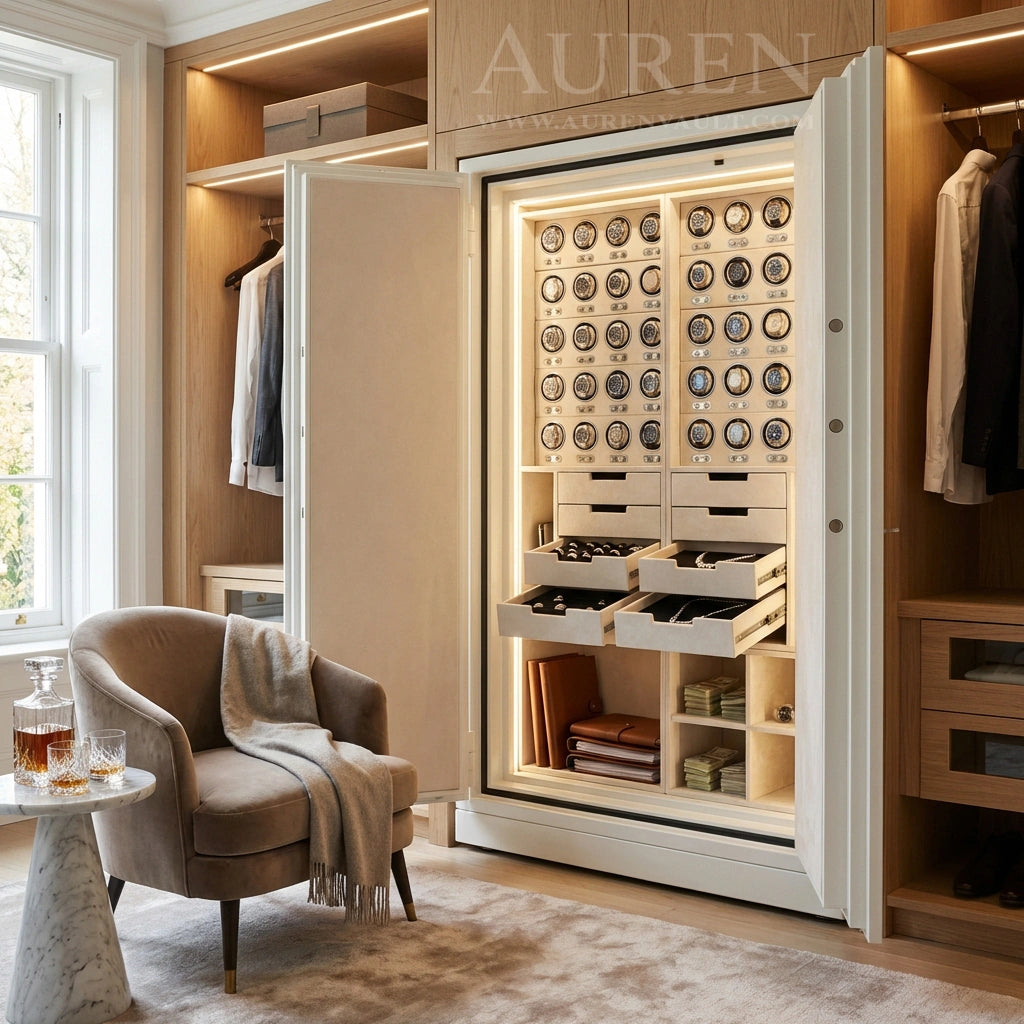
An integrated watch winder safe combines compatible winding modules with an enclosed, lockable storage environment.
For an owner with one frequently worn Raymond Weil automatic, a large integrated safe may be unnecessary.
For a collector with multiple automatic watches, valuable complications, and other luxury timepieces, enclosed storage can become more relevant.
The watch winder safe collection provides examples of systems combining winding positions and protective storage.
The watch winder safe guide is also relevant when evaluating the relationship between winding features and storage requirements.
Compare Active Winding and Passive Storage
| Collection profile | Suitable arrangement | Main priority |
|---|---|---|
| One regularly worn freelancer RW1212 | No winder or compact programmable unit | Convenience |
| Freelancer and millesime automatics | Dual winder with independent settings | Calibre compatibility |
| GMT and moon-phase automatics | Individually programmable modules | Reducing repeated setting |
| Automatic and quartz Raymond Weil collection | Active winding plus passive storage | Correct movement allocation |
| Mixed collection including “The Fifty” | Winding positions plus manual-watch compartment | Appropriate storage by movement |
| Larger collection of luxury watches | Appropriately specified watch winder safe | Winding, organization, and physical security |
The number of watches owned should not automatically determine the number of active winding modules required.
Only compatible automatic movements benefit from conventional rotation.
Security Must Be Evaluated Separately
A lockable cabinet does not automatically establish a particular burglary-resistance or fire-protection rating.
The actual level of protection depends on the enclosure's construction, locking mechanism, installation requirements, and any independently documented certifications.
A sophisticated winding system does not establish the safe's physical security performance.
These are separate technical requirements.
For valuable collections, both should be examined before purchasing.
Planning Storage for a Mixed Raymond Weil Collection
Consider an owner with a freelancer RW1212, freelancer Diver, freelancer GMT Worldtimer, millesime Moonphase, millesime Small Seconds, millesime “The Fifty,” and two quartz toccata watches.
That is an eight-watch collection.
Only five watches require automatic winding positions.
“The Fifty” is manually wound, and the two quartz toccata references do not need automatic rotation.
A configuration with five individually programmable winding modules and three passive compartments would therefore be more suitable than an eight-rotor arrangement.
The wider collection of watch safes for collectors provides options for evaluating total capacity and interior organization.
For substantial holdings, larger luxury watch safe configurations may provide additional space for watches, straps, accessories, and passive storage.
When Custom Storage Is Worth Considering
A mixed Raymond Weil collection can include round sports watches, square RW1212 cases, chronographs with prominent pushers, and slimmer millesime dress watches.
These may require different cushion dimensions and compartment clearances.
A customized interior can help account for the actual collection through active winding positions, passive compartments, and appropriate watch supports.
Such requirements can be considered through custom watch safe options, depending on the capabilities of the selected design.
For residential installation, cabinet dimensions, weight, electrical access, and delivery arrangements should also be considered.
The objective is a practical storage environment that makes each watch easy to access and appropriately supported.
Frequently Asked Questions About Raymond Weil Watch Winders
What is the best TPD for Raymond Weil watches?
There is no universal daily TPD setting for every Raymond Weil. Independent databases commonly recommend approximately 650 TPD bidirectional for many older automatics and 800 TPD clockwise for certain historical chronographs. Current calibres should be verified individually.
Does Raymond Weil officially recommend a watch winder?
Yes. Raymond Weil confirms that its automatic watches can use conventional rotating watch winders. The manufacturer recommends approximately four rotations per minute for a five-to-six-hour winding session.
Is four RPM the same as 650 TPD?
No. RPM measures rotation speed, while TPD measures the number of rotations performed over 24 hours. Raymond Weil's four-RPM guidance describes a winding session, not a universal daily maintenance preset.
Can a freelancer RW1212 use a watch winder?
Yes. The RW1212 is a self-winding movement with approximately 41 hours of power reserve. A compatible rotating winder can help maintain its stored energy between wears.
Does a Raymond Weil chronograph need more TPD?
Not automatically. The correct program depends on the movement. Older Valjoux-based Raymond Weil chronographs are frequently listed at 800 TPD clockwise, but that setting should not automatically be transferred to the current RW5030.
Can a millesime Moonphase use a winder?
Yes. Representative millesime Moonphase watches use the automatic RW4280 calibre. A compatible winder can help maintain the movement, reducing how frequently the moon-phase indication requires resetting.
Does the millesime “The Fifty” need a watch winder?
No. The 2026 anniversary edition uses the manually wound RW1976 calibre, based on the Valjoux 23-6. A conventional rotating winder cannot replenish its mainspring.
Can a quartz toccata use a watch winder?
No. A quartz toccata does not contain an automatic winding rotor. Rotational winding does not recharge its battery.
Is a watch winder safe worthwhile for Raymond Weil?
It may be useful for collectors who need both automatic winding and enclosed protective storage. The decision should reflect the number of automatic watches, passive storage needs, and the enclosure's documented security specifications.
Related Reading: Watch Winder Settings and Collection Protection
Raymond Weil's modern automatic movements, older Valjoux-based chronographs, and manually wound anniversary editions demonstrate why winder compatibility should be determined by the calibre.
Best Watch Winder for Vacheron Constantin Watches
Explore movement-specific winding direction, TPD considerations, and storage requirements for another Swiss watchmaking collection.
Best Watch Winder Settings for Patek Philippe Watches
Understand how automatic movements and mechanical complications affect winding and storage decisions.
Watch Safes With Built-In Watch Winders: Are They Worth It?
Compare standalone watch winders with integrated systems combining automatic winding and enclosed storage.
Final Perspective: Raymond Weil Requires the Right Calibre and Winding Schedule
Raymond Weil offers a particularly useful lesson in choosing watch winders: rotation speed, daily rotation count, and movement compatibility are different considerations.
The manufacturer's guidance provides a clear basis for understanding conventional rotating winders, while independent databases help identify historical movement-specific programs.
Modern freelancer and millesime automatic watches can benefit from compatible equipment, but their calibres should be verified individually.
The manually wound millesime “The Fifty” and quartz toccata references require protective storage instead of automatic winding.
For one automatic watch, reliable programming and proper physical support are the priorities. For larger collections, independent winding modules and organized storage become more valuable.
As a specialist in premium watch safes and integrated winding solutions, Auren Vault approaches these needs through configurations designed to combine movement compatibility, collection organization, and enclosed protection.
The best watch winder for Raymond Weil is the one that suits the actual movement, maintains its reserve reliably, and makes ownership more convenient without unnecessary complexity.