

The best watch winder for Movado watches is a programmable model that matches the automatic movement's winding requirements, offers adjustable turns per day (TPD), and securely supports the watch without putting unnecessary pressure on its bracelet or strap.
Many Movado automatics, including the Museum Classic Automatic, 1881 Automatic, Heritage Calendoplan, Kingmatic, and Datron, use Swiss mechanical movements such as the Sellita SW200-1. For these watches, approximately 650 TPD with bidirectional rotation is a commonly published starting recommendation, although the exact program should be confirmed for the specific calibre.
Other Movado watches require different consideration. Selected 33 mm Museum Classic automatics use the Sellita SW100, while the Alta Centurion Chronograph uses Movado Calibre 95A. Older Kingmatic chronographs can have different winding requirements.
Most importantly, many Movado Museum, BOLD, and Heritage watches use quartz movements and do not benefit from conventional winders.
For collectors, the right choice depends on movement identification, practical wearing habits, proper watch support, and reliable storage.
Not Every Movado Watch Needs a Watch Winder
Movado occupies a distinctive position in Swiss watchmaking.
Its identity is closely associated with the Museum Dial, originally designed by Nathan George Horwitt in 1947.
The dial's minimalist composition, particularly the dot at 12 o'clock, became one of the most recognizable designs in modern watchmaking.
However, a Movado watch's appearance does not reveal how its movement receives energy.
A Museum Classic can contain a quartz movement or a mechanical automatic.
A Heritage Calendoplan can be automatic, while certain Calendoplan Chronograph references use quartz movements.
The same distinction applies across other Movado collections.
This matters because conventional watch winders are useful only for watches that contain automatic mechanical movements.
A quartz Movado receives energy from a battery.
An automatic Movado uses a mainspring and oscillating rotor to power the movement.
The rotor responds to wrist movement, transferring energy to the mainspring through the automatic winding mechanism.
When the watch is removed, its stored energy gradually declines until the movement stops.
A compatible watch winder recreates some of the relevant wrist movement through programmed rotation.
Its purpose is to maintain adequate energy between wears.
It does not improve the movement's accuracy, recharge quartz batteries, or replace regular maintenance.
For someone who wears one Movado automatic daily, a winder may offer limited benefit.
For a collector who rotates among several watches, the convenience of having an automatic Movado ready to wear can be worthwhile.
Movado Automatic Movements: Which Watches Can Use a Winder?
Movado's modern automatic collection includes several Swiss movement families.
The following comparison highlights representative references.
| Movado watch | Representative movement | Power reserve | Winder compatibility |
|---|---|---|---|
| 1881 Automatic | Sellita SW200-1 | Approximately 41 hours in selected references | Yes |
| Museum Classic Automatic 40 mm | Sellita SW200-1 | Approximately 38–41 hours, depending on reference | Yes |
| Museum Classic Automatic 33 mm | Sellita SW100 | Approximately 42 hours | Yes |
| Heritage Calendoplan Automatic | Sellita SW200-1 608B | Approximately 38 hours in selected references | Yes |
| Heritage Kingmatic | Sellita SW200-1 608B | Approximately 41 hours | Yes |
| Heritage Datron Automatic | Sellita SW200-1 608B | Approximately 41 hours | Yes |
| Alta Centurion Chronograph | Movado Calibre 95A | Approximately 47 hours | Yes |
| Older Museum Red Label Automatic | ETA 2824-family movements in selected references | Reference-dependent | Yes |
| Older Kingmatic Chronograph | Valjoux 7750 in selected references | Reference-dependent | Yes |
| Museum Classic Quartz | Quartz | Not applicable | No |
| Heritage Calendoplan Chronograph Quartz | Quartz | Not applicable | No |
The movement and reserve figures are reference-specific.
Different Movado models, including watches within the same collection, may use different movements.
Why Movement Identification Matters More Than the Museum Dial
The Museum Dial is a visual design.
It does not identify a particular movement.
For example, the automatic 40 mm Museum Classic can use the Sellita SW200-1, while a 33 mm automatic version can use the Sellita SW100.
Other Museum Classic references are powered by quartz movements.
A generic recommendation for a "Movado Museum Watch" is therefore incomplete.
The owner should identify the exact model and confirm whether its movement is automatic.
Only then should a winding program be selected.
Movado Watch Winder Settings: TPD and Rotation Direction
Two operating parameters determine how a winder supplies movement to an automatic watch.
Turns per day (TPD) describes the number of programmed rotations performed over a 24-hour period.
Rotation direction determines whether the watch is rotated clockwise, counterclockwise, or alternately in both directions.
These settings must be evaluated together.
A movement may wind efficiently in both directions or primarily through one direction, depending on its mechanical construction.
An unsuitable program may allow the watch to stop even when the device appears to be rotating regularly.
Movado Winder Settings by Movement
| Movement | Preliminary TPD | Rotation direction |
|---|---|---|
| Sellita SW200-1 | Approximately 650–800 TPD is commonly recommended for the movement family | Bidirectional |
| Sellita SW100 | Confirm movement-specific TPD | Verify direction |
| ETA 2824-2 | Approximately 650 TPD | Bidirectional |
| ETA 2892-A2 | Approximately 650 TPD | Bidirectional |
| Movado Calibre 95A | Calibre-specific settings required | Do not assume a generic chronograph program |
| Valjoux 7750, where fitted | Approximately 800 TPD | Clockwise |
| Quartz movements | Not applicable | No automatic winding |
These are independent winding references rather than a single official Movado setting.
A collector should prioritize the exact movement and reliable calibre-specific information.
Is 650 TPD Enough for a Movado Automatic?
For many Movado automatic watches using the Sellita SW200-1 or ETA 2824 movement families, approximately 650 TPD with bidirectional rotation is commonly listed.
This makes it a useful starting point for investigation.
However, the appropriate program should be verified for the actual reference.
Some devices count total daily rotations across both directions, while others define operating cycles differently.
The watch should also begin with sufficient stored energy.
A winder is generally intended to maintain the movement's reserve rather than rapidly restore a completely stopped watch.
If a watch repeatedly stops despite being placed on a winder, the correct response is to investigate the program and the movement's condition.
Simply increasing TPD may not address an incorrect direction or a mechanical issue.
The watch TPD guide provides further explanation of these factors.
Why Older Movado Chronographs Can Be Different
Certain older Movado automatic chronographs use movement architectures that differ from those found in modern three-hand automatics.
For example, selected Kingmatic Chronographs use Valjoux 7750-family movements.
The 7750 is commonly associated with unidirectional winding, and independent databases often recommend approximately 800 TPD clockwise.
That is different from the 650 TPD bidirectional program frequently published for ETA 2824-family watches.
The presence of a chronograph does not automatically establish one universal winding program.
The underlying calibre remains the deciding factor.
This is particularly important for Movado collectors who own both vintage and contemporary mechanical watches.
Best Watch Winder for Movado Museum Classic Automatic
The Museum Classic represents Movado's most recognizable design identity.
Its minimalist dial reduces the visual elements of conventional timekeeping, emphasizing the relationship between the hands, the dial, and the signature dot at 12 o'clock.
Modern automatic versions preserve this design while incorporating Swiss mechanical movements.
Selected 40 mm references use the Sellita SW200-1.
Movado lists approximately 38 hours of power reserve for several versions, while other references are specified at approximately 41 hours.
This variation illustrates why the exact product reference matters.
Why a Museum Classic Automatic Can Benefit From a Winder
A Museum Classic Automatic is often selected as a refined everyday or dress watch.
An owner may wear it during business meetings or formal occasions while choosing a sports watch at other times.
If the Movado remains unworn long enough, its movement stops.
Restarting a simple automatic watch is generally straightforward, but repeated adjustment may become inconvenient.
A compatible winder can maintain operating continuity between wears.
For an owner who wears the Museum Classic every day, the benefit is less significant.
Regular wrist movement may already provide enough energy.
The 40 mm Museum Classic and Sellita SW200-1
The Sellita SW200-1 is a widely used Swiss automatic movement.
Independent winding references commonly associate the movement family with approximately 650–800 TPD and bidirectional rotation.
A programmable winder provides the necessary flexibility.
The owner should confirm the appropriate setting for the exact reference rather than assuming all Museum Classic watches contain the same movement.
A correct program should maintain energy without requiring uninterrupted rotation.
Museum Classic 33 mm: The Sellita SW100
The smaller automatic Museum Classic introduces another movement.
Selected 33 mm references use the Sellita SW100, with approximately 42 hours of power reserve.
Although it is automatic, the movement should not simply be treated as an SW200-1 in a smaller case.
The exact winding program should be confirmed independently.
Its physical dimensions also matter.
A 33 mm watch fitted with a closely adjusted bracelet may not fit comfortably around a full-size rigid cushion.
A smaller, compressible holder offers more suitable support.
The correct movement program and correct physical fit are separate requirements.
Movado 1881 Automatic: A Practical Winder for a Classic Dress Watch
The 1881 Automatic is another relevant model for collectors.
Selected references use the Sellita SW200-1 Swiss automatic movement.
Movado specifies approximately 41 hours of power reserve for certain 1881 Automatic models.
Their relatively restrained cases, textured dials, and leather straps make them appropriate for formal and everyday wear.
For someone who rotates between several watches, a compatible winder can keep the movement running when the 1881 is not being worn.
However, the movement's reserve is shorter than those of many modern extended-reserve automatics.
After several days without winding, the watch will generally stop.
This makes a winder more convenient for an owner who wants the watch to remain ready throughout the week.
Why the Leather Strap Deserves Attention
A Movado 1881 Automatic may be fitted with a calfskin strap and deployment clasp.
A winding holder should support the watch without forcing the leather into an unnatural curve.
A rigid oversized cushion can place unnecessary tension on the strap.
A softer cushion that compresses to accommodate the strap's normal circumference is preferable.
The watch should remain secure throughout rotation without excessive pressure.
For a dress watch, gentle physical support can be more important than elaborate display lighting or decorative finishes.
Movado Heritage Calendoplan: Winding a Mid-Century-Inspired Automatic
The Heritage Calendoplan draws on Movado's earlier watch designs.
Its contemporary automatic versions retain a relatively restrained case and dial arrangement.
Selected 40 mm references use the Sellita SW200-1 608B movement, with approximately 38 hours of power reserve.
The watch includes a date display in addition to conventional timekeeping.
Why the Calendoplan Is a Natural Winder Candidate
A Calendoplan owner may alternate between this watch and several other timepieces.
If the automatic movement is left unworn for longer than its available reserve, it stops.
The owner must then restart the watch and adjust the time and date.
A properly configured winder can reduce that inconvenience.
However, the Calendoplan does not mechanically require constant winding.
The choice depends on how frequently it is worn.
Automatic Calendoplan vs. Quartz Calendoplan Chronograph
This distinction is particularly important within Movado's Heritage range.
Certain Heritage Calendoplan references are automatic.
Others, including some Calendoplan Chronograph models, use quartz movements.
A quartz chronograph does not benefit from an automatic winding rotor because it does not rely on one.
The name Calendoplan therefore cannot be used as a substitute for identifying the movement.
Before selecting a winder, confirm whether the reference is described as Swiss automatic or Swiss quartz.
This prevents unnecessary spending on a device that offers no mechanical benefit.
Heritage Kingmatic: An Older Name With Modern Movement Technology
The Kingmatic name has a long association with Movado's mechanical watchmaking.
The contemporary Heritage Kingmatic draws inspiration from the brand's mid-century designs.
Selected current references use the Sellita SW200-1 608B, with approximately 41 hours of power reserve.
Their distinctive square cases and compact proportions create different physical requirements from conventional round watches.
Why the Kingmatic Needs a Suitable Cushion
Some Heritage Kingmatic references use a 35 × 35 mm case.
The watch may be fitted with a leather strap or a mesh bracelet.
These configurations require careful support.
A mesh bracelet should not be forced around an oversized cushion, particularly when its sliding clasp has been adjusted to a smaller wrist circumference.
A leather strap should not be stretched excessively.
The holder must secure the watch while allowing the case to remain clear of the compartment walls.
For this type of watch, a flexible cushion is often more useful than a rigid support designed for large sports watches.
Vintage Kingmatic Watches Are Not Automatically Identical
Older Kingmatic watches may contain different movements from the modern Heritage versions.
Some classic Kingmatic automatic watches use ETA 2824-family mechanisms.
Others may have different movement configurations.
A vintage Kingmatic Chronograph can use a Valjoux 7750-related movement, which has substantially different winding-direction requirements.
The correct program should follow the identified movement rather than the Kingmatic name.
Collectors of vintage references should consult original documents, service records, or a qualified watchmaker when the calibre is uncertain.
Movado Heritage Datron: Automatic Winding and Bracelet Fit
The Heritage Datron is another important part of Movado's mechanical offering.
Its modern designs draw on the distinctive shapes and proportions of the original Datron collection.
Selected 40 mm references use the Sellita SW200-1 608B, with approximately 41 hours of power reserve.
The watch can be fitted with a leather strap or steel bracelet, depending on the reference.
A compatible winder can maintain the movement between wears.
However, physical support should be selected according to the particular configuration.
A leather strap may require a soft compressible cushion.
A closely sized steel bracelet may need a smaller support that does not place unnecessary pressure on its clasp.
The Datron illustrates why even watches sharing an SW200-family movement can require different physical holders.
The winding program follows the movement.
The cushion follows the watch's dimensions and strap arrangement.
Movado Alta Centurion Chronograph: Why Calibre 95A Needs Separate Verification
The Alta Centurion Chronograph represents a more specialized direction in Movado's contemporary mechanical range.
Introduced as part of the brand's 145th-anniversary offering, selected Alta Centurion Chronographs use Movado Calibre 95A.
Movado specifies approximately 47 hours of power reserve.
The watch incorporates a Swiss automatic chronograph movement within a distinctive geometric case.
Certain references use 904L stainless steel and have a case diameter of approximately 41 mm.
Why Calibre 95A Should Not Be Assigned a Generic Program
The fact that the Alta Centurion is an automatic chronograph does not establish its exact winding direction.
It would be inappropriate to assign it a Valjoux 7750 program solely because the watch includes chronograph functions.
The actual winding architecture must be identified.
At present, a universally verified manufacturer-issued external-winder program for Calibre 95A should not be assumed.
Collectors should confirm its requirements through reliable movement-specific guidance before choosing the direction and TPD.
A fully programmable winder offers the flexibility needed to accommodate that information.
Does a Chronograph Need More Winding Than a Three-Hand Watch?
Not necessarily.
A chronograph contains additional timing mechanisms, but the correct external winding program is determined by the automatic winding system.
The complication alone does not establish a particular TPD.
A more expensive or mechanically complex watch also does not automatically need more rotations.
The objective is to maintain sufficient power.
The winder does not operate the chronograph pushers or manage elapsed-time measurements.
Those remain separate functions.
Storage Considerations for a Premium Movado
For an owner with several valuable mechanical watches, the Alta Centurion may make secure storage more relevant.
A tabletop winder can provide convenience but generally offers little physical security.
An enclosed storage system with suitable winding modules may offer a more integrated arrangement.
Its protective capability should be evaluated independently of the motor system.
A locking door does not automatically establish certified burglary or fire resistance.
What About Movado BOLD and Other Contemporary Models?
Movado BOLD illustrates why collection-level assumptions are unreliable.
The range includes numerous quartz watches.
It also includes automatic models, such as selected BOLD Fusion and BOLD Quest references.
This means a BOLD watch cannot automatically be classified as quartz or mechanical.
The exact reference must be checked.
The same applies to other contemporary Movado collections.
A watch described as Swiss automatic can potentially benefit from a suitable winding device.
A model described as quartz cannot.
A smartwatch or other electronic watch also receives no charging benefit from conventional mechanical rotation.
For mixed collections, this distinction affects how many winding positions are actually necessary.
What to Look for in a Premium Movado Watch Winder
Movado's automatic watches vary in size, movement, case geometry, and strap materials.
The best winder is one that accommodates those differences without unnecessary complexity.
Independent Rotation Programming
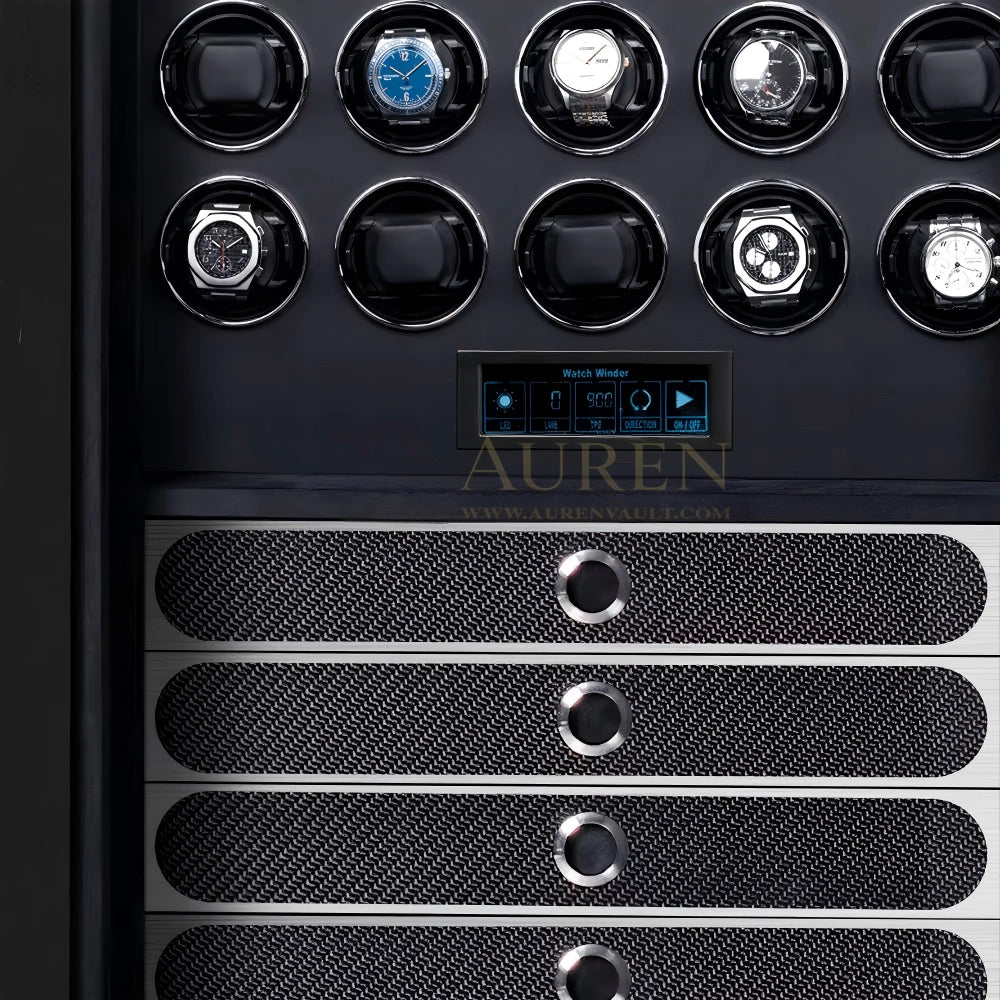
Adjustable TPD and three-direction operation should be priorities.
For multiple automatic Movado watches, independent winding modules are preferable.
A Sellita SW200-1 dress watch and an older Valjoux 7750-based chronograph should not automatically share one program.
Each movement should receive its confirmed settings.
Soft, Adjustable Watch Cushions
Movado's smaller automatic models can have compact bracelets or straps.
Square Heritage cases and round Museum cases may also require different compartment clearances.
A suitable holder should secure the watch without excessive tension.
This is especially important for leather straps, mesh bracelets, and closely sized metal bracelets.
Quiet Operation
A watch winder used in a bedroom or dressing room should operate discreetly.
Controlled winding cycles with rest periods are more practical than continuous rotation.
Stable motors and reliable programming contribute more to long-term usefulness than decorative features.
Reliable Construction
A watch winder should simplify ownership rather than become another device requiring constant attention.
Consistent motor operation, accessible controls, and suitable service support are valuable characteristics.
For a collection that is expected to grow, a system with independent modules provides greater flexibility.
Choosing Between a Standalone Winder and a Watch Winder Safe
The appropriate choice depends on the collection's composition.
For one Museum Classic Automatic or Heritage Datron, a compact standalone winder may be sufficient.
For a collector who owns several automatic Movado watches alongside other valuable mechanical timepieces, integrated storage may be more appropriate.
| Ownership requirement | Suitable approach |
|---|---|
| One regularly worn automatic Movado | Standalone programmable winder, if desired |
| Several SW200-family automatics | Multi-watch winder with secure holders |
| Automatic Movado plus quartz watches | Active winding and passive storage |
| Vintage chronographs with different programs | Independently programmable modules |
| Larger valuable collection | Consider a properly specified watch winder safe |
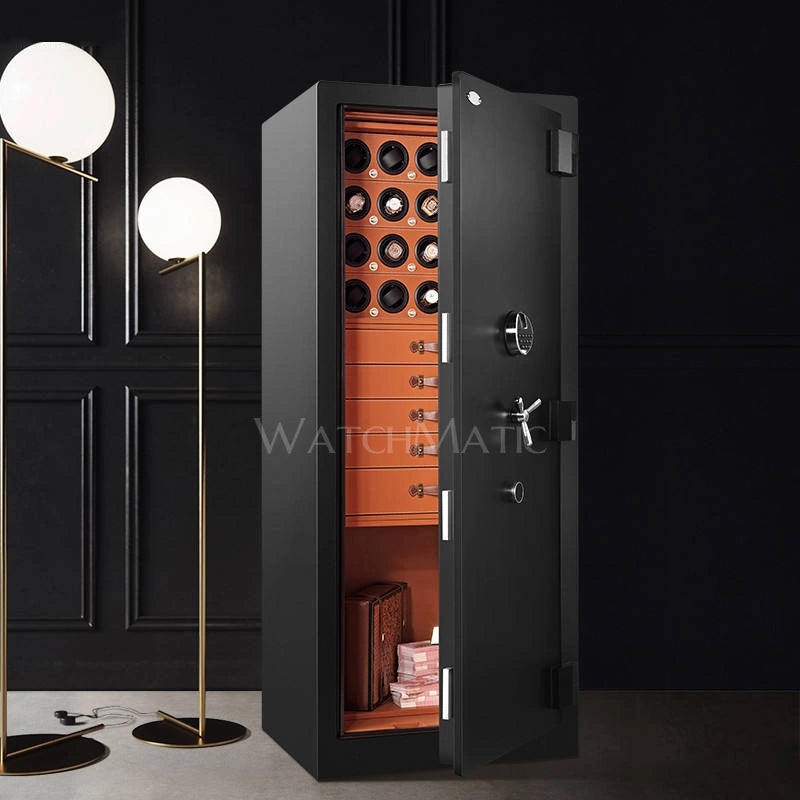
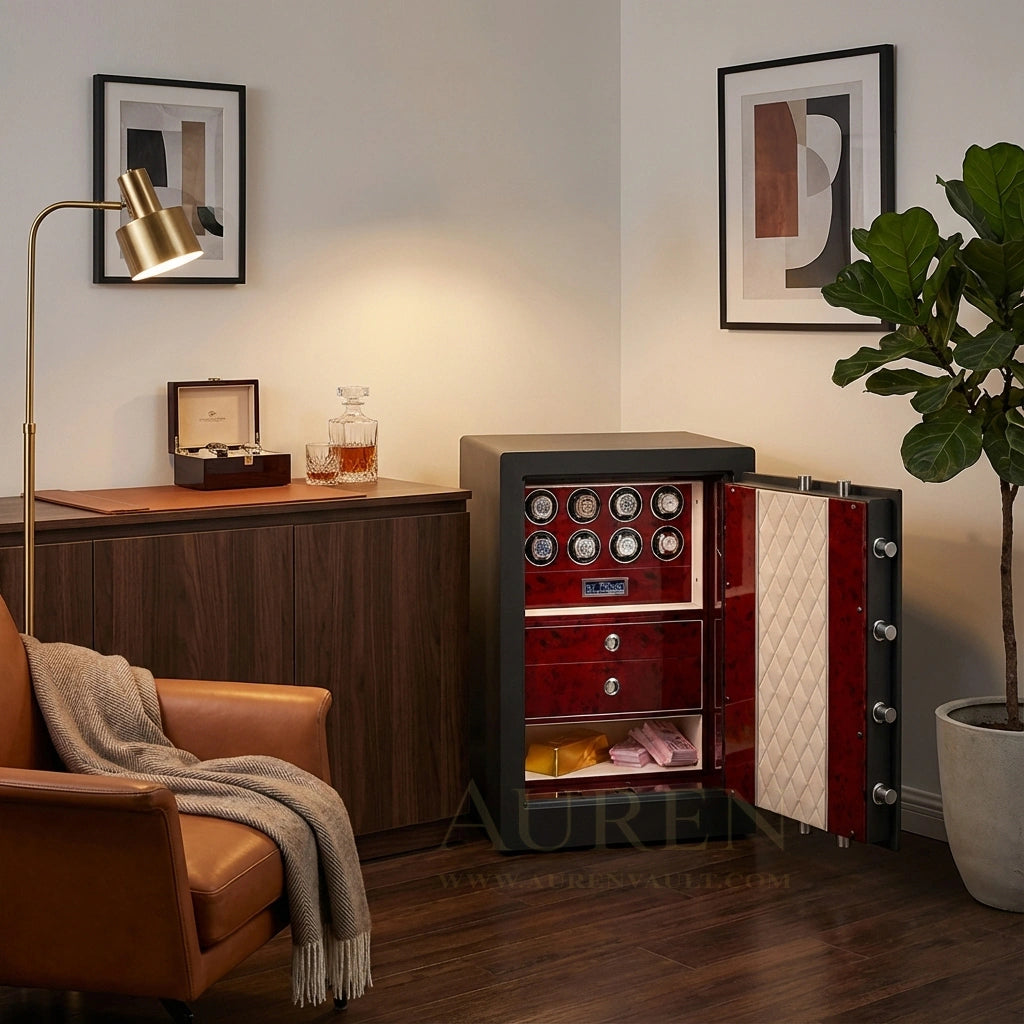
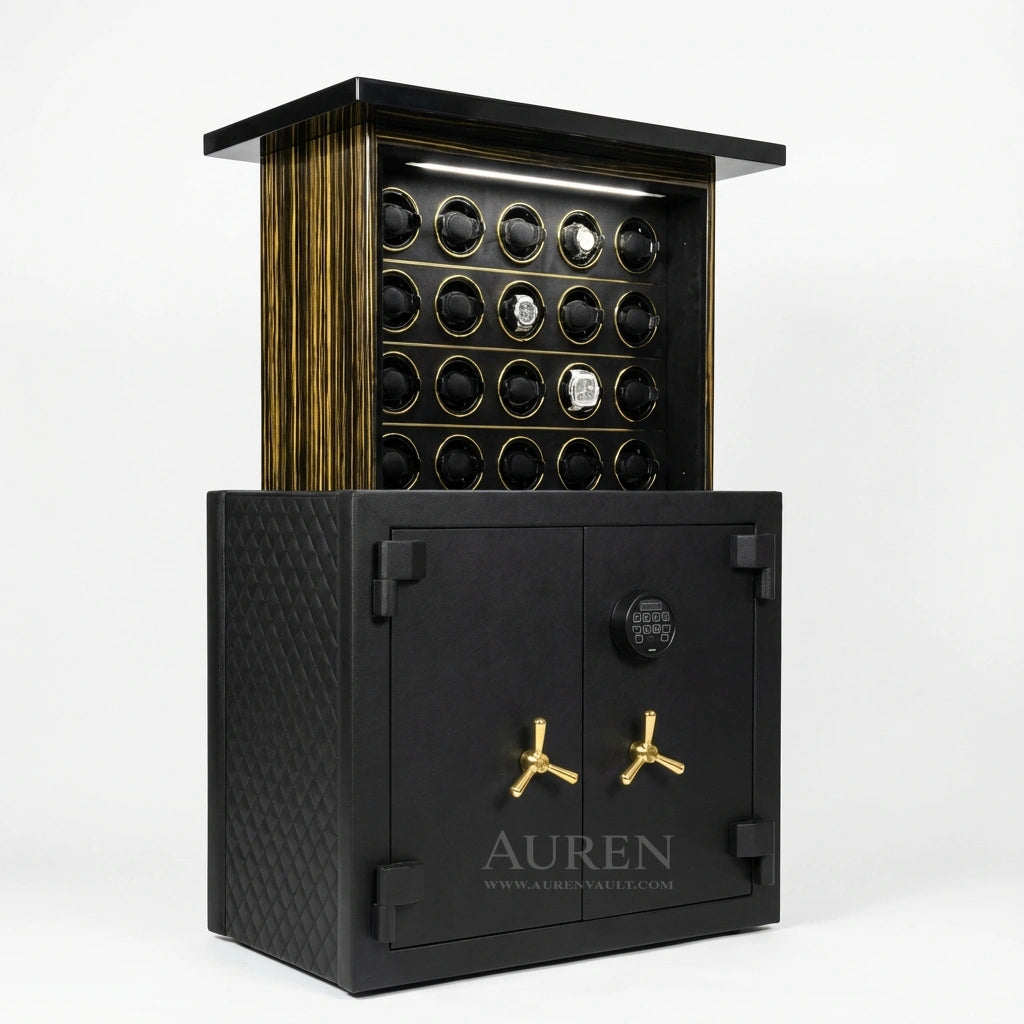
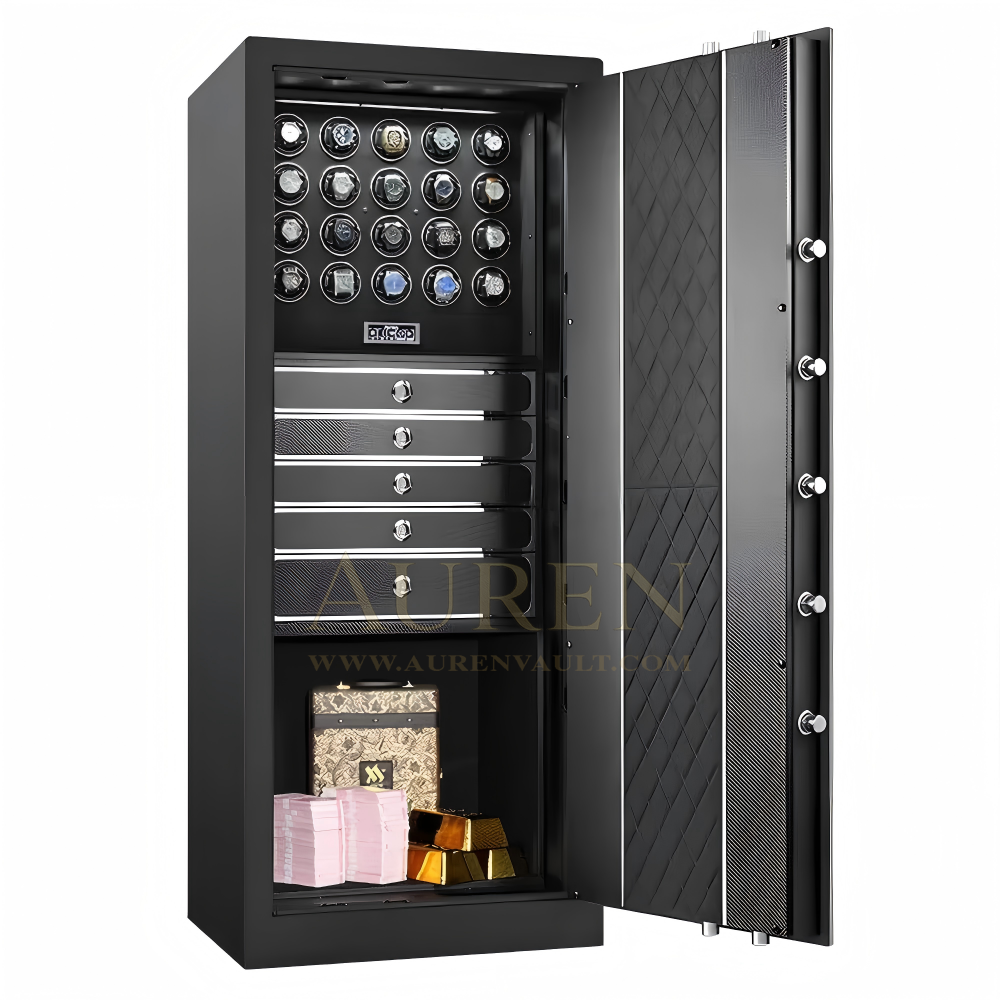
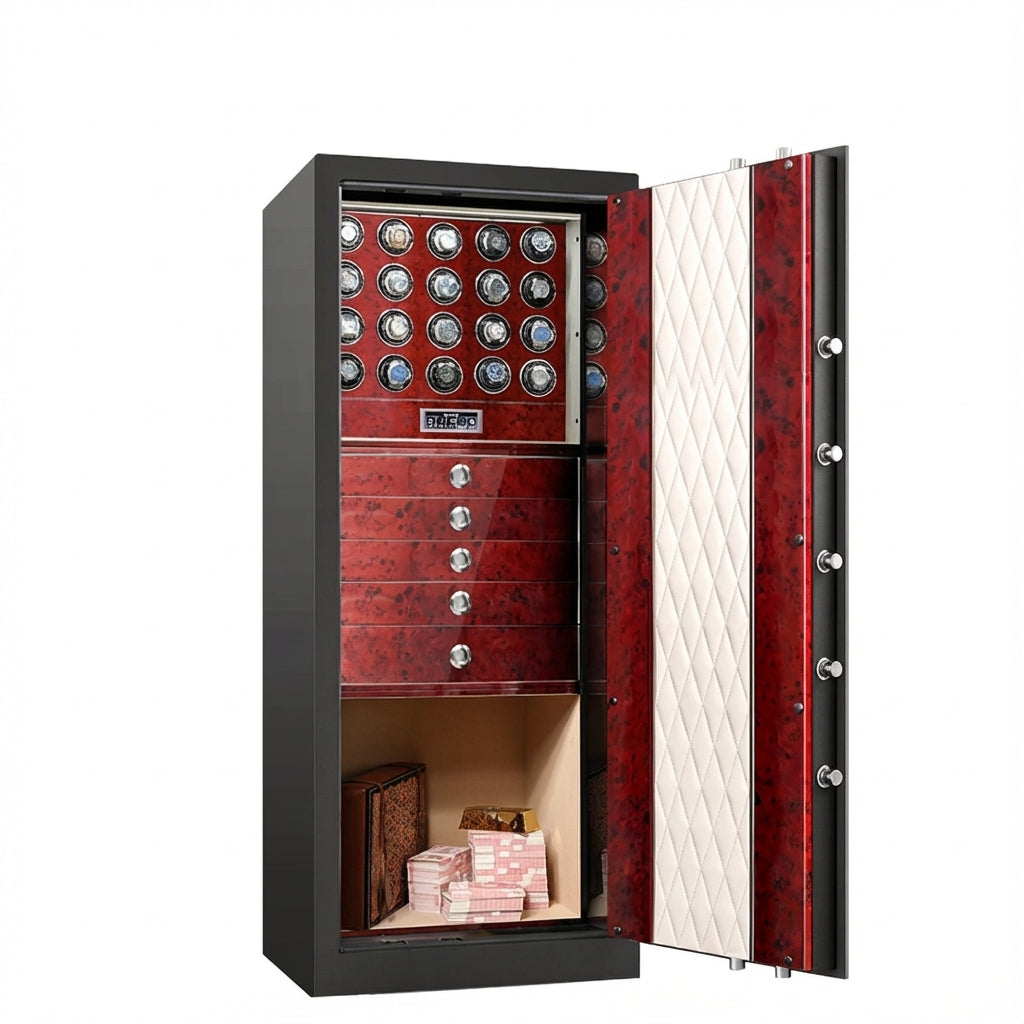
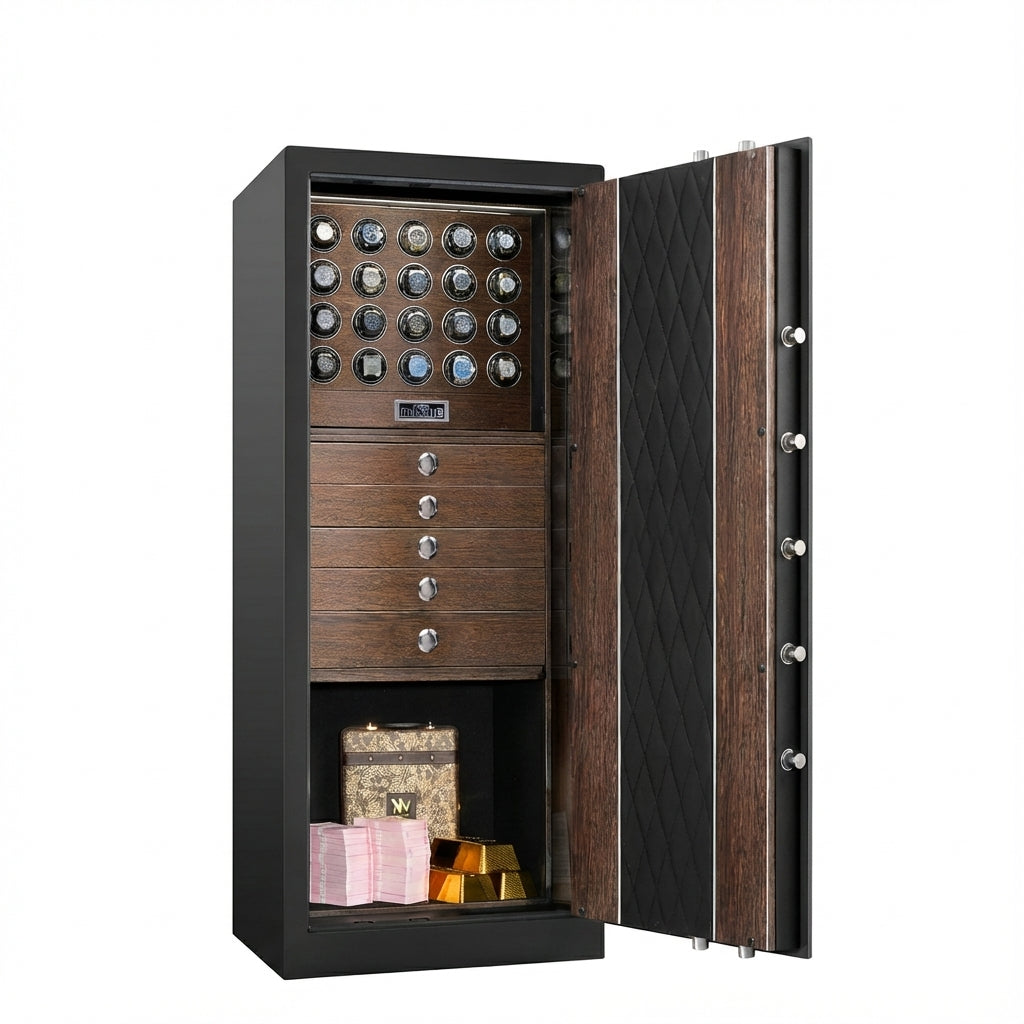
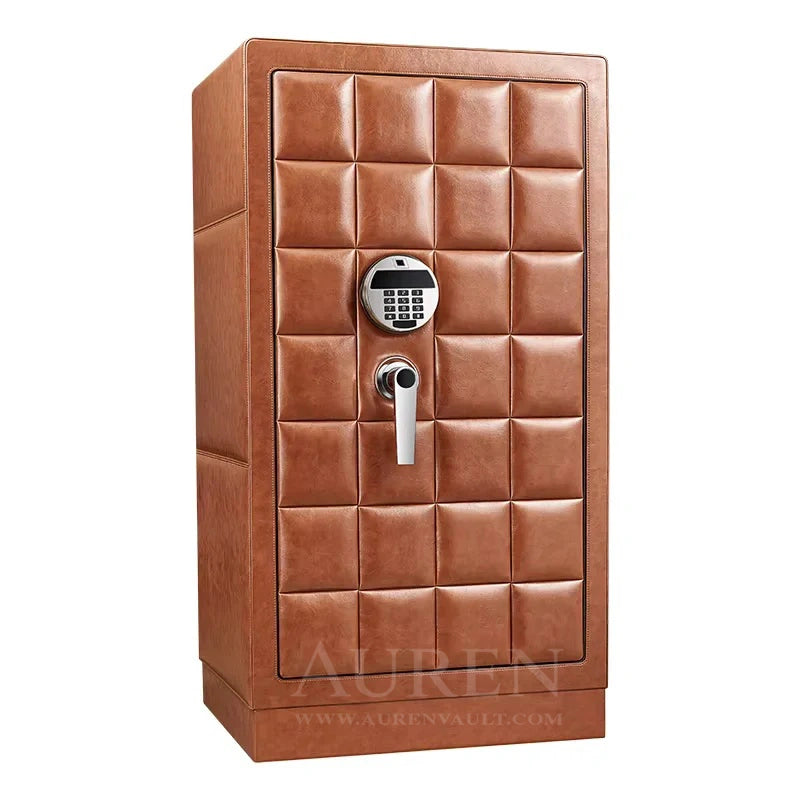
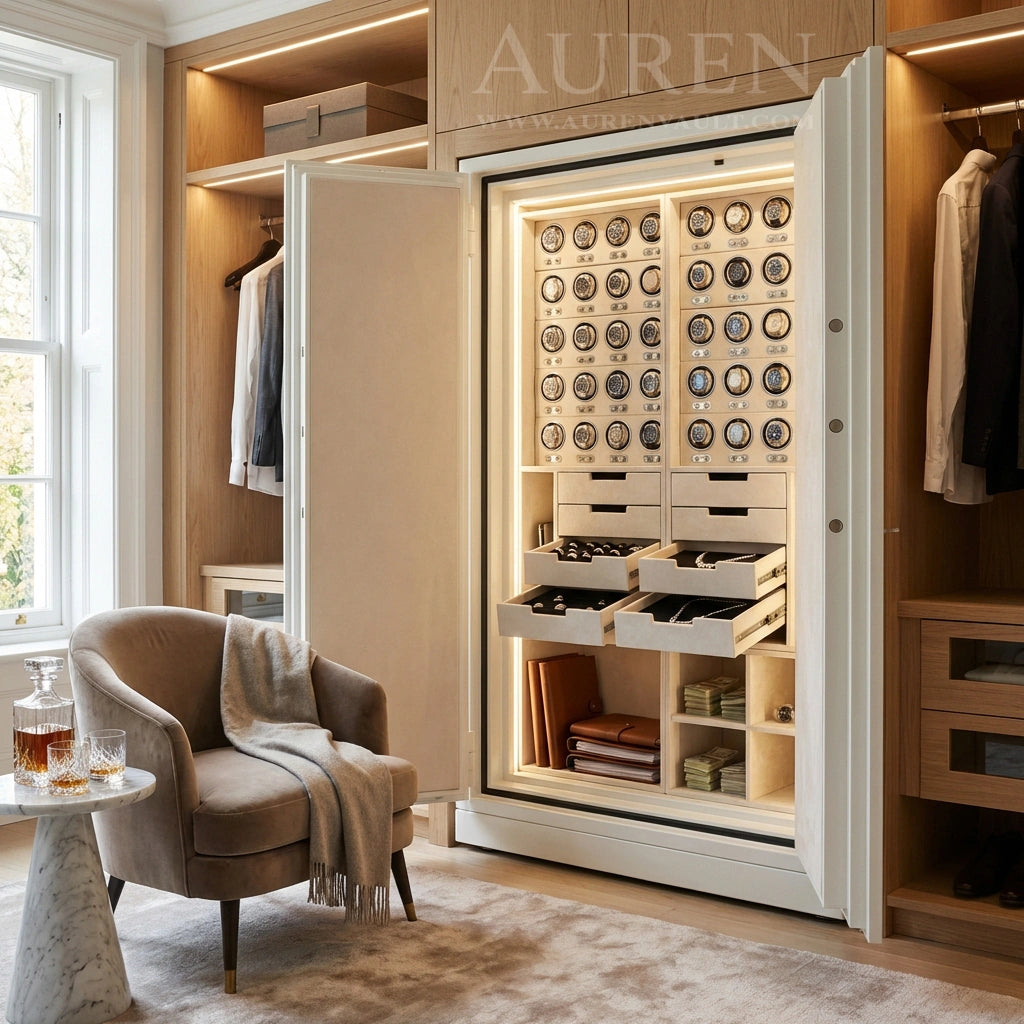
Collectors who want to combine automatic winding with enclosed storage can explore watch winder safes.
The watch winder safe guide explains how to evaluate winding functions alongside storage and security requirements.
Planning Storage for an Expanding Movado Collection
Consider an owner with a 40 mm Museum Classic Automatic, a 33 mm Museum Classic Automatic, a Heritage Kingmatic, a Heritage Datron, an Alta Centurion Chronograph, and two quartz Museum watches.
Seven watches are owned, but only five are automatic.
The two quartz pieces should occupy passive storage positions.
Among the automatics, the smaller Sellita SW100 watch may need a different cushion from the larger automatic chronograph.
The Calibre 95A should receive its own confirmed winding program.
A well-planned arrangement therefore considers movement types and physical dimensions, not merely total watch count.
For substantial collections, luxury watch safes can provide expanded storage options.
The complete selection of watch safes offers additional configurations.
Where standard layouts are unsuitable, custom watch safes can accommodate different winding capacities, stationary compartments, and interior requirements.
How to Set Up a Watch Winder for Movado
Begin with the watch's exact reference and movement.
Confirm that it is automatic.
If the watch has stopped, restart it according to its instructions before relying on the winder to maintain its reserve.
Next, select the appropriate TPD and rotation direction.
Do not assume that all Movado automatics use identical programs.
Fit the watch securely around a properly sized cushion.
Ensure that the case and its external controls have enough clearance.
Allow the device to perform its normal cycles.
Observe whether the watch continues running over several days.
If it stops, review the starting reserve, programming, and operation of the winder.
A persistent problem may require professional inspection.
Simply selecting the highest TPD setting is not a reliable solution.
Should Movado Automatics Stay on a Winder Every Day?
There is no general requirement for an automatic Movado to remain continuously wound.
When the power reserve is exhausted, the watch stops normally.
It can subsequently be restarted according to its operating instructions.
For a frequently worn automatic, regular wrist movement may provide enough energy.
For a watch worn only occasionally, a winder can reduce repeated resetting.
The shorter power reserves of many SW200-family movements can make winding convenient when the watch remains unworn for several days.
However, continuous operation is not the same as improved preservation.
A winder does not eliminate servicing or correct mechanical wear.
For long-term storage, protection from excessive humidity, unsuitable temperatures, impacts, and unnecessary handling may be more important than keeping the movement running.
The watch storage guide explains these broader considerations.
Frequently Asked Questions About Movado Watch Winders
What is the best watch winder for Movado watches?
A programmable winder with adjustable TPD, selectable rotation direction, controlled rest cycles, and a correctly sized cushion is the best general option. The exact program depends on the automatic calibre.
Do all Movado watches need a watch winder?
No. Many Movado watches use quartz movements and receive no benefit from conventional winding. Only automatic mechanical watches can use a standard watch winder to maintain their energy.
What TPD should I use for a Movado Museum Automatic?
For references using Sellita SW200-1, approximately 650 TPD with bidirectional rotation is a commonly published starting point. Confirm the exact movement and winder program before use.
Does a Movado Museum Classic have an automatic movement?
Some Museum Classic references are automatic, while others use quartz. Selected 40 mm automatic models use Sellita SW200-1, and certain 33 mm automatic versions use Sellita SW100.
Can a 33 mm Movado Museum Classic use a winder?
Yes, if it contains an automatic movement. The correct program should be confirmed for its calibre, and a smaller cushion may be needed.
What setting should I use for the Movado 1881 Automatic?
Selected 1881 Automatic references use Sellita SW200-1. Bidirectional winding around 650 TPD is a commonly published starting reference, but the exact setting should be verified.
Is the Heritage Kingmatic automatic?
Modern Heritage Kingmatic references include models equipped with the Sellita SW200-1 608B automatic movement. Older Kingmatic watches can use different calibres, so their requirements should be checked separately.
Does the Movado Heritage Datron need a watch winder?
No. A Heritage Datron Automatic can operate through normal wear. A compatible winder is optional and becomes useful when the watch is rotated with other timepieces.
Can the Movado Alta Centurion Chronograph use a winder?
Yes. References using the automatic Calibre 95A can benefit from a compatible winder. However, its exact TPD and winding direction should be verified rather than inferred from other chronographs.
Do Movado BOLD watches need winding?
Many BOLD models use quartz movements, but some contemporary BOLD references are automatic. Check the movement specifications for the exact watch.
Can a watch winder overwind a Movado automatic?
Modern automatic movements generally include mechanisms that limit excessive mainspring tension. Nevertheless, the correct TPD and rest periods remain preferable to unnecessary rotation.
Is a watch winder safe necessary for a Movado collection?
It is not mechanically necessary. It becomes more relevant when the owner wants to combine automatic winding with enclosed storage and additional physical security for several valuable watches.
Related Reading
Collectors comparing design-focused luxury watches and mixed movement technologies may also find these articles useful:
-
Best Watch Winder for Cartier: TPD Settings & Buying Guide — Explores automatic, quartz, and other movement distinctions within a design-led luxury watch collection.
-
Best Watch Winder for Grand Seiko: Spring Drive & TPD Guide — Explains how different movement technologies affect winding decisions.
-
Watch Safes with Built-In Watch Winders: Are They Worth It? — Compares standalone winding devices with integrated watch storage.
Final Thoughts: The Best Movado Winder Respects the Movement Behind the Design
Movado is closely associated with minimalist design, but its automatic watches contain a range of mechanical movements.
A Museum Classic with Sellita SW200-1, a smaller Museum Classic with SW100, and an Alta Centurion Chronograph with Calibre 95A should not automatically receive identical winding settings.
The distinction between automatic and quartz watches is equally important.
For a single frequently worn Movado, a compact programmable winder may provide enough convenience.
For mixed collections, independently controlled winding positions and passive storage can create a more practical arrangement.
At Auren Vault, the emphasis is on integrating reliable winding, refined presentation, and appropriate storage for valuable mechanical watches.
The ideal Movado watch winder should preserve the convenience of an operating automatic movement without compromising the design, physical support, or long-term care of the watch.