

The best watch winder for Doxa watches is a programmable unit that matches the automatic movement's turns per day (TPD), supports the appropriate rotation direction, and holds the watch securely without putting unnecessary pressure on its bracelet, clasp, or rubber strap.
For many Doxa SUB automatics, including selected SUB 200, SUB 200T, SUB 300, and SUB 300T references, approximately 650 TPD with bidirectional rotation is a commonly published starting recommendation. However, the correct setting must be confirmed for the specific movement.
Not all Doxa watches have the same power reserve. Many traditional SUB automatics offer approximately 38 hours, while the redesigned SUB 750T and SUB 200 C-GRAPH offer approximately 56 hours.
There is also an important distinction between the SUB 200 C-GRAPH automatic chronograph and SUB 200 T.GRAPH, which uses a manually wound Valjoux 7734. The latter does not benefit from a conventional winder.
For collectors, movement compatibility, secure support for substantial diving cases, and appropriate storage matter more than selecting the highest available TPD.
Why Doxa Watch Winder Selection Is More Complicated Than It Looks
Doxa has a distinctive place in the history of professional diving watches.
Its SUB collections are recognized for bright dial colours, cushion-shaped cases, characteristic rotating bezels, and practical underwater legibility.
The SUB 300 and SUB 300T remain central to the brand's identity.
Modern Doxa watches include compact divers, large professional-style models, GMT watches, and mechanical chronographs.
Their similar exterior styling can obscure differences in movement architecture.
A SUB 300 with a 38-hour automatic movement and a contemporary SUB 750T with a 56-hour reserve do not have identical technical specifications.
The SUB 200 C-GRAPH is automatic, while the SUB 200 T.GRAPH is manually wound.
A watch winder must account for those differences.
An automatic movement receives energy through the movement of an oscillating rotor.
When the owner wears the watch, wrist movement contributes to winding the mainspring.
After the watch is removed, its stored energy gradually declines.
A compatible winder recreates some of the movement required to maintain that reserve.
Its purpose is convenience.
It does not improve water resistance, eliminate servicing, or automatically maintain a chronograph's timing function.
For an owner who wears one Doxa regularly, external winding may be unnecessary.
For someone who alternates between several diving watches, a suitable winder can reduce repeated restarting and date adjustment.
Which Doxa Watches Can Use a Watch Winder?
The exact movement and reference should be confirmed before selecting a program.
| Doxa watch | Movement specification | Power reserve | Conventional winder suitable? |
|---|---|---|---|
| SUB 200 | Swiss automatic | 38 hours | Yes |
| SUB 200T | Swiss automatic | 38 hours | Yes |
| SUB 300 | Swiss automatic, COSC-certified | 38 hours | Yes |
| SUB 300T | Swiss automatic | 38 hours | Yes |
| SUB 300 Beta | Swiss automatic | 38 hours | Yes |
| SUB 750T, redesigned version | Swiss automatic | 56 hours | Yes |
| SUB 200 C-GRAPH | Swiss automatic chronograph | 56 hours | Yes |
| SUB 200 C-GRAPH II | Swiss automatic chronograph | 56 hours | Yes |
| SUB 200 T.GRAPH | Valjoux 7734 | 45 hours | No — manual winding |
| Older SUB models using ETA 2824-2 | ETA 2824-2 | Reference-dependent | Yes |
| Selected historical automatic chronographs | Movement-dependent | Varies | Confirm calibre |
The movement descriptions and reserves above are based on representative documented models. Doxa has used different Swiss movements and configurations across production generations.
The manufacturer does not always identify the precise third-party base calibre on every contemporary product page.
When the base movement is not explicitly documented, it should not be invented.
The Key Difference Between C-GRAPH and T.GRAPH
The similar names can create confusion.
The SUB 200 C-GRAPH is an automatic chronograph.
It contains a self-winding movement and can benefit from a compatible winder.
The SUB 200 T.GRAPH uses a manually wound Valjoux 7734.
It cannot receive energy through conventional external watch rotation.
The complication is similar in general purpose, but the energy systems are different.
For collectors, this is one of the most important Doxa distinctions.
Doxa Watch Winder Settings: TPD and Rotation Direction
Two parameters determine how an automatic watch winder operates.
Turns per day (TPD) describes the number of programmed rotations performed during 24 hours.
Rotation direction determines whether the watch turns clockwise, counterclockwise, or alternates between both directions.
Many historical Doxa automatic references use ETA-derived movements with well-established independent winding recommendations.
However, a generic program should not automatically be applied to every modern Doxa reference.
Doxa Winder Settings by Movement
| Movement or watch family | Preliminary TPD guidance | Direction |
|---|---|---|
| ETA 2824-2-based Doxa | Approximately 650 TPD | Bidirectional |
| Historical ETA 2892-based models | Approximately 650 TPD | Bidirectional |
| Current SUB 200 / SUB 300 / SUB 300T | Approximately 650 TPD is a common starting reference | Verify exact movement |
| SUB 750T, current generation | Confirm the current automatic movement's program | Verify |
| SUB 200 C-GRAPH | Confirm the automatic chronograph calibre; historical models are associated with SW510-family movements | Verify exact movement generation |
| SUB 200 C-GRAPH II | Confirm the current automatic chronograph program | Verify |
| Valjoux 7750-based historical Doxa | Approximately 800 TPD | Clockwise commonly listed |
| SUB 200 T.GRAPH / Valjoux 7734 | Not applicable | Manual winding |
These recommendations are independent reference points, not a universal factory-approved Doxa winding chart.
The current SUB 750T and C-GRAPH models should not automatically inherit old Doxa movement settings simply because they share a collection name.
Is 650 TPD Enough for Doxa?
For numerous Doxa references based on ETA 2824-2, approximately 650 TPD bidirectional is commonly recommended.
That makes it a reasonable starting point when researching a compatible winder.
However, some automatic chronographs use different winding mechanisms.
A winder must produce effective rotor movement in the correct direction.
Higher TPD alone cannot compensate for an unsuitable direction.
For detailed guidance, see the watch TPD guide.
Does a 56-Hour Reserve Require More TPD Than 38 Hours?
Not necessarily.
Power reserve measures how long the movement can operate without receiving additional winding energy.
TPD measures external rotations.
A movement with a longer reserve does not automatically require more rotations each day.
Winding efficiency depends on its rotor and transmission mechanism.
The correct program should therefore be selected by movement architecture rather than by converting hours of reserve into turns per day.
Doxa SUB 300: A Classic Automatic With 38 Hours of Reserve
The SUB 300 is one of Doxa's defining modern diving watches.
Its design draws on the original 1967 SUB concept, including the distinctive orange dial and specialized rotating bezel.
Contemporary references use Swiss automatic movements certified as chronometers by COSC.
Doxa specifies approximately 38 hours of power reserve.
The case measures approximately 42.5 mm, with a characteristic cushion-shaped profile.
The watch can be fitted with a beads-of-rice steel bracelet or an FKM rubber strap.
When a SUB 300 Benefits From a Winder
Consider an owner who wears a SUB 300 during weekends but chooses a different watch during the working week.
With 38 hours of reserve, the movement may stop after a relatively short interval without wear.
A compatible winder can maintain the watch between uses.
This reduces repeated time and date adjustment.
However, an owner who wears the SUB 300 every day may receive sufficient winding through normal wrist movement.
A winder is optional rather than mechanically required.
The Beads-of-Rice Bracelet Requires Correct Support
Doxa's characteristic beads-of-rice bracelet is an important part of the SUB 300's design.
Its closely spaced links allow the bracelet to conform to the wrist.
However, a bracelet fitted to a particular wrist circumference may not fit comfortably around a large rigid winder cushion.
Forcing the clasp closed can place unnecessary tension on the links.
A compressible holder is preferable.
The watch should remain stable throughout rotation without excessive pressure.
The Diving Bezel Does Not Affect Winding Direction
The SUB 300 uses a rotating bezel with diving-related scales.
That external bezel has no direct relationship with the automatic rotor's winding direction.
A watch with a unidirectional diving bezel does not necessarily require a unidirectional watch winder.
The two mechanisms serve entirely different purposes.
The appropriate winder program follows the movement.
Doxa SUB 300T: A Robust Diver With Different Water Resistance
The SUB 300T is another major part of Doxa's collection.
Selected contemporary references provide approximately 1,200 metres of water resistance.
They use Swiss automatic movements with approximately 38 hours of reserve.
The watch also features the familiar cushion-shaped case and no-decompression dive-time bezel.
Does 1,200-Metre Water Resistance Change TPD?
No.
Water resistance describes the ability of the watch's case construction to resist water pressure under the specified conditions.
It does not establish how efficiently the automatic rotor winds the mainspring.
A SUB 300T does not require additional daily rotations simply because it has greater water resistance than a SUB 300.
The winding program must follow the movement.
Case Size and Crown Clearance
The SUB 300T measures approximately 42.5 mm in its standard configuration.
Its broad case, robust bezel, and crown require adequate space inside the winder.
The watch should not strike the enclosure during rotation.
A stable holder also prevents the case from shifting when the winding module changes direction.
For a robust sports watch, physical fit remains important even when the movement itself is straightforward.
Doxa SUB 200T: A Smaller Case With the Same Practical Winding Question
The SUB 200T provides a more compact interpretation of Doxa's diving-watch design.
Selected versions use a 39 mm stainless steel case, approximately 10.7 mm thick.
They contain a Swiss automatic movement with approximately 38 hours of reserve.
The watch retains a diving bezel, date display, and substantial water resistance.
For an owner who alternates among several watches, a compatible winder can maintain the movement between wears.
However, its smaller case does not automatically mean lower TPD.
Case diameter and winding requirements are separate characteristics.
Why the Smaller Bracelet May Need a Different Holder
A compact SUB 200T fitted to a smaller wrist may have a more tightly adjusted bracelet.
A rigid full-size cushion can be unsuitable.
A soft, compressible holder allows the watch to be mounted securely without overstretching the bracelet or rubber strap.
The correct electronic program and correct physical holder should be evaluated separately.
Doxa SUB 200: A Conventional Automatic for Everyday Wear
The SUB 200 combines vintage-inspired styling with a Swiss self-winding movement.
Contemporary references provide approximately 38 hours of reserve.
The watch has a comparatively conventional round case design, measuring approximately 42 mm.
For someone who wears the SUB 200 almost every day, a winder may offer little practical advantage.
Regular wrist movement can replenish the mainspring.
For a collector who changes watches every few days, the shorter reserve makes stoppage more likely.
In that situation, a programmable winder can reduce repeated resetting.
However, the specific movement should be confirmed.
The name SUB 200 does not establish an official universal TPD setting.
Redesigned Doxa SUB 750T: Why the 56-Hour Reserve Matters
The contemporary SUB 750T represents a more recent development within Doxa's catalogue.
Its redesigned case measures approximately 45 × 47 mm, with a thickness of about 11.95 mm.
Doxa specifies approximately 56 hours of power reserve.
That is longer than the 38 hours associated with many traditional SUB models.
Why a Longer Reserve Can Reduce Winder Dependence
A watch with 56 hours of reserve can remain running for more than two days when sufficiently wound.
For someone who wears the SUB 750T several times a week, this may be enough to avoid frequent stoppages.
A winder becomes more useful when the watch is left unworn for longer periods.
The longer reserve is therefore relevant to ownership convenience.
However, it does not independently establish a higher daily rotation count.
The current movement's actual winding characteristics should still be verified.
A Large Case Needs Stable Mounting
The redesigned SUB 750T retains a substantial external profile.
A suitable winding compartment should accommodate the 45 mm case and provide clearance for the bezel and crown.
The bracelet or strap should remain secure without excessive tension.
For a heavier sports watch, consistent motor operation and a stable holder are more important than decorative features.
SUB 200 C-GRAPH: An Automatic Chronograph With a Different Movement
The SUB 200 C-GRAPH is a key distinction within the Doxa collection.
It is a Swiss automatic chronograph.
Current Doxa specifications list approximately 56 hours of reserve.
Documented versions use a 45 mm case and measure approximately 17.25 mm thick.
The watch includes a central chronograph seconds hand and subdials for recording elapsed time.
Historical technical reviews identify Sellita SW510-family automatic movements in earlier C-GRAPH references.
However, the complete movement specification should be confirmed for the exact production generation.
Why the C-GRAPH Should Not Automatically Use SUB 300 Settings
The automatic chronograph is mechanically different from a conventional three-hand diver.
Its rotor and winding mechanism may require a different external program.
A generic 650 TPD bidirectional recommendation for an ETA 2824-based SUB should not automatically be applied to the C-GRAPH.
For SW510-family automatic chronographs, winding recommendations may differ from those of three-hand movements.
The exact direction should be verified before prolonged use.
A Winder Does Not Operate the Chronograph
The watch winder rotates the watch to maintain its automatic mainspring.
It does not start, stop, or reset elapsed-time measurements.
Those functions remain controlled by the chronograph pushers.
For a collector, the practical advantage is keeping the watch's ordinary timekeeping movement ready.
Why Thickness Matters
At approximately 17.25 mm, the traditional C-GRAPH is considerably thicker than many conventional automatic watches.
A compact winding compartment may not provide adequate clearance.
The bezel, crown, pushers, and crystal should remain clear of the enclosure throughout rotation.
A suitable holder should also accommodate the watch's weight.
The newer SUB 200 C-GRAPH II uses a more compact 42 mm case, with a documented thickness of approximately 15.85 mm.
Its smaller dimensions may simplify mounting, but the movement's program should still be verified independently.
SUB 200 T.GRAPH: The Manual-Winding Exception
The SUB 200 T.GRAPH should not be confused with the C-GRAPH.
It uses a manually wound Valjoux 7734 movement.
Doxa specifies approximately 45 hours of reserve.
The watch is associated with a limited-production revival of historical chronograph movements.
Its hand-wound architecture is part of its mechanical identity.
Why a Conventional Winder Cannot Wind T.GRAPH
The Valjoux 7734 does not contain a conventional automatic rotor.
It receives energy through manual winding.
Rotating the complete watch inside a conventional automatic winder will not replenish the mainspring.
The correct storage approach is therefore different from that of the automatic C-GRAPH.
A protected stationary compartment is more appropriate.
The owner should manually wind and set the watch according to the original instructions.
Why This Distinction Matters for Collectors
An owner may possess both the C-GRAPH and T.GRAPH.
Both are mechanical diving chronographs.
Their similar names can lead to incorrect assumptions.
Only the C-GRAPH can benefit from conventional automatic winding.
The T.GRAPH requires manual winding.
A suitable collection-storage system should provide an active winding position for one and a stationary position for the other.
Older Doxa Watches and Movement Identification
Doxa has produced mechanical watches across many decades.
Historical references include ETA-based automatics, Valjoux chronographs, and other Swiss movement families.
Independent databases commonly list approximately 650 TPD bidirectional for Doxa watches using ETA 2824-2.
Certain Valjoux 7750-based historical chronographs are commonly associated with approximately 800 TPD clockwise.
However, not every older Doxa chronograph contains the same movement.
A collector should verify the exact calibre before selecting a program.
For valuable vintage watches, service records and a qualified watchmaker can help establish compatibility.
A watch winder should not be used to compensate for a movement that is no longer operating correctly.
Choosing a Suitable Doxa Watch Winder
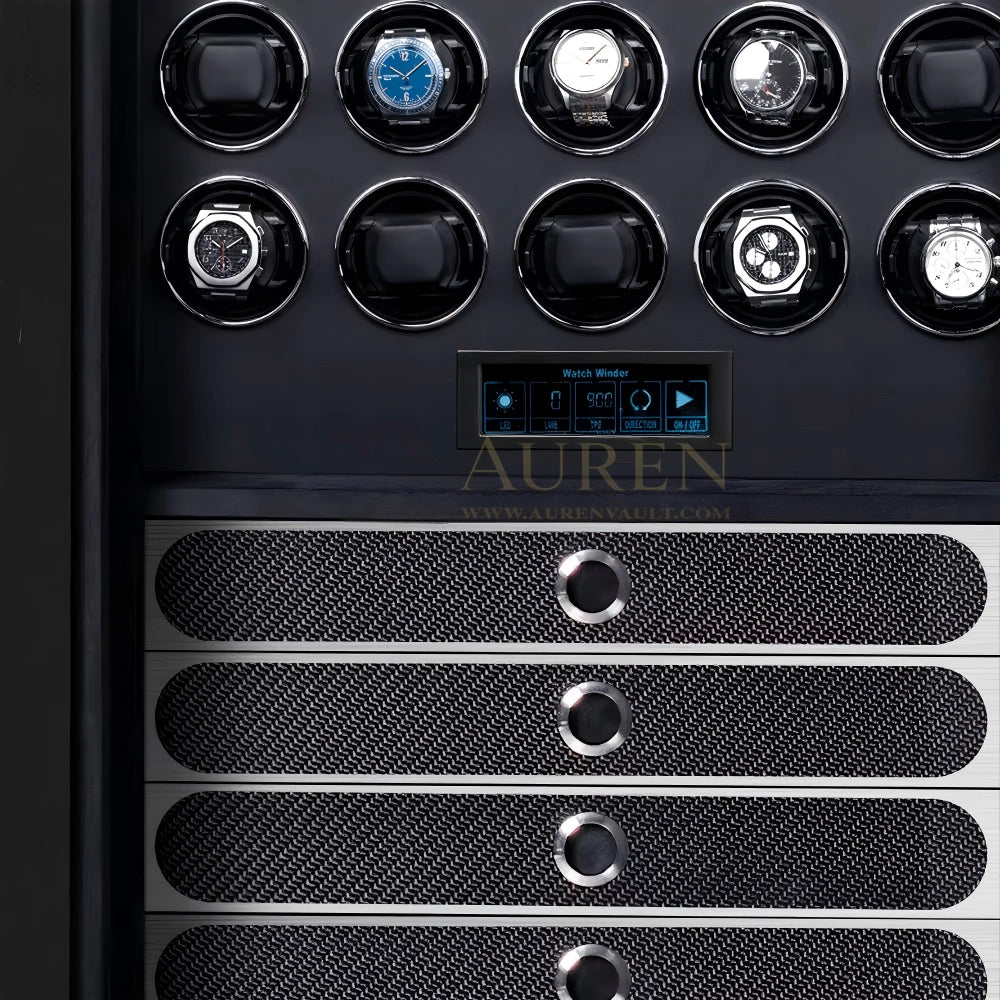
The best device should provide adjustable TPD, selectable winding direction, controlled rest periods, and a secure holder.
Independent programming is valuable when storing conventional automatic divers alongside chronographs.
The winding module should operate smoothly and quietly.
Physical stability is especially important for substantial steel cases and bracelets.
A suitable cushion should accommodate a fitted beads-of-rice bracelet or rubber strap without excessive pressure.
The compartment should offer enough clearance for large bezels and crowns.
Standalone Winder vs. Watch Winder Safe
For one regularly worn Doxa, a compact programmable winder may be sufficient.
For a larger collection, storage capacity and physical protection become more relevant.
| Ownership situation | Suitable storage approach |
|---|---|
| One regularly worn SUB 300 | Winder optional |
| Several three-hand SUB automatics | Programmable multi-watch winder |
| SUB 300 plus C-GRAPH | Independent winding programs |
| SUB 200 T.GRAPH | Protected stationary storage |
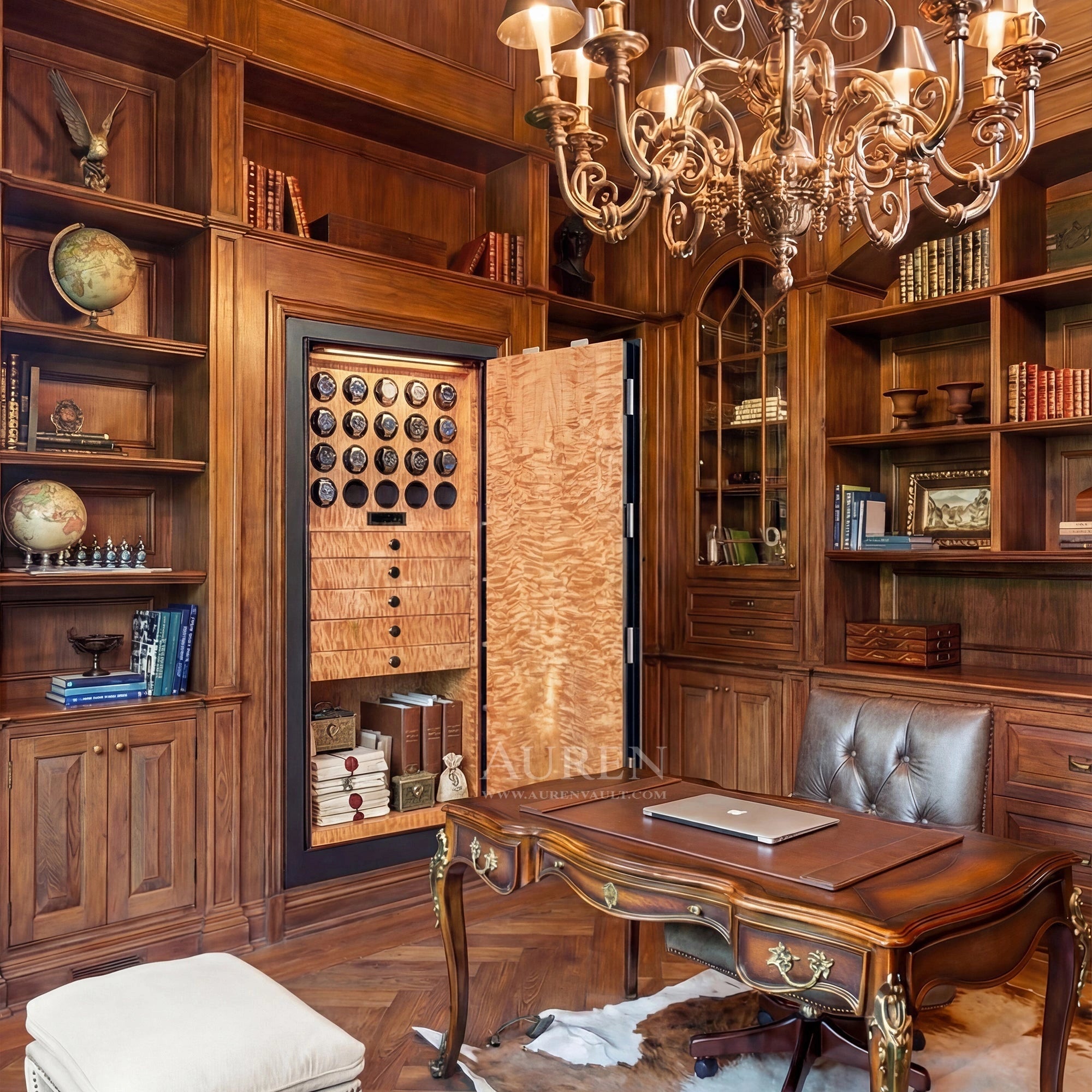
| Larger mixed watch collection | Integrated winding and enclosed storage |
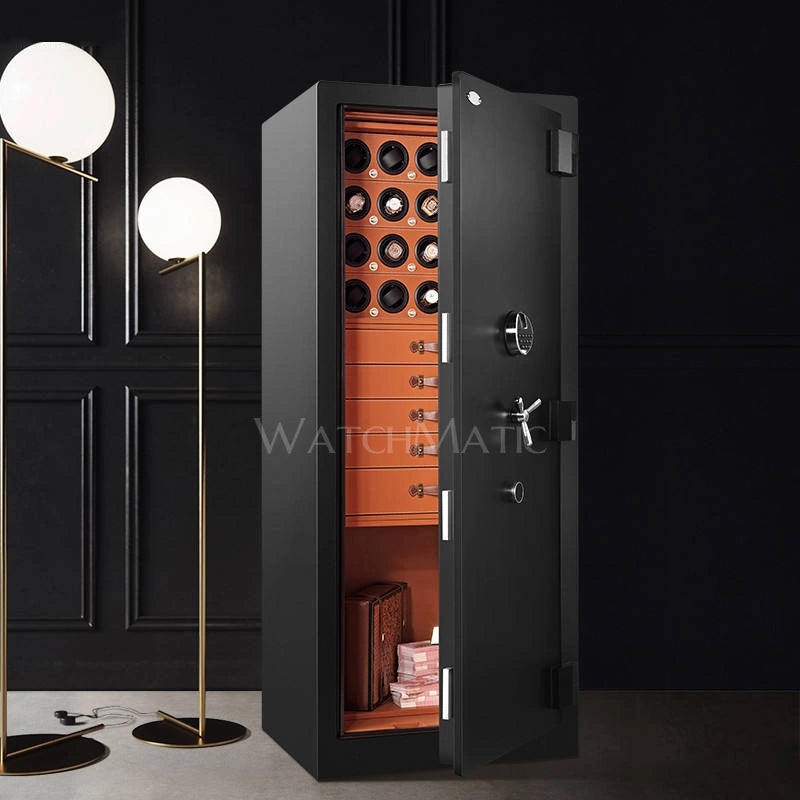
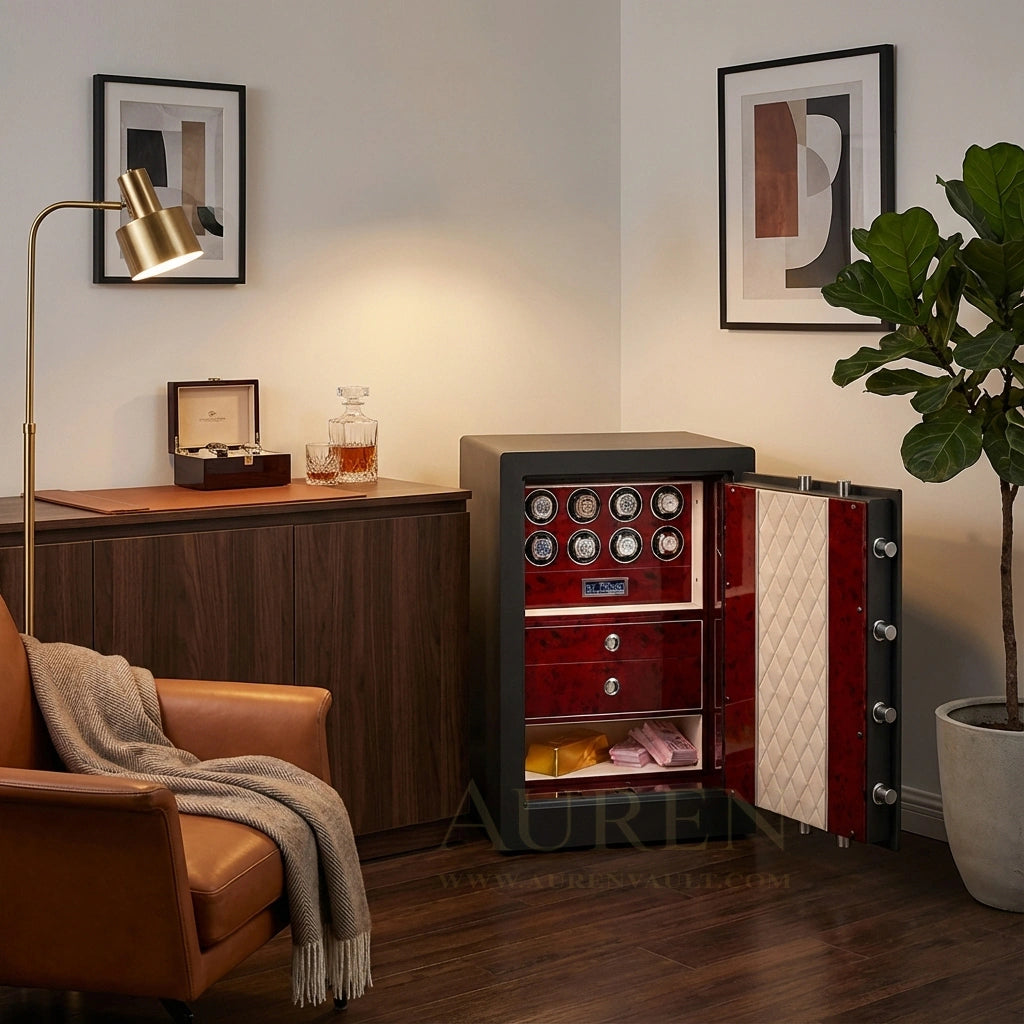
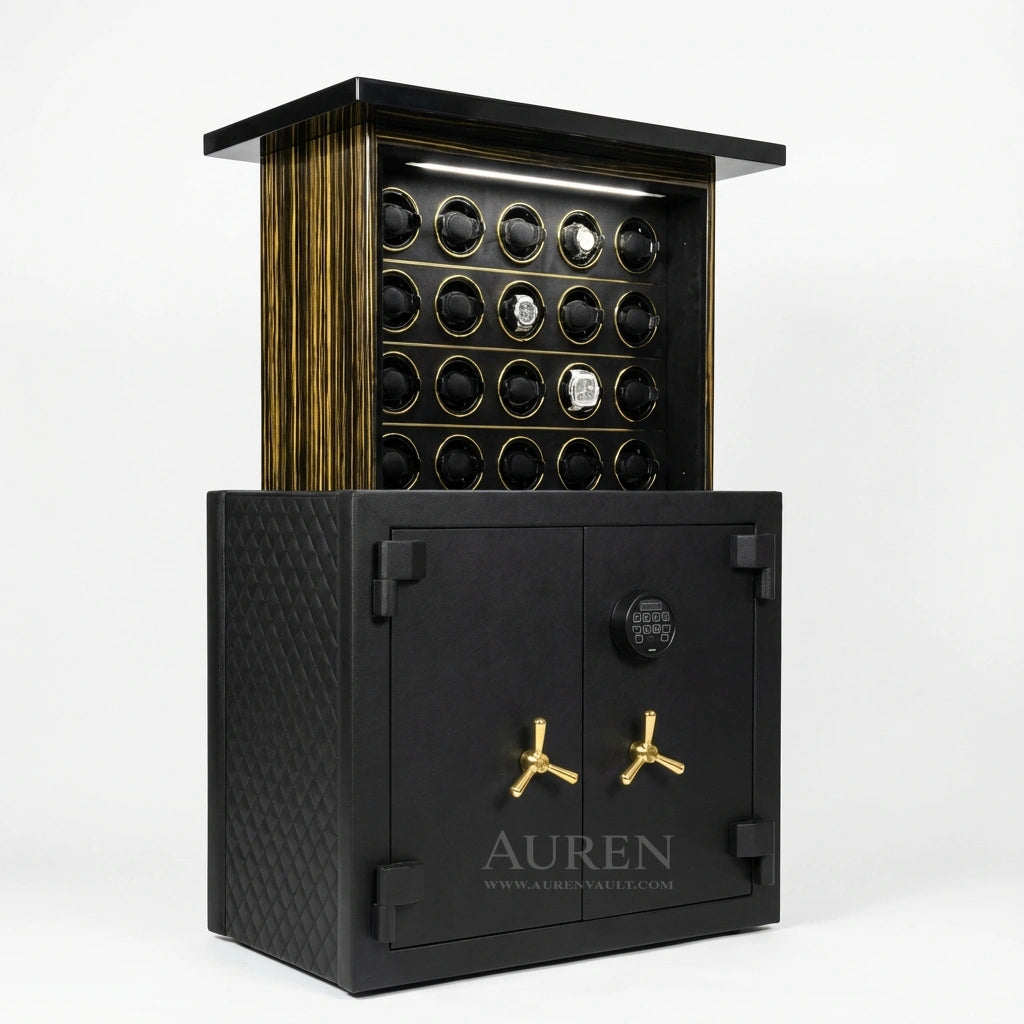
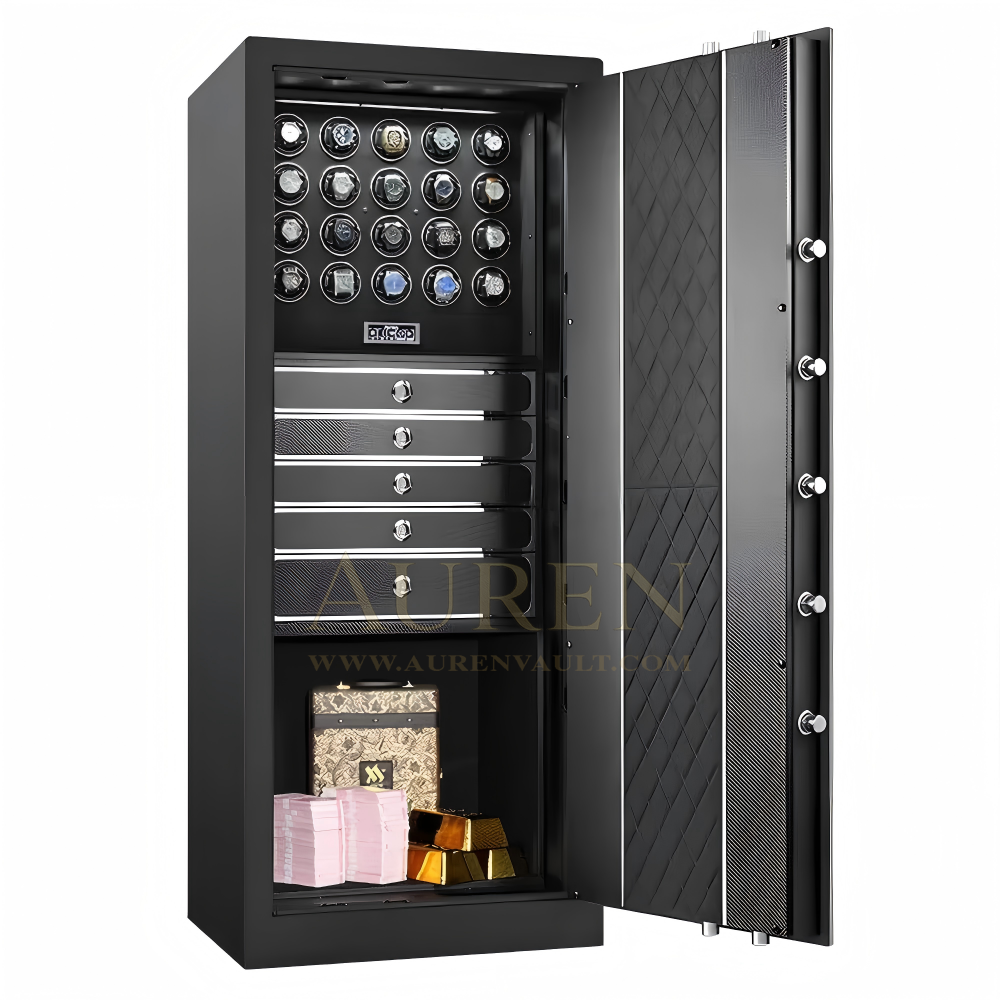
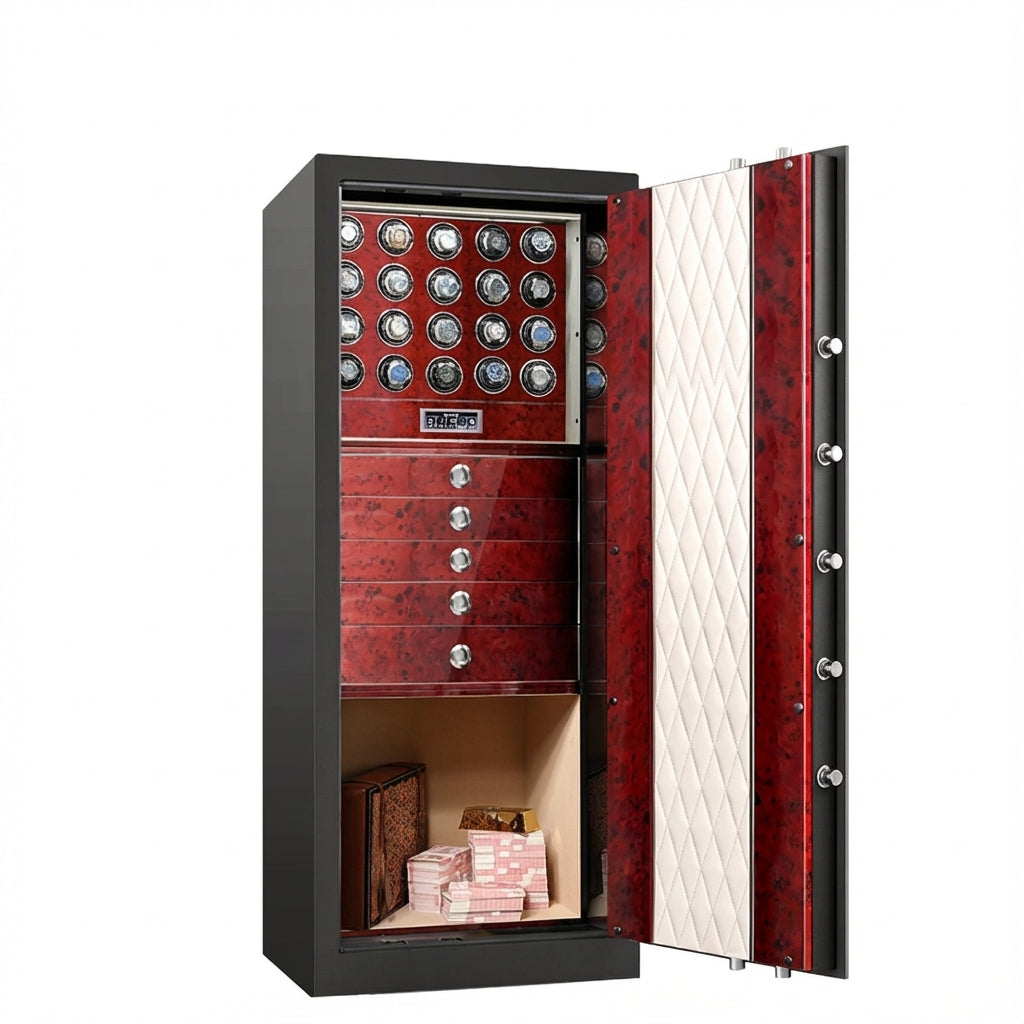
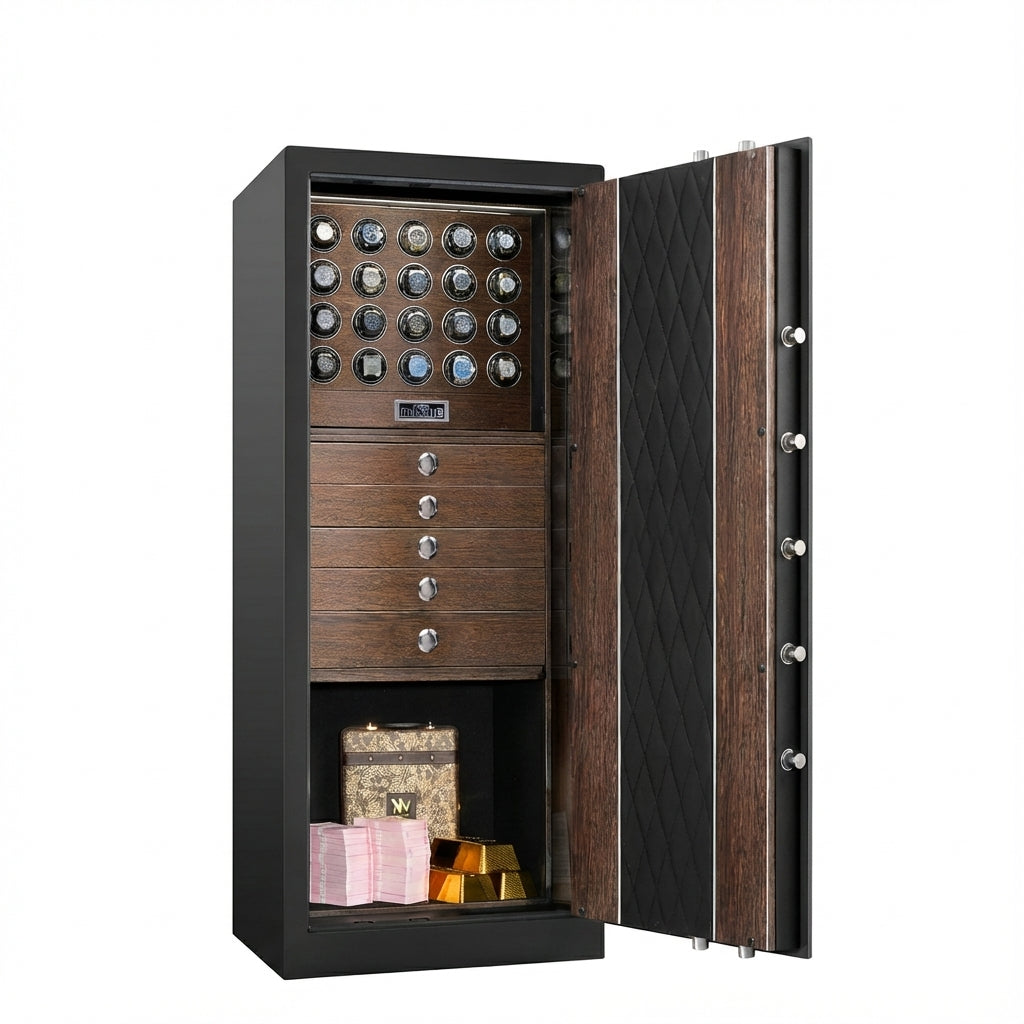
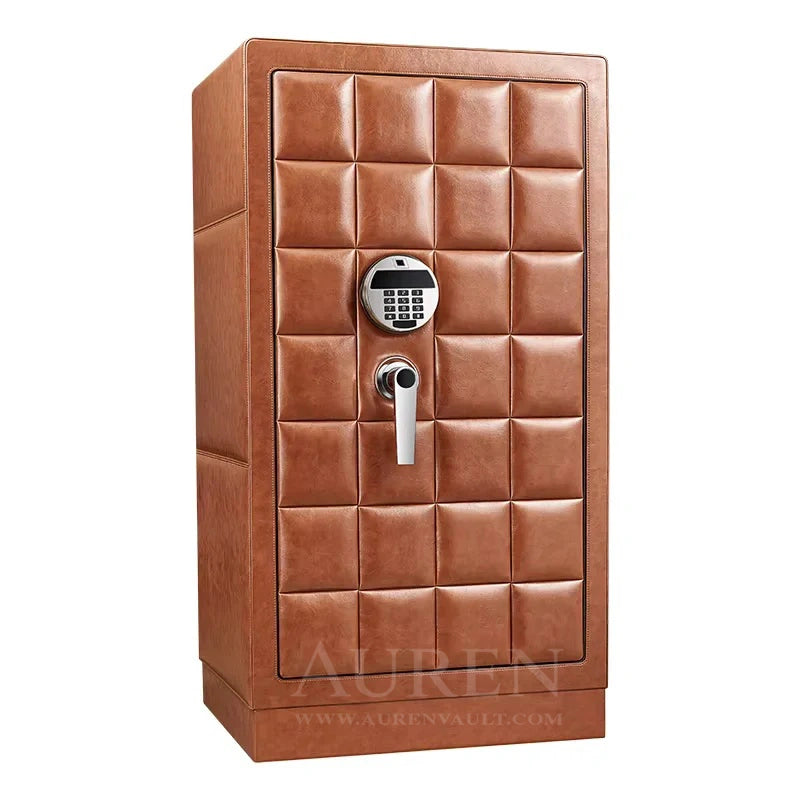
A watch winder safe can combine automatic winding with enclosed storage.
Its security characteristics should be evaluated separately from the winding modules.
Construction, installation, locking mechanisms, and documented ratings determine its actual protection.
The watch winder safe guide explains how these requirements interact.
For substantial collections, luxury watch safes offer additional capacity options.
The broader watch safe collection provides other storage arrangements.
Where larger cases and mixed movement types require a specialized interior, custom watch safes may offer greater flexibility.
How to Set Up a Doxa Watch on a Winder
Begin by confirming the complete watch reference.
Identify whether its movement is automatic.
A SUB 200 T.GRAPH with Valjoux 7734 should not be assigned an automatic winding program.
For a confirmed automatic, determine the appropriate rotation direction and TPD.
If the watch has stopped, restart it according to Doxa's instructions before relying on a winder to maintain its reserve.
Choose a suitable cushion.
Ensure the bracelet or rubber strap is not overstretched.
Check case and crown clearance.
Allow the device to complete its programmed rotation and rest cycles.
Observe whether the movement continues running over several days.
If the watch repeatedly stops, review the program and the movement's condition before increasing TPD.
Frequently Asked Questions About Doxa Watch Winders
What is the best watch winder for Doxa watches?
A programmable winder with adjustable TPD, selectable direction, controlled rest cycles, and a suitable holder for substantial diving watches is the best general choice.
How many TPD does a Doxa SUB 300 need?
Approximately 650 TPD bidirectional is commonly published for various ETA-derived Doxa automatics. Confirm the exact movement before using this as a setting.
Does the Doxa SUB 300 need a winder?
No. Its automatic movement can receive sufficient winding through normal wear. A winder is optional.
Is the Doxa SUB 300T automatic?
Yes. Contemporary SUB 300T references use Swiss automatic movements with approximately 38 hours of reserve.
Does 1,200-metre water resistance require higher TPD?
No. Water resistance does not determine winding efficiency.
Can a SUB 200T use a watch winder?
Yes. The modern SUB 200T uses a Swiss automatic movement with approximately 38 hours of reserve.
Does the new SUB 750T have a longer power reserve?
Yes. The redesigned SUB 750T provides approximately 56 hours in documented references.
Is the SUB 200 C-GRAPH automatic?
Yes. The C-GRAPH uses a Swiss automatic chronograph movement.
Is the SUB 200 T.GRAPH automatic?
No. It uses a manually wound Valjoux 7734.
Can the C-GRAPH and T.GRAPH share a winding program?
No. The C-GRAPH is automatic, while the T.GRAPH cannot receive energy from conventional external winding.
Does a chronograph need more TPD?
Not automatically. The relevant movement architecture determines the proper setting.
Does a unidirectional diving bezel mean clockwise-only winding?
No. The diving bezel and automatic rotor are entirely separate mechanisms.
Can a watch winder overwind a Doxa automatic?
Modern automatic movements generally incorporate mechanisms limiting excessive mainspring tension. Appropriate TPD and rest periods remain preferable to unnecessary rotation.
Can a Doxa be left off a winder for several days?
Yes. An automatic Doxa may stop when its reserve is exhausted, which is normal. It can be restarted according to its instructions.
Is a watch winder safe useful for Doxa collectors?
It can be, particularly when the collection includes several automatic watches and manually wound historical chronographs.
Related Reading
For collectors interested in diving watches, automatic movements, and secure storage:
-
Best Watch Winder for Tudor Watches — Movement-specific winding for robust mechanical diving watches.
-
Best Watch Winder for Grand Seiko Watches — Understanding power reserve and automatic movement technology.
-
Watch Safes with Built-In Watch Winders: Are They Worth It? — Evaluating integrated winding and enclosed storage.
Final Thoughts: The Best Doxa Winder Depends on the Movement
Doxa's SUB watches share a recognizable design identity, but their movement specifications are not identical.
The SUB 200, SUB 300, and SUB 300T commonly offer approximately 38 hours of reserve.
The redesigned SUB 750T and SUB 200 C-GRAPH offer approximately 56 hours.
The SUB 200 T.GRAPH is manually wound and cannot benefit from conventional external winding.
For a single regularly worn Doxa, a compact programmable winder may provide sufficient convenience.
For larger collections, independent controls, suitable holders for substantial diving cases, and protected stationary compartments become more valuable.
At Auren Vault, the focus is on combining movement-compatible winding, refined organization, and considered protection for mechanical watch collections.
Ultimately, the right Doxa watch winder should maintain sufficient energy, respect the movement's requirements, and support the watch securely without unnecessary rotation.