
The best watch winder for Farer watches is a programmable device that matches the movement's winding direction, provides adjustable turns per day (TPD), and supports the watch securely through controlled rotation and rest cycles.
Farer's automatic watches use several Swiss movement families. The Lander IV GMT uses the Sellita SW330-2 with approximately 56 hours of power reserve, while the World Timer uses the related SW331-2. The newer Three Hand Series III uses the La Joux-Perret G101, extending its reserve to approximately 68 hours.
These differences matter because power reserve, winding architecture, and actual wearing habits determine how useful a winder will be.
Not every Farer mechanical watch is automatic. The Racing Chronograph uses the manually wound Sellita SW510M b, while selected Moonphase watches use the manually wound SW288-1 M a. Neither can be powered by a conventional automatic watch winder.
For owners with several Farer watches, movement-specific programming and flexible storage are more important than a universal TPD preset.
Why Farer Watches Need Movement-Specific Winding
Farer has developed a distinctive approach to contemporary British watch design.
Its watches combine vivid dial colours, practical case dimensions, and Swiss mechanical movements. The result is a collection that spans everyday three-hand watches, GMTs, world timers, diving watches, and manually wound complications.
Although the design language is recognizably Farer, the movements are not interchangeable.
A Lander GMT and a Three Hand Series III may both receive energy through automatic winding, but the Lander uses a Sellita GMT movement while the newer three-hand collection uses a La Joux-Perret calibre.
That difference affects how the watches should be evaluated for external winding.
A conventional watch winder rotates the complete watch, allowing its internal automatic rotor to move.
The rotor drives the winding mechanism, transferring energy to the mainspring.
When the watch is left stationary for an extended period, the movement gradually consumes the stored energy until it stops.
A compatible winder can maintain the running state between periods of wear.
However, it does not replace manual starting procedures, correct servicing, or appropriate storage.
For Farer, the most reliable starting point is identifying the exact movement.
Farer Watch Winder TPD Settings and Rotation Direction
Two parameters determine the program of a watch winder.
Turns per day (TPD) describes the number of complete external rotations performed over a 24-hour period.
Rotation direction specifies clockwise, counterclockwise, or alternating rotation.
The correct combination should deliver sufficient effective winding without requiring continuous movement.
Many independent winding references associate modern Swiss automatic movements with starting programs around 650–800 TPD.
However, this range must not be interpreted as a universal Farer specification.
The correct program depends on the underlying movement and the way the particular winding device calculates and distributes rotations.
Farer Watch Winder Compatibility by Movement
| Farer collection or model | Movement | Winding type | Power reserve | Winder compatibility |
|---|---|---|---|---|
| Lander IV GMT | Sellita SW330-2 | Automatic GMT | 56 hours | Compatible |
| World Timer | Sellita SW331-2 | Automatic world-time display | 56 hours | Compatible |
| Three Hand Series III | La Joux-Perret G101 | Automatic | 68 hours | Compatible |
| Aqua Compressor Series III | La Joux-Perret G101 | Automatic | 68 hours | Compatible |
| Selected Pilot Series II | Sellita SW300-1 | Automatic | 56 hours | Compatible |
| Selected Integra watches | Sellita SW300-1 | Automatic | 56 hours | Compatible |
| Racing Chronograph | Sellita SW510M b | Manual winding | 63 hours | Not required |
| Selected Moonphase watches | Sellita SW288-1 M a | Manual winding | 45 hours | Not required |
Specifications represent selected movement generations. Verify the exact reference before selecting a program. The power reserves above are manufacturer movement specifications, not external TPD recommendations.
The table reveals an important distinction.
Several automatic Farer watches have relatively generous power reserves, while other mechanically complicated Farer watches cannot use a conventional winder at all.
An owner should therefore distinguish between mechanical complexity and automatic winding capability.
Is 650 TPD Enough for Farer Watches?
Approximately 650 TPD is frequently used as an initial reference for modern Swiss automatic calibres.
For selected Sellita movements, an adjustable program within the broader 650–800 TPD range can be a reasonable starting point when supported by a compatible movement reference.
However, owners should verify the correct direction and actual daily rotation requirement.
The La Joux-Perret G101 should not automatically inherit a setting published for the Sellita SW330-2.
Its longer reserve also does not establish a particular TPD value.
Power reserve measures how long a sufficiently wound movement can run. TPD describes the external rotations supplied to the automatic winding system.
A longer reserve may reduce the need for a winder between wears, but it does not independently determine the number of rotations required.
For a more detailed explanation, the watch TPD guide covers how daily turns, direction, and operating cycles relate to automatic movements.
Lander IV GMT: The Sellita SW330-2
The Lander is one of Farer's most recognizable travel watches.
Its colourful dial, characteristic hands, and dual-time display create a distinctive interpretation of the everyday GMT.
The Lander IV uses the Swiss Sellita SW330-2 automatic movement.
Farer specifies approximately 56 hours of power reserve.
The movement operates at 28,800 vibrations per hour and includes a 24-hour indication for tracking an additional time zone.
When Is a Winder Useful for the Lander?
Consider an owner who wears the Lander when travelling but chooses a different watch during the working week.
If the Lander remains unworn for several days, its reserve will eventually expire.
The owner must then restart the watch and restore the correct time, date, and GMT indication.
A compatible winder can reduce this routine.
The benefit is particularly noticeable when the watch is kept ready for spontaneous travel.
However, someone who wears the Lander daily may receive more than enough automatic winding through normal wrist movement.
A winder is optional in that situation.
Does the GMT Function Change TPD?
Not necessarily.
The GMT indication is powered by the movement, but it does not independently establish the external winding requirement.
The relevant winding system belongs to the Sellita SW330-2.
A watch winder maintains energy in the mainspring; it does not automatically adjust the GMT hand or select a destination time zone.
If the watch has been set incorrectly, placing it on a winder will not correct that setting.
Owners should therefore distinguish between maintaining operation and configuring the watch's indications.
Why Lander Case Size Matters
Farer offers the Lander in different case sizes, including 36 mm and 39.5 mm versions.
These watches may share the same movement but require different holder considerations.
A rigid cushion sized for a large steel sports watch can be uncomfortable for a smaller Lander on leather.
The appropriate holder should secure the watch without stretching the strap or placing excessive pressure on the buckle.
A compressible cushion is generally more adaptable.
Farer World Timer: A Different GMT Architecture
The World Timer provides a useful comparison with the Lander.
Representative Farer World Timer models use the Sellita SW331-2 automatic movement.
This calibre provides approximately 56 hours of reserve.
Rather than using the conventional central GMT hand seen on the Lander, Farer's World Timer uses a rotating 24-hour disc together with a city-time-zone bezel.
The display makes it possible to consult the time in different locations without relying on a traditional GMT-hand arrangement.
Despite the difference in display, the external winder still interacts with the underlying automatic movement.
Can Lander and World Timer Watches Share a Winder Program?
Both movements belong to related Sellita GMT families.
That makes their external winding requirements worth comparing.
However, owners should not assume that sharing a similar power reserve or movement manufacturer guarantees identical settings.
The appropriate program should be confirmed for the SW330-2 and SW331-2 individually.
A winder offering adjustable rotation direction and TPD is preferable to one with a permanently fixed program.
The World Timer also has a distinctive two-crown case arrangement on selected references.
Adequate clearance should be maintained around the crowns throughout each rotation.
Is Continuous Operation More Valuable for a World Timer?
The World Timer is particularly useful to owners who frequently consult several time zones.
Keeping it running between wears can avoid repeated time and date adjustments.
However, the watch's city bezel and world-time display still require correct user configuration.
A winder maintains movement energy; it does not automatically synchronize the watch to a changing travel itinerary.
For occasional use, allowing the watch to stop may be perfectly reasonable.
Three Hand Series III: The 68-Hour La Joux-Perret G101
Farer's newer Three Hand Series III represents a notable development in its movement selection.
Models such as the Resolute III, Venture, and Cross II use the Swiss La Joux-Perret G101 automatic calibre.
Farer specifies approximately 68 hours of reserve.
That provides more than two and a half days of running time when sufficiently wound.
What Does a 68-Hour Reserve Mean in Daily Ownership?
Imagine an owner wearing a Three Hand Series III watch on Friday afternoon before changing to another timepiece.
A sufficiently wound G101 may continue operating through the weekend without any external winding.
A shorter-reserve movement might stop earlier.
This is one of the reasons a winder may be less essential for a frequently worn G101-powered Farer.
The longer reserve adds convenience even without a storage device.
However, an owner who changes watches every week may still appreciate continuous operation.
If the watch remains unworn beyond its available reserve, a compatible winder can reduce repeated restarting.
Why the G101 Needs Its Own Program
It is tempting to use the same setting for every Swiss automatic movement.
That approach overlooks meaningful mechanical differences.
The G101 has its own winding architecture, rotor system, and energy-storage characteristics.
A setting used successfully for a Sellita GMT does not automatically become the correct G101 program.
The appropriate external rotation direction and daily turns should be verified before relying on continuous winding.
For collectors with several Farer automatics, independent programming is particularly useful.
Aqua Compressor: Winding and Case Design
The Aqua Compressor collection combines Farer's visual identity with a diving-oriented case.
Selected newer Aqua Compressor Series III models use the La Joux-Perret G101 automatic movement.
The resulting reserve is approximately 68 hours.
From a winding perspective, the movement should be evaluated according to the G101 rather than the watch's diving function.
The additional external crowns and case construction do not create a separate TPD requirement.
They do, however, affect physical compatibility.
A watch winder should provide adequate clearance around the crown assembly.
The holder must support the watch securely throughout rotation without allowing the case to shift toward the compartment walls.
Rubber straps may require different compression and support than leather straps or steel bracelets.
These considerations become more important when a collection contains several Farer case designs.
Racing Chronograph: Why Manual Winding Changes Everything
Not every Farer chronograph is automatic.
The Racing Chronograph collection includes references powered by the manually wound Sellita SW510M b.
This movement provides approximately 63 hours of reserve.
It contains a mechanical chronograph mechanism but does not have the automatic winding rotor required for a conventional watch winder.
The distinction is fundamental.
Rotating the complete watch inside a conventional winder will not replenish the mainspring.
The movement must be wound through the crown.
A collector purchasing winding equipment for both a Lander and a Racing Chronograph therefore needs only one active winding position.
The chronograph belongs in passive storage.
What About Farer Moonphase Watches?
Selected Farer Moonphase models use the manually wound Sellita SW288-1 M a.
This movement provides approximately 45 hours of reserve.
Although the moonphase display may take more care to reset than a simple three-hand watch, that does not make the movement compatible with an automatic winder.
It must still be wound manually.
This is an important distinction because complicated calendar and moonphase watches are often associated with watch-winder convenience.
That convenience applies only when the underlying movement can actually receive energy through automatic winding.
Choosing a Watch Winder for Different Farer Straps
Farer watches often use colourful leather straps, rubber options, and metal bracelets.
These materials affect the fit of a watch holder.
A leather strap should retain its natural curvature rather than being stretched tightly around an oversized cushion.
A steel bracelet shortened for a smaller wrist may also require a compressible holder.
Rubber straps are more flexible, but they should still be supported without excessive tension.
The watch should remain stable throughout the complete winding cycle.
A good holder distributes pressure through the strap or bracelet instead of forcing contact against the case, crown, or pushers.
For owners who change straps frequently, a flexible holder system is more useful than one designed around a single watch size.
Planning a Mixed Farer Collection
Consider a collector who owns a Lander IV GMT, World Timer, Resolute III, Aqua Compressor, Racing Chronograph, and Moonphase.
Four watches are automatic.
Two are manually wound.
The collection therefore does not require six active winding positions.
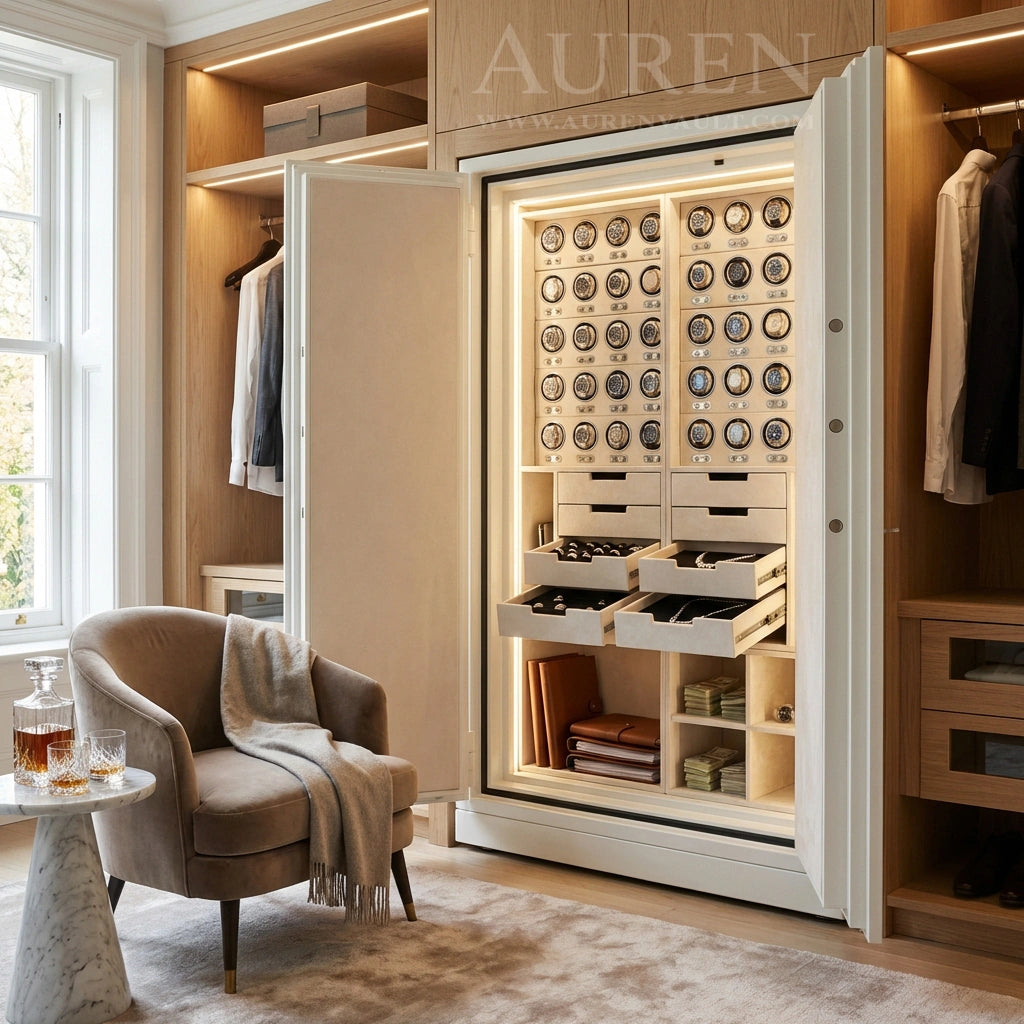
A system with four individually programmable rotors and suitable passive compartments would provide greater flexibility.
Even then, the owner may choose to operate fewer than four rotors.
The G101-equipped watches have relatively generous reserves and may not need continuous winding when worn frequently.
The Lander and World Timer may benefit more from ready-to-wear storage if used for regular travel.
This demonstrates why winding capacity should be planned around wearing habits and movement types rather than simply the number of watches.
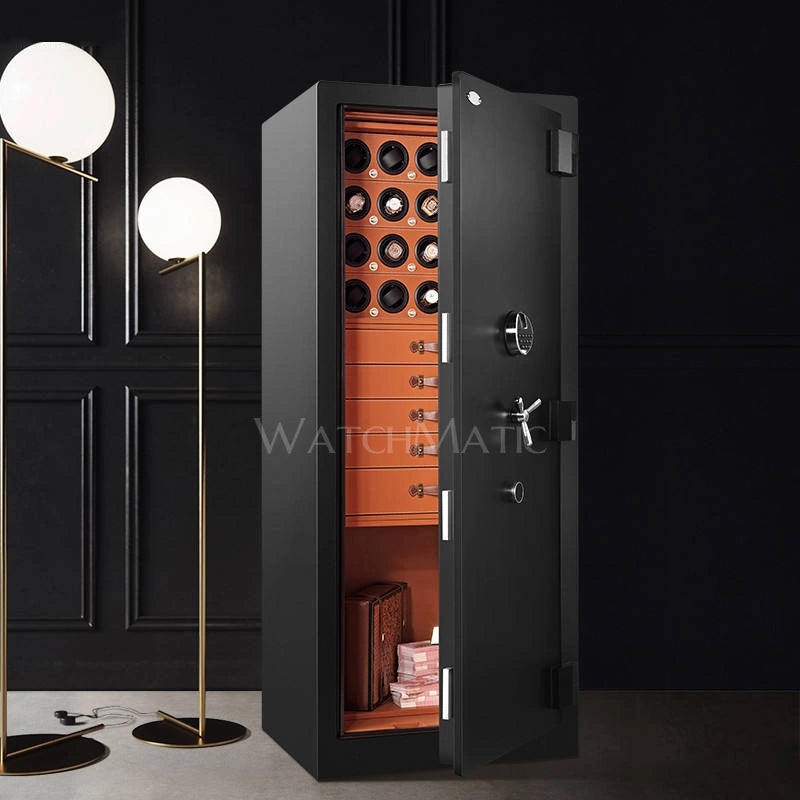
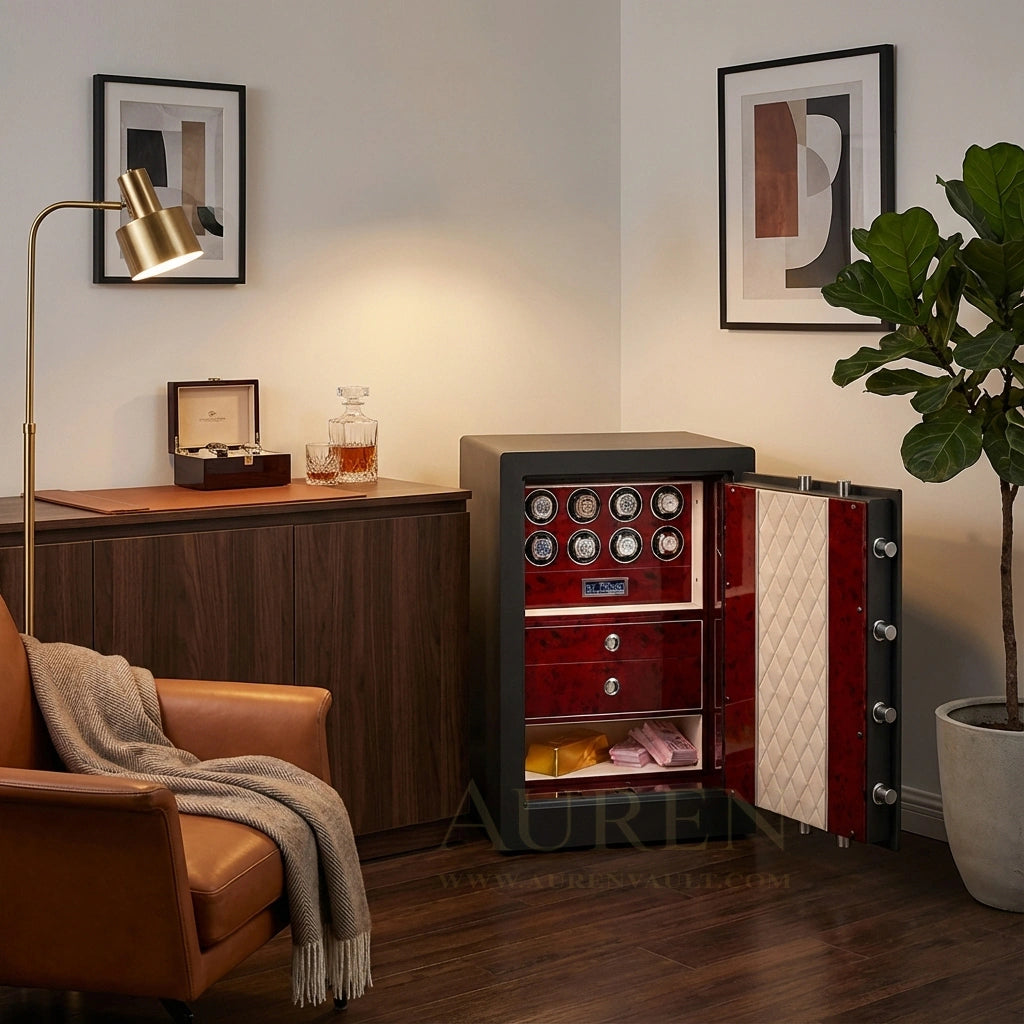
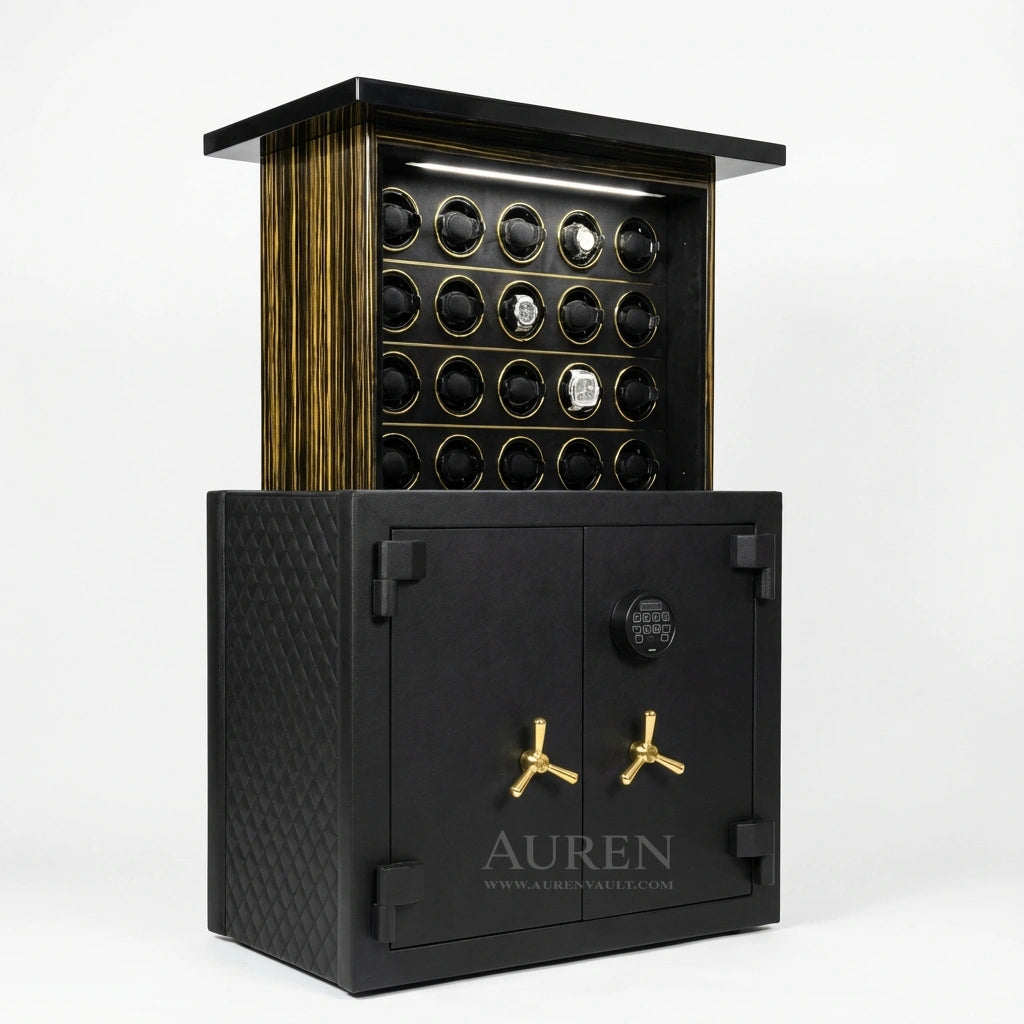
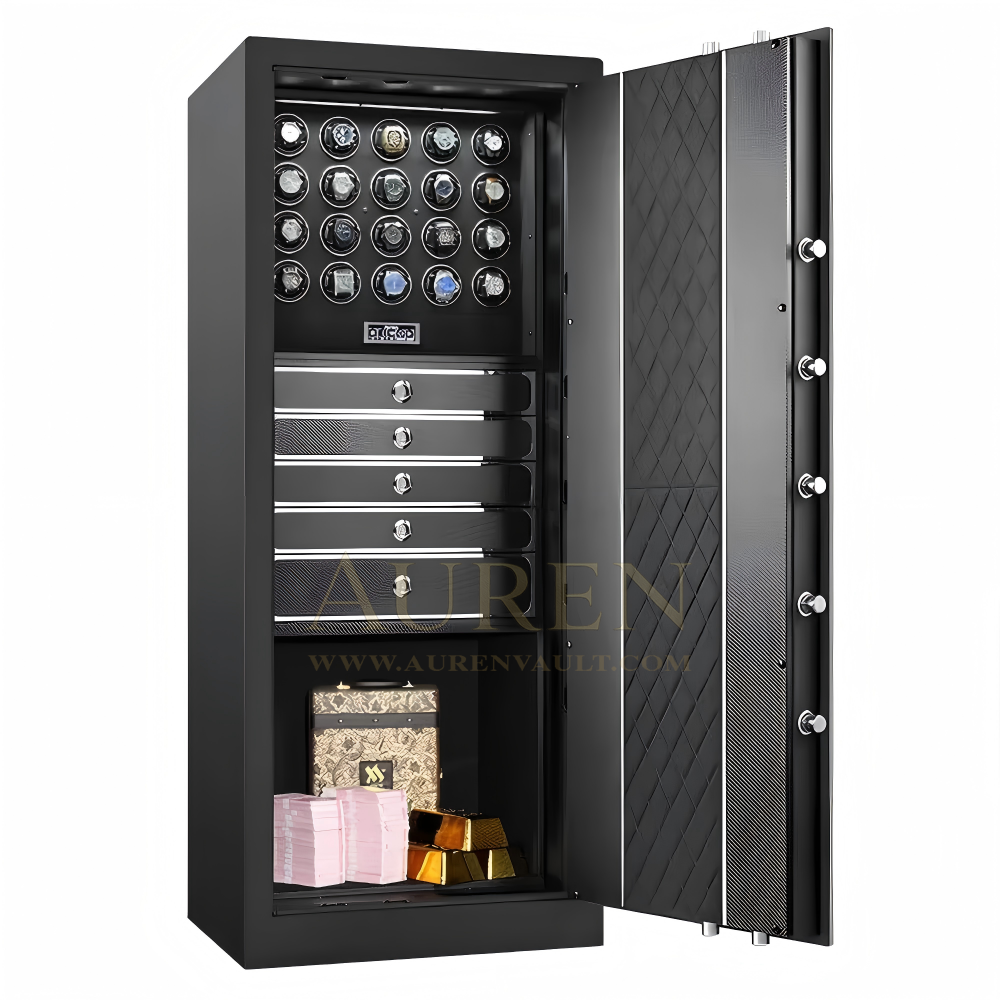
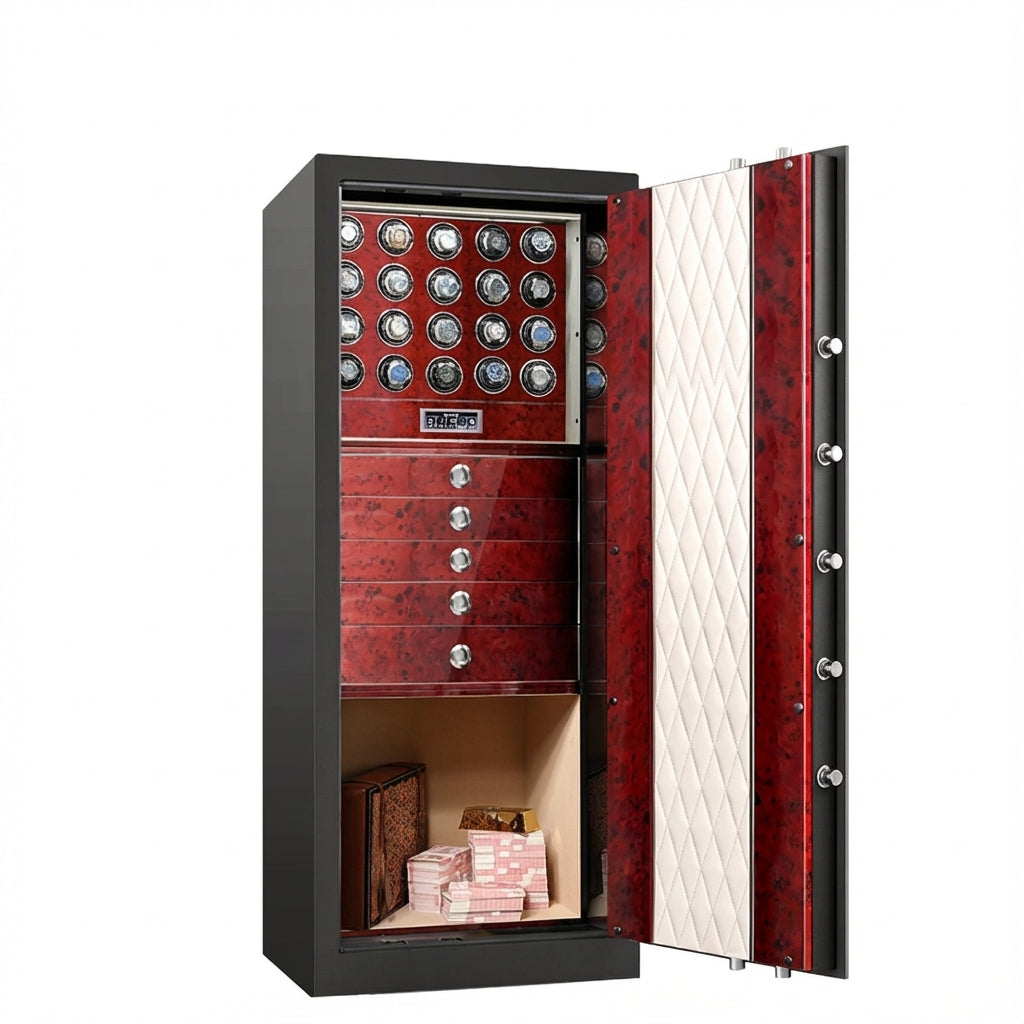
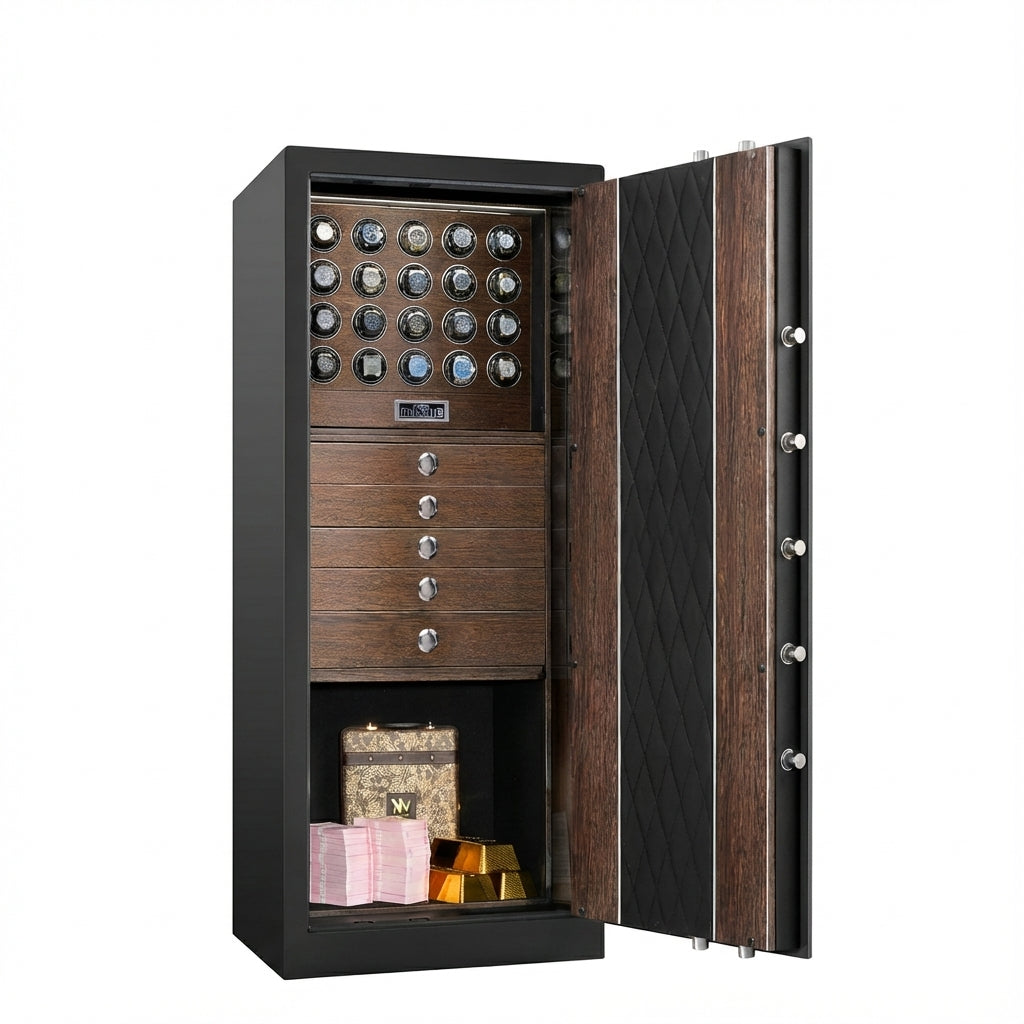
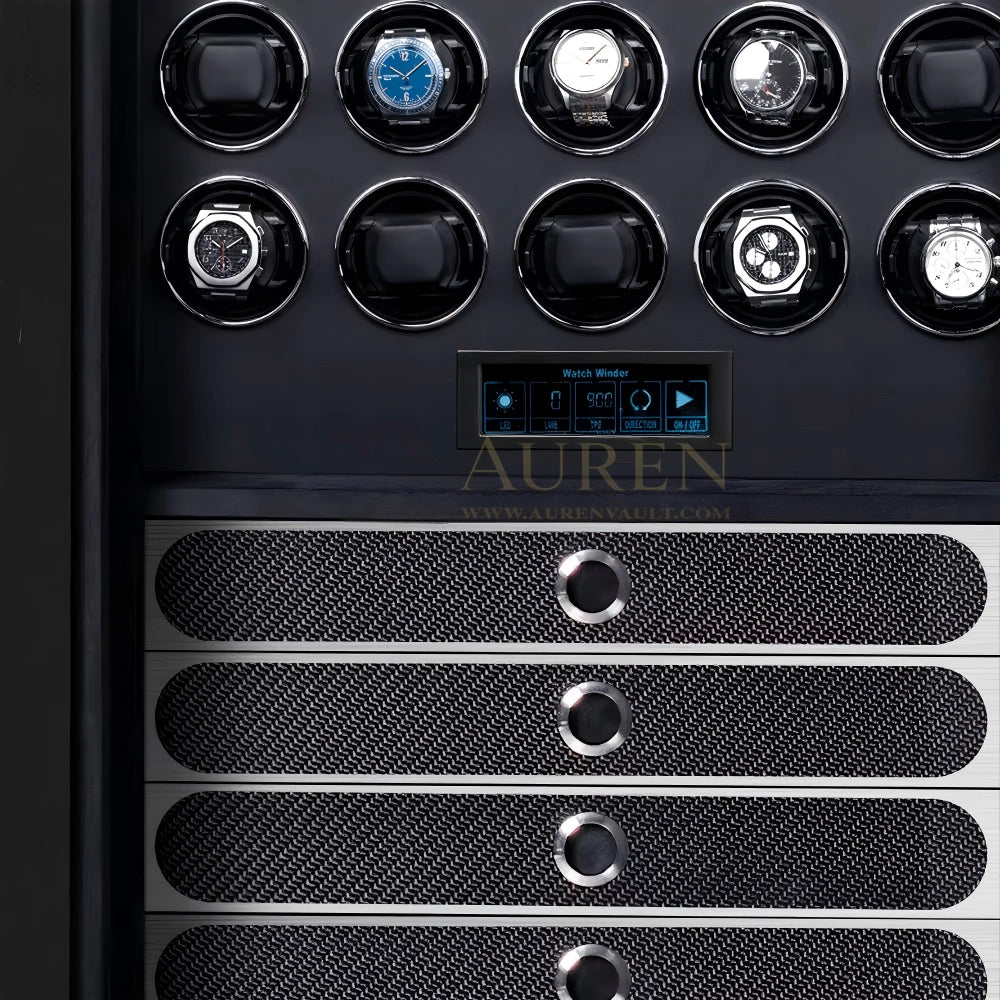
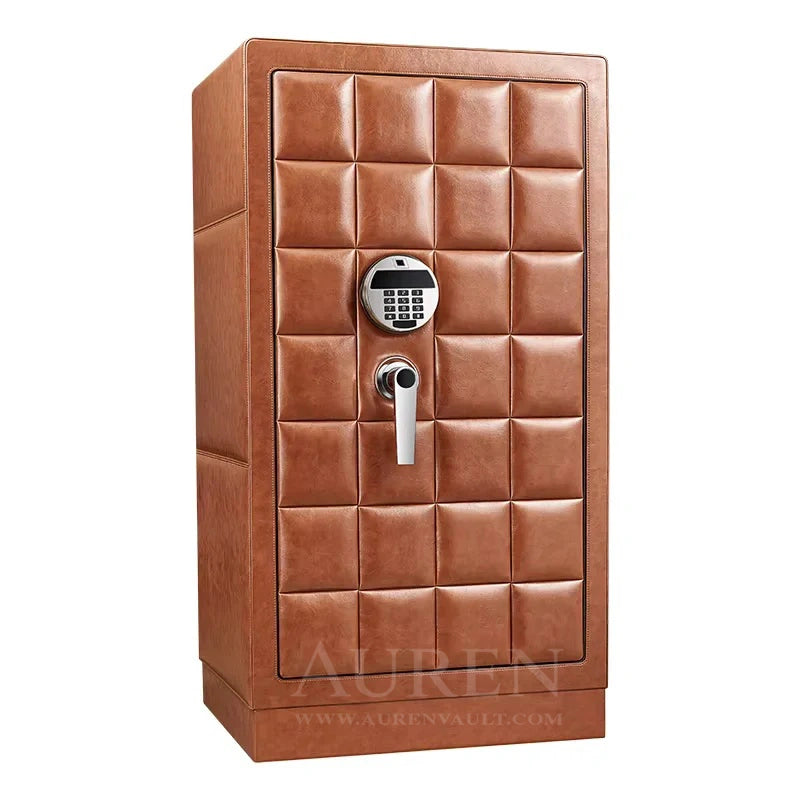
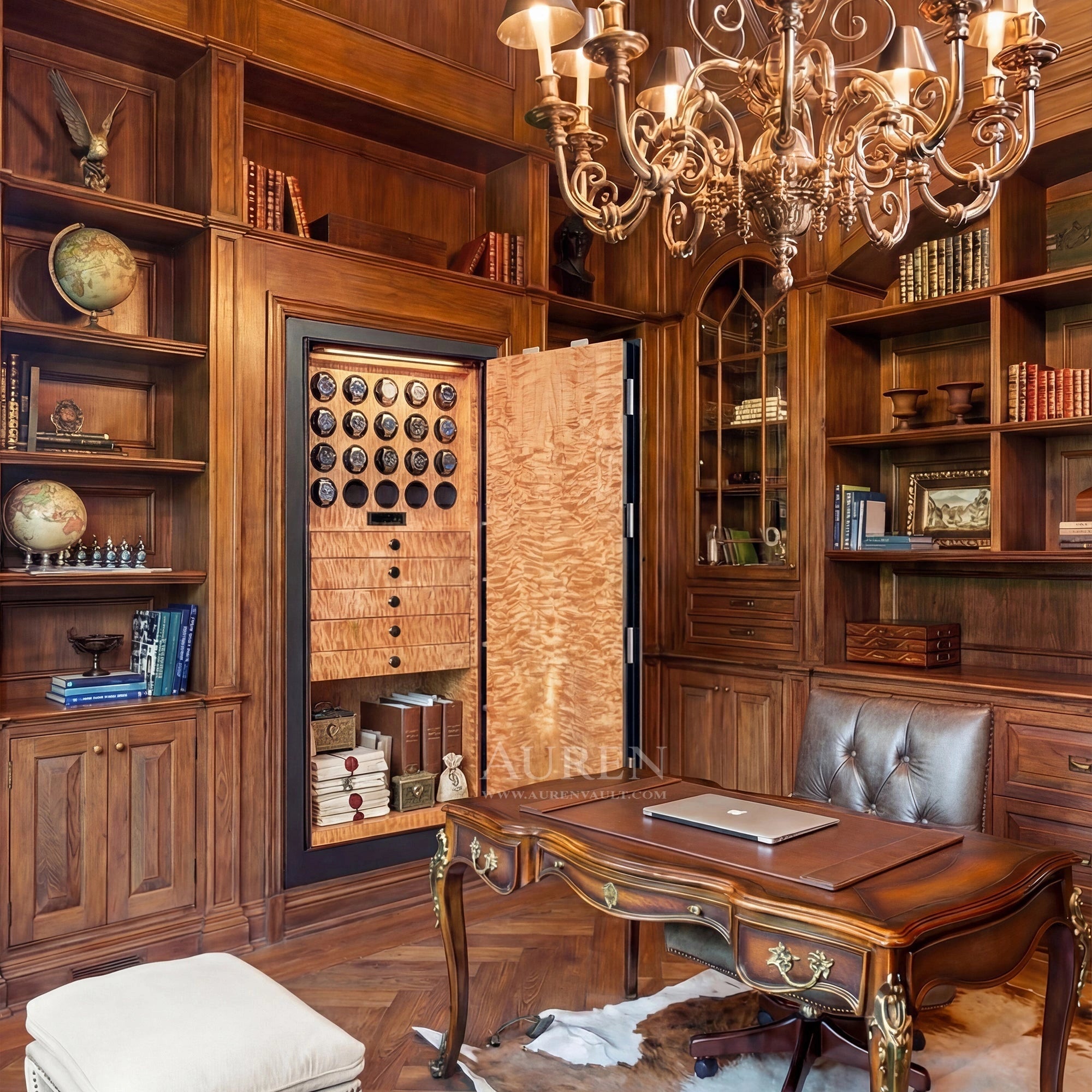
Collectors who want to combine winding and enclosed storage can explore integrated watch winder safes.
For broader collection organization, the watch safe collection offers additional storage formats.
However, the security performance of any enclosure should be evaluated through its actual construction and documented specifications.
A locking cabinet should not automatically be assumed to possess a particular independently certified security rating.
Long-Term Care and Storage
A watch winder maintains the operation of a compatible automatic movement.
It does not eliminate mechanical wear, improve accuracy, or replace professional servicing.
Farer collectors should also consider the condition of straps, cases, crowns, and storage materials.
Leather straps should be kept dry and supported without unnecessary pressure.
Watches exposed to moisture or perspiration should be cleaned and dried according to their care instructions.
Storage conditions should avoid excessive humidity and large temperature fluctuations.
A suitable enclosure can provide organized storage, but environmental control should not be assumed unless the system includes appropriate features.
For extended periods of non-use, passive storage may be reasonable for automatic watches when consistent with the manufacturer's guidance.
The watch storage guide explores these broader preservation considerations.
Frequently Asked Questions About Farer Watch Winders
What is the best watch winder for Farer watches?
A programmable winder offering adjustable TPD, appropriate rotation direction, controlled rest intervals, and a soft adjustable holder is the most versatile choice. The specific program depends on the calibre.
What TPD should I use for a Farer Lander GMT?
The Lander IV uses the Sellita SW330-2. Independent references commonly place modern Sellita automatic movements within a starting range around 650–800 TPD, but the correct SW330-2 direction and program should be confirmed rather than assumed.
Does a Farer World Timer need a winder?
No, not as a mechanical necessity. A compatible winder can keep its automatic movement running between wears and reduce repeated time and date setting.
Can I use the same program for the SW330-2 and SW331-2?
Their movements are related, but the correct external winding requirements should be checked individually. Similar power reserves do not establish identical TPD settings.
Does the Farer Three Hand Series III require a winder?
No. Its La Joux-Perret G101 provides approximately 68 hours of reserve. A compatible winder is optional and becomes useful mainly when the watch is left unworn for longer periods.
Can a Farer Racing Chronograph use a conventional watch winder?
No. Racing Chronograph models using the Sellita SW510M b are manually wound and must receive winding energy through the crown.
Does the Farer Moonphase need a watch winder?
Selected Farer Moonphase references are manually wound. Those models cannot benefit from conventional automatic winding even though their complications may require careful adjustment.
Can a watch winder damage a Farer automatic?
A correctly configured, well-maintained winder is designed to maintain automatic movements. Excessive rotation, unsuitable holders, or poor mechanical operation are undesirable. The program should match the movement.
Is a 68-hour reserve equivalent to fewer TPD?
No. Power reserve describes running autonomy. TPD describes external rotation. The appropriate program depends on the movement's winding efficiency and architecture.
Is a watch winder safe worthwhile for Farer collectors?
It can be useful when several automatic watches need independently controlled winding and the owner also wants enclosed storage. Manual-winding pieces should be accommodated separately.
Related Reading: Winding and Collection Storage
Collectors evaluating the relationship between automatic winding and physical protection can read Watch Safes with Built-In Watch Winders: Are They Worth It?.
For a broader discussion of moisture exposure and environmental conditions, Why Humidity Can Damage Luxury Watches explains issues relevant to long-term mechanical watch storage.
Final Perspective: Match the Winder to the Farer Movement
Farer offers an unusually varied combination of automatic and manually wound watches.
The Lander GMT, World Timer, and G101-powered Three Hand models can benefit from compatible external winding.
The Racing Chronograph and selected Moonphase watches require a different approach.
A collector should therefore begin with the exact calibre, establish its winding requirements, and consider how frequently the watch is worn.
For larger collections, independent winding modules and passive storage compartments provide greater flexibility than a single fixed program.
Auren Vault approaches watch storage through integrated winding and collection-focused configurations, allowing owners to plan around different movement types and storage requirements.
The best watch winder for Farer watches is ultimately one that respects mechanical differences, supports the watch securely, and makes ownership more convenient without unnecessary rotation.