
The best watch winder for Chronoswiss watches is a programmable model that matches the movement's winding direction, provides adjustable turns per day (TPD), and securely supports the watch through controlled rotation and rest cycles.
Chronoswiss automatic movements include the C.295 in the Regulator Classic, C.301 in the Open Gear ReSec, C.308 in the Space Timer, and manufacture calibres C.6000 and C.6004 in the Strike Two and Delphis. These watches can benefit from compatible winding systems when they are not worn regularly.
Independent winding databases list different settings across Chronoswiss's historical movements, including approximately 650 TPD bidirectional for certain conventional automatics and 800 TPD in a specified direction for various regulators and chronographs. These figures should not be applied universally to newer calibres.
For collectors, winding convenience becomes especially relevant when a watch incorporates retrograde seconds, jumping hours, or moon-phase displays. The ideal device combines verified calibre compatibility, quiet operation, and suitable support for Chronoswiss's distinctive cases and straps.
Why Chronoswiss Watches Need Movement-Specific Winding
Chronoswiss has built its identity around a distinctive interpretation of traditional mechanical watchmaking.
Founded in 1983, the brand is closely associated with regulator displays, oversized onion crowns, knurled bezels, intricate guilloché, and multi-level dial architecture.
Its contemporary watches often make mechanical components visible on the dial side, creating a visual relationship between movement engineering and design.
However, this appearance does not establish a single winding requirement.
A Regulator Classic equipped with C.295 and a Strike Two powered by the manufacture C.6000 are both automatic watches. They use different movement architectures and offer different power reserves.
The Delphis introduces jumping hours and retrograde minutes, while the Space Timer combines a regulator-style display with a moon-phase indication.
These complications affect how convenient it is to keep the watch running, but they do not independently determine the correct TPD.
A conventional watch winder rotates the watch so its internal automatic rotor can move and replenish the mainspring's stored energy.
Once the watch is removed from the wrist, it continues operating until its power reserve is exhausted.
A properly configured winder helps maintain that reserve between wears.
It does not improve timekeeping accuracy, correct mechanical problems, or replace servicing.
For someone who wears the same Chronoswiss almost every day, a winder may offer little additional benefit.
For a collector who regularly alternates among several complicated watches, keeping their indications running can provide meaningful convenience.
Chronoswiss Automatic Calibres: Compatibility at a Glance
The movement should be identified before the winder is selected.
| Chronoswiss watch | Representative calibre | Movement | Approximate power reserve | Winder compatible? |
|---|---|---|---|---|
| Regulator Classic | C.295 | Automatic | 42 hours | Yes |
| Open Gear ReSec | C.301 | Automatic | 42 hours | Yes |
| Space Timer | C.308 | Automatic | 42 hours | Yes |
| Strike Two | C.6000 | Manufacture automatic | 55 hours | Yes |
| Delphis | C.6004 | Manufacture automatic | 55 hours | Yes |
| Regulator Manufacture | C.122 | Automatic | 40 hours | Yes |
| Lunar Chronograph | C.755 | Automatic chronograph | 46 hours | Yes |
| Selected historical Opus Chronographs | C.741S | Automatic chronograph | Reference-dependent | Yes |
These specifications refer to representative models. Chronoswiss has produced multiple generations, including watches using different movement platforms.
The complete watch reference remains more reliable than the collection name alone.
Why a Regulator Display Does Not Determine the Winder Program
A regulator separates the hours, minutes, and seconds into distinct indications.
Traditionally, this layout was associated with precision clocks used as reference instruments in watchmaking workshops.
Chronoswiss has made this display central to its contemporary identity.
However, the arrangement of the hands does not tell an owner which direction the automatic rotor winds.
A regulator display is a time-indication design. External winding depends on the movement's energy-transfer mechanism.
Consequently, different Chronoswiss regulators may have different recommended programs even when their dials look similar.
Chronoswiss Watch Winder Settings: TPD and Rotation Direction
Two parameters govern automatic winding.
Turns per day (TPD) describes the number of programmed rotations performed over 24 hours.
Rotation direction determines whether those movements are clockwise, counterclockwise, or alternating.
A correct program supplies enough energy to maintain operation without relying on unnecessary continuous movement.
Chronoswiss deserves particular attention because independent winding databases list different direction requirements across its historical calibres.
For example, certain ETA-based Chronoswiss automatics are commonly listed as bidirectional, while some older regulator and chronograph calibres have been listed as unidirectional.
Chronoswiss Winder Settings by Movement
| Calibre or movement family | Preliminary TPD guidance | Direction |
|---|---|---|
| C.295 | Confirm for the exact reference | Verify |
| C.301 | Some independent Open Gear ReSec listings suggest approximately 800 TPD | Clockwise appears in selected third-party listings; confirm |
| C.308 | Confirm calibre-specific requirements | Verify |
| C.6000 | Verify manufacture movement requirements | Verify |
| C.6004 | Verify manufacture movement requirements | Verify |
| C.122 | Historical independent listings vary around 650–800 TPD | Counterclockwise commonly listed for selected references |
| C.755 | Approximately 800 TPD in independent references | Clockwise commonly listed |
| C.741S | Approximately 800 TPD in independent references | Clockwise commonly listed |
| ETA 2892-A2, where fitted | Approximately 650 TPD | Bidirectional commonly listed |
These are third-party reference points, not an official manufacturer-issued chart covering every Chronoswiss calibre.
Some historical databases contain model-level recommendations that should not be extended to a newer movement merely because the watch uses a similar collection name.
Is 650 TPD Enough for Chronoswiss?
It may be suitable for certain movements, particularly conventional ETA-based automatic calibres.
However, independent databases also commonly list 800 TPD for various Chronoswiss regulators and chronographs.
The difference matters.
A collector should not automatically program every Chronoswiss at 650 TPD bidirectional.
Nor should an older Open Gear reference's program be transferred to a new C.6000 manufacture movement without verification.
The correct sequence is to identify the calibre, confirm the effective winding direction, and then select the appropriate daily rotations.
The watch TPD guide provides an internal reference point for exploring these settings.
Rotation Direction Can Matter More Than the Number
A watch winder may perform hundreds of rotations without maintaining a movement's reserve if its direction is ineffective.
Some automatic movements wind in both directions.
Others transfer useful winding energy predominantly in one direction.
A setting of 800 TPD does not guarantee adequate winding if much of that rotation occurs in the wrong direction.
When a watch stops on a winder, the answer is not automatically to increase the rotation count.
The direction, initial reserve, program execution, and mechanical condition must also be considered.
Best Watch Winder for Chronoswiss Regulator Classic
The Regulator Classic is one of the clearest expressions of Chronoswiss's watchmaking identity.
Selected 37 mm and 41 mm references use the automatic C.295 movement, offering approximately 42 hours of power reserve.
Its display places the hours in an off-center subdial, with central minutes and a separate small-seconds indication.
The design combines traditional dial architecture with modern mechanical execution.
For a collector who rotates between several watches, a compatible winder can maintain the Regulator Classic's operating reserve.
Does the Regulator Classic Need Continuous Winding?
No.
A Regulator Classic worn regularly can receive sufficient winding through ordinary wrist movement.
When it is removed, it continues operating for as long as its available reserve allows.
If left unworn beyond that period, it stops normally.
Restarting it is usually straightforward.
The practical benefit of a winder depends on whether the owner prefers to have the watch immediately ready.
An owner who wears the Regulator Classic every weekday may not need one.
A collector who wears it only a few times each month may find a compatible winder more convenient.
Why the 37 mm and 41 mm Versions Need Different Physical Consideration
Both sizes can use the C.295 movement, but their external dimensions differ.
The 37 mm version is better suited to a smaller watch holder, particularly when fitted with a closely adjusted bracelet.
The 41 mm version requires greater case clearance.
A winder cushion should hold either watch securely without overstretching the strap or bracelet.
The iconic onion crown also deserves clearance from the winding compartment.
The movement determines the program, while the case dimensions determine the physical support.
Chronoswiss Open Gear ReSec: The C.301 and Retrograde Seconds
The Open Gear ReSec represents a more architectural interpretation of the regulator concept.
Selected 44 mm references use the C.301 automatic movement, with approximately 42 hours of reserve.
Its multi-level dial features exposed gear-train bridges, an off-center hour display, central minutes, and retrograde seconds.
The watch's unusual display creates a particularly strong visual impression.
However, its external winding requirements still depend on the C.301's automatic mechanism.
Why the Retrograde Seconds Display Does Not Require Extra TPD
A retrograde seconds hand travels across a defined scale before returning rapidly to its starting position.
This is a display complication, not a separate automatic winding mechanism.
Its presence does not independently establish a higher TPD requirement.
Independent winding databases list approximately 800 TPD clockwise for various Open Gear ReSec references.
That provides a useful research starting point for the matching historical models, but the exact C.301 reference and winder direction convention should be confirmed.
A programmable device offers more flexibility than a fixed bidirectional-only winder.
The Open Gear's 44 mm Case Needs Proper Clearance
Selected Open Gear ReSec watches measure approximately 44 mm across and 13.35 mm thick.
Their substantial crowns, curved sapphire crystals, and carefully finished cases deserve attention.
The winding compartment must accommodate the full external dimensions.
A watch should not be allowed to contact surrounding surfaces during rotation.
Leather and textile straps should also be supported without unnecessary pressure.
A stable cushion and smooth motor operation are more valuable than an elaborate enclosure that does not properly fit the watch.
Space Timer: Maintaining a Moon Phase With Calibre C.308
The Space Timer is among Chronoswiss's most visually ambitious contemporary watches.
Selected references use the automatic C.308 calibre, with approximately 42 hours of reserve.
Its dial combines an off-center hour display, central indications, and a moon-phase mechanism within a complex three-dimensional construction.
The Space Timer's 44 mm case is also relatively substantial, with documented versions measuring approximately 15.2 mm thick.
Why the Moon Phase Makes a Winder More Convenient
When a conventional automatic watch stops, restarting it may involve adjusting the time and date.
A moon-phase watch introduces an additional indication.
If the watch remains stopped for a period, the owner may need to restore the moon-phase display according to its setting instructions.
A compatible winder can reduce the frequency of that procedure by keeping the movement operating.
However, a winder cannot calculate the correct lunar phase or repair an incorrectly set display.
The watch must first be adjusted correctly.
The winding system then helps maintain continuity.
Does the C.308 Need More Rotation Because of Its Complication?
Not automatically.
The moon-phase display and multi-layer dial do not determine external winding direction.
The appropriate TPD must follow the C.308's automatic winding architecture.
A collector should confirm the movement-specific program rather than transferring an older Chronoswiss chronograph recommendation.
For a watch with several distinct functions, maintaining operation may be convenient; that does not justify selecting the highest available TPD.
Strike Two: The Modern Manufacture C.6000
The Strike Two represents a different stage in Chronoswiss's movement development.
It uses the manufacture C.6000 automatic calibre, with approximately 55 hours of power reserve.
Selected 40 mm references employ a horizontal regulator display, placing the hour indication at 3 o'clock and small seconds at 9 o'clock.
The movement incorporates a skeletonized tungsten rotor and carefully finished bridges.
This differs from older Chronoswiss movements based on conventional third-party architectures.
Why the C.6000 Should Be Evaluated Separately
A historical Chronoswiss regulator setting should not automatically be applied to the Strike Two.
The C.6000 has a different movement construction.
Its 55-hour reserve also provides greater flexibility during short periods without wear than a 42-hour movement.
However, power reserve does not directly determine the required TPD.
The correct rotation direction and daily count still need to be established from the movement's winding characteristics.
For a collector with several Chronoswiss generations, independent winding controls are particularly useful.
When a Strike Two Owner May Not Need a Winder
Consider someone who wears the Strike Two throughout the working week and removes it for the weekend.
If the watch has sufficient stored energy, it may continue operating through much of the interval.
A winder may therefore offer limited additional convenience.
For an owner who alternates between several automatic watches and leaves the Strike Two unused for longer periods, external winding becomes more useful.
The purchase should reflect wearing habits rather than the watch's price or manufacture status alone.
Delphis C.6004: Jumping Hours and Retrograde Minutes
The Delphis is an especially compelling candidate for collectors who prefer maintaining automatic complications.
Selected contemporary versions use the manufacture C.6004 movement, with approximately 55 hours of reserve.
The watch combines jumping hours, central retrograde minutes, and a small-seconds display.
Its dial construction incorporates elaborate guilloché and other decorative treatments.
The distinctive time display is central to the watch's identity.
Why Continuous Operation Can Be Valuable
When a Delphis stops, restarting it involves ensuring that its time indications are correctly set.
A compatible winder can maintain movement operation between wears, reducing repeated adjustments.
For someone who rotates several watches, this can be convenient.
However, the winder does not operate the jumping-hour mechanism directly.
It does not correct a display that was set incorrectly.
Its role is to provide energy through the automatic winding system.
Do Not Confuse Older Delphis Calibres With C.6004
Historical Chronoswiss Delphis references used different movements, including calibres associated with older jumping-hour architectures.
Independent databases may list winding settings for those older models.
Such information should not be transferred automatically to the newer C.6004.
A watch's precise reference and movement generation are essential.
The newer manufacture movement should receive its own verified program.
Physical Support for Delphis Cases
Documented contemporary Delphis references measure approximately 42 mm across and 14.5 mm thick.
Some use rubber straps, while others feature refined case materials and elaborate dials.
A suitable holder should support the watch securely without putting unnecessary tension on its strap.
Adequate clearance for the crown, case, and sapphire crystal is important.
The watch should remain stable during each programmed rotation.
Chronoswiss Lunar Chronograph: Calibre C.755
The Lunar Chronograph combines several functions within one automatic movement.
Selected references use the C.755, with approximately 46 hours of reserve.
Its dial includes chronograph counters, an analog date, and a moon-phase indication.
This makes it a strong candidate for an owner who values keeping multiple indications synchronized between wears.
Published Winding Guidance for C.755
Independent winder databases commonly list approximately 800 TPD clockwise for Lunar Chronograph and related C.755 references.
This is more specific than a general recommendation applied to all automatic Chronoswiss watches.
However, it remains third-party guidance rather than a universally confirmed factory program.
The correct setting should be verified for the precise reference and the device's rotation-direction convention.
Why Calendar and Moon-Phase Continuity Matters
A stopped Lunar Chronograph may require more adjustments than a simple automatic.
A compatible winder can maintain operating continuity and reduce repeated resetting of the date and moon-phase indications.
It does not operate the chronograph pushers.
The chronograph remains a separate function controlled by the owner.
A suitable winder maintains movement energy rather than performing the watch's complications.
Chronograph Case Thickness and Support
The Lunar Chronograph uses a substantial case, with documented versions around 41 mm wide and 14.8–15 mm thick.
A suitable winding compartment should provide enough depth and crown clearance.
The leather strap should remain comfortably fitted around a soft cushion.
The case should not strike the enclosure during rotation.
Older Chronoswiss Watches: Why Historical Calibres Matter
Chronoswiss has produced numerous watches using earlier automatic movements.
Examples include Regulator Manufacture models using C.122, historical Opus Chronographs with C.741S, and automatic models incorporating ETA-derived calibres.
Their winding requirements are not always identical.
Independent databases list counterclockwise recommendations for selected C.122 references, clockwise recommendations for various historical chronographs, and bidirectional programs for certain conventional ETA-based automatics.
This diversity is an important reason to avoid one generic Chronoswiss setting.
For vintage and discontinued references, original documentation and service records can help establish the movement.
If the calibre cannot be identified confidently, a qualified watchmaker may assist.
Older watches also deserve a condition assessment before prolonged use on a winder.
A device should not be used to compensate for a movement that is no longer maintaining its reserve correctly.
Choosing a Winder: What Matters for Chronoswiss
The most suitable device should satisfy several practical requirements.
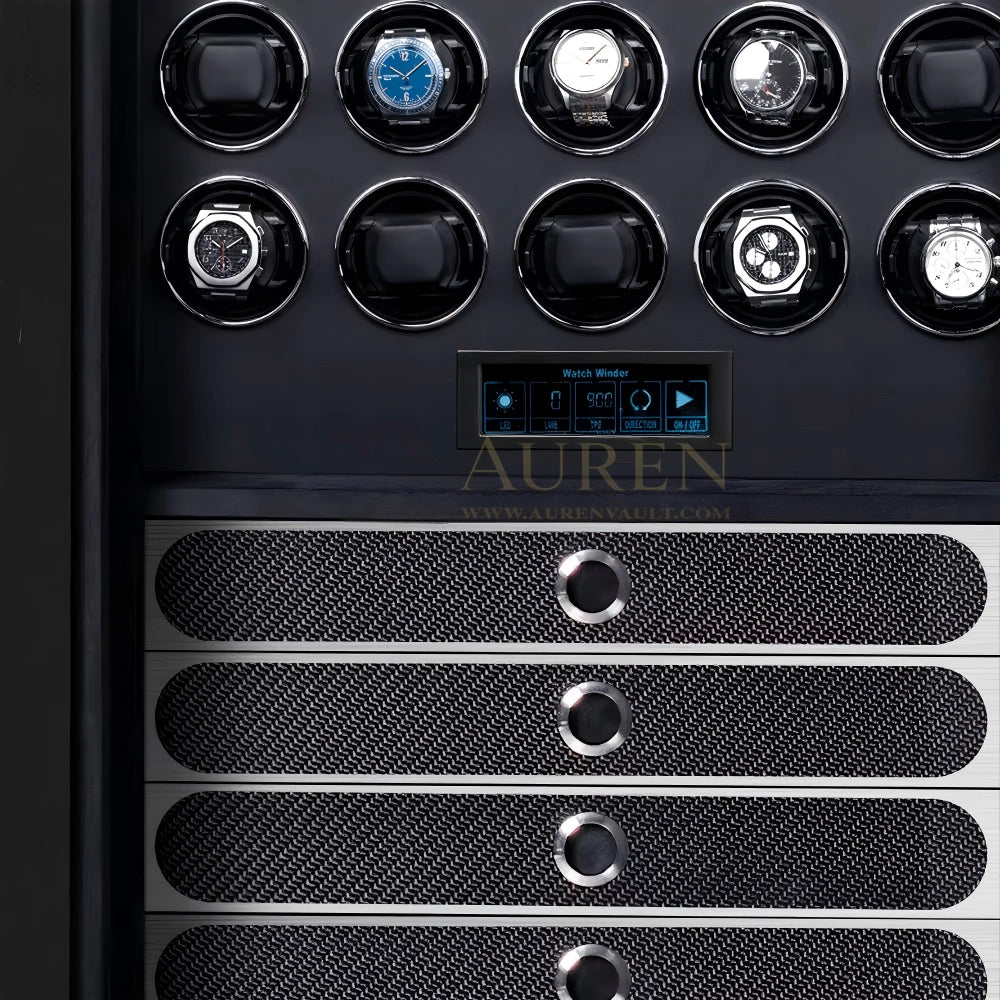
A wide range of selectable TPD programs and rotation directions is important because Chronoswiss uses different automatic architectures.
Independent winding modules are preferable when several calibres are stored together.
Quiet motors and controlled rest periods allow the device to operate discreetly while maintaining sufficient energy.
The physical holder should accommodate the watch's dimensions, including its onion crown, case thickness, and strap.
For complicated watches, stable operation and easy access to settings are more useful than decorative features that do not improve winding performance.
Standalone Winder vs. Watch Winder Safe
A standalone winder can be sufficient for one regularly worn Regulator Classic or Strike Two.
A larger collection introduces other considerations.
Chronoswiss collectors may own multiple complicated mechanical watches, rare editions, and pieces with different case dimensions.
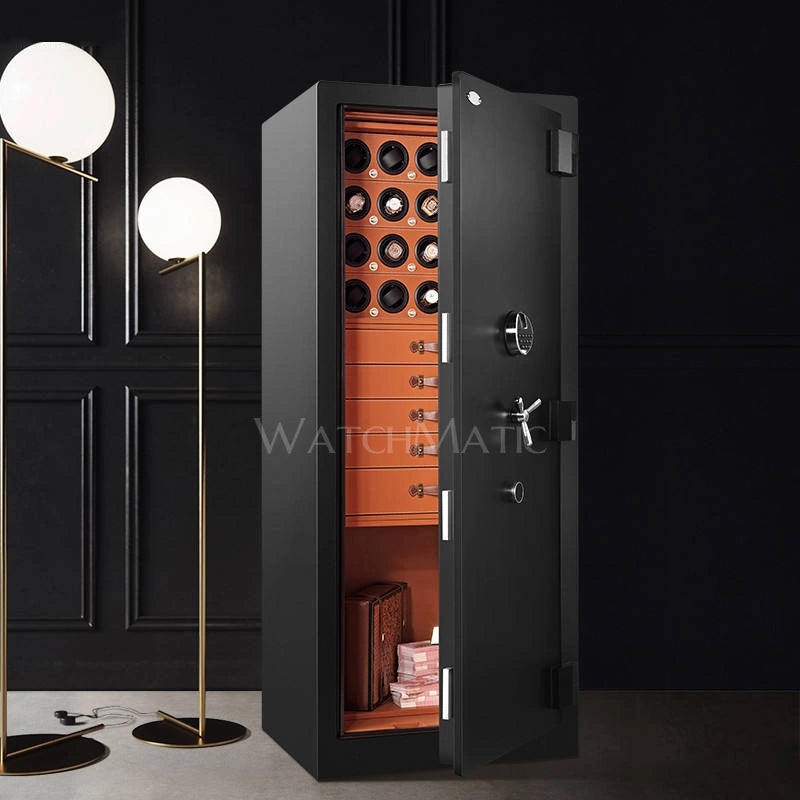
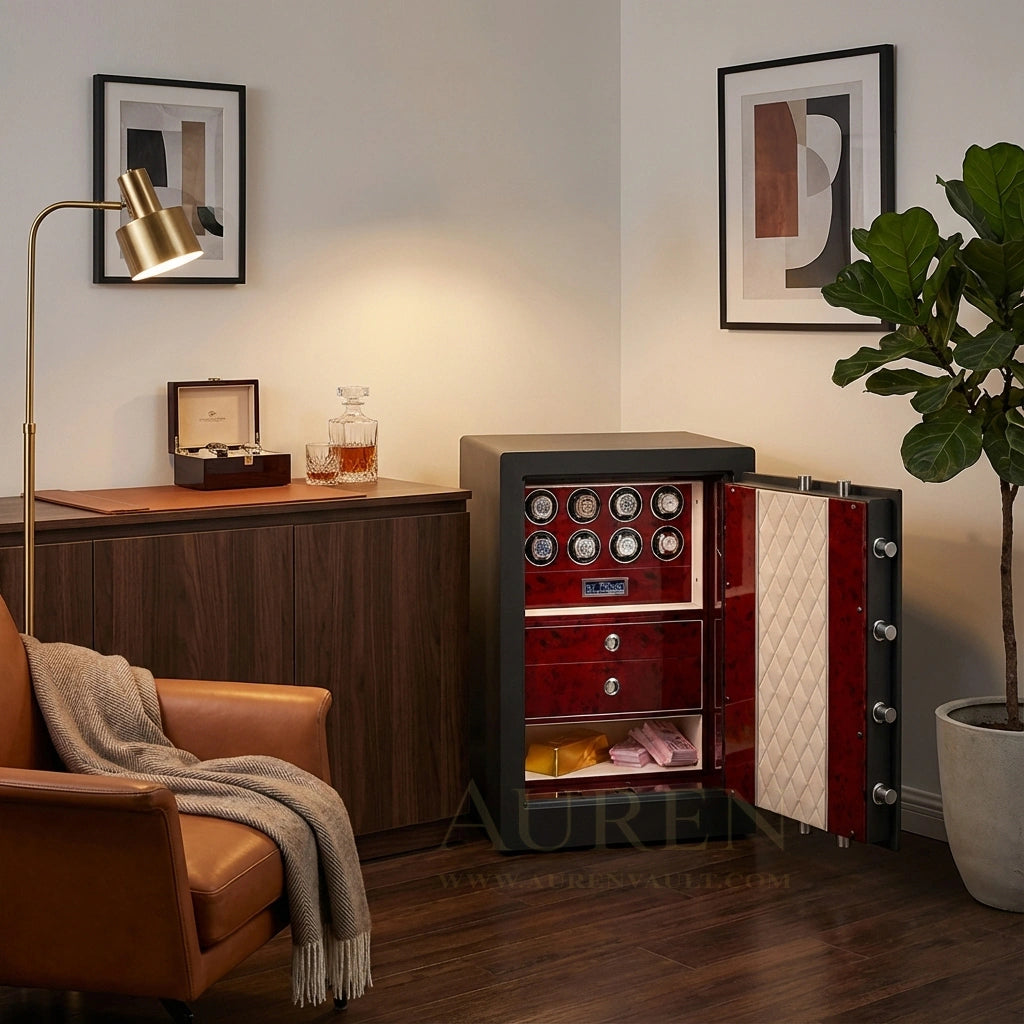
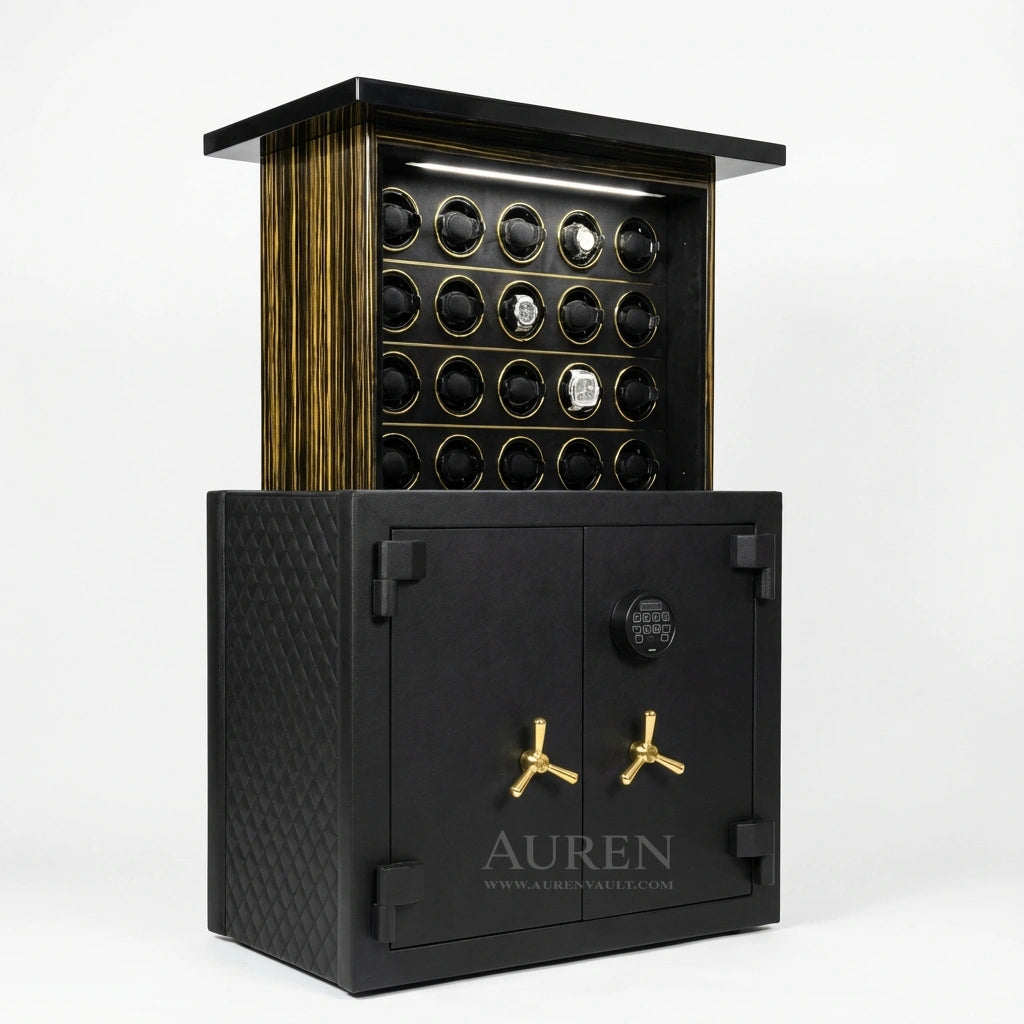
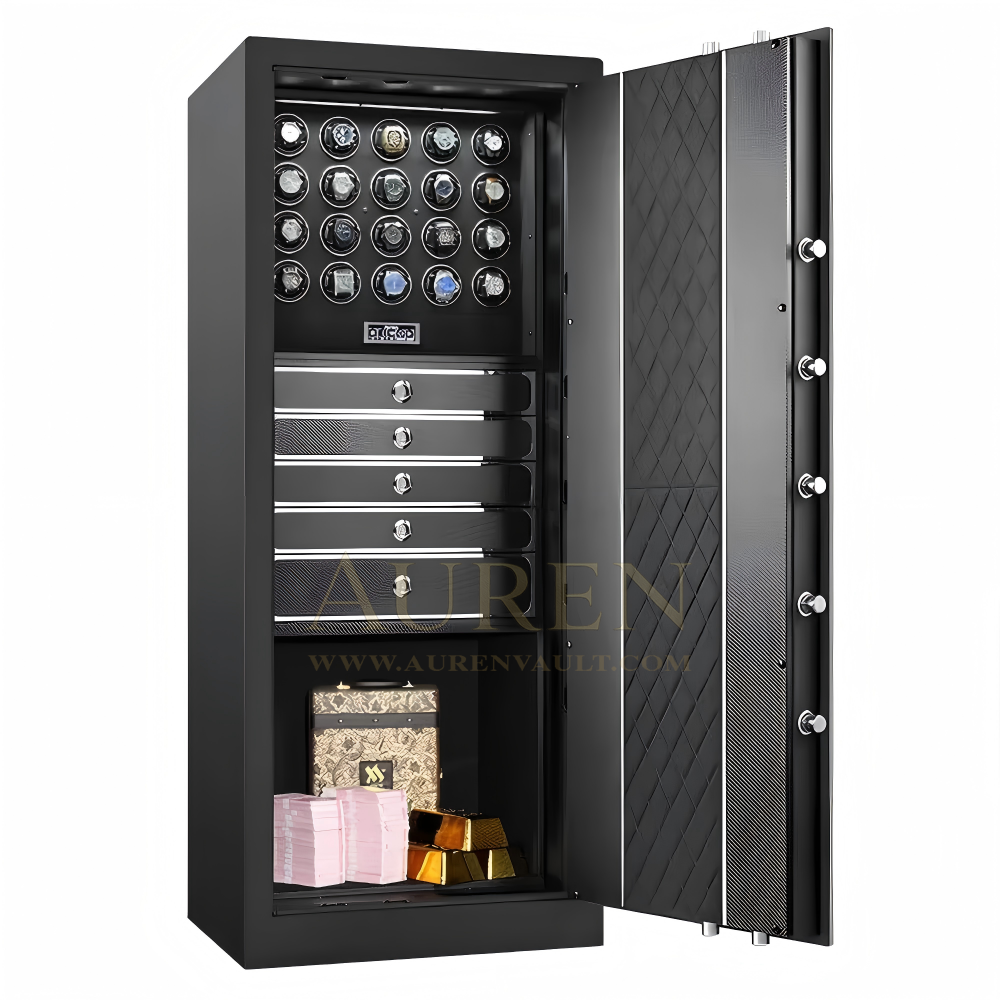
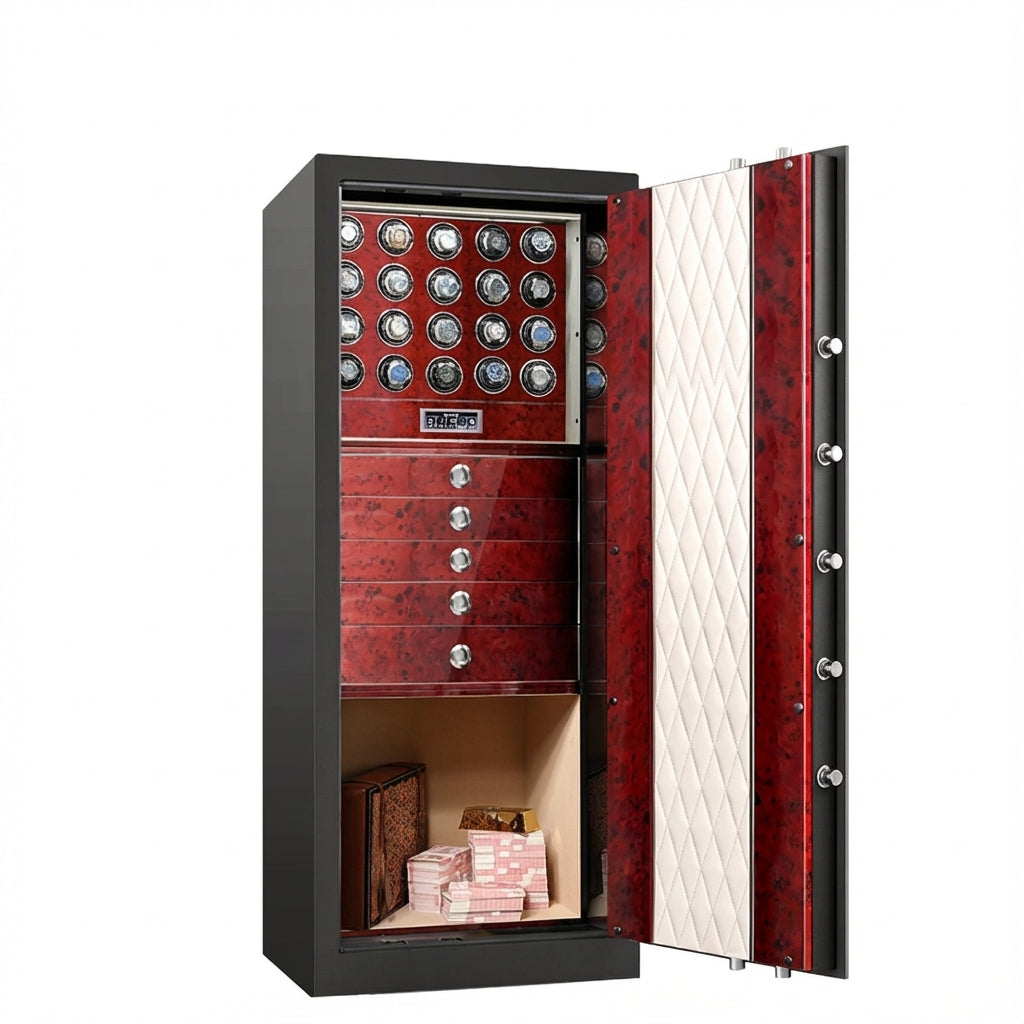
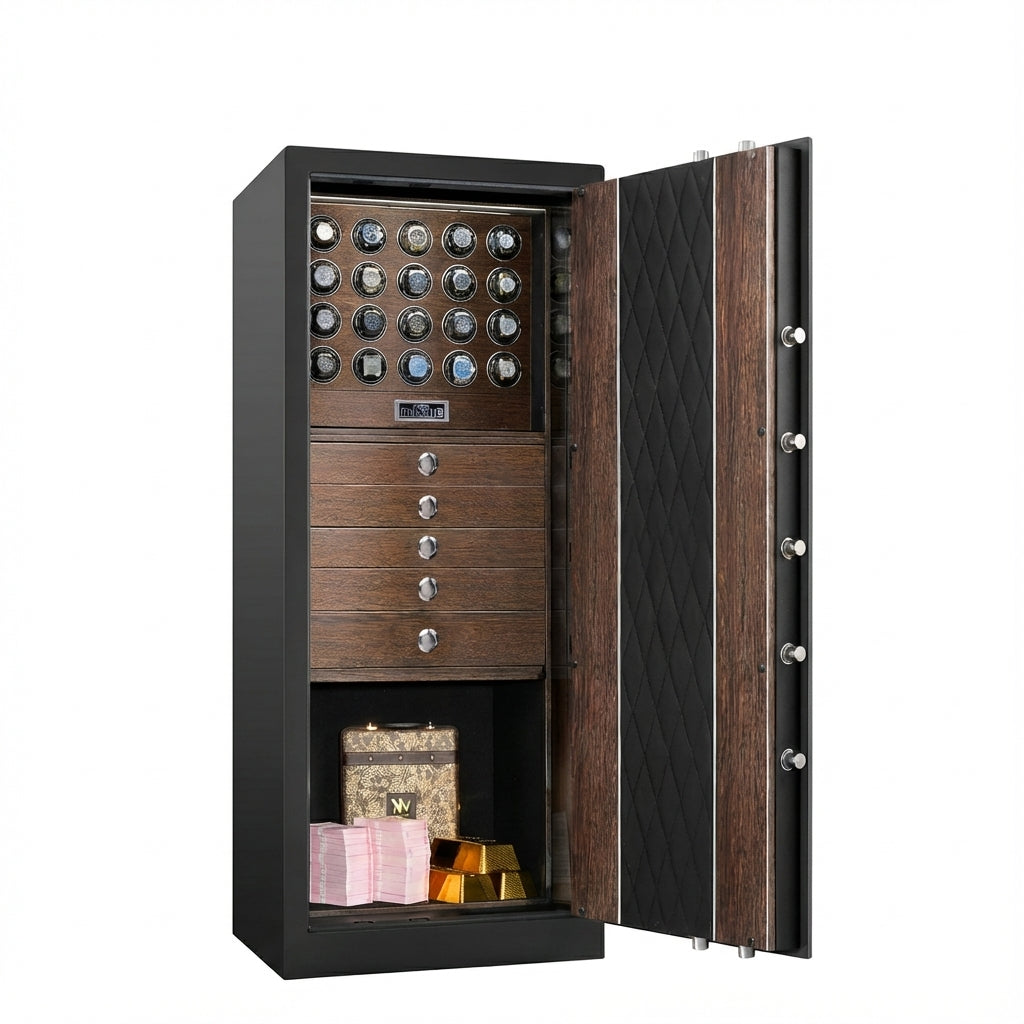
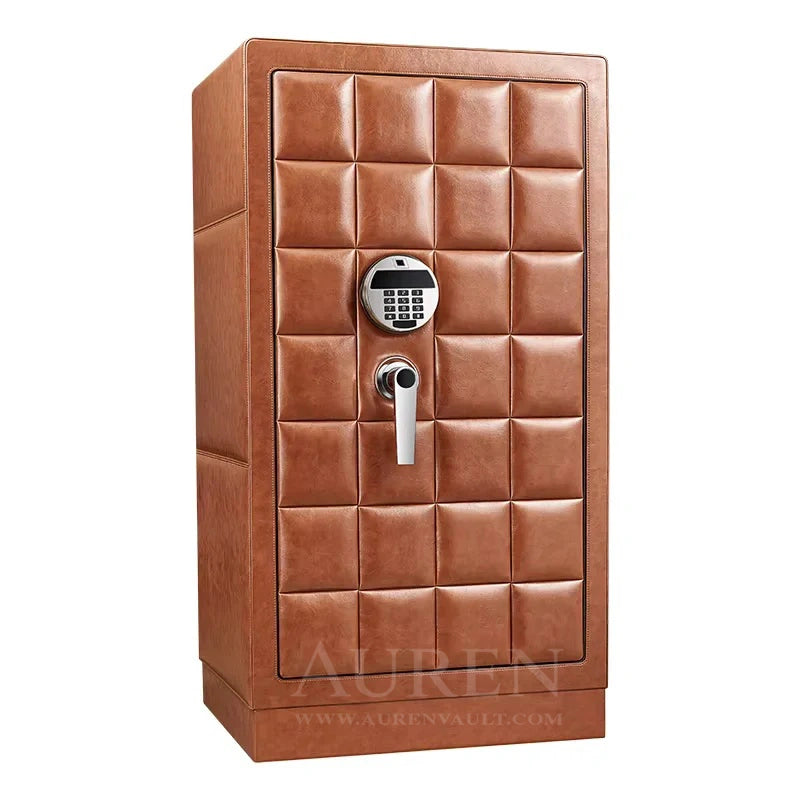
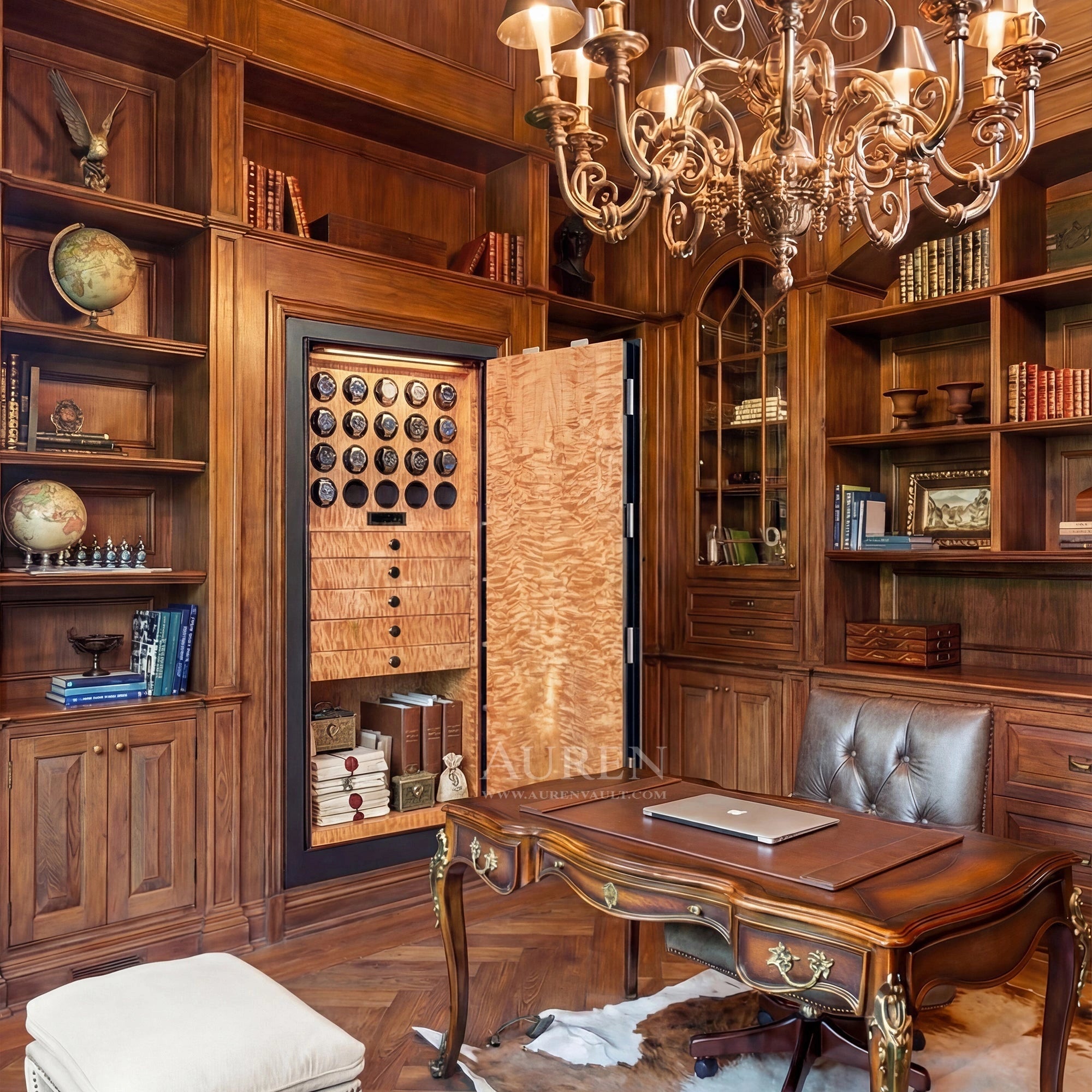
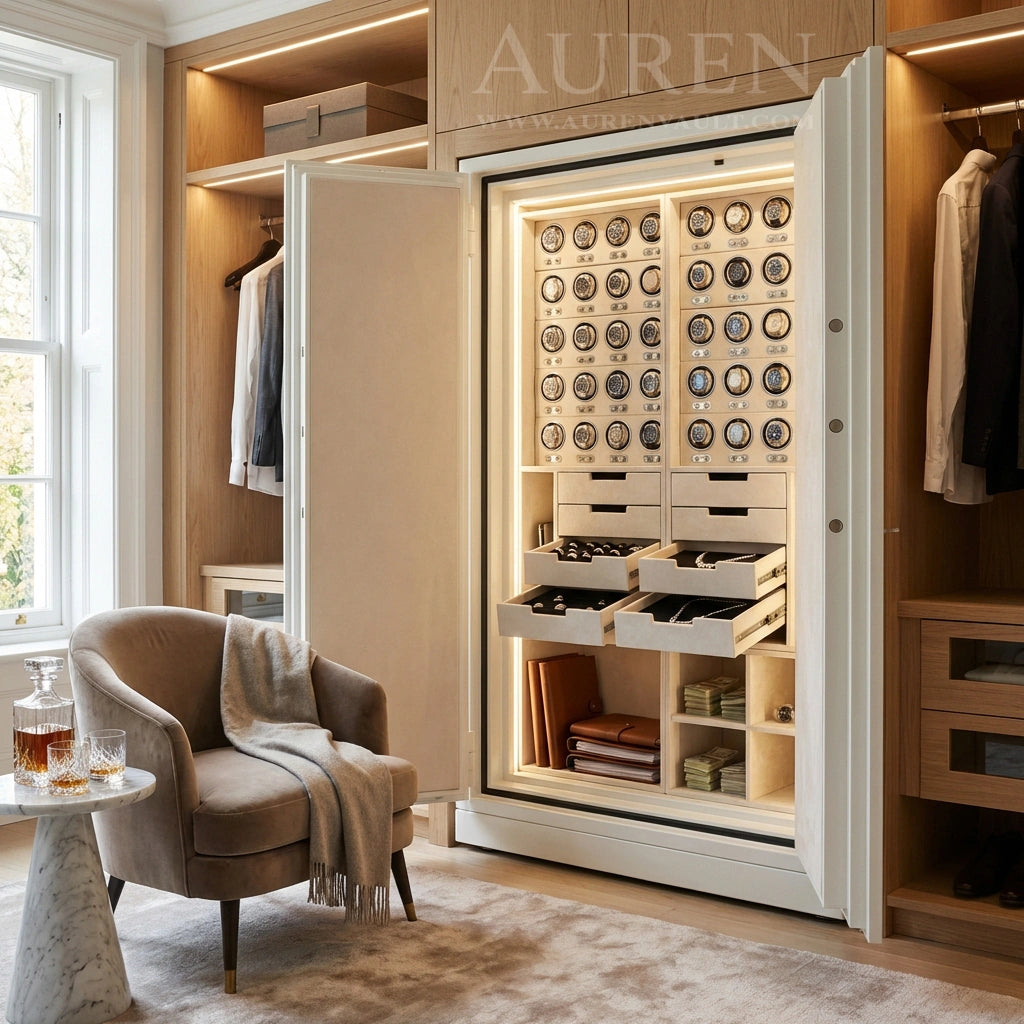
An integrated watch winder safe can combine active winding modules with enclosed storage.
However, a safe's security characteristics must be evaluated separately from its winding functions. Locking mechanisms, construction, installation, and documented ratings matter.
The watch winder safe guide provides a starting point for evaluating integrated configurations.
For a larger portfolio, luxury watch safes may offer additional capacity.
The complete watch safes collection provides other options for organizing valuable timepieces.
Planning a Mixed Chronoswiss Collection
Imagine an owner with a Regulator Classic, Open Gear ReSec, Space Timer, Strike Two, and Delphis.
All five are automatic, but their movements differ.
The owner should not automatically place every watch on the same fixed program.
A system with independent TPD and direction settings is more appropriate.
The 44 mm Open Gear and Space Timer may also need larger winding compartments than the 40 mm Strike Two.
For collectors requiring specialized compartment dimensions, custom watch safe configurations may be more suitable.
The ideal storage system accommodates both the movement and the physical watch.
Should You Keep a Chronoswiss Running All the Time?
No automatic Chronoswiss mechanically requires permanent external winding.
When the movement exhausts its reserve, it stops normally.
It can subsequently be restarted according to its operating instructions.
A simple Regulator Classic may be relatively straightforward to reset.
A Delphis or Space Timer may offer a stronger convenience argument for remaining operational because of its additional indications.
That distinction should guide the owner's decision.
A winder is not an essential preservation device.
For watches stored over extended periods, protection from humidity, impacts, unsuitable temperatures, and unnecessary handling may be more important than continuous operation.
The watch storage guide provides broader storage guidance.
Frequently Asked Questions About Chronoswiss Watch Winders
What is the best watch winder for Chronoswiss watches?
A programmable winder with adjustable TPD, selectable rotation direction, rest cycles, and an appropriately sized cushion is the best general choice. Exact settings depend on the calibre.
How many TPD does a Chronoswiss automatic need?
There is no single universal setting. Independent references commonly list approximately 650 TPD for certain conventional automatics and around 800 TPD for various regulators and chronographs. The exact movement must be checked.
Does a Regulator Classic need a watch winder?
No. The automatic C.295 can receive sufficient winding through normal wear. A compatible winder is optional and convenient during longer periods without use.
What is the correct setting for Open Gear ReSec C.301?
Some independent databases list approximately 800 TPD clockwise for selected Open Gear ReSec references. Confirm the precise watch and winder direction convention before use.
Can the Chronoswiss Space Timer use a winder?
Yes. The C.308 is automatic. A compatible winder can maintain the movement and reduce repeated moon-phase adjustments after stoppages.
Does the Strike Two C.6000 need the same settings as C.295?
Not necessarily. They are different movements. The appropriate program should be verified for each calibre.
Is the Delphis automatic?
Modern Delphis references equipped with C.6004 are automatic. Historical generations may use different calibres, so movement identification is essential.
Does a jumping-hour watch require higher TPD?
Not automatically. The complication does not determine the external winding program; the automatic winding mechanism does.
Can a Lunar Chronograph use a winder?
Yes. References using the automatic C.755 can benefit from winding. Independent references commonly list approximately 800 TPD clockwise, subject to verification.
Does the moon-phase indication benefit from a winder?
A compatible winder can keep the movement operating and reduce repeated moon-phase adjustments. It cannot automatically correct an incorrectly set indication.
Can a watch winder overwind a Chronoswiss?
Modern automatic movements generally include mechanisms that limit excessive mainspring tension. Nevertheless, unnecessary rotations should be avoided through a suitable program and rest cycles.
Are larger Chronoswiss watches harder to fit in winders?
Some models are relatively large and thick, with prominent onion crowns. The winding compartment should provide sufficient clearance and a securely fitted holder.
Is a watch winder safe appropriate for Chronoswiss collectors?
It can be useful for collectors who want independent winding programs together with enclosed storage and additional physical security.
Related Reading
For more information on complicated mechanical movements and collection storage:
-
Best Watch Winder for Jaeger-LeCoultre: TPD & Care Guide — Movement-specific winding considerations for automatic complications.
-
Best Watch Winder for Vacheron Constantin Watches — Winding and storage for high-end mechanical watches.
-
Watch Safes with Built-In Watch Winders: Are They Worth It? — Comparing standalone winding with integrated storage.
Final Thoughts: Chronoswiss Winding Begins With the Calibre
Chronoswiss is defined by mechanical individuality.
The Regulator Classic, Open Gear ReSec, Space Timer, Strike Two, and Delphis all use automatic movements, but their constructions and complications differ.
Their winding requirements should not be reduced to a single brand-wide TPD recommendation.
For a single automatic Chronoswiss, a compact programmable winder may provide sufficient convenience.
For a collection containing several movement generations, independently controlled winding positions and suitable compartment dimensions are more practical.
At Auren Vault, the focus is on combining precision watch winding, refined organization, and considered protection for valuable timepieces.
Ultimately, the best Chronoswiss winder is the one that follows the correct movement program, supports the watch securely, and makes ownership more convenient without unnecessary rotation.