

The best watch winder for BALL Watch models is a programmable unit with adjustable turns per day (TPD), clockwise and counterclockwise rotation, controlled rest cycles, and a secure holder capable of supporting substantial sports-watch cases and bracelets.
For many BALL automatic watches, approximately 650 TPD with bidirectional rotation is a commonly published starting point. However, some automatic chronographs based on the Valjoux 7750 movement family are typically associated with approximately 800 TPD in the clockwise direction. These are third-party winding references, not universal BALL factory settings.
Models such as the Engineer III Marvelight, Engineer Hydrocarbon Original, Roadmaster, and AeroGMT can benefit from compatible watch winders. Manufacture movements such as the RRM7309-C, with its 80-hour power reserve, introduce additional considerations.
A suitable winder maintains operating continuity between wears. It does not improve accuracy, replace mechanical servicing, or make continuous winding mandatory.
The correct choice begins with the specific BALL calibre, followed by its winding direction, TPD requirements, and physical dimensions.
Understanding BALL Watch Movements Before Choosing a Winder
BALL Watch has built much of its modern identity around robust mechanical watches designed for demanding environments.
Its collections draw on a historical association with American railroad timekeeping while incorporating contemporary Swiss movements, distinctive self-powered illumination, shock-resistant constructions, and anti-magnetic technologies.
These features make BALL watches particularly recognizable among enthusiasts who appreciate practical engineering.
However, ruggedness does not automatically determine winding requirements.
An Engineer III Marvelight Chronometer, a Roadmaster M Perseverer, and an Engineer Hydrocarbon NEDU may all use automatic movements, but their calibres and winding architectures are not identical.
Some rely on conventional Swiss movement platforms. Others incorporate BALL's manufacture movement technology with an extended power reserve.
The distinction becomes important when choosing a watch winder.
An automatic movement receives energy through an oscillating rotor connected to the mainspring winding mechanism.
When the watch is worn, wrist movement causes the rotor to move and replenish some of the energy consumed by the movement.
When the watch is left stationary, it continues running on its stored power until that reserve is exhausted.
A watch winder reproduces some of the relevant motion through programmed rotations.
Its purpose is to maintain sufficient energy for continued operation, reducing the need to restart the watch after periods of non-use.
For an owner who wears the same BALL watch almost every day, a winder may provide little additional benefit.
For someone who alternates between an Engineer Hydrocarbon during outdoor activities, a Roadmaster for travel, and a more restrained Engineer III at the office, a compatible winding system can offer meaningful convenience.
The important question is not simply whether the watch is automatic.
It is how that particular movement should be wound.
Which BALL Watches Can Use an Automatic Watch Winder?
BALL uses several calibre families across the Engineer, Roadmaster, Trainmaster, and Engineer Hydrocarbon collections.
The following examples illustrate why movement identification matters.
| BALL Watch model | Representative calibre | Movement type | Published power reserve | Winder compatibility |
|---|---|---|---|---|
| Engineer III Marvelight Chronometer | RR1103-C | Automatic, COSC-certified | Approximately 38 hours in documented versions | Yes |
| Engineer Hydrocarbon Original | RR1102-CSL | Automatic, COSC-certified | Reference-dependent | Yes |
| Engineer Hydrocarbon AeroGMT II | RR1201-C | Automatic GMT, COSC-certified | Reference-dependent | Yes |
| Engineer M Marvelight | RRM7309-C | Manufacture automatic, COSC-certified | 80 hours | Yes |
| Roadmaster M Perseverer | RRM7309-C | Manufacture automatic, COSC-certified | 80 hours | Yes |
| Roadmaster M Archangel II | RRM7309-C | Manufacture automatic, COSC-certified | 80 hours | Yes |
| Roadmaster Challenger Power Reserve | RR1702-C | Automatic, COSC-certified | 42 hours | Yes |
| Roadmaster Rescue Chronograph | RR1402 | Automatic chronograph | Reference-dependent | Yes |
| Engineer Hydrocarbon NEDU | RR1402-C | Automatic chronograph, COSC-certified | Reference-dependent | Yes |
These examples refer to specific movement and model combinations.
BALL has produced different references and movement generations within its collections. The exact case reference and calibre should be confirmed before selecting a winding program.
Why the Model Name Is Not Enough
Consider two BALL watches from the Engineer family.
An Engineer III Marvelight Chronometer can use the RR1103-C movement, while an Engineer M Marvelight uses the manufacture RRM7309-C.
Both are automatic.
Both offer BALL's characteristic combination of mechanical watchmaking and practical engineering.
Yet one belongs to a conventional automatic movement family, while the other incorporates an extended 80-hour power reserve.
A winding program recommended for one should not automatically be assigned to the other.
The same principle becomes even more important when automatic chronographs are involved.
A calibre derived from the Valjoux 7750 family can have different effective winding-direction requirements from a conventional three-hand automatic movement.
This is why a winder with adjustable settings is preferable to a device offering only one fixed program.
BALL Watch Winder Settings: TPD and Rotation Direction
Two settings determine how an automatic watch winder delivers movement.
Turns per day (TPD) describes the number of programmed rotations the device performs during a 24-hour period.
Rotation direction determines whether the winder rotates clockwise, counterclockwise, or alternates between the two directions.
These settings must work together.
An automatic movement does not necessarily convert every rotor movement into useful mainspring winding.
Some mechanisms wind efficiently in both directions.
Others primarily transmit winding energy in one direction while allowing the rotor to move more freely in the other.
As a result, even a high TPD setting may be ineffective if the rotation direction is unsuitable.
BALL Watch TPD Settings by Calibre
| BALL calibre | Preliminary TPD guidance | Direction guidance | Important distinction |
|---|---|---|---|
| RR1103-C | Approximately 650 TPD | Bidirectional is commonly listed for related movement families | Conventional automatic chronometer |
| RR1102-CSL | Investigate approximately 650 TPD | Verify for the exact reference | Automatic day-date with shock-protection features |
| RR1201-C | Approximately 650 TPD is a useful starting reference | Bidirectional is commonly listed for related GMT movements | Automatic multi-time-zone movement |
| RRM7309-C | Confirm movement-specific TPD | Verify direction rather than copying older BALL settings | Manufacture automatic with 80-hour reserve |
| RR1702-C | Confirm calibre-specific winding requirements | Verify before programming | Automatic with 42-hour reserve indication |
| RR1402 / RR1402-C | Approximately 800 TPD for comparable Valjoux 7750-based movements | Clockwise is commonly recommended for the 7750 family | Automatic chronograph |
These figures are preliminary references, not manufacturer-certified BALL winding programs.
The commonly published 650 TPD bidirectional setting and the 800 TPD clockwise recommendation for Valjoux 7750-family chronographs come from third-party winding references.
Their usefulness depends on confirming the exact underlying movement.
BALL does not establish one universal program for every automatic watch simply by using its own calibre designation.
Why 650 TPD Works as a Starting Point for Many BALL Automatics
A significant number of Swiss automatic movements are commonly associated with bidirectional winding programs around 650 TPD.
This includes several movement families used by BALL in its conventional automatic watches.
For an appropriate movement, that setting can provide enough daily activity to maintain the power reserve between wears.
However, the setting is not a guarantee.
Winding efficiency can depend on the movement's architecture, condition, starting reserve, and the way the winder counts rotations.
Some devices count the total rotations across both directions, while others describe their operating modes differently.
A program labeled 650 TPD on one device should not automatically be assumed to behave identically to every other program with the same number.
Collectors should check the winder's programming instructions and the movement's confirmed requirements.
The watch TPD guide explains these differences in greater detail.
Why Some BALL Chronographs May Need Clockwise Rotation
Automatic chronographs deserve particular attention.
The Valjoux 7750 movement family is well known for its unidirectional automatic winding mechanism.
Independent watch winder databases commonly associate this movement family with approximately 800 TPD in the clockwise direction.
BALL's RR1402 family is associated with the 7750-based chronograph architecture.
Therefore, a BALL chronograph equipped with an RR1402-family movement should not automatically receive the same bidirectional program used for a simpler automatic watch.
The exact movement configuration and the winder manufacturer's direction convention should still be confirmed.
Clockwise and counterclockwise terminology can be confusing because the direction may be described from different viewing perspectives.
The correct reference point is the rotation convention defined by the actual winding device.
Does More TPD Mean Better Winding?
Not necessarily.
A watch winder is intended to supply sufficient energy to maintain the movement's operation.
Once that requirement is satisfied, additional rotations may offer little practical advantage.
An excessively high setting is not a substitute for choosing the correct direction.
Nor does it repair a movement that is failing to maintain power because of a mechanical problem.
The sensible approach is to use a verified program, monitor the watch's operation, and adjust only when supported by the movement's requirements.
Engineer III Marvelight Chronometer: Best Winder for RR1103-C
The Engineer III Marvelight Chronometer is one of BALL's recognizable modern automatic watches.
Selected 40 mm references use the RR1103-C calibre, a COSC-certified automatic movement.
These watches incorporate BALL's characteristic micro gas tube illumination and are available with substantial steel cases and bracelets.
For example, some modern Marvelight Chronometer references use 904L stainless steel, with case diameters around 40 mm and an overall weight of approximately 180 grams.
These specifications are relevant because the watch winder must accommodate both the movement and the physical watch.
How to Approach Winding the RR1103-C
For conventional automatic movement families associated with the RR1103-C, independent winding references commonly recommend approximately 650 TPD and bidirectional rotation.
This provides a reasonable starting point for research.
However, the exact movement and reference should still be checked.
A properly configured winder should maintain the watch's time and date between periods of wear.
It should not require constant uninterrupted rotation.
A quality unit distributes its daily rotations through programmed operating and resting intervals.
Why Cushion Fit Matters for the Marvelight
The Marvelight Chronometer can be relatively substantial for a 40 mm watch.
A steel bracelet that has been adjusted closely to the owner's wrist may not fit comfortably around a large rigid cushion.
Trying to force the bracelet around an oversized support can place unnecessary tension on its clasp and links.
A compressible or adjustable cushion offers a more appropriate fit.
The watch should remain stable as the winding module rotates without requiring excessive pressure.
This is particularly relevant when the watch has a relatively heavy case.
An unstable holder can allow the watch to shift, creating unnecessary movement inside the winding compartment.
Does COSC Certification Affect Winder Settings?
No.
COSC certification concerns the movement's timekeeping performance under prescribed testing conditions.
It does not establish a specific daily rotation count for a watch winder.
Likewise, a chronometer-certified BALL watch does not automatically require a more powerful winder than a non-certified automatic.
The correct program depends on the winding mechanism.
Chronometer certification and external winding compatibility are separate characteristics.
Engineer M Marvelight: What Changes With the 80-Hour RRM7309-C?
The Engineer M Marvelight introduces an important difference from the Engineer III Marvelight Chronometer.
Selected references use BALL's manufacture calibre RRM7309-C.
This automatic movement is COSC-certified and offers approximately 80 hours of power reserve.
That extended reserve changes the practical relationship between the watch and its owner.
An 80-hour automatic watch can continue operating for more than three days when sufficiently wound and left stationary.
For someone who alternates between watches during the week, this reduces the frequency with which the movement needs to be restarted.
Does an 80-Hour BALL Watch Need a Winder?
Not necessarily.
Suppose an owner wears the Engineer M Marvelight on Friday and removes it in the evening.
If the watch has a sufficient reserve, it may still be running when the owner returns to it on Monday.
In that situation, a winder offers relatively little benefit.
However, if the watch is worn only once or twice every two weeks, a compatible winder can help keep it running between uses.
The decision should therefore depend on the wearing routine.
A longer power reserve provides additional flexibility.
It does not make winding devices either mandatory or irrelevant.
Does the RRM7309-C Require 800 TPD?
An 80-hour power reserve does not establish an 800 TPD requirement.
These numbers describe different things.
Power reserve measures the duration for which a sufficiently wound movement can operate without further energy.
TPD measures external rotation supplied by the winding device.
A movement's effective winding requirement depends on the rotor, transmission mechanism, and efficiency of energy transfer.
The RRM7309-C should therefore receive a program verified for that manufacture calibre rather than a setting inferred from its 80-hour reserve.
A programmable unit is particularly useful when the manufacturer-specific external winding information is not readily available.
Is the Engineer M Marvelight a Better Candidate for Passive Storage?
It can be.
Because the movement has an extended reserve, short periods without wear may not justify continuous rotation.
For an owner who wears the watch frequently, ordinary storage between uses may be entirely practical.
For a larger collection in which the Engineer M is rarely selected, a winder may offer greater convenience.
There is no universal answer.
The appropriate choice reflects how often the watch is worn and whether maintaining continuous operation is genuinely useful.
Roadmaster M Perseverer and M Archangel II: Winding the Manufacture Calibre 80
BALL also uses the RRM7309-C manufacture movement in selected Roadmaster watches.
The Roadmaster M Perseverer and M Archangel II are representative examples.
Both incorporate automatic mechanical movements with approximately 80 hours of power reserve.
Despite their shared movement, they have different external designs.
The M Perseverer has a comparatively restrained modern sports-watch profile, with documented 40 mm and 43 mm options.
The M Archangel II is more explicitly associated with a robust diving-watch design and substantial bracelet construction.
Shared Calibre, Different Physical Requirements
Because these models use the same RRM7309-C movement, their winding requirements may be closely related.
However, sharing a calibre does not make their physical storage needs identical.
An M Perseverer fitted with a closely adjusted 904L steel bracelet may require a compressible holder.
An M Archangel II may need additional compartment clearance because of its case, bezel, and bracelet proportions.
The external dimensions must be considered independently of the winding program.
For a collector who owns both watches, separate winding modules with appropriate cushions can provide greater flexibility.
The Practical Role of an Extended Power Reserve
An extended reserve is useful for owners who wear watches intermittently.
However, it also reduces the urgency of continuous external winding.
Consider a collector who alternates between an M Perseverer and an Engineer Hydrocarbon Original.
The M Perseverer may remain running through several days of non-use.
The Engineer Hydrocarbon may have different power-reserve characteristics depending on its movement.
An owner should therefore decide which watches actually benefit from permanent winding positions instead of automatically keeping every automatic watch rotating.
For many collectors, storage planning becomes more efficient when wearing frequency is considered alongside movement specifications.
Engineer Hydrocarbon Original: Winder Selection for RR1102-CSL
The Engineer Hydrocarbon Original demonstrates BALL's emphasis on mechanical robustness.
Selected 43 mm references use the automatic RR1102-CSL calibre.
These watches incorporate protective technologies such as the SpringLOCK and SpringSEAL systems, along with substantial case construction.
Documented references may measure approximately 15.3 mm thick and feature crown-protection hardware.
Such dimensions make the physical fit of a watch winder particularly important.
Does Shock Resistance Change TPD?
No.
Shock resistance concerns how a watch is designed to tolerate certain mechanical impacts.
A watch's specified shock-resistance rating does not establish how many external rotations are required to maintain its power reserve.
The same principle applies to the protective technologies used around the balance or regulating components.
Their purpose is different from that of the automatic winding mechanism.
A more shock-resistant watch does not automatically need a higher or lower TPD setting.
The RR1102-CSL should be programmed according to its effective winding requirements.
Why Case Clearance Matters
A BALL Engineer Hydrocarbon can be substantially thicker than a conventional dress watch.
Its crown-protection arrangement may also extend beyond the ordinary case profile.
A compact winding chamber might accommodate the case diameter but still lack sufficient depth or clearance.
Before selecting a winder, the owner should check the watch's full dimensions.
The cushion must position the case so that the crown guard, bezel, and strap do not contact surrounding surfaces.
The holder should also support the weight of the watch consistently during rotation.
These considerations are especially important when storing multiple large sports watches inside a shared cabinet.
Engineer Hydrocarbon AeroGMT II: Keeping Multiple Time Zones Running
The Engineer Hydrocarbon AeroGMT II introduces a different reason to consider automatic winding.
Selected 42 mm references use the COSC-certified RR1201-C automatic movement.
The watch can display three time zones through its mechanical indications and rotating bezel arrangement.
For owners who travel or alternate between several watches, maintaining those displays can provide additional convenience.
Why GMT Watches Can Benefit More From Continuous Operation
When a conventional automatic date watch stops, restarting it may require relatively simple adjustments.
A multi-time-zone watch can involve more information.
The owner must ensure that the main time, additional time-zone indication, and any relevant bezel alignment are correct.
A compatible winder helps maintain the movement's energy between wears.
This reduces the likelihood of the watch stopping and requiring a full restart.
However, the winder does not automatically change time zones when the owner travels.
It keeps the movement operating.
The time-zone displays must still be adjusted manually when necessary.
What TPD Should an AeroGMT II Use?
For the movement families associated with conventional Swiss automatic GMT calibres, approximately 650 TPD with bidirectional rotation is frequently published as a reference setting.
However, the exact RR1201-C and its specific configuration should be verified.
A generic GMT recommendation should not override movement-specific information.
The winder should provide adjustable direction and daily rotation count so the correct program can be selected.
A Heavy GMT Needs Stable Winder Support
The AeroGMT II is a substantial professional-style watch.
Some 42 mm references have a lug-to-lug measurement around 54 mm and weigh approximately 220 grams.
This is not an unusually small watch.
A holder that comfortably accommodates a lighter dress watch may not provide enough stability for an AeroGMT.
A secure cushion and a properly engineered rotating assembly help prevent the watch from shifting during operation.
The compartment must also provide sufficient clearance for the crown guard and bezel.
For this type of watch, motor consistency and mechanical stability matter more than decorative display features.
Roadmaster Rescue Chronograph: Why RR1402 Requires Separate Attention
The Roadmaster Rescue Chronograph is an especially relevant example for collectors comparing winding settings.
Selected references use the RR1402 automatic chronograph movement.
The watch combines conventional timekeeping with chronograph timing functions, a day-date display, and other practical features depending on the reference.
The RR1402 is associated with a Valjoux 7750-based movement architecture.
This matters because 7750-family movements are commonly associated with unidirectional winding.
Why 800 TPD Clockwise Is Often Published for 7750-Based Chronographs
Independent winding databases commonly recommend approximately 800 TPD in the clockwise direction for Valjoux 7750-based chronographs.
This differs from the approximately 650 TPD bidirectional settings often published for conventional three-hand automatic movements.
The distinction is mechanical rather than stylistic.
A chronograph's automatic winding mechanism can transfer energy differently from the rotor system of another calibre.
Consequently, a collector should not assume that an RR1402 chronograph and an RR1103-C three-hand automatic belong on the same program.
For an RR1402-family watch, the correct program should be verified against the exact movement and the winder's rotation-direction convention.
Does Operating the Chronograph Change Winder Requirements?
The external winder does not control the chronograph.
It rotates the watch to supply energy through the automatic winding mechanism.
The chronograph pushers remain separate controls.
Starting, stopping, and resetting the timing function must be performed by the owner.
The existence of additional chronograph components does not justify using the highest TPD setting available.
The appropriate external winding program depends primarily on the automatic winding system.
The Engineer Hydrocarbon NEDU Uses a Related Chronograph Family
The Engineer Hydrocarbon NEDU is another example.
Selected references use the COSC-certified RR1402-C automatic chronograph.
Its professional diving-oriented case can be particularly substantial, with certain versions measuring approximately 17.3 mm in thickness.
For an NEDU owner, a suitable winder must satisfy both mechanical and physical requirements.
The rotation program should be compatible with the RR1402-C.
The holder should have sufficient clearance for the thick case, crown-protection system, and pushers.
The watch must remain stable throughout the programmed winding cycles.
A standard shallow winding module may not be suitable even when its electronic settings are correct.
What About BALL Trainmaster and Older Engineer Watches?
BALL has produced numerous automatic watches across several generations.
Older Trainmaster and Engineer models may use movements that differ from the current manufacture and chronometer calibres.
Certain Trainmaster chronographs use RR1400-series automatic movements, while other models use conventional automatic movements for time and date functions.
This variation is important when consulting winding databases.
A recommendation published for an older Trainmaster chronograph may reflect the specifications of a Valjoux-based movement.
A recommendation for an Engineer II three-hand automatic may reflect a different underlying architecture.
Both can be valid for their respective movements.
Neither should be applied universally.
How to Identify the Correct Movement
The most reliable starting point is the exact watch reference.
BALL's model documentation, warranty paperwork, or service records may identify the calibre.
The movement number can then be compared with reliable winding references.
For a discontinued model, a qualified watchmaker can help establish the underlying movement when documentation is incomplete.
Owners should avoid assigning settings based solely on the collection name.
The correct sequence is:
Watch reference → Calibre → Effective winding direction → TPD → Winder configuration.
This approach is considerably more reliable than selecting a single generic BALL setting for every watch.
BALL Micro Gas Tubes, Anti-Magnetism, and Watch Winder Compatibility
BALL watches have several technical features that are sometimes misunderstood when evaluating storage accessories.
Its self-powered micro gas tube illumination is particularly distinctive.
The luminous tubes do not depend on the automatic winding rotor.
They generate light through their own technology and do not require the watch to be kept moving.
Consequently, placing a BALL watch on a winder does not improve or recharge its micro gas tube illumination.
This is different from maintaining energy in the mechanical movement.
Does BALL's Anti-Magnetic Technology Protect It From Winder Motors?
Some BALL watches include anti-magnetic constructions, including protective materials around the movement.
These features are designed to help the watch tolerate certain magnetic environments.
However, anti-magnetic resistance does not mean that a watch is unaffected by every magnetic field.
A well-designed watch winder should use a suitable motor and construction that minimize unnecessary magnetic exposure.
It would be incorrect to assume that the watch's anti-magnetic rating makes the quality of the winding device irrelevant.
Similarly, a watch winder does not demagnetize a movement.
If a watch develops abnormal timekeeping behavior because of magnetization or another mechanical issue, professional assessment may be required.
Does Shock Protection Make a Winder Unnecessary?
Shock protection and automatic winding serve different purposes.
BALL's shock-resistant construction helps protect the watch against particular mechanical impacts.
A winder maintains the movement's energy while the watch is stationary.
The two characteristics do not replace each other.
A highly shock-resistant automatic watch can still stop when its mainspring reserve is exhausted.
Likewise, a watch winder cannot compensate for an improperly fitted holder or a device that repeatedly allows the watch to strike its enclosure.
Proper support remains essential regardless of the watch's durability specifications.
How to Choose a Watch Winder for BALL's Larger Sports Watches
A good winding system should provide more than suitable electronic settings.
BALL watches can have substantial cases, steel bracelets, crown guards, and heavy construction.
The physical dimensions of the device therefore matter.
Look for Adjustable, Secure Cushions
A watch should fit around its holder without excessive force.
An oversized cushion can place unnecessary pressure on a bracelet or strap.
An undersized cushion may allow the watch to move independently during rotation.
For BALL watches with closely adjusted metal bracelets, a compressible cushion is particularly useful.
The holder should retain the watch securely while distributing pressure evenly.
Check Compartment Depth and Case Clearance
A 40 mm Engineer III Marvelight and a 43 mm Engineer Hydrocarbon Original can have very different thicknesses.
The winding compartment must accommodate the complete case, not simply the diameter printed in the product specifications.
Crown guards, bezels, and chronograph pushers should remain clear of surrounding surfaces.
Large diving watches may require more generous spacing between winding positions.
This becomes important when multiple watches are mounted beside one another.
Choose Independent Winding Controls
A multi-watch winder should ideally allow each position to be programmed independently.
Consider a collection containing an RR1103-C Engineer III, an RRM7309-C Engineer M, and an RR1402 Roadmaster chronograph.
Those movements should not be assumed to share an identical winding program.
Independent controls allow each module to use the appropriate direction and TPD.
This provides greater flexibility than a cabinet that forces every watch to use one fixed setting.
Prioritize Reliable Motors and Rest Cycles
Motor quality becomes particularly important when rotating heavy sports watches.
A well-designed device should operate smoothly and consistently while supporting the mounted load.
It should distribute the required daily rotations through controlled intervals separated by rest periods.
Continuous rotation is unnecessary.
Quiet operation also matters when the winder is placed in a bedroom, dressing room, or office.
The objective is reliable movement maintenance without excessive noise or unnecessary activity.
Standalone Watch Winder or Watch Winder Safe for BALL?
A standalone watch winder is primarily a convenience accessory.
It can keep one or several automatic watches running and ready to wear.
For an owner with a single Engineer III Marvelight, a compact programmable device may be entirely sufficient.
A watch winder safe introduces additional considerations.
It combines integrated winding modules with an enclosed storage environment.
For collectors who own several BALL watches alongside valuable timepieces from other manufacturers, this arrangement may provide a more comprehensive storage solution.
| Consideration | Standalone watch winder | Watch winder safe |
|---|---|---|
| Primary function | Maintain automatic winding | Combine winding and enclosed storage |
| Individual programming | Depends on model | Depends on installed modules |
| Physical security | Usually limited | Depends on construction and certification |
| Storage capacity | Single or multiple watches | Compact to large configurations |
| Support for large sports watches | Holder-dependent | Compartment-dependent |
| Passive watch storage | Often limited | Can include dedicated compartments |
| Best suited for | Everyday convenience | Collection organization and security |
The protective capability of a safe should be evaluated independently of its winding functions.
A locking enclosure should not automatically be assumed to provide certified burglary or fire resistance.
Its construction, locking mechanism, installation, and documented security ratings determine its actual protective characteristics.
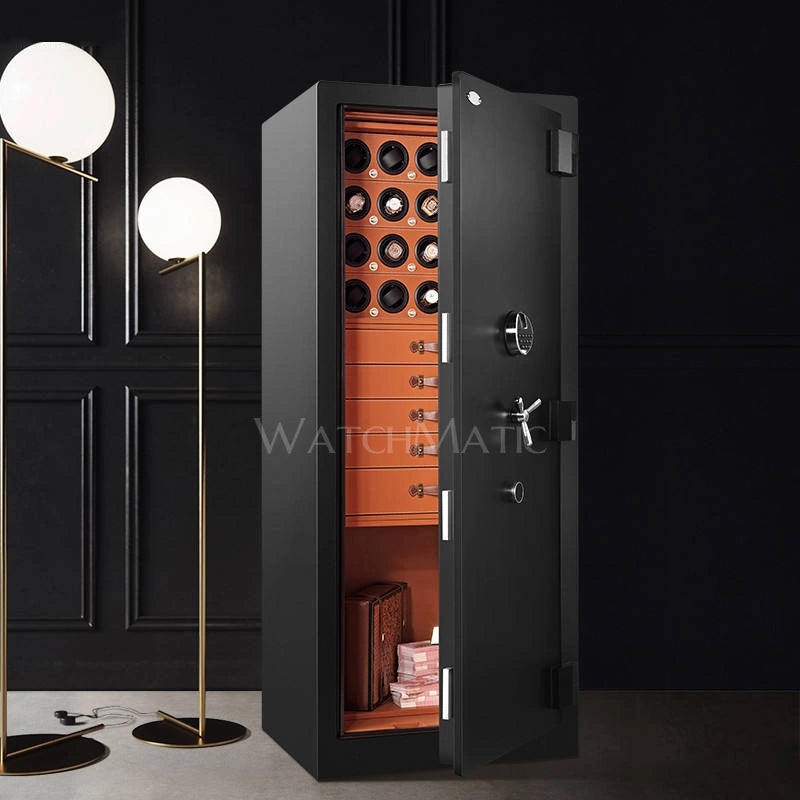
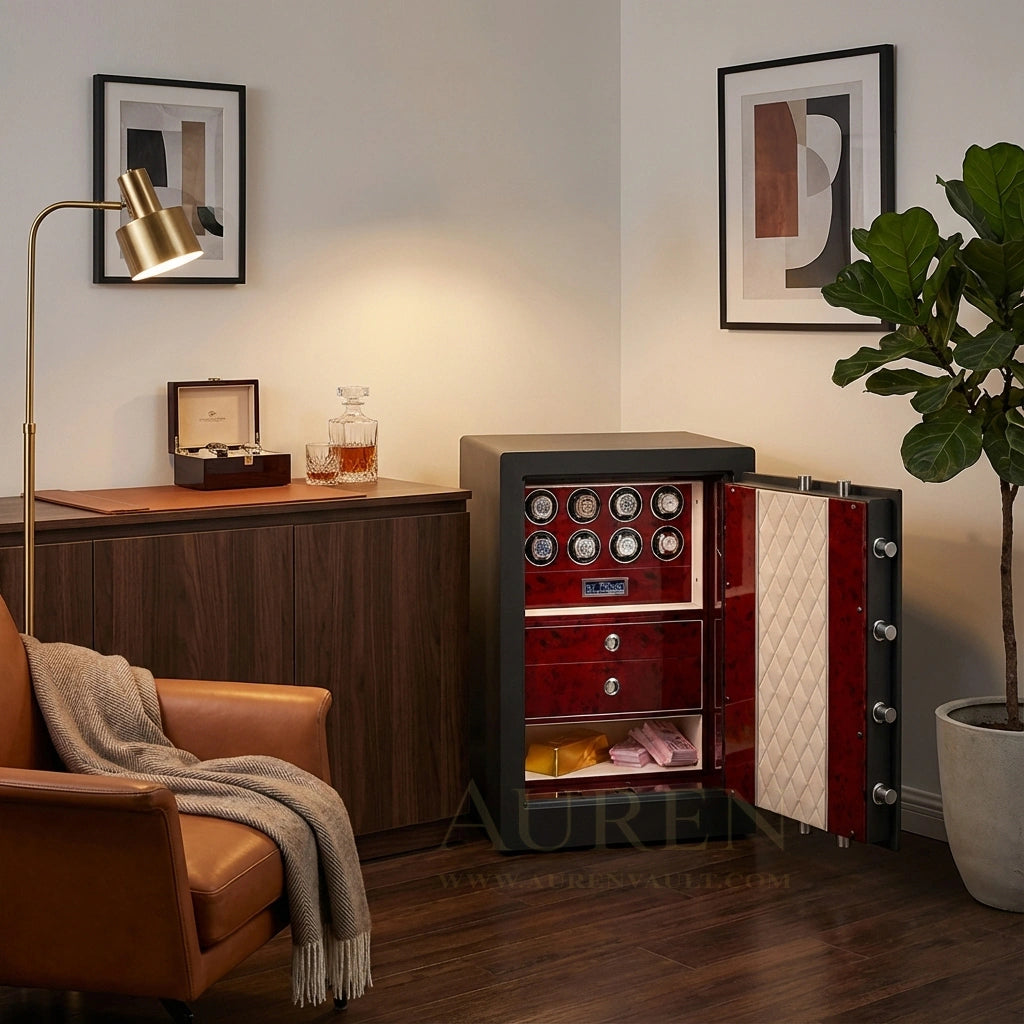
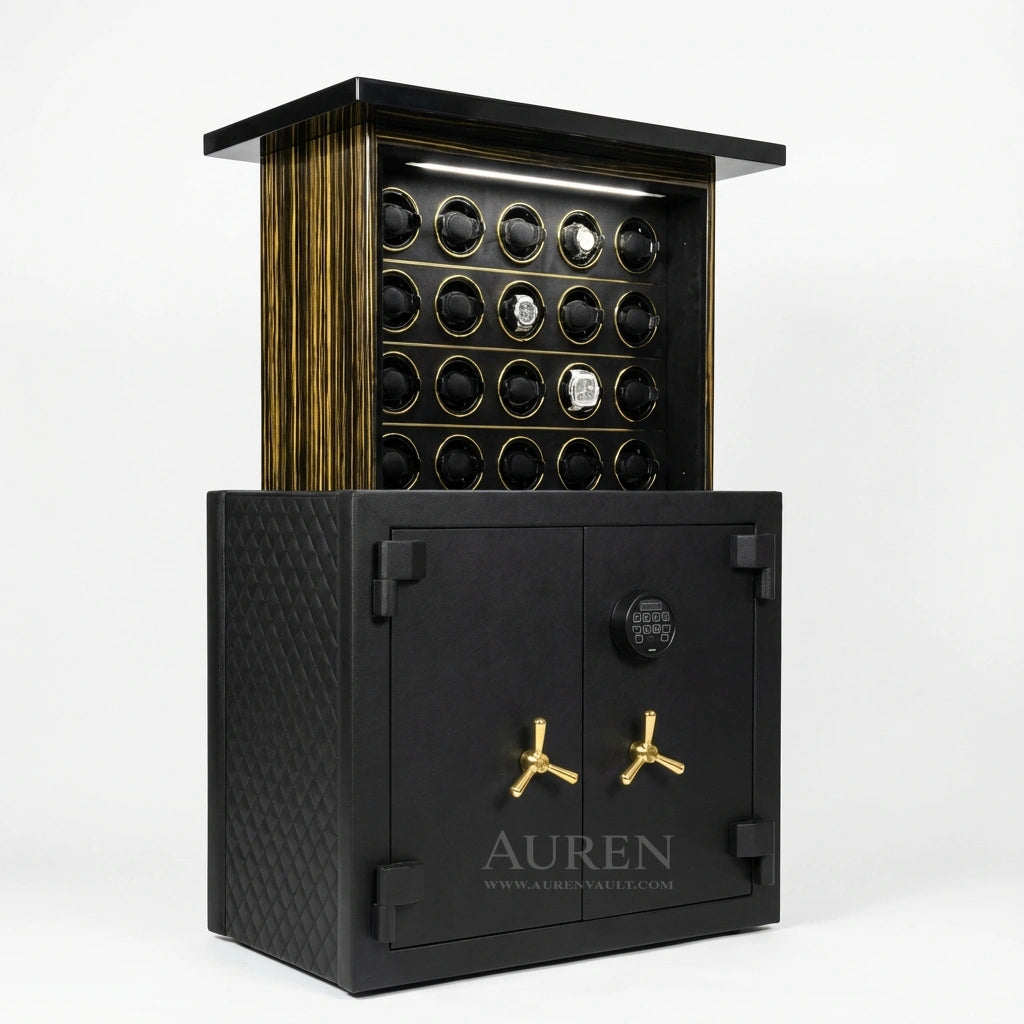
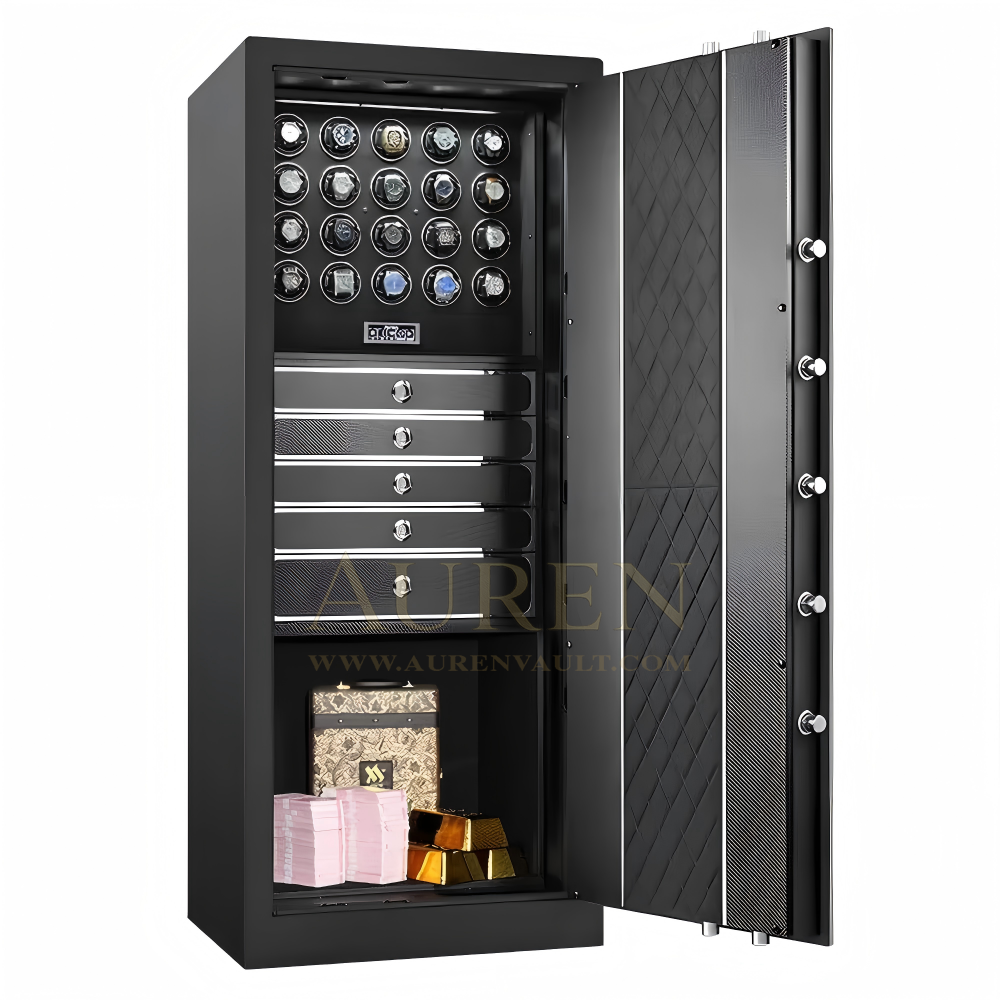
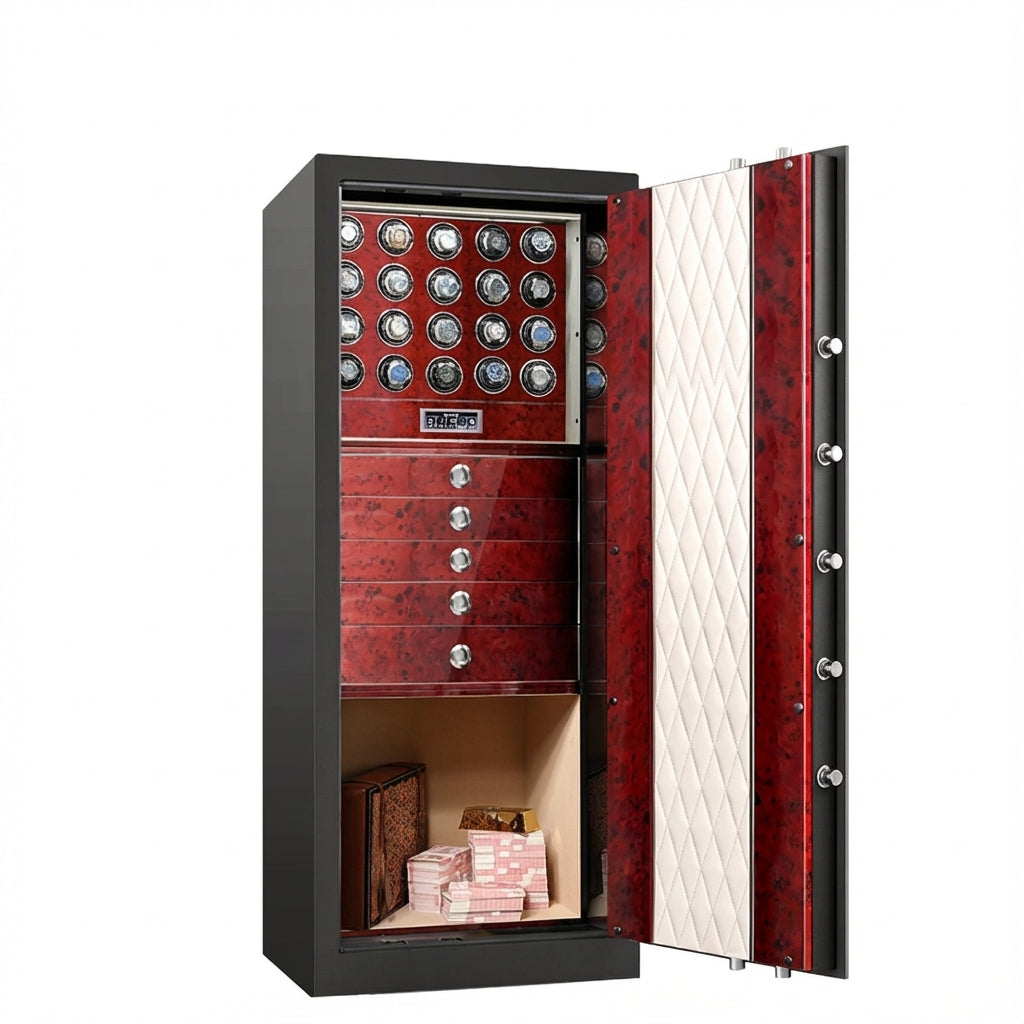
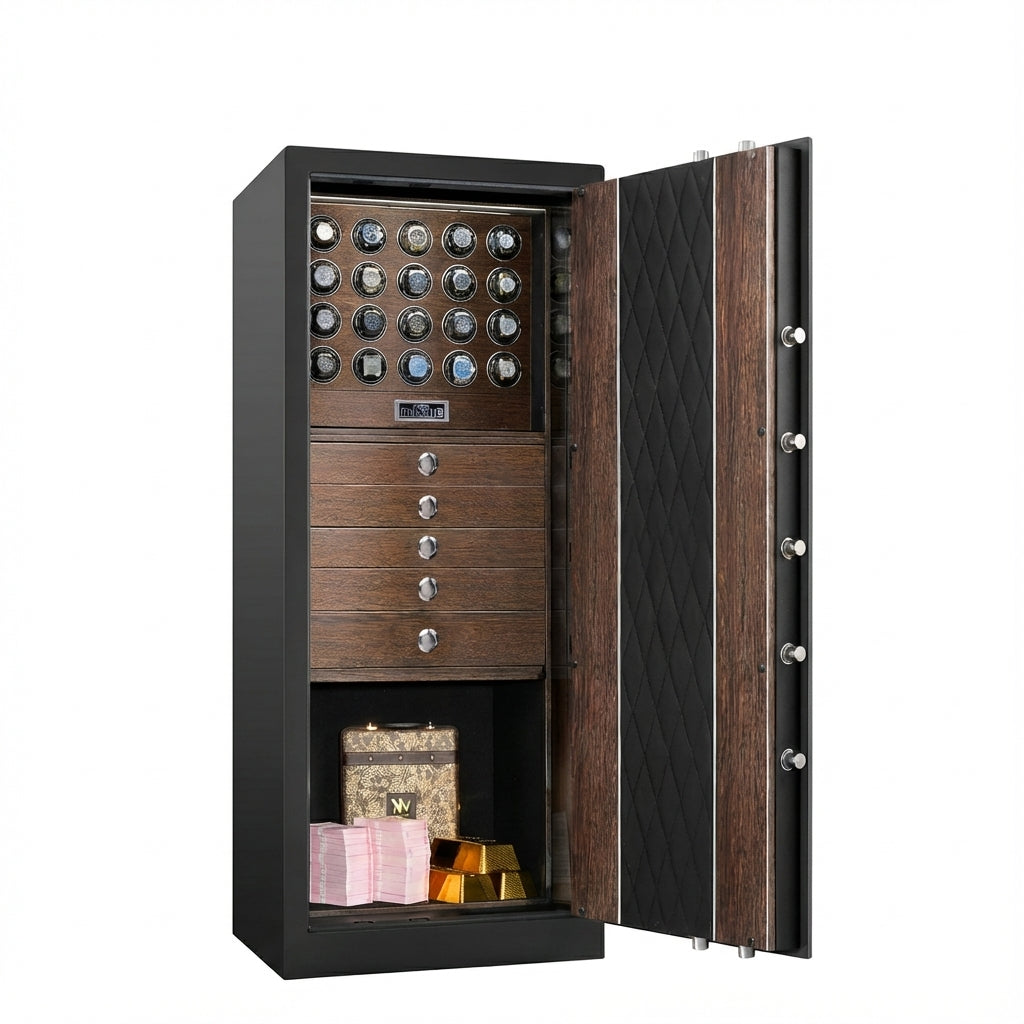
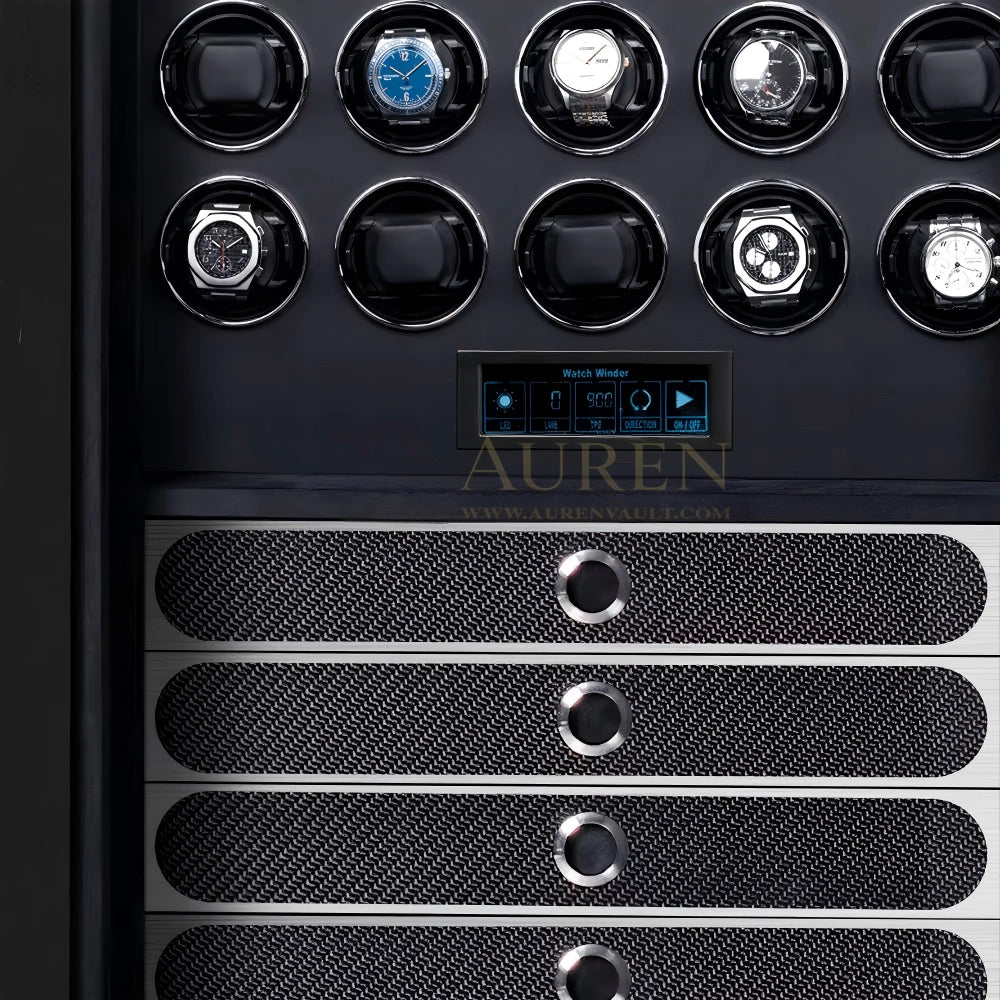
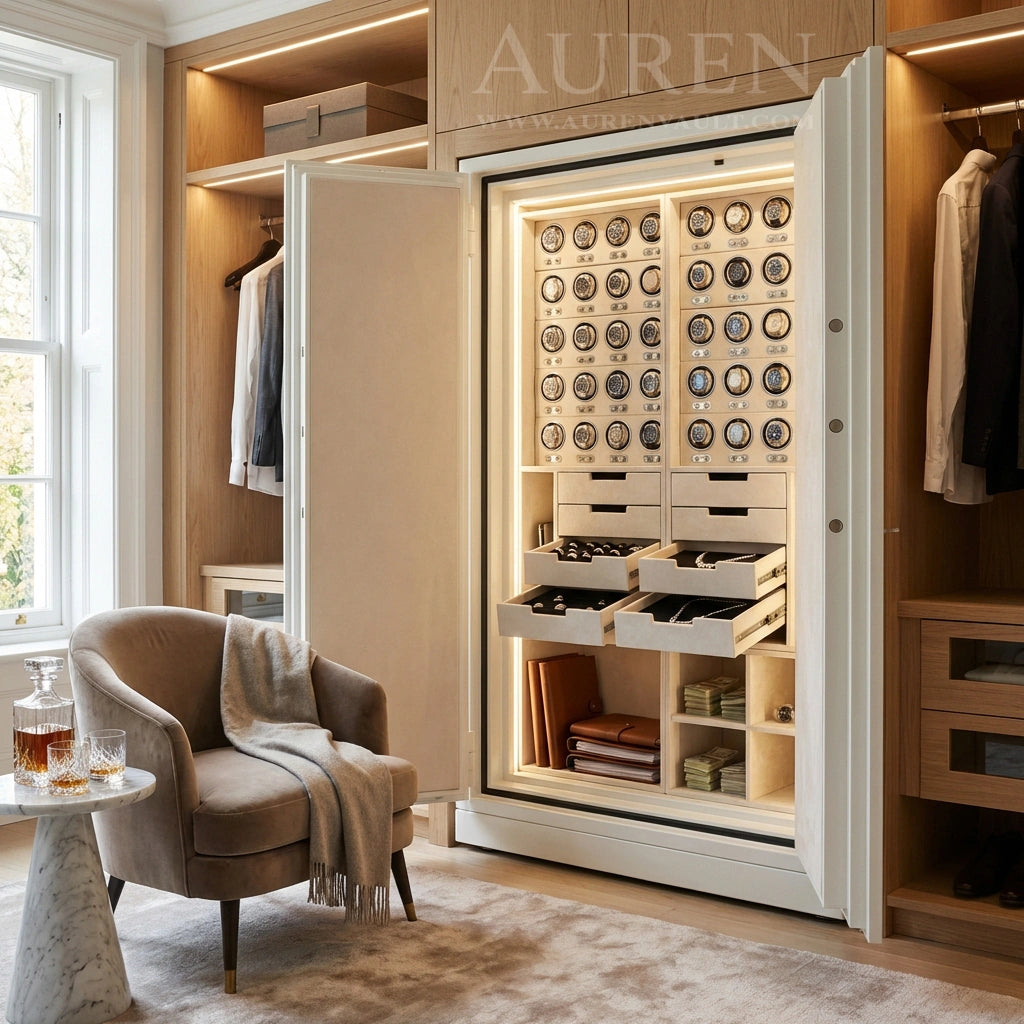
For collectors interested in combining winding functionality with enclosed storage, watch winder safes with integrated winding systems offer a relevant category to evaluate.
The watch winder safe guide also provides additional information about balancing winding capacity, storage design, and security considerations.
Planning the Right Configuration for a BALL Collection
The ideal storage arrangement should be based on the watches that the owner wants to keep running.
Consider a collector who owns an Engineer III Marvelight, an Engineer Hydrocarbon Original, a Roadmaster M Perseverer, an AeroGMT II, and a Roadmaster Rescue Chronograph.
All five are automatic, but their movements and dimensions differ.
The RR1402 chronograph may require a different rotation program from the RR1103-C.
The RRM7309-C offers a longer reserve than some of the conventional movements.
The AeroGMT II may benefit from continuous operation because maintaining its additional time-zone displays reduces the need for repeated resetting.
The larger Engineer Hydrocarbon models may require deeper compartments.
A storage system should account for all these differences rather than focusing solely on the number of watches.
When Larger Watch Safes Make Sense
A collector with a growing portfolio may eventually require more than a row of standalone winders.
Additional storage may be needed for watches that are not kept running, spare straps, accessories, and other personal valuables.
The watch safes collection provides options for evaluating different configurations.
For larger collections, luxury watch safes can offer expanded storage capacity and more integrated presentation.
However, the number of winding positions should reflect actual usage.
A watch with an 80-hour reserve that is worn several times a week may not need a permanent active winding position.
A complicated automatic watch used less frequently may provide a stronger reason to remain on a winder.
There is no benefit in maximizing the number of rotating modules if some of them will rarely be needed.
Custom Storage for Large Professional Watches
BALL collectors may encounter physical limitations with conventional watch safe interiors.
A thick Engineer Hydrocarbon NEDU and a relatively compact Engineer III require different amounts of space.
A mixed collection may also include leather straps, rubber straps, steel bracelets, and watches from other brands.
In those situations, a customized interior can be useful.
A tailored configuration may combine individually programmable winding modules with different compartment dimensions and passive storage positions.
Collectors with unusual capacity or dimensional requirements can explore custom watch safe configurations designed around the actual composition of their collections.
The goal is not to make every watch fit a standard compartment.
It is to provide an appropriate storage position for each watch.
How to Set Up a Watch Winder for a BALL Automatic
Once a compatible device has been selected, correct setup is essential.
1. Identify the Movement
Begin with the complete watch reference and calibre.
Determine whether the watch uses RR1103-C, RR1102-CSL, RR1201-C, RRM7309-C, RR1702-C, RR1402, or another movement.
Do not choose settings from the collection name alone.
2. Start the Movement Correctly
If the watch has stopped, restart it according to BALL's instructions.
BALL's owner documentation explains that automatic movements receive energy through wrist motion and can be manually wound when they have been unworn for an extended period or have stopped.
A watch winder is generally best used to maintain an established power reserve rather than rapidly wind a fully depleted movement.
Follow any precautions for calendar and time-zone adjustments.
3. Confirm Rotation Direction and TPD
Use the appropriate winding program for the identified calibre.
For a conventional automatic movement, a bidirectional program around 650 TPD may provide a useful preliminary reference.
For an RR1402-family chronograph, a Valjoux 7750-based setting around 800 TPD clockwise may be more relevant.
For a manufacture RRM7309-C, confirm the movement-specific requirements rather than copying settings from an older BALL calibre.
These examples are starting references, not substitutes for verification.
4. Fit the Watch Securely
Place the watch on the cushion without forcing the bracelet or strap.
Check that the case remains stable and that the crown guard, bezel, and pushers have enough clearance.
Large BALL sports watches may require larger winding compartments.
The watch should not shift against the surrounding surfaces during normal operation.
5. Monitor Operation
Allow the winder to perform its normal programmed cycles.
Observe whether the watch continues running over several days.
If the watch stops, review the starting reserve, direction, TPD, and device operation.
If the problem persists despite suitable settings, the movement may require professional inspection.
Increasing the rotation count should not be the automatic response.
Should BALL Watches Stay on a Winder All the Time?
There is no general mechanical requirement to keep an automatic BALL watch running continuously.
When the mainspring reserve is exhausted, the movement stops normally.
The watch can subsequently be restarted according to its instructions.
For a conventional automatic watch worn almost every day, a winder may add little convenience.
For a manufacture movement offering 80 hours of power reserve, short periods of non-use may not require external winding at all.
For an automatic chronograph or GMT watch used infrequently, keeping it running may reduce repeated setup.
The decision depends on wearing habits and the complexity of the watch.
A winder should not be treated as a preservation device that automatically extends the life of a movement.
Continuous operation does not eliminate mechanical wear or replace servicing.
When Passive Storage Is Preferable
Some BALL watches may be reserved for occasional travel, diving, or outdoor activities.
If they are not expected to be worn for an extended period, the owner may prefer to store them without active winding.
The priorities then become protection from moisture, accidental impact, excessive temperature, unnecessary handling, and unsuitable storage materials.
For watches with substantial metal bracelets, stable support helps prevent the case and clasp from contacting hard surfaces.
Rubber and leather straps should not remain stretched around oversized supports.
The watch storage guide explains broader principles for protecting mechanical watches when continuous winding is unnecessary.
Common Mistakes When Choosing a BALL Watch Winder
The most common mistake is assuming that every BALL automatic uses 650 TPD with bidirectional rotation.
That overlooks movement differences, particularly among 7750-based automatic chronographs.
Another mistake is assuming that an 80-hour manufacture movement requires 800 TPD.
Power reserve and winding requirements are not interchangeable.
Some owners also overlook the physical dimensions of BALL's professional watches.
A large NEDU chronograph or Engineer Hydrocarbon Original may not fit comfortably inside a small winding compartment.
Anti-magnetic and shock-resistant specifications should not be confused with winding requirements.
Neither feature establishes the appropriate rotation count.
Finally, owners should avoid treating a watch winder as a solution to mechanical problems.
If an automatic watch repeatedly stops despite being correctly started and placed on a compatible program, additional inspection may be necessary.
A winder should make regular ownership more convenient, not compensate for a faulty movement.
Frequently Asked Questions About BALL Watch Winders
What is the best watch winder for BALL Watch?
The best choice is a programmable winder with adjustable TPD, selectable rotation direction, controlled rest cycles, and secure support for BALL's substantial cases and bracelets. Independent controls are especially useful for multi-watch collections.
How many TPD does a BALL automatic watch need?
Approximately 650 TPD with bidirectional rotation is commonly published for many conventional BALL automatic movements. Some Valjoux 7750-based chronographs are associated with approximately 800 TPD clockwise. The correct settings should always be verified by calibre.
Do all BALL watches use the same winding direction?
No. BALL uses different automatic movement families. Conventional three-hand movements and 7750-based automatic chronographs may have different effective winding directions.
Does the Engineer III Marvelight need a watch winder?
No. The Engineer III Marvelight Chronometer can receive sufficient winding through regular wear. A compatible winder is optional and primarily useful when the watch remains unworn for several days.
What is the best winder setting for BALL RR1103-C?
Approximately 650 TPD with bidirectional rotation is a commonly published starting point for related conventional automatic movement families. Verify the exact RR1103-C reference and the device's direction convention before relying on the program.
Does BALL Calibre RRM7309-C need 800 TPD?
Not necessarily. The RRM7309-C offers approximately 80 hours of power reserve, but that does not establish an 800 TPD requirement. Its appropriate external winding settings should be confirmed independently.
Can a Roadmaster M Perseverer use a winder?
Yes. Selected M Perseverer references use the automatic manufacture RRM7309-C movement. A compatible winder can maintain the watch between wears, although its extended reserve already provides considerable flexibility.
Can a BALL Engineer Hydrocarbon use a winder?
Yes, when equipped with an automatic movement. The appropriate program depends on the exact calibre. Larger Engineer Hydrocarbon models also require adequate compartment clearance and stable cushion support.
What TPD should I use for the Roadmaster Rescue Chronograph?
Selected Roadmaster Rescue Chronographs use the RR1402 movement associated with the Valjoux 7750 architecture. Approximately 800 TPD clockwise is commonly recommended for the 7750 family, but the exact movement and winder direction convention should be verified.
Does BALL's anti-magnetic technology affect winding settings?
No. Anti-magnetic technology concerns resistance to magnetic exposure. It does not establish the number or direction of rotations required to wind the movement.
Do BALL micro gas tubes require winding?
No. The micro gas tubes provide illumination independently of the mechanical winding mechanism. A watch winder does not recharge or improve their brightness.
Can a BALL GMT watch benefit from a watch winder?
Yes. A compatible winder can maintain an automatic GMT movement and reduce repeated adjustments after the watch stops. It does not automatically change time zones when the owner travels.
Can a watch winder overwind a BALL automatic?
Modern automatic movements generally incorporate mechanisms that limit excessive mainspring tension. Nevertheless, unnecessary rotation should be avoided by using suitable TPD settings and controlled rest periods.
Does an 80-hour power reserve make a watch winder unnecessary?
It can reduce the practical need for one. A sufficiently wound 80-hour movement may continue operating for more than three days without additional winding. A winder becomes more convenient when the watch remains unused for longer periods.
Is a watch winder safe better for BALL collections?
A standalone winder may be sufficient for one or two automatic watches. A properly specified watch winder safe becomes more relevant when the collector also needs enclosed storage and additional physical protection for a larger collection.
Related Reading
Collectors comparing robust Swiss automatic watches, movement technology, and secure winding solutions may also find these guides useful:
-
Best Watch Winder for Blancpain Watches — Explores winding requirements for automatic diving watches, mechanical complications, and collection storage.
-
Best Watch Winder for Grand Seiko: Spring Drive & TPD Guide — Examines how power reserve and different movement architectures influence winding requirements.
-
Watch Safes with Built-In Watch Winders: Are They Worth It? — Explains the practical differences between standalone winders and integrated secure storage systems.
Final Thoughts: Choose the Best BALL Watch Winder by Calibre, Not Collection Name
BALL watches are defined by a combination of mechanical watchmaking and practical engineering.
Their distinctive illumination, anti-magnetic construction, shock-resistant systems, and substantial sports-watch designs make them recognizable.
However, those characteristics do not determine the correct external winding program.
An RR1103-C Engineer III, an RRM7309-C Engineer M, and an RR1402 Roadmaster chronograph should each be evaluated according to their movement architecture.
A programmable winder allows the necessary flexibility.
For a single automatic BALL watch, a compact device with appropriate settings and secure support may be sufficient.
For collectors managing several watches, independently controlled winding positions can make the collection easier to maintain.
Larger collections may benefit from combining active winding with more secure enclosed storage, particularly when watches have substantial value or widely varying dimensions.
At Auren Vault, the focus is on bringing precision winding, refined organization, and practical protection together for serious watch collectors.
Ultimately, the best watch winder for BALL Watch is not the device with the highest advertised rotation count.
It is the one that provides the correct movement program, accommodates the watch safely, and makes ownership more convenient without introducing unnecessary mechanical activity.