

The best watch winder for Blancpain watches is a programmable unit that supports adjustable turns per day (TPD), selectable winding direction, controlled rest cycles, and secure holders for different case and strap designs.
Blancpain automatic movements do not share one universal winding program. The Fifty Fathoms calibre 1315, Villeret calibre 1151, and complete-calendar calibre 6654.4 have different mechanical characteristics. Independent winding databases also disagree on the ideal rotation settings for some Blancpain movements, making calibre-specific verification essential.
A watch winder can be useful for maintaining an automatic Blancpain between wears, particularly when the watch includes calendar or moon-phase complications. However, manually wound Blancpain watches cannot benefit from conventional automatic winding.
For one frequently worn Fifty Fathoms, a winder may be optional. For larger collections, individually programmable modules and secure storage offer greater flexibility.
The right choice balances movement compatibility, reliable winding performance, physical fit, and the owner's wearing routine.
Why Blancpain Watch Winder Settings Deserve Closer Attention
Blancpain is known for two particularly distinctive areas of watchmaking: professional diving watches and sophisticated mechanical complications.
Its Fifty Fathoms collection is closely associated with the development of modern dive watches, while the Villeret collection emphasizes classical watchmaking, refined case proportions, and mechanical complexity.
From a watch winder perspective, these collections present different practical requirements.
A Fifty Fathoms Automatique equipped with calibre 1315 can operate for approximately five days when sufficiently wound. A Villeret Complete Calendar with calibre 6654.4 provides approximately three days of reserve, but includes additional indications that may require adjustment after the watch stops.
The first watch offers considerable flexibility between wears. The second may benefit more from maintaining continuous operation because resetting its calendar and moon phase takes additional attention.
This is why the most expensive or elaborate watch winder is not necessarily the best choice.
A suitable device should address the specific movement and the inconvenience it is intended to eliminate.
Before considering motor quality, enclosure finishes, or storage capacity, the owner should identify the watch's calibre and determine whether it is automatic or manually wound.
Which Blancpain Watches Can Use a Watch Winder?
Most familiar contemporary Fifty Fathoms and Bathyscaphe references are automatic, but Blancpain's broader catalogue also includes manually wound movements.
Even watches within the same collection may have different power reserves and winding mechanisms.
Blancpain Watch Winder Compatibility by Calibre
| Blancpain watch or model | Calibre | Winding type | Power reserve | Winder suitability |
|---|---|---|---|---|
| Fifty Fathoms Automatique 5010 | 1315 | Automatic | 120 hours | Yes, optional |
| Fifty Fathoms Bathyscaphe 5000A | 1315 | Automatic | 120 hours | Yes, optional |
| Fifty Fathoms Bathyscaphe 38 mm | 1150 | Automatic | 100 hours | Yes, optional |
| Villeret Ultraplate 6651 | 1151 | Automatic | 100 hours | Yes, optional |
| Villeret Quantième Complet 6654 | 6654.4 | Automatic | 72 hours | Yes, optional |
| Air Command Flyback Chronograph | F388B | Automatic | 50 hours | Yes, optional |
| Villeret Ultraplate 6605 | 11A4B | Manual-winding | 100 hours | No |
| Villeret Squelette 8 Jours | 1333SQ | Manual-winding | 192 hours | No |
Specifications apply to the representative references shown. Blancpain has produced numerous movement variations, so the exact reference should always be confirmed before programming a winder.
The most important distinction is that an extended power reserve does not establish automatic winding compatibility.
A manually wound Villeret with 100 hours of reserve cannot be wound by a conventional automatic winder, even though an automatic Villeret with the same nominal reserve can.
The presence of an oscillating weight is what matters.
Fifty Fathoms Calibre 1315: Does a Five-Day Watch Need a Winder?
The calibre 1315 is one of the most recognizable modern Blancpain movements.
Used in numerous Fifty Fathoms and Bathyscaphe references, it provides approximately 120 hours of power reserve through an automatic winding system.
Five days of reserve can significantly reduce the need for a watch winder in everyday ownership.
Consider an owner who wears a Fifty Fathoms from Monday through Friday and changes to another watch for the weekend.
If the Blancpain is sufficiently wound when removed, it can potentially remain running well beyond the weekend.
For this wearing pattern, a standalone winder may offer little additional convenience.
Now consider a collector who wears the Fifty Fathoms only once every ten days.
Even with a five-day reserve, the watch will eventually stop between wears. A correctly programmed winder can reduce the need to reset it each time.
The value of a winder therefore depends on how the watch fits into the owner's routine.
The Important Difference Between Power Reserve and TPD
Power reserve measures the amount of time a movement can continue operating without additional winding.
TPD measures the number of rotations programmed into an external watch winder over one day.
These are not interchangeable specifications.
A five-day movement does not automatically require more rotations than a movement with a two-day reserve.
The amount of effective winding depends on the rotor mechanism, transmission efficiency, mainspring system, and the external device's operating program.
A longer reserve can actually make a watch less dependent on continuous winding during short periods of non-use.
For the calibre 1315, the appropriate TPD must be determined from movement-specific guidance, not from the 120-hour reserve alone.
The Fifty Fathoms Bezel Does Not Determine Winding Direction
There is a detail that can create confusion when researching Blancpain winding specifications.
The Fifty Fathoms is known for its unidirectional rotating dive bezel.
That bezel is a timing feature used to measure elapsed intervals, particularly in diving applications.
It is unrelated to the automatic winding direction of the movement.
A watch can have a unidirectional dive bezel and an automatic winding system that responds to rotor movement according to an entirely different mechanical arrangement.
Consequently, the term unidirectional in a Fifty Fathoms product description should never be used to select a watch winder's clockwise or counterclockwise setting.
The winding mechanism must be assessed separately.
Blancpain Watch Winder Settings: Why the Published TPD Figures Conflict
This is an area where careful research matters more than a simple chart.
Independent watch winder databases publish substantially different settings for certain Blancpain calibres.
For the 1315, one database lists approximately 960 TPD with clockwise rotation. Another recommends around 800 TPD with bidirectional operation.
The recommendations for the calibre 1151 also differ. Some sources list approximately 650 TPD in one direction, while others suggest a bidirectional program in a similar daily range.
These disagreements should not be concealed behind an apparently precise recommendation.
Blancpain TPD Reference Comparison
| Movement | Published independent guidance | Recommended approach |
|---|---|---|
| Calibre 1315 | Approximately 800 TPD bidirectional in some sources; 960 TPD clockwise in others | Confirm the movement-specific winding requirements before programming |
| Calibre 1150 | Approximately 650 TPD, with differing directional recommendations | Verify direction and actual winding performance |
| Calibre 1151 | Approximately 650–700 TPD, with conflicting directional advice | Do not assume settings are identical to calibre 1150 |
| Calibre 6654.4 | No sufficiently consistent preset established here | Verify settings for the exact complete-calendar reference |
| Calibre F388B | No sufficiently consistent preset established here | Obtain calibre-specific guidance |
| Manual calibres 11A4B and 1333SQ | Not applicable | No automatic winding program |
These figures are third-party references, not official Blancpain TPD prescriptions. Conflicting values should not be combined into an arbitrary average.
Why Different Sources Can Recommend Different Programs
A watch winder rotates the entire watch, while the internal rotor responds to the resulting changes in position.
The relationship between external rotation and effective mainspring winding is more complicated than a simple one-to-one conversion.
Different winder manufacturers also use different methods to distribute rotations throughout the day.
One unit may alternate short winding intervals with rest periods. Another may complete longer sequences followed by extended pauses.
Clockwise and counterclockwise conventions can also depend on the orientation from which the watch is viewed.
These variables can lead to apparently different recommendations for the same calibre.
A further complication is that winding databases may describe older movement variants, while a current Blancpain reference uses a revised calibre.
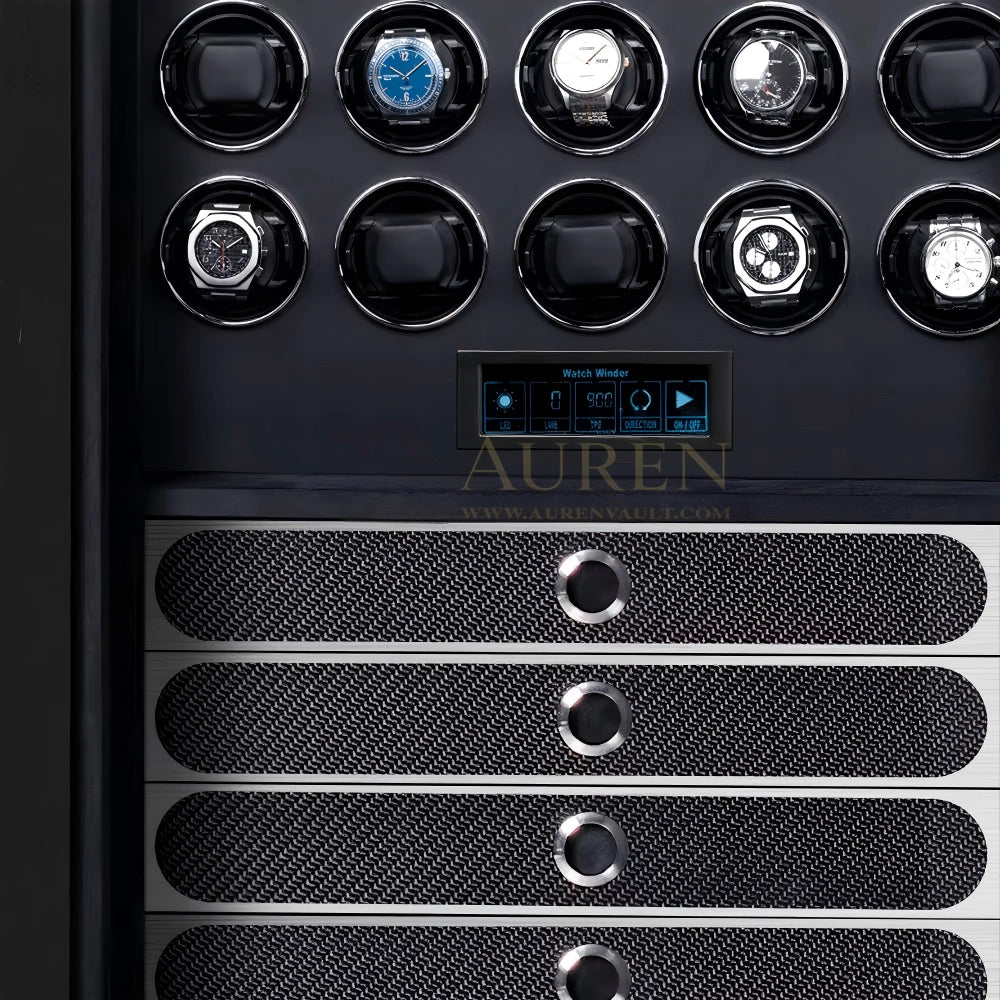
For this reason, a programmable device with selectable direction and adjustable TPD is preferable to a fixed-speed winder.
The watch TPD guide is a relevant reference for interpreting daily rotation terminology, but exact Blancpain settings should still be verified against movement-specific guidance.
Should You Start at 650, 800, or 960 TPD?
The answer depends on the calibre and the winding device.
There is no sufficiently supported reason to recommend one of these numbers for every automatic Blancpain.
For a movement such as the 1315, where independent sources disagree substantially, the most responsible approach is to obtain the recommended program from Blancpain, an authorized watchmaker, or reliable documentation for the exact movement and winder.
Once a compatible program has been established, its effectiveness can be observed over several days.
If the movement maintains an adequate power reserve, increasing TPD simply because a higher setting is available offers no clear advantage.
If the watch repeatedly stops, the cause should be investigated before the number of rotations is increased.
The objective is reliable operation, not maximum motion.
Fifty Fathoms vs. Bathyscaphe: Same Collection, Different Winding Needs
A common purchasing mistake is to assume that every Fifty Fathoms or Bathyscaphe contains the same movement.
The distinction becomes particularly clear when comparing different Bathyscaphe sizes.
The 43.6 mm Bathyscaphe reference 5000A uses the automatic calibre 1315 with a 120-hour reserve.
By contrast, certain 38 mm Bathyscaphe references use calibre 1150, an automatic movement with approximately 100 hours of reserve.
Both are legitimate candidates for a watch winder, yet their winding programs should not automatically be treated as identical.
The difference also extends to physical storage.
Larger Fifty Fathoms Cases Need More Clearance
The Fifty Fathoms Automatique is available in substantial case sizes, including 42.3 mm and 45 mm references.
Its rotating bezel, crown profile, case thickness, and strap construction all affect how much room it needs inside a winding enclosure.
A winder should be evaluated using the watch's complete dimensions rather than case diameter alone.
A model with a high bezel and thick case may require more depth than a slimmer dress watch.
Likewise, a compartment that comfortably accommodates one Fifty Fathoms may not provide enough spacing for multiple watches mounted side by side.
Before choosing a multi-watch unit, the collector should examine its internal clearances and holder design.
Bathyscaphe 38 mm: Compact Does Not Mean Mechanically Identical
The smaller Bathyscaphe references provide an instructive contrast.
The 38 mm Bathyscaphe powered by calibre 1150 offers a 100-hour reserve and a slimmer overall profile than many larger Fifty Fathoms models.
It may fit more comfortably into compact winding compartments.
However, its smaller dimensions do not mean it should automatically use a lower TPD setting.
Physical watch size and mechanical winding efficiency are separate characteristics.
The correct winder must satisfy both requirements independently.
Villeret Complete Calendar: Where a Winder Becomes More Useful
The Villeret Quantième Complet is one of the clearest examples of a Blancpain watch for which maintaining continuous operation can offer practical value.
Unlike a simple three-hand watch, a complete calendar displays several indications, typically including the day, date, month, and moon phase.
The calibre 6654.4 is automatic and provides approximately 72 hours of power reserve.
When the movement stops, these indications may need to be reset according to the watch's operating instructions.
This adds complexity to an otherwise straightforward task.
Why Calendar Watches Benefit From Operating Continuity
Imagine a collector who wears a Villeret Complete Calendar once or twice each month.
Without a winder, the movement may stop between wears, requiring the owner to adjust the calendar and moon-phase displays repeatedly.
A compatible winder can maintain the movement's power reserve and reduce how often these adjustments are necessary.
The benefit is convenience rather than improved calendar accuracy.
A winder does not change how the complication calculates or advances its indications.
It simply supplies the automatic movement with the motion needed to keep operating.
For a frequently rotated collection of calendar watches, that convenience may be more valuable than it is for a simple time-and-date diver.
Blancpain's Under-Lug Correctors
Certain Villeret Complete Calendar models incorporate Blancpain's patented under-lug correctors.
These allow calendar adjustments without relying on conventional recessed case-side correctors.
The design makes the adjustment process more accessible while preserving the clean appearance of the case.
Nevertheless, the correct setting procedure should still follow the instructions for the specific reference.
A watch winder reduces the frequency of adjustment; it does not eliminate the need to understand the watch's operating system.
For a collector, this is an important distinction when evaluating whether the investment in a winder is worthwhile.
Villeret Ultraplate: Automatic and Manual Versions Require Different Storage
The Villeret Ultraplate collection shows why even closely related Blancpain dress watches cannot be grouped under one winding recommendation.
Certain Villeret Ultraplate references use the automatic calibre 1151, offering approximately 100 hours of power reserve.
Other references, such as the Villeret Ultraplate 6605, use the manually wound calibre 11A4B, which also offers approximately 100 hours of reserve.
The power-reserve figures are similar, but the movements receive energy differently.
A winder can be useful for the automatic 1151.
It cannot wind the manual 11A4B.
This distinction should also influence storage capacity.
A collector with three automatic Villeret watches and two manually wound references does not need five active winding modules.
Three programmable winding positions and two protective storage compartments may be a more efficient arrangement.
Protecting Dress-Watch Straps
Villeret watches are commonly paired with leather straps and refined folding or pin-buckle configurations.
These straps require an appropriately sized holder.
A rigid cushion that is too large can place unnecessary tension on the leather, while a holder that is too small may allow the watch to shift during rotation.
The ideal support should keep the case stable without stretching the strap beyond its normal wearing shape.
For thin dress watches, adequate clearance between the case and nearby surfaces is also important.
The quality of the physical holder should be considered alongside the motor and electronic controls.
What About Blancpain Air Command Chronographs?
The Air Command introduces a different aspect of Blancpain's automatic movement range.
Representative Air Command Flyback Chronograph references use the automatic calibre F388B, operating at 5 Hz with approximately 50 hours of power reserve.
This is significantly shorter than the 120-hour reserve of the calibre 1315 found in many Fifty Fathoms models.
The shorter reserve may make a winder more convenient when the watch is rotated infrequently.
However, the Air Command's 5 Hz operating frequency does not automatically establish a higher external TPD requirement.
Frequency describes the operation of the movement's regulating system.
TPD describes how many times the external device rotates the watch.
These parameters should not be confused.
Similarly, the presence of a flyback chronograph does not mean the winder should operate the chronograph function.
A conventional winder maintains the automatic movement's stored energy. It does not control the pushers, reset the chronograph, or replace the manufacturer's operating instructions.
For an Air Command owner, a programmable winder with appropriate physical clearance for the chronograph pushers is more useful than a device that simply advertises a high rotation count.
How to Set Up a Watch Winder for a Blancpain
A correct setup starts before the watch is mounted.
First, identify the exact Blancpain reference and movement calibre.
This determines whether the watch is automatic and establishes the basis for choosing the appropriate program.
If the movement has stopped, follow Blancpain's instructions for manual starting and time adjustment.
A watch winder is principally designed to maintain a movement's operating reserve rather than serve as a rapid replacement for initial manual winding.
Once the watch is running, the external device can be configured using the verified winding parameters.
A practical setup process includes:
-
Confirming the calibre and its automatic winding compatibility.
-
Establishing the correct external rotation direction and TPD.
-
Securing the watch on a holder that fits its case and strap.
-
Monitoring whether the movement remains running over several days.
If the watch stops despite an appropriate program, reassess the settings, initial reserve, device operation, and movement condition.
More rotations should not be the automatic response to every stoppage.
Why Rest Cycles Matter
A suitable winder generally alternates active rotation with periods of rest.
This allows the movement to receive winding energy without the device rotating continuously.
Different models implement these cycles differently.
A programmable winder that distributes rotation consistently throughout the day is preferable to one whose operating behavior is unclear.
The most useful specification is not the highest advertised TPD.
It is the ability to deliver the movement's required program reliably.
Can a Watch Winder Overwind a Blancpain?
Modern automatic movements generally incorporate mechanisms that limit additional mainspring tension once the watch is sufficiently wound.
This does not make excessive external rotation desirable.
A winding program should provide the motion necessary to maintain power without unnecessary operation.
A properly configured device should also avoid unstable rotation, poor watch support, and mechanical interference with the case or strap.
The winder is a convenience accessory. It cannot repair an existing movement problem or replace regular professional servicing.
Choosing the Best Watch Winder Configuration
The correct configuration depends on the number of automatic watches, their physical dimensions, and the owner's routine.
For a single automatic Fifty Fathoms, a compact programmable winder may be sufficient.
For a mixed collection containing Fifty Fathoms divers, Villeret calendar watches, and manually wound dress watches, the situation is more complex.
Independent winding programs become important because different calibres may require different rotation settings.
Passive storage also becomes necessary for watches that cannot benefit from an automatic rotor.
| Collection type | Suitable configuration | Main priority |
|---|---|---|
| One frequently worn Fifty Fathoms | No winder or compact programmable unit | Convenience between wears |
| Multiple automatic Bathyscaphe watches | Individually controlled multi-watch winder | Calibre compatibility and strap fit |
| Automatic Villeret calendar collection | Programmable winder with appropriate rest cycles | Maintaining calendar continuity |
| Mixed automatic and manual Blancpain collection | Winding positions plus passive storage | Efficient allocation of storage |
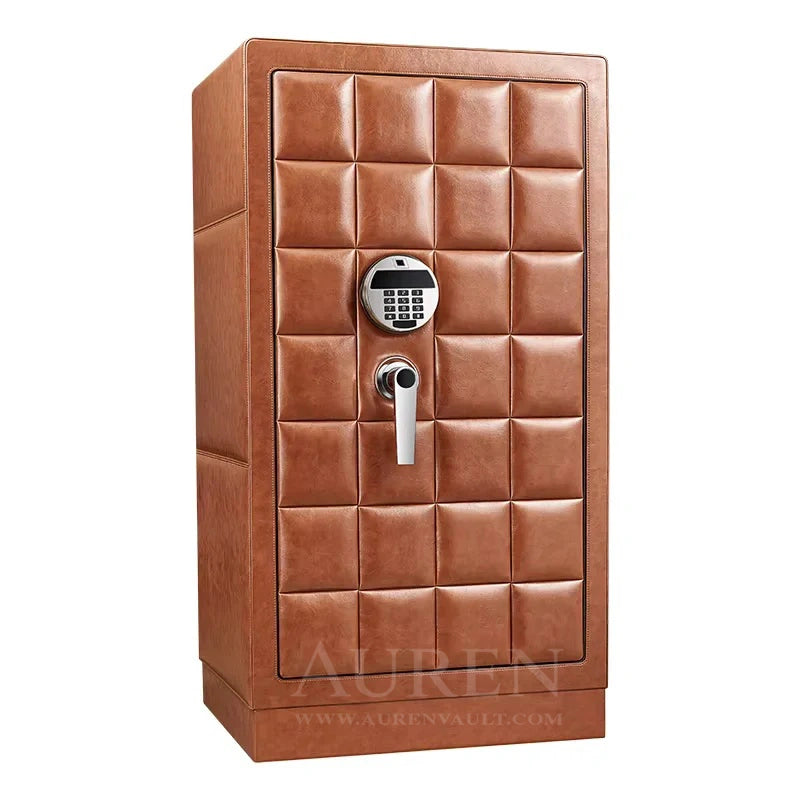
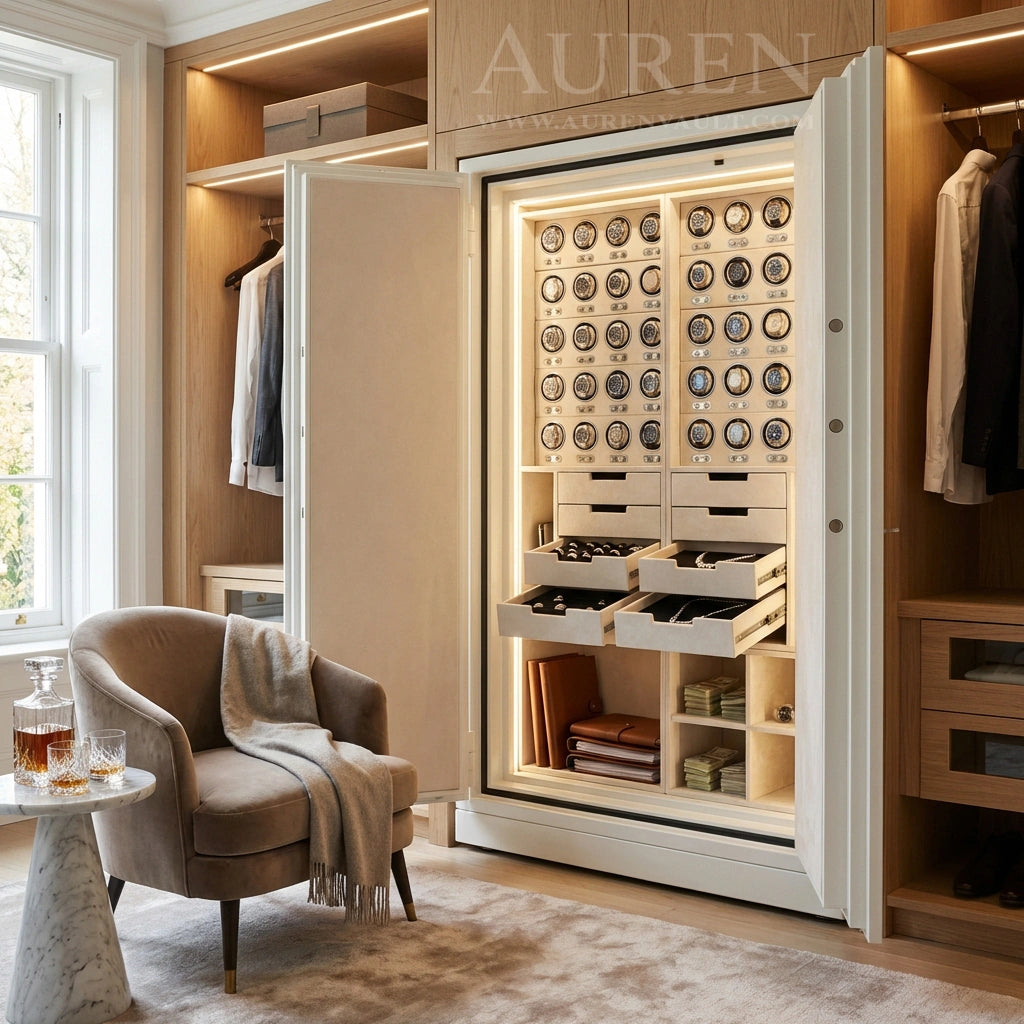
| Larger valuable watch collection | Appropriately specified watch winder safe | Winding, organization and security |
The largest possible number of winding modules is not necessarily the best configuration.
The objective is to provide the right type of storage for each watch.
Standalone Watch Winder vs. Watch Winder Safe
A standalone watch winder focuses primarily on maintaining the power reserve of automatic watches.
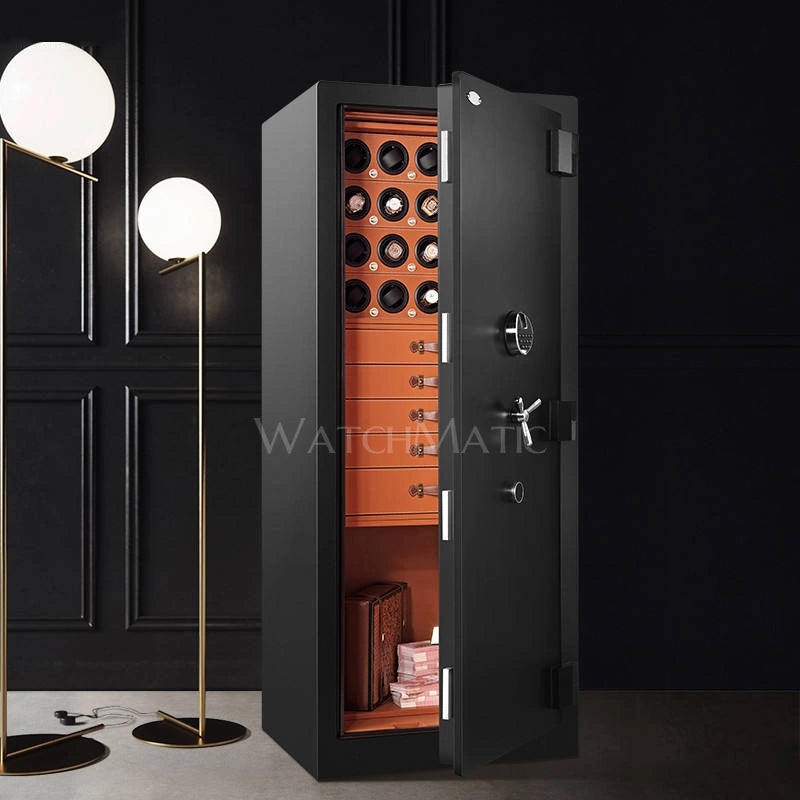
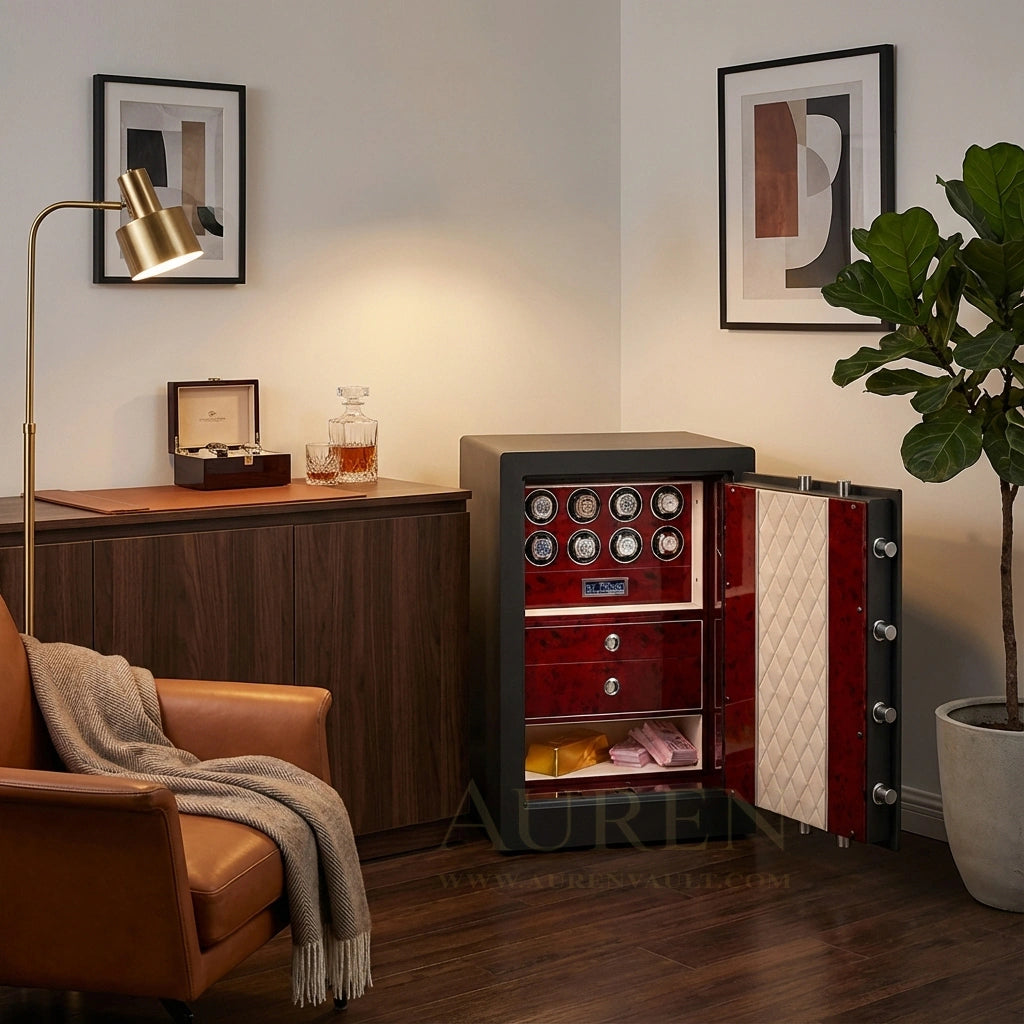
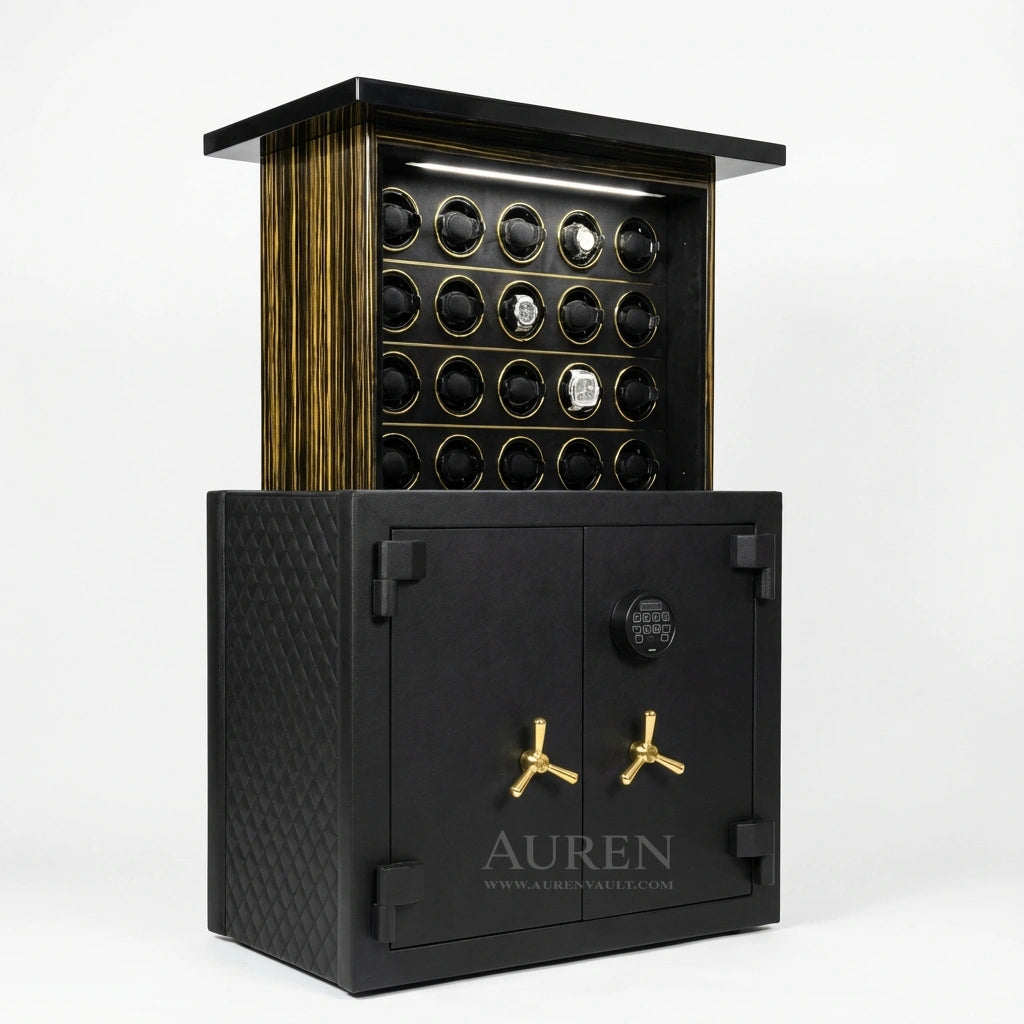
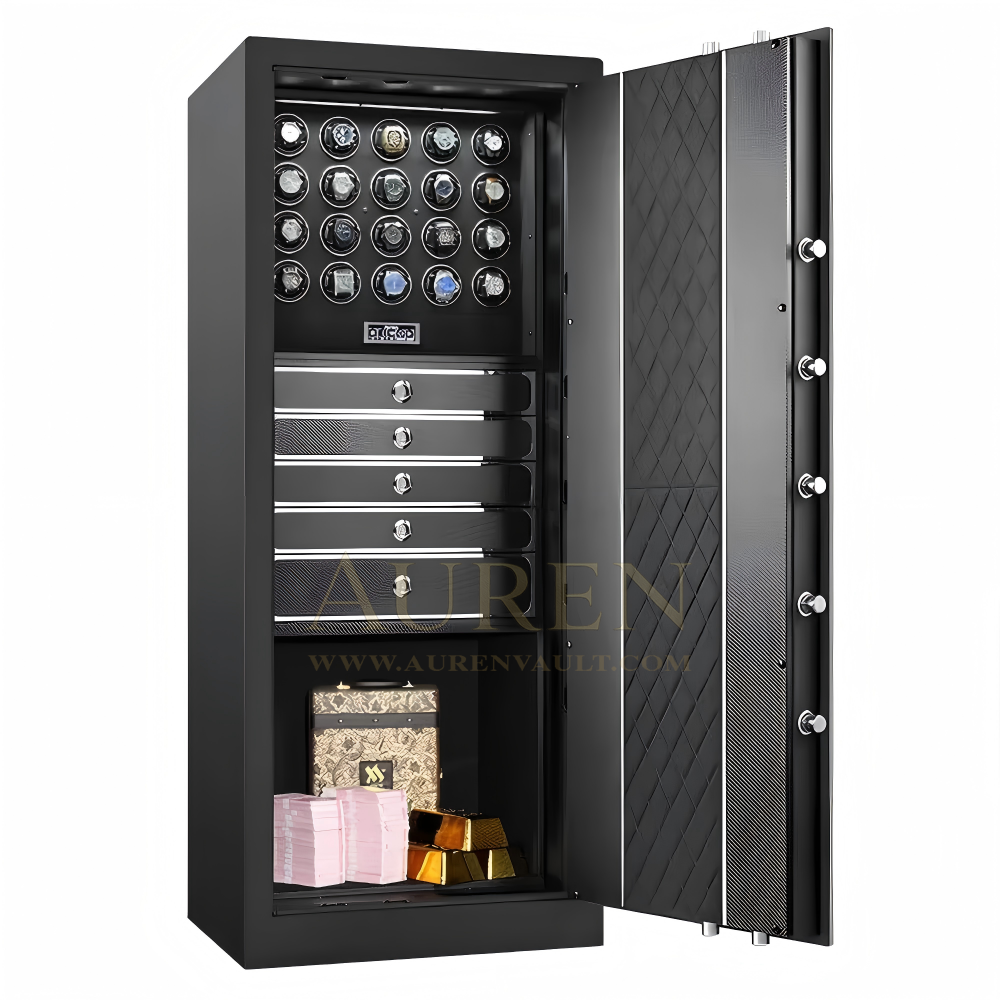
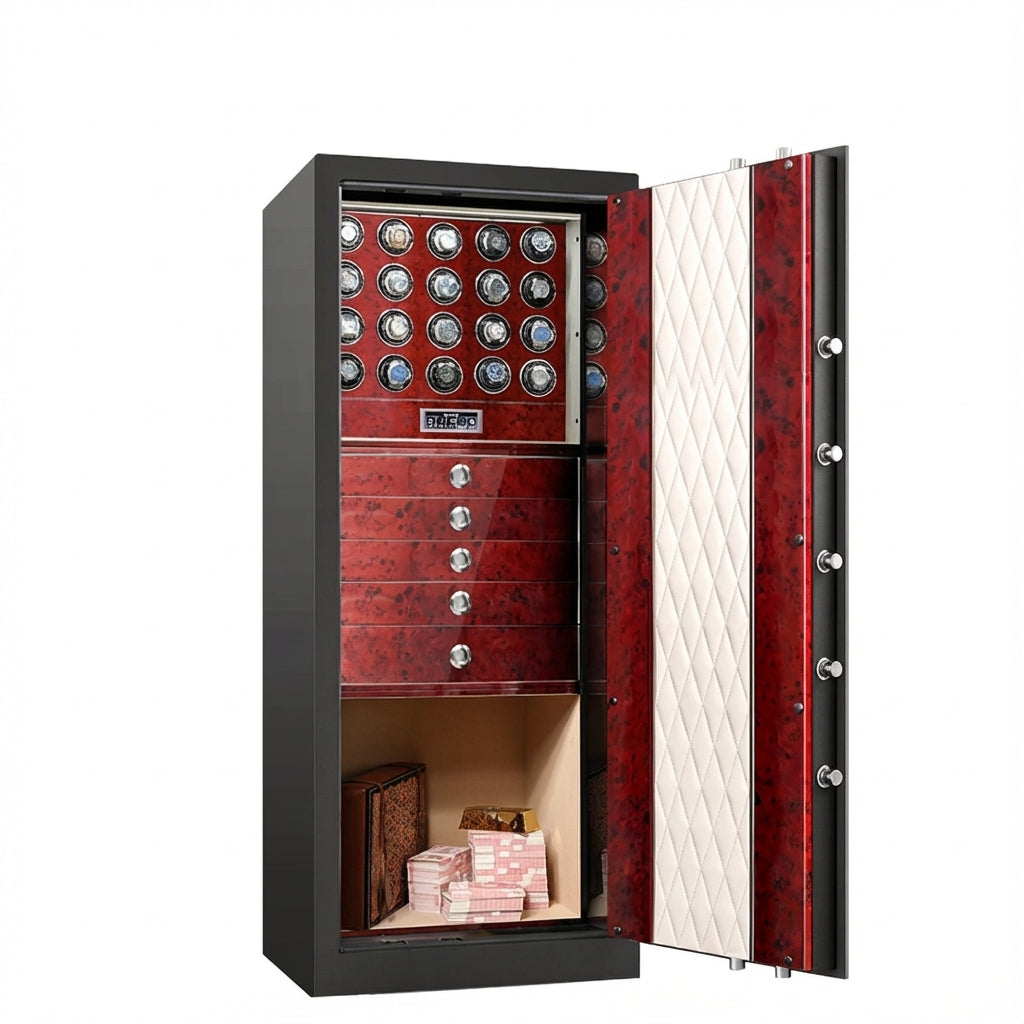
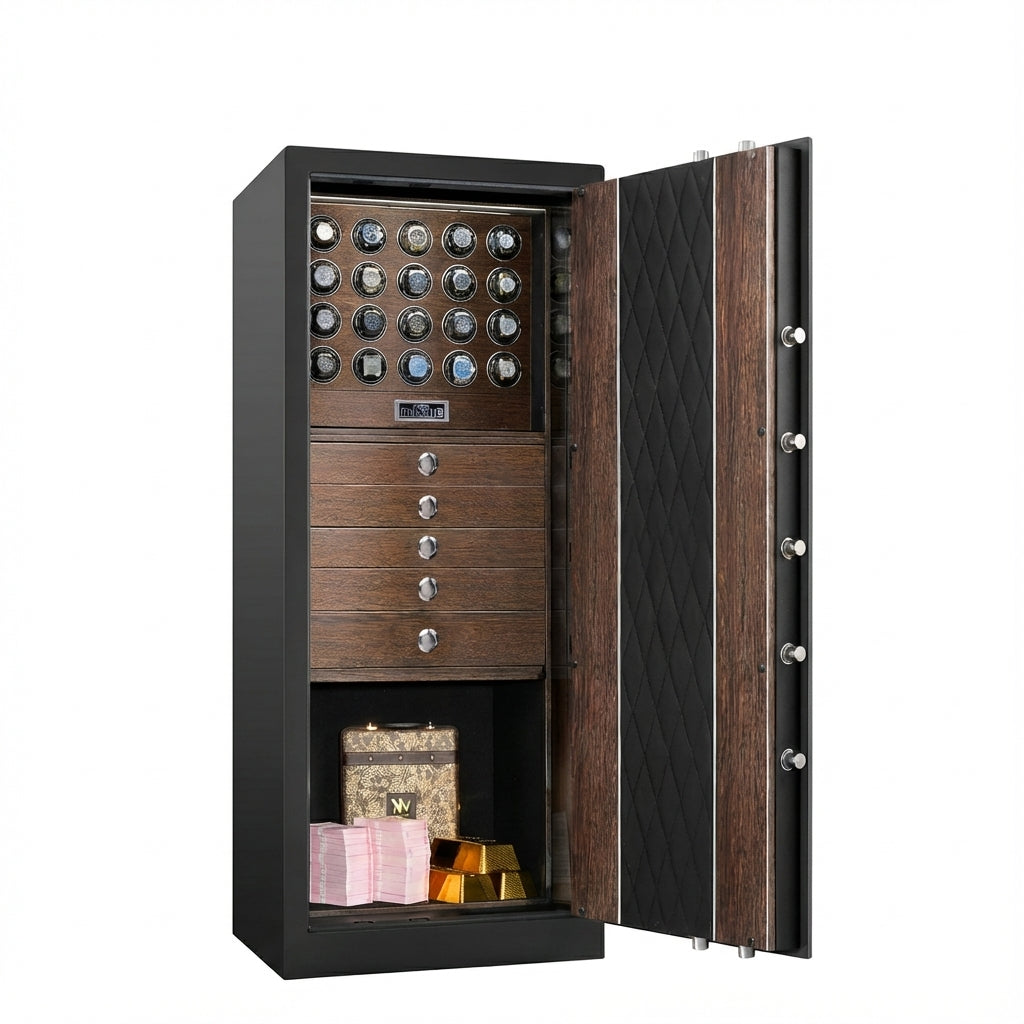
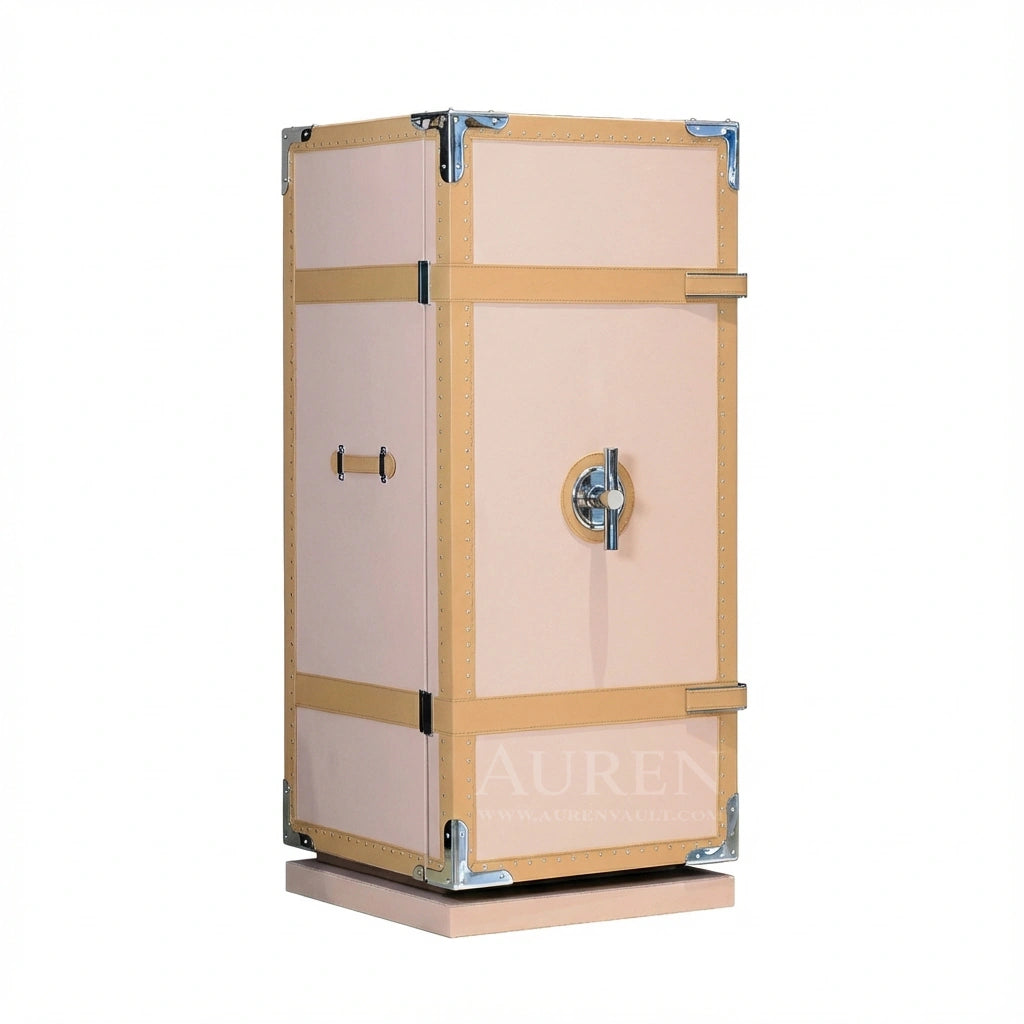
An integrated watch winder safe combines winding modules with a lockable enclosure intended for more secure storage.
The distinction becomes relevant as the monetary and sentimental value of a collection increases.
A conventional tabletop winder may provide suitable winding performance, but it generally offers limited physical resistance to unauthorized access.
A watch winder safe can reduce the need to transfer watches repeatedly between a winding device and separate secure storage.
Collectors evaluating this arrangement can explore watch winder safes with integrated winding modules.
The watch winder safe guide is also relevant when reviewing the relationship between winding functionality and protective storage.
Security Depends on the Actual Safe, Not the Winder
A watch winder safe should not automatically be assumed to provide a particular level of burglary or fire resistance.
The relevant specifications include the enclosure's construction, locking mechanism, installation options, and any independently documented protective ratings.
An advanced winding system does not establish the security performance of the enclosure.
Likewise, a sophisticated electronic lock does not replace appropriate installation.
For substantial collections, floor loading, cabinet weight, anchoring arrangements, delivery access, and electrical requirements should all be evaluated.
The preferred storage system should meet the collection's actual protection needs rather than rely on appearance or marketing terminology.
Planning a Larger Blancpain Collection
Consider an owner with two Fifty Fathoms Automatique watches, a Bathyscaphe 38 mm, two automatic Villeret references, and three manually wound dress watches.
That is an eight-watch collection.
Only five watches require automatic winding positions.
A cabinet with eight active winding modules might therefore be unnecessarily complex.
A more appropriate layout could provide five independently programmable modules alongside three passive watch compartments.
This arrangement allows the collection to be organized according to movement requirements.
The broader range of watch safes for complete collections provides a starting point for comparing storage capacities.
For substantial collections, large-format luxury watch safes may offer more space for watches, straps, travel cases, and other accessories.
The final choice should reflect both active winding capacity and total protective storage.
When Bespoke Storage Is More Appropriate
Blancpain collections can contain very different watch dimensions.
A large Fifty Fathoms may require considerable compartment depth and strap clearance, while a thin Villeret can fit into a more compact holder.
A fixed interior designed around one case size may not provide ideal support for both.
Bespoke configurations can address differences in watch-holder size, winding quantity, passive storage, and exterior finishes.
These requirements can be explored through custom watch safe design options, subject to the capabilities of the selected design.
For private residences, practical planning should also include installation access, power supply, cabinet dimensions, and everyday usability.
The goal is not to maximize the number of features.
It is to create an organized environment that accommodates the collection without unnecessary handling or mechanical compromise.
Does a Blancpain Need to Stay on a Winder Continuously?
No. Automatic Blancpain watches do not need to remain running at all times.
A correctly functioning automatic movement can receive energy through normal wrist movement and gradually stop when it is not worn.
Allowing a mechanical watch to stop during a period of non-use is generally a normal part of ownership.
The main reason to use a winder is convenience.
A Fifty Fathoms with five days of reserve may need little assistance if worn several times a week.
A Villeret Complete Calendar worn only occasionally may benefit more from continuous operation because resetting its indications takes additional attention.
For watches kept in storage over longer periods, environmental conditions and physical protection may be more important than maintaining movement.
The watch storage guide addresses broader considerations for organizing and protecting valuable timepieces.
A watch winder cannot replace movement servicing, appropriate storage materials, or careful handling.
These responsibilities remain separate.
Frequently Asked Questions About Blancpain Watch Winders
What is the best TPD setting for Blancpain watches?
There is no universal TPD recommendation for every Blancpain. Independent databases list markedly different settings for calibre 1315, including approximately 800 TPD bidirectional and 960 TPD clockwise. Verify the correct program for the exact movement and winder rather than treating either figure as an official Blancpain setting.
Does the Blancpain Fifty Fathoms need a watch winder?
No. An automatic Fifty Fathoms can operate through normal wrist movement. Calibre 1315 provides approximately 120 hours of reserve when sufficiently wound. A compatible winder is optional and mainly useful when the watch remains unworn beyond its available reserve.
What watch winder direction is best for Blancpain calibre 1315?
Independent sources disagree about the external rotation setting for calibre 1315. Some recommend clockwise rotation, while others recommend bidirectional operation. The setting should be confirmed for the exact reference and winder before use.
Can a Blancpain Bathyscaphe use a watch winder?
Yes, if it contains an automatic movement. The larger Bathyscaphe 5000A uses calibre 1315, while certain 38 mm Bathyscaphe references use calibre 1150. Their winding programs should be verified individually.
Is a watch winder useful for a Blancpain Villeret Complete Calendar?
Yes. A compatible winder can help maintain the automatic movement's power reserve, reducing the frequency of calendar and moon-phase resetting. It does not replace the manufacturer's instructions for adjusting those complications.
Do all Blancpain Villeret watches need a winder?
No. Blancpain produces both automatic and manually wound Villeret models. The automatic calibre 1151 can benefit from a winder, while the manually wound calibre 11A4B cannot.
Does a five-day Blancpain need more TPD than a three-day watch?
Not necessarily. Power reserve and winding efficiency are different characteristics. A longer reserve does not directly establish a higher external rotation requirement.
Can a watch winder damage a Blancpain?
A compatible, correctly programmed winder with proper watch support should be suitable for an automatic Blancpain. Problems may arise from inappropriate programming, poor holder fit, defective equipment, or improper handling. The device should never replace maintenance or professional inspection.
Is a watch winder safe worth considering for Blancpain?
It may be appropriate for an owner who needs both automatic winding and enclosed secure storage. The decision should consider collection size, movement compatibility, physical protection, and installation conditions.
Related Reading: Watch Winder Settings and Collection Protection
Blancpain's long-reserve automatic movements and calendar complications provide useful context for understanding the winding requirements of other luxury watches.
Best Watch Winder for Vacheron Constantin Watches
Explore movement-specific winding considerations, daily rotation settings, and secure storage for Vacheron Constantin automatic watches.
Best Watch Winder Settings for Patek Philippe Watches
Understand how automatic winding, power reserve, and mechanical complications influence winder selection for Patek Philippe timepieces.
Watch Safes With Built-In Watch Winders: Are They Worth It?
Examine the practical differences between standalone watch winders and storage systems that combine winding with enclosed protection.
Final Perspective: Choose Around the Calibre, Not the Collection Name
Blancpain's movement diversity demonstrates why a watch winder should be selected through mechanical compatibility rather than a generic brand recommendation.
A Fifty Fathoms powered by calibre 1315, a Bathyscaphe equipped with calibre 1150, and a Villeret Complete Calendar containing calibre 6654.4 all have different operating characteristics.
Their power reserves, winding systems, physical dimensions, and everyday uses must be considered independently.
For a single automatic Blancpain, the most important requirements are reliable programming, appropriate rotation direction, secure watch support, and quiet operation.
For larger collections, independent winding modules and properly organized protective storage become increasingly valuable.
As a specialist in premium watch safes and integrated winding solutions, Auren Vault approaches these requirements through configurations intended to balance automatic winding with collection organization and enclosed protection.
The best watch winder for Blancpain is ultimately the one that maintains the specific movement reliably, respects the watch's construction, and makes ownership more convenient without adding unnecessary complexity.