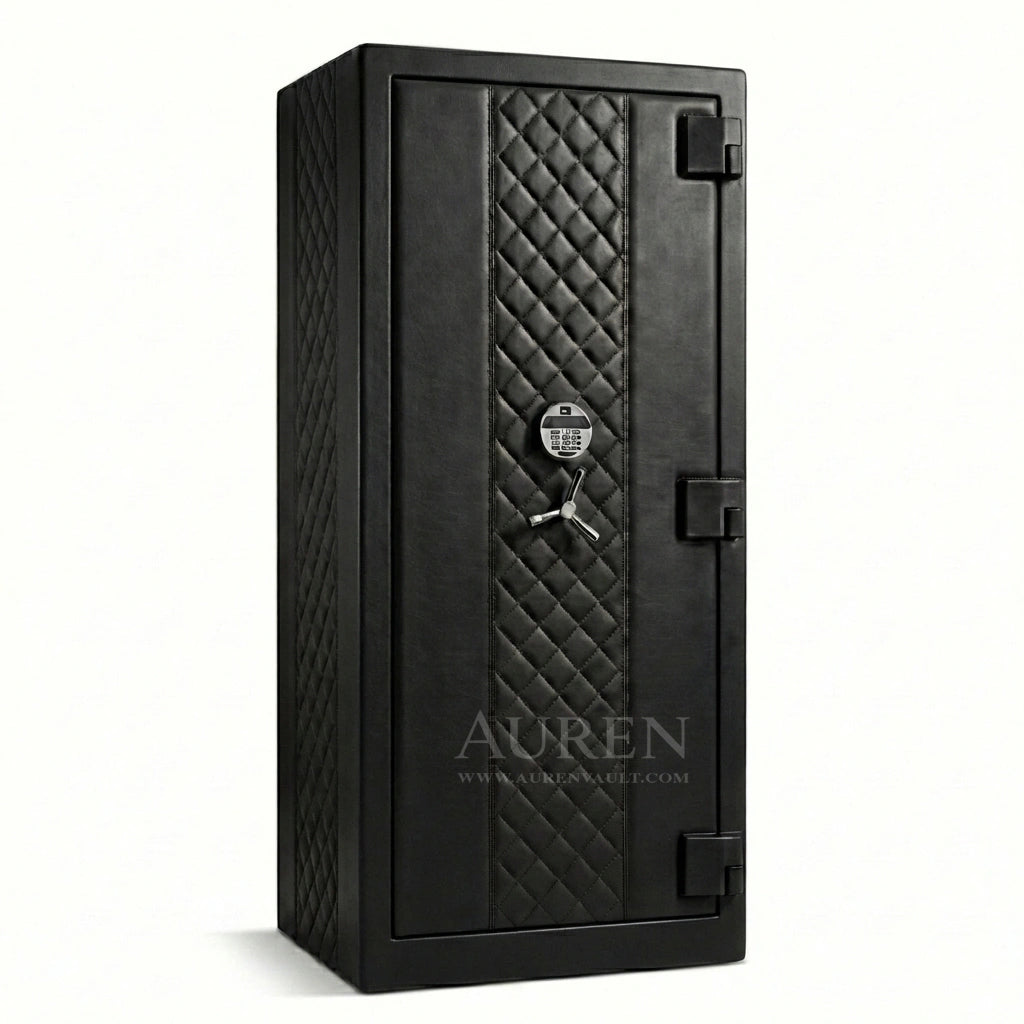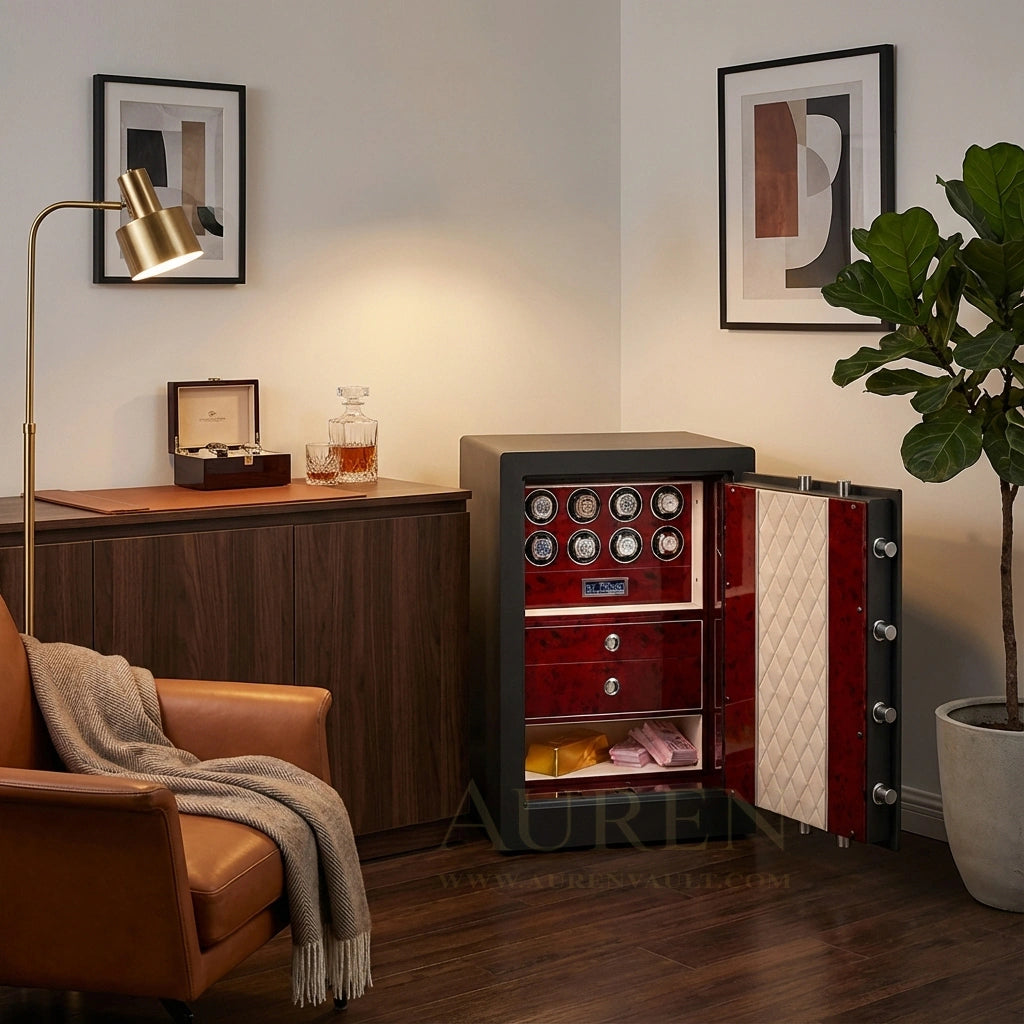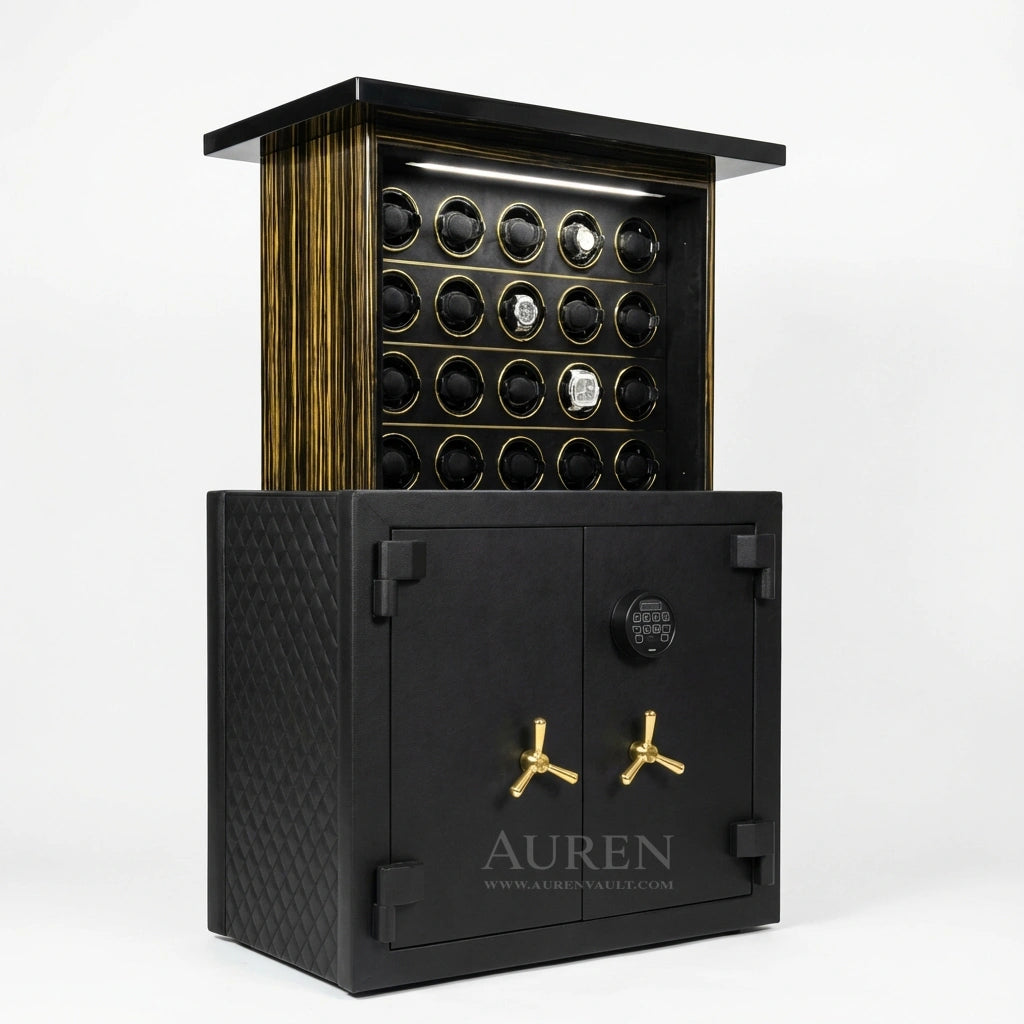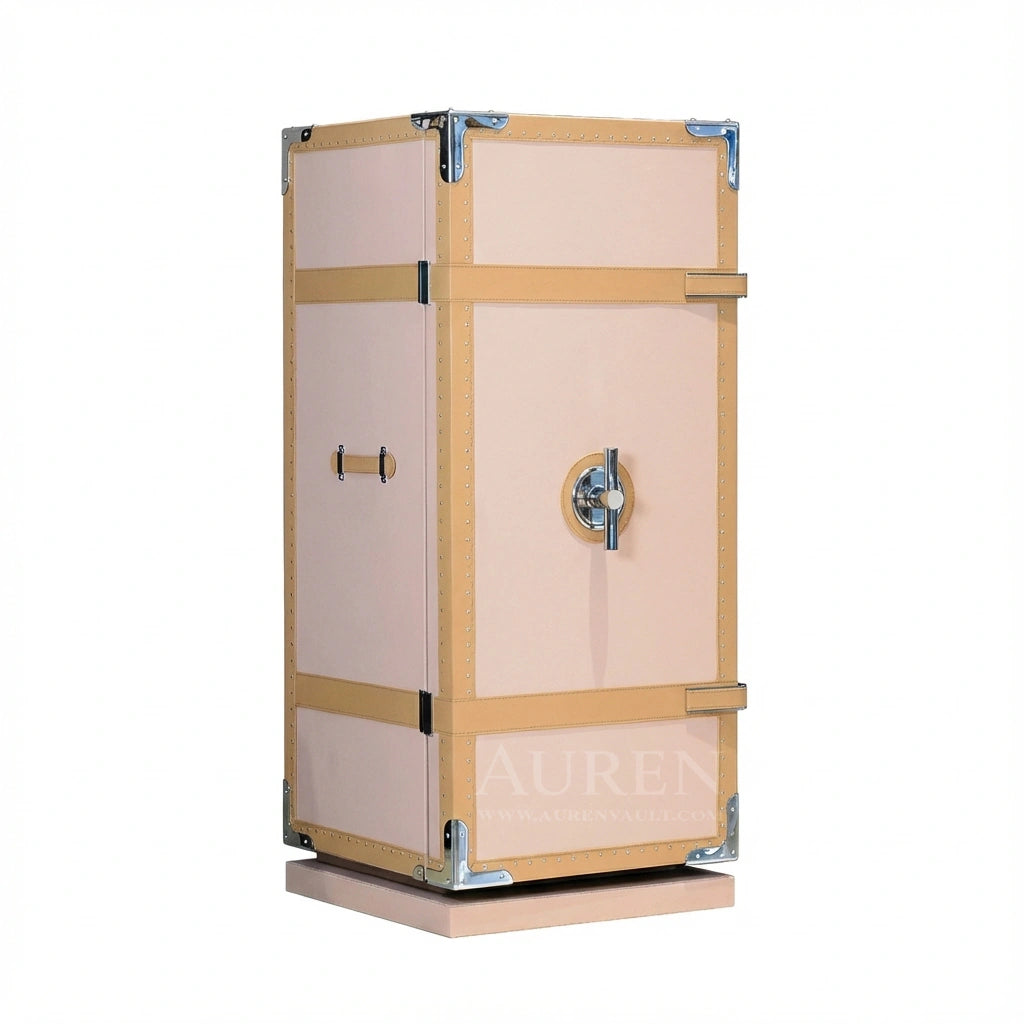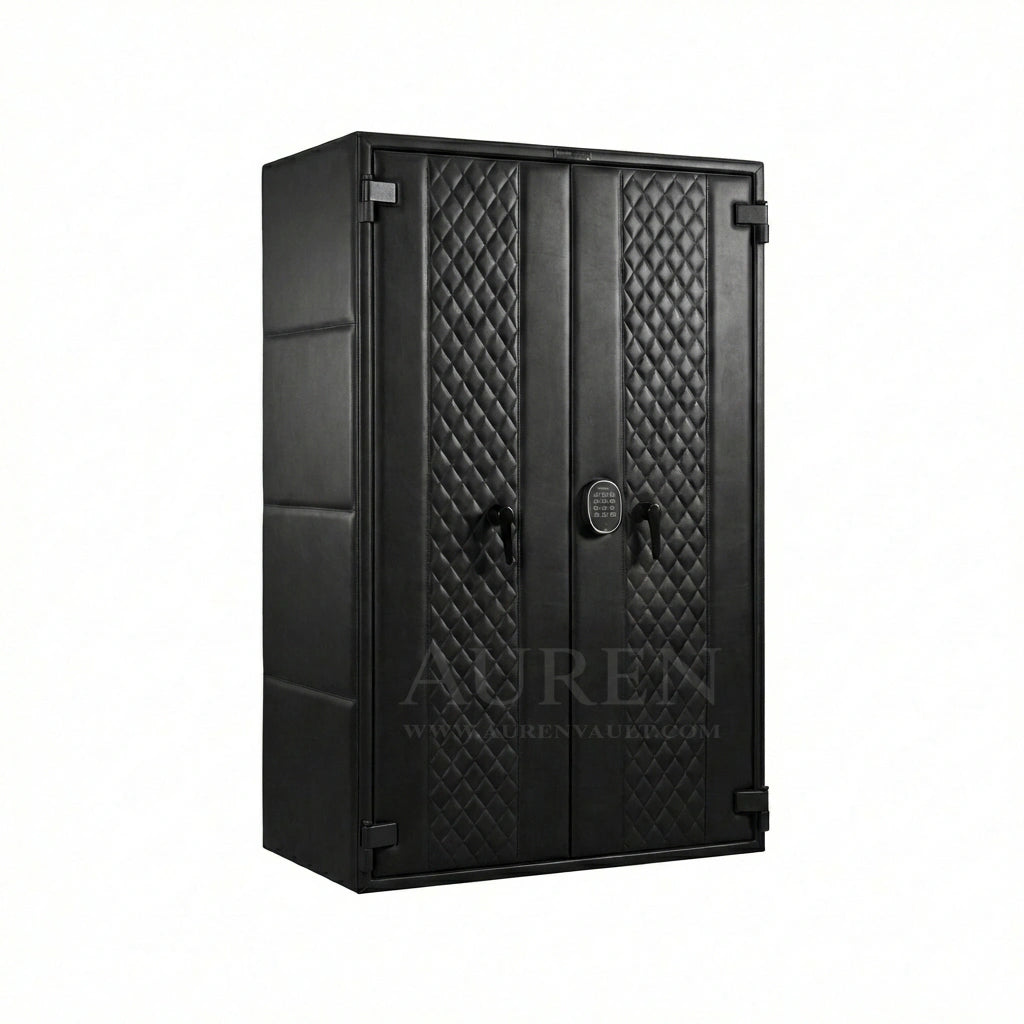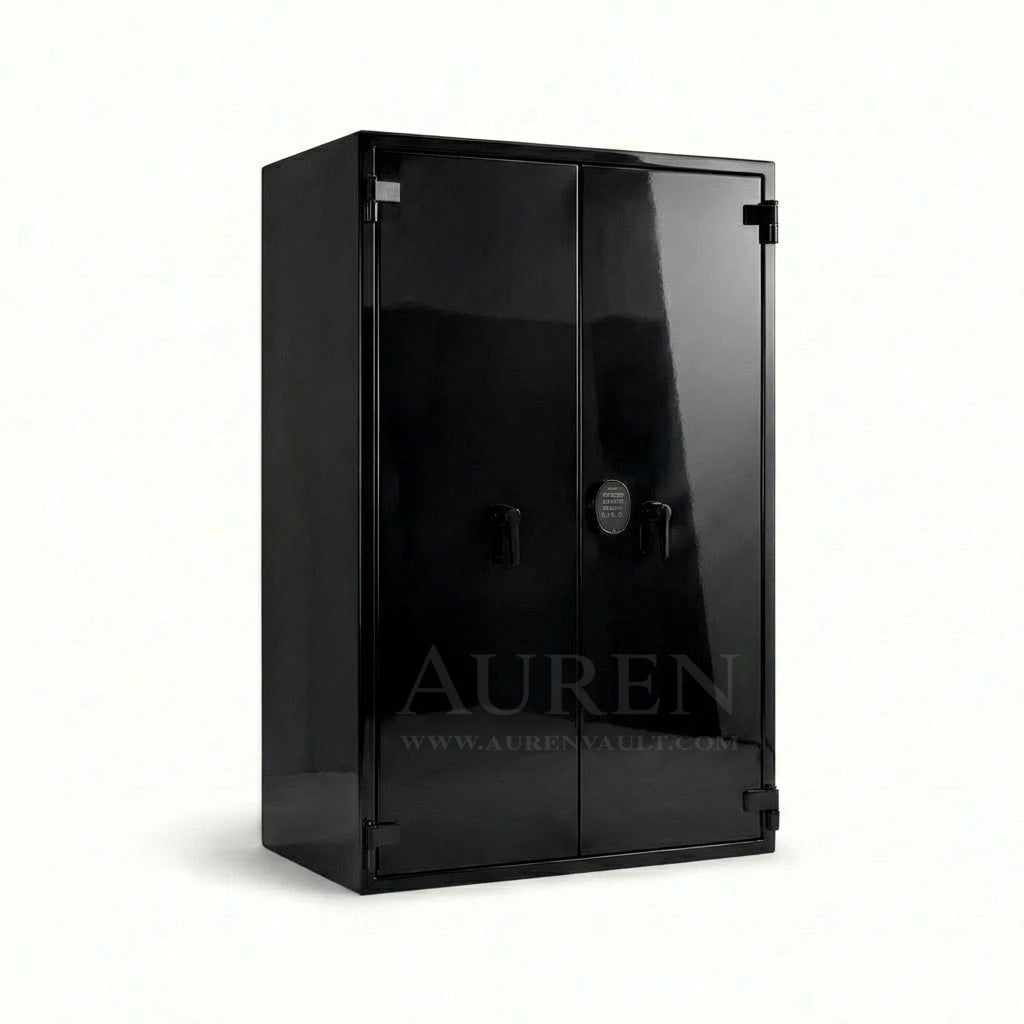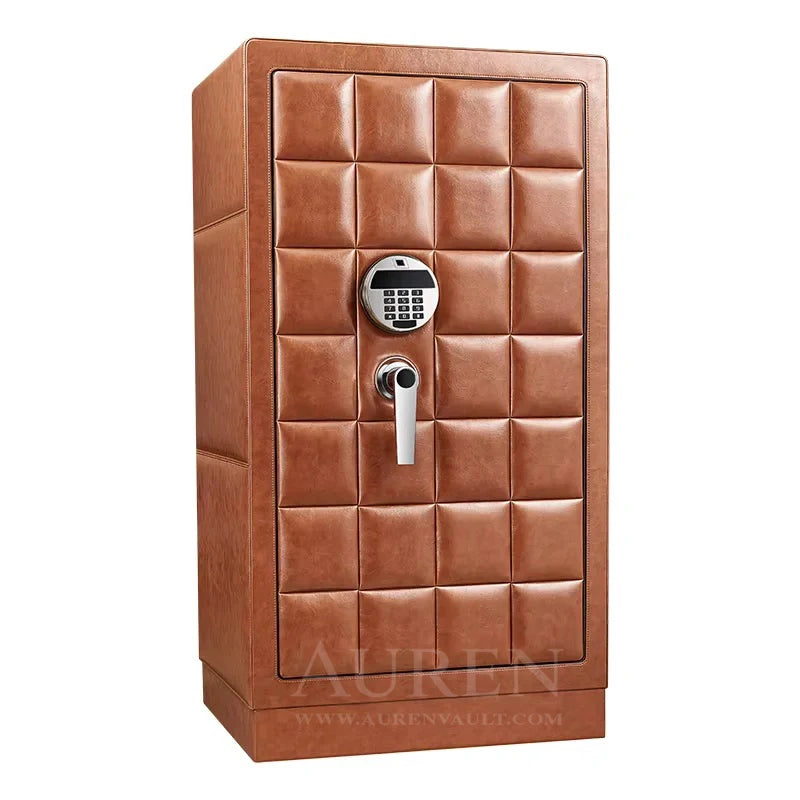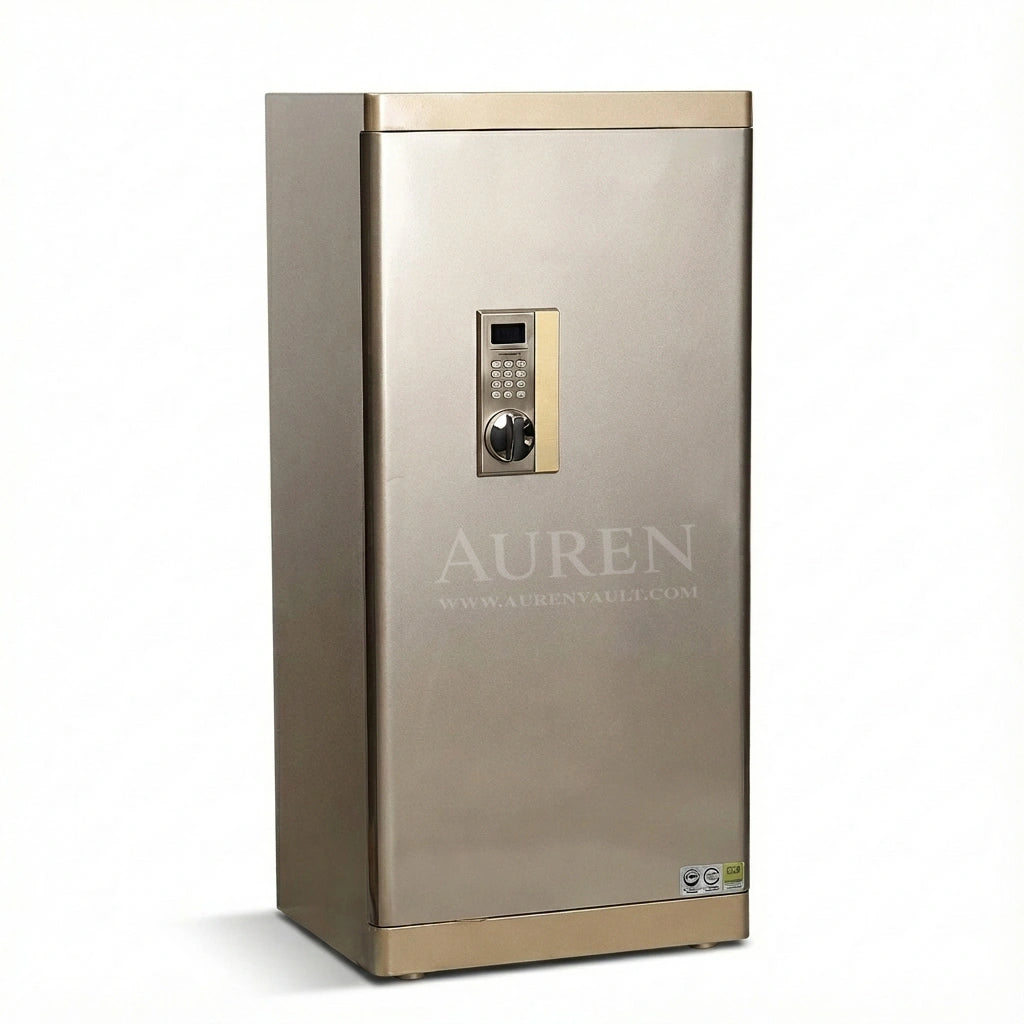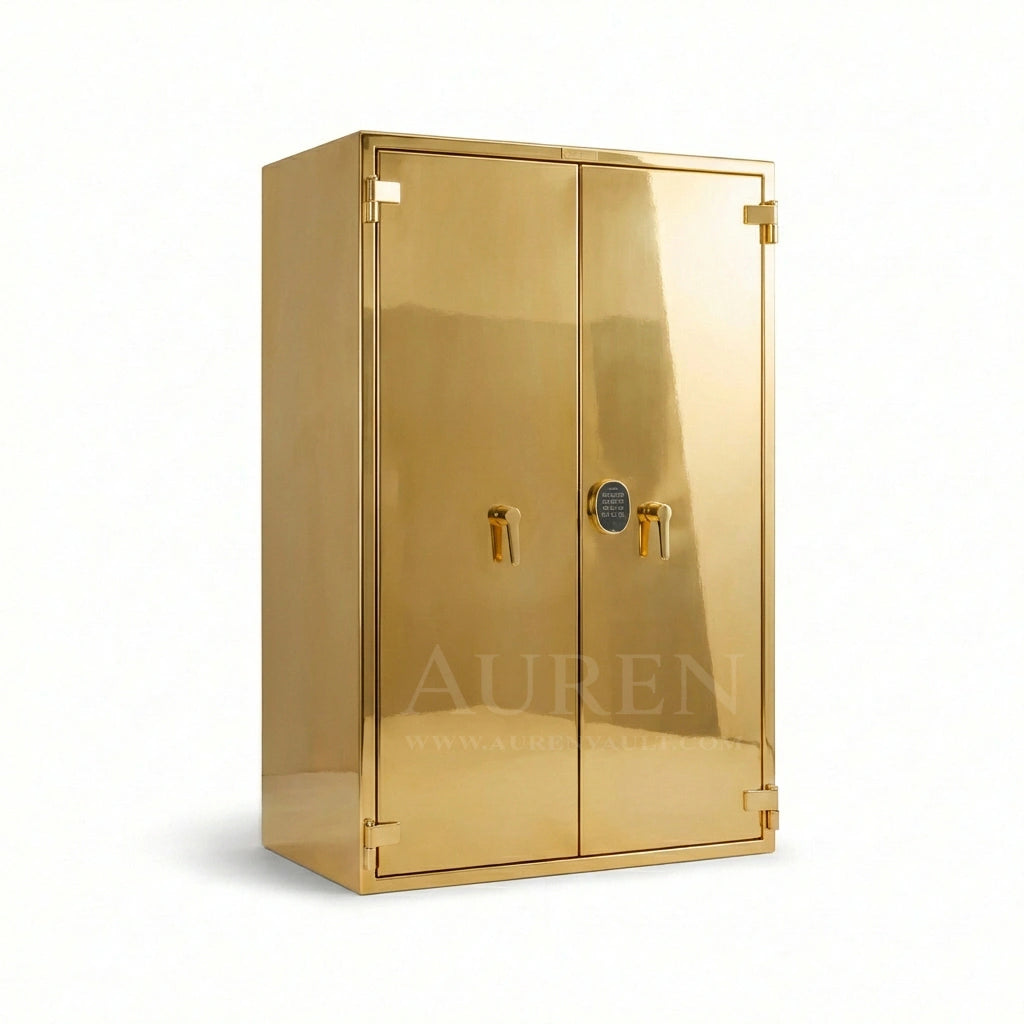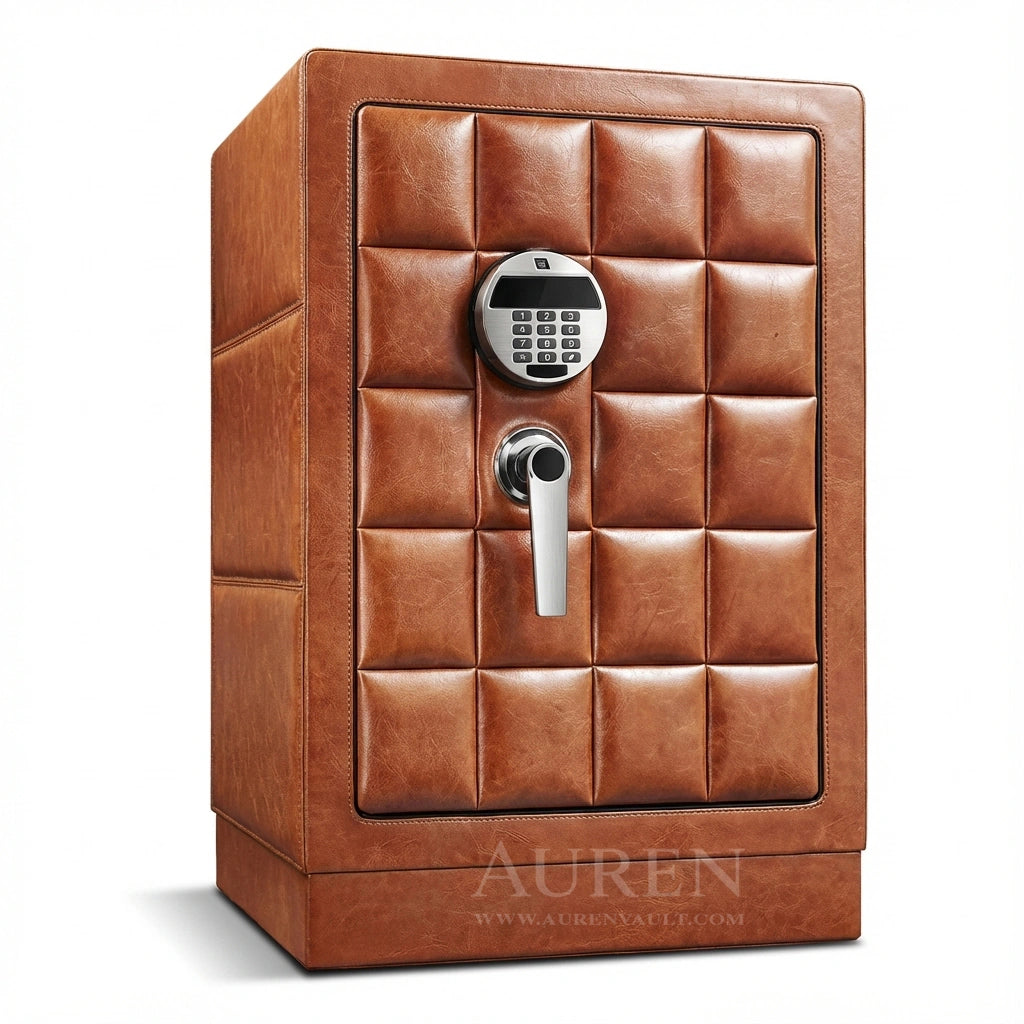

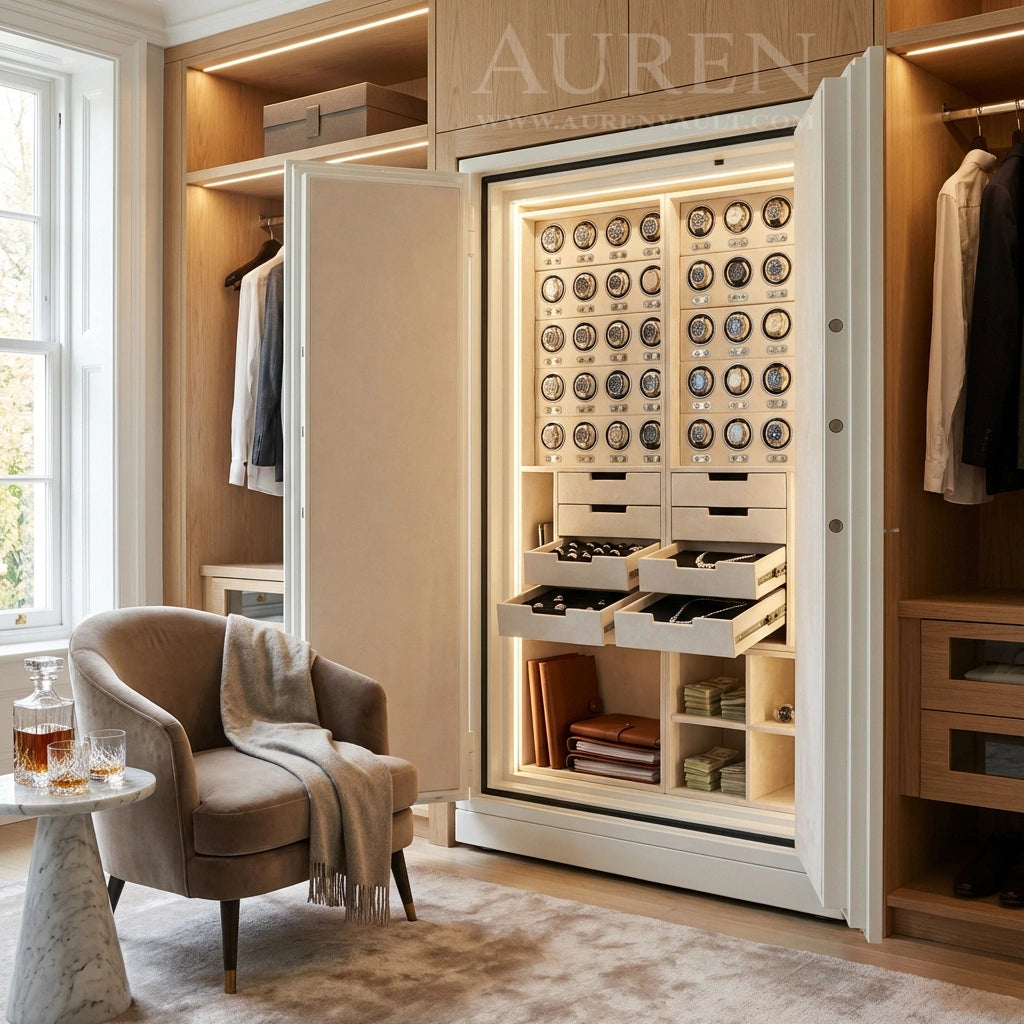

A watch safe and a traditional home safe both provide secure storage for valuables, but they are designed for different purposes. A watch safe is specifically engineered to store luxury watches safely, while a traditional home safe is built for general valuables such as documents, jewelry, and cash.
The key difference lies in interior design and storage optimization. Watch safes typically include specialized watch cushions, organized compartments, and optional watch winders that protect delicate timepieces from scratches or pressure damage.
Traditional home safes focus primarily on security and fire protection, but they often lack the storage systems needed to safely organize multiple watches.
For collectors storing valuable mechanical watches, dedicated watch safes generally provide better long-term protection and organization.
Key differences include:
- watch-specific interior storage systems
- optional integrated watch winders
- dedicated compartments for watch collections
- general-purpose storage design in traditional safes
Understanding these differences helps collectors choose the most appropriate storage solution for protecting their watches.
Understanding the Role of Traditional Home Safes
Traditional home safes are designed to protect a wide range of valuables. These safes are commonly used to store items such as:
- passports and legal documents
- jewelry and precious metals
- cash and small valuables
- firearms or personal records
Because they are built for general use, most traditional safes feature simple interior layouts. Shelves or flat compartments allow users to store different types of valuables together.
From a security perspective, many home safes offer solid protection against burglary attempts and fire exposure. However, they are rarely optimized for storing delicate mechanical watches.
Luxury watches require more specialized storage conditions than most valuables.
What Makes a Watch Safe Different
A watch safe is specifically engineered to protect luxury watch collections while preserving the condition of individual timepieces.
Unlike general safes, watch safes incorporate storage systems designed for watches.
These features typically include:
- watch cushions designed to support bracelets and straps
- soft interior materials that prevent scratches
- dedicated compartments separating individual watches
For collectors storing multiple watches, this type of organization significantly reduces the risk of accidental damage.
Certain watch safes also integrate winding systems that maintain automatic watch movements while the watches are not being worn. These systems are often found in integrated winding safe configurations, which combine secure storage with automatic watch winding.
Manufacturers such as Auren develop watch safes that combine reinforced security construction with storage layouts designed specifically for mechanical watch collections.
Why Standard Safes Can Be Risky for Watch Storage
Although a traditional safe may appear secure enough for watches, several limitations can create risks for collectors.
First, most home safes lack dedicated watch storage compartments. Watches stored loosely inside a safe may shift or come into contact with other objects.
This can result in:
- scratches on polished watch cases
- bracelet deformation
- damage to delicate finishing
Second, standard safes are rarely designed to accommodate watch winders or structured watch organization.
Collectors with multiple watches often find that traditional safes quickly become cluttered and inefficient for watch storage.
Because of these limitations, many collectors eventually transition from general-purpose safes to dedicated watch storage systems such as high-security watch safes.
Security Comparison: Watch Safe vs Traditional Safe
While both safes provide security protection, their design priorities differ.
| Feature | Watch Safe | Traditional Home Safe |
|---|---|---|
| Primary purpose | Watch collection storage | General valuables |
| Interior design | Watch-specific compartments | Flat shelves |
| Watch protection | High | Low |
| Organization for multiple watches | Excellent | Limited |
| Integrated watch winders | Possible | Rare |
Traditional safes often provide strong security protection, but watch safes combine security with storage systems tailored to watch collections.
For collectors, this balance between security and preservation becomes particularly important as collections increase in value.
When a Traditional Safe Might Still Work
Although watch safes offer advantages, traditional home safes may still be sufficient in certain situations.
For example, collectors with only one or two watches may temporarily store them in a standard safe if protective watch rolls or cases are used.
Similarly, a traditional safe may work for collectors who primarily store documents and only occasionally store watches.
However, once a watch collection grows to include several valuable pieces, the limitations of general safes often become apparent.
Collectors seeking long-term protection often consider dedicated storage solutions designed specifically for watch collections.
Custom Watch Safes for Larger Collections
As collections grow, some collectors require more advanced storage solutions than standard safes can provide.
Custom watch safes allow collectors to tailor storage layouts according to their collection size and storage preferences.
Customization may include:
- expanded watch storage capacity
- integrated watch winders
- custom interior layouts
- climate control or humidity management systems
Collectors with specialized requirements sometimes explore custom watch safes designed around their specific storage needs.
Conclusion
Both watch safes and traditional home safes provide security protection, but they serve different purposes.
Traditional safes are designed to protect a wide range of valuables, while watch safes are engineered specifically for storing luxury watch collections.
For collectors who own multiple watches or high-value timepieces, watch safes offer important advantages. Their specialized interiors help prevent scratches and damage, while organized compartments allow watches to be stored safely and efficiently.
As watch collections grow in value and complexity, many collectors find that dedicated watch safes provide the most practical and reliable storage solution.