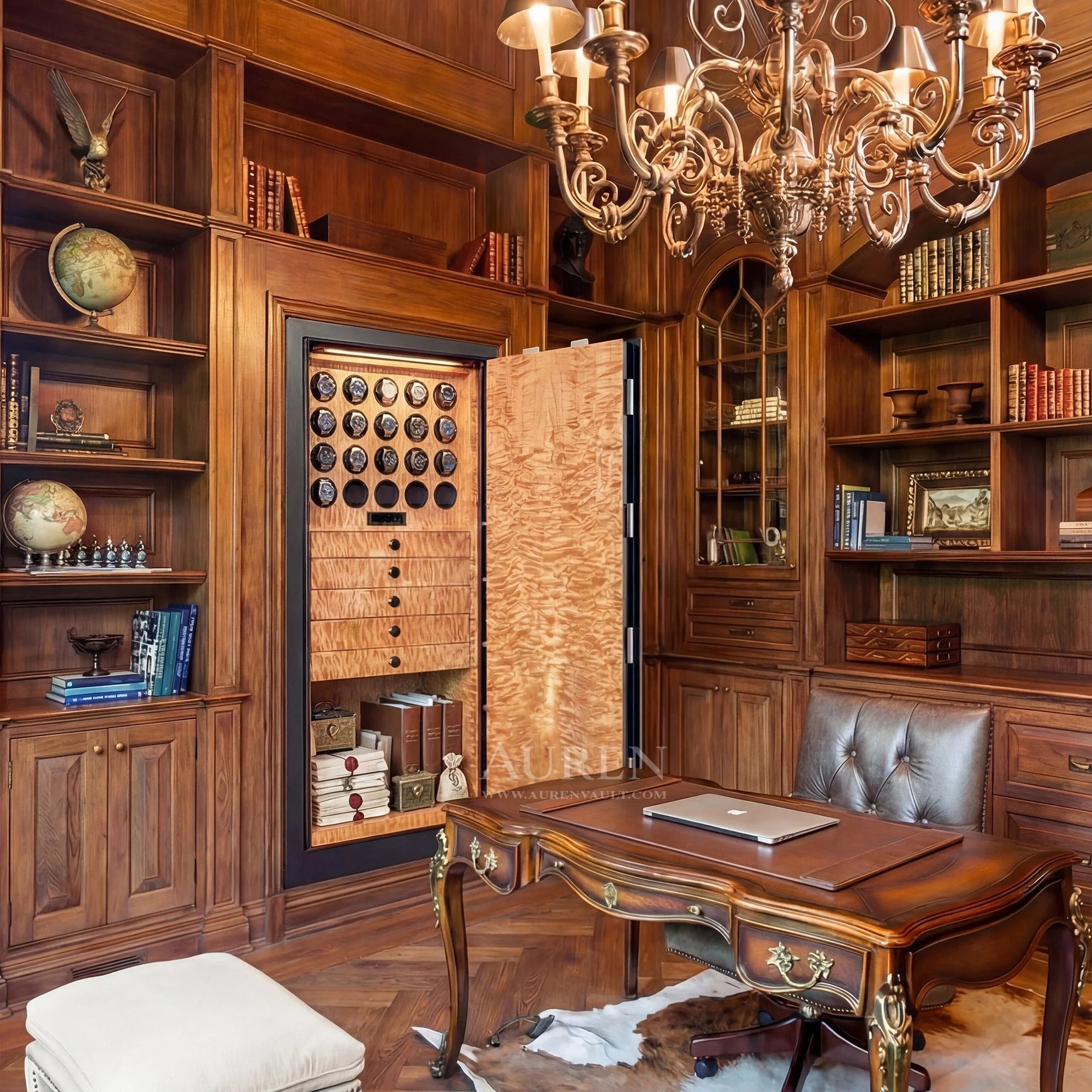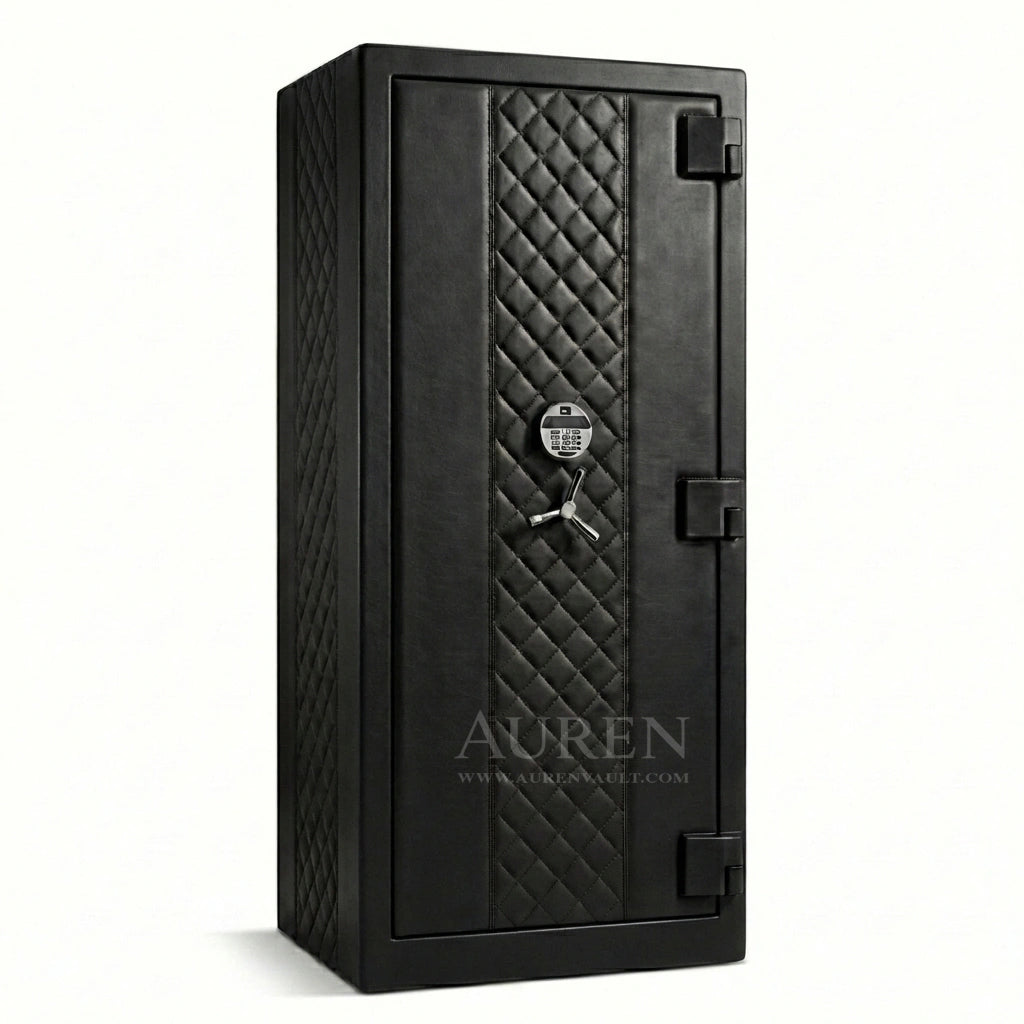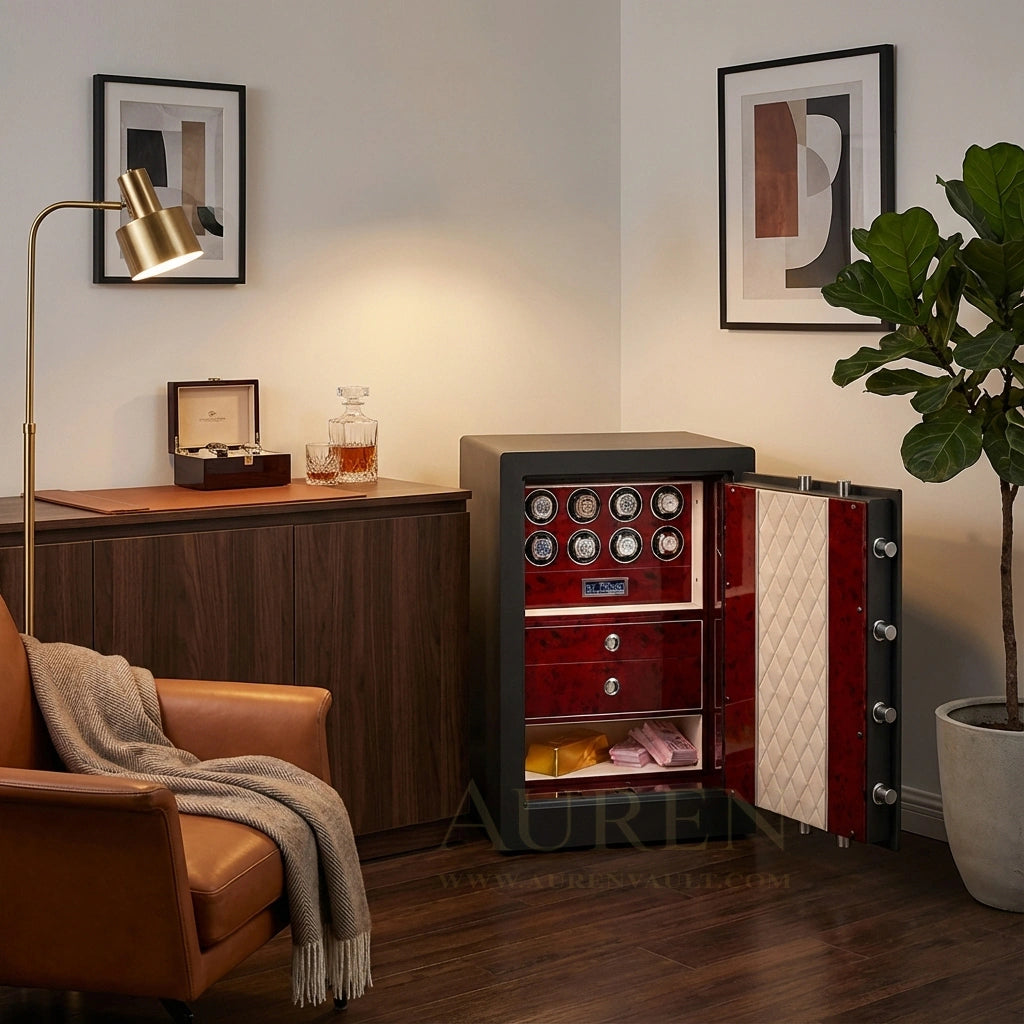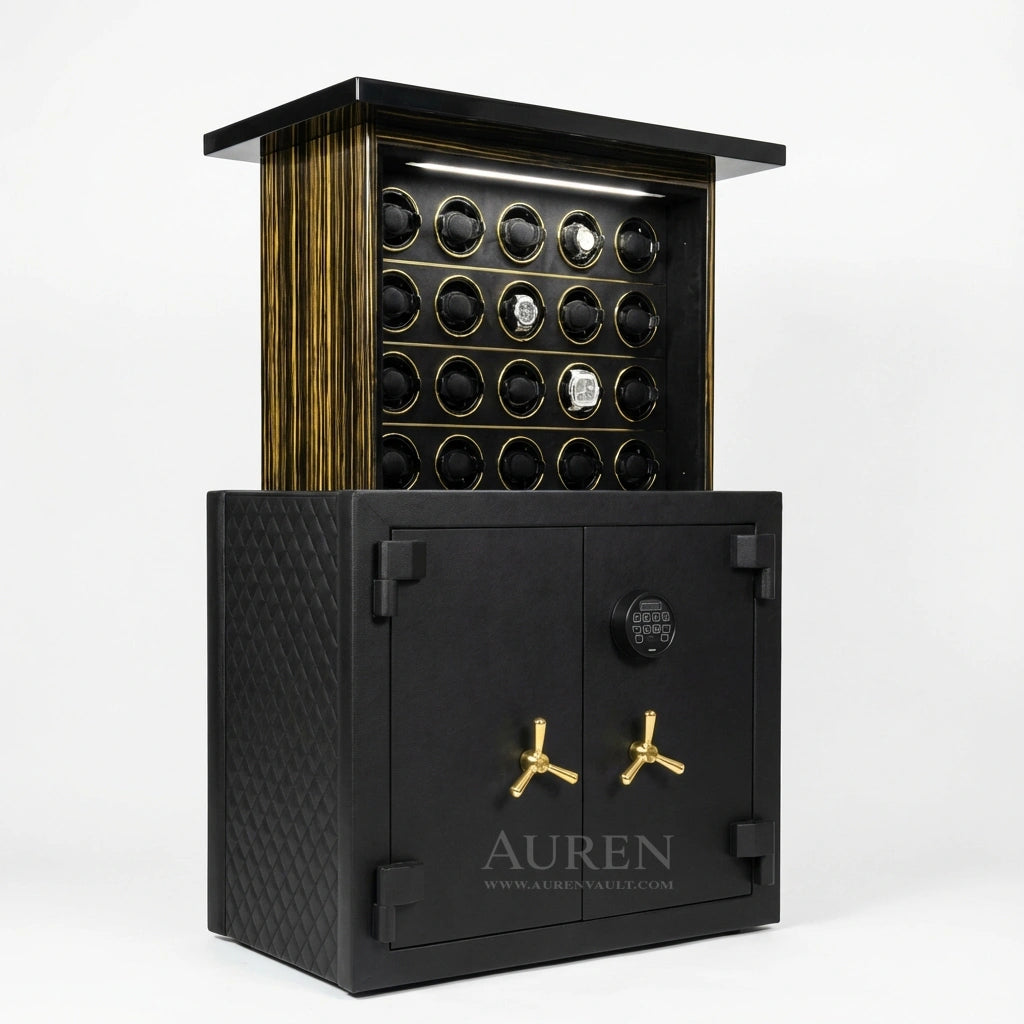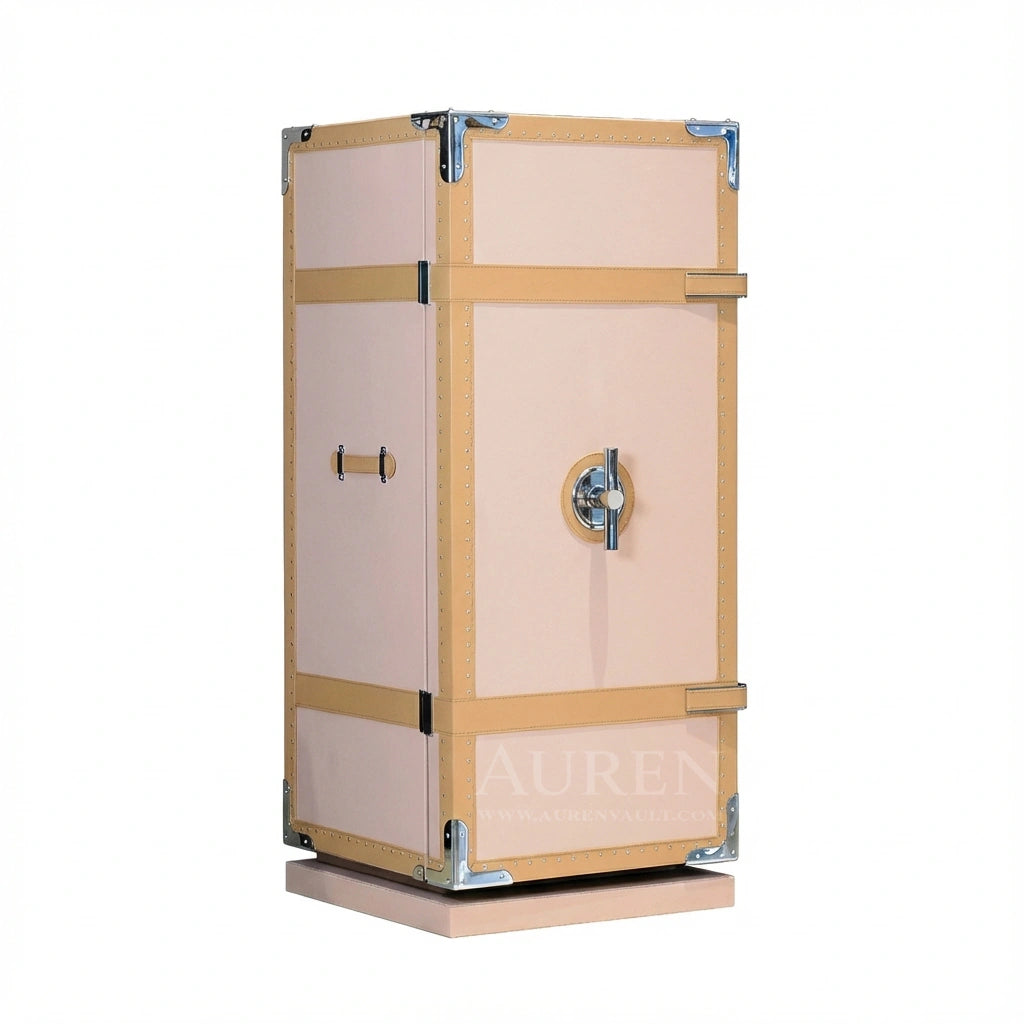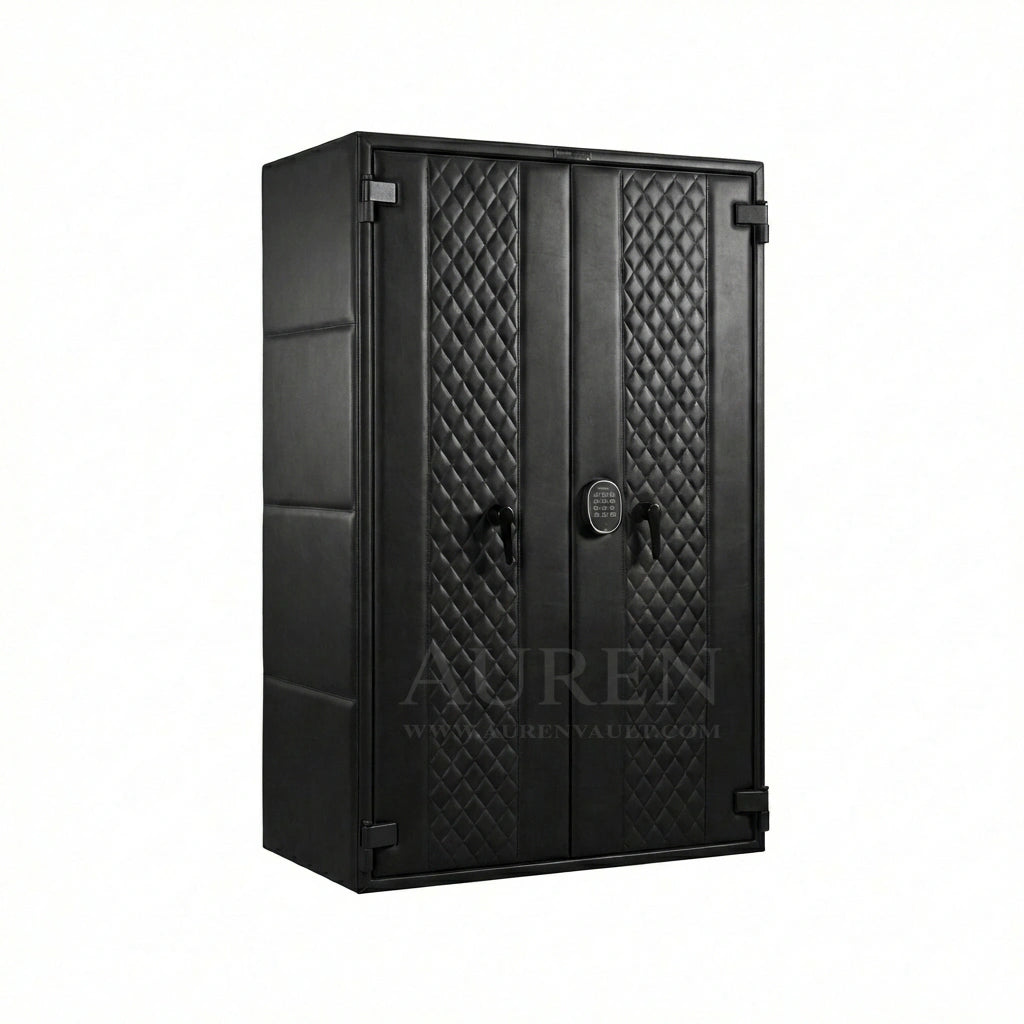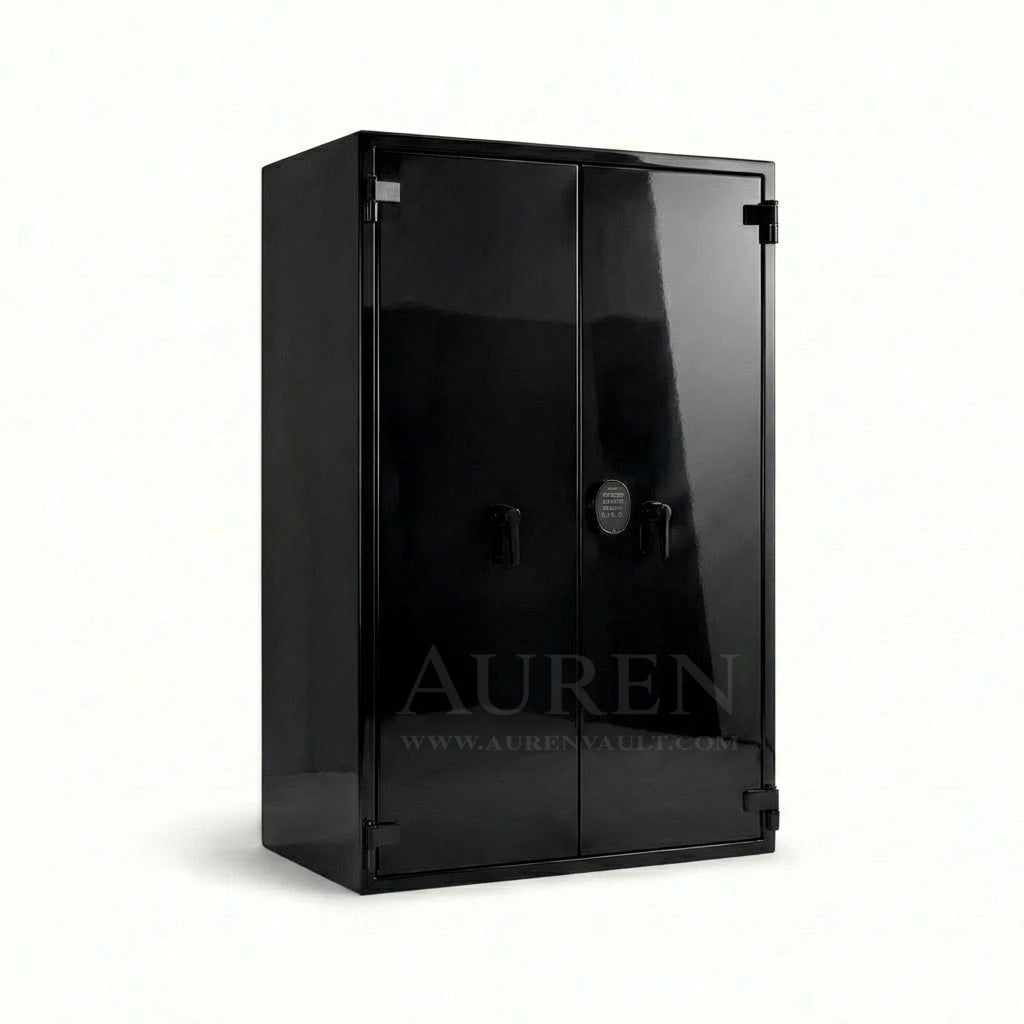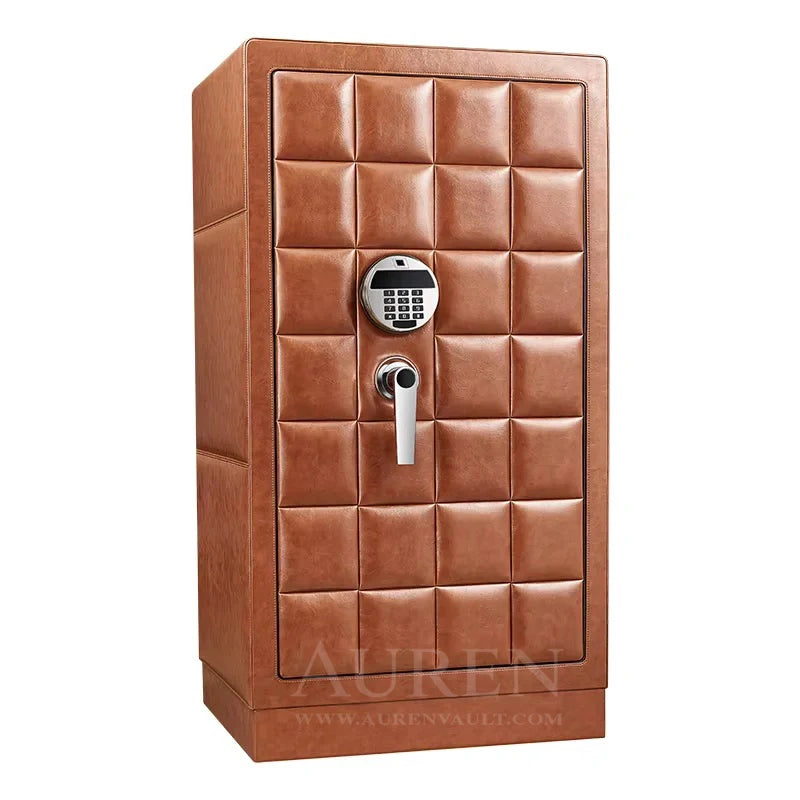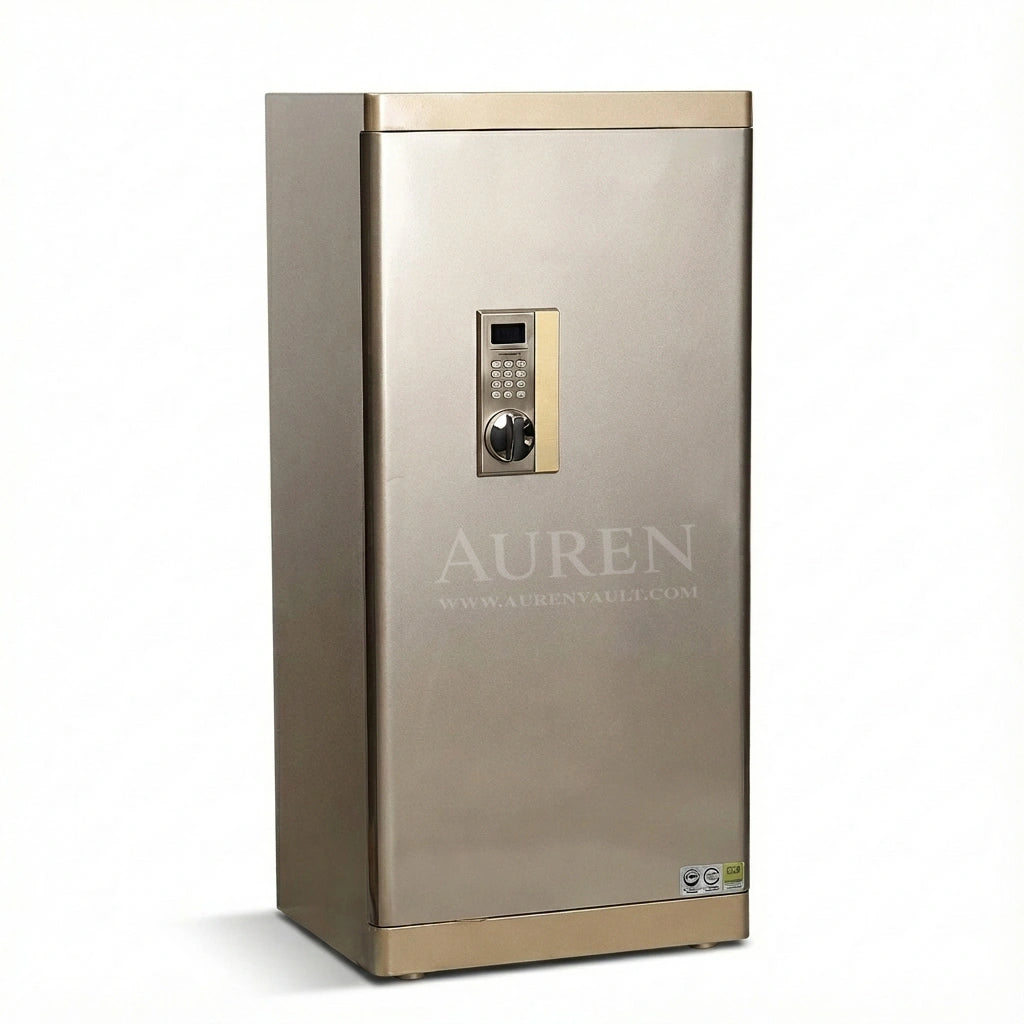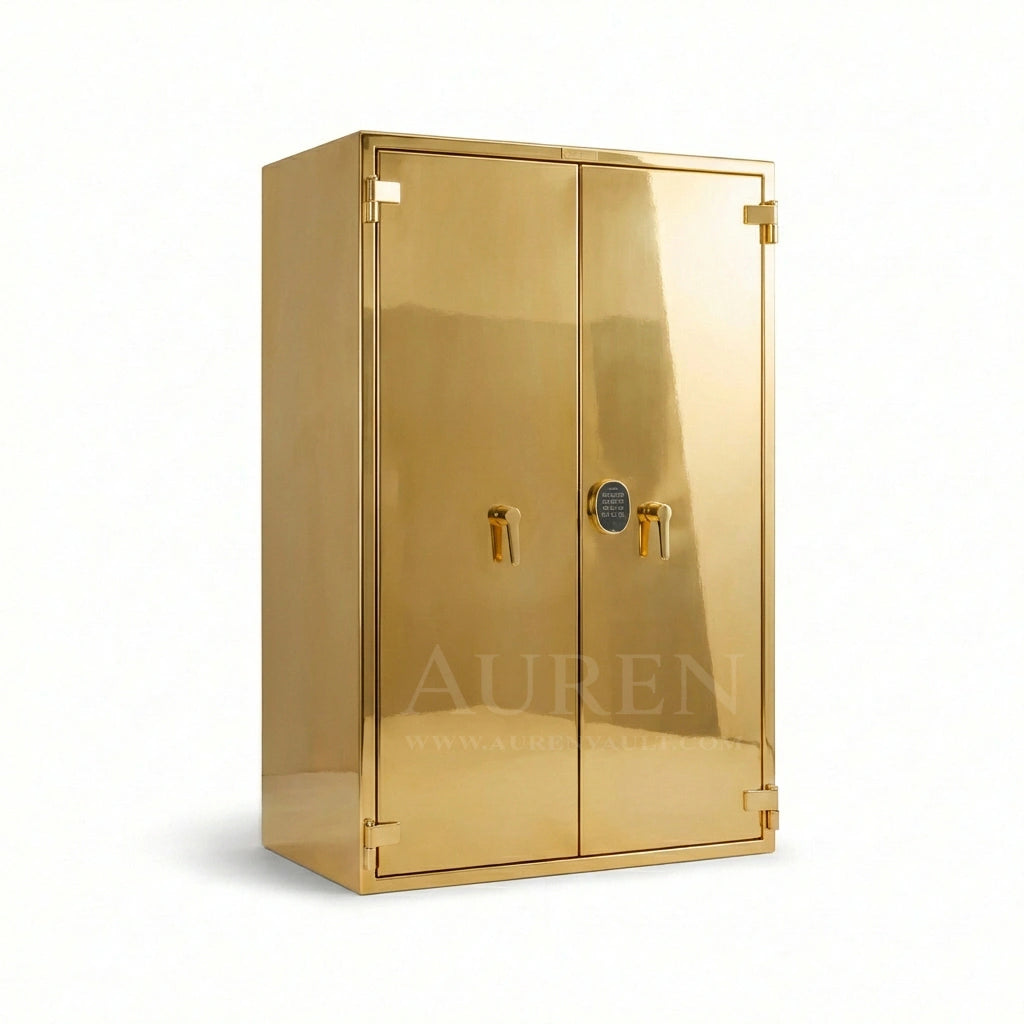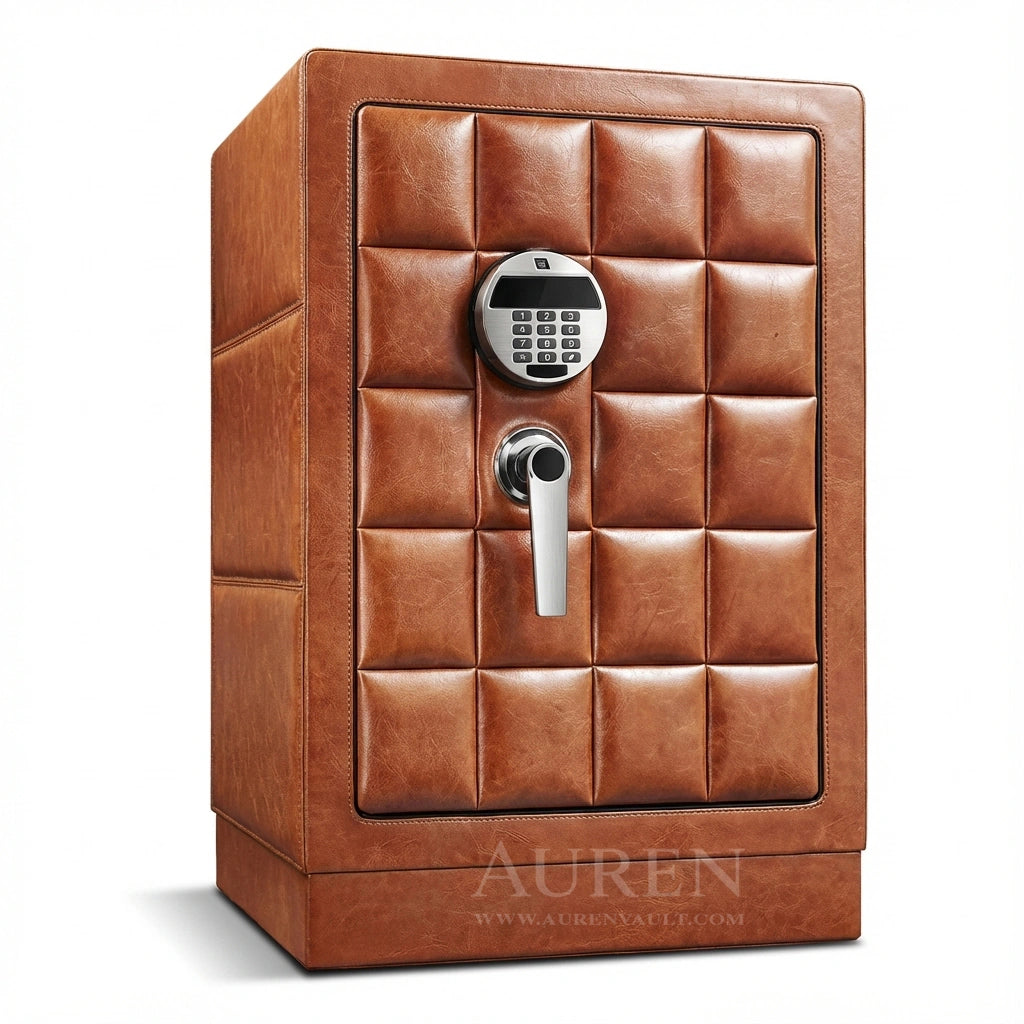
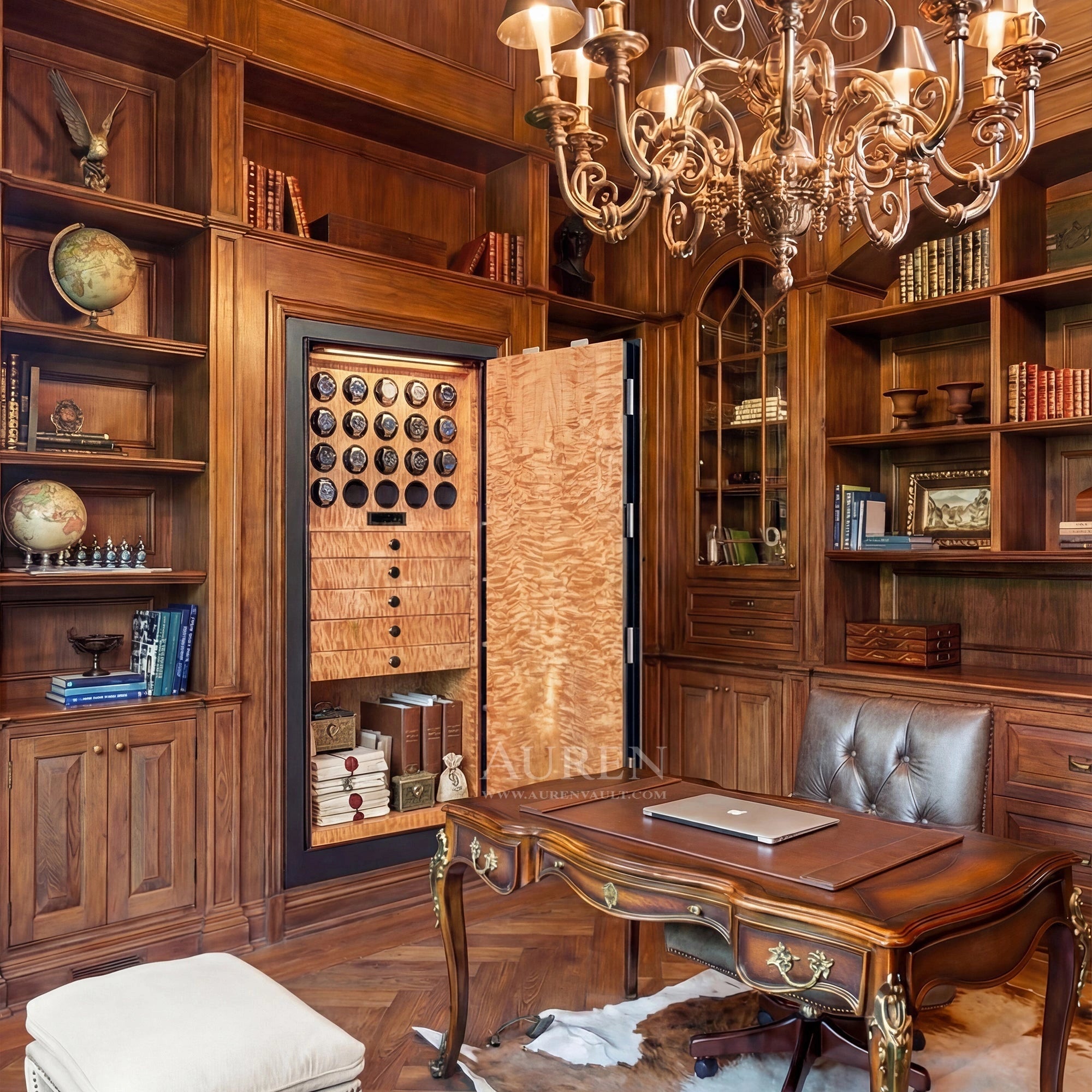
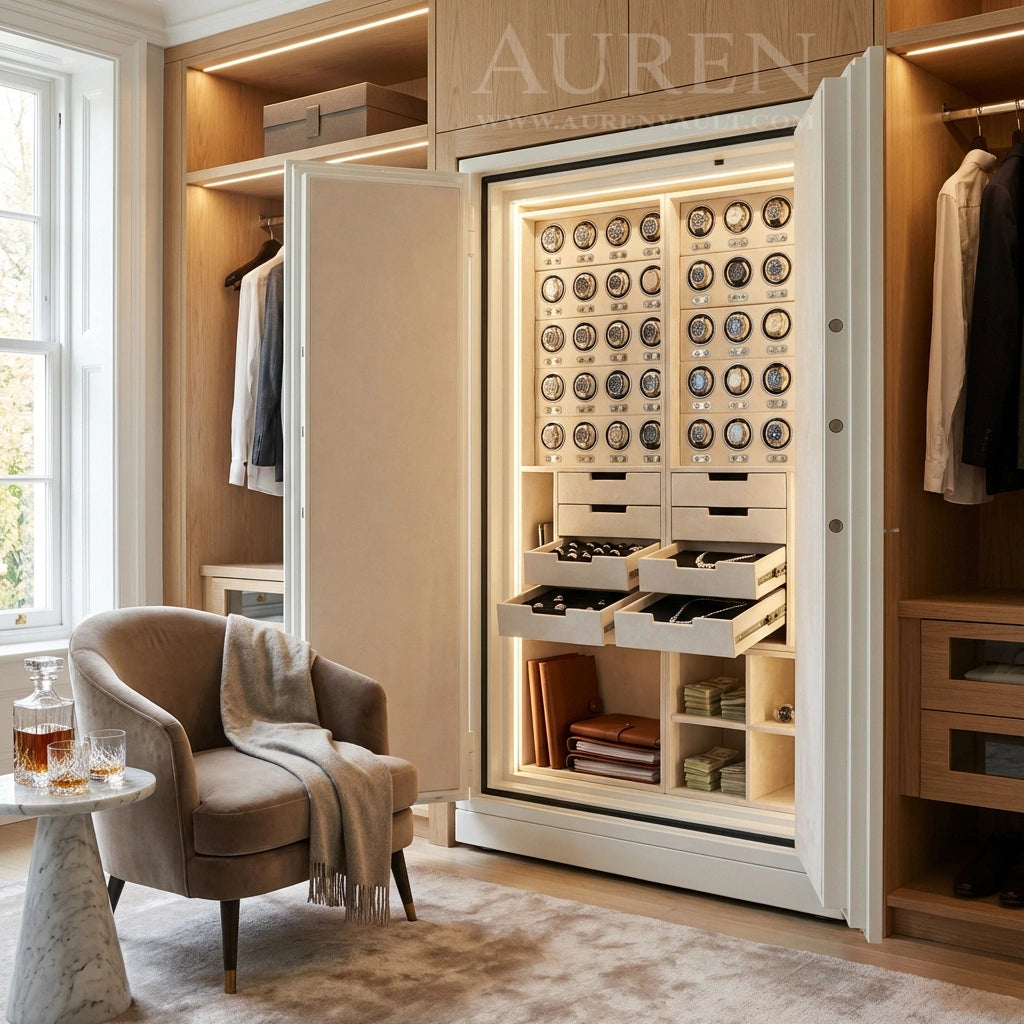

Where a watch safe is installed inside a home can significantly influence how effectively it protects valuable watch collections. Even the most secure safe benefits from thoughtful placement that improves both security and discretion.
Watch safe placement refers to the strategic location of a safe within a home to reduce theft risk, improve concealment, and enhance structural stability.
Collectors in the United States commonly install watch safes in private interior areas of their homes such as:
-
walk-in closets or dressing rooms
-
private offices or study rooms
-
interior storage rooms
These locations help keep safes out of immediate view while also providing structural support and stable environmental conditions.
For collectors storing valuable watches at home, proper safe placement works together with reinforced safe construction to provide stronger protection against theft.
Why Safe Placement Matters for Security
A safe is designed to resist forced entry, but its effectiveness can be influenced by where it is installed.
Professional burglars typically target valuables that are easy to locate and easy to remove. Because luxury watches are small and valuable, watch collections can be attractive targets during residential burglaries.
Placing a watch safe in a visible or accessible location—such as a living room or hallway—may increase the risk that intruders will quickly locate it.
Collectors researching secure storage often begin by understanding why luxury watches are targeted by thieves and how secure storage reduces theft risk.
Common Locations for Watch Safes in U.S. Homes
Walk-In Closets
Walk-in closets are among the most common locations for watch safes in American homes.
Closets provide several advantages:
- natural privacy and discretion
- proximity to dressing areas where watches are worn
- interior walls that may offer structural support
Because closets are typically not the first location burglars search, they can help reduce the likelihood of the safe being discovered quickly.
Private Offices
Some collectors install watch safes in home offices or private study rooms.
These spaces allow safes to remain accessible while also maintaining a level of privacy.
Offices may also provide convenient locations for collectors who manage watch collections alongside other valuables or documents.
Interior Storage Rooms
Interior storage rooms can provide a discreet location for larger safes.
Because these rooms are often located away from high-traffic areas of the home, they can help keep safes out of immediate view.
Collectors sometimes combine safe placement with additional security measures such as concealed cabinetry or built-in storage systems.
Structural Considerations for Safe Placement
The weight and construction of a safe can influence where it should be installed.
Many luxury watch safes weigh 150–650 kg, which provides significant resistance against removal attempts.
However, this weight also means that the safe must be placed on a floor capable of supporting it.
In multi-story homes, collectors often place safes:
- on ground floors
- near load-bearing walls
- on reinforced flooring
These structural considerations help ensure long-term safe stability.
Collectors researching safe options often begin by understanding what a watch safe is and how safe construction contributes to security.
Concealment and Discretion
Discretion is an important factor when choosing where to place a watch safe.
Safes that are hidden from casual view are less likely to attract attention from visitors or intruders.
Some collectors incorporate safes into:
- built-in cabinetry
- closet storage systems
- hidden compartments
While concealment does not replace safe construction, it can add an additional layer of security.
Fire Protection Considerations
In addition to burglary protection, some collectors also consider fire protection when choosing safe placement.
Safes installed near exterior walls or garages may be more exposed to temperature fluctuations during fires.
Some safes incorporate fire-resistant insulation tested under standards such as:
- EN 15659 – LFS 30 P
- EN 15659 – LFS 60 P
These certifications evaluate whether a safe can maintain controlled internal temperatures during fire exposure.
Collectors researching fire protection often explore watch safes designed for storing valuable watch collections.
Security Certifications and Safe Design
Placement works together with safe design to improve overall security.
Luxury watch safes often include features such as:
- reinforced steel bodies
- multi-point locking bolt systems
- secure locking mechanisms
Some safes are tested under European burglary resistance standards such as Grade G1 or Grade G3, which evaluate resistance to forced entry using specialized tools.
Combining certified safe construction with thoughtful placement helps create stronger protection for watch collections stored at home.
Real-World Storage Practices Among Collectors
In many American homes, collectors prefer installing watch safes in private dressing areas or walk-in closets.
These locations allow watches to remain accessible while still maintaining discretion.
Floor-standing safes with substantial weight often remain stable once installed and do not require relocation.
Certain manufacturers, including Auren, design watch safes specifically for collectors who want to combine strong security protection with elegant storage solutions for luxury watch collections.
Conclusion
Choosing the right location for a watch safe is an important part of protecting valuable watch collections.
Collectors in the United States often place safes in interior areas of the home such as closets, dressing rooms, or private offices where safes remain discreet and structurally supported.
When combined with reinforced safe construction and security certifications such as European Grade G1 or G3, thoughtful safe placement can significantly improve the protection of luxury watch collections stored at home.