
The best watch winder for Breitling watches is a programmable unit with adjustable turns per day (TPD), clockwise and counterclockwise rotation, reliable rest cycles, and a secure holder suited to substantial cases and bracelets.
For many Breitling automatic watches, independent winding references commonly suggest approximately 650–800 TPD. However, the correct setting depends on the movement. The manufacture Breitling 01 chronograph is frequently associated with approximately 800 TPD bidirectional, while the older Breitling 13, derived from the Valjoux 7750 family, is commonly associated with approximately 800 TPD clockwise.
Modern Breitling watches introduce further differences. The Top Time B31 uses a manufacture automatic movement with approximately 78 hours of reserve, while the Navitimer B19 Perpetual Calendar provides approximately 96 hours. Their exact external winding programs should be verified separately.
Manually wound models and SuperQuartz watches do not benefit from conventional winding.
The ideal choice matches the calibre, supports the watch safely, and reflects how often it is worn.
One Brand, Several Different Winding Systems
Breitling is best known for precision chronographs, aviation instruments, and robust professional-style watches.
The Navitimer, Chronomat, Superocean, Avenger, and Top Time collections are central to its identity.
However, the watches within those collections do not all contain the same movement.
A Navitimer B01 Chronograph and an older Navitimer powered by Breitling 13 have different automatic architectures.
A Superocean Automatic with Breitling 17 is mechanically simpler than an automatic perpetual-calendar chronograph.
A Top Time B31 uses a newer time-and-date manufacture calibre, while a Top Time B09 contains a manually wound movement.
The differences matter when choosing a watch winder.
A conventional automatic watch winder rotates the watch, creating movement in its internal oscillating rotor.
The automatic mechanism converts some of that motion into stored mainspring energy.
The objective is to maintain the watch's operating reserve between wears.
A winder does not increase its designed reserve, improve the movement's inherent accuracy, or replace mechanical servicing.
For an owner who wears one Breitling almost every day, external winding may be unnecessary.
For a collector who alternates between several chronographs and diving watches, keeping them ready can be more convenient.
The decision should begin with the exact calibre rather than the collection name.
Which Breitling Watches Can Use a Watch Winder?
Breitling uses manufacture movements and Swiss automatic calibres based on different platforms.
The following table compares representative models.
| Breitling watch | Calibre | Winding type | Power reserve | Winder suitable? |
|---|---|---|---|---|
| Navitimer B01 Chronograph | Breitling 01 | Automatic chronograph | 70 hours | Yes |
| Chronomat B01 | Breitling 01 | Automatic chronograph | 70 hours | Yes |
| Top Time B31 | Breitling B31 | Automatic | 78 hours | Yes |
| Navitimer B19 Perpetual Calendar | Breitling B19, modern manufacture version | Automatic chronograph / perpetual calendar | 96 hours | Yes |
| Navitimer B03 Rattrapante | Breitling B03 | Automatic split-seconds chronograph | 70 hours | Yes |
| Chronomat Automatic GMT 40 | Breitling 32 | Automatic GMT | 42 hours | Yes |
| Superocean Automatic 42, selected references | Breitling 17 | Automatic | 38 hours | Yes |
| Older Navitimer / Chronomat Chronographs | Breitling 13 | Automatic, Valjoux-derived | Reference-dependent | Yes |
| Navitimer Cosmonaute, B02 references | Breitling B02 | Manual-winding chronograph | 70 hours | No |
| Top Time B09 | Breitling B09 | Manual-winding chronograph | 70 hours | No |
| Endurance Pro, selected references | Breitling SuperQuartz | Thermocompensated quartz | Not applicable | No |
The specifications above apply to representative movement configurations. Breitling frequently updates its collections, and the same model family may contain different calibres across production periods.
A special distinction is necessary for the designation B19.
Breitling has used the number 19 in different historical movement contexts. Older independent database entries for Breitling 19 should not automatically be interpreted as winding specifications for the modern manufacture B19 perpetual-calendar chronograph.
Breitling TPD and Winding Direction by Calibre
Two operating parameters determine whether a winder can maintain the movement.
Turns per day (TPD) describes the number of programmed rotations performed during a 24-hour period.
Rotation direction determines whether the device turns the watch clockwise, counterclockwise, or alternately in both directions.
An automatic movement may wind effectively in both directions or primarily through one direction.
A high daily rotation count is not necessarily useful when the device operates in an ineffective direction.
Preliminary Breitling Winder Settings
| Movement | Third-party TPD reference | Direction guidance |
|---|---|---|
| Breitling 01 | Approximately 800 TPD | Bidirectional commonly listed |
| Breitling B03 / B04 / B05 | Approximately 800 TPD in related independent listings | Bidirectional commonly listed; verify exact calibre |
| Breitling 17 | Approximately 650 TPD | Bidirectional commonly listed |
| Breitling 13 | Approximately 800 TPD | Clockwise commonly listed |
| Breitling 32 | Approximately 650 TPD appears for related GMT references | Verify exact movement |
| Breitling B31 | Confirm newly developed manufacture movement requirements | Do not infer from B01 |
| Modern Breitling B19 | Obtain specific guidance for the current perpetual-calendar calibre | Do not copy historical B19 listings |
| Breitling B02 / B09 | Not applicable | Manual winding |
| SuperQuartz | Not applicable | No mechanical automatic winding |
These values are preliminary independent recommendations, not a universal official Breitling chart.
A manufacturer-issued winding recommendation for the exact reference should take priority.
Why a Generic 650 TPD Program Can Be Inadequate
Suppose a collector owns a Superocean Automatic with Breitling 17 and an older Chronomat with Breitling 13.
Independent references commonly associate the former with approximately 650 TPD bidirectional.
The latter belongs to a Valjoux-derived chronograph family frequently associated with approximately 800 TPD clockwise.
Assigning the same 650 TPD bidirectional program to both watches overlooks an important mechanical difference.
A programmable device with individual direction control is therefore more appropriate.
For more information on TPD and winding direction, the watch TPD guide explains how these settings interact.
What Does Bidirectional Winding Mean?
An automatic movement described as bidirectional can transfer useful energy from rotor motion in both effective directions.
This can make it compatible with a winder that alternates clockwise and counterclockwise rotation.
However, the external device's direction convention must still be understood.
Winder manufacturers may describe the direction from different viewing perspectives.
The number of rotations performed in each direction may also vary between programs.
The correct setting is not simply the one with the highest advertised TPD.
It is the one that supplies adequate effective winding through the appropriate operating mode.
Navitimer B01: Winding Breitling's Signature Manufacture Chronograph
The Navitimer B01 Chronograph is one of Breitling's best-known contemporary watches.
Its slide-rule bezel, multi-register chronograph dial, and aviation-inspired design are central to its identity.
The manufacture Breitling 01 movement provides approximately 70 hours of reserve.
It operates at 28,800 vibrations per hour and incorporates a column-wheel chronograph with vertical clutch.
The movement is chronometer-certified by COSC.
Why B01 Is Different From Older Breitling Chronographs
The Breitling 01 was developed as a manufacture chronograph movement.
It is not simply a renamed Valjoux 7750.
This matters because independent winding databases frequently associate the two movement families with different directions.
Breitling 01 is commonly listed around 800 TPD with bidirectional rotation.
Breitling 13, based on the Valjoux 7750, is commonly listed around 800 TPD clockwise.
The shared TPD figure does not make the programs identical.
A collector should confirm the actual movement before selecting a direction.
Does a B01 Need a Watch Winder?
Not mechanically.
An owner who wears the Navitimer B01 frequently may receive sufficient winding from normal wrist movement.
Its 70-hour reserve can cover a relatively long period without wear.
A winder becomes more convenient when the watch is left unused for several days beyond that reserve.
It allows the owner to select the Navitimer without repeatedly restarting and setting it.
The device does not operate the chronograph itself.
The pushers remain separate controls for starting, stopping, and resetting elapsed-time measurements.
Leather Strap or Bracelet: Which Is Easier to Mount?
Navitimer references are offered with leather straps and bracelets.
A leather strap should be secured without being forced into a sharply curved position.
A fitted bracelet may require a smaller or compressible cushion.
The watch should remain stable while rotating.
The slide-rule bezel, crown, and chronograph pushers need enough clearance from the compartment walls.
A correctly programmed winder is still unsuitable if the watch can shift or strike the enclosure.
Chronomat B01: Similar Movement, Different Physical Requirements
The modern Chronomat B01 also uses Breitling's manufacture Calibre 01.
Its fundamental winding requirements may therefore be closely related to those of a Navitimer containing the same movement generation.
However, its case and bracelet construction are different.
The Chronomat is particularly associated with a bold case design and distinctive Rouleaux bracelet.
These physical characteristics should influence the choice of holder.
Why the Rouleaux Bracelet Matters
The Chronomat's rounded bracelet links create a distinctive fit on the wrist.
A bracelet sized closely to the owner may not fit comfortably around a large rigid winding cushion.
Forcing it closed can put unnecessary tension on the links and clasp.
A compressible support can accommodate the bracelet more naturally.
The holder should retain the watch securely without requiring excessive force.
Does a Heavier Chronomat Need Higher TPD?
Not simply because it is heavier.
The weight of the watch can affect the mechanical demands placed on the winder's motor and holder.
It does not establish the movement's TPD requirement.
The same Breitling 01 movement does not automatically require more daily rotations simply because it is housed in a heavier case.
Motor consistency and stable physical support should be evaluated separately from the winding program.
Top Time B31: Why the New Manufacture Automatic Needs Separate Guidance
The Top Time B31 represents an important development in Breitling's movement portfolio.
Selected 38 mm references use the manufacture B31, a three-hand automatic movement with a date display.
Breitling specifies approximately 78 hours of power reserve.
This differs from the chronograph-focused B01.
Its relatively compact dimensions also distinguish it from larger professional-style Breitling watches.
Why B31 Should Not Be Given a B01 Setting Automatically
The B31 is a different movement.
Although both are manufacture calibres, their winding requirements should be evaluated independently.
An 800 TPD bidirectional recommendation associated with the B01 should not be assumed to apply unchanged to the B31.
The correct program should be confirmed for the exact B31 reference.
A programmable winder provides the flexibility needed when that guidance is established.
The Practical Benefit of 78 Hours
The B31's extended reserve means it may continue running for more than three days when sufficiently wound.
For an owner who wears the Top Time several times a week, this may be enough to avoid regular stoppages.
A winder becomes more useful when the watch remains unused for longer periods.
The important point is that an extended reserve can reduce the practical need for external winding.
It does not automatically establish a higher TPD.
Superocean Automatic: A Different Relationship With Power Reserve
The Superocean is one of Breitling's best-known diving-watch families.
Selected Superocean Automatic 42 references use Breitling 17, an automatic movement offering approximately 38 hours of reserve.
This is substantially shorter than the reserve of the B31 or B01.
The difference affects wearing convenience.
An owner who removes a Superocean for a weekend may find it has stopped before Monday.
For someone alternating between several watches, a compatible winder can therefore be useful.
Best Starting Point for Breitling 17
Independent winding databases commonly associate Breitling 17 with approximately 650 TPD and bidirectional rotation.
This provides a preliminary reference for compatible models.
However, the exact watch and movement configuration should still be verified.
The watch should begin with an appropriate power reserve before being placed on the winder.
A conventional winding device is generally more suitable for maintaining an established reserve than rapidly replenishing a stopped movement.
Large Diving Cases Need Stable Support
Superocean watches are available in substantial case sizes.
Their rotating bezels, screw-down crowns, steel bracelets, and rubber straps require appropriate compartment clearance.
A winder should not place pressure on the crown or allow the case to shift.
A correctly fitting cushion is essential.
Water resistance does not establish winding requirements, but the case dimensions influence physical compatibility.
Chronomat Automatic GMT 40: Why the Breitling 32 Can Benefit From Winding
The Chronomat Automatic GMT 40 uses Breitling 32 in documented references.
Its movement provides approximately 42 hours of reserve and displays a second time zone through a 24-hour indication.
This makes it particularly useful for travel and international communication.
Keeping the GMT Display Synchronized
When a GMT watch stops, the owner may need to restore the main time, additional time-zone indication, and date.
A compatible winder reduces the frequency of those adjustments by maintaining the movement.
It does not automatically update the displayed time zone when the owner travels.
The winder supplies energy; the watch's time-zone configuration remains under the owner's control.
Does GMT Require Higher TPD?
No automatic relationship exists.
A second time-zone hand does not independently determine external winding requirements.
The Breitling 32 should receive a program compatible with its automatic winding mechanism.
The correct choice should not be inferred from the number of hands or the complexity of the dial.
Navitimer B19 Perpetual Calendar: Why a Winder Can Be Especially Valuable
The modern Navitimer B19 Chronograph Perpetual Calendar incorporates one of Breitling's most sophisticated manufacture movements.
Breitling specifies approximately 96 hours of reserve.
The movement combines chronograph functionality with a perpetual calendar and moon-phase display.
For a collector who wears the watch intermittently, maintaining operating continuity can provide substantial convenience.
Why a Perpetual Calendar Is Different
A conventional automatic watch is usually straightforward to restart.
A perpetual calendar incorporates additional displays representing the calendar cycle.
When the movement stops, restoring the correct indications may involve a more careful procedure.
A compatible winder can reduce the frequency of resetting.
However, it cannot correct an improperly set perpetual calendar.
The indications must be configured correctly according to Breitling's instructions.
The Modern B19 Should Not Be Confused With Historical Calibres
A particularly important warning concerns the calibre designation.
Historical Breitling movement databases may list a calibre called B19 or 19 with different specifications.
Those entries should not automatically be applied to the modern manufacture B19 perpetual-calendar chronograph.
The current movement must be identified by its full reference and technical documentation.
Its 96-hour reserve also does not establish its TPD.
The correct winding program must be confirmed separately.
Manual-Winding and Quartz Breitling Watches: No Conventional Winder Needed
Breitling produces watches that do not benefit from conventional automatic winding.
The Navitimer Cosmonaute equipped with B02 is manually wound.
The Top Time B09 also uses a manually wound manufacture chronograph movement.
Both offer approximately 70 hours of reserve in documented configurations.
Despite their mechanical complexity, a rotating watch winder cannot replenish their mainsprings.
They must be wound through their designated manual mechanisms.
Breitling also produces SuperQuartz watches, including selected Endurance Pro references.
These watches use thermocompensated electronic quartz movements.
A conventional watch winder cannot recharge their batteries.
For a mixed Breitling collection, these references should occupy protected stationary storage rather than active winding positions.
What to Look for in a Premium Breitling Watch Winder
Breitling's variety makes flexibility essential.
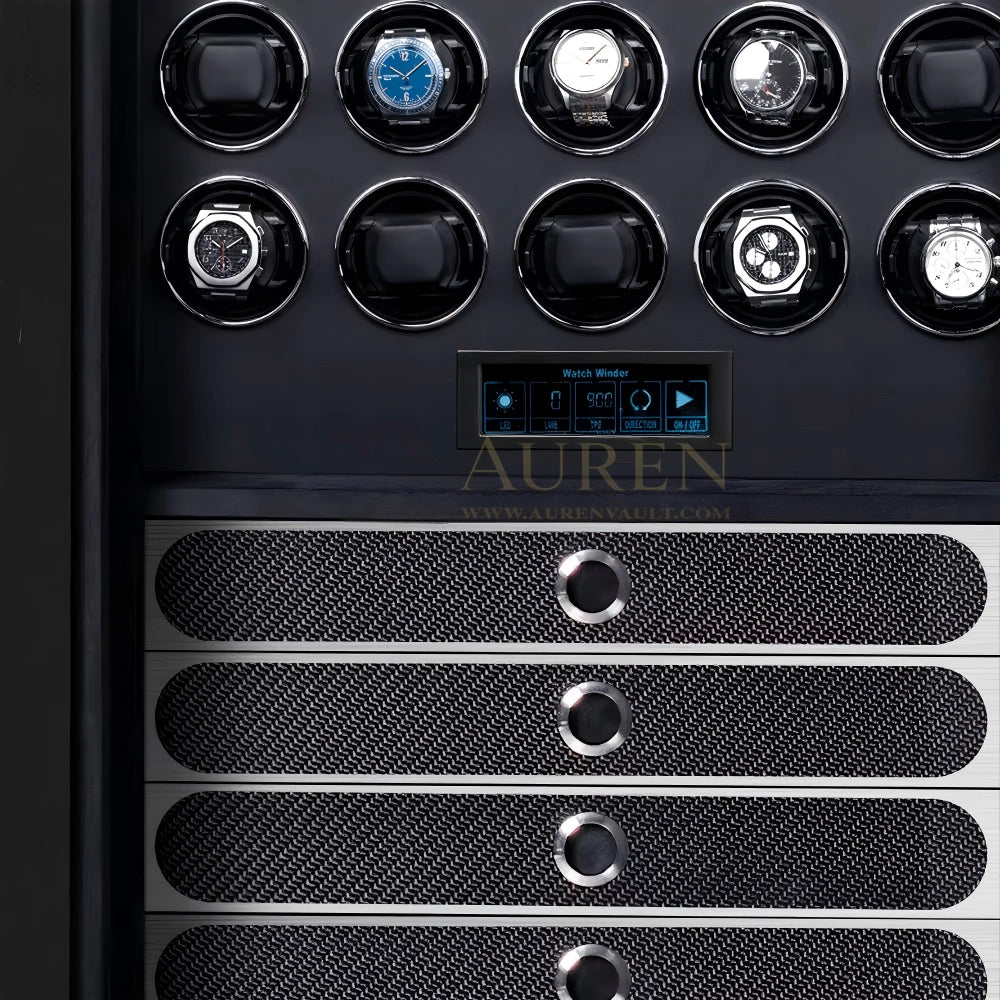
A good winding system should provide adjustable TPD and selectable clockwise, counterclockwise, and bidirectional programs.
Individual module control is useful when storing multiple calibres.
A B01 chronograph and an older Breitling 13 should not automatically share one direction program.
Controlled rest periods allow winding to be distributed throughout the day.
Smooth, reliable motors are important when supporting relatively large sports watches.
Adjustable cushions should accommodate steel bracelets, leather straps, and rubber straps without unnecessary tension.
Choosing Between a Standalone Winder and Watch Winder Safe
A standalone winder may be sufficient for one regularly worn Navitimer or Chronomat.
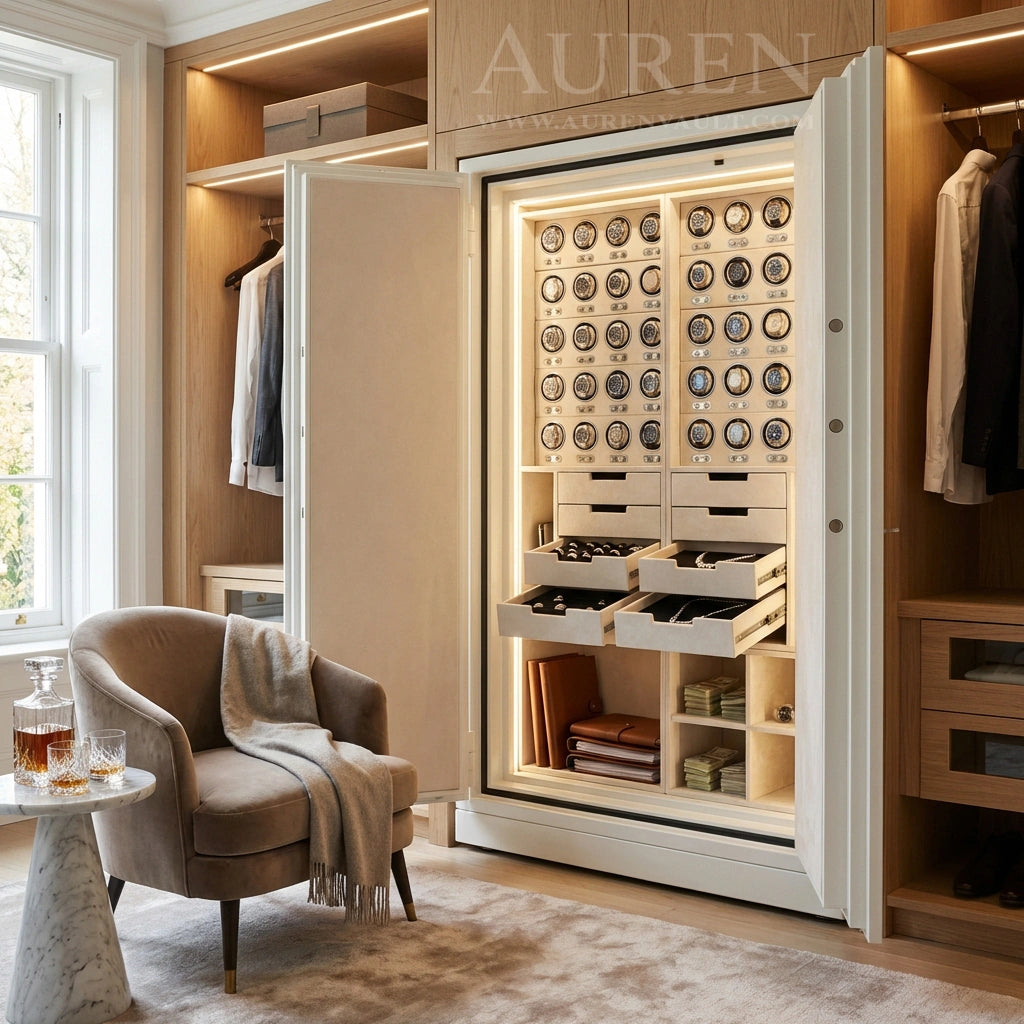
A larger collection may benefit from combined winding and enclosed storage.
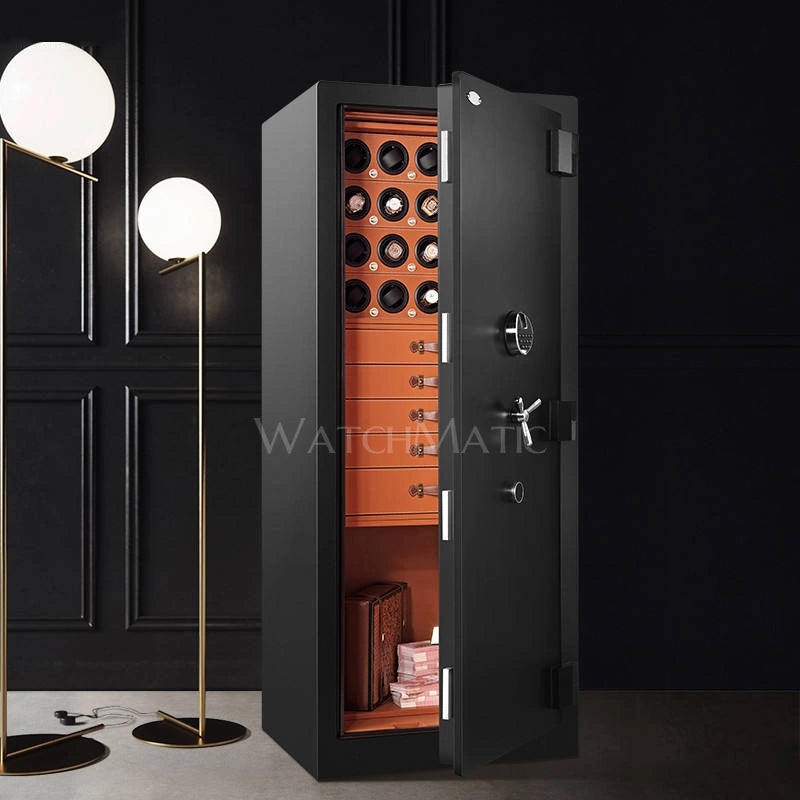
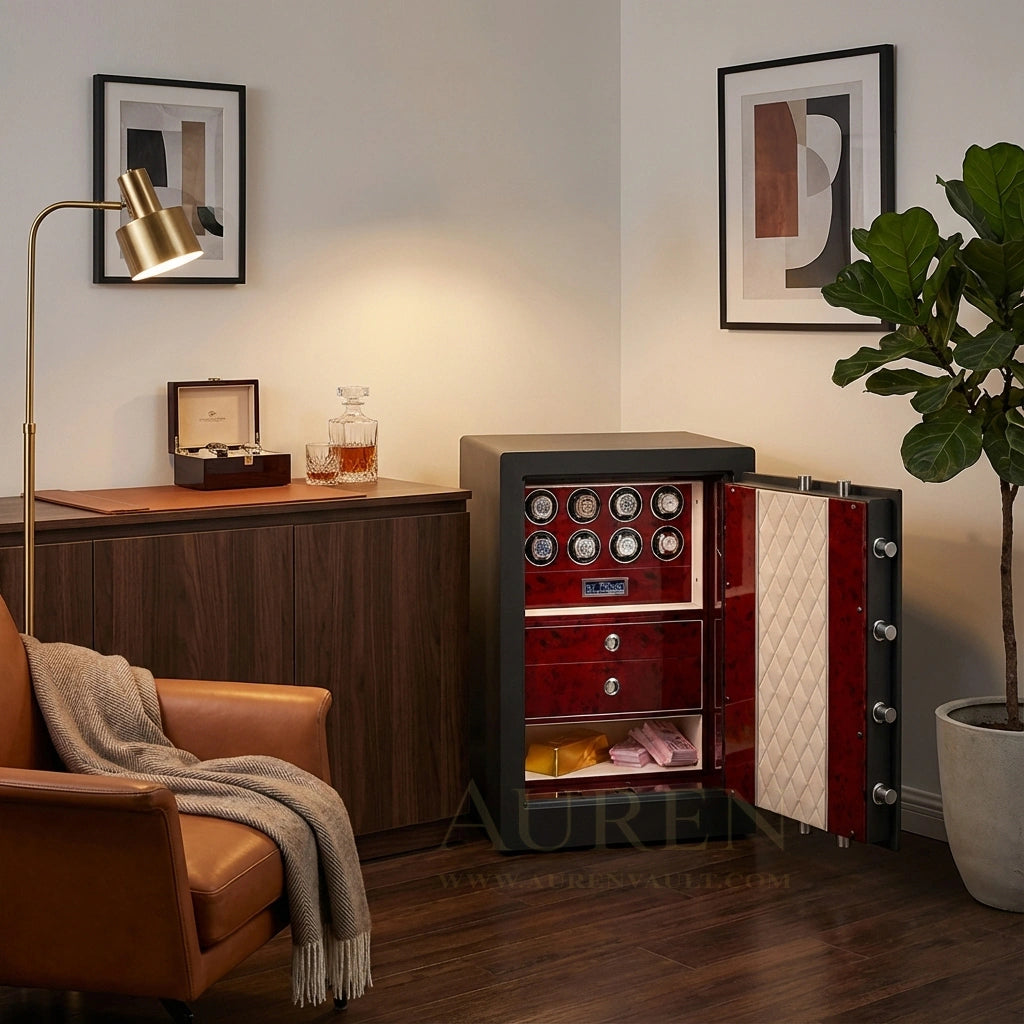
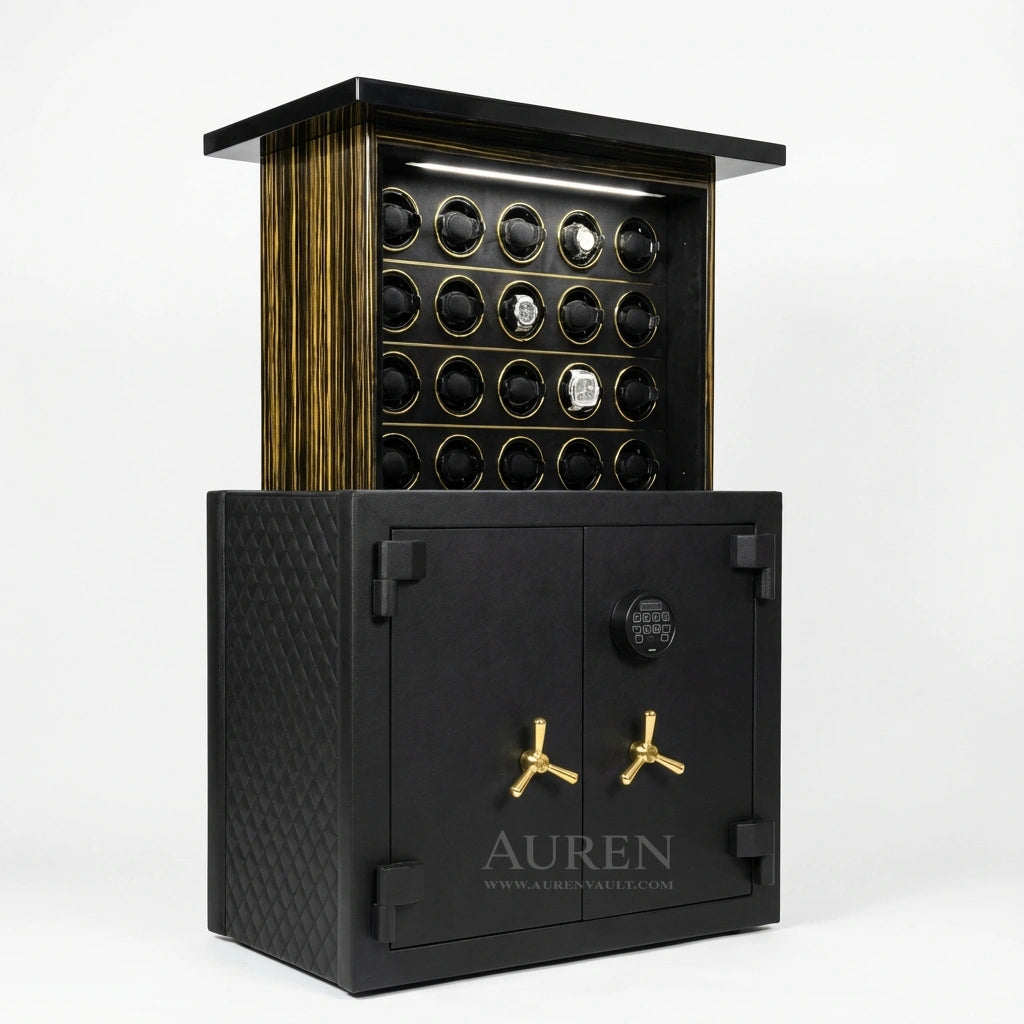
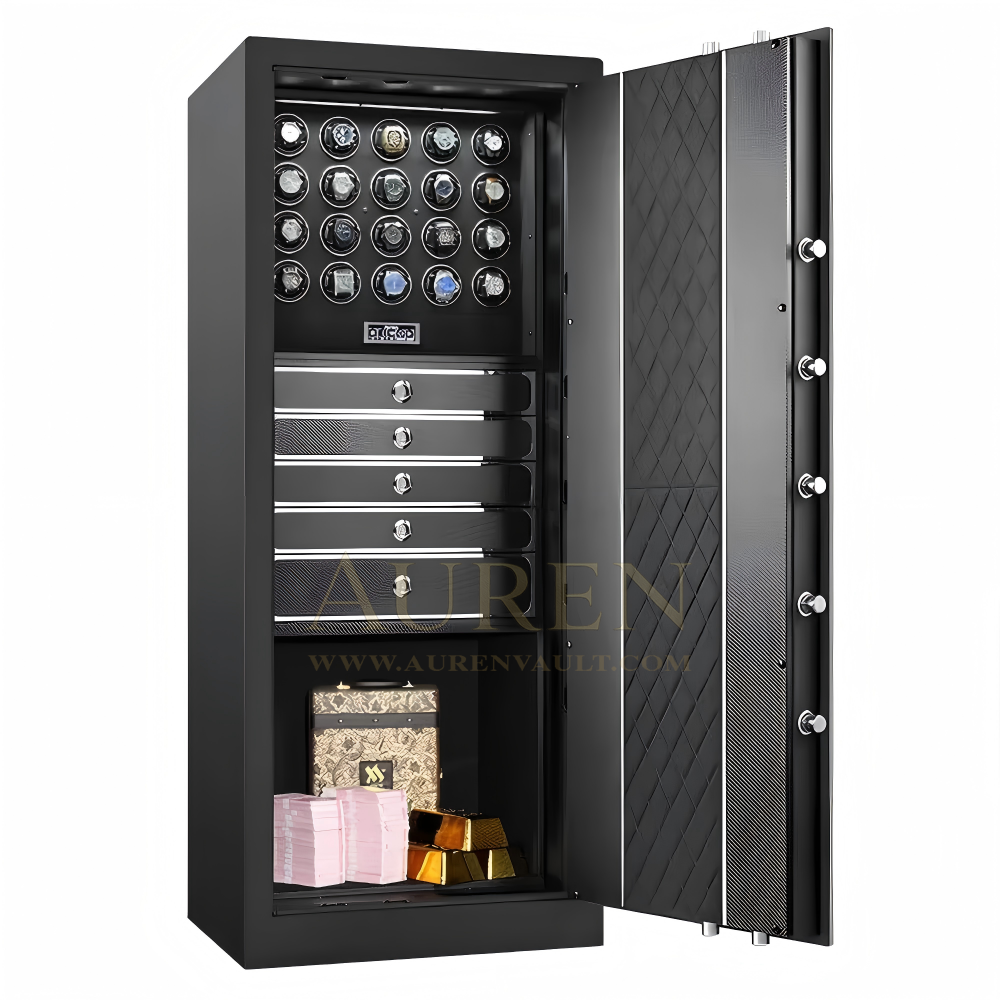
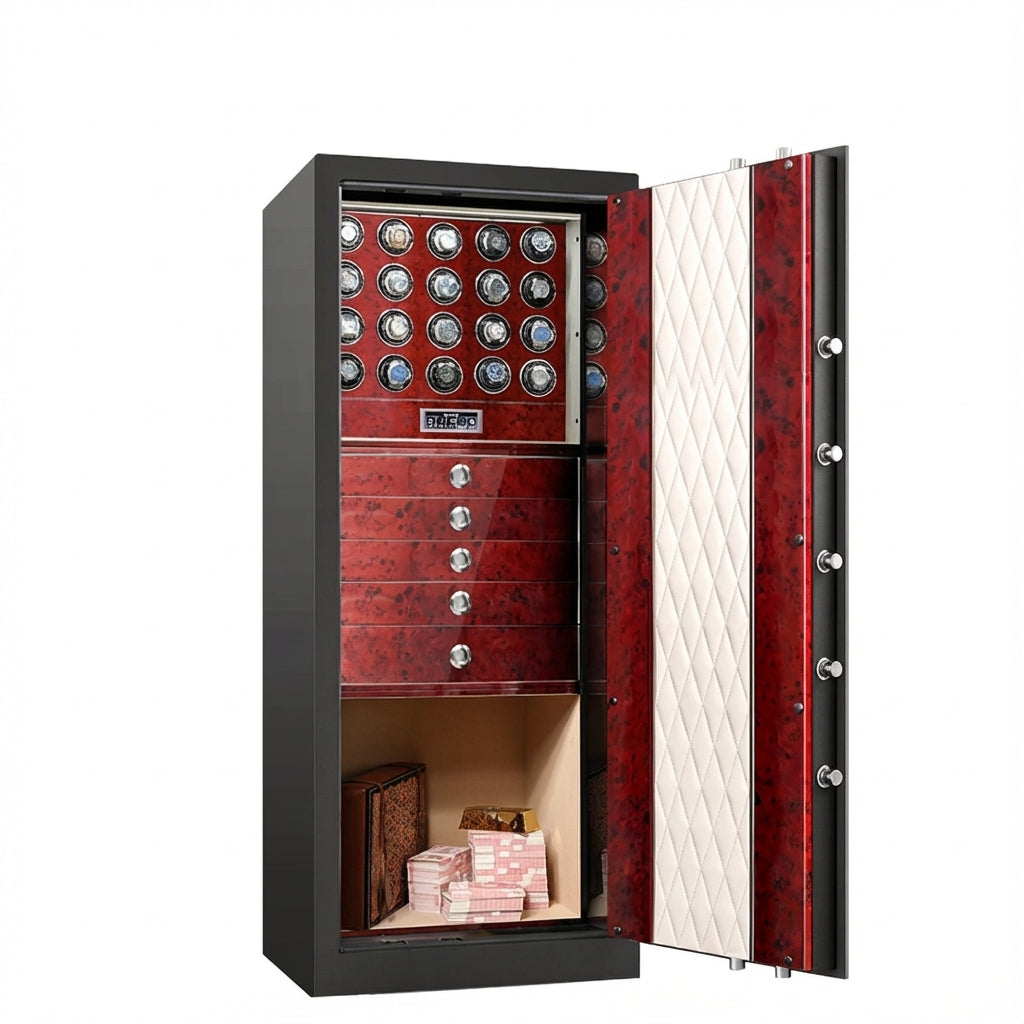
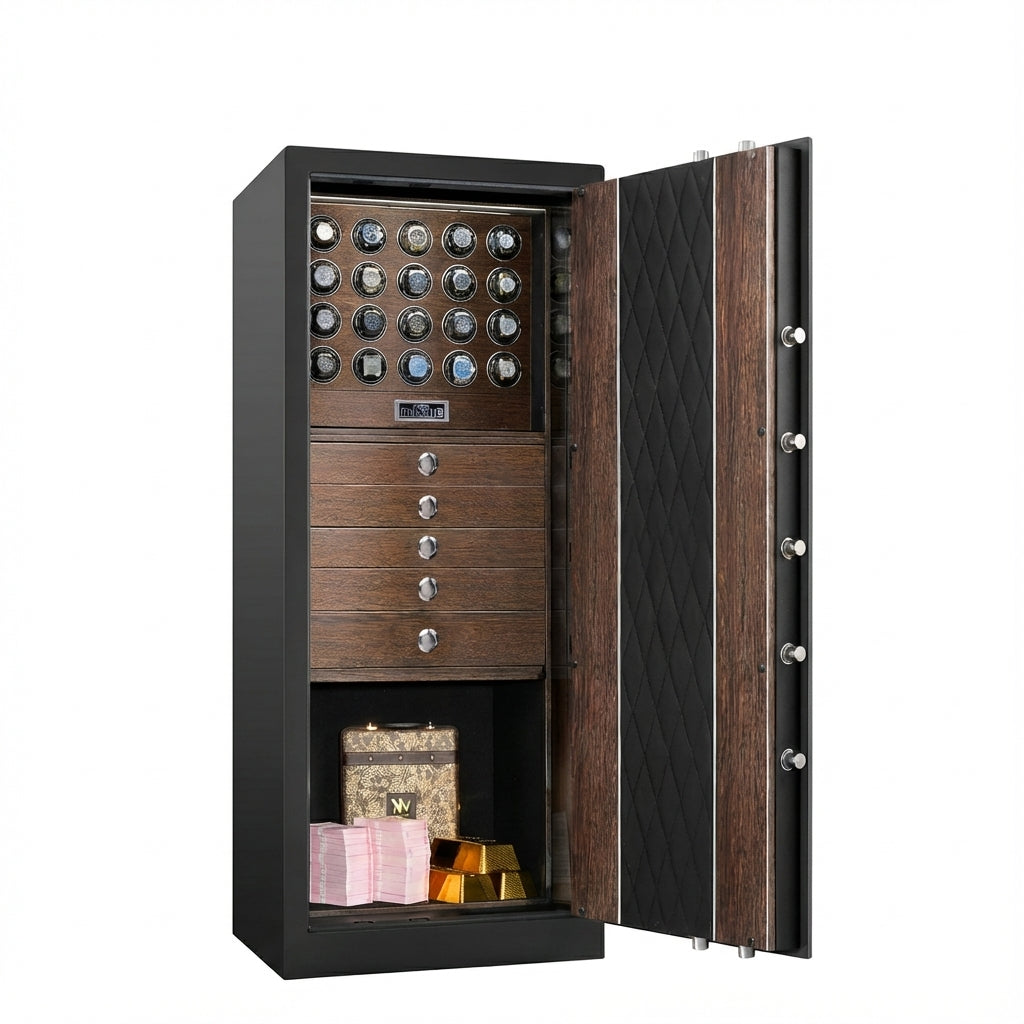
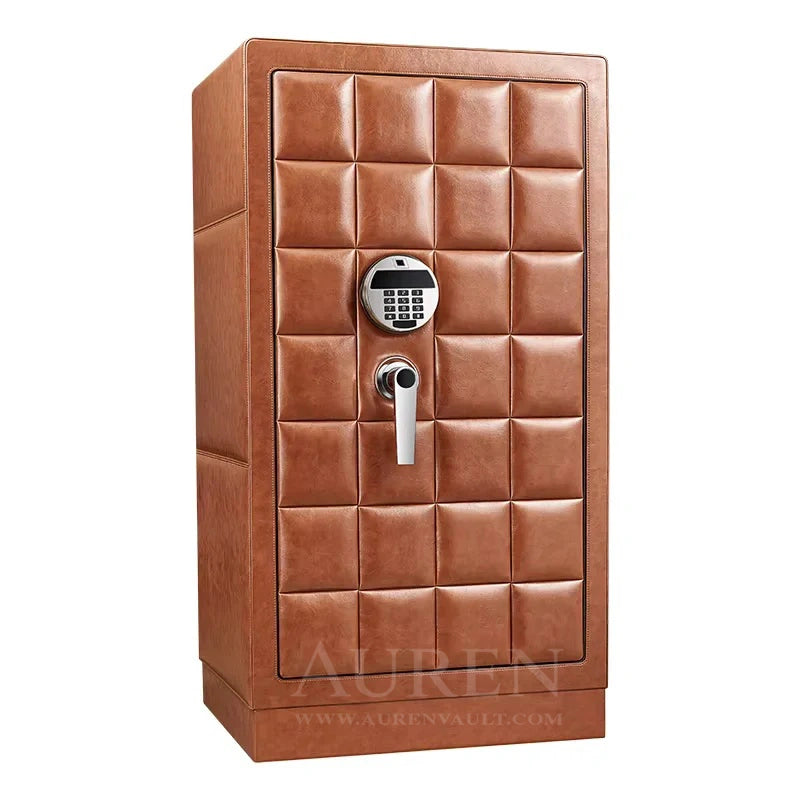
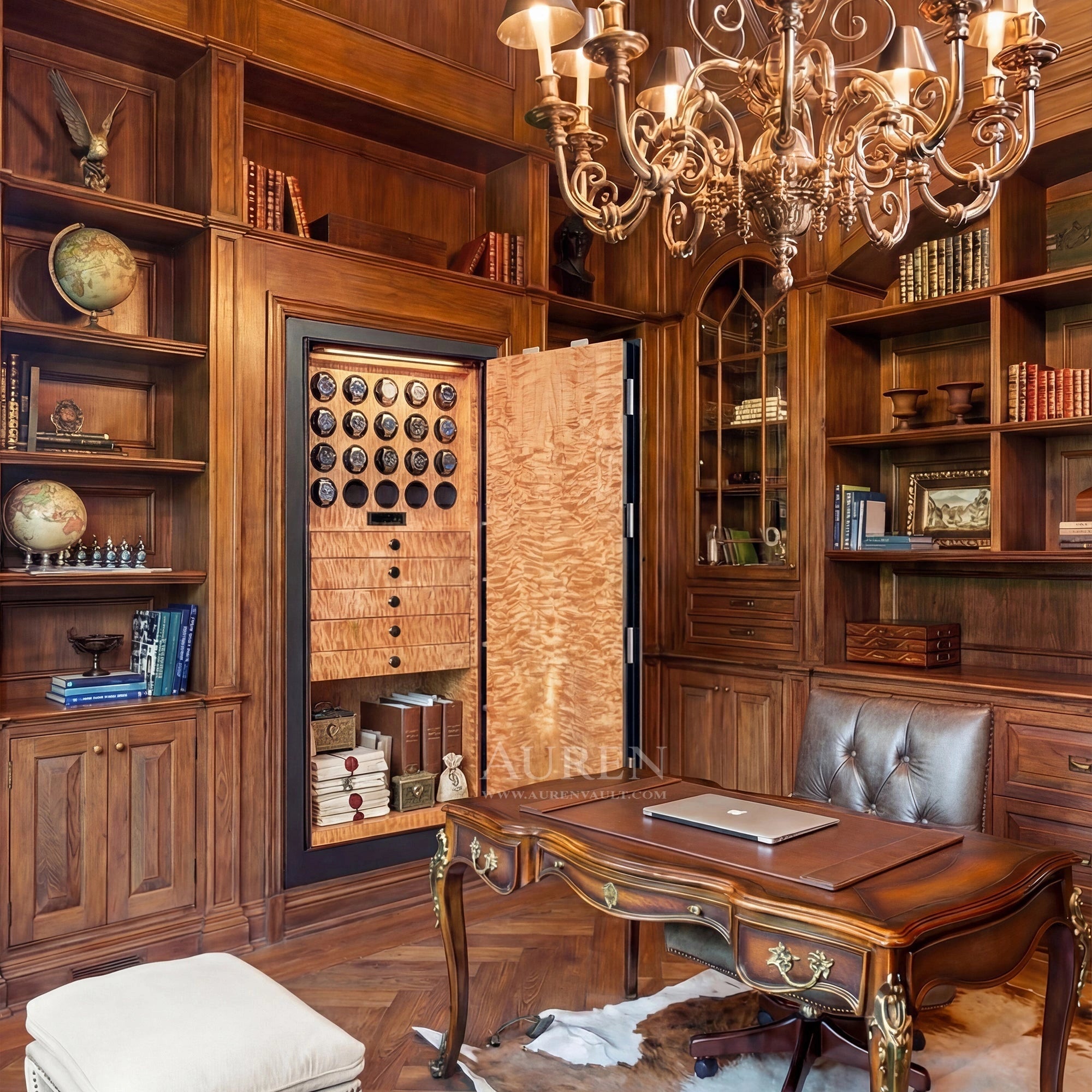
A watch winder safe can provide independent winding positions alongside stationary compartments for manual-winding and quartz watches.
Its security should be evaluated independently of its motors.
Actual protection depends on the enclosure's construction, installation, locking system, and any documented security ratings.
The watch winder safe guide provides additional information about integrated winding systems.
For larger collections, luxury watch safes offer further capacity options.
The full selection of watch safes provides other arrangements for valuable watches.
Where unusually large cases and different watch types require a tailored interior, custom watch safes may provide more flexibility.
A Practical Breitling Collection Example
Consider an owner who possesses a Navitimer B01, an older Chronomat with Breitling 13, a Superocean Automatic, a Top Time B31, a Top Time B09, and an Endurance Pro.
Six watches are owned.
Four are automatic.
The manually wound B09 and quartz Endurance Pro do not need conventional winding.
Among the automatic watches, the older Breitling 13 may require a different direction from the B01.
The B31 should receive a confirmed movement-specific program rather than an assumed B01 setting.
A suitable arrangement could therefore include four independently programmable positions and two stationary compartments.
If some automatic watches are worn frequently or stored for extended periods, fewer active positions may be sufficient.
Storage should reflect actual usage rather than total watch count.
How to Set Up a Breitling Watch on a Winder
Begin by identifying the exact watch reference and calibre.
Confirm that it is automatic.
If the movement has stopped, restart it according to Breitling's instructions before relying on the winder to maintain its reserve.
Choose the appropriate TPD and direction.
For a Breitling 17, independent references commonly suggest approximately 650 TPD bidirectional.
For a Breitling 13, approximately 800 TPD clockwise is often published.
For newer manufacture movements, obtain the appropriate calibre-specific guidance.
Secure the watch on a cushion that accommodates the bracelet or strap.
Check clearance around the crown, bezel, and chronograph pushers.
Allow the device to perform its normal winding and rest cycles.
Observe whether the watch continues operating over several days.
If it repeatedly stops, review its initial reserve, programming, and movement condition before increasing the rotation count.
Frequently Asked Questions About Breitling Watch Winders
What is the best watch winder for Breitling watches?
A programmable device with adjustable TPD, selectable winding direction, controlled rest cycles, and secure support for substantial cases and bracelets is the best general choice.
How many TPD does a Breitling need?
The answer depends on the calibre. Independent references commonly suggest approximately 650 TPD for Breitling 17 and around 800 TPD for Breitling 01 and certain older chronographs.
Does a Breitling Navitimer need a watch winder?
Not necessarily. Automatic Navitimer references can receive sufficient winding through regular wear. A compatible winder is optional.
What is the winding direction for Breitling 01?
Independent databases commonly list bidirectional winding for Breitling 01, often around 800 TPD. Verify the exact movement and winder program.
Is Breitling 13 different from B01?
Yes. Breitling 13 is associated with the Valjoux 7750 family, while Breitling 01 is a manufacture chronograph with a different architecture.
What TPD should a Breitling 13 use?
Approximately 800 TPD clockwise is commonly listed for the Valjoux-derived movement family. Confirm compatibility with the exact reference.
Does the Top Time B31 need 780 TPD because it has 78 hours of reserve?
No. Power reserve and TPD are different measurements. The B31's correct external program should be verified independently.
Can a Superocean Automatic use a winder?
Yes. References equipped with automatic Breitling 17 can benefit from a compatible device.
Does a Breitling GMT need higher TPD?
Not automatically. The additional time-zone indication does not determine the movement's winding requirements.
Should a B19 Perpetual Calendar stay on a winder?
A compatible winder can be convenient because it reduces repeated calendar resetting. Continuous winding is not mechanically mandatory.
Can the B09 and B02 use conventional watch winders?
No. Both are manually wound movements.
Can an Endurance Pro be charged by a watch winder?
No. Its SuperQuartz movement requires an appropriate electronic power source rather than mechanical automatic winding.
Can a watch winder overwind a Breitling?
Modern automatic movements generally use mechanisms to limit excessive mainspring tension. Correct TPD and rest periods are still preferable to unnecessary rotation.
Is a watch winder safe suitable for Breitling collections?
Yes, when the owner wants independent winding programs together with enclosed storage for automatic, manual-winding, and quartz watches.
Related Reading
For collectors comparing sports watches and chronograph movements:
-
Best Watch Winder for Tudor Watches — Winding and storage considerations for robust automatic sports watches.
-
Best Watch Winder for Zenith Watches — Different chronograph movement architectures and TPD requirements.
-
Watch Safes with Built-In Watch Winders — Integrated winding and collection storage.
Final Thoughts: Breitling Winder Settings Are Calibre-Specific
Breitling's movement portfolio includes conventional automatic calibres, manufacture chronographs, GMT watches, perpetual calendars, manually wound movements, and SuperQuartz technology.
The Breitling 01 should not automatically share the program of an older Breitling 13.
The B31 and modern B19 require their own movement-specific consideration.
The B02, B09, and SuperQuartz watches do not benefit from conventional automatic winding.
For one frequently worn automatic Breitling, a compact programmable winder may be sufficient.
For mixed collections, independent controls, suitable holders, and protected stationary compartments offer greater flexibility.
At Auren Vault, the focus is on combining precise watch winding, refined organization, and considered protection for valuable timepieces.
The best watch winder for Breitling is ultimately the system that respects the movement's design and makes the collection more convenient to own.